

The DOI matches its Crossref record; 94 of the 97 references it cites were found in a registry or an index; none of the 65 sources its claims cite is checked for support yet.
Digital Health Tools for the Passive Monitoring of Depression: A Systematic Review of Methods
Open accessAbstract
Background: The use of digital tools to measure physiological and behavioural variables of potential relevance to mental health is a growing field sitting at the intersection between computer science, engineering and clinical science. We aim to summarise the literature on remote measuring technologies, mapping methodological challenges and threats to reproducibility, and to identify leading digital signals for depression. Methods: Medical and computer science databases were searched between January 2007 to November 2019. Published studies linking depression and objective behavioural data obtained from smartphone and wearable device sensors in adults with unipolar depression and healthy subjects were included (PROSPERO registration: 2019 CRD42019159929). A descriptive approach was taken to synthesise study methodologies. Results We included 52 studies and found threats to reproducibility and transparency arising from failure to provide comprehensive descriptions of recruitment strategies, sample information, feature construction and the determination and handling of missing data. The literature is characterised by small sample sizes, short follow-up duration and great variability in quality of reporting, limiting the interpretability of pooled results. Bivariate analyses show some consistency in statistically significant associations between depression and digital features from sleep, physical activity, location, and phone use data. Regression and classification machine learning models found predictive value of aggregated features. Interpretation: Recommendations are put forward to improve aspects of generalisability and reproducibility, such as wider diversity of samples, thorough reporting methodology and the potential for reporting bias in studies with numerous features. Funding: National Institute for Health Research (NIHR) Biomedical Research Centre at South London and Maudsley NHS Foundation Trust and King's College London.
Overview
AI snapshot
Written from the paper’s full text.
TL;DR
This systematic review maps methods and reproducibility threats in 51 studies using smartphones and wearables to passively monitor depression, finding consistent bivariate signals in sleep, physical activity, location, and phone use but major heterogeneity and reporting gaps. The authors conclude these results are hypothesis-generating and recommend stronger reporting standards, preregistration, and more representative samples.
Key findings
- Across 51 included studies, the median sample size was 58, median age 38 years, and median percentage female 58%; 63% of studies failed to report ethnicity, and 12% and 8% failed to report age or gender, respectively.
- Fifteen depression measures were used, most commonly CES-D (n = 12), HAM-D (n = 12), and PHQ-9 (n = 9); 14 device types were used, mostly actigraphy-based wrist-worn devices plus smartphones.
- Bivariate associations were most consistent for location features: homestay was significantly associated with depression in all included studies reporting it, and entropy in 4 studies; sleep stability had the highest proportion of significant associations among sleep features.
- Machine learning models combining features showed predictive value, but many lacked information on missing sensor data handling and calibration; only two studies used multiple imputation.
Methods
- Systematic review searching PubMed, IEEE Xplore, ACM Digital Library, Web of Science, and Embase/PsychInfo via OVID for studies published January 2007–November 2019; protocol registered on PROSPERO (CRD42019159929).
- Included 51 published, peer-reviewed studies linking validated depression measures to passively collected smartphone or wrist-worn sensor data in adults with unipolar depression and healthy subjects, with at least 3 consecutive days of data; excluded inpatient settings and primarily bipolar samples.
- Descriptive synthesis only, with no meta-analysis due to heterogeneity; quality assessment combined AXIS and Newcastle–Ottawa Scale items, and feasibility was assessed via engagement, dropout reasons, technology problems, completion, attrition, and missing data.
Limitations
- Stated by the paper: reporting of feature–depression associations was too opaque and diverse for credible meta-analysis, so the review relies on simple counts of associations not weighted by sample size, follow-up duration, or study quality; reporting bias may emphasize significant findings; combining low-level features into broader categories lost nuance; and overlapping samples (e.g., four papers using the StudentLife dataset) may duplicate some associations.
- Evident from the text: included studies were mostly opportunistic, with small samples, short follow-up (median 9 days), and many student samples, limiting generalisability; there was no consensus on optimal phenotyping windows, and device validity/reliability for complex behaviours such as sleep and sociability remains uncertain.
Model-written summary. Check it against the paper before relying on it.
Integrity signals
Registry
Cites
Statistics
Figures
Verification
Claims the paper makes
59 Own result · 46 Not checked yet · 34 No basis given · 19 Own interpretation · 9 Own method
A result the paper reports from its own data — it cites no other source for it, so there is none to check. The quote shows it is in the paper.
In the paper
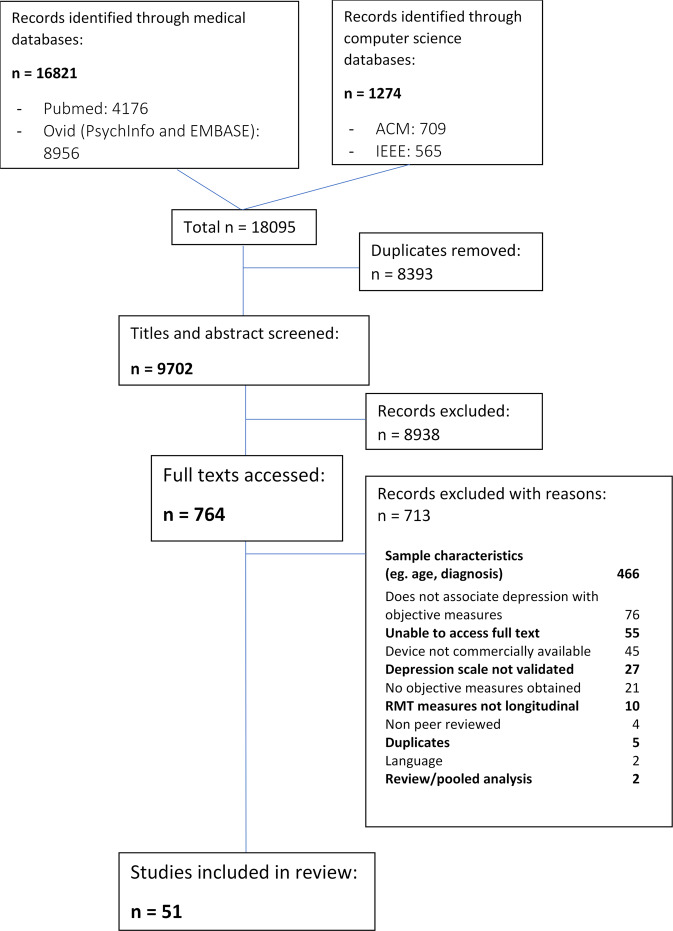
“Fifty-one studies were included in the review (see Fig. 1).”
§ Digital health tools for the passive monitoring of depression: a systematic review of methods > Results
plain- Asserted: passes — The authors put it forward as true.
- Checkable: passes — It can be checked against evidence.
- Load-bearing: unclear — It is unclear whether the paper’s conclusions depend on it.
- Based: passes — The paper gives a reason why it holds.
A result the paper reports from its own data — it cites no other source for it, so there is none to check. The quote shows it is in the paper.
In the paper
“The median sample size was 58, the median age of participants was 38 years, and the median percentage of females was 58%.”
§ Digital health tools for the passive monitoring of depression: a systematic review of methods > Results
plain- Asserted: passes — The authors put it forward as true.
- Checkable: passes — It can be checked against evidence.
- Load-bearing: unclear — It is unclear whether the paper’s conclusions depend on it.
- Based: passes — The paper gives a reason why it holds.
A result the paper reports from its own data — it cites no other source for it, so there is none to check. The quote shows it is in the paper.
In the paper
“with 12% and 8% of studies failing to give data on age or gender, respectively, and 63% failing to include information on ethnicity.”
§ Digital health tools for the passive monitoring of depression: a systematic review of methods > Results
plain- Asserted: passes — The authors put it forward as true.
- Checkable: passes — It can be checked against evidence.
- Load-bearing: unclear — It is unclear whether the paper’s conclusions depend on it.
- Based: passes — The paper gives a reason why it holds.
In the paper
“Higher depressive symptoms were associated with less time spent engaging in physical activity5, movement speed18 and step count27.”
§ Digital health tools for the passive monitoring of depression: a systematic review of methods > Results > Associations between objective features and depression
What the sources say
- Not checked yetcites [5] Lu, J. et al. Joint modeling of heterogeneous sensing data for depression assessment via multi-task learning. In Proc. ACM Interactive Mobile, Wearable and Ubiquitous Technology. Vol. 2, 21:1–21:21 (ACM, 2018).
plaincorrelational- Asserted: passes — The authors put it forward as true.
- Checkable: passes — It can be checked against evidence.
- Load-bearing: unclear — It is unclear whether the paper’s conclusions depend on it.
- Based: passes — The paper gives a reason why it holds.
None of the sources cited for this claim have been checked yet.
In the paper
“Activity levels were predominantly measured as a gross motor activity within a day, and showed that depression was negatively correlated with physical activity20,34.”
§ Digital health tools for the passive monitoring of depression: a systematic review of methods > Results > Associations between objective features and depression
What the sources say
- Not checked yetcites [20] Difrancesco S Sleep, circadian rhythm, and physical activity patterns in depressive and anxiety disorders: a 2-week ambulatory assessment study Depress. Anxiety 2019 36 975 986 31348850 PMC6790673
- Not checked yetcites [34] Boukhechba, M. et al. Contextual analysis to understand compliance with smartphone-based ecological momentary assessment. In Proc. 12th EAI International Conference on Pervasive Computing Technologies for Healthcare 232–238 (ACM, 2018).
plaincorrelational- Asserted: passes — The authors put it forward as true.
- Checkable: passes — It can be checked against evidence.
- Load-bearing: unclear — It is unclear whether the paper’s conclusions depend on it.
- Based: passes — The paper gives a reason why it holds.
None of the sources cited for this claim have been checked yet.
In the paper
“Six additional studies reported issues including; lack of data for consecutive days, software error, participants forgetting to charge phones or devices, server and network connectivity problems, sensors breaking, missing clinical data which impeded comparisons with sensor data, and mobile software updates, which can interfere with data integrity7,22,28–31.”
§ Digital health tools for the passive monitoring of depression: a systematic review of methods > Results > Quality assessment and feasibility
plain- Asserted: passes — The authors put it forward as true.
- Checkable: passes — It can be checked against evidence.
- Load-bearing: unclear — It is unclear whether the paper’s conclusions depend on it.
- Based: passes — The paper gives a reason why it holds.
A result the paper reports from its own data — it cites no other source for it, so there is none to check. The quote shows it is in the paper.
In the paper
“Only four studies referred to a previously published protocol19–22.”
§ Digital health tools for the passive monitoring of depression: a systematic review of methods > Results > Quality assessment and feasibility
plain- Asserted: passes — The authors put it forward as true.
- Checkable: passes — It can be checked against evidence.
- Load-bearing: unclear — It is unclear whether the paper’s conclusions depend on it.
- Based: passes — The paper gives a reason why it holds.
A result the paper reports from its own data — it cites no other source for it, so there is none to check. The quote shows it is in the paper.
In the paper
“All significant associations indicated that disturbed rest-activity patterns were associated with depressive symptoms, however, in the majority of instances where circadian rhythm was reported, no significant association with mood was detected.”
§ Digital health tools for the passive monitoring of depression: a systematic review of methods > Results > Associations between objective features and depression
plaincorrelational- Asserted: passes — The authors put it forward as true.
- Checkable: passes — It can be checked against evidence.
- Load-bearing: unclear — It is unclear whether the paper’s conclusions depend on it.
- Based: passes — The paper gives a reason why it holds.
A result the paper reports from its own data — it cites no other source for it, so there is none to check. The quote shows it is in the paper.
In the paper
“Twenty-nine studies collected data on sleep, typically ascertained using accelerometer, light and heart rate sensors.”
§ Digital health tools for the passive monitoring of depression: a systematic review of methods > Results > Associations between objective features and depression
plain- Asserted: passes — The authors put it forward as true.
- Checkable: passes — It can be checked against evidence.
- Load-bearing: unclear — It is unclear whether the paper’s conclusions depend on it.
- Based: passes — The paper gives a reason why it holds.
A result the paper reports from its own data — it cites no other source for it, so there is none to check. The quote shows it is in the paper.
In the paper
“Eighteen studies (35%) reported, or provided enough information to calculate, how many participants completed the study—results ranging from 22% adherence to the study23 at 4 weeks, to 100%24, with a median of 86.6% completers.”
§ Digital health tools for the passive monitoring of depression: a systematic review of methods > Results > Quality assessment and feasibility
plain- Asserted: passes — The authors put it forward as true.
- Checkable: passes — It can be checked against evidence.
- Load-bearing: unclear — It is unclear whether the paper’s conclusions depend on it.
- Based: passes — The paper gives a reason why it holds.
- Probably not a substantial claim. 41
- It may state two separate claims as one. 29
- The quote only partly states this claim. 5
A result the paper reports from its own data — it cites no other source for it, so there is none to check. The quote shows it is in the paper.
In the paper
“The majority of articles (n = 45) were published in medical journals, and 33 (65%) were from North America.”
§ Digital health tools for the passive monitoring of depression: a systematic review of methods > Results
plainn = 45- Asserted: passes — The authors put it forward as true.
- Checkable: passes — It can be checked against evidence.
- Load-bearing: fails — The paper’s conclusions may not depend on it.
- Based: passes — The paper gives a reason why it holds.
Probably not a substantial claim. The paper’s conclusions may not depend on it.
A result the paper reports from its own data — it cites no other source for it, so there is none to check. The quote shows it is in the paper.
In the paper
“The median sample size was 58, the median age of participants was 38 years, and the median percentage of females was 58%.”
§ Digital health tools for the passive monitoring of depression: a systematic review of methods > Results
plain- Asserted: passes — The authors put it forward as true.
- Checkable: passes — It can be checked against evidence.
- Load-bearing: fails — The paper’s conclusions may not depend on it.
- Based: passes — The paper gives a reason why it holds.
Probably not a substantial claim. The paper’s conclusions may not depend on it.
A result the paper reports from its own data — it cites no other source for it, so there is none to check. The quote shows it is in the paper.
In the paper
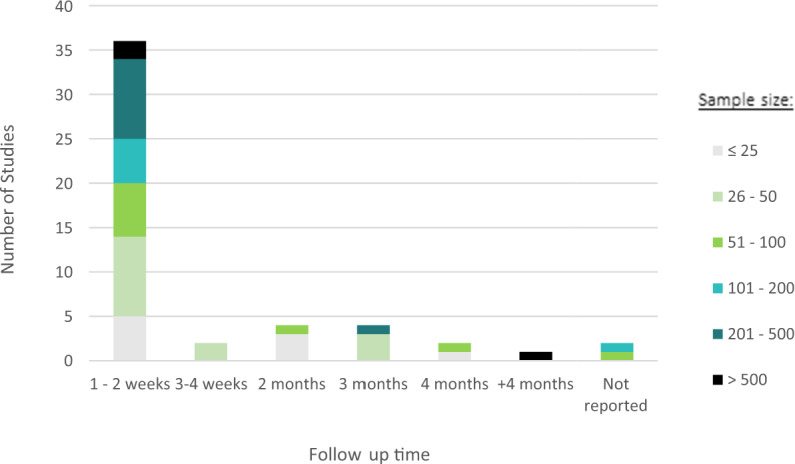
“Two studies provided no information on the length of follow-up, instead only mentioning that data was obtained from participants providing at least 72 h of consecutive data5,18.”
§ Digital health tools for the passive monitoring of depression: a systematic review of methods > Results
plainn = 2- Asserted: passes — The authors put it forward as true.
- Checkable: passes — It can be checked against evidence.
- Load-bearing: fails — The paper’s conclusions may not depend on it.
- Based: passes — The paper gives a reason why it holds.
Probably not a substantial claim. The paper’s conclusions may not depend on it.
A result the paper reports from its own data — it cites no other source for it, so there is none to check. The quote shows it is in the paper.
In the paper
“Out of the seven studies extracting ‘activity levels’ as a feature within physical activity, both studies using smartphones found a significant difference in depression severity, compared to one out of the five that used wrist actigraphy.”
§ Digital health tools for the passive monitoring of depression: a systematic review of methods > Results > Associations between objective features and depression
plaincorrelational- Asserted: passes — The authors put it forward as true.
- Checkable: passes — It can be checked against evidence.
- Load-bearing: unclear — It is unclear whether the paper’s conclusions depend on it.
- Based: passes — The paper gives a reason why it holds.
It may state two separate claims as one.
A result the paper reports from its own data — it cites no other source for it, so there is none to check. The quote shows it is in the paper.
In the paper
“Reasons for dropouts were provided in four studies and were due to equipment malfunction and technical problems using devices19,25–27 .”
§ Digital health tools for the passive monitoring of depression: a systematic review of methods > Results > Quality assessment and feasibility
plain- Asserted: passes — The authors put it forward as true.
- Checkable: passes — It can be checked against evidence.
- Load-bearing: fails — The paper’s conclusions may not depend on it.
- Based: passes — The paper gives a reason why it holds.
Probably not a substantial claim. The paper’s conclusions may not depend on it.
A result the paper reports from its own data — it cites no other source for it, so there is none to check. The quote shows it is in the paper.
In the paper
“The majority of articles (n = 45) were published in medical journals, and 33 (65%) were from North America.”
§ Digital health tools for the passive monitoring of depression: a systematic review of methods > Results
plain- Asserted: passes — The authors put it forward as true.
- Checkable: passes — It can be checked against evidence.
- Load-bearing: fails — The paper’s conclusions may not depend on it.
- Based: passes — The paper gives a reason why it holds.
Probably not a substantial claim. The paper’s conclusions may not depend on it.
None of the sources cited for this claim have been checked yet.
In the paper
“Depression has been associated with lower daytime activity and higher night-time activity (hour-based activity levels36,37), low intra-daily stability, more fragmented intra-daily movement, e.g., leaving for work and coming back at less regular times7, later acrophase, or later activity peaks38–40; lower amplitude, less difference between the average levels of activity during the peaks vs. the tro”
§ Digital health tools for the passive monitoring of depression: a systematic review of methods > Results > Associations between objective features and depression
What the sources say
- Not checked yetcites [36] Ávila Moraes C A new chronobiological approach to discriminate between acute and chronic depression using peripheral temperature, rest-activity, and light exposure parameters BMC Psychiatry 2013 13 77 23510455 PMC3599978
- Not checked yetcites [37] Slyepchenko A Association of functioning and quality of life with objective and subjective measures of sleep and biological rhythms in major depressive and bipolar disorder Aust. N. Z. J. Psychiatry 2019 53 683 696 30759998
plaincorrelational- Asserted: passes — The authors put it forward as true.
- Checkable: passes — It can be checked against evidence.
- Load-bearing: unclear — It is unclear whether the paper’s conclusions depend on it.
- Based: passes — The paper gives a reason why it holds.
It may state two separate claims as one.
A result the paper reports from its own data — it cites no other source for it, so there is none to check. The quote shows it is in the paper.
In the paper
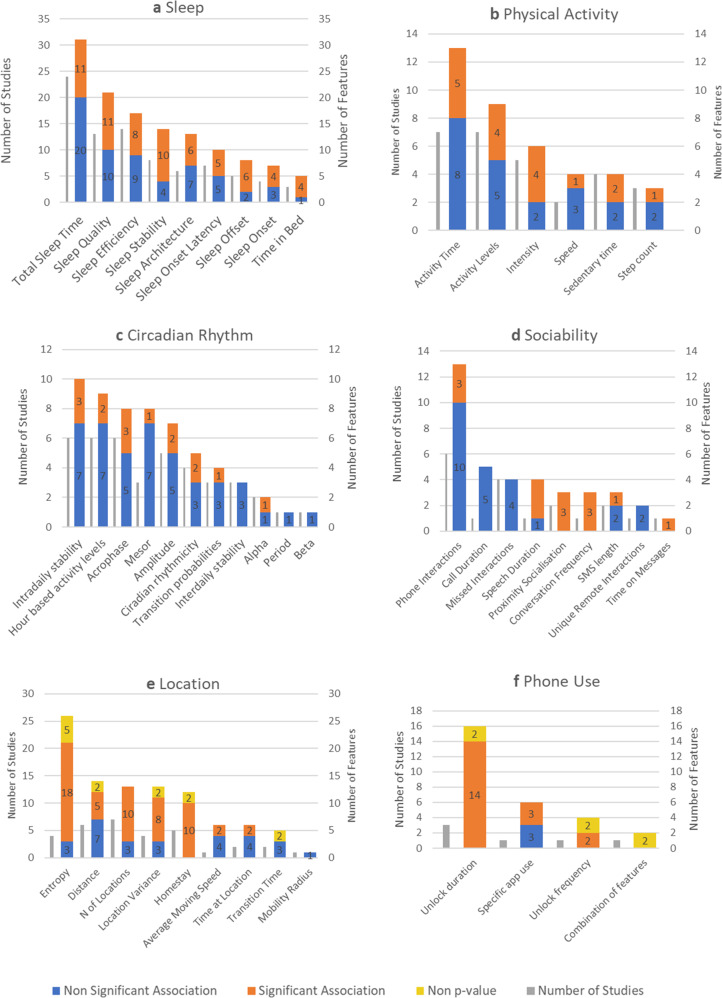
“Features with higher proportions of significant findings are features of sleep stability, sleep offset, time in bed; longer time in bed and later sleep offset were associated with higher depression scores.”
§ Digital health tools for the passive monitoring of depression: a systematic review of methods > Results > Associations between objective features and depression
plaincorrelational- Asserted: passes — The authors put it forward as true.
- Checkable: passes — It can be checked against evidence.
- Load-bearing: unclear — It is unclear whether the paper’s conclusions depend on it.
- Based: passes — The paper gives a reason why it holds.
It may state two separate claims as one.
A result the paper reports from its own data — it cites no other source for it, so there is none to check. The quote shows it is in the paper.
In the paper
“Computer science journals were less likely to report age and gender but more likely to report ethnicity (33% studies failing to report each demographic).”
§ Digital health tools for the passive monitoring of depression: a systematic review of methods > Results
plaincorrelational- Asserted: passes — The authors put it forward as true.
- Checkable: passes — It can be checked against evidence.
- Load-bearing: unclear — It is unclear whether the paper’s conclusions depend on it.
- Based: passes — The paper gives a reason why it holds.
The quote only partly states this claim.
A result the paper reports from its own data — it cites no other source for it, so there is none to check. The quote shows it is in the paper.
In the paper
“Fifteen different measures of depression were used, the most commonly used scales being the Center for Epidemiological Studies Depression Scale (CES-D15; n = 12 studies), Hamilton Rating Scale for Depression (HAM-D16; n = 12 studies), and Patient Health Questionnaire-9 (PHQ-917; n = 9).”
§ Digital health tools for the passive monitoring of depression: a systematic review of methods > Results
plainn = 12- Asserted: fails — The authors may not put it forward as true.
- Checkable: passes — It can be checked against evidence.
- Load-bearing: fails — The paper’s conclusions may not depend on it.
- Based: passes — The paper gives a reason why it holds.
Probably not a substantial claim. The authors may not put it forward as true. The paper’s conclusions may not depend on it. The quote only partly states this claim.
A result the paper reports from its own data — it cites no other source for it, so there is none to check. The quote shows it is in the paper.
In the paper
“Fifteen different measures of depression were used, the most commonly used scales being the Center for Epidemiological Studies Depression Scale (CES-D15; n = 12 studies), Hamilton Rating Scale for Depression (HAM-D16; n = 12 studies), and Patient Health Questionnaire-9 (PHQ-917; n = 9).”
§ Digital health tools for the passive monitoring of depression: a systematic review of methods > Results
plainn = 9- Asserted: fails — The authors may not put it forward as true.
- Checkable: passes — It can be checked against evidence.
- Load-bearing: fails — The paper’s conclusions may not depend on it.
- Based: passes — The paper gives a reason why it holds.
Probably not a substantial claim. The authors may not put it forward as true. The paper’s conclusions may not depend on it.
A result the paper reports from its own data — it cites no other source for it, so there is none to check. The quote shows it is in the paper.
In the paper
“There were 14 types of devices used across all studies: 12 of them actigraphy-based wrist-worn devices including one Fitbit and a Microsoft band, as well as one pedometer and smartphones (both android and iPhone).”
§ Digital health tools for the passive monitoring of depression: a systematic review of methods > Results
plain- Asserted: passes — The authors put it forward as true.
- Checkable: passes — It can be checked against evidence.
- Load-bearing: fails — The paper’s conclusions may not depend on it.
- Based: passes — The paper gives a reason why it holds.
Probably not a substantial claim. The paper’s conclusions may not depend on it.
A result the paper reports from its own data — it cites no other source for it, so there is none to check. The quote shows it is in the paper.
In the paper
“Computer science journals were less likely to report age and gender but more likely to report ethnicity (33% studies failing to report each demographic).”
§ Digital health tools for the passive monitoring of depression: a systematic review of methods > Results
plaincorrelational- Asserted: passes — The authors put it forward as true.
- Checkable: passes — It can be checked against evidence.
- Load-bearing: unclear — It is unclear whether the paper’s conclusions depend on it.
- Based: passes — The paper gives a reason why it holds.
The quote only partly states this claim.
A result the paper reports from its own data — it cites no other source for it, so there is none to check. The quote shows it is in the paper.
In the paper
“Nine different features of sleep are reported in Fig. 4A.”
§ Digital health tools for the passive monitoring of depression: a systematic review of methods > Results > Associations between objective features and depression
plain- Asserted: passes — The authors put it forward as true.
- Checkable: passes — It can be checked against evidence.
- Load-bearing: fails — The paper’s conclusions may not depend on it.
- Based: passes — The paper gives a reason why it holds.
Probably not a substantial claim. The paper’s conclusions may not depend on it.
The paper states this without a source or data behind it here, so there is nothing to check it against. The quote shows it is in the paper.
In the paper
“Features with higher proportions of significant findings are features of sleep stability, sleep offset, time in bed; longer time in bed and later sleep offset were associated with higher depression scores.”
§ Digital health tools for the passive monitoring of depression: a systematic review of methods > Results > Associations between objective features and depression
plaincorrelational- Asserted: passes — The authors put it forward as true.
- Checkable: passes — It can be checked against evidence.
- Load-bearing: passes — The paper’s conclusions depend on it.
- Based: passes — The paper gives a reason why it holds.
It may state two separate claims as one.
A result the paper reports from its own data — it cites no other source for it, so there is none to check. The quote shows it is in the paper.
In the paper
“The median sample size was 58, the median age of participants was 38 years, and the median percentage of females was 58%.”
§ Digital health tools for the passive monitoring of depression: a systematic review of methods > Results
plain- Asserted: passes — The authors put it forward as true.
- Checkable: passes — It can be checked against evidence.
- Load-bearing: fails — The paper’s conclusions may not depend on it.
- Based: passes — The paper gives a reason why it holds.
Probably not a substantial claim. The paper’s conclusions may not depend on it.
A result the paper reports from its own data — it cites no other source for it, so there is none to check. The quote shows it is in the paper.
In the paper
“Fifteen different measures of depression were used, the most commonly used scales being the Center for Epidemiological Studies Depression Scale (CES-D15; n = 12 studies), Hamilton Rating Scale for Depression (HAM-D16; n = 12 studies), and Patient Health Questionnaire-9 (PHQ-917; n = 9).”
§ Digital health tools for the passive monitoring of depression: a systematic review of methods > Results
plainn = 12- Asserted: passes — The authors put it forward as true.
- Checkable: passes — It can be checked against evidence.
- Load-bearing: unclear — It is unclear whether the paper’s conclusions depend on it.
- Based: passes — The paper gives a reason why it holds.
The quote only partly states this claim.
None of the sources cited for this claim have been checked yet.
In the paper
“Those that do, report simple imputation methods such as mean imputation, with two studies using multiple imputation methods6,18.”
§ Digital health tools for the passive monitoring of depression: a systematic review of methods > Results > Combined features
What the sources say
- Not checked yetcites [6] Ghandeharioun, A. et al. Objective assessment of depressive symptoms with machine learning and wearable sensors data. In Proc.2017 7th International Conference on Affective Computing and Intelligent Interaction (ACII). 325–332 (IEEE, 2017).
- Not checked yetcites [18] Yue, C. et al. Fusing location data for depression prediction. IEEE Trans. Big Data 1–1 10.1109/TBDATA.2018.2872569 (2018). PMC9053381 35498556
plain- Asserted: passes — The authors put it forward as true.
- Checkable: passes — It can be checked against evidence.
- Load-bearing: unclear — It is unclear whether the paper’s conclusions depend on it.
- Based: passes — The paper gives a reason why it holds.
It may state two separate claims as one.
The paper states this without a source or data behind it here, so there is nothing to check it against. The quote shows it is in the paper.
In the paper
“Eleven studies assessed sociability.”
§ Digital health tools for the passive monitoring of depression: a systematic review of methods > Results > Associations between objective features and depression
plain- Asserted: passes — The authors put it forward as true.
- Checkable: passes — It can be checked against evidence.
- Load-bearing: fails — The paper’s conclusions may not depend on it.
- Based: passes — The paper gives a reason why it holds.
Probably not a substantial claim. The paper’s conclusions may not depend on it.
In the paper
“Another study found humidity to have a significant positive correlation with depressed symptoms (r = 0.4) in women, but a negative correlation in men, suggesting females, but not males might feel worsening in their condition during rainy weeks44.”
§ Digital health tools for the passive monitoring of depression: a systematic review of methods > Results > Associations between objective features and depression
What the sources say
- Not checked yetcites [44] Doryab, A., Min, J. K., Wiese, J., Zimmerman, J. & Hong, J. Detection of behavior change in people with depression. In Proc. of the 28th AAAI Conference on Artificial Intelligence, Vol. 5 (Québec City, QC, Canada, 2014).
plaincorrelational- Asserted: passes — The authors put it forward as true.
- Checkable: passes — It can be checked against evidence.
- Load-bearing: fails — The paper’s conclusions may not depend on it.
- Based: passes — The paper gives a reason why it holds.
Probably not a substantial claim. The paper’s conclusions may not depend on it.
In the paper
“The average number of ingoing and outgoing calls was found to be negatively correlated with depressive symptoms in one small study (n = 6), and only in men44.”
§ Digital health tools for the passive monitoring of depression: a systematic review of methods > Results > Associations between objective features and depression
What the sources say
- Not checked yetcites [44] Doryab, A., Min, J. K., Wiese, J., Zimmerman, J. & Hong, J. Detection of behavior change in people with depression. In Proc. of the 28th AAAI Conference on Artificial Intelligence, Vol. 5 (Québec City, QC, Canada, 2014).
plaincorrelationaln = 6- Asserted: passes — The authors put it forward as true.
- Checkable: passes — It can be checked against evidence.
- Load-bearing: unclear — It is unclear whether the paper’s conclusions depend on it.
- Based: passes — The paper gives a reason why it holds.
It may state two separate claims as one.
A result the paper reports from its own data — it cites no other source for it, so there is none to check. The quote shows it is in the paper.
In the paper
“Twenty-four models in total were presented by all studies, the majority of which (n = 18) included features of physical activity, followed by location (n = 14), phone use (n = 11) and sleep (n = 9).”
§ Digital health tools for the passive monitoring of depression: a systematic review of methods > Results > Combined features
plain- Asserted: passes — The authors put it forward as true.
- Checkable: passes — It can be checked against evidence.
- Load-bearing: fails — The paper’s conclusions may not depend on it.
- Based: passes — The paper gives a reason why it holds.
Probably not a substantial claim. The paper’s conclusions may not depend on it.
None of the sources cited for this claim have been checked yet.
In the paper
“Four studies calculated circadian rhythmicity as a measure of the extent to which a participant’s pattern follows an expected Cosinor model, finding lower circadian rhythmicity more likely to be associated with being depressed37,41–43.”
§ Digital health tools for the passive monitoring of depression: a systematic review of methods > Results > Associations between objective features and depression
What the sources say
- Not checked yetcites [37] Slyepchenko A Association of functioning and quality of life with objective and subjective measures of sleep and biological rhythms in major depressive and bipolar disorder Aust. N. Z. J. Psychiatry 2019 53 683 696 30759998
- Not checked yetcites [41] Robillard R Sleep–wake cycle in young and older persons with a lifetime history of mood disorders PLoS ONE 2014 9 e87763 24586290 PMC3934865
- Not checked yetcites [42] Saeb S Lattie EG Schueller SM Kording KP Mohr DC The relationship between mobile phone location sensor data and depressive symptom severity PeerJ 2016 4 e2537 28344895 PMC5361882
- Not checked yetcites [43] Robillard R Sleep–wake profiles predict longitudinal changes in manic symptoms and memory in young people with mood disorders J. Sleep Res. 2016 25 549 555 27242171
hedgedcorrelational- Asserted: passes — The authors put it forward as true.
- Checkable: passes — It can be checked against evidence.
- Load-bearing: unclear — It is unclear whether the paper’s conclusions depend on it.
- Based: passes — The paper gives a reason why it holds.
It may state two separate claims as one.
The paper states this without a source or data behind it here, so there is nothing to check it against. The quote shows it is in the paper.
In the paper
“Location was assessed in 11 studies, measured via GPS.”
§ Digital health tools for the passive monitoring of depression: a systematic review of methods > Results > Associations between objective features and depression
plain- Asserted: passes — The authors put it forward as true.
- Checkable: passes — It can be checked against evidence.
- Load-bearing: fails — The paper’s conclusions may not depend on it.
- Based: passes — The paper gives a reason why it holds.
Probably not a substantial claim. The paper’s conclusions may not depend on it. It may state two separate claims as one.
The paper states this without a source or data behind it here, so there is nothing to check it against. The quote shows it is in the paper.
In the paper
“Both classification and regression models showed predictive value, however, many of them lacked information regarding the handling of missing sensor data and calibration.”
§ Digital health tools for the passive monitoring of depression: a systematic review of methods > Results > Combined features
plaincorrelational- Asserted: passes — The authors put it forward as true.
- Checkable: passes — It can be checked against evidence.
- Load-bearing: passes — The paper’s conclusions depend on it.
- Based: passes — The paper gives a reason why it holds.
It may state two separate claims as one.
A result the paper reports from its own data — it cites no other source for it, so there is none to check. The quote shows it is in the paper.
In the paper
“Many of the studies on circadian rhythms are excluded, making existing associations even more tenuous; all studies showing a significant association between mood and intradaily stability or acrophase are lost, as are those finding no association between hour-based activity levels and depression.”
§ Digital health tools for the passive monitoring of depression: a systematic review of methods > Results > Sensitivity analysis
plain- Asserted: passes — The authors put it forward as true.
- Checkable: passes — It can be checked against evidence.
- Load-bearing: unclear — It is unclear whether the paper’s conclusions depend on it.
- Based: passes — The paper gives a reason why it holds.
It may state two separate claims as one.
The paper states this without a source or data behind it here, so there is nothing to check it against. The quote shows it is in the paper.
In the paper
“One of those issues is missing data.”
§ Digital health tools for the passive monitoring of depression: a systematic review of methods > Discussion
plain- Asserted: passes — The authors put it forward as true.
- Checkable: passes — It can be checked against evidence.
- Load-bearing: unclear — It is unclear whether the paper’s conclusions depend on it.
- Based: passes — The paper gives a reason why it holds.
The quote only partly states this claim.
The paper states this without a source or data behind it here, so there is nothing to check it against. The quote shows it is in the paper.
In the paper
“For any broad concept (e.g. sleep or circadian rhythm) different sensor types or operating systems were used, and component features were derived using different approaches.”
§ Digital health tools for the passive monitoring of depression: a systematic review of methods > Discussion
plain- Asserted: passes — The authors put it forward as true.
- Checkable: passes — It can be checked against evidence.
- Load-bearing: unclear — It is unclear whether the paper’s conclusions depend on it.
- Based: passes — The paper gives a reason why it holds.
It may state two separate claims as one.
The paper states this without a source or data behind it here, so there is nothing to check it against. The quote shows it is in the paper.
In the paper
“Several sleep features appear also to be consistently associated with depressed mood, with sleep stability showing the highest proportion of significant associations.”
§ Digital health tools for the passive monitoring of depression: a systematic review of methods > Discussion > Association between mood and digital features
hedgedcorrelational- Asserted: passes — The authors put it forward as true.
- Checkable: passes — It can be checked against evidence.
- Load-bearing: passes — The paper’s conclusions depend on it.
- Based: passes — The paper gives a reason why it holds.
It may state two separate claims as one.
The paper states this without a source or data behind it here, so there is nothing to check it against. The quote shows it is in the paper.
In the paper
“Features that consistently appear to be associated with depression are location-based features, with homestay and entropy both associated with the mood in 4 and 5 studies, respectively.”
§ Digital health tools for the passive monitoring of depression: a systematic review of methods > Discussion > Association between mood and digital features
hedgedcorrelational- Asserted: passes — The authors put it forward as true.
- Checkable: passes — It can be checked against evidence.
- Load-bearing: passes — The paper’s conclusions depend on it.
- Based: passes — The paper gives a reason why it holds.
It may state two separate claims as one.
The paper states this without a source or data behind it here, so there is nothing to check it against. The quote shows it is in the paper.
In the paper
“Some studies in the current review do report their top predictors and bivariate associations with depression”
§ Digital health tools for the passive monitoring of depression: a systematic review of methods > Discussion > Association between mood and digital features
plain- Asserted: passes — The authors put it forward as true.
- Checkable: passes — It can be checked against evidence.
- Load-bearing: fails — The paper’s conclusions may not depend on it.
- Based: passes — The paper gives a reason why it holds.
Probably not a substantial claim. The paper’s conclusions may not depend on it.
The paper states this without a source or data behind it here, so there is nothing to check it against. The quote shows it is in the paper.
In the paper
“The findings of this review highlight the array of potential predictors that sensor data generates.”
§ Digital health tools for the passive monitoring of depression: a systematic review of methods > Discussion > Association between mood and digital features
plain- Asserted: passes — The authors put it forward as true.
- Checkable: passes — It can be checked against evidence.
- Load-bearing: fails — The paper’s conclusions may not depend on it.
- Based: passes — The paper gives a reason why it holds.
Probably not a substantial claim. The paper’s conclusions may not depend on it.
None of the sources cited for this claim have been checked yet.
In the paper
“For example, both iPhone and Android smartphone operating systems were included, and sometimes showed differences in significance levels for the same variables5,18.”
§ Digital health tools for the passive monitoring of depression: a systematic review of methods > Discussion
What the sources say
- Not checked yetcites [5] Lu, J. et al. Joint modeling of heterogeneous sensing data for depression assessment via multi-task learning. In Proc. ACM Interactive Mobile, Wearable and Ubiquitous Technology. Vol. 2, 21:1–21:21 (ACM, 2018).
- Not checked yetcites [18] Yue, C. et al. Fusing location data for depression prediction. IEEE Trans. Big Data 1–1 10.1109/TBDATA.2018.2872569 (2018). PMC9053381 35498556
plaincorrelational- Asserted: passes — The authors put it forward as true.
- Checkable: passes — It can be checked against evidence.
- Load-bearing: fails — The paper’s conclusions may not depend on it.
- Based: passes — The paper gives a reason why it holds.
Probably not a substantial claim. The paper’s conclusions may not depend on it. It may state two separate claims as one.
The paper states this without a source or data behind it here, so there is nothing to check it against. The quote shows it is in the paper.
In the paper
“Finally, there is a general lack of discussion around the extent to which the devices used in these research studies are valid or reliable tools to detect the behaviours of interest.”
§ Digital health tools for the passive monitoring of depression: a systematic review of methods > Discussion
plain- Asserted: passes — The authors put it forward as true.
- Checkable: passes — It can be checked against evidence.
- Load-bearing: passes — The paper’s conclusions depend on it.
- Based: passes — The paper gives a reason why it holds.
Probably not a substantial claim.
The paper states this without a source or data behind it here, so there is nothing to check it against. The quote shows it is in the paper.
In the paper
“Additionally, researchers set different thresholds as to what counts as missing data. This varies between studies”
§ Digital health tools for the passive monitoring of depression: a systematic review of methods > Discussion
plain- Asserted: passes — The authors put it forward as true.
- Checkable: passes — It can be checked against evidence.
- Load-bearing: passes — The paper’s conclusions depend on it.
- Based: passes — The paper gives a reason why it holds.
It may state two separate claims as one.
The paper states this without a source or data behind it here, so there is nothing to check it against. The quote shows it is in the paper.
In the paper
“the extent to which any inaccuracies in the devices reduce the strength of association in depression is unknown.”
§ Digital health tools for the passive monitoring of depression: a systematic review of methods > Discussion
plain- Asserted: passes — The authors put it forward as true.
- Checkable: passes — It can be checked against evidence.
- Load-bearing: fails — The paper’s conclusions may not depend on it.
- Based: passes — The paper gives a reason why it holds.
Probably not a substantial claim. The paper’s conclusions may not depend on it.
The paper states this without a source or data behind it here, so there is nothing to check it against. The quote shows it is in the paper.
In the paper
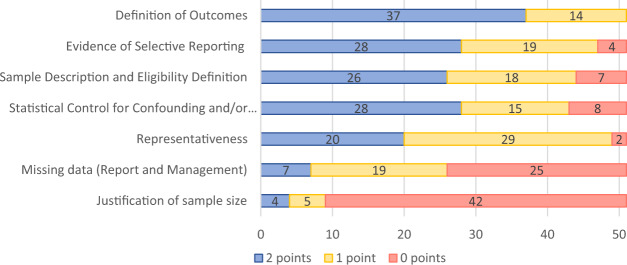
“Our quality assessments reflect poor reporting of missing data at both the sample level (e.g. attrition and study non-completion) and individual level (e.g. missing sensor data from participants).”
§ Digital health tools for the passive monitoring of depression: a systematic review of methods > Discussion
plain- Asserted: passes — The authors put it forward as true.
- Checkable: passes — It can be checked against evidence.
- Load-bearing: passes — The paper’s conclusions depend on it.
- Based: passes — The paper gives a reason why it holds.
It may state two separate claims as one.
The paper states this without a source or data behind it here, so there is nothing to check it against. The quote shows it is in the paper.
In the paper
“and the limited description in feature extraction and analysis in medical papers”
§ Digital health tools for the passive monitoring of depression: a systematic review of methods > Discussion > Recommendations and conclusions
plain- Asserted: passes — The authors put it forward as true.
- Checkable: passes — It can be checked against evidence.
- Load-bearing: passes — The paper’s conclusions depend on it.
- Based: passes — The paper gives a reason why it holds.
Probably not a substantial claim.
The paper states this without a source or data behind it here, so there is nothing to check it against. The quote shows it is in the paper.
In the paper
“The literature we identified derives from both clinical and computer science disciplines”
§ Digital health tools for the passive monitoring of depression: a systematic review of methods > Discussion > Recommendations and conclusions
plain- Asserted: passes — The authors put it forward as true.
- Checkable: passes — It can be checked against evidence.
- Load-bearing: passes — The paper’s conclusions depend on it.
- Based: passes — The paper gives a reason why it holds.
Probably not a substantial claim.
A conclusion the paper draws from its own results — it cites no other source for it, so there is none to check. The quote shows it is in the paper.
In the paper
“Studies have mostly employed opportunistic study designs, with small sample sizes, short follow-up windows and many being conducted on students, which limits generalisability.”
§ Digital health tools for the passive monitoring of depression: a systematic review of methods > Discussion
plaindirect- Asserted: passes — The authors put it forward as true.
- Checkable: passes — It can be checked against evidence.
- Load-bearing: passes — The paper’s conclusions depend on it.
- Based: passes — The paper gives a reason why it holds.
It may state two separate claims as one.
In the paper
“Different features may reach peak predictability of mood with different sampling timeframes, so shorter follow-ups may harm the prediction abilities for some behaviours22.”
§ Digital health tools for the passive monitoring of depression: a systematic review of methods > Discussion
What the sources say
- Not checked yetcites [22] Sano A Identifying objective physiological markers and modifiable behaviors for self-reported stress and mental health status using wearable sensors and mobile phones: observational study J. Med. Internet Res. 2018 20 e210 29884610 PMC6015266
hedgedconditional- Asserted: passes — The authors put it forward as true.
- Checkable: passes — It can be checked against evidence.
- Load-bearing: passes — The paper’s conclusions depend on it.
- Based: passes — The paper gives a reason why it holds.
It may state two separate claims as one.
A conclusion the paper draws from its own results — it cites no other source for it, so there is none to check. The quote shows it is in the paper.
In the paper
“Additionally, due to the large number of variables obtained in sensing studies, it is likely that published papers are selective in their reporting, and typically emphasise “positive” findings over “negative” ones.”
§ Digital health tools for the passive monitoring of depression: a systematic review of methods > Discussion
hedgedconditional- Asserted: passes — The authors put it forward as true.
- Checkable: fails — It may be too vague to check against evidence.
- Load-bearing: fails — The paper’s conclusions may not depend on it.
- Based: passes — The paper gives a reason why it holds.
Probably not a substantial claim. It may be too vague to check against evidence. The paper’s conclusions may not depend on it. It may state two separate claims as one.
A conclusion the paper draws from its own results — it cites no other source for it, so there is none to check. The quote shows it is in the paper.
In the paper
“This heterogeneity challenges the ability of investigators to reproduce findings and hampered our ability to summarise results in a meta-analysis.”
§ Digital health tools for the passive monitoring of depression: a systematic review of methods > Discussion
plaindirect- Asserted: passes — The authors put it forward as true.
- Checkable: passes — It can be checked against evidence.
- Load-bearing: passes — The paper’s conclusions depend on it.
- Based: passes — The paper gives a reason why it holds.
It may state two separate claims as one.
A conclusion the paper draws from its own results — it cites no other source for it, so there is none to check. The quote shows it is in the paper.
In the paper
“As previously mentioned, this may be due to short follow-up since median follow-up times for circadian features = 9 days.”
§ Digital health tools for the passive monitoring of depression: a systematic review of methods > Discussion > Association between mood and digital features
hedgedconditional- Asserted: passes — The authors put it forward as true.
- Checkable: passes — It can be checked against evidence.
- Load-bearing: passes — The paper’s conclusions depend on it.
- Based: passes — The paper gives a reason why it holds.
Probably not a substantial claim.
A conclusion the paper draws from its own results — it cites no other source for it, so there is none to check. The quote shows it is in the paper.
In the paper
“Given the heterogeneity in research quality and reporting standards across studies, making inferences from aggregated associations between digital features and mood may be misleading.”
§ Digital health tools for the passive monitoring of depression: a systematic review of methods > Discussion > Association between mood and digital features
hedged- Asserted: passes — The authors put it forward as true.
- Checkable: passes — It can be checked against evidence.
- Load-bearing: passes — The paper’s conclusions depend on it.
- Based: passes — The paper gives a reason why it holds.
Probably not a substantial claim.
In the paper
“A more recent systematic review, however, found that while actigraphy tended to overestimate sleep and underestimate wake, this inaccuracy was consistent, thereby maintaining its usefulness as a potential marker of sleep–wake patterns59.”
§ Digital health tools for the passive monitoring of depression: a systematic review of methods > Discussion
What the sources say
- Not checked yetcites [59] Conley S Agreement between actigraphic and polysomnographic measures of sleep in adults with and without chronic conditions: a systematic review and meta-analysis Sleep Med. Rev. 2019 46 151 160 31154154 PMC6594867
hedgedcorrelational- Asserted: passes — The authors put it forward as true.
- Checkable: passes — It can be checked against evidence.
- Load-bearing: unclear — It is unclear whether the paper’s conclusions depend on it.
- Based: passes — The paper gives a reason why it holds.
It may state two separate claims as one.
A conclusion the paper draws from its own results — it cites no other source for it, so there is none to check. The quote shows it is in the paper.
In the paper
“There is therefore a need for a comprehensive review of methodologies, with more specific inclusion criteria, to highlight the sources of heterogeneity and methodological shortcomings in the field.”
§ Digital health tools for the passive monitoring of depression: a systematic review of methods > Introduction
plain- Asserted: passes — The authors put it forward as true.
- Checkable: fails — It may be too vague to check against evidence.
- Load-bearing: passes — The paper’s conclusions depend on it.
- Based: passes — The paper gives a reason why it holds.
Probably not a substantial claim. It may be too vague to check against evidence.
A conclusion the paper draws from its own results — it cites no other source for it, so there is none to check. The quote shows it is in the paper.
In the paper
“but the question of how well these models can be replicated remains”
§ Digital health tools for the passive monitoring of depression: a systematic review of methods > Discussion > Association between mood and digital features
plain- Asserted: passes — The authors put it forward as true.
- Checkable: fails — It may be too vague to check against evidence.
- Load-bearing: passes — The paper’s conclusions depend on it.
- Based: passes — The paper gives a reason why it holds.
Probably not a substantial claim. It may be too vague to check against evidence.
A conclusion the paper draws from its own results — it cites no other source for it, so there is none to check. The quote shows it is in the paper.
In the paper
“whether or not these sensors measure the exact ground truth may be less concerning than whether the features we do extract are consistent against each other and serve the purpose of detecting changes in health status.”
§ Digital health tools for the passive monitoring of depression: a systematic review of methods > Discussion
hedged- Asserted: passes — The authors put it forward as true.
- Checkable: fails — It may be too vague to check against evidence.
- Load-bearing: passes — The paper’s conclusions depend on it.
- Based: passes — The paper gives a reason why it holds.
Probably not a substantial claim. It may be too vague to check against evidence. It may state two separate claims as one.
In the paper
“However, machine learning methods have been criticised for lacking transparency in how the model is built and how individual variables contribute to the overall prediction65.”
§ Digital health tools for the passive monitoring of depression: a systematic review of methods > Discussion > Association between mood and digital features
What the sources say
- Not checked yetcites [65] Wall R Cunningham P Walsh P Byrne S Explaining the output of ensembles in medical decision support on a case by case basis Artif. Intell. Med. 2003 28 191 206 12893119
plain- Asserted: passes — The authors put it forward as true.
- Checkable: passes — It can be checked against evidence.
- Load-bearing: fails — The paper’s conclusions may not depend on it.
- Based: passes — The paper gives a reason why it holds.
Probably not a substantial claim. The paper’s conclusions may not depend on it.
A conclusion the paper draws from its own results — it cites no other source for it, so there is none to check. The quote shows it is in the paper.
In the paper
“analysing multimodal data in this way may help cover missing data from one source to another.”
§ Digital health tools for the passive monitoring of depression: a systematic review of methods > Discussion > Association between mood and digital features
hedgedconditional- Asserted: passes — The authors put it forward as true.
- Checkable: passes — It can be checked against evidence.
- Load-bearing: fails — The paper’s conclusions may not depend on it.
- Based: passes — The paper gives a reason why it holds.
Probably not a substantial claim. The paper’s conclusions may not depend on it.
None of the sources cited for this claim have been checked yet.
In the paper
“Additionally, these reviews have included non-validated measures of depression, and a mix of bipolar and unipolar samples, characteristics which not only show divergent results11,12,14, but add study diversity.”
§ Digital health tools for the passive monitoring of depression: a systematic review of methods > Introduction
What the sources say
- Not checked yetcites [11] Rohani DA Faurholt-Jepsen M Kessing LV Bardram JE Correlations between objective behavioral features collected from mobile and wearable devices and depressive mood symptoms in patients with affective disorders: systematic review JMIR MHealth UHealth 2018 6 e165 30104184 PMC6111148
- Not checked yetcites [12] Melcher, J., Hays, R. & Torous, J. Digital phenotyping for mental health of college students: a clinical review. Evid. Based Ment. Health ebmental-2020-300180. 10.1136/ebmental-2020-300180 (2020). PMC10231503 32998937
- Not checked yetcites [14] Dogan E Sander C Wagner X Hegerl U Kohls E Smartphone-based monitoring of objective and subjective data in affective disorders: where are we and where are we going? Systematic review J. Med. Internet Res. 2017 19 e262 28739561 PMC5547249
plaincorrelational- Asserted: passes — The authors put it forward as true.
- Checkable: passes — It can be checked against evidence.
- Load-bearing: passes — The paper’s conclusions depend on it.
- Based: passes — The paper gives a reason why it holds.
It may state two separate claims as one.
None of the sources cited for this claim have been checked yet.
In the paper
“The advantages of a multidisciplinary approach are evident, but these domains are yet to be brought together efficiently11,12, giving rise to large differences in reporting standards with the risk that reproducibility may be threatened13.”
§ Digital health tools for the passive monitoring of depression: a systematic review of methods > Introduction
What the sources say
- Not checked yetcites [11] Rohani DA Faurholt-Jepsen M Kessing LV Bardram JE Correlations between objective behavioral features collected from mobile and wearable devices and depressive mood symptoms in patients with affective disorders: systematic review JMIR MHealth UHealth 2018 6 e165 30104184 PMC6111148
- Not checked yetcites [12] Melcher, J., Hays, R. & Torous, J. Digital phenotyping for mental health of college students: a clinical review. Evid. Based Ment. Health ebmental-2020-300180. 10.1136/ebmental-2020-300180 (2020). PMC10231503 32998937
plaindirect- Asserted: passes — The authors put it forward as true.
- Checkable: passes — It can be checked against evidence.
- Load-bearing: passes — The paper’s conclusions depend on it.
- Based: passes — The paper gives a reason why it holds.
It may state two separate claims as one.
A conclusion the paper draws from its own results — it cites no other source for it, so there is none to check. The quote shows it is in the paper.
In the paper
“some of the heterogeneity we report results from these disciplines having distinct conventions, with medical outputs putting more weight on sample and clinical outcome characteristics but often overlooking feature extraction and analysis description.”
§ Digital health tools for the passive monitoring of depression: a systematic review of methods > Discussion > Recommendations and conclusions
plainconditional- Asserted: passes — The authors put it forward as true.
- Checkable: passes — It can be checked against evidence.
- Load-bearing: passes — The paper’s conclusions depend on it.
- Based: passes — The paper gives a reason why it holds.
Probably not a substantial claim.
What the paper did — it cites no source for this, so there is none to check. The quote shows it is in the paper.
In the paper
“The protocol was registered on PROSPERO 2019 CRD42019159929.”
§ Digital health tools for the passive monitoring of depression: a systematic review of methods > Methods > Search strategy and selection criteria
plain- Asserted: passes — The authors put it forward as true.
- Checkable: passes — It can be checked against evidence.
- Load-bearing: fails — The paper’s conclusions may not depend on it.
- Based: passes — The paper gives a reason why it holds.
Probably not a substantial claim. The paper’s conclusions may not depend on it.
None of the sources cited for this claim have been checked yet.
In the paper
“Whilst there have been attempts at standardising reporting standards for actively collected questionnaire data on mood66, and guidelines exist for the reporting of observational data (STROBE67) and multivariable prediction models (TRIPOD statement68)”
§ Digital health tools for the passive monitoring of depression: a systematic review of methods > Discussion > Recommendations and conclusions
What the sources say
- Not checked yetcites [66] Faurholt-Jepsen M Reporting guidelines on remotely collected electronic mood data in mood disorder (eMOOD)—recommendations Transl. Psychiatry 2019 9 1 10 31175283 PMC6555812
- Not checked yetcites [67] Elm Evon The Strengthening the Reporting of Observational Studies in Epidemiology (STROBE) statement: guidelines for reporting observational studies Lancet 2007 370 1453 1457 18064739
- Not checked yetcites [68] Collins GS Reitsma JB Altman DG Moons KGM Transparent reporting of a multivariable prediction model for individual prognosis or diagnosis (TRIPOD): the TRIPOD statement BMJ 2015 350 g7594 25569120
plain- Asserted: passes — The authors put it forward as true.
- Checkable: passes — It can be checked against evidence.
- Load-bearing: fails — The paper’s conclusions may not depend on it.
- Based: passes — The paper gives a reason why it holds.
Probably not a substantial claim. The paper’s conclusions may not depend on it. It may state two separate claims as one.
What the paper did — it cites no source for this, so there is none to check. The quote shows it is in the paper.
In the paper
“Disagreements at any stage of eligibility and data extraction were resolved by discussing with an additional reviewer.”
§ Digital health tools for the passive monitoring of depression: a systematic review of methods > Methods > Procedure
plain- Asserted: passes — The authors put it forward as true.
- Checkable: passes — It can be checked against evidence.
- Load-bearing: fails — The paper’s conclusions may not depend on it.
- Based: passes — The paper gives a reason why it holds.
Probably not a substantial claim. The paper’s conclusions may not depend on it.
A conclusion the paper draws from its own results — it cites no other source for it, so there is none to check. The quote shows it is in the paper.
In the paper
“It is possible that the associations we have reported are due to reporting bias, as mentioned in the previous section, where investigators emphasise “significant” findings over “non-significant” ones.”
§ Digital health tools for the passive monitoring of depression: a systematic review of methods > Discussion > Strengths and limitations
hedgedconditional- Asserted: passes — The authors put it forward as true.
- Checkable: passes — It can be checked against evidence.
- Load-bearing: fails — The paper’s conclusions may not depend on it.
- Based: passes — The paper gives a reason why it holds.
Probably not a substantial claim. The paper’s conclusions may not depend on it.
A conclusion the paper draws from its own results — it cites no other source for it, so there is none to check. The quote shows it is in the paper.
In the paper
“have important implications for the interpretation of findings.”
§ Digital health tools for the passive monitoring of depression: a systematic review of methods > Discussion > Recommendations and conclusions
plaindirect- Asserted: passes — The authors put it forward as true.
- Checkable: fails — It may be too vague to check against evidence.
- Load-bearing: passes — The paper’s conclusions depend on it.
- Based: passes — The paper gives a reason why it holds.
Probably not a substantial claim. It may be too vague to check against evidence.
What the paper did — it cites no source for this, so there is none to check. The quote shows it is in the paper.
In the paper
“Agreement of >90% was reached for all reviewer pairs.”
§ Digital health tools for the passive monitoring of depression: a systematic review of methods > Methods > Procedure
plain- Asserted: passes — The authors put it forward as true.
- Checkable: passes — It can be checked against evidence.
- Load-bearing: fails — The paper’s conclusions may not depend on it.
- Based: passes — The paper gives a reason why it holds.
Probably not a substantial claim. The paper’s conclusions may not depend on it.
None of the sources cited for this claim have been checked yet.
In the paper
“For example, some wearable devices may be more accurate on lighter skin tones69, and on men70.”
§ Digital health tools for the passive monitoring of depression: a systematic review of methods > Discussion > Recommendations and conclusions
What the sources say
- Not checked yetcites [69] Colvonen PJ DeYoung PN Bosompra N-OA Owens RL Limiting racial disparities and bias for wearable devices in health science research Sleep 2020 43 zsaal159 PMC8477341 32893865
- Not checked yetcites [70] Nuss KJ Assessment of accuracy of overall energy expenditure measurements for the Fitbit Charge HR 2 and Apple Watch Am. J. Health Behav. 2019 43 498 505 31046881
hedgedcorrelational- Asserted: passes — The authors put it forward as true.
- Checkable: passes — It can be checked against evidence.
- Load-bearing: passes — The paper’s conclusions depend on it.
- Based: passes — The paper gives a reason why it holds.
It may state two separate claims as one.
What the paper did — it cites no source for this, so there is none to check. The quote shows it is in the paper.
In the paper
“To present low-level features in a clear and meaningful way in this review, we combined them into broader low-level features and therefore some of the nuances between them were lost.”
§ Digital health tools for the passive monitoring of depression: a systematic review of methods > Discussion > Strengths and limitations
plaindirect- Asserted: passes — The authors put it forward as true.
- Checkable: passes — It can be checked against evidence.
- Load-bearing: fails — The paper’s conclusions may not depend on it.
- Based: passes — The paper gives a reason why it holds.
Probably not a substantial claim. The paper’s conclusions may not depend on it. It may state two separate claims as one.
What the paper did — it cites no source for this, so there is none to check. The quote shows it is in the paper.
In the paper
“Potentially eligible studies’ full texts were reviewed by one researcher, with a second researcher evaluating a random sample of 10% of all texts for validating purposes.”
§ Digital health tools for the passive monitoring of depression: a systematic review of methods > Methods > Procedure
plain- Asserted: passes — The authors put it forward as true.
- Checkable: passes — It can be checked against evidence.
- Load-bearing: fails — The paper’s conclusions may not depend on it.
- Based: passes — The paper gives a reason why it holds.
Probably not a substantial claim. The paper’s conclusions may not depend on it. It may state two separate claims as one.
None of the sources cited for this claim have been checked yet.
In the paper
“No single quality assessment tool was suitable because of the ditabversity of study types. We, therefore, combined the Appraisal Tool for Cross-Sectional Studies (AXIS tool74 and the Newcastle–Ottawa Scale (NOS) for longitudinal studies75.”
§ Digital health tools for the passive monitoring of depression: a systematic review of methods > Methods > Study quality assessment
What the sources say
- Not checked yetcites [74] Downes MJ Brennan ML Williams HC Dean RS Development of a critical appraisal tool to assess the quality of cross-sectional studies (AXIS) BMJ Open 2016 6 e011458 27932337 PMC5168618
- Not checked yetcites [75] Wells, G. et al. The Newcastle-Ottawa Scale (NOS) for assessing the quality of nonrandomized studies in meta-analysis. 21, (2000).
plaindirect- Asserted: passes — The authors put it forward as true.
- Checkable: passes — It can be checked against evidence.
- Load-bearing: passes — The paper’s conclusions depend on it.
- Based: passes — The paper gives a reason why it holds.
It may state two separate claims as one.
What the paper did — it cites no source for this, so there is none to check. The quote shows it is in the paper.
In the paper
“Data extraction was carried out on all studies, regardless of their quality assessment score.”
§ Digital health tools for the passive monitoring of depression: a systematic review of methods > Methods > Study quality assessment
plain- Asserted: passes — The authors put it forward as true.
- Checkable: passes — It can be checked against evidence.
- Load-bearing: fails — The paper’s conclusions may not depend on it.
- Based: passes — The paper gives a reason why it holds.
Probably not a substantial claim. The paper’s conclusions may not depend on it.
In the paper
“The eligibility process was documented according to PRISMA guidelines73.”
§ Digital health tools for the passive monitoring of depression: a systematic review of methods > Methods > Procedure
What the sources say
- Not checked yetcites [73] Moher D Liberati A Tetzlaff J Altman DG Group TP Preferred reporting items for systematic reviews and meta-analyses: the PRISMA Statement PLoS Med. 2009 6 e1000097 19621072 PMC2707599
plain- Asserted: passes — The authors put it forward as true.
- Checkable: passes — It can be checked against evidence.
- Load-bearing: fails — The paper’s conclusions may not depend on it.
- Based: passes — The paper gives a reason why it holds.
Probably not a substantial claim. The paper’s conclusions may not depend on it.
What the paper did — it cites no source for this, so there is none to check. The quote shows it is in the paper.
In the paper
“Studies were checked for eligibility by two researchers independently screening titles and abstracts.”
§ Digital health tools for the passive monitoring of depression: a systematic review of methods > Methods > Procedure
plain- Asserted: passes — The authors put it forward as true.
- Checkable: passes — It can be checked against evidence.
- Load-bearing: fails — The paper’s conclusions may not depend on it.
- Based: passes — The paper gives a reason why it holds.
Probably not a substantial claim. The paper’s conclusions may not depend on it.
The paper relies on this without support.
Digital technology for tracking mood and behaviour has enormous potential for clinical management and improving depression research.
“The use of digital technology to track mood and behaviour brings enormous potential for clinical management and the improvement of research in depression.”
The paper relies on this without support.
Remote sensing combined with questionnaires may generate more objective and frequent measures of mood and core dimensions of mental disorders than retrospective accounts.
“When combined with the completion of questionnaires, remote sensing may generate more objective and frequent measures of mood and other core dimensions of mental disorders, instead of relying on retrospective accounts of patients or participants.”
The paper relies on this without support.
Missing data can arise from issues with technology (device and system failures) or from user-related issues that may be associated with depressed mood.
“Missing data can arise from issues with technology, such as device and system failures, or from user-related issues which may be associated with depressed mood.”
The paper relies on this without support.
Remote sensing potentially places a considerable burden on study participants.
“Remote sensing is a relatively new technology that potentially places a considerable burden on study participants”
Claims other papers make about this one
Each is checked against this paper’s own text: does it say what the citing paper says it does?
In the citing paper
“The literature was characterised by inconsistent reporting, and very rarely were data on adherence to protocol reported.”
In the citing paper
“In a recent systematic review we identified 52 publications testing RMT in depression [17].”
In the citing paper
“A recent systematic review summarising studies using passive and active smartphone-based measurements in affective disorders found only 5 studies in people with MDD, and these studies reported a median sample size of 5, and median follow-up time of 4 weeks, in addition to huge variability in the quality of reporting [17].”
In the citing paper
“Despite these limitations, RADAR-MDD remains the largest, most ambitious multimodal RMT study in depression.”
Self-check
Percentages, sums and reported differences re-computed from the paper’s own numbers.
Each contradiction between two passages listed here was confirmed by an independent check.
Rated minor: it would not touch a result — a value no result rests on, a p-value that stays on the same side of the significance level, or a conflict that is clerical, resolved elsewhere in the paper, or outside its own findings.
In the paper
§ Digital health tools for the passive monitoring of depression: a systematic review of methods > Results > Associations between objective features and depression
“Entropy was reported in 26 cases in four different studies.”
§ Digital health tools for the passive monitoring of depression: a systematic review of methods > Discussion > Association between mood and digital features
“with homestay and entropy both associated with the mood in 4 and 5 studies, respectively.”
Rated minor: it would not touch a result — a value no result rests on, a p-value that stays on the same side of the significance level, or a conflict that is clerical, resolved elsewhere in the paper, or outside its own findings.
In the paper
§ Digital health tools for the passive monitoring of depression: a systematic review of methods > Results
“| Caldwell76 | 2019 | USA”
§ Digital health tools for the passive monitoring of depression: a systematic review of methods > References
“76. Caldwell BA Redeker NS Sleep patterns and psychological distress in women living in an inner city Res. Nurs. Health 2009”
Rated minor: it would not touch a result — a value no result rests on, a p-value that stays on the same side of the significance level, or a conflict that is clerical, resolved elsewhere in the paper, or outside its own findings.
In the paper
“| Cohort | 25 | 14 | 6 | 3 |”
§ Digital health tools for the passive monitoring of depression: a systematic review of methods > Results
Reported 25 · recomputed 23
Citations
Cites
Preferred Reporting Items for Systematic Reviews and Meta-Analyses: the PRISMA statement
Moher, D., Liberati, A., Tetzlaff, J., Altman, D. G., & for the PRISMA Group (2009) · BMJ · doi:10.1136/bmj.b2535 · Cited by 83,823
Preferred Reporting Items for Systematic Reviews and Meta-Analyses: The PRISMA Statement
Moher, D., Liberati, A., Tetzlaff, J., Altman, D. G., & The PRISMA Group (2009) · PLoS Medicine · doi:10.1371/journal.pmed.1000097 · Cited by 64,042
The CES-D Scale: A Self-Report Depression Scale for Research in the General Population
Radloff, L. S. (1977) · Applied Psychological Measurement · doi:10.1177/014662167700100306 · Cited by 53,267
The PHQ-9: Validity of a brief depression severity measure
Kroenke, K., Spitzer, R. L., & Williams, J. B. W. (2001) · Journal of General Internal Medicine · doi:10.1046/j.1525-1497.2001.016009606.x · Cited by 44,910
Preferred reporting items for systematic reviews and meta-analyses: The PRISMA statement
Moher, D., Liberati, A., Tetzlaff, J., Altman, D. G., & the PRISMA Group* (2009) · Annals of Internal Medicine · doi:10.7326/0003-4819-151-4-200908180-00135 · Cited by 37,554
Hamilton, M. (1960) · Journal of Neurology, Neurosurgery & Psychiatry · doi:10.1136/jnnp.23.1.56 · Cited by 32,817 · cited 1×
“Yue (21) 2018 USA CS 54 nr (18-25) nr Student PHQ-9 x x 2”
von Elm, E., Altman, D. G., Egger, M., Pocock, S. J., Gøtzsche, P. C., & Vandenbroucke, J. P. (2007) · The Lancet · doi:10.1016/s0140-6736(07)61602-x · Cited by 21,320
Wang, G., Ma, R., Qiao, G., Wada, K., Aizawa, Y., & Satoh, T. (2015) · Integrative Medicine International · doi:10.1159/000368408 · Cited by 18,762
Collins, G. S., Reitsma, J. B., Altman, D. G., & Moons, K. G. M. (2015) · BMJ · doi:10.1136/bmj.g7594 · Cited by 4,388
Collins, P. G. S., Reitsma, J. B., Altman, D. G., & Moons, K. G. M. (2015) · British Journal of Cancer · doi:10.1038/bjc.2014.639 · Cited by 3,319
Research works printed but not linked: 7
- [44]Doryab, A., Min, J. K., Wiese, J., Zimmerman, J. & Hong, J. Detection of behavior change in people with depression. In Proc. of the 28th AAAI Conference on Artificial Intelligence, Vol. 5 (Québec City, QC, Canada, 2014).
- [86]Naismith SL Sleep disturbance relates to neuropsychological functioning in late-life depression J. Affect. Disord. 2011 132 139 145 21435728
- [88]Pillai V Steenburg LA Ciesla JA Roth T Drake CL A seven day actigraphy-based study of rumination and sleep disturbance among young adults with depressive symptoms J. Psychosom. Res. 2014 77 70 75 24913345
- [89]Pratap A The accuracy of passive phone sensors in predicting daily mood Depress. Anxiety 2019 36 72 81 30129691 PMC8491547
- [90]Robillard R Sleep-wake profiles predict longitudinal changes in manic symptoms and memory in young people with mood disorders J. Sleep Res. 2016 25 549 555 27242171
- [95]Vanderlind WM Sleep and sadness: exploring the relation among sleep, cognitive control, and depressive symptoms in young adults Sleep Med. 2014 15 144 149 24332565 PMC4217155
- [96]Wang, R. et al. Tracking depression dynamics in college students using mobile phone and wearable sensing. In Proc. ACM Interactive Mobile, Wearable and Ubiquitous Technology, Vol. 2, 1–26 (2018). PMC11501090 39449996
Cited by
Sorted by citations
Items 201–226 of 226
Wright, L. A., Rawsthorne, M., Nixon, N., Guo, B., & Morriss, R. K. (2026) · JMIR Mental Health · doi:10.2196/79501
Kim, B., Chae, M., Seo, H., Jeong, J., Park, S., Jeong, I., Kim, Y., Kim, Y., Jung, T., Lee, T. H., et al. (2026) · Journal of Affective Disorders · doi:10.1016/j.jad.2026.122076
Sleep and Activity Patterns in Depression From Wearable Data: Unsupervised Clustering Study
Oetzmann, C., Zhang, Y., Cummins, N., Carr, E., Matcham, F., Siddi, S., Lamers, F., Leightley, D., White, K. M., Folarin, A., et al. (2026) · Journal of Medical Internet Research · doi:10.2196/86900 · Cited by 1
Self-citationKim, S. M., Park, H. G., Shin, J. W., Park, J. H., Joo, S. W., Park, S., Jung, D., Lee, S., Lee, S., Kim, H., et al. (2026) · JMIR Formative Research · doi:10.2196/88083
Guo, J., Frederick, J., Cunningham, L. D., Jacobson, N. C., Fisher, A. J., Pettit, J. W., McMakin, D. L., & Ng, M. Y. (2026) · Research on Child and Adolescent Psychopathology · doi:10.1007/s10802-026-01464-9
Ye, J. Y., Shen, Z.-J., Li, B., & Yan, W. (2026) · Frontiers in Psychiatry · doi:10.3389/fpsyt.2026.1866163
Hong, Q., Zakaria, L. Q., & Tiun, S. B. (2026) · PeerJ Computer Science · doi:10.7717/peerj-cs.3935
Douglas, C., Congdon, E. L., Huang, C., Seok, D., Cohen, Z. D., Akre, S., Tozzo, V., Huang, F., Ramo-Larios, D., Bernier, R. A., et al. (2026) · npj Digital Public Health · doi:10.1038/s44482-026-00029-3
Multimodal Deep Learning Approach for Major Depressive Disorder (MDD) Prediction
Jelinek, H. F., & Al-Saedi, K. H. (2026) · Advances in Science, Technology & Innovation/Advances in science, technology & innovation · doi:10.1007/978-3-032-21822-3_5
Wislocki, K. E., Jacobson, N. C., Sami, S., Stern, B., & Zalta, A. K. (2026) · doi:10.2196/preprints.108054
Kim, S., Bein, O., Carter, E. J., Zhang, H., Lee, J., Yu, Z., Marino, P., Sirey, J. A., Kiosses, D. N., Alexopoulos, G. S., et al. (2026) · Journal of Medical Internet Research · doi:10.2196/92348
Menne, F., Dörr, F., Tröger, J., König, A., Schräder, J., Immel, D., Hurlemann, R., Barton, S., & Wagels, L. (2026) · Annals of General Psychiatry · doi:10.1186/s12991-026-00691-0
Wei, V. W., Chen, X., Li, J., Wang, Z., 王锡淦, Yin, Z., Wang, L., & Liao, C. (2026) · Med-X · doi:10.1007/s44258-026-00092-8
Leightley, D., Prindle, J., Saba, S. K., Dilkina, B., Pedersen, E. R., Dworkin, E., Howe, E. S., Thota, V. S. P., Nuthi, S., Sedano, A., et al. (2026) · BJPsych Open · doi:10.1192/bjo.2026.12055
Self-citationDiaz, F., Morales, L., & Pérez, D. (2025) · Journal of Health Informatics and Digital Systems · doi:10.68159/k510742301
Losiewicz, O. M., Zbozinek, T. D., Cohen, Z. D., Akre, S., Bui, A. A. T., & Craske, M. G. (2026) · Journal of Affective Disorders Reports · doi:10.1016/j.jadr.2026.101163
Alves, R., Costa, B., Martins, H., & Faria, N. (2025) · Journal of Artificial Intelligence for Healthcare Systems · doi:10.68159/w392021408
Network Analysis in Digital Phenotyping for Mental Health: A Scoping Review (Preprint)Preprint
Cong, S., Calvert, E., Lim, K., & Torous, J. B. (2026) · doi:10.2196/preprints.111852
Pick, S., & Hotopf, M. H. (2026) · Philosophical Transactions of the Royal Society B Biological Sciences · doi:10.1098/rstb.2024.0471
Self-citationIm, C.-H., & Woo, M. (2026) · Health Policy and Technology · doi:10.1016/j.hlpt.2026.101322
Bogdanova, K., Cila, N., Kudina, O., & Bozzon, A. (2026) · Nordic Conference on Human-Computer Interaction · doi:10.1145/3829807.3829886
Liao, X., Yang, H., Lin, P., & Chen, S. (2026) · Materials Today Physics · doi:10.1016/j.mtphys.2026.102275
Zhang, Y., Folarin, A., Zhong, R., Kim, H., Sun, S., Stewart, C., & Dobson, R. (2026) · Journal of Affective Disorders · doi:10.1016/j.jad.2026.122643
Self-citationKing, G. A., Vize, C. E., Beltz, A. M., & Wright, A. G. C. (2026) · Behavior Therapy · doi:10.1016/j.beth.2026.10.004
Prajoko, Rijati, N., Basuki, R. S., & Pujiono (2026) · International Seminar on Application for Technology of Information and Communication (iSemantic) · doi:10.1109/isemantic71495.2026.11742599
Metadata
- Authors
- de Angel, V., Lewis, S., White, K., Oetzmann, C., Leightley, D., Oprea, E., Lavelle, G., Matcham, F., Pace, A., Mohr, D. C., Dobson, R., & Hotopf, M.
- Affiliations
- King's College London (GB)
- Chelsea and Westminster Hospital NHS Foundation Trust (GB)
- Northwestern University (US)
- ORCID
- Venue
- npj Digital Medicine
- Publisher
- openRxiv
- Published
- 2021-07-22
- Volume
- 5
- Issue
- 1
- Pages
- 3-3
- ISSN
- 2398-6352 (ISSN-L)
- PMC
- PMC8752685
- OpenAlex
- W4221044624
- Cited by
- 227
- References
- 97
- Citations by year
- 2026: 56 · 2025: 54 · 2024: 63 · 2023: 32 · 2022: 22
- FWCI
- 7.61
- Type
- journal article
- Language
- en
- Open access
- gold
- doi.org
- Licence
- cc-by
- Locations
- npj Digital Medicine (publishedVersion, cc-by)
- medRxiv (acceptedVersion, cc-by-nc-nd)
- PubMed Central (publishedVersion, cc-by)
- PubMed (publishedVersion)
- Sussex Research Online (University of Sussex) (submittedVersion, cc-by)
- DOAJ (DOAJ: Directory of Open Access Journals) (submittedVersion, cc-by-sa)
- Figshare (submittedVersion, cc-by)
- Research Portal (King's College London) (submittedVersion, cc-by)
- Funders
- South London and Maudsley NHS Foundation Trust
- Wellcome Trust
- King's College Hospital NHS Foundation Trust
- Scottish Government
- European Federation of Pharmaceutical Industries and Associations (116074)
- UK Research and Innovation
- National Institute for Health and Care Research (NF-SI-0515-10102)
- British Heart Foundation
- Department of Health and Social Care
- King's College London
- University College London
- European Commission (116074, HORIZON2020)
- Public Health Agency
- Innovative Medicines Initiative (116074)
- Chief Scientist Office, Scottish Government Health and Social Care Directorate
- NIHR Maudsley Biomedical Research Centre
- Medical Research Council (MC_PC_17214)
- Engineering and Physical Sciences Research Council
- Economic and Social Research Council
- Health and Social Care Research and Development Division
- National Institute for Health Research Applied Research Collaboration South London
- Health Data Research UK
- Topics
- Social Sciences › Psychology › Applied Psychology › Digital Mental Health Interventions
- Social Sciences › Psychology › Experimental and Cognitive Psychology › Mental Health Research Topics
- Physical Sciences › Computer Science › Artificial Intelligence › Emotion and Mood Recognition
- Keywords
- depression, passive monitoring, digital health tools, wearable devices, smartphone sensors, sleep, physical activity, location data, telephone use, major depressive disorder, reproducibility, reporting quality, machine learning prediction
About these checks
Registry, retraction, Cites and statistics results are computed, not judged, with one exception: a printed reference that no index lists is read once by a model before it counts as a citation error. Claims are extracted by a model and kept only when their quote appears verbatim in the text; each cited source is then checked, with a model’s help, for whether it says what the claim relies on. Those verdicts can be wrong — read the claim’s quote and the cited source before relying on one.
A language model drew the claims from the paper on 2026-10-10, under version 3 of the claim definition (model deepseek-v4.1-flash, prompt extract-v3).
A second model labelled each claim on 2026-10-10 (model jev-1.13-20260917, definition revision gold-guideline-v0.2).
Statistics and arithmetic are recomputed, not judged.
Confidence bands are shown only for fields calibrated on our annotated test set. None is calibrated yet, so no band is shown.
What counts as a claim ›How we measure confidence ›How we check this ›
Are you an author, or do you see a problem with this page? Request a review
