

The DOI matches its Crossref record; 80 of the 80 references it cites were found in a registry or an index.
Benchmarking AlphaFold for protein complex modeling reveals accuracy determinants
Open accessPreprint — published as 10.1002/pro.4379 · Paper page
Abstract
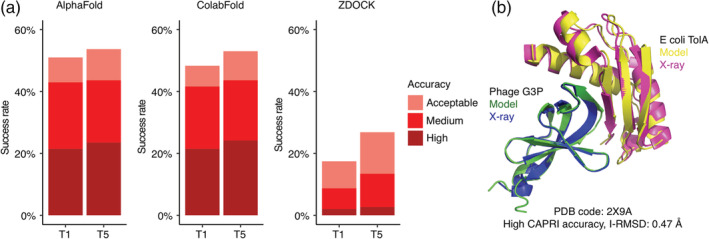
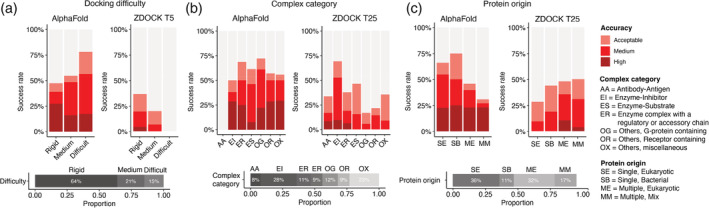
High resolution experimental structural determination of protein-protein interactions has led to valuable mechanistic insights, yet due to the massive number of interactions and experimental limitations there is a need for computational methods that can accurately model their structures. Here we explore the use of the recently developed deep learning method, AlphaFold, to predict structures of protein complexes from sequence. With a benchmark of 152 diverse heterodimeric protein complexes, multiple implementations and parameters of AlphaFold were tested for accuracy. Remarkably, many cases had highly accurate models generated as top-ranked predictions, greatly surpassing the performance of unbound protein-protein docking, whereas antibody-antigen docking was largely unsuccessful. While AlphaFold-generated accuracy predictions were able to discriminate near-native models, previously developed scoring protocols improved performance. Our study demonstrates that end-to-end deep learning can accurately model transient protein complexes, and identifies areas for improvement to guide future developments to reliably model any protein-protein interaction of interest.
Overview
The claims and statistics of this paper haven’t been checked yet.
Run the check — free, no account needed. It reads the open-access text and checks the sources it cites.
Integrity signals
Registry
Cites
Statistics
Figures
Verification
Claims the paper makes
The claims and statistics of this paper haven’t been checked yet.
Run the check — free, no account needed. It reads the open-access text and checks the sources it cites.
Self-check
Percentages, sums and reported differences re-computed from the paper’s own numbers.
The self-check needs the paper’s full text.
Citations
Cites
Highly accurate protein structure prediction with AlphaFold
Jumper, J., Evans, R., Pritzel, A., Green, T., Figurnov, M., Ronneberger, O., Tunyasuvunakool, K., Bates, R., Žídek, A., Potapenko, A., et al. (2021) · Nature · doi:10.1038/s41586-021-03819-2 · Cited by 43,764
Wickham, H. (2016) · Use R! · doi:10.1007/978-3-319-24277-4 · Cited by 34,873
BLAST+: architecture and applications
Camacho, C., Coulouris, G., Avagyan, V., Ma, N., Papadopoulos, J., Bealer, K., & Madden, T. L. (2009) · BMC Bioinformatics · doi:10.1186/1471-2105-10-421 · Cited by 22,074
pROC: an open-source package for R and S+ to analyze and compare ROC curves
Robin, X., Turck, N., Hainard, A., Tiberti, N., Lisacek, F., Sanchez, J.-C., & Müller, M. (2011) · BMC Bioinformatics · doi:10.1186/1471-2105-12-77 · Cited by 13,697
Cd-hit: Accelerated for clustering the next-generation sequencing data
Fu, L., Niu, B., Zhu, Z., Wu, S., & Li, W. (2012) · Bioinformatics · doi:10.1093/bioinformatics/bts565 · Cited by 11,175
Complex heatmaps reveal patterns and correlations in multidimensional genomic data
Gu, Z., Eils, R., & Schlesner, M. (2016) · Bioinformatics · doi:10.1093/bioinformatics/btw313 · Cited by 10,037
The Amber biomolecular simulation programs
Case, D. A., Cheatham, T. E., Darden, T., Gohlke, H., Luo, R., Merz, K. M., Onufriev, A., Simmerling, C., Wang, B., & Woods, R. J. (2005) · Journal of Computational Chemistry · doi:10.1002/jcc.20290 · Cited by 9,535
ColabFold - Making protein folding accessible to all
Mirdita, M., Schütze, K., Moriwaki, Y., Heo, L., Ovchinnikov, S., & Steinegger, M. (2021) · doi:10.1101/2021.08.15.456425 · Cited by 9,391
Varadi, M., Anyango, S., Deshpande, M., Nair, S., Natassia, C., Yordanova, G., Yuan, D., Stroe, O., Wood, G., Laydon, A., et al. (2022) · Nucleic Acids Research · doi:10.1093/nar/gkab1061 · Cited by 7,850
Bootstrap Methods and their Application
Davison, A. C., & Hinkley, D. V. (1997) · doi:10.1017/cbo9780511802843 · Cited by 7,350
Comparison of multiple Amber force fields and development of improved protein backbone parameters
Horn̆ák, V., Abel, R., Okur, A., Strockbine, B., Roitberg, A. E., & Simmerling, C. L. (2006) · Proteins Structure Function and Bioinformatics · doi:10.1002/prot.21123 · Cited by 6,989
Accurate prediction of protein structures and interactions using a 3-track network
Baek, M., DiMaio, F., Anishchenko, I., Dauparas, J., Ovchinnikov, S., Lee, G. R., Wang, J., Cong, Q., Kinch, L. N., Schaeffer, R. D., et al. (2021) · doi:10.1101/2021.06.14.448402 · Cited by 5,549
MMseqs2 enables sensitive protein sequence searching for the analysis of massive data sets
Steinegger, M., & Söding, J. (2017) · Nature Biotechnology · doi:10.1038/nbt.3988 · Cited by 4,840
Protein complex prediction with AlphaFold-Multimer
Evans, R., O’Neill, M., Pritzel, A., Antropova, N., Senior, A., Green, T., Žídek, A., Bates, R., Blackwell, S., Yim, J., et al. (2021) · doi:10.1101/2021.10.04.463034 · Cited by 3,808
Scoring function for automated assessment of protein structure template quality
Zhang, Y., & Skolnick, J. (2004) · Proteins: Structure, Function, and Bioinformatics · doi:10.1002/prot.20264 · Cited by 2,392
ZDOCK server: interactive docking prediction of protein–protein complexes and symmetric multimers
Pierce, B. G., Wiehe, K. J., Hwang, H., Kim, B., Vreven, T., & Weng, Z. (2014) · Bioinformatics · doi:10.1093/bioinformatics/btu097 · Cited by 1,767
Self-citationThe Rosetta All-Atom Energy Function for Macromolecular Modeling and Design
Alford, R. F., Leaver-Fay, A., Jeliazkov, J. R., O’Meara, M. J., DiMaio, F. P., Park, H., Shapovalov, M. V., Renfrew, P. D., Mulligan, V. K., Kappel, K., et al. (2017) · Journal of Chemical Theory and Computation · doi:10.1021/acs.jctc.7b00125 · Cited by 1,532
ZDOCK: An initial‐stage protein‐docking algorithm
Chen, R., Li, L., & Weng, Z. (2003) · Proteins: Structure, Function, and Bioinformatics · doi:10.1002/prot.10389 · Cited by 1,393
The HADDOCK web server for data-driven biomolecular docking
de Vries, S. J., van Dijk, M., & Bonvin, A. M. J. J. (2010) · Nature Protocols · doi:10.1038/nprot.2010.32 · Cited by 1,387
Katchalski-Katzir, E., Shariv, I., Eisenstein, M., Friesem, A., Aflalo, C., & Vakser, I. (1992) · Proceedings of the National Academy of Sciences of the United States of America · doi:10.1073/pnas.89.6.2195 · Cited by 1,143
Mariani, V., Biasini, M., Barbato, A., & Schwede, T. (2013) · Bioinformatics · doi:10.1093/bioinformatics/btt473 · Cited by 1,138
Gray, J. J., Moughon, S. E., Wang, C., Schueler‐Furman, O., Kuhlman, B. A., Rohl, C. A., & Baker, D. A. (2003) · Journal of Molecular Biology · doi:10.1016/s0022-2836(03)00670-3 · Cited by 1,130
Improved prediction of protein-protein interactions using AlphaFold2
Bryant, P., Pozzati, G., & Elofsson, A. (2021) · doi:10.1101/2021.09.15.460468 · Cited by 1,022
Clustering of highly homologous sequences to reduce the size of large protein databases
Li, W.-Z., Jaroszewski, L., & Godzik, A. (2001) · Bioinform. · doi:10.1093/bioinformatics/17.3.282 · Cited by 1,021
Co-evolution of a broadly neutralizing HIV-1 antibody and founder virus
Liao, H., Lynch, R. M., Zhou, T., Gao, F., Alam, S. M., Boyd, S. D., Fire, A. Z., Roskin, K. M., Schramm, C. A., Zhang, Z., et al. (2013) · Nature · doi:10.1038/nature12053 · Cited by 986
Macromolecular modeling and design in Rosetta: recent methods and frameworks
Leman, J. K., Weitzner, B. D., Lewis, S. M., Adolf-Bryfogle, J., Alam, N., Alford, R. F., Aprahamian, M., Baker, D., Barlow, K. A., Barth, P., et al. (2020) · Nature Methods · doi:10.1038/s41592-020-0848-2 · Cited by 888
Self-citationPIPER: An FFT‐based protein docking program with pairwise potentials
Kozakov, D., Brenke, R., Comeau, S. R., & Vajda, S. (2006) · Proteins: Structure, Function, and Bioinformatics · doi:10.1002/prot.21117 · Cited by 865
T Cell Antigen Receptor Recognition of Antigen-Presenting Molecules
Rossjohn, J., Gras, S., Miles, J. J., Turner, S. J., Godfrey, D. I., & McCluskey, J. (2014) · Annual Review of Immunology · doi:10.1146/annurev-immunol-032414-112334 · Cited by 826
ClusPro: a fully automated algorithm for protein-protein docking
Comeau, S. R., GATCHELL, D. W., Vajda, S., & Camacho, C. J. (2004) · Nucleic Acids Research · doi:10.1093/nar/gkh354 · Cited by 826
Gabb, H. A., Jackson, R. M., & Sternberg, M. J. E. (1997) · Journal of Molecular Biology · doi:10.1006/jmbi.1997.1203 · Cited by 820
Developmental pathway for potent V1V2-directed HIV-neutralizing antibodies
Doria‐Rose, N. A., Schramm, C. A., Gorman, J., Moore, P. L., Bhiman, J. N., DeKosky, B. J., Ernandes, M. J., Georgiev, I. S., Kim, H. J., Pancera, M., et al. (2014) · Nature · doi:10.1038/nature13036 · Cited by 713
CAPRI: A Critical Assessment of PRedicted Interactions
Janin, J., Henrick, K., Moult, J., Eyck, L. T., Sternberg, M. J. E., Vajda, S., Vakser, I., & Wodak, S. J. (2003) · Proteins: Structure, Function, and Bioinformatics · doi:10.1002/prot.10381 · Cited by 703
SAbDab: the structural antibody database
Dunbar, J., Krawczyk, K., Leem, J., Baker, T., Fuchs, A., Georges, G., Shi, J., & Deane, C. M. (2014) · Nucleic Acids Research · doi:10.1093/nar/gkt1043 · Cited by 674
Kamisetty, H., Ovchinnikov, S., & Baker, D. A. (2013) · Proceedings of the National Academy of Sciences · doi:10.1073/pnas.1314045110 · Cited by 672
The RCSB Protein Data Bank: redesigned web site and web services
Rose, P. W., Beran, B., Bi, C., Bluhm, W. F., Dimitropoulos, D., Goodsell, D. S., Prlić, A., Quesada, M., Quinn, G. B., Westbrook, J., et al. (2010) · Nucleic Acids Research · doi:10.1093/nar/gkq1021 · Cited by 659
Accelerating Protein Docking in ZDOCK Using an Advanced 3D Convolution Library
Pierce, B. G., Hourai, Y., & Weng, Z. (2011) · PLoS ONE · doi:10.1371/journal.pone.0024657 · Cited by 645
Self-citationProtein structure prediction from sequence variation
Marks, D. S., Hopf, T. A., & Sander, C. (2012) · Nature Biotechnology · doi:10.1038/nbt.2419 · Cited by 622
MMseqs2 desktop and local web server app for fast, interactive sequence searches
Mirdita, M., Steinegger, M., & Söding, J. (2019) · Bioinformatics · doi:10.1093/bioinformatics/bty1057 · Cited by 618
Algorithm discovery by protein folding game players
Khatib, F., Cooper, S., Tyka, M. D., Xu, K., Makedon, I., Popović, Z., Baker, D. A., & Players, F. (2011) · Proceedings of the National Academy of Sciences · doi:10.1073/pnas.1115898108 · Cited by 593
Structural Characterisation and Functional Significance of Transient Protein–Protein Interactions
Nooren, I., & Thornton, J. M. (2003) · Journal of Molecular Biology · doi:10.1016/s0022-2836(02)01281-0 · Cited by 587
Computed structures of core eukaryotic protein complexes
Humphreys, I. R., Pei, J., Baek, M., Krishnakumar, A., Anishchenko, I., Ovchinnikov, S., Zhang, J., Ness, T. J., Banjade, S., Bagde, S. R., et al. (2021) · Science · doi:10.1126/science.abm4805 · Cited by 542
Sequence co-evolution gives 3D contacts and structures of protein complexes
Hopf, T. A., Schärfe, C. P. I., Rodrigues, J. P. G. L. M., Green, A. G., Kohlbacher, O., Sander, C., Bonvin, A. M. J. J., & Marks, D. S. (2014) · eLife · doi:10.7554/elife.03430 · Cited by 515
ZRANK: Reranking protein docking predictions with an optimized energy function
Pierce, B., & Weng, Z. (2007) · Proteins: Structure, Function, and Bioinformatics · doi:10.1002/prot.21373 · Cited by 468
Self-citationcutpointr: Improved Estimation and Validation of Optimal Cutpoints in R
Thiele, C., & Hirschfeld, G. H. F. (2021) · Journal of Statistical Software · doi:10.18637/jss.v098.i11 · Cited by 457
Vreven, T., Moal, I. H., Vangone, A., Pierce, B. G., Kastritis, P. L., Torchala, M., Chaleil, R., Jiménez-García, B., Bates, P. A., Fernandez-Recio, J., et al. (2015) · Journal of Molecular Biology · doi:10.1016/j.jmb.2015.07.016 · Cited by 424
Self-citationApplying and improving AlphaFold at CASP14
Jumper, J., Evans, R., Pritzel, A., Green, T., Figurnov, M., Ronneberger, O., Tunyasuvunakool, K., Bates, R., Žídek, A., Potapenko, A., et al. (2021) · Proteins Structure Function and Bioinformatics · doi:10.1002/prot.26257 · Cited by 413
Ultra-fast FFT protein docking on graphics processors
Ritchie, D. W., & Venkatraman, V. (2010) · Bioinformatics · doi:10.1093/bioinformatics/btq444 · Cited by 368
pyDock: Electrostatics and desolvation for effective scoring of rigid‐body protein–protein docking
Cheng, T. M. K., Blundell, T. L., & Fernández‐Recio, J. (2007) · Proteins Structure Function and Bioinformatics · doi:10.1002/prot.21419 · Cited by 341
Benchmarking AlphaFold for protein complex modeling reveals accuracy determinants
Yin, R., Feng, B. Y., Varshney, A., & Pierce, B. G. (2022) · Protein Science · doi:10.1002/pro.4379 · Cited by 335
Self-citationIntegrating statistical pair potentials into protein complex prediction
Mintseris, J., Pierce, B., Wiehe, K., Anderson, R., Chen, R., & Weng, Z. (2007) · Proteins: Structure, Function, and Bioinformatics · doi:10.1002/prot.21502 · Cited by 334
Self-citationSwarmDock: a server for flexible protein–protein docking
Torchala, M., Moal, I. H., Chaleil, R. A. G., Fernández‐Recio, J., & Bates, P. A. (2013) · Bioinformatics · doi:10.1093/bioinformatics/btt038 · Cited by 285
State-of-the-Art Estimation of Protein Model Accuracy Using AlphaFold
Roney, J. P., & Ovchinnikov, S. (2022) · Physical Review Letters · doi:10.1103/physrevlett.129.238101 · Cited by 281
Protein–protein docking benchmark 2.0: An update
Mintseris, J., Wiehe, K. J., Pierce, B. G., Anderson, R., Chen, R., Janin, J., & Weng, Z. (2005) · Proteins Structure Function and Bioinformatics · doi:10.1002/prot.20560 · Cited by 278
Self-citationStranges, P. B., & Kuhlman, B. A. (2012) · Protein Science · doi:10.1002/pro.2187 · Cited by 233
FAST: A novel protein structure alignment algorithm
Zhu, J., & Weng, Z. (2004) · Proteins Structure Function and Bioinformatics · doi:10.1002/prot.20331 · Cited by 192
Templates are available to model nearly all complexes of structurally characterized proteins
Kundrotas, P. J., Zhu, Z., Janin, J., & Vakser, I. A. (2012) · Proceedings of the National Academy of Sciences · doi:10.1073/pnas.1200678109 · Cited by 179
Protein domain interfaces: characterization and comparison with oligomeric protein interfaces
Jones, S., Marin, A., & Thornton, J. M. (2000) · Protein Engineering Design and Selection · doi:10.1093/protein/13.2.77 · Cited by 151
Lee, S., Park, K., Han, J., Lee, J., Kim, H. S., Hong, S. P., Heu, W., Kim, Y. J., Ha, J., Lee, S., et al. (2012) · Proceedings of the National Academy of Sciences · doi:10.1073/pnas.1113193109 · Cited by 146
A combination of rescoring and refinement significantly improves protein docking performance
Pierce, B. G., & Weng, Z. (2008) · Proteins Structure Function and Bioinformatics · doi:10.1002/prot.21920 · Cited by 142
Self-citationComplexContact: a web server for inter-protein contact prediction using deep learning
Zeng, H., Wang, S., Zhou, T., Zhao, F., Li, X., Wu, Q., & Xu, J. (2018) · Nucleic Acids Research · doi:10.1093/nar/gky420 · Cited by 137
Modeling protein‐protein, protein‐peptide, and protein‐oligosaccharide complexes: CAPRI 7th edition
Lensink, M. F., Nadzirin, N., Velankar, S. S., & Wodak, S. J. (2019) · Proteins Structure Function and Bioinformatics · doi:10.1002/prot.25870 · Cited by 137
Clustering biomolecular complexes by residue contacts similarity
Rodrigues, J., Trellet, M. E., Schmitz, C., Kastritis, P. L., Karaca, E., Melquiond, A. S. J., & Bonvin, A. M. J. J. (2012) · Proteins Structure Function and Bioinformatics · doi:10.1002/prot.24078 · Cited by 132
Guest, J. D., Vreven, T., Zhou, J., Moal, I. H., Jeliazkov, J. R., Gray, J. J., Weng, Z., & Pierce, B. G. (2020) · Structure · doi:10.1016/j.str.2021.01.005 · Cited by 124
Self-citationStructure of a lamprey variable lymphocyte receptor in complex with a protein antigen
Velikovsky, C. A., Deng, L., Tasumi, S., Iyer, L. M., Kerzic, M. C., Aravind, L., Pancer, Z., & Mariuzza, R. A. (2009) · Nature Structural & Molecular Biology · doi:10.1038/nsmb.1619 · Cited by 121
TCR3d: The T cell receptor structural repertoire database
Gowthaman, R., & Pierce, B. G. (2019) · Bioinformatics · doi:10.1093/bioinformatics/btz517 · Cited by 115
Self-citationThe Subunit Interfaces of Weakly Associated Homodimeric Proteins
Dey, S., Pal, A., Chakrabarti, P., & Janin, J. (2010) · Journal of Molecular Biology · doi:10.1016/j.jmb.2010.02.020 · Cited by 111
Prediction of interresidue contacts with DeepMetaPSICOV in CASP13
Kandathil, S. M., Greener, J. G., & Jones, D. T. (2019) · Proteins Structure Function and Bioinformatics · doi:10.1002/prot.25779 · Cited by 109
A flexible docking approach for prediction of T cell receptor–peptide–MHC complexes
Pierce, B. G., & Weng, Z. (2012) · Protein Science · doi:10.1002/pro.2181 · Cited by 92
Self-citationIncreasing the efficiency of SAGE adaptor ligation bydirected ligation chemistry
So, A. P. (2004) · Nucleic Acids Research · doi:10.1093/nar/gnh082 · Cited by 90
D ockground resource for studying protein–protein interfaces
Douguet, D., Chen, H.-C., Tovchigrechko, A., & Vakser, I. A. (2006) · Bioinformatics · doi:10.1093/bioinformatics/btl447 · Cited by 84
Integrating atom‐based and residue‐based scoring functions for protein–protein docking
Vreven, T., Hwang, H., & Weng, Z. (2011) · Protein Science · doi:10.1002/pro.687 · Cited by 84
Improved Docking of Protein Models by a Combination of Alphafold2 and ClusPro
Ghani, U., Desta, I., Jindal, A., Khan, O., Jones, G., Hashemi, N., Kotelnikov, S., Padhorny, D., Vajda, S., & Kozakov, D. (2021) · doi:10.1101/2021.09.07.459290 · Cited by 68
Flexible docking and refinement with a coarse‐grained protein model using ATTRACT
de Vries, S. J., & Zacharias, M. (2013) · Proteins Structure Function and Bioinformatics · doi:10.1002/prot.24400 · Cited by 61
TCRpMHCmodels: Structural modelling of TCR-pMHC class I complexes
Jensen, K. K., Rantos, V., Jappe, E. C., Olsen, T. H., Jespersen, M. C., Jurtz, V. I., Jessen, L. E., Lanzarotti, E., Mahajan, S., Peters, B., et al. (2019) · Scientific Reports · doi:10.1038/s41598-019-50932-4 · Cited by 61
Advances to tackle backbone flexibility in protein docking
Harmalkar, A., & Gray, J. J. (2020) · Current Opinion in Structural Biology · doi:10.1016/j.sbi.2020.11.011 · Cited by 60
T cell receptor bias for MHC: co-evolution or co-receptors?
Rangarajan, S., & Mariuzza, R. A. (2014) · Cellular and Molecular Life Sciences · doi:10.1007/s00018-014-1600-9 · Cited by 42
IRaPPA: information retrieval based integration of biophysical models for protein assembly selection
Moal, I. H., Barradas‐Bautista, D., Jiménez‐García, B., Torchala, M., van der Velde, A., Vreven, T., Weng, Z., Bates, P. A., & Fernández‐Recio, J. (2017) · Bioinformatics · doi:10.1093/bioinformatics/btx068 · Cited by 33
multiROC: Calculating and Visualizing ROC and PR Curves Across Multi-Class Classifications
Wei, R., & Wang, J. (2018) · doi:10.32614/cran.package.multiroc · Cited by 29
Structural Modeling of Lymphocyte Receptors and Their Antigens
Li, S., Wilamowski, J., Teraguchi, S., van Eerden, F. J., Rozewicki, J., Davila, A., Xu, Z., Katoh, K., & Standley, D. M. (2019) · Methods in molecular biology · doi:10.1007/978-1-4939-9728-2_17 · Cited by 21
Integrating ab initio and template-based algorithms for protein–protein complex structure prediction
Vangaveti, S., Vreven, T., Zhang, Y., & Weng, Z. (2019) · Bioinformatics · doi:10.1093/bioinformatics/btz623 · Cited by 20
Research works printed but not linked: 3
- 10.1126/science.abj8754 · DOI · Paper page
- Guest JD , Vreven T , Zhou J , Moal I , Jeliazkov JR , Gray JJ , et al. An expanded benchmark for antibody-antigen docking and affinity prediction reveals insights into antibody recognition determinants. Structure. 2021. · DOI
- 10.1002/pro.687 · DOI
Cited by
Sorted by citations
AlphaFold2 and its applications in the fields of biology and medicine
Yang, Z., Zeng, X., Zhao, Y. C., & Chen, R. (2023) · Signal Transduction and Targeted Therapy · doi:10.1038/s41392-023-01381-z · Cited by 655
Benchmarking AlphaFold for protein complex modeling reveals accuracy determinants
Yin, R., Feng, B. Y., Varshney, A., & Pierce, B. G. (2022) · Protein Science · doi:10.1002/pro.4379 · Cited by 335
Self-citationBefore and after AlphaFold2: An overview of protein structure prediction
Bertoline, L. M. F., Lima, A. N., Krieger, J. E., & Teixeira, S. K. (2023) · Frontiers in Bioinformatics · doi:10.3389/fbinf.2023.1120370 · Cited by 330
Protein structure predictions to atomic accuracy with AlphaFold
Jumper, J., & Hassabis, D. (2022) · Nature Methods · doi:10.1038/s41592-021-01362-6 · Cited by 265
Structure-based prediction of T cell receptor:peptide-MHC interactions
Bradley, P. (2023) · eLife · doi:10.7554/elife.82813 · Cited by 177
Metadata
- Authors
- Yin, R., Feng, B. Y., Varshney, A., & Pierce, B. G.
- Affiliations
- Institute for Bioscience and Biotechnology Research (US)
- University of Maryland, College Park (US)
- University of Maryland, Baltimore (US)
- Corresponding author
- Pierce, Brian G.
- Venue
- Protein Science
- Publisher
- openRxiv
- Published
- 2021-10-24
- Volume
- 31
- Issue
- 8
- Pages
- e4379-e4379
- ISSN
- 0961-8368 (ISSN-L)
- PMC
- PMC9278006
- OpenAlex
- W4285392187
- Cited by
- 335
- References
- 80
- Citations by year
- 2026: 47 · 2025: 67 · 2024: 111 · 2023: 90 · 2022: 19
- FWCI
- 23.42
- Type
- journal article
- Language
- en
- Open access
- hybrid
- doi.org
- Licence
- cc-by
- Locations
- Protein Science (publishedVersion, cc-by)
- bioRxiv (Cold Spring Harbor Laboratory) (acceptedVersion, cc-by-nd)
- PubMed Central (publishedVersion, cc-by)
- PubMed (publishedVersion)
- University Libraries (University of Maryland) (submittedVersion)
- Digital Repository at the University of Maryland (University of Maryland College Park)
- Funders
- National Institutes of Health (NIH-R01)
- National Institute of General Medical Sciences (R01GM126299, R35GM144083)
- Topics
- Life Sciences › Biochemistry, Genetics and Molecular Biology › Molecular Biology › Protein Structure and Dynamics
- Life Sciences › Biochemistry, Genetics and Molecular Biology › Molecular Biology › Machine Learning in Bioinformatics
- Life Sciences › Biochemistry, Genetics and Molecular Biology › Structural Biology › Enzyme Structure and Function
- Keywords
- AlphaFold, AlphaFold-Multimer, protein complex structure prediction, protein-protein interaction, immune complexes, protein-protein docking, benchmarking, multiple sequence alignment, deep learning
- MeSH terms
- Algorithms, Protein Binding, Protein Conformation, Proteins, Sequence Alignment, Molecular Docking Simulation
About these checks
Registry, retraction, Cites and statistics results are computed, not judged, with one exception: a printed reference that no index lists is read once by a model before it counts as a citation error. Claims are extracted by a model and kept only when their quote appears verbatim in the text; each cited source is then checked, with a model’s help, for whether it says what the claim relies on. Those verdicts can be wrong — read the claim’s quote and the cited source before relying on one.
Statistics and arithmetic are recomputed, not judged.
Confidence bands are shown only for fields calibrated on our annotated test set. None is calibrated yet, so no band is shown.
What counts as a claim ›How we measure confidence ›How we check this ›
Are you an author, or do you see a problem with this page? Request a review
