

The DOI matches its Crossref record; 80 of the 80 references it cites were found in a registry or an index.
Benchmarking AlphaFold for protein complex modeling reveals accuracy determinants
Open accessPreprint — published as 10.1002/pro.4379 · Paper page
Abstract
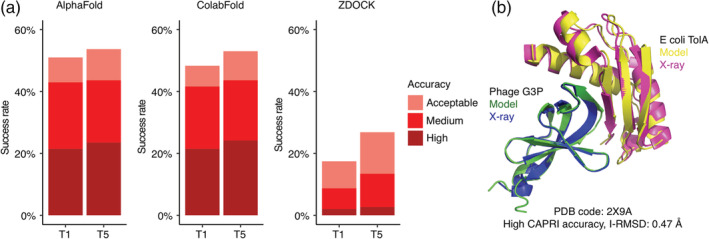
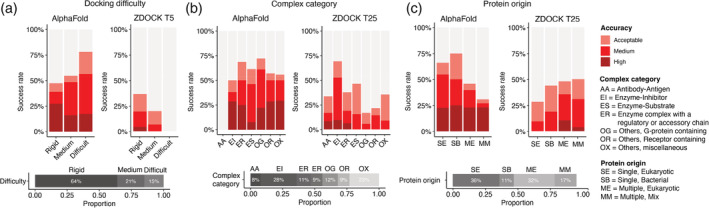
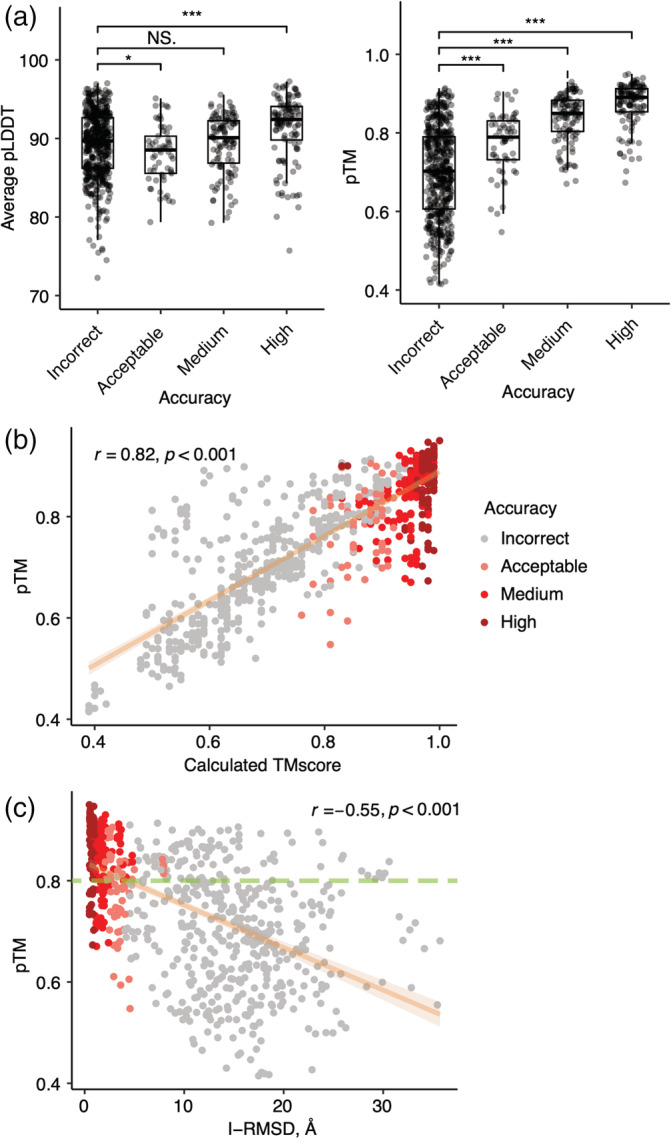
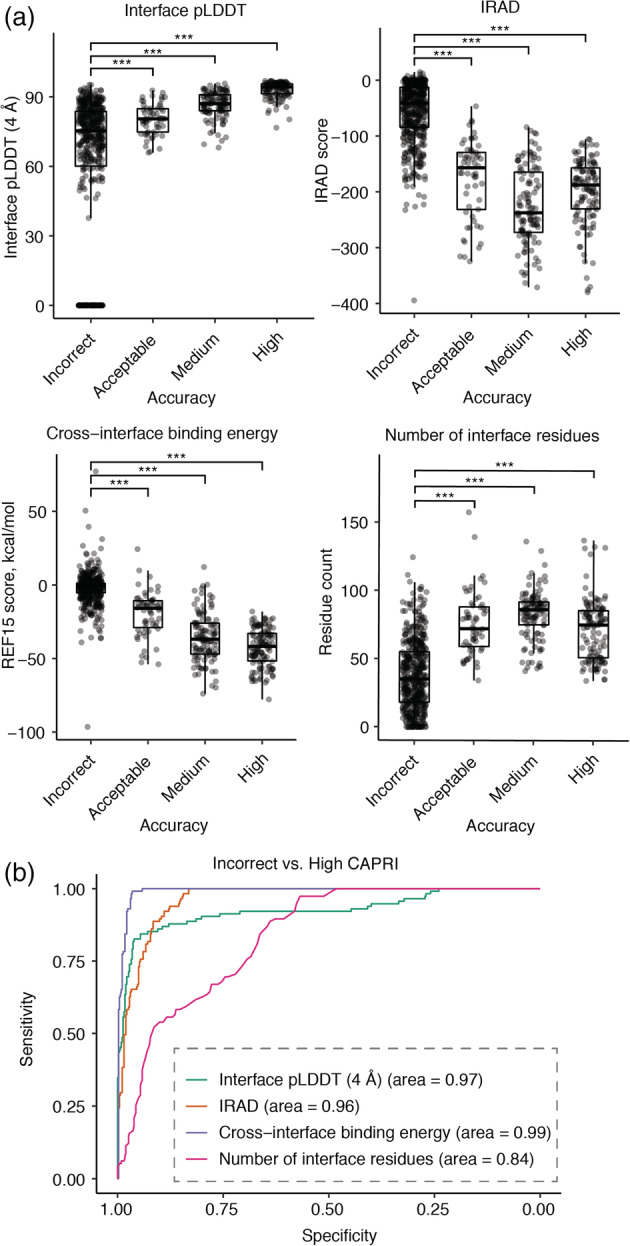
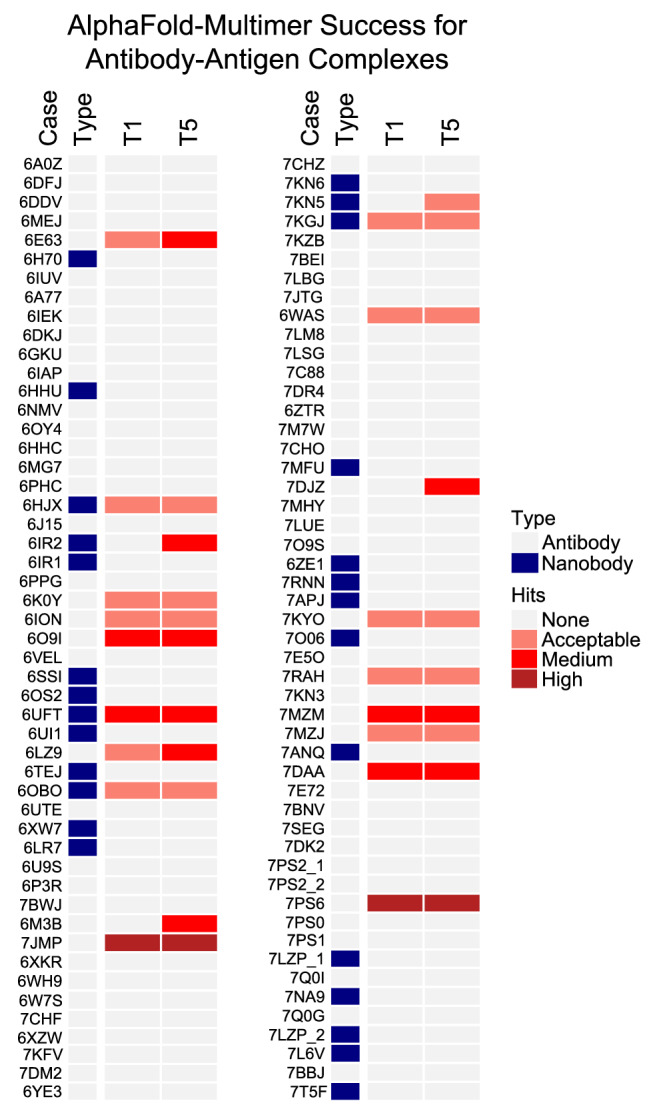
High resolution experimental structural determination of protein-protein interactions has led to valuable mechanistic insights, yet due to the massive number of interactions and experimental limitations there is a need for computational methods that can accurately model their structures. Here we explore the use of the recently developed deep learning method, AlphaFold, to predict structures of protein complexes from sequence. With a benchmark of 152 diverse heterodimeric protein complexes, multiple implementations and parameters of AlphaFold were tested for accuracy. Remarkably, many cases had highly accurate models generated as top-ranked predictions, greatly surpassing the performance of unbound protein-protein docking, whereas antibody-antigen docking was largely unsuccessful. While AlphaFold-generated accuracy predictions were able to discriminate near-native models, previously developed scoring protocols improved performance. Our study demonstrates that end-to-end deep learning can accurately model transient protein complexes, and identifies areas for improvement to guide future developments to reliably model any protein-protein interaction of interest.
Overview
The claims and statistics of this paper haven’t been checked yet.
Run the check — free, no account needed. It reads the open-access text and checks the sources it cites.
Integrity signals
Registry
Cites
Statistics
Figures
Verification
Claims the paper makes
The claims and statistics of this paper haven’t been checked yet.
Run the check — free, no account needed. It reads the open-access text and checks the sources it cites.
Self-check
Percentages, sums and reported differences re-computed from the paper’s own numbers.
The self-check needs the paper’s full text.
Citations
Cites
Highly accurate protein structure prediction with AlphaFold
Jumper, J., Evans, R., Pritzel, A., Green, T., Figurnov, M., Ronneberger, O., Tunyasuvunakool, K., Bates, R., Žídek, A., Potapenko, A., et al. (2021) · Nature · doi:10.1038/s41586-021-03819-2 · Cited by 43,764
Wickham, H. (2016) · Use R! · doi:10.1007/978-3-319-24277-4 · Cited by 34,873
BLAST+: architecture and applications
Camacho, C., Coulouris, G., Avagyan, V., Ma, N., Papadopoulos, J., Bealer, K., & Madden, T. L. (2009) · BMC Bioinformatics · doi:10.1186/1471-2105-10-421 · Cited by 22,074
pROC: an open-source package for R and S+ to analyze and compare ROC curves
Robin, X., Turck, N., Hainard, A., Tiberti, N., Lisacek, F., Sanchez, J.-C., & Müller, M. (2011) · BMC Bioinformatics · doi:10.1186/1471-2105-12-77 · Cited by 13,697
Cd-hit: Accelerated for clustering the next-generation sequencing data
Fu, L., Niu, B., Zhu, Z., Wu, S., & Li, W. (2012) · Bioinformatics · doi:10.1093/bioinformatics/bts565 · Cited by 11,175
Complex heatmaps reveal patterns and correlations in multidimensional genomic data
Gu, Z., Eils, R., & Schlesner, M. (2016) · Bioinformatics · doi:10.1093/bioinformatics/btw313 · Cited by 10,037
The Amber biomolecular simulation programs
Case, D. A., Cheatham, T. E., Darden, T., Gohlke, H., Luo, R., Merz, K. M., Onufriev, A., Simmerling, C., Wang, B., & Woods, R. J. (2005) · Journal of Computational Chemistry · doi:10.1002/jcc.20290 · Cited by 9,535
ColabFold - Making protein folding accessible to all
Mirdita, M., Schütze, K., Moriwaki, Y., Heo, L., Ovchinnikov, S., & Steinegger, M. (2021) · doi:10.1101/2021.08.15.456425 · Cited by 9,391
Varadi, M., Anyango, S., Deshpande, M., Nair, S., Natassia, C., Yordanova, G., Yuan, D., Stroe, O., Wood, G., Laydon, A., et al. (2022) · Nucleic Acids Research · doi:10.1093/nar/gkab1061 · Cited by 7,850
Bootstrap Methods and their Application
Davison, A. C., & Hinkley, D. V. (1997) · doi:10.1017/cbo9780511802843 · Cited by 7,350
Research works printed but not linked: 3
- 10.1126/science.abj8754 · DOI · Paper page
- Guest JD , Vreven T , Zhou J , Moal I , Jeliazkov JR , Gray JJ , et al. An expanded benchmark for antibody-antigen docking and affinity prediction reveals insights into antibody recognition determinants. Structure. 2021. · DOI
- 10.1002/pro.687 · DOI
Cited by
Sorted by citations
AlphaFold2 and its applications in the fields of biology and medicine
Yang, Z., Zeng, X., Zhao, Y. C., & Chen, R. (2023) · Signal Transduction and Targeted Therapy · doi:10.1038/s41392-023-01381-z · Cited by 655
Benchmarking AlphaFold for protein complex modeling reveals accuracy determinants
Yin, R., Feng, B. Y., Varshney, A., & Pierce, B. G. (2022) · Protein Science · doi:10.1002/pro.4379 · Cited by 335
Self-citationBefore and after AlphaFold2: An overview of protein structure prediction
Bertoline, L. M. F., Lima, A. N., Krieger, J. E., & Teixeira, S. K. (2023) · Frontiers in Bioinformatics · doi:10.3389/fbinf.2023.1120370 · Cited by 330
Protein structure predictions to atomic accuracy with AlphaFold
Jumper, J., & Hassabis, D. (2022) · Nature Methods · doi:10.1038/s41592-021-01362-6 · Cited by 265
Structure-based prediction of T cell receptor:peptide-MHC interactions
Bradley, P. (2023) · eLife · doi:10.7554/elife.82813 · Cited by 177
AlphaFold2 structures guide prospective ligand discovery
Lyu, J., Kapolka, N. J., Gumpper, R. H., Alon, A., Wang, L., Jain, M. K., Barros-Álvarez, X., Sakamoto, K., Kim, Y., DiBerto, J. F., et al. (2024) · Science · doi:10.1126/science.adn6354 · Cited by 192
The impact of AlphaFold2 one year on
Jones, D. T., & Thornton, J. M. (2022) · Nature Methods · doi:10.1038/s41592-021-01365-3 · Cited by 156
The power and pitfalls of AlphaFold2 for structure prediction beyond rigid globular proteins
Agarwal, V., & McShan, A. C. (2024) · Nature Chemical Biology · doi:10.1038/s41589-024-01638-w · Cited by 155
Critical assessment of methods of protein structure prediction ( CASP )—Round XV
Kryshtafovych, A., Schwede, T., Topf, M., Fidelis, K., & Moult, J. (2023) · Proteins: Structure, Function, and Bioinformatics · doi:10.1002/prot.26617 · Cited by 148
Yin, R., & Pierce, B. G. (2024) · Protein Science · doi:10.1002/pro.4865 · Cited by 145
Self-citationAlphaFold2 protein structure prediction: Implications for drug discovery
Borkakoti, N., & Thornton, J. M. (2023) · Current Opinion in Structural Biology · doi:10.1016/j.sbi.2022.102526 · Cited by 140
TCRmodel2: high-resolution modeling of T cell receptor recognition using deep learning
Yin, R. M., Filho, H. V. R., Lin, V. C. L., Gowthaman, R., Cheung, M., & Pierce, B. G. (2023) · Nucleic Acids Research · doi:10.1093/nar/gkad356 · Cited by 114
Self-citationBindCraft: one-shot design of functional protein bindersPreprint
Pačesa, M., Nickel, L., Schellhaas, C., Schmidt, J. H., Pyatova, E., Kissling, L., Barendse, P., Choudhury, J., Kapoor, S., Alcaraz‐Serna, A., et al. (2024) · bioRxiv (Cold Spring Harbor Laboratory) · doi:10.1101/2024.09.30.615802 · Cited by 111
Advances in computational structure-based antibody design
Hummer, A. M., Abanades, B., & Deane, C. M. (2022) · Current Opinion in Structural Biology · doi:10.1016/j.sbi.2022.102379 · Cited by 109
From interaction networks to interfaces, scanning intrinsically disordered regions using AlphaFold2
Bret, H., Gao, J., Zea, D. J., Andreani, J., & Guerois, R. (2024) · Nature Communications · doi:10.1038/s41467-023-44288-7 · Cited by 103
Omidi, A., Møller, M. H., Malhis, N., Bui, J. M., & Gsponer, J. A. (2024) · Proceedings of the National Academy of Sciences · doi:10.1073/pnas.2406407121 · Cited by 109
Computational Approaches to Predict Protein–Protein Interactions in Crowded Cellular Environments
Grassmann, G., Miotto, M., Desantis, F., Rienzo, L. D., Tartaglia, G. G., Pastore, A., Ruocco, G., Monti, M. M., & Milanetti, E. (2024) · Chemical Reviews · doi:10.1021/acs.chemrev.3c00550 · Cited by 109
AlphaFold, allosteric, and orthosteric drug discovery: Ways forward
Nussinov, R., Zhang, M., Liu, Y., & Jang, H. (2023) · Drug Discovery Today · doi:10.1016/j.drudis.2023.103551 · Cited by 96
Predictomes, a classifier-curated database of AlphaFold-modeled protein-protein interactions
Schmid, E. W., & Walter, J. C. (2025) · Molecular Cell · doi:10.1016/j.molcel.2025.01.034 · Cited by 120
Koh, H. Y., Zheng, Y., Yang, M., Arora, R., Webb, G. I., Pan, S., Li, L., & Church, G. M. (2025) · Nature Reviews Bioengineering · doi:10.1038/s44222-025-00349-8 · Cited by 117
Recent Advances in Deep Learning for Protein-Protein Interaction Analysis: A Comprehensive Review
Lee, M. (2023) · Molecules · doi:10.3390/molecules28135169 · Cited by 97
Characterizing the interaction conformation between T-cell receptors and epitopes with deep learning
Peng, X., Lei, Y., Feng, P., Jia, L., Ma, J., Zhao, D. Y., & Zeng, J. (2023) · Nature Machine Intelligence · doi:10.1038/s42256-023-00634-4 · Cited by 87
Targeting small GTPases: emerging grasps on previously untamable targets, pioneered by KRAS
Yin, G., Huang, J., Petela, J., Jiang, H., Zhang, Y., Gong, S., Wu, J., Liu, B., Shi, J., & Gao, Y. (2023) · Signal Transduction and Targeted Therapy · doi:10.1038/s41392-023-01441-4 · Cited by 98
Shor, B., & Schneidman-Duhovny, D. (2024) · Nature Methods · doi:10.1038/s41592-024-02174-0 · Cited by 85
Rui, H., Ashton, K. S., Min, J., Wang, C. W., & Potts, P. R. (2023) · RSC Chemical Biology · doi:10.1039/d2cb00207h · Cited by 87
CD19 CAR antigen engagement mechanisms and affinity tuning
He, C., Mansilla‐Soto, J., Khanra, N., Hamieh, M., Bustos, V., Paquette, A. J., Angus, A. G., Shore, D. M., Rice, W. J., Khelashvili, G., et al. (2023) · Science Immunology · doi:10.1126/sciimmunol.adf1426 · Cited by 83
Recent advances in predicting and modeling protein–protein interactions
Durham, J., Zhang, J., Humphreys, I. R., Pei, J., & Cong, Q. (2023) · Trends in Biochemical Sciences · doi:10.1016/j.tibs.2023.03.003 · Cited by 83
Wilman, W., Wróbel, S., Bielska, W., Deszyński, P., Dudzic, P., Jaszczyszyn, I., Kaniewski, J., Młokosiewicz, J., Rouyan, A., Satława, T., et al. (2022) · Briefings in Bioinformatics · doi:10.1093/bib/bbac267 · Cited by 86
Guarra, F., & Colombo, G. (2023) · Journal of Chemical Theory and Computation · doi:10.1021/acs.jctc.3c00513 · Cited by 82
Eldeeb, M. A., Bayne, A. N., Fallahi, A., Goiran, T., MacDougall, E. J., Soumbasis, A., Zorca, C. E., Jones-Tabah, J., Thomas, R. A., Karpilovsky, N. C., et al. (2024) · Proceedings of the National Academy of Sciences · doi:10.1073/pnas.2313540121 · Cited by 81
Rēs ipSAE loquuntur : What’s wrong with AlphaFold’s ipTM score and how to fix itPreprint
Dunbrack, R. L. (2025) · bioRxiv (Cold Spring Harbor Laboratory) · doi:10.1101/2025.02.10.637595 · Cited by 98
Enhanced Protein-Protein Interaction Discovery via AlphaFold-MultimerPreprint
Kim, A., Hu, Y., Comjean, A., Rodiger, J., Mohr, S. E., & Perrimon, N. (2024) · bioRxiv (Cold Spring Harbor Laboratory) · doi:10.1101/2024.02.19.580970 · Cited by 79
Robert, P. A., Akbar, R., Frank, R., Pavlović, M., Widrich, M., Snapkov, I., Slabodkin, A., Chernigovskaya, M., Scheffer, L., Smorodina, E., et al. (2022) · Nature Computational Science · doi:10.1038/s43588-022-00372-4 · Cited by 69
Oikawa, K., Fujisaki, K., Shimizu, M., Takeda, T., Nemoto, K., Saitoh, H., Hirabuchi, A., Hiraka, Y., Miyaji, N., Białas, A., et al. (2024) · PLoS Pathogens · doi:10.1371/journal.ppat.1012647 · Cited by 63
Revolutionizing protein–protein interaction prediction with deep learning
Zhang, J., Durham, J., & Cong, Q. (2024) · Current Opinion in Structural Biology · doi:10.1016/j.sbi.2024.102775 · Cited by 58
Overview of AlphaFold2 and breakthroughs in overcoming its limitations
Wang, L., Wen, Z., Liu, S.-W., Zhang, L., Finley, C., Lee, H., & Fan, H. (2024) · Computers in Biology and Medicine · doi:10.1016/j.compbiomed.2024.108620 · Cited by 56
Ozden, B., Kryshtafovych, A., & Karaca, E. (2023) · Proteins: Structure, Function, and Bioinformatics · doi:10.1002/prot.26598 · Cited by 51
Nudix hydrolase 23 post-translationally regulates carotenoid biosynthesis in plants
Rao, S., Cao, H., O’Hanna, F. J., Zhou, X., Lui, A. C. W., Wrightstone, E. A., Fish, T. L., Yang, Y., Thannhauser, T. W., Cheng, L., et al. (2024) · The Plant Cell · doi:10.1093/plcell/koae030 · Cited by 43
Madsen, A. V., Mejias-Gomez, O., Pedersen, L. E., Morth, J. P., Kristensen, P. K., Jenkins, T. P., & Goletz, S. (2023) · Computational and Structural Biotechnology Journal · doi:10.1016/j.csbj.2023.11.056 · Cited by 46
Accurate prediction of protein assembly structure by combining AlphaFold and symmetrical docking
Jeppesen, M., & André, I. (2023) · Nature Communications · doi:10.1038/s41467-023-43681-6 · Cited by 44
Protein–protein interaction prediction methods: from docking-based to AI-based approaches
Tsuchiya, Y., Yamamori, Y., & Tomii, K. (2022) · Biophysical Reviews · doi:10.1007/s12551-022-01032-7 · Cited by 46
Cui, F., Wang, X., Wang, D., Ren, L., Meng, Y., Ma, R., Wang, S., Liu, Z., Jiang, Y., Lu, Y., et al. (2024) · Chemical Engineering Journal · doi:10.1016/j.cej.2024.156546 · Cited by 43
Polonsky, K., Pupko, T., & Freund, N. T. (2023) · The Journal of Immunology · doi:10.4049/jimmunol.2300150 · Cited by 41
Prediction of protein assemblies by structure sampling followed by interface‐focused scoring
Olechnovič, K., Valančauskas, L., Dapkūnas, J., & Venclovas, Č. (2023) · Proteins: Structure, Function, and Bioinformatics · doi:10.1002/prot.26569 · Cited by 40
Olechnovič, K., & Venclovas, Č. (2023) · Proteins: Structure, Function, and Bioinformatics · doi:10.1002/prot.26554 · Cited by 38
Zhao, Y., & Wang, H. (2025) · Briefings in Bioinformatics · doi:10.1093/bib/bbaf263 · Cited by 40
Benchmarking all-atom biomolecular structure prediction with FoldBench
Xu, S. Y., Feng, Q., Qiao, L., Wu, H., Shen, T., Cheng, Y., Zheng, S., & Sun, S. (2025) · Nature Communications · doi:10.1038/s41467-025-67127-3 · Cited by 73
Thrift, W. J., Perera, J. F., Cohen, S., Lounsbury, N., Gurung, H. R., Rose, C. M., Chen, J., Jhunjhunwala, S., & Liu, K. (2024) · Briefings in Bioinformatics · doi:10.1093/bib/bbae123 · Cited by 36
Caswell, R. C., Gunning, A. C., Owens, M., Ellard, S., & Wright, C. F. (2022) · Genome Medicine · doi:10.1186/s13073-022-01082-2 · Cited by 42
Quantitative approaches for decoding the specificity of the human T cell repertoire
Ghoreyshi, Z. S., & George, J. T. (2023) · Frontiers in Immunology · doi:10.3389/fimmu.2023.1228873 · Cited by 41
Nanobody engineering: computational modelling and design for biomedical and therapeutic applications
Salamouni, N. S. E., Cater, J. H., Spenkelink, L. M., & Yu, H. B. (2024) · FEBS Open Bio · doi:10.1002/2211-5463.13850 · Cited by 37
AlphaFold2 enables accurate deorphanization of ligands to single-pass receptors
Banhos Danneskiold-Samsøe, N., Kavi, D., Jude, K. M., Nissen, S. B., Wat, L. W., Coassolo, L., Zhao, M., Santana-Oikawa, G. A., Broido, B. B., Garcia, K. C., et al. (2024) · Cell Systems · doi:10.1016/j.cels.2024.10.004 · Cited by 35
Flexible protein–protein docking with a multitrack iterative transformer
Chu, L., Ruffolo, J. A., Harmalkar, A., & Gray, J. J. (2024) · Protein Science · doi:10.1002/pro.4862 · Cited by 41
A Perspective on the Prospective Use of AI in Protein Structure Prediction
Versini, R., Sritharan, S., Fas, B. A., Tubiana, T., Aimeur, S., Henri, J., Erard, M., Nüße, O., Andréani, J., Baaden, M., et al. (2023) · Journal of Chemical Information and Modeling · doi:10.1021/acs.jcim.3c01361 · Cited by 34
A combinatorial approach to uncover an additional Integrator subunit
Offley, S. R., Pfleiderer, M. M., Zucco, A. J., Fraudeau, A., Welsh, S. A., Rażew, M., Galej, W. P., & Gardini, A. (2023) · Cell Reports · doi:10.1016/j.celrep.2023.112244 · Cited by 35
Recent Advances and Challenges in Protein Structure Prediction
Peng, C., Liang, F., Xia, Y., Zhao, K., Hou, M., & Zhang, G. (2023) · Journal of Chemical Information and Modeling · doi:10.1021/acs.jcim.3c01324 · Cited by 42
Kim, D. N., McNaughton, A. D., & Kumar, N. (2024) · Bioengineering · doi:10.3390/bioengineering11020185 · Cited by 35
Feng, S., Chen, Z., Zhang, C., Xie, Y., Ovchinnikov, S., Gao, Y. Q., & Liu, S. (2024) · Nature Machine Intelligence · doi:10.1038/s42256-024-00873-z · Cited by 45
Structural Features of Antibody-Peptide Recognition
Lee, J. H., Yin, R. M., Ofek, G., & Pierce, B. G. (2022) · Frontiers in Immunology · doi:10.3389/fimmu.2022.910367 · Cited by 33
Self-citationJin, R., Ye, Q., Wang, J., Cao, Z., Jiang, D., Wang, T., Kang, Y., Xu, W., Hsieh, C., & Hou, T. (2024) · Briefings in Bioinformatics · doi:10.1093/bib/bbae304 · Cited by 33
Beyond sequence: Structure-based machine learning
Durairaj, J., de Ridder, D., & van Dijk, A. D. J. (2022) · Computational and Structural Biotechnology Journal · doi:10.1016/j.csbj.2022.12.039 · Cited by 32
Enhanced antibody-antigen structure prediction from molecular docking using AlphaFold2
Gaudreault, F., Corbeil, C. R., & Sulea, T. I. (2023) · Scientific Reports · doi:10.1038/s41598-023-42090-5 · Cited by 32
Bosch, D. E., Abbasian, R., Parajuli, B., Peterson, S. B., & Mougous, J. D. (2023) · mBio · doi:10.1128/mbio.01039-23 · Cited by 31
Deep learning methods for protein structure prediction
Qin, Y., Chen, Z., Ye, P., Xiao, Y., Zhong, T., & Yu, X. (2024) · MedComm – Future Medicine · doi:10.1002/mef2.96 · Cited by 33
Large language models facilitating modern molecular biology and novel drug development
Liu, X., Lü, Z., Wang, T., & Liu, F. (2024) · Frontiers in Pharmacology · doi:10.3389/fphar.2024.1458739 · Cited by 28
Sifri, C., Hoeg, L., Durocher, D., & Setiaputra, D. (2023) · EMBO Reports · doi:10.15252/embr.202356834 · Cited by 25
Wu, D., Yin, R., Chen, G., Ribeiro-Filho, H. V., Cheung, M., Robbins, P. F., Mariuzza, R. A., & Pierce, B. G. (2024) · Science Advances · doi:10.1126/sciadv.adq6150 · Cited by 27
Self-citationAlphaFold2 in biomedical research: facilitating the development of diagnostic strategies for disease
Zhang, H., Lan, J., Wang, H., Lu, R., Zhang, N., He, X., Yang, J., & Chen, L. (2024) · Frontiers in Molecular Biosciences · doi:10.3389/fmolb.2024.1414916 · Cited by 24
Reading the repertoire: Progress in adaptive immune receptor analysis using machine learning
O’Donnell, T. J., Kanduri, C., Isacchini, G., Limenitakis, J. P., Brachman, R. A., Alvarez, R. A., Haff, I. H., Sandve, G. K., & Greiff, V. (2024) · Cell Systems · doi:10.1016/j.cels.2024.11.006 · Cited by 24
AlphaFold and what is next: bridging functional, systems and structural biology
Szczepski, K., & Jaremko, Ł. (2025) · Expert Review of Proteomics · doi:10.1080/14789450.2025.2456046 · Cited by 25
Pereira, G. P., Gouzien, C., Souza, P. C. T., & Martin, J. (2024) · Bioinformatics Advances · doi:10.1093/bioadv/vbaf056 · Cited by 26
SARS-CoV-2 antibodies recognize 23 distinct epitopic sites on the receptor binding domain
Jiang, J., Boughter, C. T., Ahmad, J., Natarajan, K., Boyd, L. F., Meier-Schellersheim, M., & Margulies, D. H. (2023) · Communications Biology · doi:10.1038/s42003-023-05332-w · Cited by 24
A unified evolution-driven deep learning framework for virus variation driver prediction
Nie, Z., Liu, X., Chen, J., Wang, Z., Liu, Y., Si, H.-R., Dong, T., Xu, F., Song, G., Wang, Y., et al. (2025) · Nature Machine Intelligence · doi:10.1038/s42256-024-00966-9 · Cited by 25
Emerging frontiers in protein structure prediction following the AlphaFold revolution
Rennie, M. L., & Oliver, M. R. (2025) · Journal of The Royal Society Interface · doi:10.1098/rsif.2024.0886 · Cited by 34
Protein Structural Phylogenetics
Puente-Lelièvre, C., Malik, A. J., & Douglas, J. (2025) · Genome Biology and Evolution · doi:10.1093/gbe/evaf139 · Cited by 27
Possibilities of Using De Novo Design for Generating Diverse Functional Food Enzymes
Wang, X., Xu, K., Tan, Y., Liu, S., & Zhou, J. (2023) · International Journal of Molecular Sciences · doi:10.3390/ijms24043827 · Cited by 22
Identification of type VI secretion system effector-immunity pairs using structural bioinformatics
Geller, A. M., Shalom, M., Zlotkin, D., Blum, N., & Levy, A. (2024) · Molecular Systems Biology · doi:10.1038/s44320-024-00035-8 · Cited by 22
Sun, Y., Florio, T. J., Gupta, S., Young, M. C., Marshall, Q. F., Garfinkle, S. E., Papadaki, G. F., Truong, H. V., Mycek, E., Li, P., et al. (2023) · Science Immunology · doi:10.1126/sciimmunol.adj5792 · Cited by 19
Leighton, G. O., Shang, S., Hageman, S., Ginder, G. D., & Williams, D. C. (2023) · Proceedings of the National Academy of Sciences · doi:10.1073/pnas.2307287120 · Cited by 19
Learned features of antibody-antigen binding affinity
Miller, N. L., Clark, T., Raman, R., & Sasisekharan, R. (2023) · Frontiers in Molecular Biosciences · doi:10.3389/fmolb.2023.1112738 · Cited by 22
The clinical progress and challenges of mRNA vaccines
Yu, M., Wang, N., Zhu, J., & Lin, Y. (2023) · Wiley Interdisciplinary Reviews Nanomedicine and Nanobiotechnology · doi:10.1002/wnan.1894 · Cited by 23
Deep Learning for Flexible and Site-Specific Protein Docking and DesignPreprint
McPartlon, M., & Xu, J. (2023) · bioRxiv (Cold Spring Harbor Laboratory) · doi:10.1101/2023.04.01.535079 · Cited by 24
Modelling protein complexes with crosslinking mass spectrometry and deep learning
Stahl, K., Demann, L., Bremenkamp, R., Warneke, R., Hormes, B., Stülke, J., Brock, O., & Rappsilber, J. (2023) · doi:10.1101/2023.06.07.544059 · Cited by 20
Epitope mapping via in vitro deep mutational scanning methods and its applications
Keen, M. M., Keith, A. D., & Ortlund, E. A. (2024) · Journal of Biological Chemistry · doi:10.1016/j.jbc.2024.108072 · Cited by 20
Multimeric protein interaction and complex prediction: Structure, dynamics and function
Lu, D., Yu, S., Huang, Y., & Gong, X. (2025) · Computational and Structural Biotechnology Journal · doi:10.1016/j.csbj.2025.05.009 · Cited by 23
Predicting PROTAC-mediated ternary complexes with AlphaFold3 and Boltz-1
Dunlop, N., Erazo, F., Jalalypour, F., & Mercado, R. (2025) · Digital Discovery · doi:10.1039/d5dd00300h · Cited by 23
Tollefson, M. R., Gogal, R. A., Weaver, A. M., Schaefer, A. M., Marini, R. J., Azaiez, H., Kolbe, D. L., Wang, D., Weaver, A. E., Casavant, T. L., et al. (2023) · Human Genetics · doi:10.1007/s00439-023-02559-9 · Cited by 20
Improved the heterodimer protein complex prediction with protein language models
Chen, B., Xie, Z., Qiu, J., Ye, Z., Xu, J., & Tang, J. (2023) · Briefings in Bioinformatics · doi:10.1093/bib/bbad221 · Cited by 28
Vales, S., Kryukova, J., Chandra, S., Smagurauskaite, G., Payne, M., Clark, C. J., Hafner, K., Mburu, P., Denisov, S. S., Davies, G., et al. (2023) · Nature Communications · doi:10.1038/s41467-023-41488-z · Cited by 27
AlphaFold2 as a replacement for solution NMR structure determination of small proteins: Not so fast!
Bonin, J. P., Aramini, J. M., Dong, Y., Wu, H., & Kay, L. E. (2024) · Journal of Magnetic Resonance · doi:10.1016/j.jmr.2024.107725 · Cited by 21
Structure‐based computational design of antibody mimetics: challenges and perspectives
Chaves, E. J. F., Coêlho, D. F., da Cruz, C. H. B., Moreira, E. G., Simões, J., Nascimento‐Filho, M. J., & Lins, R. D. (2024) · FEBS Open Bio · doi:10.1002/2211-5463.13855 · Cited by 22
Limitations of Protein Structure Prediction Algorithms in Therapeutic Protein Development
Niazi, S. K., Mariam, Z., & Paracha, R. Z. (2024) · BioMedInformatics · doi:10.3390/biomedinformatics4010007 · Cited by 20
Targeting in silico GPCR conformations with ultra-large library screening for hit discovery
Sala, D., Batebi, H., Ledwitch, K. V., Hildebrand, P. W., & Meiler, J. (2023) · Trends in Pharmacological Sciences · doi:10.1016/j.tips.2022.12.006 · Cited by 20
AlphaFold2 structures template ligand discoveryPreprint
Lyu, J., Kapolka, N. J., Gumpper, R. H., Alon, A., Wang, L., Jain, M. K., Barros-Álvarez, X., Sakamoto, K., Kim, Y., DiBerto, J. F., et al. (2023) · bioRxiv (Cold Spring Harbor Laboratory) · doi:10.1101/2023.12.20.572662 · Cited by 18
Recent progress and future challenges in structure-based protein-protein interaction prediction
Yuan, R., Zhang, J., Zhou, J., & Cong, Q. (2025) · Molecular Therapy · doi:10.1016/j.ymthe.2025.04.003 · Cited by 25
Nakanishi, H., Saito, H., & Itaka, K. (2022) · ACS Synthetic Biology · doi:10.1021/acssynbio.1c00567 · Cited by 17
Metadata
- Authors
- Yin, R., Feng, B. Y., Varshney, A., & Pierce, B. G.
- Affiliations
- Institute for Bioscience and Biotechnology Research (US)
- University of Maryland, College Park (US)
- University of Maryland, Baltimore (US)
- Corresponding author
- Pierce, Brian G.
- Venue
- Protein Science
- Publisher
- openRxiv
- Published
- 2021-10-24
- Volume
- 31
- Issue
- 8
- Pages
- e4379-e4379
- ISSN
- 0961-8368 (ISSN-L)
- PMC
- PMC9278006
- OpenAlex
- W4285392187
- Cited by
- 335
- References
- 80
- Citations by year
- 2026: 47 · 2025: 67 · 2024: 111 · 2023: 90 · 2022: 19
- FWCI
- 23.42
- Type
- journal article
- Language
- en
- Open access
- hybrid
- doi.org
- Licence
- cc-by
- Locations
- Protein Science (publishedVersion, cc-by)
- bioRxiv (Cold Spring Harbor Laboratory) (acceptedVersion, cc-by-nd)
- PubMed Central (publishedVersion, cc-by)
- PubMed (publishedVersion)
- University Libraries (University of Maryland) (submittedVersion)
- Digital Repository at the University of Maryland (University of Maryland College Park)
- Funders
- National Institutes of Health (NIH-R01)
- National Institute of General Medical Sciences (R01GM126299, R35GM144083)
- Topics
- Life Sciences › Biochemistry, Genetics and Molecular Biology › Molecular Biology › Protein Structure and Dynamics
- Life Sciences › Biochemistry, Genetics and Molecular Biology › Molecular Biology › Machine Learning in Bioinformatics
- Life Sciences › Biochemistry, Genetics and Molecular Biology › Structural Biology › Enzyme Structure and Function
- Keywords
- AlphaFold, AlphaFold-Multimer, protein complex structure prediction, protein-protein interaction, immune complexes, protein-protein docking, benchmarking, multiple sequence alignment, deep learning
- MeSH terms
- Algorithms, Protein Binding, Protein Conformation, Proteins, Sequence Alignment, Molecular Docking Simulation
About these checks
Registry, retraction, Cites and statistics results are computed, not judged, with one exception: a printed reference that no index lists is read once by a model before it counts as a citation error. Claims are extracted by a model and kept only when their quote appears verbatim in the text; each cited source is then checked, with a model’s help, for whether it says what the claim relies on. Those verdicts can be wrong — read the claim’s quote and the cited source before relying on one.
Statistics and arithmetic are recomputed, not judged.
Confidence bands are shown only for fields calibrated on our annotated test set. None is calibrated yet, so no band is shown.
What counts as a claim ›How we measure confidence ›How we check this ›
Are you an author, or do you see a problem with this page? Request a review
