

The DOI matches its Crossref record; 1 of the 1 references it cites were found in a registry or an index.
Structure and host specificity of Staphylococcus epidermidis bacteriophage Andhra
Open accessPreprint — published as 10.1126/sciadv.ade0459 · Paper page
Abstract
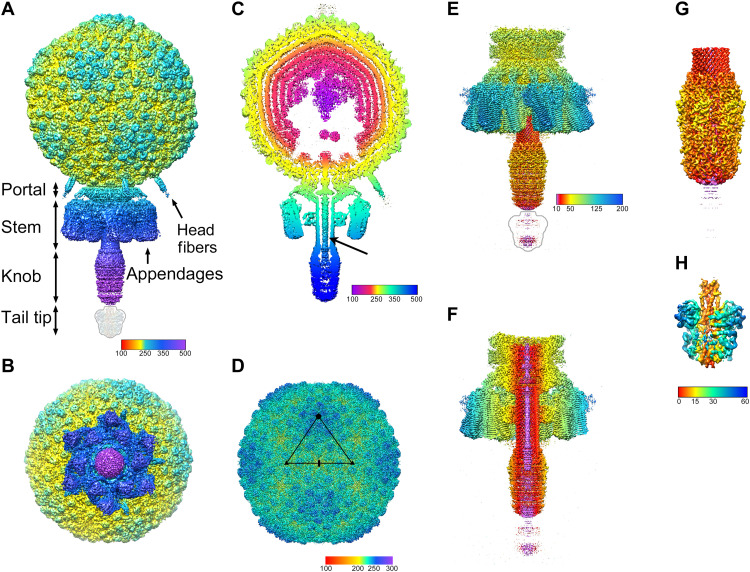
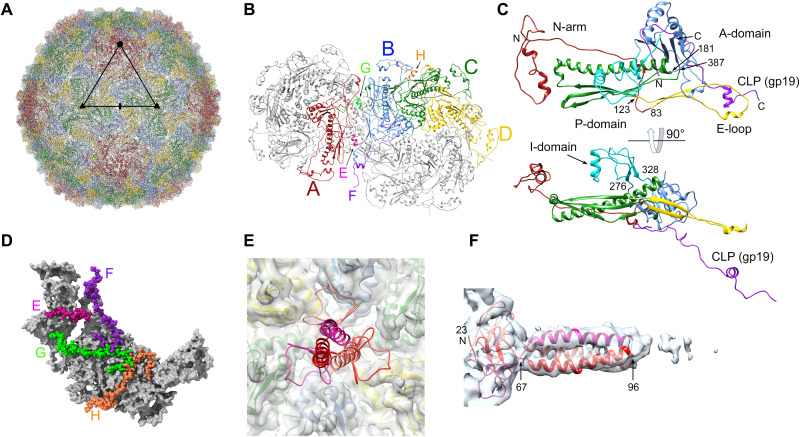
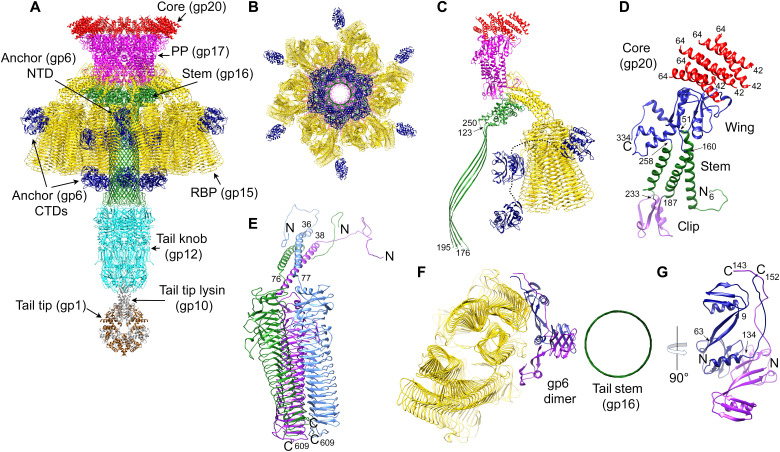
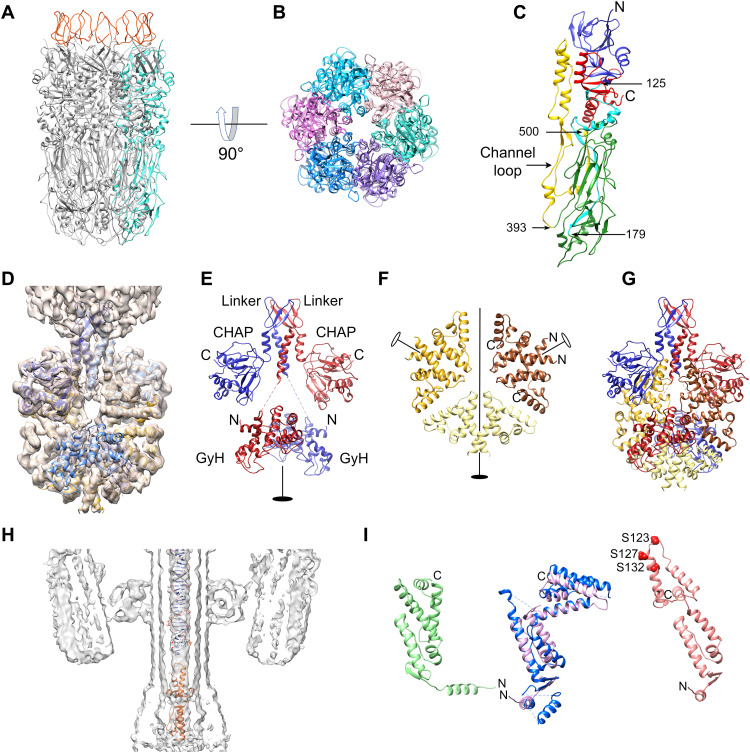
Staphylococcus epidermidis is an opportunistic pathogen of the human skin, often associated with infections of implanted medical devices. An increase in antibiotic resistance in S. epidermidis and other bacterial pathogens has led to renewed interest in the use of bacteriophages as an alternative to conventional antibiotics. Staphylococcal picoviruses are a group of strictly lytic, short-tailed bacteriophages with compact genomes that are attractive candidates for therapeutic use. Here, we report the structure of the complete virion of S. epidermidis -infecting phage Andhra, determined using high-resolution cryo-electron microscopy, allowing atomic modeling of the capsid and tail proteins, including twelve trimers of a unique receptor binding protein, the hexameric tail knob that acts as a gatekeeper for DNA ejection, and the tail tip, which is a heterooctamer of two different lytic proteins. Our findings elucidate critical features that enable host recognition and penetration, facilitating the development of this group of phages for therapeutic applications.
Overview
The claims and statistics of this paper haven’t been checked yet.
Run the check — free, no account needed. It reads the open-access text and checks the sources it cites.
Integrity signals
Registry
Cites
Statistics
Figures

Verification
Claims the paper makes
The claims and statistics of this paper haven’t been checked yet.
Run the check — free, no account needed. It reads the open-access text and checks the sources it cites.
Self-check
Percentages, sums and reported differences re-computed from the paper’s own numbers.
The self-check needs the paper’s full text.
Citations
Cites
Highly accurate protein structure prediction with AlphaFold
Jumper, J., Evans, R., Pritzel, A., Green, T., Figurnov, M., Ronneberger, O., Tunyasuvunakool, K., Bates, R., Žídek, A., Potapenko, A., et al. (2021) · Nature · doi:10.1038/s41586-021-03819-2 · Cited by 43,764
Research works printed but not linked: 70
- 10.1371/journal.pone.0047075 · DOI
- 10.1086/520289 · DOI · Paper page
- 10.1016/j.idc.2008.10.003 · DOI · Paper page
- 10.1056/NEJM199808203390806 · DOI
- 10.15585/mmwr.mm6809e1 · DOI · Paper page
- 10.1038/nrmicro2182 · DOI
- 10.1016/j.idc.2008.10.001 · DOI · Paper page
- 2017, Staphylococcus epidermidis: a major player in bacterial sepsis, Future Microbiol, 12, 1031, 10.2217/fmb-2017-0143 · DOI
- 10.1128/CMR.00109-13 · DOI · Paper page
- 10.1016/j.cmi.2018.11.012 · DOI · Paper page
- 10.1086/533593 · DOI
- 2021, Staphylococcus epidermidis Phages Transduce Antimicrobial Resistance Plasmids and Mobilize Chromosomal Islands, mSphere, 6, e00223
- 10.1089/mdr.2005.11.83 · DOI
- 2017, Past, Present, and Future of Antibacterial Economics: Increasing Bacterial Resistance, Limited Antibiotic Pipeline, and Societal Implications, Pharmacotherapy, 37, 71, 10.1002/phar.1868 · DOI · Paper page
- 10.4161/viru.22507 · DOI · Paper page
- 10.1016/j.mib.2011.08.002 · DOI
- 10.4161/bact.1.2.15845 · DOI · Paper page
- 10.1016/j.virol.2012.09.015 · DOI
- 10.1016/j.mib.2011.07.028 · DOI · Paper page
- 2018, A Wake-Up Call: We Need Phage Therapy Now, Viruses, 10, E688, 10.3390/v10120688 · DOI
- 2013, Bacteriophage therapy against staphylococci, Acta Microbiol Immunol Hung, 60, 411, 10.1556/AMicr.60.2013.4.3 · DOI
- 10.1016/S0065-2164(10)70007-1 · DOI · Paper page
- 2021, The phages of staphylococci: critical catalysts in health and disease, Trends Microbiol, 29, 1117, 10.1016/j.tim.2021.04.008 · DOI
- 10.3389/fmicb.2016.01209 · DOI
- 10.1016/j.resmic.2008.03.005 · DOI
- 10.1128/MMBR.65.2.261-287.2001 · DOI
- M. Salas , Phage ϕ29 and its relatives. The Bacteriophages, 315–330 (2006). · DOI
- 10.1016/S0378-1097(03)00028-4 · DOI
- 10.1016/bs.enz.2016.03.005 · DOI
- 2017, A Novel Staphylococcus podophage encodes a unique lysin with unusual modular design, mSphere, 2, e00040
- 2019, Draft Genome Sequences of Staphylococcus podophages JBug18, Pike, Pontiff, and Pabna, Microbiol Resour Announc, 8, e00054
- 10.1146/annurev-micro-092412-155620 · DOI · Paper page
- 10.1002/cbic.200900557 · DOI
- 10.7554/eLife.42166 · DOI · Paper page
- 10.1126/sciadv.aaw7414 · DOI
- 10.1007/s000180050455 · DOI
- 10.1016/S0065-3233(03)01007-6 · DOI
- 10.1016/j.jmb.2017.12.007 · DOI · Paper page
- 10.1038/nsb939 · DOI
- 2020, Structure of the host cell recognition and penetration machinery of a Staphylococcus aureus bacteriophage, PLoS Pathog, 16, e1008314, 10.1371/journal.ppat.1008314 · DOI
- 10.1128/JVI.01641-07 · DOI
- 10.1126/science.8023158 · DOI · Paper page
- 10.1016/j.molcel.2009.04.009 · DOI
- 2019, Structural assembly of the tailed bacteriophage ϕ29, Nat Commun, 10, 2366, 10.1038/s41467-019-10272-3 · DOI
- 10.1038/nature18017 · DOI
- 10.1073/pnas.1207730109 · DOI
- 2019, Combining random microseed matrix screening and the magic triangle for the efficient structure solution of a potential lysin from bacteriophage P68, Acta Crystallogr D Struct Biol, 75, 670, 10.1107/S2059798319009008 · DOI
- 10.1073/pnas.1208424109 · DOI
- 10.1038/nsmb1317 · DOI
- 10.1038/sj.emboj.7601027 · DOI
- 2019, Molecular Piracy: Redirection of Bacteriophage Capsid Assembly by Mobile Genetic Elements, Viruses, 11, 1003, 10.3390/v11111003 · DOI
- 2021, Shape shifter: redirection of prolate phage capsid assembly by staphylococcal pathogenicity islands, Nat Commun, 12, 6408, 10.1038/s41467-021-26759-x · DOI
- 10.1006/jmbi.1994.0169 · DOI
- 10.1016/j.jmb.2011.07.036 · DOI
- A. D. Dearborn , E. A. Wall , J. L. Kizziah , L. Klenow , L. K. Parker , K. A. Manning , M. S. Spilman , J. M. Spear , G. E. Christie , T. Dokland , Competing scaffolding proteins determine capsid size during mobilization of Staphylococcus aureus pathogenicity islands. Elife 6, 10.7554 (2017). · DOI
- 10.1016/0042-6822(91)90149-6 · DOI
- 10.1074/mcp.M900625-MCP200 · DOI · Paper page
- 2015, Mechanisms of DNA Packaging by Large Double-Stranded DNA Viruses, Annu Rev Virol, 2, 351, 10.1146/annurev-virology-100114-055212 · DOI
- 2022, Understanding the Mechanisms That Drive Phage Resistance in Staphylococci to Prevent Phage Therapy Failure, Viruses, 14, 1061, 10.3390/v14051061 · DOI
- H. Ingmer , D. Gerlach , C. Wolz , Temperate Phages of Staphylococcus aureus. Microbiol Spectr 7, (2019). · DOI
- 10.1128/JB.01412-10 · DOI
- 10.1016/j.ijmm.2009.10.001 · DOI
- 10.1016/j.carres.2004.03.017 · DOI · Paper page
- 10.1021/acssynbio.7b00240 · DOI
- 10.1016/j.jsb.2006.06.010 · DOI · Paper page
- 10.1107/S1399004714021683 · DOI
- 10.1038/nmeth.3213 · DOI · Paper page
- 10.1002/PRO.3943 · DOI · Paper page
- 10.1107/S2059798318006551 · DOI · Paper page
- 10.1107/S0907444909042073 · DOI · Paper page
Metadata
- Authors
- Hawkins, N. C., Kizziah, J. L., Hatoum-Aslan, A., & Dokland, T.
- Affiliations
- University of Alabama at Birmingham (US)
- University of Illinois Urbana-Champaign (US)
- Corresponding author
- Dokland, Terje
- Venue
- Science Advances
- Publisher
- openRxiv
- Published
- 2022-07-21
- Volume
- 8
- Issue
- 48
- Pages
- eade0459-eade0459
- ISSN
- 2375-2548 (ISSN-L)
- PMC
- PMC9710869
- OpenAlex
- W4310437436
- Cited by
- 25
- References
- 1
- Citations by year
- 2026: 6 · 2025: 7 · 2024: 7 · 2023: 5
- FWCI
- 2.53
- Type
- journal article
- Language
- en
- Open access
- gold
- doi.org
- Locations
- Science Advances (publishedVersion)
- bioRxiv (Cold Spring Harbor Laboratory) (acceptedVersion, cc-by)
- PubMed Central (publishedVersion, cc-by)
- PubMed (publishedVersion)
- Funders
- National Institute of General Medical Sciences (U24GM116789)
- National Institute of Allergy and Infectious Diseases (R21AI156636, R01AI083255)
- Topics
- Life Sciences › Immunology and Microbiology › Virology › Bacteriophages and microbial interactions
- Life Sciences › Biochemistry, Genetics and Molecular Biology › Structural Biology › Advanced Electron Microscopy Techniques and Applications
- Life Sciences › Biochemistry, Genetics and Molecular Biology › Structural Biology › Enzyme Structure and Function
- Keywords
- Staphylococcus epidermidis, phage structure, viral assembly, capsid, receptor binding protein, lytic proteins, host specificity, host recognition, DNA ejection, AlphaFold structure prediction, cryo-electron microscopy
- MeSH terms
- Capsid, Humans, Staphylococcus Phages, Staphylococcus epidermidis, Cryoelectron Microscopy, Capsid Proteins, Host Specificity
About these checks
Registry, retraction, Cites and statistics results are computed, not judged, with one exception: a printed reference that no index lists is read once by a model before it counts as a citation error. Claims are extracted by a model and kept only when their quote appears verbatim in the text; each cited source is then checked, with a model’s help, for whether it says what the claim relies on. Those verdicts can be wrong — read the claim’s quote and the cited source before relying on one.
Statistics and arithmetic are recomputed, not judged.
Confidence bands are shown only for fields calibrated on our annotated test set. None is calibrated yet, so no band is shown.
What counts as a claim ›How we measure confidence ›How we check this ›
Are you an author, or do you see a problem with this page? Request a review
How to cite
Cite CoChat for the checks on this page, and the paper for its own findings.
- This page
- CoChat. (2026). Citation check: Structure and host specificity of Staphylococcus epidermidis bacteriophage Andhra. https://app.cochat.ai/papers/10.1101/2022.07.21.500982
- The paper
- Hawkins, N. C., Kizziah, J. L., Hatoum-Aslan, A., & Dokland, T. (2022). Structure and host specificity of Staphylococcus epidermidis bacteriophage Andhra. Science Advances. https://doi.org/10.1101/2022.07.21.500982
Data sources
Bibliographic data: Semantic Scholar, OpenAlex, Crossref.
Contains information from the Semantic Scholar Academic Graph Datasets, made available under the ODC Attribution License (ODC-BY 1.0).
Semantic Scholar’s data is described in: Kinney, R., et al. (2023). The Semantic Scholar Open Data Platform. arXiv:2301.10140.
