

The GPI-anchored Ly6 protein Belly roll regulates Drosophila melanogaster escape behaviors by modulating the excitability of nociceptive peptidergic interneurons
Open accessPreprint — published as 10.7554/elife.83856
The DOI matches its Crossref record; 69 of the 69 references it cites were found in a registry or an index.
Abstract
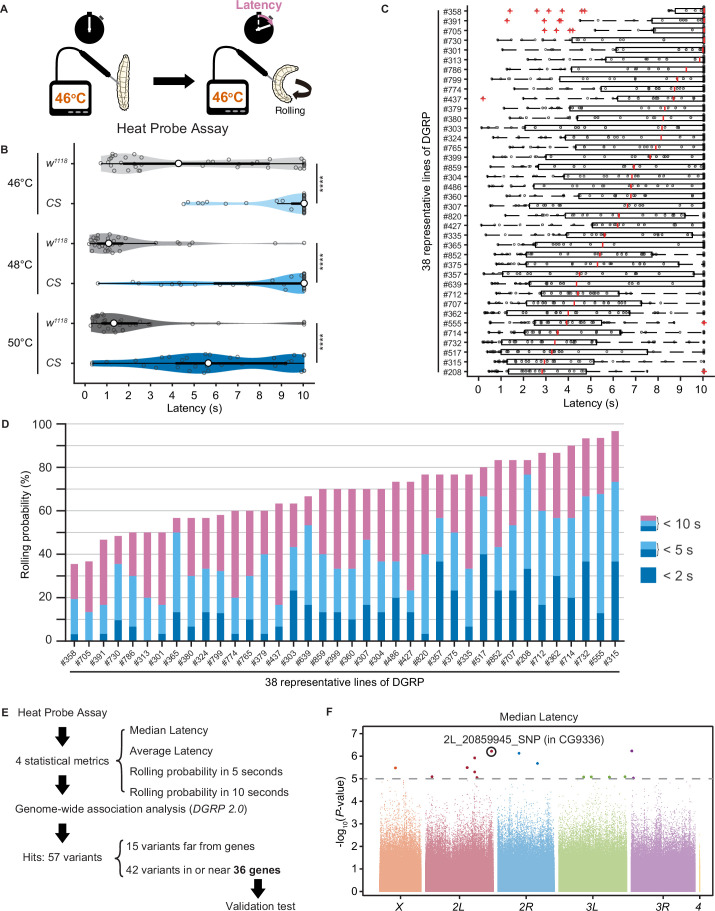
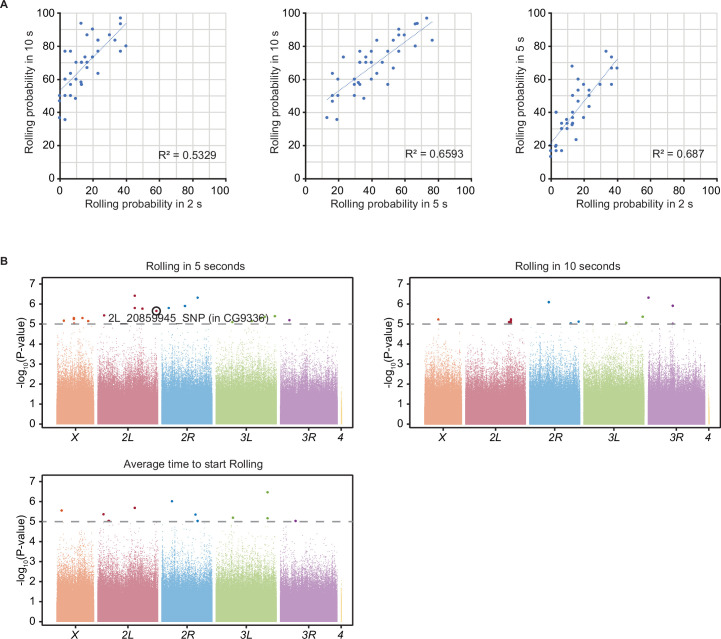
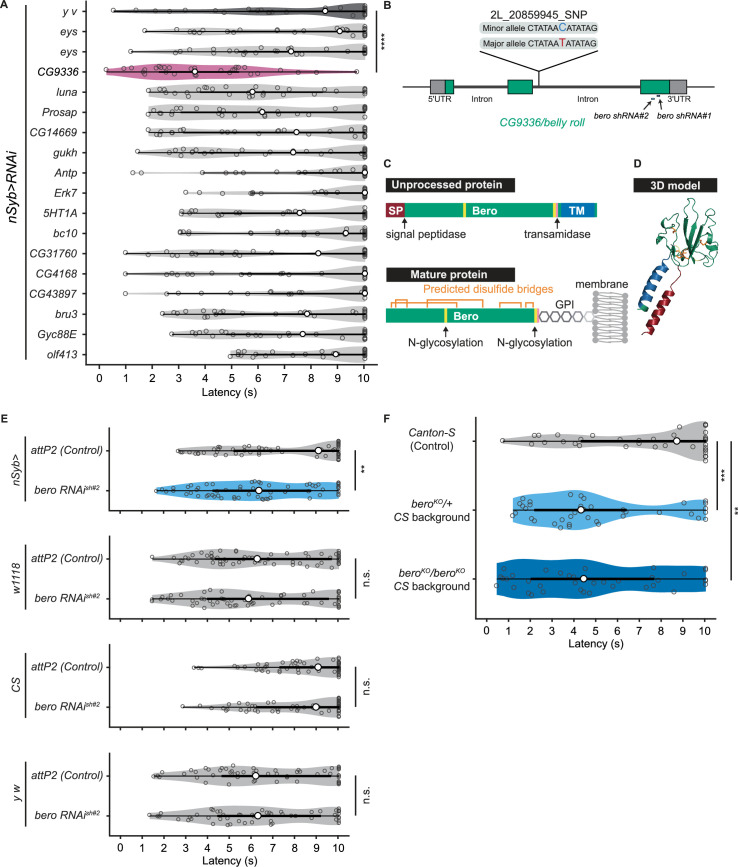
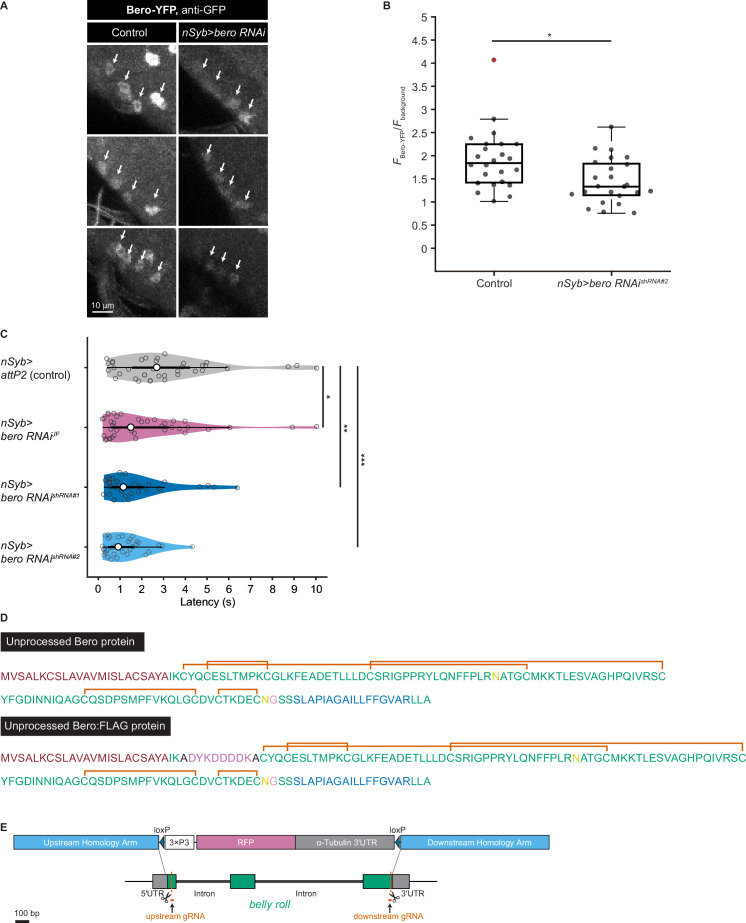
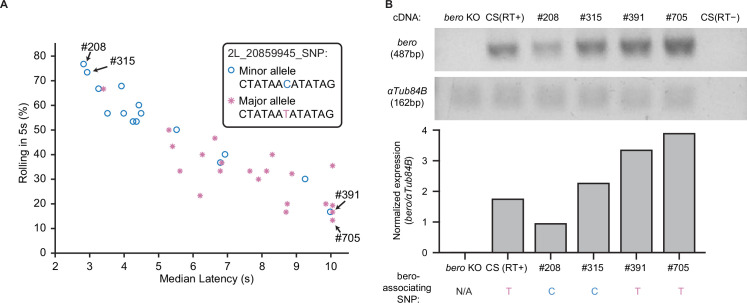
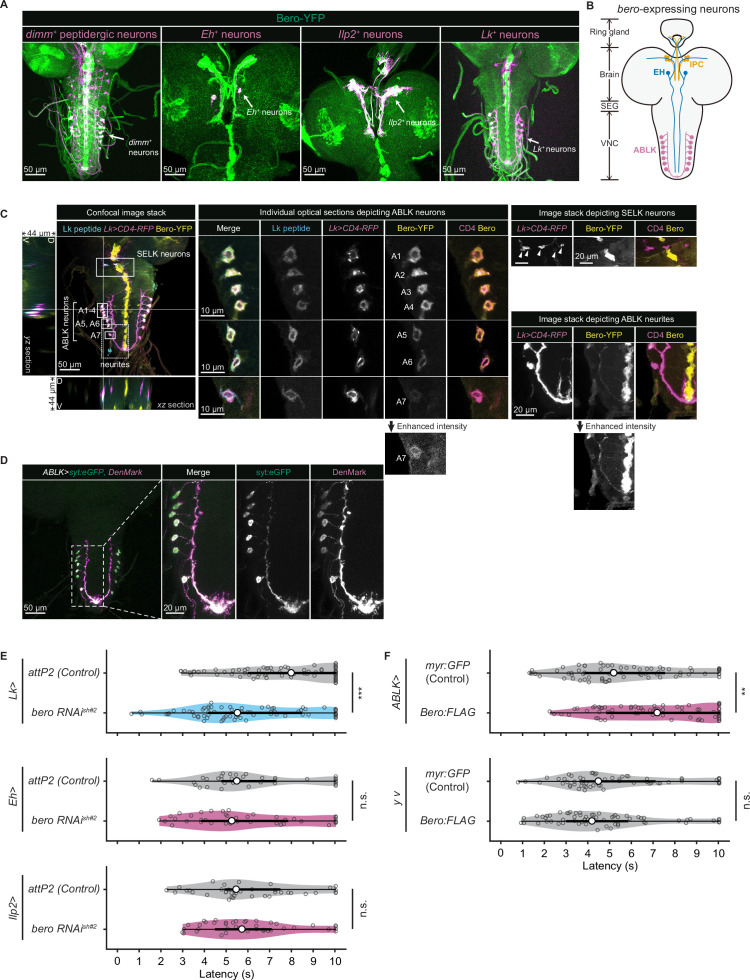
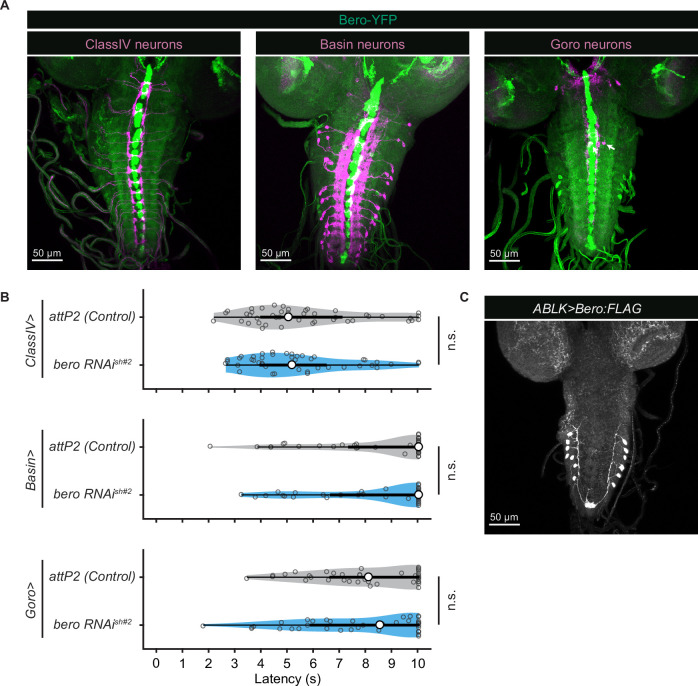
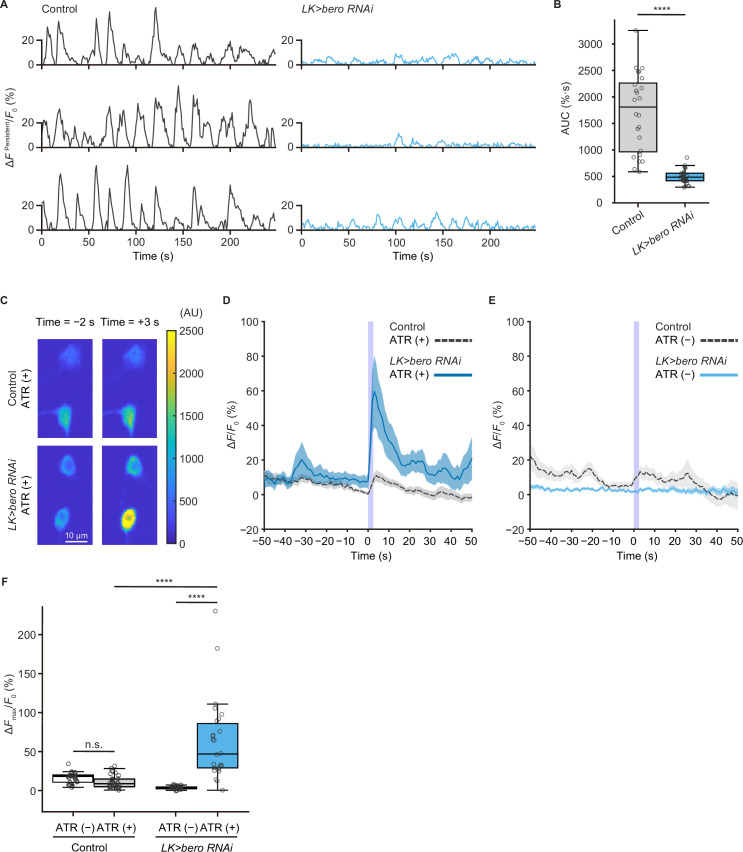
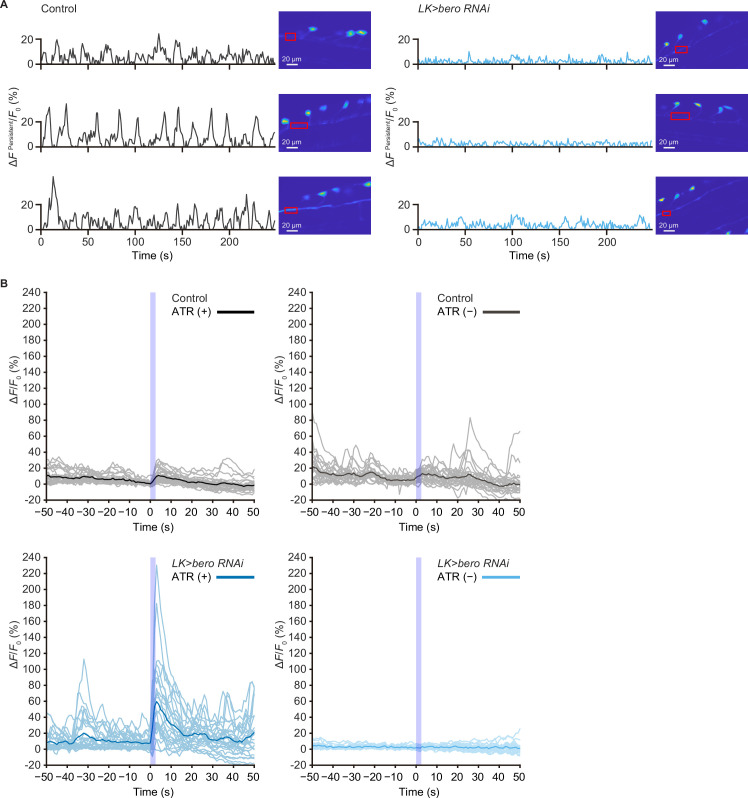
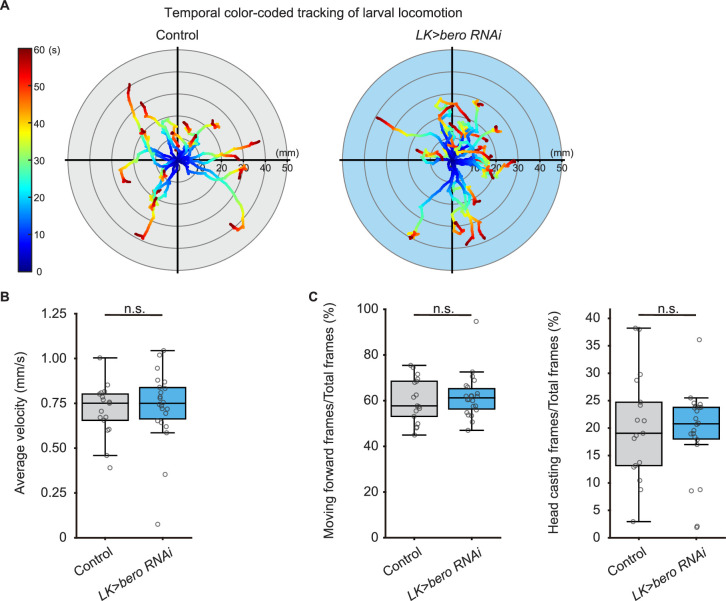
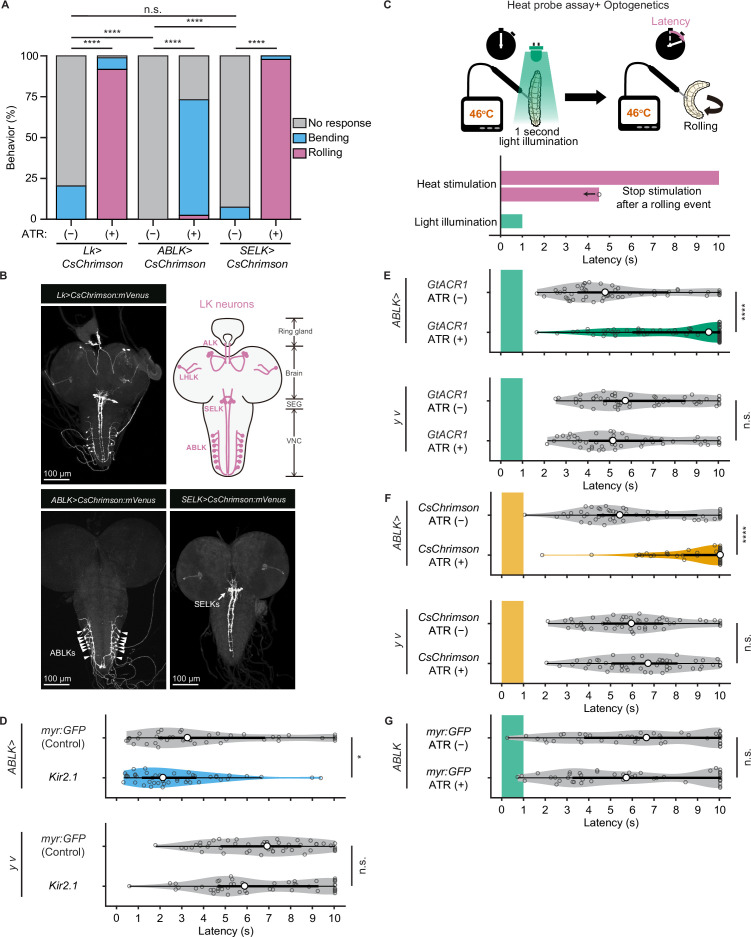
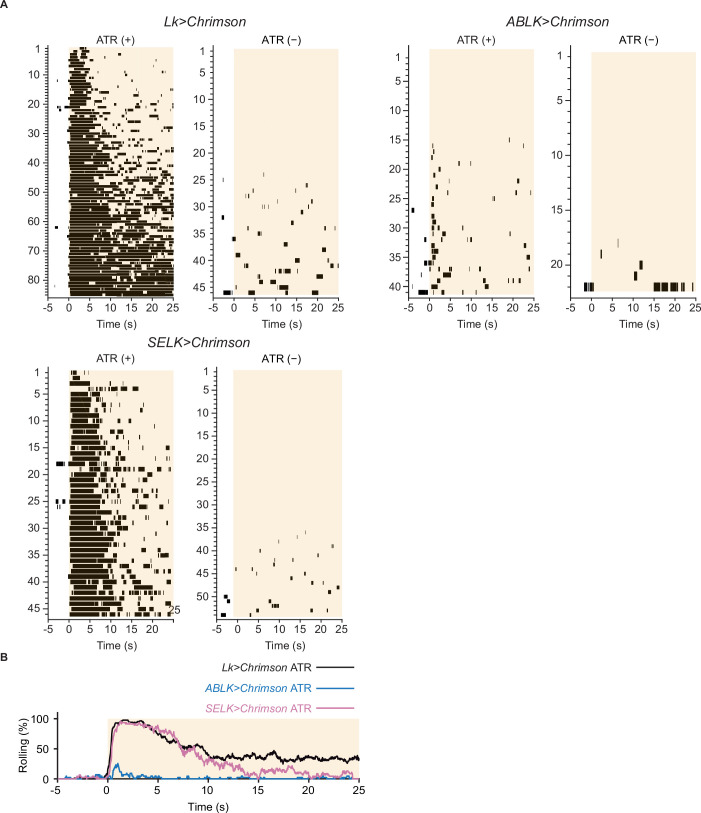
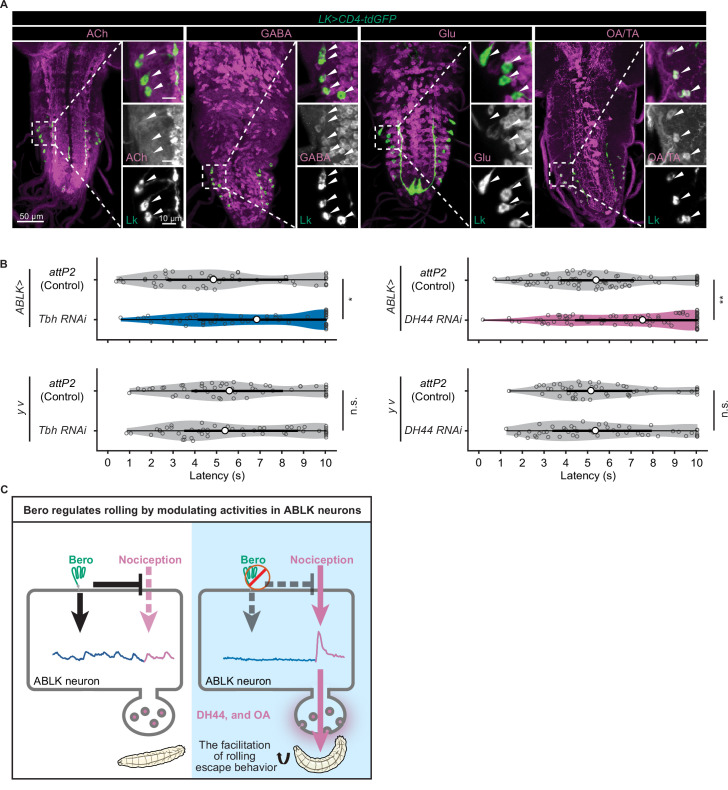
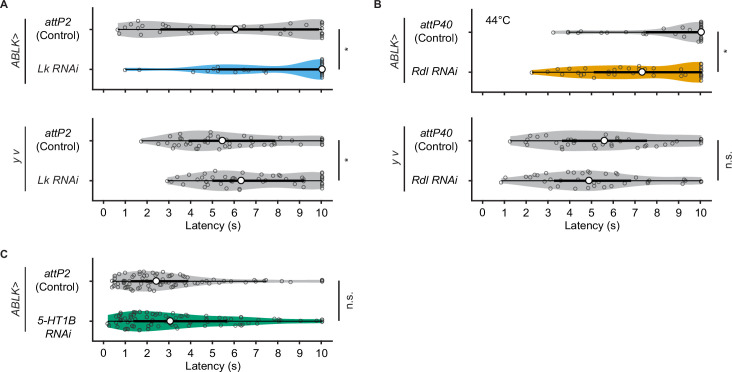
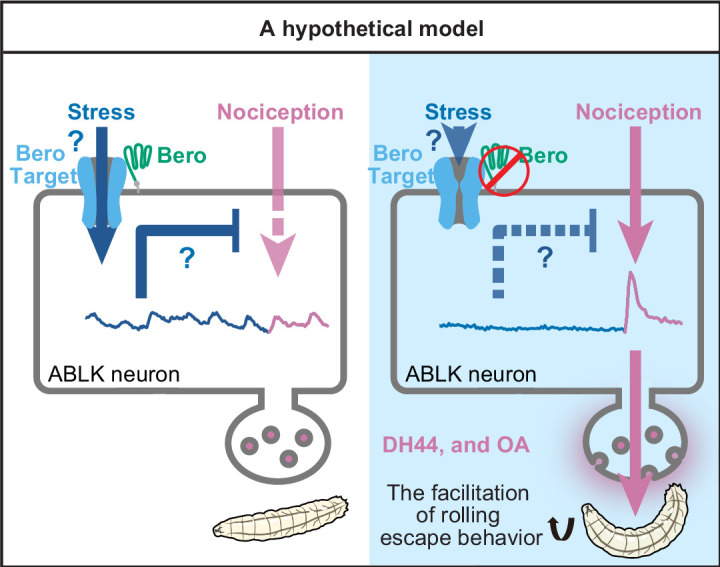
Summary: Appropriate modulation of escape behaviors in response to potentially damaging stimuli is essential for survival. Although nociceptive circuitry has been studied, it is poorly understood how genetic contexts affect the relevant escape responses. Using an unbiased genome-wide association analysis, we identified a Ly6/α-neurotoxin family protein, Belly roll (Bero), which negatively regulates Drosophila nociceptive escape behavior. We show that Bero is expressed in abdominal leucokinin-producing neurons (ABLK neurons) and bero knockdown in ABLK neurons resulted in enhanced escape behavior. Furthermore, we demonstrated that ABLK neurons responded to the activation of nociceptors and initiated the behavior. Notably, bero knockdown reduced the persistent neuronal activity and increased the evoked nociceptive responses in ABLK neurons. Our findings reveal that Bero modulates an escape response by regulating distinct neuronal activities in ABLK neurons.
Overview
The claims and statistics of this paper haven’t been checked yet.
Free: it reads the open-access text and checks the first 5 claims that cite a source we can check. Create a free account to check every claim.
Integrity signals
Registry
Cites
Statistics
Figures
Verification
Claims the paper makes
The claims and statistics of this paper haven’t been checked yet.
Free: it reads the open-access text and checks the first 5 claims that cite a source we can check. Create a free account to check every claim.
Self-check
Percentages, sums and reported differences re-computed from the paper’s own numbers.
The self-check needs the paper’s full text.
Citations
Cites
1 retracted
RETRACTED: A mathematical model explains saturating axon guidance responses to molecular gradients
Nguyen, H., Dayan, P., Pujic, Z., Cooper-White, J., & Goodhill, G. J. (2016) · eLife · doi:10.7554/elife.12248 · Cited by 1,221
RetractedHighly accurate protein structure prediction with AlphaFold
Jumper, J., Evans, R., Pritzel, A., Green, T., Figurnov, M., Ronneberger, O., Tunyasuvunakool, K., Bates, R., Žídek, A., Potapenko, A., et al. (2021) · Nature · doi:10.1038/s41586-021-03819-2 · Cited by 43,764
Krogh, A., Larsson, B., von Heijne, G., & Sonnhammer, E. L. L. (2001) · Journal of Molecular Biology · doi:10.1006/jmbi.2000.4315 · Cited by 12,654
Unicycler: Resolving bacterial genome assemblies from short and long sequencing reads
Wick, R. R., Judd, L. M., Gorrie, C. L., & Holt, K. E. (2017) · PLOS Computational Biology · doi:10.1371/journal.pcbi.1005595 · Cited by 8,653
Accurate prediction of protein structures and interactions using a 3-track network
Baek, M., DiMaio, F., Anishchenko, I., Dauparas, J., Ovchinnikov, S., Lee, G. R., Wang, J., Cong, Q., Kinch, L. N., Schaeffer, R. D., et al. (2021) · doi:10.1101/2021.06.14.448402 · Cited by 5,549
SignalP 5.0 improves signal peptide predictions using deep neural networks
Almagro Armenteros, J. J., Tsirigos, K. D., Sønderby, C. K., Petersen, T. N., Winther, O., Brunak, S., von Heijne, G., & Nielsen, H. (2019) · Nature Biotechnology · doi:10.1038/s41587-019-0036-z · Cited by 4,284
Limb proportions show developmental plasticity in response to embryo movement
Pollard, A. S., Charlton, B. G., Hutchinson, J. R., Gustafsson, T., McGonnell, I. M., Timmons, J. A., & Pitsillides, A. A. (2017) · Scientific Reports · doi:10.1038/srep41926 · Cited by 2,364
Independent optical excitation of distinct neural populations
Klapoetke, N. C., Murata, Y., Kim, S. S., Pulver, S. R., Birdsey-Benson, A., Cho, Y. K., Morimoto, T. K., Chuong, A. S., Carpenter, E. J., Tian, Z., et al. (2014) · Nature Methods · doi:10.1038/nmeth.2836 · Cited by 2,344
Self-citationJASPAR 2022: the 9th release of the open-access database of transcription factor binding profiles
Castro-Mondragon, J. A., Riudavets-Puig, R., Rauluseviciute, I., Berhanu Lemma, R., Turchi, L., Blanc-Mathieu, R., Lucas, J., Boddie, P., Khan, A., Manosalva Pérez, N., et al. (2022) · Nucleic Acids Research · doi:10.1093/nar/gkab1113 · Cited by 1,935
The Drosophila melanogaster Genetic Reference Panel
Mackay, T. F. C., Richards, S., Stone, E. A., Barbadilla, A., Ayroles, J. F., Zhu, D., Casillas, S., Han, Y., Magwire, M. M., Cridland, J. M., et al. (2012) · Nature · doi:10.1038/nature10811 · Cited by 1,656
FaST linear mixed models for genome-wide association studies
Lippert, C., Listgarten, J., Liu, Y., Kadie, C. M., Davidson, R. I., & Heckerman, D. (2011) · Nature Methods · doi:10.1038/nmeth.1681 · Cited by 1,209
Prediction of glycosylation across the human proteome and the correlation to protein function
Gupta, R., & Brunak, S. (2001) · Biocomputing 2002 · doi:10.1142/9789812799623_0029 · Cited by 988
painless, a Drosophila Gene Essential for Nociception
Tracey, W. D., Wilson, R. I., Laurent, G., & Benzer, S. (2003) · Cell · doi:10.1016/s0092-8674(03)00272-1 · Cited by 839
Huang, W., Massouras, A., Inoue, Y., Peiffer, J., Ràmia, M., Tarone, A. M., Turlapati, L., Zichner, T., Zhu, D., Lyman, R. F., et al. (2014) · Genome Research · doi:10.1101/gr.171546.113 · Cited by 661
Highly Improved Gene Targeting by Germline-Specific Cas9 Expression in Drosophila
Kondo, S., & Ueda, R. (2013) · Genetics · doi:10.1534/genetics.113.156737 · Cited by 575
Genomic Evidence of Rapid and Stable Adaptive Oscillations over Seasonal Time Scales in Drosophila
Bergland, A. O., Behrman, E. L., O'Brien, K. R., Schmidt, P. S., & Petrov, D. A. (2014) · PLoS Genetics · doi:10.1371/journal.pgen.1004775 · Cited by 514
A multilevel multimodal circuit enhances action selection in drosophila
Ohyama, T., Schneider-Mizell, C. M., Fetter, R. D., Aleman, J. V., Franconville, R., Rivera-Alba, M., Mensh, B. D., Branson, K. M., Simpson, J. H., Truman, J. W., et al. (2015) · Nature · doi:10.1038/nature14297 · Cited by 502
Drosophila neuropeptides in regulation of physiology and behavior
Nässel, D. R., & Winther, Å. M. E. (2010) · Progress in Neurobiology · doi:10.1016/j.pneurobio.2010.04.010 · Cited by 493
Nociceptive Neurons Protect Drosophila Larvae from Parasitoid Wasps
Hwang, R. Y., Zhong, L., Xu, Y., Johnson, T., Zhang, F., Deisseroth, K., & Tracey, W. D. (2007) · Current Biology · doi:10.1016/j.cub.2007.11.029 · Cited by 485
Neural circuits for pain: Recent advances and current views
Peirs, C., & Seal, R. P. (2016) · Science · doi:10.1126/science.aaf8933 · Cited by 478
A competitive inhibitory circuit for selection of active and passive fear responses
Fadok, J. P., Krabbe, S., Markovic, M., Courtin, J., Xu, C., Massi, L., Botta, P., Bylund, K., Müller, C., Kovacevic, A., et al. (2017) · Nature · doi:10.1038/nature21047 · Cited by 473
Light-avoidance-mediating photoreceptors tile the Drosophila larval body wall
Xiang, Y., Yuan, Q., Vogt, N., Looger, L. L., Jan, L. Y., & Jan, Y. N. (2010) · Nature · doi:10.1038/nature09576 · Cited by 462
High-efficiency channelrhodopsins for fast neuronal stimulation at low light levels
Berndt, A., Schoenenberger, P., Mattis, J., Tye, K. M., Deisseroth, K., Hegemann, P., & Oertner, T. G. (2011) · Proceedings of the National Academy of Sciences · doi:10.1073/pnas.1017210108 · Cited by 442
Prediction of Potential GPI-modification Sites in Proprotein Sequences
Eisenhaber, B., Bork, P., & Eisenhaber, F. (1999) · Journal of Molecular Biology · doi:10.1006/jmbi.1999.3069 · Cited by 442
Jennings, E. M., Okine, B. N., Roche, M., & Finn, D. P. (2014) · Progress in Neurobiology · doi:10.1016/j.pneurobio.2014.06.003 · Cited by 318
Hunger-Driven Motivational State Competition
Burnett, C. J., Li, C., Webber, E., Tsaousidou, E., Xue, S. Y., Brüning, J. C., & Krashes, M. J. (2016) · Neuron · doi:10.1016/j.neuron.2016.08.032 · Cited by 305
Vector and parameters for targeted transgenic RNA interference in Drosophila melanogaster
Ni, J.-Q., Markstein, M., Binari, R., Pfeiffer, B., Liu, L.-P., Villalta, C., Booker, M., Perkins, L., & Perrimon, N. (2008) · Nature Methods · doi:10.1038/nmeth1146 · Cited by 281
Peptide Neuromodulation in Invertebrate Model Systems
Taghert, P. H., & Nitabach, M. N. (2012) · Neuron · doi:10.1016/j.neuron.2012.08.035 · Cited by 279
Optogenetic inhibition of behavior with anion channelrhodopsins
Mohammad, F., Stewart, J. C., Ott, S., Chlebikova, K., Chua, J. Y., Koh, T.-W., Ho, J., & Claridge-Chang, A. (2017) · Nature Methods · doi:10.1038/nmeth.4148 · Cited by 276
Kim, Y.-J., Žitňan, D., Galizia, C. G., Cho, K.-H., & Adams, M. E. (2006) · Current Biology · doi:10.1016/j.cub.2006.06.027 · Cited by 227
Competitive Disinhibition Mediates Behavioral Choice and Sequences in Drosophila
Jovanic, T., Schneider-Mizell, C. M., Shao, M., Masson, J.-B., Denisov, G., Fetter, R. D., Mensh, B. D., Truman, J. W., Cardona, A., & Zlatic, M. (2016) · Cell · doi:10.1016/j.cell.2016.09.009 · Cited by 211
Calcium-dependent inactivation of neuronal calcium channels
Budde, T., Meuth, S., & Pape, H.-C. (2002) · Nature Reviews Neuroscience · doi:10.1038/nrn959 · Cited by 211
Organization, evolution and functions of the human and mouse Ly6/uPAR family genes
Loughner, C. L., Bruford, E. A., McAndrews, M. S., Delp, E. E., Swamynathan, S., & Swamynathan, S. K. (2016) · Human Genomics · doi:10.1186/s40246-016-0074-2 · Cited by 192
Lowe, N., Rees, J. S., Roote, J., Ryder, E., Armean, I. M., Johnson, G., Drummond, E., Spriggs, H., Drummond, J., Magbanua, J. P., et al. (2014) · Development · doi:10.1242/dev.111054 · Cited by 180
Mackay, T. F. C., & Huang, W. (2017) · Wiley Interdisciplinary Reviews Developmental Biology · doi:10.1002/wdev.289 · Cited by 158
Nociceptive interneurons control modular motor pathways to promote escape behavior in Drosophila
Burgos, A., Honjo, K., Ohyama, T., Qian, C. S., Shin, G. J.-E., Gohl, D. M., Silies, M., Tracey, W. D., Zlatic, M., Cardona, A., et al. (2018) · eLife · doi:10.7554/elife.26016 · Cited by 147
Fleury, F., Ris, N., Allemand, R., Fouillet, P., Carton, Y., & Boulétreau, M. (2004) · Genetica · doi:10.1023/b:gene.0000017640.78087.9e · Cited by 143
Turner, H. N., Armengol, K., Patel, A. A., Himmel, N. J., Sullivan, L., Iyer, S. C., Bhattacharya, S., Iyer, E. P. R., Landry, C., Galko, M. J., et al. (2016) · Current Biology · doi:10.1016/j.cub.2016.09.038 · Cited by 140
Pokes, sunburn, and hot sauce: Drosophila as an emerging model for the biology of nociception
Im, S. H., & Galko, M. J. (2012) · Developmental Dynamics · doi:10.1002/dvdy.22737 · Cited by 132
Sensory integration and neuromodulatory feedback facilitate Drosophila mechanonociceptive behavior
Hu, C., Petersen, M., Hoyer, N., Spitzweck, B., Tenedini, F., Wang, D., Gruschka, A., Burchardt, L. S., Szpotowicz, E., Schweizer, M., et al. (2017) · Nature Neuroscience · doi:10.1038/nn.4580 · Cited by 131
The Neural Basis of Escape Behavior in Vertebrates
Branco, T., & Redgrave, P. (2020) · Annual Review of Neuroscience · doi:10.1146/annurev-neuro-100219-122527 · Cited by 127
Takagi, S., Cocanougher, B., Niki, S., Miyamoto, D., Kohsaka, H., Kazama, H., Fetter, R. D., Truman, J. W., Zlatic, M., Cardona, A., et al. (2017) · Neuron · doi:10.1016/j.neuron.2017.10.030 · Cited by 122
Mu, Y., Li, X., Zhang, B., & Du, J. (2012) · Neuron · doi:10.1016/j.neuron.2012.05.035 · Cited by 118
Wu, M. N., Joiner, W. J., Dean, T., Yue, Z., Smith, C. J., Chen, D., Hoshi, T., Sehgal, A., & Koh, K. (2010) · Nature Neuroscience · doi:10.1038/nn.2454 · Cited by 113
Tsetlin, V. I. (2014) · Trends in Pharmacological Sciences · doi:10.1016/j.tips.2014.11.003 · Cited by 109
Oh, Y., Lai, J. S.-Y., Min, S., Huang, H.-W., Liberles, S. D., Ryoo, H. D., & Suh, G. S. B. (2021) · Neuron · doi:10.1016/j.neuron.2021.04.028 · Cited by 109
Yoshino, J., Morikawa, R. K., Hasegawa, E., & Emoto, K. (2017) · Current Biology · doi:10.1016/j.cub.2017.06.068 · Cited by 98
A neuropeptidergic circuit gates selective escape behavior of Drosophila larvae
Imambocus, B. N., Zhou, F., Formozov, A., Wittich, A., Tenedini, F. M., Hu, C., Sauter, K., Macarenhas Varela, E., Herédia, F., Casimiro, A. P., et al. (2022) · Current Biology · doi:10.1016/j.cub.2021.10.069 · Cited by 92
Hijazi, A., Masson, W., Augé, B., Waltzer, L., Haenlin, M., & Roch, F. (2009) · Development · doi:10.1242/dev.033845 · Cited by 92
SLEEPLESS Is a Bifunctional Regulator of Excitability and Cholinergic Synaptic Transmission
Wu, M., Robinson, J. E., & Joiner, W. J. (2014) · Current Biology · doi:10.1016/j.cub.2014.02.026 · Cited by 88
A genetic mosaic approach for neural circuit mapping in Drosophila
Bohm, R. A., Welch, W. P., Goodnight, L. K., Cox, L. W., Henry, L. G., Gunter, T. C., Bao, H., & Zhang, B. (2010) · Proceedings of the National Academy of Sciences · doi:10.1073/pnas.1004669107 · Cited by 86
de Haro, M., Al‐Ramahi, I., Benito‐Sipos, J., López‐Arias, B., Dorado, B., Veenstra, J. A., & Herrero, P. (2009) · Cell and Tissue Research · doi:10.1007/s00441-009-0890-y · Cited by 81
Ji, G., Fu, Y., Adwanikar, H., & Neugebauer, V. (2013) · Molecular Pain · doi:10.1186/1744-8069-9-2 · Cited by 79
Khan, S. J., Abidi, S. N. F., Skinner, A., Tian, Y., & Smith-Bolton, R. K. (2017) · PLOS Genetics · doi:10.1371/journal.pgen.1006937 · Cited by 79
Comparative biology of pain: What invertebrates can tell us about how nociception works
Burrell, B. D. (2017) · Journal of Neurophysiology · doi:10.1152/jn.00600.2016 · Cited by 77
Zandawala, M., Marley, R., Davies, S. A., & Nässel, D. R. (2018) · Cellular and Molecular Life Sciences · doi:10.1007/s00018-017-2682-y · Cited by 76
Liu, Y., Luo, J., Carlsson, M. A., & Nässel, D. R. (2015) · Journal of Comparative Neurology · doi:10.1002/cne.23768 · Cited by 75
Dason, J. S., Cheung, A., Anreiter, I., Montemurri, V., Allen, A. M., & Sokolowski, M. B. (2019) · Proceedings of the National Academy of Sciences · doi:10.1073/pnas.1820840116 · Cited by 69
Itoga, C. A., Roltsch, E. A., Whitaker, A. M., Lu, Y.-L., Schreiber, A. L., Baynes, B. B., Baiamonte, B. A., Richardson, H. N., & Gilpin, N. W. (2016) · Neuropsychopharmacology · doi:10.1038/npp.2016.44 · Cited by 68
Kaneko, T., Macara, A. M., Li, R., Hu, Y., Iwasaki, K., Dunnings, Z., Firestone, E., Horvatic, S., Guntur, A., Shafer, O. T., et al. (2017) · Neuron · doi:10.1016/j.neuron.2017.06.034 · Cited by 61
Serotonin and Downstream Leucokinin Neurons Modulate Larval Turning Behavior in Drosophila
Okusawa, S., Kohsaka, H., & Nose, A. (2014) · The Journal of Neuroscience · doi:10.1523/jneurosci.3500-13.2014 · Cited by 57
Johnson, A. C., Tran, L., & Greenwood-Van Meerveld, B. (2015) · Translational Psychiatry · doi:10.1038/tp.2015.16 · Cited by 56
A Neural Basis for Categorizing Sensory Stimuli to Enhance Decision Accuracy
Hu, Y., Wang, C., Yang, L., Pan, G., Liu, H., Yu, G., & Ye, B. (2020) · Current Biology · doi:10.1016/j.cub.2020.09.045 · Cited by 53
A single-cell transcriptomic atlas of complete insect nervous systems across multiple life stages
Corrales, M., Cocanougher, B. T., Kohn, A. B., Wittenbach, J. D., Long, X. S., Lemire, A., Cardona, A., Singer, R. H., Moroz, L. L., & Zlatic, M. (2022) · Neural Development · doi:10.1186/s13064-022-00164-6 · Cited by 50
Bourbia, N., Ansah, O. B., & Pertovaara, A. (2010) · Journal of Pain · doi:10.1016/j.jpain.2010.05.004 · Cited by 41
Veenstra, J. A., & Khammassi, H. (2017) · Insect Biochemistry and Molecular Biology · doi:10.1016/j.ibmb.2017.03.001 · Cited by 35
Luo, J., Liu, Y., & Nässel, D. R. (2013) · PLoS Genetics · doi:10.1371/journal.pgen.1004052 · Cited by 34
Nociceptive Circuits: Can’t Escape Detection
Chin, M. R., & Tracey, W. D. (2017) · Current Biology · doi:10.1016/j.cub.2017.07.031 · Cited by 33
Ohashi, H., & Sakai, T. (2018) · Biochemical and Biophysical Research Communications · doi:10.1016/j.bbrc.2018.03.132 · Cited by 30
Research works printed but not linked: 1
- 10.7554/eLife.29754.001 · doi:10.7554/elife.29754.001
Metadata
- Authors
- Li, K., Tsukasa, Y., Kurio, M., Maeta, K., Tsumadori, A., Baba, S., Nishimura, R., Murakami, A., Onodera, K., Morimoto, T., Uemura, T., & Usui, T.
- Affiliations
- Kyoto University (JP)
- Tokyo University of Pharmacy and Life Sciences (JP)
- Corresponding author
- Usui, Tadao
- ORCID
- Venue
- eLife
- Publisher
- openRxiv
- Published
- 2022-10-21
- Volume
- 12
- ISSN
- 2050-084X (ISSN-L)
- PMC
- PMC10264074
- OpenAlex
- W4380422970
- Cited by
- 11
- References
- 69
- Citations by year
- 2026: 6 · 2025: 2 · 2024: 3
- FWCI
- 1.33
- Type
- journal article
- Language
- en
- Open access
- gold
- doi.org
- Licence
- cc-by
- Locations
- eLife (publishedVersion, cc-by)
- bioRxiv (Cold Spring Harbor Laboratory) (acceptedVersion, cc-by)
- PubMed Central (publishedVersion, cc-by)
- PubMed (publishedVersion)
- Institutional Repositories DataBase (IRDB) (submittedVersion, cc-by)
- DOAJ (DOAJ: Directory of Open Access Journals) (submittedVersion, cc-by-sa)
- Kyoto University Research Information Repository (Kyoto University) (submittedVersion, cc-by)
- Funders
- Wellcome Trust (107499, 202800/Z/16/Z, 216444/Z/19/Z, 220266/Z/20/Z, 203077)
- Duke-NUS Medical School
- Toray Science Foundation
- University of California, Santa Barbara
- Japan Society for the Promotion of Science (15H02400, 21K06264, 22KJ1999)
- Topics
- Life Sciences › Neuroscience › Cellular and Molecular Neuroscience › Neurobiology and Insect Physiology Research
- Life Sciences › Neuroscience › Sensory Systems › Ion Channels and Receptors
- Health Sciences › Medicine › Physiology (medical) › Pain Mechanisms and Treatments
- Keywords
- nociceptors, neuronal excitability, persistent neuronal activity, genome-wide association study, Drosophila melanogaster, GPI-anchored proteins
- MeSH terms
- Animals, Drosophila, Drosophila melanogaster, Interneurons, Neurons, Neurotoxins, Genome-Wide Association Study, Nociception
About these checks
Registry, retraction, Cites and statistics results are computed, not judged, with one exception: a printed reference that no index lists is read once by a model before it counts as a citation error. Claims are extracted by a model and kept only when their quote appears verbatim in the text; each cited source is then checked, with a model’s help, for whether it says what the claim relies on. Those verdicts can be wrong — read the claim’s quote and the cited source before relying on one.
Statistics and arithmetic are recomputed, not judged.
Confidence bands are shown only for fields calibrated on our annotated test set. None is calibrated yet, so no band is shown.
What counts as a claim ›How we measure confidence ›How we check this ›
Are you an author, or do you see a problem with this page? Request a review
Data sources
Bibliographic data: Semantic Scholar, OpenAlex, Crossref.
Contains information from the Semantic Scholar Academic Graph Datasets, made available under the ODC Attribution License (ODC-BY 1.0).
Semantic Scholar’s data is described in: Kinney, R., et al. (2023). The Semantic Scholar Open Data Platform. arXiv:2301.10140.
