

The DOI matches its Crossref record; 81 of the 81 references it cites were found in a registry or an index.
C. elegans Dicer acts with the RIG-I-like helicase DRH-1 and RDE-4 to cleave dsRNA
Open accessPreprint — published as 10.7554/elife.93979.3 · Paper page
Abstract
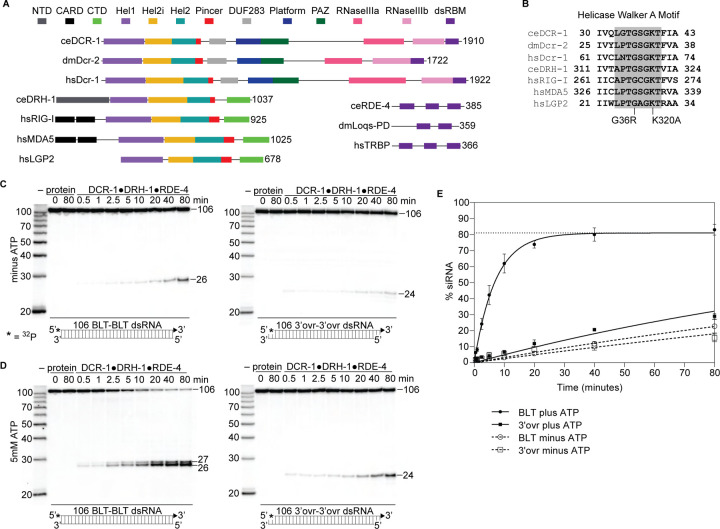
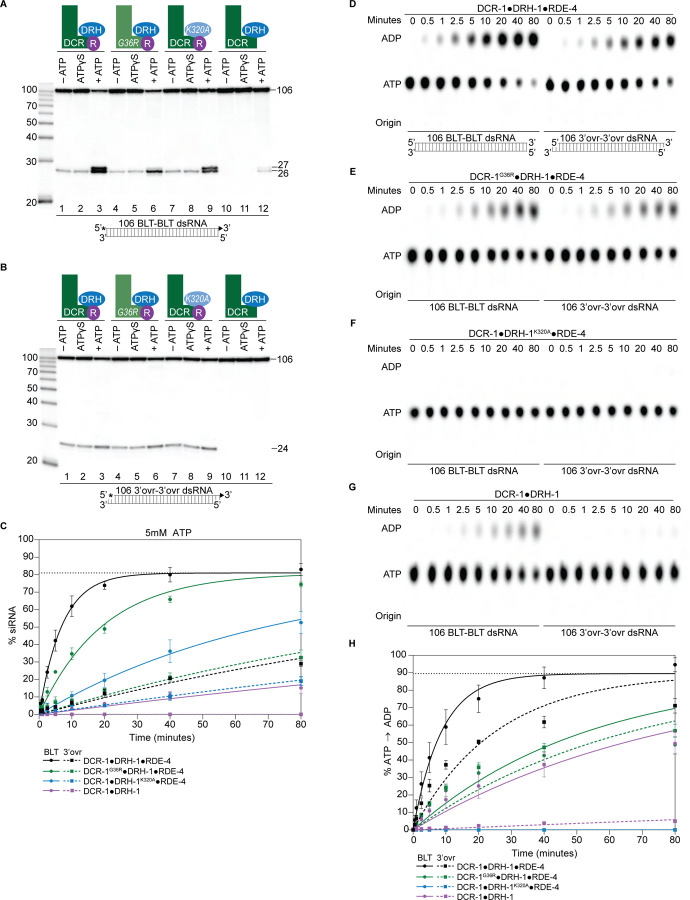
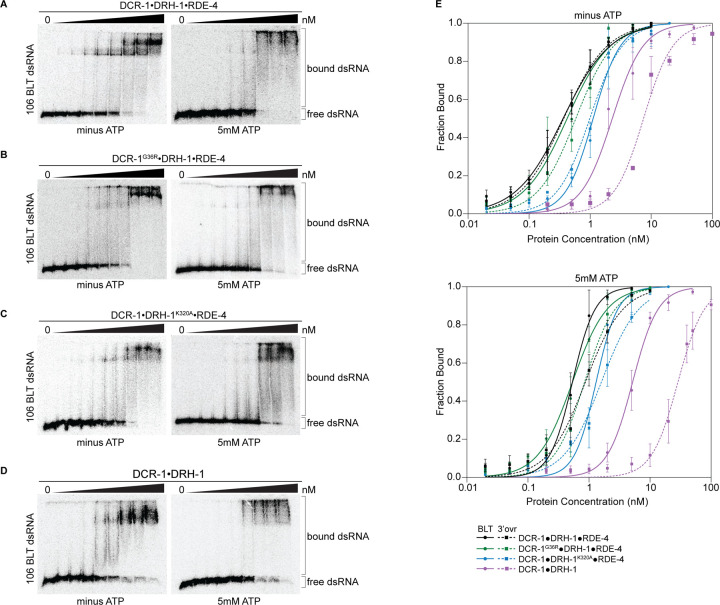
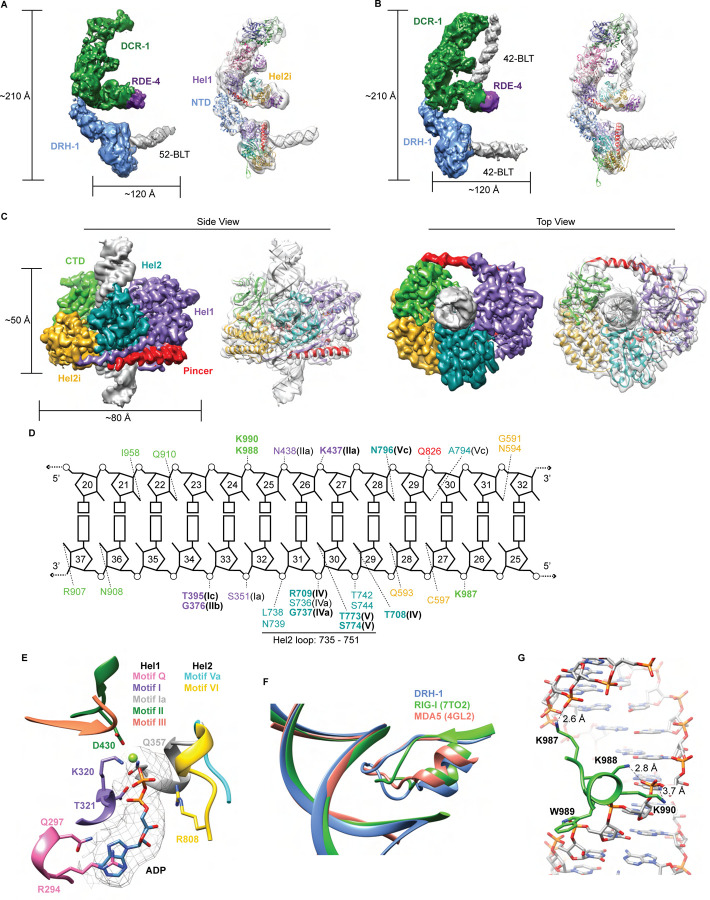
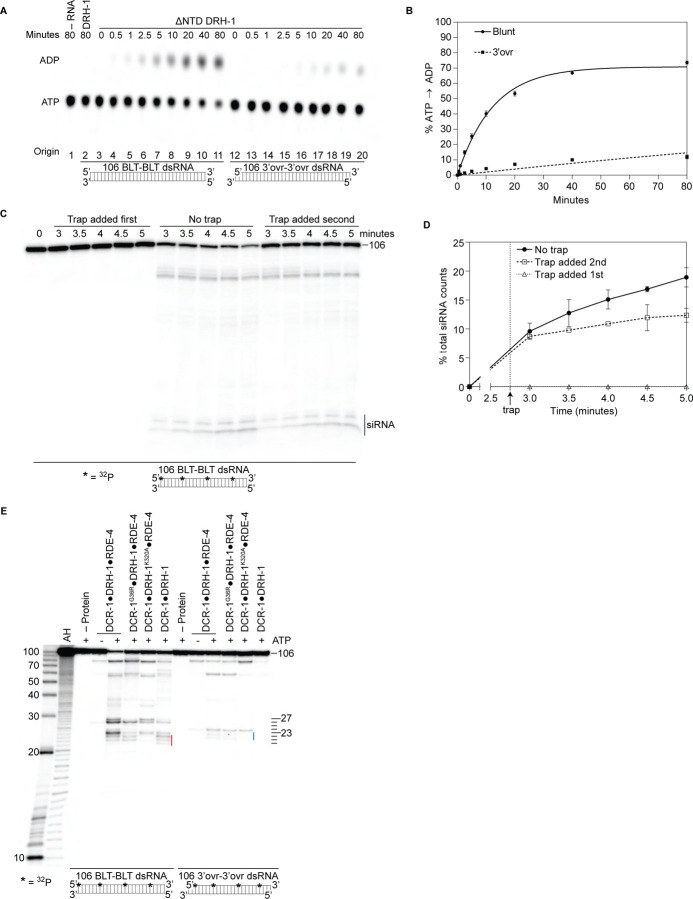
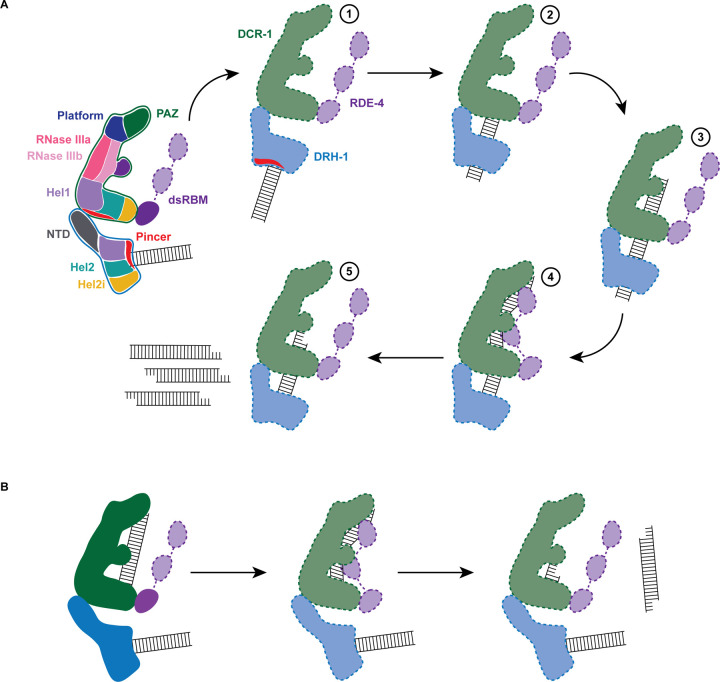
Abstract/Summary: Invertebrates use the endoribonuclease Dicer to cleave viral dsRNA during antiviral defense, while vertebrates use RIG-I-like Receptors (RLRs), which bind viral dsRNA to trigger an interferon response. While some invertebrate Dicers act alone during antiviral defense, C. elegans Dicer acts in a complex with a dsRNA binding protein called RDE-4, and an RLR ortholog called DRH-1. We used biochemical and structural techniques to provide mechanistic insight into how these proteins function together. We found RDE-4 is important for ATP-independent and ATP-dependent cleavage reactions, while helicase domains of both DCR-1 and DRH-1 contribute to ATP-dependent cleavage. DRH-1 plays the dominant role in ATP hydrolysis, and like mammalian RLRs, has an N-terminal domain that functions in autoinhibition. A cryo-EM structure indicates DRH-1 interacts with DCR-1’s helicase domain, suggesting this interaction relieves autoinhibition. Our study unravels the mechanistic basis of the collaboration between two helicases from typically distinct innate immune defense pathways.
Overview
The claims and statistics of this paper haven’t been checked yet.
Run the check — free, no account needed. It reads the open-access text and checks the sources it cites.
Integrity signals
Registry
Cites
Statistics
Figures
Verification
Claims the paper makes
The claims and statistics of this paper haven’t been checked yet.
Run the check — free, no account needed. It reads the open-access text and checks the sources it cites.
Self-check
Percentages, sums and reported differences re-computed from the paper’s own numbers.
The self-check needs the paper’s full text.
Citations
Cites
UCSF Chimera—A visualization system for exploratory research and analysis
Pettersen, E. F., Goddard, T. D., Huang, C. C., Couch, G. S., Greenblatt, D. M., Meng, E. C., & Ferrin, T. E. (2004) · Journal of Computational Chemistry · doi:10.1002/jcc.20084 · Cited by 45,828
Highly accurate protein structure prediction with AlphaFold
Jumper, J., Evans, R., Pritzel, A., Green, T., Figurnov, M., Ronneberger, O., Tunyasuvunakool, K., Bates, R., Žídek, A., Potapenko, A., et al. (2021) · Nature · doi:10.1038/s41586-021-03819-2 · Cited by 43,764
Features and development of Coot
Emsley, P., Lohkamp, B., Scott, W. G., & Cowtan, K. (2010) · Acta Crystallographica Section D Biological Crystallography · doi:10.1107/s0907444910007493 · Cited by 29,915
PHENIX : a comprehensive Python-based system for macromolecular structure solution
Adams, P. D., Afonine, P. V., Bunkóczi, G., Chen, V. B., Davis, I. W., Echols, N., Headd, J. J., Hung, L.-W., Kapral, G. J., Grosse-Kunstleve, R. W., et al. (2010) · Acta Crystallographica Section D Biological Crystallography · doi:10.1107/s0907444909052925 · Cited by 23,716
Potent and specific genetic interference by double-stranded RNA in Caenorhabditis elegans
Fire, A., Xu, S., Montgomery, M. K., Kostas, S. A., Driver, S. E., & Mello, C. C. (1998) · Nature · doi:10.1038/35888 · Cited by 15,429
Fast, scalable generation of high‐quality protein multiple sequence alignments using Clustal Omega
Sievers, F., Wilm, A., Dineen, D., Gibson, T. J., Karplus, K., Li, W., Lopez, R., McWilliam, H., Remmert, M., Söding, J., et al. (2011) · Molecular Systems Biology · doi:10.1038/msb.2011.75 · Cited by 15,355
cryoSPARC: algorithms for rapid unsupervised cryo-EM structure determination
Punjani, A., Rubinstein, J. L., Fleet, D. J., & Brubaker, M. A. (2017) · Nature Methods · doi:10.1038/nmeth.4169 · Cited by 11,626
Varadi, M., Anyango, S., Deshpande, M., Nair, S., Natassia, C., Yordanova, G., Yuan, D., Stroe, O., Wood, G., Laydon, A., et al. (2022) · Nucleic Acids Research · doi:10.1093/nar/gkab1061 · Cited by 7,850
Deciphering key features in protein structures with the new ENDscript server
Robert, X., & Gouet, P. (2014) · Nucleic Acids Research · doi:10.1093/nar/gku316 · Cited by 7,053
Automated electron microscope tomography using robust prediction of specimen movements
Mastronarde, D. N. (2005) · Journal of Structural Biology · doi:10.1016/j.jsb.2005.07.007 · Cited by 5,136
The HCV Life Cycle: In vitro Tissue Culture Systems and Therapeutic Targets
Gerold, G., & Pietschmann, T. (2014) · Digestive Diseases · doi:10.1159/000360830 · Cited by 4,854
Schuck, P. (2000) · Biophysical Journal · doi:10.1016/s0006-3495(00)76713-0 · Cited by 3,868
CDD: a Conserved Domain Database for the functional annotation of proteins
Marchler‐Bauer, A., Lu, S., Anderson, J. B., Chitsaz, F., Derbyshire, M. K., DeWeese-Scott, C., Fong, J. H., Geer, L. Y., Geer, R. C., Gonzales, N. R., et al. (2010) · Nucleic Acids Research · doi:10.1093/nar/gkq1189 · Cited by 3,126
A new bioinformatics analysis tools framework at EMBL-EBI
Goujon, M., McWilliam, H., Li, W., Valentin, F., Squizzato, S., Paern, J., & Lopez, R. (2010) · Nucleic Acids Research · doi:10.1093/nar/gkq313 · Cited by 1,846
RIG-I-like receptors: their regulation and roles in RNA sensing
Rehwinkel, J., & Gack, M. U. (2020) · Nature reviews. Immunology · doi:10.1038/s41577-020-0288-3 · Cited by 1,795
Automated molecular microscopy: The new Leginon system
Suloway, C., Pulokas, J., Fellmann, D., Cheng, A., Guerra, F., Quispe, J., Stagg, S., Potter, C. S., & Carragher, B. (2005) · Journal of Structural Biology · doi:10.1016/j.jsb.2005.03.010 · Cited by 1,764
Analysis Tool Web Services from the EMBL-EBI
McWilliam, H., Li, W., Uludağ, M., Squizzato, S., Park, Y. M., Buso, N., Cowley, A., & López, R. (2013) · Nucleic Acids Research · doi:10.1093/nar/gkt376 · Cited by 1,636
Molecular Mechanisms of RNA Interference
Wilson, R. C., & Doudna, J. A. (2013) · Annual Review of Biophysics · doi:10.1146/annurev-biophys-083012-130404 · Cited by 1,076
Single Processing Center Models for Human Dicer and Bacterial RNase III
Zhang, H., Kolb, F. A., Jaskiewicz, L., Westhof, E., & Filipowicz, W. (2004) · Cell · doi:10.1016/j.cell.2004.06.017 · Cited by 1,041
Large-Scale Sequencing Reveals 21U-RNAs and Additional MicroRNAs and Endogenous siRNAs in C. elegans
Ruby, J. G., Jan, C., Player, C., Axtell, M. J., Lee, W., Nusbaum, C., Ge, H., & Bartel, D. P. (2006) · Cell · doi:10.1016/j.cell.2006.10.040 · Cited by 983
SF1 and SF2 helicases: family matters
Fairman-Williams, M. E., Guenther, U.-P., & Jankowsky, E. (2010) · Current Opinion in Structural Biology · doi:10.1016/j.sbi.2010.03.011 · Cited by 981
Schlee, M., Roth, A. H. F. J., Hornung, V., Hagmann, C. A., Wimmenauer, V., Barchet, W., Coch, C., Janke, M., Mihailovic, A., Wardle, G. S., et al. (2009) · Immunity · doi:10.1016/j.immuni.2009.05.008 · Cited by 814
Conformational analysis of nucleic acids revisited: Curves+
Lavery, R., Moakher, M., Maddocks, J. H., Petkevičiūtė-Gerlach, D., & Zakrzewska, K. (2009) · Nucleic Acids Research · doi:10.1093/nar/gkp608 · Cited by 768
Structural Basis for the Activation of Innate Immune Pattern-Recognition Receptor RIG-I by Viral RNA
Kowalinski, E., Lunardi, T., McCarthy, A. A., Louber, J., Brunel, J., Grigorov, B., Gerlier, D., & Cusack, S. (2011) · Cell · doi:10.1016/j.cell.2011.09.039 · Cited by 714
Human Dicer preferentially cleaves dsRNAs at their termini without a requirement for ATP
Zhang, H. (2002) · The EMBO Journal · doi:10.1093/emboj/cdf582 · Cited by 631
Calculations and Publication-Quality Illustrations for Analytical Ultracentrifugation Data
Brautigam, C. A. (2015) · Methods in enzymology on CD-ROM/Methods in enzymology · doi:10.1016/bs.mie.2015.05.001 · Cited by 596
Structural Basis for dsRNA Recognition, Filament Formation, and Antiviral Signal Activation by MDA5
Wu, B., Peisley, A., Richards, C., Yao, H., Zeng, X., Lin, C., Feixia Chu, C., Walz, T., & Hur, S. (2012) · Cell · doi:10.1016/j.cell.2012.11.048 · Cited by 586
Tabara, H., Yigit, E., Siomi, H., & Mello, C. C. (2002) · Cell · doi:10.1016/s0092-8674(02)00793-6 · Cited by 541
Dicer recognizes the 5′ end of RNA for efficient and accurate processing
Park, J.-E., Heo, I., Tian, Y., Simanshu, D. K., Chang, H., Jee, D., Patel, D. J., & Kim, V. N. (2011) · Nature · doi:10.1038/nature10198 · Cited by 512
Structural Insights into RNA Recognition by RIG-I
Luo, D., Ding, S. C., Vela, A., Kohlway, A., Lindenbach, B. D., & Pyle, A. M. (2011) · Cell · doi:10.1016/j.cell.2011.09.023 · Cited by 419
Devarkar, S. C., Wang, C., Miller, M. T., Ramanathan, A., Jiang, F., Khan, A. G., Patel, S. S., & Marcotrigiano, J. (2016) · Proceedings of the National Academy of Sciences · doi:10.1073/pnas.1515152113 · Cited by 357
biGBac enables rapid gene assembly for the expression of large multisubunit protein complexes
Weissmann, F., Petzold, G., VanderLinden, R., Huis in 't Veld, P. J., Brown, N. G., Lampert, F., Westermann, S., Stark, H., Schulman, B. A., & Peters, J.-M. (2016) · Proceedings of the National Academy of Sciences · doi:10.1073/pnas.1604935113 · Cited by 355
Dicer-1 and R3D1-L catalyze microRNA maturation in DrosophilaPreprint
Jiang, F., Ye, X., Liu, X., Fincher, L., Mckearin, D. M., & Liu, Q. (2005) · Genes & Development · doi:10.1101/gad.1334005 · Cited by 330
Cooperative assembly and dynamic disassembly of MDA5 filaments for viral dsRNA recognition
Peisley, A., Lin, C., Wu, B., Orme-Johnson, M., Liu, M., Walz, T., & Hur, S. (2011) · Proceedings of the National Academy of Sciences · doi:10.1073/pnas.1113651108 · Cited by 311
Autoinhibition of Human Dicer by Its Internal Helicase Domain
Ma, E., MacRae, I. J., Kirsch, J. F., & Doudna, J. A. (2008) · Journal of Molecular Biology · doi:10.1016/j.jmb.2008.05.005 · Cited by 254
Blanchet, C., Pasi, M., Zakrzewska, K., & Lavery, R. (2011) · Nucleic Acids Research · doi:10.1093/nar/gkr316 · Cited by 251
RIG-I Forms Signaling-Competent Filaments in an ATP-Dependent, Ubiquitin-Independent Manner
Peisley, A., Wu, B., Yao, H., Walz, T., & Hur, S. (2013) · Molecular Cell · doi:10.1016/j.molcel.2013.07.024 · Cited by 240
The molecular architecture of human Dicer
Lau, P., Guiley, K. Z., De, N., Potter, C. S., Carragher, B. O., & MacRae, I. J. (2012) · Nature Structural & Molecular Biology · doi:10.1038/nsmb.2268 · Cited by 236
Cryo-EM Structure of Human Dicer and Its Complexes with a Pre-miRNA Substrate
Liu, Z., Wang, J., Cheng, H., Ke, X., Sun, L., Zhang, Q. C., & Wang, H. (2018) · Cell · doi:10.1016/j.cell.2018.03.080 · Cited by 221
Ashe, A., Bélicard, T., Pen, J. L., Sarkies, P., Frézal, L., Lehrbach, N. J., Félix, M., & Miska, E. A. (2013) · eLife · doi:10.7554/elife.00994 · Cited by 215
Recognition of the pre-miRNA structure by Drosophila Dicer-1
Tsutsumi, A., Kawamata, T., Izumi, N., Seitz, H., & Tomari, Y. (2011) · Nature Structural & Molecular Biology · doi:10.1038/nsmb.2125 · Cited by 209
The newly discovered Q motif of DEAD‐box RNA helicases regulates RNA‐binding and helicase activity
Cordin, O., Tanner, N. K., Doère, M., et al. (2004) · The EMBO Journal · doi:10.1038/sj.emboj.7600272 · Cited by 199
Mukherjee, K., Campos, H., & Kolaczkowski, B. (2012) · Molecular Biology and Evolution · doi:10.1093/molbev/mss263 · Cited by 181
Phosphate and R2D2 Restrict the Substrate Specificity of Dicer-2, an ATP-Driven Ribonuclease
Cenik, E. S., Fukunaga, R., Lu, G., Dutcher, R. C., Wang, Y., Hall, T. M. T., & Zamore, P. D. (2011) · Molecular Cell · doi:10.1016/j.molcel.2011.03.002 · Cited by 175
Dicer's Helicase Domain Discriminates dsRNA Termini to Promote an Altered Reaction Mode
Welker, N. C., Maity, T., Ye, X., Aruscavage, P. J., Krauchuk, A. A., Liu, Q., & Bass, B. (2011) · Molecular Cell · doi:10.1016/j.molcel.2011.02.005 · Cited by 167
Self-citationKoonin, E. V. (2017) · Biology Direct · doi:10.1186/s13062-017-0177-2 · Cited by 153
A Phosphate-Binding Pocket within the Platform-PAZ-Connector Helix Cassette of Human Dicer
Tian, Y., Simanshu, D. K., Ma, J., Park, J., Heo, I., Kim, V. N., & Patel, D. J. (2014) · Molecular Cell · doi:10.1016/j.molcel.2014.01.003 · Cited by 148
Philo, J. S. (2023) · European Biophysics Journal · doi:10.1007/s00249-023-01629-0 · Cited by 147
van der Veen, A. G., Maillard, P. V., Schmidt, J. M., Lee, S. A., Deddouche, S., Borg, A., Kjær, S., Snijders, A. P., & Sousa, C. R. E. (2018) · The EMBO Journal · doi:10.15252/embj.201797479 · Cited by 135
Structure of the human DICER–pre-miRNA complex in a dicing state
Lee, Y.-Y., Lee, H., Kim, H., Kim, V. N., & Roh, S. (2023) · Nature · doi:10.1038/s41586-023-05723-3 · Cited by 134
An isoform of Dicer protects mammalian stem cells against multiple RNA viruses
Poirier, E. Z., Buck, M. D., Chakravarty, P., Carvalho, J., Frederico, B., Cardoso, A., Healy, L. E., Ulferts, R., Beale, R. C. L., & Sousa, C. R. E. (2021) · Science · doi:10.1126/science.abg2264 · Cited by 133
Lu, R., Yigit, E., Li, W.-X., & Ding, S. (2009) · PLoS Pathogens · doi:10.1371/journal.ppat.1000286 · Cited by 130
Is RNA Interference a Physiologically Relevant Innate Antiviral Immune Response in Mammals?
Cullen, B. R., Cherry, S. R., & tenOever, B. R. (2013) · Cell Host & Microbe · doi:10.1016/j.chom.2013.09.011 · Cited by 127
Parker, G. S., Eckert, D. M., & Bass, B. (2006) · RNA · doi:10.1261/rna.2338706 · Cited by 117
Self-citationDicer uses distinct modules for recognizing dsRNA termini
Sinha, N. K., Iwasa, J., Shen, P. S., & Bass, B. (2017) · Science · doi:10.1126/science.aaq0921 · Cited by 115
Self-citationFunctional Specialization of the Small Interfering RNA Pathway in Response to Virus Infection
Marques, J. T., Wang, J.-P., Wang, X., de Oliveira, K. P. V., Gao, C. A., Aguiar, E. R. G. R., Jafari, N., & Carthew, R. W. (2013) · PLoS Pathogens · doi:10.1371/journal.ppat.1003579 · Cited by 113
The RIG‐I ATPase domain structure reveals insights into ATP‐dependent antiviral signalling
Çivril, F., Bennett, M. D., Moldt, M., Deimling, T., Witte, G., Schießer, S., Carell, T., & Hopfner, K. (2011) · EMBO Reports · doi:10.1038/embor.2011.190 · Cited by 105
Conserved chromosomal functions of RNA interference
Gutbrod, M. J., & Martienssen, R. A. (2020) · Nature Reviews Genetics · doi:10.1038/s41576-019-0203-6 · Cited by 105
Cryo-EM Structures of MDA5-dsRNA Filaments at Different Stages of ATP Hydrolysis
Yu, Q., Qu, K., & Modis, Y. (2018) · Molecular Cell · doi:10.1016/j.molcel.2018.10.012 · Cited by 101
Structure of the Human Dicer-TRBP Complex by Electron Microscopy
Lau, P., Potter, C. S., Carragher, B. O., & MacRae, I. J. (2009) · Structure · doi:10.1016/j.str.2009.08.013 · Cited by 94
dsRNA Binding Properties of RDE-4 and TRBP Reflect Their Distinct Roles in RNAi
Parker, G. S., Maity, T., & Bass, B. (2008) · Journal of Molecular Biology · doi:10.1016/j.jmb.2008.10.002 · Cited by 94
Self-citationGuo, X., Zhang, R., Wang, J., Ding, S., & Lu, R. (2013) · Proceedings of the National Academy of Sciences · doi:10.1073/pnas.1307453110 · Cited by 92
Helicases in Antiviral Immunity: Dual Properties as Sensors and Effectors
Ahmad, S., & Hur, S. (2015) · Trends in Biochemical Sciences · doi:10.1016/j.tibs.2015.08.001 · Cited by 91
Devarkar, S. C., Schweibenz, B., Wang, C., Marcotrigiano, J., & Patel, S. S. (2018) · Molecular Cell · doi:10.1016/j.molcel.2018.08.021 · Cited by 83
Sinha, N. K., Trettin, K., Aruscavage, P. J., & Bass, B. (2015) · Molecular Cell · doi:10.1016/j.molcel.2015.03.012 · Cited by 80
Self-citationDuplex RNA activated ATPases (DRAs): Platforms for RNA sensing, signaling and processing
Luo, D., Kohlway, A. S., & Pyle, A. M. (2012) · RNA Biology · doi:10.4161/rna.22706 · Cited by 80
Cryo-EM Structure of Human Dicer and Its Complexes with a Pre-miRNA Substrate
Liu, Z., Wang, J., Cheng, H., Ke, X., Sun, L., Zhang, Q. C., & Wang, H. (2018) · Cell · doi:10.1016/j.cell.2018.05.031 · Cited by 76
Tudor domain ERI-5 tethers an RNA-dependent RNA polymerase to DCR-1 to potentiate endo-RNAi
Thivierge, C., Makil, N., Flamand, M. N., Vasale, J. J., Mello, C. C., Wohlschlegel, J. A., Conte, D., & Duchaîne, T. F. (2011) · Nature Structural & Molecular Biology · doi:10.1038/nsmb.2186 · Cited by 72
Structure of the Dicer-2–R2D2 heterodimer bound to a small RNA duplex
Yamaguchi, S., Naganuma, M., Nishizawa, T., Kusakizako, T., Tomari, Y., Nishimasu, H., & Nureki, O. (2022) · Nature · doi:10.1038/s41586-022-04790-2 · Cited by 72
The RIG-I receptor adopts two different conformations for distinguishing host from viral RNA ligands
Wang, W., & Pyle, A. M. (2022) · Molecular Cell · doi:10.1016/j.molcel.2022.09.029 · Cited by 64
Willemsen, J., Wicht, O., Wolanski, J., Baur, N., Bastian, S., Haas, D. A., Matula, P., Knapp, B. L., Meyniel‐Schicklin, L., Wang, C., et al. (2017) · Molecular Cell · doi:10.1016/j.molcel.2016.12.021 · Cited by 57
Coffman, S. R., Lü, J., Guo, X., Zhong, J., Jiang, H., Broitman-Maduro, G., Li, W.-X., Lu, R., Maduro, M., & Ding, S. (2017) · mBio · doi:10.1128/mbio.00264-17 · Cited by 57
The autoinhibitory CARD2-Hel2i Interface of RIG-I governs RNA selection
Ramanathan, A., Devarkar, S. C., Jiang, F., Miller, M. T., Khan, A. G., Marcotrigiano, J., & Patel, S. S. (2015) · Nucleic Acids Research · doi:10.1093/nar/gkv1299 · Cited by 47
Genetic Insight into the Domain Structure and Functions of Dicer-Type Ribonucleases
Ciechanowska, K., Pokornowska, M., & Kurzyńska‐Kokorniak, A. (2021) · International Journal of Molecular Sciences · doi:10.3390/ijms22020616 · Cited by 45
Recognizing the enemy within: licensing RNA-guided genome defense
Dumesic, P. A., & Madhani, H. D. (2013) · Trends in Biochemical Sciences · doi:10.1016/j.tibs.2013.10.003 · Cited by 41
Human DICER helicase domain recruits PKR and modulates its antiviral activity
Montavon, T. C., Baldaccini, M., Lefèvre, M., Girardi, E., Chane-Woon-Ming, B., Messmer, M., Hammann, P., Chicher, J., & Pfeffer, S. (2021) · PLoS Pathogens · doi:10.1371/journal.ppat.1009549 · Cited by 41
Dicer's Helicase Domain: A Meeting Place for Regulatory ProteinsPreprint
Hansen, S. R., Aderounmu, A. M., Donelick, H., & Bass, B. (2019) · Cold Spring Harbor Symposia on Quantitative Biology · doi:10.1101/sqb.2019.84.039750 · Cited by 39
Self-citationDonelick, H., Talide, L., Bellet, M., Aruscavage, P. J., Lauret, É., Aguiar, E. R. G. R., Marques, J. T., Meignin, C., & Bass, B. (2020) · RNA · doi:10.1261/rna.077289.120 · Cited by 37
Self-citationDouble-stranded RNA-dependent ATPase DRH-3
Matranga, C. B., & Pyle, A. M. (2010) · Journal of Biological Chemistry · doi:10.1074/jbc.m110.117010 · Cited by 33
Aderounmu, A. M., Aruscavage, P. J., Kolaczkowski, B., & Bass, B. (2023) · eLife · doi:10.7554/elife.85120 · Cited by 28
Self-citationSingh, P., Jonely, M., Leslie, E., Rejali, N. A., Noriega, R., & Bass, B. (2021) · eLife · doi:10.7554/elife.65810 · Cited by 22
Self-citation
Metadata
- Authors
- Consalvo, C. D., Aderounmu, A. M., Donelick, H. M., Aruscavage, P. J., Eckert, D. M., Shen, P. S., & Bass, B. L.
- Affiliations
- University of Utah (US)
- Corresponding author
- Shen, Peter S.
- Bass, Brenda L.
- Venue
- bioRxiv (Cold Spring Harbor Laboratory)
- Publisher
- openRxiv
- Published
- 2023-09-21
- PMC
- PMC10542151
- OpenAlex
- W4386967113
- Cited by
- 1
- References
- 81
- Citations by year
- 2024: 1
- Type
- posted content
- Language
- en
- Open access
- green
- doi.org
- Licence
- cc-by-nc-nd
- Locations
- bioRxiv (Cold Spring Harbor Laboratory) (acceptedVersion, cc-by-nc-nd)
- PubMed (publishedVersion)
- PubMed Central (submittedVersion, cc-by-nc-nd)
- Funders
- U.S. Department of Energy
- Oregon Health and Science University
- National Institutes of Health (1s10od026959-01a1)
- Office of Science
- University of California, Davis
- National Cancer Institute (R01CA260414, S10OD026959)
- National Institute of General Medical Sciences (U24GM129547, U24GM129539, R35GM141262, R35GM133772)
- National Institute of Allergy and Infectious Diseases (T32AI055434)
- Biological and Environmental Research
- Common Fund (U24 GM129539)
- Topics
- Life Sciences › Immunology and Microbiology › Immunology › interferon and immune responses
- Life Sciences › Immunology and Microbiology › Immunology › Invertebrate Immune Response Mechanisms
- Life Sciences › Biochemistry, Genetics and Molecular Biology › Molecular Biology › RNA Interference and Gene Delivery
- Keywords
- Dicer, RIG-I-like helicases, antiviral innate immunity, Caenorhabditis elegans, ATP hydrolysis, autoinhibition, helicase domain, cryo-EM structure, RNA interference, interferon response
About these checks
Registry, retraction, Cites and statistics results are computed, not judged, with one exception: a printed reference that no index lists is read once by a model before it counts as a citation error. Claims are extracted by a model and kept only when their quote appears verbatim in the text; each cited source is then checked, with a model’s help, for whether it says what the claim relies on. Those verdicts can be wrong — read the claim’s quote and the cited source before relying on one.
Statistics and arithmetic are recomputed, not judged.
Confidence bands are shown only for fields calibrated on our annotated test set. None is calibrated yet, so no band is shown.
What counts as a claim ›How we measure confidence ›How we check this ›
Are you an author, or do you see a problem with this page? Request a review
Data sources
Bibliographic data: Semantic Scholar, OpenAlex, Crossref.
Contains information from the Semantic Scholar Academic Graph Datasets, made available under the ODC Attribution License (ODC-BY 1.0).
Semantic Scholar’s data is described in: Kinney, R., et al. (2023). The Semantic Scholar Open Data Platform. arXiv:2301.10140.
