

Evolution is All You Need in Promoter Design and Optimization
Open accessPreprint — published as 10.1093/bib/bbae398 · Paper page
The DOI matches its Crossref record; 1 of the 1 references it cites were found in a registry or an index.
Abstract
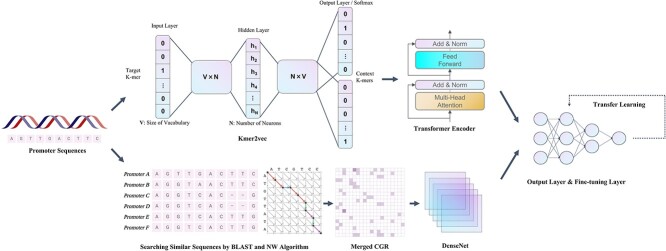
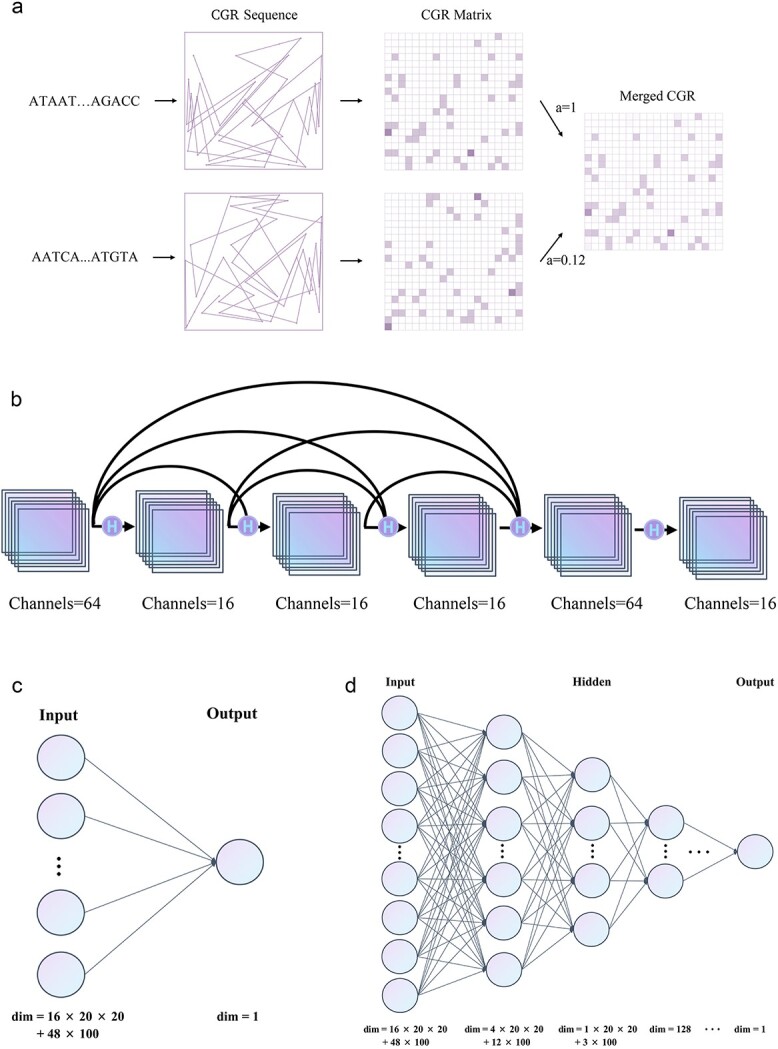
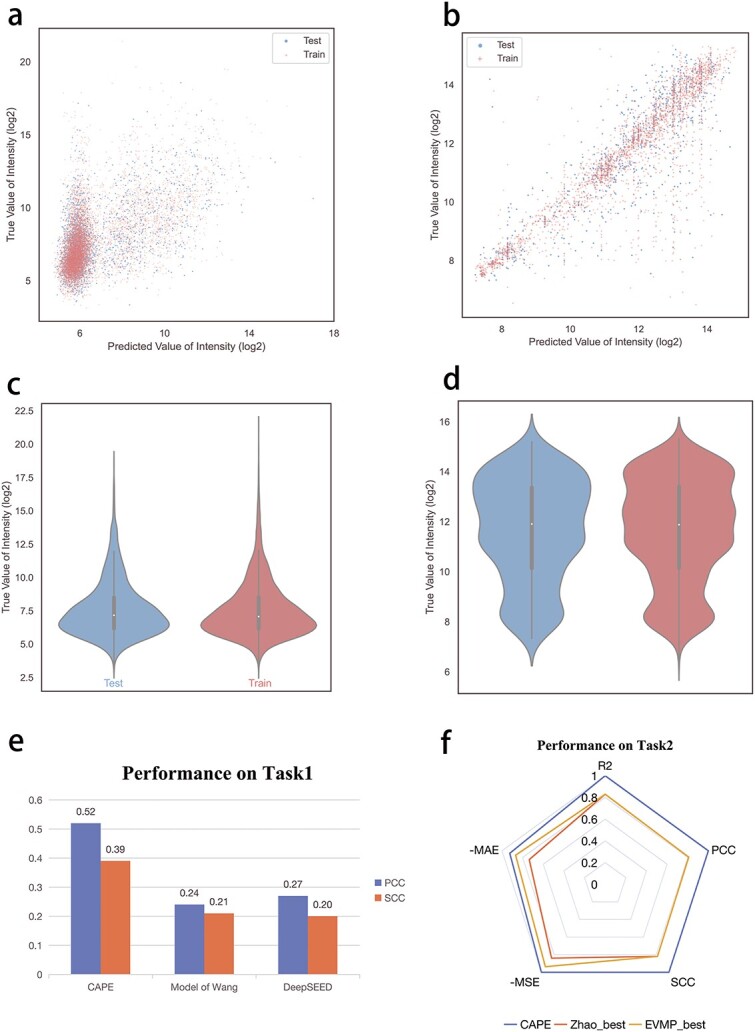
Predicting the strength of promoters and guiding their directed evolution is a crucial task in synthetic biology. This approach significantly reduces the experimental costs in conventional promoter engineering. Previous studies employing machine learning or deep learning methods have shown some success in this task, but their outcomes were not satisfactory enough, primarily due to the neglect of evolutionary information. In this paper, we introduce the Chaos-Attention net for Promoter Evolution (CAPE) to address the limitations of existing methods. We comprehensively extract evolutionary information within promoters using chaos game representation and process the overall information with DenseNet and Transformer. Our model achieves state-of-the-art results on two kinds of distinct tasks. The incorporation of evolutionary information enhances the model’s accuracy, with transfer learning further extending its adaptability. Furthermore, experimental results confirm CAPE’s efficacy in simulating in silico directed evolution of promoters, marking a significant advancement in predictive modeling for prokaryotic promoter strength. Our paper also presents a user-friendly website for the practical implementation of in silico directed evolution on promoters.
Overview
The claims and statistics of this paper haven’t been checked yet.
Free: it reads the open-access text and checks the first 5 claims that cite a source we can check. Create a free account to check every claim.
Integrity signals
Registry
Cites
Statistics
Figures

Verification
Claims the paper makes
The claims and statistics of this paper haven’t been checked yet.
Free: it reads the open-access text and checks the first 5 claims that cite a source we can check. Create a free account to check every claim.
Self-check
Percentages, sums and reported differences re-computed from the paper’s own numbers.
The self-check needs the paper’s full text.
Citations
Cites
Highly accurate protein structure prediction with AlphaFold
Jumper, J., Evans, R., Pritzel, A., Green, T., Figurnov, M., Ronneberger, O., Tunyasuvunakool, K., Bates, R., Žídek, A., Potapenko, A., et al. (2021) · Nature · doi:10.1038/s41586-021-03819-2 · Cited by 43,764
Research works printed but not linked: 60
- Slusarczyk AL, Lin A, Weiss R. Foundations for the design and implementation of synthetic genetic circuits. Nat Rev Genet 2012; 13: 406– 20. 10.1038/nrg3227. 22596318 · DOI · Paper page
- Nielsen AAK, Segall-Shapiro TH, Voigt CA. Advances in genetic circuit design: novel biochemistries, deep part mining, and precision gene expression. Curr Opin Chem Biol 2013; 17: 878– 92. 10.1016/j.cbpa.2013.10.003. 24268307 · DOI
- Patel RN. Biocatalysis for synthesis of pharmaceuticals. Bioorg Med Chem 2018; 26: 1252– 74. 10.1016/j.bmc.2017.05.023. 28648492 · DOI · Paper page
- Nakagawa A, Matsumura E, Koyanagi T. et al. Total biosynthesis of opiates by stepwise fermentation using engineered Escherichia coli. Nat Commun 2016; 7: 10390. 10.1038/ncomms10390. 26847395 PMC4748248 · DOI · Paper page
- Kunjapur AM, Tarasova Y, Prather KLJ. Synthesis and accumulation of aromatic aldehydes in an engineered strain of Escherichia coli. J Am Chem Soc 2014; 136: 11644– 54. 10.1021/ja506664a. 25076127 · DOI · Paper page
- Kalscheuer R, Stolting T, Steinbuchel A. Microdiesel: Escherichia coli engineered for fuel production. Microbiology 2006; 152: 2529– 36. 10.1099/mic.0.29028-0. 16946248 · DOI · Paper page
- Ueki T, Walker DJF, Woodard TL. et al. An Escherichia coli chassis for production of electrically conductive protein nanowires. ACS Synth Biol 2020; 9: 647– 54. 10.1021/acssynbio.9b00506. 32125829 · DOI
- Cazier AP, Blazeck J. Advances in promoter engineering: novel applications and predefined transcriptional control. Biotechnol J 2021; 16: e2100239. 10.1002/biot.202100239. 34351706 · DOI
- Hammer K, Mijakovic I, Jensen PR. Synthetic promoter libraries–tuning of gene expression. Trends Biotechnol 2006; 24: 53– 5. 10.1016/j.tibtech.2005.12.003. 16406119 · DOI · Paper page
- Blazeck J, Alper HS. Promoter engineering: recent advances in controlling transcription at the most fundamental level. Biotechnol J 2013; 8: 46– 58. 10.1002/biot.201200120. 22890821 · DOI · Paper page
- Guiziou S, Sauveplane V, Chang H-J. et al. A part toolbox to tune genetic expression in Bacillus subtilis. Nucleic Acids Res 2016; 44: gkw624– 508. 10.1093/nar/gkw624. PMC5009755 27402159 · DOI · Paper page
- De Mey, Maertens J, Lequeux GJ. et al. Construction and model-based analysis of a promoter library for e. coli: an indispensable tool for metabolic engineering. BMC Biotechnol 2007; 7: 1– 14. 17572914 PMC1913913
- Portela RMC, Vogl T, Kniely C. et al. Synthetic core promoters as universal parts for fine-tuning expression in different yeast species. ACS Synth Biol 2017; 6: 471– 84. 10.1021/acssynbio.6b00178. 27973777 PMC5359585 · DOI · Paper page
- Alper H, Fischer C, Nevoigt E. et al. Tuning genetic control through promoter engineering. Proc Natl Acad Sci 2005; 102: 12678– 83. 10.1073/pnas.0504604102. 16123130 PMC1200280 · DOI · Paper page
- Liu B, Yang F, Huang D-S. et al. Ipromoter-2l: a two-layer predictor for identifying promoters and their types by multi-window-based pseknc. Bioinformatics 2018; 34: 33– 40. 10.1093/bioinformatics/btx579. 28968797 · DOI · Paper page
- Song K. Recognition of prokaryotic promoters based on a novel variable-window z-curve method. Nucleic Acids Res 2012; 40: 963– 71. 10.1093/nar/gkr795. 21954440 PMC3273801 · DOI
- Chevez-Guardado R, Peña-Castillo L. Promotech: a general tool for bacterial promoter recognition. Genome Biol 2021; 22: 1– 16. 34789306 PMC8597233
- 10.1186/s13059-020-02238-2 · DOI · Paper page
- Xiao X, Zhao-Chun X, Qiu W-R. et al. Ipsw (2l)-pseknc: a two-layer predictor for identifying promoters and their strength by hybrid features via pseudo k-tuple nucleotide composition. Genomics 2019; 111: 1785– 93. 10.1016/j.ygeno.2018.12.001. 30529532 · DOI
- Tahir M, Hayat M, Gul S. et al. An intelligent computational model for prediction of promoters and their strength via natural language processing. Chemom Intel Lab Syst 2020; 202: 104034. 10.1016/j.chemolab.2020.104034. · DOI
- Qiao H, Zhang S, Xue T. et al. Ipro-Gan: a novel model based on generative adversarial learning for identifying promoters and their strength. Comput Methods Programs Biomed 2022; 215: 106625. 10.1016/j.cmpb.2022.106625. 35038653 · DOI
- Wang Y, Wang H, Wei L. et al. Synthetic promoter design in Escherichia coli based on a deep generative network. Nucleic Acids Res 2020; 48: 6403– 12. 10.1093/nar/gkaa325. 32424410 PMC7337522 · DOI · Paper page
- Wang Y, Marrero MC, Medema MH. et al. Coevolution-based prediction of protein–protein interactions in polyketide biosynthetic assembly lines. Bioinformatics 2020; 36: 4846– 53. 10.1093/bioinformatics/btaa595. 32592463 · DOI
- Hoang T, Yin C, Yau SS-T. Numerical encoding of dna sequences by chaos game representation with application in similarity comparison. Genomics 2016; 108: 134– 42. 10.1016/j.ygeno.2016.08.002. 27538895 · DOI
- Huang G, Liu Z, Van Der Maaten L. et al. Densely connected convolutional networks. 2017 IEEE Conference on Computer Vision and Pattern Recognition (CVPR). Honolulu, HI, USA: IEEE, 2017, 2261–69. · DOI · Paper page
- Vaswani A, Shazeer N, Parmar N. et al. Attention is all you need. Adv Neural Inf Process Syst 2017; 30:6000–10.
- Thomason MK, Bischler T, Eisenbart SK. et al. Global transcriptional start site mapping using differential rna sequencing reveals novel antisense rnas in Escherichia coli. J Bacteriol 2015; 197: 18– 28. 10.1128/JB.02096-14. 25266388 PMC4288677 · DOI · Paper page
- Zhang P, Wang H, Hanwen X. et al. Deep flanking sequence engineering for efficient promoter design using deepseed. Nat Commun 2023; 14:6309, 1–14. 10.1038/s41467-023-41899-y. PMC10562447 37813854 · DOI · Paper page
- Zhao M, Yuan Z, Longtao W. et al. Precise prediction of promoter strength based on a de novo synthetic promoter library coupled with machine learning. ACS Synth Biol 2021; 11: 92– 102. 10.1021/acssynbio.1c00117. 34927418 · DOI
- Yang W, Li D, Huang R. Evmp: enhancing machine learning models for synthetic promoter strength prediction by extended vision mutant priority framework. Front Microbiol 2023; 14: 07. 10.3389/fmicb.2023.1215609. PMC10354429 37476664 · DOI
- Altschul S, Gish W, Miller W. et al. Basic local aligment search tool. J Mol Biol 1990; 215: 403– 10. 10.1016/S0022-2836(05)80360-2. 2231712 · doi:10.1016/s0022-2836(05)80360-2 · Paper page
- Needleman SB, Wunsch CD. A general method applicable to the search for similarities in the amino acid sequence of two proteins. J Mol Biol 1970; 48: 443– 53. 10.1016/0022-2836(70)90057-4. 5420325 · DOI · Paper page
- Wei S, Liu M-L, Yang Y-H. et al. Ppd: a manually curated database for experimentally verified prokaryotic promoters. J Mol Biol 2021; 433: 166860. 33539888 · DOI · Paper page
- Ren R, Yin C, Yau SS-T. kmer2vec: a novel method for comparing dna sequences by word2vec embedding. J Comput Biol 2022; 29: 1001– 21. 10.1089/cmb.2021.0536. 35593919 · DOI
- Herman A, Boer D, Comstock LJ. et al. The tac promoter: a functional hybrid derived from the trp and lac promoters. Proc Natl Acad Sci 1983; 80: 21– 5. 6337371 PMC393301 · DOI · Paper page
- Brosius J, Erfle M, Storella J. Spacing of the-10 and-35 regions in the tac promoter. Effect on its in vivo activity. J Biol Chem 1985; 260: 3539– 41. 10.1016/S0021-9258(19)83655-4. 2579077 · DOI · Paper page
- Seo E, Choi Y-N, Shin YR. et al. Design of synthetic promoters for cyanobacteria with generative deep-learning model. Nucleic Acids Res 2023; 51: 7071– 82. 10.1093/nar/gkad451. 37246641 PMC10359606 · DOI · Paper page
- Baeshen MN, Al-Hejin AM, Bora RS. et al. Production of biopharmaceuticals in e. coli: current scenario and future perspectives. J Microbiol Biotechnol 2015; 25: 953– 62. 10.4014/jmb.1412.12079. 25737124 · DOI · Paper page
- Yang D, Park SY, Park YS. et al. Metabolic engineering of Escherichia coli for natural product biosynthesis. Trends Biotechnol 2020; 38: 745– 65. 10.1016/j.tibtech.2019.11.007. 31924345 · DOI · Paper page
- 2014, Enhancer biology and enhanceropathies, Nature structural & molecular biology, 21, 210, 10.1038/nsmb.2784 · DOI · Paper page
- 2023, Identification of non-coding silencer elements and their regulation of gene expression, Nature Reviews Molecular Cell Biology, 24, 383, 10.1038/s41580-022-00549-9 · DOI
- Wei Li , Shuai Yang , Peng Xu , Dapeng Zhang , Ying Tong , Lu Chen , Ben Jia , Ang Li , Cheng Lian , Daoping Ru , et al. Sars-cov-2 rna elements share human sequence identity and upregulate hyaluronan via namirna-enhancer network. EBioMedicine, 76, 2022. · DOI
- Haoyu Zhou , Ruohan Ren , and Stephen Shing-Toung Yau . Utilizing the codon adaptation index to evaluate the susceptibility to hiv-1 and sars- cov-2 related coronaviruses in possible target cells in humans. Frontiers in cellular and infection microbiology, 12:2003, 2023. · DOI
- Taehwi Yoon , Jiye Shin , Hyun-Jung Choi , and Ki Soo Park . Split t7 promoter-based isothermal transcription amplification for one-step fluorescence detection of sars-cov-2 and emerging variants. Biosensors and Bioelectronics, 208:114221, 2022. · DOI
- 10.1007/s12038-020-00046-1 · DOI
- Hamza Rafeeq , Nadia Afsheen , Sadia Rafique , Arooj Arshad , Maham Intisar , Asim Hussain , Muhammad Bilal , and Hafiz MN Iqbal . Genetically engineered microorganisms for environmental remediation. Chemosphere, 310:136751, 2023. · DOI · Paper page
- 2017, Gene regulatory elements, major drivers of human disease, Annual review of genomics and human genetics, 18, 45, 10.1146/annurev-genom-091416-035537 · DOI · Paper page
- 2014, K-mer natural vector and its application to the phylogenetic analysis of genetic sequences, Gene, 546, 25, 10.1016/j.gene.2014.05.043 · DOI
- Nan Sun , Hongyu Yu , Ruohan Ren , Tao Zhou , Mengcen Guan , Leqi Zhao , and Stephen ST Yau . Grand biological universe: Genome space geometry unravels looking for a single metric is likely to be futile in evolution. bioRxiv, pages 2023–07, 2023. · DOI
- 10.1093/bioinformatics/btg041 · DOI
- 2021, A survey of deep active learning, ACM computing surveys (CSUR, 54, 1
- Blaisdell BE. A measure of the similarity of sets of sequences not requiring sequence alignment. Proc Natl Acad Sci 1986; 83: 5155– 9. 10.1073/pnas.83.14.5155. 3460087 PMC323909 · DOI · Paper page
- Tiee-Jian W, Burke JP, Davison DB. A measure of dna sequence dissimilarity based on mahalanobis distance between frequencies of words. Biometrics 1997; 53(4): 1431– 9. 9423258 · DOI
- Kantorovitz MR, Robinson GE, Sinha S. A statistical method for alignment-free comparison of regulatory sequences. Bioinformatics 2007; 23: i249– 55. 10.1093/bioinformatics/btm211. 17646303 · DOI
- Mikolov T, Chen K, Corrado G. et al. Efficient estimation of word representations in vector space arXiv preprint arXiv:1301.3781. 2013. 10.48550/arXiv.1301.3781. · DOI · Paper page
- Mikolov T, Sutskever I, Chen K. et al. Distributed representations of words and phrases and their compositionality. Adv Neural Inf Process Syst 2013; 2: 3111– 9.
- He K, Zhang X, Ren S. et al. Deep residual learning for image recognition. 2016 IEEE Conference on Computer Vision and Pattern Recognition (CVPR). Las Vegas, NV, USA: IEEE, 2016, 770–8.
- Krizhevsky A, Sutskever I, Hinton GE. Imagenet classification with deep convolutional neural networks. Commun ACM 2012; 60: 84– 90.
- Elman JL. Finding structure in time. Cognit Sci 1990; 14: 179– 211. 10.1207/s15516709cog1402_1. · DOI · Paper page
- Hochreiter S, Schmidhuber J. Long short-term memory. Neural Comput 1997; 9: 1735 12– 80. 10.1162/neco.1997.9.8.1735. 9377276 · DOI · Paper page
Metadata
- Authors
- Ren, R., Yu, H., Teng, J., Mao, S., Bian, Z., Tao, Y., & Yau, S. S.-T.
- Affiliations
- Tsinghua University (CN)
- Beijing Institute of Mathematical Sciences and Applications (CN)
- Corresponding author
- Yau, Stephen S.-T.
- Venue
- Briefings in Bioinformatics
- Publisher
- openRxiv
- Published
- 2023-11-18
- Volume
- 25
- Issue
- 5
- ISSN
- 1467-5463 (ISSN-L)
- PMC
- PMC11311715
- OpenAlex
- W4401441427
- Cited by
- 9
- References
- 1
- Citations by year
- 2026: 1 · 2025: 8
- FWCI
- 1.22
- Type
- journal article
- Language
- en
- Open access
- gold
- doi.org
- Licence
- cc-by-nc
- Locations
- Briefings in Bioinformatics (publishedVersion, cc-by-nc)
- bioRxiv (Cold Spring Harbor Laboratory) (acceptedVersion, cc-by-nc-nd)
- PubMed Central (publishedVersion, cc-by-nc)
- PubMed (publishedVersion)
- Funders
- National Center for Theoretical Sciences
- National Natural Science Foundation of China (12171275, 042202008)
- Tsinghua University (042202008)
- Topics
- Life Sciences › Biochemistry, Genetics and Molecular Biology › Molecular Biology › Machine Learning in Bioinformatics
- Life Sciences › Biochemistry, Genetics and Molecular Biology › Molecular Biology › Genomics and Chromatin Dynamics
- Life Sciences › Biochemistry, Genetics and Molecular Biology › Molecular Biology › Microbial Metabolic Engineering and Bioproduction
- Keywords
- prokaryotic promoters, promoter evolution, directed evolution, chaos game representation, evolutionary information, attention mechanism, DenseNet, transformer models, synthetic biology, transfer learning
- MeSH terms
- Deep Learning, Algorithms, Computer Simulation, Promoter Regions, Genetic, Nonlinear Dynamics, Evolution, Molecular, Computational Biology
About these checks
Registry, retraction, Cites and statistics results are computed, not judged, with one exception: a printed reference that no index lists is read once by a model before it counts as a citation error. Claims are extracted by a model and kept only when their quote appears verbatim in the text; each cited source is then checked, with a model’s help, for whether it says what the claim relies on. Those verdicts can be wrong — read the claim’s quote and the cited source before relying on one.
Statistics and arithmetic are recomputed, not judged.
Confidence bands are shown only for fields calibrated on our annotated test set. None is calibrated yet, so no band is shown.
What counts as a claim ›How we measure confidence ›How we check this ›
Are you an author, or do you see a problem with this page? Request a review
Data sources
Bibliographic data: Semantic Scholar, OpenAlex, Crossref.
Contains information from the Semantic Scholar Academic Graph Datasets, made available under the ODC Attribution License (ODC-BY 1.0).
Semantic Scholar’s data is described in: Kinney, R., et al. (2023). The Semantic Scholar Open Data Platform. arXiv:2301.10140.
