

The DOI matches its Crossref record; 1 of the 1 references it cites were found in a registry or an index.
A transcription network underlies the dual genomic coordination of mitochondrial biogenesis
Open accessPreprint — published as 10.7554/elife.96536.3 · Paper page
Abstract
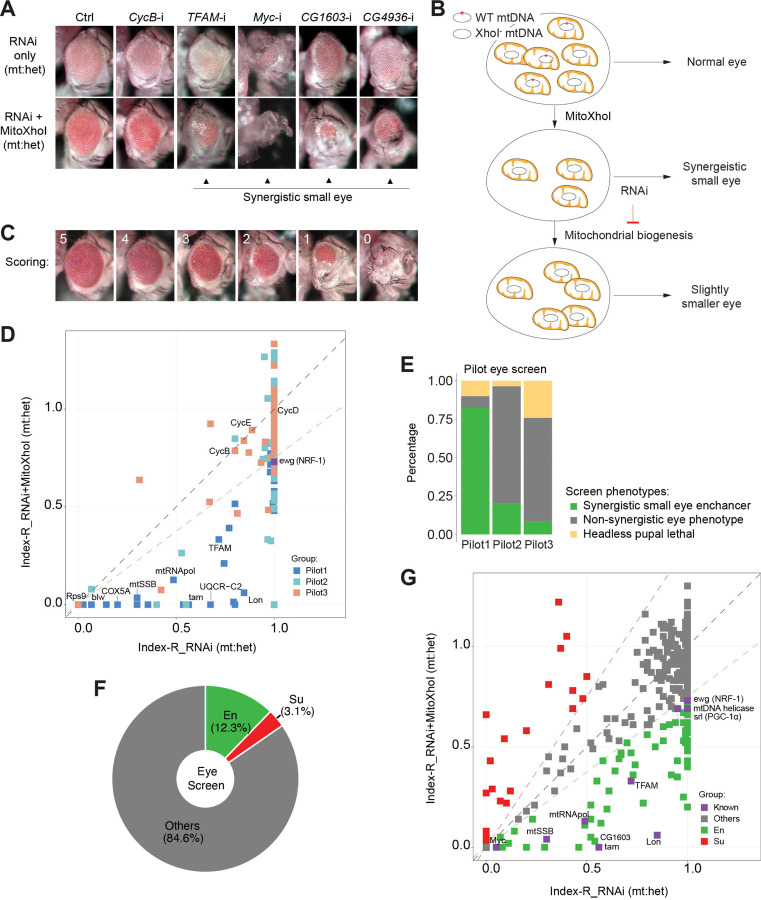
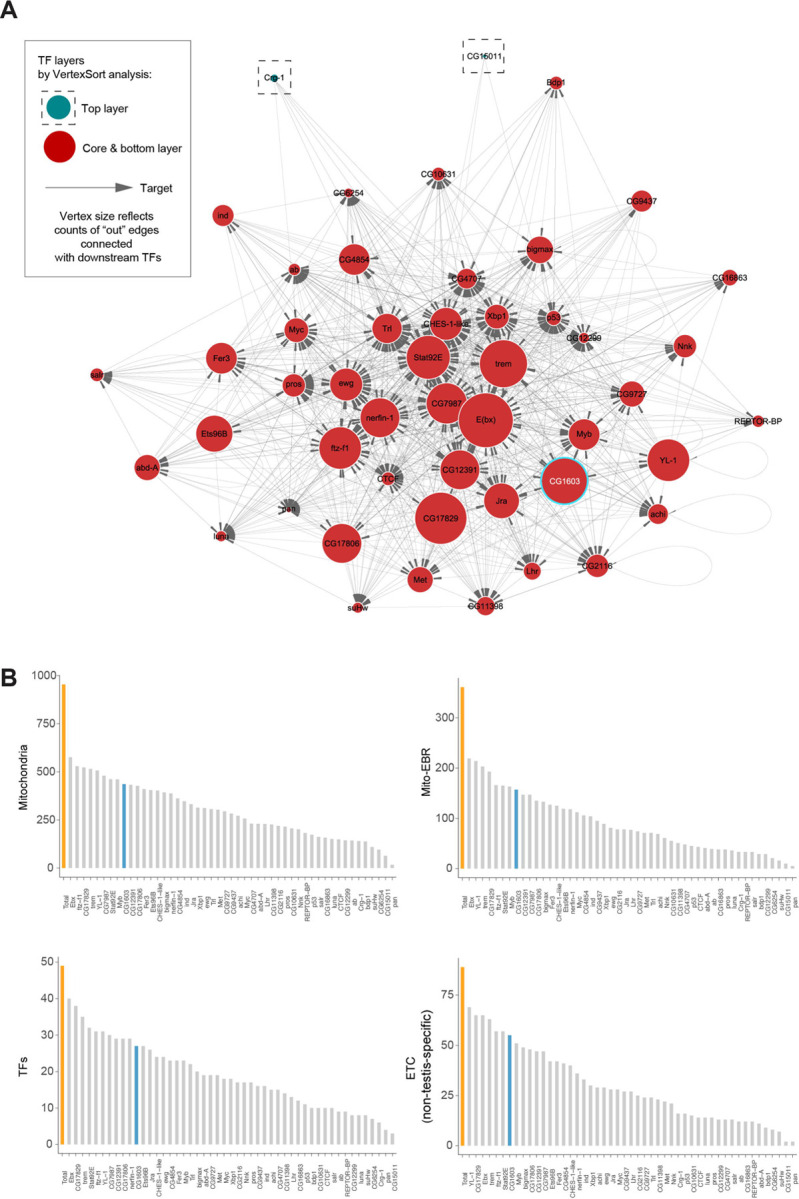
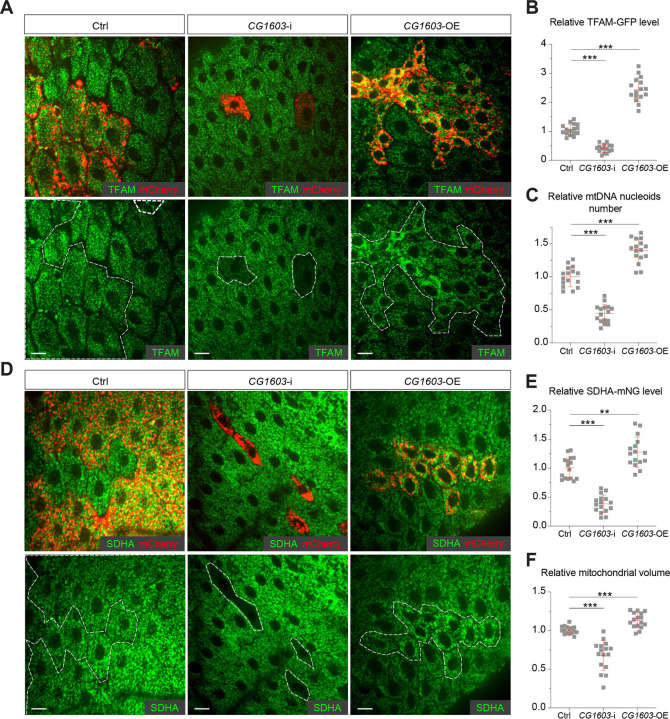
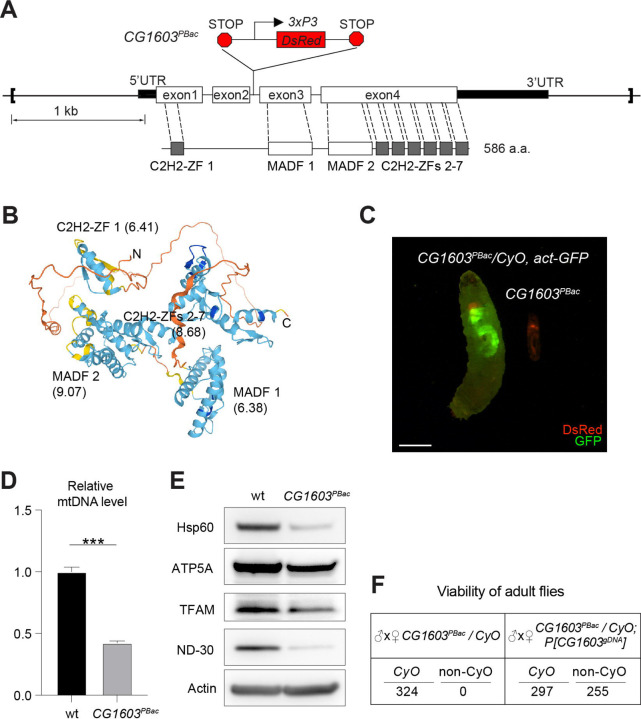
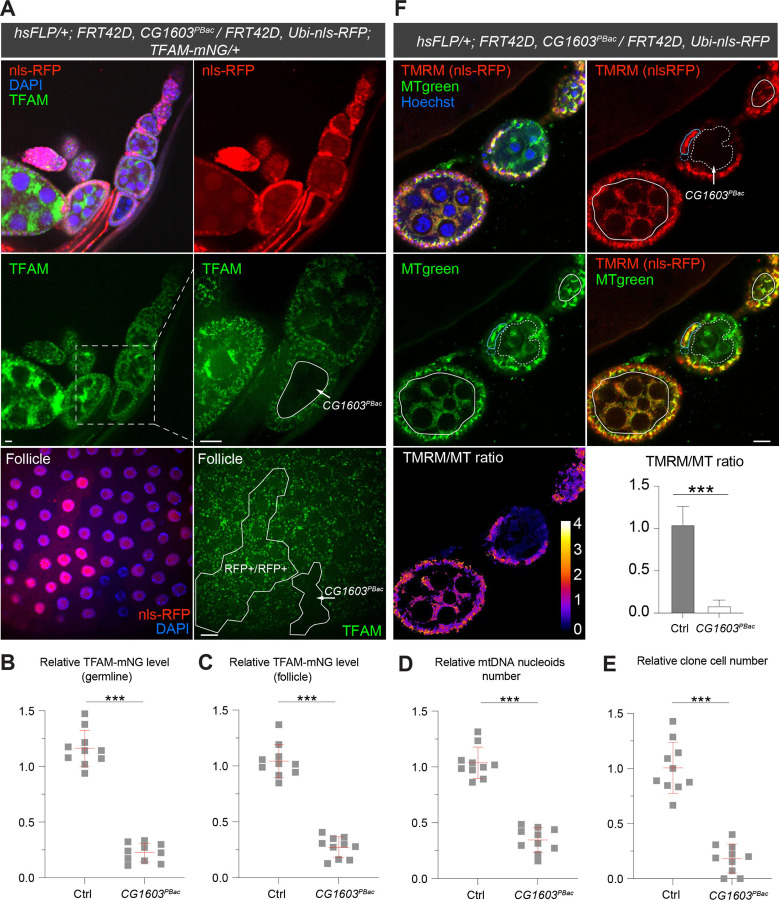
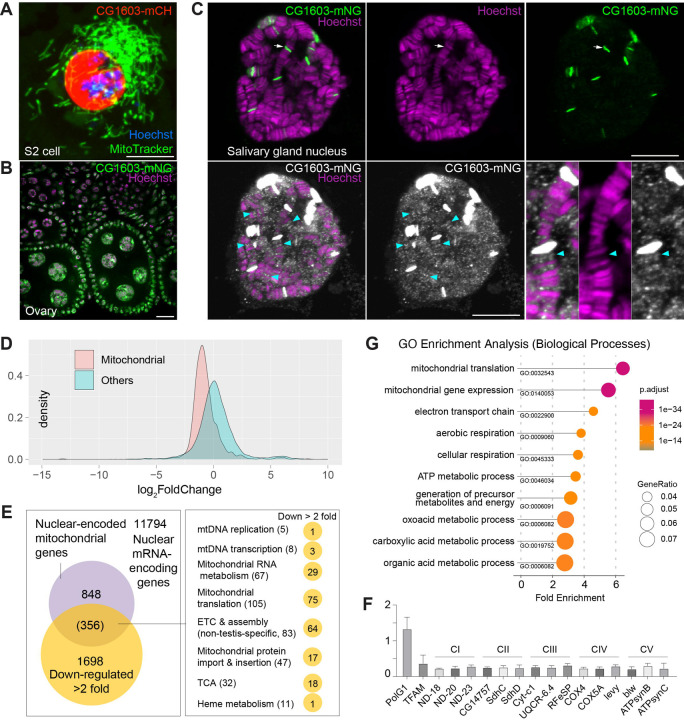
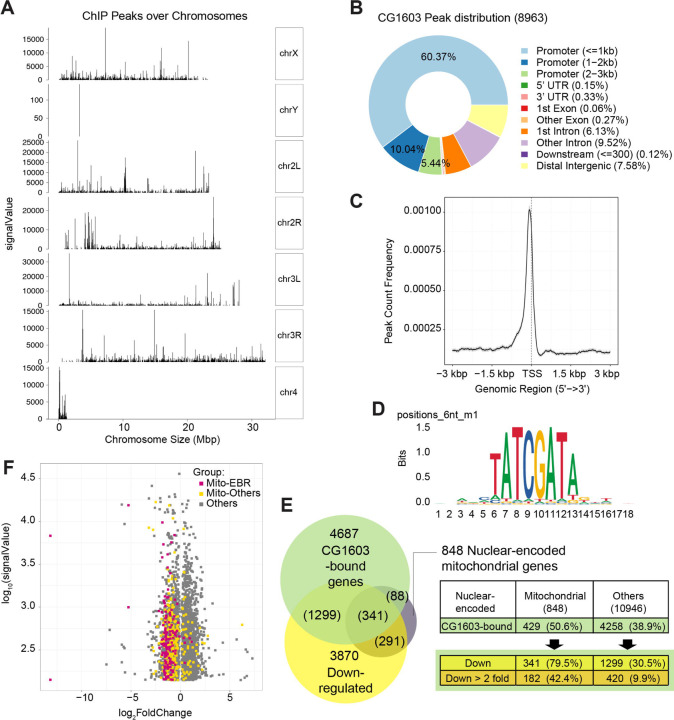
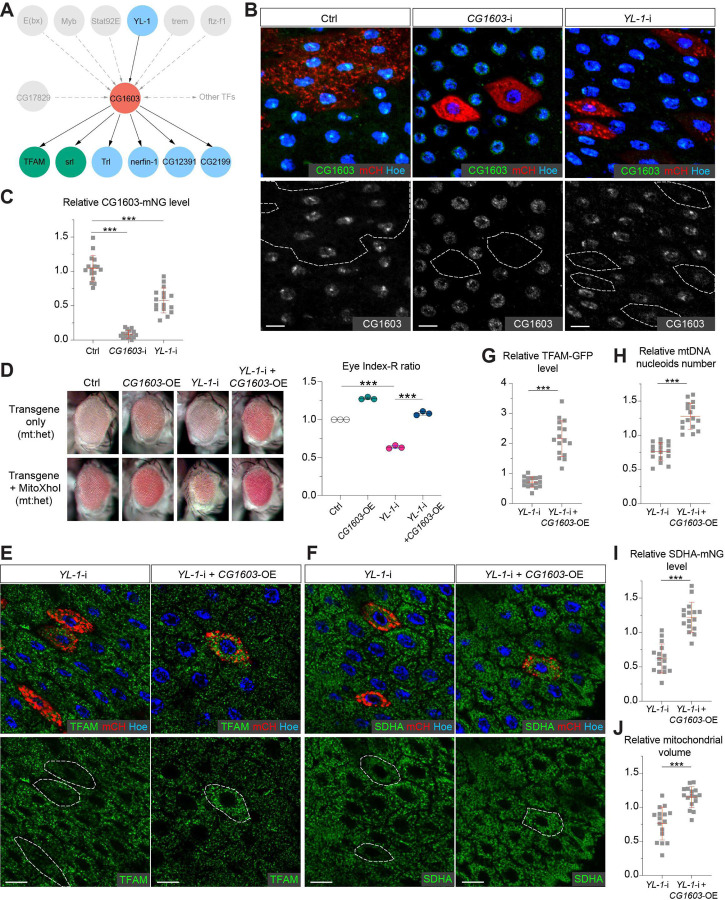
Mitochondrial biogenesis requires the expression of genes encoded by both the nuclear and mitochondrial genomes. However, aside from a handful transcriptional factors regulating specific subsets of mitochondrial genes, the overall architecture of the transcriptional control of mitochondrial biogenesis remains to be elucidated. The mechanisms coordinating these two genomes are largely unknown. We performed a targeted RNAi screen in developing eyes with reduced mitochondrial DNA content, anticipating a synergistic disruption of tissue development due to impaired mitochondrial biogenesis and mtDNA deficiency. Among 638 transcription factors annotated in Drosophila genome, 77 were identified as potential regulators of mitochondrial biogenesis. Utilizing published ChIP-seq data of positive hits, we constructed a regulatory network revealing the logic of the transcription regulation of mitochondrial biogenesis. Multiple transcription factors in core layers had extensive connections, collectively governing the expression of nearly all mitochondrial genes, whereas factors sitting on the top layer may respond to cellular cues to modulate mitochondrial biogenesis through the underlying network. CG1603, a core component of the network, was found to be indispensable for the expression of most nuclear mitochondrial genes, including those required for mtDNA maintenance and gene expression, thus coordinating nuclear genome and mtDNA activities in mitochondrial biogenies. Additional genetics analyses validated YL-1, a transcription factor upstream of CG1603 in the network, as a regulator controlling CG1603 expression and mitochondrial biogenesis.
Overview
The claims and statistics of this paper haven’t been checked yet.
Run the check — free, no account needed. It reads the open-access text and checks the sources it cites.
Integrity signals
Registry
Cites
Statistics
Figures
Verification
Claims the paper makes
The claims and statistics of this paper haven’t been checked yet.
Run the check — free, no account needed. It reads the open-access text and checks the sources it cites.
Self-check
Percentages, sums and reported differences re-computed from the paper’s own numbers.
The self-check needs the paper’s full text.
Citations
Cites
Highly accurate protein structure prediction with AlphaFold
Jumper, J., Evans, R., Pritzel, A., Green, T., Figurnov, M., Ronneberger, O., Tunyasuvunakool, K., Bates, R., Žídek, A., Potapenko, A., et al. (2021) · Nature · doi:10.1038/s41586-021-03819-2 · Cited by 43,764
Research works printed but not linked: 66
- 10.1016/j.molcel.2007.06.011 · DOI
- 10.1093/nar/gkg251 · DOI
- 10.3389/fcell.2014.00051 · DOI
- 10.1146/annurev.med.53.082901.104018 · DOI · Paper page
- 10.1038/nrm1314 · DOI
- 10.1091/mbc.E14-11-1513 · DOI
- 10.1083/jcb.201905160 · DOI
- 10.1016/j.jgg.2019.03.009 · DOI
- 10.1038/nature18015 · DOI
- 10.1016/j.bbadis.2010.12.009 · DOI
- 10.1093/bioinformatics/bts635 · DOI · Paper page
- 10.1073/pnas.95.25.14863 · DOI · Paper page
- 10.1038/ng909 · DOI · Paper page
- 10.32607/20758251-2017-9-2-47-58 · DOI
- 10.1016/j.mito.2010.09.011 · DOI
- 10.1161/CIRCULATIONAHA.107.670588 · DOI
- 10.1038/nrdp.2016.80 · DOI
- 10.1038/ng.2920 · DOI
- 10.1146/annurev.physiol.010908.163119 · DOI
- 10.1093/bfgp/ely002 · DOI
- 10.1038/msb.2009.52 · DOI
- 10.1534/genetics.117.300657 · DOI
- 10.1128/MMBR.64.4.786-820.2000 · DOI
- 10.1007/978-1-4939-2851-4_4 · DOI
- 10.1093/bioinformatics/btp324 · DOI · Paper page
- 10.1093/bioinformatics/btp352 · DOI · Paper page
- 10.1038/nsmb.3190 · DOI
- 10.1534/genetics.106.061705 · DOI
- 10.1038/s41556-022-00887-y · DOI
- 10.1186/s13059-014-0550-8 · DOI · Paper page
- 10.1016/j.celrep.2021.109704 · DOI
- 10.1093/molbev/msn190 · DOI
- 10.1016/j.devcel.2005.11.006 · DOI
- 10.1038/ng.2007.50 · DOI
- 10.1038/nrg2641 · DOI · Paper page
- 10.1002/bies.20500 · DOI
- 10.1093/nar/gku1395 · DOI
- 10.1016/S0092-8674(00)80679-0 · DOI
- 10.1093/bioinformatics/btac166 · DOI
- 10.1093/nar/gkaa1011 · DOI · Paper page
- 10.1093/emboj/16.13.3944 · DOI
- 10.1152/physrev.00025.2007 · DOI · Paper page
- 10.1016/j.tem.2012.06.006 · DOI · Paper page
- 10.1016/j.devcel.2007.11.001 · DOI
- 10.1093/nar/28.1.231 · DOI
- 10.1146/annurev-cellbio-120420-015303 · DOI
- 10.3390/ijms22042212 · DOI
- 10.1038/s41556-018-0124-1 · DOI · Paper page
- 10.1038/nrg1606 · DOI
- 10.1038/nprot.2012.088 · DOI
- 10.3389/fcell.2020.592164 · DOI
- 10.7554/eLife.49309 · DOI
- 10.1016/j.devcel.2023.08.007 · DOI
- 10.1146/annurev-biochem-060815-014352 · DOI
- 10.1146/annurev.biophys.29.1.183 · DOI · Paper page
- 10.1038/nature04815 · DOI
- 10.1126/science.1160226 · DOI
- 10.1242/dev.199026 · DOI
- 10.1089/omi.2011.0118 · DOI · Paper page
- 10.1093/bioinformatics/btv145 · DOI
- 10.1091/mbc.E19-10-0560 · DOI
- 10.15252/embr.201439636 · DOI
- 10.15252/embj.201592994 · DOI
- 10.1186/gb-2008-9-9-r137 · DOI · Paper page
- 10.1016/j.molcel.2019.01.013 · DOI
- 10.1159/000450827 · DOI
Metadata
- Authors
- Zhang, F., Lee, A., Freitas, A., Herb, J., Wang, Z., Gupta, S., Chen, Z., & Xu, H.
- Affiliations
- National Institutes of Health (US)
- Corresponding author
- Xu, Hong
- Venue
- eLife
- Publisher
- openRxiv
- Published
- 2024-01-29
- Volume
- 13
- ISSN
- 2050-084X (ISSN-L)
- PMC
- PMC10896348
- OpenAlex
- W4405830359
- Cited by
- 8
- References
- 1
- Citations by year
- 2026: 3 · 2025: 5
- FWCI
- 1.09
- Type
- journal article
- Language
- en
- Open access
- gold
- doi.org
- Licence
- Locations
- eLife (publishedVersion, cc-by)
- bioRxiv (Cold Spring Harbor Laboratory) (acceptedVersion, cc-by-nc-nd)
- PubMed (publishedVersion)
- PubMed Central (submittedVersion, cc-by-nc-nd)
- Funders
- National Heart, Lung, and Blood Institute
- Topics
- Life Sciences › Biochemistry, Genetics and Molecular Biology › Molecular Biology › Mitochondrial Function and Pathology
- Life Sciences › Biochemistry, Genetics and Molecular Biology › Molecular Biology › Genomics and Chromatin Dynamics
- Life Sciences › Biochemistry, Genetics and Molecular Biology › Cell Biology › Autophagy in Disease and Therapy
- Keywords
- mitochondrial biogenesis, transcriptional regulation, transcriptional regulatory networks, mitochondrial DNA maintenance, Drosophila eye development, RNAi screen, transcription factors
About these checks
Registry, retraction, Cites and statistics results are computed, not judged, with one exception: a printed reference that no index lists is read once by a model before it counts as a citation error. Claims are extracted by a model and kept only when their quote appears verbatim in the text; each cited source is then checked, with a model’s help, for whether it says what the claim relies on. Those verdicts can be wrong — read the claim’s quote and the cited source before relying on one.
Statistics and arithmetic are recomputed, not judged.
Confidence bands are shown only for fields calibrated on our annotated test set. None is calibrated yet, so no band is shown.
What counts as a claim ›How we measure confidence ›How we check this ›
Are you an author, or do you see a problem with this page? Request a review
How to cite
Cite CoChat for the checks on this page, and the paper for its own findings.
- This page
- CoChat. (2026). Citation check: A transcription network underlies the dual genomic coordination of mitochondrial biogenesis. https://app.cochat.ai/papers/10.1101/2024.01.25.577217
- The paper
- Zhang, F., Lee, A., Freitas, A., Herb, J., Wang, Z., Gupta, S., Chen, Z., & Xu, H. (2024). A transcription network underlies the dual genomic coordination of mitochondrial biogenesis. eLife. https://doi.org/10.1101/2024.01.25.577217
