

The DOI matches its Crossref record; 1 of the 1 references it cites were found in a registry or an index.
Ambecovirus , a novel Betacoronavirus subgenus circulating in neotropical bats sheds new light on bat-borne coronaviruses evolution
Open accessPreprint — published as 10.1093/ve/veaf094 · Paper page
Abstract
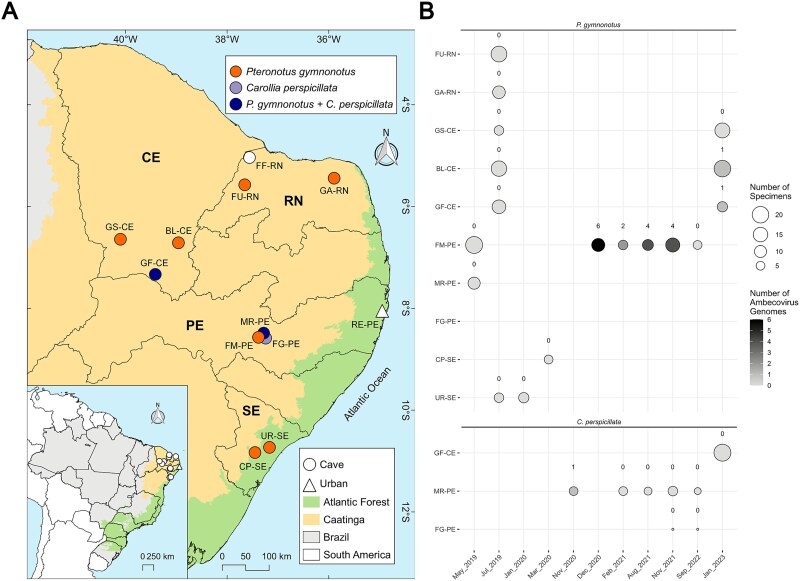
Understanding the viral diversity harboured by wildlife is essential for effective prediction and prevention of future zoonotic outbreaks. Bats, in particular, are recognized as natural reservoirs for several zoonotic viral pathogens of high impact on public health, including coronaviruses responsible for SARS, the rabies virus, Marburg, Ebola, Nipah and Hendra viruses. However, the large extent of bat viruses remains unexplored, especially in highly biodiverse regions of the Neotropics such as Brazil. We used a meta-transcriptomic to characterize new virus genomes found in blood, oral and anal samples collected from cave- and non-cave bats from Northeast Brazil. From a total of 19 coronavirus-positive bats, we have assembled two complete genomes of a new Betacoronavirus subgenus, named Ambecovirus (American betacoronavirus). The subgenus herein described is phylogenetically placed between the Sarbeco -/ Hibeco -/ Nebeco virus and the Merbeco -/ Embecovirus clades, being basal to the former. While the conserved S2 region of the spike protein retained hallmark domains, including HR1 and HR2, the S1/S2 cleavage site and the furin cleavage site, the S1 region consistently displayed only the N-terminal domain. The receptor-binding domain could not be identified due to high dissimilarity relative to known congeneres. The detection of Ambercovirus in sympatric Pteronotus gymnonotus and Carollia perspicillata bats suggests interspecies transmission. Longitudinal sampling confirmed persistent Ambecovirus infection in P. gymnonotus over multiple years and virus dispersion at a minimum distance of 270 km between caves. The present study confirms that viral diversity in neotropical hosts remains largely unknown not just in Brazil but, likely, in the other countries of the region, supporting the need for a systematic approach to virome exploration and analysis followed by in vitro experimentation to assess zoonotic potential.
Overview
The claims and statistics of this paper haven’t been checked yet.
Run the check — free, no account needed. It reads the open-access text and checks the sources it cites.
Integrity signals
Registry
Cites
Statistics
Figures
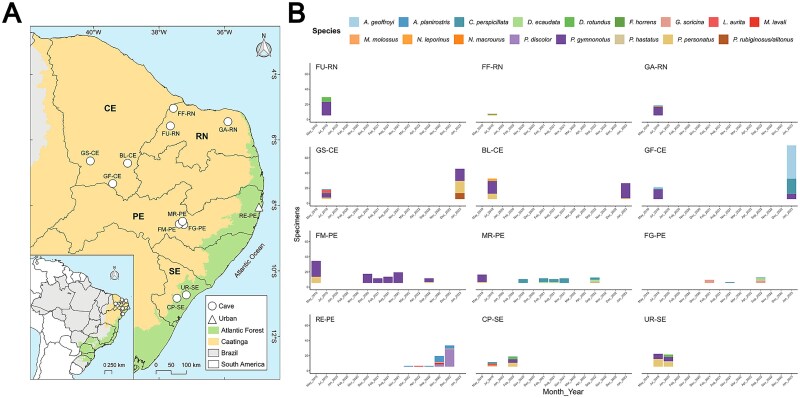
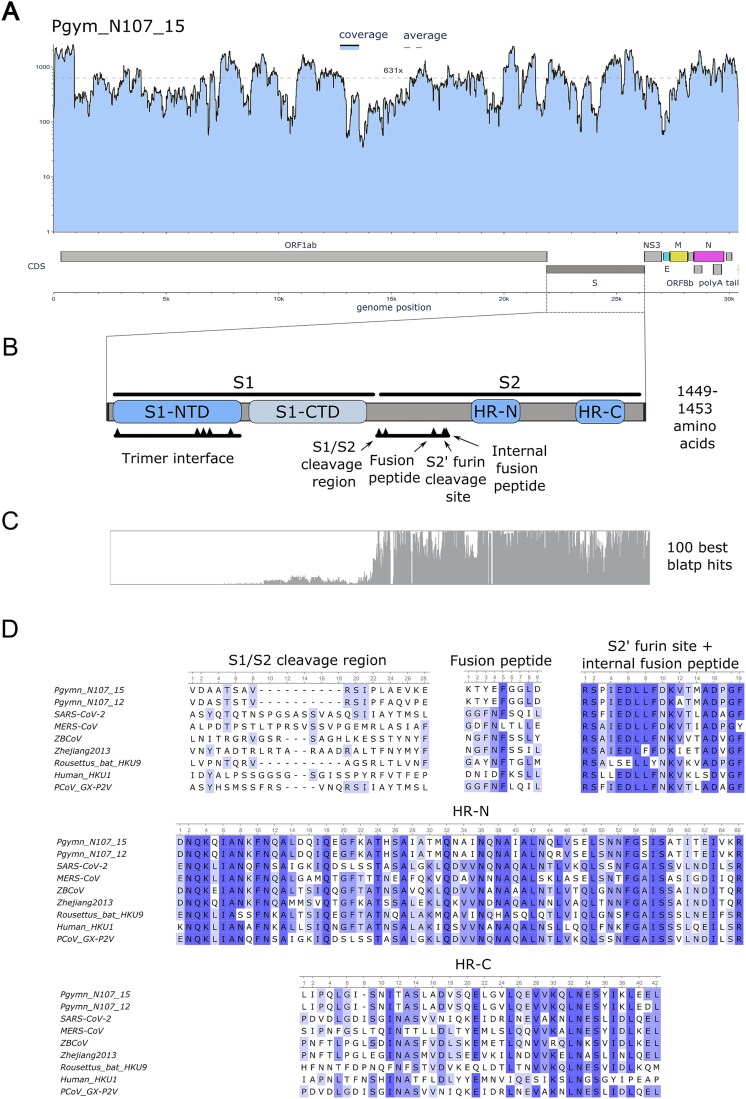
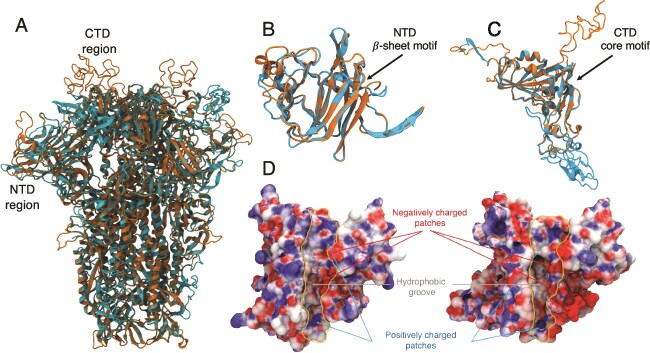
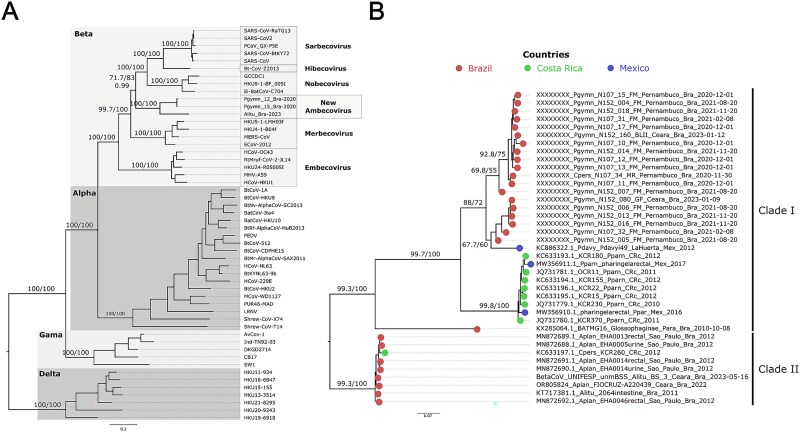
Verification
Claims the paper makes
The claims and statistics of this paper haven’t been checked yet.
Run the check — free, no account needed. It reads the open-access text and checks the sources it cites.
Self-check
Percentages, sums and reported differences re-computed from the paper’s own numbers.
The self-check needs the paper’s full text.
Citations
Cites
Highly accurate protein structure prediction with AlphaFold
Jumper, J., Evans, R., Pritzel, A., Green, T., Figurnov, M., Ronneberger, O., Tunyasuvunakool, K., Bates, R., Žídek, A., Potapenko, A., et al. (2021) · Nature · doi:10.1038/s41586-021-03819-2 · Cited by 43,764
Research works printed but not linked: 71
- 10.1093/nar/gkq140 · DOI
- 10.1111/1462-2920.16207 · DOI
- 10.1016/j.coviro.2021.12.008 · DOI
- 10.1371/journal.pbio.3002109 · DOI
- 10.1016/j.cell.2018.02.043 · DOI
- 10.1038/nature20167 · DOI
- 10.1098/rstb.2008.0184 · DOI
- 10.1038/s41586-020-03128-0 · DOI
- 10.1038/s41586-024-08471-0 · DOI · Paper page
- 2019, Dampened NLRP3-mediated inflammation in bats and implications for a special viral reservoir host, Nat Microbiol, 4, 789, 10.1038/s41564-019-0371-3 · DOI
- 2007, Mammal Species of the World: A Taxonomic and Geographic Reference by D, E. Wilson; D. M. Reeder. J Mammal, 88, 824
- 10.1038/s41579-020-0394-z · DOI
- 2021, Coronaviruses in Bats: A Review for the Americas, Viruses, 13, 1226, 10.3390/v13071226 · DOI
- 2023, Coronavirus sampling and surveillance in bats from 1996–2019: a systematic review and meta-analysis, Nat Microbiol, 8, 1176, 10.1038/s41564-023-01375-1 · DOI
- 10.1128/JVI.02605-06 · DOI · Paper page
- 10.1038/s41579-018-0118-9 · DOI
- 10.1128/JVI.06540-11 · DOI
- 10.1093/ve/vex012 · DOI
- Wallau GL , Barbier E , Tomazatos A , Schmidt-Chanasit J , Bernard E . The virome of bats inhabiting Brazilian biomes: knowledge gaps and biases towards zoonotic viruses [Internet]. bioRxiv; 2022 [cited 2023 Jan 8]. p. 2022.10.11.511773. Available from: https://www.biorxiv.org/content/10.1101/2022.10.11.511773v1 · DOI
- 2019, Expanding the RNA Virosphere by Unbiased Metagenomics, Annu Rev Virol, 6, 119, 10.1146/annurev-virology-092818-015851 · DOI
- 2020, Biological Megadiversity as a Tool of Soft Power and Development for Brazil, Braz Polit Sci Rev, 14, e0006, 10.1590/1981-3821202000020006 · DOI
- Carlson CJ , Albery GF , Merow C , Trisos CH , Zipfel CM , Eskew EA , et al. Climate change increases cross-species viral transmission risk. Nature. 2022 Apr 28;1–1. · DOI · Paper page
- 10.1038/nature22975 · DOI · Paper page
- 10.1038/nature06536 · DOI · Paper page
- 10.1016/j.antiviral.2013.10.013 · DOI
- 10.3201/eid1412.080642 · DOI
- 2022, The Role of Molossidae and Vespertilionidae in Shaping the Diversity of Alphacoronaviruses in the Americas, Microbiol Spectr, 10, e03143
- 2023, Identification and characterization of novel alphacoronaviruses in Tadarida brasiliensis (Chiroptera, Molossidae) from Argentina: insights into recombination as a mechanism favoring bat coronavirus cross-species transmission. Microbiol Spectr, 0, e02047
- 2020, Complete Genome Sequence of an Alphacoronavirus from Common Vampire Bats in Peru, Microbiol Resour Announc, 9, e00742
- Alves RS , do Canto Olegário J , Weber MN , da Silva MS , Canova R , Sauthier JT , et al. Detection of coronavirus in vampire bats (Desmodus rotundus) in southern Brazil. Transbound Emerg Dis. 2021 May 12; · DOI
- 10.1007/s00248-019-01391-x · DOI
- 2016, Genetic diversity of bats coronaviruses in the Atlantic Forest hotspot biome, Brazil. Infect Genet Evol J Mol Epidemiol Evol Genet Infect Dis, 44, 510
- 10.1007/s11262-013-0899-x · DOI
- 2008, A coronavirus detected in the vampire bat Desmodus rotundus, Braz J Infect Dis Off Publ Braz Soc Infect Dis, 12, 466
- 2015, Bat coronavirus in Brazil related to appalachian ridge and porcine epidemic diarrhea viruses, Emerg Infect Dis, 21, 729, 10.3201/eid2104.141783 · DOI
- 10.1099/vir.0.049759-0 · DOI
- Bueno LM , Rizotto LS , Viana A de O , Silva LMN , de Moraes MV dos S , Benassi JC , et al. High genetic diversity of alphacoronaviruses in bat species (Mammalia: Chiroptera) from the Atlantic Forest in Brazil. Transbound Emerg Dis [Internet]. [cited 2022 Jul 20];n/a(n/a). Available from: https://onlinelibrary.wiley.com/doi/abs/10.1111/tbed.14636 · DOI
- 2025, Alpha and Betacoronavirus Detection in Neotropical Bats from Northeast Brazil Suggests Wide Geographical Distribution and Persistence in Natural Populations, Anim Open Access J MDPI, 15, 332
- 2022, Cross-Species Transmission of Bat Coronaviruses in the Americas: Contrasting Patterns between Alphacoronavirus and Betacoronavirus, Microbiol Spectr, 10, e01411
- 2025, Coronavirus Cryptic Landscape and Draft Genome of a Novel CoV Clade Related to MERS From Bats Circulating in Northeastern Brazil, J Med Virol, 97, e70173, 10.1002/jmv.70173 · DOI
- Gardner AL . Mammals of South America. III. Vol. 1. Chicago: University of Chicago Press; 2008.
- 10.2307/1380667 · DOI
- 2014, Trimmomatic: a flexible trimmer for Illumina sequence data, Bioinforma Oxf Engl, 30, 2114
- 10.1093/nar/gks1219 · DOI · Paper page
- 10.1093/bioinformatics/btv033 · DOI
- 10.1038/nmeth.3176 · DOI · Paper page
- 2024, ViralFlow v1.0—a computational workflow for streamlining viral genomic surveillance, NAR Genomics Bioinforma, 6, lqae056, 10.1093/nargab/lqae056 · DOI
- Stn A , Rjp N , Jn N , Ap C , Gw T , Bj W . CoverM: read alignment statistics for metagenomics. Bioinforma Oxf Engl [Internet]. 2025 Mar 29 [cited 2025 Jul 4];41(4). Available from: https://pubmed.ncbi.nlm.nih.gov/40193404/ · DOI
- 10.1186/1471-2105-11-119 · DOI
- 10.1371/journal.pcbi.1004957 · DOI · Paper page
- 2011, SARS-Coronavirus ancestor’s foot-prints in South-East Asian bat colonies and the refuge theory, Infect Genet Evol J Mol Epidemiol Evol Genet Infect Dis, 11, 1690
- 10.1093/bib/bbx108 · DOI · Paper page
- 10.1093/bioinformatics/btu531 · DOI
- 10.1093/molbev/msaa015 · DOI · Paper page
- 10.1038/nmeth.4285 · DOI · Paper page
- 10.1093/ve/vey016 · DOI
- 2007, COBALT: constraint-based alignment tool for multiple protein sequences, Bioinforma Oxf Engl, 23, 1073
- 10.1093/nar/gky427 · DOI
- 10.1002/pro.3280 · DOI
- 10.1093/nar/gkh381 · DOI
- 202, Human coronavirus HKU1 spike structures reveal the basis for sialoglycan specificity and carbohydrate-promoted conformational changes, Nat Commun, 16, 4158
- 10.1038/s41467-022-29062-5 · DOI
- 2022, Spread of Gamma (P.1) Sub-Lineages Carrying Spike Mutations Close to the Furin Cleavage Site and Deletions in the N-Terminal Domain Drives Ongoing Transmission of SARS-CoV-2 in Amazonas, Brazil, Microbiol Spectr, 10, e02366
- 2021, Immune evasion of SARS-CoV-2 variants of concern is driven by low affinity to neutralizing antibodies, Chem Commun, 57, 6094, 10.1039/D1CC01747K · DOI
- 2024, A core network in the SARS-CoV-2 nucleocapsid NTD mediates structural integrity and selective RNA-binding, Nat Commun, 15, 10656, 10.1038/s41467-024-55024-0 · DOI
- 10.1016/j.tim.2016.09.001 · DOI
- 2016, Structure, Function, and Evolution of Coronavirus Spike Proteins, Annu Rev Virol, 3, 237, 10.1146/annurev-virology-110615-042301 · DOI · Paper page
- 10.1128/JVI.06882-11 · DOI
- PREDICT Consortium, 2017, A Comparative Analysis of Viral Richness and Viral Sharing in Cave-Roosting Bats, Diversity, 9, 35, 10.3390/d9030035 · DOI
- 2023, Species richness, occurrence and rarity of bats in Brazilian caves, Austral Ecol, 48, 2144, 10.1111/aec.13453 · DOI
- 2017, Bats in urban areas of Brazil: roosts, food resources and parasites in disturbed environments, Urban Ecosyst, 20, 953, 10.1007/s11252-016-0632-3 · DOI
Metadata
- Authors
- da Luz Wallau, G., Barbier, E., Machado, L. C., da Silva, A. F., Dias, Y. J. M., Tomazatos, A., Horváth, B., Lins, R. D., Bernard, E., & Cadar, D.
- Affiliations
- Universidade Federal de Pernambuco (BR)
- Instituto Aggeu Magalhães (BR)
- Bernhard Nocht Institute for Tropical Medicine (DE)
- Universidade Federal de Lavras (BR)
- Corresponding author
- Cadar, Dániel
- ORCID
- Venue
- Virus Evolution
- Publisher
- openRxiv
- Published
- 2025-07-23
- Volume
- 11
- Issue
- 1
- Pages
- veaf094-veaf094
- ISSN
- 2057-1577 (ISSN-L)
- PMC
- PMC12765449
- OpenAlex
- W4417086166
- Cited by
- 2
- References
- 1
- Citations by year
- 2026: 2
- FWCI
- 1.23
- Type
- journal article
- Language
- en
- Open access
- gold
- doi.org
- Licence
- Locations
- Virus Evolution (publishedVersion, cc-by)
- bioRxiv (Cold Spring Harbor Laboratory) (acceptedVersion, cc-by)
- PubMed (publishedVersion)
- PubMed Central (publishedVersion, cc-by)
- Arca - Repositório Institucional da Fiocruz (submittedVersion, other-oa)
- Funders
- Alexander von Humboldt Foundation
- Conselho Nacional de Desenvolvimento Científico e Tecnológico
- Topics
- Life Sciences › Agricultural and Biological Sciences › Animal Science and Zoology › Animal Virus Infections Studies
- Health Sciences › Medicine › Public Health, Environmental and Occupational Health › Zoonotic diseases and public health
- Health Sciences › Medicine › Infectious Diseases › SARS-CoV-2 and COVID-19 Research
- Keywords
- Neotropical bats, Pteronotus gymnonotus, Carollia perspicillata, viral evolution, spike protein, interspecies transmission, viral persistence, zoonotic potential, cave-dwelling bats, viral metatranscriptomics, Atlantic Forest, Caatinga
About these checks
Registry, retraction, Cites and statistics results are computed, not judged, with one exception: a printed reference that no index lists is read once by a model before it counts as a citation error. Claims are extracted by a model and kept only when their quote appears verbatim in the text; each cited source is then checked, with a model’s help, for whether it says what the claim relies on. Those verdicts can be wrong — read the claim’s quote and the cited source before relying on one.
Statistics and arithmetic are recomputed, not judged.
Confidence bands are shown only for fields calibrated on our annotated test set. None is calibrated yet, so no band is shown.
What counts as a claim ›How we measure confidence ›How we check this ›
Are you an author, or do you see a problem with this page? Request a review
