

Reframing service innovation: COVID-19 as a catalyst for imposed service innovation
Open accessThe DOI matches its Crossref record; 22 of the 22 references it cites were found in a registry or an index; 5 of the 12 sources its claims cite were checked for support.
Abstract
The paper introduces the concept of imposed service innovation as a strategic lens for reconfiguring service provision during severe disruption.
Overview
CoChat Summary
TL;DR
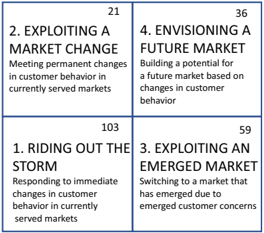
The paper introduces “imposed service innovation” as a strategic lens for service innovation forced by severe disruption, using COVID-19 as a catalyst. Drawing on 221 crowdsourced pandemic-related innovations, it categorizes them into 11 themes and four strategic ideal types defined by strategic horizon and strategic stretch.
Key findings
- The final dataset contained 221 innovations; 11 thematic categories emerged, including social initiative (N=33), delivery (N=32), physical distancing (N=30), remote presence (N=26), entertainment (N=21), health and well-being (N=20), professional consultation (N=18), social connection (N=18), education (N=11), COVID-19 experience (N=8), and public (N=3).
- Innovations were characterized by spatial flexibility, social and health outreach, and technology exploitation; the paper states they seem to reflect a latent demand and were triggered by the pandemic.
- Four strategic ideal types were identified: Type 1 short-term/low strategic stretch (N=103), Type 2 long-term/low strategic stretch (N=21), Type 3 short-term/high strategic stretch (N=59), and Type 4 long-term/high strategic stretch (N=36). Type 1 was the largest and Type 4 the smallest; all thematic categories were present in all four types.
- The paper argues imposed service innovations are forced responses for resilience and renewal, contrasting with discretionary innovations aimed at differentiation and growth; many focus on the short term, “riding out the storm.”
Methods
- The empirical study was conducted with the Dutch consumer foresight company TrendWatching and its Business of Purpose initiative, using a public database at www.covidinnovations.com. Initiated in March 2020, the database contains voluntary crowdsourced pandemic-related innovations with time tag, description, and sector categorization.
- By April 27, the database included 702 innovations covering 24 sectors; largest categories were health and fitness (103), food and beverages (76), information technology (75), media and entertainment (74), and retail (57). After removing 179 duplicates and 385 innovations via elimination criteria, the final dataset included 221 innovations. Exclusions covered vaccines, medicine, medical services/equipment, protective gear, sanitization products, ventilators, and hands-free devices; only innovations for consumers and citizens as users/customers were included.
- The authors coded innovations inductively into thematic categories and along two strategic management dimensions—strategic stretch and strategic horizon—grounded in dynamic capabilities and managerial sense-making. They focused on technical, functional, temporal, spatial, and social value components.
Limitations
- Stated: the study would benefit from longitudinal data; at the time of writing, the success of the innovations remains unclear for organizations and for customers/users. It also provides no information about service development and design processes or organizational reasoning.
- Stated: future research should examine how national and local government approaches created different business circumstances, the specific reasons and triggers for imposed service innovations, and how imposed innovations trigger new insights that traditional discretionary service innovation fails to disclose.
- Evident from the text: the database is voluntary and crowdsourced, the analysis is cross-sectional, and the authors state the intention was not to assess uniqueness or success. The reported thematic category counts sum to 220 and the strategic ideal type counts sum to 219, while the final dataset is described as 221 innovations, suggesting possible overlap or reporting inconsistency in the counts.
Model-written summary. Check it against the paper before relying on it.
Integrity signals
Registry
Cites
Statistics
Figures
Verification
Claims the paper makes
4 Valid · 5 Not valid · 2 Not checked · 27 Own results and interpretations
A result the paper reports from its own data — it cites no other source for it, so there is none to check. The quote shows it is in the paper.
In the paper
“In combination with the thematic analysis, this strategic categorization of innovations shows that all the thematic categories are present in all four types, indicating that all of these are possible options for any organization.”
§ Reframing service innovation: COVID-19 as a catalyst for imposed service innovation > Imposed innovations: strategic ideal types
hedged- Asserted: passes — The authors put it forward as true.
- Checkable: passes — It can be checked against evidence.
- Load-bearing: passes — The paper’s conclusions depend on it.
- Based: passes — The paper gives a reason why it holds.
- Rests on an assumption not shown here.
A result the paper reports from its own data — it cites no other source for it, so there is none to check. The quote shows it is in the paper.
In the paper
“In the present case, the imposed innovations in the database can be categorized into ideal types that range from minor adjustment of the service offering to profound changes in the service offering or business model.”
§ Reframing service innovation: COVID-19 as a catalyst for imposed service innovation > Imposed innovations: strategic ideal types
plain- Asserted: passes — The authors put it forward as true.
- Checkable: passes — It can be checked against evidence.
- Load-bearing: passes — The paper’s conclusions depend on it.
- Based: passes — The paper gives a reason why it holds.
- Rests on an assumption not shown here.
A result the paper states — it cites no source for it, so there is none to check. The quote shows it is in the paper.
In the paper
“Type 4 represents the smallest number, indicating that more advanced situations require profound reflection and involve greater uncertainty.”
§ Reframing service innovation: COVID-19 as a catalyst for imposed service innovation > Imposed innovations: strategic ideal types
hedged- Asserted: passes — The authors put it forward as true.
- Checkable: passes — It can be checked against evidence.
- Load-bearing: unclear — It is unclear whether the paper’s conclusions depend on it.
- Based: passes — The paper gives a reason why it holds.
- Rests on an assumption not shown here.
A result the paper states — it cites no source for it, so there is none to check. The quote shows it is in the paper.
In the paper
“Type 1 accounts for the largest number of service innovations, which is logical, as these are the least demanding to envision and implement.”
§ Reframing service innovation: COVID-19 as a catalyst for imposed service innovation > Imposed innovations: strategic ideal types
plain- Asserted: passes — The authors put it forward as true.
- Checkable: passes — It can be checked against evidence.
- Load-bearing: unclear — It is unclear whether the paper’s conclusions depend on it.
- Based: passes — The paper gives a reason why it holds.
- Rests on an assumption not shown here.
The paper states this without a source or data behind it here, so there is nothing to check it against. The quote shows it is in the paper.
In the paper
“Still, many of the imposed service innovations that emerged from the pandemic are focused on the short termriding out the stormrather than envisioning future market opportunities.”
§ Reframing service innovation: COVID-19 as a catalyst for imposed service innovation > Discussion
plain- Asserted: passes — The authors put it forward as true.
- Checkable: passes — It can be checked against evidence.
- Load-bearing: unclear — It is unclear whether the paper’s conclusions depend on it.
- Based: unclear — It is unclear why the paper says it holds.
- Rests on an assumption not shown here.
11 more claims
Create a free account to see all 38 claims and to verify the 1 reference still open.
- Probably not a substantial claim. 17
- It may state two separate claims as one. 11
Self-check
Percentages, sums and reported differences re-computed from the paper’s own numbers.
Each contradiction between two passages listed here was confirmed by an independent check.
Rated major: it would touch a result — a value a result rests on, reported and recomputed p-values on opposite sides of the significance level, two passages that conflict with no sign which is right, or a cited work retracted before this paper was published.
In the paper
§ Reframing service innovation: COVID-19 as a catalyst for imposed service innovation > Imposed innovations: strategic ideal types
“In combination with the thematic analysis, this strategic categorization of innovations shows that all the thematic categories are present in all four types, indicating that all of these are possible options for any organization.”
§ Reframing service innovation: COVID-19 as a catalyst for imposed service innovation > Thematic categories
“Public innovations (N 5 3).”
Rated minor: it would not touch a result — a value no result rests on, a p-value that stays on the same side of the significance level, or a conflict that is clerical, resolved elsewhere in the paper, or outside its own findings.
In the paper
§ Reframing service innovation: COVID-19 as a catalyst for imposed service innovation > Imposed innovations: strategic ideal types
“Type 1. Short-time horizon/low strategic stretch (N 5 103).The first type of service innovation addresses customers' immediate concerns and relates essentially to coping strategies for "riding out the storm."New services of this type modify or adjust existing services to meet the new requirements without changing the business model or strategy.A majority of these are social initiatives.”
§ Reframing service innovation: COVID-19 as a catalyst for imposed service innovation > Thematic categories
“Social initiative innovations (N 5 33).”
Citations
Cites
Teece, D. J. (2007) · Strategic Management Journal · doi:10.1002/smj.640 · Cited by 16,825
Management. Tasks, Responsibilities, Practices.
Hague, D. C., & Drucker, P. (1975) · The Economic Journal · doi:10.2307/2230551 · Cited by 1,905
Impact of Covid-19 on consumer behavior: Will the old habits return or die?
Sheth, J. (2020) · Journal of Business Research · doi:10.1016/j.jbusres.2020.05.059 · Cited by 1,766
Mora Cortez, R., & Johnston, W. J. (2020) · Industrial Marketing Management · doi:10.1016/j.indmarman.2020.05.004 · Cited by 472
Identifying categories of service innovation: A review and synthesis of the literature
Snyder, H., Witell, L., Gustafsson, A., Fombelle, P., & Kristensson, P. (2016) · Journal of Business Research · doi:10.1016/j.jbusres.2016.01.009 · Cited by 401
Customer dominant value formation in service
Heinonen, K., Strandvik, T., & Voima, P. (2013) · European Business Review · doi:10.1108/09555341311302639 · Cited by 353
Self-citationTuzovic, S., & Kabadayi, S. (2021) · Journal of Service Management · doi:10.1108/josm-05-2020-0140 · Cited by 255
Archetypes of Service Innovation: Implications for Value Cocreation
Helkkula, A., Kowalkowski, C., & Tronvoll, B. (2018) · Journal of Service Research · doi:10.1177/1094670517746776 · Cited by 224
Big Data, Big Insights? Advancing Service Innovation and Design With Machine Learning
Antons, D., & Breidbach, C. F. (2018) · Journal of Service Research · doi:10.1177/1094670517738373 · Cited by 205
Service Innovation: A New Conceptualization and Path Forward
Gustafsson, A., Snyder, H., & Witell, L. (2020) · Journal of Service Research · doi:10.1177/1094670520908929 · Cited by 172
Research works printed but not linked: 2
- 10. Hamel, G. and Prahalad, C.K. (1994), "Competing for the future", Harvard Business Review, Vol. 72 No. 4, pp. 122-128.
- 17. Levitt, T. (1960), "Marketing myopia", Harvard Business Review, Vol. 38 No. 4, pp. 45-56. Imposed service innovation and COVID-19
Cited by
Garrido-Moreno, A., Martín-Rojas, R., & García-Morales, V. J. (2024) · International Journal of Information Management · doi:10.1016/j.ijinfomgt.2024.102777 · Cited by 300
Tuzovic, S., & Kabadayi, S. (2021) · Journal of Service Management · doi:10.1108/josm-05-2020-0140 · Cited by 255
Henkel, A. P., Čaić, M., Blaurock, M., & Okan, M. (2020) · Journal of Service Management · doi:10.1108/josm-05-2020-0145 · Cited by 173
Unlocking the recipe for organizational resilience: A review and future research directions
Su, W., & Junge, S. (2023) · European Management Journal · doi:10.1016/j.emj.2023.03.002 · Cited by 168
Equilibrating resources and challenges during crises: a framework for service ecosystem well-being
Finsterwalder, J., & Kuppelwieser, V. G. (2020) · Journal of Service Management · doi:10.1108/josm-06-2020-0201 · Cited by 154
Ozuem, W., Ranfagni, S., Willis, M., Rovai, S., & Howell, K. (2021) · Psychology & Marketing · doi:10.1002/mar.21527 · Cited by 140
“The service industry has witnessed specific mass service disruptions when normal operations are significantly disrupted by circumstances, like Covid‐19, beyond a firm's control (Beirão et al., 2017; Finsterwalder & Kuppelwieser, 2020; Heinonen & Strandvik, 2020; Kabadayi et al., 2020).”
BackgroundMurphy, B., Benson, T., McCloat, A., Mooney, E., Elliott, C. T., Dean, M., & Lavelle, F. (2020) · Nutrients · doi:10.3390/nu13010020 · Cited by 145
“Some public houses, restaurants, and hotels have experienced dramatic shifts to their business model and made innovative rapid transitions to delivery services to be financially sustainable [56].”
BackgroundEffects of digital orientation on organizational resilience: a dynamic capabilities perspective
Liu, Y., Guo, M., Han, Z., Gavurová, B., Bresciani, S., & Wang, T. (2023) · Journal of Manufacturing Technology Management · doi:10.1108/jmtm-06-2023-0224 · Cited by 177
Crisis‐induced behavior: From fear and frugality to the familiar
Rayburn, S. W., McGeorge, A., Anderson, S. T., & Sierra, J. J. (2021) · International Journal of Consumer Studies · doi:10.1111/ijcs.12698 · Cited by 129
Organisational Response Strategies to COVID-19 in the Sharing Economy
Mont, O., Curtis, S. K., & Palgan, Y. V. (2021) · Sustainable Production and Consumption · doi:10.1016/j.spc.2021.03.025 · Cited by 127
Prosumers in times of crisis: definition, archetypes and implications
Lang, B., Dolan, R., Kemper, J., & Northey, G. (2021) · Journal of Service Management · doi:10.1108/josm-05-2020-0155 · Cited by 99
Batat, W. (2020) · Journal of Service Management · doi:10.1108/josm-05-2020-0142 · Cited by 100
COVID‐19 pandemic and innovation activities in the global airline industry: A review
Amankwah-Amoah, J. (2021) · Environment International · doi:10.1016/j.envint.2021.106719 · Cited by 101
Liu, C., & Yang, J. (2021) · International Journal of Contemporary Hospitality Management · doi:10.1108/ijchm-10-2020-1143 · Cited by 126
Xinhua, H., Hu, W., Li, W., & Hu, R. (2023) · Marine Pollution Bulletin · doi:10.1016/j.marpolbul.2023.114811 · Cited by 108
Ho, G. K. S., Lam, C., & Law, R. (2022) · Journal of Hospitality and Tourism Insights · doi:10.1108/jhti-09-2021-0242 · Cited by 130
La adaptación de las empresas a la realidad COVID: una revisión sistemática
García-Madurga, M.-Á., Grilló-Méndez, A.-J., & Morte-Nadal, T. (2021) · Retos · doi:10.17163/ret.n21.2021.04 · Cited by 140
“…en este sector se han caracterizado por la flexibilidad espacial, el alcance social, su foco en la salud y la explotación de la tecnología, actuando como motores del cambio los clientes y su nuevo rol, las restricciones externas y la dinámica de las instituciones (Heinonen & Strandvik, 2020).”
BackgroundAdapting Service Delivery during COVID-19: Experiences of Domestic Violence Practitioners
Cortis, N., Smyth, C., valentine, K., Breckenridge, J., & Cullen, P. (2021) · The British Journal of Social Work · doi:10.1093/bjsw/bcab105 · Cited by 81
“Social service providers needed to quickly reconfigure supports to clients and communities, as physical distancing rules made innovation an urgent imperative (Heinonen and Strandvik, 2020).”
BackgroundMillennials’ virtual reality experiences pre- and post-COVID-19
Kim, H., So, K. K. F., Mihalik, B. J., & Lopes, A. P. (2021) · Journal of Hospitality and Tourism Management · doi:10.1016/j.jhtm.2021.06.008 · Cited by 78
Industry 4.0 and production recovery in the covid era
Cugno, M., Castagnoli, R., Büchi, G., & Pini, M. (2021) · Technovation · doi:10.1016/j.technovation.2021.102443 · Cited by 76
Esposito, B., Sessa, M. R., Sica, D., & Malandrino, O. (2022) · The TQM Journal · doi:10.1108/tqm-01-2022-0016 · Cited by 96
“In this “imposed service innovation” (Heinonen and Strandvik, 2021), DT have supported the restaurant sector in creating new business models and services to survive.”
BackgroundMethodInfluentialThe impact of COVID-19 on museums in the digital era: Practices and challenges in Hong Kong
Meng, Y., Chu, M. Y., & Chiu, D. K. W. (2022) · Library Hi Tech · doi:10.1108/lht-05-2022-0273 · Cited by 69
Pilawa, J., Witell, L., Valtakoski, A., & Kristensson, P. (2022) · Journal of Retailing and Consumer Services · doi:10.1016/j.jretconser.2022.102962 · Cited by 55
“This is an important contribution, since it shows that the identified theoretical construct of imposed service innovation (Strandvik and Heinonen, 2020) has external validity and can be useful to further understand different types of service innovations.”
Hazée, S., & Van Vaerenbergh, Y. (2021) · Journal of Service Management · doi:10.1108/josm-04-2020-0129 · Cited by 54
Gavrila, S. G., & Ancillo, A. D. L. (2021) · British Food Journal · doi:10.1108/bfj-11-2020-1037 · Cited by 75
Innovation in humanitarian logistics and supply chain management: a systematic review
Altay, N., Heaslip, G., Kovács, G., Spens, K. M., Tatham, P. H., & Vaillancourt, A. (2023) · Annals of Operations Research · doi:10.1007/s10479-023-05208-6 · Cited by 79
“Limited funding and closed borders forced all sectors to be innovative in developing solutions (Heinonen & Strandvik, 2020) using local resources (OECD, 2021).”
Shin, H., & Perdue, R. R. (2021) · International Journal of Hospitality Management · doi:10.1016/j.ijhm.2021.103077 · Cited by 59
So, K. K. F., Kim, H., He, Y., & Li, X. R. (2022) · Cornell Hospitality Quarterly · doi:10.1177/19389655221102392 · Cited by 72
“The pandemic has also brought attention to service innovation as a means of enhancing service provision by reengineering service design, process, and potential outcomes (Heinonen & Strandvik, 2020).”
BackgroundNayak, B., Bhattacharyya, S. S., & Krishnamoorthy, B. (2021) · Technological Forecasting and Social Change · doi:10.1016/j.techfore.2021.120892 · Cited by 62
COVID-19 in Management Studies: A Systematic Literature Review
Piccarozzi, M., Silvestri, C., & Morganti, P. (2021) · Sustainability · doi:10.3390/su13073791 · Cited by 61
Examining insurance companies’ use of technology for innovation
Lanfranchi, D., & Grassi, L. (2021) · The Geneva Papers on Risk and Insurance Issues and Practice · doi:10.1057/s41288-021-00258-y · Cited by 94
Financial development during COVID-19 pandemic: the role of coronavirus testing and functional labs
Anser, M. K., Khan, M. A., Zaman, K., Nassani, A. A., Askar, S. E., Abro, M. M. Q., & Kabbani, A. (2021) · Financial Innovation · doi:10.1186/s40854-021-00226-4 · Cited by 55
“Hence, there is a greater need to devise innovative policies to combat the increased social and environmental sufferings (Amankwah-Amoah 2020; Awan 2020; Heinonen and Strandvik 2020).”
BackgroundFood service industry in the era of COVID-19: trends and research implications
Lee, S., & Ham, S. (2021) · Nutrition Research and Practice · doi:10.4162/nrp.2021.15.s1.s22 · Cited by 72
“All these forms of untact services have become a norm in the food service industry during the current pandemic and they have helped many businesses in the industry survive the global health and economic crisis [38,39].”
BackgroundGuest editorial: the future of servitization in a digital era
Kowalkowski, C., Bigdeli, A. Z., & Baines, T. S. (2022) · Journal of service management · doi:10.1108/josm-01-2022-450 · Cited by 57
“In doing so, it contributes not only to servitization research but also to the rich literature on new service development and service innovation (e.g. Engen et al., 2021; Heinonen and Strandvik, 2020; Martin and Horne, 1993).”
BackgroundTang, Y., Shao, Y., Chen, Y., & Ma, Y. (2021) · Frontiers in Psychology · doi:10.3389/fpsyg.2021.653534 · Cited by 71
“This is especially the case in the current time, when the COVID-19 (coronavirus disease 2019) pandemic caused a serious economic recession in most sectors and a large number of employees were thus laid off (Heinonen and Strandvik, 2020).”
BackgroundGonzález‐Serrano, M. H., Santos, M. A. D., Sendra-García, J., & Moreno, F. C. (2022) · Technological Forecasting and Social Change · doi:10.1016/j.techfore.2022.122256 · Cited by 56
“innovate, which can reduce the negative effects of crises (Heinonen and Strandvik, 2020).”
BackgroundMagliacani, M., & Sorrentino, D. (2021) · Museum Management and Curatorship · doi:10.1080/09647775.2021.1954984 · Cited by 45
Hotel strategies in times of COVID-19: a dynamic capabilities approach
Marco‐Lajara, B., Ruiz‐Fernández, L., Seva‐Larrosa, P., & Sánchez‐García, E. (2021) · Anatolia · doi:10.1080/13032917.2021.1969960 · Cited by 62
“…as Taylor & Francis Group Innovation capability also plays a key role in crisis recovery, and it has become a highly topical issue as companies strive to deal with the health crisis (Heinonen & Strandvik, 2020), particularly in the hospitality industry (Breier et al., 2021; Shin & Kang, 2020).”
BackgroundAn effectual approach to executing dynamic capabilities under unexpected uncertainty
Mero, J., & Haapio, H. (2022) · Industrial Marketing Management · doi:10.1016/j.indmarman.2022.09.021 · Cited by 54
Viewpoint: shaping resilient service ecosystems in times of crises – a trans-Tasman perspective
Fehrer, J. A., & Bove, L. L. (2022) · Journal of Services Marketing · doi:10.1108/jsm-06-2021-0216 · Cited by 40
Bettiol, M., Capestro, M., Maria, E. D., & Micelli, S. (2022) · European Management Journal · doi:10.1016/j.emj.2022.05.003 · Cited by 49
Social innovation during turbulent times: a systematic literature review and research agenda
Calò, F., Scognamiglio, F., Bellazzecca, E., & Ongaro, E. (2023) · Public Management Review · doi:10.1080/14719037.2023.2219998 · Cited by 46
Blaique, L., Abu-Salim, T., Mir, F. A., & O’Mahony, B. (2022) · European Journal of Innovation Management · doi:10.1108/ejim-01-2022-0023 · Cited by 47
Zhan, X., Luo, W., Ding, H., Zhu, Y., & Guo, Y. (2021) · Journal of Service Theory and Practice · doi:10.1108/jstp-01-2020-0009 · Cited by 38
Correa, C., Alarcón, D., & Cepeda-Carrión, I. (2021) · Sustainability · doi:10.3390/su13116013 · Cited by 61
“The recent global situation due to the COVID-19 pandemic has exponentially increased the use of such services [143,144].”
BackgroundPopulation-scale dietary interests during the COVID-19 pandemic
Gligorić, K., Chioléro, A., Kıcıman, E., White, R. W., & West, R. (2022) · Nature Communications · doi:10.1038/s41467-022-28498-z · Cited by 37
“It is necessary to understand emerging consumer needs, subsequent market readjustments [21, 40], and supply chain issues [37] that impact global access to food and food security [24, 49].”
BackgroundAvatar-mediated service encounters: impacts and research agenda
Watanabe, K., & Ho, B. Q. (2023) · Service Industries Journal · doi:10.1080/02642069.2023.2169277 · Cited by 36
“Virtual exhibitions and event services are typical examples of virtual experience type service encounters (Gursoy et al., 2022; Heinonen & Strandvik, 2020).”
BackgroundInfluentialTajeddini, K., Gamage, T., Tajdini, J., Hameed, W., & Tajeddini, O. (2024) · International Journal of Hospitality Management · doi:10.1016/j.ijhm.2024.103730 · Cited by 36
The role of organizational resilience in SME service innovation and value cocreation
López, E., Flecha-Ortiz, J. A., Santos‐Corrada, M., & Dones, V. (2024) · Journal of Services Marketing · doi:10.1108/jsm-03-2023-0081 · Cited by 52
Rees, N., Smythe, L., Hogan, C., & Williams, J. (2021) · BMJ Open · doi:10.1136/bmjopen-2021-048677 · Cited by 35
Value proposition dynamics in response to external event triggers
Leroi‐Werelds, S., Verleye, K., Line, N. D., & Bove, L. L. (2021) · Journal of Business Research · doi:10.1016/j.jbusres.2021.07.041 · Cited by 45
Lee, G., & Kim, C. (2024) · Frontiers in Psychology · doi:10.3389/fpsyg.2024.1378217 · Cited by 69
Supply Chain Resilience in a Pandemic: The Need for Revised Contingency Planning
Black, S. L., & Glaser‐Segura, D. A. (2020) · Management Dynamics in the Knowledge Economy · doi:10.2478/mdke-2020-0021 · Cited by 44
“Another perspective argues for service innovation in the face of pandemics as a means of retaining customers in changing conditions, creating customer value, and implementing strategic reorientation as a managerial response to disruption (Heinonen & Strandvik, 2020).”
BackgroundDahl, A. J., Peltier, J. W., & Swan, E. L. (2023) · Journal of Business Research · doi:10.1016/j.jbusres.2023.113910 · Cited by 30
Gan, D. R. Y., & Best, J. R. (2021) · International Journal of Environmental Research and Public Health · doi:10.3390/ijerph18199999 · Cited by 32
“City officials and social policymakers should ensure that neighborhood organizations are sufficiently resourced to carry out these critical outreaches to protect the mental health of vulnerable older adults, especially those in neighborhoods of lower socioeconomic status, and those without internet access from home [2…”
BackgroundThe impact of COVID-19 on the service business industry: insights from a bibliometric review
Chen, S., Xu, Z., & Škare, M. (2022) · Total Quality Management & Business Excellence · doi:10.1080/14783363.2022.2078188 · Cited by 27
“In addition to the negative impact, COVID-19 has also brought some positive effects on enterprises, such as accelerating the development of new business models (Bauer et al., 2020), saving as a catalyst for the innovation of services (Heinonen & Strandvik, 2020) and so on.”
BackgroundMele, C., Marzullo, M., Morandé, S., & Spena, T. R. (2022) · Service Science · doi:10.1287/serv.2021.0289 · Cited by 32
Suder, M. (2023) · Journal of Organizational Change Management · doi:10.1108/jocm-04-2023-0124 · Cited by 49
Theories, constructs, and methodologies to study COVID-19 in the service industries
Cambra‐Fierro, J., Gao, L. X., Melero‐Polo, I., & Patrício, L. (2022) · Service Industries Journal · doi:10.1080/02642069.2022.2060209 · Cited by 25
“…& Kuppelwieser, 2020; Mollenkopf et al., 2020; Tulucu et al., 2022; Yang et al., 2021), advocated stimulating innovation as a means of adaptation (Heinonen & Strandvik, 2020; Huang & Farboudi Jahromi, 2021), and discussed critical issues of privacy and information security given the increase in…”
BackgroundE-tailers adaptation during early stages of “social distancing causing crises”: an exploratory study
Halan, D. (2021) · International Journal of Retail & Distribution Management · doi:10.1108/ijrdm-11-2020-0475 · Cited by 28
Walsman, M. (2022) · Service Science · doi:10.1287/serv.2022.0301 · Cited by 22
Willmott, T. J., Hurley, E., & Rundle-Thiele, S. R. (2022) · Journal of Service Theory and Practice · doi:10.1108/jstp-03-2021-0040 · Cited by 24
Gerth, F., Ramiah, V., Toufaily, É., & Muschert, G. W. (2021) · Journal of Financial Services Marketing · doi:10.1057/s41264-021-00098-w · Cited by 30
“Heinonen and Strandvik (2020) draw on a crowdsourced database of 221 innovations associated with Covid-19 to analyze strategic issues related to the fragility of firms.”
BackgroundKim, H., Im, J., & Shin, Y. H. (2022) · Journal of Hospitality and Tourism Management · doi:10.1016/j.jhtm.2022.02.003 · Cited by 30
Bolton, A. D., Goosen, L., & Kritzinger, E. (2021) · Advances in business strategy and competitive advantage book series · doi:10.4018/978-1-7998-6776-0.ch007 · Cited by 21
Hultman, J., & Egan–Wyer, C. (2022) · The International Review of Retail Distribution and Consumer Research · doi:10.1080/09593969.2022.2047760 · Cited by 25
“Even before the Covid-19 pandemic, structural transformations to the retail environment, physical store closures (e.g., Grewal, Roggeveen, and Nordfält 2017; Helm, Kim, and Van Riper 2018), high customer expectations and fierce competition (e.g., Sorescu et al. 2011) meant that retailers needed to constantly adapt the…”
BackgroundEcosystem Well-Being and Resilience: Lessons from Crisis Management in Service Organizations
Toufaily, É., & Zalan, T. (2023) · Journal of Business-to-Business Marketing · doi:10.1080/1051712x.2023.2289875 · Cited by 16
“Heinonen and Strandvik (2020) coined the term “ imposed service innovation” to highlight the strategic and progressive actions required following extreme disruptive changes in the surrounding environment.”
BackgroundResultCerdan-Chiscano, M., & Darcy, S. (2022) · Research in Transportation Business & Management · doi:10.1016/j.rtbm.2022.100880 · Cited by 28
“We also drew on Heinonen and Strandvik’s (2020) imposed service innovation classification.”
BackgroundMethodInfluentialOpen Innovation in the Tourism Industry: A Systematic Review
Pinhal, R., Estima, A. C. F. T., & Duarte, P. (2025) · Tourism and Hospitality · doi:10.3390/tourhosp6030124 · Cited by 38
Logistics Trends and Innovations in Response to COVID-19 Pandemic: An Analysis Using Text Mining
Zondervan, N. A., Tolentino-Zondervan, F., & Moeke, D. (2022) · Processes · doi:10.3390/pr10122667 · Cited by 18
Cerdan-Chiscano, M., & Darcy, S. (2023) · Tourism Recreation Research · doi:10.1080/02508281.2023.2207152 · Cited by 19
“Digitalisation at museums may therefore serve to mitigate the loss of tactile accessibility and visual proximity due to the pandemic and enhance PwDs ’ museum experiences as an imposed innovation (Heinonen & Strandvik, 2020).”
BackgroundMethodLau, K. C., Lee, S., & Phau, I. (2022) · Journal of Hospitality and Tourism Insights · doi:10.1108/jhti-05-2022-0161 · Cited by 20
Derailment or Turning Point? The Effect of the COVID-19 Pandemic on Sustainability-Related Thinking
Lakner, Z., Unger-Plasek, B., Kiss, A., Soós, S., & Temesi, Á. (2021) · Sustainability · doi:10.3390/su13105506 · Cited by 19
Movarrei, R., Vessal, S. R., Vessal, S. R., & Aspara, J. (2021) · International Journal of Physical Distribution & Logistics Management · doi:10.1108/ijpdlm-08-2020-0272 · Cited by 26
Pesqueira, A. M., Machado, A. D. B., Bolog, S., Pereira, R., & Sousa, M. J. (2024) · Computers & Industrial Engineering · doi:10.1016/j.cie.2024.110655 · Cited by 26
Dias, Á., Pereira, L., & Costa, R. L. D. (2021) · Journal of African Business · doi:10.1080/15228916.2021.1907156 · Cited by 25
Customer experiences in crisis situations: An agency-structure perspective
Tronvoll, B., & Edvardsson, B. (2022) · Marketing Theory · doi:10.1177/14705931221104520 · Cited by 21
“Finally, future research should analyze how local and national government crisis management approaches enable or inhibit customer care responses, as differing business conditions influence how firms can or must adjust their operations and practices (Heinonen and Strandvik, 2020).”
BackgroundCharacterizing Ex situ Value: A Customer-Dominant Perspective on Value
Heinonen, K. (2022) · Journal of Travel Research · doi:10.1177/00472875221139489 · Cited by 25
“For example, the COVID-19 pandemic enabled a vast variety of different services that traditionally have been delivered as part of the provider’s facilities, such as hair salons and restaurants (Heinonen & Strandvik, 2021), and consequently promoted and amplified the existence of ex situ value.”
BackgroundSelf-citationThe Digital Double Bind: Change and Stasis in the Middle East
Zayani, M., & Khalil, J. F. (2023) · doi:10.1093/oso/9780197508626.001.0001 · Cited by 18
Vasylieva, T., Кuzmenko, О., Musayeva, N., Vojtovič, S., Каща, М., & Lieonov, H. (2020) · Marketing and Management of Innovations · doi:10.21272/mmi.2020.4-01 · Cited by 20
“Heinonen and Strandvik (2020) analyzed key service innovations that emerged at the onset of the pandemic.”
BackgroundAlmansour, M. (2022) · European Journal of Innovation Management · doi:10.1108/ejim-07-2022-0370 · Cited by 23
Creative Industry and Economic Recovery Strategies from Pandemic Disruption
Santoso, R. E., & Aliffianto, A. Y. (2022) · Jurnal Ilmu Ekonomi Terapan · doi:10.20473/jiet.v7i1.35008 · Cited by 22
“The origins of the constant diffusion of emerging innovations, the individuals and organizations involved in the phases, and the institutions that support them are the main subjects of most studies on such frameworks (Amankwah-Amoah, 2021; Heinonen & Strandvik, 2021).”
BackgroundNarayanan, S., & Nadarajah, D. (2022) · Knowledge Management Research & Practice · doi:10.1080/14778238.2022.2150579 · Cited by 18
“For example, apart from the high number of employees who were laid off during the Covid-19 pandemic (Heinonen & Strandvik, 2020), dissatisfied employees are also voluntarily quitting their jobs in a global movement known as the “Great Resignation”.”
BackgroundSCHUSTER, T., Brunner, T. J. J., SCHNEIDER, M. H. G., Lehmann, C., & Kanbach, D. K. (2023) · International Journal of Innovation Management · doi:10.1142/s1363919623500317 · Cited by 30
Exploring privacy-personalization paradox: Facial recognition systems at business events
Ciftci, O., Berezina, K., & Soifer, I. (2024) · Computers in Human Behavior · doi:10.1016/j.chb.2024.108335 · Cited by 21
Innovative response initiatives in the European Union to mitigate the effects of COVID-19
Almeida, F. L. (2021) · Journal of Enabling Technologies · doi:10.1108/jet-09-2020-0039 · Cited by 18
Hau, L. N., & Thúy, P. N. (2021) · Service Business · doi:10.1007/s11628-021-00451-y · Cited by 21
COVID-19 and service innovation strategies of tourism and hospitality SMEs in an emerging country
Bianchi, C. (2022) · International Journal of Emerging Markets · doi:10.1108/ijoem-07-2021-1102 · Cited by 23
Crowdsourcing initiatives during the COVID-19 pandemic: empirical evidence from the Italian context
Vermicelli, S., Cricelli, L., Grimaldi, M., Mignacca, B., & Strazzullo, S. (2022) · European Journal of Innovation Management · doi:10.1108/ejim-06-2022-0341 · Cited by 15
La empresa española ante la COVID-19: factores de adaptación al nuevo escenario
Calle, R. D. P., Casarejos, M. N. G., & Bernal, J. G. (2021) · Retos · doi:10.17163/ret.n21.2021.01 · Cited by 27
The Role of Data-Driven Solutions for SMEs in Responding to COVID-19
Almeida, F. L., & Wasim, J. (2022) · International Journal of Innovation and Technology Management · doi:10.1142/s0219877023500013 · Cited by 18
Preparedness for Innovation in Times of Crisis: Lessons From the Initial COVID-19 Pandemic Response
DURUGBO, C. M., Almahamid, S. M., Budalamah, L. H., Al-Jayyousi, O. R., & BendiMerad, B. (2021) · International Journal of Innovation and Technology Management · doi:10.1142/s0219877021400125 · Cited by 22
Rose, N., Rowe, F., & Dolega, L. (2023) · Applied Geography · doi:10.1016/j.apgeog.2023.102948 · Cited by 18
Smart mirror fashion technology for better customer brand engagement
Wang, M., Marsden, J., & Thomas, M. A. (2023) · International Journal of Fashion Design Technology and Education · doi:10.1080/17543266.2023.2243485 · Cited by 19
“This has been accelerated by the Covid-19 pandemic, which forced retailers to seek out new solutions beyond their usual strategies and explore a broader range of service innovations (Heinonen and Strandvik, 2020).”
How SMEs respond to an exogenous shock: Diversification, servitization and digitalization
Bettiol, M., Capestro, M., Maria, E. D., & Micelli, S. (2023) · Journal of Digital Economy · doi:10.1016/j.jdec.2024.01.006 · Cited by 17
Tuti, R. W., Nurmandi, A., & Zahra, A. A. (2022) · Heliyon · doi:10.1016/j.heliyon.2022.e09467 · Cited by 18
“However, the lockdown scheme negatively affected the economy, especially the industrial sector, because the facilities were closed for a long time in many countries (Heinonen and Strandvik, 2020; Keane and Neal, 2020).”
Digital Innovation in Times of Crisis: How Mashups Improve Quality of Education
Maaravi, Y., & Heller, B. (2021) · Sustainability · doi:10.3390/su13137082 · Cited by 19
“Airbnb reinvented itself as a traveling solution for local (rather than international) tourists and was able to survive the crisis and successfully IPO [20], and many restaurants developed takeaway, drive-through services, or self-service kits [21].”
BackgroundZhang, L., & Yi, Y.-X. (2024) · Service Business: An International Journal · doi:10.1007/s11628-024-00571-1 · Cited by 12
Editorial: Business disruptions and innovations beyond COVID-19
Qureshi, M. I., & Khan, N. (2022) · foresight · doi:10.1108/fs-06-2022-227 · Cited by 13
A Typology of Countries Using Place Branding Through Sport
Richelieu, A., Lin, Y.-C., & Leng, H. K. (2021) · Journal of Global Sport Management · doi:10.1080/24704067.2021.1972431 · Cited by 11
“Admittedly, this was before COVID-19 altered Japan’s plans and increased Japan’s debt; the latter weakening Japan’s capacity to invest in infrastructure and human resource development, while challenging Japan to innovate further (Heinonen & Strandvik, 2020).”
Metadata
- Authors
- Heinonen, K., & Strandvik, T.
- Affiliations
- Hanken School of Economics (FI)
- Corresponding author
- Heinonen, Kristina
- Venue
- Journal of Service Management
- Publisher
- Emerald
- Published
- 2020-09-15
- Volume
- 32
- Issue
- 1
- Pages
- 101-112
- ISSN
- 1757-5818 (ISSN-L)
- OpenAlex
- W3086819598
- Semantic Scholar
- 71a3ff073161c8cfbab6f87862c9a95aa3f59e59
- Cited by
- 280
- References
- 20
- Citations by year
- 2026: 10 · 2025: 19 · 2024: 41 · 2023: 68 · 2022: 77 · 2021: 55 · 2020: 10
- FWCI
- 54.11
- Type
- journal article
- Language
- en
- Open access
- hybrid
- doi.org
- Licence
- cc-by
- www.emerald.com/insight/site-policies (tdm)
- Locations
- Journal of service management (publishedVersion, cc-by)
- Työväentutkimus Vuosikirja (submittedVersion)
- Topics
- Social Sciences › Business, Management and Accounting › Marketing › Service and Product Innovation
- Social Sciences › Business, Management and Accounting › Strategy and Management › Business Strategies and Innovation
- Social Sciences › Economics, Econometrics and Finance › Economics and Econometrics › COVID-19 Pandemic Impacts
- Keywords
- service innovation, COVID-19 pandemic, organizational resilience, strategic horizon, service delivery, institutional weakness, technology exploitation, social outreach
About these checks
Registry, retraction, Cites and statistics results are computed, not judged, with one exception: a printed reference that no index lists is read once by a model before it counts as a citation error. Claims are extracted by a model and kept only when their quote appears verbatim in the text; each cited source is then checked, with a model’s help, for whether it says what the claim relies on. Those verdicts can be wrong — read the claim’s quote and the cited source before relying on one.
The claim verdicts this report counts are experimental: their accuracy is not yet measured.
A language model drew the claims from the paper on 2026-10-10, under version 3 of the claim definition (model deepseek-v4.1-flash, prompt extract-v3).
A second model labelled each claim on 2026-10-10 (model jev-1.13-20260917, definition revision gold-guideline-v0.2).
Statistics and arithmetic are recomputed, not judged.
Confidence bands are shown only for fields calibrated on our annotated test set. None is calibrated yet, so no band is shown.
What counts as a claim ›How we measure confidence ›How we check this ›
Are you an author, or do you see a problem with this page? Request a review
Data sources
Bibliographic data: Semantic Scholar, OpenAlex, Crossref.
Contains information from the Semantic Scholar Academic Graph Datasets, made available under the ODC Attribution License (ODC-BY 1.0).
Semantic Scholar’s data is described in: Kinney, R., et al. (2023). The Semantic Scholar Open Data Platform. arXiv:2301.10140.
