

Exposure to green space and prevention of anxiety and depression among young people in urban settings: a global scoping review
Open accessThe DOI matches its Crossref record; 29 of the 29 references it cites were found in a registry or an index.
Abstract
Purpose: There is a mental health crisis, particularly among young people. Despite many young people living in urban settings, reviews about the association between exposure to green or natural environments and mental health tend to focus on either children or adults. The aim of this review is to examine the scope of the global literature for this age group, to inform a systematic review on the role of exposure to green space in preventing anxiety and depression amongst young people aged 14–24 years. Design/methodology/approach: Seven databases were searched for quantitative and qualitative sources published from January 2000 to June 2020. This identified 201 sources and their characteristics are described here. Gaps in the literature are also highlighted. Findings: The number of relevant studies published per year has increased over time. Most studies are set in North America (28%) or Europe (39%). The most common study designs were observational (34%) or experimental (28%). A wide range of exposures and interventions are described. Research limitations/implications: This review included literature from predominantly high-income countries and has shown the under-representation of low-middle income countries and lack of ethnic diversity in study populations. It has also highlighted the lack of clinical measures of anxiety and depression as outcomes. Originality/value: This inter-disciplinary review has contributed to the field by describing the geographic distribution of the literature and the broad range of exposures to green spaces being reported. Unlike previous scoping reviews, this review focused specifically on young people and on measures of anxiety and depression and their pre-cursers.
Overview
The claims and statistics of this paper haven’t been checked yet.
Free: it reads the open-access text and checks the first 5 claims that cite a source we can check. Create a free account to check every claim.
Integrity signals
Registry
Cites
Statistics
Figures
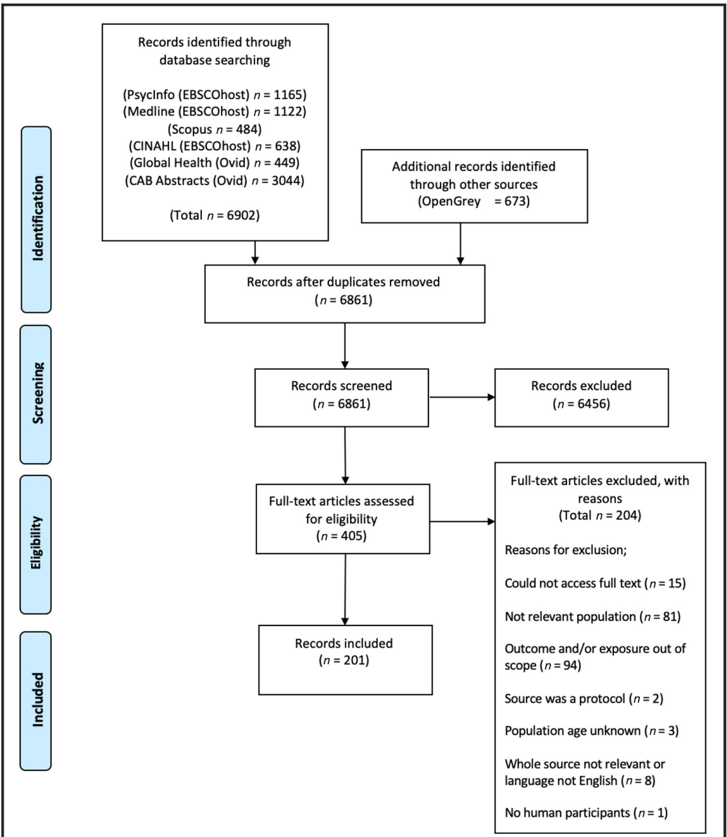
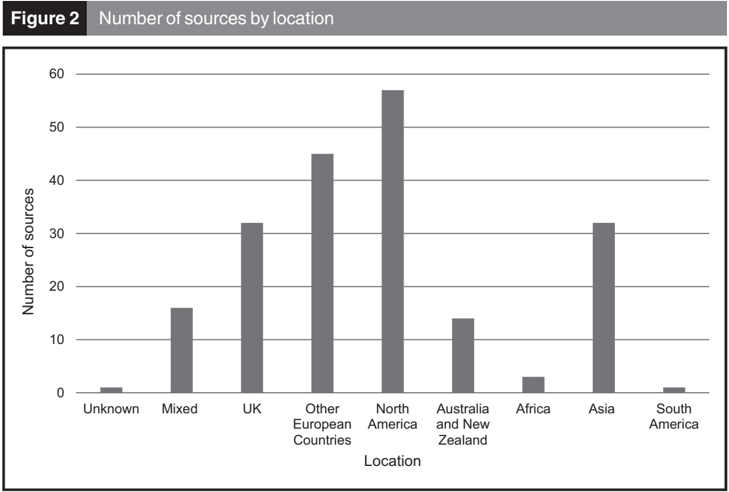
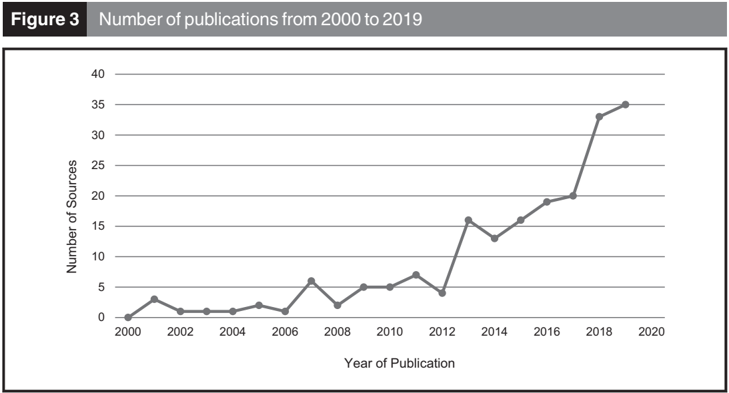
Verification
Claims the paper makes
The claims and statistics of this paper haven’t been checked yet.
Free: it reads the open-access text and checks the first 5 claims that cite a source we can check. Create a free account to check every claim.
Claims other papers make about this one
Each is checked against this paper’s own text: does it say what the citing paper says it does?
The source backs part of the claim, not all of it — or backs it for a different population, condition or comparison.
In the citing paper
“This reflects the finding of our earlier scoping review (Reece et al., 2021), in which only 2% of sources related to blue spaces.”
From Exploring the role of exposure to green and blue spaces in preventing anxiety and depression among young people aged 14–24 years living in urban settings: A systematic review and conceptual framework (2022) · cites this paper as Reece et al., 2021
Experimental — accuracy not yet measuredThe cited source says what the claim attributes to it.
In the citing paper
“It found that the literature included both observational (34%) and experimental designs (28%).”
From Exploring the role of exposure to green and blue spaces in preventing anxiety and depression among young people aged 14–24 years living in urban settings: A systematic review and conceptual framework (2022) · cites this paper as Reece et al., 2021
The cited source says what the claim attributes to it.
In the citing paper
“Importantly, few studies had clinical levels of anxiety or depression as the outcome.Instead, broader terms for mental health which can be related to, or precursors of, anxiety and depression were more common in the literature.”
From Exploring the role of exposure to green and blue spaces in preventing anxiety and depression among young people aged 14–24 years living in urban settings: A systematic review and conceptual framework (2022) · cites this paper as Reece et al., 2021
Self-check
Percentages, sums and reported differences re-computed from the paper’s own numbers.
The self-check needs the paper’s full text.
Citations
Cites
PRISMA Extension for Scoping Reviews (PRISMA-ScR): Checklist and Explanation
Tricco, A. C., Lillie, E., Zarin, W., O'Brien, K. K., Colquhoun, H., Levac, D., Moher, D., Peters, M. D. J., Horsley, T., Weeks, L., et al. (2018) · Annals of Internal Medicine · doi:10.7326/m18-0850 · Cited by 43,565 · cited 1×
“This scoping review followed the guidance and items presented in the “Preferred Reporting Items for Systematic Reviews and Meta-Analyses Extension for Scoping Reviews (PRISMA-ScR)” checklist (Tricco et al., 2018).”
MethodPreferred reporting items for systematic reviews and meta-analyses: The PRISMA statement
Moher, D., Liberati, A., Tetzlaff, J., Altman, D. G., & the PRISMA Group* (2009) · Annals of Internal Medicine · doi:10.7326/0003-4819-151-4-200908180-00135 · Cited by 37,554
Scoping studies: towards a methodological framework
Arksey, H., & O'Malley, L. (2005) · International Journal of Social Research Methodology · doi:10.1080/1364557032000119616 · Cited by 36,742 · cited 1×
“As the literature is multidisciplinary, complex and heterogenous, a scoping review is needed to describe the existing evidence base and to provide the first step towards conducting a systematic review (Mays et al., 2001; Arksey and O’Malley, 2005).”
BackgroundMunn, Z., Peters, M. D. J., Stern, C., Tufanaru, C., McArthur, A., & Aromataris, E. (2018) · BMC Medical Research Methodology · doi:10.1186/s12874-018-0611-x · Cited by 11,385
The psychological impact of the COVID-19 epidemic on college students in China
Cao, W., Fang, Z., Hou, G., Han, M., Xu, X., Dong, J., & Zheng, J. (2020) · Psychiatry Research · doi:10.1016/j.psychres.2020.112934 · Cited by 5,843 · cited 1×
“This has influenced the level of experienced anxiety in university students (Cao et al., 2020).”
BackgroundAge of onset of mental disorders: a review of recent literature
Kessler, R. C., Amminger, G. P., Aguilar-Gaxiola, S., Alonso, J., Lee, S., & ??st??n, T. B. (2007) · Current Opinion in Psychiatry · doi:10.1097/yco.0b013e32816ebc8c · Cited by 3,457 · cited 1×
“It is particularly important to improve the mental health of young people, as many adults with mental health problems develop these during adolescence (Kessler et al., 2007; Patel et al, 2007).”
BackgroundMental health of young people: A global public-health challenge
Patel, V., Flisher, A. J., Hetrick, S., & McGorry, P. (2007) · The Lancet · doi:10.1016/s0140-6736(07)60368-7 · Cited by 3,126 · cited 1×
“It is particularly important to improve the mental health of young people, as many adults with mental health problems develop these during adolescence (Kessler et al., 2007; Patel et al, 2007).”
BackgroundThompson Coon, J., Boddy, K., Stein, K., Whear, R., Barton, J., & Depledge, M. H. (2011) · Environmental Science & Technology · doi:10.1021/es102947t · Cited by 1,391 · cited 5×
“…interventions can have positive associations with mental well-being and emotional measures related to stress relief (Corazon et al., 2019; Houlden et al., 2018), as well as some positive benefits to mental well-being when exercising outdoors compared to indoors (Thompson Coon et al., 2011).”
BackgroundInfluentialFeitosa, M. F., Kraja, A. T., Chasman, D. I., Sung, Y. J., Winkler, T. W., Ntalla, I., Guo, X., Franceschini, N., Cheng, C.-Y., Sim, X., et al. (2018) · PLOS ONE · doi:10.1371/journal.pone.0198166 · Cited by 1,165
An analysis of mood in neurotics.
McNair, D. M., & Lorr, M. (1964) · The Journal of Abnormal and Social Psychology · doi:10.1037/h0040902 · Cited by 556 · cited 1×
“Instead, for example, many studies measured anxiety using the Profile of Mood States scale (McNair and Lorr, 1964).”
MethodThe relationship between greenspace and the mental wellbeing of adults: a systematic review
Houlden, V., Weich, S., Porto de Albuquerque, J., Jarvis, S., & Rees, K. (2018) · PLOS ONE · doi:10.1371/journal.pone.0203000 · Cited by 471 · cited 3×
“…interventions can have positive associations with mental well-being and emotional measures related to stress relief (Corazon et al., 2019; Houlden et al., 2018), as well as some positive benefits to mental well-being when exercising outdoors compared to indoors (Thompson Coon et al.,…”
BackgroundDoes access to green space impact the mental well-being of children: A systematic review
McCormick, R. (2017) · Journal of Pediatric Nursing · doi:10.1016/j.pedn.2017.08.027 · Cited by 467 · cited 3×
“Several systematic reviews provide evidence that exposure to green space and connection with nature can benefit mental well-being, but they focus on either children (McCormick, 2017 (0–18years); Tillmann et al., 2018 (0–18years)”
BackgroundMental health benefits of interactions with nature in children and teenagers: a systematic review
Tillmann, S., Tobin, D., Avison, W., & Gilliland, J. (2018) · Journal of Epidemiology and Community Health · doi:10.1136/jech-2018-210436 · Cited by 441 · cited 3×
“Several systematic reviews provide evidence that exposure to green space and connection with nature can benefit mental well-being, but they focus on either children (McCormick, 2017 (0–18years); Tillmann et al., 2018 (0–18years)”
BackgroundSundquist, K., Frank, G., & Sundquist, J. (2004) · British Journal of Psychiatry · doi:10.1192/bjp.184.4.293 · Cited by 415
Impact of green space exposure on children’s and adolescents’ mental health: A systematic review
Vanaken, G.-J., & Danckaerts, M. (2018) · International Journal of Environmental Research and Public Health · doi:10.3390/ijerph15122668 · Cited by 398
Slater, S. J., Christiana, R. W., & Gustat, J. (2020) · Preventing Chronic Disease · doi:10.5888/pcd17.200204 · Cited by 388 · cited 1×
“It has further highlighted the need for access to parks and green spaces during the Covid-19 pandemic and the importance of these spaces for mental health benefits (Slater et al., 2020).”
BackgroundUrbanization and emerging mental health issues
Ventriglio, A., Torales, J., Castaldelli-Maia, J. M., De Berardis, D., & Bhugra, D. (2021) · CNS Spectrums · doi:10.1017/s1092852920001236 · Cited by 291 · cited 1×
“Living in an urban environment is a risk factor for poorer mental health (Ventriglio et al., 2021; Lecic-Tosevski, 2019; Krefis et al., 2018).”
BackgroundCorazon, S. S., Sidenius, U., Poulsen, D. V., Gramkow, M. C., & Stigsdotter, U. K. (2019) · International Journal of Environmental Research and Public Health · doi:10.3390/ijerph16101711 · Cited by 269 · cited 3×
“…spaces and outdoor nature-based interventions can have positive associations with mental well-being and emotional measures related to stress relief (Corazon et al., 2019; Houlden et al., 2018), as well as some positive benefits to mental well-being when exercising outdoors compared to indoors…”
BackgroundThe impact of green spaces on mental health in urban settings: A scoping review
Callaghan, A., McCombe, G., Harrold, A., McMeel, C., Mills, G., Moore-Cherry, N., & Cullen, W. (2021) · Journal of Mental Health · doi:10.1080/09638237.2020.1755027 · Cited by 243
Urbanization and mental health
Srivastava, K. (2009) · Industrial Psychiatry Journal · doi:10.4103/0972-6748.64028 · Cited by 217 · cited 1×
“Additionally, the densification of cities reduces availability of private and public green spaces and this increases mental health problems associated with urban living (Srivastava, 2009).”
BackgroundHow does the urban environment affect health and well-being? A systematic review
Krefis, A., Augustin, M., Schlünzen, K., Oßenbrügge, J., & Augustin, J. (2018) · Urban Science · doi:10.3390/urbansci2010021 · Cited by 173 · cited 1×
“Living in an urban environment is a risk factor for poorer mental health (Ventriglio et al., 2021; Lecic-Tosevski, 2019; Krefis et al., 2018).”
BackgroundA Scoping Review Mapping Research on Green Space and Associated Mental Health Benefits
Wendelboe-Nelson, C., Kelly, S., Kennedy, M., & Cherrie, J. (2019) · International Journal of Environmental Research and Public Health · doi:10.3390/ijerph16122081 · Cited by 167 · cited 3×
“Two recent scoping reviews consider the mental health benefits of green spaces (Wendelboe-Nelson et al., 2019; Callaghan et al., 2020).”
BackgroundInfluentialIs urban living good for mental health?
Lečić‐Toševski, D. (2019) · Current Opinion in Psychiatry · doi:10.1097/yco.0000000000000489 · Cited by 93 · cited 1×
“Living in an urban environment is a risk factor for poorer mental health (Ventriglio et al., 2021; Lecic-Tosevski, 2019; Krefis et al., 2018).”
BackgroundAdriaens, K., Gucht, D. V., & Baeyens, F. (2017) · International Journal of Environmental Research and Public Health · doi:10.3390/ijerph15010012 · Cited by 68
Wolpert, M., Dalzell, K., Ullman, R., Garland, L., Cortina, M., Hayes, D., Patalay, P., & Law, D. (2019) · The Lancet Psychiatry · doi:10.1016/s2215-0366(18)30465-6 · Cited by 49 · cited 1×
“Following previous research, we use a broad definition of anxiety and depression, including symptoms and precursors such as self-report of stress or low mood (Wolpert et al., 2019).”
MethodPrevention of mental disorders: evidence, challenges and opportunities
Jacka, F. N., & Reavley, N. J. (2014) · BMC Medicine · doi:10.1186/1741-7015-12-75 · Cited by 45 · cited 1×
“A preventative approach to mental health in young people is important because it could save lives and be a cost-effective solution to reducing the burden that mental health problems have on society (Jacka and Reavley, 2014).”
BackgroundCetrano, G., Salvador-Carulla, L., Tedeschi, F., Rabbi, L., Gutiérrez-Colosía, M. R., Gonzalez-Caballero, J. L., Park, A.-L., McDaid, D., Sfetcu, R., Kalseth, J., et al. (2020) · Epidemiology and Psychiatric Sciences · doi:10.1017/s2045796018000574 · Cited by 40
Reflections on the next ten years of research, policy and implementation in global mental health
Lund, C. (2020) · Epidemiology and Psychiatric Sciences · doi:10.1017/s204579601900074x · Cited by 23 · cited 1×
“It is important to know whether exposure to green spaces is beneficial in these countries, because there is a lack of mental health services in LMICs (Lund, 2020), and this could be a cost-effective preventive measure, particularly in high density cities.”
BackgroundUrban demographics Why people live where they do
Thomas, E., Serwicka, I., & Swinney, P. (2015) · doi:10.13140/rg.2.1.1053.8965 · Cited by 10
Research works printed but not linked: 3
- Mays, N., Roberts, E. and Popay, J. (2001), "Synthesizing research evidence", in Fulop, N., Allen, P., Clarke, A., and Black, N. (Eds), Studying the Organisation and Delivery of Health Services: Research Methods, Routledge, London, pp. 188-219.
- Sundquist, K., Frank, G. and Sundquist, J. (2018), "Urbanisation and incidence of psychosis and depression", British Journal of Psychiatry, Vol. 184 No. 4, pp. 293-298.
- Tiller, J. (2013), "Depression and anxiety", Medical Journal of Australia, Vol. 199 No. 6, pp. 28-31.
Cited by
Green space exposure on depression and anxiety outcomes: A meta-analysis
Liu, Z., Chen, X., Cui, H., Ma, Y., Gao, N., Li, X., Meng, X., Lin, H., Abudou, H., Guo, L., et al. (2023) · Environmental Research · doi:10.1016/j.envres.2023.116303 · Cited by 155
Bray, I., Reece, R., Sinnett, D., Martin, F., & Hayward, R. (2022) · Environmental Research · doi:10.1016/j.envres.2022.114081 · Cited by 124
“We also include ‘blue space ’ (such as lakes), although this field of research is more recent (Reece et al., 2021).”
BackgroundSelf-citationGonzales‐Inca, C., Pentti, J., Stenholm, S., Suominen, S., Vahtera, J., & Käyhkö, N. (2022) · Health & Place · doi:10.1016/j.healthplace.2022.102760 · Cited by 71
Associations Between Urban Green Space Quality and Mental Wellbeing: Systematic Review
Xu, Z., Marini, S., Mauro, M., Latessa, P. M., Grigoletto, A., & Toselli, S. (2025) · Land · doi:10.3390/land14020381 · Cited by 72
Effect of nature on the mental health and well-being of children and adolescents: meta-review
Lomax, T., Butler, J. A., Cipriani, A., & Singh, I. (2024) · The British Journal of Psychiatry · doi:10.1192/bjp.2024.109 · Cited by 58
Metadata
- Authors
- Reece, R., Bray, I., Sinnett, D., Hayward, R., & Martin, F.
- Affiliations
- University of the West of England (GB)
- Coventry University (GB)
- Corresponding author
- Reece, Rebecca
- Venue
- Journal of Public Mental Health
- Publisher
- Emerald
- Published
- 2021-05-28
- Volume
- 20
- Issue
- 2
- Pages
- 94-104
- ISSN
- 1746-5729 (ISSN-L)
- OpenAlex
- W3158547856
- Cited by
- 50
- References
- 29
- Citations by year
- 2026: 4 · 2025: 6 · 2024: 12 · 2023: 9 · 2022: 15 · 2021: 4
- FWCI
- 3.98
- Type
- journal article
- Language
- en
- Open access
- hybrid
- doi.org
- Licence
- cc-by
- www.emerald.com/insight/site-policies (tdm)
- Locations
- Journal of Public Mental Health (publishedVersion, cc-by)
- ORCA Online Research @Cardiff (Cardiff University) (acceptedVersion)
- Pure (Coventry University) (submittedVersion, other-oa)
- UWE Research Repository (UWE Bristol) (submittedVersion, cc-by)
- Topics
- Social Sciences › Urban Studies › Urban Green Space and Health
- Health Sciences › Medicine › Psychiatry and Mental health › Mental Health Treatment and Access
- Social Sciences › Psychology › Applied Psychology › Digital Mental Health Interventions
- Keywords
- green space exposure, natural environment, anxiety, depression, youth, adolescents, urban mental health, mental health prevention, regional distribution of research, low- and middle-income countries
About these checks
Registry, retraction, Cites and statistics results are computed, not judged, with one exception: a printed reference that no index lists is read once by a model before it counts as a citation error. Claims are extracted by a model and kept only when their quote appears verbatim in the text; each cited source is then checked, with a model’s help, for whether it says what the claim relies on. Those verdicts can be wrong — read the claim’s quote and the cited source before relying on one.
Statistics and arithmetic are recomputed, not judged.
Confidence bands are shown only for fields calibrated on our annotated test set. None is calibrated yet, so no band is shown.
What counts as a claim ›How we measure confidence ›How we check this ›
Are you an author, or do you see a problem with this page? Request a review
Data sources
Bibliographic data: Semantic Scholar, OpenAlex, Crossref.
Contains information from the Semantic Scholar Academic Graph Datasets, made available under the ODC Attribution License (ODC-BY 1.0).
Semantic Scholar’s data is described in: Kinney, R., et al. (2023). The Semantic Scholar Open Data Platform. arXiv:2301.10140.
