

3D printing with moondust
Open accessThe DOI matches its Crossref record; 21 of the 21 references it cites were found in a registry or an index.
Abstract
Purpose: The purpose of this paper is to investigate the effect of the main process parameters of laser melting (LM) type additive manufacturing (AM) on multi-layered structures manufactured from JSC-1A Lunar regolith (Moondust) simulant powder. Design/methodology/approach: Laser diffraction technology was used to analyse and confirm the simulant powder material particle sizes and distribution. Geometrical shapes were then manufactured on a Realizer SLM™ 100 using the simulant powder. The laser-processed samples were analysed via scanning electron microscopy to evaluate surface and internal morphologies, X-ray fluorescence spectroscopy to analyse the chemical composition after processing, and the samples were mechanically investigated via Vickers micro-hardness testing. Findings: A combination of process parameters resulting in an energy density value of 1.011 J/mm 2 allowed the successful production of components directly from Lunar regolith simulant. An internal relative porosity of 40.8 per cent, material hardness of 670 ± 11 HV and a dimensional accuracy of 99.8 per cent were observed in the fabricated samples. Originality/value: This research paper is investigating the novel application of a powder bed fusion AM process category as a potential on-site manufacturing approach for manufacturing structures/components out of Lunar regolith (Moondust). It was shown that this AM process category has the capability to directly manufacture multi-layered parts out of Lunar regolith, which has potential applicability to future moon colonization.
Overview
The claims and statistics of this paper haven’t been checked yet.
Free: it reads the open-access text and checks the first 5 claims that cite a source we can check. Create a free account to check every claim.
Integrity signals
Registry
Cites
Statistics
Figures
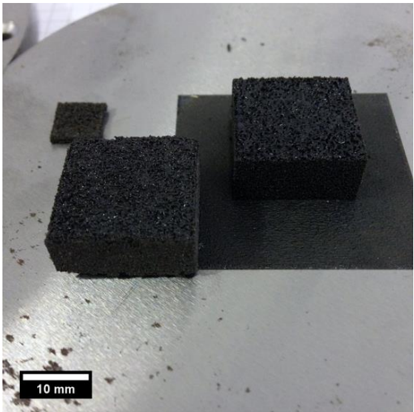
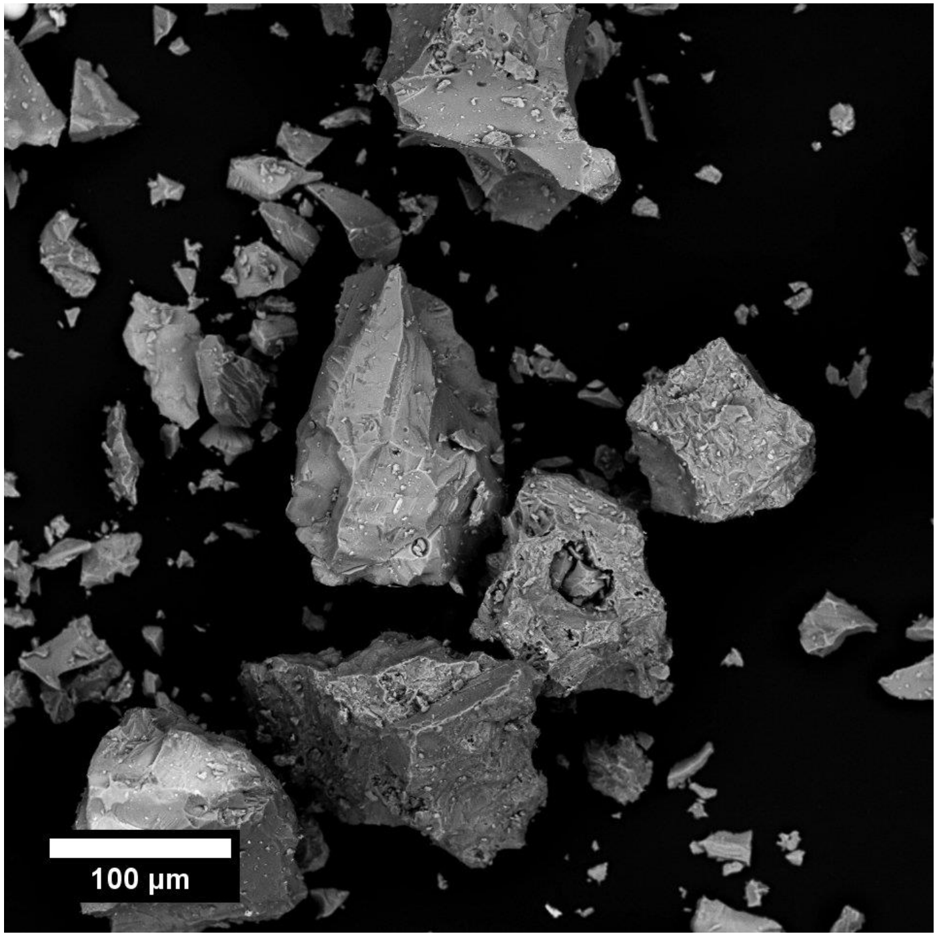
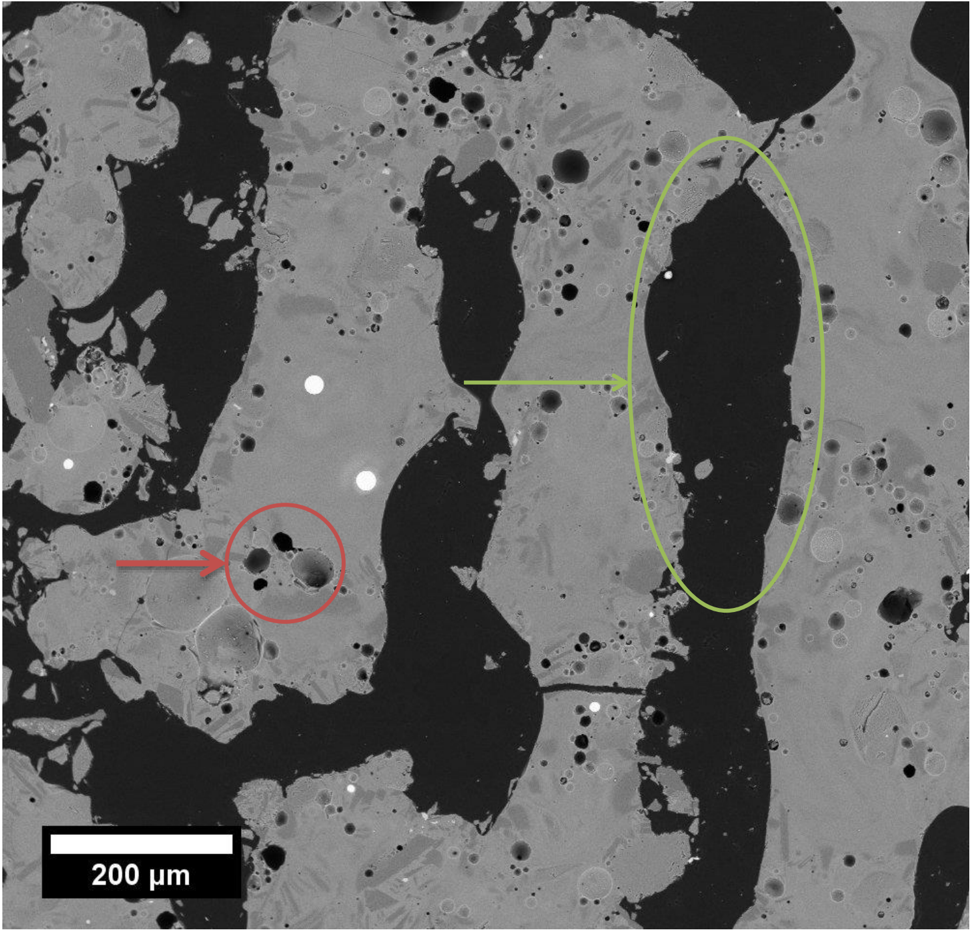
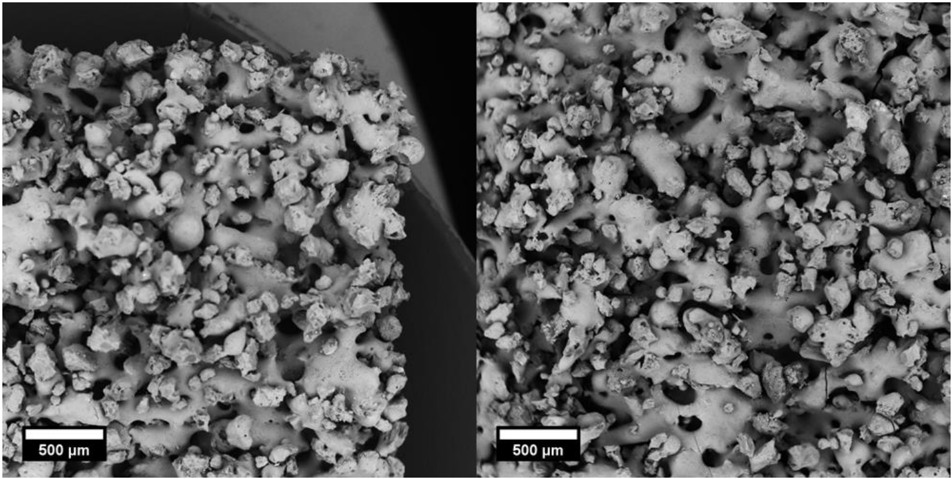
Verification
Claims the paper makes
The claims and statistics of this paper haven’t been checked yet.
Free: it reads the open-access text and checks the first 5 claims that cite a source we can check. Create a free account to check every claim.
Claims other papers make about this one
Each is checked against this paper’s own text: does it say what the citing paper says it does?
The source backs part of the claim, not all of it — or backs it for a different population, condition or comparison.
In the citing paper
“However, these prints are characterized by remarkably high porosity, primarily attributed to the high melting point of soil minerals that do not fully liquefy during laser processing [122,126].”
From A comprehensive review of lunar-based manufacturing and construction (2024) · cites this paper as [126]
Experimental — accuracy not yet measuredThe source backs part of the claim, not all of it — or backs it for a different population, condition or comparison.
In the citing paper
“Moreover, the printed regolith is brittle due to the oxide ceramic elements it contains [126,132].”
From A comprehensive review of lunar-based manufacturing and construction (2024) · cites this paper as [126]
Experimental — accuracy not yet measuredThe source backs part of the claim, not all of it — or backs it for a different population, condition or comparison.
In the citing paper
“While laser-based printing often results in materials with high porosity due to its sensitivity to the reflectivity of the processed material, impacting the overall mechanical properties of the final product [122,126], EBM is less influenced by the absorption characteristics of the material.”
From A comprehensive review of lunar-based manufacturing and construction (2024) · cites this paper as [126]
Experimental — accuracy not yet measuredThe source backs part of the claim, not all of it — or backs it for a different population, condition or comparison.
In the citing paper
“In contrast, laser-based and electron beam sintering technologies use high-powered energy beams with precise energy delivery in controlled environments, ensuring consistent quality and enabling intricate details with fine resolutions [124-126].”
From A comprehensive review of lunar-based manufacturing and construction (2024) · cites this paper as [126]
Experimental — accuracy not yet measuredThe cited source says what the claim attributes to it.
In the citing paper
“These enhanced mechanical properties, compared to those reported by Goulas et al. [126,127], are attributed to the higher energy input, facilitating sufficient melting, improved fusion, and inter-layer bonding.”
From A comprehensive review of lunar-based manufacturing and construction (2024) · cites this paper as [126]
1 more claim about this paper
Create a free account to see every claim other papers make about this one.
Self-check
Percentages, sums and reported differences re-computed from the paper’s own numbers.
The self-check needs the paper’s full text.
Citations
Cites
Building components for an outpost on the lunar soil by means of a novel 3D printing technology
Cesaretti, G., Dini, E., De Kestelier, X., Colla, V., & Pambaguian, L. (2014) · Acta Astronautica · doi:10.1016/j.actaastro.2013.07.034 · Cited by 806 · cited 2×
“Previous research has investigated the use of the Directed Energy Deposition AM process category (Balla et al., 2010) and the Binder Jetting AM process category (Cesaretti et al., 2014) to manufacture objects with Lunar regolith simulant.”
BackgroundMethodAbsorptance of powder materials suitable for laser sintering
Tolochko, N. K., Khlopkov, Y. V., Mozzharov, S. E., Ignatiev, M. B., Laoui, T., & Titov, V. I. (2000) · Rapid Prototyping Journal · doi:10.1108/13552540010337029 · Cited by 518 · cited 2×
“It is known that residual O2 affects the optical (Tolochko et al., 2000) chemical and crystalline composition of a material when heating is taking place and in particular when the chemical”
BackgroundThe manufacturing of hard tools from metallic powders by selective laser melting
Abe, F., Osakada, K., Shiomi, M., Uematsu, K., & Matsumoto, M. (2001) · Journal of Materials Processing Technology · doi:10.1016/s0924-0136(01)00522-2 · Cited by 390 · cited 1×
“Although LM is typically used for the fabrication of parts from metallic powders (Abe et al., 2001; Bertrand et al., 2007; Li et al., 2011”
MethodCeramic components manufacturing by selective laser sintering
Bertrand, P., Bayle, F., Combe, C., Goeuriot, P., & Smurov, I. (2007) · Applied Surface Science · doi:10.1016/j.apsusc.2007.08.085 · Cited by 351 · cited 1×
“Although LM is typically used for the fabrication of parts from metallic powders (Abe et al., 2001; Bertrand et al., 2007; Li et al., 2011”
MethodFirst demonstration on direct laser fabrication of lunar regolith parts
Krishna Balla, V., Roberson, L. B., O'Connor, G. W., Trigwell, S., Bose, S., & Bandyopadhyay, A. (2012) · Rapid Prototyping Journal · doi:10.1108/13552541211271992 · Cited by 186 · cited 3×
“The fabricated parts were characterized to evaluate the influence of laser processing on the microstructure, constituent phases and chemistry of the material (Balla et al., 2010).”
BackgroundMethodJSC-1A lunar soil simulant: Characterization, glass formation, and selected glass properties
Ray, C. S., dos Reis, S. T., Sen, S., & O'Dell, J. S. (2010) · Journal of Non-Crystalline Solids · doi:10.1016/j.jnoncrysol.2010.04.049 · Cited by 157 · cited 2×
“Studies have been published that analyse the basic aspects of both the actual and the simulant material; such as thermal optical properties (Gaier et al., 2011), glass properties (Ray et al., 2010) and also comparisons between the available Lunar regolith simulants (Liu and Taylor, 2011).”
BackgroundStudy of the Pore Formation on CoCrMo Alloys by Selective Laser Melting Manufacturing Process
Monroy, K., Delgado, J., & Ciurana, J. (2013) · Procedia Engineering · doi:10.1016/j.proeng.2013.08.227 · Cited by 144 · cited 1×
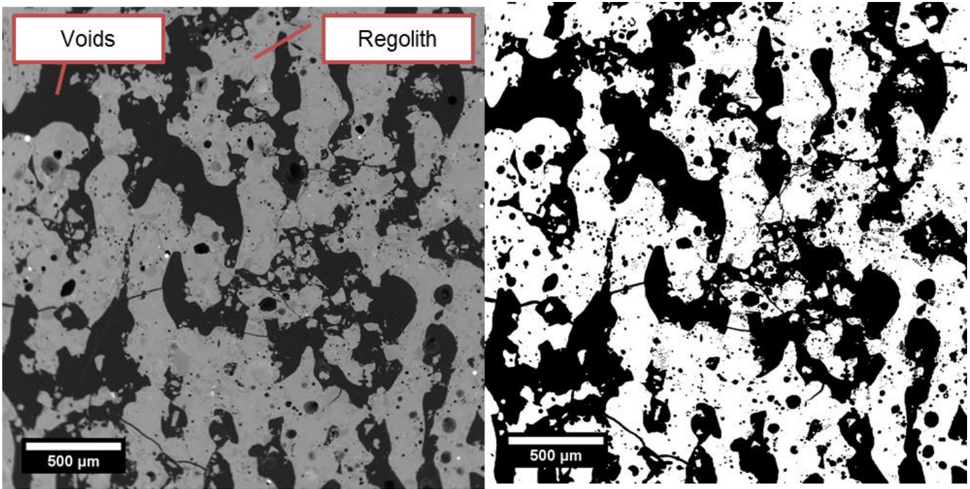
“The relative porosity was calculated as a ratio of the black to white pixels which corresponded with the fraction of the surface voids over the total surface (Monroy et al., 2013).”
MethodCharacterization of lunar dust and a synopsis of available lunar simulants
Liu, Y., & Taylor, L. A. (2010) · Planetary and Space Science · doi:10.1016/j.pss.2010.11.007 · Cited by 95
Averyanova, M., Cicala, E. F., Bertrand, P., & Grevey, D. F. (2012) · Rapid Prototyping Journal · doi:10.1108/13552541211193476 · Cited by 87 · cited 1×
“When the layer thickness of the deposited material was too thick and the process parameters could not be optimised accordingly, then sufficient melting could not occur and high levels of porosity would result (Averyanova et al., 2012).”
BackgroundIndigenous Materials for Lunar Construction
Happel, J. A. (1993) · Applied Mechanics Reviews · doi:10.1115/1.3120360 · Cited by 77 · cited 2×
“existing bulk material of the Lunar surface as a construction material – Lunar regolith (Happel, 1993).”
BackgroundMethodThe struggle for space: Past and future of the space race
Devezas, T., de Melo, F. C. L., Gregori, M. L., Salgado, M. C. V., Ribeiro, J. R., & Devezas, C. B. C. (2012) · Technological Forecasting and Social Change · doi:10.1016/j.techfore.2011.12.006 · Cited by 52 · cited 1×
“Space exploration has been of global interest since the 1950’s, especially after the first successful mission to send a human into orbit around the Earth in 1961 (Devezas et al., 2012).”
BackgroundHigh-temperature microwave dielectric properties and processing of JSC-1AC lunar simulant
Allan, S. M., Merritt, B. J., Griffin, B. F., Hintze, P. E., & Shulman, H. S. (2013) · Journal of Aerospace Engineering · doi:10.1061/(asce)as.1943-5525.0000179 · Cited by 47 · cited 1×
“This lower pressure would thermodynamically promote lower temperature reduction of metal oxides which in turn could improve laser melting and ensure that there would be no oxidation (Allan et al., 2013).”
BackgroundExperimental simulation of tensile behavior of lunar soil simulant JSC-1
Arslan, H., Sture, S., & Batiste, S. N. (2007) · Materials Science and Engineering A · doi:10.1016/j.msea.2007.05.113 · Cited by 42 · cited 2×
“Acquired data showed that the concentrations of Carbon, Magnesium, Aluminium, Silicon, and Chromium had increased as a result of the laser processing, whereas Oxygen, Sodium, Potassium, Calcium, Titanium and Iron had reduced.”
BackgroundThe use of tribocharging in the electrostatic beneficiation of lunar simulant
Trigwell, S., Captain, J. G., Arens, E. E., Quinn, J. W., & Calle, C. I. (2009) · IEEE Transactions on Industry Applications · doi:10.1109/tia.2009.2018976 · Cited by 40 · cited 2×
“Previous research has shown that the high presence of Carbon is a result of contamination when specimens are exposed to the atmosphere after processing (Trigwell et al., 2009).”
BackgroundESA strategic planning for space exploration
Hufenbach, B., Reiter, T., & Sourgens, E. (2014) · Space Policy · doi:10.1016/j.spacepol.2014.07.009 · Cited by 24 · cited 1×
“The latest programs from many of the major space agencies, such as the European Space Agency (ESA), are intending to send manned missions back into space (Hufenbach et al., 2014).”
BackgroundLi, R., Shi, Y., Wang, L., Liu, J., & Wang, Z. (2011) · Powder Metallurgy and Metal Ceramics · doi:10.1007/s11106-011-9311-3 · Cited by 22 · cited 1×
“Although LM is typically used for the fabrication of parts from metallic powders (Abe et al., 2001; Bertrand et al., 2007; Li et al., 2011”
MethodRay, C. S., dos Reis, S. T., Pontuschka, W. M., Yang, J. B., Sene, F. F., Giehl, J. M., Kim, C. W., & Sen, S. (2006) · Journal of Non-Crystalline Solids · doi:10.1016/j.jnoncrysol.2006.02.117 · Cited by 19 · cited 2×
“The authors hypothesize that the increase of Silicon was due to the formation of glasses, based on the glass formation under rapid cooling rates (Ray et al., 2006) that can occur during laser processing.”
BackgroundThermal Optical Properties of Lunar Dust Simulants and Their Constituents
Gaier, J. R., Ellis, S., & Hanks, N. (2011) · AIAA Atmospheric and Space Environments Conference · doi:10.2514/6.2011-3673 · Cited by 17
Thermal Optical Properties of Lunar Dust Simulants
Gaier, J. R., Ellis, S., & Hanks, N. (2012) · Journal of Thermophysics and Heat Transfer · doi:10.2514/1.t3838 · Cited by 12
3D Microwave Print Head Approach for Processing Lunar and Mars Regolith
Barmatz, M. B., Steinfeld, D. E., Anderson, M., & Winterhalter, D. (2014) · Lunar and Planetary Science Conference · Cited by 10
Patrick, E. L., Mandt, K. E., Escobedo, S. M., Winters, G. S., Mitchell, J. N., & Teolis, B. D. (2015) · Icarus · doi:10.1016/j.icarus.2015.03.015 · Cited by 9 · cited 1×
“Published work suggests that this exposure may affect characteristics such as particle size, morphology, porosity and oxidative states of the mineral phases that exist in the material present on the lunar surface (Patrick et al., 2015).”
Background
Research works printed but not linked: 2
- Eckart, P. (2006), The Lunar Base Handbook: An Introduction to Lunar Base Design (GNRL USE), Brown-Churchill Series, McGraw-Hill, available at: http://books.google.co.uk/books?id=mp7dnQEACAAJ.
- 1983, Handbook of Lunar Soils
Cited by
An Overview on 3D Printing Technology: Technological, Materials, and Applications
Shahrubudin, N., Lee, T. C., & Ramlan, R. (2019) · Procedia Manufacturing · doi:10.1016/j.promfg.2019.06.089 · Cited by 2,050
The Role of Additive Manufacturing in the Era of Industry 4.0
Dilberoglu, U. M., Gharehpapagh, B., Yaman, U., & Dolen, M. (2017) · Procedia Manufacturing · doi:10.1016/j.promfg.2017.07.148 · Cited by 1,000
Farries, K. W., Visintin, P., Smith, S. T., & van Eyk, P. (2021) · Construction and Building Materials · doi:10.1016/j.conbuildmat.2021.123627 · Cited by 169
Goulas, A., Binner, J. G. P., Harris, R. A., & Friel, R. J. (2017) · Applied Materials Today · doi:10.1016/j.apmt.2016.11.004 · Cited by 138
“Previous studies have demonstrated that the application of a Powder Bed Fusion 3D printing process can manufacture structures/components from multi‐ component ceramics that closely simulate Lunar and Martian regolith [12,13].”
BackgroundSelf-citationWang, Y., Hao, L., Li, Y., Sun, Q., Sun, M., Huang, Y., Li, Z., Tang, D., Wang, Y., & Xiao, L. (2022) · Applied Clay Science · doi:10.1016/j.clay.2022.106673 · Cited by 141
Metadata
- Authors
- Goulas, A., & Friel, R. J.
- Affiliations
- Loughborough University (GB)
- Venue
- Rapid Prototyping Journal
- Publisher
- Emerald
- Published
- 2016-10-17
- Volume
- 22
- Issue
- 6
- Pages
- 864-870
- ISSN
- 1355-2546 (ISSN-L)
- OpenAlex
- W2301266426
- Cited by
- 82
- References
- 21
- Citations by year
- 2026: 5 · 2025: 14 · 2024: 15 · 2023: 9 · 2022: 9 · 2021: 9 · 2020: 2 · 2019: 5 · 2018: 6 · 2017: 4 · 2016: 4
- FWCI
- 5.63
- Type
- journal article
- Language
- en
- Open access
- green
- figshare.com
- Licence
- cc-by-nc-nd
- www.emerald.com/insight/site-policies (tdm)
- Locations
- Rapid Prototyping Journal (publishedVersion)
- Loughborough University Research Repository (Loughborough University) (submittedVersion, cc-by-nc-nd)
- Loughborough University Institutional Repository (Loughborough University) (submittedVersion, cc-by-nc-nd)
- Lund University Publications (Lund University) (submittedVersion)
- Topics
- Physical Sciences › Engineering › Mechanical Engineering › Additive Manufacturing Materials and Processes
- Physical Sciences › Engineering › Industrial and Manufacturing Engineering › Additive Manufacturing and 3D Printing Technologies
- Physical Sciences › Engineering › Building and Construction › Innovations in Concrete and Construction Materials
- Keywords
- lunar regolith simulant, JSC-1A, laser melting, powder bed fusion, laser powder bed fusion, in-situ resource utilization, process parameters, energy density, porosity, microhardness, dimensional accuracy, multilayer structures, Moon colonization
About these checks
Registry, retraction, Cites and statistics results are computed, not judged, with one exception: a printed reference that no index lists is read once by a model before it counts as a citation error. Claims are extracted by a model and kept only when their quote appears verbatim in the text; each cited source is then checked, with a model’s help, for whether it says what the claim relies on. Those verdicts can be wrong — read the claim’s quote and the cited source before relying on one.
Statistics and arithmetic are recomputed, not judged.
Confidence bands are shown only for fields calibrated on our annotated test set. None is calibrated yet, so no band is shown.
What counts as a claim ›How we measure confidence ›How we check this ›
Are you an author, or do you see a problem with this page? Request a review
Data sources
Bibliographic data: Semantic Scholar, OpenAlex, Crossref.
Contains information from the Semantic Scholar Academic Graph Datasets, made available under the ODC Attribution License (ODC-BY 1.0).
Semantic Scholar’s data is described in: Kinney, R., et al. (2023). The Semantic Scholar Open Data Platform. arXiv:2301.10140.
