

An Optimization Method for Intrusion Detection Classification Model Based on Deep Belief Network
Open accessThe DOI matches its Crossref record; 20 of the 20 references it cites were found in a registry or an index.
Abstract
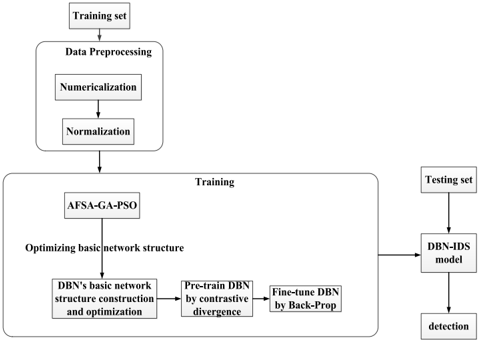
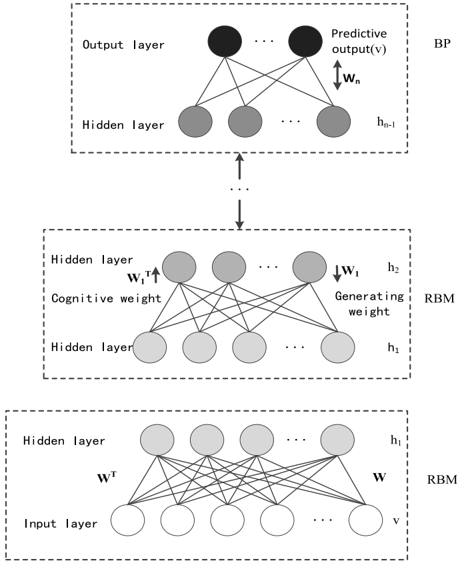
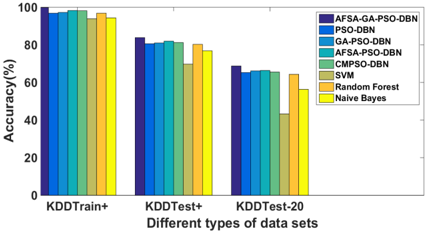
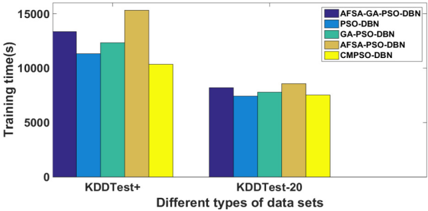
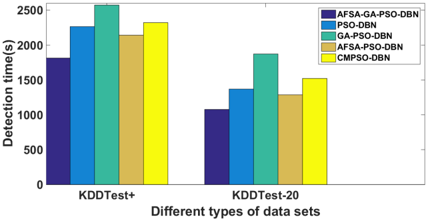
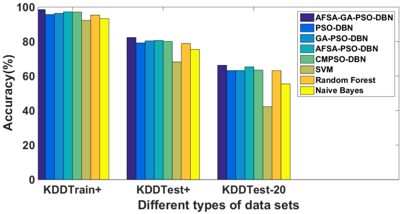
The rapid development and popularization of the network have brought many problems to network security. Intrusion detection technology is often used as an effective security technology to protect the network. The deep belief network (DBN), as a classic model of deep learning, has good classification performance and is often used in the field of intrusion detection. However, the network structure of DBN is generally set through practical experience. For the optimization problem of the DBN-based intrusion detection classification model (DBN-IDS), this paper proposes a new joint optimization algorithm to optimize the DBN's network structure. First, we design a particle swarm optimization (PSO) based on the adaptive inertia weight and learning factor. Second, we use the fish swarm behavior of cluster, foraging, and other behaviors to optimize the PSO to find the initial optimization solution. Then, based on the initial optimization solution, we use the genetic operators with self-adjusting crossover probability and mutation probability to optimize the PSO to search the global optimization solution. Finally, the global optimization solution constructed by the above-mentioned joint optimization algorithm is used as the network structure of the intrusion detection classification model. The experimental results show that compared with other DBN-IDS optimization algorithms, our algorithm shortens the average detection time by at least 24.69% on the premise of increasing the average training time by 6.9%; compared with the tested classification algorithms, our DBN-IDS improves the average classification accuracy by at least 1.3% and up to 14.80% in the five-category classification, which is proved to be an efficient DBN-IDS optimization method.
Overview
The claims and statistics of this paper haven’t been checked yet.
Free: it reads the open-access text and checks the first 5 claims that cite a source we can check. Create a free account to check every claim.
Integrity signals
Registry
Cites
Statistics
Figures






Verification
Claims the paper makes
The claims and statistics of this paper haven’t been checked yet.
Free: it reads the open-access text and checks the first 5 claims that cite a source we can check. Create a free account to check every claim.
Self-check
Percentages, sums and reported differences re-computed from the paper’s own numbers.
The self-check needs the paper’s full text.
Citations
Cites
Chen, F.-C., & Jahanshahi, M. R. (2018) · IEEE Transactions on Industrial Electronics · doi:10.1109/tie.2017.2764844 · Cited by 930
Wang, W., Sheng, Y., Wang, J., Zeng, X., Ye, X., Huang, Y., & Zhu, M. (2018) · IEEE Access · doi:10.1109/access.2017.2780250 · Cited by 655
Fuzziness based semi-supervised learning approach for intrusion detection system
Ashfaq, R. A. R., Wang, X.-Z., Huang, J. Z., Abbas, H., & He, Y.-L. (2017) · Information Sciences · doi:10.1016/j.ins.2016.04.019 · Cited by 552
Deep Learning Approach Combining Sparse Autoencoder With SVM for Network Intrusion Detection
Al-Qatf, M., Lasheng, Y., Al-Habib, M., & Al-Sabahi, K. (2018) · IEEE Access · doi:10.1109/access.2018.2869577 · Cited by 550
An Intrusion Detection Model Based on Deep Belief Networks
Gao, N., Gao, L., Gao, Q., & Wang, H. (2014) · 2014 Second International Conference on Advanced Cloud and Big Data · doi:10.1109/cbd.2014.41 · Cited by 293
A Set-Based Genetic Algorithm for Interval Many-Objective Optimization Problems
Gong, D., Sun, J., & Miao, Z. (2018) · IEEE Transactions on Evolutionary Computation · doi:10.1109/tevc.2016.2634625 · Cited by 261
Network Anomaly Detection: A Machine Learning Perspective
Bhattacharyya, D. K., & Kalita, J. K. (2013) · Cited by 187
Introducing Deep Learning Self-Adaptive Misuse Network Intrusion Detection Systems
Papamartzivanos, D., Gomez Marmol, F., & Kambourakis, G. (2019) · IEEE Access · doi:10.1109/access.2019.2893871 · Cited by 174
A DBN-based resampling SVM ensemble learning paradigm for credit classification with imbalanced data
Yu, L., Zhou, R., Tang, L., & Chen, R. (2018) · Applied Soft Computing · doi:10.1016/j.asoc.2018.04.049 · Cited by 161
An Adaptive-PSO-Based Self-Organizing RBF Neural Network
Han, H., Lü, W., Hou, Y., & Qiao, J. (2016) · IEEE Transactions on Neural Networks and Learning Systems · doi:10.1109/tnnls.2016.2616413 · Cited by 156
Research works printed but not linked: 7
- zhan, 2015, The applications of deep learning on traffic identification, Proceedings of BlackHat, 1411
- bao, 2006, Intrusion detection based on KCPA and SVM, Applied Soft Computing, 2, 125
- wei, 2018, Research on optimal strategy of multi-stage intrusion detection game in WSNs, J Electron Inf Technol, 40, 63
- liu, 2011, Research on inertia weight control method based on particle swarm optimization algorithm, J Nanjing Univ Natural Sci Ed, 47, 364
- qiang, 2012, VNE-AFS: Network virtualization mapping algorithm based on artificial fish stocks, Trans Commun, 1, 170
- 2016, Weka 3-Data Mining with Open Source Machine Learning Software in Java
- 2018, The UCI KDD Archive ’ Department of Information and Computer Science
Cited by
Items 101–161 of 161
Intrusion Detection Model Using Chaotic MAP for Network Coding Enabled Mobile Small Cells
Kumar, C. K., & Ramachandran, N. (2024) · Computers, materials & continua/Computers, materials & continua (Print) · doi:10.32604/cmc.2023.043534 · Cited by 4
Seyam, A., Nassif, A. B., Nasir, Q., Blooshi, B. A., & Talib, M. W. A. (2021) · International Conference on Arab Women in Computing (ArabWIC) · doi:10.1145/3485557.3485577 · Cited by 4
“[8], 2019 Journal Network Security normal/attack CNN+LSTM ISCX2012, UST-2016 [17], 2019 Journal Network Security Probe,DOS DNN Kyoto 2006, NSL-KDD [18], 2019 Journal Network Security Probe,DOS DNN UNSW-NB15, CICIDS2017 [35], 2019 Journal Network Security Probe,DOS NDAE+DNN UNSW-NB15, KDD [34], 2019 Journal Network Sec…”
BackgroundMethodInfluentialEVMNet: Classification of DDoS Attacks using ELM-Enhanced Deep Learning Model with Feature Fusion
Ambekar, N. G., Samal, S., Thokchom, S., & Yogita, Y. (2023) · IEEE India Conference · doi:10.1109/indicon59947.2023.10440676 · Cited by 4
“A malware traffic categorization model uses CNN for representation learning based on images, proposed a deep belief network model for classifying malware traffic [12].”
MethodOIDMD: A Novel Open-Set Intrusion Detection Method Based on Mahalanobis Distance
Liu, Y., Zhao, A., Du, L., Zhang, C., Yan, H., & Gu, Z. (2023) · IEEE International Conference on Data Science in Cyberspace · doi:10.1109/dsc59305.2023.00044 · Cited by 3
“More and more researchers are trying to apply AI techniques to combat the problem of cyber attack detection, including Machine Learning [11] and Deep Learning [26].”
BackgroundSule Aishat, A., Alhassan John, K., Idris, I., Alabi Isiaq, O., & O., S. (2025) · Ceddi Journal of Information System and Technology (JST) · doi:10.56134/jst.v4i1.114 · Cited by 3
“(Wei et al., 2019) improved the structure of the Intrusion Detection System (IDS) for Deep Belief Networks (DBN) by experimenting with a hybrid optimization technique that combines the Particle Swarm Optimization (PSO) algorithm, the Artificial Fish Swarm Algorithm (AFSA), and the Genetic Algorithm.”
A Survey on Network Intrusion System Attacks Classification Using Machine Learning Techniques
Deepa, V., & Radha, N. (2021) · IOP Conference Series Materials Science and Engineering · doi:10.1088/1757-899x/1022/1/012036 · Cited by 3
“Wei et al. [18] proposed an optimized Deep Belief Network (DBN) method for intrusion detection and classification.”
MethodOptimizing LightGBM for Intrusion Detection Systems using GOA
Prastavana, & Majhi, B. (2023) · International Conference on Computing, Communication and Networking Technologies (ICCCNT) · doi:10.1109/icccnt56998.2023.10308360 · Cited by 3
“[13] in his work have used PSO based on adaptive inertia and learning factor.”
MethodApplication of Machine Learning Algorithms in Network Intrusion Detection
Zhang, S., Li, Y., Shi, Y., & Hua, M. (2022) · International Conference on Cloud Computing and Big Data Analytics (ICCCBDA) · doi:10.1109/icccbda55098.2022.9778286 · Cited by 3
Self-citationA Systematic Literature Review of Network Intrusion Detection System Models
Yogesh, & Goyal, L. M. (2023) · Algorithms for intelligent systems · doi:10.1007/978-981-99-4626-6_38 · Cited by 3
Machine Learning: Algorithms, Real World Applications and Research Directions
Al-Tameemi, M. N. (2025) · Academia Open · doi:10.21070/acopen.9.2024.10451 · Cited by 3
Ormeño-Arriagada, P., Puraivan, E., Medina, S. K., Cofré-Morales, C., & Rodriguez, M. (2026) · Applied Sciences · doi:10.3390/app16105080 · Cited by 2
DESNN Algorithm for Communication Network Intrusion Detection
Liu, F., Xu, J., Zhang, L., Du, R., Su, Z., Zhang, A., & Hu, Z. (2022) · Wireless Personal Communications · doi:10.1007/s11277-022-09817-5 · Cited by 2
“Several state-ofart intrusion detection algorithms are proposed in recent years [3-7].”
BackgroundMethodAutomated Driver Health Monitoring System in Automobile Industry Using WOA-DBN Using ECG Waveform
Arif, M. K., & Kathirvelu, K. (2024) · Optical Memory and Neural Networks · doi:10.3103/s1060992x24700206 · Cited by 2
“Deep Belief Network (DBN) is a type of generative model that captures complex structures and abstractions in data by utilizing many processing layers [21].”
Pandathara, A. (2023) · International Journal of Advanced Research in Science Communication and Technology · doi:10.48175/ijarsct-8605 · Cited by 2
Comparative Analysis of Deep Learning Models for Intrusion Detection System in UIoT
Samson, S. A., & Nagarajan, M. (2023) · International Conference on Self Sustainable Artificial Intelligence Systems (ICSSAS) · doi:10.1109/icssas57918.2023.10331790 · Cited by 2
“Recent years have seen rapid development in the Internet of Things, opening up numerous potential uses[1] – [4].”
BackgroundMethodFault diagnosis algorithm based on GADF-DFT and multi-kernel domain coordinated adaptive network
Yin, C., Jiang, S., Wang, W., Jin, J., Wang, Z., & Wu, B. (2024) · Journal of Vibroengineering · doi:10.21595/jve.2024.23972 · Cited by 2
“Furthermore, when deep learning models, which are initially trained on a limited set of domain-specific data, are employed in unfamiliar or varying contexts, there is a notable decline in their diagnostic efficacy [13].”
BackgroundNetwork Intrusion Prediction Model based on Bio-inspired Hyperparameter Search
Ibor, A. E., Oladeji, F. A., Okunoye, O. B., & Abdulsalam, K. A. (2021) · International Conference on Electrical, Computer and Energy Technologies (ICECET) · doi:10.1109/icecet52533.2021.9698491 · Cited by 2
A Review on Intrusion Detection System Based on Various Learning Techniques
Raj, S., Jain, M., & Kamble, M. (2021) · Indian Journal of Artificial Intelligence and Neural Networking · doi:10.54105/ijainn.b1013.041221 · Cited by 2
Research on Network Traffic Anomaly Detection Method Based on Temporal Convolutional Network
Zhang, J., Chen, G., Zhao, H., & Ye, Y. (2022) · IEEE International Conference on Computer and Communications (ICCC) · doi:10.1109/iccc56324.2022.10065846 · Cited by 2
“Wei P et al. and Manickam M et al. [16],[17] apply LSTM on the 10%KDD1999 dataset and CIDDS-001 dataset,respectiavely, and both were able to identify attack behaviors.”
Analysis of deep learning technique using a complex spherical fuzzy rough decision support model
Khan, M. A., Abdullah, S., & Almagrabi, A. O. (2023) · AIMS Mathematics · doi:10.3934/math.20231188 · Cited by 2
“LSTM (=3): LSTM networks were first proposed in [9] to address RNN concerns with vanishing/exploding gradients.”
BackgroundRaghuvanshi, K., Malik, A., & Parihar, V. (2024) · Advances in systems analysis, software engineering, and high performance computing book series · doi:10.4018/979-8-3693-3884-1.ch010 · Cited by 1
Classifying Network Traffic Using Images and Deep Convolutional Neural Networks
Holliman, Q. I., Davis, R., Xu, J., & Roy, K. (2025) · Communications in computer and information science · doi:10.1007/978-3-031-86623-4_1 · Cited by 1
Open Set Recognition of Malicious Traffic Based on Spatial Orientational Location Constraint
Wang, X., Fei, J., Zhu, Y., Meng, Q., & Wang, J. (2025) · International Conference on Intelligent Systems, Communications and Computer Networks (ISCCN) · doi:10.1145/3732945.3732954 · Cited by 1
“Most deep learning-based malware traffic detection techniques currently rely on statistical features extracted from network traffic [ 1 , 2 ] .”
Few-Shot Network Intrusion Detection Using Online Triplet Mining
Wilkie, J., Hindy, H., Tachtatzis, C., Bureš, M., & Atkinson, R. C. (2026) · Applied Sciences · doi:10.3390/app16104589 · Cited by 1
“Initially, deep belief networks [2] produced competitive performance.”
Bykov, A. Y., Крыгин, И. А., & Grishunin, M. (2020) · Voprosy kiberbezopasnosti · doi:10.21681/2311-3456-2020-05-30-44 · Cited by 1
A Cyber Security Situational Awareness Extraction Method Oriented to Imbalanced Samples
Yin, K., Yu, Y., & Yao, C. (2022) · Lecture notes in electrical engineering · doi:10.1007/978-981-16-6963-7_89 · Cited by 1
Metaheuristics with Machine Learning Enabled Information Security on燙loud Environment
Alshahrani, H. M., Alsubaei, F. S., Eisa, T. A. E., Nour, M. K., Hamza, M. A., Motwakel, A., Zamani, A. S., & Yaseen, I. (2022) · Computers, materials & continua/Computers, materials & continua (Print) · doi:10.32604/cmc.2022.027135 · Cited by 1
Krishnan, V. G., Murthy, K. S., Ch, V., Rao, K. V., Sankar, K. S. A., & Gurupandi, D. (2022) · Lecture notes in networks and systems · doi:10.1007/978-981-19-2130-8_27 · Cited by 1
Garg, M. (2024) · Library Progress (International) · Cited by 1
Kaur, N., Bansal, M., & Sukhwinder Singh, S. (2021) · Research Square · doi:10.21203/rs.3.rs-748765/v1 · Cited by 1
Learning Automata for Network Behaviour Analysis
Pellegrino, G. (2023) · Research Repository (Delft University of Technology) · doi:10.4233/uuid:6ea4a13b-ff8e-4c4b-866d-168cdccd880a · Cited by 1
Image Classification Based on Deep Belief Network and YELM
Chengyong, Z., Li, Z., Nie, R., Wang, L., & Zhao, H. Q. (2020) · Lecture notes in computer science · doi:10.1007/978-3-030-60799-9_13
Self-citationDpm-Ids: A Real-Time Oriented Ids Model with Focus in the Edge CloudsPreprint
Wu, X., Jin, Z., Li, G., Shunmin, Y., Luo, J., & He, X. (2022) · SSRN Electronic Journal · doi:10.2139/ssrn.4047537
A New Intrusion Detection Method for the Industrial Internet
Wu, Y., Hu, X., & Huo, M. (2021) · International Conference on Artificial Intelligence and Advanced Manufacture (AIAM) · doi:10.1145/3495018.3495042
“[6] proposed a joint optimization algorithm to optimize the network structure of the DBN.”
MethodLiterature Review on Network Security Approaches using Machine Learning Models
Deepa, V. P., & Sukumar, R. (2023) · International Conference on the Confluence of Advancements in Robotics, Vision and Interdisciplinary Technology Management (IC-RVITM) · doi:10.1109/ic-rvitm60032.2023.10434976
“Wei P et al. [6] suggested an augmented Deep Belief Network structure using collaborative optimization algorithm.”
Method(2024) · International Research Journal of Modernization in Engineering Technology and Science · doi:10.56726/irjmets49071
Ma, H., Li, T., Fu, M., Wang, X., He, Y., & Zhang, Y. (2024) · Lecture notes in computer science · doi:10.1007/978-981-97-5606-3_41
Intrusion Detection Based on Feature Selection and Transformer BiGRU
Zeng, W., Yang, H., & Wang, Y. (2024) · Communications in computer and information science · doi:10.1007/978-981-97-8743-2_10
Abdulrazzaq, Z. A., & Chyad, A. M. (2024) · Journal of Al-Qadisiyah for Computer Science and Mathematics · doi:10.29304/jqcsm.2024.16.41782
Accurate Deep Neural Network Technique Based Network Intrusions Detection System
Zaidan, B. J. (2024) · Journal of Al-Qadisiyah for Computer Science and Mathematics · doi:10.29304/jqcsm.2024.16.41781
“This hateful actor tends to preys upon victim for diverse details like vengeance, spying, payment, race; ego boosts [8-10].”
Cross-network Intrusion Detection Based On Selfattention Mechanism Hybrid Neural Network
Sun, W. (2024) · International Conference on Image Processing, Computer Vision and Machine Learning (ICICML) · doi:10.1109/icicml63543.2024.10958130
“Wei et al. [7] and Manickam et al. [8] used Long Short-Term Memory Network (LSTM) to process 10% of the KDD1999 dataset and CIDDS-001 dataset respectively.”
Anwar, T., & Hoque, M. M. (2024) · International Conference on Recent Progresses in Science, Engineering and Technology (ICRPSET) · doi:10.1109/icrpset64863.2024.10955872
“Peng et al. [4] introduced a novel algorithm that focuses on optimizing the network structure of DBN.”
Construction of a Dynamic Prediction Model for Student Management Based on Deep Belief Networks
Gao, H. (2025) · International Journal of High Speed Electronics and Systems · doi:10.1142/s0129156425404784
A Lightweight and High-Performance Machine Learning Framework for Iot Network SecurityPreprint
Kuo, C., & Wu, C.-X. (2025) · SSRN Electronic Journal · doi:10.2139/ssrn.5279173
Surface Linguistic Features for Multiclass Fake News Detection in a Multilingual Context
Puraivan, E., Ormeño-Arriagada, P., Medina, S. K., & Cofré-Morales, C. (2025) · Lecture notes in networks and systems · doi:10.1007/978-981-96-6935-6_45
MIDS: Machine Learning-Based Intrusion Detection System for Securing Digital Assets
Gebrekidan, A., Verma, D. K., Ratanpara, J., Vaghela, K. N., Kumar, P., & Singh, S. K. (2025) · Lecture notes in networks and systems · doi:10.1007/978-981-96-7614-9_30
Mensah, P. (2024) · Research Square · doi:10.21203/rs.3.rs-4215201/v1
Optimizing Rogue Access Point Detection with CART and Deep Learning Techniques
Chauhan, J. M. (2023) · TRAP@NCI (National College of Ireland)
Detection of FTP and SSH Bruteforce Attacks using Deep Belief Network Model
Diwe, L. U. (2023) · NORMA
DeepCart: Smart Cart Security with GAN-Based Anomaly Detection and DBN Classification
Anantapur, R., Pernankil, P. R., & Giri, A. (2026) · Lecture notes in networks and systems · doi:10.1007/978-3-032-12987-1_21
Research on Anomaly Detection Methods for Imbalanced Network Traffic in Industrial Control Systems
Li, Y., Li, R., Zhu, B., & He, J. (2025) · International Symposium on AI and Cybersecurity (ISAICS) · doi:10.1109/isaics66888.2025.11350267
“The CICIDS-2017 dataset [19] was released by the Canadian Institute for Cybersecurity.”
Self-citationClassification of Abnormal Patterns in Traffic Analysis Based on a Fusion ApproachPreprint
El‐Samie, F. E. A., Ismail, N. A., El‐Fishawy, A. S., Ramadan, K. F., & AbdelZaher, H. M. (2026) · Research Square · doi:10.21203/rs.3.rs-8630088/v1
Amuthan, S. G., & Senthilkumar, N. C. (2026) · Frontiers in Artificial Intelligence · doi:10.3389/frai.2026.1743818
Accuracy and Robustness of Machine Learning Algorithms in Stroke Prediction
Mahjoubi, M. A., Alouani, Z., El-Ibrahimi, A., Bouqentar, M. A., Cherradi, B., & Raihani, A. (2026) · International Conference on Innovative Research in Applied Science, Engineering and Technology (IRASET) · doi:10.1109/iraset68627.2026.11538813
“…friction: they are prone to overfitting and can be unnecessarily intricate for certain tasks, especially when dealing with class imbalance [10], [11], [12] Despite these technical constraints, the integration of optimized DL frameworks into healthcare infrastructure remains a priority for…”
A, M. M., Ayyasamy, A., & Rao, L. S. (2026) · Scientific Reports · doi:10.1038/s41598-026-59261-9
LiReS IDS: A Lightweight, Real-time, and Secure Intrusion Detection System for RISC-V Edge Devices
Liu, S., Zeng, Q., Mühlberg, J. T., & Hara, Y. (2026) · International Conference on Communications · doi:10.1109/icc59461.2026.11587746
“On UNSW-NB15, LiReS IDS achieves the highest accuracy at 93.0%, which is better than Zhang et al. [14] and Peng et al. [15] by 4.1% and 10.7%, respectively.”
InfluentialMishra, J., & Bhandarwar, N. D. (2026) · Electronics · doi:10.3390/electronics15194388
Sujatha, B. (2024) · International Journal of Intelligent Systems and Applications in Engineering
Hybrid Technique for DDOS Attack Detection Using Machine Learning
Rajput, A. K. U. D. S. (2023) · Mathematical Statistician and Engineering Applications
L.Padmavathy, L. P., & S.Nithya, S. N. (2025) · Journal of Neonatal Surgery
A Deep Learning Technique for DDoS Detection
Ibrahim, N. (2025) · International Journal of Advancing Research, Innovation, and Entrepreneurship · doi:10.82036/jr1rgf82
Metadata
- Authors
- Wei, P., Li, Y., Zhang, Z., Hu, T., Li, Z., & Liu, D.
- Affiliations
- Shanghai University (CN)
- Venue
- IEEE Access
- Published
- 2019
- Volume
- 7
- Pages
- 87593-87605
- ISSN
- 2169-3536 (ISSN-L)
- OpenAlex
- W2960015156
- Cited by
- 144
- References
- 20
- Citations by year
- 2026: 7 · 2025: 18 · 2024: 23 · 2023: 29 · 2022: 31 · 2021: 22 · 2020: 13 · 2019: 1
- FWCI
- 9.17
- Type
- journal article
- Language
- en
- Open access
- gold
- doi.org
- Locations
- IEEE Access (publishedVersion, cc-by)
- DOAJ (DOAJ: Directory of Open Access Journals) (submittedVersion, cc-by-sa)
- Funders
- Research and Development Program in Key Areas of Guangdong Province (2018B010113001)
- National Key Research and Development Program of China (2017YFB0803201)
- National Natural Science Foundation of China (61521003)
- Topics
- Physical Sciences › Computer Science › Computer Networks and Communications › Network Security and Intrusion Detection
- Physical Sciences › Computer Science › Artificial Intelligence › Artificial Immune Systems Applications
- Physical Sciences › Computer Science › Hardware and Architecture › Network Packet Processing and Optimization
- Keywords
- intrusion detection, deep belief network, network structure optimization, particle swarm optimization, adaptive inertia weight, artificial fish swarm algorithm, network security, intrusion classification
About these checks
Registry, retraction, Cites and statistics results are computed, not judged, with one exception: a printed reference that no index lists is read once by a model before it counts as a citation error. Claims are extracted by a model and kept only when their quote appears verbatim in the text; each cited source is then checked, with a model’s help, for whether it says what the claim relies on. Those verdicts can be wrong — read the claim’s quote and the cited source before relying on one.
Statistics and arithmetic are recomputed, not judged.
Confidence bands are shown only for fields calibrated on our annotated test set. None is calibrated yet, so no band is shown.
What counts as a claim ›How we measure confidence ›How we check this ›
Are you an author, or do you see a problem with this page? Request a review
Data sources
Bibliographic data: Semantic Scholar, OpenAlex, Crossref.
Contains information from the Semantic Scholar Academic Graph Datasets, made available under the ODC Attribution License (ODC-BY 1.0).
Semantic Scholar’s data is described in: Kinney, R., et al. (2023). The Semantic Scholar Open Data Platform. arXiv:2301.10140.
