

An Optimization Method for Intrusion Detection Classification Model Based on Deep Belief Network
Open accessThe DOI matches its Crossref record; 20 of the 20 references it cites were found in a registry or an index.
Abstract
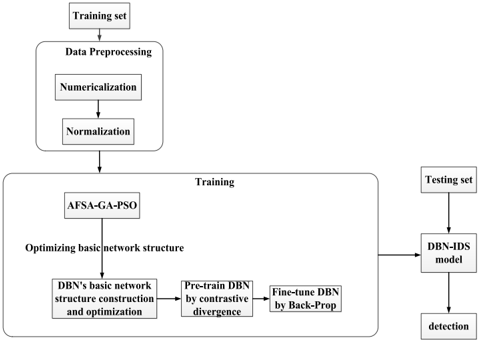
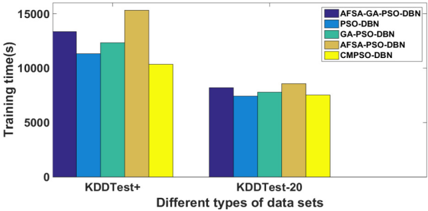
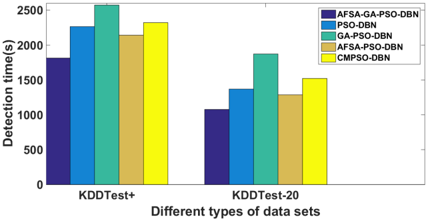
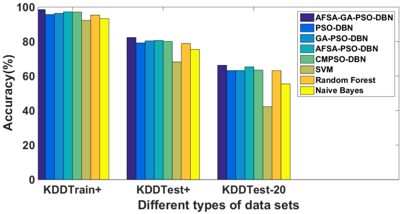
The rapid development and popularization of the network have brought many problems to network security. Intrusion detection technology is often used as an effective security technology to protect the network. The deep belief network (DBN), as a classic model of deep learning, has good classification performance and is often used in the field of intrusion detection. However, the network structure of DBN is generally set through practical experience. For the optimization problem of the DBN-based intrusion detection classification model (DBN-IDS), this paper proposes a new joint optimization algorithm to optimize the DBN's network structure. First, we design a particle swarm optimization (PSO) based on the adaptive inertia weight and learning factor. Second, we use the fish swarm behavior of cluster, foraging, and other behaviors to optimize the PSO to find the initial optimization solution. Then, based on the initial optimization solution, we use the genetic operators with self-adjusting crossover probability and mutation probability to optimize the PSO to search the global optimization solution. Finally, the global optimization solution constructed by the above-mentioned joint optimization algorithm is used as the network structure of the intrusion detection classification model. The experimental results show that compared with other DBN-IDS optimization algorithms, our algorithm shortens the average detection time by at least 24.69% on the premise of increasing the average training time by 6.9%; compared with the tested classification algorithms, our DBN-IDS improves the average classification accuracy by at least 1.3% and up to 14.80% in the five-category classification, which is proved to be an efficient DBN-IDS optimization method.
Overview
The claims and statistics of this paper haven’t been checked yet.
Free: it reads the open-access text and checks the first 5 claims that cite a source we can check. Create a free account to check every claim.
Integrity signals
Registry
Cites
Statistics
Figures






Verification
Claims the paper makes
The claims and statistics of this paper haven’t been checked yet.
Free: it reads the open-access text and checks the first 5 claims that cite a source we can check. Create a free account to check every claim.
Self-check
Percentages, sums and reported differences re-computed from the paper’s own numbers.
The self-check needs the paper’s full text.
Citations
Cites
Chen, F.-C., & Jahanshahi, M. R. (2018) · IEEE Transactions on Industrial Electronics · doi:10.1109/tie.2017.2764844 · Cited by 930
Wang, W., Sheng, Y., Wang, J., Zeng, X., Ye, X., Huang, Y., & Zhu, M. (2018) · IEEE Access · doi:10.1109/access.2017.2780250 · Cited by 655
Fuzziness based semi-supervised learning approach for intrusion detection system
Ashfaq, R. A. R., Wang, X.-Z., Huang, J. Z., Abbas, H., & He, Y.-L. (2017) · Information Sciences · doi:10.1016/j.ins.2016.04.019 · Cited by 552
Deep Learning Approach Combining Sparse Autoencoder With SVM for Network Intrusion Detection
Al-Qatf, M., Lasheng, Y., Al-Habib, M., & Al-Sabahi, K. (2018) · IEEE Access · doi:10.1109/access.2018.2869577 · Cited by 550
An Intrusion Detection Model Based on Deep Belief Networks
Gao, N., Gao, L., Gao, Q., & Wang, H. (2014) · 2014 Second International Conference on Advanced Cloud and Big Data · doi:10.1109/cbd.2014.41 · Cited by 293
A Set-Based Genetic Algorithm for Interval Many-Objective Optimization Problems
Gong, D., Sun, J., & Miao, Z. (2018) · IEEE Transactions on Evolutionary Computation · doi:10.1109/tevc.2016.2634625 · Cited by 261
Network Anomaly Detection: A Machine Learning Perspective
Bhattacharyya, D. K., & Kalita, J. K. (2013) · Cited by 187
Introducing Deep Learning Self-Adaptive Misuse Network Intrusion Detection Systems
Papamartzivanos, D., Gomez Marmol, F., & Kambourakis, G. (2019) · IEEE Access · doi:10.1109/access.2019.2893871 · Cited by 174
A DBN-based resampling SVM ensemble learning paradigm for credit classification with imbalanced data
Yu, L., Zhou, R., Tang, L., & Chen, R. (2018) · Applied Soft Computing · doi:10.1016/j.asoc.2018.04.049 · Cited by 161
An Adaptive-PSO-Based Self-Organizing RBF Neural Network
Han, H., Lü, W., Hou, Y., & Qiao, J. (2016) · IEEE Transactions on Neural Networks and Learning Systems · doi:10.1109/tnnls.2016.2616413 · Cited by 156
Research works printed but not linked: 7
- zhan, 2015, The applications of deep learning on traffic identification, Proceedings of BlackHat, 1411
- bao, 2006, Intrusion detection based on KCPA and SVM, Applied Soft Computing, 2, 125
- wei, 2018, Research on optimal strategy of multi-stage intrusion detection game in WSNs, J Electron Inf Technol, 40, 63
- liu, 2011, Research on inertia weight control method based on particle swarm optimization algorithm, J Nanjing Univ Natural Sci Ed, 47, 364
- qiang, 2012, VNE-AFS: Network virtualization mapping algorithm based on artificial fish stocks, Trans Commun, 1, 170
- 2016, Weka 3-Data Mining with Open Source Machine Learning Software in Java
- 2018, The UCI KDD Archive ’ Department of Information and Computer Science
Cited by
Machine learning: Algorithms, real-world applications and research directions
Sarker, I. H. (2021) · SN Computer Science · doi:10.1007/s42979-021-00592-x · Cited by 5,583
Sarker, I. H. (2021) · SN Computer Science · doi:10.1007/s42979-021-00815-1 · Cited by 2,678
Ahmad, Z., Shahid Khan, A., Wai Shiang, C., Abdullah, J., & Ahmad, F. (2021) · Transactions on Emerging Telecommunications Technologies · doi:10.1002/ett.4150 · Cited by 1,288
“Figure 3 depicts a passive deployment of NIDS, where it is connected to a network switch configured with the port mirroring technology.”
MethodInfluentialSarker, I. H. (2021) · SN Computer Science · doi:10.1007/s42979-021-00765-8 · Cited by 570
Mishra, N., & Pandya, S. (2021) · IEEE Access · doi:10.1109/access.2021.3073408 · Cited by 421
“Wei et al. [157] structure is acquired by comparing the DBN structure from five optimization algorithms.”
MethodHCRNNIDS: Hybrid Convolutional Recurrent Neural Network-Based Network Intrusion Detection System
Khan, M. A. (2021) · Processes · doi:10.3390/pr9050834 · Cited by 329
Deep Cybersecurity: A Comprehensive Overview from Neural Network and Deep Learning Perspective
Sarker, I. H. (2021) · doi:10.20944/preprints202102.0340.v1 · Cited by 295
Kaveh, M., & Mesgari, M. S. (2023) · Neural Processing Letters · doi:10.1007/s11063-022-11055-6 · Cited by 292
Deep Cybersecurity: A Comprehensive Overview from Neural Network and Deep Learning Perspective
Sarker, I. H. (2021) · SN Computer Science · doi:10.1007/s42979-021-00535-6 · Cited by 289
Azam, Z., Islam, M. M., & Huda, M. N. (2023) · IEEE Access · doi:10.1109/access.2023.3296444 · Cited by 265
“Wei et al. [247] proposed a DL-based model called DBN that was optimized using a combination of particle swarm, fish swarm, and genetic algorithms to improve the accuracy of intrusion detection systems.”
MethodSarker, I. H. (2023) · Annals of Data Science · doi:10.1007/s40745-022-00444-2 · Cited by 256
“Several examples are— auto-encoder based malware [126] as well as intrusion detection [127], deep belief network-based intrusion detection model [128] and so on.”
BackgroundAhmad, S., Shakeel, I., Mehfuz, S., & Ahmad, J. (2023) · Computer Science Review · doi:10.1016/j.cosrev.2023.100568 · Cited by 197
Deep learning-driven methods for network-based intrusion detection systems: A systematic review
Chinnasamy, R., Subramanian, M., Easwaramoorthy, S. V., & Cho, J. (2025) · ICT Express · doi:10.1016/j.icte.2025.01.005 · Cited by 187
A Study of Network Intrusion Detection Systems Using Artificial Intelligence/Machine Learning
Vanin, P., Newe, T., Dhirani, L. L., O’Connell, E., O’Shea, D., Lee, B., & Rao, M. (2022) · Applied Sciences · doi:10.3390/app122211752 · Cited by 177
“The accuracy for R2L and U2R attacks is very low.”
BackgroundDeep belief network based intrusion detection techniques: A survey
Sohn, I. (2020) · Expert Systems with Applications · doi:10.1016/j.eswa.2020.114170 · Cited by 174
A comprehensive survey on optimizing deep learning models by metaheuristics
Akay, B., Karaboga, D., & Akay, R. (2022) · Artificial Intelligence Review · doi:10.1007/s10462-021-09992-0 · Cited by 169
Chaotic marine predators algorithm for global optimization of real-world engineering problems
Kumar, S., Yıldız, B. S., Mehta, P., Panagant, N., Sait, S. M., Mirjalili, S., & Yıldız, A. R. (2022) · Knowledge-Based Systems · doi:10.1016/j.knosys.2022.110192 · Cited by 158
A review of artificial fish swarm algorithms: recent advances and applications
Pourpanah, F., Wang, R., Lim, C. P., Wang, X., & Yazdani, D. (2022) · Artificial Intelligence Review · doi:10.1007/s10462-022-10214-4 · Cited by 156
“Among them, “engineering”, “computer science” and “mathematics” are the most popular disciplines, with 31%, 28% and 12%, respectively.”
BackgroundMethodShahin, M., Maghanaki, M., Hosseinzadeh, A., & Chen, F. F. (2024) · Advanced Engineering Informatics · doi:10.1016/j.aei.2024.102685 · Cited by 149
Federated learning for network attack detection using attention-based graph neural networks
Jianping, W., Guangqiu, Q., Wu, C., Jiang, W., & Jin, J. (2024) · Scientific Reports · doi:10.1038/s41598-024-70032-2 · Cited by 133
Review on the application of deep learning in network attack detection
Yi, T., Chen, X., Zhu, Y., Ge, W., & Han, Z. (2022) · Journal of Network and Computer Applications · doi:10.1016/j.jnca.2022.103580 · Cited by 132
Bakro, M., Kumar, R. R., Alabrah, A. A., Ashraf, Z., Ahmed, M. N., Shameem, M., & Abdelsalam, A. (2023) · IEEE Access · doi:10.1109/access.2023.3289405 · Cited by 121
“PSO is a global optimization technique that imitates the foraging behavior of birds, and it is used to solve many real-world issues [34].”
BackgroundA Spectrogram Image-Based Network Anomaly Detection System Using Deep Convolutional Neural Network
Khan, A. S., Ahmad, Z., Abdullah, J., & Ahmad, F. (2021) · IEEE Access · doi:10.1109/access.2021.3088149 · Cited by 118
“Similarly, Wei et al. [26] used DBN to propose their highly complex IDS framework by combining it with different optimization algorithms such as particle swarm, fish swarm, and genetic algorithms.”
MethodHu, Z., Wang, L., Qi, L., Li, Y., & Yang, W. (2020) · IEEE Access · doi:10.1109/access.2020.3034015 · Cited by 106
“Wei et al. [32] applied particle swarm optimization (PSO) to optimize the structure of DBN, and the improved DBN achieves significant anomaly detection ability.”
BackgroundSelf-citationSwarm Intelligence inspired Intrusion Detection Systems — A systematic literature review
Nasir, M. H., Khan, S. A., Khan, M. M., & Fatima, M. (2022) · Computer Networks · doi:10.1016/j.comnet.2021.108708 · Cited by 99
A Survey of Intrusion Detection Using Deep Learning in Internet of Things
Farhan, B. I., & Jasim, A. D. (2021) · Iraqi Journal for Computer Science and Mathematics · doi:10.52866/ijcsm.2022.01.01.009 · Cited by 96
DeepIoT.IDS: Hybrid Deep Learning for Enhancing IoT Network Intrusion Detection
Maseer, Z. K., Yusof, R., Mostafa, S. A., Bahaman, N., Musa, O., & Al‐rimy, B. A. S. (2021) · Computers, materials & continua/Computers, materials & continua (Print) · doi:10.32604/cmc.2021.016074 · Cited by 91
Bakro, M., Kumar, R. R., Alabrah, A. A., Ashraf, Z., Bisoy, S. K., Parveen, N., Khawatmi, S., & Abdelsalam, A. (2023) · Electronics · doi:10.3390/electronics12112427 · Cited by 89
Network intrusion detection system: A survey on artificial intelligence‐based techniques
Habeeb, M. S., & Babu, T. R. (2022) · Expert Systems · doi:10.1111/exsy.13066 · Cited by 53
“…al., 2018; Marir et al., 2018; Naseer et al., 2018; Papamartzivanos et al., 2019; Shen et al., 2018; Shone et al., 2018; Vinayakumar et al., 2019; Wei et al., 2019; Xu et al., 2018; Yao et al., 2019) KDD Cup'99 1998 41 4 DoS, Probe, R2L, U2R (Shen et al., 2018; Vinayakumar et al., (Al-Qatf et…”
A framework for detection of cyber attacks by the classification of intrusion detection datasets
Srivastava, D., Singh, R., Chakraborty, C., Maakar, S. K., Makkar, A., & Sinwar, D. (2023) · Microprocessors and Microsystems · doi:10.1016/j.micpro.2023.104964 · Cited by 77
Deep Learning Based Network Intrusion Detection System for Resource-Constrained Environments
Rizvi, S., Scanlon, M., McGibney, J., & Sheppard, J. (2023) · Lecture notes of the Institute for Computer Sciences, Social Informatics and Telecommunications Engineering · doi:10.1007/978-3-031-36574-4_21 · Cited by 72
Design and implementation of a deep neural network approach for intrusion detection systems
Osa, E., Orukpe, P. E., & Iruansi, U. (2024) · e-Prime - Advances in Electrical Engineering Electronics and Energy · doi:10.1016/j.prime.2024.100434 · Cited by 69
Developing a multi-level intrusion detection system using hybrid-DBN
Süzen, A. A. (2020) · Journal of Ambient Intelligence and Humanized Computing · doi:10.1007/s12652-020-02271-w · Cited by 67
Hybrid Convolutional Neural Network for Robust Attack Detection in Wireless Sensor Networks
Sharma, K. P., Hussain, R., Jaharadak, A. A., Trawnih, A. A., Verma, D., Dasi, S., & Pant, S. (2025) · Internet Technology Letters · doi:10.1002/itl2.650 · Cited by 64
A review of various challenges in cybersecurity using Artificial Intelligence
Chaudhary, H., Detroja, A., Prajapati, P., & Shah, P. D. (2020) · International Conference on Intelligent Sustainable Systems (ICISS) · doi:10.1109/iciss49785.2020.9316003 · Cited by 56
“There are many DBN based IDS already available; this method optimizes the network structure of DBN. Particle Swarm Optimization (PSO), which is a swarm intelligence algorithm, is used.”
BackgroundMethodInfluentialNetwork traffic analysis over clustering-based collective anomaly detection
Wang, C., Zhou, H., Hao, Z., Hu, S., Li, J., Zhang, X., Jiang, B., & Chen, X. (2022) · Computer Networks · doi:10.1016/j.comnet.2022.108760 · Cited by 52
Optimized Deep Learning with Binary PSO for Intrusion Detection on CSE-CIC-IDS2018 Dataset
Farhan, R. I., Maolood, A. T., & Hassan, N. F. (2020) · Journal of Al-Qadisiyah for Computer Science and Mathematics · doi:10.29304/jqcm.2020.12.3.706 · Cited by 47
“Then, used the genetic operators (crossover probability and mutation)on the PSO to search the global solution for optimization which used to construct the network structure for intrusion detection on NSL-KDD[14].”
InfluentialA Comprehensive Review on Cyber-Attack Detection and Control of Microgrid Systems
Shafei, H., Li, L., & Aguilera, R. P. (2023) · Power systems · doi:10.1007/978-3-031-20360-2_1 · Cited by 44
Enhancing network intrusion detection classifiers using supervised adversarial training
Yin, C., Zhu, Y., Liu, S., Fei, J., & Zhang, H. (2019) · The Journal of Supercomputing · doi:10.1007/s11227-019-03092-1 · Cited by 44
“In [33], the DBN based on an optimization method for multi-class classification archived the highest detection accuracy (82.36%), and the classification accuracy of the CNN algorithm was 78.42% [34].”
MethodInfluentialIntrusion Detection System using MLP and Chaotic Neural Networks
Shettar, P., Kachavimath, A. V., Mulla, M. M., Narayan, D. G., & Hanchinmani, G. (2021) · International Conference on Computer Communication and Informatics (ICCCI) · doi:10.1109/iccci50826.2021.9457024 · Cited by 43
“The authors in [5] have proposed a new approach for the optimization of the DBN's network structure.”
BackgroundUllah, S., Mahmood, Z., Ali, N., Ahmad, T., & Buriro, A. (2023) · Computers · doi:10.3390/computers12060115 · Cited by 43
Effective Intrusion Detection in Highly Imbalanced IoT Networks With Lightweight S2CGAN-IDS
Wang, C., Xu, D., Li, Z., & Niyato, D. T. (2023) · IEEE Internet of Things Journal · doi:10.1109/jiot.2023.3342638 · Cited by 42
“Various deep learning techniques, including deep belief networks (DBNs) [28], [29], convolutional neural networks (CNNs) [30], [31], [32], and recurrent neural networks (RNNs) [33], [34], have been employed for this purpose.”
BackgroundSelf-citationA novel adaptive network intrusion detection system for internet of things
Aravamudhan, P., & Kanimozhi, T. (2023) · PLoS ONE · doi:10.1371/journal.pone.0283725 · Cited by 38
“98% respectively, which are even better than the other existing algorithms [45, 46].”
BackgroundPrabhakaran, V., & Kulandasamy, A. (2020) · Computational Intelligence · doi:10.1111/coin.12408 · Cited by 36
“Wei et al 24 proposed a deep belief network (DBN)-based IDS to classify the intrusion in the network.”
BackgroundEnhancing Intrusion Detection Systems with XGBoost Feature Selection and Deep Learning Approaches
Binsaeed, K. A., & Hafez, A. M. (2023) · International Journal of Advanced Computer Science and Applications · doi:10.14569/ijacsa.2023.01405112 · Cited by 35
“Attackers can initiate attacks by distributing malicious files to devices connected to a network, resulting in potential damage to the device or theft of sensitive information [3].”
BackgroundSajith, P. J., & Nagarajan, G. (2022) · Wireless Personal Communications · doi:10.1007/s11277-022-09609-x · Cited by 34
“Interruptions are unapproved and atypical exercises which were characterized by Li et al. [1] as an arrangement of associated activities carried out by a noxious foe that results in the tradeoff of an objective framework.”
RetractedFuzzy based intrusion detection system in MANET
Singh, C. E., & Vigila, S. M. C. (2022) · Measurement Sensors · doi:10.1016/j.measen.2022.100578 · Cited by 34
Mandala, V., Rajavarman, R., Jamunadevi, C., Janani, R., & Avudaiappan, T. (2023) · International Conference on Communication and Electronics Systems (ICCES) · doi:10.1109/icces57224.2023.10192673 · Cited by 32
“Thus the large amount of data are processed to obtained the exact information [12].”
BackgroundInvestigating the Efficiency of Deep Learning Models in Bioinspired Object Detection
Ajagbe, S. A., Oki, O. A., Oladipupo, M. A., & Nwanakwaugwu, A. C. (2022) · International Conference on Electrical, Computer and Energy Technologies (ICECET) · doi:10.1109/icecet55527.2022.9872568 · Cited by 30
A comprehensive survey on intrusion detection algorithms
Li, Y., Li, Z., & Li, M. (2024) · Computers & Electrical Engineering · doi:10.1016/j.compeleceng.2024.109863 · Cited by 30
Self-citationGuo, C., Li, L., Hu, Y., & Yan, J. (2020) · IEEE Access · doi:10.1109/access.2020.3009644 · Cited by 30
“Whereas in some other literature, heuristic optimization methods are utilized to determine the optimal structure and parameters of deep learning network, such as particle swarm optimization [28], [29], simulated annealing [30].”
MethodA Review on Cybersecurity based on Machine Learning and Deep Learning Algorithms
Jahwar, A. F., & Ameen, S. Y. (2021) · Journal of Soft Computing and Data Mining · doi:10.30880/jscdm.2021.02.02.002 · Cited by 27
“It is also a type of Backpropagation Neural Network (BPNN) [79].”
BackgroundMulti-Class Network Intrusion Detection with Class Imbalance via LSTM & SMOTE
Nawaz, M. W., Munawar, R., Bhatti, M. K., Mehmood, A., Rahman, M. M. U., & Abbasi, Q. H. (2025) · IEEE International Conference on High Performance Computing and Communications; IEEE International Conference on Smart City; IEEE International Conference on Data Science and Systems (HPCC/SmartCity/DSS) · doi:10.1109/hpcc67675.2025.00123 · Cited by 26
WOA-DNN for Intelligent Intrusion Detection and Classification in MANET Services
Singh, C. E., & Vigila, S. M. C. (2022) · Intelligent Automation & Soft Computing · doi:10.32604/iasc.2023.028022 · Cited by 25
Classifying Malware Traffic Using Images and Deep Convolutional Neural Network
Davis, R., Xu, J., & Roy, K. (2024) · IEEE Access · doi:10.1109/access.2024.3391022 · Cited by 25
“Most of the traffic classification research work in the literature is based on selecting the best features from network traffic data and use machine learning algorithms designed for structured data [7], [8], [9], [10], [11], [12], [13].”
BackgroundFarhan, R. I., Maolood, A. T., & Hassan, N. F. (2021) · Wasit Journal of Computer and Mathematics Science · doi:10.31185/wjcm.vol1.iss1.10 · Cited by 24
“The performance of proposed approach is examined on off line (NSL-KDD) and on-line (CSECIC-IDS2018) datasets, and the results for performance evaluation showed that the both types were good indicating that our model generalized well and did not deviate to a specific type of data.”
BackgroundMethodInfluentialEvaluation of Supervised Machine Learning Algorithms for Multi-class Intrusion Detection Systems
Kaddoura, S., Arid, A. E., & Moukhtar, M. (2021) · Lecture notes in networks and systems · doi:10.1007/978-3-030-89912-7_1 · Cited by 24
An Optimized and Hybrid Framework for Image Processing Based Network Intrusion Detection System
Siddiqi, M. A., & Pak, W. (2022) · Computers, materials & continua/Computers, materials & continua (Print) · doi:10.32604/cmc.2022.029541 · Cited by 23
A comprehensive novel model for network speech anomaly detection system using deep learning approach
Manimaran, A., Dhasarathan, C., Shrinivas, S., & Arulkumar, N. (2020) · International Journal of Speech Technology · doi:10.1007/s10772-020-09693-z · Cited by 23
Effective intrusion detection system using concept drifting data stream and support vector machine
Rajeswari, P. V. N., Mogalla, S., Rao, T. K., Lakshmi, M. R., & Kiran, L. V. (2022) · Concurrency and Computation Practice and Experience · doi:10.1002/cpe.7118 · Cited by 21
Firefly Algorithm and Deep Neural Network Approach for Intrusion Detection
Zivkovic, M. Z., Bačanin, N., Arandjelovic, J., Strumberger, I., & Venkatachalam, K. (2022) · Lecture notes in electrical engineering · doi:10.1007/978-981-19-4831-2_1 · Cited by 21
Network Intrusion Detection using Machine Learning, Deep Learning - A Review
Varanasi, V. R., & Razia, S. (2022) · International Conference on Smart Systems and Inventive Technology (ICSSIT) · doi:10.1109/icssit53264.2022.9716469 · Cited by 21
“According to Peng Wei et al. [29], who has built a model using Deep belief network, achieved an accuracy of 82.36%.”
MethodInfluentialBelief-DDoS: stepping up DDoS attack detection model using DBN algorithm
Wanda, P., & Hiswati, M. E. (2023) · International Journal of Information Technology · doi:10.1007/s41870-023-01631-x · Cited by 20
“The proposed GAN model can produce TPR = 84.3% Peng et al. [9] Autoencoder Introduce Chronos and utilize Autoencoder to detect DDoS traffic anomalies.”
Influential(2022) · International journal of intelligent engineering and systems · doi:10.22266/ijies2022.1031.51 · Cited by 17
“[22] proposed an intrusion detection model based on the deep belief network (DBN-IDS).”
MethodInfluentialIntrusion Attack Detection Using Firefly Optimization Algorithm and Ensemble Classification Model
Gangula, R., Vutukuru, M. M., & Ranjeeth Kumar, M. (2023) · Wireless Personal Communications · doi:10.1007/s11277-023-10687-8 · Cited by 16
“Therefore, ID is more important in the IoT application and the existing methodologies are generally divided into two types anomaly-based and misuse-based [7, 8].”
MethodYogesh, & Goyal, L. M. (2024) · International Journal of Information Security · doi:10.1007/s10207-024-00896-y · Cited by 14
RetractedAmmannamma, T., & Chakravarthy, A. S. N. (2024) · Computers & Security · doi:10.1016/j.cose.2024.104221 · Cited by 14
AΙ-Driven Drug Repurposing: Applications and Challenges
Keramida, P., Syrigos, N. K., Kouvela, M., Poulakou, G., Charpidou, A. G., & Fiste, O. (2025) · Medicines · doi:10.3390/medicines12040028 · Cited by 14
“Deep Belief Network (DBN): An unsupervised learning model for hierarchical feature extraction [33].”
Behavioral Intrusion Prediction Model on Bayesian Network over Healthcare Infrastructure
Yusof, M. H. M., Zın, A. M., & Satar, N. S. M. (2022) · Computers, materials & continua/Computers, materials & continua (Print) · doi:10.32604/cmc.2022.023571 · Cited by 14
Uthradevi, G., Thiruvasagam, P., Mythili, S., & Manoj, S. O. (2025) · Biomedical Materials & Devices · doi:10.1007/s44174-025-00321-5 · Cited by 13
“Moreover, in an optimization challenge for the DBN-based intrusion detection classification model (DBN-IDS), [19] offered a new concurrent optimization method for enhancing the architecture of DBN.”
A State of the Art Survey of Machine Learning Algorithms for IoT Security
Jahwar, A. F., & Zeebaree, S. R. M. (2021) · Asian Journal of Research in Computer Science · doi:10.9734/ajrcos/2021/v9i430226 · Cited by 13
“It is also a type of Backpropagation Neural Network (BPNN) [67].”
BackgroundBakro, M., Kumar, R. R., Bisoy, S. K., Addas, M. O., & Khamis, D. (2022) · Communications in computer and information science · doi:10.1007/978-3-031-21750-0_2 · Cited by 13
Khalid, N., Hina, S., Zaidi, S., Gaber, T., Speakman, L., & Noor, Z. (2025) · PLoS ONE · doi:10.1371/journal.pone.0306747 · Cited by 13
Sharma, N., & Arora, B. (2025) · SN Computer Science · doi:10.1007/s42979-025-04352-z · Cited by 12
“Furthermore, several authors proposed hyperparameter fine tuning techniques to fine-tuned DBN’s hyperparameters to enhance its performance [114–116].”
Mjahed, O., Hadaj, S. E., Guarmah, E. M. E., & Mjahed, S. (2023) · Computer Modeling in Engineering & Sciences · doi:10.32604/cmes.2023.027581 · Cited by 11
Intrusion Detection in IoT-Based Healthcare Using ML and DL Approaches: A Case Study
Das, P., & Saif, S. (2023) · Advanced technologies and societal change · doi:10.1007/978-981-99-2115-7_12 · Cited by 11
Nagarajan, G., & Sajith, P. J. (2023) · Soft Computing · doi:10.1007/s00500-023-08737-1 · Cited by 11
RetractedAlowolodu, O. D., Adetunmbi, A. O., Mebawondu, J. O., & Mebawondu, O. J. (2022) · IEEE Nigeria International Conference on Disruptive Technologies for Sustainable Development (NIGERCON) · doi:10.1109/nigercon54645.2022.9803080 · Cited by 11
Novel ML-driven intrusion detection system for optimizing network security
Mandal, S. K., Marandi, A. K., Gandhi, J., Loonkar, S., Dey, P., & Kaur, S. (2025) · Expert Systems with Applications · doi:10.1016/j.eswa.2025.128621 · Cited by 10
DeepShield: A Hybrid Deep Learning Approach for Effective Network Intrusion Detection
Lin, H. (2023) · International Journal of Advanced Computer Science and Applications · doi:10.14569/ijacsa.2023.01407117 · Cited by 10
Yong, X., & Gao, Y. (2023) · IEEE Access · doi:10.1109/access.2023.3259981 · Cited by 10
“Wei et al. [23] designed a joint optimization algorithm to optimize the network structure of the deep brief network (DBN).”
LM-GA: A Novel IDS with AES and Machine Learning Architecture for Enhanced Cloud Storage Security
Thilagam, T., & Aruna, R. (2023) · Journal of Machine and Computing · doi:10.53759/7669/jmc202303008 · Cited by 10
RETRATCED ARTICLE: Network intrusion detection system using ANFIS classifier
Sajith, P. J., & Nagarajan, G. (2022) · Soft Computing · doi:10.1007/s00500-022-06854-x · Cited by 9
“…Organization of paper: As we already go through the introductory part in Section 1, the rest is as follows; Section 2 deals with recent works that is happened on IDS followed by Section 3 with methodology and then in Section 4 brings the performance analysis and finally conclusion in Section 5.”
RetractedSecurity application of intrusion detection model based on deep learning in english online education
Li, X., & Zhang, Y. (2025) · Alexandria Engineering Journal · doi:10.1016/j.aej.2025.03.051 · Cited by 9
Lu, Y., Liu, M., Zhou, J., & Li, Z. (2021) · Security and Communication Networks · doi:10.1155/2021/9938586 · Cited by 9
“In [24], a joint algorithm is proposed to optimize the network structure of the Deep Belief Network (DBN).”
MethodSelf-citationRetractedMalele, V., & Mathonsi, T. E. (2023) · arXiv (Cornell University) · doi:10.48550/arxiv.2302.14374 · Cited by 9
Liu, S., Liu, Y., Wang, Q., Lin, W., Sun, Y., & He, L. (2024) · Applied Soft Computing · doi:10.1016/j.asoc.2024.111539 · Cited by 8
Real-Time Intrusion Detection with Deep Learning: Analyzing the UNR Intrusion Detection Dataset
Parveen, F., Iqbal, S., Mumtaz, G., & Salahuddin, M. (2024) · Journal of Computing & Biomedical Informatics · Cited by 8
A Multi-Layer Hybrid Intrusion Detection Method Based on Nb And SVM
Wang, R., Jiang, H., & Shi, G. (2022) · IEEE International Conference on Civil Aviation Safety and Information Technology (ICCASIT) · doi:10.1109/iccasit55263.2022.9986813 · Cited by 8
“Layer3 sets the value of PCC to be greater than 0.01 to obtain the feature subset: F R2L [0, 4, 5, 8, 9, 10,11, 13, 17, 21, 22, 23, 28, 29, 30, 31, 32, 33, 34, 35, 36,37, 38] , F U2R [8, 9, 11, 13, 16, 17, 23, 30, 31,32, 35, 36], take F R2L (cid:3914)F U2R as the feature subset of Layer3: F3[8, 9,…”
MethodInfluentialImmastephy, A. J. A., & Punitha, K. (2024) · E3S Web of Conferences · doi:10.1051/e3sconf/202454014006 · Cited by 8
“Wei [46] introduceda novel joint optimization method that enhances the structure of DBN's network.”
CAT: A simple heterogeneous ensemble learning framework for network intrusion detection
Zhang, Z., Das, A. K., Huang, G., & Baskiyar, S. (2025) · Peer-to-Peer Networking and Applications · doi:10.1007/s12083-025-02000-0 · Cited by 7
“Wei et al. [18] proposed an optimization method for an intrusion detection classification model based on a deep belief network using the NSK-KDD dataset.”
Self-citationChu, H., Zhao, K., Cheng, Q., Li, R., & Yang, C. (2020) · IEEE Access · doi:10.1109/access.2020.3036006 · Cited by 7
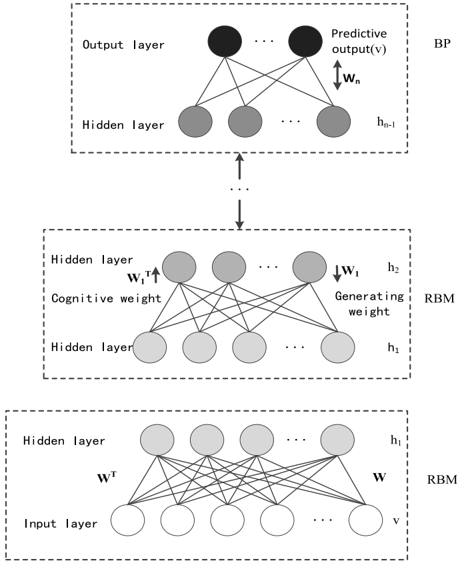
“The simple structure of the network is mainly composed of multiple RBM structures, and the top layer uses BP algorithm [40].”
An Integrated IDS Using ICA-Based Feature Selection and SVM Classification Method
Ogundokun, R. O., Misra, S., Bajeh, A. O., Okoro, U. O., & Ahuja, R. (2022) · Lecture notes on data engineering and communications technologies · doi:10.1007/978-3-030-93453-8_11 · Cited by 7
Cyber Attack Identification System Using Deep Learning
Hussain, M. M., Khalid, N., Amjad, A., & Shoaib, M. (2024) · International Conference on Advancements in Computational Sciences (ICACS) · doi:10.1109/icacs60934.2024.10473266 · Cited by 6
Long, X. (2024) · Artificial Intelligence and Machine Learning Review · doi:10.69987/aimlr.2024.50107 · Cited by 6
Deep Learning-Based Intrusion Detection Model for Network Security
Pande, S. D., Lanke, G. R., Soni, M., Kulkarni, M. A., Maaliw, R. R., III, & Singh, P. P. (2023) · Lecture notes in networks and systems · doi:10.1007/978-981-99-3177-4_27 · Cited by 6
A Novel Approach for Intrusion Detection Based on Deep Belief Network
Thanh, C. T. (2020) · Advances in intelligent systems and computing · doi:10.1007/978-3-030-51971-1_24 · Cited by 5
Intelligent Prediction of Network Security Situations based on Deep Reinforcement Learning Algorithm
Lu, Y., Kuang, Y., & Yang, Q. (2024) · Scalable Computing Practice and Experience · doi:10.12694/scpe.v25i1.2329 · Cited by 5
Enhanced security for IoT networks: a hybrid optimized learning model for intrusion classification
Rajarajan, S., & Kavitha, M. (2024) · Sadhana · doi:10.1007/s12046-024-02535-7 · Cited by 5
“Ajointoptimization-based IDS was presented in [17], including the PSO algorithm and fish swarm optimization in the first level for solution optimization of PSO.”
Tripathy, S. S., & Behera, B. (2025) · International Journal of Network Security & Its Applications · doi:10.5121/ijnsa.2025.17601 · Cited by 4
“The study in [18] Dataset Utilization : The 1999 KDD Cup intrusion dataset serves as the foundational input applicable to the NIDS architecture.”
Metadata
- Authors
- Wei, P., Li, Y., Zhang, Z., Hu, T., Li, Z., & Liu, D.
- Affiliations
- Shanghai University (CN)
- Venue
- IEEE Access
- Published
- 2019
- Volume
- 7
- Pages
- 87593-87605
- ISSN
- 2169-3536 (ISSN-L)
- OpenAlex
- W2960015156
- Cited by
- 144
- References
- 20
- Citations by year
- 2026: 7 · 2025: 18 · 2024: 23 · 2023: 29 · 2022: 31 · 2021: 22 · 2020: 13 · 2019: 1
- FWCI
- 9.17
- Type
- journal article
- Language
- en
- Open access
- gold
- doi.org
- Locations
- IEEE Access (publishedVersion, cc-by)
- DOAJ (DOAJ: Directory of Open Access Journals) (submittedVersion, cc-by-sa)
- Funders
- Research and Development Program in Key Areas of Guangdong Province (2018B010113001)
- National Key Research and Development Program of China (2017YFB0803201)
- National Natural Science Foundation of China (61521003)
- Topics
- Physical Sciences › Computer Science › Computer Networks and Communications › Network Security and Intrusion Detection
- Physical Sciences › Computer Science › Artificial Intelligence › Artificial Immune Systems Applications
- Physical Sciences › Computer Science › Hardware and Architecture › Network Packet Processing and Optimization
- Keywords
- intrusion detection, deep belief network, network structure optimization, particle swarm optimization, adaptive inertia weight, artificial fish swarm algorithm, network security, intrusion classification
About these checks
Registry, retraction, Cites and statistics results are computed, not judged, with one exception: a printed reference that no index lists is read once by a model before it counts as a citation error. Claims are extracted by a model and kept only when their quote appears verbatim in the text; each cited source is then checked, with a model’s help, for whether it says what the claim relies on. Those verdicts can be wrong — read the claim’s quote and the cited source before relying on one.
Statistics and arithmetic are recomputed, not judged.
Confidence bands are shown only for fields calibrated on our annotated test set. None is calibrated yet, so no band is shown.
What counts as a claim ›How we measure confidence ›How we check this ›
Are you an author, or do you see a problem with this page? Request a review
Data sources
Bibliographic data: Semantic Scholar, OpenAlex, Crossref.
Contains information from the Semantic Scholar Academic Graph Datasets, made available under the ODC Attribution License (ODC-BY 1.0).
Semantic Scholar’s data is described in: Kinney, R., et al. (2023). The Semantic Scholar Open Data Platform. arXiv:2301.10140.
