

LSTM-Based Battery Remaining Useful Life Prediction With Multi-Channel Charging Profiles
Open accessThe DOI matches its Crossref record; 32 of the 33 references it cites were found in a registry or an index.
Abstract
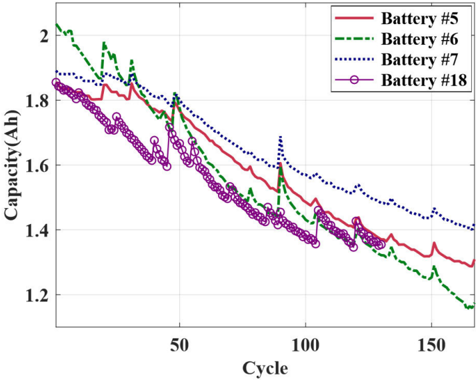
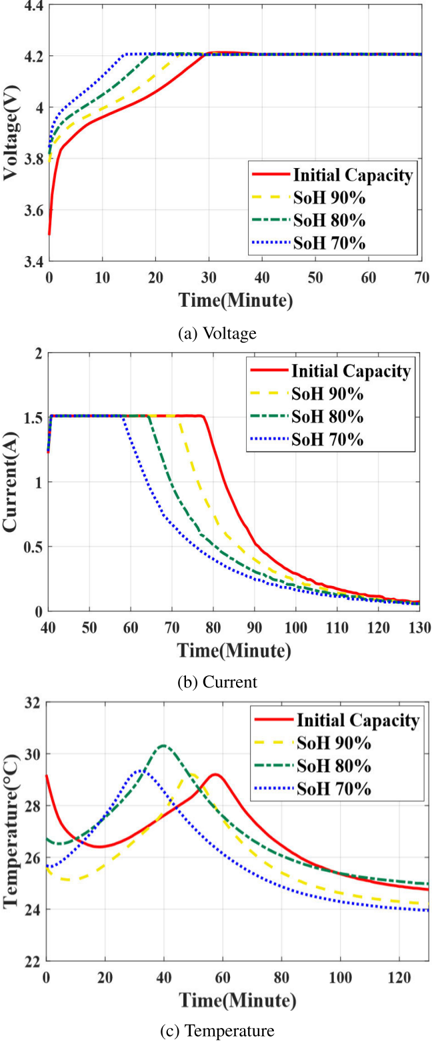
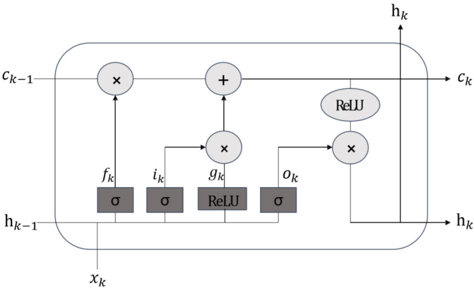
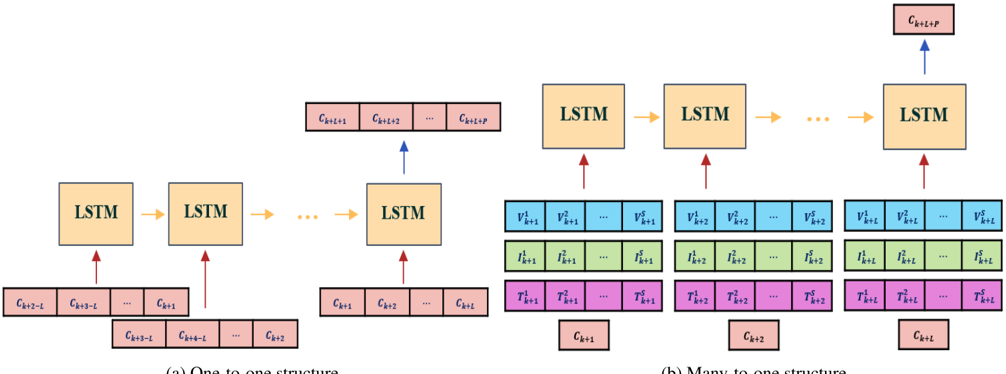
Remaining useful life (RUL) prediction of lithium-ion batteries can reduce the risk of battery failure by predicting the end of life. In this paper, we propose novel RUL prediction techniques based on long short-term memory (LSTM). To estimate RUL even in the presence of capacity regeneration phenomenon, we consider multiple measurable data from battery management system such as voltage, current and temperature charging profiles whose patterns vary as aging. Unlike the traditional LSTM prediction that matches input layer with output layer as one-to-one structure, we leverage many-to-one structure to be flexible for various input types and to substantially reduce the number of parameters for better generalization. Using the NASA lithium-ion battery datasets, we verify the accuracy of the proposed LSTM-based RUL prediction. The experimental results show that the proposed single-channel LSTM model improves the mean absolute percentage error (MAPE) by 39.2% compared to the baseline LSTM model. Furthermore, the proposed multi-channel LSTM model significantly improves the MAPE, e.g., by 63.7% compared to the baseline; the proposed model achieves 0.47-1.88% of MAPE while the state-of-the-art baseline LSTM shows 0.6-6.45% of MAPE.
Overview
The claims and statistics of this paper haven’t been checked yet.
Free: it reads the open-access text and checks the first 5 claims that cite a source we can check. Create a free account to check every claim.
Integrity signals
Registry
Cites
Statistics
Figures
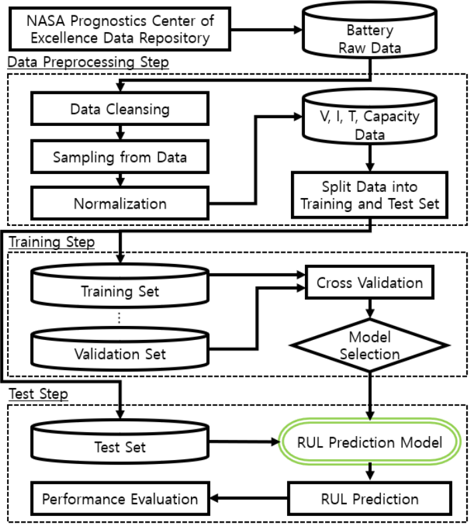
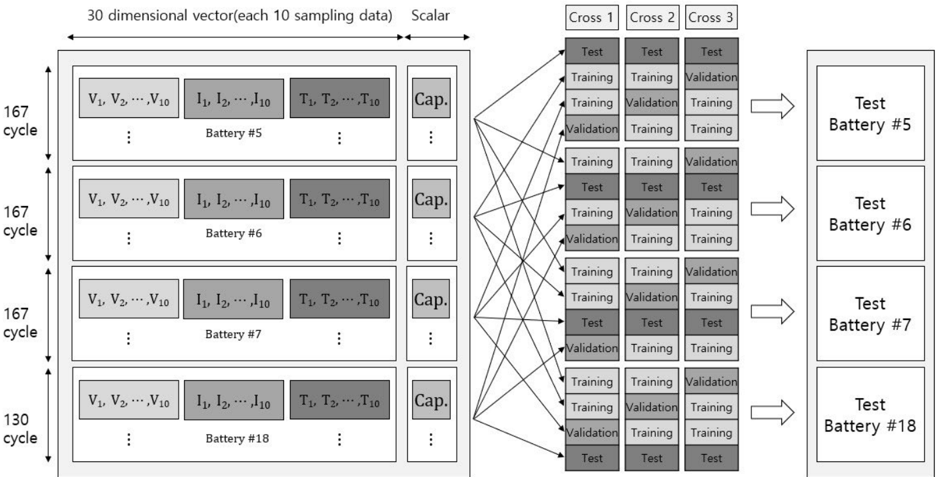
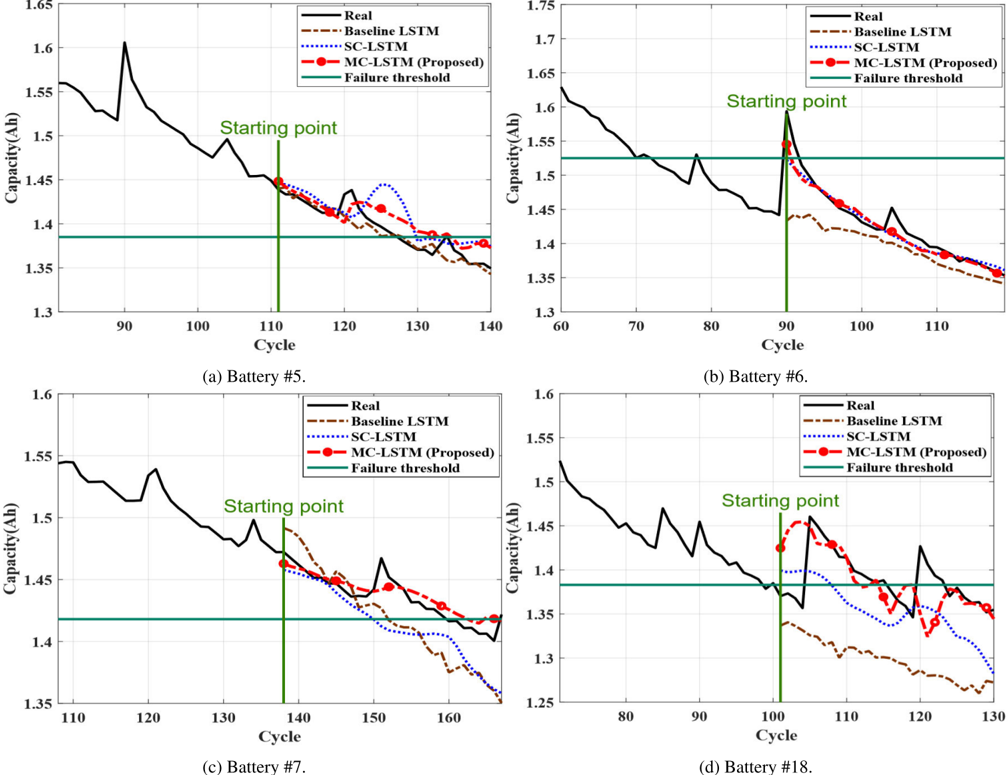
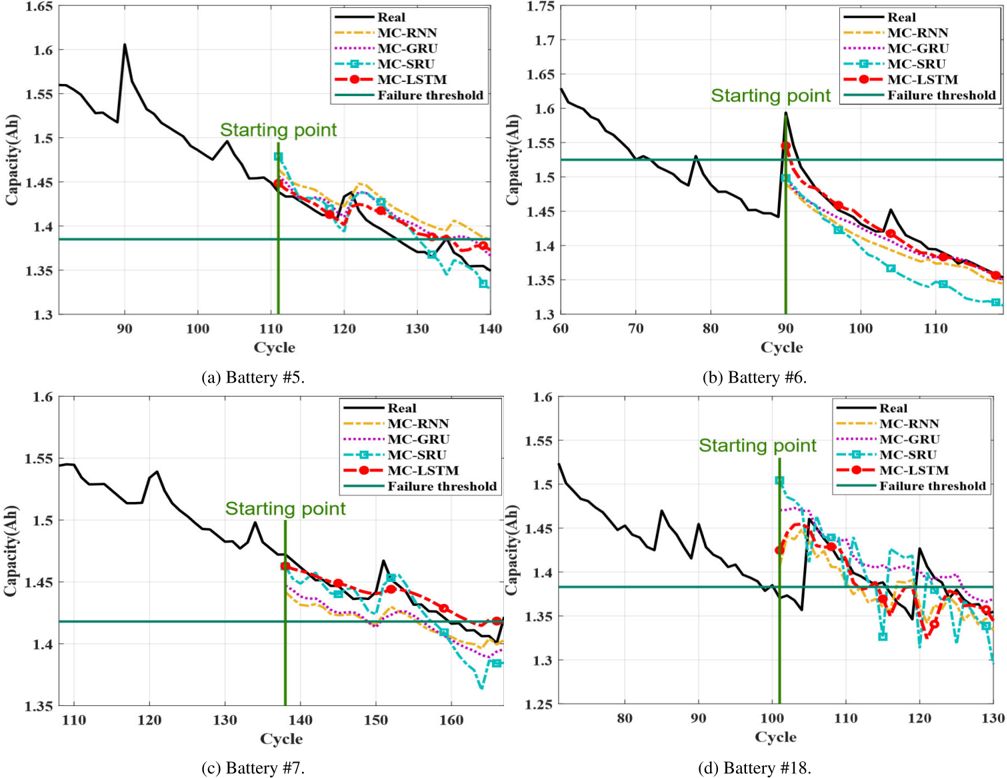



Verification
Claims the paper makes
The claims and statistics of this paper haven’t been checked yet.
Free: it reads the open-access text and checks the first 5 claims that cite a source we can check. Create a free account to check every claim.
Claims other papers make about this one
Each is checked against this paper’s own text: does it say what the citing paper says it does?
The source backs part of the claim, not all of it — or backs it for a different population, condition or comparison.
In the citing paper
“The direct capacity measurement method (the remaining capacity measurement) for SOH estimation is one of the most straightforward and most accurate methods if the battery's current is measured accurately to count the columns and if the measurements are performed under a controlled set of parameters, such as temperature.”
From An Electrochemical Impedance Spectrum-Based State of Health Differential Indicator with Reduced Sensitivity to Measurement Errors for Lithium–Ion Batteries (2024) · cites this paper as [23]
Experimental — accuracy not yet measured
Self-check
Percentages, sums and reported differences re-computed from the paper’s own numbers.
The self-check needs the paper’s full text.
Citations
Cites
Adam: A Method for Stochastic Optimization
Kingma, D. P., & Ba, J. (2014) · arXiv · doi:10.48550/arxiv.1412.6980 · Cited by 98,946 · cited 1×
“001 [32].”
(2010) · International Conference on Machine Learning · Cited by 13,995
TensorFlow: A system for large-scale machine learning
Abadi, M., Barham, P., Chen, J., Chen, Z., Davis, A., Dean, J., Devin, M., Ghemawat, S., Irving, G., Isard, M., et al. (2016) · arXiv (Cornell University) · doi:10.48550/arxiv.1605.08695 · Cited by 11,822
Learning long-term dependencies with gradient descent is difficult
Bengio, Y., Simard, P., & Frasconi, P. (1994) · IEEE Transactions on Neural Networks · doi:10.1109/72.279181 · Cited by 8,542 · cited 1×
“However, RNN has the long-term dependency problem [16] as the number of cycles (i.”
BackgroundScore normalization in multimodal biometric systems
Jain, A., Nandakumar, K., & Ross, A. (2005) · Pattern Recognition · doi:10.1016/j.patcog.2005.01.012 · Cited by 2,154 · cited 1×
“In our work, min-max normalization is used as follows [26]:”
MethodZhang, Y., Xiong, R., He, H., & Pecht, M. G. (2018) · IEEE Transactions on Vehicular Technology · doi:10.1109/tvt.2018.2805189 · Cited by 1,326
Prechelt, L. (2012) · Lecture Notes in Computer Science · doi:10.1007/978-3-642-35289-8_5 · Cited by 951
A review on prognostics and health monitoring of Li-ion battery
Zhang, J., & Lee, J. (2011) · Journal of Power Sources · doi:10.1016/j.jpowsour.2011.03.101 · Cited by 792 · cited 1×
“However, battery degradation begins immediately after batteries are manufactured, and when 70% or 80% of initial capacity remains, batteries need be replaced for safe operation [3].”
Nuhic, A., Terzimehic, T., Soczka-Guth, T., Buchholz, M., & Dietmayer, K. (2013) · Journal of Power Sources · doi:10.1016/j.jpowsour.2012.11.146 · Cited by 664 · cited 2×
“Specifically, data-driven methods rely solely on historical capacity degradation data rather than requiring explicit mathematical models of battery degradation or internal mechanisms of the battery [10]–[12].”
MethodPatil, M. A., Tagade, P., Hariharan, K. S., Kolake, S. M., Song, T., Yeo, T., & Doo, S. (2015) · Applied Energy · doi:10.1016/j.apenergy.2015.08.119 · Cited by 626 · cited 2×
“Specifically, data-driven methods rely solely on historical capacity degradation data rather than requiring explicit mathematical models of battery degradation or internal mechanisms of the battery [10]–[12].”
MethodWu, J., Zhang, C., & Chen, Z. (2016) · Applied Energy · doi:10.1016/j.apenergy.2016.04.057 · Cited by 528 · cited 1×
“, 10 sample points for each charging profile of voltage, current and temperature as done in [7], [25].”
Hu, X., Jiang, J., Cao, D., & Egardt, B. (2015) · IEEE Transactions on Industrial Electronics · doi:10.1109/tie.2015.2461523 · Cited by 504 · cited 1×
“Interestingly, however, there is a re-balancing phenomenon of active materials and relaxation of gradients produced due to the current flow in the rest time, which increases the usable capacity of the next cycle [24].”
BackgroundXiong, R., Zhang, Y., Wang, J., He, H., Peng, S., & Pecht, M. (2019) · IEEE Transactions on Vehicular Technology · doi:10.1109/tvt.2018.2864688 · Cited by 449
Li, X., Zhang, L., Wang, Z., & Dong, P. (2019) · Journal of Energy Storage · doi:10.1016/j.est.2018.12.011 · Cited by 445 · cited 6×
“In using LSTM for RUL prediction, the state-of-theart technique uses only the historic capacity data {Ck} as input [1], [15], and the input and output sizes are same [19], [20].”
InfluentialRemaining Useful Life Prediction for Lithium-Ion Battery: A Deep Learning Approach
Ren, L., Zhao, L., Hong, S., Zhao, S., Wang, H., & Zhang, L. (2018) · IEEE Access · doi:10.1109/access.2018.2858856 · Cited by 433 · cited 1×
“Since acquiring battery charging and discharging data is an expensive process both in terms of time and cost, the NASA datasets of battery charging and discharging are commonly used as a common reference [7], [27]–[29].”
BackgroundA Neural-Network-Based Method for RUL Prediction and SOH Monitoring of Lithium-Ion Battery
Qu, J., Liu, F., Ma, Y., & Fan, J. (2019) · IEEE Access · doi:10.1109/access.2019.2925468 · Cited by 400
Liu, D., Zhou, J., Liao, H., Peng, Y., & Peng, X. (2015) · IEEE Transactions on Systems, Man, and Cybernetics: Systems · doi:10.1109/tsmc.2015.2389757 · Cited by 313 · cited 1×
“proposed the relevance vector machine (RVM) algorithm, an online training method, to improve the accuracy of RUL prediction [11].”
MethodSimple Recurrent Units for Highly Parallelizable Recurrence
Lei, T., Zhang, Y., Wang, S. I., Dai, H., & Artzi, Y. (2018) · Proceedings of the 2018 Conference on Empirical Methods in Natural Language Processing · doi:10.18653/v1/d18-1477 · Cited by 289 · cited 10×
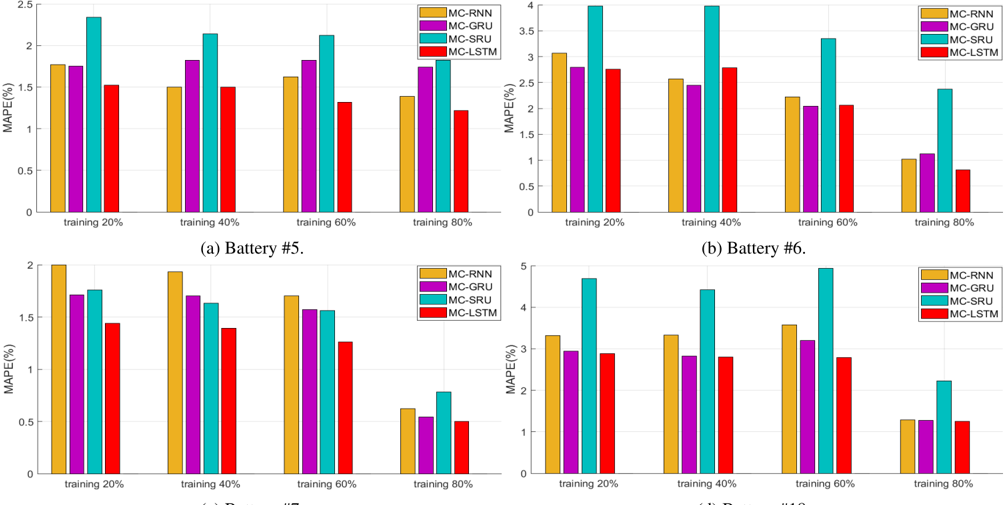
“The average MAPEs for all batteries are summarized in Table 7; the results are 1.84%, 1.51% and 2.13%, and 1.02% for MC-RNN, MC-GRU, MC-SRU, and MC-LSTM, respectively.”
InfluentialAn Adaptive Recurrent Neural Network for Remaining Useful Life Prediction of Lithium-ion Batteries
Liu, J., Saxena, A., Goebel, K., Saha, B., & Wang, W. (2010) · Annual Conference of the PHM Society · doi:10.36001/phmconf.2010.v2i1.1896 · Cited by 274
Choi, Y., Ryu, S., Park, K., & Kim, H. (2019) · IEEE Access · doi:10.1109/access.2019.2920932 · Cited by 246
Self-citationMeng, J., Stroe, D.-I., Ricco, M., Luo, G., & Teodorescu, R. (2019) · IEEE Transactions on Industrial Electronics · doi:10.1109/tie.2018.2880668 · Cited by 216 · cited 1×
“Lithium-ion batteries are now widely used for many applications such as home appliances, smartphones, power tools, energy storage systems and electric vehicles because of high energy density, high electromotive force, high output voltage, low self-discharge, low voltage drop and easy management [1], [2].”
BackgroundXiao, B., Liu, Y., & Xiao, B. (2019) · IEEE Access · doi:10.1109/access.2019.2913078 · Cited by 172 · cited 1×
“[17] used gated recurrent unit (GRU) to estimate the state of charge, and Song et al.”
MethodAutomatic diagnostics and prognostics of energy conversion processes via knowledge-based systems
Biagetti, T. (2004) · Energy · doi:10.1016/j.energy.2004.03.031 · Cited by 113 · cited 1×
“Experience-based methods predict RUL using the stochastic deterioration distribution that does not require complex theories but have the drawback of non-real-time monitoring [8].”
MethodZhou, Y., Huang, M., & Pecht, M. (2020) · Journal of Cleaner Production · doi:10.1016/j.jclepro.2019.119409 · Cited by 93 · cited 1×
“To quantify battery degradation, state of health (SoH) is by defined using capacity as follows [23]:”
MethodLithium-Ion Battery Remaining Useful Life Prediction Based on GRU-RNN
Song, Y., Li, L., Peng, Y., & Liu, D. (2018) · International Conference on Reliability, Maintainability and Safety · doi:10.1109/icrms.2018.00067 · Cited by 81 · cited 1×
“[18] used GRU to predict the battery RUL.”
MethodLi, J., Lyu, C., Wang, L., Zhang, L., & Li, C. (2014) · Journal of Power Sources · doi:10.1016/j.jpowsour.2014.06.133 · Cited by 65 · cited 1×
“Model-based methods update the physical model in real-time from monitored data of usage conditions/defects to predict RUL [9].”
MethodData-Driven Battery Lifetime Prediction and Confidence Estimation for Heavy-Duty Trucks
Voronov, S., Frisk, E., & Krysander, M. (2018) · IEEE Transactions on Reliability · doi:10.1109/tr.2018.2803798 · Cited by 62 · cited 1×
“Thus, it is important to predict when battery life will be over [4].”
BackgroundWang, X., Hu, C., Si, X., Pang, Z., & Ren, Z. (2019) · IEEE Access · doi:10.1109/access.2019.2924148 · Cited by 35 · cited 1×
“The PHM in the battery can be seen as predicting the remaining useful life (RUL) to prevent losses from unexpected failures in advance [5], [6].”
BackgroundZheng, Z., Peng, J., Deng, K., Gao, K., Li, H., Chen, B., Yang, Y., & Huang, Z. (2019) · International Conference on Power Electronics and ECCE Asia (ICPE-ECCE Asia) · doi:10.23919/icpe2019-ecceasia42246.2019.8797021 · Cited by 31 · cited 1×
“Since acquiring battery charging and discharging data is an expensive process both in terms of time and cost, the NASA datasets of battery charging and discharging are commonly used as a common reference [7], [27]–[29].”
BackgroundLiu, Y., Zhao, G., Peng, X., & Hu, C. (2017) · Annual Conference of the PHM Society · doi:10.36001/phmconf.2017.v9i1.2447 · Cited by 30 · cited 6×
“In using LSTM for RUL prediction, the state-of-theart technique uses only the historic capacity data {Ck} as input [1], [15], and the input and output sizes are same [19], [20].”
InfluentialRUL prognostics method based on real time updating of LSTM parameters
Zhou, F., Hu, P., & Yang, X. (2018) · Chinese Control and Decision Conference (CCDC) · doi:10.1109/ccdc.2018.8407812 · Cited by 23 · cited 6×
“In using LSTM for RUL prediction, the state-of-theart technique uses only the historic capacity data {Ck} as input [1], [15], and the input and output sizes are same [19], [20].”
BackgroundMethodInfluentialWu, Z., Wang, Z., Qian, C., Sun, B., Ren, Y., Feng, Q., & Yang, D. (2019) · International Conference on Thermal, Mechanical and Multi-Physics Simulation and Experiments in Microelectronics and Microsystems (EuroSimE) · doi:10.1109/eurosime.2019.8724567 · Cited by 16
Cited by
Transformer Network for Remaining Useful Life Prediction of Lithium-Ion Batteries
Chen, D., Hong, W., & Zhou, X. (2022) · IEEE Access · doi:10.1109/access.2022.3151975 · Cited by 408
Rauf, H., Khalid, M., & Arshad, N. (2022) · Renewable and Sustainable Energy Reviews · doi:10.1016/j.rser.2021.111903 · Cited by 326
Remaining Useful Life Assessment for Lithium-Ion Batteries Using CNN-LSTM-DNN Hybrid Method
Zraibi, B., Okar, C., Chaoui, H., & Mansouri, M. (2021) · IEEE Transactions on Vehicular Technology · doi:10.1109/tvt.2021.3071622 · Cited by 321
“If the SP of RUL prediction shifts to early cycles, RUL prediction becomes harder because the model leverage a small training set [45].”
BackgroundLuo, K., Chen, X., Zheng, H., & Shi, Z. (2022) · Journal of Energy Chemistry · doi:10.1016/j.jechem.2022.06.049 · Cited by 292
Hasib, S. A., Islam, S., Chakrabortty, R. K., Ryan, M. J., Saha, D. K., Ahamed, M. H., Moyeen, S. I., Das, S. K., Ali, M. F., Islam, M. R., et al. (2021) · IEEE Access · doi:10.1109/access.2021.3089032 · Cited by 272
“A new RUL prediction process dependent on LSTM was proposed in [221] to predict RUL in the comportment”
Method
Metadata
- Authors
- Park, K., Choi, Y., Choi, W. J., Ryu, H.-Y., & Kim, H.
- Affiliations
- Sogang University (KR)
- Hyundai Motor Group (South Korea) (KR)
- Venue
- IEEE Access
- Published
- 2020
- Volume
- 8
- Pages
- 20786-20798
- ISSN
- 2169-3536 (ISSN-L)
- OpenAlex
- W3001479960
- Cited by
- 397
- References
- 33
- Citations by year
- 2026: 52 · 2025: 73 · 2024: 95 · 2023: 65 · 2022: 66 · 2021: 34 · 2020: 12
- FWCI
- 16.37
- Type
- journal article
- Language
- en
- Open access
- gold
- doi.org
- Locations
- IEEE Access (publishedVersion, cc-by)
- DOAJ (DOAJ: Directory of Open Access Journals) (submittedVersion, cc-by-sa)
- Funders
- National Research Foundation of Korea
- Ministry of Science, ICT and Future Planning (NRF-2017R1A1A1A05001377)
- Hyundai Motors
- Topics
- Physical Sciences › Engineering › Automotive Engineering › Battery Modeling and Management
- Physical Sciences › Engineering › Electrical and Electronic Engineering › Advancements in Battery Materials
- Physical Sciences › Engineering › Safety, Risk, Reliability and Quality › Reliability and Maintenance Optimization
- Keywords
- remaining useful life prediction, lithium-ion batteries, long short-term memory, battery degradation, capacity recovery, charging profiles, NASA battery dataset
About these checks
Registry, retraction, Cites and statistics results are computed, not judged, with one exception: a printed reference that no index lists is read once by a model before it counts as a citation error. Claims are extracted by a model and kept only when their quote appears verbatim in the text; each cited source is then checked, with a model’s help, for whether it says what the claim relies on. Those verdicts can be wrong — read the claim’s quote and the cited source before relying on one.
Statistics and arithmetic are recomputed, not judged.
Confidence bands are shown only for fields calibrated on our annotated test set. None is calibrated yet, so no band is shown.
What counts as a claim ›How we measure confidence ›How we check this ›
Are you an author, or do you see a problem with this page? Request a review
Data sources
Bibliographic data: Semantic Scholar, OpenAlex, Crossref.
Contains information from the Semantic Scholar Academic Graph Datasets, made available under the ODC Attribution License (ODC-BY 1.0).
Semantic Scholar’s data is described in: Kinney, R., et al. (2023). The Semantic Scholar Open Data Platform. arXiv:2301.10140.
