

Explainable Artificial Intelligence for Tabular Data: A Survey
Open accessThe DOI matches its Crossref record; 236 of the 241 references it cites were found in a registry or an index.
Abstract
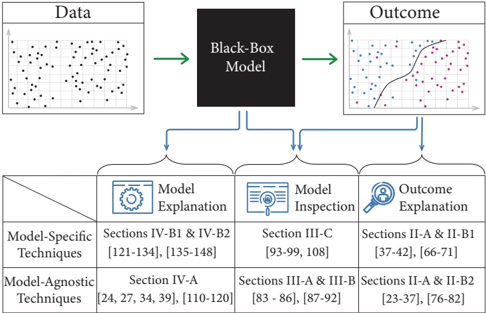
Machine learning techniques are increasingly gaining attention due to their widespread use in various disciplines across academia and industry. Despite their tremendous success, many such techniques suffer from the “black-box” problem, which refers to situations where the data analyst is unable to explain why such techniques arrive at certain decisions. This problem has fuelled interest in Explainable Artificial Intelligence (XAI), which refers to techniques that can easily be interpreted by humans. Unfortunately, many of these techniques are not suitable for tabular data, which is surprising given the importance and widespread use of tabular data in critical applications such as finance, healthcare, and criminal justice. Also surprising is the fact that, despite the vast literature on XAI, there are still no survey articles to date that focus on tabular data. Consequently, despite the existing survey articles that cover a wide range of XAI techniques, it remains challenging for researchers working on tabular data to go through all of these surveys and extract the techniques that are suitable for their analysis. Our article fills this gap by providing a comprehensive and up-to-date survey of the XAI techniques that are relevant to tabular data. Furthermore, we categorize the references covered in our survey, indicating the type of the model being explained, the approach being used to provide the explanation, and the XAI problem being addressed. Our article is the first to provide researchers with a map that helps them navigate the XAI literature in the context of tabular data.
Overview
The claims and statistics of this paper haven’t been checked yet.
Free: it reads the open-access text and checks the first 5 claims that cite a source we can check. Create a free account to check every claim.
Integrity signals
Registry
Cites
Statistics
Figures





Verification
Claims the paper makes
The claims and statistics of this paper haven’t been checked yet.
Free: it reads the open-access text and checks the first 5 claims that cite a source we can check. Create a free account to check every claim.
Self-check
Percentages, sums and reported differences re-computed from the paper’s own numbers.
The self-check needs the paper’s full text.
Citations
Cites
A fast and elitist multiobjective genetic algorithm: NSGA-II
Deb, K., Pratap, A., Agarwal, S., & Meyarivan, T. (2002) · IEEE Transactions on Evolutionary Computation · doi:10.1109/4235.996017 · Cited by 50,053 · cited 2×
“They use the Nondominated Sorting Genetic Algorithm [100] with some modifications to solve the multi-level optimization problem.”
Greedy function approximation: A gradient boosting machine
Friedman, J. H. (2001) · The Annals of Statistics · doi:10.1214/aos/1013203451 · Cited by 30,731 · cited 2×
“Examples of black-box models include artificial neural networks [18] and gradient boosting [19].”
BackgroundMethodGrad-CAM: Visual Explanations from Deep Networks via Gradient-Based Localization
Selvaraju, R. R., Cogswell, M., Das, A., Vedantam, R., Parikh, D., & Batra, D. (2017) · 2017 IEEE International Conference on Computer Vision (ICCV) · doi:10.1109/iccv.2017.74 · Cited by 24,513
A Unified Approach to Interpreting Model Predictions
Lundberg, S., & Lee, S.-I. (2017) · arXiv · doi:10.48550/arxiv.1705.07874 · Cited by 23,707 · cited 1×
“Another, more recent framework that builds on the Shap-ley value was proposed by Lundberg and Lee [37].”
BackgroundNeural networks and physical systems with emergent collective computational abilities.
Hopfield, J. J. (1982) · Proceedings of the National Academy of Sciences · doi:10.1073/pnas.79.8.2554 · Cited by 19,270 · cited 1×
“Examples of black-box models include artificial neural networks [18] and gradient boosting [19].”
Background"Why Should I Trust You?": Explaining the Predictions of Any Classifier
Ribeiro, M. T., Singh, S., & Guestrin, C. (2016) · Proceedings of the 22nd ACM SIGKDD International Conference on Knowledge Discovery and Data Mining · doi:10.1145/2939672.2939778 · Cited by 17,555 · cited 4×
“Starting with SP-LIME [24], it takes a representative sample set from the input data and computes the LIME coefficients for all instances in that set, thereby providing a global view of the ML model’s decision boundary.”
MethodInfluentialHosmer, D. W., Lemeshow, S., & Sturdivant, R. X. (2013) · Wiley Series in Probability and Statistics · doi:10.1002/9781118548387 · Cited by 13,861
Gauriat, C.-M., Pencolé, Y., Ribot, P., & Brouillet, G. (2024) · HAL (Le Centre pour la Communication Scientifique Directe) · doi:10.4230/oasics.dx.2024.27 · Cited by 12,586
Rudin, C. (2019) · Nature Machine Intelligence · doi:10.1038/s42256-019-0048-x · Cited by 10,561 · cited 3×
“Unlike transparent models, black-box models are those that do not explain their predictions in a way that humans can understand [17].”
BackgroundFrom local explanations to global understanding with explainable AI for trees
Lundberg, S. M., Erion, G., Chen, H., DeGrave, A., Prutkin, J. M., Nair, B., Katz, R., Himmelfarb, J., Bansal, N., & Lee, S.-I. (2020) · Nature Machine Intelligence · doi:10.1038/s42256-019-0138-9 · Cited by 10,551 · cited 3×
“Extending their work, Lundberg et al. [39], [65] proposed SHAP interaction values that directly measure local feature interaction effects.”
Method
Research works printed but not linked: 6
- T. Wang, C. Rudin, F. Doshi-Velez, Y. Liu, E. Klampfl, and P. MacNeille, "A Bayesian framework for learning rule sets for interpretable classifica- tion," Journal of Machine Learning Research, vol. 18, no. 1, pp. 2357- 2393, 2017.
- C. Molnar, "Interpretable machine learning: A guide for making black box models explainable.(2019)," URL https://christophm. github. io/interpretable-ml-book, 2019.
- "Providing explainable ai through advanced knowledge graphs." https: //kyndi.com/wp-content/uploads/2018/03/Cognilytica-Briefing-Note_ Kyndi.pdf. Accessed: 18.07.2021.
- 225"Explainable machine learning challenge." https://community.fico.com/ s/explainable-machine-learning-challenge. Accessed: 06.07.2021.
- H. A. Chipman, E. I. George, and R. E. McCulloh, "Making sense of a forest of trees," Computing Science and Statistics, pp. 84-92, 1998.
- J. Angwin, J. Larson, S. Mattu, and L. Kirchner, "Machine bias: There's software used across the country to predict future crimi- nals. And it's biased against blacks." https://www.propublica.org/article/ machine-bias-risk-assessments-in-criminal-sentencing, 2016.
Cited by
Deep Neural Networks and Tabular Data: A Survey
Borisov, V., Leemann, T., Seßler, K., Haug, J., Pawelczyk, M., & Kasneci, G. (2024) · IEEE Transactions on Neural Networks and Learning Systems · doi:10.1109/tnnls.2022.3229161 · Cited by 1,025
“[50] summarizes explanation techniques in the context of tabular data.”
BackgroundMethodInfluentialExplainable Artificial Intelligence Applications in Cyber Security: State-of-the-Art in Research
Zhang, Z., Hamadi, H. A., Damiani, E., Yeun, C. Y., & Taher, F. (2022) · IEEE Access · doi:10.1109/access.2022.3204051 · Cited by 450
“On the other hand, cyber security developers 77 have sometimes sought higher accuracy at the price of inter78 pretability, making their models more intricate and difficult to 79 grasp [10].”
BackgroundMethodA., S., & R., S. (2023) · Decision Analytics Journal · doi:10.1016/j.dajour.2023.100230 · Cited by 432
Explainable Artificial Intelligence in CyberSecurity: A Survey
Capuano, N., Fenza, G., Loia, V., & Stanzione, C. (2022) · IEEE Access · doi:10.1109/access.2022.3204171 · Cited by 330
“In [35] 408 a survey of XAI methods in deployment is made, and [36] 409 which considers the XAI for tabular data.”
BackgroundExplainable AI for clinical and remote health applications: A survey on tabular and time series data
Di Martino, F., & Delmastro, F. (2023) · Artificial Intelligence Review · doi:10.1007/s10462-022-10304-3 · Cited by 216
“However, several existing XAI methods are currently not suitable for tabular data due to the unique characteristics that distinguish them from images (and also text records), such as the potential interactions between features and the coexistence of continuous and categorical predictors [10].”
Ding, W., Abdel-Basset, M., Hawash, H., & Ali, A. M. (2022) · Information Sciences · doi:10.1016/j.ins.2022.10.013 · Cited by 183
Predicting and explaining employee turnover intention
Lazzari, M., Alvarez, J. M., & Ruggieri, S. (2022) · International Journal of Data Science and Analytics · doi:10.1007/s41060-022-00329-w · Cited by 181
“To this end, we build on the explainable AI (XAI) research [28], in particular XAI for tabular data [49], for extracting from ML models a ranking of the features used for making (accurate) predictions.”
MethodMachine Learning for Perovskite Solar Cells and Component Materials: Key Technologies and Prospects
Liu, Y., Tan, X., Liang, J., Han, H., Xiang, P., & Yan, W. (2023) · Advanced Functional Materials · doi:10.1002/adfm.202214271 · Cited by 174
Xu, Q., Xie, W., Liao, B., Hu, C., Qin, L., Yang, Z., Xiong, H., Lyu, Y., Zhou, Y., & Luo, A. (2023) · Journal of Healthcare Engineering · doi:10.1155/2023/9919269 · Cited by 161
A comprehensive review on financial explainable AI
Yeo, W. J., van der Heever, W., Mao, R., Cambria, E., Satapathy, R., & Mengaldo, G. (2025) · Artificial Intelligence Review · doi:10.1007/s10462-024-11077-7 · Cited by 279
“A collection of existing literature reviews are analyzed and collated to give the reader a better understanding of commonly used terminologies in the XAI field, as well as the interlink between AI, linguistics, and social sciences which is essential to provide a solid understanding of the subject.”
XAIR: A Systematic Metareview of Explainable AI (XAI) Aligned to the Software Development Process
Clement, T., Kemmerzell, N., Abdelaal, M., & Amberg, M. (2023) · Machine Learning and Knowledge Extraction · doi:10.3390/make5010006 · Cited by 131
Explainable AI in Manufacturing and Industrial Cyber–Physical Systems: A Survey
Moosavi, S., Farajzadeh-Zanjani, M., Razavi‐Far, R., Palade, V., & Saif, M. (2024) · Electronics · doi:10.3390/electronics13173497 · Cited by 194
Nordin, N., Zainol, Z. B., Noor, M. H. M., & Chan, L. F. (2022) · Asian Journal of Psychiatry · doi:10.1016/j.ajp.2022.103316 · Cited by 140
Toward Trustworthy Artificial Intelligence (TAI) in the Context of Explainability and Robustness
chander, B., John, C., Warrier, L., & Gopalakrishnan, K. (2025) · ACM Computing Surveys · doi:10.1145/3675392 · Cited by 108
“Unlike prototypes which are actual instances from training data, counterfactuals can be new combinations of feature values [50] .”
BackgroundMethodResultInfluentialExplainable AI for Industry 5.0: Vision, Architecture, and Potential Directions
Trivedi, C., Bhattacharya, P., Prasad, V. K., Patel, V., Singh, A., Tanwar, S., Sharma, R., Aluvala, S., Pau, G., & Sharma, G. (2024) · IEEE Open Journal of Industry Applications · doi:10.1109/ojia.2024.3399057 · Cited by 137
“Sahakyan et al. [56] provided an in-depth and current overview of EXAI methods that can be used with tabular data and started the EXAI literature description in the context of tabular data.”
MethodA review of explainable artificial intelligence in smart manufacturing
Madathil, A. P., Luo, X., Liu, Q., Walker, C. T., Madarkar, R., & Qin, Y. (2025) · International Journal of Production Research · doi:10.1080/00207543.2025.2513574 · Cited by 148
“To conclude the section, it could be observed that there exists very limited number of studies that had quan-titively reported the effectiveness of XAI over conventional black-box models for any manufacturing application (Sahakyan, Aung, and Rahwan 2021).”
Rane, N. L., Choudhary, S., & Rane, J. (2023) · SSRN Electronic Journal · doi:10.2139/ssrn.4640316 · Cited by 142
Rane, N. L., Choudhary, S., & Rane, J. (2024) · doi:10.61577/scpnmia.2024.100006 · Cited by 113
Khan, F. S., Mazhar, S. S., Mazhar, K., AlSaleh, D., & Mazhar, A. (2025) · Artificial Intelligence Review · doi:10.1007/s10462-025-11215-9 · Cited by 152
Martins, T., de Almeida, A., Cardoso, E., & Nunes, L. (2023) · IEEE Access · doi:10.1109/access.2023.3347028 · Cited by 98
“The same is seen in the work of Molnar [22] and Sahakyan [12], named ‘‘Model-specific or Model-agnostic.’’”
BackgroundResultInfluentialHuang, W., Suominen, H., Liu, T., Rice, G. E., Salomón, C., & Barnard, A. S. (2023) · Journal of Biomedical Informatics · doi:10.1016/j.jbi.2023.104365 · Cited by 68
Robust integration of blockchain and explainable federated learning for automated credit scoring
Jovanovic, Z., Hóu, Z., Biswas, K., & Muthukkumarasamy, V. (2024) · Computer Networks · doi:10.1016/j.comnet.2024.110303 · Cited by 79
“A comprehensive taxonomy of the XAI method is presented in Arrieta et al. (2020),Schwalbe and Finzel (2021), Islam et al. (2022), Sahakyan et al. (2021), Vilone and Longo (2020), and Lampathaki et al. (2021).”
MethodAl-Ansari, N., Al‐Thani, D., & Al-Mansoori, R. S. (2024) · Human Behavior and Emerging Technologies · doi:10.1155/2024/4628855 · Cited by 71
Explainable AI Frameworks: Navigating the Present Challenges and Unveiling Innovative Applications
Sharma, N. A., Chand, R. R., Buksh, Z., Ali, A., Hanif, A., & Beheshti, A. (2024) · Algorithms · doi:10.3390/a17060227 · Cited by 41
“Although explanations for highly complicated decision trees may become difficult, TreeSHAPs provide clarity on how tree-based algorithms arrive at predictions [99].”
BackgroundAcME - accelerated model-agnostic explanations: fast whitening of the machine-learning black box
Dandolo, D., Masiero, C., Carletti, M., Dalle Pezze, D., & Susto, G. A. (2023) · Expert Systems with Applications · doi:10.1016/j.eswa.2022.119115 · Cited by 41
The AI revolution in glaucoma: Bridging challenges with opportunities
Li, F., Wang, D., Yang, Z., Zhang, Y., Jiang, J., Liu, X., Kong, K., Zhou, F., Tham, C. C. Y., Medeiros, F. A., et al. (2024) · Progress in Retinal and Eye Research · doi:10.1016/j.preteyeres.2024.101291 · Cited by 47
Aboulhosn, Z., Musamih, A., Salah, K., Jayaraman, R., Omar, M., & Aung, Z. (2024) · IEEE Access · doi:10.1109/access.2024.3430113 · Cited by 43
“XAI comprises methods aimed at empowering human-machine collaboration and users to articulate the rationale behind an AI model’s conclusions [35], [36].”
MethodSelf-citationRetrieval-Augmented Generation with Graphs (GraphRAG)
Han, H., Wang, Y., Shomer, H., Guo, K., Ding, J., Lei, Y., Halappanavar, M., Rossi, R. A., Mukherjee, S., Tang, X., et al. (2025) · arXiv · doi:10.48550/arxiv.2501.00309 · Cited by 34
Explainable artificial intelligence models in intrusion detection systems
Al, S., & Sağıroğlu, Ş. (2025) · Engineering Applications of Artificial Intelligence · doi:10.1016/j.engappai.2025.110145 · Cited by 75
Explainable AI for malnutrition risk prediction from m-Health and clinical data
Martino, F. D., Delmastro, F., & Dolciotti, C. (2023) · Smart Health · doi:10.1016/j.smhl.2023.100429 · Cited by 45
Kim, K., Yoon, Y., & Shin, S. (2024) · International Journal of Medical Informatics · doi:10.1016/j.ijmedinf.2024.105441 · Cited by 46
Explainable Artificial Intelligence: An Updated Perspective
Krajna, A., Kovač, M., Brčić, M., & Šarčević, A. (2022) · International Convention on Information and Communication Technology, Electronics and Microelectronics · doi:10.23919/mipro55190.2022.9803681 · Cited by 36
Privacy-Preserving and Explainable AI in Industrial Applications
Ogrezeanu, I. A., Vizitiu, A., Ciusdel, C. F., Puiu, A., Coman, S., Boldișor, C., Itu, A., Demeter, R., Moldoveanu, F. D., Suciu, C., et al. (2022) · Applied Sciences · doi:10.3390/app12136395 · Cited by 40
Mirzaei, S., Mao, H., Al-Nima, R. R. O., & Woo, W. L. (2023) · Information · doi:10.3390/info15010004 · Cited by 25
“Despite the numerous tabular data across various domains, it is surprising that most XAI techniques are not inherently suitable for such data format, and engaging their applications constantly presents challenges [27].”
BackgroundWhich LIME Should I Trust? Concepts, Challenges, and Solutions
Knab, P., Marton, S., Schlegel, U., & Bartelt, C. (2025) · Communications in computer and information science · doi:10.1007/978-3-032-08324-1_2 · Cited by 58
Moser, A., Appl, C., Pörtner, R., Baganz, F., & Hass, V. C. (2024) · Fermentation · doi:10.3390/fermentation10090463 · Cited by 23
“This combination could be performed with simple functional state models where different models describe specific states of the process [7,8,30], hybrid models, which combine mechanistic and non-mechanistic approaches [11,14,15] or submodel frameworks [7,8].”
Literature Review of Explainable Tabular Data Analysis
Quinn, H. O., Sedky, M., Francis, J., & Streeton, M. (2024) · Electronics · doi:10.3390/electronics13193806 · Cited by 31
A Novel Weighted Loss TabTransformer Integrating Explainable AI for Imbalanced Credit Risk Datasets
Hartomo, K. D., Arthur, C., & Nataliani, Y. (2025) · IEEE Access · doi:10.1109/access.2025.3541878 · Cited by 31
Eldrandaly, K. A., Abdel‐Basset, M., Ibrahim, M., & AbdelAziz, N. M. (2022) · Enterprise Information Systems · doi:10.1080/17517575.2022.2098537 · Cited by 21
“In (Sahakyan, Aung, and Rahwan 2021), the authors studied XAI techniques through a common case study/task, analysed for comparative advantages from some diverse aspects, pointed out for quantifying explanations, and give insights towards responsible and human-centred AI through XAI.”
BackgroundA detailed study of interpretability of deep neural network based top taggers
Khot, A., Neubauer, M. S., & Roy, A. (2023) · Machine Learning Science and Technology · doi:10.1088/2632-2153/ace0a1 · Cited by 34
“However, in other data structures such as large tabular data or relational data constructs like graphs, use of XAI methods are still quite novel [5, 6].”
BackgroundLLMOverTab: Tabular data augmentation with language model-driven oversampling
Isomura, T., Shimizu, R., & Goto, M. (2024) · Expert Systems with Applications · doi:10.1016/j.eswa.2024.125852 · Cited by 24
A Review of Interpretability Methods for Gradient Boosting Decision Trees
Gonçalves, V. S. F., & de Carvalho, V. R. (2025) · Journal of the Brazilian Computer Society · doi:10.5753/jbcs.2025.5324 · Cited by 23
“[2022] Removal-based explanations Sahakyan et al .”
Predicting Financial Inclusion in Peru: Application of Machine Learning Algorithms
Maehara, R., Benites, L., Talavera, A., Aybar-Flores, A., & Muñoz, M. (2024) · Journal of risk and financial management · doi:10.3390/jrfm17010034 · Cited by 23
Dubey, Y. K., Tarte, Y., Talatule, N., Damahe, K., Palsodkar, P., & Fulzele, P. R. (2024) · Diagnostics · doi:10.3390/diagnostics14222514 · Cited by 17
“These evaluation metrics are accuracy (the proportion of accurate predictions made by the model relative to the total number of forecasts), precision (the percentage of accurate positive predictions out of all occasions when positive predictions were made), and recall (the proportion of genuine…”
Iqbal, A. B., Masoodi, T., Bhat, A. A., Macha, M. A., Assad, A., & Shah, S. Z. A. (2025) · Molecular Diversity · doi:10.1007/s11030-025-11133-6 · Cited by 19
“LIME, an interpretable artificial intelligence technique, is intrinsically adaptable to a diverse set of classifiers and may be effectively utilized to assess textual, visual, and tabular data [64].”
Review of Visualization Approaches in Deep Learning Models of Glaucoma
Gu, B., Sidhu, S., Weinreb, R. N., Christopher, M. A., Zangwill, L. M., & Baxter, S. L. (2023) · Asia-Pacific Journal of Ophthalmology · doi:10.1097/apo.0000000000000619 · Cited by 15
“63 This approach was used by Baxter et al 34 to assess variables of importance driving predictions generated by a random forest model for predicting glaucoma progression using systemic data in electronic health records (EHRs).”
MethodExplainable Multimodal Learning in Remote Sensing: Challenges and Future Directions
Günther, A., Najjar, H., & Dengel, A. R. (2024) · IEEE Geoscience and Remote Sensing Letters · doi:10.1109/lgrs.2024.3404596 · Cited by 14
“This stems from the complex design of such models, on the one hand, and the predominant focus of XAI research on single-modality computer vision tasks, on the other hand [6].”
BackgroundShakir, W. A. (2024) · International Conference on Emerging Technologies for Dependable Internet of Things (ICETI) · doi:10.1109/iceti63946.2024.10777155 · Cited by 14
“Hence, in this paper, I center around the capacity of LMs to tackle plain AI undertakings as presented by [11], [12], [13].”
Cherry on Top or Real Need? A Review of Explainable Machine Learning in Kidney Transplantation
de Souza, A. A., Stubbs, A., Hesselink, D. A., Baan, C. C., & Boer, K. (2024) · Transplantation · doi:10.1097/tp.0000000000005063 · Cited by 15
Explanation of Deep Learning–Based Radioisotope Identifier for Plastic Scintillation Detector
Jeon, B., Kim, J., & Moon, M. (2022) · Nuclear Technology · doi:10.1080/00295450.2022.2096389 · Cited by 12
FAIR AI models in high energy physics
Duarte, J. M., Li, H., Roy, A., Zhu, R., Huerta, E. A., Díaz, D., Harris, P. C., Kansal, R., Katz, D. S., Kavoori, I. H., et al. (2023) · Machine Learning Science and Technology · doi:10.1088/2632-2153/ad12e3 · Cited by 19
“The repository was initialized using the template described in section 2.2.”
MethodInfluentialVelmurugan, M., Ouyang, C., Xu, Y., Sindhgatta, R., Wickramanayake, B., & Moreira, C. (2024) · Engineering Applications of Artificial Intelligence · doi:10.1016/j.engappai.2024.109772 · Cited by 18
Kozielski, M., Sikora, M., & Wawrowski, Ł. (2025) · Knowledge-Based Systems · doi:10.1016/j.knosys.2025.113092 · Cited by 15
“Moreover, depending on the type of data to be analysed, a distinction can be made between methods applicable to tabular data [18], images [16, 19] or text [20].”
BackgroundRisk Prediction of Heart Disease using Deep SHAP Techniques
Saranya, A., & Narayan, S. (2024) · International Conference on Advancement in Computation & Computer Technologies (InCACCT) · doi:10.1109/incacct61598.2024.10551212 · Cited by 11
“Deep SHAP used the idea of DeepLIFT, but the difference is that instead of assigning a value to an input feature, it steals ideas from game theory for each input feature of the player and their involvement in a game using the Shapley value [21].”
MethodExplainability, Robustness, and Fairness in User-Centric Intelligent Systems: A Systematic Review
Zahid, I. A., Garfan, S., Chyad, M. A., Albahri, A. S., Albahri, O. S., Alamoodi, A. H., Deveci, M., Homod, R. Z., & Alzubaidi, L. (2025) · IEEE Transactions on Emerging Topics in Computational Intelligence · doi:10.1109/tetci.2025.3567604 · Cited by 22
“While developers strive for the highest accuracy in models, this pursuit often increases complexity, making comprehension more challenging [74].”
InfluentialLIME-based ensemble machine for predicting performance status of patients with liver cancer
Nguyen, H. V., & Byeon, H. (2023) · Digital Health · doi:10.1177/20552076231211636 · Cited by 11
“Recently, many studies 18 – 23 have used LIME (Local Interpretable Model-Agnostic Explanation) to provide interpretability to ML models in tabular data.”
Kalakoti, R., Nõmm, S., & Bahşi, H. (2023) · International Conference on Machine Learning and Applications · doi:10.1109/icmla58977.2023.00088 · Cited by 18
“On the contrary, cyber security developers have sometimes prioritized achieving higher accuracy even at the expense of interpretability, creating complex and challenging-to-understand models [4].”
BackgroundSharmila, S. P., Gupta, S., Tiwari, A., & Chaudhari, N. S. (2025) · Computers & Electrical Engineering · doi:10.1016/j.compeleceng.2025.110107 · Cited by 17
Challenges and Opportunities in Deploying Explainable AI for Financial Risk Assessment
Akkalkot, A. I., Kulshrestha, N., Sharma, G., Sidhu, K. S., Palimkar, S. S., & Nethravathi, K. (2025) · International Conference on Pervasive Computational Technologies (ICPCT) · doi:10.1109/icpct64145.2025.10940643 · Cited by 10
“When making choices regarding money, SHAP values help one comprehend how specific factors affect a certain projection or result [22].”
Survey on Tabular Data Privacy and Synthetic Data Generation in Industry 4.0
Koubeissy, H., Amine, A., Kamradt, M., & Makhoul, A. (2025) · Applied Intelligence · doi:10.1007/s10489-025-06823-5 · Cited by 11
“The previous work specializes in certain domains while trying to answer a more specific research problem.”
Enhancing Explainable AI: Leveraging SHAP for Transparent Decision-Making in Machine Learning
Asfi, M., Warsito, B., & Wibowo, A. (2024) · International Conference on Informatics and Computing (ICIC) · doi:10.1109/icic64337.2024.10956244 · Cited by 9
“[14].”
Martin, D., Heinz, D., Glauner, M., & Kühl, N. (2025) · Business & Information Systems Engineering · doi:10.1007/s12599-025-00940-8 · Cited by 8
“Both methods have the potential for abstract representations and scores that indicate their potential utility for specific use cases, all while preserving the confidentiality of raw data (Sahakyan et al. 2021; Hirt et al. 2023).”
Autonomous Droplet Microfluidic Design Framework with Large Language Models
Nguyen, D.-N., Tong, R. K., & Dinh, N. (2025) · ACS Omega · doi:10.1021/acsomega.5c06253 · Cited by 9
Model-Manipulation Attacks Against Black-Box Explanations
Hegde, A., Noppel, M., & Wressnegger, C. (2024) · Annual Computer Security Applications Conference · doi:10.1109/acsac63791.2024.00081 · Cited by 8
“From this plethora of methods [6–8, 10, 25, 27, 36, 40, 43, 48, 49, 53, 56, 60, 61], in particular, model-agnostic approaches have gained traction in practical applications [1, 9, 22, 44, 52, 67, 74].”
Patel, M., & Shah, A. (2024) · ITM Web of Conferences · doi:10.1051/itmconf/20246503007 · Cited by 6
A Machine Learning Approach for Spare Parts Lifetime Estimation
Macedo, L., Matos, L. M., Cortez, P. C., Domingues, A., Moreira, G., & Pilastri, A. L. (2022) · International Conference on Agents and Artificial Intelligence (ICAART) · doi:10.5220/0010903800003116 · Cited by 8
“Finally, the best RUL prediction model is further analyzed in terms of its extracted knowledge by adopting an eXplainable Artificial Intelligence (XAI) approach (Sahakyan et al., 2021), namely by using SHapley Additive exPlanations (SHAP) (Lundberg and Lee, 2017b), which allows to measure the impact of the adopted ind…”
MethodExplainable Artificial Intelligence for the Electric Vehicle Load Demand Forecasting Problem
Gallardo-Gómez, J. A., Divina, F., Troncoso, A., & Alvarez, F. M. (2022) · Lecture notes in networks and systems · doi:10.1007/978-3-031-18050-7_40 · Cited by 6
Predicting Weighing Deviations in the Dispatch Workflow Process: A Case Study in a Cement Industry
Barros, J., Cunha, F., Martins, C., Pedrosa, P., & Cortez, P. C. (2022) · IEEE Access · doi:10.1109/access.2022.3232299 · Cited by 6
“‘‘black-box’’ nature [39], [54], [55], [56].”
BackgroundVoice Orientation Recognition: New Paradigm of Speech-Based Human-Computer Interaction
Bu, Y., & Guo, P. (2023) · International Journal of Human-Computer Interaction · doi:10.1080/10447318.2023.2233128 · Cited by 8
“This poses an objective challenge for our model (Goyal & Bengio, 2022; Sahakyan et al., 2021), as most deep learning models are not suited to handle this type of heterogeneous data (Fakoor et al., 2020; Kadra et al., 2021; Shoman et al., 2020).”
Lipps, C., Frère, J., & Weissland, T. (2024) · Journal of Experimental Orthopaedics · doi:10.1002/jeo2.70081 · Cited by 6
“The chosen technique for the present study was SHAP which stands for the SHAP and originated from the game theory [30].”
InfluentialWang, M., Ying, F., Yang, J., & Zhu, D. (2025) · Sustainable Energy Technologies and Assessments · doi:10.1016/j.seta.2025.104794 · Cited by 26
Transparency of combinatorial optimisations via machine learning and explainable AI
Garn, W., & Amirghasemi, M. (2025) · Annals of Operations Research · doi:10.1007/s10479-025-06684-8 · Cited by 12
“A comprehensive review of tabular XAI methods can be found in Sahakyan et al. ( 2021 ).”
Integrated Customer Analytics using Explainability and AutoML for Telecommunications
Eswarapu, S. T., Seshathri, S., Deshaboina, Y., Bhargawa, P., Jo, A. A., & Raj, E. D. (2023) · International Conference on Applied Artificial Intelligence and Computing (ICAAIC) · doi:10.1109/icaaic56838.2023.10141019 · Cited by 5
X-NET: Explainable AI-Based Network Data Security Framework for Healthcare 4.0
Patel, N., Ramoliya, F., Jadav, N. K., Gupta, R., Tanwar, S., & Aujla, G. S. (2024) · IEEE International Conference on Communications workshops · doi:10.1109/iccworkshops59551.2024.10615382 · Cited by 5
“On the other hand, Φ SHAP [13] provide a fair allotment of endowment for each feature w.r.t the prediction.”
BackgroundIREX: Iterative Refinement and Explanation of classification models for tabular datasets
Sosa-Espadas, C. E., Orozco-del-Castillo, M. G., Cuevas-Cuevas, N. L., & Recio-García, J. A. (2023) · SoftwareX · doi:10.1016/j.softx.2023.101420 · Cited by 5
Sayyadnejad, M. M., Asgari, A., Sami, A., & Tahayori, H. (2025) · Empirical Software Engineering · doi:10.1007/s10664-025-10710-5 · Cited by 9
Yuan, J., Li, Z., Zeng, Q., Li, J., Anjie, W. A. N. G., Zhang, Y., & Zhang, Y. (2026) · Digital Health · doi:10.1177/20552076251408523 · Cited by 8
“44,45 SHAP, grounded in cooperative game theory, quanti fi es the marginal contribution of each feature to a speci fi c prediction and supports both global feature importance ranking and local, individual-level interpretability.”
Lazar, A., Pokhrel, P., & Das, S. R. (2026) · International Journal of Artificial Intelligence Tools · doi:10.1142/s0218213026400038 · Cited by 6
Mill, E., Garn, W., & Turner, C. J. (2024) · Applied Artificial Intelligence · doi:10.1080/08839514.2024.2430867 · Cited by 6
“In Sahakyan, Aung, and Rahwan (2021) the authors deliver a survey focused on XAI for tabular data, categorizing the references in three dimensions (1) the type of model being explained, (2) the approach being used to provide the explanation and (3) the XAI problem being addressed.”
ECATS: Explainable-by-Design Concept-Based Anomaly Detection for Time Series
Ferfoglia, I., Saveri, G., Nenzi, L., & Bortolussi, L. (2024) · Lecture notes in computer science · doi:10.1007/978-3-031-71170-1_16 · Cited by 10
GlassBoost: A Lightweight and Explainable Classification Framework for Tabular Datasets
Namjoo, E., O’Connor, A. N., Buckley, J., & Ryan, C. (2025) · Applied Sciences · doi:10.3390/app15126931 · Cited by 3
Mwiga, K. J., Dida, M. A., Maglaras, L. A., Mohsin, A., Janicke, H., & Sarker, I. H. (2026) · Sensors · doi:10.3390/s26051421 · Cited by 3
“The concept of XAI is defined as a method to enhance human comprehension of AI decision-making processes [42].”
Towards Machine Learning Interpretability for Tabular Data with Mixed Data Types
Pokhrel, P., & Lazar, A. (2022) · Proceedings of the ... International Florida Artificial Intelligence Research Society Conference · doi:10.32473/flairs.v35i.130611 · Cited by 4
Formal Definition of Interpretability and Explainability in XAI
Dib, L. (2024) · Lecture notes in networks and systems · doi:10.1007/978-3-031-66431-1_9 · Cited by 11
Long, Z., & Zhang, L. (2025) · IEEE Access · doi:10.1109/access.2025.3559105 · Cited by 4
“These approaches not only enhance model transparency but also provide clinicians with reliable decision-support tools, fostering more informed and confident clinical decision-making [19], [20], [21].”
eXING-IoT conceptual framework for explainability integration in next generation-IoT
Vultureanu‐Albişi, A., Bădică, C., & Ivanović, M. D. (2025) · Connection Science · doi:10.1080/09540091.2025.2507180 · Cited by 6
Shin, Y., Cho, K., Kwak, J. H., & Hwang, J.-Y. (2022) · International Conference on Information and Communication Technology Convergence (ICTC) · doi:10.1109/ictc55196.2022.9952891 · Cited by 3
“Still other studies examined the transparency of black box algorithms to describe the characteristics of results that are derived by trained models in a way that people cannot understand [7–9].”
BackgroundA Review on the Impact of Data Representation on Model Explainability
Chehreghani, M. H. (2024) · ACM Computing Surveys · doi:10.1145/3662178 · Cited by 4
“Moreover, such rule-based models are highly explainable [29, 34, 41, 56, 76].”
BackgroundExplainable AI (EXAI) for Smart Healthcare Automation
Shafik, W., & Lakshmi, D. (2024) · Advances in bioinformatics and biomedical engineering book series · doi:10.4018/979-8-3693-4439-2.ch012 · Cited by 4
Graph and Structured Data Algorithms in Electronic Health Records: A Scoping Review
Ramosaj, L., Bytyçi, A., Shala, B., & Bytyçi, E. (2024) · Communications in computer and information science · doi:10.1007/978-3-031-65990-4_6 · Cited by 2
Darwish, S. M., & El-Shoafy, N. A. (2026) · Computing · doi:10.1007/s00607-026-01622-3 · Cited by 4
“Each model’s strengths vary depending on data size, complexity, and interpretability needs [23].”
Artificial Intelligence and Criminal Justice: A systematic review of the scientific literature
Riega-Virú, Y. B., Ninaquispe-Soto, M., Salas, J. M., Natividad, P., Salas-Riega, J. L., & Nilupú-Moreno, K. (2023) · LACCEI International Multi-Conference for Engineering, Education and Technology (LACCEI) · doi:10.18687/laccei2023.1.1.1461 · Cited by 6
Introduction to Ethical and Socially Responsible Explainable AI
Akhtar, M. A. K., Kumar, M., & Nayyar, A. (2024) · Studies in systems, decision and control · doi:10.1007/978-3-031-66489-2_1 · Cited by 5
CLE: Context-Aware Local Explanations for High Dimensional Tabular Data
Rahat, F., Hossain, M., Ahmed, M. R., & Ewetz, R. (2024) · International Conference on Machine Learning and Applications · doi:10.1109/icmla61862.2024.00111 · Cited by 1
“While feature attributions and case-based explanations are commonly used to explain visual models, local surrogate models have become increasingly popular for explaining high dimensional tabular data [18], [19].”
Leveraging Periodicity for Tabular Deep Learning
Rizzo, M., Ayyurek, E., Albarelli, A., & Gasparetto, A. (2025) · Electronics · doi:10.3390/electronics14061165 · Cited by 2
Minullin, D. A., & Gafarov, F. M. (2024) · Automatic Documentation and Mathematical Linguistics · doi:10.3103/s0005105525700189 · Cited by 3
Adversarial Training for Mitigating Insider-Driven XAI-Based Backdoor Attacks
Gayathri, R. G., Sajjanhar, A., & Xiang, Y. (2025) · Future Internet · doi:10.3390/fi17050209 · Cited by 2
A three-step machine learning strategy for reproducible biomarker screening in ovarian cancer
Huang, W., Suominen, H., Liu, T., Rice, G. E., Salomón, C., & Barnard, A. S. (2025) · Machine Learning Health · doi:10.1088/3049-477x/ae06aa · Cited by 1
Explainability as a Structural Property: An Empirical Analysis of Rashomon Sets and Pareto Fronts
Solano, R. P., Berlanga, A., Molina, J. M., & Julio, Y. R. (2026) · Algorithms · doi:10.3390/a19050358 · Cited by 1
Jain, K., Vora, D., Benslimane, A., & Khairnar, V. D. (2026) · Archives of Computational Methods in Engineering · doi:10.1007/s11831-026-10610-x · Cited by 1
Metadata
- Authors
- Sahakyan, M., Aung, Z., & Rahwan, T.
- Affiliations
- New York University Abu Dhabi (AE)
- Khalifa University of Science and Technology (AE)
- Venue
- IEEE Access
- Published
- 2021
- Volume
- 9
- Pages
- 135392-135422
- ISSN
- 2169-3536 (ISSN-L)
- OpenAlex
- W3201854521
- Cited by
- 135
- References
- 241
- Citations by year
- 2026: 17 · 2025: 37 · 2024: 43 · 2023: 20 · 2022: 18
- FWCI
- 7.16
- Type
- journal article
- Language
- en
- Open access
- gold
- doi.org
- Licence
- Locations
- IEEE Access (publishedVersion, cc-by-nc-nd)
- DOAJ (DOAJ: Directory of Open Access Journals) (submittedVersion, cc-by-sa)
- Funders
- Khalifa University, Abu Dhabi, UAE, by providing a Ph.D. Scholarship and Research Facilities
- Topics
- Physical Sciences › Computer Science › Artificial Intelligence › Explainable Artificial Intelligence (XAI)
- Physical Sciences › Computer Science › Artificial Intelligence › Privacy-Preserving Technologies in Data
- Physical Sciences › Computer Science › Artificial Intelligence › Machine Learning and Data Classification
- Keywords
- explainable AI, tabular data, black box problem, model interpretability, explanation methods, model types
About these checks
Registry, retraction, Cites and statistics results are computed, not judged, with one exception: a printed reference that no index lists is read once by a model before it counts as a citation error. Claims are extracted by a model and kept only when their quote appears verbatim in the text; each cited source is then checked, with a model’s help, for whether it says what the claim relies on. Those verdicts can be wrong — read the claim’s quote and the cited source before relying on one.
Statistics and arithmetic are recomputed, not judged.
Confidence bands are shown only for fields calibrated on our annotated test set. None is calibrated yet, so no band is shown.
What counts as a claim ›How we measure confidence ›How we check this ›
Are you an author, or do you see a problem with this page? Request a review
Data sources
Bibliographic data: Semantic Scholar, OpenAlex, Crossref.
Contains information from the Semantic Scholar Academic Graph Datasets, made available under the ODC Attribution License (ODC-BY 1.0).
Semantic Scholar’s data is described in: Kinney, R., et al. (2023). The Semantic Scholar Open Data Platform. arXiv:2301.10140.
