

Explainable Artificial Intelligence for Tabular Data: A Survey
Open accessThe DOI matches its Crossref record; 233 of the 241 references it cites were found in a registry or an index.
Abstract
Machine learning techniques are increasingly gaining attention due to their widespread use in various disciplines across academia and industry. Despite their tremendous success, many such techniques suffer from the “black-box” problem, which refers to situations where the data analyst is unable to explain why such techniques arrive at certain decisions. This problem has fuelled interest in Explainable Artificial Intelligence (XAI), which refers to techniques that can easily be interpreted by humans. Unfortunately, many of these techniques are not suitable for tabular data, which is surprising given the importance and widespread use of tabular data in critical applications such as finance, healthcare, and criminal justice. Also surprising is the fact that, despite the vast literature on XAI, there are still no survey articles to date that focus on tabular data. Consequently, despite the existing survey articles that cover a wide range of XAI techniques, it remains challenging for researchers working on tabular data to go through all of these surveys and extract the techniques that are suitable for their analysis. Our article fills this gap by providing a comprehensive and up-to-date survey of the XAI techniques that are relevant to tabular data. Furthermore, we categorize the references covered in our survey, indicating the type of the model being explained, the approach being used to provide the explanation, and the XAI problem being addressed. Our article is the first to provide researchers with a map that helps them navigate the XAI literature in the context of tabular data.
Overview
The claims and statistics of this paper haven’t been checked yet.
Free: it reads the open-access text and checks the first 5 claims that cite a source we can check. Create a free account to check every claim.
Integrity signals
Registry
Cites
Statistics
Figures





Verification
Claims the paper makes
The claims and statistics of this paper haven’t been checked yet.
Free: it reads the open-access text and checks the first 5 claims that cite a source we can check. Create a free account to check every claim.
Self-check
Percentages, sums and reported differences re-computed from the paper’s own numbers.
The self-check needs the paper’s full text.
Citations
Cites
A fast and elitist multiobjective genetic algorithm: NSGA-II
Deb, K., Pratap, A., Agarwal, S., & Meyarivan, T. (2002) · IEEE Transactions on Evolutionary Computation · doi:10.1109/4235.996017 · Cited by 50,053 · cited 2×
“They use the Nondominated Sorting Genetic Algorithm [100] with some modifications to solve the multi-level optimization problem.”
Greedy function approximation: A gradient boosting machine
Friedman, J. H. (2001) · The Annals of Statistics · doi:10.1214/aos/1013203451 · Cited by 30,731 · cited 2×
“Examples of black-box models include artificial neural networks [18] and gradient boosting [19].”
BackgroundMethodGrad-CAM: Visual Explanations from Deep Networks via Gradient-Based Localization
Selvaraju, R. R., Cogswell, M., Das, A., Vedantam, R., Parikh, D., & Batra, D. (2017) · 2017 IEEE International Conference on Computer Vision (ICCV) · doi:10.1109/iccv.2017.74 · Cited by 24,513
A Unified Approach to Interpreting Model Predictions
Lundberg, S., & Lee, S.-I. (2017) · arXiv · doi:10.48550/arxiv.1705.07874 · Cited by 23,707 · cited 1×
“Another, more recent framework that builds on the Shap-ley value was proposed by Lundberg and Lee [37].”
BackgroundNeural networks and physical systems with emergent collective computational abilities.
Hopfield, J. J. (1982) · Proceedings of the National Academy of Sciences · doi:10.1073/pnas.79.8.2554 · Cited by 19,270 · cited 1×
“Examples of black-box models include artificial neural networks [18] and gradient boosting [19].”
Background"Why Should I Trust You?": Explaining the Predictions of Any Classifier
Ribeiro, M. T., Singh, S., & Guestrin, C. (2016) · Proceedings of the 22nd ACM SIGKDD International Conference on Knowledge Discovery and Data Mining · doi:10.1145/2939672.2939778 · Cited by 17,555 · cited 4×
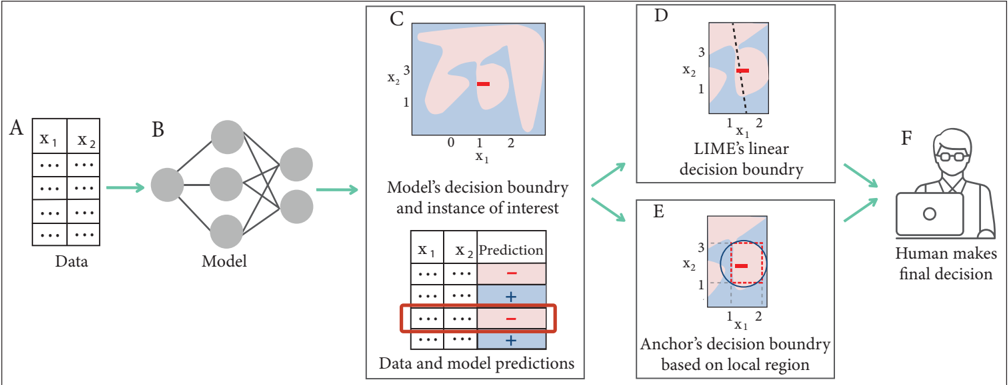
“Starting with SP-LIME [24], it takes a representative sample set from the input data and computes the LIME coefficients for all instances in that set, thereby providing a global view of the ML model’s decision boundary.”
MethodInfluentialHosmer, D. W., Lemeshow, S., & Sturdivant, R. X. (2013) · Wiley Series in Probability and Statistics · doi:10.1002/9781118548387 · Cited by 13,861
Gauriat, C.-M., Pencolé, Y., Ribot, P., & Brouillet, G. (2024) · HAL (Le Centre pour la Communication Scientifique Directe) · doi:10.4230/oasics.dx.2024.27 · Cited by 12,586
Rudin, C. (2019) · Nature Machine Intelligence · doi:10.1038/s42256-019-0048-x · Cited by 10,561 · cited 3×
“Unlike transparent models, black-box models are those that do not explain their predictions in a way that humans can understand [17].”
BackgroundFrom local explanations to global understanding with explainable AI for trees
Lundberg, S. M., Erion, G., Chen, H., DeGrave, A., Prutkin, J. M., Nair, B., Katz, R., Himmelfarb, J., Bansal, N., & Lee, S.-I. (2020) · Nature Machine Intelligence · doi:10.1038/s42256-019-0138-9 · Cited by 10,551 · cited 3×
“Extending their work, Lundberg et al. [39], [65] proposed SHAP interaction values that directly measure local feature interaction effects.”
Method17. A Value for n-Person Games
Shapley, L. S. (1953) · Contributions to the Theory of Games (AM-28), Volume II · doi:10.1515/9781400881970-018 · Cited by 6,950
Lipton, Z. C. (2018) · Queue · doi:10.1145/3236386.3241340 · Cited by 5,427 · cited 1×
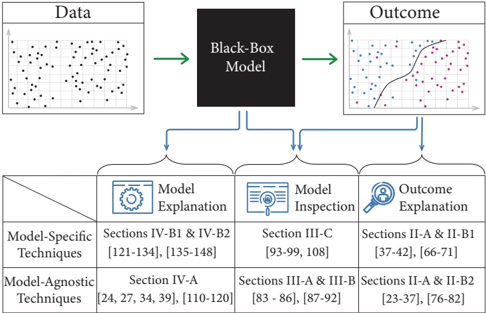
“According to Lipton’s taxonomy [15], there are three notions of model transparency: • Simulatability , reflecting the degree to which the user can contemplate the model in its entirety; FIGURE 1: A map of the references covered in the survey.”
BackgroundExplanation in artificial intelligence: Insights from the social sciences
Miller, T. (2019) · Artificial Intelligence · doi:10.1016/j.artint.2018.07.007 · Cited by 5,302
Shapley, L. S. (1988) · The Shapley Value · doi:10.1017/cbo9780511528446.003 · Cited by 4,954 · cited 2×
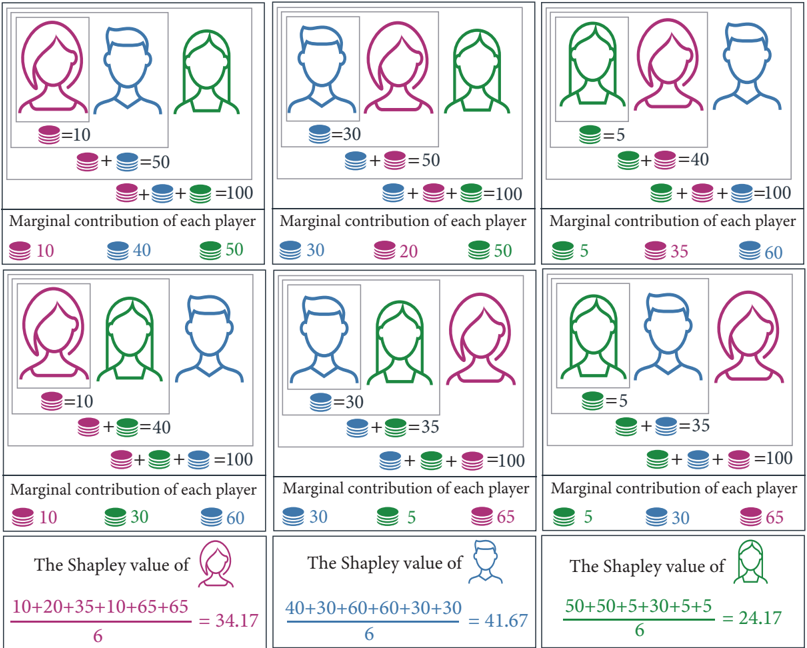
“Next, we explain a completely different design paradigm, which is based on an important solution concept from Cooperative Game Theory called the Shapley value [58].”
MethodOn Pixel-Wise Explanations for Non-Linear Classifier Decisions by Layer-Wise Relevance Propagation
Bach, S., Binder, A., Montavon, G., Klauschen, F., Müller, K.-R., & Samek, W. (2015) · PLOS ONE · doi:10.1371/journal.pone.0130140 · Cited by 4,524
Axiomatic attribution for deep networks
Sundararajan, M., Taly, A., & Yan, Q. (2017) · arXiv · doi:10.48550/arxiv.1703.01365 · Cited by 4,087 · cited 2×
“Sundararajan et al. [95] studied the problem of attributing the prediction of a DNN to its input features and proposed an attribution method called integrated gradients , which is a variation on computing the gradient of the prediction output with regard to input features.”
BackgroundHastie, T., & Tibshirani, R. (2014) · Wiley StatsRef: Statistics Reference Online · doi:10.1002/9781118445112.stat03141 · Cited by 3,156
Learning Important Features Through Propagating Activation Differences
Shrikumar, A., Greenside, P., & Kundaje, A. (2017) · arXiv · doi:10.48550/arxiv.1704.02685 · Cited by 2,761 · cited 1×
“• Deep SHAP : A model-specific framework, designed to explain the outcome of deep learning models by combining the Shapley value with DeepLIFT [38], [64], which is a model-specific that provides outcome explanations for neural networks.”
MethodExplaining prediction models and individual predictions with feature contributions
Štrumbelj, E., & Kononenko, I. (2014) · Knowledge and Information Systems · doi:10.1007/s10115-013-0679-x · Cited by 2,286 · cited 1×
“The authors further extended their work by proposing a sensitivity analysis-based approach to account for potential feature interactions [36] and proposing an algorithm that minimizes the approximation error for a given number of samples.”
BackgroundAnchors: High-Precision Model-Agnostic Explanations
Ribeiro, M. T., Singh, S., & Guestrin, C. (2018) · Proceedings of the AAAI Conference on Artificial Intelligence · doi:10.1609/aaai.v32i1.11491 · Cited by 2,162 · cited 1×
“These techniques served as the foundation for the subsequently developed Anchors [25]—a technique based on random perturbations, just like LIME, but focuses entirely on the neighbourhood of the instance being explained.”
MethodEuropean Union Regulations on Algorithmic Decision Making and a “Right to Explanation”
Goodman, B., & Flaxman, S. (2017) · AI Magazine · doi:10.1609/aimag.v38i3.2741 · Cited by 2,131 · cited 1×
“These concerns have been manifested by the European Union’s recent General Data Protection Regulation, which guarantees a right to explanation , i.e., a right to understand the rationale behind an algorithmic decision that affects individuals negatively [12].”
BackgroundXAI—Explainable artificial intelligence
Gunning, D., Stefik, M., Choi, J., Miller, T., Stumpf, S., & Yang, G.-Z. (2019) · Science Robotics · doi:10.1126/scirobotics.aay7120 · Cited by 2,053 · cited 1×
“To stimulate the development of XAI techniques, the Defense Advanced Research Projects Agency (DARPA) launched an XAI program in 2017 [223], [224], the goal of which is to develop new techniques capable of making intelligent systems explainable.”
Goldstein, A., Kapelner, A., Bleich, J., & Pitkin, E. (2015) · Journal of Computational and Graphical Statistics · doi:10.1080/10618600.2014.907095 · Cited by 1,861 · cited 2×
“The authors propose to measure the feature importance for a single prediction with the Individual Conditional Expectation (ICE) curves [88]— curves showing how the prediction changes when the feature is changed, while other features are fixed to the values of the considered observation.”
BackgroundSensitivity Analysis in Practice: A Guide to Assessing Scientific Models
McCulloch, A. (2005) · Journal of the Royal Statistical Society Series A: Statistics in Society · doi:10.1111/j.1467-985x.2005.358_16.x · Cited by 1,842
Understanding deep image representations by inverting them
Mahendran, A., & Vedaldi, A. (2015) · 2015 IEEE Conference on Computer Vision and Pattern Recognition (CVPR) · doi:10.1109/cvpr.2015.7299155 · Cited by 1,827
Certifying and Removing Disparate Impact
Feldman, M., Friedler, S. A., Moeller, J., Scheidegger, C., & Venkatasubramanian, S. (2015) · Proceedings of the 21th ACM SIGKDD International Conference on Knowledge Discovery and Data Mining · doi:10.1145/2783258.2783311 · Cited by 1,827 · cited 1×
“This technique builds on the work of Feldman et al. [105], who certify and remove bias in classifiers, based on the observation that the information content of a feature can be estimated by predicting it from the remaining features.”
MethodSensitivity Analysis in Practice: A Guide to Assessing Scientific Models
Saltelli, A., Tarantola, S., Campolongo, F., & Ratto, M. (2004) · Cited by 1,797
Intelligible Models for HealthCare: Predicting Pneumonia Risk and Hospital 30-day Readmission
Caruana, R., Lou, Y., Gehrke, J., Koch, P., Sturm, M., & Elhadad, N. (2015) · Proceedings of the 21th ACM SIGKDD International Conference on Knowledge Discovery and Data Mining · doi:10.1145/2783258.2788613 · Cited by 1,685 · cited 2×
“Caruana et al. [117] demonstrated potential applications of GA 2 M in a healthcare-related case study.”
BackgroundMethodConsistent Individualized Feature Attribution for Tree Ensembles
Lundberg, S. M., Erion, G. G., & Lee, S.-I. (2018) · arXiv · doi:10.48550/arxiv.1802.03888 · Cited by 1,430 · cited 1×
“Extending their work, Lundberg et al. [39], [65] proposed SHAP interaction values that directly measure local feature interaction effects.”
MethodDeep learning and the information bottleneck principle
Tishby, N., & Zaslavsky, N. (2015) · 2015 IEEE Information Theory Workshop (ITW) · doi:10.1109/itw.2015.7133169 · Cited by 1,409 · cited 2×
“Tishby and Zaslavsky [108] noted that neural networks with certain properties could be studied in the information plane — the plane of mutual information values that each layer preserves on the input and output variables.”
On the interpretation of weight vectors of linear models in multivariate neuroimaging
Haufe, S., Meinecke, F., Görgen, K., Dähne, S., Haynes, J.-D., Blankertz, B., & Bießmann, F. (2014) · NeuroImage · doi:10.1016/j.neuroimage.2013.10.067 · Cited by 1,389 · cited 1×
“Another technique was proposed by Haufe et al. [41], which transforms non-linear models in terms of multivariate classifiers into interpretable linear models.”
MethodDARPA's Explainable Artificial Intelligence Program
Gunning, D., & Aha, D. W. (2019) · AI Magazine · doi:10.1609/aimag.v40i2.2850 · Cited by 1,360 · cited 1×
“To stimulate the development of XAI techniques, the Defense Advanced Research Projects Agency (DARPA) launched an XAI program in 2017 [223], [224], the goal of which is to develop new techniques capable of making intelligent systems explainable.”
MethodModeling wine preferences by data mining from physicochemical properties
Cortez, P., Cerdeira, A., Almeida, F., Matos, T., & Reis, J. (2009) · Decision Support Systems · doi:10.1016/j.dss.2009.05.016 · Cited by 1,273 · cited 1×
“This example uses a data set on white wine quality [101], consisting of 11 features and an output variable representing the quality of wine on a scale from 3 to 9.”
MethodExplaining machine learning classifiers through diverse counterfactual explanations
Mothilal, R. K., Sharma, A., & Tan, C. (2020) · Proceedings of the 2020 Conference on Fairness, Accountability, and Transparency · doi:10.1145/3351095.3372850 · Cited by 1,233 · cited 2×
“DiCE [67] 2020 Differentiable models Gradient descent.”
BackgroundOlden, J. D., & Jackson, D. A. (2002) · Ecological Modelling · doi:10.1016/s0304-3800(02)00064-9 · Cited by 1,223 · cited 2×
“Olden and Jackson [96] used sensitivity analysis to interpret the internal mechanisms of Artificial Neural Networks (ANN).”
BackgroundMethodExplainable artificial intelligence: A survey
Dosilovic, F. K., Brcic, M., & Hlupic, N. (2018) · 2018 41st International Convention on Information and Communication Technology, Electronics and Microelectronics (MIPRO) · doi:10.23919/mipro.2018.8400040 · Cited by 1,147 · cited 1×
“In particular, the former involves expressing abstract concepts using humanunderstandable terms, while the latter involves pointing out the features that have contributed to the outcome of a particular instance [13].”
Seber, G. A. F., & Lee, A. J. (2003) · Wiley Series in Probability and Statistics · doi:10.1002/9780471722199 · Cited by 1,135
Interpretable Explanations of Black Boxes by Meaningful Perturbation
Fong, R. C., & Vedaldi, A. (2017) · 2017 IEEE International Conference on Computer Vision (ICCV) · doi:10.1109/iccv.2017.371 · Cited by 1,097 · cited 1×
“Many XAI techniques [43]–[46], regardless of whether they are model-specific or model-agnostic, are not suitable for tabular data , i.e., data in which all records share the same features and every such feature is either numerical, categori-(cid:127)€(cid:129)‚ƒ„(cid:127)…†‡‡ˆ…‰Š€ FIGURE 2: An…”
Counterfactual explanations without opening the black box: automated decisions and the GDPR
Wachter, S., Mittelstadt, B., & Russell, C. (2017) · SSRN Electronic Journal · doi:10.2139/ssrn.3063289 · Cited by 1,061
Distribution-Free Predictive Inference for Regression
Lei, J., G’Sell, M., Rinaldo, A., Tibshirani, R. J., & Wasserman, L. (2018) · Journal of the American Statistical Association · doi:10.1080/01621459.2017.1307116 · Cited by 1,049 · cited 1×
“Another model-agnostic technique for outcome explanation is LOCO (Leave One Covariate Out) [32], which scores the instance features by repeatedly running the model, each time leaving one feature out.”
MethodQuestioning the AI: Informing Design Practices for Explainable AI User Experiences
Liao, Q. V., Gruen, D., & Miller, S. (2020) · Proceedings of the 2020 CHI Conference on Human Factors in Computing Systems · doi:10.1145/3313831.3376590 · Cited by 925 · cited 1×
“Liao et al. [209] interviewed 20 user-experience-and-design practitioners working on various AI products.”
BackgroundDesigning Theory-Driven User-Centric Explainable AI
Wang, D., Yang, Q., Abdul, A., & Lim, B. Y. (2019) · Proceedings of the 2019 CHI Conference on Human Factors in Computing Systems · doi:10.1145/3290605.3300831 · Cited by 906 · cited 1×
“Wang et al. [207] proposed a conceptual framework for building human-centered, decision-theory-driven XAI.”
BackgroundCPAR: Classification based on Predictive Association Rules
Yin, X., & Han, J. (2003) · Proceedings of the 2003 SIAM International Conference on Data Mining · doi:10.1137/1.9781611972733.40 · Cited by 833 · cited 1×
“Yin and Han [171] proposed CPAR, which stands for Classification based on Predictive Association Rules.”
BackgroundMittelstadt, B., Russell, C., & Wachter, S. (2019) · Proceedings of the Conference on Fairness, Accountability, and Transparency · doi:10.1145/3287560.3287574 · Cited by 794 · cited 2×
“Finally, we mention the work by Mittelstadt et al. [165], who noted that more research is needed to better understand the link between the outcome of the model and the outcome of the XAI technique.”
BackgroundMethodLetham, B., Rudin, C., McCormick, T. H., & Madigan, D. (2015) · The Annals of Applied Statistics · doi:10.1214/15-aoas848 · Cited by 766 · cited 1×
“[173] use Bayesian Rule Lists (BRL) which discretize a high-dimensional, multivariate feature space into a series of interpretable decision rule lists.”
Extracting refined rules from knowledge-based neural networks
Towell, G. G., & Shavlik, J. W. (1993) · Machine Learning · doi:10.1007/bf00993103 · Cited by 757
Datta, A., Sen, S., & Zick, Y. (2016) · 2016 IEEE Symposium on Security and Privacy (SP) · doi:10.1109/sp.2016.42 · Cited by 728 · cited 1×
“Datta et al. [86] proposed a technique to estimate the influence of specific input features on the black-box model results, taking into consideration any correlated features.”
MethodExplainable Deep Learning Models in Medical Image Analysis
Singh, A., Sengupta, S., & Lakshminarayanan, V. (2020) · Journal of Imaging · doi:10.3390/jimaging6060052 · Cited by 718
Model-Agnostic Interpretability of Machine Learning
Ribeiro, M. T., Singh, S., & Guestrin, C. (2016) · arXiv · doi:10.48550/arxiv.1606.05386 · Cited by 699 · cited 1×
“In their follow-up papers, the developers of LIME underline the importance and challenges of model-agnostic techniques [55] and propose alternatives to LIME that are capable of explaining model outcome via “if-then” rules [56], [57].”
BackgroundInterpretable Decision Sets: A Joint Framework for Description and Prediction
Lakkaraju, H., Bach, S. H., & Leskovec, J. (2016) · Proceedings of the 22nd ACM SIGKDD International Conference on Knowledge Discovery and Data Mining · doi:10.1145/2939672.2939874 · Cited by 687 · cited 2×
“Another recent example of rule extraction is the work of Lakkaraju et al. [168], who proposed a framework for generating prediction models by extracting Interpretable Decision Sets (IDS), i.e., independent if-then rules.”
BackgroundMethodAnalysis of regression in game theory approach
Lipovetsky, S., & Conklin, M. (2001) · Applied Stochastic Models in Business and Industry · doi:10.1002/asmb.446 · Cited by 650 · cited 1×
“To the best of our knowledge, the approach of using the Shapley value to measure feature contributions was first proposed by Lipovetsky and Conklin [60].”
MethodA Survey of Methods for Explaining Black Box Models
Guidotti, R., Monreale, A., Ruggieri, S., Turini, F., Giannotti, F., & Pedreschi, D. (2019) · ACM Computing Surveys · doi:10.1145/3236009 · Cited by 629 · cited 1×
“According to Guidotti et al. [20], black-box explanation problems can be categorized into the following: • Model explanation problems , which requires explaining the underlying logic behind a black-box model.”
BackgroundAntoniadi, A. M., Du, Y., Guendouz, Y., Wei, L., Mazo, C., Becker, B. A., & Mooney, C. (2021) · Applied Sciences · doi:10.3390/app11115088 · Cited by 629 · cited 1×
“Antoniadi et al. [211] performed a literature review for XAI techniques that are applicable to clinical decision support systems.”
BackgroundExtracting Tree-Structured Representations of Trained Networks
Craven, M. W., & SHAVLIK, J. W. (1995) · neural information processing systems · Cited by 602
Interpretable Machine Learning in Healthcare
Ahmad, M. A., Eckert, C., & Teredesai, A. (2018) · Proceedings of the 2018 ACM International Conference on Bioinformatics, Computational Biology, and Health Informatics · doi:10.1145/3233547.3233667 · Cited by 583 · cited 1×
“For more applications of XAI in healthcare, refer to the surveys by Adadi and Berrada [197] and Pawar et al. [198], as well as the tutorial by Ahmad et al. [199].”
MethodHayes-Roth, F. (1985) · Communications of the ACM · doi:10.1145/4284.4286 · Cited by 574
Accurate intelligible models with pairwise interactions
Lou, Y., Caruana, R., Gehrke, J., & Hooker, G. (2013) · Proceedings of the 19th ACM SIGKDD international conference on Knowledge discovery and data mining · doi:10.1145/2487575.2487579 · Cited by 564 · cited 1×
“In the refined technique proposed by the same authors [110], called Generalized Additive Models plus Interactions ( GA 2 M − models ), they suggest making the explanations easier to understand by adding only selected pairs of interacting features to the model.”
MethodIntelligible models for classification and regression
Lou, Y., Caruana, R., & Gehrke, J. (2012) · Proceedings of the 18th ACM SIGKDD international conference on Knowledge discovery and data mining · doi:10.1145/2339530.2339556 · Cited by 547 · cited 2×
“GAMs [109] 2012 Modelling the dependent variable as a sum of univariate models.”
Neural network learning and expert systems
(1993) · Choice Reviews Online · doi:10.5860/choice.31-0983 · Cited by 529
Actionable Recourse in Linear Classification
Ustun, B., Spangher, A., & Liu, Y. (2019) · Proceedings of the Conference on Fairness, Accountability, and Transparency · doi:10.1145/3287560.3287566 · Cited by 501 · cited 2×
“- [68] 2019 Differentiable models Alternation of actionable features.”
BackgroundMethodNot Just a Black Box: Learning Important Features Through Propagating Activation Differences
Shrikumar, A., Greenside, P., Shcherbina, A., & Kundaje, A. B. (2016) · arXiv (Cornell University) · doi:10.48550/arxiv.1605.01713 · Cited by 496 · cited 1×
“• Deep SHAP : A model-specific framework, designed to explain the outcome of deep learning models by combining the Shapley value with DeepLIFT [38], [64], which is a model-specific that provides outcome explanations for neural networks.”
MethodOlver, P. J., & Shakiban, C. (2018) · Undergraduate Texts in Mathematics · doi:10.1007/978-3-319-91041-3 · Cited by 449
Using sensitivity analysis and visualization techniques to open black box data mining models
Cortez, P., & Embrechts, M. J. (2013) · Information Sciences · doi:10.1016/j.ins.2012.10.039 · Cited by 443 · cited 1×
“The authors also propose three novel sensitivity analysis techniques [85], namely data-based sensitivity analysis, Monte-Carlo sensitivity analysis, and cluster-based sensitivity analysis, as well as one novel input importance measure, namely average absolute deviation; see the paper for more…”
MethodRudin, C., & Radin, J. (2019) · Harvard Data Science Review · doi:10.1162/99608f92.5a8a3a3d · Cited by 432 · cited 1×
“In particular, recent studies [17], [161] argue that post-hoc explanations are not reliable since they are not necessarily faithful to the underlying models and present correlations rather than information about the original computation.”
BackgroundNeural Network Learning and Expert Systems
Gallant, S. I. (1993) · The MIT Press eBooks · doi:10.7551/mitpress/4931.001.0001 · Cited by 431 · cited 1×
“There are a number of approaches that have been developed to extract if-then rules from trained neural networks [149]–[152].”
BackgroundHastie, T. J. (2017) · Statistical Models in S · doi:10.1201/9780203738535-7 · Cited by 425
Multimodal Explanations: Justifying Decisions and Pointing to the Evidence
Park, D. H., Hendricks, L. A., Akata, Z., Rohrbach, A., Schiele, B., Darrell, T., & Rohrbach, M. (2018) · 2018 IEEE/CVF Conference on Computer Vision and Pattern Recognition · doi:10.1109/cvpr.2018.00915 · Cited by 418
Holzinger, A., Carrington, A., & Müller, H. (2020) · KI - Künstliche Intelligenz · doi:10.1007/s13218-020-00636-z · Cited by 406 · cited 1×
“Holzinger et al. [213], [214] argued that, in order to assess the quality of explanation, one must distinguish between explainability and causability.”
BackgroundTowards Robust Interpretability with Self-Explaining Neural Networks
Alvarez-Melis, D., & Jaakkola, T. (2018) · arXiv (Cornell University) · doi:10.48550/arxiv.1806.07538 · Cited by 397 · cited 1×
“The stability of post-hoc explanation techniques has also been criticized, showing that some of them are locally not stable enough [162] or, on the contrary, too stable and hence do not have sufficient local accuracy [163].”
BackgroundInteracting with Predictions: Visual Inspection of Black-box Machine Learning Models
Krause, J., Perer, A., & Ng, K. (2016) · Proceedings of the 2016 CHI Conference on Human Factors in Computing Systems · doi:10.1145/2858036.2858529 · Cited by 390 · cited 1×
“Krause et al. [89], [104] proposed a technique called Prospector, which is an interactive visual analytics system.”
MethodAn Efficient Explanation of Individual Classifications using Game Theory
StrumbeljErik, & KononenkoIgor (2010) · Journal of Machine Learning Research · doi:10.5555/1756006.1756007 · Cited by 380 · cited 2×
“IME [35] 2010 Agnostic Coalitional game theory and the Shapley value.”
Holzinger, A., Malle, B., Saranti, A., & Pfeifer, B. (2021) · Information Fusion · doi:10.1016/j.inffus.2021.01.008 · Cited by 352 · cited 3×
“Out of these, we will discuss the works of Srinivasan et al. [219] and Holzinger et al. [178] since they are the only ones capable of handling tabular data—the focus of our survey.”
BackgroundMethodHossain, M. S., Muhammad, G., & Guizani, N. (2020) · IEEE Network · doi:10.1109/mnet.011.2000458 · Cited by 347 · cited 1×
“XAI has been used across a wide range of domains, including healthcare [175]–[181] (Section VI-A), finance [182]–[186] (Section VI-B), criminal justice [187]–[190] (Section VI-C) and other domains [191], [192] (Section VI-D).”
BackgroundInterpretable Counterfactual Explanations Guided by Prototypes
Van Looveren, A., & Klaise, J. (2021) · Lecture Notes in Computer Science · doi:10.1007/978-3-030-86520-7_40 · Cited by 346
Yang, C., Chen, M., & Yuan, Q. (2021) · Accident Analysis & Prevention · doi:10.1016/j.aap.2021.106153 · Cited by 343 · cited 2×
“For example, Yang et al. [191] used data from the Los Angeles region in 2010–2019 to explore the relationships between the injuries caused by truck crashes and built environment factors such as population density, percentage of residential land uses, road characteristics, freight generators (e.g.,…”
BackgroundWhy fairness cannot be automated: Bridging the gap between EU non-discrimination law and AI
Wachter, S., Mittelstadt, B., & Russell, C. (2021) · Computer Law & Security Review · doi:10.1016/j.clsr.2021.105567 · Cited by 336
Interpretable Deep Models for ICU Outcome Prediction.
Che, Z., Purushotham, S., Khemani, R. G., & Liu, Y. (2016) · PubMed · Cited by 332
Counterfactual Explanations for Machine Learning: A Review.Preprint
Verma, S., Dickerson, J. P., & Hines, K. (2020) · arXiv (Cornell University) · Cited by 332
Visualizing the Feature Importance for Black Box Models
Casalicchio, G., Molnar, C., & Bischl, B. (2019) · Lecture notes in computer science · doi:10.1007/978-3-030-10925-7_40 · Cited by 325
FACE: Feasible and Actionable Counterfactual Explanations
Poyiadzi, R., Sokol, K., Santos-Rodriguez, R., De Bie, T., & Flach, P. (2020) · Proceedings of the AAAI/ACM Conference on AI, Ethics, and Society · doi:10.1145/3375627.3375850 · Cited by 317 · cited 2×
“FACE [81] 2020 Shortest path algorithm.”
MethodPayrovnaziri, S. N., Chen, Z., Rengifo-Moreno, P., Miller, T., Bian, J., Chen, J. H., Liu, X., & He, Z. (2020) · Journal of the American Medical Informatics Association · doi:10.1093/jamia/ocaa053 · Cited by 313 · cited 2×
“[181] reviewed 42 papers on XAI models that use real-world electronic health record data, highlighting potential challenges and future directions of XAI from the medical professionals’ perspective.”
Using Sampling and Queries to Extract Rules from Trained Neural Networks
Craven, M. W., & Shavlik, J. W. (1994) · Machine Learning Proceedings 1994 · doi:10.1016/b978-1-55860-335-6.50013-1 · Cited by 311 · cited 2×
“Year Type Underlying mechanism - [135] 1994 ANN Learning rules from the training data and its randomized extension.”
MethodOn the Robustness of Interpretability Methods
Alvarez-Melis, D., & Jaakkola, T. S. (2018) · arXiv · doi:10.48550/arxiv.1806.08049 · Cited by 310 · cited 1×
“First, since the generated explanations are based on random perturbations, the outcome may lack stability [52].”
BackgroundThe Judicial Demand for Explainable Artificial Intelligence
Deeks, A. S. (2019) · Columbia Law Review · Cited by 303
INDUCTIVE AND BAYESIAN LEARNING IN MEDICAL DIAGNOSIS
KONONENKO, I. (1993) · Applied Artificial Intelligence · doi:10.1080/08839519308949993 · Cited by 302 · cited 1×
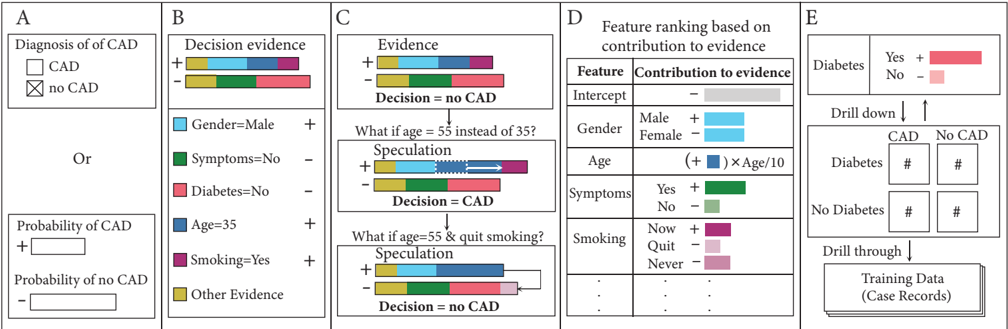
“Compared to previously proposed techniques for explaining particular model decisions, e.g., belief networks [48] or naive Bayesian classifiers [49], [50], ExplainD produces explanations for a broader range of additive models, covering also logistic regression and Support Vector Machines (SVM).”
MethodThe causal effects of education on health outcomes in the UK Biobank
Davies, N. M., Dickson, M., Davey Smith, G., van den Berg, G. J., & Windmeijer, F. (2018) · Nature Human Behaviour · doi:10.1038/s41562-017-0279-y · Cited by 302 · cited 2×
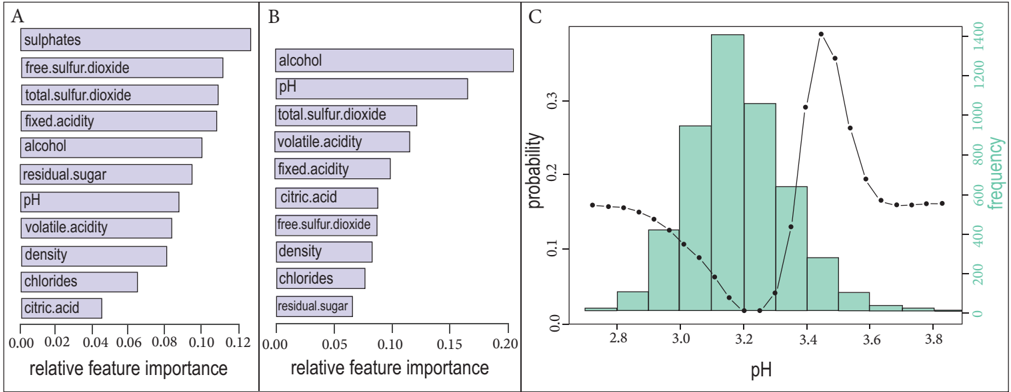
“A non-linear influence of the pH can be observed, highlighting the fact the pH values within the range [3 .”
BackgroundAuditing black-box models for indirect influence
Adler, P., Falk, C., Friedler, S. A., Nix, T., Rybeck, G., Scheidegger, C., Smith, B., & Venkatasubramanian, S. (2018) · Knowledge and Information Systems · doi:10.1007/s10115-017-1116-3 · Cited by 280 · cited 2×
“Adler et al. [91] proposed a technique that focuses on the indirect influence of some features via other related features on the model outcome.”
BackgroundMethodMulti-Objective Counterfactual Explanations
Dandl, S., Molnar, C., Binder, M., & Bischl, B. (2020) · Lecture Notes in Computer Science · doi:10.1007/978-3-030-58112-1_31 · Cited by 271
Interpretation of nonlinear relationships between process variables by use of random forests
Auret, L., & Aldrich, C. (2012) · Minerals Engineering · doi:10.1016/j.mineng.2012.05.008 · Cited by 268 · cited 2×
“In particular, Auret and Aldrich [98] use variable importance measures and partial dependence plots generated by random forest models as an extension to regression models to analyse feature interactions and identify root causes of abnormal processes.”
BackgroundMethodJoshi, S. D., Koyejo, S., Vijitbenjaronk, W. D., Kim, B., & Ghosh, J. (2019) · arXiv (Cornell University) · doi:10.48550/arxiv.1907.09615 · Cited by 266 · cited 2×
“- [69] 2019 Differentiable models Gradient-based algorithm.”
Explaining Data-Driven Document Classifications1
Martens, D., & Provost, F. (2014) · MIS Quarterly · doi:10.25300/misq/2014/38.1.04 · Cited by 264 · cited 1×
“Counterfactual explanations have been used in a wide range of disciplines, including social science [14], data mining [72], philosophy [73] and psychology [74].”
BackgroundInterpreting Blackbox Models via Model ExtractionPreprint
Bastani, O., Kim, C., & Bastani, H. (2017) · arXiv (Cornell University) · doi:10.48550/arxiv.1705.08504 · Cited by 258 · cited 2×
“- [114] 2017 Approximation of the ML model using a decision tree.”
MethodFaithful and Customizable Explanations of Black Box Models
Lakkaraju, H., Kamar, E., Caruana, R., & Leskovec, J. (2019) · Proceedings of the 2019 AAAI/ACM Conference on AI, Ethics, and Society · doi:10.1145/3306618.3314229 · Cited by 256 · cited 2×
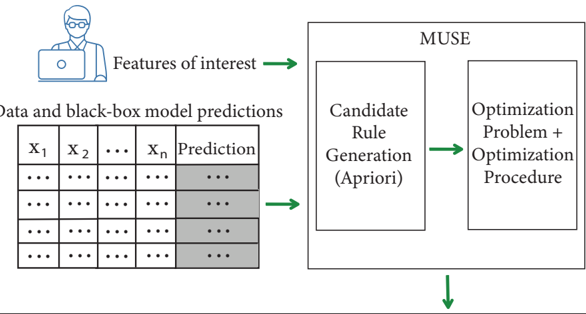
“MUSE [115] 2019 Learning a small number of compact decision sets capturing the behaviour of a given black-box model.”
BackgroundMethodExplaining Classifications For Individual Instances
Robnik-Sikonja, M., & Kononenko, I. (2008) · IEEE Transactions on Knowledge and Data Engineering · doi:10.1109/tkde.2007.190734 · Cited by 254 · cited 3×
“Strumbelj and Kononenko [63] were the first to use the Shapley value for outcome explanation.”
Interpreting tree ensembles with inTrees
Deng, H. (2019) · International Journal of Data Science and Analytics · doi:10.1007/s41060-018-0144-8 · Cited by 253 · cited 1×
“In particular, Deng [148] proposed a framework called InTrees, which extracts, measures, prunes, and selects decision rules from tree ensembles and calculates frequent variable interactions.”
BackgroundModel-Agnostic Counterfactual Explanations for Consequential DecisionsPreprint
Karimi, A.-H., Barthe, G., Balle, B., & Valera, I. (2019) · arXiv (Cornell University) · doi:10.48550/arxiv.1905.11190 · Cited by 251 · cited 1×
“MACE [77] 2020 Logic formulae to express the predictive model and the distance function.”
MethodStatistical stability indices for LIME: Obtaining reliable explanations for machine learning models
Visani, G., Bagli, E., Chesani, F., Poluzzi, A., & Capuzzo, D. (2022) · Journal of the Operational Research Society · doi:10.1080/01605682.2020.1865846 · Cited by 230 · cited 2×
“Second, LIME is sensitive to the data set dimensionality, and when used on a relatively large number of features (e.g., 100 or more), the local explanation is unable to discriminate between relevant and irrelevant features, which may result in a poor performance [53], [54].”
BackgroundMethodSharma, S., Henderson, J., & Ghosh, J. (2020) · Proceedings of the AAAI/ACM Conference on AI, Ethics, and Society · doi:10.1145/3375627.3375812 · Cited by 226
Interpretable Machine Learning in Healthcare
Ahmad, M. A., Teredesai, A., & Eckert, C. (2018) · 2018 IEEE International Conference on Healthcare Informatics (ICHI) · doi:10.1109/ichi.2018.00095 · Cited by 220
Efficient Search for Diverse Coherent Explanations
Russell, C. (2019) · Proceedings of the Conference on Fairness, Accountability, and Transparency · doi:10.1145/3287560.3287569 · Cited by 218 · cited 2×
“Russell [71] proposes a search algorithm and a set of constraints for counterfactuals based on mixed-integer programming.”
BackgroundSymbolic interpretation of artificial neural networks
Taha, I. A., & Ghosh, J. (1999) · IEEE Transactions on Knowledge and Data Engineering · doi:10.1109/69.774103 · Cited by 217 · cited 2×
“[136] proposed three techniques of rule extraction from ANN; the suitability of each depends on the network parameters.”
Beyond Sparsity: Tree Regularization of Deep Models for Interpretability
Wu, M., Hughes, M., Parbhoo, S., Zazzi, M., Roth, V., & Doshi-Velez, F. (2018) · Proceedings of the AAAI Conference on Artificial Intelligence · doi:10.1609/aaai.v32i1.11501 · Cited by 213
A Review on Explainability in Multimodal Deep Neural Nets
Joshi, G., Walambe, R., & Kotecha, K. (2021) · IEEE Access · doi:10.1109/access.2021.3070212 · Cited by 204 · cited 1×
“Several applications of multimodal AI were proposed in the literature [215], [216], but despite their outstanding performance, there is a lack of social acceptance due to their black-box nature [217].”
BackgroundClassifiers consensus system approach for credit scoring
Ala'raj, M., & Abbod, M. F. (2016) · Knowledge-Based Systems · doi:10.1016/j.knosys.2016.04.013 · Cited by 202
Poirier, D. J. (2018) · The New Palgrave Dictionary of Economics · doi:10.1057/978-1-349-95189-5_2754 · Cited by 201
The Dangers of Post-hoc Interpretability: Unjustified Counterfactual Explanations
Laugel, T., Lesot, M.-J., Marsala, C., Renard, X., & Detyniecki, M. (2019) · Proceedings of the Twenty-Eighth International Joint Conference on Artificial Intelligence · doi:10.24963/ijcai.2019/388 · Cited by 194
Rule learning by searching on adapted nets
Fu, L. (1991) · National Conference on Artificial Intelligence · Cited by 193
Predicting Credit Risk in Peer-to-Peer Lending: A Neural Network Approach
Byanjankar, A., Heikkila, M., & Mezei, J. (2015) · IEEE Symposium Series on Computational Intelligence (SSCI) · doi:10.1109/ssci.2015.109 · Cited by 189
Précis ofThe Rational Imagination: How People Create Alternatives to Reality
Byrne, R. M. J. (2007) · Behavioral and Brain Sciences · doi:10.1017/s0140525x07002579 · Cited by 186
ALIME: Autoencoder Based Approach for Local Interpretability
Shankaranarayana, S. M., & Runje, D. (2019) · Lecture notes in computer science · doi:10.1007/978-3-030-33607-3_49 · Cited by 181
Local Rule-Based Explanations of Black Box Decision Systems
Guidotti, R., Monreale, A., Ruggieri, S., Pedreschi, D., Turini, F., & Giannotti, F. (2018) · arXiv (Cornell University) · doi:10.48550/arxiv.1805.10820 · Cited by 179 · cited 3×
“Other model-agnostic techniques use Monte Carlo sampling [33], feature importance ranking [34], ge-netic algorithms [31], and local linear modelling combined with random forests [30].”
BackgroundMethodExplanation in AI and law: Past, present and future
Atkinson, K., Bench-Capon, T., & Bollegala, D. (2020) · Artificial Intelligence · doi:10.1016/j.artint.2020.103387 · Cited by 178 · cited 1×
“For a more thorough discussion of XAI applications in the area of law and criminal justice, see the surveys by Deeks [190] and Atkinson et al. [189].”
BackgroundInterpreting Random Forest Classification Models Using a Feature Contribution Method
Palczewska, A., Palczewski, J., Robinson, R. M., & Neagu, D. C. (2014) · Advances in intelligent systems and computing · doi:10.1007/978-3-319-04717-1_9 · Cited by 176
Pawar, U., O’Shea, D., Rea, S., & O’Reilly, R. (2020) · International Conference on Cyber Situational Awareness, Data Analytics and Assessment (CyberSA) · doi:10.1109/cybersa49311.2020.9139655 · Cited by 175 · cited 1×
“For more applications of XAI in healthcare, refer to the surveys by Adadi and Berrada [197] and Pawar et al. [198], as well as the tutorial by Ahmad et al. [199].”
MethodAn explainable AI decision-support-system to automate loan underwriting
Sachan, S., Yang, J.-B., Xu, D.-L., Benavides, D. E., & Li, Y. (2020) · Expert Systems with Applications · doi:10.1016/j.eswa.2019.113100 · Cited by 174 · cited 1×
“Sachan et al. [200] proposed an XAI decision support system to automate the loan underwriting process by belief-rule-base (which is an extension of traditional IF-THEN rule-based systems).”
MethodReverse Engineering the Neural Networks for Rule Extraction in Classification Problems
Augasta, M. G., & Kathirvalavakumar, T. (2012) · Neural Processing Letters · doi:10.1007/s11063-011-9207-8 · Cited by 173 · cited 2×
“[137] proposed a engineering technique called RxREN, which extracts if-then rules from conventional feedforward neural networks.”
MethodFERNN: An Algorithm for Fast Extraction of Rules from Neural Networks
Setiono, R., & Leow, W. K. (2000) · Applied Intelligence · doi:10.1023/a:1008307919726 · Cited by 171 · cited 1×
“…of rule extraction from neural networks include genetic programming [153]–[155], function-analysis [156], Boolean function approximation of neural network nodes [157], information gain maximization of hidden layers [158], and recursive discretization of the activation values of hidden nodes [159].”
BackgroundThe Feature Importance Ranking Measure
Zien, A., Krämer, N., Sonnenburg, S., & Rätsch, G. (2009) · Lecture Notes in Computer Science · doi:10.1007/978-3-642-04174-7_45 · Cited by 171 · cited 2×
“Zien et al. [113] proposed yet another model explanation technique called Feature Importance Ranking Measure (FIRM), which is a generalisation of a classification technique called Positional Oligomer Importance Matrices (POIMs).”
BackgroundMethodANN-DT: an algorithm for extraction of decision trees from artificial neural networks
Schmitz, G. P. J., Aldrich, C., & Gouws, F. S. (1999) · IEEE Transactions on Neural Networks · doi:10.1109/72.809084 · Cited by 170
Rule Extraction from Support Vector Machines
(2006) · Advanced Information and Knowledge Processing · doi:10.1007/3-540-28803-1_10 · Cited by 167
Learning Model-Agnostic Counterfactual Explanations for Tabular Data
Pawelczyk, M., Broelemann, K., & Kasneci, G. (2020) · Proceedings of The Web Conference 2020 · doi:10.1145/3366423.3380087 · Cited by 167 · cited 3×
“C-CHVAE [47] 2020 Variational autoencoder (VAE).”
BackgroundInfluentialExtracting rules from trained neural networks
Tsukimoto, H. (2000) · IEEE Transactions on Neural Networks · doi:10.1109/72.839008 · Cited by 166
Blockchain for explainable and trustworthy artificial intelligence
Nassar, M., Salah, K., Rehman, M. H. U., & Svetinović, D. (2019) · Wiley Interdisciplinary Reviews Data Mining and Knowledge Discovery · doi:10.1002/widm.1340 · Cited by 164 · cited 1×
“Nassar et al. [185] propose a general framework for achieving a more trustworthy and explainable AI by leveraging features of blockchain, smart contracts, trusted oracles, and decentralized storage.”
BackgroundDoctor XAI: an ontology-based approach to black-box sequential data classification explanations
Panigutti, C., Perotti, A., & Pedreschi, D. (2020) · Proceedings of the 2020 Conference on Fairness, Accountability, and Transparency · doi:10.1145/3351095.3372855 · Cited by 164
Analysis of free text in electronic health records for identification of cancer patient trajectories
Jensen, K., Soguero-Ruíz, C., Mikalsen, K. Ø., Lindsetmo, R., Kouskoumvekaki, I. A., Girolami, M., Skrøvseth, S. O., & Augestad, K. M. (2017) · Scientific Reports · doi:10.1038/srep46226 · Cited by 163 · cited 1×
“THE recent surge of interest in Machine Learning (ML) and Artificial Intelligence (AI) has spurred a wide array of models designed to make decisions in a variety of domains, including healthcare [1]–[3], financial systems [4]– [7], and criminal justice [8]–[10], just to name a few.”
(2015) · International Conference on Artificial Intelligence and Statistics · Cited by 162
Classification Based on Predictive Association Rules of Incomplete Data
YOON, J., & KIM, D.-W. (2012) · IEICE Transactions on Information and Systems · doi:10.1587/transinf.e95.d.1531 · Cited by 159
Fooling LIME and SHAP: Adversarial Attacks on Post hoc Explanation Methods
Slack, D., Hilgard, S., Jia, E., Singh, S. K., & Lakkaraju, H. (2019) · arXiv (Cornell University) · doi:10.48550/arxiv.1911.02508 · Cited by 155 · cited 2×
“Another limitation was highlighted by Slack et al. [164], who demonstrate that perturbation-based outcome explanation techniques can be fooled via so-called “scaffolding techniques”.”
MethodRule extraction from linear support vector machines
Fung, G., Sandilya, S., & Rao, R. B. (2005) · Proceedings of the eleventh ACM SIGKDD international conference on Knowledge discovery in data mining · doi:10.1145/1081870.1081878 · Cited by 154 · cited 2×
“- [141] 2005 SVM Constraint programming to convert SVM into a set of non-overlapping and interpretable rules.”
MethodExplaining instance classifications with interactions of subsets of feature values
Štrumbelj, E., Kononenko, I., & Robnik‐Šikonja, M. (2009) · Data & Knowledge Engineering · doi:10.1016/j.datak.2009.01.004 · Cited by 152 · cited 1×
“Strumbelj and Kononenko [63] were the first to use the Shapley value for outcome explanation.”
MethodModel Agnostic Supervised Local Explanations
Plumb, G., Molitor, D., & Talwalkar, A. (2018) · arXiv · doi:10.48550/arxiv.1807.02910 · Cited by 149 · cited 1×
“Other model-agnostic techniques use Monte Carlo sampling [33], feature importance ranking [34], ge-netic algorithms [31], and local linear modelling combined with random forests [30].”
MethodDiscovering additive structure in black box functions
Hooker, G. (2004) · ACM SIGKDD Conference on Knowledge Discovery and Data Mining (KDD) · doi:10.1145/1014052.1014122 · Cited by 145 · cited 1×
“Hooker proposed a technique [87] for evaluating the sig-nificance of non-additive interactions between any set of features.”
MethodFeature Selection via Coalitional Game Theory
Cohen, S., Dror, G., & Ruppin, E. (2007) · Neural Computation · doi:10.1162/neco.2007.19.7.1939 · Cited by 144 · cited 1×
“The Shapley value was subsequently used to provide insights into the inner workings of artificial neural networks [61] and for feature selection in regression and classification models [62].”
MethodKnowledge discovery via multiple models
DOMINGOS, P. (1998) · Intelligent Data Analysis · doi:10.1016/s1088-467x(98)00023-7 · Cited by 140
OptiLIME: Optimized LIME Explanations for Diagnostic Computer AlgorithmsPreprint
Visani, G., Bagli, E., & Chesani, F. (2020) · arXiv (Cornell University) · doi:10.48550/arxiv.2006.05714 · Cited by 138 · cited 2×
“Second, LIME is sensitive to the data set dimensionality, and when used on a relatively large number of features (e.g., 100 or more), the local explanation is unable to discriminate between relevant and irrelevant features, which may result in a poor performance [53], [54].”
BackgroundMethodExplainable AI for Healthcare: From Black Box to Interpretable Models
Adadi, A., & Berrada, M. (2020) · Advances in Intelligent Systems and Computing · doi:10.1007/978-981-15-0947-6_31 · Cited by 137 · cited 1×
“For more applications of XAI in healthcare, refer to the surveys by Adadi and Berrada [197] and Pawar et al. [198], as well as the tutorial by Ahmad et al. [199].”
MethodMeasurable Counterfactual Local Explanations for Any Classifier
Adam, W., & Garcez, A. D. (2020) · Frontiers in artificial intelligence and applications · doi:10.3233/faia200387 · Cited by 137
Extracting decision trees from trained neural networks
Krishnan, R., Sivakumar, G., & Bhattacharya, P. (1999) · Pattern Recognition · doi:10.1016/s0031-3203(98)00181-2 · Cited by 134
Nomograms for Visualization of Naive Bayesian Classifier
Možina, M., Demšar, J., Kattan, M. W., & Zupan, B. (2004) · Lecture notes in computer science · doi:10.1007/978-3-540-30116-5_32 · Cited by 133 · cited 1×
“Compared to previously proposed techniques for explaining particular model decisions, e.g., belief networks [48] or naive Bayesian classifiers [49], [50], ExplainD produces explanations for a broader range of additive models, covering also logistic regression and Support Vector Machines (SVM).”
MethodVisual explanation of evidence in additive classifiers
Poulin, B., Eisner, R., Szafron, D., Lu, P., Greiner, R., Wishart, D. S., Fyshe, A., Pearcy, B., Macdonell, C., & Anvik, J. (2006) · NPARC · Cited by 131
Eclectic Rule-Extraction From Support Vector Machines
Barakat, N., & Diederich, J. (2008) · doi:10.5281/zenodo.1055510 · Cited by 131
Defining Locality for Surrogates in Post-hoc InterpretablityPreprint
Laugel, T., Renard, X., Lesot, M., Marsala, C., & Detyniecki, M. (2018) · arXiv (Cornell University) · doi:10.48550/arxiv.1806.07498 · Cited by 130 · cited 1×
“The stability of post-hoc explanation techniques has also been criticized, showing that some of them are locally not stable enough [162] or, on the contrary, too stable and hence do not have sufficient local accuracy [163].”
BackgroundUnderstanding neural networks via rule extraction
Setiono, R., & Liu, H. (1995) · Cited by 129
Black Box Attacks on Explainable Artificial Intelligence(XAI) methods in Cyber Security
Kuppa, A., & Le-Khac, N.-A. (2020) · 2020 International Joint Conference on Neural Networks (IJCNN) · doi:10.1109/ijcnn48605.2020.9206780 · Cited by 123 · cited 1×
“Kuppa and Le-Khac [203] proposed a taxonomy for XAI covering various security properties and threat models relevant to cybersecurity.”
BackgroundExplainable AI for Interpretable Credit Scoring
Demajo, L. M., Vella, V., & Dingli, A. (2020) · Computer Science & Information Technology (CS & IT) · doi:10.5121/csit.2020.101516 · Cited by 121 · cited 1×
“XAI has been used across a wide range of domains, including healthcare [175]–[181] (Section VI-A), finance [182]–[186] (Section VI-B), criminal justice [187]–[190] (Section VI-C) and other domains [191], [192] (Section VI-D).”
BackgroundExplainable software analytics
Dam, H. K., Tran, T., & Ghose, A. (2018) · Proceedings of the 40th International Conference on Software Engineering: New Ideas and Emerging Results · doi:10.1145/3183399.3183424 · Cited by 120 · cited 1×
“However, the obsession with accuracy has led to unintended consequences, as developers often strove to achieve greater accuracy at the expense of interpretability by making their models increasingly complicated and harder to understand [11].”
BackgroundChen, Z.-Y., Li, J., & Wei, L. (2007) · Artificial Intelligence in Medicine · doi:10.1016/j.artmed.2007.07.008 · Cited by 119 · cited 3×
“MK-SVM [146] 2007 SVM Using feature selection, rule extraction and prediction modelling to improve the explanation capability of SVM.”
Rule Extraction from Support Vector Machines: A Sequential Covering Approach
Barakat, N., & Bradley, A. P. (2007) · IEEE Transactions on Knowledge and Data Engineering · doi:10.1109/tkde.2007.190610 · Cited by 116 · cited 2×
“Barakat and Bradley [142] proposed a rule extraction method that learns rules directly from the support vectors of trained SVM using a sequential search algorithm.”
MethodLearning Symbolic Rules Using Artificial Neural Networks
Craven, M. W., & SHAVLIK, J. W. (1993) · Elsevier eBooks · doi:10.1016/b978-1-55860-307-3.50016-2 · Cited by 115
For Black men, being tall increases threat stereotyping and police stops
Hester, N., & Gray, K. J. (2018) · Proceedings of the National Academy of Sciences · doi:10.1073/pnas.1714454115 · Cited by 114 · cited 1×
“Hester and Gray [9] observed that for black men, being tall increases the threat of being stereotyped and stopped by the police.”
BackgroundIteratively Questioning and Answering for Interpretable Legal Judgment Prediction
Zhong, H., Wang, Y., Tu, C., Zhang, T., Liu, Z., & Sun, M. (2020) · Proceedings of the AAAI Conference on Artificial Intelligence · doi:10.1609/aaai.v34i01.5479 · Cited by 113 · cited 1×
“Zhong et al. [188] proposed a technique called QAjudge to explain legal judgment predictions that are generated using reinforcement learning.”
MethodCounterfactuals and Explanation
Kment, B. (2006) · Mind · doi:10.1093/mind/fzl261 · Cited by 111 · cited 1×
“Counterfactual explanations have been used in a wide range of disciplines, including social science [14], data mining [72], philosophy [73] and psychology [74].”
BackgroundScenario-Based Requirements Elicitation for User-Centric Explainable AI: A Case in Fraud Detection
Cirqueira, D., Nedbal, D., Helfert, M., & Bezbradica, M. (2020) · Lecture notes in computer science · doi:10.1007/978-3-030-57321-8_18 · Cited by 109
An Interpretable Model with Globally Consistent Explanations for Credit RiskPreprint
Chen, C., Lin, K., Rudin, C. D., Shaposhnik, Y., Wang, S., & Wang, T. (2018) · arXiv (Cornell University) · doi:10.48550/arxiv.1811.12615 · Cited by 108 · cited 1×
“In the scope of this challenge, the winner model was proposed by Chen et al. [226], which was a two-layer additive risk model for credit risk assessment.”
MethodFair Attribution of Functional Contribution in Artificial and Biological Networks
Keinan, A., Sandbank, B., Hilgetag, C. C., Meilijson, I., & Ruppin, E. (2004) · Neural Computation · doi:10.1162/0899766041336387 · Cited by 107 · cited 1×
“The Shapley value was subsequently used to provide insights into the inner workings of artificial neural networks [61] and for feature selection in regression and classification models [62].”
MethodOpening black box Data Mining models using Sensitivity Analysis
Cortez, P., & Embrechts, M. J. (2011) · 2011 IEEE Symposium on Computational Intelligence and Data Mining (CIDM) · doi:10.1109/cidm.2011.5949423 · Cited by 107 · cited 1×
“Cortez and Embrechts [84], [103] proposed yet another approach, which uses well-established sensitivity analysis techniques combined with visualisation that are meant to provide more intuitive explanations.”
BackgroundMultimodal deep learning for finance: integrating and forecasting international stock markets
Lee, S. I., & Yoo, S. J. (2019) · The Journal of Supercomputing · doi:10.1007/s11227-019-03101-3 · Cited by 106 · cited 1×
“Several applications of multimodal AI were proposed in the literature [215], [216], but despite their outstanding performance, there is a lack of social acceptance due to their black-box nature [217].”
Hu, C.-A., Chen, C.-M., Fang, Y.-C., Liang, S.-J., Wang, H.-C., Fang, W.-F., Sheu, C.-C., Perng, W.-C., Yang, K.-Y., Kao, K.-C., et al. (2020) · BMJ Open · doi:10.1136/bmjopen-2019-033898 · Cited by 106 · cited 1×
“A different application of SHAP was proposed by Hu et al. [196], who used it to identify the individual-level features that had the greatest impact on the 30-day mortality rate of influenza patients with critical illness in Taiwan.”
MethodGibbons, R. D., Hooker, G., Finkelman, M. D., Weiss, D. J., Pilkonis, P. A., Frank, E., Moore, T., & Kupfer, D. J. (2013) · The Journal of Clinical Psychiatry · doi:10.4088/jcp.12m08338 · Cited by 101
A peek into the black box: exploring classifiers by randomization
Henelius, A., Puolamäki, K., Boström, H., Asker, L., & Papapetrou, P. (2014) · Data Mining and Knowledge Discovery · doi:10.1007/s10618-014-0368-8 · Cited by 98 · cited 2×
“Another technique of model explanation is called Golden-Eye [111], which is based on data randomization to identify groups of features whose interactions have an impact on the prediction.”
MethodThe consumer loan default predicting model – An application of DEA–DA and neural network
Tsai, M.-C., Lin, S.-P., Cheng, C., & Lin, Y.-P. (2009) · Expert Systems with Applications · doi:10.1016/j.eswa.2009.03.009 · Cited by 93 · cited 1×
“T HE recent surge of interest in Machine Learning (ML) and Artificial Intelligence (AI) has spurred a wide array of models designed to make decisions in a variety of domains, including healthcare [1]–[3], financial systems [4]– [7], and criminal justice [8]–[10], just to name a few.”
BackgroundMaking Tree Ensembles InterpretablePreprint
Hara, S., & Hayashi, K. (2016) · arXiv (Cornell University) · doi:10.48550/arxiv.1606.05390 · Cited by 88 · cited 2×
“- [134] 2016 Using expectation maximization as a post processing technique to improve model inter-pretability.”
MethodExplainable AI and Multi-Modal Causability in Medicine
Holzinger, A. (2021) · i-com · doi:10.1515/icom-2020-0024 · Cited by 87 · cited 1×
“Holzinger et al. [213], [214] argued that, in order to assess the quality of explanation, one must distinguish between explainability and causability.”
BackgroundTurner, R. (2016) · Machine learning for signal processing ... · doi:10.1109/mlsp.2016.7738872 · Cited by 81 · cited 1×
“Other model-agnostic techniques use Monte Carlo sampling [33], feature importance ranking [34], ge-netic algorithms [31], and local linear modelling combined with random forests [30].”
MethodPALM: Machine Learning Explanations For Iterative Debugging
Krishnan, S., & Wu, E. (2017) · Proceedings of the 2nd Workshop on Human-In-the-Loop Data Analytics · doi:10.1145/3077257.3077271 · Cited by 81 · cited 2×
“Krishnan and Wu [112] proposed a technique called PALM, which stands for Partition Aware Local Model.”
MethodInterpretable Credit Application Predictions With Counterfactual Explanations
McGrath, R., Costabello, L., Van, C. L., Sweeney, P., Kamiab, F., Shen, Z., & Lécué, F. (2018) · arXiv (Cornell University) · doi:10.48550/arxiv.1811.05245 · Cited by 78 · cited 2×
“Positive counterfactuals [76] 2018 K-Nearest Neighbours and ANOVA F-values.”
BackgroundMethodExplainable AI meets Healthcare: A Study on Heart Disease Dataset
Dave, D., Naik, H., Singhal, S., & Patel, P. (2020) · arXiv (Cornell University) · doi:10.48550/arxiv.2011.03195 · Cited by 72 · cited 1×
“Devam et al. [194] used a variety of XAI techniques on the heart disease data set, with the goal being to demonstrate to practitioners the understandability and interpretability of XAI.”
MethodExtracting decision trees from trained neural networks
Boz, O. (2002) · Proceedings of the eighth ACM SIGKDD international conference on Knowledge discovery and data mining · doi:10.1145/775047.775113 · Cited by 71 · cited 2×
“DecText [124] 2002 ANN Trepan with the addition of four novel splitting methods.”
MethodExtracting the knowledge embedded in support vector machines
Fu, X., Ong, C. J., Keerthi, S., Hung, G. G., & Goh, L. (2005) · International Joint Conference on Neural Networks (IJCNN) · doi:10.1109/ijcnn.2004.1379916 · Cited by 70 · cited 2×
“Fu et al. [144] proposed a technique to extract if-then rules from SVM by using intervals defined by hyper-rectangular forms.”
MethodUsing Visual Analytics to Interpret Predictive Machine Learning ModelsPreprint
Krause, J., Perer, A., & Bertini, E. (2016) · arXiv (Cornell University) · doi:10.48550/arxiv.1606.05685 · Cited by 70 · cited 1×
“Krause et al. [89], [104] proposed a technique called Prospector, which is an interactive visual analytics system.”
MethodInterpreting Models via Single Tree ApproximationPreprint
Zhou, Y., & Hooker, G. (2016) · arXiv (Cornell University) · doi:10.48550/arxiv.1610.09036 · Cited by 70 · cited 2×
“- [131] 2016 CAD-MDD with the addition of hypothesis testing.”
MethodIterative Orthogonal Feature Projection for Diagnosing Bias in Black-Box ModelsPreprint
Adebayo, J., & Kagal, L. (2016) · arXiv (Cornell University) · doi:10.48550/arxiv.1611.04967 · Cited by 70 · cited 2×
“Adebayo and Kagal [92] proposed a process that iteratively transforms the input features in a given data set to obtain several new data sets, where one feature is removed after each iteration.”
BackgroundHryniewska-Guzik, W., Bombiński, P., Szatkowski, P., Tomaszewska, P., Przelaskowski, A., & Biecek, P. (2021) · Pattern Recognition · doi:10.1016/j.patcog.2021.108035 · Cited by 70
Zafar, M. R., & Khan, N. M. (2019) · arXiv · doi:10.48550/arxiv.1906.10263 · Cited by 69 · cited 1×
“[26] propose another technique to improve the stability of LIME, which uses hierarchical clustering instead of random perturbations to group the training data and then selects the cluster that is most relevant to the instance being explained.”
MethodFairML : ToolBox for diagnosing bias in predictive modeling
Adebayo, J. (2016) · Cited by 67
The Next Generation of Medical Decision Support: A Roadmap Toward Transparent Expert Companions
Bruckert, S., Finzel, B., & Schmid, U. (2020) · Frontiers in Artificial Intelligence · doi:10.3389/frai.2020.507973 · Cited by 66
Sonnenburg, S., Zien, A., Philips, P., & Rätsch, G. (2008) · Bioinformatics · doi:10.1093/bioinformatics/btn170 · Cited by 64 · cited 1×
“In more detail, POIMs considers the correlations between different features in order to measure the impact of binary features on the performance of SVM-based sequence classifiers that are used for string classification [119].”
Evolving decision trees using oracle guides
Johansson, U., & Niklasson, L. (2009) · IEEE Symposium on Computational Intelligence and Data Mining (CIDM) · doi:10.1109/cidm.2009.4938655 · Cited by 64 · cited 2×
“Finally, we mention the work of Johanson and Niklasson [125], who use genetic programming for evolving decision trees to mimic the behaviour of a neural network.”
MethodConfident Interpretation of Bayesian Decision Tree Ensembles for Clinical Applications
Schetinin, V., Fieldsend, J. E., Partridge, D., Coats, T. J., Krzanowski, W. J., Everson, R. M., Bailey, T. C., & Hernandez, A. (2007) · IEEE Transactions on Information Technology in Biomedicine · doi:10.1109/titb.2006.880553 · Cited by 64 · cited 2×
“- [133] 2007 Quantitative evaluation of uncertainty using a Markov chain Monte Carlo technique.”
MethodGraphical Explanation in Belief Networks
Madigan, D., Mosurski, K., & Almond, R. G. (1997) · Journal of Computational and Graphical Statistics · doi:10.1080/10618600.1997.10474735 · Cited by 63 · cited 1×
“Compared to previously proposed techniques for explaining particular model decisions, e.g., belief networks [48] or naive Bayesian classifiers [49], [50], ExplainD produces explanations for a broader range of additive models, covering also logistic regression and Support Vector Machines (SVM).”
MethodForest Floor Visualizations of Random Forests
Welling, S. H., Refsgaard, H. H. F., Brockhoff, P. B., & Clemmensen, L. K. H. (2016) · arXiv (Cornell University) · doi:10.48550/arxiv.1605.09196 · Cited by 63 · cited 2×
“[99] 2016 Specific Visualising random forest models based on feature contributions. data distribution and the resulting counterfactual are connected via high-density paths to the explained instance.”
BackgroundThe Truth is in There : Rule Extraction from Opaque Models Using Genetic Programming
Johansson, U., König, R., & Niklasson, L. (2004) · Cited by 62
Bounding the Estimation Error of Sampling-based Shapley Value ApproximationPreprint
Maleki, S., Tran-Thanh, L., Hines, G., Rahwan, T., & Rogers, A. (2013) · arXiv (Cornell University) · doi:10.48550/arxiv.1306.4265 · Cited by 62 · cited 1×
“Fortunately, the Shapley value can be approximated by sampling from the space of possible joining orders, and a bound can be established on the resulting estimation [59], making it possible to approximate the Shapley value in linear time.”
Self-citationTreeView: Peeking into Deep Neural Networks Via Feature-Space PartitioningPreprint
Thiagarajan, J. J., Kailkhura, B., Sattigeri, P., & Ramamurthy, K. N. (2016) · arXiv (Cornell University) · doi:10.48550/arxiv.1611.07429 · Cited by 61 · cited 2×
“TreeView [94] 2016 Specific Surrogate decision tree approximation of Deep Neutral Networks.”
BackgroundMethodUsing Data Mining for Wine Quality Assessment
Cortez, P., Teixeira, J., Cerdeira, A., Almeida, F., Matos, T., & Reis, J. (2009) · Lecture Notes in Computer Science · doi:10.1007/978-3-642-04747-3_8 · Cited by 60 · cited 1×
“Cortez and Embrechts [84], [103] proposed yet another approach, which uses well-established sensitivity analysis techniques combined with visualisation that are meant to provide more intuitive explanations.”
BackgroundRule-Based Learning Systems for Support Vector Machines
Núñez, H., Ángulo, C., & Catalá, A. (2006) · Neural Processing Letters · doi:10.1007/s11063-006-9007-8 · Cited by 60 · cited 1×
“In a follow-up study, the authors propose an improved version of this technique [160].”
Nothing Else Matters: Model-Agnostic Explanations By Identifying Prediction Invariance
Ribeiro, M. T., Singh, S. K., & Guestrin, C. (2016) · arXiv (Cornell University) · doi:10.48550/arxiv.1611.05817 · Cited by 59 · cited 1×
“In their follow-up papers, the developers of LIME underline the importance and challenges of model-agnostic techniques [55] and propose alternatives to LIME that are capable of explaining model outcome via “if-then” rules [56], [57].”
BackgroundExplainable AI and the philosophy and practice of explanation
O’Hara, K. (2020) · Computer law & security review · doi:10.1016/j.clsr.2020.105474 · Cited by 57 · cited 1×
“O’Hara [205] emphasized the need for transparency in AI systems and the requirement for the human operator to intervene when the AI’s decision and/or explanation are deemed discriminative.”
BackgroundExplainable AI (XAI) Models Applied to the Multi-agent Environment of Financial Markets
Ohana, J. J., Ohana, S., Benhamou, E., Saltiel, D., & Guez, B. (2021) · Lecture notes in computer science · doi:10.1007/978-3-030-82017-6_12 · Cited by 57
ILIME: Local and Global Interpretable Model-Agnostic Explainer of Black-Box Decision
Elshawi, R., Sherif, Y., Al-Mallah, M. H., & Sakr, S. (2019) · Lecture notes in computer science · doi:10.1007/978-3-030-28730-6_4 · Cited by 56 · cited 2×
“• Elshawi et al. [27] weigh each instance in the permuted data set based on (i) its influence in a linear model on the instance to be explained, and (ii) its distance to the instance being explained; this way, the resulting coefficients become reflective of the feature ranking. where the data is…”
BackgroundMethodLiu, H., & Tan, S. T. (1995) · Conference proceedings/Conference proceedings - IEEE International Conference on Systems, Man, and Cybernetics · doi:10.1109/icsmc.1995.538006 · Cited by 54 · cited 1×
“Among the ones that extract decision rules from the data, we start with the work of Liu and Tan [170], who proposed an algorithm called X2R that can learn rules from raw data, be it numeric and discrete.”
MethodHow to Explain Individual Classification Decisions
(2010) · Journal of Machine Learning Research · doi:10.5555/1756006.1859912 · Cited by 54 · cited 2×
“[83] proposed a technique based on Gaussian process classification, which is a non-parametric classification method.”
Rule Extraction from Trained Support Vector Machines
Zhang, Y., Su, H., Jia, T., & Chu, J. (2005) · Lecture notes in computer science · doi:10.1007/11430919_9 · Cited by 53 · cited 2×
“- [140] 2005 SVM Non-parametric clustering to identify the prototype vectors.”
BackgroundMethodMeasurable Counterfactual Local Explanations for Any ClassifierPreprint
White, A., & Garcez, A. D. (2019) · arXiv (Cornell University) · doi:10.48550/arxiv.1908.03020 · Cited by 53
Fuzzy rule extraction from support vector machines
Chaves, A. C. F., Vellasco, M. M. B. R., & Tanscheit, R. (2005) · International Conference on Hybrid Intelligent Systems (HIS) · doi:10.1109/ichis.2005.51 · Cited by 51 · cited 2×
“- [145] 2005 SVM Fuzzy rule extraction based on the coordinates projected from support vectors.”
MethodZafar, M. R., & Khan, N. (2023) · doi:10.32920/22734359 · Cited by 51
Accuracy vs. comprehensibility in data mining models
Johansson, U., Niklasson, L., & König, R. (2004) · Cited by 49
Interpretable Credit Application Predictions With Counterfactual Explanations
McGrath, R., Costabello, L., Van, C. L., Sweeney, P., Kamiab, F., Shen, Z., & Lécué, F. (2018) · HAL · Cited by 49
Intellingo: An Intelligible Translation Environment
Coppers, S., Van den Bergh, J., Luyten, K., Coninx, K., van der Lek-Ciudin, I., Vanallemeersch, T., & Vandeghinste, V. (2018) · Proceedings of the 2018 CHI Conference on Human Factors in Computing Systems · doi:10.1145/3173574.3174098 · Cited by 46 · cited 1×
“An example of such a technique is proposed by Coppers et al. [208], which is designed for more sensible usage of translation suggestions.”
MethodLee, H., Kim, S. T., & Ro, Y. M. (2019) · Lecture notes in computer science · doi:10.1007/978-3-030-33850-3_3 · Cited by 46
Research works printed but not linked: 10
- wang, 2017, A Bayesian framework for learning rule sets for interpretable classification, J Mach Learn Res, 18, 2357
- molnar, 2021, Interpretable Machine Learning A Guide for Making Black Box Models Explainable
- molnar, 2019, Interpretable Machine Learning A Guide for Making Black Box Models Explainable
- saabas, 2019, Treeinterpreter Python Package
- 2021, The impact of the General Data Protection Regulation (GDPR) on Artificial Intelligence
- 2021, Providing Explainable AI Through Advanced Knowledge Graphs
- 2021, Model Interpretability in Azure Machine Learning
- 2021, Explainable Machine Learning Challenge
- chipman, 1998, Making sense of a forest of trees, Proc 30th Symp Interface, 29, 84
- angwin, 2016, Machine bias There’s software used across the country to predict future criminals And it’s biased against blacks
Cited by
Deep Neural Networks and Tabular Data: A Survey
Borisov, V., Leemann, T., Seßler, K., Haug, J., Pawelczyk, M., & Kasneci, G. (2024) · IEEE Transactions on Neural Networks and Learning Systems · doi:10.1109/tnnls.2022.3229161 · Cited by 1,025
“[50] summarizes explanation techniques in the context of tabular data.”
BackgroundMethodInfluentialExplainable Artificial Intelligence Applications in Cyber Security: State-of-the-Art in Research
Zhang, Z., Hamadi, H. A., Damiani, E., Yeun, C. Y., & Taher, F. (2022) · IEEE Access · doi:10.1109/access.2022.3204051 · Cited by 450
“On the other hand, cyber security developers 77 have sometimes sought higher accuracy at the price of inter78 pretability, making their models more intricate and difficult to 79 grasp [10].”
BackgroundMethodA., S., & R., S. (2023) · Decision Analytics Journal · doi:10.1016/j.dajour.2023.100230 · Cited by 432
Explainable Artificial Intelligence in CyberSecurity: A Survey
Capuano, N., Fenza, G., Loia, V., & Stanzione, C. (2022) · IEEE Access · doi:10.1109/access.2022.3204171 · Cited by 330
“In [35] 408 a survey of XAI methods in deployment is made, and [36] 409 which considers the XAI for tabular data.”
BackgroundExplainable AI for clinical and remote health applications: A survey on tabular and time series data
Di Martino, F., & Delmastro, F. (2023) · Artificial Intelligence Review · doi:10.1007/s10462-022-10304-3 · Cited by 216
“However, several existing XAI methods are currently not suitable for tabular data due to the unique characteristics that distinguish them from images (and also text records), such as the potential interactions between features and the coexistence of continuous and categorical predictors [10].”
Metadata
- Authors
- Sahakyan, M., Aung, Z., & Rahwan, T.
- Affiliations
- New York University Abu Dhabi (AE)
- Khalifa University of Science and Technology (AE)
- Venue
- IEEE Access
- Published
- 2021
- Volume
- 9
- Pages
- 135392-135422
- ISSN
- 2169-3536 (ISSN-L)
- OpenAlex
- W3201854521
- Cited by
- 135
- References
- 241
- Citations by year
- 2026: 17 · 2025: 37 · 2024: 43 · 2023: 20 · 2022: 18
- FWCI
- 7.16
- Type
- journal article
- Language
- en
- Open access
- gold
- doi.org
- Licence
- Locations
- IEEE Access (publishedVersion, cc-by-nc-nd)
- DOAJ (DOAJ: Directory of Open Access Journals) (submittedVersion, cc-by-sa)
- Funders
- Khalifa University, Abu Dhabi, UAE, by providing a Ph.D. Scholarship and Research Facilities
- Topics
- Physical Sciences › Computer Science › Artificial Intelligence › Explainable Artificial Intelligence (XAI)
- Physical Sciences › Computer Science › Artificial Intelligence › Privacy-Preserving Technologies in Data
- Physical Sciences › Computer Science › Artificial Intelligence › Machine Learning and Data Classification
- Keywords
- explainable AI, tabular data, black box problem, model interpretability, explanation methods, model types
About these checks
Registry, retraction, Cites and statistics results are computed, not judged, with one exception: a printed reference that no index lists is read once by a model before it counts as a citation error. Claims are extracted by a model and kept only when their quote appears verbatim in the text; each cited source is then checked, with a model’s help, for whether it says what the claim relies on. Those verdicts can be wrong — read the claim’s quote and the cited source before relying on one.
Statistics and arithmetic are recomputed, not judged.
Confidence bands are shown only for fields calibrated on our annotated test set. None is calibrated yet, so no band is shown.
What counts as a claim ›How we measure confidence ›How we check this ›
Are you an author, or do you see a problem with this page? Request a review
Data sources
Bibliographic data: Semantic Scholar, OpenAlex, Crossref.
Contains information from the Semantic Scholar Academic Graph Datasets, made available under the ODC Attribution License (ODC-BY 1.0).
Semantic Scholar’s data is described in: Kinney, R., et al. (2023). The Semantic Scholar Open Data Platform. arXiv:2301.10140.
