

The DOI matches its Crossref record; 47 of the 48 references it cites were found in a registry or an index.
Insider Threat Detection Model Using Anomaly-Based Isolation Forest Algorithm
Open accessAbstract
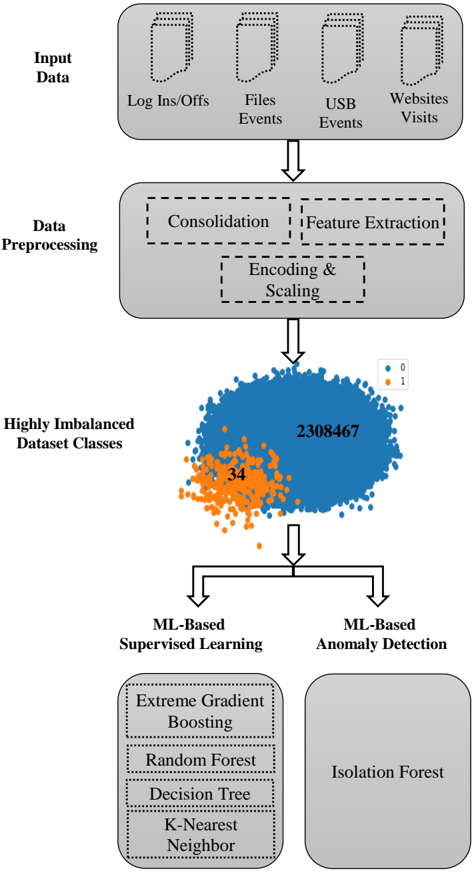
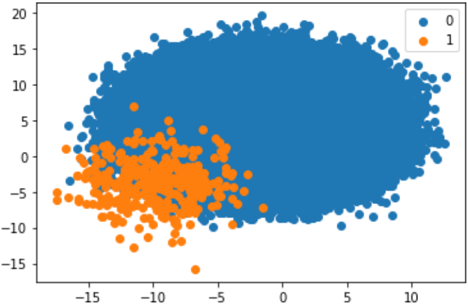
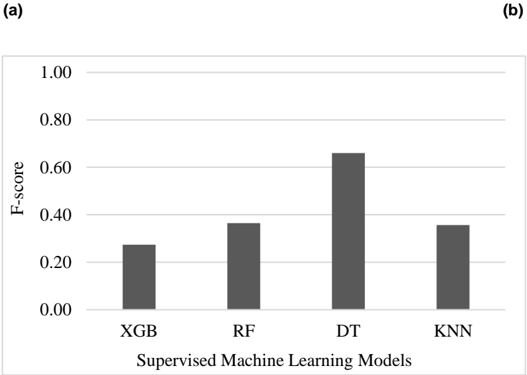
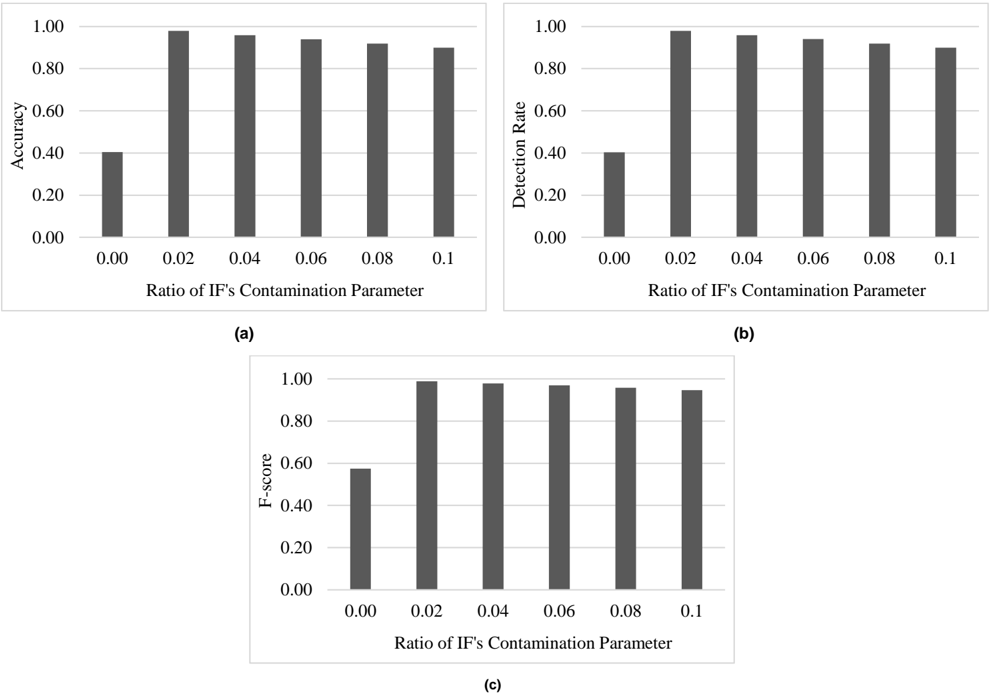
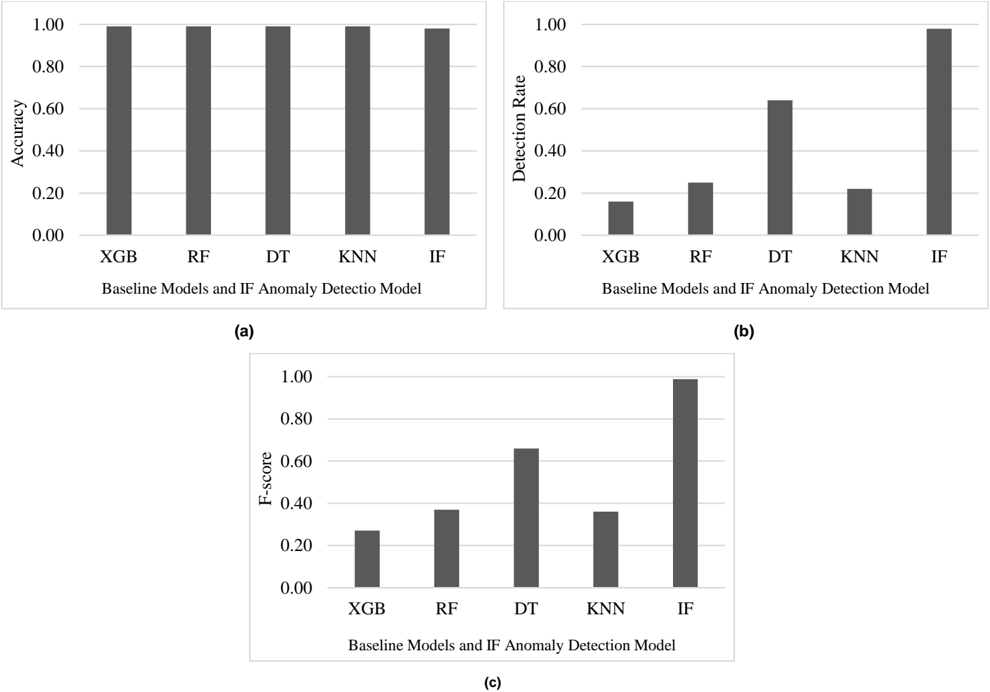
Insider attacks may inflict far greater damage to an organization than outsider threats since insiders are authorized users who are acquainted with the business’s system, making detection harder. Many techniques to detecting insider threats have been developed, but they are neither flexible nor resilient owing to different obstacles (e.g., lack of real-world dataset and highly skewed class distribution of the available dataset), making insider threat detection an understudied research field. Previous techniques attempted to solve the dataset’s imbalance issue by increasing or lowering the observations of the dataset’s classes, however this might lead to underfitting and overfitting problems. We present an insider threat detection model that addresses the class imbalance problem at the algorithm level using anomaly-based techniques, as an enhancement over previous approaches. To limit the effect of skewed class distribution on insider threat detection, the Isolation Forest (IF) technique is used. The model is verified using the benchmarked CERT’s insider threat dataset, which is significantly unbalanced, with a small number of malicious cases vs a large number of non-malicious instances. Several contamination ratios of IF’s parameters are used to verify the model’s performance throughout a range of anomaly scores. The experimental findings reveal that the suggested model handles the dataset class imbalance problem with an accuracy score of 98%. The findings are compared to the baseline technique to demonstrate how the proposed model enhances detection performance and addresses the problem of data imbalance. The findings indicate the usefulness of the suggested approach for identifying insider threats when compared to previous studies.
Overview
The claims and statistics of this paper haven’t been checked yet.
Free: it reads the open-access text and checks the first 5 claims that cite a source we can check. Create a free account to check every claim.
Integrity signals
Registry
Cites
Statistics
Figures
Verification
Claims the paper makes
The claims and statistics of this paper haven’t been checked yet.
Free: it reads the open-access text and checks the first 5 claims that cite a source we can check. Create a free account to check every claim.
Claims other papers make about this one
Each is checked against this paper’s own text: does it say what the citing paper says it does?
The source backs part of the claim, not all of it — or backs it for a different population, condition or comparison.
In the citing paper
“Their reliance on global thresholds and the absence of user-specific adaptation restricted practical precision in live SOC settings.”
From A SIEM-Integrated Cybersecurity Prototype for Insider Threat Anomaly Detection Using Enterprise Logs and Behavioural Biometrics (2025) · cites this paper as [6]
Experimental — accuracy not yet measured
Self-check
Percentages, sums and reported differences re-computed from the paper’s own numbers.
The self-check needs the paper’s full text.
Citations
Cites
XGBoost: A Scalable Tree Boosting System
Chen, T., & Guestrin, C. (2016) · Proceedings of the 22nd ACM SIGKDD International Conference on Knowledge Discovery and Data Mining · doi:10.1145/2939672.2939785 · Cited by 54,569
SMOTE synthetic minority over-sampling technique
Chawla, N. V., Bowyer, K. W., Hall, L. O., & Kegelmeyer, W. P. (2002) · Journal of Artificial Intelligence Research · doi:10.1613/jair.953 · Cited by 32,865
Liu, F. T., Ting, K. M., & Zhou, Z.-H. (2008) · 2008 Eighth IEEE International Conference on Data Mining · doi:10.1109/icdm.2008.17 · Cited by 6,601
Learning from Imbalanced Data Sets
Fernández, A., García, S., Galar, M., Prati, R. C., Krawczyk, B., & Herrera, F. (2018) · doi:10.1007/978-3-319-98074-4 · Cited by 1,349
An experimental comparison of performance measures for classification
Ferri, C., Hernández-Orallo, J., & Modroiu, R. (2009) · Pattern Recognition Letters · doi:10.1016/j.patrec.2008.08.010 · Cited by 889
Random forests: from early developments to recent advancements
Fawagreh, K., Gaber, M. M., & Elyan, E. (2014) · Systems Science & Control Engineering · doi:10.1080/21642583.2014.956265 · Cited by 776
Random Forest Modeling for Network Intrusion Detection System
Farnaaz, N., & Jabbar, M. A. (2016) · Procedia Computer Science · doi:10.1016/j.procs.2016.06.047 · Cited by 684
Machine learning–XGBoost analysis of language networks to classify patients with epilepsy
Torlay, L., Perrone-Bertolotti, M., Thomas, E., & Baciu, M. (2017) · Brain Informatics · doi:10.1007/s40708-017-0065-7 · Cited by 483
Efficient C4.5 [classification algorithm]
Ruggieri, S. (2002) · IEEE Transactions on Knowledge and Data Engineering · doi:10.1109/69.991727 · Cited by 389
Fernández, A., López, V., Galar, M., del Jesus, M. J., & Herrera, F. (2013) · Knowledge-Based Systems · doi:10.1016/j.knosys.2013.01.018 · Cited by 388
Research works printed but not linked: 4
- 2020, Insider Threat Test Dataset
- 2014, Combating Insider Threats
- partners, 2022, Insider Threat 2018 Report
- 2022, The 2017 Federal Insider Threat Report
Cited by
Web Traffic Anomaly Detection Using Isolation Forest
Chua, W., Pajas, A. L. D., Castro, C. S., Panganiban, S. P., Pasuquin, A. J., Purganan, M. J., Malupeng, R., Pingad, D. J., Orolfo, J. P., Lua, H. H., et al. (2024) · Informatics · doi:10.3390/informatics11040083 · Cited by 59
Severity-Oriented Multiclass Drone Flight Logs Anomaly Detection
Silalahi, S., Ahmad, T., Studiawan, H., Anthi, E., & Williams, L. (2024) · IEEE Access · doi:10.1109/access.2024.3396926 · Cited by 12
Kotb, H. M., Gaber, T., AlJanah, S., Zawbaa, H. M., & Alkhathami, M. (2025) · Scientific Reports · doi:10.1038/s41598-024-84673-w · Cited by 22
Harnessing Generative AI for Sustainable Supply Chains: Lean, Circular and Green Perspectives
Singh, A., Alghafes, R. A., Koltai, J. P., & Vishnoi, S. K. (2026) · Business Strategy and the Environment · doi:10.1002/bse.70515 · Cited by 14
Insider Threat Detection: A Review
Manoharan, P., Yin, J., Wang, H., Zhang, Y., & Ye, W. (2024) · International Conference on Networking and Network Applications (NaNA) · doi:10.1109/nana63151.2024.00031 · Cited by 8
Metadata
- Authors
- Al-Shehari, T., Al-Razgan, M., Alfakih, T., Alsowail, R. A., & Pandiaraj, S.
- Affiliations
- Computer Skills, Department of Self-Development Skills, Common First Year Deanship, King Saud University, Riyadh, Saudi Arabia
- Department of Software Engineering, College of Computer and Information Sciences, King Saud University, Riyadh, Saudi Arabia
- King Saud University (SA)
- Venue
- IEEE Access
- Published
- 2023
- Volume
- 11
- Pages
- 118170-118185
- ISSN
- 2169-3536 (ISSN-L)
- OpenAlex
- W4387886031
- Cited by
- 52
- References
- 46
- Citations by year
- 2026: 25 · 2025: 20 · 2024: 7
- FWCI
- 5.78
- Type
- journal article
- Language
- en
- Open access
- gold
- doi.org
- Licence
- Locations
- IEEE Access (publishedVersion, cc-by-nc-nd)
- DOAJ (DOAJ: Directory of Open Access Journals) (submittedVersion, cc-by-sa)
- Funders
- King Saud University (RSP2023R206)
- Topics
- Physical Sciences › Computer Science › Computer Networks and Communications › Network Security and Intrusion Detection
- Physical Sciences › Computer Science › Information Systems › Information and Cyber Security
- Physical Sciences › Computer Science › Artificial Intelligence › Anomaly Detection Techniques and Applications
- Keywords
- insider threat detection, Isolation Forest, anomaly detection, class imbalance, CERT insider threat dataset, malicious user identification, anomaly score
About these checks
Registry, retraction, Cites and statistics results are computed, not judged, with one exception: a printed reference that no index lists is read once by a model before it counts as a citation error. Claims are extracted by a model and kept only when their quote appears verbatim in the text; each cited source is then checked, with a model’s help, for whether it says what the claim relies on. Those verdicts can be wrong — read the claim’s quote and the cited source before relying on one.
Statistics and arithmetic are recomputed, not judged.
Confidence bands are shown only for fields calibrated on our annotated test set. None is calibrated yet, so no band is shown.
What counts as a claim ›How we measure confidence ›How we check this ›
Are you an author, or do you see a problem with this page? Request a review
How to cite
Cite CoChat for the checks on this page, and the paper for its own findings.
- This page
- CoChat. (2026). Citation check: Insider Threat Detection Model Using Anomaly-Based Isolation Forest Algorithm. https://app.cochat.ai/papers/10.1109/access.2023.3326750
- The paper
- Al-Shehari, T., Al-Razgan, M., Alfakih, T., Alsowail, R. A., & Pandiaraj, S. (2023). Insider Threat Detection Model Using Anomaly-Based Isolation Forest Algorithm. IEEE Access. https://doi.org/10.1109/access.2023.3326750
Data sources
Bibliographic data: Semantic Scholar, OpenAlex, Crossref.
Contains information from the Semantic Scholar Academic Graph Datasets, made available under the ODC Attribution License (ODC-BY 1.0).
Semantic Scholar’s data is described in: Kinney, R., et al. (2023). The Semantic Scholar Open Data Platform. arXiv:2301.10140.
