

Insider Threat Detection Model Using Anomaly-Based Isolation Forest Algorithm
Open accessThe DOI matches its Crossref record; 47 of the 48 references it cites were found in a registry or an index.
Abstract
Insider attacks may inflict far greater damage to an organization than outsider threats since insiders are authorized users who are acquainted with the business’s system, making detection harder. Many techniques to detecting insider threats have been developed, but they are neither flexible nor resilient owing to different obstacles (e.g., lack of real-world dataset and highly skewed class distribution of the available dataset), making insider threat detection an understudied research field. Previous techniques attempted to solve the dataset’s imbalance issue by increasing or lowering the observations of the dataset’s classes, however this might lead to underfitting and overfitting problems. We present an insider threat detection model that addresses the class imbalance problem at the algorithm level using anomaly-based techniques, as an enhancement over previous approaches. To limit the effect of skewed class distribution on insider threat detection, the Isolation Forest (IF) technique is used. The model is verified using the benchmarked CERT’s insider threat dataset, which is significantly unbalanced, with a small number of malicious cases vs a large number of non-malicious instances. Several contamination ratios of IF’s parameters are used to verify the model’s performance throughout a range of anomaly scores. The experimental findings reveal that the suggested model handles the dataset class imbalance problem with an accuracy score of 98%. The findings are compared to the baseline technique to demonstrate how the proposed model enhances detection performance and addresses the problem of data imbalance. The findings indicate the usefulness of the suggested approach for identifying insider threats when compared to previous studies.
Overview
The claims and statistics of this paper haven’t been checked yet.
Free: it reads the open-access text and checks the first 5 claims that cite a source we can check. Create a free account to check every claim.
Integrity signals
Registry
Cites
Statistics
Figures
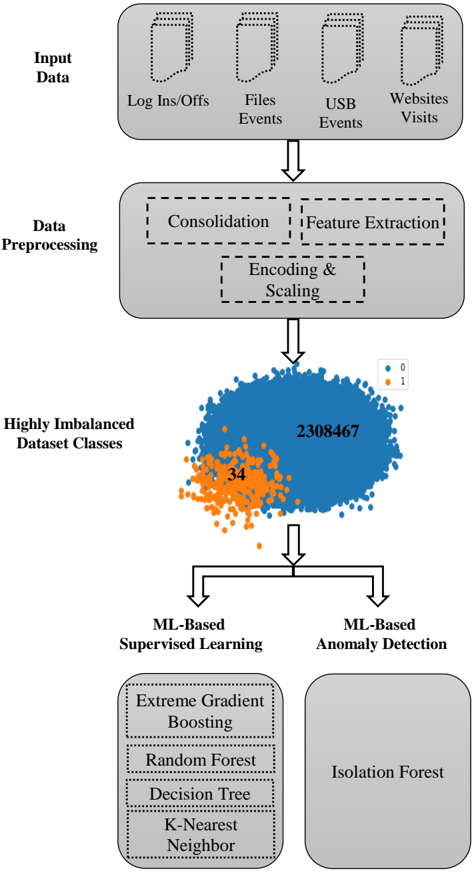
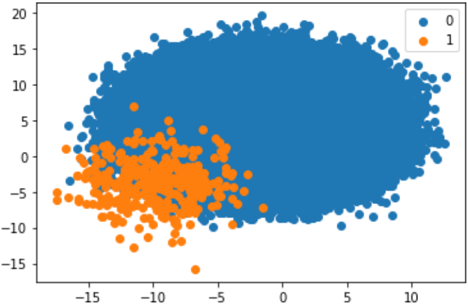
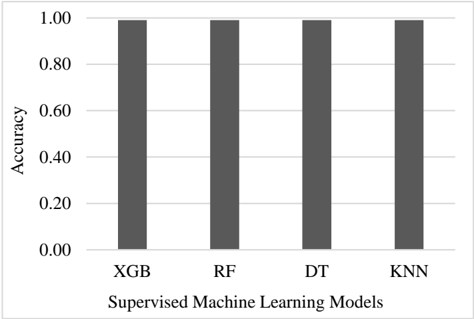
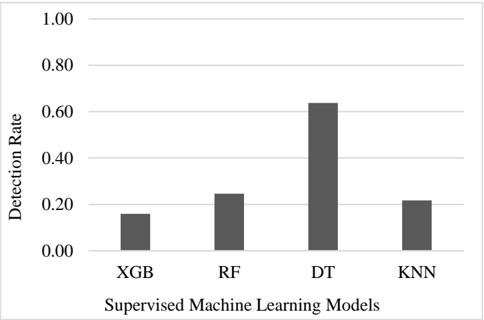
Verification
Claims the paper makes
The claims and statistics of this paper haven’t been checked yet.
Free: it reads the open-access text and checks the first 5 claims that cite a source we can check. Create a free account to check every claim.
Claims other papers make about this one
Each is checked against this paper’s own text: does it say what the citing paper says it does?
The source backs part of the claim, not all of it — or backs it for a different population, condition or comparison.
In the citing paper
“Their reliance on global thresholds and the absence of user-specific adaptation restricted practical precision in live SOC settings.”
From A SIEM-Integrated Cybersecurity Prototype for Insider Threat Anomaly Detection Using Enterprise Logs and Behavioural Biometrics (2025) · cites this paper as [6]
Experimental — accuracy not yet measured
Self-check
Percentages, sums and reported differences re-computed from the paper’s own numbers.
The self-check needs the paper’s full text.
Citations
Cites
XGBoost: A Scalable Tree Boosting System
Chen, T., & Guestrin, C. (2016) · Proceedings of the 22nd ACM SIGKDD International Conference on Knowledge Discovery and Data Mining · doi:10.1145/2939672.2939785 · Cited by 54,569
SMOTE synthetic minority over-sampling technique
Chawla, N. V., Bowyer, K. W., Hall, L. O., & Kegelmeyer, W. P. (2002) · Journal of Artificial Intelligence Research · doi:10.1613/jair.953 · Cited by 32,865 · cited 1×
“In order to address this problem, the Synthetic Minority Oversampling Technique (SMOTE) approach [7] generates synthetic samples based on samples from the minority class using a linear process.”
MethodLiu, F. T., Ting, K. M., & Zhou, Z.-H. (2008) · 2008 Eighth IEEE International Conference on Data Mining · doi:10.1109/icdm.2008.17 · Cited by 6,601
Learning from Imbalanced Data Sets
Fernández, A., García, S., Galar, M., Prati, R. C., Krawczyk, B., & Herrera, F. (2018) · doi:10.1007/978-3-319-98074-4 · Cited by 1,349
An experimental comparison of performance measures for classification
Ferri, C., Hernández-Orallo, J., & Modroiu, R. (2009) · Pattern Recognition Letters · doi:10.1016/j.patrec.2008.08.010 · Cited by 889
Random forests: from early developments to recent advancements
Fawagreh, K., Gaber, M. M., & Elyan, E. (2014) · Systems Science & Control Engineering · doi:10.1080/21642583.2014.956265 · Cited by 776
Random Forest Modeling for Network Intrusion Detection System
Farnaaz, N., & Jabbar, M. A. (2016) · Procedia Computer Science · doi:10.1016/j.procs.2016.06.047 · Cited by 684
Machine learning–XGBoost analysis of language networks to classify patients with epilepsy
Torlay, L., Perrone-Bertolotti, M., Thomas, E., & Baciu, M. (2017) · Brain Informatics · doi:10.1007/s40708-017-0065-7 · Cited by 483
Efficient C4.5 [classification algorithm]
Ruggieri, S. (2002) · IEEE Transactions on Knowledge and Data Engineering · doi:10.1109/69.991727 · Cited by 389
Fernández, A., López, V., Galar, M., del Jesus, M. J., & Herrera, F. (2013) · Knowledge-Based Systems · doi:10.1016/j.knosys.2013.01.018 · Cited by 388
Detecting and Preventing Cyber Insider Threats: A Survey
Liu, L., De Vel, O., Han, Q.-L., Zhang, J., & Xiang, Y. (2018) · IEEE Communications Surveys & Tutorials · doi:10.1109/comst.2018.2800740 · Cited by 385
Bridging the Gap: A Pragmatic Approach to Generating Insider Threat Data
Glasser, J., & Lindauer, B. (2013) · 2013 IEEE Security and Privacy Workshops · doi:10.1109/spw.2013.37 · Cited by 344 · cited 1×
“The description of how the dataset was created is presented in [28].”
BackgroundDeep learning for insider threat detection: Review, challenges and opportunities
Yuan, S., & Wu, X. (2021) · Computers & Security · doi:10.1016/j.cose.2021.102221 · Cited by 271
Homoliak, I., Toffalini, F., Guarnizo, J., Elovici, Y., & Ochoa, M. (2020) · ACM Computing Surveys · doi:10.1145/3303771 · Cited by 255
XGBoost Classifier for DDoS Attack Detection and Analysis in SDN-Based Cloud
Chen, Z., Jiang, F., Cheng, Y., Gu, X., Liu, W., & Peng, J. (2018) · 2018 IEEE International Conference on Big Data and Smart Computing (BigComp) · doi:10.1109/bigcomp.2018.00044 · Cited by 238
Al-Shehari, T., & Alsowail, R. A. (2021) · Entropy · doi:10.3390/e23101258 · Cited by 193 · cited 3×
“The study in [21] employs a variety of techniques, including Logistic Regression, Decision Trees, and others.”
BackgroundMethodInfluentialSelf-citationAnalyzing Data Granularity Levels for Insider Threat Detection Using Machine Learning
Le, D. C., Zincir-Heywood, N., & Heywood, M. I. (2020) · IEEE Transactions on Network and Service Management · doi:10.1109/tnsm.2020.2967721 · Cited by 191 · cited 1×
“It has been used widely in several studies, such as [23], [24], [25], [26], and [27].”
MethodNetwork intrusion detection system using J48 Decision Tree
Sahu, S., & Mehtre, B. M. (2015) · 2015 International Conference on Advances in Computing, Communications and Informatics (ICACCI) · doi:10.1109/icacci.2015.7275914 · Cited by 181
Al-Mhiqani, M. N., Ahmad, R., Zainal Abidin, Z., Yassin, W., Hassan, A., Abdulkareem, K. H., Ali, N. S., & Yunos, Z. (2020) · Applied Sciences · doi:10.3390/app10155208 · Cited by 169
Anomaly Detection for Insider Threats Using Unsupervised Ensembles
Le, D. C., & Zincir-Heywood, N. (2021) · IEEE Transactions on Network and Service Management · doi:10.1109/tnsm.2021.3071928 · Cited by 147 · cited 1×
“It has been used widely in several studies, such as [23], [24], [25], [26], and [27].”
MethodBehavioral Analysis of Insider Threat: A Survey and Bootstrapped Prediction in Imbalanced Data
Azaria, A., Richardson, A., Kraus, S., & Subrahmanian, V. S. (2014) · IEEE Transactions on Computational Social Systems · doi:10.1109/tcss.2014.2377811 · Cited by 133
How Data Scientists Use Computational Notebooks for Real-Time Collaboration
Wang, A. Y., Mittal, A., Brooks, C., & Oney, S. (2019) · Proceedings of the ACM on Human-Computer Interaction · doi:10.1145/3359141 · Cited by 131
Scenario-Based Insider Threat Detection From Cyber Activities
Chattopadhyay, P., Wang, L., & Tan, Y.-P. (2018) · IEEE Transactions on Computational Social Systems · doi:10.1109/tcss.2018.2857473 · Cited by 115 · cited 1×
“Three separate binary classification problems were taken into consideration in the scenario-based classification in the study [15].”
MethodGenuer, R., & Poggi, J. (2020) · Use R! · doi:10.1007/978-3-030-56485-8_3 · Cited by 96
IoTDS: A One-Class Classification Approach to Detect Botnets in Internet of Things Devices
Bezerra, V. H., da Costa, V. G. T., Barbon, S., Miani, R. S., & Zarpel�ão, B. B. (2019) · Sensors · doi:10.3390/s19143188 · Cited by 86
A Genetic-Based Extreme Gradient Boosting Model for Detecting Intrusions in Wireless Sensor Networks
Alqahtani, M., Gumaei, A., Mathkour, H., & Maher Ben Ismail, M. (2019) · Sensors · doi:10.3390/s19204383 · Cited by 84
Anomaly-Based Insider Threat Detection Using Deep Autoencoders
Liu, L., De Vel, O., Chen, C., Zhang, J., & Xiang, Y. (2018) · 2018 IEEE International Conference on Data Mining Workshops (ICDMW) · doi:10.1109/icdmw.2018.00014 · Cited by 79 · cited 1×
“In insider threat detection, accuracy reflects the overall correctness of the model’s predictions [20].”
BackgroundHands-on Scikit-Learn for Machine Learning Applications: Data Science Fundamentals with Python
Paper, D. J. (2019) · Apress eBooks · doi:10.1007/978-1-4842-5373-1 · Cited by 74
Insider Threat Detection Based on Deep Belief Network Feature Representation
Lin, L., Zhong, S., Jia, C., & Chen, K. (2017) · 2017 International Conference on Green Informatics (ICGI) · doi:10.1109/icgi.2017.37 · Cited by 64 · cited 2×
“If false positives are a critical concern in your current projects like insider threat detection, the high false-positive rate in the Deep Belief Network approach [18] might be a red flag.”
BackgroundMethodImage-Based Feature Representation for Insider Threat Classification
Gayathri, R. G., Sajjanhar, A., & Xiang, Y. (2020) · Applied Sciences · doi:10.3390/app10144945 · Cited by 63
An Integrated Imbalanced Learning and Deep Neural Network Model for Insider Threat Detection
Al-Mhiqani, M. N., Ahmed, R., Zainal, Z., & Isnin, S. N. (2021) · International Journal of Advanced Computer Science and Applications · doi:10.14569/ijacsa.2021.0120166 · Cited by 63
Chen, F., Ye, Z., Wang, C., Yan, L., & Wang, R. (2018) · International Symposium on Wireless Systems within the Conferences on Intelligent Data Acquisition and Advanced Computing Systems (IDAACS-SWS) · doi:10.1109/idaacs-sws.2018.8525522 · Cited by 60
Exploring anomalous behaviour detection and classification for insider threat identification
Le, D. C., & Zincir‐Heywood, N. (2021) · International Journal of Network Management · doi:10.1002/nem.2109 · Cited by 56 · cited 1×
“It has been used widely in several studies, such as [23], [24], [25], [26], and [27].”
MethodInsider Threat Detection using Deep Autoencoder and Variational Autoencoder Neural Networks
Pantelidis, E., Bendiab, G., Shiaeles, S., & Kolokotronis, N. (2021) · 2021 IEEE International Conference on Cyber Security and Resilience (CSR) · doi:10.1109/csr51186.2021.9527925 · Cited by 55
Alternating decision trees for early diagnosis of heart disease
Jabbar, M. A., Deekshatulu, B. L., & Chndra, P. (2014) · International Conference on Circuits, Communication, Control and Computing · doi:10.1109/cimca.2014.7057816 · Cited by 52
Empirical Detection Techniques of Insider Threat Incidents
Alsowail, R. A., & Al-Shehari, T. (2020) · IEEE Access · doi:10.1109/access.2020.2989739 · Cited by 41
Self-citationReflections on the Insider Threat
Pfleeger, C. P. (2008) · Advances in information security · doi:10.1007/978-0-387-77322-3_2 · Cited by 35
Sheykhkanloo, N. M., & Hall, A. (2020) · International Journal of Cyber Warfare and Terrorism · doi:10.4018/ijcwt.2020040101 · Cited by 34
Data Augmentation for Insider Threat Detection with GAN
Yuan, F., Shang, Y., Liu, Y., Cao, Y., & Tan, J. (2020) · 2020 IEEE 32nd International Conference on Tools with Artificial Intelligence (ICTAI) · doi:10.1109/ictai50040.2020.00102 · Cited by 33
Decision Trees and Random Forests
Nandi, A. K., & Ahmed, H. (2019) · Wiley eBooks · doi:10.1002/9781119544678.ch10 · Cited by 32
Data Anomaly Detection Based on Isolation Forest Algorithm
Zhang, L., & Liu, L. (2022) · IEEE International Conference on Computation, Big-Data and Engineering (ICCBE) · doi:10.1109/iccbe56101.2022.9888169 · Cited by 29
Al-Shehari, T., & Alsowail, R. A. (2023) · International Journal of Information Security · doi:10.1007/s10207-022-00651-1 · Cited by 25
Self-citationAdaptive One-Class Ensemble-based Anomaly Detection: An Application to Insider Threats
Haidar, D., & Gaber, M. M. (2018) · International Joint Conference on Neural Networks (IJCNN) · doi:10.1109/ijcnn.2018.8489107 · Cited by 23
Insider Threats Detection Using CNN-LSTM Model
Saaudi, A., Al-Ibadi, Z., Tong, Y., & Farkas, C. (2018) · 2018 International Conference on Computational Science and Computational Intelligence (CSCI) · doi:10.1109/csci46756.2018.00025 · Cited by 22
User Behaviour based Insider Threat Detection in Critical Infrastructures
Singh, M., Mehtre, B., & Sangeetha, S. (2021) · 2021 2nd International Conference on Secure Cyber Computing and Communications (ICSCCC) · doi:10.1109/icsccc51823.2021.9478137 · Cited by 21
Mitigating Insider Threats Using Bio-Inspired Models
Nicolaou, A., Shiaeles, S., & Savage, N. (2020) · Applied Sciences · doi:10.3390/app10155046 · Cited by 19
Decision Trees and Random Forests
(2019) · WORLD SCIENTIFIC eBooks · doi:10.1142/9789811205675_0011 · Cited by 9
Common Sense Guide to Mitigating Insider Threats, Sixth Edition
Theis, M., Trzeciak, R. F., Costa, D. L., Moore, A. P., Miller, S., Cassidy, T., & Claycomb, W. R. (2020) · Carnegie Mellon University · doi:10.1184/r1/12363665.v1
Research works printed but not linked: 2
- C. R. Partners, "2018 insider threat report." https://crowdresearchpartners.com/insider-threat-report/ (accessed Aug. 13, 2022).
- Meritalk, "The 2017 federal insider threat report." https://www.insight.com/en_US/content-and- resources/brands/symantec/2017-federal-insider-threat-report.html (accessed Dec. 21, 2022).
Cited by
Web Traffic Anomaly Detection Using Isolation Forest
Chua, W., Pajas, A. L. D., Castro, C. S., Panganiban, S. P., Pasuquin, A. J., Purganan, M. J., Malupeng, R., Pingad, D. J., Orolfo, J. P., Lua, H. H., et al. (2024) · Informatics · doi:10.3390/informatics11040083 · Cited by 69
Severity-Oriented Multiclass Drone Flight Logs Anomaly Detection
Silalahi, S., Ahmad, T., Studiawan, H., Anthi, E., & Williams, L. (2024) · IEEE Access · doi:10.1109/access.2024.3396926 · Cited by 13
Kotb, H. M., Gaber, T., AlJanah, S., Zawbaa, H. M., & Alkhathami, M. (2025) · Scientific Reports · doi:10.1038/s41598-024-84673-w · Cited by 22
Harnessing Generative AI for Sustainable Supply Chains: Lean, Circular and Green Perspectives
Singh, A., Alghafes, R. A., Koltai, J. P., & Vishnoi, S. K. (2026) · Business Strategy and the Environment · doi:10.1002/bse.70515 · Cited by 14
Insider Threat Detection: A Review
Manoharan, P., Yin, J., Wang, H., Zhang, Y., & Ye, W. (2024) · International Conference on Networking and Network Applications (NaNA) · doi:10.1109/nana63151.2024.00031 · Cited by 8
Metadata
- Authors
- Al-Shehari, T., Al-Razgan, M., Alfakih, T., Alsowail, R. A., & Pandiaraj, S.
- Affiliations
- Computer Skills, Department of Self-Development Skills, Common First Year Deanship, King Saud University, Riyadh, Saudi Arabia
- Department of Software Engineering, College of Computer and Information Sciences, King Saud University, Riyadh, Saudi Arabia
- King Saud University (SA)
- Venue
- IEEE Access
- Published
- 2023
- Volume
- 11
- Pages
- 118170-118185
- ISSN
- 2169-3536 (ISSN-L)
- OpenAlex
- W4387886031
- Cited by
- 52
- References
- 46
- Citations by year
- 2026: 25 · 2025: 20 · 2024: 7
- FWCI
- 5.78
- Type
- journal article
- Language
- en
- Open access
- gold
- doi.org
- Licence
- Locations
- IEEE Access (publishedVersion, cc-by-nc-nd)
- DOAJ (DOAJ: Directory of Open Access Journals) (submittedVersion, cc-by-sa)
- Funders
- King Saud University (RSP2023R206)
- Topics
- Physical Sciences › Computer Science › Computer Networks and Communications › Network Security and Intrusion Detection
- Physical Sciences › Computer Science › Information Systems › Information and Cyber Security
- Physical Sciences › Computer Science › Artificial Intelligence › Anomaly Detection Techniques and Applications
- Keywords
- insider threat detection, Isolation Forest, anomaly detection, class imbalance, CERT insider threat dataset, malicious user identification, anomaly score
About these checks
Registry, retraction, Cites and statistics results are computed, not judged, with one exception: a printed reference that no index lists is read once by a model before it counts as a citation error. Claims are extracted by a model and kept only when their quote appears verbatim in the text; each cited source is then checked, with a model’s help, for whether it says what the claim relies on. Those verdicts can be wrong — read the claim’s quote and the cited source before relying on one.
Statistics and arithmetic are recomputed, not judged.
Confidence bands are shown only for fields calibrated on our annotated test set. None is calibrated yet, so no band is shown.
What counts as a claim ›How we measure confidence ›How we check this ›
Are you an author, or do you see a problem with this page? Request a review
Data sources
Bibliographic data: Semantic Scholar, OpenAlex, Crossref.
Contains information from the Semantic Scholar Academic Graph Datasets, made available under the ODC Attribution License (ODC-BY 1.0).
Semantic Scholar’s data is described in: Kinney, R., et al. (2023). The Semantic Scholar Open Data Platform. arXiv:2301.10140.
