

VT-ADL: A Vision Transformer Network for Image Anomaly Detection and Localization
Open accessThe DOI matches its Crossref record; 35 of the 38 references it cites were found in a registry or an index; 3 of the 13 sources its claims cite were checked for support.
Abstract
We present a transformer-based image anomaly detection and localization network. Our proposed model is a combination of a reconstruction-based approach and patch embedding. The use of transformer networks helps preserving the spatial information of the embedded patches, which is later processed by a Gaussian mixture density network to localize the anomalous areas. In addition, we also publish BTAD, a real-world industrial anomaly dataset. Our results are compared with other state-of-the-art algorithms using publicly available datasets like MNIST and MVTec.
Overview
CoChat Summary
TL;DR
VT-ADL combines a Vision Transformer patch encoder, a reconstruction decoder, and a Gaussian mixture density network for semi-supervised image anomaly detection and localization. It also releases BTAD, a real-world industrial anomaly dataset, and reports competitive results on MNIST, MVTec, and BTAD.
Key findings
- On MNIST, VT-ADL achieves a mean AUC of 0.984, compared with 0.95 for OC SVM, 0.97 for VAE, 0.97 for LSA, and 0.97 for Pyr. AE.
- On MVTec, VT-ADL reaches a mean PRO score of 0.807, performing at par with recent state-of-the-art methods and outperforming them in 7 product categories; the best comparator, Uni. Stud., has a mean of 0.857.
- On the newly published BTAD dataset, VT-ADL reports a mean PRO score of 0.89 and mean PR AUC of 0.90, compared with convolutional autoencoders using MSE loss (0.78) and MSE+SSIM loss (0.79).
- Adding Gaussian noise to transformer-encoded features improves generalization: with 150 Gaussians, PRO score is 0.897 with noise versus 0.807 without noise.
Methods
- The model is trained semi-supervised using only normal data. Images are split into patches, embedded with positional information, encoded by a Vision Transformer, decoded for reconstruction, and modeled by a Gaussian mixture density network for anomaly localization.
- Training combines MSE, SSIM, and negative conditional log-likelihood losses, with Gaussian noise N(0, 0.2) added to transformer-embedded features for regularization. Hyperparameters include Adam learning rate 0.0001, weight decay 0.0001, batch size 8, 400 epochs, 150 Gaussians, and patch dimension P = 64.
- Experiments use MNIST, MVTec (5,354 high-resolution images, scaled to 550×550 then center cropped to 512×512), and BTAD (2,830 real-world images of 3 industrial products, with 400, 1000, and 399 training images respectively). Evaluation uses AUC for MNIST and PRO for MVTec and BTAD.
Limitations
- The paper does not include a dedicated limitations section. It states that dropout was not used because it causes instability in the Gaussian approximation network.
- Evident from the reported results: on MVTec, VT-ADL’s mean PRO (0.807) is below Uni. Stud. (0.857), and it underperforms that method in several categories, such as Capsule (0.672 vs. 0.916), Pill (0.705 vs. 0.935), and Metal Nut (0.726 vs. 0.895).
- Evident from the text: BTAD results are described as the first results on the new dataset, and the comparison is limited to basic convolutional autoencoders with MSE and MSE+SSIM losses.
Model-written summary. Check it against the paper before relying on it.
Integrity signals
Registry
Cites
Statistics
Figures
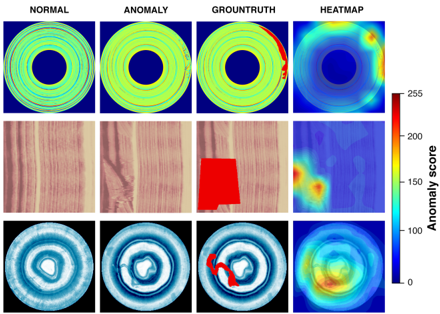
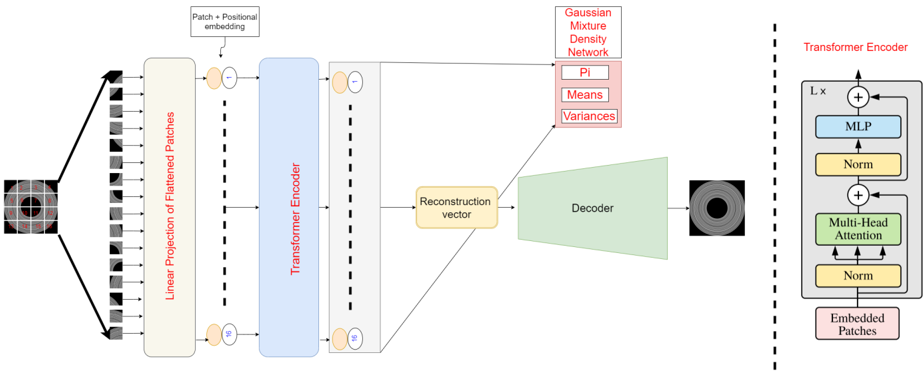
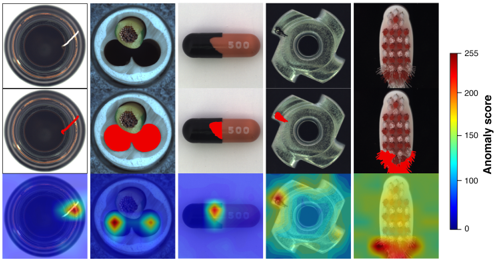
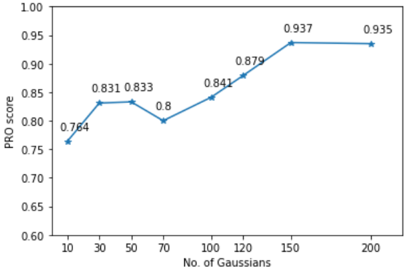
Verification
Claims the paper makes
2 Valid · 2 Not valid · 6 Not checked · 14 Own results and interpretations
The cited sources support only part of this claim — read each source’s verdict below.
In the paper
“In our work we show how an adapted transformer network can be used for anomaly localization using Gaussian Approximation [10], [11] of the latent features and also how different configurations can be tweaked to win some of the shortcomings of the vision transformer network.”
What the sources say
- Partly supportedcites [10] [10] C. M. Bishop, Mixture density networks . Aston University, 1994. -Experimental — accuracy not yet measured
The paper’s “Conventional Least Squares” section describes representing the conditional distribution of target data with a Gaussian function. It does not describe Gaussian approximation of latent features for anomaly localization. The adapted transformer is presented as the citing authors’ own work, not as a result of this source. (LLM, conf=0.82)
- Not checked — no full text of the sourcecites [11] [11] N. Ueda, R. Nakano, Z. Ghahramani, and G. E. Hinton, 'Split and merge em algorithm for improving gaussian mixture density estimates,' in Neural Networks for Signal Processing VIII. Proceedings of the 1998 IEEE Signal Processing Society Workshop (Cat. No. 98TH8378) . IEEE, 1998, pp. 274-283. - source
plainstates a cause- Asserted: passes — The authors put it forward as true.
- Checkable: passes — It can be checked against evidence.
- Load-bearing: passes — The paper’s conclusions depend on it.
- Based: passes — The paper gives a reason why it holds.
- Partly supported
Every source the paper cites for this claim was checked and supports it.
In the paper
“The use of transformer networks helps preserving the spatial information of the embedded patches, which is later processed by a Gaussian mixture density network to localize the anomalous areas.”
- Also stated in: § I. INTRODUCTION · p. 1 · plain
“The vision transformer network model, recently proposed by Dosovitskiy et al. [9], is a network designed to work on image patches trying to preserve their positional information.”
What the sources say
- Supportedcites Dosovitskiy et al. [9] [9] A. Dosovitskiy, L. Beyer, A. Kolesnikov, D. Weissenborn, X. Zhai, T. Unterthiner, M. Dehghani, M. Minderer, G. Heigold, S. Gelly, J. Uszkoreit, and N. Houlsby, 'An image is worth 16x16 words: Transformers for image recognition at scale,' 2020. - source
Section 3.1 (p. 3) says position embeddings are added to patch embeddings to retain positional information before the sequence enters the Transformer encoder. Section 4.5 (p. 8) reports that the learned embeddings represent the image’s 2D topology, supporting the attributed point about spatial information. (LLM, conf=0.91)
plainstates a cause- Asserted: passes — The authors put it forward as true.
- Checkable: passes — It can be checked against evidence.
- Load-bearing: passes — The paper’s conclusions depend on it.
- Based: passes — The paper gives a reason why it holds.
- Also stated in: § I. INTRODUCTION · p. 1 · plain
The cited sources that could be checked couldn’t confirm or dispute this claim.
In the paper
“Adding noise during training is seen as a form of data augmentation and regularization that biases towards smooth functions [10], [31].”
What the sources say
- Could not verifycites [10] [10] C. M. Bishop, Mixture density networks . Aston University, 1994. -Experimental — accuracy not yet measured
Section 2, “Conventional Least Squares” (page unavailable), mentions regularization as a way to control model complexity, but does not connect it to adding noise. Section 5, “A Simple Inverse Problem” (page unavailable), uses noise to generate example data; it does not describe noise added during training as augmentation or as a bias toward smooth functions. Searches for noise injection and smooth functions found no passage addressing that claim. (LLM, conf=0.76)
- Not checked — no full text of the sourcecites [31] [31] G. An, 'The effects of adding noise during backpropagation training on a generalization performance,' Neural Computation , vol. 8, no. 3, pp. 643-674, 1996. source
plainstates a cause- Asserted: passes — The authors put it forward as true.
- Checkable: passes — It can be checked against evidence.
- Load-bearing: passes — The paper’s conclusions depend on it.
- Based: passes — The paper gives a reason why it holds.
- Could not verify
A result the paper reports from its own data — it cites no other source for it, so there is none to check. The quote shows it is in the paper.
In the paper
“The dataset contains a total of 2830 real-world images of 3 industrial products showcasing body and surface defects.”
plain- Asserted: passes — The authors put it forward as true.
- Checkable: passes — It can be checked against evidence.
- Load-bearing: passes — The paper’s conclusions depend on it.
- Based: passes — The paper gives a reason why it holds.
A result the paper reports from its own data — it cites no other source for it, so there is none to check. The quote shows it is in the paper.
In the paper
“In addition, we also publish BTAD, a real-world industrial anomaly dataset.”
- Also stated in: § I. INTRODUCTION · p. 1 · plain
“In addition to this, we are also publishing a real-world industrial dataset (the beanTech Anomaly Detection dataset - BTAD) for the anomaly detection task.”
plain- Asserted: passes — The authors put it forward as true.
- Checkable: passes — It can be checked against evidence.
- Load-bearing: passes — The paper’s conclusions depend on it.
- Based: passes — The paper gives a reason why it holds.
- Also stated in: § I. INTRODUCTION · p. 1 · plain
8 more claims
Create a free account to see all 24 claims and to verify the 4 references still open.
- It may state two separate claims as one. 10
- The quote only partly states this claim. 1
- Probably not a substantial claim. 2
Claims other papers make about this one
Each is checked against this paper’s own text: does it say what the citing paper says it does?
The source backs part of the claim, not all of it — or backs it for a different population, condition or comparison.
In the citing paper
“The BeanTech AD dataset, designed for unsupervised anomaly detection in industrial settings”
From An Unsupervised Method for Industrial Image Anomaly Detection with Vision Transformer-Based Autoencoder (2024) · cites this paper as [13]
Experimental — accuracy not yet measuredThe source backs part of the claim, not all of it — or backs it for a different population, condition or comparison.
In the citing paper
“These datasets are extensively utilized to evaluate anomaly detection algorithms, offering diverse testing scenarios and data for this research.”
From An Unsupervised Method for Industrial Image Anomaly Detection with Vision Transformer-Based Autoencoder (2024) · cites this paper as [13]
Experimental — accuracy not yet measuredThe source backs part of the claim, not all of it — or backs it for a different population, condition or comparison.
In the citing paper
“However, these methods directly utilize vanilla transformer, and do not figure out why transformer brings improvement.”
From A Unified Model for Multi-Class Anomaly Detection (2022) · cites this paper as [29]
Experimental — accuracy not yet measuredThe cited source says what the claim attributes to it.
In the citing paper
“It comprises 2830 RGB images across three different industrial products.”
From An Unsupervised Method for Industrial Image Anomaly Detection with Vision Transformer-Based Autoencoder (2024) · cites this paper as [13]
Citations
Cites
Vaswani, A., Shazeer, N., Parmar, N., Uszkoreit, J., Jones, L., Gomez, A. N., Kaiser, L., & Polosukhin, I. (2017) · arXiv · doi:10.48550/arxiv.1706.03762 · Cited by 120,404
An Image is Worth 16x16 Words: Transformers for Image Recognition at Scale
Dosovitskiy, A., Beyer, L., Kolesnikov, A., Weissenborn, D., Zhai, X., Unterthiner, T., Dehghani, M., Minderer, M., Heigold, G., Gelly, S., et al. (2020) · arXiv · doi:10.48550/arxiv.2010.11929 · Cited by 47,472 · cited 5×
“[9], is a network designed to work on image patches”
BackgroundMethodInfluentialMVTec AD — A Comprehensive Real-World Dataset for Unsupervised Anomaly Detection
Bergmann, P., Fauser, M., Sattlegger, D., & Steger, C. (2019) · 2019 IEEE/CVF Conference on Computer Vision and Pattern Recognition (CVPR) · doi:10.1109/cvpr.2019.00982 · Cited by 2,203 · cited 2×
“In this case the system tries to learn a “normality” model from the training data and thus subsequently classify new samples as anomaly if they don’t fit the model [1], [16], [12], [24].”
BackgroundMethod(2011) · Cited by 1,258
(1994) · Aston Publications Explorer (Aston University) · Cited by 1,245
High-dimensional and large-scale anomaly detection using a linear one-class SVM with deep learning
Erfani, S. M., Rajasegarar, S., Karunasekera, S., & Leckie, C. (2016) · Pattern Recognition · doi:10.1016/j.patcog.2016.03.028 · Cited by 1,162 · cited 1×
“Some of the works handled these two steps independently [25], [26], while others achieved better results by doing the two steps collectively, in order to extract the best features for subsequent anomaly detection [27], [28].”
Uninformed Students: Student-Teacher Anomaly Detection With Discriminative Latent Embeddings
Bergmann, P., Fauser, M., Sattlegger, D., & Steger, C. (2019) · Computer Vision and Pattern Recognition · doi:10.48550/arxiv.1911.02357 · Cited by 1,052
Uninformed Students: Student-Teacher Anomaly Detection With Discriminative Latent Embeddings
Bergmann, P., Fauser, M., Sattlegger, D., & Steger, C. (2020) · 2020 IEEE/CVF Conference on Computer Vision and Pattern Recognition (CVPR) · doi:10.1109/cvpr42600.2020.00424 · Cited by 990 · cited 5×
“Then we employed the PRO (Per Region Overlap) [8], [24] as the evaluation metric for the MVTec and BTAD datasets.”
BackgroundMethodInfluentialAdversarially Learned One-Class Classifier for Novelty Detection
Sabokrou, M., Khalooei, M., Fathy, M., & Adeli, E. (2018) · 2018 IEEE/CVF Conference on Computer Vision and Pattern Recognition · doi:10.48550/arxiv.1802.09088 · Cited by 768
Adversarially Learned One-Class Classifier for Novelty Detection
Sabokrou, M., Khalooei, M., Fathy, M., & Adeli, E. (2018) · 2018 IEEE/CVF Conference on Computer Vision and Pattern Recognition · doi:10.1109/cvpr.2018.00356 · Cited by 765 · cited 1×
“Network architectures mostly consist of various configuration of autoencoders [12], [13], [14], [15], [16] or Generative Adversarial Network (GAN) [17], [18].”
Background
Research works printed but not linked: 1
- [15] I. Goodfellow, Y. Bengio, and A. Courville, Deep Learning . MIT Press, 2016, http://www.deeplearningbook.org. -
Cited by
Items 201–300 of 406
DCT: A lightweight approach for the real-time video anomaly detection in multi camera
Roka, S., & Diwakar, M. (2023) · International Conference on Secure Cyber Computing and Communications (ICSCCC) · doi:10.1109/icsccc58608.2023.10176979 · Cited by 4
“ViT was first applied by Dosovitskiy [7] for image processing and demonstrates that it can achieve comparable results similar to modern CNN. Afterward, the work of [3-4] further validates that it can be used to design a robust approach for video anomaly detection.”
BackgroundResultZhang, J., Yang, G., Ding, R., & Li, Y. (2023) · IEEE Robotics and Automation Letters · doi:10.1109/lra.2023.3296935 · Cited by 3
“The quantitative results for pixel-level anomaly localization on the BTAD dataset are shown in Table I RDN significantly outperforms all current methods (including VT-ADL [25] and [26]) and achieves the best results in all metrics AUROC, PRO and AP.”
MethodMSViT: A video anomaly detection for real time unconstrained environment
Roka, S., & Diwakar, M. (2023) · International Conference on Computer, Electronics & Electrical Engineering & their Applications (IC2E3) · doi:10.1109/ic2e357697.2023.10262544 · Cited by 3
Normalizing Flow‐Based Industrial Complex Background Anomaly Detection
Wen, P., Gao, X., Wang, Y., Li, J., & Luo, L. (2023) · Journal of Sensors · doi:10.1155/2023/6690190 · Cited by 4
MBMF: Constructing memory banks of multi‐scale features for anomaly detection
Sun, Y., Wang, H., Hu, Y., Jiang, H., & Yin, B. (2023) · IET Computer Vision · doi:10.1049/cvi2.12258 · Cited by 3
RDMS: Reverse distillation with multiple students of different scales for anomaly detection
Chen, Z., Lyu, C., Zhang, L., Li, S., & Xia, B. (2024) · IET Image Processing · doi:10.1049/ipr2.13210 · Cited by 5
Improving Image Anomaly Localization: A Multi-branch and Skip Connection Framework
Pei, M., Liu, N., Tan, X., Zhou, X., Yang, Y., & Xia, S. (2024) · Circuits Systems and Signal Processing · doi:10.1007/s00034-024-02855-3 · Cited by 3
Synthetically Generated Images for Industrial Anomaly Detection
Wagenstetter, M., Gospodnetić, P., Bosnar, L., Fulir, J., Kreul, D., Rushmeier, H., Aicher, T., Hellmich, A., & Ihlenfeldt, S. (2024) · IEEE International Conference on Emerging Technologies and Factory Automation (ETFA) · doi:10.1109/etfa61755.2024.10710816 · Cited by 5
“The second category consists of autoencoders [30], generative adversarial networks [31], transformers [32] and diffusion models [33].”
BackgroundWang, S. (2025) · Scientific Reports · doi:10.1038/s41598-025-05935-9 · Cited by 4
Uniformaly: Towards Task-Agnostic Unified Framework for Visual Anomaly DetectionPreprint
Lee, Y., Lim, H., Jang, S., & Yoon, H. (2023) · SSRN Electronic Journal · doi:10.2139/ssrn.4586132 · Cited by 4
Disentangled Knowledge Distillation for Unified Multi-Class Anomaly Detection
Jang, J.-Y., Lee, H., & Lee, Y. (2024) · Proceedings - International Conference on Image Processing · doi:10.1109/icip51287.2024.10647795 · Cited by 2
IGSPAD: Inverting 3D Gaussian Splatting for Pose-agnostic Anomaly Detection
Jiang, B., Xie, Y., Li, J., Li, N., Chen, B., & Xia, S. (2024) · ACM International Conference on Multimedia (ACM MM) · doi:10.1145/3664647.3681619 · Cited by 4
Anomaly-Free Prior Guided Knowledge Distillation for Industrial Anomaly Detection
Li, G., Chen, T., Li, M., Han, D., & Zhou, M. (2024) · Conference proceedings/Conference proceedings - IEEE International Conference on Systems, Man, and Cybernetics · doi:10.1109/smc54092.2024.10831869 · Cited by 3
MemADet: A Representative Memory Bank Approach for Industrial Image Anomaly Detection
Li, M., He, J., Ying, Z., Li, G., & Zhou, M. (2024) · Conference proceedings/Conference proceedings - IEEE International Conference on Systems, Man, and Cybernetics · doi:10.1109/smc54092.2024.10831766 · Cited by 3
“• The BTAD dataset [39], which focuses on a diverse range of backgrounds and textures, challenging the adaptability of anomaly detection models to complex visual scenarios.”
PCAD: A Real-World Dataset for 6D Pose Industrial Anomaly Detection
Maack, R. F., Thun, L., Liang, T., Tercan, H., & Meisen, T. (2025) · IEEE/CVF Winter Conference on Applications of Computer Vision Workshops (WACVW) · doi:10.1109/wacvw65960.2025.00126 · Cited by 2
“In consequence, industry-level benchmark datasets such as MVTec AD [4], MVTec LOCO AD [3] and BTAD [27] have emerged.”
Shin, M., Jeong, S.-G., & Heo, Y. S. (2025) · IEEE Access · doi:10.1109/access.2025.3568866 · Cited by 6
“Quantitative comparison of the generation results of various methods using IS [48] and IC-LPIPS [37] on the BTAD dataset [47]. each type and averaging across all types.”
Fully Unsupervised Anomaly Detection in Industrial Images with Unknown Data Contamination
Wüest, M., & Huber, L. G. (2025) · IEEE Swiss Conference on Data Science (SDS) · doi:10.1109/sds66131.2025.00013 · Cited by 3
“1) Datasets: Our evaluation is conducted on two widely-used industrial IAD datasets: MVTec AD [4] and BTAD [24].”
DFM: Differentiable Feature Matching for Anomaly Detection
Wu, S., Wang, Y., Liu, X., Yang, Y., Wang, R., Guo, G., Doermann, D., & Zhang, B. (2025) · IEEE Computer Society Conference on Computer Vision and Pattern Recognition/Proceedings - IEEE Computer Society Conference on Computer Vision and Pattern Recognition/Proceedings · doi:10.1109/cvpr52734.2025.01418 · Cited by 18
When Textures Deceive: Weakly Supervised Industrial Anomaly Detection with Adapted-Loss CycleGAN
Nakkina, T. G., Zhong, Y., Sumethasorn, P., Tian, H., & Bukkapatnam, S. (2025) · IEEE/CVF Conference on Computer Vision and Pattern Recognition Workshops (CVPRW) · doi:10.1109/cvprw67362.2025.00391 · Cited by 2
“While benchmark datasets such as MVTecAD [7], BTAD [20], KSDD [21], and KSDD2 [11] have driven progress in IAD, they predominantly feature structured or uniform textures, making anomalies relatively easier to distinguish.”
Wu, W., & Pan, C. (2025) · Frontiers in Public Health · doi:10.3389/fpubh.2025.1624345 · Cited by 4
“…(CNNs) excelled at analyzing spatial patterns in health data, such as geographical distribution and resource allocation, while recurrent neural networks (RNNs), especially long short-term memory (LSTM) networks, demonstrated proficiency in capturing time-dependent trends in health events (17).”
HSS-IAD: A Heterogeneous Same-Sort Industrial Anomaly Detection Dataset
Wang, Q., Gao, S., Hu, J., Yu, J., Tong, X., You, L., & Zhang, W. (2025) · IEEE International Conference on Multimedia and Expo (ICME) · doi:10.1109/icme59968.2025.11208914 · Cited by 7
“BTAD (beanTech Anomaly Detection) [17] contains 2830 real-world images of 3 industrial products, while MPDD (Metal Parts Defect Detection) [15] comprises over 1346 images across 6 categories with pixel-precise defect annotation masks.”
Li, L., & Han, Z. (2025) · Measurement · doi:10.1016/j.measurement.2025.120125 · Cited by 4
A zero-shot anomaly detection network with patch-augmented prompts and test-time adaptation
Zhu, H., Zhao, C., Yuan, Y., & Liu, M. (2025) · Engineering Applications of Artificial Intelligence · doi:10.1016/j.engappai.2025.113525 · Cited by 5
A Contrastive Learning-Guided Confident Meta-Learning for Zero Shot Anomaly Detection
Aqeel, M., Skočaj, D., Cristani, M., & Setti, F. (2025) · IEEE International Conference on Computer Vision Workshops · doi:10.1109/iccvw69036.2025.00156 · Cited by 5
“The industrial evaluation leveraged seven established benchmarks: the comprehensive MVTec-AD [6], texture-rich VisA [40], thermal-based BTAD [29], manufacturing-focused KSDD2 [8], rail-specific RSDD [36], synthetically-generated DAGM [16], and texture-derived DTD-Synthetic [1].”
Tips Over Tricks: Simple Prompts for Effective Zero-Shot Anomaly Detection
Salehi, A., Karami, E., Noey, S., Noey, S., Yamada, M., Hosseini, R., & Sabokrou, M. (2026) · IEEE International Conference on Acoustics Speech and Signal Processing · doi:10.1109/icassp55912.2026.11461758 · Cited by 2
Adaptive Knowledge-Language Alignment for Industrial Anomaly Detection and Segmentation
Lin, S.-C. (2026) · International Conference on Multimedia Retrieval · doi:10.1145/3805622.3810587 · Cited by 2
A Simplified Student Network with Multi-teacher Feature Fusion for Industrial Defect Detection
Pei, M., & Liu, N. (2023) · Lecture notes in computer science · doi:10.1007/978-3-031-47634-1_19 · Cited by 2
Semantic Coarse-to-Fine Granularity Learning for Two-Stage Few-Shot Anomaly Detection
Zhang, L., Lyu, C., Chen, Z., Li, S., & Xia, B. (2024) · International Journal on Semantic Web and Information Systems · doi:10.4018/ijswis.344426 · Cited by 2
Dutta, P., Nayak, R., & Pati, U. C. (2024) · International Conference on Cognitive, Green and Ubiquitous Computing (IC-CGU) · doi:10.1109/ic-cgu58078.2024.10530676 · Cited by 2
“The experimental results of the 5 important DL-based unsupervised IADL methods such as PaDiM [11], STFPM [7], CFLOW [10], DFM [8], and DFKDE [9], for three bench-marked IADL datasets such as VisA [3], MVTec AD [4], and BTAD [5] are discussed in this section.”
BackgroundMethodInfluentialOh, S., & Kim, J. (2024) · IEEE Access · doi:10.1109/access.2024.3406376 · Cited by 3
“We empirically demonstrate our arguments using various metrics and extensive experiments on the MVTec AD [37] and Bean-Tech AD (BTAD [38]) datasets.”
MethodBerroukham, A., Housni, K., & Lahraichi, M. (2024) · Signal Image and Video Processing · doi:10.1007/s11760-024-03323-w · Cited by 3
“In [22], the authors propose a model based on a vision transformer, which combines patch embedding and a reconstruction-based approach to detect and localize anomalies.”
AD3: Introducing a Score for Anomaly Detection Dataset Difficulty Assessment Using VIADUCT Dataset
Lehr, J., Philipps, J., Sargsyan, A., Pape, M., & Krüger, J. (2024) · Lecture notes in computer science · doi:10.1007/978-3-031-73113-6_26 · Cited by 8
Unsupervised Deep Comparison for Face Anomaly Appraisal
Hayajneh, A., Serpedin, E., & Stotland, M. A. (2024) · IEEE-EMBS International Conference on Biomedical and Health Informatics (BHI ...) · doi:10.1109/bhi62660.2024.10913559 · Cited by 3
“Nevertheless, methods have been proposed for forecasting anomalous regions in images using public datasets like MVTecAD [3], BTAD [27], AITEX [39], BrainMRI [36], and HeadCT [36].”
Hamdaoui, H., Ngiejungbwen, L. A., Gu, J., George Ashwehmbom, L. O. O. H., Tang, S., & Wang, W. (2025) · Structural Health Monitoring · doi:10.1177/14759217251321764 · Cited by 4
“36,37 The transformer network is made of multiple layers of transformer blocks stacked one on top of another.”
DTAM: A difference-trainable adaptive memory anomaly detection and location method
Liu, C., Wang, J., & Han, Z. (2025) · Measurement · doi:10.1016/j.measurement.2025.118423 · Cited by 3
A zero-shot anomaly detection method based on learnable text query
Song, Y., Pan, B., Yi, W., & Zhang, B. (2025) · Machine Vision and Applications · doi:10.1007/s00138-025-01725-5 · Cited by 4
“Experiments based on MVTec AD [ 15 ], VisA [ 16 ], MPDD [ 17 ], and BTAD [ 18] are described in Sect.”
Arifeen, Z. U., Shah, R. A., Kim, H., & Suh, J. (2025) · IEEE Access · doi:10.1109/access.2025.3603201 · Cited by 3
“Our framework efficiently increases the performance of anomaly identification and localization for MVTec AD [5], BTAD [35] and KlektorSDD2 [20] datasets by providing a unique and easy patch shuffle superpixel anomaly insertion approach (PSSAIM).”
InfluentialIPD: An Industrial Pipeline Dataset for Anomaly Detection and Localization
Papadam, D. R., Mentesidis, P., Zamioudis, A., Mygdalis, V., Psarras, D., & Pitas, I. (2025) · European Signal Processing Conference (EUSIPCO) · doi:10.23919/eusipco63237.2025.11226092 · Cited by 2
“AD and AL are actively being used in many important applications ( e.g., defect detection, quality control, medical imaging ) [6].”
Energy-Based Models for Cross-Modal Localization using Convolutional Transformers
Wu, A., & Ryoo, M. S. (2023) · Proceedings - IEEE International Conference on Robotics and Automation/Proceedings · doi:10.1109/icra48891.2023.10160267 · Cited by 3
“The predominant architecture in NLP for sequence-tosequence mapping, the transformer [6] inspired the visual versions that have outperformed CNN counterparts in image classification [7], object detection [45][46], anomaly detection [47], semantic segmentation [48][49], and autonomous”
MethodVista Morph - Unsupervised Image Registration of Visible-Thermal Facial Pairs
Ordun, C. Y., Raff, E., & Purushotham, S. (2023) · IEEE International Joint Conference on Biometrics (IJCB) · doi:10.1109/ijcb57857.2023.10448887 · Cited by 3
“We select ViT because it applies self-attention across embedded image patches, making the spatial information fixed and preserved across layers of the network, whereas CNNs are less spatially discriminative [33, 42, 45].”
MethodBildverarbeitung in der Automation: Ausgewählte Beiträge des Jahreskolloquiums BVAu 2022
Lohweg, V. (2023) · Technologien für die intelligente Automation · doi:10.1007/978-3-662-66769-9 · Cited by 2
Threshold Estimation-Assisted Unsupervised Patch-Wise Model for Industrial Inspection of Anomaly
Chen, Y., Yuan, P., Wang, Y., Yeo, C. K., David, K. A.-A., Hur, M., Yew, Z. J., & Ma, K. T. (2024) · IEEE International Conference on Smart Computing · doi:10.1109/smartcomp61445.2024.00049 · Cited by 1
“In addition, Section IV-D adopts another dataset BTAD (beanTech Anomaly Detection) [23] for the evaluation of the generalization ability of the proposed threshold estimation strategy.”
BackgroundTAB: Text-Align Anomaly Backbone Model for Industrial Inspection Tasks
Lee, H.-W., & Lai, S. (2024) · IEEE/CVF Conference on Computer Vision and Pattern Recognition Workshops (CVPRW) · doi:10.1109/cvprw63382.2024.00396 · Cited by 2
“BTAD dataset[12] has 2,830 images in three classes of different resolutions.”
MethodPrompting Industrial Anomaly Segment with Large Vision-Language Models
zhou, J., Liu, W., Yang, G., Zhao, H., & Yuan, F. (2024) · ACM International Conference on Multimedia in Asia (MMAsia) · doi:10.1145/3696409.3700192 · Cited by 2
Zero-Shot Industrial Anomaly Segmentation with Image-Aware Prompt Generation
park, S., Lee, H., Choi, M.-G., Han, S., Lee, J.-R., Lim, S., & Kim, T. (2025) · Lecture notes in computer science · doi:10.1007/978-981-96-8186-0_6 · Cited by 4
Detection of wood grain defects based on edge prior aggregation
Sun, W., & Cheng, X. (2025) · Frontiers in Materials · doi:10.3389/fmats.2025.1635222 · Cited by 1
AULoRA: Anomaly Understanding With Low-Rank Adaptation for Zero-Shot Anomaly Detection
Oh, S.-H., Lee, S., Chae, S., & Ro, Y. (2025) · IEEE Access · doi:10.1109/access.2025.3614713 · Cited by 4
“In this setup, the model is first trained on MVTec AD and then evaluated on VisA [21], MPDD [22], DTD [23], and BTAD [24].”
InfluentialSelf‐Supervised Anomaly Segmentation for Surface Defect Inspection in Display Panels
Song, J. W., Kong, K., Park, Y., Kim, S.-W., & Kang, S. (2025) · Journal of the Society for Information Display · doi:10.1002/jsid.2106 · Cited by 77
“To verify the anomaly segmentation and detection performance of the proposed method, several evaluations were performed on the MVTec-AD dataset [26] and BeanTech anomaly detection (BTAD) Dataset [35].”
GRooUV: surface defect detection with Gabor filter using reconstruction-based blurring U-Net–ViT
Si, J., & Kim, S. (2025) · The International Journal of Advanced Manufacturing Technology · doi:10.1007/s00170-025-16844-6 · Cited by 4
“VT-ADL [ 34] is a study that proposed an image anomaly detection and localization network based on the Vision Transformer.”
Jin, L., Gao, X., Wang, J., & Yuan, S. (2026) · Scientific Reports · doi:10.1038/s41598-025-29849-8 · Cited by 4
“Furthermore, with the rise of federated learning at the edge, there is a paradigm shift toward decentralized AI model training that respects data locality–an especially valuable feature in educational settings where student data privacy is paramount 19 .”
Yang, Z., Zheng, T., Ni, X., Yan, Z., Liu, S., Yu, Y., Chen, H., Wang, Y., Fang, L., & Hao, W. (2026) · IEEE Transactions on Multimedia · doi:10.1109/tmm.2026.3654344 · Cited by 4
“On the other hand, discriminative methods aim to classify known classes and detect unknown classes by extracting discriminative features from known classes or mapping features into a transformation space with distinct classification boundaries [20], [21], [22], [23].”
InfluentialIA-CLIP: A Single-Source Industrial Anomaly Detection Method for Multi-Target Domain Generalization
Guo, Y., Xu, G., & Yin, J. (2026) · IEEE Transactions on Automation Science and Engineering · doi:10.1109/tase.2026.3656353 · Cited by 2
“The datasets used in our experiments include MVTec AD [57], VisA [48], MPDD [53], BTAD [49], SDD [50], DTD-Synthetic (The DTD is used in our experiments.)”
Accurate Industrial Anomaly Detection and Localization Using Weakly-Supervised Residual Transformers
Li, H., Wu, J., Liu, D., Wu, L. Y., Chen, H., & Shen, C. (2026) · IEEE Transactions on Image Processing · doi:10.1109/tip.2026.3659337 · Cited by 22
“Despite these advancements and the demonstrated success of Swin Trans-former models in various domains, Swin-Transformer-based AD algorithms have struggled to consistently outperform state-of-the-art (SOTA) methods on benchmark datasets such as [6], [7], and [34].”
Bai, Y., Zhang, J., Cao, Y., Lu, G., He, Q., Li, X., & Tian, G. (2025) · IEEE International Conference on Computer Vision Workshops · doi:10.1109/iccvw69036.2025.00374 · Cited by 3
“This section presents our proposed FiSeCLIP, divided into two components: FiCLIP-AD and SeCLIP-AD.”
InfluentialS2TKD: Dual-Student Knowledge Distillation for Industrial Visual Anomaly Detection and Localization
Li, C., Yang, C., & Xiao, Y. L. (2025) · IEEE International Conference on Big Data (BigData) · doi:10.1109/bigdata66926.2025.11400946 · Cited by 4
“3) We evaluate the performance of S2TKD using four representative industrial anomaly detection datasets [2], [20], [21], [22].”
CRAD-HOPE: brain-inspired nested learning framework for few-shot anomaly detection
Cao, W., Cao, J., & Wu, W. (2026) · Journal of King Saud University - Computer and Information Sciences · doi:10.1007/s44443-026-00577-x · Cited by 2
“To address scalability in unlabeled settings, modern approaches have introduced Trio-Attention U-Transformers and manifold-learning discriminators to effectively align and cluster normal representations (Yao et al. 2025).”
InfluentialS2SWCLIP: semantic-optimized prompts with spatial-wavelet synergy for zero-shot anomaly detection
Zhang, H., Wu, C., Lu, J., & Jing, M. (2026) · Scientific Reports · doi:10.1038/s41598-026-43044-3 · Cited by 2
WMoE-CLIP: Wavelet-Enhanced Mixture-of-Experts Prompt Learning for Zero-Shot Anomaly Detection
Chen, P., & Huang, C. (2026) · IEEE International Conference on Acoustics Speech and Signal Processing · doi:10.1109/icassp55912.2026.11461235 · Cited by 4
“We conducted experiments on 14 publicly available datasets, including six industrial datasets: MVTec-AD [8], VisA [9], BTAD [10], KSDD2 [11], DAGM [12], and DTD-Synthetic [13]; and eight medical datasets: HeadCT [14], BrainMRI [15], BR35H [6], ISIC [16], CVC-ColonDB [17], CVC-ClinicDB [18], Endo…”
Faclip : Learnable Fine-Grained Prompts and Multi-Scale Fusion for Zero-Shot Anomaly Detection
Zhao, S., Liu, S., Feng, Y., Yu, Y., Jin, Z., & Xu, M. (2026) · IEEE International Conference on Acoustics Speech and Signal Processing · doi:10.1109/icassp55912.2026.11462116 · Cited by 1
GA-CLIP: Dual-branch CLIP for generalizable and anomaly-aware zero-shot anomaly detection
Guo, W., Wan, Y., Yuan, S., Chang, L., Wu, Y., & Dou, Z. (2026) · Knowledge-Based Systems · doi:10.1016/j.knosys.2026.116078 · Cited by 1
RDNA: reconstruction discriminant networks with adversarial training for anomaly detection
Liu, X., Li, S., Cheng, Y., & Luo, X. (2026) · Neural Computing and Applications · doi:10.1007/s00521-026-12084-1 · Cited by 1
“We validate our proposed method using the publicly available MVTec AD dataset [1] and the BTAD dataset [36].”
FD-DDLLM: A large language model enhanced dual-domain transformer for intelligent fault diagnosis
Yang, J., Yang, Y., LI, Y., Zan, Y., & Li, X. F. (2026) · Structural Health Monitoring · doi:10.1177/14759217261445613 · Cited by 2
Wang, J., Xu, G., Li, C., Gao, G., & Cheng, Y. (2026) · Signal Image and Video Processing · doi:10.1007/s11760-026-05448-6 · Cited by 6
“…the erased attributes of raw image (color and orientation information) [15], binary classification between the normal samples and the artificial pseudo-anomaly samples [14], [26], obtaining the learned latent features from deep auto-encoders via CNN [27], [28] or vision transformer [29], and so on.”
Jayawardena, A., Sul, J.-H., Moratuwage, D., Wijayaraja, J. L., & Piyathilaka, L. (2026) · Electronics · doi:10.3390/electronics15122727 · Cited by 12
Evaluation of Nested U-Net models performance on MVTec AD dataset
Jonák, M., Ježek, Š., & Bürget, R. (2022) · International Congress on Ultra Modern Telecommunications and Control Systems and Workshops (ICUMT) · doi:10.1109/icumt57764.2022.9943348 · Cited by 1
“• BTAD—beanTech Anomaly Detection [6], which also contains data from industrial environment.”
BackgroundAnomaly Detection with Transformer in Face Anti-spoofing
Abduh, L., Omar, L., & Ivrissimtzis, I. P. (2023) · Journal of WSCG · doi:10.24132/jwscg.2023.10 · Cited by 1
DRepT: Anomaly Detection Based on Transfer of Defect Representation with Transmittance Mask
Kobayashi, H., & Hashimoto, M. (2023) · International Joint Conference on Neural Networks (IJCNN) · doi:10.1109/ijcnn54540.2023.10191690 · Cited by 2
Contrastive Knowledge Distillation for Anomaly Detection in Multi-Illumination/Focus Display Images
Lee, J., Park, H., Seo, Y., Min, T., Yun, J., Kim, J., & Kim, T. (2023) · doi:10.23919/mva57639.2023.10215808 · Cited by 3
Zhao, M., & Song, Y. (2023) · Proceedings - International Conference on Image Processing · doi:10.1109/icip49359.2023.10222157 · Cited by 2
“We evaluate our method on the MVTec AD [3] and BTAD[18] datasets.”
MethodMulti-Layer Feature Restoration and Projection Model for Unsupervised Anomaly Detection
Cai, F., & Xia, S. (2024) · Mathematics · doi:10.3390/math12162480 · Cited by 1
Adjacent Image Augmentation and Its Framework for Self-Supervised Learning in Anomaly Detection
Kwon, G. S., & Choi, Y. S. (2024) · Sensors · doi:10.3390/s24175616 · Cited by 1
“By applying these synthetic images and an anomaly detection benchmark dataset [14,19,20] to our framework, we establish positive pairs between the training images within each batch, and between the training images and synthetic normal images, and negative pairs between the training images and…”
MethodBidirectional 2D reservoir computing for image anomaly detection without any training
Nakanishi, K., & Tokunaga, T. (2024) · Nonlinear Theory and Its Applications IEICE · doi:10.1587/nolta.15.838 · Cited by 6
Attend, Distill, Detect: Attention-Aware Entropy Distillation for Anomaly Detection
Jena, S., Saini, V., Shaw, U., Jain, P., Raihal, A. S., Banerjee, A., Joshi, S., Ganesh, A., & Bhavsar, A. V. (2024) · Lecture notes in computer science · doi:10.1007/978-3-031-78169-8_17 · Cited by 1
Heterogeneous Datasets for Unsupervised Image Anomaly Detection
Lagos, J., Ali, H., Faroque, A., & Rahtu, E. (2025) · IEEE Winter Conference on Applications of Computer Vision · doi:10.1109/wacv61041.2025.00706 · Cited by 1
“These methods reduce the need for time-consuming and error-prone manual inspections, particularly critical in detecting small defects in industrial settings.”
Zhang, Z., Patel, B., Patel, B. N., & Banerjee, I. (2025) · IEEE/CVF Winter Conference on Applications of Computer Vision Workshops (WACVW) · doi:10.1109/wacvw65960.2025.00035 · Cited by 2
“Ano-ViT [17] and VT-ADL [22] use transformer as encoder and CNN decoder for anomaly detection.”
On The Relationship Between Visual Anomaly-Free and Anomalous Representations
Sadrani, R., Bachan, A., & Sharma, H. (2025) · Lecture notes in computer science · doi:10.1007/978-3-031-92805-5_16 · Cited by 2
Meininger, H., & Timofte, R. (2025) · Lecture notes in computer science · doi:10.1007/978-3-031-91856-8_4 · Cited by 1
Jawale, J., Shah, K., & Balsara, D. D. (2025) · International Conference on Computing for Sustainable Global Development · doi:10.23919/indiacom66777.2025.11115532 · Cited by 1
“Models such as UTAD[18], DFR [19], ALT [20] (Autoencoders), SCADN [21], AnoSeg [22], OCR-GAN [23] (GAN-based), and VT-ADL[24], ADTR [25], AnoViT [26] (Transformers) have been proposed for anomaly detection.”
Samele, S., & Matteucci, M. (2022) · Proceedings - International Conference on Pattern Recognition/Proceedings/International Conference on Pattern Recognition · doi:10.1109/icpr56361.2022.9956215 · Cited by 2
“These results have given us insight on how to calibrate the best models for comparison with state-of-the-art methods over MVTec, Rd-MVTec, Magnetic Tile Defects [36], BeanTech Anomaly Detection [37], and Kolektor Surface Defect datasets [38].”
BackgroundMethodSmith, A. D., Du, S., & Kurien, A. M. (2022) · Lecture notes in computer science · doi:10.1007/978-3-031-20716-7_27 · Cited by 1
Integration of Deep Generative Anomaly Detection Algorithm in High-Speed Industrial LinePreprint
Ferrari, N., Zanarini, N., Fraccaroli, M., Bizzarri, A., & Lamma, E. (2024) · SSRN Electronic Journal · doi:10.2139/ssrn.4858664 · Cited by 2
Deep Video Anomaly Detection in Automated Laboratory SettingPreprint
Dabouei, A., Shibu, J. P., Dalal, V., et al. (2024) · SSRN Electronic Journal · doi:10.2139/ssrn.4887151 · Cited by 1
A Logit Adjusting Transformer for Class Imbalance in Surface Defect Recognition
Li, Z., Gao, L., & Li, X. (2022) · IEEE International Conference on Automation Science and Engineering (CASE) · doi:10.1109/case49997.2022.9926491
“Mishra et al. [15] propose a transformer-based framework which uses reconstruction and patch-based learning for image anomaly detection and localization.”
BackgroundImage Anomaly Detection and Localization Using Masked Autoencoder
Yu, X., Guo, J., & Wang, L. (2023) · Communications in computer and information science · doi:10.1007/978-981-99-1645-0_33 · Cited by 2
Anomalous Sound Detection Using Serial Method with Outlier ExposurePreprint
Kuroyanagi, I., Hayashida, T., Takeda, K., & Toda, T. (2023) · doi:10.36227/techrxiv.23185658.v1
Anomalous Sound Detection Using Serial Method with Outlier ExposurePreprint
Kuroyanagi, I., Hayashida, T., Takeda, K., & Toda, T. (2023) · doi:10.36227/techrxiv.23185658
Creating an Atlas of Normal Tissue for Pruning WSI Patching Through Anomaly DetectionPreprint
Nejat, P., Alsaafin, A., Alabtah, G., et al. (2023) · Research Square · doi:10.21203/rs.3.rs-3429527/v1
Self-Supervised Dual-Layer 2d Normalized Flow Method for Industrial Anomaly DetectionPreprint
Miao, Z., Chen, G., Liao, X., Dai, J., & He, Y. (2023) · SSRN Electronic Journal · doi:10.2139/ssrn.4668704
Image alignment-based patch distribution framework for anomaly detection
Liu, Y., Ma, L., & Jiang, H. (2024) · International Conference on Computer Vision and Data Mining (ICCVDM) · doi:10.1117/12.3021499 · Cited by 1
Many-to-One: Transformer-based unsupervised anomaly detection and localization on industrial images
Dodda, N. J., & Kobti, Z. (2023) · International Conference on Machine Learning and Applications · doi:10.1109/icmla58977.2023.00184
“However, for the BTAD dataset, only the pixel-level AUROC was considered, following the evaluation in [24].”
MethodInsights of anomaly detection: How does polluted training data influence performance?
Lehr, J., Pape, M., Günther, S., & Krüger, J. (2024) · International Conference on Machine Vision · doi:10.1117/12.3023184
Discrepancy Constraint Learning for Industrial Unsupervised Anomaly DetectionPreprint
Song, Y., Liu, Z., Liu, H., Tang, R., Duan, G., & Tan, J. (2024) · SSRN Electronic Journal · doi:10.2139/ssrn.4786002
Wahid, J. A., Ayoub, M., Xu, M., Jiang, X., Shi, L., & Hussain, S. (2024) · SSRN Electronic Journal · doi:10.2139/ssrn.4811703
Kim, H., & Seo, D. (2024) · Journal of Society of Korea Industrial and Systems Engineering · doi:10.11627/jksie.2024.47.1.009
Ren, S., & Wu, Z. (2024) · SSRN Electronic Journal · doi:10.2139/ssrn.4854553
Wahid, J. A., Ayoub, M., Xu, M., Jiang, X., Shi, L., & Hussain, S. (2024) · SSRN Electronic Journal · doi:10.2139/ssrn.4866728
A Unified Dual Attention-Guided Reverse Distillation Framework for Anomaly Detection
Zhu, C., Xu, M., Feng, G., Zhang, M., & Niu, S. (2024) · Lecture notes in computer science · doi:10.1007/978-981-97-5597-4_32
Nayak, R., Dutta, P., & Pati, U. C. (2024) · International Conference on Electronics, Communication and Signal Processing (ICECSP) · doi:10.1109/icecsp61809.2024.10698695
“The proposed model is trained and tested on three benchmarked IAD detection datasets such as MVTec AD [10], Visual Anomaly (VisA) [11], and BeanTech Anomaly Detection (BTAD) [12].”
BackgroundMethodTowards training noise-robust anomaly detection via collaborative adversarial flows
Cheng, H., Luo, J., Zhang, X., Liu, H., & Wu, F. (2024) · Measurement · doi:10.1016/j.measurement.2024.115865 · Cited by 1
Piekarski, M., Jaworek-Korjakowska, J., & Wawrzyniak, A. I. (2024) · IEEE Access · doi:10.1109/access.2024.3513001
“…with remarkable achievements in natural language processing (NLP) and abilities to capture very long-range dependence with relative importance to each data point, those models have proved to give very good results in anomaly detection both in time-series and image data [18], [19], [20], [21].”
Metadata
- Authors
- Mishra, P., Verk, R., Fornasier, D., Piciarelli, C., & Foresti, G. L.
- Affiliations
- University of Udine (IT)
- Venue
- 2021 IEEE 30th International Symposium on Industrial Electronics (ISIE)
- Publisher
- IEEE
- Published
- 2021-06-20
- Pages
- 01-06
- OpenAlex
- W3154719617
- Semantic Scholar
- 913d43b69fd4ddee2ff64d3a1e6402d3787e2b7e
- Cited by
- 462
- References
- 38
- Citations by year
- 2026: 91 · 2025: 139 · 2024: 124 · 2023: 81 · 2022: 26 · 2021: 1
- FWCI
- 26.74
- Type
- conference paper
- Language
- en
- Open access
- green
- arxiv.org
- Licence
- Locations
- IEEE International Symposium on Industrial Electronics (ISIE) (publishedVersion)
- arXiv (Cornell University) (submittedVersion)
- Institutional Research Information System (University of Udine) (submittedVersion)
- arXiv (Cornell University)
- Funders
- ONRG (N62909-20-1-2075)
- Topics
- Physical Sciences › Computer Science › Artificial Intelligence › Anomaly Detection Techniques and Applications
- Physical Sciences › Engineering › Industrial and Manufacturing Engineering › Industrial Vision Systems and Defect Detection
- Physical Sciences › Computer Science › Computer Vision and Pattern Recognition › Advanced Neural Network Applications
- Keywords
- image anomaly detection, anomaly localization, vision transformer, patch embedding, reconstruction-based anomaly detection
About these checks
Registry, retraction, Cites and statistics results are computed, not judged, with one exception: a printed reference that no index lists is read once by a model before it counts as a citation error. Claims are extracted by a model and kept only when their quote appears verbatim in the text; each cited source is then checked, with a model’s help, for whether it says what the claim relies on. Those verdicts can be wrong — read the claim’s quote and the cited source before relying on one.
The claim verdicts this report counts are experimental: their accuracy is not yet measured.
A language model drew the claims from the paper on 2026-10-10, under version 3 of the claim definition (model deepseek-v4.1-flash, prompt extract-v3).
A second model labelled each claim on 2026-10-10 (model jev-1.13-20260917, definition revision gold-guideline-v0.2).
Cited sources are checked with a language model’s help (gpt-6-sol).
Statistics and arithmetic are recomputed, not judged.
Confidence bands are shown only for fields calibrated on our annotated test set. None is calibrated yet, so no band is shown.
What counts as a claim ›How we measure confidence ›How we check this ›
Are you an author, or do you see a problem with this page? Request a review
Data sources
Bibliographic data: Semantic Scholar, OpenAlex, Crossref.
Contains information from the Semantic Scholar Academic Graph Datasets, made available under the ODC Attribution License (ODC-BY 1.0).
Semantic Scholar’s data is described in: Kinney, R., et al. (2023). The Semantic Scholar Open Data Platform. arXiv:2301.10140.
