

VT-ADL: A Vision Transformer Network for Image Anomaly Detection and Localization
Open accessThe DOI matches its Crossref record; 35 of the 38 references it cites were found in a registry or an index; 3 of the 13 sources its claims cite were checked for support.
Abstract
We present a transformer-based image anomaly detection and localization network. Our proposed model is a combination of a reconstruction-based approach and patch embedding. The use of transformer networks helps preserving the spatial information of the embedded patches, which is later processed by a Gaussian mixture density network to localize the anomalous areas. In addition, we also publish BTAD, a real-world industrial anomaly dataset. Our results are compared with other state-of-the-art algorithms using publicly available datasets like MNIST and MVTec.
Overview
CoChat Summary
TL;DR
VT-ADL combines a Vision Transformer patch encoder, a reconstruction decoder, and a Gaussian mixture density network for semi-supervised image anomaly detection and localization. It also releases BTAD, a real-world industrial anomaly dataset, and reports competitive results on MNIST, MVTec, and BTAD.
Key findings
- On MNIST, VT-ADL achieves a mean AUC of 0.984, compared with 0.95 for OC SVM, 0.97 for VAE, 0.97 for LSA, and 0.97 for Pyr. AE.
- On MVTec, VT-ADL reaches a mean PRO score of 0.807, performing at par with recent state-of-the-art methods and outperforming them in 7 product categories; the best comparator, Uni. Stud., has a mean of 0.857.
- On the newly published BTAD dataset, VT-ADL reports a mean PRO score of 0.89 and mean PR AUC of 0.90, compared with convolutional autoencoders using MSE loss (0.78) and MSE+SSIM loss (0.79).
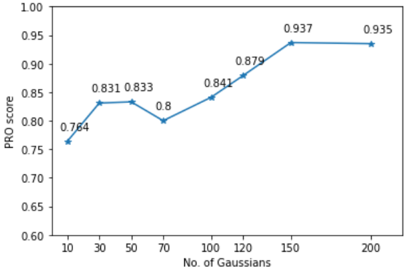
- Adding Gaussian noise to transformer-encoded features improves generalization: with 150 Gaussians, PRO score is 0.897 with noise versus 0.807 without noise.
Methods
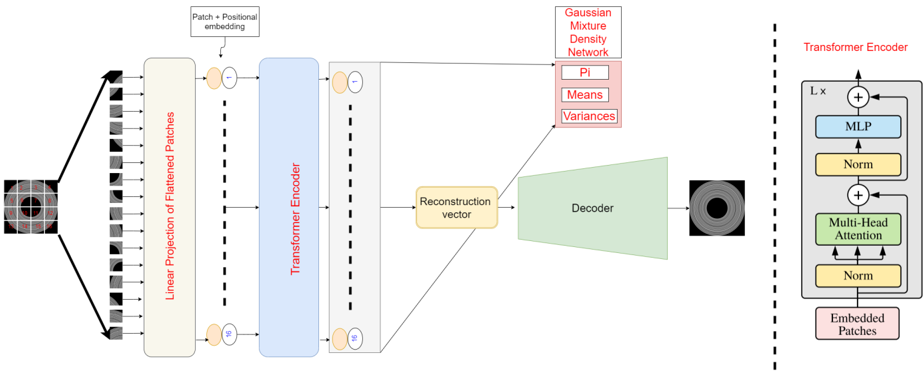
- The model is trained semi-supervised using only normal data. Images are split into patches, embedded with positional information, encoded by a Vision Transformer, decoded for reconstruction, and modeled by a Gaussian mixture density network for anomaly localization.
- Training combines MSE, SSIM, and negative conditional log-likelihood losses, with Gaussian noise N(0, 0.2) added to transformer-embedded features for regularization. Hyperparameters include Adam learning rate 0.0001, weight decay 0.0001, batch size 8, 400 epochs, 150 Gaussians, and patch dimension P = 64.
- Experiments use MNIST, MVTec (5,354 high-resolution images, scaled to 550×550 then center cropped to 512×512), and BTAD (2,830 real-world images of 3 industrial products, with 400, 1000, and 399 training images respectively). Evaluation uses AUC for MNIST and PRO for MVTec and BTAD.
Limitations
- The paper does not include a dedicated limitations section. It states that dropout was not used because it causes instability in the Gaussian approximation network.
- Evident from the reported results: on MVTec, VT-ADL’s mean PRO (0.807) is below Uni. Stud. (0.857), and it underperforms that method in several categories, such as Capsule (0.672 vs. 0.916), Pill (0.705 vs. 0.935), and Metal Nut (0.726 vs. 0.895).
- Evident from the text: BTAD results are described as the first results on the new dataset, and the comparison is limited to basic convolutional autoencoders with MSE and MSE+SSIM losses.
Model-written summary. Check it against the paper before relying on it.
Integrity signals
Registry
Cites
Statistics
Figures
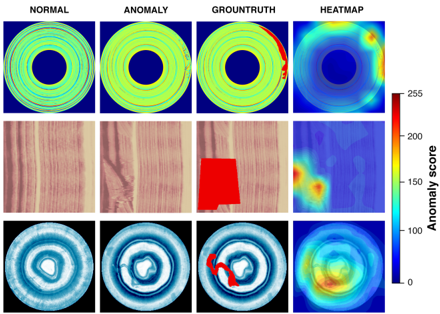
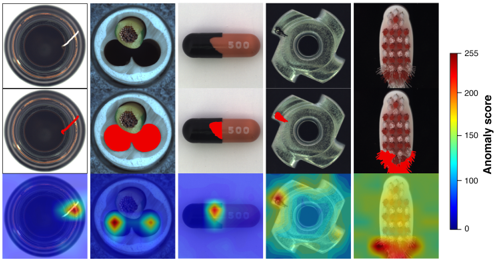
Verification
Claims the paper makes
2 Valid · 2 Not valid · 6 Not checked · 14 Own results and interpretations
The cited sources support only part of this claim — read each source’s verdict below.
In the paper
“In our work we show how an adapted transformer network can be used for anomaly localization using Gaussian Approximation [10], [11] of the latent features and also how different configurations can be tweaked to win some of the shortcomings of the vision transformer network.”
What the sources say
- Partly supportedcites [10] [10] C. M. Bishop, Mixture density networks . Aston University, 1994. -Experimental — accuracy not yet measured
The paper’s “Conventional Least Squares” section describes representing the conditional distribution of target data with a Gaussian function. It does not describe Gaussian approximation of latent features for anomaly localization. The adapted transformer is presented as the citing authors’ own work, not as a result of this source. (LLM, conf=0.82)
- Not checked — no full text of the sourcecites [11] [11] N. Ueda, R. Nakano, Z. Ghahramani, and G. E. Hinton, 'Split and merge em algorithm for improving gaussian mixture density estimates,' in Neural Networks for Signal Processing VIII. Proceedings of the 1998 IEEE Signal Processing Society Workshop (Cat. No. 98TH8378) . IEEE, 1998, pp. 274-283. - source
plainstates a cause- Asserted: passes — The authors put it forward as true.
- Checkable: passes — It can be checked against evidence.
- Load-bearing: passes — The paper’s conclusions depend on it.
- Based: passes — The paper gives a reason why it holds.
- Partly supported
Every source the paper cites for this claim was checked and supports it.
In the paper
“The use of transformer networks helps preserving the spatial information of the embedded patches, which is later processed by a Gaussian mixture density network to localize the anomalous areas.”
- Also stated in: § I. INTRODUCTION · p. 1 · plain
“The vision transformer network model, recently proposed by Dosovitskiy et al. [9], is a network designed to work on image patches trying to preserve their positional information.”
What the sources say
- Supportedcites Dosovitskiy et al. [9] [9] A. Dosovitskiy, L. Beyer, A. Kolesnikov, D. Weissenborn, X. Zhai, T. Unterthiner, M. Dehghani, M. Minderer, G. Heigold, S. Gelly, J. Uszkoreit, and N. Houlsby, 'An image is worth 16x16 words: Transformers for image recognition at scale,' 2020. - source
Section 3.1 (p. 3) says position embeddings are added to patch embeddings to retain positional information before the sequence enters the Transformer encoder. Section 4.5 (p. 8) reports that the learned embeddings represent the image’s 2D topology, supporting the attributed point about spatial information. (LLM, conf=0.91)
plainstates a cause- Asserted: passes — The authors put it forward as true.
- Checkable: passes — It can be checked against evidence.
- Load-bearing: passes — The paper’s conclusions depend on it.
- Based: passes — The paper gives a reason why it holds.
- Also stated in: § I. INTRODUCTION · p. 1 · plain
The cited sources that could be checked couldn’t confirm or dispute this claim.
In the paper
“Adding noise during training is seen as a form of data augmentation and regularization that biases towards smooth functions [10], [31].”
What the sources say
- Could not verifycites [10] [10] C. M. Bishop, Mixture density networks . Aston University, 1994. -Experimental — accuracy not yet measured
Section 2, “Conventional Least Squares” (page unavailable), mentions regularization as a way to control model complexity, but does not connect it to adding noise. Section 5, “A Simple Inverse Problem” (page unavailable), uses noise to generate example data; it does not describe noise added during training as augmentation or as a bias toward smooth functions. Searches for noise injection and smooth functions found no passage addressing that claim. (LLM, conf=0.76)
- Not checked — no full text of the sourcecites [31] [31] G. An, 'The effects of adding noise during backpropagation training on a generalization performance,' Neural Computation , vol. 8, no. 3, pp. 643-674, 1996. source
plainstates a cause- Asserted: passes — The authors put it forward as true.
- Checkable: passes — It can be checked against evidence.
- Load-bearing: passes — The paper’s conclusions depend on it.
- Based: passes — The paper gives a reason why it holds.
- Could not verify
A result the paper reports from its own data — it cites no other source for it, so there is none to check. The quote shows it is in the paper.
In the paper
“The dataset contains a total of 2830 real-world images of 3 industrial products showcasing body and surface defects.”
plain- Asserted: passes — The authors put it forward as true.
- Checkable: passes — It can be checked against evidence.
- Load-bearing: passes — The paper’s conclusions depend on it.
- Based: passes — The paper gives a reason why it holds.
A result the paper reports from its own data — it cites no other source for it, so there is none to check. The quote shows it is in the paper.
In the paper
“In addition, we also publish BTAD, a real-world industrial anomaly dataset.”
- Also stated in: § I. INTRODUCTION · p. 1 · plain
“In addition to this, we are also publishing a real-world industrial dataset (the beanTech Anomaly Detection dataset - BTAD) for the anomaly detection task.”
plain- Asserted: passes — The authors put it forward as true.
- Checkable: passes — It can be checked against evidence.
- Load-bearing: passes — The paper’s conclusions depend on it.
- Based: passes — The paper gives a reason why it holds.
- Also stated in: § I. INTRODUCTION · p. 1 · plain
8 more claims
Create a free account to see all 24 claims and to verify the 3 references still open.
- It may state two separate claims as one. 10
- The quote only partly states this claim. 1
- Probably not a substantial claim. 2
Claims other papers make about this one
Each is checked against this paper’s own text: does it say what the citing paper says it does?
The source backs part of the claim, not all of it — or backs it for a different population, condition or comparison.
In the citing paper
“The BeanTech AD dataset, designed for unsupervised anomaly detection in industrial settings”
From An Unsupervised Method for Industrial Image Anomaly Detection with Vision Transformer-Based Autoencoder (2024) · cites this paper as [13]
Experimental — accuracy not yet measuredThe source backs part of the claim, not all of it — or backs it for a different population, condition or comparison.
In the citing paper
“These datasets are extensively utilized to evaluate anomaly detection algorithms, offering diverse testing scenarios and data for this research.”
From An Unsupervised Method for Industrial Image Anomaly Detection with Vision Transformer-Based Autoencoder (2024) · cites this paper as [13]
Experimental — accuracy not yet measuredThe source backs part of the claim, not all of it — or backs it for a different population, condition or comparison.
In the citing paper
“However, these methods directly utilize vanilla transformer, and do not figure out why transformer brings improvement.”
From A Unified Model for Multi-Class Anomaly Detection (2022) · cites this paper as [29]
Experimental — accuracy not yet measuredThe cited source says what the claim attributes to it.
In the citing paper
“It comprises 2830 RGB images across three different industrial products.”
From An Unsupervised Method for Industrial Image Anomaly Detection with Vision Transformer-Based Autoencoder (2024) · cites this paper as [13]
Citations
Cites
Vaswani, A., Shazeer, N., Parmar, N., Uszkoreit, J., Jones, L., Gomez, A. N., Kaiser, L., & Polosukhin, I. (2017) · arXiv · doi:10.48550/arxiv.1706.03762 · Cited by 120,404
An Image is Worth 16x16 Words: Transformers for Image Recognition at Scale
Dosovitskiy, A., Beyer, L., Kolesnikov, A., Weissenborn, D., Zhai, X., Unterthiner, T., Dehghani, M., Minderer, M., Heigold, G., Gelly, S., et al. (2020) · arXiv · doi:10.48550/arxiv.2010.11929 · Cited by 47,472 · cited 5×
“[9], is a network designed to work on image patches”
BackgroundMethodInfluentialMVTec AD — A Comprehensive Real-World Dataset for Unsupervised Anomaly Detection
Bergmann, P., Fauser, M., Sattlegger, D., & Steger, C. (2019) · 2019 IEEE/CVF Conference on Computer Vision and Pattern Recognition (CVPR) · doi:10.1109/cvpr.2019.00982 · Cited by 2,203 · cited 2×
“In this case the system tries to learn a “normality” model from the training data and thus subsequently classify new samples as anomaly if they don’t fit the model [1], [16], [12], [24].”
BackgroundMethod(2011) · Cited by 1,258
(1994) · Aston Publications Explorer (Aston University) · Cited by 1,245
High-dimensional and large-scale anomaly detection using a linear one-class SVM with deep learning
Erfani, S. M., Rajasegarar, S., Karunasekera, S., & Leckie, C. (2016) · Pattern Recognition · doi:10.1016/j.patcog.2016.03.028 · Cited by 1,162 · cited 1×
“Some of the works handled these two steps independently [25], [26], while others achieved better results by doing the two steps collectively, in order to extract the best features for subsequent anomaly detection [27], [28].”
Uninformed Students: Student-Teacher Anomaly Detection With Discriminative Latent Embeddings
Bergmann, P., Fauser, M., Sattlegger, D., & Steger, C. (2019) · Computer Vision and Pattern Recognition · doi:10.48550/arxiv.1911.02357 · Cited by 1,052
Uninformed Students: Student-Teacher Anomaly Detection With Discriminative Latent Embeddings
Bergmann, P., Fauser, M., Sattlegger, D., & Steger, C. (2020) · 2020 IEEE/CVF Conference on Computer Vision and Pattern Recognition (CVPR) · doi:10.1109/cvpr42600.2020.00424 · Cited by 990 · cited 5×
“Then we employed the PRO (Per Region Overlap) [8], [24] as the evaluation metric for the MVTec and BTAD datasets.”
BackgroundMethodInfluentialAdversarially Learned One-Class Classifier for Novelty Detection
Sabokrou, M., Khalooei, M., Fathy, M., & Adeli, E. (2018) · 2018 IEEE/CVF Conference on Computer Vision and Pattern Recognition · doi:10.48550/arxiv.1802.09088 · Cited by 768
Adversarially Learned One-Class Classifier for Novelty Detection
Sabokrou, M., Khalooei, M., Fathy, M., & Adeli, E. (2018) · 2018 IEEE/CVF Conference on Computer Vision and Pattern Recognition · doi:10.1109/cvpr.2018.00356 · Cited by 765 · cited 1×
“Network architectures mostly consist of various configuration of autoencoders [12], [13], [14], [15], [16] or Generative Adversarial Network (GAN) [17], [18].”
Background
Research works printed but not linked: 1
- [15] I. Goodfellow, Y. Bengio, and A. Courville, Deep Learning . MIT Press, 2016, http://www.deeplearningbook.org. -
Cited by
Items 301–400 of 406
Advanced Data Augmentation Techniques for Improved Defect Detection in Industrial
Khedidja, M., Abbas, F., & Hemam, M. (2024) · International Conference on Advances in Electrical and Communication Technologies (ICAECOT) · doi:10.1109/icaecot62402.2024.10828966
“E XPERIMENT A. Dataset BTAD [17]: a database of real images for industrial defect detection.”
IRAD: Input-Reference Joint Driven Reconstruction for Unified Anomaly Detection
Chen, Z., Yao, X., Luo, Y., Liu, Z., Zhang, B., & Zhang, C. (2024) · IEEE International Conference on Visual Communications and Image Processing (VCIP) · doi:10.1109/vcip63160.2024.10849884
“Mvtec-AD [17], BTAD [18], and VisA [19] are three widely used AD benchmarks.”
Steel Surface Defect Recognition Based on Evolutionary Network Architecture Search
Lu, T., & Wu, G. (2024) · China Automation Congress (CAC) · doi:10.1109/cac63892.2024.10864969
Rahul, G. P., & Manikavelan, D. (2025) · AIP conference proceedings · doi:10.1063/5.0258877
Patch Feature Transformation: An Anomaly Detection Method with Succinct Feature Filtering
Guo, Y., Xu, G., Yin, J., & Wang, S. (2025) · International Journal of Pattern Recognition and Artificial Intelligence · doi:10.1142/s0218001425590062
C 2 AD: Dual Consistency Learning for Zero-Shot Anomaly Detection
Wang, X., Xing, R., Tian, Z., Liu, Y., Yang, S., Wang, Y., & Su, J. (2025) · IEEE International Conference on Acoustics Speech and Signal Processing · doi:10.1109/icassp49660.2025.10888992 · Cited by 3
“E XPERIMENTS We conduct extensive experiments on popular industrial anomaly detection datasets, MVTecAD [32], VisA [33], DTD-Synthetic [34], BTAD [35].”
A Hierarchical Flow for Few-shot Anomaly Detection via Global-local Aggregation Strategy
Wan, Y., Fan, T., & Yao, L. (2025) · IEEE International Conference on Acoustics Speech and Signal Processing · doi:10.1109/icassp49660.2025.10889988 · Cited by 1
Zuo, Z., Dong, J., Wu, Y., Qu, Y., & Wu, Z. (2025) · IEEE Transactions on Neural Networks and Learning Systems · doi:10.1109/tnnls.2025.3572438 · Cited by 2
“A. Settings 1) Datasets: To evaluate the e ff ectiveness of our proposed method, we conducted extensive experiments on three commonly used and challenging datasets, MVTEC-AD [64], VisA [65], and BTAD [57].”
Deep Vision Transformer with Association Divergence for Image Anomaly Detection and Localization
Jiang, J., Zhang, Y., & Zhang, Y. (2025) · Communications in computer and information science · doi:10.1007/978-981-96-6975-2_1 · Cited by 4
UAMS: An Unsupervised Anomaly Detection Method Integrating MSAA and SSPCAB
Li, Z., Chen, W., & Wang, W. (2025) · Symmetry · doi:10.3390/sym17071119 · Cited by 1
A Self-Learning Framework for Fault Detection in Industrial Components
Zhang, R., Yao, K., Wu, L., Li, B., Ye, W., & Yuan, W. (2025) · International Conference on Computer and Communication Systems (ICCCS) · doi:10.1109/icccs65393.2025.11069756
“• Transformer based : In recent years, transformer models have achieved remarkable success in the field of natural language processing and have begun to be applied to computer vision, as demonstrated by VT-ADL [7] and AnoViT [8].”
Efficient Industrial Anomaly Detection via Knowledge Distillation
Zhang, Y., Zhu, J., Gu, X., & Li, M. (2025) · International Conference on Computer Vision, Image and Deep Learning (CVIDL) · doi:10.1109/cvidl65390.2025.11085554
“Depending on how anomaly maps are generated, these methods can be categorized into approaches based on multivariate Gaussian distributions [15, 16], Gaussian Mixture Models (GMMs) [17, 18], and k-Nearest Neighbor (kNN) [1, 19].”
Wang, S., & Huang, X. (2025) · Communications in computer and information science · doi:10.1007/978-981-96-9911-7_36
Normality Prior-Guided Multisemantic Fusion Network for Unsupervised Image Anomaly Detection
Xu, M., Zhou, X., Gao, X., Song, W., Feng, G., & Niu, S. (2025) · IEEE Transactions on Instrumentation and Measurement · doi:10.1109/tim.2025.3593554 · Cited by 2
“3) BTAD Dataset [59]: It consists of three distinct categories of industrial components, each characterized by representative body and surface defects.”
Dscd: Dual-Student Collaborative Distillation for Industrial Anomaly DetectionPreprint
Ding, C., Xu, J., & Jiang, S. (2025) · SSRN Electronic Journal · doi:10.2139/ssrn.5370573
A Hierarchical Patch Feature Distribution Network for Industrial Multiscale Defect Detection
Zheng, Z., Yang, H. S., & Yin, Z. (2025) · IEEE Transactions on Automation Science and Engineering · doi:10.1109/tase.2025.3598017 · Cited by 2
“3) The BTAD Dataset: The BTAD dataset [7] is a real-world industrial anomaly dataset that contains RGB images of three industrial products.”
Ma, H., Chen, G., Li, N., Liao, X., Tang, Y., & Wang, M. (2025) · SSRN Electronic Journal · doi:10.2139/ssrn.5394369
Sliced Vision Transformers for Fine-Grained Anomaly Detection and Localization
Iqbal, N., Zanier, M., Vernier, M., Micheloni, C., & Martinel, N. (2025) · IEEE International Conference on Advanced Video and Signal Based Surveillance (AVSS) · doi:10.1109/avss65446.2025.11149919
“To address these challenges, Vision Transformer (ViT)-based approaches [15] were introduced.”
Feature Attenuation of Defective Representation Can Resolve Incomplete Masking on Anomaly Detection
Park, Y., Kang, S., Kim, M. J., Kim, H. S., & Yi, J. (2025) · IEEE/CVF Conference on Computer Vision and Pattern Recognition Workshops (CVPRW) · doi:10.1109/cvprw67362.2025.00377 · Cited by 1
“However, compared to multiple random masking methods, it can potentially fail to provide a mask that completely cover defective regions.”
Zhang, R., & Hu, H. (2025) · IEEE Transactions on Image Processing · doi:10.1109/tip.2025.3607638 · Cited by 6
“We evaluate the performance of our model on three publicly available datasets: MVTec AD [45], BTAD [46], and DAGM [47].”
Estermann, F., Kaftandjian, V., Guy, P., Quetin, P., & Delachartre, P. (2025) · Computers in Biology and Medicine · doi:10.1016/j.compbiomed.2025.111085 · Cited by 3
Kim, D., Hwang, H., & Kim, H. (2025) · Sensors · doi:10.3390/s25196244
“They have significantly enhanced their performance in various computer vision tasks, including object detection, image classification, and anomaly detection [34,35].”
Industrial Anomaly Image Generation and Detection Based on the Diffusion Model
Yang, X., Yuan, K., & Cao, Y. (2025) · Chinese Control Conference (CCC) · doi:10.23919/ccc64809.2025.11179530
“We utilize the open-sourced Mvtec-AD [17] and BTAD [18] datasets.”
V2TCASA: Vision to text class-agnostic state-agnostic for industrial zero-shot anomaly detection
Jiang, C., Peng, L., & Liu, H. (2025) · Signal Image and Video Processing · doi:10.1007/s11760-025-04910-1
“We evaluate V2TCASA on four standard anomaly detection benchmarks: MVTec-AD [2], VisA [17], BTAD [18], and DTD-Synthetic [19].”
SGAD: An Unsupervised Secondary-Guided Diffusion Model for Industrial Anomaly Detection
Kang, W., Zhang, Y., Weng, L., Cheng, Z., & Gao, F. (2025) · IEEE International Conference on Multimedia and Expo (ICME) · doi:10.1109/icme59968.2025.11209468
“As the contexts for anomaly detection gradually become diversified and complex, such as MVTec [1], VisA [2], and BTAD [3], there is an increasing need for models that can effectively identify anomalies.”
DTSNet: A Denoising Teacher-Student Network with Reverse Distillation for Anomaly Detection
Lin, T., Lin, S., Liang, Y., Chen, R., & Yang, L. (2025) · IEEE International Conference on Multimedia and Expo (ICME) · doi:10.1109/icme59968.2025.11209857
MVPS: Multi-View Adaptive Prompt Synergy for Zero-shot Anomaly Detection
Huang, L., Xu, S., Wang, C., Xu, R., Lu, P., & Xu, S. (2025) · IEEE International Conference on Multimedia and Expo (ICME) · doi:10.1109/icme59968.2025.11209887 · Cited by 1
Multi-Level Normalizing Flow for Comprehensive Anomaly Detection and Localization
Shi, J., Wen, X., Guo, S., Deng, H., Xie, J., & Cao, R. (2025) · IEEE International Conference on Multimedia and Expo (ICME) · doi:10.1109/icme59968.2025.11209960
“Detailed experiments were conducted on the MVTec AD dataset [19], BeanTech AD dataset [20] and VisA [21] dataset.”
Thuong, N. H., Tin, D. D., & Trang, L. H. (2025) · Lecture notes in computer science · doi:10.1007/978-981-95-4963-4_28
Anomaly Knowledge Learning for Patch-Agnostic Defense against Adversarial Patches
Mu, H., & Cao, Z. (2025) · IEEE/RSJ International Conference on Intelligent Robots and Systems (IROS) · doi:10.1109/iros60139.2025.11246128
“1) Industrial Anomaly Dataset: To facilitate anomaly learning in SAM’s image encoder, we select three industrial anomaly datasets: MVTec-AD [21], MPDD [22], and BTAD [23].”
Noise Fusion-based Distillation Learning for Anomaly Detection in Complex Industrial Environments
Yu, J., Ren, J., Chang, Y., Yu, Q., Tong, X., Wang, B., Song, Y., You, L., Mai, X., & Zhang, W. (2025) · IEEE/RSJ International Conference on Intelligent Robots and Systems (IROS) · doi:10.1109/iros60139.2025.11247510
Wang, Y., Wang, M., Sun, B., Zhao, Q., Zhang, L., Liu, Z., Yang, X., & Zheng, S. (2025) · ACM International Conference on Multimedia in Asia (MMAsia) · doi:10.1145/3743093.3770997 · Cited by 1
A Unified Decision Rule for Generalized Out-of-Distribution Detection
Ma, X., Wu, J., Zou, X., & Liu, W. (2025) · IEEE Transactions on Pattern Analysis and Machine Intelligence · doi:10.1109/tpami.2025.3642151 · Cited by 4
Dynamic Threshold Token Subsampling for Vision Transformer in Cloud Computing
Yang, J., Li, Q., Li, X., et al. (2025) · Communications in computer and information science · doi:10.1007/978-981-95-3736-5_27
Neural Network Compression for Visual Quality Control in Industrial Edge Computing
Nouchi, E. K., & dos Santos, F. P. (2025) · SIBGRAPI Conference on Graphics, Patterns and Images (SIBGRAPI) · doi:10.5753/sibgrapi.est.2025.38320 · Cited by 1
“In general, Deep Learning addresses the anomaly detection problem by learning feature representations or anomaly scores from data using complex multilayered neural networks [10]–[12].”
Revisiting Symmetric Teacher-Student Network Distillation for Anomaly Detection
Zhang, Q., Liu, J., Xie, G., Liao, L., Chen, Y., Lei, X., Shu, A., Jiang, G., & Zhang, S. (2026) · Lecture notes in computer science · doi:10.1007/978-981-95-5679-3_18
Fan, X. (2025) · International Conference on Automation, Computing and Renewable Systems (ICACRS) · doi:10.1109/icacrs67045.2025.11324328
“[13] proposed the VT-ADL network.”
Frequency-Guided Feature Refinement for Zero-Shot Anomaly Detection
Zhang, H., Wu, C., Lu, J., & Zhao, W. (2025) · IEEE International Conference on Frontiers Technology of Information and Computer (ICFTIC) · doi:10.1109/icftic68075.2025.11325013
Towards Zero-Shot Anomaly Detection via Adaptive Prompting and Multi-Scale Cross-Modal Interaction
Tang, G., Zhao, W., Jia, N., & Liu, X. (2025) · International Conference on Robotics and Computer Vision (ICRCV) · doi:10.1109/icrcv67407.2025.11349269
“This paper conducts experiments on seven public industrial anomaly detection datasets, including MVTec-AD [33], VisA [34], BTech [35], MPDD [38], DTD-Synthetic [37], KSDD2 [22], and DAGM [36].”
Liu, G., Ke, Z., Wang, G., Zhao, H., Zhang, Y., & Lu, C. (2026) · Lecture notes in computer science · doi:10.1007/978-981-95-5567-3_15
A Deep-Supervised Knowledge Distillation Method for Industrial Anomaly Detection
He, Y., Sun, L., Li, Y., Liu, G., & Zhang, J. (2025) · International Conference on Signal Processing Systems (ICSPS) · doi:10.1109/icsps66615.2025.11347646
“To evaluate the performance of the proposed algorithm, we conducted a comparative study on two benchmark defect datasets against several state-of-the-art anomaly detec-1115 tion methods, including DRAEM[18], STPM[9], MKD[19], RD4AD[10], US[8], and FABLE[20].”
Cai, J., Wu, Z. L., Hua, R., Mao, S., Zhang, Y., Guo, R., & Lin, K.-C. (2026) · Applied Sciences · doi:10.3390/app16031597 · Cited by 1
FGPT: Fine-Grained Prompt Tuning for Zero-Shot Anomaly Detection
Yuexin, W., Wang, X., Li, H., Liu, J., Tillo, T., & Xiao, J. (2026) · IEEE Transactions on Artificial Intelligence · doi:10.1109/tai.2026.3661382 · Cited by 2
“We conduct comprehensive experiments on seven industrial and medical datasets, as shown in Table I. Specifically, for the industrial domain, we use MVTec [7], VisA [9], MPDD [56], BTAD [57], KSDD [58], DAGM [59], DTD [60] datasets.”
Self-Supervised CLIP-Guided for Few-Shot Industrial Anomaly Detection
Chen, Y., Xu, Y. W., Wang, T., Zhai, Y., Tan, K., Zhou, J., Coscia, P., Genovese, A., & Chen, C. L. P. (2026) · IEEE Transactions on Instrumentation and Measurement · doi:10.1109/tim.2026.3661696 · Cited by 1
“We conducted comparative experiments on the MVTec AD [43], VisA [44], BTAD [52], and MPDD [53] datasets.”
Yang, Q., & Chen, Y. (2026) · Journal of Intelligent Manufacturing · doi:10.1007/s10845-026-02806-6
Dual-View Compressed Knowledge Distillation for Defect Detection and Evaluation
Wang, J., Li, X., Zhang, Z., Ding, C., Gong, G., & Xiao, Y. (2025) · International Conference on Computer Science, Electronic Information Engineering and Intelligent Control Technology (CEI) · doi:10.1109/cei66465.2025.11398594
Zhan, X., Li, Y., Chen, R., Zhang, W., & Li, H. (2026) · Journal of Artificial Intelligence and Soft Computing Research · doi:10.2478/jaiscr-2026-0014
“We evaluate TAD on three public benchmarks, MVTec AD [11], BTAD [12], and VisA [13].”
Wang, Y., & Chai, L. (2026) · Applied Intelligence · doi:10.1007/s10489-026-07183-4 · Cited by 2
“4) BTAD :BTAD (BeanTech Anomaly Detection Data - set) [ 43 ] includes three industrial categories: capsules, casings, and pills, with a total of 2,540 high-resolution images.”
An aerial color image anomaly dataset for search missions in complex forested terrain
Nathan, R. J. A. A., Geßner, M., Özkan, N., Bock, M., Youssef, M., Mews, M., Piltz, B., Berger, R., & Bimber, O. (2026) · Scientific Data · doi:10.1038/s41597-026-07101-w
“Such a dataset did not exist before.”
Hsu, H.-M., Chang, K.-L., Chang, W.-C., Lee, C.-H., Hsueh, H.-W., Tseng, C.-W., & Hsu, S.-H. (2026) · The International Journal of Advanced Manufacturing Technology · doi:10.1007/s00170-026-17900-5
“Similarly, VT-ADL [34] presents a transformer-based approach combining reconstruction with patch embedding, using vision transformers to preserve spatial information processed by Gaussian mixture density networks for anomaly localization.”
Zhang, Z., Zhang, J., Chen, Q., Li, G., Chen, D., Jing, S., Wang, H., Li, D., Liu, C., Bai, C., et al. (2026) · IEEE Transactions on Pattern Analysis and Machine Intelligence · doi:10.1109/tpami.2026.3680569 · Cited by 7
Mayaki, M. Z. A. (2024) · theses.fr (ABES) · doi:10.70675/e8e2614az79ffz4901z9c79ze9f9889ba9c4
Semi-supervised deep learning for robust anomaly detection in smart manufacturing systems
Le, T. (2024) · theses.fr (ABES) · doi:10.70675/19d23228zf030z4df7za3abz596d36577818
BAG-CLIP: Bifurcated Attention Graph-Enhanced CLIP for Zero-Shot Industrial Anomaly Detection
Wu, H. R., Zhang, T., & Li, S. (2026) · Electronics · doi:10.3390/electronics15081659
Zhang, T., Pang, W., & Lu, X. (2026) · IEEE Transactions on Multimedia · doi:10.1109/tmm.2026.3684998 · Cited by 2
“Specifically, for the industrial domain, we employ MVTec-AD [5], VisA [42], MPDD [43], BTAD [44], KSDD [45],DTD-Synthetic [46], and Real-IAD [7], covering a diverse range of manufacturing defects, materials, and surface textures.”
Unsupervised Anomaly Detection in Industry: Progress, Trends, and Future AvenuesPreprint
Wang, X., Chen, B., Niu, T., Wan, Z., Li, K., & Zhang, H. (2026) · SSRN Electronic Journal · doi:10.2139/ssrn.6661514
Dual-Masked and Discriminative Reconstruction for Unified Vision Anomaly Detection
Gao, B.-B. (2026) · IEEE Transactions on Image Processing · doi:10.1109/tip.2026.3687095 · Cited by 3
“For fair comparisons, we use the original training / testing splits given in previous works [1], [2], [3], [50].”
InfluentialAnomaly Detection for Complex Industrial Components via Learnable Noise Generation
Wang, F., Zhu, Q. X., Zhou, X., Wang, Y., Liu, X., Huang, J., & Wang, X. G. (2025) · China Automation Congress (CAC) · doi:10.1109/cac67268.2025.11487407
PatchEAD: Unifying Industrial Visual Prompting Frameworks for Patch-Exclusive Anomaly Detection
Huang, P., Li, J.-L., Huang, P.-H., Chang, M., & Chen, W.-C. (2026) · IEEE Winter Conference on Applications of Computer Vision · doi:10.1109/wacv61042.2026.00536 · Cited by 2
“Anomaly detection is a crucial area in computer vision that automates the identification of irregular regions in images, with applications for ensuring product quality and reducing costs in industrial settings.”
Peng, Y., & Qin, Y. (2026) · Discover Applied Sciences · doi:10.1007/s42452-026-08699-7
“To demonstrate the generalization capability of the proposed methodology, anomaly detection experiments were conducted on the BTAD [54] and MPDD [55] benchmark datasets.”
GPGA: Mixture of gaussian prompt geometric adjustment for zero-shot industrial anomaly detection
Yan, Y., Liu, G., & Xu, J. (2026) · Journal of King Saud University - Computer and Information Sciences · doi:10.1007/s44443-026-00790-8 · Cited by 1
“Further analysis of the dataset characteristics reveals that GPGA achieves superior performance on object-centric datasets such as VisA, BTAD, and MPDD.”
InfluentialAnomaly-aware prompt learning and multi-scale feature adaptation for zero-shot anomaly detection
Li, Z., Yang, L., Zhang, L., Zhang, K., Pan, Y., & Liu, J. (2026) · Journal of King Saud University - Computer and Information Sciences · doi:10.1007/s44443-026-00799-z
VCP-CLIP+: Stabilizing and Optimizing VCP-CLIP with Minimal Architectural Changes
Im, J., & Park, H. (2026) · Electronics · doi:10.3390/electronics15102058
Anomaly-Aware Vision-Language Adapters for Zero-Shot Anomaly Detection
Aqeel, M., Nazir, M., Khan, U., Cristani, M., & Setti, F. (2026) · Proceedings - International Conference on Image Processing · doi:10.1109/icip61757.2026.11629903 · Cited by 1
RGB Ensemble Strategies for Unsupervised Industrial Anomaly Detection on the AutoVI Dataset
López, S. V., Soria‐Olivas, E., & Sánchez-Montañés, M. A. (2026) · Electronics · doi:10.3390/electronics15102077 · Cited by 3
Biardeau, T., Capelle-Laizé, A.-S., Alwan, S., & Helbert, D. (2026) · Precision Agriculture · doi:10.1007/s11119-026-10378-x
“Notable examples include AnoViT Lee and Kang (2022) and VT-ADL Mishra et al. (2021) replace the encoder with a pre-trained ViT Dosovitskiy et al. (2021) and show consistent gains over CAE baselines.”
Li, S., Liu, J., Liang, J., & Liu, H. (2026) · Textiles · doi:10.3390/textiles6020060
ResAD++: Towards Class Agnostic Anomaly Detection via Residual Feature Learning
Yao, X., Shi, C., Zhao, M., Zhai, G., & Zhang, C. L. (2026) · International Journal of Computer Vision · doi:10.1007/s11263-026-02885-1 · Cited by 2
“The BeanTech Anomaly Detection dataset [82] contains 2830 images of 3 industrial products.”
Foundation Model-Energized Anomaly Detection and Outlier Detection: A Survey
Xiao, F., & Fan, J. (2026) · Lecture notes in computer science · doi:10.1007/978-981-92-1468-6_5
Transformer-Based Anomaly Detection for Neurodegenerative Screening in MRI Images
González, E. G., Dicu, M., Villar, J. R., & Chira, C. (2026) · International Journal of Neural Systems · doi:10.1142/s0129065726500528
SimpleZ3D: A simple framework for zero-shot 3D industrial anomaly detection
Gao, H., Zhao, W., Zhong, Y., Wang, M., & Zhang, J. (2026) · Pattern Recognition · doi:10.1016/j.patcog.2026.114237 · Cited by 1
MFDPrompt: Multi-Modal Fine-Grained Dual-Prompt Learning for Zero-Shot Anomaly Detection
Hu, W., Zhu, T., Zeng, F., Tang, Y., Chen, R., & Zhang, W. (2026) · IEEE Transactions on Circuits and Systems for Video Technology · doi:10.1109/tcsvt.2026.3703437
“…defect inspection datasets across diverse products and objects (MVTec [43], VisA [44], DAGM [45], DTD-Synthetic [46], AITEX [47], SDD [48], BTAD [49], MPDD [50], and ELPV [51]), and ten medical anomaly detection datasets covering various organs such as the brain, fundus, colon, skin, and…”
SSHF-CLIP: Semantic-Guided Scale Selection and Hybrid Fusion for Zero-Shot Anomaly Detection
Jin, K., Abliz, W., Maimaiti, M., Kadeer, Z., Wumaier, A., Abdurahman, A., & Zheng, P. (2026) · International Conference on Multimedia Retrieval · doi:10.1145/3805622.3810745
BSR-CLIP: Background-Calibrated Structural Reasoning for Zero-Shot Visual-Language Anomaly Detection
Wang, S., Han, Y., Xue, Y., Li, J., Tan, S., Zhang, Y., Wang, L., & Zheng, P. (2026) · International Conference on Multimedia Retrieval · doi:10.1145/3805622.3810675
Zhang, Z. D., & Chen, J. (2026) · International Conference on Artificial Intelligence and Industrial Technology Applications (AIITA) · doi:10.1109/aiita69518.2026.11567093
“• Domain-Specific Detection: This includes MPDD [15], focused on metal part defects, BTAD [16] for multi-modal industrial product detection, and SDD [17], which targets surface crack detection.”
PFAD: Parameter-Efficient Framework for Cross-Domain Anomaly Detection for Sustainable Manufacturing
Joo, B., & Jung, H. (2026) · Sustainability · doi:10.3390/su18136684
QSSM-PatchCore: Quad-Directional State Space Propagation for Visual Anomaly Detection
Zhang, Y., Zhu, L., & Yu, Z. (2026) · IEEE International Conference on Pervasive Computing and Communications Workshops (PerCom Workshops) · doi:10.1109/percomworkshops68308.2026.11585233
“For BTAD [31] and AeBAD-S [32], which contain illumination shifts, viewpoint variations, and unaligned samples, QSSM-PatchCore consistently yields higher robustness.”
CoTGen: Chain-of-Thought Enhanced Reasoning for Cross-Scenario Industrial Anomaly Detection
Pang, F., Ouyang, Z., Yang, A., Zeng, P., & Wang, Z. (2026) · International Conference on Computer Supported Cooperative Work in Design (CSCWD) · doi:10.1109/cscwd68734.2026.11582291
“Then, unlike prior works that extract training data from downstream datasets, we select the real-world BTAD [10] dataset to construct samples centered on two core IAD tasks (anomaly detection and defect localization).”
Region-Prompt-Guided Anomaly Detection With Entropy-Based Consistency Modeling
Shi, Y., Xu, R., & Qi, Z. (2026) · IEEE Transactions on Image Processing · doi:10.1109/tip.2026.3709516
SAPCLIP: Semantic Aggregation and Prompt Enhancement for Zero-Shot Anomaly Detection
Xu, L., & Jiang, Y. (2026) · Lecture notes in computer science · doi:10.1007/978-981-92-3507-0_39
HD-CLIP: Hierarchical Dynamic Prompting and Decoupled Learning for Zero-Shot Anomaly Detection
Jiang, J., Chang, Y., Yin, H., Wei, S., & Xu, X. (2026) · IEEE Transactions on Instrumentation and Measurement · doi:10.1109/tim.2026.3711336 · Cited by 1
“The industrial benchmark includes seven standard datasets: 1) MVTec-AD [32]; 2) VisA [33]; 3) MPDD [34]; 4) BTAD [35]; 5) KSDD [36]; 6) DAGM [37]; and 7) DTD [38].”
Memory Pollution in Multi-Product Visual Anomaly Detection: Diagnosis and Mitigation
López, S. V., Soria‐Olivas, E., & Sánchez-Montañés, M. A. (2026) · Machine Learning and Knowledge Extraction · doi:10.3390/make8070219 · Cited by 1
“Recent self-supervised backbones such as DINOv2 [4] and DINOv3 [5] further improve feature quality, yielding strong detection and localization on standard benchmarks [6–8].”
Zero-Shot Anomaly Detection via Learnable Complementary Prompts and Cross-Modal Interaction
Wang, G., & Wang, Z. (2026) · International Journal of Pattern Recognition and Artificial Intelligence · doi:10.1142/s0218001426510122
Semantic-Preserving Dense Localization via DINO-Guided Refinement of CLIP Anomaly Maps
Park, H. (2026) · Electronics · doi:10.3390/electronics15153309
A comprehensive survey on industrial image anomaly detection
Beddawi, C., Haddad, Y., Achkar, C. E., & Makhoul, A. (2026) · Multimedia Tools and Applications · doi:10.1007/s11042-026-21809-2
“While most IAD research evaluates models on standard benchmarks like MVTec-AD [44], VisA [45], BTAD [46], and MPDD [47], a critical challenge has received limited attention: domain shift between training and deployment environments.”
Li, Y., Hongliang, W., Xiu, P., Bai, Y., Bi, Z., & Shi, K. (2026) · IEEE Sensors Journal · doi:10.1109/jsen.2026.3718494
“Reconstruction-based methods restore inputs to their nominal appearance and detect deviations through residual analysis; representative examples include RIAD [9], SCADN [10], and AnoDDPM [11], employing autoencoders, GANs, Transformers [12], and di ff usion models, respectively.”
Rendering Synthetic Defects for Learning‐Based Industrial Inspection
Mao, R., Sakai, H., Freude, C., Garth, C., Gospodnetić, P., & Fulir, J. (2026) · Computer Graphics Forum · doi:10.1111/cgf.70550
Zhao, X., Wang, J., Li, H., Yu, M., & Li, C. (2026) · Proceedings - International Conference on Image Processing · doi:10.1109/icip61757.2026.11630236
Zhu, W., Mo, L., Li, L., Mo, L., & Junguang, Z. (2026) · International Journal of Pattern Recognition and Artificial Intelligence · doi:10.1142/s0218001426510158
Leveraging Mono-Modal Data to Generate Multimodal Representations for Industrial Anomaly Detection
Achkar, C. E., Makhoul, A., & Azar, J. (2026) · IEEE Annual International Computer Software and Applications Conference (COMPSAC) · doi:10.1109/compsac69091.2026.00024
“KolektorSDD and KolektorSDD2 focus on surface defects in production lines [7], [8], while BTAD targets machined metal components and MIAD addresses magnetic tile defects [9], [10].”
Cross-Modal Guidance Learning for Zero-Shot Industrial Anomaly Detection
Fang, T., Zhang, L., Song, R., Zhang, M., Li, X., & Zhang, W. (2026) · IEEE Transactions on Automation Science and Engineering · doi:10.1109/tase.2026.3726437
“In the experiments, we select seven representative ZIAD datasets, including MVTec-AD [40], VisA [41], BTAD [42], KSDD2 [43], RSDD [44], DAGM [45], and DTD-Synthetic (DTD) [46], to comprehensively evaluate the performance of the proposed model in industrial scenarios.”
Sundaravadivel, P., Kumaran, U., Vinothkumar, E. S., & Aravind, T. (2026) · Discover Artificial Intelligence · doi:10.1007/s44163-026-02008-2
DESR: Dual-Encoder Semantic Retrieval for Open-Set Anomaly Discovery
Lin, S.-C. (2026) · Lecture notes in computer science · doi:10.1007/978-3-032-37664-0_12
Wu, Y., Zhang, W., Fu, Q., & Ye, X. (2026) · IEEE Access · doi:10.1109/access.2026.3732131
Liu, Z., Chen, S., Yu, J., Wang, C., Li, K., & Lu, J. (2026) · Lecture notes in computer science · doi:10.1007/978-3-032-37595-7_27
Zeng, Y., Yan, J., Zhang, Y., Peng, W., Li, Q., & Yi, G. (2026) · IET Image Processing · doi:10.1049/ipr2.70449
Wang, G., & Wang, Z. (2026) · Signal Processing Image Communication · doi:10.1016/j.image.2026.117703
Balwant, M. K., Mishra, S., & Misra, R. (2026) · International Journal of Machine Learning and Cybernetics · doi:10.1007/s13042-026-03306-y
“Applications in AD include VT-ADL [29] for industrial defects and TransSVM [12] for video surveillance.”
Ježek, Š., Jonák, M., Skotak, M., Kolařík, M., Bürget, R., & Havlicek, L. (2026) · IEEE Access · doi:10.1109/access.2026.3736478
“For insights into surface defects within an industrial setting, datasets like KolektorSDD2 [24], BTAD [16], and Magnetic-Tile-Defect [25] provide data showcasing cracks, scratches, stains, and other surface irregularities.”
Metadata
- Authors
- Mishra, P., Verk, R., Fornasier, D., Piciarelli, C., & Foresti, G. L.
- Affiliations
- University of Udine (IT)
- Venue
- 2021 IEEE 30th International Symposium on Industrial Electronics (ISIE)
- Publisher
- IEEE
- Published
- 2021-06-20
- Pages
- 01-06
- OpenAlex
- W3154719617
- Cited by
- 462
- References
- 38
- Citations by year
- 2026: 91 · 2025: 139 · 2024: 124 · 2023: 81 · 2022: 26 · 2021: 1
- FWCI
- 26.74
- Type
- conference paper
- Language
- en
- Open access
- green
- arxiv.org
- Licence
- Locations
- IEEE International Symposium on Industrial Electronics (ISIE) (publishedVersion)
- arXiv (Cornell University) (submittedVersion)
- Institutional Research Information System (University of Udine) (submittedVersion)
- arXiv (Cornell University)
- Funders
- ONRG (N62909-20-1-2075)
- Topics
- Physical Sciences › Computer Science › Artificial Intelligence › Anomaly Detection Techniques and Applications
- Physical Sciences › Engineering › Industrial and Manufacturing Engineering › Industrial Vision Systems and Defect Detection
- Physical Sciences › Computer Science › Computer Vision and Pattern Recognition › Advanced Neural Network Applications
- Keywords
- image anomaly detection, anomaly localization, vision transformer, patch embedding, reconstruction-based anomaly detection
About these checks
Registry, retraction, Cites and statistics results are computed, not judged, with one exception: a printed reference that no index lists is read once by a model before it counts as a citation error. Claims are extracted by a model and kept only when their quote appears verbatim in the text; each cited source is then checked, with a model’s help, for whether it says what the claim relies on. Those verdicts can be wrong — read the claim’s quote and the cited source before relying on one.
The claim verdicts this report counts are experimental: their accuracy is not yet measured.
A language model drew the claims from the paper on 2026-10-10, under version 3 of the claim definition (model deepseek-v4.1-flash, prompt extract-v3).
A second model labelled each claim on 2026-10-10 (model jev-1.13-20260917, definition revision gold-guideline-v0.2).
Cited sources are checked with a language model’s help (gpt-6-sol).
Statistics and arithmetic are recomputed, not judged.
Confidence bands are shown only for fields calibrated on our annotated test set. None is calibrated yet, so no band is shown.
What counts as a claim ›How we measure confidence ›How we check this ›
Are you an author, or do you see a problem with this page? Request a review
Data sources
Bibliographic data: Semantic Scholar, OpenAlex, Crossref.
Contains information from the Semantic Scholar Academic Graph Datasets, made available under the ODC Attribution License (ODC-BY 1.0).
Semantic Scholar’s data is described in: Kinney, R., et al. (2023). The Semantic Scholar Open Data Platform. arXiv:2301.10140.
