

VT-ADL: A Vision Transformer Network for Image Anomaly Detection and Localization
Open accessThe DOI matches its Crossref record; 35 of the 38 references it cites were found in a registry or an index; 3 of the 13 sources its claims cite were checked for support.
Abstract
We present a transformer-based image anomaly detection and localization network. Our proposed model is a combination of a reconstruction-based approach and patch embedding. The use of transformer networks helps preserving the spatial information of the embedded patches, which is later processed by a Gaussian mixture density network to localize the anomalous areas. In addition, we also publish BTAD, a real-world industrial anomaly dataset. Our results are compared with other state-of-the-art algorithms using publicly available datasets like MNIST and MVTec.
Overview
CoChat Summary
TL;DR
VT-ADL combines a Vision Transformer patch encoder, a reconstruction decoder, and a Gaussian mixture density network for semi-supervised image anomaly detection and localization. It also releases BTAD, a real-world industrial anomaly dataset, and reports competitive results on MNIST, MVTec, and BTAD.
Key findings
- On MNIST, VT-ADL achieves a mean AUC of 0.984, compared with 0.95 for OC SVM, 0.97 for VAE, 0.97 for LSA, and 0.97 for Pyr. AE.
- On MVTec, VT-ADL reaches a mean PRO score of 0.807, performing at par with recent state-of-the-art methods and outperforming them in 7 product categories; the best comparator, Uni. Stud., has a mean of 0.857.
- On the newly published BTAD dataset, VT-ADL reports a mean PRO score of 0.89 and mean PR AUC of 0.90, compared with convolutional autoencoders using MSE loss (0.78) and MSE+SSIM loss (0.79).
- Adding Gaussian noise to transformer-encoded features improves generalization: with 150 Gaussians, PRO score is 0.897 with noise versus 0.807 without noise.
Methods
- The model is trained semi-supervised using only normal data. Images are split into patches, embedded with positional information, encoded by a Vision Transformer, decoded for reconstruction, and modeled by a Gaussian mixture density network for anomaly localization.
- Training combines MSE, SSIM, and negative conditional log-likelihood losses, with Gaussian noise N(0, 0.2) added to transformer-embedded features for regularization. Hyperparameters include Adam learning rate 0.0001, weight decay 0.0001, batch size 8, 400 epochs, 150 Gaussians, and patch dimension P = 64.
- Experiments use MNIST, MVTec (5,354 high-resolution images, scaled to 550×550 then center cropped to 512×512), and BTAD (2,830 real-world images of 3 industrial products, with 400, 1000, and 399 training images respectively). Evaluation uses AUC for MNIST and PRO for MVTec and BTAD.
Limitations
- The paper does not include a dedicated limitations section. It states that dropout was not used because it causes instability in the Gaussian approximation network.
- Evident from the reported results: on MVTec, VT-ADL’s mean PRO (0.807) is below Uni. Stud. (0.857), and it underperforms that method in several categories, such as Capsule (0.672 vs. 0.916), Pill (0.705 vs. 0.935), and Metal Nut (0.726 vs. 0.895).
- Evident from the text: BTAD results are described as the first results on the new dataset, and the comparison is limited to basic convolutional autoencoders with MSE and MSE+SSIM losses.
Model-written summary. Check it against the paper before relying on it.
Integrity signals
Registry
Cites
Statistics
Figures
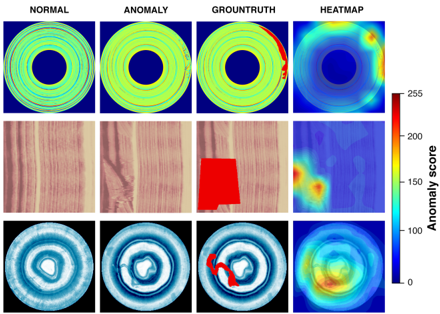
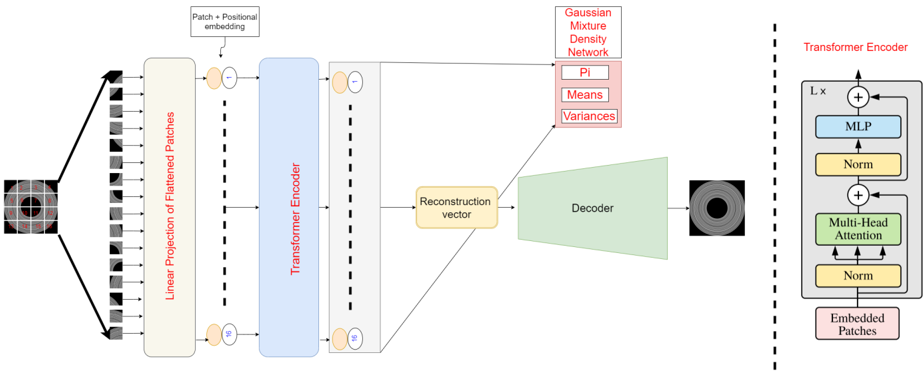
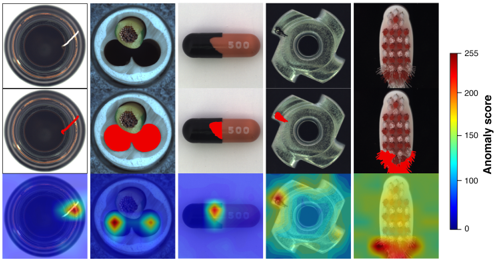
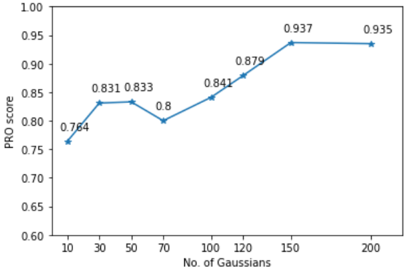
Verification
Claims the paper makes
2 Valid · 2 Not valid · 6 Not checked · 14 Own results and interpretations
The cited sources support only part of this claim — read each source’s verdict below.
In the paper
“In our work we show how an adapted transformer network can be used for anomaly localization using Gaussian Approximation [10], [11] of the latent features and also how different configurations can be tweaked to win some of the shortcomings of the vision transformer network.”
What the sources say
- Partly supportedcites [10] [10] C. M. Bishop, Mixture density networks . Aston University, 1994. -Experimental — accuracy not yet measured
The paper’s “Conventional Least Squares” section describes representing the conditional distribution of target data with a Gaussian function. It does not describe Gaussian approximation of latent features for anomaly localization. The adapted transformer is presented as the citing authors’ own work, not as a result of this source. (LLM, conf=0.82)
- Not checked — no full text of the sourcecites [11] [11] N. Ueda, R. Nakano, Z. Ghahramani, and G. E. Hinton, 'Split and merge em algorithm for improving gaussian mixture density estimates,' in Neural Networks for Signal Processing VIII. Proceedings of the 1998 IEEE Signal Processing Society Workshop (Cat. No. 98TH8378) . IEEE, 1998, pp. 274-283. - source
plainstates a cause- Asserted: passes — The authors put it forward as true.
- Checkable: passes — It can be checked against evidence.
- Load-bearing: passes — The paper’s conclusions depend on it.
- Based: passes — The paper gives a reason why it holds.
- Partly supported
Every source the paper cites for this claim was checked and supports it.
In the paper
“The use of transformer networks helps preserving the spatial information of the embedded patches, which is later processed by a Gaussian mixture density network to localize the anomalous areas.”
- Also stated in: § I. INTRODUCTION · p. 1 · plain
“The vision transformer network model, recently proposed by Dosovitskiy et al. [9], is a network designed to work on image patches trying to preserve their positional information.”
What the sources say
- Supportedcites Dosovitskiy et al. [9] [9] A. Dosovitskiy, L. Beyer, A. Kolesnikov, D. Weissenborn, X. Zhai, T. Unterthiner, M. Dehghani, M. Minderer, G. Heigold, S. Gelly, J. Uszkoreit, and N. Houlsby, 'An image is worth 16x16 words: Transformers for image recognition at scale,' 2020. - source
Section 3.1 (p. 3) says position embeddings are added to patch embeddings to retain positional information before the sequence enters the Transformer encoder. Section 4.5 (p. 8) reports that the learned embeddings represent the image’s 2D topology, supporting the attributed point about spatial information. (LLM, conf=0.91)
plainstates a cause- Asserted: passes — The authors put it forward as true.
- Checkable: passes — It can be checked against evidence.
- Load-bearing: passes — The paper’s conclusions depend on it.
- Based: passes — The paper gives a reason why it holds.
- Also stated in: § I. INTRODUCTION · p. 1 · plain
The cited sources that could be checked couldn’t confirm or dispute this claim.
In the paper
“Adding noise during training is seen as a form of data augmentation and regularization that biases towards smooth functions [10], [31].”
What the sources say
- Could not verifycites [10] [10] C. M. Bishop, Mixture density networks . Aston University, 1994. -Experimental — accuracy not yet measured
Section 2, “Conventional Least Squares” (page unavailable), mentions regularization as a way to control model complexity, but does not connect it to adding noise. Section 5, “A Simple Inverse Problem” (page unavailable), uses noise to generate example data; it does not describe noise added during training as augmentation or as a bias toward smooth functions. Searches for noise injection and smooth functions found no passage addressing that claim. (LLM, conf=0.76)
- Not checked — no full text of the sourcecites [31] [31] G. An, 'The effects of adding noise during backpropagation training on a generalization performance,' Neural Computation , vol. 8, no. 3, pp. 643-674, 1996. source
plainstates a cause- Asserted: passes — The authors put it forward as true.
- Checkable: passes — It can be checked against evidence.
- Load-bearing: passes — The paper’s conclusions depend on it.
- Based: passes — The paper gives a reason why it holds.
- Could not verify
A result the paper reports from its own data — it cites no other source for it, so there is none to check. The quote shows it is in the paper.
In the paper
“The dataset contains a total of 2830 real-world images of 3 industrial products showcasing body and surface defects.”
plain- Asserted: passes — The authors put it forward as true.
- Checkable: passes — It can be checked against evidence.
- Load-bearing: passes — The paper’s conclusions depend on it.
- Based: passes — The paper gives a reason why it holds.
A result the paper reports from its own data — it cites no other source for it, so there is none to check. The quote shows it is in the paper.
In the paper
“In addition, we also publish BTAD, a real-world industrial anomaly dataset.”
- Also stated in: § I. INTRODUCTION · p. 1 · plain
“In addition to this, we are also publishing a real-world industrial dataset (the beanTech Anomaly Detection dataset - BTAD) for the anomaly detection task.”
plain- Asserted: passes — The authors put it forward as true.
- Checkable: passes — It can be checked against evidence.
- Load-bearing: passes — The paper’s conclusions depend on it.
- Based: passes — The paper gives a reason why it holds.
- Also stated in: § I. INTRODUCTION · p. 1 · plain
8 more claims
Create a free account to see all 24 claims and to verify the 3 references still open.
- It may state two separate claims as one. 10
- The quote only partly states this claim. 1
- Probably not a substantial claim. 2
Claims other papers make about this one
Each is checked against this paper’s own text: does it say what the citing paper says it does?
The source backs part of the claim, not all of it — or backs it for a different population, condition or comparison.
In the citing paper
“The BeanTech AD dataset, designed for unsupervised anomaly detection in industrial settings”
From An Unsupervised Method for Industrial Image Anomaly Detection with Vision Transformer-Based Autoencoder (2024) · cites this paper as [13]
Experimental — accuracy not yet measuredThe source backs part of the claim, not all of it — or backs it for a different population, condition or comparison.
In the citing paper
“These datasets are extensively utilized to evaluate anomaly detection algorithms, offering diverse testing scenarios and data for this research.”
From An Unsupervised Method for Industrial Image Anomaly Detection with Vision Transformer-Based Autoencoder (2024) · cites this paper as [13]
Experimental — accuracy not yet measuredThe source backs part of the claim, not all of it — or backs it for a different population, condition or comparison.
In the citing paper
“However, these methods directly utilize vanilla transformer, and do not figure out why transformer brings improvement.”
From A Unified Model for Multi-Class Anomaly Detection (2022) · cites this paper as [29]
Experimental — accuracy not yet measuredThe cited source says what the claim attributes to it.
In the citing paper
“It comprises 2830 RGB images across three different industrial products.”
From An Unsupervised Method for Industrial Image Anomaly Detection with Vision Transformer-Based Autoencoder (2024) · cites this paper as [13]
Citations
Cites
Vaswani, A., Shazeer, N., Parmar, N., Uszkoreit, J., Jones, L., Gomez, A. N., Kaiser, L., & Polosukhin, I. (2017) · arXiv · doi:10.48550/arxiv.1706.03762 · Cited by 120,404
An Image is Worth 16x16 Words: Transformers for Image Recognition at Scale
Dosovitskiy, A., Beyer, L., Kolesnikov, A., Weissenborn, D., Zhai, X., Unterthiner, T., Dehghani, M., Minderer, M., Heigold, G., Gelly, S., et al. (2020) · arXiv · doi:10.48550/arxiv.2010.11929 · Cited by 47,472 · cited 5×
“[9], is a network designed to work on image patches”
BackgroundMethodInfluentialMVTec AD — A Comprehensive Real-World Dataset for Unsupervised Anomaly Detection
Bergmann, P., Fauser, M., Sattlegger, D., & Steger, C. (2019) · 2019 IEEE/CVF Conference on Computer Vision and Pattern Recognition (CVPR) · doi:10.1109/cvpr.2019.00982 · Cited by 2,203 · cited 2×
“In this case the system tries to learn a “normality” model from the training data and thus subsequently classify new samples as anomaly if they don’t fit the model [1], [16], [12], [24].”
BackgroundMethod(2011) · Cited by 1,258
(1994) · Aston Publications Explorer (Aston University) · Cited by 1,245
High-dimensional and large-scale anomaly detection using a linear one-class SVM with deep learning
Erfani, S. M., Rajasegarar, S., Karunasekera, S., & Leckie, C. (2016) · Pattern Recognition · doi:10.1016/j.patcog.2016.03.028 · Cited by 1,162 · cited 1×
“Some of the works handled these two steps independently [25], [26], while others achieved better results by doing the two steps collectively, in order to extract the best features for subsequent anomaly detection [27], [28].”
Uninformed Students: Student-Teacher Anomaly Detection With Discriminative Latent Embeddings
Bergmann, P., Fauser, M., Sattlegger, D., & Steger, C. (2019) · Computer Vision and Pattern Recognition · doi:10.48550/arxiv.1911.02357 · Cited by 1,052
Uninformed Students: Student-Teacher Anomaly Detection With Discriminative Latent Embeddings
Bergmann, P., Fauser, M., Sattlegger, D., & Steger, C. (2020) · 2020 IEEE/CVF Conference on Computer Vision and Pattern Recognition (CVPR) · doi:10.1109/cvpr42600.2020.00424 · Cited by 990 · cited 5×
“Then we employed the PRO (Per Region Overlap) [8], [24] as the evaluation metric for the MVTec and BTAD datasets.”
BackgroundMethodInfluentialAdversarially Learned One-Class Classifier for Novelty Detection
Sabokrou, M., Khalooei, M., Fathy, M., & Adeli, E. (2018) · 2018 IEEE/CVF Conference on Computer Vision and Pattern Recognition · doi:10.48550/arxiv.1802.09088 · Cited by 768
Adversarially Learned One-Class Classifier for Novelty Detection
Sabokrou, M., Khalooei, M., Fathy, M., & Adeli, E. (2018) · 2018 IEEE/CVF Conference on Computer Vision and Pattern Recognition · doi:10.1109/cvpr.2018.00356 · Cited by 765 · cited 1×
“Network architectures mostly consist of various configuration of autoencoders [12], [13], [14], [15], [16] or Generative Adversarial Network (GAN) [17], [18].”
Background
Research works printed but not linked: 1
- [15] I. Goodfellow, Y. Bengio, and A. Courville, Deep Learning . MIT Press, 2016, http://www.deeplearningbook.org. -
Cited by
WinCLIP: Zero-/Few-Shot Anomaly Classification and Segmentation
Jeong, J., Zou, Y., Kim, T., Zhang, D., Ravichandran, A., & Dabeer, O. (2023) · 2023 IEEE/CVF Conference on Computer Vision and Pattern Recognition (CVPR) · doi:10.1109/cvpr52729.2023.01878 · Cited by 585
“Additionally, Vision Transformer (ViT) have recently shown its potential in visual inspection [9, 25].”
BackgroundDeep Industrial Image Anomaly Detection: A Survey
Liu, J., Xie, G., Wang, J., Li, S., Wang, C., Zheng, F., & Jin, Y. (2024) · Machine Intelligence Research · doi:10.1007/s11633-023-1459-z · Cited by 463
“(3) Transformer Model VT-ADL [107] L2, SSIM, Log-Likelihood The paper proposes a transformer-based framework to reconstruct images and detects anomalies.”
InfluentialEfficientAD: Accurate Visual Anomaly Detection at Millisecond-Level Latencies
Batzner, K., Heckler, L., & König, R. (2024) · 2024 IEEE/CVF Winter Conference on Applications of Computer Vision (WACV) · doi:10.1109/wacv57701.2024.00020 · Cited by 386
“Recently, several new industrial anomaly detection datasets have been introduced [8, 11, 25, 27, 37, 69].”
BackgroundMethodRevisiting Reverse Distillation for Anomaly Detection
Tien, T. D., Nguyen, A. T., Tran, N. H., Huy, T. D., Duong, S. T. M., Nguyen, C. D. T., & Truong, S. Q. H. (2023) · 2023 IEEE/CVF Conference on Computer Vision and Pattern Recognition (CVPR) · doi:10.1109/cvpr52729.2023.02348 · Cited by 268
“Anomaly detection and localization results in terms of AUROC at image-level/pixel-level/PRO on the BTAD dataset [22].”
BackgroundMethodInfluentialYang, M., Wu, P., & Feng, H. (2023) · Engineering Applications of Artificial Intelligence · doi:10.1016/j.engappai.2023.105835 · Cited by 257
Deep Learning for Unsupervised Anomaly Localization in Industrial Images: A Survey
Tao, X., Gong, X., Zhang, X., Yan, S., & Adak, C. (2022) · IEEE Transactions on Instrumentation and Measurement · doi:10.1109/tim.2022.3196436 · Cited by 228
“Since this method was the best reported result until the advent of NF, some following works [85, 87, 88, 89] adopted this design.”
FastFlow: Unsupervised Anomaly Detection and Localization via 2D Normalizing Flows
Yu, J., Zheng, Y., Wang, X., Li, W., Wu, Y., Zhao, R., & Wu, L. (2021) · arXiv · doi:10.48550/arxiv.2111.07677 · Cited by 210
“BTAD BeanTech Anomaly Detection dataset (Mishra et al. 2021) has 3 categories industrial products with 2540 images.”
BackgroundInfluentialRealNet: A Feature Selection Network with Realistic Synthetic Anomaly for Anomaly Detection
Zhang, X., Xu, M., & Zhou, X. (2024) · 2024 IEEE/CVF Conference on Computer Vision and Pattern Recognition (CVPR) · doi:10.1109/cvpr52733.2024.01580 · Cited by 209
“To evaluate the performance of image-level anomaly detection, we use the Area Under the Receiver Operator Curve (AUROC) metric, as in previous works [3, 16, 22, 47].”
BackgroundMethodInfluentialA Survey on Unsupervised Anomaly Detection Algorithms for Industrial Images
Cui, Y., Liu, Z., & Lian, S. (2022) · arXiv · doi:10.48550/arxiv.2204.11161 · Cited by 154
Anomalib: A Deep Learning Library for Anomaly Detection
Akçay, S., Ameln, D., Vaidya, A., Lakshmanan, B., Ahuja, N., & Genc, U. (2022) · Proceedings - International Conference on Image Processing · doi:10.1109/icip46576.2022.9897283 · Cited by 245
“Anomalib supports CIFAR-10 [6] for fast prototyping, and MVTec [7], BTAD [8] and Kolektor [9] for realworld defect detection applications.”
MethodA Survey on Unsupervised Anomaly Detection Algorithms for Industrial Images
Cui, Y., Liu, Z., & Lian, S. (2023) · IEEE Access · doi:10.1109/access.2023.3282993 · Cited by 210
“Product0 Product1 Product2 Average VT-ADL [101] 0.990 0.940 0.770 0.900 AE MSE [136] 0.490 0.920 0.950 0.787 AE MSE+SSIM [137] 0.530 0.960 0.890 0.793 FastFlow [106] 0.950 0.960 0.990 0.967 BGAD [138] 0.972 0.967 0.996 0.978 BGAD-FAS [138] 0.980 0.977 0.998 0.985 FYD [111] 0.961 0.953 0.997 0.970…”
InfluentialWu, H., Triebe, M. J., & Sutherland, J. W. (2023) · Journal of Manufacturing Systems · doi:10.1016/j.jmsy.2023.02.018 · Cited by 165
AdaCLIP: Adapting CLIP with Hybrid Learnable Prompts for Zero-Shot Anomaly Detection
Cao, Y., Zhang, J., Frittoli, L., Cheng, Y., Shen, W., & Boracchi, G. (2024) · Lecture notes in computer science · doi:10.1007/978-3-031-72761-0_4 · Cited by 406
“Specifically, for the industrial domain, we use MVTec AD [3], VisA [57], MPDD [25], BTAD [38], KSDD [44], DAGM [49], and DTD-Synthetic [1] datasets.”
MethodReal-IAD: A Real-World Multi-View Dataset for Benchmarking Versatile Industrial Anomaly Detection
Wang, C., Zhu, W., Gao, B.-B., Gan, Z., Zhang, J., Gu, Z., Qian, S., Chen, M., & Ma, L. (2024) · IEEE Computer Society Conference on Computer Vision and Pattern Recognition/Proceedings - IEEE Computer Society Conference on Computer Vision and Pattern Recognition/Proceedings · doi:10.1109/cvpr52733.2024.02159 · Cited by 359
“Subsequently, datasets such as MTD [19], MPDD [20] and BTAD [27] are proposed, but these datasets are still relatively small, in terms of the number of categories and total number of images.”
BackgroundPyramidFlow: High-Resolution Defect Contrastive Localization Using Pyramid Normalizing Flow
Lei, J., Hu, X., Wang, Y., & Liu, D. (2023) · IEEE Computer Society Conference on Computer Vision and Pattern Recognition/Proceedings - IEEE Computer Society Conference on Computer Vision and Pattern Recognition/Proceedings · doi:10.1109/cvpr52729.2023.01359 · Cited by 225
“In this chapter, we perform unsupervised anomaly localization experiments on MVTec Anomaly Detection Dataset [2] (MVTecAD) and BeanTech Anomaly Detection Dataset [16] (BTAD).”
MethodSelf-Supervised Masked Convolutional Transformer Block for Anomaly Detection
Madan, N., Ristea, N.-C., Ionescu, R. T., Nasrollahi, K., Khan, F. S., Moeslund, T. B., & Shah, M. (2023) · IEEE Transactions on Pattern Analysis and Machine Intelligence · doi:10.1109/tpami.2023.3322604 · Cited by 156
“…fast pace in the field of computer vision, certainly due to the imposing performance levels across a broad variety of tasks, ranging from object recognition [52], [71], [72] and object detection [66], [75], [76] to image generation [70], [73], [74] and anomaly detection [62], [77], [78], [79], [80].”
BackgroundReConPatch : Contrastive Patch Representation Learning for Industrial Anomaly Detection
Hyun, J., Kim, S., Jeon, G., Kim, S. H., Bae, K., & Kang, B. J. (2024) · IEEE Winter Conference on Applications of Computer Vision · doi:10.1109/wacv57701.2024.00205 · Cited by 198
“To verify the capability of anomaly detection and segmentation in other dataset, we compare the performance of our model with contemporary methods using BTAD dataset [25].”
BackgroundMethodPrototypical Residual Networks for Anomaly Detection and Localization
Zhang, H., Wu, Z., Wang, Z., Chen, Z., & Jiang, Y. (2023) · IEEE Computer Society Conference on Computer Vision and Pattern Recognition/Proceedings - IEEE Computer Society Conference on Computer Vision and Pattern Recognition/Proceedings · doi:10.1109/cvpr52729.2023.01562 · Cited by 191
“To further evaluate the anomaly detection and localization capabilities of PRN, we benchmark PRN on three additional DAGM [61] BTAD [34] KolektorSDD2 [7]”
BackgroundMethodInfluentialA survey of deep learning for industrial visual anomaly detection
Li, Z., Yan, Y., Wang, X., Ge, Y., & Meng, L. (2025) · Artificial Intelligence Review · doi:10.1007/s10462-025-11287-7 · Cited by 200
A Comprehensive Survey of Transformers for Computer Vision
Jamil, S., Piran, M. J., & Kwon, O. (2023) · Drones · doi:10.3390/drones7050287 · Cited by 156
Explicit Boundary Guided Semi-Push-Pull Contrastive Learning for Supervised Anomaly Detection
Yao, X., Li, R., Zhang, J., Sun, J., & Zhang, C. (2023) · IEEE Computer Society Conference on Computer Vision and Pattern Recognition/Proceedings - IEEE Computer Society Conference on Computer Vision and Pattern Recognition/Proceedings · doi:10.1109/cvpr52729.2023.02346 · Cited by 196
“Specifically, we evaluate six real-24494 world anomaly detection datasets, including four industrial defect inspection datasets: MVTecAD [4], BTAD [25], AI-TEX [43] and ELPV [11]; and two medical image datasets for detecting lesions on different organs: BrainMRI [38] and HeadCT [38].”
MethodResultInfluentialDinomaly: The Less Is More Philosophy in Multi-Class Unsupervised Anomaly Detection
Guo, J., Lu, S., Zhang, W., Chen, F., Li, H., & Liao, H. (2025) · IEEE Computer Society Conference on Computer Vision and Pattern Recognition/Proceedings - IEEE Computer Society Conference on Computer Vision and Pattern Recognition/Proceedings · doi:10.1109/cvpr52734.2025.01900 · Cited by 307
“We also produce superior results on other popular UAD benchmarks, i.e., MPDD [24], BTAD [38], and Uni-Medical [66], with I-AUROC of 97.2, 95.4, and 84.9, respectively, as shown in Table A13 in Appendix.”
InfluentialIM-IAD: Industrial Image Anomaly Detection Benchmark in Manufacturing
Xie, G., Wang, J., Liu, J., Lyu, J., Liu, Y., Wang, C., Zheng, F., & Jin, Y. (2024) · IEEE Transactions on Cybernetics · doi:10.1109/tcyb.2024.3357213 · Cited by 163
PNI: Industrial Anomaly Detection using Position and Neighborhood Information
Bae, J., Lee, J.-H., & Kim, S. (2023) · IEEE/CVF International Conference on Computer Vision (ICCV) · doi:10.1109/iccv51070.2023.00586 · Cited by 212
“Out of the 467 normal test images and 1258 defective test images, a toTable 4: Anomaly localization results on BTAD [19] as measured in P-AUROC [%].”
BackgroundMethodInfluentialA Unified Model for Multi-Class Anomaly Detection
You, Z., Cui, L., Shen, Y., Yang, K., Lu, X., Zheng, Y., & Le, X. (2022) · Advances in Neural Information Processing Systems 35 · doi:10.52202/068431-0330 · Cited by 303
Efficient surface defect detection using self-supervised learning strategy and segmentation network
Xu, R., Hao, R., & Huang, B. (2022) · Advanced Engineering Informatics · doi:10.1016/j.aei.2022.101566 · Cited by 107
Multi-Scale Patch-Based Representation Learning for Image Anomaly Detection and Segmentation
Tsai, C.-C., Wu, T.-H., & Lai, S.-H. (2022) · 2022 IEEE/CVF Winter Conference on Applications of Computer Vision (WACV) · doi:10.1109/wacv51458.2022.00312 · Cited by 72
“Comparison of results by applying VT-ADL[16], Patch SVDD [27] and our models for the pixel-level anomaly segmentation on BTAD dataset.”
BackgroundMethodInfluentialAA-CLIP: Enhancing Zero-Shot Anomaly Detection via Anomaly-Aware CLIP
Ma, W., Zhang, X., Yao, Q., Tang, F., Wu, C., Li, Y., Yan, R. T., Jiang, Z., & Zhou, S. (2025) · IEEE Computer Society Conference on Computer Vision and Pattern Recognition/Proceedings - IEEE Computer Society Conference on Computer Vision and Pattern Recognition/Proceedings · doi:10.1109/cvpr52734.2025.00447 · Cited by 198
CLIP-AD: A Language-Guided Staged Dual-Path Model for Zero-Shot Anomaly Detection
Chen, X., Zhang, J., Tian, G., He, H., Zhang, W., Wang, Y., Wang, C., & Liu, Y. (2024) · Communications in computer and information science · doi:10.1007/978-981-97-9003-6_2 · Cited by 167
Zheng, Y., Wang, X., Deng, R., Bao, T., Zhao, R., & Wu, L. (2022) · 2022 IEEE International Conference on Multimedia and Expo (ICME) · doi:10.1109/icme52920.2022.9859925 · Cited by 80
“We perform experiments on two industrial anomaly detection datastes MVTec AD dataset (Bergmann et al. 2019) and BeanTech AD dataset (Mishra et al. 2021”
MethodObject detection in power line infrastructure: A review of the challenges and solutions
Sharma, P., Saurav, S., & Singh, S. K. (2023) · Engineering Applications of Artificial Intelligence · doi:10.1016/j.engappai.2023.107781 · Cited by 87
Transformer-Based Spatio-Temporal Unsupervised Traffic Anomaly Detection in Aerial Videos
Tran, T. M., Bui, D. C., Nguyen, T. V., & Nguyen, K. (2024) · IEEE Transactions on Circuits and Systems for Video Technology · doi:10.1109/tcsvt.2024.3376399 · Cited by 63
“Recently, researchers attempted to extend the transformer architecture to the field of computer vision with numerous practical applications, such as image classification [7], [8], video classification [9], object detection [27], [28], image anomaly detection and localization [10], [29], [66].”
BackgroundADTR: Anomaly Detection Transformer with Feature Reconstruction
You, Z., Yang, K., Luo, W., Cui, L., Zheng, Y., & Le, X. (2022) · arXiv · doi:10.48550/arxiv.2209.01816 · Cited by 63
“VT-ADL [24] and AnoVit [38] both apply transformer encoder to reconstruct images.”
MethodRemoving Anomalies as Noises for Industrial Defect Localization
Lu, F., Yao, X., Fu, C., & Jia, J. (2023) · IEEE/CVF International Conference on Computer Vision (ICCV) · doi:10.1109/iccv51070.2023.01481 · Cited by 88
“We show results on BTAD [22] in the supplementary.”
MethodResultSelf-Attention Memory-Augmented Wavelet-CNN for Anomaly Detection
Wu, K., Zhu, L., Shi, W., Wang, W., & Wu, J. (2022) · IEEE Transactions on Circuits and Systems for Video Technology · doi:10.1109/tcsvt.2022.3211839 · Cited by 67
VCP-CLIP: A Visual Context Prompting Model for Zero-Shot Anomaly Segmentation
Qu, Z., Tao, X., Prasad, M., Shen, F., Zhang, Z., Gong, X., & Ding, G. (2024) · Lecture notes in computer science · doi:10.1007/978-3-031-72890-7_18 · Cited by 157
Mobile Trajectory Anomaly Detection: Taxonomy, Methodology, Challenges, and Directions
Kong, X., Wang, J., Hu, Z., He, Y., Zhao, X., & Shen, G. (2024) · IEEE Internet of Things Journal · doi:10.1109/jiot.2024.3376457 · Cited by 64
“A Transformer-based network [107] is proposed for image anomaly detection and localization.”
AMI-Net: Adaptive Mask Inpainting Network for Industrial Anomaly Detection and Localization
Luo, W., Yao, H., Yu, W., & Li, Z. (2024) · IEEE Transactions on Automation Science and Engineering · doi:10.1109/tase.2024.3368142 · Cited by 72
“Firstly, it exhibits remarkable inspection performance on two industrial datasets, MVTec AD [13] and BTAD [14].”
InfluentialViTALnet: Anomaly on Industrial Textured Surfaces With Hybrid Transformer
Tao, X., Adak, C., Chun, P., Yan, S., & Liu, H. (2023) · IEEE Transactions on Instrumentation and Measurement · doi:10.1109/tim.2023.3250225 · Cited by 59
“DFR [24] and FastFlow-WRN50 [22] achieved more optimal detection times; however, both yielded poorer localization results.”
MethodResultADTR: Anomaly Detection Transformer with Feature Reconstruction
You, Z., Yang, K., Luo, W., Cui, L., Zheng, Y., & Le, X. (2023) · Lecture notes in computer science · doi:10.1007/978-3-031-30111-7_26 · Cited by 99
Wang, H., Li, C., & Li, Y. (2024) · IEEE Transactions on Industrial Informatics · doi:10.1109/tii.2024.3441638 · Cited by 58
“Mishra et al. [24] presented a transformer-based Gaussian mixture density network to capture the anomaly patterns within the industrial images.”
SA-PatchCore: Anomaly Detection in Dataset With Co-Occurrence Relationships Using Self-Attention
Ishida, K., Takena, Y., Nota, Y., Mochizuki, R., Matsumura, I., & Ohashi, G. (2023) · IEEE Access · doi:10.1109/access.2023.3234745 · Cited by 54
“Table 6 shows the results on the BeanTech Anomaly Detection dataset (BTAD) [50] and the AITEX dataset [51].”
MethodSmith, A. D., Du, S., & Kurien, A. M. (2023) · Applied Sciences · doi:10.3390/app13158716 · Cited by 52
“One of the earliest transformer models specifically adapted to anomaly detection is the vision-transformer-based image anomaly detection and localisation network (VT-ADL) [36].”
BackgroundInfluentialZhang, R., Wang, H., Feng, M., Liu, Y., & Yang, G. (2024) · IEEE Transactions on Industrial Informatics · doi:10.1109/tii.2024.3384583 · Cited by 59
“We evaluate the performance of our model on two publicly available datasets, MVTec AD [30] and BTAD [31] datasets, respectively.”
MethodExploring plain ViT features for multi-class unsupervised visual anomaly detection
Zhang, J., Chen, X., Wang, Y., Wang, C., Liu, Y., Li, X., Yang, M., & Tao, D. (2025) · Computer Vision and Image Understanding · doi:10.1016/j.cviu.2025.104308 · Cited by 135
Zero-shot surface defect recognition with class knowledge graph
Li, Z., Gao, L., Gao, Y., Li, X., & Li, H. (2022) · Advanced Engineering Informatics · doi:10.1016/j.aei.2022.101813 · Cited by 45
DiffDD: A surface defect detection framework with diffusion probabilistic model
Zhou, X., Zhang, Y., Ren, Z., Mi, T., Feng, K., Zhou, S., & Jiang, Z. (2024) · Advanced Engineering Informatics · doi:10.1016/j.aei.2024.102637 · Cited by 53
Survey on industrial defect detection with deep learning
罗, 东., 蔡, 雨., 杨, 子., 章, 哲., 周, 瑜., & 白, 翔. (2022) · Scientia Sinica Informationis · doi:10.1360/ssi-2021-0336 · Cited by 52
Unsupervised Continual Anomaly Detection with Contrastively-Learned Prompt
Liu, J., Wu, K., Nie, Q., Chen, Y., Gao, B.-B., Liu, Y., Wang, J., Wang, C., & Zheng, F. (2024) · Proceedings of the AAAI Conference on Artificial Intelligence · doi:10.1609/aaai.v38i4.28153 · Cited by 98
Masked Transformer for Image Anomaly Localization
Nardin, A. D., Mishra, P. K., Foresti, G. L., & Piciarelli, C. (2022) · International Journal of Neural Systems · doi:10.1142/s0129065722500307 · Cited by 41
Self-citationMIAD: A Maintenance Inspection Dataset for Unsupervised Anomaly Detection
Bao, T., Chen, J., Li, W., Wang, X., Fei, J., Wu, L., Zhao, R. J., & Ye, Z. (2023) · IEEE International Conference on Computer Vision Workshops · doi:10.1109/iccvw60793.2023.00106 · Cited by 58
“BTAD [22] contains a total of 2830 real-world images of 3 industrial products showcasing body and surface defects.”
BackgroundLi, H., Hu, J., Li, B., Chen, H., Zheng, Y., & Shen, C. (2024) · IEEE Transactions on Image Processing · doi:10.1109/tip.2024.3448263 · Cited by 64
“The subject to be examined is usually located in the middle of a plain background [37], [71], [72] and we are only interested in the anomalies that take place in the foreground.”
BackgroundMethodInfluentialYang, Q., & Guo, R. (2024) · Sensors · doi:10.3390/s24082440 · Cited by 35
“This study employs the MVTec AD dataset [22] and the BeanTech AD dataset [13] for anomaly detection.”
MethodInfluentialFocus the Discrepancy: Intra- and Inter-Correlation Learning for Image Anomaly Detection
Yao, X., Li, R., Qian, Z., Luo, Y., & Zhang, C. (2023) · IEEE/CVF International Conference on Computer Vision (ICCV) · doi:10.1109/iccv51070.2023.00626 · Cited by 71
Tong, G., Li, Q., & Song, Y. (2023) · Knowledge-Based Systems · doi:10.1016/j.knosys.2023.110611 · Cited by 38
BiaS: Incorporating Biased Knowledge to Boost Unsupervised Image Anomaly Localization
Cao, Y., Xu, X., Sun, C., Gao, L., & Shen, W. (2024) · IEEE Transactions on Systems Man and Cybernetics Systems · doi:10.1109/tsmc.2023.3344383 · Cited by 44
“Visual analysis on BTAD and KSDD2. in two benchmark datasets, BTAD [36] and KSDD2 [6].”
MethodGuo, Y., Jiang, M., Huang, Q., Yang, C., & Gong, J. (2023) · IEEE Transactions on Industrial Informatics · doi:10.1109/tii.2023.3292904 · Cited by 34
Inter-Realization Channels: Unsupervised Anomaly Detection Beyond One-Class Classification
McIntosh, D., & Albu, A. B. (2023) · IEEE/CVF International Conference on Computer Vision (ICCV) · doi:10.1109/iccv51070.2023.00578 · Cited by 62
“We were unable to give results for PaDiM [13] on the BTAD due to computational resource limitations on the larger training set of BTAD [27]. even improves over training with no anomalies.”
ResultLiu, Y., Gao, X., Wen, J. Z., & Luo, H. (2023) · IEEE Transactions on Instrumentation and Measurement · doi:10.1109/tim.2023.3271754 · Cited by 52
“The more details of BTAD and DAGM can be seen in [36] and [37].”
BackgroundMethodSelf-Supervised Normalizing Flows for Image Anomaly Detection and Localization
Chiu, L.-L., & Lai, S. (2023) · IEEE/CVF Conference on Computer Vision and Pattern Recognition Workshops (CVPRW) · doi:10.1109/cvprw59228.2023.00294 · Cited by 45
“We extend the training setting to a few-shot learning area on MVTec-AD [4] and BTAD [23] to ensure the model’s robustness.”
BackgroundMethodResultInfluentialUniNet: A Contrastive Learning-guided Unified Framework with Feature Selection for Anomaly Detection
Wei, S., Jiang, J., & Xu, X. (2025) · IEEE Computer Society Conference on Computer Vision and Pattern Recognition/Proceedings - IEEE Computer Society Conference on Computer Vision and Pattern Recognition/Proceedings · doi:10.1109/cvpr52734.2025.00934 · Cited by 71
U-Flow: A U-Shaped Normalizing Flow for Anomaly Detection with Unsupervised Threshold
Tailanián, M., Pardo, Á., & Musé, P. (2024) · Journal of Mathematical Imaging and Vision · doi:10.1007/s10851-024-01193-y · Cited by 51
“The proposed approach was tested and compared with state-of-the-art methods, by conducting extensive experimentation on several datasets: MVTec-AD [23], BeanTech (BT) [24], LGG-MRI (MRI) [25], and ShanghaiTech Campus (STC) [26].”
InfluentialBobojanov, S., Kim, B. M., Ogli, A. M. M., & Ogli, B. S. A. (2023) · Applied Sciences · doi:10.3390/app132212271 · Cited by 39
“We aim to push the limits of accurate emotion recognition by utilising the synergies between these domains.”
MethodAnomaly Analysis in Images and Videos: A Comprehensive Review
Tran, T. M., Vu, T. N., Vo, N. D., Nguyen, T., & Nguyen, K. T. T. M. (2022) · ACM Computing Surveys · doi:10.1145/3544014 · Cited by 34
“Our aim in this section is to conduct extensive experiments on two anomalous image datasets, namely, BTAD [98] and MTD [46].”
BackgroundMethodInfluentialHabeb, M. H., Salama, M. A., & Elrefaei, L. A. (2024) · Algorithms · doi:10.3390/a17070286 · Cited by 42
“By using a ViT to encode the input image that has been split into fragments, VT-ADL [53] was able to obtain the features that represent the normal image and perform the image abnormality identification task for industrial textured surfaces from various fine-grained levels in a reconstruction-based…”
MSTAD: A masked subspace-like transformer for multi-class anomaly detection
Kang, B., Zhong, Y., Sun, Z., Deng, L., Wang, M., & Zhang, J. (2023) · Knowledge-Based Systems · doi:10.1016/j.knosys.2023.111186 · Cited by 31
Anomaly Detection using Score-based Perturbation Resilience
Shin, W., Lee, J., Lee, T.-H., Lee, S., & Yun, J. P. (2023) · IEEE/CVF International Conference on Computer Vision (ICCV) · doi:10.1109/iccv51070.2023.02136 · Cited by 32
“BTAD The comparison baselines include AE(MSE), AE(SSIM), VT-ADL [22], Patch-SVDD [48], and FYD [52].”
BackgroundMethodInfluentialDynamic Addition of Noise in a Diffusion Model for Anomaly Detection
Tebbe, J., & Tayyub, J. (2024) · IEEE/CVF Conference on Computer Vision and Pattern Recognition Workshops (CVPRW) · doi:10.1109/cvprw63382.2024.00398 · Cited by 48
VarAD: Lightweight High-Resolution Image Anomaly Detection via Visual Autoregressive Modeling
Cao, Y., Yao, H., Luo, W., & Shen, W. (2025) · IEEE Transactions on Industrial Informatics · doi:10.1109/tii.2024.3523574 · Cited by 27
“This study systematically evaluates the proposed VarAD on four publicly available datasets: MVTec AD [4], visual anomaly (VisA) [32], beantech anomaly detection (BTAD) [33], and describable texture dataset (DTD)- Synthetic [34].”
Distillation-based fabric anomaly detection
Thomine, S., & Snoussi, H. (2023) · Textile Research Journal · doi:10.1177/00405175231206820 · Cited by 27
Hierarchical Gaussian Mixture Normalizing Flow Modeling for Unified Anomaly Detection
Yao, X., Li, R., Qian, Z., Wang, L., & Zhang, C. (2024) · Lecture notes in computer science · doi:10.1007/978-3-031-73411-3_6 · Cited by 56
Anomaly Detection of Metro Station Tracks Based on Sequential Updatable Anomaly Detection Framework
Zheng, Z., Liu, W., Liu, R., Wang, L., Mao, L., Qiu, Q., & Ling, G. (2022) · IEEE Transactions on Circuits and Systems for Video Technology · doi:10.1109/tcsvt.2022.3181452 · Cited by 27
“• beanTech Anomaly Detection (BTAD) [39]: The BTAD comprises 2830 real-world industrial production colored images and three different classes containing normal and defect images.”
BackgroundMethodRethinking unsupervised texture defect detection using PCA
Zhang, N., Zhong, Y., & Dian, S. (2023) · Optics and Lasers in Engineering · doi:10.1016/j.optlaseng.2022.107470 · Cited by 28
Interpretability-Aware Industrial Anomaly Detection Using Autoencoders
Jiang, R., Xue, Y., & Zou, D. (2023) · IEEE Access · doi:10.1109/access.2023.3286548 · Cited by 30
“Image-level AUC results for the BTAD Dataset.”
BackgroundInfluentialDual-Modeling Decouple Distillation for Unsupervised Anomaly Detection
Liu, X., Wang, J., Leng, B., & Zhang, S. (2024) · ACM International Conference on Multimedia (ACM MM) · doi:10.1145/3664647.3681669 · Cited by 54
Deep learning-based anomaly detection for precision field crop protection
Cheng, W., Shan, Y., & Zhen, M. (2025) · Frontiers in Plant Science · doi:10.3389/fpls.2025.1576756 · Cited by 36
“These models enable targeted interventions, such as pesticide application, reducing chemical usage and minimizing environmental impact Mishra et al. (2021).”
A Survey of Methods for Automated Quality Control Based on Images
Diers, J., & Pigorsch, C. (2023) · International Journal of Computer Vision · doi:10.1007/s11263-023-01822-w · Cited by 41
“This solving of the jigsaw puzzle was proposed in Noroozi and Favaro (2016). More recently, contrastive methods have been pursued by the community to learn selfsupervised. An example of contrastive methods is to take an image and create two different versions of the image by transforming the image. Subsequently, a neu…”
BackgroundMethodInfluentialZhao, Q., Wang, Y., Wang, B., Lin, J., Yan, S., Song, W., Liotta, A., Yu, J., Gao, S., & Zhang, W. (2023) · IEEE Transactions on Industrial Informatics · doi:10.1109/tii.2023.3341259 · Cited by 26
“Moreover, studies such as MLIR [16], transformer-based framework [9], AnoGan [17], and triple loss-based [18] deep learning models have been developed to detect global structural anomalies and detailed defects.”
MethodPKU-GoodsAD: A Supermarket Goods Dataset for Unsupervised Anomaly Detection and Segmentation
Zhang, J., Ding, R., Ban, M., & Dai, L. (2024) · IEEE Robotics and Automation Letters · doi:10.1109/lra.2024.3352358 · Cited by 55
“BTAD [34] contains 2830 images with 3 different classes (industrial products), of which 1799 anomaly-free images are for training and the rest for testing.”
BackgroundMethodInfluentialReverse Knowledge Distillation with Two Teachers for Industrial Defect Detection
Pei, M., Liu, N., Gao, P., & Sun, H. (2023) · Applied Sciences · doi:10.3390/app13063838 · Cited by 21
“We also contrast our model with a few others on the BTAD dataset, such as the autoencoder [50] and the VT-ADL method [49].”
ResultLi, W., Solihin, M. I., Saruchi, S. A., Astuti, W., Hong, L. W., & Kit, A. C. (2024) · Operations Research Forum · doi:10.1007/s43069-024-00337-5 · Cited by 33
Learning Unified Reference Representation for Unsupervised Multi-class Anomaly Detection
He, L., Jiang, Z., Peng, J., Zhu, W., Liu, L., Du, Q., Hu, X., Chi, M., Wang, Y., & Wang, C. (2024) · Lecture notes in computer science · doi:10.1007/978-3-031-72855-6_13 · Cited by 59
Scalable Industrial Visual Anomaly Detection With Partial Semantics Aggregation Vision Transformer
Yao, H., Luo, W., Lou, J., Yu, W., Zhang, X., Qiang, Z., & Shi, H. (2023) · IEEE Transactions on Instrumentation and Measurement · doi:10.1109/tim.2023.3343832 · Cited by 31
“The experimental evaluation also encompasses the utilization of the BTAD dataset [26], encompassing a comprehensive set of 2830 images categorized across three distinct classes.”
MethodAn overview of transformers for video anomaly detection
Dilek, E., & Dener, M. (2025) · Neural Computing and Applications · doi:10.1007/s00521-025-11218-1 · Cited by 35
“Positional encoding [99, 100], normalization technique [101], shortcut connection [102], removal of attention [103, 104], pruning vision transformers to simplify the transformer architecture [212], and making the transformer’s training process more data-efficient [198] are some other avenues to…”
Bayesian Prompt Flow Learning for Zero-Shot Anomaly Detection
Qu, Z., Tao, X., Gong, X., Qu, S., Chen, Q., Zhang, Z., Wang, X., & Ding, G. (2025) · IEEE Computer Society Conference on Computer Vision and Pattern Recognition/Proceedings - IEEE Computer Society Conference on Computer Vision and Pattern Recognition/Proceedings · doi:10.1109/cvpr52734.2025.02830 · Cited by 72
“Specifically, we utilize seven commonly used industrial anomaly detection datasets, including MVTec-AD [4], VisA [50], BTAD [31], KSDD2 [6], RSDD [46], DAGM [12] and DTD-Synthetic [3].”
Transformaly - Two (Feature Spaces) Are Better Than One
Cohen, M. J., & Avidan, S. (2022) · IEEE/CVF Conference on Computer Vision and Pattern Recognition Workshops (CVPRW) · doi:10.1109/cvprw56347.2022.00451 · Cited by 45
“[24] suggest using encoder-decoder architecture in order to reconstruct the normal data.”
MethodMetal Surface Defect Detection Based on a Transformer with Multi-Scale Mask Feature Fusion
Zhao, L., Zheng, Y., Peng, T., & Zheng, E. (2023) · Sensors · doi:10.3390/s23239381 · Cited by 24
“AnoViT [20] and VT-ADL [21], designed based on ViT, use Transformers as encoders to minimize the differences between input and reconstructed images.”
MethodSynthetic Data for Defect Segmentation on Complex Metal Surfaces
Fulir, J., Bosnar, L., Hagen, H., & Gospodnetić, P. (2023) · IEEE/CVF Conference on Computer Vision and Pattern Recognition Workshops (CVPRW) · doi:10.1109/cvprw59228.2023.00465 · Cited by 31
“Anomaly detection datasets [3, 32] contain complex metal objects, however they reduce the problem to single-view inspection with a fixed top-down view.”
BackgroundSelf-Supervised Learning for Industrial Image Anomaly Detection by Simulating Anomalous Samples
Pei, M., Liu, N., Zhao, B., & Sun, H. (2023) · International Journal of Computational Intelligence Systems · doi:10.1007/s44196-023-00328-0 · Cited by 29
“From the experimental result, our method is higher than the VT-ADL method [50] by 4%, which is based on the transformer framework.”
BackgroundMethodDiscriminative Feature Learning Framework With Gradient Preference for Anomaly Detection
Xu, M., Zhou, X., Gao, X., He, W., & Niu, S. (2022) · IEEE Transactions on Instrumentation and Measurement · doi:10.1109/tim.2022.3228007 · Cited by 19
“BeanTech AD dataset (BTAD) [46] contains three kinds of industrial products showcasing body and surface defects with both image- and pixel-level labels.”
BackgroundInfluentialLong-Tailed Anomaly Detection with Learnable Class Names
Ho, C.-H., Peng, K., & Vasconcelos, N. M. (2024) · IEEE Computer Society Conference on Computer Vision and Pattern Recognition/Proceedings - IEEE Computer Society Conference on Computer Vision and Pattern Recognition/Proceedings · doi:10.1109/cvpr52733.2024.01182 · Cited by 38
“) is a transformer [42, 53, 56, 76] 1 , which are fed as tokens to the RM transformer Π( .”
BackgroundToCoAD: Two-Stage Contrastive Learning for Industrial Anomaly Detection
Liang, Y., Hu, Z., Huang, J., Di, D., Su, A., & Fan, L. (2025) · IEEE Transactions on Instrumentation and Measurement · doi:10.1109/tim.2025.3545987 · Cited by 30
“We compared our proposed model with existing methods [4], [5], [46], [47], [49], [50], as in Table III.”
MoEAD: A Parameter-Efficient Model for Multi-class Anomaly Detection
Meng, S., Meng, W., Zhou, Q., Li, S., Hou, W., & He, S. (2024) · Lecture notes in computer science · doi:10.1007/978-3-031-73013-9_20 · Cited by 44
“Transformer [33] has achieved commendable performance results in computer vision [6,9], and models based on the transformer architecture have been active in the field of anomaly detection as well [27,36].”
Jiang, J., He, Z., Wan, A., AL-Bukhaiti, K., Wang, K., Zhu, P., & Cheng, X. (2025) · Electronics · doi:10.3390/electronics14244785 · Cited by 19
What Makes a Good Data Augmentation for Few-Shot Unsupervised Image Anomaly Detection?
Zhang, L., Zhang, S., Xie, G., Liu, J., Yan, H., Wang, J., Zheng, F., & Jin, Y. (2023) · IEEE/CVF Conference on Computer Vision and Pattern Recognition Workshops (CVPRW) · doi:10.1109/cvprw59228.2023.00457 · Cited by 28
“We use a number of datasets to investigate the effects of different methods and models on few-shot, including MVtec AD [1], MTD [10] and BTAD [16].”
BackgroundMethodA Prototype-Based Neural Network for Image Anomaly Detection and Localization
Huang, C., Zhao, K., & Wu, H. B. (2024) · Neural Processing Letters · doi:10.1007/s11063-024-11466-7 · Cited by 20
“From top to bottom: anomaly samples, anomaly mask, and anomaly score maps predicted by our method.”
Abujassar, R. S. (2024) · EURASIP Journal on Wireless Communications and Networking · doi:10.1186/s13638-024-02377-1 · Cited by 20
“The transport layer employs the User Data-gram Protocol (UDP), whereas the application layer utilizes the Constrained Application Protocol (CoAP) [14, 34].”
MethodUllah, W., Khan, S. U., Kim, M. J., Hussain, A., Munsif, M., Lee, M. Y., Seo, D., & Baik, S. W. (2024) · Journal of Computational Design and Engineering · doi:10.1093/jcde/qwae019 · Cited by 26
Yao, N., Zhao, Y., Guo, Y., & Kong, S. G. (2024) · IEEE Transactions on Industrial Informatics · doi:10.1109/tii.2024.3438261 · Cited by 14
Unsupervised industrial anomaly detection using paired well-lit and low-light images
Hoang, D.-C., Tan, P. X., Nguyen, A.-N., Pham, M.-K., Duong, T. H. A., Huynh, T.-M., Bui, S.-A., Nguyen, D.-M., Ha, Q. P., Trinh, V.-A., et al. (2025) · Journal of Computational Design and Engineering · doi:10.1093/jcde/qwaf043 · Cited by 21
Metadata
- Authors
- Mishra, P., Verk, R., Fornasier, D., Piciarelli, C., & Foresti, G. L.
- Affiliations
- University of Udine (IT)
- Venue
- 2021 IEEE 30th International Symposium on Industrial Electronics (ISIE)
- Publisher
- IEEE
- Published
- 2021-06-20
- Pages
- 01-06
- OpenAlex
- W3154719617
- Cited by
- 462
- References
- 38
- Citations by year
- 2026: 91 · 2025: 139 · 2024: 124 · 2023: 81 · 2022: 26 · 2021: 1
- FWCI
- 26.74
- Type
- conference paper
- Language
- en
- Open access
- green
- arxiv.org
- Licence
- Locations
- IEEE International Symposium on Industrial Electronics (ISIE) (publishedVersion)
- arXiv (Cornell University) (submittedVersion)
- Institutional Research Information System (University of Udine) (submittedVersion)
- arXiv (Cornell University)
- Funders
- ONRG (N62909-20-1-2075)
- Topics
- Physical Sciences › Computer Science › Artificial Intelligence › Anomaly Detection Techniques and Applications
- Physical Sciences › Engineering › Industrial and Manufacturing Engineering › Industrial Vision Systems and Defect Detection
- Physical Sciences › Computer Science › Computer Vision and Pattern Recognition › Advanced Neural Network Applications
- Keywords
- image anomaly detection, anomaly localization, vision transformer, patch embedding, reconstruction-based anomaly detection
About these checks
Registry, retraction, Cites and statistics results are computed, not judged, with one exception: a printed reference that no index lists is read once by a model before it counts as a citation error. Claims are extracted by a model and kept only when their quote appears verbatim in the text; each cited source is then checked, with a model’s help, for whether it says what the claim relies on. Those verdicts can be wrong — read the claim’s quote and the cited source before relying on one.
The claim verdicts this report counts are experimental: their accuracy is not yet measured.
A language model drew the claims from the paper on 2026-10-10, under version 3 of the claim definition (model deepseek-v4.1-flash, prompt extract-v3).
A second model labelled each claim on 2026-10-10 (model jev-1.13-20260917, definition revision gold-guideline-v0.2).
Cited sources are checked with a language model’s help (gpt-6-sol).
Statistics and arithmetic are recomputed, not judged.
Confidence bands are shown only for fields calibrated on our annotated test set. None is calibrated yet, so no band is shown.
What counts as a claim ›How we measure confidence ›How we check this ›
Are you an author, or do you see a problem with this page? Request a review
Data sources
Bibliographic data: Semantic Scholar, OpenAlex, Crossref.
Contains information from the Semantic Scholar Academic Graph Datasets, made available under the ODC Attribution License (ODC-BY 1.0).
Semantic Scholar’s data is described in: Kinney, R., et al. (2023). The Semantic Scholar Open Data Platform. arXiv:2301.10140.
