

Robust Network Intrusion Detection Through Explainable Artificial Intelligence (XAI)
Open accessPublished version of a preprint
The DOI matches its Crossref record; 18 of the 18 references it cites were found in a registry or an index.
Abstract
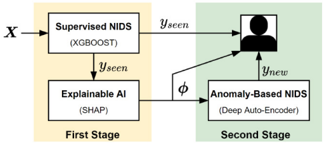
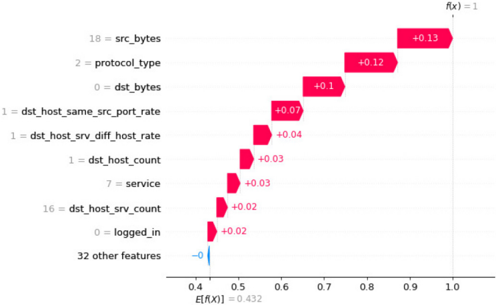
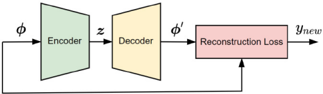
In this letter, we present a two-stage pipeline for robust network intrusion detection. First, we implement an extreme gradient boosting (XGBoost) model to perform supervised intrusion detection, and leverage the SHapley Additive exPlanation (SHAP) framework to devise explanations of our model. In the second stage, we use these explanations to train an auto-encoder to distinguish between previously seen and unseen attacks. Experiments conducted on the NSL-KDD dataset show that our solution is able to accurately detect new attacks encountered during testing, while its overall performance is comparable to numerous state-of-the-art works from the cybersecurity literature.
Overview
The claims and statistics of this paper haven’t been checked yet.
Free: it reads the open-access text and checks the first 5 claims that cite a source we can check. Create a free account to check every claim.
Integrity signals
Registry
Cites
Statistics
Figures
Verification
Claims the paper makes
The claims and statistics of this paper haven’t been checked yet.
Free: it reads the open-access text and checks the first 5 claims that cite a source we can check. Create a free account to check every claim.
Claims other papers make about this one
Each is checked against this paper’s own text: does it say what the citing paper says it does?
The source backs part of the claim, not all of it — or backs it for a different population, condition or comparison.
In the citing paper
“First, SHAP solutions satisfy three essential properties for any additive feature attribution model: local accuracy, missingness, and consistency [21].”
From Explainable AI-Aided Feature Selection and Model Reduction for DRL-Based V2X Resource Allocation (2025) · cites this paper as [21]
Experimental — accuracy not yet measured
Self-check
Percentages, sums and reported differences re-computed from the paper’s own numbers.
The self-check needs the paper’s full text.
Citations
Cites
Scikit-learn: Machine Learning in Python
Pedregosa, F., Varoquaux, G., Gramfort, A., Michel, V., Thirion, B., Grisel, O., Blondel, M., Müller, A., Nothman, J., Louppe, G., et al. (2012) · arXiv · doi:10.48550/arxiv.1201.0490 · Cited by 71,016
From local explanations to global understanding with explainable AI for trees
Lundberg, S. M., Erion, G., Chen, H., DeGrave, A., Prutkin, J. M., Nair, B., Katz, R., Himmelfarb, J., Bansal, N., & Lee, S.-I. (2020) · Nature Machine Intelligence · doi:10.1038/s42256-019-0138-9 · Cited by 10,551 · cited 4×
“Finally, we use an open-source implementation of SHAP [11] to compute explanations our model.”
BackgroundMethodResultInfluentialA detailed analysis of the KDD CUP 99 data set
Tavallaee, M., Bagheri, E., Lu, W., & Ghorbani, A. A. (2009) · 2009 IEEE Symposium on Computational Intelligence for Security and Defense Applications · doi:10.1109/cisda.2009.5356528 · Cited by 5,396
Toward Generating a New Intrusion Detection Dataset and Intrusion Traffic Characterization
Sharafaldin, I., Habibi Lashkari, A., & Ghorbani, A. A. (2018) · Proceedings of the 4th International Conference on Information Systems Security and Privacy · doi:10.5220/0006639801080116 · Cited by 5,318 · cited 1×
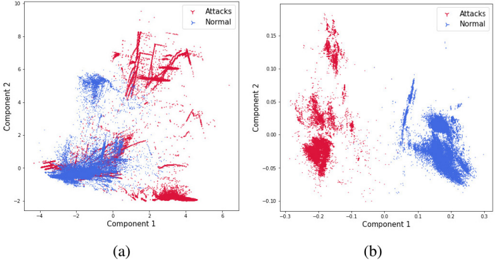
“…as the effectiveness of the ‘explanation domain’ in separating clusters of attacks from normal traffic, as well as to optimise the various stages our pipeline and to extend its ability to support multiclass classification across additional intrusion datasets, such as the more recent CIC-IDS2017 [18].”
BackgroundA Survey of Data Mining and Machine Learning Methods for Cyber Security Intrusion Detection
Buczak, A. L., & Guven, E. (2016) · IEEE Communications Surveys & Tutorials · doi:10.1109/comst.2015.2494502 · Cited by 3,332
A Deep Learning Approach to Network Intrusion Detection
Shone, N., Ngoc, T. N., Phai, V. D., & Shi, Q. (2018) · IEEE Transactions on Emerging Topics in Computational Intelligence · doi:10.1109/tetci.2017.2772792 · Cited by 1,819
Investigating Ad Transparency Mechanisms in Social Media: A Case Study of Facebook's Explanations
Andreou, A., Venkatadri, G., Goga, O., Gummadi, K. P., Loiseau, P., & Mislove, A. (2018) · Proceedings 2018 Network and Distributed System Security Symposium · doi:10.14722/ndss.2018.23191 · Cited by 1,477
A Deep Learning Approach for Network Intrusion Detection System
Javaid, A., Niyaz, Q., Sun, W., & Alam, M. (2016) · Proceedings of the 9th EAI International Conference on Bio-inspired Information and Communications Technologies (formerly BIONETICS) · doi:10.4108/eai.3-12-2015.2262516 · Cited by 1,274
Machine Learning and Deep Learning Methods for Cybersecurity
Xin, Y., Kong, L., Liu, Z., Chen, Y., Li, Y., Zhu, H., Gao, M., Hou, H., & Wang, C. (2018) · IEEE Access · doi:10.1109/access.2018.2836950 · Cited by 1,228
Kitsune: An Ensemble of Autoencoders for Online Network Intrusion Detection
Mirsky, Y., Doitshman, T., Elovici, Y., & Shabtai, A. (2018) · Network and Distributed System Security Symposium · doi:10.14722/ndss.2018.23204 · Cited by 920
Research works printed but not linked: 1
- abadi, 2015, TensorFlow Large-Scale Machine Learning on Heterogeneous Systems
Cited by
Explainable Artificial Intelligence Applications in Cyber Security: State-of-the-Art in Research
Zhang, Z., Hamadi, H. A., Damiani, E., Yeun, C. Y., & Taher, F. (2022) · IEEE Access · doi:10.1109/access.2022.3204051 · Cited by 450
Gaspar, D., Silva, P., & Silva, C. (2024) · IEEE Access · doi:10.1109/access.2024.3368377 · Cited by 234
Mohale, V. Z., & Obagbuwa, I. C. (2025) · Frontiers in Computer Science · doi:10.3389/fcomp.2025.1520741 · Cited by 195
Explainable AI in Manufacturing and Industrial Cyber–Physical Systems: A Survey
Moosavi, S., Farajzadeh-Zanjani, M., Razavi‐Far, R., Palade, V., & Saif, M. (2024) · Electronics · doi:10.3390/electronics13173497 · Cited by 191
Mutalib, N. H. A., Sabri, A. Q. M., Wahab, A. W. A., Abdullah, E. R. M. F., & AlDahoul, N. (2024) · Artificial Intelligence Review · doi:10.1007/s10462-024-10890-4 · Cited by 134
Metadata
- Authors
- Barnard, P., Marchetti, N., & DaSilva, L. A.
- Affiliations
- Trinity College Dublin (IE)
- Virginia Tech (US)
- Venue
- IEEE Networking Letters
- Published
- 2022-09
- Volume
- 4
- Issue
- 3
- Pages
- 167-171
- ISSN
- 2576-3156 (ISSN-L)
- OpenAlex
- W4285248859
- Cited by
- 145
- References
- 18
- Citations by year
- 2026: 45 · 2025: 46 · 2024: 39 · 2023: 13 · 2022: 2
- FWCI
- 11.09
- Type
- journal article
- Language
- en
- Open access
- hybrid
- doi.org
- Locations
- IEEE Networking Letters (publishedVersion, cc-by)
- VTechWorks (Virginia Tech) (submittedVersion, public-domain)
- Figshare (submittedVersion, cc-by)
- Funders
- Science Foundation Ireland (18/CRT/6222, 13/RC/2077_P2)
- Commonwealth Cyber Initiative
- Topics
- Physical Sciences › Computer Science › Computer Networks and Communications › Network Security and Intrusion Detection
- Physical Sciences › Computer Science › Hardware and Architecture › Network Packet Processing and Optimization
- Physical Sciences › Computer Science › Artificial Intelligence › Adversarial Robustness in Machine Learning
- Keywords
- network intrusion detection, explainable AI, SHAP, XGBoost, autoencoder, anomaly detection, unknown attack detection, robustness, NSL-KDD dataset
About these checks
Registry, retraction, Cites and statistics results are computed, not judged, with one exception: a printed reference that no index lists is read once by a model before it counts as a citation error. Claims are extracted by a model and kept only when their quote appears verbatim in the text; each cited source is then checked, with a model’s help, for whether it says what the claim relies on. Those verdicts can be wrong — read the claim’s quote and the cited source before relying on one.
Statistics and arithmetic are recomputed, not judged.
Confidence bands are shown only for fields calibrated on our annotated test set. None is calibrated yet, so no band is shown.
What counts as a claim ›How we measure confidence ›How we check this ›
Are you an author, or do you see a problem with this page? Request a review
How to cite
Cite CoChat for the checks on this page, and the paper for its own findings.
- This page
- CoChat. (2026). Citation check: Robust Network Intrusion Detection Through Explainable Artificial Intelligence (XAI). https://app.cochat.ai/papers/10.1109/lnet.2022.3186589
- The paper
- Barnard, P., Marchetti, N., & DaSilva, L. A. (2022). Robust Network Intrusion Detection Through Explainable Artificial Intelligence (XAI). IEEE Networking Letters. https://doi.org/10.1109/lnet.2022.3186589
Data sources
Bibliographic data: Semantic Scholar, OpenAlex, Crossref.
Contains information from the Semantic Scholar Academic Graph Datasets, made available under the ODC Attribution License (ODC-BY 1.0).
Semantic Scholar’s data is described in: Kinney, R., et al. (2023). The Semantic Scholar Open Data Platform. arXiv:2301.10140.
