

The DOI matches its Crossref record; 66 of the 66 references it cites were found in a registry or an index.
Wearable Sensors and Systems
Open accessAbstract
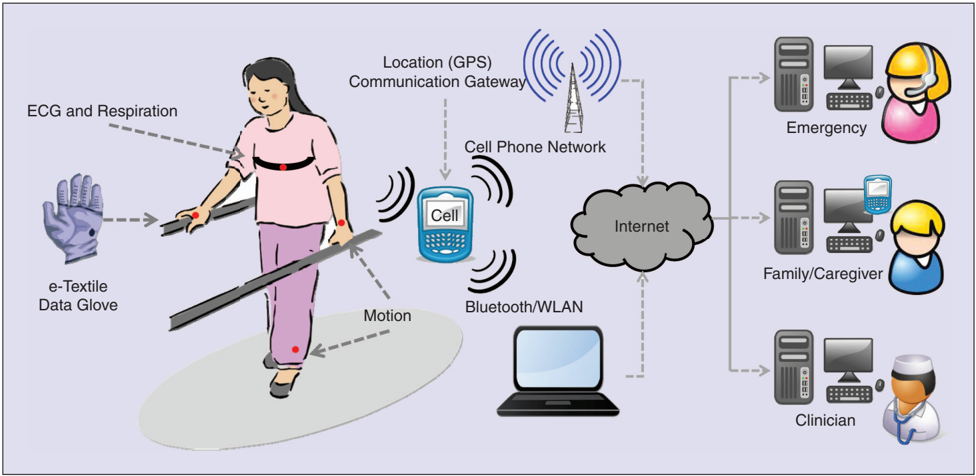
It is now more than 50 years since the time when clinical monitoring of individuals in the home and community settings was first envisioned. Until recently, technologies to enable such vision were lacking. However, wearable sensors and systems developed over the past decade have provided the tools to finally implement and deploy technology with the capabilities required by researchers in the field of patients' home monitoring. As discussed, potential applications of these technologies include the early diagnosis of diseases such as congestive heart failure, the prevention of chronic conditions such as diabetes, improved clinical management of neurodegenerative conditions such as Parkinson's disease, and the ability to promptly respond to emergency situations such as seizures in patients with epilepsy and cardiac arrest in subjects undergoing cardiovascular monitoring. Current research efforts are now focused on the development of more complex systems for home monitoring of individuals with a variety of preclinical and clinical conditions. Recent research on the clinical assessment of wearable technology promises to deliver methodologies that are expected to lead to clinical adoption within the next five to ten years. In particular, combining home robots and wearable technology is likely to be a key step toward achieving the goal of effectively monitoring patients in the home. These efforts to merge home robots and wearable technology are expected to enable a new generation of complex systems with the ability to monitor subjects' status, facilitate the administration of interventions, and provide an invaluable tool to respond to emergency situations.
Overview
The claims and statistics of this paper haven’t been checked yet.
Run the check — free, no account needed. It reads the open-access text and checks the sources it cites.
Integrity signals
Registry
Cites
Statistics
Figures


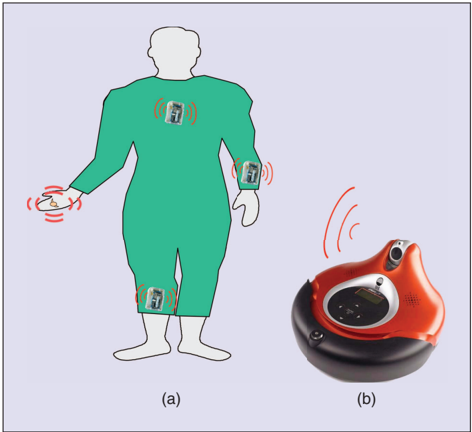
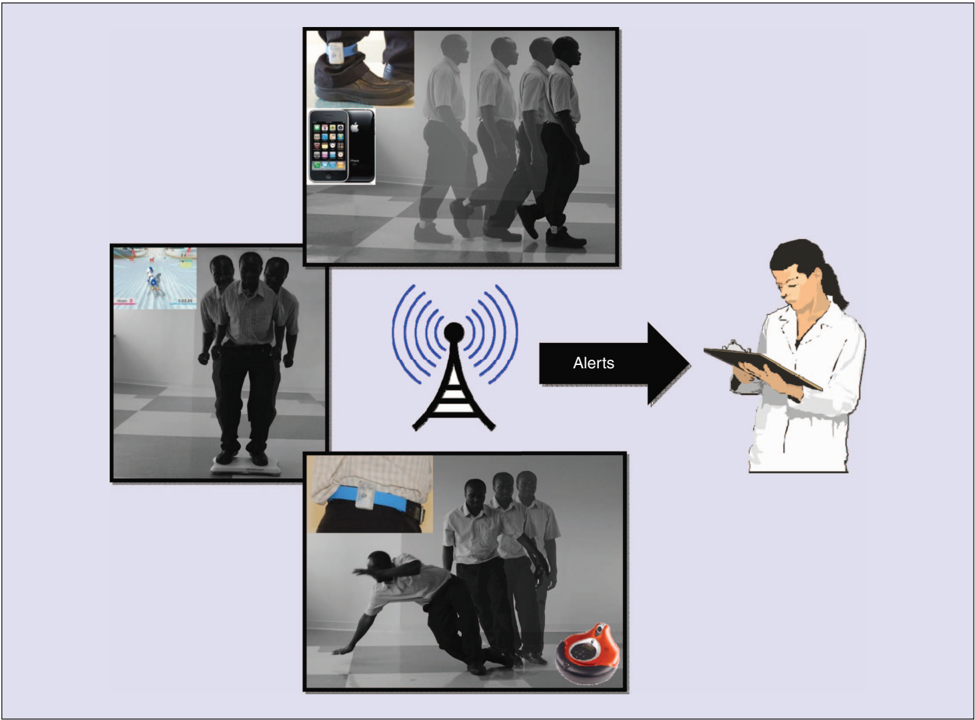

Verification
Claims the paper makes
The claims and statistics of this paper haven’t been checked yet.
Run the check — free, no account needed. It reads the open-access text and checks the sources it cites.
Claims other papers make about this one
Each is checked against this paper’s own text: does it say what the citing paper says it does?
In the citing paper
“Their current capabilities include physiological and biochemical sensing, as well as motion sensing [6,7].”
From A review of wearable sensors and systems with application in rehabilitation (2012) · cites this paper as [7]
Self-check
Percentages, sums and reported differences re-computed from the paper’s own numbers.
The self-check needs the paper’s full text.
Citations
Cites
Unified Parkinson's Disease Rating Scale
(2012) · Springer eBooks · doi:10.1007/springerreference_184495 · Cited by 3,071
Recent Developments in Parkinson's Disease
Hurtig, H. I. (1987) · Neurology · doi:10.1212/wnl.37.5.893 · Cited by 1,925
Jovanov, E., Milenković, A., Otto, C., & de Groen, P. C. (2005) · Journal of NeuroEngineering and Rehabilitation · doi:10.1186/1743-0003-2-6 · Cited by 1,013
Gait variability: methods, modeling and meaning
Hausdorff, J. M. (2005) · Journal of NeuroEngineering and Rehabilitation · doi:10.1186/1743-0003-2-19 · Cited by 942
Hausdorff, J. M. (2007) · Human Movement Science · doi:10.1016/j.humov.2007.05.003 · Cited by 927
Evaluation of a threshold-based tri-axial accelerometer fall detection algorithm
Bourke, A. K., O’Brien, J., & Lyons, G. M. (2006) · Gait & Posture · doi:10.1016/j.gaitpost.2006.09.012 · Cited by 852
Activity Classification Using Realistic Data From Wearable Sensors
Pärkkä, J., Ermes, M., Korpipää, P., Mäntyjärvi, J., Peltola, J., & Korhonen, I. (2006) · IEEE Transactions on Information Technology in Biomedicine · doi:10.1109/titb.2005.856863 · Cited by 759
Ermes, M., Pärkkä, J., Mäntyjärvi, J., & Korhonen, I. (2008) · IEEE Transactions on Information Technology in Biomedicine · doi:10.1109/titb.2007.899496 · Cited by 707
AMON: A Wearable Multiparameter Medical Monitoring and Alert System
Anliker, U., Ward, J. A., Lukowicz, P., Troster, G., Dolveck, F., Baer, M., Keita, F., Schenker, E. B., Catarsi, F., Coluccini, L., et al. (2004) · IEEE Transactions on Information Technology in Biomedicine · doi:10.1109/titb.2004.837888 · Cited by 707
Monitoring Motor Fluctuations in Patients With Parkinson's Disease Using Wearable Sensors
Patel, S., Lorincz, K., Hughes, R., Huggins, N., Growdon, J., Standaert, D., Akay, M., Dy, J., Welsh, M., & Bonato, P. (2009) · IEEE Transactions on Information Technology in Biomedicine · doi:10.1109/titb.2009.2033471 · Cited by 623
Self-citation
Research works printed but not linked: 2
- 0, Shimmer
- baechlin, 0, Assistive cueing, context awareness, freezing of gait, Parkinson's disease, personal health assistant, IEEE Trans Inf Technol Biomed
Cited by
Sorted by citations
A review of wearable sensors and systems with application in rehabilitation
Patel, S., Park, H., Bonato, P., Chan, L., & Rodgers, M. (2012) · Journal of NeuroEngineering and Rehabilitation · doi:10.1186/1743-0003-9-21 · Cited by 2,396
Self-citationWearable Sensors for Human Activity Monitoring: A Review
Mukhopadhyay, S. C. (2015) · IEEE Sensors Journal · doi:10.1109/jsen.2014.2370945 · Cited by 1,401
Piezotronics and piezo-phototronics for adaptive electronics and optoelectronics
Wu, W., & Wang, Z. L. (2016) · Nature Reviews Materials · doi:10.1038/natrevmats.2016.31 · Cited by 658
Technology in Parkinson’s disease: challenges and opportunities
Espay, A. J., Bonato, P., Nahab, F. B., Maetzler, W., Dean, J. M., Klucken, J., Eskofier, B. M., Merola, A., Horak, F., Lang, A. E., et al. (2016) · Movement Disorders · doi:10.1002/mds.26642 · Cited by 654
Self-citationA Survey on Ambient Intelligence in Healthcare
Acampora, G., Cook, D. J., Rashidi, P., & Vasilakos, A. V. (2013) · Proceedings of the IEEE · doi:10.1109/jproc.2013.2262913 · Cited by 682
Flexible Sensors Based on Nanoparticles
Segev‐Bar, M., & Haick, H. (2013) · ACS Nano · doi:10.1021/nn402728g · Cited by 513
How Wearable Sensors Can Support Parkinson's Disease Diagnosis and Treatment: A Systematic Review
Rovini, E., Maremmani, C., & Cavallo, F. (2017) · Frontiers in Neuroscience · doi:10.3389/fnins.2017.00555 · Cited by 446
Remote health monitoring of elderly through wearable sensors
Al-Khafajiy, M., Baker, T., Chalmers, C., Asim, M., Kolivand, H., Fahim, M., & Waraich, A. (2019) · Multimedia Tools and Applications · doi:10.1007/s11042-018-7134-7 · Cited by 393
Charlton, P. H., Bonnici, T., Tarassenko, L., Clifton, D. A., Beale, R., & Watkinson, P. J. (2016) · Physiological Measurement · doi:10.1088/0967-3334/37/4/610 · Cited by 366
Non-invasive mouthguard biosensor for continuous salivary monitoring of metabolites
Kim, J., Valdés-Ramírez, G., Bandodkar, A. J., Jia, W., Martinez, A. G., Ramírez, J., Mercier, P., & Wang, J. (2014) · The Analyst · doi:10.1039/c3an02359a · Cited by 367
Wearable Devices for Ambulatory Cardiac Monitoring
Sana, F., Isselbacher, E. M., Singh, J. P., Heist, E. K., Pathik, B., & Armoundas, A. A. (2020) · Journal of the American College of Cardiology · doi:10.1016/j.jacc.2020.01.046 · Cited by 362
Recent Advances in Wearable Sensors for Health Monitoring
Rodgers, M. M., Pai, V. M., & Conroy, R. S. (2015) · IEEE Sensors Journal · doi:10.1109/jsen.2014.2357257 · Cited by 325
Increasing trend of wearables and multimodal interface for human activity monitoring: A review
Kumari, P., Mathew, L., & Syal, P. (2016) · Biosensors and Bioelectronics · doi:10.1016/j.bios.2016.12.001 · Cited by 298
Current and Emerging Technology for Continuous Glucose Monitoring
Chen, C., Zhao, X.-L., Li, Z.-H., Zhu, Z., Qian, S., & Flewitt, A. J. (2017) · Sensors · doi:10.3390/s17010182 · Cited by 300
Stretchable, Wireless Sensors and Functional Substrates for Epidermal Characterization of Sweat
Huang, X. L., Liu, Y., Chen, K., Shin, W., Lu, C., Kong, G., Patnaik, D., Lee, S., Cortes, J. F., & Rogers, J. A. (2014) · Small · doi:10.1002/smll.201400483 · Cited by 283
Cloud Centric Authentication for Wearable Healthcare Monitoring System
Jangirala, S., Das, A. K., Kumar, N., & Rodrigues, J. J. P. C. (2018) · IEEE Transactions on Dependable and Secure Computing · doi:10.1109/tdsc.2018.2828306 · Cited by 283
Wearable temporary tattoo sensor for real-time trace metal monitoring in human sweat
Kim, J., de Araujo, W. R., Samek, I. A., Bandodkar, A. J., Jia, W., Brunetti, B., Paixão, T. R. L. C., & Wang, J. (2015) · Electrochemistry Communications · doi:10.1016/j.elecom.2014.11.024 · Cited by 245
Mannini, A., Trojaniello, D., Cereatti, A., & Sabatini, A. (2016) · Sensors · doi:10.3390/s16010134 · Cited by 242
Role of Body-Worn Movement Monitor Technology for Balance and Gait Rehabilitation
Horak, F. B., King, L. A., & Mancini, M. (2014) · Physical Therapy · doi:10.2522/ptj.20140253 · Cited by 227
A data-driven approach to modeling physical fatigue in the workplace using wearable sensors
Sedighi‐Maman, Z., Yazdi, M. A. A., Cavuoto, L. A., & Megahed, F. M. (2017) · Applied Ergonomics · doi:10.1016/j.apergo.2017.02.001 · Cited by 218
Body-Worn Sensor Design: What Do Patients and Clinicians Want?
Bergmann, J., & McGregor, A. H. (2011) · Annals of Biomedical Engineering · doi:10.1007/s10439-011-0339-9 · Cited by 216
The design, fabrication, and applications of flexible biosensing devices
Xu, M., Obodo, D., & Yadavalli, V. K. (2018) · Biosensors and Bioelectronics · doi:10.1016/j.bios.2018.10.019 · Cited by 218
Deep ConvLSTM With Self-Attention for Human Activity Decoding Using Wearable Sensors
SINGH, S. P., Sharma, M. K., Lay-Ekuakille, A., Gangwar, D., & Gupta, S. (2020) · IEEE Sensors Journal · doi:10.1109/jsen.2020.3045135 · Cited by 211
Schall, M. C., Sesek, R. F., & Cavuoto, L. A. (2018) · Human Factors The Journal of the Human Factors and Ergonomics Society · doi:10.1177/0018720817753907 · Cited by 205
Nanogenerators for Human Body Energy Harvesting
Proto, A., Penhaker, M., Conforto, S., & Schmid, M. (2017) · Trends in biotechnology · doi:10.1016/j.tibtech.2017.04.005 · Cited by 192
Body Area Networks for Ubiquitous Healthcare Applications: Opportunities and Challenges
Jovanov, E., & Milenkovic, A. (2011) · Journal of Medical Systems · doi:10.1007/s10916-011-9661-x · Cited by 183
Valenza, G., Nardelli, M., Lanatà, A., Gentili, C., Bertschy, G., Paradiso, R., & Scilingo, E. P. (2013) · IEEE Journal of Biomedical and Health Informatics · doi:10.1109/jbhi.2013.2290382 · Cited by 166
Lanatà, A., Valenza, G., Nardelli, M., Gentili, C., & Scilingo, E. P. (2014) · IEEE Journal of Biomedical and Health Informatics · doi:10.1109/jbhi.2014.2360711 · Cited by 168
A Web-Based System for Home Monitoring of Patients With Parkinson's Disease Using Wearable Sensors
Chen, B.-R., Patel, S., Buckley, T. A., Rednic, R., McClure, D., Shih, L. C., Tarsy, D., Welsh, M., & Bonato, P. (2010) · IEEE Transactions on Biomedical Engineering · doi:10.1109/tbme.2010.2090044 · Cited by 162
Self-citationBai, S., Sun, C., Wan, P., Wang, C., Luo, R., Li, Y., Liu, J., & Sun, X. (2014) · Small · doi:10.1002/smll.201401865 · Cited by 151
Inertial Sensing-Based Pre-Impact Detection of Falls Involving Near-Fall Scenarios
Lee, J. K., Robinovitch, S. N., & Park, E. J. (2014) · IEEE Transactions on Neural Systems and Rehabilitation Engineering · doi:10.1109/tnsre.2014.2357806 · Cited by 147
Wearable technology for spine movement assessment: A systematic review
Papi, E., Koh, W. S., & McGregor, A. H. (2017) · Journal of Biomechanics · doi:10.1016/j.jbiomech.2017.09.037 · Cited by 137
Sigcha, L., Borzì, L., Amato, F., Rechichi, I., Ramos-Romero, C. A., Cardenas, A. J. A., Gascó, L., & Olmo, G. (2023) · Expert Systems with Applications · doi:10.1016/j.eswa.2023.120541 · Cited by 148
Wearable and Implantable Sensors: The Patient’s Perspective
Bergmann, J., Chandaria, V. V., & McGregor, A. H. (2012) · Sensors · doi:10.3390/s121216695 · Cited by 118
Automated Biosignal Quality Analysis for Electromyography Using a One-Class Support Vector Machine
Fraser, G. D., Chan, A. D. C., Green, J. R., & MacIsaac, D. (2014) · IEEE Transactions on Instrumentation and Measurement · doi:10.1109/tim.2014.2317296 · Cited by 123
Xu, M., & Yadavalli, V. K. (2019) · ACS Sensors · doi:10.1021/acssensors.9b00230 · Cited by 107
Carbon‐Based Nanomaterials and Sensing Tools for Wearable Health Monitoring Devices
Erdem, Ö., Derin, E., Shirejini, S. Z., Sagdic, K., Yilmaz, E. G., Yildiz, S., Akceoglu, G. A., & İnci, F. (2021) · Advanced Materials Technologies · doi:10.1002/admt.202100572 · Cited by 110
Sleep Tracking, Wearable Technology, and Opportunities for Research and Clinical Care
Shelgikar, A. V., Anderson, P. F., & Stephens, M. R. (2016) · Chest · doi:10.1016/j.chest.2016.04.016 · Cited by 104
Non-contact sensing technology enables precision livestock farming in smart farms
Yin, M., Ma, R., Luo, H., Li, J., Zhao, Q., & Zhang, M. (2023) · Computers and Electronics in Agriculture · doi:10.1016/j.compag.2023.108171 · Cited by 114
Sensor Network Infrastructure for a Home Care Monitoring System
Palumbo, F., Ullberg, J., Stimec, A., Furfari, F., Karlsson, L., & Coradeschi, S. (2014) · Italian National Conference on Sensors · doi:10.3390/s140303833 · Cited by 103
Reyes, C. G., Sharma, A., & Lagerwall, J. P. F. (2016) · Liquid Crystals · doi:10.1080/02678292.2016.1212287 · Cited by 90
Advances in piezotronic transistors and piezotronics
Wang, L., & Wang, Z. L. (2021) · Nano Today · doi:10.1016/j.nantod.2021.101108 · Cited by 92
Smart home technology for telemedicine and emergency management
Li, K. F. (2012) · Journal of Ambient Intelligence and Humanized Computing · doi:10.1007/s12652-012-0129-8 · Cited by 81
Objective Assessment of Upper Limb Mobility for Post-stroke Rehabilitation
Zhang, Z., Fang, Q., & Gu, X. (2015) · IEEE Transactions on Biomedical Engineering · doi:10.1109/tbme.2015.2477095 · Cited by 80
A review of wearable technology in healthcare: Monitoring patient health and enhancing outcomes
Adeghe, E. P., Okolo, C. A., & Ojeyinka, O. T. (2024) · Open Access Research Journal of Multidisciplinary Studies · doi:10.53022/oarjms.2024.7.1.0019 · Cited by 96
Thematic exploration of sectoral and cross-cutting challenges to circular economy implementation
Singh, S., Babbitt, C. W., Gaustad, G. G., Eckelman, M. J., Gregory, J. R., Ryen, E. G., Mathur, N., Stevens, M. C., Parvatker, A. G., Buch, R., et al. (2021) · Clean Technologies and Environmental Policy · doi:10.1007/s10098-020-02016-5 · Cited by 83
IoT Structured Long-Term Wearable Social Sensing for Mental Wellbeing
Yang, S., Gao, B., Jiang, L., Jin, J., Gao, Z., Ma, X., & Woo, W. L. (2018) · IEEE Internet of Things Journal · doi:10.1109/jiot.2018.2889966 · Cited by 75
Applications of Smartphones for Ubiquitous Health Monitoring and Wellbeing Management
Milošević, M., Shrove, M. T., & Jovanov, E. (2011) · JITA - Journal of Information Technology and Applications (Banja Luka) - APEIRON · doi:10.7251/jit1101007m · Cited by 73
Technologies for Assessment of Motor Disorders in Parkinson’s Disease: A Review
Oung, Q. W., Muthusamy, H., Lee, H. L., Basah, S. N., Yaacob, S., Sarillee, M., & Lee, C. K. (2015) · Sensors · doi:10.3390/s150921710 · Cited by 70
Human–robot interaction based on wearable IMU sensor and laser range finder
Cifuentes, C. A., Frizera, A., Carelli, R., & Bastos-Filho, T. (2014) · Robotics and Autonomous Systems · doi:10.1016/j.robot.2014.06.001 · Cited by 70
Wearable ECG Based on Impulse-Radio-Type Human Body Communication
Wang, J., Fujiwara, T., Kato, T., & Anzai, D. (2015) · IEEE Transactions on Biomedical Engineering · doi:10.1109/tbme.2015.2504998 · Cited by 70
Exercise and gait/movement analyses in treatment and diagnosis of Parkinson’s Disease
Burtscher, J., Moraud, E. M., Malatesta, D., Millet, G. P., Bally, J. F., & Patoz, A. (2023) · Ageing Research Reviews · doi:10.1016/j.arr.2023.102147 · Cited by 76
Vervoort, D., Vuillerme, N., Kosse, N. M., Hortobágyi, T., & Lamoth, C. J. C. (2016) · PLoS ONE · doi:10.1371/journal.pone.0155984 · Cited by 73
An Attachable Clothing Sensor System for Measuring Knee Joint Angles
Bergmann, J., Anastasova, S., Spulber, I., Gulati, V., Georgiou, P., & McGregor, A. H. (2013) · IEEE Sensors Journal · doi:10.1109/jsen.2013.2277697 · Cited by 65
Roadmap on nanogenerators and piezotronics
Basset, P., Beeby, S., Bowen, C., Chew, Z. J., Delbani, A., Dharmasena, R. D. I. G., Dudem, B., Fan, F. R., Galayko, D., Guo, H., et al. (2022) · APL Materials · doi:10.1063/5.0085850 · Cited by 64
Cancela, J., Pastorino, M., Arredondo, M., Nikita, K., Villagra, F., & Pastor, M. (2014) · Sensors · doi:10.3390/s140304618 · Cited by 63
Technical and clinical view on ambulatory assessment in Parkinson's disease
Hobert, M. A., Maetzler, W., Aminian, K., & Chiari, L. (2014) · Acta Neurologica Scandinavica · doi:10.1111/ane.12248 · Cited by 60
Wearable technologies in osteoarthritis: a qualitative study of clinicians’ preferences
Papi, E., Murtagh, G., & Mcgregor, A. (2016) · BMJ Open · doi:10.1136/bmjopen-2015-009544 · Cited by 54
A Survey of Mobile Phone Sensing, Self-Reporting, and Social Sharing for Pervasive Healthcare
Triantafyllidis, A. K., Velardo, C., Salvi, D., Shah, S. A., Koutkias, V. G., & Tarassenko, L. (2015) · IEEE Journal of Biomedical and Health Informatics · doi:10.1109/jbhi.2015.2483902 · Cited by 59
Intelligent Platform Based on Smart PPE for Safety in Workplaces
Márquez-Sánchez, S., Campero-Jurado, I., Santos, J. H., Rodrı́guez, S., & Corchado, J. M. (2021) · Sensors · doi:10.3390/s21144652 · Cited by 73
Guido, E., Colleoni, C., Clerck, K. D., Plutino, M. R., & Rosace, G. (2014) · Sensors and Actuators B Chemical · doi:10.1016/j.snb.2014.06.126 · Cited by 58
Signcryption Method Suitable for Low-Power IoT Devices in a Wireless Sensor Network
Ting, P., Tsai, J., & Wu, T. (2017) · IEEE Systems Journal · doi:10.1109/jsyst.2017.2730580 · Cited by 58
Papi, E., Belsi, A., & McGregor, A. H. (2015) · BMJ Open · doi:10.1136/bmjopen-2015-007980 · Cited by 55
Belsi, A., Papi, E., & McGregor, A. H. (2016) · BMJ Open · doi:10.1136/bmjopen-2015-010064 · Cited by 56
Patchable micro/nanodevices interacting with skin
Bai, W., Kuang, T., Chitrakar, C., Yang, R., Li, S., Zhu, D., & Chang, L. (2018) · Biosensors and Bioelectronics · doi:10.1016/j.bios.2018.09.035 · Cited by 56
Robles, Y. D. L. F., Ricoy-Cano, A. J., Albín-Rodríguez, A.-P., Ruiz, J. L. L., & Espinilla, M. (2022) · Sensors · doi:10.3390/s22228599 · Cited by 66
A flexible wearable sensor for knee flexion assessment during gait
Papi, E., Bo, Y. N., & McGregor, A. H. (2018) · Gait & Posture · doi:10.1016/j.gaitpost.2018.04.015 · Cited by 55
Advanced sensor technologies and the future of work
Howard, J., Murashov, V. V., Cauda, E. G., & SNAWDER, J. E. (2021) · American Journal of Industrial Medicine · doi:10.1002/ajim.23300 · Cited by 55
Integrated RF/Optical Wireless Networks for Improving QoS in Indoor and Transportation Applications
Chowdhury, M. Z., Hossan, M. T., Hasan, M. K., & Jang, Y. M. (2018) · Wireless Personal Communications · doi:10.1007/s11277-018-5971-3 · Cited by 54
Yu, R., Wu, W., Pan, C., Wang, Z., Ding, Y. L., & Wang, Z. L. (2014) · Advanced Materials · doi:10.1002/adma.201404589 · Cited by 53
Human Activity Recognition by Combining a Small Number of Classifiers
Nazábal, A., Garcia-Moreno, P., Artés-Rodríguez, A., & Ghahramani, Z. (2015) · IEEE Journal of Biomedical and Health Informatics · doi:10.1109/jbhi.2015.2458274 · Cited by 49
Trunk Motion System (TMS) Using Printed Body Worn Sensor (BWS) via Data Fusion Approach
Esfahani, M. I. M., Zobeiri, O. A., Moshiri, B., Narimani, R., Mehravar, M., Rashedi, E., & Parnianpour, M. (2017) · Sensors · doi:10.3390/s17010112 · Cited by 49
A primer on precision medicine informatics
Sboner, A., & Elemento, O. (2015) · Briefings in Bioinformatics · doi:10.1093/bib/bbv032 · Cited by 50
Development of an eyewear to measure eye and body movements
Kanoh, S., Ichi-nohe, S., Shioya, S., Inoue, K., & Kawashima, R. (2015) · Annual International Conference of the IEEE Engineering in Medicine and Biology Society (EMBC) · doi:10.1109/embc.2015.7318844 · Cited by 48
Towards Clustering of Mobile and Smartwatch Accelerometer Data for Physical Activity Recognition
Dobbins, C., & Rawassizadeh, R. (2018) · Informatics · doi:10.3390/informatics5020029 · Cited by 47
An Ambulatory Method of Identifying Anterior Cruciate Ligament Reconstructed Gait Patterns
Patterson, M., Delahunt, E., Sweeney, K. T., & Caulfield, B. M. (2014) · Sensors · doi:10.3390/s140100887 · Cited by 46
Godkin, F. E., Turner, E., Demnati, Y., Vert, A., Roberts, A., Swartz, R. H., McLaughlin, P. M., Weber, K. S., Thai, V., Beyer, K. B., et al. (2021) · Journal of Neurology · doi:10.1007/s00415-021-10831-z · Cited by 45
A Wearable Flexible Acceleration Sensor for Monitoring Human Motion
He, Z., Wang, K., Zhao, Z., Zhang, T., Li, Y., & Wang, L. (2022) · Biosensors · doi:10.3390/bios12080620 · Cited by 44
Clemente‐Suárez, V. J., Martín-Rodríguez, A., Curiel-Regueros, A., Rubio-Zarapuz, A., & Tornero-Aguilera, J. F. (2025) · Bioengineering · doi:10.3390/bioengineering12020208 · Cited by 49
A system for activity recognition using multi-sensor fusion
Gao, L., Bourke, A. K., & Nelson, J. (2011) · Annual International Conference of the IEEE Engineering in Medicine and Biology Society (EMBC) · doi:10.1109/iembs.2011.6091939 · Cited by 45
Dadashi, F., Arami, A., Crettenand, F., Millet, G. P., Komar, J., Seifert, L., & Aminian, K. (2013) · Wearable and Implantable Body Sensor Networks · doi:10.1109/bsn.2013.6575461 · Cited by 45
Characterization of Ag/AgCl Dry Electrodes for Wearable Electrophysiological Sensing
Lee, M. S., Paul, A., Xu, Y., Hairston, W. D., & Cauwenberghs, G. (2022) · Frontiers in Electronics · doi:10.3389/felec.2021.700363 · Cited by 43
Rider Trunk and Bicycle Pose Estimation With Fusion of Force/Inertial Sensors
Zhang, Y., Chen, K., & Yi, J. (2013) · IEEE Transactions on Biomedical Engineering · doi:10.1109/tbme.2013.2260339 · Cited by 42
HEAL-WEAR: An Ultra-Low Power Heterogeneous System for Bio-Signal Analysis
Duch, L., Basu, S., Braojos, R., Ansaloni, G., Pozzi, L., & Atienza, D. (2017) · IEEE Transactions on Circuits and Systems I Regular Papers · doi:10.1109/tcsi.2017.2701499 · Cited by 42
Gao, S., Wang, Y., Wang, R., & Wu, W. (2017) · Semiconductor Science and Technology · doi:10.1088/1361-6641/aa8605 · Cited by 42
Electromechanical properties of knitted wearable sensors: part 1 – theory
Wang, J., Long, H., Soltanian, S., Servati, P., & Ko, F. (2013) · Textile Research Journal · doi:10.1177/0040517513487789 · Cited by 44
Design, fabrication and characterization of flexible MEMS accelerometer using multi-Level UV-LIGA
Mahmood, M. S., Çelik‐Butler, Z., & Butler, D. P. (2017) · Sensors and Actuators A Physical · doi:10.1016/j.sna.2017.07.007 · Cited by 41
FeetBeat: A Flexible Iontronic Sensing Wearable Detects Pedal Pulses and Muscular Activities
Zhang, Z., Zhu, Z., Bazor, B., Lee, S., Ding, Z. J., & Pan, T. (2019) · IEEE Transactions on Biomedical Engineering · doi:10.1109/tbme.2019.2900224 · Cited by 41
Flexible temperature sensors based on two-dimensional materials for wearable devices
Lim, S., & Suk, J. W. (2022) · Journal of Physics D Applied Physics · doi:10.1088/1361-6463/acaf38 · Cited by 40
Human activity monitoring using gas sensor arrays
Fonollosa, J., Rodríguez-Luján, I., Shevade, A. V., Homer, M. L., Ryan, M. A., & Huerta, R. (2014) · Sensors and Actuators B Chemical · doi:10.1016/j.snb.2014.03.102 · Cited by 39
Learning Analytics Based on Wearable Devices: A Systematic Literature Review From 2011 to 2021
Liu, Z., Ren, Y., Kong, X., & Liu, S. (2022) · Journal of Educational Computing Research · doi:10.1177/07356331211064780 · Cited by 45
Jiménez-Fernández, S., de Toledo, P., & del Pozo, F. (2013) · IEEE Transactions on Biomedical Engineering · doi:10.1109/tbme.2013.2280967 · Cited by 36
Wearable multimodal sensors for evaluation of patients with Parkinson disease
Oung, Q. W., Hariharan, M., Lee, H. L., Basah, S. N., Sarillee, M., & Lee, C. H. (2015) · IEEE International Conference on Control System, Computing and Engineering · doi:10.1109/iccsce.2015.7482196 · Cited by 36
Design of MEMS piezoelectric blood pressure sensor
Panwar, L. S., Kala, S., Panwar, V., Panwar, S. S., & Sharma, S. (2017) · International Conference on Advances in Computing, Communication & Automation (ICACCA) · doi:10.1109/icaccaf.2017.8344698 · Cited by 36
A novel flex sensor-based flexible smart garment for monitoring body postures
Abro, Z. A., Yi-Fan, Z., Chen, N., Hong, C., Lakho, R. A., & Halepoto, H. (2019) · Journal of Industrial Textiles · doi:10.1177/1528083719832854 · Cited by 39
Medical applications of smart textiles
Coyle, S. M., & Diamond, D. (2016) · Elsevier eBooks · doi:10.1016/b978-1-78242-379-9.00010-4 · Cited by 36
Development of a cloud-based IoT system for livestock health monitoring using AWS and python
Bhaskaran, H. S., Gordon, M., & Neethirajan, S. R. (2024) · Smart Agricultural Technology · doi:10.1016/j.atech.2024.100524 · Cited by 35
Literature review on wearable systems in upper extremity rehabilitation
Wang, Q., Chen, W., & Markopoulos, P. (2014) · IEEE-EMBS International Conference on Biomedical and Health Informatics (BHI ...) · doi:10.1109/bhi.2014.6864424 · Cited by 35
Wearable Long-Term Social Sensing for Mental Wellbeing
Jiang, L., Gao, B., Gu, J. J., Chen, Y., Gao, Z., Ma, X., Kendrick, K. M., & Woo, W. L. (2018) · IEEE Sensors Journal · doi:10.1109/jsen.2018.2877427 · Cited by 35
Multifunctional responsive fibers produced by dual liquid crystal core electrospinning
Kye, Y., Kim, C., & Lagerwall, J. P. F. (2015) · Journal of Materials Chemistry C · doi:10.1039/c5tc01707f · Cited by 34
Metadata
- Authors
- Bonato, P.
- Affiliations
- Harvard University (US)
- Corresponding author
- Bonato, Paolo
- ORCID
- Bonato, Paolo
- Venue
- IEEE Engineering in Medicine and Biology Magazine
- Published
- 2010-05
- Volume
- 29
- Issue
- 3
- Pages
- 25-36
- ISSN
- 0739-5175 (ISSN-L)
- OpenAlex
- W2032802664
- Cited by
- 423
- References
- 66
- Citations by year
- 2026: 22 · 2025: 30 · 2024: 26 · 2023: 15 · 2022: 29 · 2021: 25 · 2020: 29 · 2019: 13 · 2018: 31 · 2017: 29 · 2016: 40 · 2015: 36 · 2014: 38 · 2013: 22 · 2012: 23
- FWCI
- 11.35
- Type
- journal article
- Language
- en
- Open access
- green
- hdl.handle.net
- Locations
- IEEE Engineering in Medicine and Biology Magazine (publishedVersion)
- PubMed (publishedVersion)
- DSpace@MIT (Massachusetts Institute of Technology) (submittedVersion, cc-by-nc)
- Topics
- Physical Sciences › Engineering › Biomedical Engineering › Non-Invasive Vital Sign Monitoring
- Physical Sciences › Computer Science › Computer Vision and Pattern Recognition › Context-Aware Activity Recognition Systems
- Physical Sciences › Engineering › Biomedical Engineering › Wireless Body Area Networks
- Keywords
- wearable sensors, home monitoring, remote patient monitoring, home robots, congestive heart failure, diabetes prevention, Parkinson's disease, epilepsy, cardiac arrest, cardiovascular monitoring, emergency response
- MeSH terms
- Clothing, Diagnosis, Computer-Assisted, Equipment Design, Signal Processing, Computer-Assisted, Telemedicine, Monitoring, Ambulatory
About these checks
Registry, retraction, Cites and statistics results are computed, not judged, with one exception: a printed reference that no index lists is read once by a model before it counts as a citation error. Claims are extracted by a model and kept only when their quote appears verbatim in the text; each cited source is then checked, with a model’s help, for whether it says what the claim relies on. Those verdicts can be wrong — read the claim’s quote and the cited source before relying on one.
Statistics and arithmetic are recomputed, not judged.
Confidence bands are shown only for fields calibrated on our annotated test set. None is calibrated yet, so no band is shown.
What counts as a claim ›How we measure confidence ›How we check this ›
Are you an author, or do you see a problem with this page? Request a review
