

Zero-Shot Medical Image Translation via Frequency-Guided Diffusion Models
Open accessThe DOI matches its Crossref record; 41 of the 41 references it cites were found in a registry or an index.
Abstract
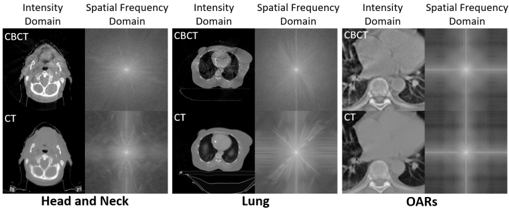
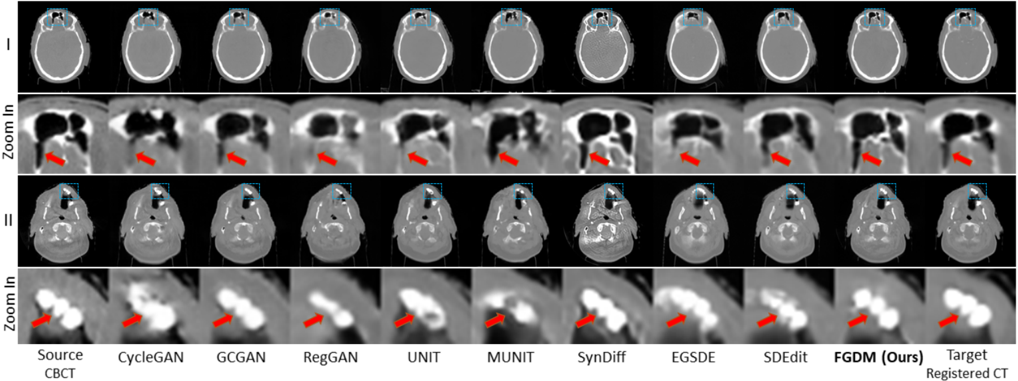
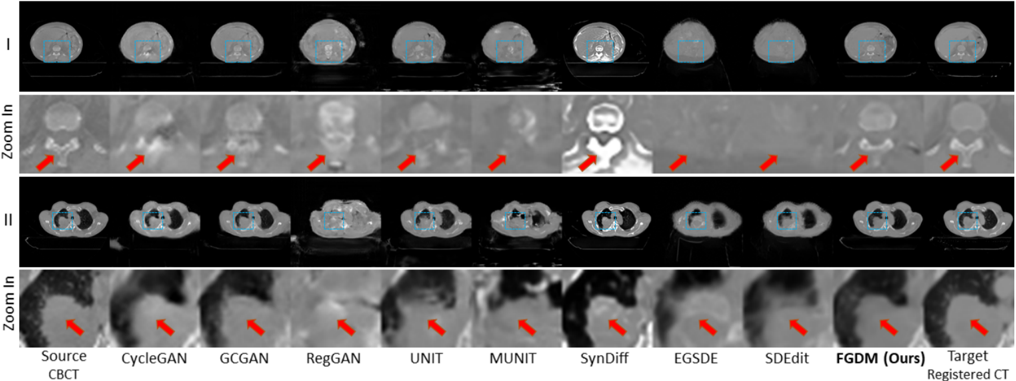
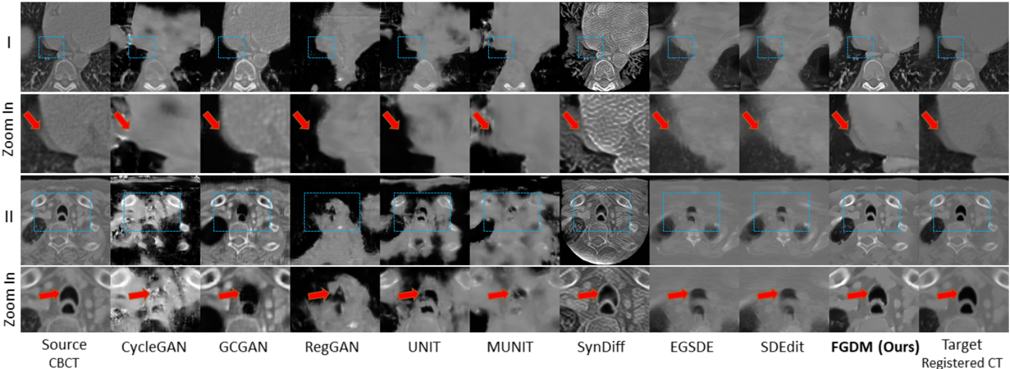
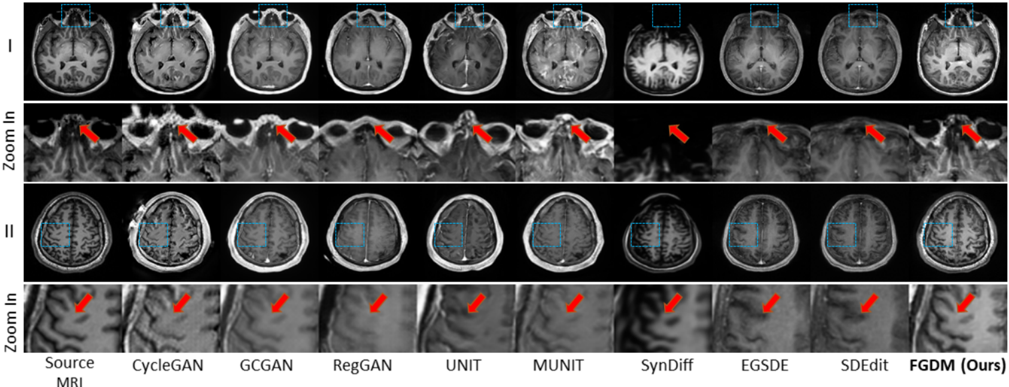
Recently, the diffusion model has emerged as a superior generative model that can produce high quality and realistic images. However, for medical image translation, the existing diffusion models are deficient in accurately retaining structural information since the structure details of source domain images are lost during the forward diffusion process and cannot be fully recovered through learned reverse diffusion, while the integrity of anatomical structures is extremely important in medical images. For instance, errors in image translation may distort, shift, or even remove structures and tumors, leading to incorrect diagnosis and inadequate treatments. Training and conditioning diffusion models using paired source and target images with matching anatomy can help. However, such paired data are very difficult and costly to obtain, and may also reduce the robustness of the developed model to out-of-distribution testing data. We propose a frequency-guided diffusion model (FGDM) that employs frequency-domain filters to guide the diffusion model for structure-preserving image translation. Based on its design, FGDM allows zero-shot learning, as it can be trained solely on the data from the target domain, and used directly for source-to-target domain translation without any exposure to the source-domain data during training. We evaluated it on three cone-beam CT (CBCT)-to-CT translation tasks for different anatomical sites, and a cross-institutional MR imaging translation task. FGDM outperformed the state-of-the-art methods (GAN-based, VAE-based, and diffusion-based) in metrics of Fréchet Inception Distance (FID), Peak Signal-to-Noise Ratio (PSNR), and Structural Similarity Index Measure (SSIM), showing its significant advantages in zero-shot medical image translation.
Overview
The claims and statistics of this paper haven’t been checked yet.
Free: it reads the open-access text and checks the first 5 claims that cite a source we can check. Create a free account to check every claim.
Integrity signals
Registry
Cites
Statistics
Figures

Verification
Claims the paper makes
The claims and statistics of this paper haven’t been checked yet.
Free: it reads the open-access text and checks the first 5 claims that cite a source we can check. Create a free account to check every claim.
Claims other papers make about this one
Each is checked against this paper’s own text: does it say what the citing paper says it does?
The check wasn’t confident either way, so it gives no verdict — never disputed.
In the citing paper
“Second, a pronounced domain gap exists between images and videos21–23.”
From Temporally consistent low-light face video enhancement via video-to-video conditional diffusion (2026) · cites this paper as [21]
Experimental — accuracy not yet measured
Self-check
Percentages, sums and reported differences re-computed from the paper’s own numbers.
The self-check needs the paper’s full text.
Citations
Cites
Image quality assessment: from error visibility to structural similarity
Wang, Z., Bovik, A. C., Sheikh, H. R., & Simoncelli, E. P. (2004) · IEEE Transactions on Image Processing · doi:10.1109/tip.2003.819861 · Cited by 57,892
Unpaired image-to-image translation using cycle-consistent adversarial networks
Zhu, J.-Y., Park, T., Isola, P., & Efros, A. A. (2017) · 2017 IEEE International Conference on Computer Vision (ICCV) · doi:10.1109/iccv.2017.244 · Cited by 23,602
Generative adversarial networks
Goodfellow, I., Pouget-Abadie, J., Mirza, M., Xu, B., Warde-Farley, D., Ozair, S., Courville, A., & Bengio, Y. (2020) · Communications of the ACM · doi:10.1145/3422622 · Cited by 18,384
Denoising Diffusion Probabilistic Models
Ho, J., Jain, A., & Abbeel, P. (2020) · arXiv · doi:10.48550/arxiv.2006.11239 · Cited by 8,712 · cited 3×
“In diffusion models [9], [10], [28], there is a forward diffusion process q ( · ) that gradually adds white Gaussian noise with constant variance σ 2 to the original data s 0 in T steps : where α 1 : t ∈ ( 0 , 1 ] T is a decreasing sequence, and the reverse denoising process p θ ( · ) is defined by…”
BackgroundGANs Trained by a Two Time-Scale Update Rule Converge to a Local Nash Equilibrium
Heusel, M., Ramsauer, H., Unterthiner, T., Nessler, B., & Hochreiter, S. (2017) · arXiv · doi:10.48550/arxiv.1706.08500 · Cited by 8,365
Elastix: a toolbox for intensity-based medical image registration
Klein, S., Staring, M., Murphy, K., Viergever, M. A., & Pluim, J. (2010) · IEEE Transactions on Medical Imaging · doi:10.1109/tmi.2009.2035616 · Cited by 4,311 · cited 1×
“For testing, an open-source deformable image registration toolbox [36] was used to align the CT to CBCT, and the registered CT images were used Authorized licensed use limited to the terms of the applicable license agreement with IEEE.”
MethodDiffusion Models Beat GANs on Image Synthesis
Dhariwal, P., & Nichol, A. (2021) · arXiv · doi:10.48550/arxiv.2105.05233 · Cited by 3,362 · cited 1×
“Recently, diffusion models are developed as a new type of generative AI method, which can generate images of very high quality with excellent Frechet Inception Distance (FID) [5], [6], [7], [8], [9].”
MethodDeep Unsupervised Learning using Nonequilibrium Thermodynamics
Sohl-Dickstein, J., Weiss, E. A., Maheswaranathan, N., & Ganguli, S. (2015) · arXiv · doi:10.48550/arxiv.1503.03585 · Cited by 2,637 · cited 1×
“In diffusion models [9], [10], [28], there is a forward diffusion process q ( · ) that gradually adds white Gaussian noise with constant variance σ 2 to the original data s 0 in T steps : where α 1 : t ∈ ( 0 , 1 ] T is a decreasing sequence, and the reverse denoising process p θ ( · ) is defined by…”
BackgroundAn Introduction to Variational Autoencoders
Kingma, D. P., & Welling, M. (2019) · Foundations and Trends® in Machine Learning · doi:10.1561/2200000056 · Cited by 2,609 · cited 15×
“Compared to GANs or VAEs, FGDM offers an additional benefit as it only uses the data from the target domain to train the diffusion model to learn the distribution at intermediate frequencies.”
MethodInfluentialDenoising Diffusion Implicit Models
Song, J., Meng, C., & Ermon, S. (2020) · arXiv · doi:10.48550/arxiv.2010.02502 · Cited by 2,507 · cited 2×
“Recently, diffusion models are developed as a new type of generative AI method, which can generate images of very high quality with excellent Frechet Inception Distance (FID) [5], [6], [7], [8], [9].”
BackgroundMethod
Research works printed but not linked: 1
- 8. Y. Song, J. Sohl-Dickstein, D. P. Kingma, A. Kumar, S. Ermon, and B. Poole, "Score-based generative modeling through stochastic differential equations," in International Conference on Learning Representations, 2021. [Online]. Available: https://openreview.net/ forum?id=PxTIG12RRHS
Cited by
Items 101–128 of 128
Conditioning Matters: Stabilizing Inversion and Attention in Diffusion Image Editing
Zhan, Z., Li, H., Wang, C., Ma, Y., Huang, M., Bai, R., Chen, J., Lyu, S., & Chen, D. (2026) · Lecture notes in computer science · doi:10.1007/978-3-032-37657-2_22
Disentangling structure from modality: An attention-based framework for CBCT-to-CT synthesis
Guo, S., Mao, S., Shi, T., Lu, S., Chen, J., You, R., Tang, T., Yan, Z., Li, J., & Zhou, J. (2026) · Biomedical Signal Processing and Control · doi:10.1016/j.bspc.2026.110832
Yu, D., Cai, J., Wu, M., Cheng, Y., Jin, G., Yuan, Y., Ye, M., Zhang, Q., & Yin, S. (2026) · Journal of Imaging Informatics in Medicine · doi:10.1007/s10278-026-02061-4
WDBDM: Wavelet-based dual-branch diffusion model for low-dose CT and PET denoising
Sun, Q., Li, T., Wang, G., Huang, Y., Dong, S., Yu, L., Shi, K., Yao, Z., Yu, L., & Hu, B. (2026) · Computerized Medical Imaging and Graphics · doi:10.1016/j.compmedimag.2026.102785
Huang, F., Xiang, L., Ye, X., Lin, Z., Huang, S., Liang, Y., Yang, H., Wei, L., Liao, X., & Gao, Y. (2026) · Expert Systems with Applications · doi:10.1016/j.eswa.2026.133397
Qiu, Y., Luo, J., Ye, C., Ma, T., & Cao, J. (2026) · Lecture notes in computer science · doi:10.1007/978-3-032-38224-5_9
Wavelet-inspired diffusion model with near-field constraint for real-time echocardiography dehazing
Gao, X., Huang, P., Tian, F., Guo, W., Li, H., Wu, F., Li, Z., Guo, Y., & Wang, Y. (2026) · Medical Image Analysis · doi:10.1016/j.media.2026.104204
Contour-Guided diffusion Model For Zero-Shot CT to MRI Synthesis
Jha, S., Bansal, G., Sharma, V., & Hira, S. (2026) · Procedia Computer Science · doi:10.1016/j.procs.2026.06.207
Gao, L., Sha, C., Yang, M., Lu, Y., Qiukai, E., & Chen, L. (2026) · Frontiers in Medicine · doi:10.3389/fmed.2026.1875077
Self-citationEnglish machine translation based on parallel corpus mining and transfer learning
Fang, L. (2026) · International Journal of Continuing Engineering Education and Life-Long Learning · doi:10.1504/ijceell.2026.156737
Zero-shot translation enhancement algorithm based on multilingual neural machine translation model
Zhan, W. (2026) · Neural Computing and Applications · doi:10.1007/s00521-026-12352-0
“By jointly training tens or even hundreds of languages in a single model, MNMT not only improves parameter efficiency but also unexpectedly demonstrates the ability to translate unknown language pairs, namely “zero-shot translation” [ 1 – 2].”
Efficient and rapid generation of high‐quality CT images from CBCT using a flow matching model
Li, Z.-B., Chen, L., Gan, G., Guo, J., Qin, S.-B., & Chen, L. (2026) · Medical Physics (Lancaster) · doi:10.1002/mp.70637
“40,41 The clinical objective is unambiguous: to generate the anatomically correct output corresponding to the input images.”
Self-citationProbabilistic Capsule Diffusion Framework for Uncertainty Aware Medical Image Reconstruction
Pradeep, D., Samhan, A. A. A., Tamilselvi, K., Shifani, S. A., Banoth, R., & Kumar, M. (2026) · International Conference on Circuit, Power and Computing Technologies · doi:10.1109/iccpct70290.2026.11654777
“Such imaging systems yield anatomical and structural details, which help clinicians detect anomalies and trace disease progression as well as informing them on how to administer therapeutic treatments [1].”
A Self-Evolving Cognitive Neuro-Symbolic Architecture for Continually Adaptive Medical Diagnosis
Kumar, R. P., Reddy, P. K., & Nuvvusetty, R. (2026) · International Conference on Circuit, Power and Computing Technologies · doi:10.1109/iccpct70290.2026.11654852
“This is done with the additional use of a stability-conscious loss function or regularizing/constraints on parameters [2, 3, 44].”
Subbaiah, U. V., Narayanan, T., & Kumar, B. N. (2026) · International Conference on Circuit, Power and Computing Technologies · doi:10.1109/iccpct70290.2026.11654733
“Tremendous opportunity for a breakthrough in medical imaging is created by multimodal fusion [1] as well as unsupervised enrolment [2] and representation learning [3], [4] techniques.”
Frequency-guided Diffusion Model and Adaptive Weighting Loss for Medical Image Translation
Tang, M., & Zhou, T. (2026) · International Conference on Computer Information Science and Application Technology (CISAT) · doi:10.1109/cisat71030.2026.11682571
Xie, Z., Guo, L., Chen, B., Pan, Y., He, W., Ye, X., & Zhang, R. (2026) · Lecture notes in computer science · doi:10.1007/978-3-032-38189-7_31
Ye, K., Luo, S., Gao, X., & Zheng, G. (2026) · Lecture notes in computer science · doi:10.1007/978-3-032-38072-2_59
Proactive Domain Unification for Robust Echocardiography Segmentation
Pang, X., Yang, J., Sun, Y., Gao, Z., Li, W., & Tan, T. (2026) · Lecture notes in computer science · doi:10.1007/978-3-032-38072-2_41
Gaffar, M. H. M. A., & Alawida, M. (2026) · International Conference on Computer Technology Applications (ICCTA) · doi:10.1109/iccta70480.2026.11706438
“Li et al. [29], presented a frequency-guided diffusion model (FGDM) for structure-preserving medical image translation, which is the first time that a diffusion model has been applied to feature extraction of medical images in this field, although not directly for zero-watermarking.”
Frequency-Adaptive Adversarial Diffusion for Unpaired CT-to-CTA Image Synthesis
Qiao, Z., Zhang, N., Zhang, W., Liu, Y., Li, L., & Ma, C. (2026) · International Conference on Computer Perception and Neural Networks (CPNN) · doi:10.1109/cpnn71220.2026.11706410
“[11] This limitation leads to low inference efficiency and may introduce structural deviations in CT-to-CTA translation.”
Lai, Q., & He, Y.-T. (2026) · arXiv (Cornell University) · doi:10.48550/arxiv.2610.06094
“Diffusion models offer strong generative priors and powerful restoration capability, but in unpaired CBCT enhancement they still need effective guidance to avoid drifting away from the input anatomy, and their iterative sampling cost can limit practical deployment [13, 14, 104–106].”
A unified and domain-robust framework enables controllable multimodal brain MRI synthesis
Zheng, H., Xing, Z., Zhu, L., Bao, J., He, Y., Wu, Z., Yang, J., Li, H., Zhu, X., Zhou, Y., et al. (2026) · Medical Image Analysis · doi:10.1016/j.media.2026.104348
Comprehensive review of GANs and diffusion models in multimodal 3D medical image conversion
Jiang, N., 李皓塱, Teng, X., & Hu, Z. (2026) · Pattern Recognition · doi:10.1016/j.patcog.2026.115079
Zhang, Y., Zhang, W., Huang, J., Zhao, J., Luo, H., He, D., & Yang, Z. (2026) · Frontiers in Oncology · doi:10.3389/fonc.2026.1981244
“Unpaired adversarial diffusion and frequency-guided diffusion provide related methodological foundations for medical image translation (61, 62).”
Self-citationMa, C., Ni, J., Cui, H., Shi, J., & Xu, K. (2026) · Physical and Engineering Sciences in Medicine · doi:10.1007/s13246-026-01823-2
Rasti, R., Biglari, A., Hafshejani, S. M., Dehghani, A., Allingham, M. J., & Farsiu, S. (2026) · arXiv (Cornell University) · doi:10.48550/arxiv.2611.03958
Structural-preserving diffusion generation for zero-shot CECT-to-NCCT synthesis
Zhang, Y., Li, C., Zhang, J., Zhong, L., Xiao, R., & Yang, W. (2026) · Artificial Intelligence in Medicine · doi:10.1016/j.artmed.2026.103562
Self-citation
Metadata
- Authors
- Li, Y., Shao, H.-C., Liang, X., Chen, L., Li, R., Jiang, S., Wang, J., & Zhang, Y.
- Affiliations
- The University of Texas Southwestern Medical Center (US)
- Venue
- IEEE Transactions on Medical Imaging
- Published
- 2024-03
- Volume
- 43
- Issue
- 3
- Pages
- 980-993
- ISSN
- 0278-0062 (ISSN-L)
- 1558-254X
- PMC
- PMC11000254
- OpenAlex
- W4387757480
- Cited by
- 111
- References
- 39
- Citations by year
- 2026: 44 · 2025: 48 · 2024: 16
- FWCI
- 10.07
- Type
- journal article
- Language
- en
- Open access
- green
- www.ncbi.nlm.nih.gov
- Licence
- Locations
- IEEE Transactions on Medical Imaging (publishedVersion)
- PubMed (publishedVersion)
- PubMed Central (acceptedVersion)
- arXiv (Cornell University) (submittedVersion, cc-by)
- arXiv (Cornell University) (cc-by)
- Funders
- National Institutes of Health (R01 CA240808, R01 CA258987)
- Topics
- Physical Sciences › Computer Science › Computer Vision and Pattern Recognition › Generative Adversarial Networks and Image Synthesis
- Physical Sciences › Computer Science › Artificial Intelligence › Domain Adaptation and Few-Shot Learning
- Health Sciences › Medicine › Health Informatics › Artificial Intelligence in Healthcare and Education
- Keywords
- diffusion models, frequency domain filters, structure preservation, out-of-distribution robustness
- MeSH terms
- Image Processing, Computer-Assisted, Magnetic Resonance Imaging, Phantoms, Imaging, Cone-Beam Computed Tomography, Signal-To-Noise Ratio
About these checks
Registry, retraction, Cites and statistics results are computed, not judged, with one exception: a printed reference that no index lists is read once by a model before it counts as a citation error. Claims are extracted by a model and kept only when their quote appears verbatim in the text; each cited source is then checked, with a model’s help, for whether it says what the claim relies on. Those verdicts can be wrong — read the claim’s quote and the cited source before relying on one.
Statistics and arithmetic are recomputed, not judged.
Confidence bands are shown only for fields calibrated on our annotated test set. None is calibrated yet, so no band is shown.
What counts as a claim ›How we measure confidence ›How we check this ›
Are you an author, or do you see a problem with this page? Request a review
Data sources
Bibliographic data: Semantic Scholar, OpenAlex, Crossref.
Contains information from the Semantic Scholar Academic Graph Datasets, made available under the ODC Attribution License (ODC-BY 1.0).
Semantic Scholar’s data is described in: Kinney, R., et al. (2023). The Semantic Scholar Open Data Platform. arXiv:2301.10140.
