

Faster R-CNN: Towards Real-Time Object Detection with Region Proposal Networks
Open accessThe DOI matches its Crossref record; 56 of the 60 references it cites were found in a registry or an index; 15 of the 27 sources its claims cite were checked for support.
Abstract
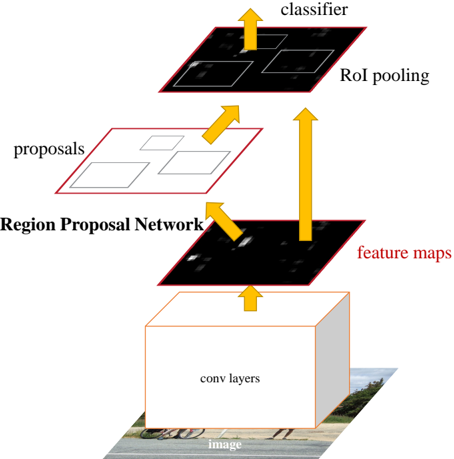
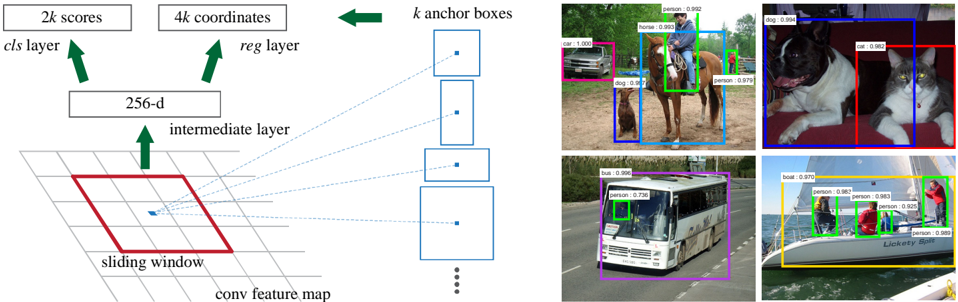
State-of-the-art object detection networks depend on region proposal algorithms to hypothesize object locations. Advances like SPPnet [1] and Fast R-CNN [2] have reduced the running time of these detection networks, exposing region proposal computation as a bottleneck. In this work, we introduce a Region Proposal Network (RPN) that shares full-image convolutional features with the detection network, thus enabling nearly cost-free region proposals. An RPN is a fully convolutional network that simultaneously predicts object bounds and objectness scores at each position. The RPN is trained end-to-end to generate high-quality region proposals, which are used by Fast R-CNN for detection. We further merge RPN and Fast R-CNN into a single network by sharing their convolutional features-using the recently popular terminology of neural networks with 'attention' mechanisms, the RPN component tells the unified network where to look. For the very deep VGG-16 model [3] , our detection system has a frame rate of 5 fps (including all steps) on a GPU, while achieving state-of-the-art object detection accuracy on PASCAL VOC 2007, 2012, and MS COCO datasets with only 300 proposals per image. In ILSVRC and COCO 2015 competitions, Faster R-CNN and RPN are the foundations of the 1st-place winning entries in several tracks. Code has been made publicly available.
Overview
CoChat Summary
TL;DR
Faster R-CNN introduces a Region Proposal Network (RPN) that shares convolutional features with Fast R-CNN, making region proposals nearly cost-free and enabling a unified object detection system. It achieves near real-time detection with state-of-the-art accuracy on PASCAL VOC and MS COCO.
Key findings
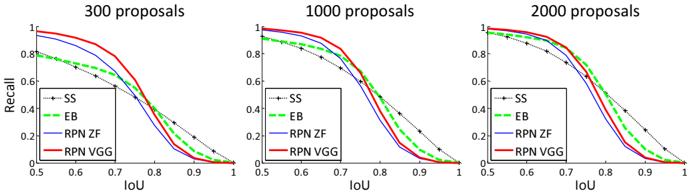
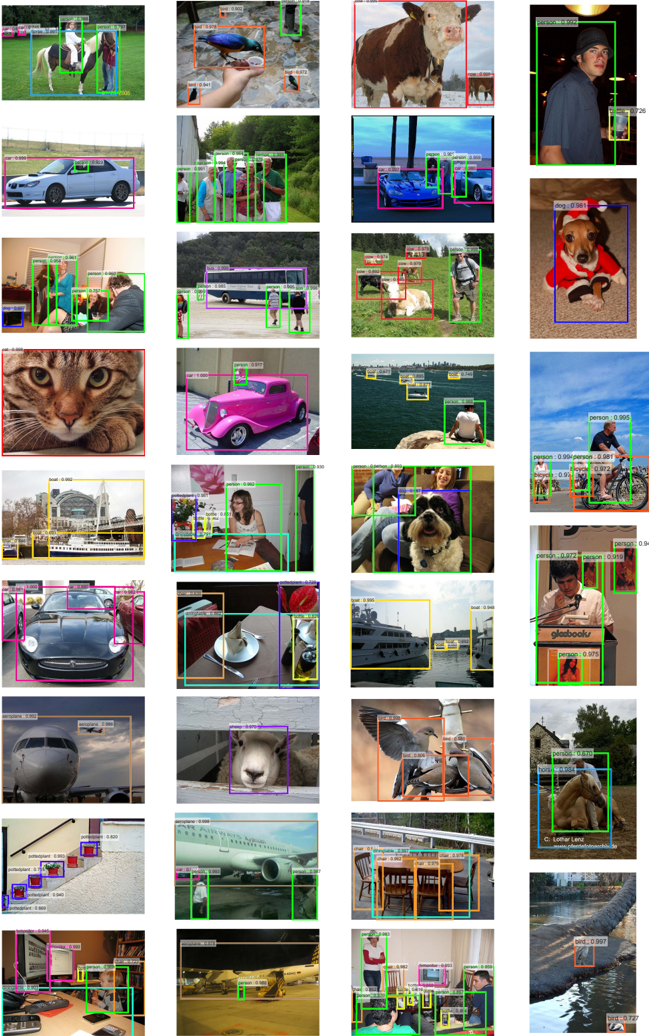
- With VGG-16 and shared features, Faster R-CNN reaches 69.9% mAP on PASCAL VOC 2007 test using 300 proposals, 73.2% with VOC07+12 training, 70.4% on VOC 2012 with 07++12, and 78.8% on VOC 2007 with COCO+07+12.
- Runtime: VGG-16 RPN + Fast R-CNN takes 198 ms total (5 fps), with RPN proposals costing 10 ms; ZF runs at 59 ms total (17 fps), versus SS + Fast R-CNN at 1830 ms (0.5 fps).
- Ablations: sharing features improves ZF mAP from 58.7% (unshared) to 59.9%; removing the reg layer drops mAP to 52.1%, and removing cls with 100 proposals drops it to 44.6%.
- On MS COCO test-dev, Faster R-CNN with VGG-16 and COCO train reaches 42.1% mAP@0.5 and 21.5% mAP@[.5,.95]; with COCO trainval it reaches 42.7% and 21.9%.
Methods
- The RPN is a fully convolutional network that slides a 3×3 window over shared conv features and predicts objectness scores and box regressions relative to anchors; default anchors use 3 scales (128², 256², 512²) and 3 aspect ratios (1:1, 1:2, 2:1), giving k = 9 anchors per position.
- Training uses a 4-step alternating scheme with ImageNet-pretrained ZF or VGG-16, SGD, single-scale images (shorter side s = 600), NMS at IoU 0.7, and 300 proposals at test time; evaluation is on PASCAL VOC 2007/2012 and MS COCO.
- Main metrics are detection mAP on PASCAL VOC and mAP@0.5 / mAP@[.5,.95] on MS COCO, with timing measured on a K40 GPU.
Limitations
- Stated in the paper: non-approximate joint training would require a differentiable RoI pooling/warping layer and is beyond the paper’s scope; the approximate joint training ignores gradients with respect to proposal box coordinates.
- Stated in the paper: cross-boundary anchors are ignored during training, and multi-scale feature extraction may improve accuracy but does not offer a good speed-accuracy trade-off.
- Evident from the text: the main experiments focus on PASCAL VOC and MS COCO with ZF/VGG-16 backbones, so generalization to other datasets, backbones, or detection regimes is not extensively characterized.
Model-written summary. Check it against the paper before relying on it.
Integrity signals
Registry
Cites
Statistics
Figures


Verification
Claims the paper makes
12 Valid · 5 Not valid · 8 Not checked · 83 Own results and interpretations
Every source the paper cites for this claim was checked and supports it.
In the paper
“Only by replacing VGG-16 with a 101layer residual net (ResNet-101) [18], the Faster R-CNN system increases the mAP from 41.5%/21.2% (VGG16) to 48.4%/27.2% (ResNet-101) on the COCO val set.”
What the sources say
- Supportedcites [18] [18] K. He, X. Zhang, S. Ren, and J. Sun, 'Deep residual learning for image recognition,' arXiv:1512.03385 , 2015. - source
Table 8 (p. 8) reports the exact COCO validation-set mAP values for baseline Faster R-CNN with VGG-16 and ResNet-101. Section 4.3 (p. 8) says the detection implementation was the same for both models and attributes the gain to replacing VGG-16 with ResNet-101. (LLM, conf=0.95)
plainstates a cause- Asserted: passes — The authors put it forward as true.
- Checkable: passes — It can be checked against evidence.
- Load-bearing: passes — The paper’s conclusions depend on it.
- Based: passes — The paper gives a reason why it holds.
- Supported
Every source the paper cites for this claim was checked and supports it.
In the paper
“This observation is still valid even when one increases the depth substantially to over 100 layers [18].”
What the sources say
- Supportedcites [18] [18] K. He, X. Zhang, S. Ren, and J. Sun, 'Deep residual learning for image recognition,' arXiv:1512.03385 , 2015. - source
In ImageNet Classification (p. 7), the paper reports that 101- and 152-layer ResNets outperform the 34-layer model, with no observed degradation. Its CIFAR-10 analysis (p. 7) also reports that a 110-layer ResNet converges well. These results support the stated extension to over 100 layers, although the isolated sentence does not specify what “this observation” refers to. (LLM, conf=0.87)
plain- Asserted: passes — The authors put it forward as true.
- Checkable: passes — It can be checked against evidence.
- Load-bearing: unclear — It is unclear whether the paper’s conclusions depend on it.
- Based: passes — The paper gives a reason why it holds.
- Supported
The cited sources support only part of this claim — read each source’s verdict below.
In the paper
“In ILSVRC and COCO 2015 competitions, Faster R-CNN and RPN are the basis of several 1st-place entries [18] in the tracks of ImageNet detection, ImageNet localization, COCO detection, and COCO segmentation.”
What the sources say
- Partly supportedcites [18] [18] K. He, X. Zhang, S. Ren, and J. Sun, 'Deep residual learning for image recognition,' arXiv:1512.03385 , 2015. - sourceExperimental — accuracy not yet measured
Section 4.3 (p. 8) lists first-place finishes in all four tracks, and the Object Detection Baselines (p. 10) describe a Faster R-CNN system using an RPN. The ImageNet Localization section (p. 12) also identifies its RPN-based method. But the copy attributes the entries collectively to deep residual nets; it does not establish that Faster R-CNN and RPN underpinned the COCO segmentation entry. (LLM, conf=0.86)
plainstates a cause- Asserted: passes — The authors put it forward as true.
- Checkable: passes — It can be checked against evidence.
- Load-bearing: unclear — It is unclear whether the paper’s conclusions depend on it.
- Based: passes — The paper gives a reason why it holds.
- Partly supported
The cited sources that could be checked couldn’t confirm or dispute this claim.
In the paper
“Yet when compared to efficient detection networks [2], Selective Search is an order of magnitude slower, at 2 seconds per image in a CPU implementation.”
What the sources say
- Could not verifycites [4] [4] J. R. Uijlings, K. E. van de Sande, T. Gevers, and A. W. Smeulders, 'Selective search for object recognition,' International Journal of Computer Vision (IJCV) , 2013. - sourceExperimental — accuracy not yet measured
The computational discussion in §5.3 (pp. 12–13) gives timings for complete object-recognition pipelines, not a two-second CPU runtime for Selective Search. The comparisons in §5.2.1 (p. 11) concern other object-location methods, not efficient detection networks. Searches for a two-second per-image runtime and a network comparison found neither claim in our copy. (LLM, conf=0.73)
- Not checked — no full text of the sourcecites [2] [2] R. Girshick, 'Fast R-CNN,' in IEEE International Conference on Computer Vision (ICCV) , 2015. - source
plainstates an association- Asserted: passes — The authors put it forward as true.
- Checkable: passes — It can be checked against evidence.
- Load-bearing: passes — The paper’s conclusions depend on it.
- Based: passes — The paper gives a reason why it holds.
- Could not verify
Every source the paper cites for this claim was checked and supports it.
In the paper
“We comprehensively evaluate our method on the PASCAL VOC detection benchmarks [11] where RPNs with Fast R-CNNs produce detection accuracy better than the strong baseline of Selective Search with Fast R-CNNs.”
What the sources say
- Supportedcites [11] [11] M. Everingham, L. Van Gool, C. K. I. Williams, J. Winn, and A. Zisserman, 'The PASCAL Visual Object Classes Challenge 2007 (VOC2007) Results,' 2007. - source
The citation is attached to “PASCAL VOC detection benchmarks,” not to the citing authors’ comparison of RPNs and Selective Search. Sections 5.2 and 6.2 describe the VOC detection task, its submitted methods, and its results, confirming the benchmark identification. (LLM, conf=0.92)
plainstates a cause- Asserted: passes — The authors put it forward as true.
- Checkable: passes — It can be checked against evidence.
- Load-bearing: passes — The paper’s conclusions depend on it.
- Based: passes — The paper gives a reason why it holds.
- Rests on an assumption not shown here.
- Supported
56 more claims
Create a free account to see all 108 claims and to verify the 2 references still open.
- Probably not a substantial claim. 11
- It may state two separate claims as one. 40
- The quote only partly states this claim. 1
Claims other papers make about this one
Each is checked against this paper’s own text: does it say what the citing paper says it does?
The source backs part of the claim, not all of it — or backs it for a different population, condition or comparison.
In the citing paper
“Unlike the original paper [19] that adopted stage-wise training regarding RPN, we use an improved implementation with end-to-end joint training similar to [37], which leads to higher baselines than [19].”
From Non-local Neural Networks (2018) · cites this paper as [37]
Experimental — accuracy not yet measuredThe source backs part of the claim, not all of it — or backs it for a different population, condition or comparison.
In the citing paper
“Faster RCNN is the first near-realtime deep learning detector (COCO mAP@.5=42.7%, VOC07 mAP=73.2%, 17fps with ZF-Net [48]).”
From Object Detection in 20 Years: A Survey (2023) · cites this paper as [19]
Experimental — accuracy not yet measuredThe source backs part of the claim, not all of it — or backs it for a different population, condition or comparison.
In the citing paper
“Faster RCNN is the first near-realtime deep learning detector (COCO mAP@.5=42.7%, VOC07 mAP=73.2%, 17fps with ZF-Net [48]).”
From Object Detection in 20 Years: A Survey (2023) · cites this paper as [47]
Experimental — accuracy not yet measuredThe source backs part of the claim, not all of it — or backs it for a different population, condition or comparison.
In the citing paper
“In the deep learning era, due to the increase of computing power, bootstrap was shortly discarded in object detection during 2014-2016 [16-20].”
From Object Detection in 20 Years: A Survey (2023) · cites this paper as [19]
Experimental — accuracy not yet measuredThe source backs part of the claim, not all of it — or backs it for a different population, condition or comparison.
In the citing paper
“The most commonly used idea to reduce the feature computational redundancy is to compute the feature map of the whole image only once [18, 19, 124], which have achieved tens or even hundreds of times of acceleration.”
From Object Detection in 20 Years: A Survey (2023) · cites this paper as [19]
Experimental — accuracy not yet measured
21 more claims about this paper
Create a free account to see every claim other papers make about this one.
Citations
Cites
Deep Residual Learning for Image Recognition
He, K., Zhang, X., Ren, S., & Sun, J. (2016) · 2016 IEEE Conference on Computer Vision and Pattern Recognition (CVPR) · doi:10.1109/cvpr.2016.90 · Cited by 235,474 · cited 7×
“to propose regions from data, and thus can easily benefit from deeper and more expressive features (such as the 101layer residual nets adopted in [18]).”
BackgroundInfluentialSelf-citationVery Deep Convolutional Networks for Large-Scale Image Recognition
Simonyan, K., & Zisserman, A. (2014) · arXiv · doi:10.48550/arxiv.1409.1556 · Cited by 114,148
ImageNet classification with deep convolutional neural networks
Krizhevsky, A., Sutskever, I., & Hinton, G. E. (2017) · Communications of the ACM · doi:10.1145/3065386 · Cited by 112,155 · cited 1×
“For the regression loss, we use L where R is the robust loss function (smooth L 1 ) defined in [5].”
MethodGoing deeper with convolutions
Szegedy, C., Liu, W., Jia, Y., Sermanet, P., Reed, S., Anguelov, D., Erhan, D., Vanhoucke, V., & Rabinovich, A. (2015) · 2015 IEEE Conference on Computer Vision and Pattern Recognition (CVPR) · doi:10.1109/cvpr.2015.7298594 · Cited by 48,562 · cited 1×
“1× 10(6) parameters (1536 × (4 + 1) × 800 for GoogleNet [34] in MultiBox [27]).”
Microsoft COCO: Common Objects in Context
Lin, T.-Y., Maire, M., Belongie, S., Hays, J., Perona, P., Ramanan, D., Dollár, P., & Zitnick, C. L. (2014) · Lecture Notes in Computer Science · doi:10.1007/978-3-319-10602-1_48 · Cited by 45,460 · cited 1×
“Region proposal methods typically rely on inexpensive features and economical inference schemes.”
MethodImageNet Large Scale Visual Recognition Challenge
Russakovsky, O., Deng, J., Su, H., Krause, J., Satheesh, S., Ma, S., Huang, Z., Karpathy, A., Khosla, A., Bernstein, M., et al. (2015) · International Journal of Computer Vision · doi:10.1007/s11263-015-0816-y · Cited by 39,380 · cited 1×
“, the shared convolutional layers) are initialized by pre-training a model for ImageNet classification [36], as is standard practice [5].”
MethodFully convolutional networks for semantic segmentation
Long, J., Shelhamer, E., & Darrell, T. (2015) · 2015 IEEE Conference on Computer Vision and Pattern Recognition (CVPR) · doi:10.1109/cvpr.2015.7298965 · Cited by 38,834 · cited 5×
“Our RPNs are thus a kind of fully-convolutional network (FCN) [14] and they can be trained end-to-end specifically for the task for generating detection proposals.”
BackgroundMethodInfluentialRich Feature Hierarchies for Accurate Object Detection and Semantic Segmentation
Girshick, R., Donahue, J., Darrell, T., & Malik, J. (2014) · 2014 IEEE Conference on Computer Vision and Pattern Recognition · doi:10.1109/cvpr.2014.81 · Cited by 32,684 · cited 7×
“, Selective Search [4] object detectors, RCNN [5], and Fast R-CNN [2]).”
BackgroundMethodInfluentialSelf-citationGirshick, R. (2015) · 2015 IEEE International Conference on Computer Vision (ICCV) · doi:10.1109/iccv.2015.169 · Cited by 28,105
Self-citationThe pascal visual object classes (VOC) challenge
Everingham, M., Van Gool, L., Williams, C. K. I., Winn, J., & Zisserman, A. (2010) · International Journal of Computer Vision · doi:10.1007/s11263-009-0275-4 · Cited by 19,599
Research works printed but not linked: 1
- [10] S. Ren, K. He, R. Girshick, and J. Sun, 'Faster R-CNN: Towards real-time object detection with region proposal networks,' in Neural Information Processing Systems (NIPS) , 2015. -
Cited by
Items 52,201–52,300 of 56,408
Aminuddin, J., Pratiwi, U., Wijayanto, M. P., Vita, T. A., Shokib, M., Azmi, U., Saputra, D. R., Nurhayati, N., Pratikno, B., Anggraini, E. I., et al. (2025) · Springer proceedings in earth and environmental sciences · doi:10.1007/978-981-95-3075-5_58
A Task-Specific Feature Fusion Strategy For Small Object Detection
Shang, Z., Zhang, Z., & Zhao, M. (2025) · Lecture notes in computer science · doi:10.1007/978-981-95-3001-4_8
叶, 阳. (2025) · Artificial Intelligence and Robotics Research · doi:10.12677/airr.2025.146134
Real-Time Object Finding for the Visually Impaired Using an Image-to-Speech Wearable Device
Velázquez, R., Pissaloux, E. E., Del-Valle-Soto, C., Garzón‐Castro, C. L., Fazio, R. D., & Visconti, P. (2025) · Mechanisms and machine science · doi:10.1007/978-3-032-10862-3_20
Menyhárt, T., & Lakatos, R. (2025) · Future Transportation · doi:10.3390/futuretransp5040175
“Faster R-CNN (Region-based Convolutional Neural Network [1], YOLO (You Only Look Once) [2], and Vision Transformer [3] are just a few examples of these complex architectures.”
Segmentation-Guided Association Refinement in Multiple Object TrackingPreprint
Bendaña, M., Brea, V. M., & Mucientes, M. (2025) · SSRN Electronic Journal · doi:10.2139/ssrn.5758805
MVMamba: A Multiscale Vision Mamba Based on State-Space Duality for Remote Sensing Object Detection
Feng, Y., Jing, S., Zhao, Y., et al. (2025) · IEEE Geoscience and Remote Sensing Letters · doi:10.1109/lgrs.2025.3633625
Chen, C., Xing, K., Qiao, Y., & Sun, W. (2025) · Smart innovation, systems and technologies · doi:10.1007/978-981-96-4434-6_27
Ship Detection in SAR Images Using DETR with Feature Pyramid Network
Wang, C., Gong, J., & Guo, B. (2025) · Smart innovation, systems and technologies · doi:10.1007/978-981-96-4434-6_31
Deep Learning Application for Egg Quality Detection in Ephestia Kuehniella
He, D.-W., & She, C. (2025) · Smart innovation, systems and technologies · doi:10.1007/978-981-96-4434-6_3
Scale Margin Loss for Object Detection
Cheng, Y., Zhang, Y., Zhang, L. Y., Chen, D., & Fang, Y. (2025) · Lecture notes in computer science · doi:10.1007/978-981-95-3052-6_26
Enhancing POI Recognition with Micro-Level Tagging and Deep Learning
Messios, P., Dionysiou, I., & Gjermundrød, H. (2025) · Big Data and Cognitive Computing · doi:10.3390/bdcc9110293
Mayya, A., Alkayem, N. F., Saii, M., et al. (2025) · SSRN Electronic Journal · doi:10.2139/ssrn.5758902
Wu, W., Li, W., & Zhang, X. (2025) · Research Square · doi:10.21203/rs.3.rs-7001811/v1
Hassan, I. M. E., Al-Mallahi, A. A., & Shirzadifar, A. (2025) · Smart Agricultural Technology · doi:10.1016/j.atech.2025.101637 · Cited by 1
Xiong, T., Gu, J., Yang, Q., et al. (2025) · SSRN Electronic Journal · doi:10.2139/ssrn.5763951
ROOT: Region-Word Alignment With Partial Optimal Transport for Open-Vocabulary Object Detection
Deng, J., Lei, Y., Li, W., & Duan, L. (2025) · IEEE Transactions on Image Processing · doi:10.1109/tip.2025.3627395
“Two-stage models, such as Faster R-CNN [1] and Cascade R-CNN [3], typically employ a Region Proposal Network (RPN) to first generate regions of interest (RoIs), which are then refined in the second stage.”
Long-Short Match for Lost Control in UAV Multi-Object Tracking
Zou, Z., Ye, M., Ji, L., Zhou, L., Tang, S., Gan, Y., & Li, S. (2025) · IEEE Transactions on Multimedia · doi:10.1109/tmm.2025.3632642 · Cited by 1
Xu, Y., Zhang, Y., & Ji, H. (2025) · SSRN Electronic Journal · doi:10.2139/ssrn.5768104
EAS-Det: Edge-Aware Semantic Feature Fusion for Robust 3D Object Detection in LiDAR Point Clouds
Wang, H., Ma, J., Zhao, Y., Zhang, J., & Chen, F. (2025) · Remote Sensing · doi:10.3390/rs17223743
Deep Learning Models for Corn Kernel Counting and Yield EstimationPreprint
Ghimire, B., Lacerda, L. N., Bourlai, T., et al. (2025) · SSRN Electronic Journal · doi:10.2139/ssrn.5768641
AlertEye: Real-Time Surveillance and Threat Identification
Lenka, G. G., Mishra, P., Rautaray, J., & Kandpal, M. (2025) · Artificial Intelligence and Smart Technologies for Sustainability Conference (AISTS) · doi:10.1109/aists66100.2025.11232815
“Ren et al. [11] introduce Faster R-CNN, a real-time object detection system that integrates region proposal networks, significantly contributing to surveillance systems' efficacy.”
SmartDrive: A Low-Cost, Edge AI-Powered Advanced Driver Assistance System for Emerging Markets
Lomte, N., Palshikar, K., Wakankar, S., Kholkute, S., & Motade, S. N. (2025) · World Conference on Communication & Computing (WCONF) · doi:10.1109/wconf64849.2025.11233283
“Models like Single Shot MultiBox Detector (SSD) [10] and Faster R-CNN [11] established new object detection standards however they were computationally intensive, thereby limiting their real-time application on edge devices.”
Real-Time Critical Threat Detection Using DroneEmbedded YOLOv8 Object Detection System
Habibi, A., & Hajaiej, Z. (2025) · IEEE International Conference on Advanced Systems and Emergent Technologies (IC_ASET) · doi:10.1109/ic_aset65966.2025.11232338
Aerial-Ground Collaboration for Fast and Accurate Hazard Detection in SAR Missions
Habibi, A., & Hajaiej, Z. (2025) · IEEE International Conference on Advanced Systems and Emergent Technologies (IC_ASET) · doi:10.1109/ic_aset65966.2025.11232443
Karanam, V. K., Kommuri, V. S. A., Lekkala, H. V. R., & Dhanraj, J. A. (2025) · Lecture notes in networks and systems · doi:10.1007/978-3-032-06253-6_26 · Cited by 1
MSL-Net: a lightweight apple leaf disease detection model based on multi-scale feature fusion
Yang, K., & Yan, C. (2025) · Optoelectronics Letters · doi:10.1007/s11801-025-4146-1
“Deep learning-based detection algorithms include two-stage methods like faster region-based convolutional neural network (R-CNN) [5] , and one-stage methods like the you only look once (YOLO) series [6–8] and single shot MultiBox detector (SSD) [9] .”
Neural computing-based multi-view vision system for precise bolt looseness detection
Ali, M. S., Xu, H., Ishtiaq, M., et al. (2025) · Australian Journal of Structural Engineering · doi:10.1080/13287982.2025.2588821
Adaptive Multiscale Attention Fusion Network for Enhanced Remote Sensing Object Detection
Gao, T., Wu, F., Xu, L., et al. (2024) · China International SAR Symposium (CISS) · doi:10.1109/ciss63346.2024.11241197
Remote Sensing Image Detection Algorithm Based on Contextual Semantic Information Awareness Networks
Chen, T., Yang, J., Xu, L., et al. (2024) · China International SAR Symposium (CISS) · doi:10.1109/ciss63346.2024.11241184
An Adaptive Dynamic Multiscale Attention Network for Remote Sensing Object Detection
Gao, T., Zhang, H., Xu, L., Wang, X., Wu, F., & Zheng, F. (2024) · China International SAR Symposium (CISS) · doi:10.1109/ciss63346.2024.11241106
Optimization Techniques in YOLOv8 for Acne Detection
Ilahi, A. F., & Gunawan, P. H. (2025) · International Conference on Information Technology, Computer, and Electrical Engineering · doi:10.1109/icitacee66165.2025.11233019
“It is computed as the mean of average precision (AP) values for each class [16], [17]: where AP i is the average precision for class i , and N is the total number of classes.”
Huo, D., Fu, X., Zhao, H., & Wang, H. (2025) · Journal of Food Measurement & Characterization · doi:10.1007/s11694-025-03854-x · Cited by 1
“Five models including YOLOv5n, YOLOv8n, Faster-RCNN [26 ], YOLOv5-lite(a lightweight version of YOLOv5) [ 27], and proposed YOLO-Faster are compared in this experi - ment.”
Research on Perception Models for Complex Scenarios in E-Commerce Unmanned Delivery
刘, 予. (2025) · E-Commerce Letters · doi:10.12677/ecl.2025.14113592
Designing and Implementing a Fake Document Detection System Using Artificial Intelligence
Maray, A. H., Abed, M. N., Sheet, N. S. M., & Hussein, R. A. (2025) · Journal of Engineering · doi:10.1155/je/3902628
Yang, Z., Bao, W., Mao, Q., Yang, X., & Huang, L. (2025) · Applied Soft Computing · doi:10.1016/j.asoc.2025.114258
WHD-DETR: An Efficient Wavelet-Enhanced Transformer for Real-Time Fabric Defect Detection
Wu, X., Ruan, X., Jiang, Y., et al. (2025) · International Symposium on Artificial Intelligence and Intelligent Manufacturing (AIIM) · doi:10.1109/aiim67611.2025.11233080
“While two-stage detectors like Faster R-CNN [2] offer high accuracy, their computational complexity impedes real-time application.”
RFC-YOLO: A Model for Rapeseed Flower Cluster Detection and Counting Based on UAV Images
Tian, Y., Liu, X., Li, C., & Sun, X. (2025) · International Symposium on Artificial Intelligence and Intelligent Manufacturing (AIIM) · doi:10.1109/aiim67611.2025.11233174
“We compared RFC-YOLO with several representative object detection networks, including Faster R-CNN [16], SSD [17], YOLO [18] series, and RT-DETR.”
Li, C., & Xue, Y. (2025) · International Symposium on Artificial Intelligence and Intelligent Manufacturing (AIIM) · doi:10.1109/aiim67611.2025.11233086
“With advancements in deep learning for object detection, R-CNN [1-2] and YOLO series algorithms [3-6] have gained prominence.”
LCB-Net: Long-Range Context and Box Distribution Network for Small Object Detection
Qiao, Y., Liang, Y., & Liu, M. (2025) · Electronics · doi:10.3390/electronics14224487
“Faster R-CNN [21] revolutionized this with the Region Proposal Network (RPN), enabling end-to-end candidate generation.”
Chen, J., Wei, J., Wu, G., Yang, J., Shang, J., Guo, H., Zhang, D., & Zhu, S. (2025) · Applied Computing and Geosciences · doi:10.1016/j.acags.2025.100305 · Cited by 2
Lai, S.-L., Chou, Y.-C., Chen, C.-S., Tung, T.-C., Lin, B., & Chang, R. (2025) · Medical & Biological Engineering & Computing · doi:10.1007/s11517-025-03471-2
“Faster R-CNN replaces the original selective search with Region Proposal Networks (RPN) and uses one trainable CNN model to save computation time and improve detection speed and accuracy [24], as shown in Fig.”
Sánchez-Hernández, J. P., Hernández, A. J. G., Frausto–Solís, J., Rabadán, D. L. H., Barbosa, J. J. G., & Valdez, G. C. (2025) · Mathematics · doi:10.3390/math13223729
Graph Neural Networks in Complex Image Recognition: From Theory to Real-World Applications
Duc, M. L., & Sang, N. Q. (2025) · IGI Global eBooks · doi:10.4018/979-8-3373-2277-3.ch006
AI in Quality Management in Manufacturing Industry
Huang, T., & Bai, E. (2023) · Digital Transformation · doi:10.1108/979-8-88730-206-520251019
Nekrasova, D. V., Ilyasova, N. Y., Zarov, E. V., et al. (2025) · Systems and Technologies of the Digital HealthCare (STDH) · doi:10.1109/stdh66836.2025.11227463
Shafiq, H., Bajpai, S., & Lee, B. (2025) · Knowledge-Based Systems · doi:10.1016/j.knosys.2025.114949 · Cited by 2
An efficient traffic sign detection algorithm E-YOLOv8
Liu, B., Zhang, J., & Wang, T. (2025) · Engineering Research Express · doi:10.1088/2631-8695/ae2234
DTSI: Towards faster convergence of query-based detectors for rotated dense aerial images
Xu, Y., Dai, M., Li, X., Yao, Y., & Yang, W. (2025) · Pattern Recognition · doi:10.1016/j.patcog.2025.112729 · Cited by 1
Multimodal large model driven pseudo labeling for unbiased scene graph generation
Songju, L., Sun, B., Li, S., et al. (2025) · Neurocomputing · doi:10.1016/j.neucom.2025.132170
Deep Learning-Based Visual Approaches for Underwater Garbage Detection
Perhat, D., & Ferreira, F. (2025) · IEEE International Workshop on Metrology for the Sea; Learning to Measure Sea Health Parameters (MetroSea) · doi:10.1109/metrosea66681.2025.11245790
“Indeed, several versions of YOLO have been used in this outperforming other models like Tiny-YOLO [10], SSD [11], and Faster R-CNN [12] as it shall be described in Section III.”
Integrating Convolutional and Recurrent Neural Networks for Enhanced Medical Image Captioning
Kanavos, A., Vonitsanos, G., & Mylonas, P. (2025) · Advances in experimental medicine and biology · doi:10.1007/978-3-032-03398-7_46
Droplet Detection and Tracking in Complex Motions Based on YOLOv5s Network
Zhang, Y., Su, Z., Wang, Y., Tan, B., & Zhao, C. (2025) · IET Image Processing · doi:10.1049/ipr2.70245 · Cited by 1
Shubhasree, A. V., Sankaran, P., & Raghu, C. V. (2025) · International Journal of Applied Earth Observation and Geoinformation · doi:10.1016/j.jag.2025.104985 · Cited by 3
Enhanced Object Detection for Autonomous Vehicles
Ferariu, L. E., & Lăpușneanu, A. M. (2025) · Women in engineering and science · doi:10.1007/978-3-031-95890-8_8
Gao, G., Shang, Y., Wei, M., Guo, Z., & Dong, Y. X. (2025) · IEEE Geoscience and Remote Sensing Letters · doi:10.1109/lgrs.2025.3636153
Xiuxiao, Y., Xunping, W., Jingping, Y., & Hongjun, S. (2025) · Biomedical Signal Processing and Control · doi:10.1016/j.bspc.2025.109193
Wang, C., Jia, Y., Wen, J., Sun, P., & Zhao, L. (2025) · Neurocomputing · doi:10.1016/j.neucom.2025.132186
Zhang, J., Liu, L., Yang, H., et al. (2025) · SSRN Electronic Journal · doi:10.2139/ssrn.5800423
Mahmood, B., Han, S., & Kim, S. (2025) · KSCE Journal of Civil Engineering · doi:10.1016/j.kscej.2025.100484
Bridge Crack Recognition Based on YOLOv8 Instance Segmentation
杨, 明. (2025) · Artificial Intelligence and Robotics Research · doi:10.12677/airr.2025.146144
Algorithm for the growth stage detection of Panax notoginseng based on PN-GSD-YOLOv8 model
Gu, W., Yang, H., Liu, H., & Ruan, X. (2025) · Engineering Research Express · doi:10.1088/2631-8695/ae2388
RDT-YOLO: An Improved Lightweight Model for Fish Maw Authenticity Detection
Xie, C., Liu, M., Zhang, W., Zhang, Y., Hassan, S. G., Guo, W., Liu, T., Liu, S., & Gao, X. (2025) · Electronics · doi:10.3390/electronics14234588
Chen, L., Hang, Z., Li, D., et al. (2025) · Buildings · doi:10.3390/buildings15234222
Duporge, I., & Isupova, O. (2025) · Women in engineering and science · doi:10.1007/978-3-031-95890-8_5 · Cited by 1
Jiang, Q. (2025) · Academic Journal of Emerging Technologies · doi:10.63313/ajet.9023
Hybrid Dual-Batch and Cyclic Progressive Learning for Efficient Distributed TrainingPreprint
Lu, K.-W., Hong, D., Liu, P., & Wu, J. (2025) · SSRN Electronic Journal · doi:10.2139/ssrn.5805848
Zhao, J., Lin, X., Zeng, A., & Pan, D. (2025) · Biomedical Physics & Engineering Express · doi:10.1088/2057-1976/ae23d2
Xia, J., Chen, H., Zhou, H., & Zhong, F. (2025) · Applied Sciences · doi:10.3390/app152312476
“With the emergence of deep learning, convolutional neural network (CNN)-based detectors such as Faster R-CNN [22], SSD [23], and YOLO [24] series have become dominant.”
CLIP-AMR-GPT: Enhancing Image Captioning via Cross-Modal Semantics Fusion and GPT-Based Re-ranking
Thịnh, N. V., Lang, T. V., & Hải, N. M. (2025) · Lecture notes in computer science · doi:10.1007/978-981-95-4960-3_17
Venkateswaran, N., Purab Singh, M., Harini, R., et al. (2025) · International Conference on New Frontiers in Communication, Automation, Management and Security (ICCAMS) · doi:10.1109/iccams65118.2025.11234653
Storage-Efficient CCTV Surveillance: YOLO-Based Object Detection for Video Compression
Vijay, M., Santosh, C., Sundareswaran, N., Vinoth Raj, R., & Manikandan, S. P. (2025) · International Conference on New Frontiers in Communication, Automation, Management and Security (ICCAMS) · doi:10.1109/iccams65118.2025.11234500
TrashTracer: Enabling Efficient Real-Time Detection of Underwater Marine Debris
Yin, Y., Liu, X., Cheng, X., Zuo, H., Chen, L., Zhu, T., & Huo, H. (2025) · Lecture notes in computer science · doi:10.1007/978-981-95-4972-6_20
KR-SWP: Knowledge Reuse for Stripe-Wise Pruning
Huo, Z., Xu, J., Wu, J., Wang, C., Huang, W., & Qian, J. (2025) · IEEE Transactions on Artificial Intelligence · doi:10.1109/tai.2025.3636850
“We applied our pruned backbone networks to two representative vision tasks: object detection with Faster R-CNN [49] and semantic segmentation with DeepLab V3 [50].”
Lin, H., Gao, W. G., Ma, J., Deng, Y., Luo, Z., Wang, B., Yang, R., & Chua, T. (2025) · IEEE Transactions on Knowledge and Data Engineering · doi:10.1109/tkde.2025.3637552 · Cited by 5
F-YOLO: Delving Into Fuzzy YOLO for Improved Traffic Object Detection
Jia, N., Yang, J., Liu, X., & Sun, Y. (2025) · IEEE Transactions on Fuzzy Systems · doi:10.1109/tfuzz.2025.3637593 · Cited by 2
Deep Learning for Clinical Ultrasound Imaging: From Supervised Approaches to Foundation Models
He, K., Wei, D.-L., & Ranger, B. J. (2025) · IEEE journal of biomedical and health informatics · doi:10.1109/jbhi.2025.3636830
Self-citationAn SFN-YOLO-based detection method for the fermentation stage in the anaerobic digestion process
Liu, P., Cao, S., Wang, G., et al. (2025) · iScience · doi:10.1016/j.isci.2025.114243
Flexible Context and Adaptive Attention for Visual Grounding
Chen, Y., Liu, S., Zhao, Y., & Xiong, S. (2025) · IEEE International Geoscience and Remote Sensing Symposium (IGARSS) · doi:10.1109/igarss55030.2025.11243943
“Two-stage methods [10–15] employ object detectors [16, 17] to generate and select region proposals that align with text.”
Han, R., Ye, Z., Shu, L., & Cielniak, G. (2025) · Agriculture · doi:10.3390/agriculture15232441
Li, Y., Liao, Z., Wang, J., zhang, Y., Hou, J., Wu, L., & Chen, R. (2025) · IEEE International Geoscience and Remote Sensing Symposium (IGARSS) · doi:10.1109/igarss55030.2025.11242445
“…detection of individual tree crowns not only enhances the precision of tree-level data extraction but also holds significant implications for biodiversity assessment [2], carbon stock estimation [3], forest management [4], ecosystem service modeling [5], and the evaluation of forest health [6].”
Lang, P., Fu, X., Yang, H., et al. (2025) · IEEE International Geoscience and Remote Sensing Symposium (IGARSS) · doi:10.1109/igarss55030.2025.11243392
“The two-stage methods usually contain two parts: generation of candidate regions and classifying (i.e., classification task), location of candidate regions (i.e., regression task), such as region convolution neural networks (RCNN) [2], faster RCNN [8], feature pyramid network (FPN) [9].”
Sahoo, P. K., Panigrahi, U., Panda, M. K., & Panda, G. (2025) · ELCVIA Electronic Letters on Computer Vision and Image Analysis · doi:10.5565/rev/elcvia.2023
Local Contrastive Aggregation for SAR Fine-Grained Few-Shot Object Detection
Wang, J., Lin, Z., & Bai, X. (2025) · IEEE International Geoscience and Remote Sensing Symposium (IGARSS) · doi:10.1109/igarss55030.2025.11244073
“It uses the region proposals output by the RPN [5] and the ground truth labels to perform RoI Align [17] on the query feature map and the support feature map respectively, obtaining fixed-size query RoI feature maps and support RoI feature maps.”
Mult-Wavelength Fusion Recognition for the Low-Resolution Radiation Images of Aircraft Plumes
Zhang, D., Li, J., & Wei, P. (2025) · IEEE International Geoscience and Remote Sensing Symposium (IGARSS) · doi:10.1109/igarss55030.2025.11243694
“[7][8] When the exhaust plume images are fed into the network, the process begins with shared convolutional layers that extract feature maps.”
Few-Shot Object Detection via Feature Fusion Enhancement for Remote Sensing Images
Leng, W., Zhang, G., & Zhang, R. (2025) · IEEE International Geoscience and Remote Sensing Symposium (IGARSS) · doi:10.1109/igarss55030.2025.11243433
“Our baseline is FSCE [10] (without contrastive loss), which utilizes Faster R-CNN [11] with ResNet-101 and FPN. Based on this, we introduce the FFE module before the classifier during fine-tuning, enhancing multi-scale feature extraction.”
Group Convolution Attention based Multi-Scale Object Detection of Remote Sensing Images
Zhang, H., Xu, T., Yang, X., Zhang, Y., & Xiao, C. (2025) · IEEE International Geoscience and Remote Sensing Symposium (IGARSS) · doi:10.1109/igarss55030.2025.11242500
“These detection algorithms are primarily classified into two major categories: one-stage detection models and two-stage detection Two-stage detection models include Sparse R-CNN [6], Faster R-CNN [7], Cascade R-CNN [8], and others.”
InfluentialYang, R., Yang, R., Shen, W., Yi, J., Liu, Y., & Zhong, Y. (2025) · IEEE International Geoscience and Remote Sensing Symposium (IGARSS) · doi:10.1109/igarss55030.2025.11243755
“Detection-based methods, on the other hand, fall into the category of object detection tasks [7], [13], [14], [15].”
Multi-Feature Fusion Network for Polarimetric SAR Aircraft Target Detection
Han, P., Zhou, J., Bai, J., et al. (2025) · IEEE International Geoscience and Remote Sensing Symposium (IGARSS) · doi:10.1109/igarss55030.2025.11243276
“In recent years, deep learning has achieved great success in the field of aircraft target detection due to its strong generalization ability [2-5].”
Liao, J., Sha, T., Wang, Q., Zhong, Z., & Lin, H. (2025) · IEEE International Geoscience and Remote Sensing Symposium (IGARSS) · doi:10.1109/igarss55030.2025.11243162
L-Centernet: A Localization-Based Approach for Aerial Tiny Object Detection
Shang, Y., Gao, G., & Dong, Y. (2025) · IEEE International Geoscience and Remote Sensing Symposium (IGARSS) · doi:10.1109/igarss55030.2025.11243009 · Cited by 1
“Inspired by RPN [4], ClusDet [5] presents a clustered detection network, which leverages a cluster proposal sub-network (CPNet) to generate clustered regions and a scale estimation sub-network (ScaleNet) to adjust the scales of clustered regions.”
Few-Shot Object Detection In Remote Sensing Images Via Hierarchical Semantic-Visual Fusion
Qin, J., Xu, Y., Wu, Z., et al. (2025) · IEEE International Geoscience and Remote Sensing Symposium (IGARSS) · doi:10.1109/igarss55030.2025.11243849
“In recent years, deep learning (DL)-driven object detection algorithms, such as Faster R-CNN [1], YOLO [2], and RetinaNet [3], have significantly improved detection accuracy and robustness by automatically extracting high-level visual features.”
SEFusionNet: Multimodal Object Detection with Attention Fusion
Huang, J., Luo, R., Zheng, J., & Wu, Z. (2025) · IEEE International Geoscience and Remote Sensing Symposium (IGARSS) · doi:10.1109/igarss55030.2025.11242909
“Over the past decades, a variety of advanced object detection frameworks based on deep neural networks (DNNs) have been developed in the computer vision domain [1][2][3].”
Vessel-DINO: Multimodal Foundation Models for Maritime Vessel Detection
Li, C., Hong, D., Zhang, B., & Chanussot, J. (2025) · IEEE International Geoscience and Remote Sensing Symposium (IGARSS) · doi:10.1109/igarss55030.2025.11242657
Liu, S., Li, D., Song, H., et al. (2025) · IEEE International Geoscience and Remote Sensing Symposium (IGARSS) · doi:10.1109/igarss55030.2025.11243504
“DL-based detection models are classified into anchor-based (e.g., R-CNN [4], YOLO [5]) and anchor-free (e.g., CenterNet [6]) types.”
Prince, H., & Binesh, T. (2025) · doi:10.23919/oceans59106.2025.11244979
“A single-stage detector based on SSD was proposed by Liu et.al[9] and two-stage detectors like RCNN, faster RCNN were proposed by Girshick et.al[10] and Ren et.al [11].”
Xu, Y., Zhang, S., & Jiang, L. (2025) · IEEE International Geoscience and Remote Sensing Symposium (IGARSS) · doi:10.1109/igarss55030.2025.11243188
“For example, the Regional Proposal Network (RPN) proposed in Faster R-CNN [5] learns the optimal proposal box from the predefined candidate bounding boxes with fixed scale and aspect ratio by introducing an anchor mechanism, so that the proposal bounding boxes of the object region can be…”
A Novel Framework for Decoding Inter-Species Communication with Octopodes (DISC-O)
Patel, K. M., Sharma, A., Kumar, H., Kurundodi, P., Burgsteiner, H., & Slany, W. (2025) · doi:10.23919/oceans59106.2025.11244956
PS-TOD: Point-Supervised Tiny Object Detection via Two-Stage Calibration
Wang, Z., Lei, S., Liu, N., et al. (2025) · IEEE International Geoscience and Remote Sensing Symposium (IGARSS) · doi:10.1109/igarss55030.2025.11243559
RC-YOLO: A Modified YOLO Network for Small Oriented Target Detection in RS Images
Zhou, H., Yang, W., Yang, X., & Ren, J. (2025) · IEEE International Geoscience and Remote Sensing Symposium (IGARSS) · doi:10.1109/igarss55030.2025.11243919
“Notable examples of two-stage methods include Faster R-CNN[4] and Cascade R-CNN[5], which offer high detection accuracy but slower speeds.”
Metadata
- Authors
- Ren, S., He, K., Girshick, R., & Sun, J.
- Affiliations
- University of Science and Technology of China (CN)
- Visual Computing Group, Microsoft Research, Beijing, China
- Meta (United States) (US)
- ORCID
- Venue
- IEEE Transactions on Pattern Analysis and Machine Intelligence
- Published
- 2017-06-01
- Volume
- 39
- Issue
- 6
- Pages
- 1137-1149
- ISSN
- 0162-8828 (ISSN-L)
- 2160-9292
- 1939-3539
- OpenAlex
- W639708223
- Cited by
- 73,472
- References
- 60
- Citations by year
- 2026: 5632 · 2025: 9233 · 2024: 9699 · 2023: 9795 · 2022: 9251 · 2021: 9857 · 2020: 7617 · 2019: 6376 · 2018: 3729 · 2017: 1740
- FWCI
- 2215.09
- Type
- journal article
- Language
- en
- Open access
- green
- arxiv.org
- Licence
- Locations
- IEEE Transactions on Pattern Analysis and Machine Intelligence (publishedVersion)
- PubMed (publishedVersion)
- arXiv (Cornell University) (submittedVersion)
- arXiv (Cornell University)
- neural information processing systems
- Funders
- Microsoft Research
- Topics
- Physical Sciences › Computer Science › Computer Vision and Pattern Recognition › Advanced Neural Network Applications
- Physical Sciences › Computer Science › Computer Vision and Pattern Recognition › Visual Attention and Saliency Detection
- Physical Sciences › Computer Science › Computer Vision and Pattern Recognition › Advanced Image and Video Retrieval Techniques
- Keywords
- Faster R-CNN, region proposal network, real-time object detection, Fast R-CNN, bounding box regression, VGG16, attention mechanism, end-to-end learning, Pascal VOC, MS COCO
About these checks
Registry, retraction, Cites and statistics results are computed, not judged, with one exception: a printed reference that no index lists is read once by a model before it counts as a citation error. Claims are extracted by a model and kept only when their quote appears verbatim in the text; each cited source is then checked, with a model’s help, for whether it says what the claim relies on. Those verdicts can be wrong — read the claim’s quote and the cited source before relying on one.
The claim verdicts this report counts are experimental: their accuracy is not yet measured.
A language model drew the claims from the paper on 2026-10-10, under version 3 of the claim definition (model deepseek-v4.1-flash, prompt extract-v3).
A second model labelled each claim on 2026-10-10 (model jev-1.13-20260917, definition revision gold-guideline-v0.2).
Cited sources are checked with a language model’s help (gpt-6-sol).
Statistics and arithmetic are recomputed, not judged.
Confidence bands are shown only for fields calibrated on our annotated test set. None is calibrated yet, so no band is shown.
What counts as a claim ›How we measure confidence ›How we check this ›
Are you an author, or do you see a problem with this page? Request a review
Data sources
Bibliographic data: Semantic Scholar, OpenAlex, Crossref.
Contains information from the Semantic Scholar Academic Graph Datasets, made available under the ODC Attribution License (ODC-BY 1.0).
Semantic Scholar’s data is described in: Kinney, R., et al. (2023). The Semantic Scholar Open Data Platform. arXiv:2301.10140.
