

Faster R-CNN: Towards Real-Time Object Detection with Region Proposal Networks
Open accessThe DOI matches its Crossref record; 56 of the 60 references it cites were found in a registry or an index; 15 of the 27 sources its claims cite were checked for support.
Abstract
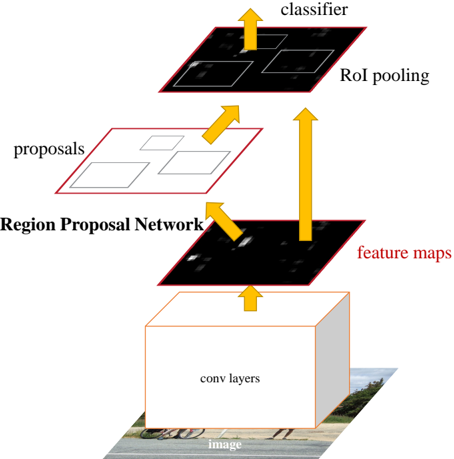
State-of-the-art object detection networks depend on region proposal algorithms to hypothesize object locations. Advances like SPPnet [1] and Fast R-CNN [2] have reduced the running time of these detection networks, exposing region proposal computation as a bottleneck. In this work, we introduce a Region Proposal Network (RPN) that shares full-image convolutional features with the detection network, thus enabling nearly cost-free region proposals. An RPN is a fully convolutional network that simultaneously predicts object bounds and objectness scores at each position. The RPN is trained end-to-end to generate high-quality region proposals, which are used by Fast R-CNN for detection. We further merge RPN and Fast R-CNN into a single network by sharing their convolutional features-using the recently popular terminology of neural networks with 'attention' mechanisms, the RPN component tells the unified network where to look. For the very deep VGG-16 model [3] , our detection system has a frame rate of 5 fps (including all steps) on a GPU, while achieving state-of-the-art object detection accuracy on PASCAL VOC 2007, 2012, and MS COCO datasets with only 300 proposals per image. In ILSVRC and COCO 2015 competitions, Faster R-CNN and RPN are the foundations of the 1st-place winning entries in several tracks. Code has been made publicly available.
Overview
CoChat Summary
TL;DR
Faster R-CNN introduces a Region Proposal Network (RPN) that shares convolutional features with Fast R-CNN, making region proposals nearly cost-free and enabling a unified object detection system. It achieves near real-time detection with state-of-the-art accuracy on PASCAL VOC and MS COCO.
Key findings
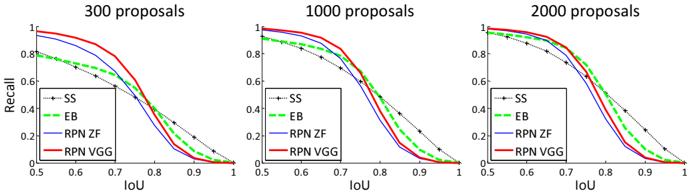
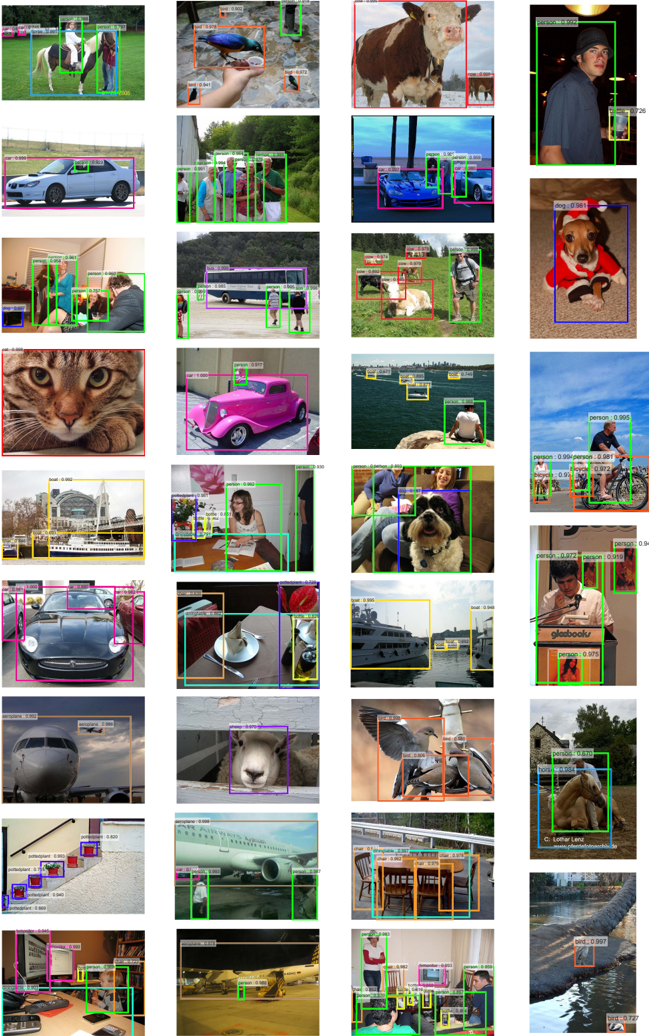
- With VGG-16 and shared features, Faster R-CNN reaches 69.9% mAP on PASCAL VOC 2007 test using 300 proposals, 73.2% with VOC07+12 training, 70.4% on VOC 2012 with 07++12, and 78.8% on VOC 2007 with COCO+07+12.
- Runtime: VGG-16 RPN + Fast R-CNN takes 198 ms total (5 fps), with RPN proposals costing 10 ms; ZF runs at 59 ms total (17 fps), versus SS + Fast R-CNN at 1830 ms (0.5 fps).
- Ablations: sharing features improves ZF mAP from 58.7% (unshared) to 59.9%; removing the reg layer drops mAP to 52.1%, and removing cls with 100 proposals drops it to 44.6%.
- On MS COCO test-dev, Faster R-CNN with VGG-16 and COCO train reaches 42.1% mAP@0.5 and 21.5% mAP@[.5,.95]; with COCO trainval it reaches 42.7% and 21.9%.
Methods
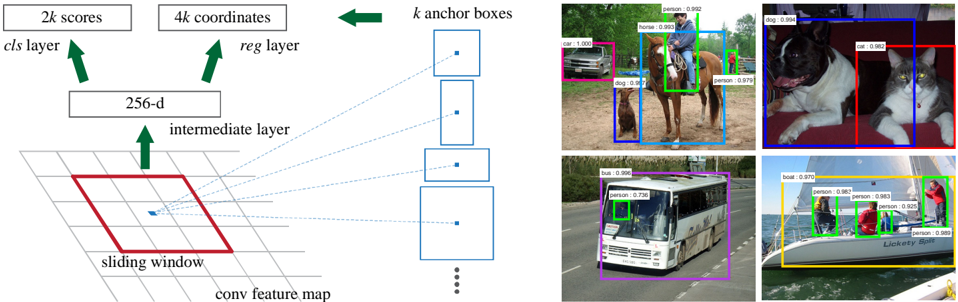
- The RPN is a fully convolutional network that slides a 3×3 window over shared conv features and predicts objectness scores and box regressions relative to anchors; default anchors use 3 scales (128², 256², 512²) and 3 aspect ratios (1:1, 1:2, 2:1), giving k = 9 anchors per position.
- Training uses a 4-step alternating scheme with ImageNet-pretrained ZF or VGG-16, SGD, single-scale images (shorter side s = 600), NMS at IoU 0.7, and 300 proposals at test time; evaluation is on PASCAL VOC 2007/2012 and MS COCO.
- Main metrics are detection mAP on PASCAL VOC and mAP@0.5 / mAP@[.5,.95] on MS COCO, with timing measured on a K40 GPU.
Limitations
- Stated in the paper: non-approximate joint training would require a differentiable RoI pooling/warping layer and is beyond the paper’s scope; the approximate joint training ignores gradients with respect to proposal box coordinates.
- Stated in the paper: cross-boundary anchors are ignored during training, and multi-scale feature extraction may improve accuracy but does not offer a good speed-accuracy trade-off.
- Evident from the text: the main experiments focus on PASCAL VOC and MS COCO with ZF/VGG-16 backbones, so generalization to other datasets, backbones, or detection regimes is not extensively characterized.
Model-written summary. Check it against the paper before relying on it.
Integrity signals
Registry
Cites
Statistics
Figures


Verification
Claims the paper makes
12 Valid · 5 Not valid · 8 Not checked · 83 Own results and interpretations
Every source the paper cites for this claim was checked and supports it.
In the paper
“Only by replacing VGG-16 with a 101layer residual net (ResNet-101) [18], the Faster R-CNN system increases the mAP from 41.5%/21.2% (VGG16) to 48.4%/27.2% (ResNet-101) on the COCO val set.”
What the sources say
- Supportedcites [18] [18] K. He, X. Zhang, S. Ren, and J. Sun, 'Deep residual learning for image recognition,' arXiv:1512.03385 , 2015. - source
Table 8 (p. 8) reports the exact COCO validation-set mAP values for baseline Faster R-CNN with VGG-16 and ResNet-101. Section 4.3 (p. 8) says the detection implementation was the same for both models and attributes the gain to replacing VGG-16 with ResNet-101. (LLM, conf=0.95)
plainstates a cause- Asserted: passes — The authors put it forward as true.
- Checkable: passes — It can be checked against evidence.
- Load-bearing: passes — The paper’s conclusions depend on it.
- Based: passes — The paper gives a reason why it holds.
- Supported
Every source the paper cites for this claim was checked and supports it.
In the paper
“This observation is still valid even when one increases the depth substantially to over 100 layers [18].”
What the sources say
- Supportedcites [18] [18] K. He, X. Zhang, S. Ren, and J. Sun, 'Deep residual learning for image recognition,' arXiv:1512.03385 , 2015. - source
In ImageNet Classification (p. 7), the paper reports that 101- and 152-layer ResNets outperform the 34-layer model, with no observed degradation. Its CIFAR-10 analysis (p. 7) also reports that a 110-layer ResNet converges well. These results support the stated extension to over 100 layers, although the isolated sentence does not specify what “this observation” refers to. (LLM, conf=0.87)
plain- Asserted: passes — The authors put it forward as true.
- Checkable: passes — It can be checked against evidence.
- Load-bearing: unclear — It is unclear whether the paper’s conclusions depend on it.
- Based: passes — The paper gives a reason why it holds.
- Supported
The cited sources support only part of this claim — read each source’s verdict below.
In the paper
“In ILSVRC and COCO 2015 competitions, Faster R-CNN and RPN are the basis of several 1st-place entries [18] in the tracks of ImageNet detection, ImageNet localization, COCO detection, and COCO segmentation.”
What the sources say
- Partly supportedcites [18] [18] K. He, X. Zhang, S. Ren, and J. Sun, 'Deep residual learning for image recognition,' arXiv:1512.03385 , 2015. - sourceExperimental — accuracy not yet measured
Section 4.3 (p. 8) lists first-place finishes in all four tracks, and the Object Detection Baselines (p. 10) describe a Faster R-CNN system using an RPN. The ImageNet Localization section (p. 12) also identifies its RPN-based method. But the copy attributes the entries collectively to deep residual nets; it does not establish that Faster R-CNN and RPN underpinned the COCO segmentation entry. (LLM, conf=0.86)
plainstates a cause- Asserted: passes — The authors put it forward as true.
- Checkable: passes — It can be checked against evidence.
- Load-bearing: unclear — It is unclear whether the paper’s conclusions depend on it.
- Based: passes — The paper gives a reason why it holds.
- Partly supported
The cited sources that could be checked couldn’t confirm or dispute this claim.
In the paper
“Yet when compared to efficient detection networks [2], Selective Search is an order of magnitude slower, at 2 seconds per image in a CPU implementation.”
What the sources say
- Could not verifycites [4] [4] J. R. Uijlings, K. E. van de Sande, T. Gevers, and A. W. Smeulders, 'Selective search for object recognition,' International Journal of Computer Vision (IJCV) , 2013. - sourceExperimental — accuracy not yet measured
The computational discussion in §5.3 (pp. 12–13) gives timings for complete object-recognition pipelines, not a two-second CPU runtime for Selective Search. The comparisons in §5.2.1 (p. 11) concern other object-location methods, not efficient detection networks. Searches for a two-second per-image runtime and a network comparison found neither claim in our copy. (LLM, conf=0.73)
- Not checked — no full text of the sourcecites [2] [2] R. Girshick, 'Fast R-CNN,' in IEEE International Conference on Computer Vision (ICCV) , 2015. - source
plainstates an association- Asserted: passes — The authors put it forward as true.
- Checkable: passes — It can be checked against evidence.
- Load-bearing: passes — The paper’s conclusions depend on it.
- Based: passes — The paper gives a reason why it holds.
- Could not verify
Every source the paper cites for this claim was checked and supports it.
In the paper
“We comprehensively evaluate our method on the PASCAL VOC detection benchmarks [11] where RPNs with Fast R-CNNs produce detection accuracy better than the strong baseline of Selective Search with Fast R-CNNs.”
What the sources say
- Supportedcites [11] [11] M. Everingham, L. Van Gool, C. K. I. Williams, J. Winn, and A. Zisserman, 'The PASCAL Visual Object Classes Challenge 2007 (VOC2007) Results,' 2007. - source
The citation is attached to “PASCAL VOC detection benchmarks,” not to the citing authors’ comparison of RPNs and Selective Search. Sections 5.2 and 6.2 describe the VOC detection task, its submitted methods, and its results, confirming the benchmark identification. (LLM, conf=0.92)
plainstates a cause- Asserted: passes — The authors put it forward as true.
- Checkable: passes — It can be checked against evidence.
- Load-bearing: passes — The paper’s conclusions depend on it.
- Based: passes — The paper gives a reason why it holds.
- Rests on an assumption not shown here.
- Supported
56 more claims
Create a free account to see all 108 claims and to verify the 2 references still open.
- Probably not a substantial claim. 11
- It may state two separate claims as one. 40
- The quote only partly states this claim. 1
Claims other papers make about this one
Each is checked against this paper’s own text: does it say what the citing paper says it does?
The source backs part of the claim, not all of it — or backs it for a different population, condition or comparison.
In the citing paper
“Unlike the original paper [19] that adopted stage-wise training regarding RPN, we use an improved implementation with end-to-end joint training similar to [37], which leads to higher baselines than [19].”
From Non-local Neural Networks (2018) · cites this paper as [37]
Experimental — accuracy not yet measuredThe source backs part of the claim, not all of it — or backs it for a different population, condition or comparison.
In the citing paper
“Faster RCNN is the first near-realtime deep learning detector (COCO mAP@.5=42.7%, VOC07 mAP=73.2%, 17fps with ZF-Net [48]).”
From Object Detection in 20 Years: A Survey (2023) · cites this paper as [19]
Experimental — accuracy not yet measuredThe source backs part of the claim, not all of it — or backs it for a different population, condition or comparison.
In the citing paper
“Faster RCNN is the first near-realtime deep learning detector (COCO mAP@.5=42.7%, VOC07 mAP=73.2%, 17fps with ZF-Net [48]).”
From Object Detection in 20 Years: A Survey (2023) · cites this paper as [47]
Experimental — accuracy not yet measuredThe source backs part of the claim, not all of it — or backs it for a different population, condition or comparison.
In the citing paper
“In the deep learning era, due to the increase of computing power, bootstrap was shortly discarded in object detection during 2014-2016 [16-20].”
From Object Detection in 20 Years: A Survey (2023) · cites this paper as [19]
Experimental — accuracy not yet measuredThe source backs part of the claim, not all of it — or backs it for a different population, condition or comparison.
In the citing paper
“The most commonly used idea to reduce the feature computational redundancy is to compute the feature map of the whole image only once [18, 19, 124], which have achieved tens or even hundreds of times of acceleration.”
From Object Detection in 20 Years: A Survey (2023) · cites this paper as [19]
Experimental — accuracy not yet measured
21 more claims about this paper
Create a free account to see every claim other papers make about this one.
Citations
Cites
Deep Residual Learning for Image Recognition
He, K., Zhang, X., Ren, S., & Sun, J. (2016) · 2016 IEEE Conference on Computer Vision and Pattern Recognition (CVPR) · doi:10.1109/cvpr.2016.90 · Cited by 235,474 · cited 7×
“to propose regions from data, and thus can easily benefit from deeper and more expressive features (such as the 101layer residual nets adopted in [18]).”
BackgroundInfluentialSelf-citationVery Deep Convolutional Networks for Large-Scale Image Recognition
Simonyan, K., & Zisserman, A. (2014) · arXiv · doi:10.48550/arxiv.1409.1556 · Cited by 114,148
ImageNet classification with deep convolutional neural networks
Krizhevsky, A., Sutskever, I., & Hinton, G. E. (2017) · Communications of the ACM · doi:10.1145/3065386 · Cited by 112,155 · cited 1×
“For the regression loss, we use L where R is the robust loss function (smooth L 1 ) defined in [5].”
MethodGoing deeper with convolutions
Szegedy, C., Liu, W., Jia, Y., Sermanet, P., Reed, S., Anguelov, D., Erhan, D., Vanhoucke, V., & Rabinovich, A. (2015) · 2015 IEEE Conference on Computer Vision and Pattern Recognition (CVPR) · doi:10.1109/cvpr.2015.7298594 · Cited by 48,562 · cited 1×
“1× 10(6) parameters (1536 × (4 + 1) × 800 for GoogleNet [34] in MultiBox [27]).”
Microsoft COCO: Common Objects in Context
Lin, T.-Y., Maire, M., Belongie, S., Hays, J., Perona, P., Ramanan, D., Dollár, P., & Zitnick, C. L. (2014) · Lecture Notes in Computer Science · doi:10.1007/978-3-319-10602-1_48 · Cited by 45,460 · cited 1×
“Region proposal methods typically rely on inexpensive features and economical inference schemes.”
MethodImageNet Large Scale Visual Recognition Challenge
Russakovsky, O., Deng, J., Su, H., Krause, J., Satheesh, S., Ma, S., Huang, Z., Karpathy, A., Khosla, A., Bernstein, M., et al. (2015) · International Journal of Computer Vision · doi:10.1007/s11263-015-0816-y · Cited by 39,380 · cited 1×
“, the shared convolutional layers) are initialized by pre-training a model for ImageNet classification [36], as is standard practice [5].”
MethodFully convolutional networks for semantic segmentation
Long, J., Shelhamer, E., & Darrell, T. (2015) · 2015 IEEE Conference on Computer Vision and Pattern Recognition (CVPR) · doi:10.1109/cvpr.2015.7298965 · Cited by 38,834 · cited 5×
“Our RPNs are thus a kind of fully-convolutional network (FCN) [14] and they can be trained end-to-end specifically for the task for generating detection proposals.”
BackgroundMethodInfluentialRich Feature Hierarchies for Accurate Object Detection and Semantic Segmentation
Girshick, R., Donahue, J., Darrell, T., & Malik, J. (2014) · 2014 IEEE Conference on Computer Vision and Pattern Recognition · doi:10.1109/cvpr.2014.81 · Cited by 32,684 · cited 7×
“, Selective Search [4] object detectors, RCNN [5], and Fast R-CNN [2]).”
BackgroundMethodInfluentialSelf-citationGirshick, R. (2015) · 2015 IEEE International Conference on Computer Vision (ICCV) · doi:10.1109/iccv.2015.169 · Cited by 28,105
Self-citationThe pascal visual object classes (VOC) challenge
Everingham, M., Van Gool, L., Williams, C. K. I., Winn, J., & Zisserman, A. (2010) · International Journal of Computer Vision · doi:10.1007/s11263-009-0275-4 · Cited by 19,599
Research works printed but not linked: 1
- [10] S. Ren, K. He, R. Girshick, and J. Sun, 'Faster R-CNN: Towards real-time object detection with region proposal networks,' in Neural Information Processing Systems (NIPS) , 2015. -
Cited by
Items 55,301–55,400 of 56,406
Weather-Aware Augmentation for Parking Slot Detection Using Vision-Language Image Editing
Burtea, B., Florea, C., Simea, R. Ş., et al. (2026) · International Conference on Electronics, Computers and Artificial Intelligence (ECAI) · doi:10.1109/ecai69016.2026.11613649
“More structured detection frameworks, including Fast R-CNN [8], Faster R-CNN [9], and Feature Pyramid Networks [10], further improve performance by capturing multi-scale spatial context, particularly relevant for camera setups with varying viewpoints.”
Lahgazi, M. J., Tarel, J., Doucet, D., Martinez, G., Subirats, P., & Leray, V. (2026) · SSRN Electronic Journal · doi:10.2139/ssrn.7176880
Artificial intelligence-assisted imaging technologies for disease diagnosis
Coelho, L. P. (2026) · Elsevier eBooks · doi:10.1016/b978-0-443-43934-6.00007-9
Dr Mathavan, N., Dr.Siva Ranjani, S., Dr.Venish Kumar, T., et al. (2026) · SSRN Electronic Journal · doi:10.2139/ssrn.7174867
High-precision, automated, PDL-YOLO-based weld-leak detection for large LNG storage tanks
Zhao, C., Li, P., Xu, Y., et al. (2026) · Measurement · doi:10.1016/j.measurement.2026.122654
Zeng, F., Zhang, Z., & Seet, B. (2026) · Ocean Engineering · doi:10.1016/j.oceaneng.2026.127195
Kang, Z. (2026) · Journal of Organizational and End User Computing · doi:10.4018/joeuc.416679
Sriram, R., & Sathya, S. S. (2026) · International Journal on Document Analysis and Recognition (IJDAR) · doi:10.1007/s10032-026-00606-5
Alnageeb, M. H. O., & Supriya, M. H. (2026) · Engineering Applications of Artificial Intelligence · doi:10.1016/j.engappai.2026.115727
Shi, Y., Meng, Z., Guo, Z., Zhang, Y., & Sun, Y. (2026) · Engineering Applications of Artificial Intelligence · doi:10.1016/j.engappai.2026.115784
Wu, J., & Xu, X. (2026) · Multimedia Systems · doi:10.1007/s00530-026-02564-8
Enhanced underwater object detection via multi-scale attention and adaptive feature fusion
Chen, H., Yu, Y., & Fu, T. (2026) · Multimedia Systems · doi:10.1007/s00530-026-02563-9
“Typical one-stage object detection algorithms include SSD [13 ] and the YOLO [ 14 ] series.”
Pandey, P., & Mandal, S. (2026) · Multimedia Tools and Applications · doi:10.1007/s11042-026-21668-x
TopoGraph-Fusion: Hierarchical Task-Conditioned Topology Reasoning for RGB–Thermal Object Detection
Yu, P., Ma, Y., Li, Y., & Li, C. (2026) · Symmetry · doi:10.3390/sym18081272
A Lightweight Resonance Network for Small and Slender Ship Detection in SAR Images
Yang, Z., He, X., Lin, D., & Liu, C. (2026) · IEEE Signal Processing Letters · doi:10.1109/lsp.2026.3717519
Lagua, E. B., Mun, H., Sharifuzzaman, M., Hasan, M. K., Mehtab, A., Kang, J.-G., Park, H.-R., Kim, Y.-H., & Yang, C.-J. (2026) · Computers and Electronics in Agriculture · doi:10.1016/j.compag.2026.112210
Zhang, K., Cao, Y., Shi, C., Li, J., Xiao, J., Xue, L., & Deng, X. (2026) · Applied Sciences · doi:10.3390/app16157462
A Lightweight Feature Transformation Network with Progressive Training for Rainy Object Detection
Wang, T., & Wei, J. (2026) · Journal of Computing and Electronic Information Management · doi:10.54097/v3s89j21
“In recent years, deep learning-based detectors (e.g., two-stage Faster R-CNN[1], one-stage FCOS[2], and the YOLO series[3-9]) have achieved remarkable performance on standard academic benchmarks such as MS-COCO[10] and PASCAL VOC[11].”
Xu, Y., Chen, J., Liang, M., & Ben, C. (2026) · IEEE Access · doi:10.1109/access.2026.3717262
SARDetCL: SAR Object Detection Based on Supervised Contrastive Learning
Wang, L., Wen, H., Xie, Q., et al. (2026) · International Conference on Image and Graphics Processing (ICIGP) · doi:10.1109/icigp68997.2026.11619799
“The network is optimized using a multi-task loss function 𝐿 , combining the standard Faster R-CNN [5] losses with the Contrastive Proposal Encoding loss ( L CPE ): where 𝐿 𝑟𝑝𝑛 , 𝐿 𝑐𝑙𝑠 , and 𝐿 𝑟𝑒𝑔 represent the RPN loss, classification loss, and bounding box regression loss, respectively. λ is a balancing coefficient.”
InfluentialKamran, M., Majeed, A., Haque, A. S. M. R., & Abdullah, J. Y. (2026) · Health Science Reports · doi:10.1002/hsr2.72884
“Moreover, long short‐term memory networks enhance learning from sequential data through specialized memory mechanisms [195], and transfer learning enables pre‐trained CNNs to be adapted to new tasks with limited labeled datasets, improving generalization and reducing training costs in medical…”
Research of AL-YOLOv8 for Chip Surface Defect Detection
Yuan, S., & 尹文露 (2026) · International Conference on Image and Graphics Processing (ICIGP) · doi:10.1109/icigp68997.2026.11619634
“The Faster R-CNN [4] series represents this approach.”
Multimodal prompt-based image quality assessment for object detection
Chen, Y., Song, Y., Bai, X., & Guo, J. (2026) · Neurocomputing · doi:10.1016/j.neucom.2026.134622
LCA-Net: A Lightweight Network for Small Object Detection in Road Traffic Scenes
Lin, S., Yun, B., Lin, Z., Shen, J., & Xu, Q. (2026) · Information · doi:10.3390/info17080724
Yurdakul, M., Dönmez, E., Ersoy, M. T., Özger, F., & Paçal, İ. (2026) · Diagnostics · doi:10.3390/diagnostics16152362 · Cited by 2
“Deep object detectors have therefore become widely used for cell localization, including two-stage architectures such as Faster R-CNN [16] and Cascade R-CNN [17], single-stage YOLO detectors [18–22], and Transformer-based detectors such as DETR [23], Deformable DETR [24], DINO-DETR [25], and…”
A Resource-Efficient Framework for Degraded Underwater Image Object Detection
Zhou, Y., Zhou, J., Su, Z., Zhang, D., Zhang, D., & Liu, S. (2026) · Journal of Marine Science and Engineering · doi:10.3390/jmse14151375
Jiang, F., Ma, J., Wang, W., et al. (2026) · Computers in Industry · doi:10.1016/j.compind.2026.104538
Zhao, Z., Feng, S., Ma, T., Tang, C., Liao, W., Huang, Y., Zhai, Y., & Zhao, W. (2026) · High Voltage · doi:10.1049/hve2.70228
Adapted RD-YOLO-Based Defect Detection for Power Electronic Equipment
Chu, H., Zhang, Z., Wang, Q., et al. (2026) · Applied Sciences · doi:10.3390/app16157480
Zhao, N., Wang, X., Zhang, X., Shi, J., Jiang, Z., & Zhang, H. (2026) · ISPRS International Journal of Geo-Information · doi:10.3390/ijgi15080342
Yu, J., Peng, Y., Li, R. K., Shi, F., Chang, X., Chen, Y., Fang, J., Li, M., & Wei, D. (2026) · IEEE Sensors Journal · doi:10.1109/jsen.2026.3715307 · Cited by 1
“Two-stage methods, such as Faster R-CNN [11], exhibit strong region proposal modeling capability, whereas one-stage detectors represented by the YOLO series [12] have been widely used in real-time object detection tasks due to their compact architectures and fast inference speed.”
Toward LLM-Based Evaluation of Hybrid Object Detection Models
Qu, Z. (2026) · International Conference on Artificial Intelligence, Big Data and Algorithms (CAIBDA) · doi:10.1109/caibda70336.2026.11621388
“Two-stage detectors first generate candidate regions and then perform classification and bounding-box regression on these proposals, whereas single-stage detectors directly predict object categories and locations on dense feature maps [1][2][8].”
An Efficient Pyramid Transformer for Remote Sensing Image Object Detection
Wu, Z., Wang, Q., Shi, H., et al. (2026) · Lecture notes in networks and systems · doi:10.1007/978-981-92-2879-9_1
UAV Data Acquisition and Multi-Stage Deep Learning for Maize Foliar Disease Detection
Hontinfinde, R. D., Didavi, A. B., Hollo, F., Kpatinvo, P. J., Topanou, E. J. W., & Assou, M. Y. (2026) · International Conference on Computer and Communication Systems (ICCCS) · doi:10.1109/icccs69761.2026.11613471
“Unlike object detection methods (YOLO, Faster R-CNN [11]) that output bounding boxes, segmentation provides pixel-level accuracy, crucial for estimating disease severity [6].”
Underground target detection method based on GPR physical mechanism constraints
Wang, H., Zhou, L., & Liu, Q. (2026) · Nondestructive Testing And Evaluation · doi:10.1080/10589759.2026.2709738
Detecting Bacteria in Gram Stained Smears Images by RT-DETR
Tanaka, T., Tabakotani, H., & Hirata, K. (2026) · International Conference on Bioinformatics and Computational Biology (ICBCB) · doi:10.1109/icbcb69424.2026.11621341
Zhou, H., Zhang, C., Christiansen, F., Tang, B., Hao, Y., Mei, Z., Zheng, J., Li, W., & He, D. (2026) · Ecological Informatics · doi:10.1016/j.ecoinf.2026.104070
Pyo, S., 김보민, Min, J., Park, B. C., & Choi, S. (2026) · International Journal of Cosmetic Science · doi:10.1111/ics.70132
“Region proposal network (RPN) [23] generates candidate regions likely to contain objects from the input feature maps.”
Pest Detection Model Based on Multi-Scale and Reparameterizatior Feature Fusion
Chen, G., Le, W., Jia, Z., & Li, J. (2026) · International Conference on Computer and Communication Systems (ICCCS) · doi:10.1109/icccs69761.2026.11613395
“To validate the comprehensive performance of the proposed MFD-YOLO model, it was compared with the classic two-stage detection model FasterRCNN [17] and one-stage detection models such as RETINANET [18], YOLOv3, YOLOv5n, YOLOv6n, YOLOv7, YOLOv8n, YOLOv9t, YOLOv10n, YOLOv11n, GoldYOLO [19], and DETR…”
Raoufi, B., Sharify, H., Ramezanee, M. M., et al. (2026) · doi:10.1109/iicai70155.2026.11620903
“Two-stage detectors such as Faster R-CNN [1] have long dominated closed-set benchmarks like Pascal VOC [2] and MS COCO [3], delivering excellent localization and classification accuracy through powerful feature pyramid networks and region-based prediction heads.”
Maskless Selective Object Removal via a Dual-Pipeline Framework with SAM–SDXL and LaMa
Park, S., Gong, M.-G., Park, S.-J., Yun, S., Kim, I., Kim, J., & Kang, J. (2026) · AI · doi:10.3390/ai7080284
Wang, Y., Wang, Y., Pan, Z., Zhou, C., Chen, Y., Tan, J., Lin, Z., Ren, B., Hao, X., & Guo, X. (2026) · Smart Agricultural Technology · doi:10.1016/j.atech.2026.102447
BARAKAT, M., Zhu, X., & Xu, H. (2026) · SSRN Electronic Journal · doi:10.2139/ssrn.7198427
EMD-Net: An Efficient Multi-Scale Feature Fusion Lightweight Detection Network and its Application
Wang, Y., Le, W., Jia, Z., et al. (2026) · International Conference on Computer and Communication Systems (ICCCS) · doi:10.1109/icccs69761.2026.11613368
“Representative models include Faster R-CNN [3], YOLO [4], and DETR [5].”
Li, Y., Wang, D., Wang, K., et al. (2026) · doi:10.1109/mrai70020.2026.11621520
“Existing object detection methods include two-stage detectors such as Faster R-CNN [4] and one-stage detectors such as the YOLO series.”
Integrating Coordinate Attention with Wise-IoU Loss for Pose Estimation in Competitive Rope Skipping
Jiang, C., Yan, Z., Tang, M., et al. (2026) · International Conference on Artificial Intelligence, Big Data and Algorithms (CAIBDA) · doi:10.1109/caibda70336.2026.11621218
“Deep learning detectors include two-stage approaches like Faster R-CNN [3] and one-stage detectors like the YOLO series [4][20] , with the latter achieving better speed-accuracy balance.”
Research on Layered State Recognition Method of Mixed-Bed Resin based on Improved Mask R-CNN
Shang, J., Xiong, P., Huang, W., et al. (2026) · International Conference on Computer and Communication Systems (ICCCS) · doi:10.1109/icccs69761.2026.11613288
Zeng, B., Li, D., Zhang, W., Wang, J., Liu, H., Zhang, T., Chen, L., Shi, Y., & Jiang, H. (2026) · International Conference on Mechatronics, Robotics, and Artificial Intelligence (MRAI) · doi:10.1109/mrai70020.2026.11621613
“FPRR Faster R-CNN[6] 76.2 82.1 75.8 48.3 - YOLOv8 [8] 78.5 85.3 80.1 51.2 - RT-DETR [20] 79”
InfluentialLightweight Deep Learning Architecture For Edge-Based Road Damage Monitoring
Niharika, D., Akhil, T., & Bhargavi, M. (2026) · International Conference on Intelligent Technologies (CONIT) · doi:10.1109/conit69683.2026.11620831
Mesterházi, M., Balogh, J., Takács, A., Faragó, J., Orsós, M., Tényi, D., Rácz, D., Ország, A., Könyves, V., Csertán, A., et al. (2026) · Journal of Prosthetic Dentistry · doi:10.1016/j.prosdent.2026.07.008 · Cited by 1
QS-YOLOv8: a lightweight and efficient detector for small objects
Xie, S., Li, H., Ye, W., Chen, J., Xiong, A., & Zhang, P. (2026) · The Visual Computer · doi:10.1007/s00371-026-04659-9
Real-Time Object Detection with YOLOv8: A Deep Learning Approach for Everyday Object Recognition
Okomo, R. B. (2026) · International Conference on Artificial Intelligence, Big Data and Algorithms (CAIBDA) · doi:10.1109/caibda70336.2026.11621307
“Early advances in object detection were dominated by two-stage architectures, such as Faster R-CNN[12], Fast R-CNN and Mask R-CNN, which rely on region proposal mechanisms followed by dedicated classification stages.”
Multi-source data-driven machine learning for lung cancer: diagnosis, treatment, and prognosis
Zou, Y., Zhu, J., Cheng, J., Yan, J., Dai, B., Han, J., & Guo, J. (2026) · Intelligent Opto-Electronics · doi:10.67704/ioe.2026.260006
Cuan, K., Hua, Z., Wang, Y., et al. (2026) · Computers and Electronics in Agriculture · doi:10.1016/j.compag.2026.112239
UniHD-YOLO: A Lightweight YOLO11 Model for PCB Surface Defect Detection
Zhang, R., & Yang, Z. (2026) · International Conference on Artificial Intelligence, Big Data and Algorithms (CAIBDA) · doi:10.1109/caibda70336.2026.11621257
“Two-stage algorithms, represented by R-CNN [1] and Faster R-CNN [2] , utilize region proposal networks to generate candidate bounding boxes, followed by fine-grained classification and bounding box geometric regression.”
Li, X. (2026) · International Conference on Artificial Intelligence, Big Data and Algorithms (CAIBDA) · doi:10.1109/caibda70336.2026.11621589
“Conceptually, instance segmentation can be viewed as a combination of object detection and semantic segmentation: it inherits instance-level localization and classification from detection [4], while demanding pixel-level precision akin to semantic segmentation [5].”
Egsmnet: a lightweight framework for personnel and vehicle detection in UAV emergency rescue imagery
Xiao, P., Wen, Z., Wu, M., & Li, W. (2026) · Pattern Analysis and Applications · doi:10.1007/s10044-026-01746-4
“Typical single-stage representatives include the YOLO [ 4 ] and SSD [ 5], whereas the two-stage camp is exemplified by the R-CNN [ 6] lineage, notably Faster R-CNN [ 7 ] and Cascade R-CNN [ 8].”
A Novel Approach to Pavement Crack Classification using Joint-Embedding Predictive ArchitecturesPreprint
Amiri, S., Golroo, A., Nejad, F. M., Rasti, M., Monemi, M., Tezerjani, H. D., & Salo, J. (2026) · SSRN Electronic Journal · doi:10.2139/ssrn.7198799
Nodule-YOLO: An Efficient Lung Nodule Detection Algorithm Based on Deep Learning
Li, J. (2026) · International Conference on Artificial Intelligence, Big Data and Algorithms (CAIBDA) · doi:10.1109/caibda70336.2026.11621250
“Two-stage methods, such as Faster R-CNN [3] and Mask R-CNN [4], offer high accuracy but have slower inference speeds.”
Neuromorphic Object Detection: An In-Depth Study and Future Directions
Li, J., Li, D., Glover, A., Fan, X., Li, G., Bartolozzi, C., Benosman, R. B., & Tian, Y. (2026) · Proceedings of the IEEE · doi:10.1109/jproc.2026.3717677 · Cited by 3
Enhancing Crowd Safety in Mass Gatherings Through Real-Time Monitoring Using Raspberry Pi
Patil, H., Swami, A., Ponda, M., et al. (2026) · International Conference on Intelligent Technologies (CONIT) · doi:10.1109/conit69683.2026.11621478
“Subsequent studies applied HOG-based techniques for real-time pedestrian and crowd analysis in surveillance environments [12].”
Cross-Modal Offshore Platform Detection Method via Domain-Invariant Feature Learning
Tang, W., Zhong, W., Li, X.-M., Li, X., & Li, Z. (2026) · Remote Sensing · doi:10.3390/rs18152470
Wang, G., Chen, L., Bai, H., Yi, Z., Li, H., & Zhang, D. (2026) · Sensors · doi:10.3390/s26154800
“Table 3 compares DRQ-RTDETR with representative two-stage, CNN-based, and DETR-based detectors, including Faster R-CNN [37], YOLOv8-s [38], YOLOv10-s [39], DINO [11], and RT-DETR [3], under the same 640 × 640 evaluation setting.”
Camera-based Object Detection with GPS Tagging
Fatima, S., Subramanyam, M. V., Gali, S., et al. (2026) · International Conference Computing Methodologies and Communication · doi:10.1109/iccmc69250.2026.11624718
“Region-based detectors, including Faster R-CNN [8] and R-FCN [9], demonstrated high detection accuracy by employing region proposal mechanisms, although their computational complexity limits real-time deployment.”
Detection Methods and Condition Assessment of High-Voltage Bushings: A Systematic Review
Wu, G., Wei, S.-J., Shi, Z., et al. (2026) · IEEE Transactions on Instrumentation and Measurement · doi:10.1109/tim.2026.3718089
Mamaghani, A. M., Ahmadi, F. B., Naseri, Z., Sotoude, D., & Tehranizadeh, A. A. (2026) · Physical and Engineering Sciences in Medicine · doi:10.1007/s13246-026-01781-9
“For the breast cancer detection framework, two advanced deep learning models, YOLOv8 [ 35 ] and Faster R‑CNN [36], were employed to leverage their strengths in object detection for identifying and classifying lesions in mam‑ mography images.”
Research on a CEF-YOLOv8n-Based Method for Small Object Detection in UAV Aerial Imagery
Zhang, Y., & Yan, K. (2026) · Sensors · doi:10.3390/s26154818
“Representative two-stage detectors include R-CNN [8], Fast R-CNN [9], Faster R-CNN [10], and Cascade R-CNN [11].”
One size doesn’t fit all: Divide-and-conquer detector for UAV images
Zhang, Y., Han, Y., Yang, X., Zhang, X., & Bao, Z. (2026) · Expert Systems with Applications · doi:10.1016/j.eswa.2026.133761
Adaptive Quantized Planetary Crater Detection System for Autonomous Space Exploration
Paul, A., & Paul, A. (2026) · International Conference on Federated Learning and Intelligent Computing Systems (FLICS) · doi:10.1109/flics70075.2026.11621921
“Excep-tional accuracy can be achieved using two-stage detectors like Faster R-CNN [11] by isolating potential regions of interest first.”
Li, P., Qian, Y., Song, J., et al. (2026) · Sustainability · doi:10.3390/su18157692
SCD-YOLO: A Detail-Enhanced Network for Strip Steel Surface Defect Detection
Jiang, J., & Su, Y. (2026) · Open Journal of Applied Sciences · doi:10.4236/ojapps.2026.167145
EAA: Adapting the Segment Anything Model for Perception-driven Astronomical Source Extraction
Wang, H., Zhang, T., Chen, S., Zhang, G., Shen, Z., Yang, X., Wheatley, P. J., Fernández, J. F., Apergis, I., Burleigh, M. R., et al. (2026) · The Astrophysical Journal Supplement Series · doi:10.3847/1538-4365/ae7b24 · Cited by 1
BladeYOLO: Wind Turbine Blade Defect Detection With Limited Annotations and Weak-Saliency Awareness
Xu, Y., Zhang, F., Wang, F., et al. (2026) · IEEE Transactions on Geoscience and Remote Sensing · doi:10.1109/tgrs.2026.3717985
“Representative methods include Fast R-CNN [23], Faster R-CNN [24], Cascade R-CNN [25], and Tri-dentNet [26].”
Zhao, C. B., Yu, J., Xie, Y., Chen, H., Xing, J., & Niu, J. (2026) · Journal of Mountain Science · doi:10.1007/s11629-025-1000-7 · Cited by 1
“…machine learning methodologies have exhibited substantial advantages in multi-level feature extraction and end-to-end learning frameworks for image interpretation across diverse domains, including remote sensing and medical imaging (Ren et al. 2017; Fang et al. 2020; Prakash et al. 2020).”
LocSAM: Modular SAM enhancement for dense object localization in complex scenes
Wang, J., Zhang, Y., Li, B., Hu, Y., Zhang, B., & Yin, B. (2026) · Computer Vision and Image Understanding · doi:10.1016/j.cviu.2026.104878
Artificial intelligence for lung ultrasound interpretation: a systematic review
López-Canay, J., Fernández‐Villar, A., Hernández, C. R., Fernández-García, A., Botana‐Rial, M., & Casal-Guisande, M. (2026) · Frontiers in Radiology · doi:10.3389/fradi.2026.1899103 · Cited by 2
“This approach operates in two stages: the identification of ROIs and their subsequent classification using CNNs. Specifically, Xing et al. (43) implemented a Faster R-CNN (61), which incorporates a Region Proposal Network (RPN) to speed up processing and ensure efficient execution in clinical settings.”
InfluentialLuo, Y., Gu, X., Li, B., Liu, L., Liu, D., Norton, T., Sun, C., & Lu, M. (2026) · Expert Systems with Applications · doi:10.1016/j.eswa.2026.133789
Luo, H., Li, L., Wang, A., Zhang, Y., Zhou, S., & Zhang, H. (2026) · IEEE Internet of Things Journal · doi:10.1109/jiot.2026.3718030
“Compared with two-stage networks like Faster R-CNN [36], YOLO11 significantly reduces computational overhead while maintaining high precision.”
Coral: Covariance-Guided Resource Adaptive Learning for Efficient Edge Inference
Nabhaan, A. N. L., Sukma, Z., Rachmanto, R. D., Santriaji, M. H., Cho, B., Setyanto, A., & Kim, I. K. (2026) · IEEE International Conference on Fog and Edge Computing (ICFEC) · doi:10.1109/icfec69006.2026.00012
CMMS-DETR: Cross-Modal Multiscale Feature Fusion Network for UAV Remote Sensing Detection
Wang, Y., Mu, J., Yang, Q., Gao, G., He, J., Yu, J., & Chou, X. (2026) · IEEE Journal of Selected Topics in Applied Earth Observations and Remote Sensing · doi:10.1109/jstars.2026.3718002 · Cited by 1
Huang, W., Li, X., Rao, Y., et al. (2026) · Agriculture · doi:10.3390/agriculture16151621
Scalable Object Detection in the Car Interior With Vision Foundation Models
Schmidt, S., Mészáros, B., Firintepe, A., & Günnemann, S. (2026) · IEEE Intelligent Vehicles Symposium · doi:10.1109/iv66570.2026.11623817
“RELATED WORK Traditional Object Detection and Localization: Classical object detectors [3], [9] such as Faster R-CNN [1], YOLO [2], and DETR [23] achieve strong performance on predefined classes by training on large, domain-specific datasets.”
Zhang, Y., Pan, R., Zhang, Y., Dang, M., & Liu, G. (2026) · Pattern Recognition · doi:10.1016/j.patcog.2026.114540
Physics-Driven Spatial Degradation Modulation for Aerial Object Detection in Uneven Haze
Zhou, X., Zhang, G., Lu, C., Zhang, C., & Zheng, H. (2026) · Expert Systems with Applications · doi:10.1016/j.eswa.2026.133802 · Cited by 1
Khan, S. R., Islam, T., & Hasan, R. (2026) · IEEE European Symposium on Security and Privacy · doi:10.1109/eurosp68448.2026.00028 · Cited by 1
“A perception algorithm, typically a Deep Neural Network (DNN) like YOLO [30] or Faster R-CNN [31], processes this image to produce a set of 2D detections , where b C is a bounding box, class C is an object label, and s C is a confidence score.”
Incompleteness-aware radar-vision fusion transformer framework for water-surface object detection
Han, Q., Su, R., Wang, J., Gao, R., & Zhou, L. (2026) · Ocean Engineering · doi:10.1016/j.oceaneng.2026.127151 · Cited by 4
Beyond Known Objects: A Novel Framework for Open-Set Object Detection using Negative-Aware Norm
Zhang, Y., Lu, Y., & Betz, J. (2026) · IEEE Intelligent Vehicles Symposium · doi:10.1109/iv66570.2026.11623845 · Cited by 2
“ORE [16] combined energy-based scoring for unknown detection with contrastive clustering to structure the embedding space, enhancing discrimination of unknowns within the Faster R-CNN [27] framework.”
Fu, C. M., Wang, A., & Tian, A. (2026) · Neurocomputing · doi:10.1016/j.neucom.2026.134665
RCSNet: A recalibration-driven cross-scale collaborative network for steel surface defect detection
Li, L., Lu, S., Ren, Z., Tang, C., & Liang, Y. (2026) · Neurocomputing · doi:10.1016/j.neucom.2026.134684 · Cited by 1
Generative Inpainting as a Diagnostic Tool for Marine Wildlife Detection RobustnessPreprint
Zhou, J., Aghakishiyeva, G., Johnston, D. W., & Bent, B. (2026) · SSRN Electronic Journal · doi:10.2139/ssrn.7206689
GroupEnsemble: Efficient Uncertainty Estimation for DETR-based Object Detection
Yang, Y., Popović, K., Wiederer, J., Braun, M., Belagiannis, V., & Yang, B. (2026) · IEEE Intelligent Vehicles Symposium · doi:10.1109/iv66570.2026.11623972 · Cited by 1
“Conventional object detectors built upon convolutional architectures have made significant progress, however they often rely on hand-crafted components like non-maximum suppression (NMS) and anchor priors [3], [31].”
Multi-graph Cross Diffusion Attention Network for Alignment-free RGBT Video Object Detection
Wang, Q., Tu, Z., Jiang, B., Li, C., Zhang, P., & Tang, J. (2026) · International Journal of Computer Vision · doi:10.1007/s11263-026-02975-0 · Cited by 1
Efficient Cross-Country Data Acquisition Strategy for ADAS via Street-View Imagery
Wu, Y., Slieter, D., Esselborn, C., Abouelazm, A., Tseng, T. Y., & Zöllner, J. M. (2026) · IEEE Intelligent Vehicles Symposium · doi:10.1109/iv66570.2026.11624023
“TSD can be formulated as a standard object detection problem, where models such as YOLO [9], Faster R-CNN [10], and RetinaNet [11] are commonly preferred over transformer-based models [12] due to their favorable accuracy-speed trade-offs.”
Yang, C., Cao, C., Yan, J., Wang, G., Zhang, X., Ding, Y., Ma, C., & Liu, Y. (2026) · Journal of Forestry Research · doi:10.1007/s11676-026-02114-y
Yang, J., Gao, F., Chen, Z., et al. (2026) · Digital Signal Processing · doi:10.1016/j.dsp.2026.106452
Concrete Crack Segmentation Algorithm Based on Hybrid-Attention Feature Enhancement
Yan, T., Zhang, X., Li, P., et al. (2026) · Buildings · doi:10.3390/buildings16153031
LDFpose: A lightweight deep fusion network for 6D occlusion object pose estimation
Dong, G., Wu, Y., Dai, L., Chang, H., Tang, Z., & Liu, D. (2026) · Image and Vision Computing · doi:10.1016/j.imavis.2026.106147
AI Vision for Health Care: AI-Powered Smart Glasses for Visually Impaired Individual
Ali, A., Ali, M., Farooq, M., et al. (2026) · International Journal of Innovations in Science and Technology · doi:10.33411/ijist/1884
Benchmarking Object Detection Models for Tuta Absoluta Egg Identification in Field Images
Katranas, G., Kavasidis, I., Tsiropoulos, Z., et al. (2026) · doi:10.1109/smartcomp-companion70724.2026.00048
“Two-stage detectors, such as Faster R-CNN [1] and Mask R-CNN [5], first generate region proposals and then classify them, typically achieving high detection accuracy.”
Li, Z., Huang, M., Zhu, H., Tang, Y., Zhao, J., & Zhang, Q. (2026) · International Journal of Rock Mechanics and Mining Sciences · doi:10.1016/j.ijrmms.2026.106655
Metadata
- Authors
- Ren, S., He, K., Girshick, R., & Sun, J.
- Affiliations
- University of Science and Technology of China (CN)
- Visual Computing Group, Microsoft Research, Beijing, China
- Meta (United States) (US)
- ORCID
- Venue
- IEEE Transactions on Pattern Analysis and Machine Intelligence
- Published
- 2017-06-01
- Volume
- 39
- Issue
- 6
- Pages
- 1137-1149
- ISSN
- 0162-8828 (ISSN-L)
- 2160-9292
- 1939-3539
- OpenAlex
- W639708223
- Cited by
- 73,472
- References
- 60
- Citations by year
- 2026: 5632 · 2025: 9233 · 2024: 9699 · 2023: 9795 · 2022: 9251 · 2021: 9857 · 2020: 7617 · 2019: 6376 · 2018: 3729 · 2017: 1740
- FWCI
- 2215.09
- Type
- journal article
- Language
- en
- Open access
- green
- arxiv.org
- Licence
- Locations
- IEEE Transactions on Pattern Analysis and Machine Intelligence (publishedVersion)
- PubMed (publishedVersion)
- arXiv (Cornell University) (submittedVersion)
- arXiv (Cornell University)
- neural information processing systems
- Funders
- Microsoft Research
- Topics
- Physical Sciences › Computer Science › Computer Vision and Pattern Recognition › Advanced Neural Network Applications
- Physical Sciences › Computer Science › Computer Vision and Pattern Recognition › Visual Attention and Saliency Detection
- Physical Sciences › Computer Science › Computer Vision and Pattern Recognition › Advanced Image and Video Retrieval Techniques
- Keywords
- Faster R-CNN, region proposal network, real-time object detection, Fast R-CNN, bounding box regression, VGG16, attention mechanism, end-to-end learning, Pascal VOC, MS COCO
About these checks
Registry, retraction, Cites and statistics results are computed, not judged, with one exception: a printed reference that no index lists is read once by a model before it counts as a citation error. Claims are extracted by a model and kept only when their quote appears verbatim in the text; each cited source is then checked, with a model’s help, for whether it says what the claim relies on. Those verdicts can be wrong — read the claim’s quote and the cited source before relying on one.
The claim verdicts this report counts are experimental: their accuracy is not yet measured.
A language model drew the claims from the paper on 2026-10-10, under version 3 of the claim definition (model deepseek-v4.1-flash, prompt extract-v3).
A second model labelled each claim on 2026-10-10 (model jev-1.13-20260917, definition revision gold-guideline-v0.2).
Cited sources are checked with a language model’s help (gpt-6-sol).
Statistics and arithmetic are recomputed, not judged.
Confidence bands are shown only for fields calibrated on our annotated test set. None is calibrated yet, so no band is shown.
What counts as a claim ›How we measure confidence ›How we check this ›
Are you an author, or do you see a problem with this page? Request a review
Data sources
Bibliographic data: Semantic Scholar, OpenAlex, Crossref.
Contains information from the Semantic Scholar Academic Graph Datasets, made available under the ODC Attribution License (ODC-BY 1.0).
Semantic Scholar’s data is described in: Kinney, R., et al. (2023). The Semantic Scholar Open Data Platform. arXiv:2301.10140.
