

Definition and Classification of Power System Stability – Revisited & Extended
Open accessThe DOI matches its Crossref record; 89 of the 89 references it cites were found in a registry or an index.
Abstract
Since the publication of the original paper on power system stability definitions in 2004, the dynamic behavior of power systems has gradually changed due to the increasing penetration of converter interfaced generation technologies, loads, and transmission devices. In recognition of this change, a Task Force was established in 2016 to re-examine and extend, where appropriate, the classic definitions and classifications of the basic stability terms to incorporate the effects of fast-response power electronic devices. This paper based on an IEEE PES report summarizes the major results of the work of the Task Force and presents extended definitions and classification of power system stability.
Overview
The claims and statistics of this paper haven’t been checked yet.
Free: it reads the open-access text and checks the first 5 claims that cite a source we can check. Create a free account to check every claim.
Integrity signals
Registry
Cites
Statistics
Figures
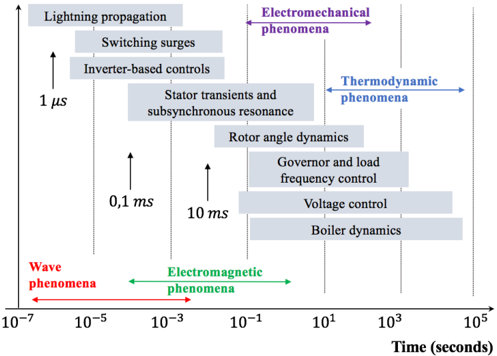
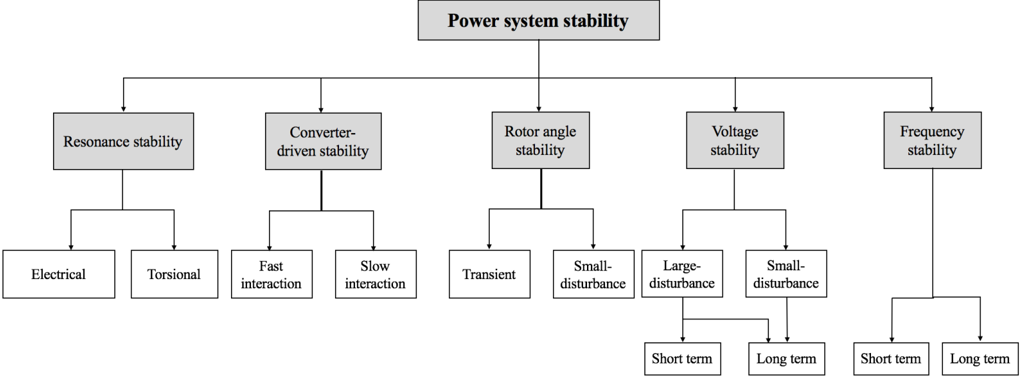
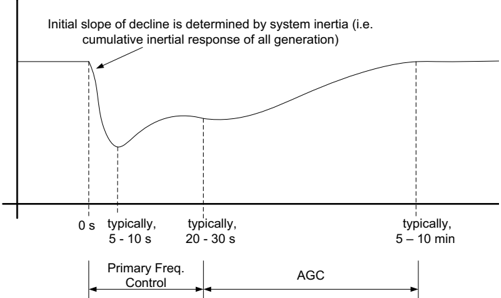
Verification
Claims the paper makes
The claims and statistics of this paper haven’t been checked yet.
Free: it reads the open-access text and checks the first 5 claims that cite a source we can check. Create a free account to check every claim.
Claims other papers make about this one
Each is checked against this paper’s own text: does it say what the citing paper says it does?
The check wasn’t confident either way, so it gives no verdict — never disputed.
In the citing paper
“AI approaches, which mimic human thought, may be helpful [87]: they mentioned in their study that recent developments include using ANN to maintain steady-state security and FL applications for determining the reliability of power systems using the interrupted energy assessment rate given in [88].”
From A Comprehensive Review on the Role of Artificial Intelligence in Power System Stability, Control, and Protection: Insights and Future Directions (2024) · cites this paper as [87]
Experimental — accuracy not yet measured
Self-check
Percentages, sums and reported differences re-computed from the paper’s own numbers.
The self-check needs the paper’s full text.
Citations
Cites
Power System Stability and Control
Kundur, P. (1994) · Cited by 19,639
(2004) · IEEE Transactions on Power Systems · doi:10.1109/tpwrs.2004.825981 · Cited by 3,719
Self-citationGrid Converters for Photovoltaic and Wind Power Systems
Teodorescu, R., Liserre, M., & Rodríguez, P. (2011) · Wiley eBooks · doi:10.1002/9780470667057 · Cited by 3,344 · cited 1×
“The vast majority of large-scale CIGs use voltage-source converters [11], [12], or some derivative thereof, allowing designs that offer full four-quadrant control.”
BackgroundDesign and Control of an LCL-Filter-Based Three-Phase Active Rectifier
Liserre, M., Blaabjerg, F., & Hansen, S. (2005) · IEEE Transactions on Industry Applications · doi:10.1109/tia.2005.853373 · Cited by 2,402 · cited 1×
“The resonance of an inverter filter can also be triggered by the control of the inverter itself or by interactions with nearby controllers [76].”
BackgroundVoltage‐Sourced Converters in Power Systems: Modeling, Control, and Applications
Yazdani, A., & Iravani, R. (2010) · Wiley eBooks · doi:10.1002/9780470551578 · Cited by 2,264
Voltage Stability of Electric Power Systems
Cutsem, T., & Vournas, C. (1998) · Springer eBooks · doi:10.1007/978-0-387-75536-6 · Cited by 2,036
Self-citationKroposki, B., Johnson, B., Zhang, Y., Gevorgian, V., Denholm, P., Hodge, B.-M., & Hannegan, B. (2017) · IEEE Power and Energy Magazine · doi:10.1109/mpe.2016.2637122 · Cited by 1,367 · cited 1×
“5) Converter-driven Stability: The dynamic behavior of CIG is clearly different from conventional synchronous generators, due to the predominant VSC interface with the grid [70].”
BackgroundHarmonic Stability in Power Electronic-Based Power Systems: Concept, Modeling, and Analysis
Wang, X., & Blaabjerg, F. (2019) · IEEE Transactions on Smart Grid · doi:10.1109/tsg.2018.2812712 · Cited by 1,282 · cited 1×
“the electromagnetic transients of the network, which may lead to unstable power system oscillations over a wide frequency range [71].”
BackgroundWind Turbines Emulating Inertia and Supporting Primary Frequency Control
Morren, J., de Haan, S. W. H., Kling, W. L., & Ferreira, J. A. (2006) · IEEE Transactions on Power Systems · doi:10.1109/tpwrs.2005.861956 · Cited by 1,263
Impedance Modeling and Analysis of Grid-Connected Voltage-Source Converters
Cespedes, M., & Sun, J. (2014) · IEEE Transactions on Power Electronics · doi:10.1109/tpel.2013.2262473 · Cited by 1,167
Research works printed but not linked: 11
- P. Pourbeik and J. K. Petter, "Modeling and validation of battery energy storage systems using simple generic models for power system stability studies," Cigre Sci. Eng., no. 9, pp. 63-72, Oct. 2017.
- Dynamic Models for Turbine-Governors in Power System Studies, IEEE Power and Energy Society, Tech. Rep. PES -TR1, Jan. 2013. (available on-line: https://resourcecenter.ieee-pes.org/technical- publications/technical-reports/PESTR1.html)
- P. M. Anderson and R. G. Farmer, Series compensation of power systems. Encinitas, CA, USA: PBLSH, 1996.
- F. Milano, F. Dörfler, G. Hug, D. J. Hill, and G. Verbic, "Foundations and challenges of low-inertia systems," in 20th Power Systems Computation Conference (PSCC), Dublin, Ireland, 2018.
- Stability definitions and characterization of dynamic behavior in systems with high penetration of power electronic interfaced technologies, IEEE Power and Energy Society, Tech. Rep. PES- TR77, May 2020. (available on-line: https://resourcecenter.ieee- pes.org/technical-publications/technical- reports/PES_TP_TR77_PSDP_stability_051320.html)
- Contribution to Bulk System Control and Stability by Distributed Energy Resources Connected at Distribution Network, IEEE Power and Energy Society, Tech. Rep. PES-TR22, Jan. 2017. (available on-line: https://resourcecenter.ieee-pes.org/technical- publications/technical-reports/PESTRPDFMRH0022.html)
- Microgrid Stability, Definitions, Analysis, and Modeling, IEEE Power and Energy Society, Tech. Rep. PES-TR66, Jun. 2018. (available on-line: https://resourcecenter.ieee-pes.org/technical- publications/technical-reports/PES_TR0066_062018.html)
- North American Electric Reliability Corporation (NERC), "Integrating inverter -based resources into low short circuit strength systems: reliability guideline," Reliability Guideline, Dec. 2017.
- T. Souxes and C. Vournas, "System Stability Issues Involving Distributed Sources under Adverse Network Conditions," Bulk Power Systems Dynamics and Control -X (IREP), Porto, Portugal, Sept. 2017.
- P. Pourbeik, S. Soni, A. Gaikwad, and V. Chadliev, "Providing primary frequency response from photovoltaic power Plants," in CIGRE Symposium 2017, Dublin, Ireland, 2017.
- Impact of Inverter Based Generation on Bulk Power System Dynamics and Short-Circuit Performance, IEEE Power and Energy Society, Tech. Rep. PES -TR68, Jul. 2018. (available on-line: https://resourcecenter.ieee-pes.org/technical-publications/technical- reports/PES_TR_7-18_0068.html)
Cited by
Items 601–700 of 1,000
A Unified Framework for Multi-Stability Constrained Optimization in IBR-Dominated Power Systems
Chu, Z., & Teng, F. (2026) · IEEE Transactions on Sustainable Energy · doi:10.1109/tste.2026.3692222 · Cited by 3
“Note that the newly extended converter-driven and resonance stability [24] are not covered in this work, as on the one hand, with limited research in these areas, the system-level indicators of these two types of stability are not clearly defined and on the other hand, they are more relevant to…”
Buire, J., Kelada, F., Marchand, J., & Hadjsaïd, N. (2026) · International Journal of Electrical Power & Energy Systems · doi:10.1016/j.ijepes.2026.111977 · Cited by 3
Discovering Unknown Inverter Governing Equations via Physics-Informed Sparse Machine Learning
Zheng, J., Batta, R., Liu, Y., & Lu, X. (2026) · IEEE Transactions on Power Electronics · doi:10.1109/tpel.2026.3708624 · Cited by 3
“As a result, a crucial modeling gap is rapidly widening: while inverter penetration continues to increase, theoretical tools for understanding and predicting their dynamic behaviors lag significantly behind [8], [9].”
Transient Frequency Estimation Methods for the Fast Frequency Response in Converter Control
Pfendler, A., Steppan, R., & Hanson, J. (2023) · Electronics · doi:10.3390/electronics12081862 · Cited by 3
Gaddala, R. K., Rajashekara, K., & Fonseca, J. M. L. (2023) · IEEE International Symposium on Power Electronics for Distributed Generation Systems (PEDG) · doi:10.1109/pedg56097.2023.10215292 · Cited by 3
“Maintaining stability and mitigating oscillations become more challenging with the rapid proliferation of power electronic converters in the power grid [3]-[4].”
BackgroundApplication of Model-Free Control to Reduce the Total Harmonic Distortion of Inverters
Wachter, J., Gröll, L., & Hagenmeyer, V. (2023) · IEEE Workshop on the Electronic Grid (eGRID) · doi:10.1109/egrid58358.2023.10380817 · Cited by 3
“Further, the importance of this development is reflected in the recent extension of the IEEE power grid stability definitions by the category of converter-driven stability, that includes harmonic stability [7].”
BackgroundLin, S., Dai, W., Tan, J., Wang, P., & Li, D. (2024) · Electric Power Systems Research · doi:10.1016/j.epsr.2024.110482 · Cited by 3
Dai, J. (2024) · IEEE/IAS Industrial and Commercial Power Systems Technical Conference · doi:10.1109/icps60943.2024.10563391 · Cited by 3
“3 [1].”
BackgroundA Review on Stability-Oriented Challenges of Low-Inertia Wind-PV-Integrated Grids
Sabo, A., Yunus, B., Shahinzadeh, H., & Musa, I. (2024) · International Conference on Technology and Energy Management (ICTEM) · doi:10.1109/ictem60690.2024.10631894 · Cited by 3
“P OWER S YSTEM S TABILITY I SSUES WITH W IND AND PV P ENETRATION "Stability" refers to the ability of an electrical power system to return to its initial steady state following a disturbance [15].”
BackgroundInfluentialSVC Control Strategy for Transient Stability Improvement of Multimachine Power System
Šešok, A., & Pavić, I. (2024) · Energies · doi:10.3390/en17174224 · Cited by 5
Validating Inertia Assessment Metrics in Distribution Systems with High RES Penetration
Frigo, G., Negri, V., Mingotti, A., Tinarelli, R., Peretto, L., Rens, J., & Joubert, T. (2024) · IEEE International Workshop on Applied Measurements for Power Systems (AMPS) · doi:10.1109/amps62611.2024.10706692 · Cited by 3
“Renewable power plants (RPPs) that convert energy from wind and photovoltaic (PV) sources inject power into the AC power system mostly through solid-state interfaces but do not store inertia in a mechanical system [1].”
BackgroundAn Open-Source Julia Package for RMS Time-Domain Simulations of Power Systems
Philpott, T., Agalgaonkar, A. P., Brinsmead, T. S., & Muttaqi, K. M. (2024) · Energies · doi:10.3390/en17225677 · Cited by 3
Liu, Z., Chen, Y., Zhang, Z., Ma, J., & Huang, T. (2024) · IEEE Transactions on Sustainable Energy · doi:10.1109/tste.2024.3521890 · Cited by 3
“Reference [16] summarizes that the small signal dynamics of converters tend to introduce negative damping in power systems, which can easily lead to power system instability.”
Stability Indices for Modern Power Systems Integrated with IBRs and Composite Load Models: A Review
Ismail, M., Amin, B. M. R., Choudury, T., Shah, R., & Islam, S. M. (2024) · Australasian Universities Power Engineering Conference · doi:10.1109/aupec62273.2024.10807575 · Cited by 3
“Whereas slower-acting equipment such as thermostatically controlled loads, tap-changing transformers, and generator current limiters are involved in long-term voltage stability [5].”
InfluentialZhou, Y., Wang, Q., Lei, C., Liao, J., Huang, T., Chi, Y., & Zhou, N. (2025) · IEEE Transactions on Industry Applications · doi:10.1109/tia.2025.3529803 · Cited by 3
Cheng, H.-L., Seppänen, J., & Lehtonen, M. (2024) · IEEE PES Innovative Smart Grid Technologies Europe · doi:10.1109/isgteurope62998.2024.10863755 · Cited by 3
Araúz, J., Wiegel, F., Waczowicz, S., Hagenmeyer, V., & Martínez, S. (2025) · IEEE Open Journal of Power Electronics · doi:10.1109/ojpel.2025.3547097 · Cited by 3
“However, it has been widely demonstrated that, with adequate controllers, converters can provide frequency control [4].”
Gao, H., Yang, D., Lv, Y., & Wang, L. (2025) · IEEE Access · doi:10.1109/access.2025.3548609 · Cited by 3
Adam, L., Komrska, T., Iška, F., & Peroutka, Z. (2025) · IEEE Transactions on Industrial Electronics · doi:10.1109/tie.2025.3546342 · Cited by 3
“These include voltage stability and voltage unbalance [6], [7], [8], frequency stability [9], [10], [11], [12], consequences of nonlinear or unbalanced loads such as harmonic components and low power factor [13], [14], [15].”
Li, C., Shao, B., Mao, X., Dong, W., & Lyu, K. (2025) · IEEE Access · doi:10.1109/access.2025.3553687 · Cited by 3
Deng, Z., Yang, R., Zhang, Y., Zhang, C., Zhang, J., & Cai, X. (2025) · IEEE Journal of Emerging and Selected Topics in Industrial Electronics · doi:10.1109/jestie.2025.3558866 · Cited by 4
“Based on the superposition theorem, with the access of Z f , the fault voltage can be expressed as the follows: Since IsynC follows the electro-mechanical timescale for response [33], the voltage magnitude before and at the instant of fault occurrence can be considered as constant.”
Narula, A., Bongiorno, M., Mattavelli, P., Beza, M., Svensson, J., & Liu, W. (2025) · IEEE Open Journal of Industry Applications · doi:10.1109/ojia.2025.3564501 · Cited by 4
“However, an increase in the penetration level of converter-interfaced generation technologies introduces new oscillation modes and alters the dynamic behavior of power systems following disturbances [1], [2].”
InfluentialOnline identification of cascading event sequences in power systems using deep learning
Nakas, G. A., & Papadopoulos, P. N. (2025) · International Journal of Electrical Power & Energy Systems · doi:10.1016/j.ijepes.2025.110717 · Cited by 3
Poursaeed, A. H., Namdari, F., & Crossley, P. A. (2025) · Energy Reports · doi:10.1016/j.egyr.2025.06.042 · Cited by 3
Lan, Y., Wei, S., Yao, W., Zhang, Y., Yang, Y., & Wen, J. (2025) · IEEE Transactions on Power Systems · doi:10.1109/tpwrs.2025.3597816 · Cited by 3
“However, following a fault, various types of electrical instability may couple, including short-term voltage instability and transient rotor instability [1], [2], [3].”
Neural ODE-Based Frequency Stability Assessment and Control of Energy Storage Systems
Gao, S., Liu, E., Wu, Z., Li, J., & Zhang, M. (2025) · Applied Sciences · doi:10.3390/app152212048 · Cited by 3
Basics of Voltage Stability Assessment
Matavalam, A. R. R., Bharati, A. K., & Ajjarapu, V. (2021) · Power electronics and power systems · doi:10.1007/978-3-030-67482-3_2 · Cited by 3
Self-citationTransient stability emergency control for AC/DC grids considering successive commutation failures
Ma, Y., Geng, G., Jiang, Q., & Yan, R. (2021) · IET Generation Transmission & Distribution · doi:10.1049/gtd2.12368 · Cited by 3
Zhang, G., Li, J., Xing, Y., Bamisile, O., & Huang, Q. (2022) · Asia Energy and Electrical Engineering Symposium (AEEES) · doi:10.1109/aeees54426.2022.9759663 · Cited by 5
Jahn, I., Nahalparvari, M., Norrga, S., & Rogersten, R. (2022) · Open Source Modelling and Simulation of Energy Systems (OSMSES) · doi:10.1109/osmses54027.2022.9769139 · Cited by 3
Cui, H., Zhang, Y., Tomsovic, K. L., & Li, F. F. (2022) · Wiley Interdisciplinary Reviews Energy and Environment · doi:10.1002/wene.448 · Cited by 3
“…an IEEE PES Task Force in the Power System Dynamic Performance Committee published a report on revisited and extended stability definitions with the inclusion of new stability issues from converter-interfaced renewables and their controllers, and reduced grid inertia (Hatziargyriou et al., 2020).”
BackgroundA Dynamic Behavior-Based Bulk Power System Event Signature Library With Empirical Clustering
Yamashita, K., Foggo, B., Kong, X., Cheng, Y., Shi, J., & Yu, N. (2022) · IEEE Access · doi:10.1109/access.2022.3205321 · Cited by 4
“Power system abnormal events have usually been categorized 16 based on stability [1] or power outage scale [2], [3].”
BackgroundStudy of the influence of synthetic inertia on transient stability of electric power systems
Разживин, И. А., Suvorov, A. A., Андреев, М. В., & Рудник, В. Е. (2022) · Electrical Engineering · doi:10.1007/s00202-022-01652-y · Cited by 3
Pourheydari, M., Parniani, M., & Ravanji, M. H. (2023) · IET Generation Transmission & Distribution · doi:10.1049/gtd2.12782 · Cited by 3
Predictive Control of TN-DN Boundary Bus Voltages with Long-Term Stability Constraints
Escobar, F., & Valverde, G. (2023) · IEEE Power & Energy Society Innovative Smart Grid Technologies Conference (ISGT) · doi:10.1109/isgt51731.2023.10066454 · Cited by 3
“This ability is constrained by the maximum power transfer to a specific set of buses [5].”
BackgroundMohale, V., Ali, J., Chelliah, T. R., & Agarwal, P. (2022) · IEEE Industrial Electronics Society Annual On-Line Conference (ONCON) · doi:10.1109/oncon56984.2022.10126883 · Cited by 3
“Mohave shaft failure was occurred due SSR as mentioned in Fig 3.”
BackgroundDesign of a Decentralized Wide-Area Damping Controller to Tolerate Permanent Communication Failures
Bento, M. E. C. (2023) · IEEE IAS Global Conference on Emerging Technologies (GlobConET) · doi:10.1109/globconet56651.2023.10150160 · Cited by 3
“Environmental and economic restrictions combined with the expansion of electricity consumption have caused challenges for the cyber-physical operation in a stable and safe way [1].”
BackgroundOn Wide-Area Control of Solar-Integrated DAE Models of Power Grids
Nadeem, M., Bahavarnia, M., & Taha, A. F. (2023) · Proceedings of the ... American Control Conference/Proceedings of the American Control Conference · doi:10.23919/acc55779.2023.10156268 · Cited by 3
“With the increasing penetration of renewable energy resources (RERs), the future electric grid faces major challenges, and the overall transient stability and dynamic response of the system are deteriorating [2].”
BackgroundAnalytical Discussion on Dynamics of Inverter-Based Resources under Small-Signal Conditions
Vorwerk, J., Dozein, M. G., Mancarella, P., & Hug, G. (2023) · IEEE PowerTech Conference · doi:10.1109/powertech55446.2023.10202679 · Cited by 3
“In addition, the phase-out of synchronous machines reduces the short-circuit current, which weakens the system and can result in system strength challenges, including IBR instability and disconnection [1, 2].”
BackgroundMulti-Class Stability Analysis of the Grid-Forming Placement Problem
Fernandes, F., Lopes, J. P., & Moreira, C. (2023) · IEEE PowerTech Conference · doi:10.1109/powertech55446.2023.10202760 · Cited by 3
“Therefore, as a result of the aforementioned change of paradigm, not only the classical stability problems (rotor angle, frequency and voltage) are now of great concern, but also the manifestation of new problems that fall into new stability classes (converterdriven and resonance) is popping up [3][4].”
BackgroundImpacto de las fuentes de energía renovable en la estabilidad de la tensión y técnicas de evaluación
Mesa-Call, J., Villa-Acevedo, W. M., & Lezama, J. M. L. (2023) · Revista UIS Ingenierías · doi:10.18273/revuin.v22n3-2023011 · Cited by 3
Refining the Concepts of Small and Large Disturbances for Stability Analysis of Power Systems
Borodulin, M. Y. (2023) · IEEE Power Engineering Society General Meeting · doi:10.1109/pesgm52003.2023.10253168 · Cited by 3
A new risk assessment approach for design of hybrid microgrids considering stability issues
Azizi, A., Blaabjerg, F., & Peyghami, S. (2023) · IET Generation Transmission & Distribution · doi:10.1049/gtd2.13040 · Cited by 3
An Optimization-Based Method for Transient Stability Assessment
Gao, J., Chaudhuri, B., & Astolfi, A. (2023) · IEEE Conference on Decision and Control (CDC) · doi:10.1109/cdc49753.2023.10383550 · Cited by 3
“Transient stability of a multi-machine power system is considered as its capability, when subject to a large disturbance, to maintain synchronism of all synchronous generators (SGs) [1]–[3].”
BackgroundA Novel PLL-less Direct Power Control of VSCs
Papageorgiou, P. C., & Alexandridis, A. T. (2023) · IEEE PES Innovative Smart Grid Technologies Europe · doi:10.1109/isgteurope56780.2023.10408329 · Cited by 3
“Specifically, the fast action of these control loops can interact with both the grid electromagnetic transients and the electromechanical dynamics of other electromechanical components in the grid i.e., synchronous generators [17].”
BackgroundCo-Simulation of real-time and offline power system models: An application example
Feng, Y., Xiong, X., Scheibe, C., Wang, H., Seta, P. L., & Müller, H. (2023) · IEEE PES Innovative Smart Grid Technologies Europe · doi:10.1109/isgteurope56780.2023.10408614 · Cited by 3
“[1], [2] The former are designed to analyze electro-mechanic interactions considering big networks such as transmission systems in a dynamic manner.”
BackgroundKravis, R., Colón-Reyes, G. E., & Callaway, D. S. (2024) · IEEE Power Engineering Society General Meeting · doi:10.1109/pesgm51994.2024.10688578 · Cited by 3
“This is due to the influence of inverter control gains, and in particular, due to interactions of fast acting inverter control loops and fast electromagnetic dynamics of power systems [1].”
BackgroundA survey of power system coordinated control algorithms for stability enhancement
Fombu, A. M., Sonfack, L. L., & Pesdjock, M. J. P. (2024) · Progress in Engineering Science · doi:10.1016/j.pes.2024.100022 · Cited by 3
Analysis of Data Quality Impact on Load Forecasting
Zeng, T., Li, Y., Zeng, D., Zhang, Y., Weng, Y., Qiao, J., Bi, X., & Liu, H. (2024) · IEEE Student Conference on Electric Machines and Systems (SCEMS) · doi:10.1109/scems63294.2024.10756359 · Cited by 3
Zhang, W., Wu, W., Wang, H., Blaabjerg, F., Orabi, M., & Yuan, L. (2024) · Annual Conference of the IEEE Industrial Electronics Society (IECON) · doi:10.1109/iecon55916.2024.10905105 · Cited by 3
“The power angle quickly enters the unstable region, making the system more prone to instability [4].”
Yang, F., Yu, H., Wang, L., Bauer, P., & Qin, Z. (2025) · IEEE International Symposium on Power Electronics for Distributed Generation Systems (PEDG) · doi:10.1109/pedg62294.2025.11060217 · Cited by 3
“The widespread installation of renewable sources has led to an energy transition from a Synchronous Generator (SG) dominated grid to an Inverter-based resources (IBR) [1].”
Tapia-Olvera, R., Beltrán-Carbajal, F., & Valderrábano‐González, A. (2022) · Applied Sciences · doi:10.3390/app13010561 · Cited by 3
Ahmed, A., Basumallik, S., Srivastava, A. K., Wu, Y., & Choudhury, S. (2023) · IEEE Transactions on Power Delivery · doi:10.1109/tpwrd.2023.3344708 · Cited by 3
“Among the critical applications is the proactive control to avoid short-term instability over a time frame of few seconds following a major disturbance [1], [2] such as fault or generator disconnection [3].”
BackgroundCombinational load shedding using load frequency control and voltage stability indicator
Al-Sadooni, H. H. A.-W., & Al-Rubayi, R. H. (2022) · International Journal of Power Electronics and Drive Systems/International Journal of Electrical and Computer Engineering · doi:10.11591/ijece.v12i5.pp4661-4671 · Cited by 3
“This is especially right in severely strained networks and for events that cascade [4].”
A review and comparison of current trends in virtual synchronous generator's models
Аскаров, А. Б., Suvorov, A. A., Андреев, М. В., & Gusev, A. S. (2022) · IFAC-PapersOnLine · doi:10.1016/j.ifacol.2022.07.061 · Cited by 3
Impact of Frequency Support by Wind Turbines on Small-Signal Stability of Power SystemsPreprint
Pepiciello, A., Domínguez‐García, J. L., & Vaccaro, A. (2022) · SSRN Electronic Journal · doi:10.2139/ssrn.4156609 · Cited by 3
Tao, X., & Gadh, R. (2025) · arXiv (Cornell University) · doi:10.48550/arxiv.2512.14136 · Cited by 3
“Standard sixth-order generator models with IEEE Type I excitation systems are used [42].”
Predicting Power-System Dynamic Trajectories with Foundation ModelsPreprint
Li, H., Mai, L., Xiao, C., Blasch, E., & Weng, Y. (2026) · arXiv (Cornell University) · doi:10.48550/arxiv.2604.14991 · Cited by 3
“Following the IEEE/CIGRE classification [41], [42] of power-system dynamic phenomena, we focus on the following representative dynamic processes: generator rotor-angle dynamics, bus-voltage dynamics, system-frequency dynamics, slow converter state dynamics, fast converter state dynamics, and EMT…”
Robust Strong Structural Controllability of Complex Power Systems
Sun, Y., Yang, D., Gao, X., & Qin, J. (2022) · Frontiers in Energy Research · doi:10.3389/fenrg.2022.913893 · Cited by 2
“(2019), ensuring the safe and stable power transmission has thus become a hot research issue Kiaei et al. (2021). There is a growing demand for power systems with high robustness, that is, they can withstand large disturbances, such as transmission line damage, accidental loss of large generators, or heavy load loss M…”
BackgroundConverter-Driven Harmonic Resonance Instability in VSC-STATCOMs
Arévalo-Soler, J., Moutevelis, D., Cheah-Mañé, M., Gomis‐Bellmunt, O., Jung, J., Kim, N., & Kwon, Y. J. (2024) · IEEE International Symposium on Industrial Electronics (ISIE) · doi:10.1109/isie54533.2024.10595789 · Cited by 2
“Stability assessment of power systems with converter-based resources, such as STATCOMs, is an ongoing research topic [5].”
BackgroundPower system stability and control: a comprehensive review focusing on the rotor angle case
Murad, N. S. F. M., Kamarudin, M. N., Rozali, S. M., & Zakaria, M. I. (2024) · Bulletin of Electrical Engineering and Informatics · doi:10.11591/eei.v13i6.8054 · Cited by 2
Complex Frequency Propagation along Transmission Lines
Ponce, I., & Milano, F. (2024) · IEEE Power Engineering Society General Meeting · doi:10.1109/pesgm51994.2024.10689183 · Cited by 2
“The increase of penetration of converter-interfaced devices is changing how power systems are modeled, studied, controlled, and operated [1]–[3].”
BackgroundKuang, S., Xu, G., Wang, C., Li, A., Zhang, Y., & Bi, T. (2024) · IEEE Power Engineering Society General Meeting · doi:10.1109/pesgm51994.2024.10689096 · Cited by 2
Bifurcation of a Grid-Forming Converter Considering Current Limit and Load Dynamics
Zhang, Y., Guo, Q., Lin, Y., Liu, P., Sheng, Y., & Wang, Q. (2024) · IEEE Power Engineering Society General Meeting · doi:10.1109/pesgm51994.2024.10688783 · Cited by 2
Mtolo, D., Sarma, R., & Dorrell, D. G. (2025) · IET Smart Grid · doi:10.1049/stg2.70006 · Cited by 2
Investigation on Impact of Inverter-Based Resources on Power System Using Phasor Measurement Unit
Darwade, N. S., & Nagarajan, S. T. (2025) · Arabian Journal for Science and Engineering · doi:10.1007/s13369-025-10114-z · Cited by 2
Boskovic, M. C., Šekara, T. B., Rapaić, M. R., & Stojić, D. M. (2025) · International Symposium INFOTEH-JAHORINA (INFOTEH) · doi:10.1109/infoteh64129.2025.10959215 · Cited by 2
“Significant deviations can damage equipment, degrade power quality, disrupt protection schemes, and even lead to system collapse [2-5].”
Frequency Response Assessment of Inverter Dominated Power System Under Grid Abnormalities
Singh, K., Tank, A., Mohanty, R., Tripathi, A., & Verma, A. (2024) · IEEE International Conference on Power Electronics, Drives and Energy Systems · doi:10.1109/pedes61459.2024.10961347 · Cited by 2
Kowalewski, J., Lorenz, A., Thomas, F., Valenzuela, R. A. A., & Graichen, K. (2025) · IET Generation Transmission & Distribution · doi:10.1049/gtd2.70090 · Cited by 2
An Aggregate Model for Frequency Response in All-Inverter Power Systems
Trujillo, M., Sajadi, A., & Hodge, B. S. (2025) · IEEE Kansas Power and Energy Conference (KPEC) · doi:10.1109/kpec65465.2025.11045018 · Cited by 2
Gao, J., Chaudhuri, B., & Astolfi, A. (2025) · IEEE Transactions on Control Systems Technology · doi:10.1109/tcst.2025.3599206 · Cited by 2
“Therefore, a reliable yet e ffi cient method for TSA is of fundamental importance for the secure operation of power systems [1], [2].”
Power Quality at Railway Traction Substations in Ukraine and Its Role in Power System Stability
Bosyi, D. O., Antonov, A., Земський, Д. Р., Barresi, M., & Mazorchuk, V. (2025) · International Conference on Clean Electrical Power · doi:10.1109/iccep65222.2025.11143652 · Cited by 2
“…equivalent impedance of the power grid, amplifying the impact of these distortions and consequently affecting the stability of the energy system [1, 4-5, 7 The aim of this study is to systematize existing data on the extent to which electrified railways, operating on both direct and alternating…”
Creation of a Synthetic Rural Alaskan Microgrid Model
Francisco, A., Woodworth, G., Eikenberry, A., Hou, C., Faarooqui, N., Light, D., Shirazi, M., & Cicilio, P. (2025) · Energies · doi:10.3390/en18174715 · Cited by 2
Unraveling the Dynamic Characteristics of Inertia Fluctuations in Modern Power Systems
Nie, X., & Tang, H. T. (2025) · IEEE Access · doi:10.1109/access.2025.3611124 · Cited by 2
Assessing Reliability for Multi-State Electricity Networks with Loss Rate Under Cost Constraint
Huang, C., Huang, D., & Chang, P. (2025) · International Journal of Reliability Quality and Safety Engineering · doi:10.1142/s0218539325500366 · Cited by 2
Cui, B., Huang, L., Loh, P. C., & Blaabjerg, F. (2025) · IEEE Transactions on Industrial Electronics · doi:10.1109/tie.2025.3626583 · Cited by 3
“However, the overcurrent problems of the GFM inverter under large grid disturbances are still significant challenges [15], [16].”
Obi, S. A., & Jung, J.-J. (2025) · IEEE Workshop on the Electronic Grid (eGRID) · doi:10.1109/egrid63452.2025.11255424 · Cited by 2
“As traditional synchronous generators are progressively retired, the overall system inertia and short-circuit strength diminish, exposing the grid to novel stability challenges — particularly converter-driven stability issues [2].”
Han, X., Liu, T., Li, Y., Huang, Y., & Chen, J. (2025) · Expert Systems with Applications · doi:10.1016/j.eswa.2025.130806 · Cited by 2
Valdez, J., & Carrión, D. F. (2025) · Energies · doi:10.3390/en19010003 · Cited by 2
Dai, L., Deng, X., Chao, W., Huang, J., Wang, J., Lai, S., Qin, W., & Chen, X. (2025) · Electricity · doi:10.3390/electricity6040071 · Cited by 2
Cartiel, O., Mesas, J.-J., Monjo, L., & Sainz, L. (2025) · Mathematics and Computers in Simulation · doi:10.1016/j.matcom.2025.12.009 · Cited by 2
Revisiting the Effect of Grid-Following Converter on Frequency Dynamics - Part I: Center of Inertia
Liu, J., Wang, C., & Bi, T. (2025) · IEEE Transactions on Power Systems · doi:10.1109/tpwrs.2025.3648569 · Cited by 2
“The generally accepted view is that GFLs prioritize maintaining stable output active power and do not actively contribute to frequency support, potentially exacerbating system frequency stability issues [3], [6].”
Tian, Z., Feng, P., Huang, M., Liang, J., Ling, Y., Li, X., & Zha, X. (2025) · IEEE Transactions on Power Electronics · doi:10.1109/tpel.2025.3649970 · Cited by 2
“…that CCT is employed as the evaluation index of transient stability in this article, since CCT is a practical index that can accurately reflect the ability of converter to maintain stable operation under large disturbance, which is the definition of studied transient synchronization stability [40].”
Chen, W., Liu, J., Zhang, W., Lu, J., Yang, J., & Liao, B. (2026) · Processes · doi:10.3390/pr14020326 · Cited by 2
“However, the proliferation of massive electrical equipment has also led to frequent grid operation failures, causing power supply interruptions and equipment damage [2,3].”
Samhadi, V. J., Sasmono, S., Setiadi, H., & Hariyanto, N. (2025) · International Conference on High Voltage Engineering and Power Systems (ICHVEPS) · doi:10.1109/ichveps66913.2025.11351185 · Cited by 2
Pan, W., & Shittu, E. (2026) · Renewable Energy · doi:10.1016/j.renene.2026.125529 · Cited by 2
Shen, D., Liang, X., & Gan, Y. (2026) · International Journal of Electrical Power & Energy Systems · doi:10.1016/j.ijepes.2026.111763 · Cited by 2
Deng, Y., Fang, X., Dong, S., Gao, N., & Tan, J. (2026) · Electric Power Systems Research · doi:10.1016/j.epsr.2026.113025 · Cited by 2
Rotor Angle Stability Analysis of Hybrid Wind Energy Source Integrated with Conventional Grid
Okedu, K. E. (2026) · International Journal of Environmental Social and Economic Sustainability · doi:10.20508/fvp7er86 · Cited by 2
“Power system oscillations and the related rotor angle stability problems are the primary focus of this investigation [22].”
Jiao, R., Zhang, S., Zhang, H., Deng, B. D., Zhang, T., Tang, S., Hu, X., & Zhang, W. (2026) · Energies · doi:10.3390/en19071687 · Cited by 2
Predicting Power grid frequency dynamics with invertible Koopman-based architectures
Lupascu, E., Li, X., & Schäfer, B. (2026) · Open Source Modelling and Simulation of Energy Systems (OSMSES) · doi:10.1109/osmses69376.2026.11457224 · Cited by 2
“The increasing integration of renewable energy sources, which are often inverter-based and provide little inherent inertia [1], makes maintaining this stability increasingly challenging, especially the frequency stability [2].”
A conceptual view of grid weakness in transmission and distribution systems
Salam, I. U., Mazza, A., & Chicco, G. (2026) · Electric Power Systems Research · doi:10.1016/j.epsr.2026.113193 · Cited by 3
Stability-constrained AC optimal power flow–A Gaussian process-based approach
Vito, V. D., Sundar, K., Fioretto, F., & Deka, D. (2026) · Sustainable Energy Grids and Networks · doi:10.1016/j.segan.2026.102300 · Cited by 2
“Such issues are further amplified by the increasing penetration of renewable energy sources, which introduce significant variability and uncertainty [10, 36].”
Han, T., Xu, Y., & Hill, D. J. (2026) · Foundations and Trends® in Electric Energy Systems · doi:10.1108/ftees-03-2026-0047 · Cited by 2
Self-citationOptimal Control for Robust Dynamic Performance in Inverter-Dominated Power Systems
Ochoa, T., Chaudhuri, B., & O’Malley, M. (2026) · IEEE Transactions on Power Systems · doi:10.1109/tpwrs.2026.3701870 · Cited by 2
“This shift prompts power system operators to reassess existing methodologies to identify and mitigate adverse dynamic behaviors introduced by IBRs that state-of-practice tools may fail to capture [3], [4].”
Gyang, P. P., Chakraborty, P., Meegahapola, L. G., & Yu, X. (2026) · IEEE Open Journal of the Industrial Electronics Society · doi:10.1109/ojies.2026.3706771 · Cited by 4
“Stability is evaluated based on multiple criteria, including frequency, voltage, rotor angle, converter-driven, and resonance [142].”
Ke, X., Liu, J. P., Zhan, L., Hu, B. X., & Nian, H. (2026) · International Journal of Electrical Power & Energy Systems · doi:10.1016/j.ijepes.2026.112036 · Cited by 2
Voltage Stability Assessment in Modern Power Systems: A Structured Review of Methods and Indices
Liccardo, A., Lauria, D., Bonavolontà, F., Coletta, G., Giannuzzi, G. M., Tessitore, S., & Pisani, C. (2026) · Energies · doi:10.3390/en19174025 · Cited by 2
“Consequently, a quasi-steady-state index should not be interpreted as a complete measure of converter-driven stability [1,2,18,19].”
Wang, M., & Milanović, J. V. (2021) · IEEE PES Innovative Smart Grid Technologies Europe · doi:10.1109/isgteurope52324.2021.9640129 · Cited by 2
Power grid stability identification using high discriminative factors
Eskandari, H., Imani, M., & Moghaddam, M. P. (2022) · International Journal of Electronics Letters · doi:10.1080/21681724.2022.2068192 · Cited by 2
“Electricity utilities and power managers have to know about the stability situation of grid and try to establish a balance between power consumption and production (Hatziargyriou et al., 2021).”
Background
Metadata
- Authors
- Hatziargyriou, N., Milanovic, J., Rahmann, C., Ajjarapu, V., Canizares, C., Erlich, I., Hill, D., Hiskens, I., Kamwa, I., Pal, B., Pourbeik, P., Sanchez-Gasca, J., Stankovic, A., Van Cutsem, T., Vittal, V., & Vournas, C.
- Affiliations
- National Technical University of Athens (GR)
- University of Chile (CL)
- Iowa State University (US)
- University of Duisburg-Essen (DE)
- University of Hong Kong (HK)
- University of Michigan (US)
- Hydro-Québec (CA)
- Imperial College London (GB)
- General Electric (United States) (US)
- Arizona State University (US)
- ORCID
- Venue
- IEEE Transactions on Power Systems
- Published
- 2021-07
- Volume
- 36
- Issue
- 4
- Pages
- 3271-3281
- ISSN
- 0885-8950 (ISSN-L)
- 1558-0679
- OpenAlex
- W3110874572
- Cited by
- 1,244
- References
- 89
- Citations by year
- 2026: 242 · 2025: 286 · 2024: 274 · 2023: 237 · 2022: 152 · 2021: 52
- FWCI
- 37.95
- Type
- journal article
- Language
- en
- Open access
- hybrid
- doi.org
- Locations
- IEEE Transactions on Power Systems (publishedVersion, cc-by)
- Open Repository and Bibliography (University of Liège) (submittedVersion, cc-by)
- Research Explorer (The University of Manchester) (submittedVersion, cc-by)
- Universidad de Chile (submittedVersion, cc-by-nc-nd)
- Funders
- Engineering and Physical Sciences Research Council (EP/T021713/1)
- Topics
- Physical Sciences › Engineering › Electrical and Electronic Engineering › Power System Optimization and Stability
- Physical Sciences › Engineering › Electrical and Electronic Engineering › Frequency Control in Power Systems
- Physical Sciences › Engineering › Control and Systems Engineering › Microgrid Control and Optimization
- Keywords
- power system stability, stability definitions, stability classification, converter-interfaced generation, power devices, transmission device
About these checks
Registry, retraction, Cites and statistics results are computed, not judged, with one exception: a printed reference that no index lists is read once by a model before it counts as a citation error. Claims are extracted by a model and kept only when their quote appears verbatim in the text; each cited source is then checked, with a model’s help, for whether it says what the claim relies on. Those verdicts can be wrong — read the claim’s quote and the cited source before relying on one.
Statistics and arithmetic are recomputed, not judged.
Confidence bands are shown only for fields calibrated on our annotated test set. None is calibrated yet, so no band is shown.
What counts as a claim ›How we measure confidence ›How we check this ›
Are you an author, or do you see a problem with this page? Request a review
Data sources
Bibliographic data: Semantic Scholar, OpenAlex, Crossref.
Contains information from the Semantic Scholar Academic Graph Datasets, made available under the ODC Attribution License (ODC-BY 1.0).
Semantic Scholar’s data is described in: Kinney, R., et al. (2023). The Semantic Scholar Open Data Platform. arXiv:2301.10140.
