

The DOI matches its Crossref record; 49 of the 49 references it cites were found in a registry or an index.
DiffLoad: Uncertainty Quantification in Electrical Load Forecasting With the Diffusion Model
Open accessAbstract
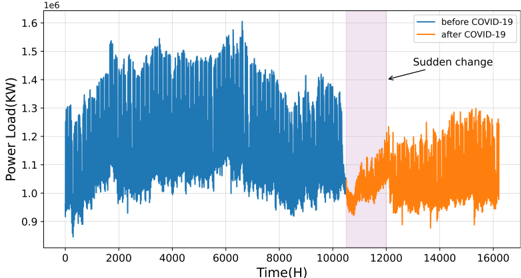
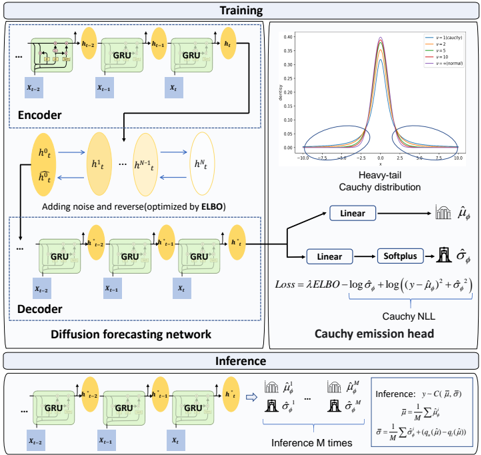
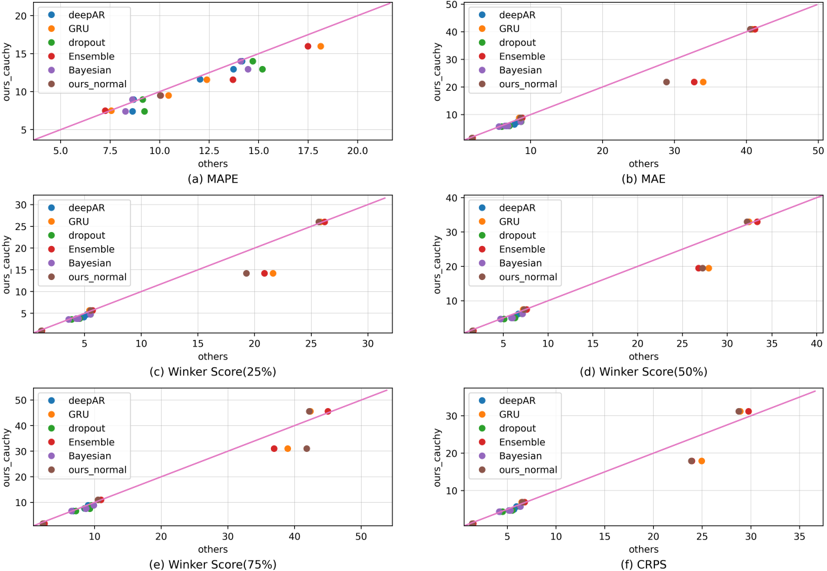
Electrical load forecasting plays a crucial role in decision-making for power systems. The integration of renewable energy sources and the occurrence of external events, such as the COVID-19 pandemic, have rapidly increased uncertainties in load forecasting. The uncertainties in load forecasting can be divided into two types: epistemic uncertainty and aleatoric uncertainty. Modeling these types of uncertainties can help decision-makers better understand where and to what extent the uncertainty is, thereby enhancing their confidence in the following decision-making. This paper proposes a diffusion-based Seq2seq structure to estimate epistemic uncertainty and employs the robust additive Cauchy distribution to estimate aleatoric uncertainty. Our method not only ensures the accuracy of load forecasting but also demonstrates the ability to separate and model the two types of uncertainties for different levels of loads.
Overview
The claims and statistics of this paper haven’t been checked yet.
Free: it reads the open-access text and checks the first 5 claims that cite a source we can check. Create a free account to check every claim.
Integrity signals
Registry
Cites
Statistics
Figures





Verification
Claims the paper makes
The claims and statistics of this paper haven’t been checked yet.
Free: it reads the open-access text and checks the first 5 claims that cite a source we can check. Create a free account to check every claim.
Claims other papers make about this one
Each is checked against this paper’s own text: does it say what the citing paper says it does?
The cited source says what the claim attributes to it.
In the citing paper
“DiffLoad [103] proposes a diffusion-based structure for electrical load probabilistic forecasting by considering both epistemic and aleatoric uncertainties.”
From Self-Supervised Learning for Time Series Analysis: Taxonomy, Progress, and Prospects (2024) · cites this paper as [103]
Self-check
Percentages, sums and reported differences re-computed from the paper’s own numbers.
The self-check needs the paper’s full text.
Citations
Cites
Denoising Diffusion Probabilistic Models
Ho, J., Jain, A., & Abbeel, P. (2020) · arXiv · doi:10.48550/arxiv.2006.11239 · Cited by 8,712 · cited 2×
“In the diffusion model, we achieve the approximation by first adding noise (cid:2) to the hidden state: where the { α n } n =1: N ∈ (0 , 1) are set values the same as [31].”
Variational Inference: A Review for Statisticians
Blei, D. M., Kucukelbir, A., & McAuliffe, J. D. (2017) · Journal of the American Statistical Association · doi:10.1080/01621459.2017.1285773 · Cited by 3,811 · cited 1×
“However, we can fix this problem by considering the origin hidden state as a condition and then minimizing Evidence Lower Bound (ELBO) [33], which is the upper bound of the NLL.”
Simple and Scalable Predictive Uncertainty Estimation using Deep Ensembles
Lakshminarayanan, B., Pritzel, A., & Blundell, C. (2016) · arXiv · doi:10.48550/arxiv.1612.01474 · Cited by 3,666 · cited 2×
“Because epistemic uncertainty represents model uncertainty during the training process,ensemblemethods[26]havebecomeoneofthemethods forestimatingmodeluncertainty.”
Are Transformers Effective for Time Series Forecasting?
Zeng, A., Chen, M., Zhang, L., & Xu, Q. (2023) · Proceedings of the AAAI Conference on Artificial Intelligence · doi:10.1609/aaai.v37i9.26317 · Cited by 3,320
Learning Phrase Representations using RNN Encoder-Decoder for Statistical Machine Translation
Cho, K., van Merrienboer, B., Gulcehre, C., Bahdanau, D., Bougares, F., Schwenk, H., & Bengio, Y. (2014) · arXiv · doi:10.48550/arxiv.1406.1078 · Cited by 3,317 · cited 2×
“To achieve this goal, our model utilizes the Gated Recurrent Unit (GRU) [32] as the Encoder, which effectively extracts features from time series data.”
What Uncertainties Do We Need in Bayesian Deep Learning for Computer Vision?
Kendall, A., & Gal, Y. (2017) · arXiv · doi:10.48550/arxiv.1703.04977 · Cited by 3,088 · cited 2×
“(cid:2) Bayes By Backprop(BBB) [18], [48]: Bayesian neural network is an extension of the ensemble training method.”
DeepAR: Probabilistic forecasting with autoregressive recurrent networks
Salinas, D., Flunkert, V., Gasthaus, J., & Januschowski, T. (2020) · International Journal of Forecasting · doi:10.1016/j.ijforecast.2019.07.001 · Cited by 2,661
Short-Term Residential Load Forecasting Based on LSTM Recurrent Neural Network
Kong, W., Dong, Z. Y., Jia, Y., Hill, D. J., Xu, Y., & Zhang, Y. (2019) · IEEE Transactions on Smart Grid · doi:10.1109/tsg.2017.2753802 · Cited by 2,645 · cited 1×
“The Long Short Term Memory (LSTM) recurrent NN was applied to model the power load of individual electric customers [9], demonstrating the superiority of NN in load forecasting tasks.”
Probabilistic energy forecasting: Global Energy Forecasting Competition 2014 and beyond
Hong, T., Pinson, P., Fan, S., Zareipour, H., Troccoli, A., & Hyndman, R. J. (2016) · International Journal of Forecasting · doi:10.1016/j.ijforecast.2016.02.001 · Cited by 1,044 · cited 1×
“(cid:2) Global Energy Forecasting (GEF) competition [39].”
Scoring Rules for Continuous Probability Distributions
Matheson, J. E., & Winkler, R. L. (1976) · Management Science · doi:10.1287/mnsc.22.10.1087 · Cited by 957 · cited 1×
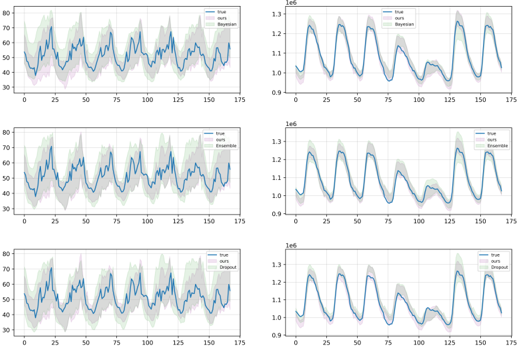
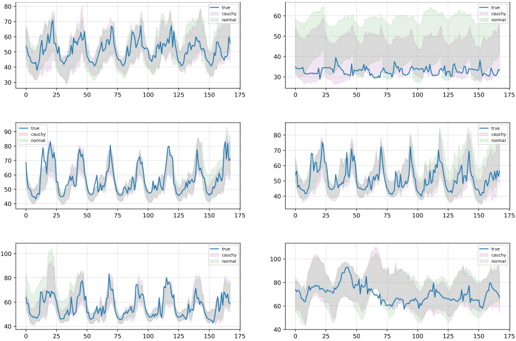
“6, even though the confidence intervals of both distributions can roughly contain the true values, forecasts based on Gaussian distributions may exhibit abnormally large confidence intervals in certain areas, resulting in lower forecasting accuracy.”
Research works printed but not linked: 2
- 10.5555/3295222.3295309 · doi:10.5555/3295222.3295309
- 10.5555/3045390.3045502 · doi:10.5555/3045390.3045502
Cited by
Foundation Models for Time Series Analysis: A Tutorial and Survey
Liang, Y., Wen, H., Nie, Y., Jiang, Y., Jin, M., Song, D., Pan, S., & Wen, Q. (2024) · Proceedings of the 30th ACM SIGKDD Conference on Knowledge Discovery and Data Mining · doi:10.1145/3637528.3671451 · Cited by 225
Self-citationSelf-Supervised Learning for Time Series Analysis: Taxonomy, Progress, and Prospects
Zhang, K., Wen, Q., Zhang, C., Cai, R., Jin, M., Liu, Y., Zhang, J. Y., Liang, Y., Pang, G., Song, D., et al. (2024) · IEEE Transactions on Pattern Analysis and Machine Intelligence · doi:10.1109/tpami.2024.3387317 · Cited by 295
Self-citationDiffusion models for time-series applications: a survey
Lin, L., Li, Z., Li, R., Li, X., & Gao, J. (2023) · Frontiers of Information Technology & Electronic Engineering · doi:10.1631/fitee.2300310 · Cited by 179
A Survey on Diffusion Models for Time Series and Spatio-Temporal Data
Yang, Y., Jin, M., Wen, H., Zhang, C., Liang, Y., Ma, L., Wang, Y., Liu, C., Yang, B., Xu, Z., et al. (2025) · ACM Computing Surveys · doi:10.1145/3783986 · Cited by 195
Self-citationDiffSTG: Probabilistic Spatio-Temporal Graph Forecasting with Denoising Diffusion Models
Wen, H., Lin, Y., Xia, Y., Wan, H., Wen, Q., Zimmermann, R., & Liang, Y. (2023) · Proceedings of the 31st ACM International Conference on Advances in Geographic Information Systems · doi:10.1145/3589132.3625614 · Cited by 130
Self-citation
Metadata
- Authors
- Wang, Z., Wen, Q., Zhang, C., Sun, L., & Wang, Y.
- Affiliations
- University of Hong Kong (HK)
- Alibaba Group (United States) (US)
- Alibaba DAMO Academy (China) (CN)
- Venue
- IEEE Transactions on Power Systems
- Published
- 2025-03
- Volume
- 40
- Issue
- 2
- Pages
- 1777-1789
- ISSN
- 0885-8950 (ISSN-L)
- 1558-0679
- OpenAlex
- W4401806916
- Cited by
- 34
- References
- 48
- Citations by year
- 2026: 16 · 2025: 13
- FWCI
- 3.32
- Type
- journal article
- Language
- en
- Open access
- green
- arxiv.org
- Licence
- Locations
- IEEE Transactions on Power Systems (publishedVersion)
- arXiv (Cornell University) (submittedVersion)
- The HKU Scholars Hub (University of Hong Kong) (submittedVersion, cc-by-nc-nd)
- arXiv (Cornell University)
- Funders
- National Key R&D Program of China (2022YFB2403300)
- Applied Basic Research Foundation
- Young Elite Scientists Sponsorship Program by CAST
- Topics
- Physical Sciences › Engineering › Electrical and Electronic Engineering › Energy Load and Power Forecasting
- Physical Sciences › Engineering › Electrical and Electronic Engineering › Smart Grid Energy Management
- Social Sciences › Transportation › Traffic Prediction and Management Techniques
- Keywords
- load forecasting, uncertainty quantification, epistemic uncertainty, aleatoric uncertainty, diffusion models, Seq2Seq, renewable energy integration
About these checks
Registry, retraction, Cites and statistics results are computed, not judged, with one exception: a printed reference that no index lists is read once by a model before it counts as a citation error. Claims are extracted by a model and kept only when their quote appears verbatim in the text; each cited source is then checked, with a model’s help, for whether it says what the claim relies on. Those verdicts can be wrong — read the claim’s quote and the cited source before relying on one.
Statistics and arithmetic are recomputed, not judged.
Confidence bands are shown only for fields calibrated on our annotated test set. None is calibrated yet, so no band is shown.
What counts as a claim ›How we measure confidence ›How we check this ›
Are you an author, or do you see a problem with this page? Request a review
How to cite
Cite CoChat for the checks on this page, and the paper for its own findings.
- This page
- CoChat. (2026). Citation check: DiffLoad: Uncertainty Quantification in Electrical Load Forecasting With the Diffusion Model. https://app.cochat.ai/papers/10.1109/tpwrs.2024.3449032
- The paper
- Wang, Z., Wen, Q., Zhang, C., Sun, L., & Wang, Y. (2025). DiffLoad: Uncertainty Quantification in Electrical Load Forecasting With the Diffusion Model. IEEE Transactions on Power Systems. https://doi.org/10.1109/tpwrs.2024.3449032
Data sources
Bibliographic data: Semantic Scholar, OpenAlex, Crossref.
Contains information from the Semantic Scholar Academic Graph Datasets, made available under the ODC Attribution License (ODC-BY 1.0).
Semantic Scholar’s data is described in: Kinney, R., et al. (2023). The Semantic Scholar Open Data Platform. arXiv:2301.10140.
