

The DOI matches its Crossref record; 70 of the 70 references it cites were found in a registry or an index.
Responsible AI—Two Frameworks for Ethical Design Practice
Open accessAbstract
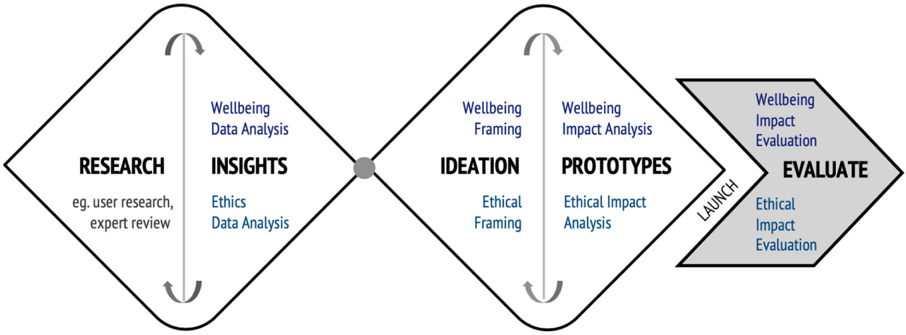
In 2019, the IEEE launched the P7000 standards projects intended to address ethical issues in the design of autonomous and intelligent systems. This move came amidst a growing public concern over the unintended consequences of artificial intelligence (AI), compounded by the lack of an anticipatory process for attending to ethical impact within professional practice. However, the difficulty in moving from principles to practice presents a significant challenge to the implementation of ethical guidelines. Herein, we describe two complementary frameworks for integrating ethical analysis into engineering practice to help address this challenge. We then provide the outcomes of an ethical analysis informed by these frameworks, conducted within the specific context of Internet-delivered therapy in digital mental health. We hope both the frameworks and analysis can provide tools and insights, not only for the context of digital healthcare but also for data-enabled and intelligent technology development more broadly.
Overview
The claims and statistics of this paper haven’t been checked yet.
Free: it reads the open-access text and checks the first 5 claims that cite a source we can check. Create a free account to check every claim.
Integrity signals
Registry
Cites
Statistics
Figures





Verification
Claims the paper makes
The claims and statistics of this paper haven’t been checked yet.
Free: it reads the open-access text and checks the first 5 claims that cite a source we can check. Create a free account to check every claim.
Claims other papers make about this one
Each is checked against this paper’s own text: does it say what the citing paper says it does?
The source backs part of the claim, not all of it — or backs it for a different population, condition or comparison.
In the citing paper
“By converting citizens to prosumers of AI-powered digital health systems (Peters et al., 2020), end-users will feel empowered in controlling their own data and securing their privacy, which can lead to a more ethically aligned deployment of AI-powered health systems”
From SHIFTing artificial intelligence to be responsible in healthcare: a systematic review (2022) · cites this paper as Peters et al., 2020
Experimental — accuracy not yet measuredIn the citing paper
“The need for an ethical framework becomes even more pronounced as AI is poised to extend its influence beyond healthcare into various domains, such as education, transportation, and governance [34].”
From Ethical Framework for Harnessing the Power of AI in Healthcare and Beyond (2024) · cites this paper as [34]
Self-check
Percentages, sums and reported differences re-computed from the paper’s own numbers.
The self-check needs the paper’s full text.
Citations
Cites
Principles of Biomedical Ethics
(2012) · Thieves of Virtue · doi:10.7551/mitpress/9079.003.0009 · Cited by 13,453
The global landscape of AI ethics guidelines
Jobin, A., Ienca, M., & Vayena, E. (2019) · Nature Machine Intelligence · doi:10.1038/s42256-019-0088-2 · Cited by 6,220 · cited 2×
“Indeed, recent reports indicate that there are currently more than 70 publicly available sets of ethical principles or frameworks for AI, most of which have been released within the last five years [3], [9], [10].”
Floridi, L., Cowls, J., Beltrametti, M., Chatila, R., Chazerand, P., Dignum, V., Luetge, C., Madelin, R., Pagallo, U., Rossi, F., et al. (2018) · Minds and Machines · doi:10.1007/s11023-018-9482-5 · Cited by 4,774 · cited 5×
“Between this set of principles and the set we will be using from the meta-analysis by Floridi et al. [3], there is a significant overlap.”
BackgroundMethodInfluentialPrinciples of biomedical ethics
Horton, J. (2002) · Transactions of the Royal Society of Tropical Medicine and Hygiene · doi:10.1016/s0035-9203(02)90265-8 · Cited by 4,377
The motivational pull of video games: a self-determination theory approach
Ryan, R. M., Rigby, C. S., & Przybylski, A. (2006) · Motivation and Emotion · doi:10.1007/s11031-006-9051-8 · Cited by 3,332 · cited 1×
“Additionally, a series of studies comparing how different game designs impact wellbeing and autonomy have been conducted using psychological measures [40], [41].”
BackgroundDeveloping a framework for responsible innovation
Stilgoe, J., Owen, R., & Macnaghten, P. (2013) · Research Policy · doi:10.1016/j.respol.2013.05.008 · Cited by 3,184 · cited 3×
“Responsible innovation requires these methods to be anticipatory, reflexive, inclusive, and responsive [23].”
BackgroundMethodInfluentialGebru, T., Morgenstern, J., Vecchione, B., Vaughan, J. W., Wallach, H., Daumé, H., & Crawford, K. (2018) · arXiv · doi:10.48550/arxiv.1803.09010 · Cited by 2,474 · cited 2×
“Yet, moving effectively from ethical theory and principles into context specific, actionable practice is proving a signifi-cant barrier for the widespread uptake of systematic ethical impact analysis in software engineering [13], [14].”
BackgroundMethodGebru, T., Morgenstern, J., Vecchione, B., Vaughan, J. W., Wallach, H., III, H. D., & Crawford, K. (2021) · Communications of the ACM · doi:10.1145/3458723 · Cited by 2,469 · cited 2×
“Yet, moving effectively from ethical theory and principles into context specific, actionable practice is proving a signifi-cant barrier for the widespread uptake of systematic ethical impact analysis in software engineering [13], [14].”
BackgroundMethodThe Ethics of AI Ethics: An Evaluation of Guidelines
Hagendorff, T. (2020) · Minds and Machines · doi:10.1007/s11023-020-09517-8 · Cited by 1,911 · cited 3×
“Yet, moving effectively from ethical theory and principles into context specific, actionable practice is proving a signifi-cant barrier for the widespread uptake of systematic ethical impact analysis in software engineering [13], [14].”
Background
Research works printed but not linked: 19
- sen, 2010, The Idea of Justice
- brown, 2019, Consequence Scanning Manual Version 1
- 2004, Double Diamond Diagram
- 1952, Plato’s Phaedrus
- 2019, App Evaluation Model
- 2019, IEEE Ethically Aligned Design
- 2018, ACM Code of Ethics and Professional Conduct
- zimmermann, 2019, Ai Ethics Seven Traps
- whittlestone, 2019, Ethical and Societal Implications of Algorithms Data and Artificial Intelligence A Roadmap for Research
- tieu, 2015, We Now Have an Ai Therapist and She’s Doing Her Job Better Than Humans Can
- brigida, 2013, A Virtual Therapist
- montague, 2013, Nonverbal interpersonal interactions in clinical encounters and patient perceptions of empathy, Journal of Participatory Medicine, 5, 33e
- 2019, Recommendation of the Council on Artificial Intelligence
- 2018, Ai in the U K Ready Willing and Able? Report of Session 2017–19
- 2017, The Montreal Declaration for Responsible AI
- 2019, Beijing AI Principles
- 2018, Ethics guidelines for trustworthy ai
- 2019, Psyberguide
- 2018, Depression Fact Sheet
Cited by
Chen, Y., Jensen, S., Albert, L. J., Gupta, S., & Lee, T. (2023) · Information Systems Frontiers · doi:10.1007/s10796-022-10291-4 · Cited by 685
“…(AI) has provided promising opportunities for addressing important problems in education and society (Cowls et al., 2021; Tomašev et al., 2020) while also provoking considerations about the unintended consequences and risks of AI usage (Hagendorff, 2020; Peters et al., 2020; Atkins et al., 2021).”
BackgroundAli, O., Abdelbaki, W., Shrestha, A., Elbasi, E., Alryalat, M. A. A., & Dwivedi, Y. K. (2023) · Journal of Innovation & Knowledge · doi:10.1016/j.jik.2023.100333 · Cited by 568
An Overview of Artificial Intelligence Ethics
Huang, C., Zhang, Z., Mao, B., & Yao, X. (2023) · IEEE Transactions on Artificial Intelligence · doi:10.1109/tai.2022.3194503 · Cited by 482
“[133] proposed two frameworks for responsible AI by integrating ethical analysis into engineering practice in AI.”
BackgroundSHIFTing artificial intelligence to be responsible in healthcare: a systematic review
Siala, H., & Wang, Y. (2022) · Social Science & Medicine · doi:10.1016/j.socscimed.2022.114782 · Cited by 358
Shaping the future of healthcare: ethical clinical challenges and pathways to trustworthy AI
Goktas, P., & Grzybowski, A. (2025) · Journal of Clinical Medicine · doi:10.3390/jcm14051605 · Cited by 336
“Healthcare organizations, already under scrutiny for their contribution to greenhouse gas emissions and environmental stressors, must weigh the ecological costs of their AI investments.”
Metadata
- Authors
- Peters, D., Vold, K., Robinson, D., & Calvo, R. A.
- Affiliations
- University of Cambridge (GB)
- Imperial College London (GB)
- Venue
- IEEE Transactions on Technology and Society
- Published
- 2020-03
- Volume
- 1
- Issue
- 1
- Pages
- 34-47
- ISSN
- 2637-6415 (ISSN-L)
- OpenAlex
- W3007204236
- Cited by
- 293
- References
- 69
- Citations by year
- 2026: 37 · 2025: 67 · 2024: 75 · 2023: 55 · 2022: 32 · 2021: 21 · 2020: 6
- FWCI
- 38.79
- Type
- journal article
- Language
- en
- Open access
- hybrid
- doi.org
- Locations
- IEEE Transactions on Technology and Society (publishedVersion, cc-by)
- Spiral (Imperial College London) (submittedVersion, cc-by)
- Apollo (University of Cambridge) (submittedVersion, cc-by)
- Apollo (cc-by)
- Funders
- Leverhulme Centre for the Future of Intelligence, Leverhulme Trust (RC-2015-067)
- Digital Charter Fellowship Programme at the Alan Turing Institute, U.K.
- Topics
- Physical Sciences › Computer Science › Artificial Intelligence › Ethics and Social Impacts of AI
- Physical Sciences › Engineering › General Engineering › Flooding and Environmental Impact
- Health Sciences › Medicine › Health Informatics › Artificial Intelligence in Healthcare and Education
- Keywords
- responsible AI, ethical design, ethical impact assessment, engineering practice, digital mental health, online therapy, AI ethics framework
About these checks
Registry, retraction, Cites and statistics results are computed, not judged, with one exception: a printed reference that no index lists is read once by a model before it counts as a citation error. Claims are extracted by a model and kept only when their quote appears verbatim in the text; each cited source is then checked, with a model’s help, for whether it says what the claim relies on. Those verdicts can be wrong — read the claim’s quote and the cited source before relying on one.
Statistics and arithmetic are recomputed, not judged.
Confidence bands are shown only for fields calibrated on our annotated test set. None is calibrated yet, so no band is shown.
What counts as a claim ›How we measure confidence ›How we check this ›
Are you an author, or do you see a problem with this page? Request a review
How to cite
Cite CoChat for the checks on this page, and the paper for its own findings.
- This page
- CoChat. (2026). Citation check: Responsible AI—Two Frameworks for Ethical Design Practice. https://app.cochat.ai/papers/10.1109/tts.2020.2974991
- The paper
- Peters, D., Vold, K., Robinson, D., & Calvo, R. A. (2020). Responsible AI—Two Frameworks for Ethical Design Practice. IEEE Transactions on Technology and Society. https://doi.org/10.1109/tts.2020.2974991
Data sources
Bibliographic data: Semantic Scholar, OpenAlex, Crossref.
Contains information from the Semantic Scholar Academic Graph Datasets, made available under the ODC Attribution License (ODC-BY 1.0).
Semantic Scholar’s data is described in: Kinney, R., et al. (2023). The Semantic Scholar Open Data Platform. arXiv:2301.10140.
