

The DOI matches its Crossref record; 3 of the 3 references it cites were found in a registry or an index.
Lipid oxidation and antioxidant delivery systems in muscle food
Abstract
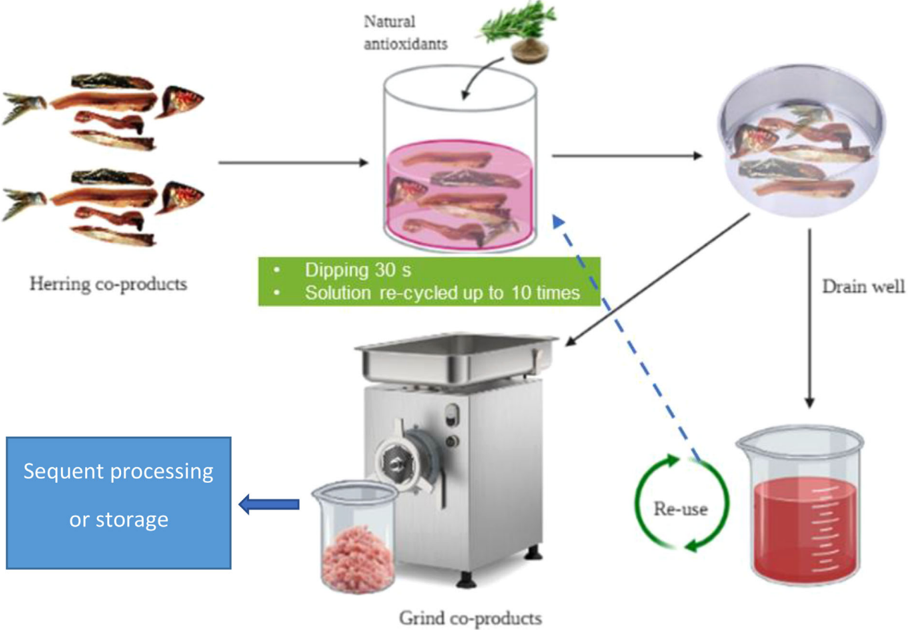
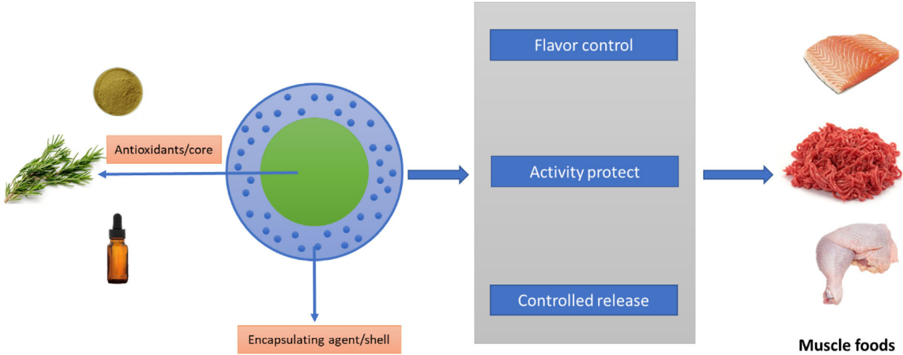
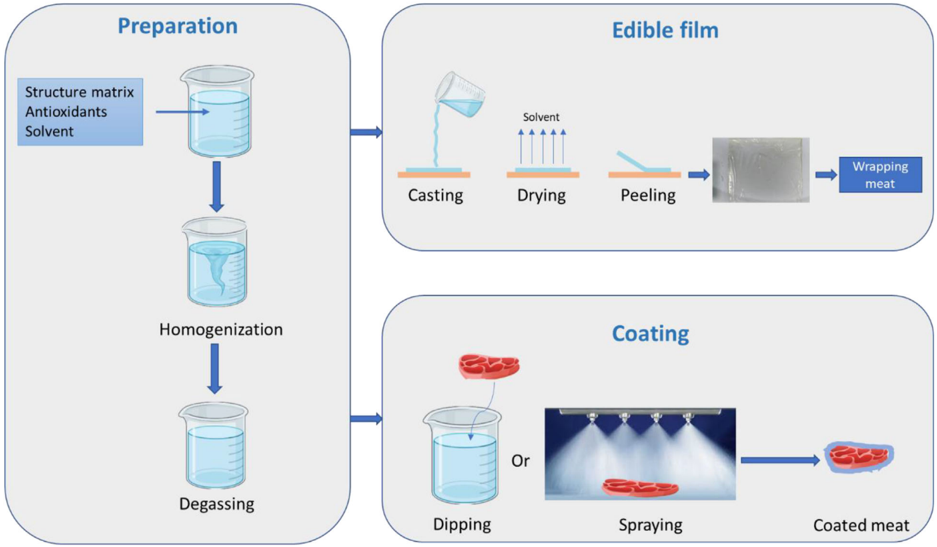
Lipid oxidation accelerates quality deterioration in muscle‐based foods (fish, red meat, and poultry), resulting in off‐odors/flavors, color problems, texture defects, and safety concerns. Adding antioxidants is one approach to control lipid oxidation, and several delivery strategies have been applied, such as supplementing antioxidants to the feed, direct mixing into minces, or, for whole muscle pieces; spraying, glazing, and injection. However, some issues linked to these technologies hinder their wide utilization, such as low effectiveness, noncompatibility with clean label, and off‐flavor. These shortcomings have promoted the development of new antioxidant delivery technologies. In this review, the main focus is on the principles, characteristics, and implementation of five novel antioxidant delivery methods in different types of muscle food products. Their advantages and drawbacks are also summarized, plus comments about future trends in this area. Among novel routes to deliver antioxidants to muscle foods are, for whole tissues, recyclable dipping solutions; for minces, encapsulation; and, for both minces and whole tissues, cross‐processing with nonmuscle antioxidant‐containing raw materials as well as applications of edible films/coatings and active packaging. Advantages of these technologies comprise, for example, low price, the possibility to control the antioxidant release rate, overcoming strong aromas from natural antioxidants, and allowing antioxidant‐containing raw materials from the food industry to be valorized, providing an opportunity for more circular food production.
Overview
The claims and statistics of this paper haven’t been checked yet.
Run the check — free, no account needed. It reads the open-access text and checks the sources it cites.
Integrity signals
Registry
Cites
Statistics
Figures



Verification
Claims the paper makes
The claims and statistics of this paper haven’t been checked yet.
Run the check — free, no account needed. It reads the open-access text and checks the sources it cites.
Claims other papers make about this one
Each is checked against this paper’s own text: does it say what the citing paper says it does?
In the citing paper
“BHT preserves the integrity of myofibrillar structures by preventing the formation of ROS, thereby mitigating the extent of proteolysis and maintaining muscle firmness [77,78].”
From Preservative Potential of Anethum graveolens Essential Oil on Fish Fillet Quality and Shelf Life During Refrigerated Storage (2025) · cites this paper as [78]
Self-check
Percentages, sums and reported differences re-computed from the paper’s own numbers.
The self-check needs the paper’s full text.
Citations
Cites
Shahidi, F., & Ambigaipalan, P. (2015) · Journal of Functional Foods · doi:10.1016/j.jff.2015.06.018 · Cited by 3,081 · cited 1×
“Lastly, once released, the effectiveness of the antioxidant is determined by its solubility characteristics (Shahidi & Ambigaipalan, 2015), and therefore the type of antioxidant should be selected as a function of the type of food.”
BackgroundThe Pecking Order of Free Radicals and Antioxidants: Lipid Peroxidation, α-Tocopherol, and Ascorbate
Buettner, G. R. (1993) · Archives of Biochemistry and Biophysics · doi:10.1006/abbi.1993.1074 · Cited by 2,417 · cited 1×
“The standard oneelectron reduction potential (1-ERP) of ●OH, RO●, ●OOH, and ROO● is+2300,+1600,+1060, and+1000 E◦’, respectively (Buettner, 1993).”
BackgroundBioactives from Agri-Food Wastes: Present Insights and Future Challenges
Ben-Othman, S., Jõudu, I., & Bhat, R. (2020) · Molecules · doi:10.3390/molecules25030510 · Cited by 482
Research works printed but not linked: 166
- 10.1016/j.foodchem.2020.127078 · DOI
- 10.3390/foods10050950 · DOI
- 10.1016/j.jmb.2007.11.086 · DOI
- 10.1016/j.tifs.2019.07.003 · DOI · Paper page
- 10.1016/j.tifs.2020.04.010 · DOI
- 10.1080/10408398.2020.1783199 · DOI
- 10.1016/j.foodchem.2005.11.014 · DOI
- 10.1002/prot.22236 · DOI
- 10.1016/j.jmb.2007.08.058 · DOI
- 10.1155/2020/9040535 · DOI
- 10.1002/app.44858 · DOI
- 10.1002/fsn3.1656 · DOI
- 10.1016/j.foodres.2019.108762 · DOI
- 10.1016/0003‐9861(71)90284‐0 · DOI
- 10.1016/j.lwt.2017.12.010 · DOI
- 10.1007/s00217‐020‐03621‐w · DOI
- 10.1016/S0021‐9258(18)53138‐0 · DOI
- 10.1080/87559129.2020.1804930 · DOI
- 10.1111/j.1365‐2621.1962.tb00052.x · DOI
- 10.1021/jf4006142 · DOI
- 10.1111/1750‐3841.13159 · DOI
- 10.1080/87559129.2020.1740732 · DOI
- 10.1016/j.ccr.2004.08.028 · DOI
- 10.1111/ijfs.13399 · DOI
- Chaijan M., 2017, Natural antioxidants, 21
- 10.1016/j.foodcont.2020.107400 · DOI
- 10.1080/10408398.2018.1453778 · DOI
- 10.1021/jf2045813 · DOI
- 10.5851/kosfa.2019.e31 · DOI
- 10.1016/j.fpsl.2017.04.009 · DOI
- 10.1186/s12917‐018‐1513‐1 · DOI
- 10.1182/blood‐2010‐04‐278887 · DOI
- Commission E., 2011, Commission Regulation (EU) No 1129/2011 of 11 November 2011 amending Annex II to Regulation (EC) No 1333/2008 of the European Parliament and of the Council by establishing a Union list of food additives, Official Journal of the European Union, 295, 1
- 10.1016/j.aquaculture.2017.06.017 · DOI
- 10.3382/ps/pey122 · DOI
- 10.1016/j.foodchem.2020.127385 · DOI
- 10.1016/j.foodres.2010.03.019 · DOI
- 10.1016/j.foodchem.2010.10.048 · DOI
- 10.1016/j.ifset.2010.12.006 · DOI
- 10.1111/j.1365‐2621.1990.tb01572.x · DOI
- 10.1016/j.foodchem.2017.07.034 · DOI
- 10.1016/j.foodchem.2010.06.088 · DOI
- 10.1111/jfpp.14194 · DOI
- 10.1016/j.foodres.2018.06.073 · DOI
- 10.3390/antiox8100429 · DOI
- 10.1016/j.foodcont.2018.04.052 · DOI
- 10.1007/s12393‐014‐9106‐7 · DOI
- 10.2903/j.efsa.2018.5373 · DOI
- 10.1016/j.lwt.2020.110370 · DOI
- 10.12739/NWSA.2019.14.4.5A0126 · DOI
- Farahi A., 2012, Effect of dietary supplementation of Melissa officinalis and Aloe vera on hematological traits, lipid oxidation of carcass and performance in rainbow trout (Oncorhynchus mykiss), Online Journal of Animal and Feed Research, 1, 1
- 10.1080/10498850.2017.1376025 · DOI
- 10.3382/ps.0702197 · DOI
- 10.1021/acs.iecr.9b02418 · DOI
- 10.1016/j.foodres.2008.09.004 · DOI
- 10.1016/j.tifs.2017.08.009 · DOI
- 10.1016/0005‐2760(86)90005‐6 · DOI
- 10.1016/j.ijfoodmicro.2018.06.015 · DOI
- 10.1016/j.tifs.2013.10.008 · DOI
- 10.1016/j.tifs.2018.10.006 · DOI
- 10.1021/jf061231d · DOI
- 10.1021/jf0603228 · DOI
- 10.1016/j.tifs.2020.05.007 · DOI
- 10.1016/j.lwt.2017.05.075 · DOI
- 10.1104/pp.106.077073 · DOI
- 10.1111/j.1365‐2621.1994.tb14695.x · DOI
- 10.1111/ijfs.14497 · DOI
- 10.1016/j.aquaculture.2018.10.022 · DOI
- 10.1016/j.ijfoodmicro.2017.11.003 · DOI
- 10.3390/ijms21041362 · DOI
- 10.1007/s13197‐011‐0290‐7 · DOI · Paper page
- 10.1016/j.meatsci.2016.04.005 · DOI
- 10.1016/j.meatsci.2010.09.012 · DOI
- 10.3390/medicines5010007 · DOI
- 10.3390/medicines5010011 · DOI
- 10.1002/jsfa.7328 · DOI
- 10.1111/j.1365‐2621.1987.tb06683.x · DOI
- 10.5740/jaoacint.16‐0410 · DOI
- 10.1016/j.foodres.2012.04.016 · DOI
- 10.17140/AFTNSOJ‐5‐155 · DOI
- 10.1021/ja00992a036 · DOI
- 10.5851/kosfa.2019.e37 · DOI
- 10.7546/CRABS.2018.01.18 · DOI
- 10.1093/ps/78.3.467 · DOI
- 10.1021/jf304266s · DOI
- 10.1111/jfpp.15772 · DOI
- Kupchak D., 2017, The study of the rheological characteristics of food systems combined minced, Science and Innovation in the Modern World: Engineering and Technology, 102
- 10.1002/pts.675 · DOI
- 10.1016/j.tifs.2016.11.014 · DOI
- 10.1111/j.1365‐2621.1970.tb12362.x · DOI
- 10.1111/j.1365‐2621.1975.tb02244.x · DOI
- 10.1111/jfpe.13088 · DOI
- 10.1111/1541‐4337.12229 · DOI
- 10.1107/S0907444900000093 · DOI
- 10.1016/j.tifs.2021.03.056 · DOI
- 10.1016/j.foodres.2017.02.003 · DOI
- 10.5937/jsscm1601135M · DOI
- 10.2331/suisan.20.308 · DOI
- 10.1002/fsn3.290 · DOI
- 10.1021/acs.jafc.7b05066 · DOI
- 10.1016/j.meatsci.2019.108018 · DOI
- 10.1007/s11947‐018‐2131‐4 · DOI
- 10.1023/a:1010268813926 · DOI
- 10.1039/C9NJ01048C · DOI
- 10.12944/CRNFSJ.7.2.11 · DOI
- 10.1016/j.foodchem.2017.02.023 · DOI
- 10.1016/j.cofs.2020.03.003 · DOI
- 10.1556/446.2021.30016 · DOI
- Niewiarowicz A., 1986, Content of myoglobin and haemoglobin in meat of different types of poultry, Fleischwirtschaft, 66, 1281
- 10.1016/j.foodres.2018.01.075 · DOI
- 10.1016/j.jfoodeng.2020.110006 · DOI
- 10.1007/BF00229642 · DOI
- 10.1007/s13197‐017‐2847‐6 · DOI
- 10.3389/fnut.2020.00060 · DOI · Paper page
- 10.1021/jf0518296 · DOI
- 10.1002/pts.944 · DOI
- 10.1016/0022‐2836(80)90262‐4 · DOI
- Pisula A., 1975, Separation of meat pigment by gel filtration on sephadex, Zeszyty Problemowe Postfpow Nauk Rolniczych, 167, 115
- 10.1016/j.meatsci.2018.01.011 · DOI
- 10.1016/j.tifs.2019.07.049 · DOI
- 10.1016/j.foodchem.2006.04.049 · DOI
- 10.1021/acs.jafc.9b08098 · DOI
- 10.1002/ejlt.200600091 · DOI
- 10.17221/57/2011‐CJFS · DOI
- 10.1111/j.1745‐4514.1987.tb00109.x · DOI
- 10.1021/jf051923m · DOI
- 10.1021/jf010562h · DOI
- 10.1021/jf0628633 · DOI
- 10.1021/bi00709a003 · DOI
- 10.1016/j.foodchem.2013.05.049 · DOI
- 10.1080/19440049.2013.879215 · DOI
- Schewe T., 1981, Methods in Enzymology. Lipids. Vol. 71. (Part C), 430
- 10.1021/acs.jafc.8b05215 · DOI
- 10.1016/j.meatsci.2014.03.020 · DOI
- 10.1080/10408398.2020.1812048 · DOI
- 10.1016/0005‐2736(82)90170‐5 · DOI
- 10.1590/fst.46420 · DOI
- 10.1080/02652030600699064 · DOI
- 10.1016/j.lwt.2013.12.033 · DOI
- 10.15587/1729‐4061.2017.108876 · DOI
- 10.1021/jf052811y · DOI
- 10.1016/j.fpsl.2020.100616 · DOI
- 10.1016/j.foodchem.2020.126744 · DOI
- 10.1080/10498850.2013.770113 · DOI
- 10.1002/jsfa.8779 · DOI
- 10.1016/j.foodchem.2011.11.060 · DOI
- 10.1021/jf070418h · DOI · Paper page
- 10.1016/j.lwt.2018.08.031 · DOI
- 10.1016/j.tifs.2020.01.032 · DOI
- 10.1021/jf9707795 · DOI
- 10.1021/jf9807871 · DOI
- 10.1016/0891‐5849(95)02031‐4 · DOI
- 10.1016/j.lwt.2019.108546 · DOI
- 10.1016/j.tifs.2017.08.001 · DOI
- 10.1007/s13197‐018‐3429‐y · DOI
- 10.1016/j.foodcont.2020.107536 · DOI
- 10.1016/j.foodchem.2021.129973 · DOI
- 10.1007/s11947‐021‐02717‐9 · DOI
- 10.1016/j.foodchem.2020.126337 · DOI
- 10.1016/j.foodcont.2021.107963 · DOI
- 10.1016/j.foodchem.2020.127729 · DOI · Paper page
- 10.1021/acs.jafc.7b02764 · DOI
- 10.1007/s00217‐017‐2878‐2 · DOI
- 10.1080/10498850.2017.1366610 · DOI
- 10.1111/1541‐4337.12322 · DOI
- 10.1080/10408398.2019.1596067 · DOI
Cited by
Ceja-Galicia, Z. A., Cespedes-Acuña, C. L. A., & El-Hafidi, M. (2025) · International Journal of Molecular Sciences · doi:10.3390/ijms26020788 · Cited by 61
Tayel, A., Hassanin, F. S., Edris, S. N., Hamad, A., & Sabeq, I. I. (2025) · Foods · doi:10.3390/foods14091591 · Cited by 7
Metadata
- Authors
- Wu, H., Richards, M. P., & Undeland, I.
- Affiliations
- Department of Biology and Biological Engineering–Food and Nutrition Science Chalmers University of Technology Gothenburg Sweden
- Meat Science and Animal Biologics Discovery Program Department of Animal and Dairy Sciences University of Wisconsin–Madison Madison Wisconsin USA
- Venue
- Comprehensive Reviews in Food Science and Food Safety
- Publisher
- Wiley
- Published
- 2022-01-26
- Volume
- 21
- Issue
- 2
- Pages
- 1275-1299
- ISSN
- 1541-4337
- Cited by
- 150
- References
- 3
- Language
- en
- Funders
- Västra Götalandsregionen (2019‐00345)
- National Institute of Food and Agriculture (2019‐67017‐29179)
About these checks
Registry, retraction, Cites and statistics results are computed, not judged, with one exception: a printed reference that no index lists is read once by a model before it counts as a citation error. Claims are extracted by a model and kept only when their quote appears verbatim in the text; each cited source is then checked, with a model’s help, for whether it says what the claim relies on. Those verdicts can be wrong — read the claim’s quote and the cited source before relying on one.
Statistics and arithmetic are recomputed, not judged.
Confidence bands are shown only for fields calibrated on our annotated test set. None is calibrated yet, so no band is shown.
What counts as a claim ›How we measure confidence ›How we check this ›
Are you an author, or do you see a problem with this page? Request a review
Data sources
Bibliographic data: Semantic Scholar, OpenAlex, Crossref.
Contains information from the Semantic Scholar Academic Graph Datasets, made available under the ODC Attribution License (ODC-BY 1.0).
Semantic Scholar’s data is described in: Kinney, R., et al. (2023). The Semantic Scholar Open Data Platform. arXiv:2301.10140.
