

The DOI matches its Crossref record; 74 of the 77 references it cites were found in a registry or an index.
Hypoglycaemia in Type 2 diabetes
Open accessAbstract
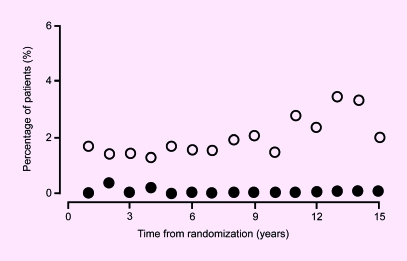
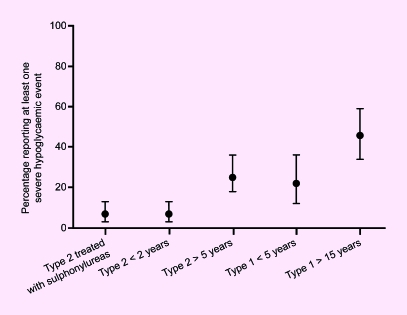
The primary cause of hypoglycaemia in Type 2 diabetes is diabetes medication—in particular, those which raise insulin levels independently of blood glucose, such as sulphonylureas (SUs) and exogenous insulin. The risk of hypoglycaemia is increased in older patients, those with longer diabetes duration, lesser insulin reserve and perhaps in the drive for strict glycaemic control. Differing definitions, data collection methods, drug type/regimen and patient populations make comparing rates of hypoglycaemia difficult. It is clear that patients taking insulin have the highest rates of self‐reported severe hypoglycaemia (25% in patients who have been taking insulin for > 5 years). SUs are associated with significantly lower rates of severe hypoglycaemia. However, large numbers of patients take SUs in the UK, and it is estimated that each year > 5000 patients will experience a severe event caused by their SU therapy which will require emergency intervention. Hypoglycaemia has substantial clinical impact, in terms of mortality, morbidity and quality of life. The cost implications of severe episodes—both direct hospital costs and indirect costs—are considerable: it is estimated that each hospital admission for severe hypoglycaemia costs around £1000. Hypoglycaemia and fear of hypoglycaemia limit the ability of current diabetes medications to achieve and maintain optimal levels of glycaemic control. Newer therapies, which focus on the incretin axis, may carry a lower risk of hypoglycaemia. Their use, and more prudent use of older therapies with low risk of hypoglycaemia, may help patients achieve improved glucose control for longer, and reduce the risk of diabetic complications.
Overview
The claims and statistics of this paper haven’t been checked yet.
Run the check — free, no account needed. It reads the open-access text and checks the sources it cites.
Integrity signals
Registry
Cites
Statistics
Figures
Verification
Claims the paper makes
The claims and statistics of this paper haven’t been checked yet.
Run the check — free, no account needed. It reads the open-access text and checks the sources it cites.
Claims other papers make about this one
Each is checked against this paper’s own text: does it say what the citing paper says it does?
In the citing paper
“plasma glucose concentrations ≤3.9 mmol/l (70 mg/dl) sometimes occur in non-diabetic individuals [1,3].This is true, particularly in women and children, albeit generally during prolonged fasting.”
From Preventing hypoglycaemia: what is the appropriate glucose alert value? (2009) · cites this paper as [3]
In the citing paper
“they recommend a therapeutic plasma glucose concentration lower limit of 4.0-4.5 mmol/l (72-81 mg/dl).”
From Preventing hypoglycaemia: what is the appropriate glucose alert value? (2009) · cites this paper as [3]
In the citing paper
“Amiel et al. [3] also suggest a value of 3.5 mmol/l (63 mg/dl).”
From Preventing hypoglycaemia: what is the appropriate glucose alert value? (2009) · cites this paper as [3]
In the citing paper
“However, maintaining glycaemic control in patients is no easy task, as hypo- or hyperglycaemia can result from administration of the currently available treatments resulting in either too much or not enough, respectively, of an anti-hyperglycaemic effect.3,48”
From A review of current trends with type 2 diabetes epidemiology, aetiology, pathogenesis, treatments and future perspectives (2021) · cites this paper as [48]
Self-check
Percentages, sums and reported differences re-computed from the paper’s own numbers.
The self-check needs the paper’s full text.
Citations
Cites
Stratton, I. M. (2000) · BMJ · doi:10.1136/bmj.321.7258.405 · Cited by 9,059
Turner, R. C., Fox, C., Matthews, McElroy, H. H., Cull, C. A., Holman, R. R., Neil, P., Hadden, D. R., Wright, D., Manley, E., et al. (1998) · The Lancet · Cited by 8,419
Dormandy, J. A., Charbonnel, B., Eckland, D. J., Erdmann, E., Massi-Benedetti, M., Moules, I. K., Skene, A. M., Tan, M. H., Lefèbvre, P. J., Murray, G. D., et al. (2005) · The Lancet · doi:10.1016/s0140-6736(05)67528-9 · Cited by 4,129
Glycemic durability of rosiglitazone, metformin, or glyburide monotherapy
Kahn, S. E., Haffner, S. M., Heise, M. A., Herman, W. H., Holman, R. R., Jones, N. P., Kravitz, B. G., Lachin, J. M., O'Neill, M. C., Zinman, B., et al. (2006) · New England Journal of Medicine · doi:10.1056/nejmoa066224 · Cited by 2,962
DeFronzo, R. A., Ratner, R. E., Han, J., Kim, D. D., Fineman, M. S., & Baron, A. D. (2005) · Diabetes Care · doi:10.2337/diacare.28.5.1092 · Cited by 1,559
Buse, J. B., Henry, R. R., Han, J., Kim, D. D., Fineman, M. S., Baron, A. D., & for the Exenatide-113 Clinical Study Group (2004) · Diabetes Care · doi:10.2337/diacare.27.11.2628 · Cited by 1,346
Kendall, D. M., Riddle, M. C., Rosenstock, J., Zhuang, D., Kim, D. D., Fineman, M. S., & Baron, A. D. (2005) · Diabetes Care · doi:10.2337/diacare.28.5.1083 · Cited by 1,177
Cryer, P. E., Davis, S. N., & Shamoon, H. (2003) · Diabetes Care · doi:10.2337/diacare.26.6.1902 · Cited by 1,160
Defining and Reporting Hypoglycemia in Diabetes
American Diabetes Association Workgroup on Hypoglycemia (2005) · Diabetes Care · doi:10.2337/diacare.28.5.1245 · Cited by 1,146
Research works printed but not linked: 3
- Canadian Diabetes Association, 2003, Hypoglycemia, Can J Diabetes, 27, S43
- 10.1210/jc.82.5.1458 · DOI
- Curtis L, 2006, Unit Costs of Health and Social Care
Cited by
Sorted by citations
Items 401–472 of 472
Williams, M. E., & Stanton, R. C. (2012) · Elsevier eBooks · doi:10.1016/b978-0-12-391934-2.00031-x · Cited by 1
Ahluwalia, R., & Vora, J. P. (2012) · The British Journal of Diabetes · doi:10.1177/1474651411431846 · Cited by 1
Mistry, M., Lister, N., Andrews, C., Geransar, P., & Sinclair, A. J. (2011) · The British Journal of Diabetes · doi:10.1177/1474651411421500 · Cited by 1
Hypoglycemia in Insulin-Treated Adults on Established Nasogastric Feeding in the General Ward
Vindedzis, S. A., Sherriff, J. L., & Stanton, K. G. (2014) · The Science of Diabetes Self-Management and Care · doi:10.1177/0145721714523510 · Cited by 1
Kairi, J. K., Mohan, P., & Saini, S. (2019) · Journal of Family Medicine and Primary Care · doi:10.4103/jfmpc.jfmpc_417_18 · Cited by 1
Success of a sports-club led-community X-PERT Diabetes Education Programme
Morgan, A., Drew, D., Clifford, A., & Hull, K. (2018) · Routledge eBooks · doi:10.4324/9781315147079-9 · Cited by 1
Hypoglycemic syndrome in emergency medicine (lecture)
Halushko, O. A. (2022) · EMERGENCY MEDICINE · doi:10.22141/2224-0586.18.7.2022.1525 · Cited by 1
Antidiabetic Studies of Cnestis ferruginea Ethanolic Root Extract in Wistar Rats
Okoro, E. O., Oghenevwodokohwo, I. O., & Inegbedion, A. (2023) · Nigerian Journal of Pure and Applied Sciences · doi:10.48198/njpas/23.a17 · Cited by 1
Features of glucose lowering therapies and glycemic control during Ramadan fasting
Galstyan, G. R., Krylov, V. V., Valeeva, F. V., Моругова, Т. В., & Gufraeva, A. F. (2012) · Obesity and metabolism · doi:10.14341/omet2012270-76 · Cited by 1
Practical Aspects of Insulin Therapy
Crasto, W., Jarvis, J., & Davies, M. J. (2016) · Springer eBooks · doi:10.1007/978-3-319-10939-8_6 · Cited by 1
Hypoglycemia among Insulin-treated Patients with Diabetes: Egypt Cohort of IO HAT Study
Hefnawy, M. H. M. F. E., Abdelaaty, T., Bassyouni, A., Saleem, H. M., Khalid, M., Toaima, D. N., & Maree, M. A. G. (2018) · The Open Diabetes Journal · doi:10.2174/1876524601808010034 · Cited by 1
Lane, W. S., Favaro, E., Jódar, E., Kelkar, P., Oviedo, A., Sivarathinasami, R., Senior, P. A., Sesti, G., & Franek, E. (2022) · Diabetes Therapy · doi:10.1007/s13300-022-01213-3 · Cited by 1
Hypoglycemia caused by Insulin
Liatis, S., & Katsilambros, N. L. (2011) · Wiley eBooks · doi:10.1002/9781119971825.ch4 · Cited by 1
Inzidenz und Risikofaktoren für schwere Hypoglykämien bei behandelten Typ-2-Diabetespatienten
Jecht, M. (2014) · Der Diabetologe · doi:10.1007/s11428-014-1283-8
EVALUATING THE ROLE OF HYPOGLYCEMIA & COMORBID ILLNESS ON DIABETES MANAGEMENT BEHAVIORS
Rege, S. V. (2014) · Digital Commons - URI (University of Rhode Island) · doi:10.23860/diss-rege-saumitra-2014
Ponce, M., & Stalin, L. (2014) · Americanae (AECID Library)
Mechanisms of hypoglycaemia related sudden cardiac death in type 2 diabetes mellitus
Chow, E. (2015) · White Rose eTheses Online (University of Leeds, The University of Sheffield, University of York)
CLINICAL ASPECTS ON GLUCOSE-LOWERING THERAPIES IN TYPE 2 DIABETES
Nybäck‐Nakell, Å. (2012) · Figshare
Ikegwuonu, T. (2013) · Stirling Online Research Repository (University of Stirling)
Liraglutide: A Review of its Use in the Treatment of Diabetes Mellitus
Nicolucci, A., & Rossi, M. C. (2010) · Clinical Medicine Reviews in Vascular Health · doi:10.4137/cmrvh.s1652
Stoornissen van het glucosemetabolisme – forensische postmortemanalyses: deel I
Hess, C., Mußhoff, F., & Madea, B. (2014) · Nederlands Tijdschrift voor Diabetologie · doi:10.1007/s12467-014-0006-5
Lasalle, J. (2013) · Osteopathic Family Physician · doi:10.1016/j.osfp.2012.11.002
Glibenclamide: proven facts, perspectives, discussions
Чепляева, Н. И. (2013) · Problems of Endocrinology · doi:10.14341/probl201359357-62
The impact of steroids on diabetes control and management
Bates, C. (2011) · Practice Nursing · doi:10.12968/pnur.2011.22.9.472
¿Qué ha cambiado en la estrategia terapéutica de la diabetes mellitus tipo 2?
Casado, P., Szymaniec, J., & Conthe, P. (2010) · Revista Clínica Española · doi:10.1016/s0014-2565(10)70004-7
Le diabète de type 2 au stade de l’insuline : Quelle place pour les inhibiteurs de la DPP-4 ?
Halimi, S., Charbonnel, B. H., Monguillon, P., & Dejager, S. (2015) · Médecine des Maladies Métaboliques · doi:10.1016/s1957-2557(15)30011-0
Predicting severe hypoglycemia in the community: a review of recent evidence
Davis, W. A. (2011) · Diabetes Management · doi:10.2217/dmt.10.8
Rodbard, H. W., Jellinger, P. S., Davidson, J. A., EINHORN, D. F., Garber, A. J., Grunberger, G., Handelsman, Y., Horton, E. S., Lebovitz, H. E., Levy, P. T., et al. (2009)
Insulina aspart en pacientes de edad avanzada
Trujillo, F. M. G. (2012) · Avances en Diabetología · doi:10.1016/s1134-3230(12)70024-8
Lucas, E. G., Rey, V. R., Gutiérrez, J. M. Á., & García, J. J. L. (2012) · Medicine - Programa de Formación Médica Continuada Acreditado · doi:10.1016/s0304-5412(12)70433-x
Leksell, J. K., Andersson, M., & Carlsson, B. (2014) · Diabetes Research and Treatment Open Access · doi:10.14437/2377-7206-1-103
Barriers to insulin starts for type 2 diabetes
Wong, L. (2007) · Practice Nursing · doi:10.12968/pnur.2007.18.3.23285
Baltacı, D., Kutlucan, A., Türker, Y., Deler, M. H., Sariguzel, F., Ozcan, E., Ankaralı, H. Ç., & Kara, İ. H. (2015) · DSpace - Düzce (Duzce University)
Grunberger, G., Abelseth, J. M., Bailey, T. S., Bode, B. W., Handelsman, Y., Hellman, R., Lane, W. S., Raskin, P., Tamborlane, W. V., & Rothermel, C. (2014)
Hypoglycaemia: patient inconvenience or serious cardiovascular risk?
(2014) · British Journal of Cardiology · doi:10.5837/bjc.2014.031
Variabilité glycémique et hyperglycémie postprandiale : quelle importance au-delà del’HbA1c?
Monnier, L., Colette, C., Wojtusciszyn, A., & Dejager, S. (2015) · Médecine des Maladies Métaboliques · doi:10.1016/s1957-2557(15)30260-1
Unit 4. Article 1 Hypoglycaemia in type 2 diabetes
MacArthur, C. (2011) · Practice Nursing · doi:10.12968/pnur.2011.22.8.cpd6
Management of Diabetic Nephropathy in the Elderly: Special
Alhamad, T., Brian Reeves, W., & Awad, A. S. (2012)
Diabetische Notfallsituationen – die Hypoglykämie
Siegmund, T., & Schumm‐Draeger, P. (2014) · Der Diabetologe · doi:10.1007/s11428-014-1264-y
Neville, K. (2010) · Topics in Geriatric Rehabilitation · doi:10.1097/tgr.0b013e3181ef316c
Tavares, N. R. (2012) · Biomedical and Biopharmaceutical Research · doi:10.19277/bbr.9.1.25
Indu, K. C. (2016) · Medical Journal of Shree Birendra Hospital · doi:10.3126/mjsbh.v15i1.15018
Biphasic Insulin Analogs for Treatment of Diabetes: A Review
(2011) · The Internet Journal of Family Practice · doi:10.5580/d20
Szczęśniak, G., Jaworska, J., Jaworski, T., & Dziemidok, P. (2012) · PubMed
Analoghi del glucagon-like peptide-1: effetti su glicemia e peso corporeo
Ruffo, M., Hribal, M. L., & Sesti, G. (2010) · Giornale italiano di cardiologia · doi:10.1714/565.6705
Crăciun, C.-I., Craciun, A. E., Rusu, A., Bocșan, I. C., Hâncu, N., & Buzoianu, A. D. (2018) · Revista română de medicină de laborator · doi:10.2478/rrlm-2018-0010
Shah, K., PATANGE, S. A., & GANDHI, A. P. (2019) · Integrative Diabetes and Cardiovascular Diseases · doi:10.18314/idcd.v3i1.1494
Hypoglycaemia as predictor of cardiovascular accidents
Doskina, E. V., & Марленович, Т. Б. (2013) · Cardiosomatics · doi:10.26442/cs45041
Health-Related Quality of life in patients with type 2 diabetes undergoing therapy intensification
Hajos, T. R. S. (2013) · Digital Academic REpository of VU University Amsterdam (Vrije Universiteit Amsterdam)
Mengurangi Kecemasan pada Pasien Diabetes Melalui Konseling Kelompok Kognitif Behavioral
Yusriany, R., & Purnamasari, A. (2021) · Selamat Datang di Repository UAD (Universitas Ahmad Dahlan) · doi:10.35134/jpsy165.v14i2.108
Hypoglycemia in Diabetes Mellitus
Alsahli, M., & Gerich, J. E. (2017) · Springer eBooks · doi:10.1007/978-3-319-18741-9_19
Lamos, E. M., Younk, L. M., & Davis, S. N. (2018) · Wiley eBooks · doi:10.1002/9781119374800.ch31
Current literature in diabetes
(2008) · Diabetes/Metabolism Research and Reviews · doi:10.1002/dmrr.907
Hypoglycemia in Diabetes Mellitus
Alsahli, M., & Gerich, J. E. (2015) · Springer eBooks · doi:10.1007/978-3-319-20797-1_19-1
Williams, M. E., & Stanton, R. C. (2021) · Elsevier eBooks · doi:10.1016/b978-0-12-818540-7.00006-9
Hypoglycaemia in the treatment of diabetes mellitus
Choudhary, P., & Amiel, S. A. (2011) · doi:10.1093/med/9780199235292.003.1435
Self-citationPamela, T. S.-X., Hui-Chen, C., Taylor, B. J., & Hegney, D. G. (2011) · The JBI Database of Systematic Reviews and Implementation Reports · doi:10.11124/01938924-201109500-00001
Pamela, T. S.-X., Hui-Chen, C., Taylor, B. J., & Hegney, D. G. (2011) · JBI Library of Systematic Reviews · doi:10.11124/jbisrir-2011-98
Ampudia‐Blasco, F. J., Galán, M., & Brod, M. I. (2014) · Endocrinología y Nutrición (English Edition) · doi:10.1016/j.endoen.2014.07.003
Les hypoglycémies iatrogènes : impacts immédiats et à long terme
Monnier, L., & Colette, C. (2024) · Médecine des Maladies Métaboliques · doi:10.1016/j.mmm.2024.02.001
Altynbekova, S., Fadeev, V. V., Abylaiuly, Z., & Bolshakova, S. (2024) · Diabetes Mellitus · doi:10.14341/dm13179
Amer, S. B., Al-Sawalmeh, K. M., Al-Slati, Y., Almemeh, L., Amoorah, B., Melhem, M., Al-Zoubi, R. M., & Alanazi, A. (2024) · medtigo Journal of Medicine · doi:10.63096/medtigo3062245
Jatrogena hipoglikemija u oboljelih od šećerne bolesti tipa 2 – podcijenjen problem
Berković, M. C. (2013) · Medix : specijalizirani medicinski dvomjesečnik
Shen, A., Zeng, D., Li, R., Liu, P., Luo, K., Zhang, B., Song, Y., Cai, J., Zhang, Y., Yang, Z., et al. (2026) · Journal of Photochemistry and Photobiology A Chemistry · doi:10.1016/j.jphotochem.2026.117268
A Patient- and Function-Centric Model/Approach for Hypoglycemia Management in Older Adults
Alagiakrishnan, K., Mereu, L., Rahim, G., Ghosh, M., & Vu, A. (2026) · Geriatrics · doi:10.3390/geriatrics11050118
Pîrșcoveanu, D. F. V., Pluta, I. D., Dîrnu, R., Vlădulescu, C., Trașcă, D.-M., Văruț, R. M., Kamal, A. M., Stoica, M., Pura, G., Popa, R., et al. (2026) · Molecules · doi:10.3390/molecules31142415
Metadata
- Authors
- Amiel, S. A., Dixon, T., Mann, R., & Jameson, K.
- Affiliations
- King's College London (GB)
- University of Sheffield (GB)
- MSD (UK) Limited (United Kingdom) (GB)
- Corresponding author
- Amiel, S. A.
- Venue
- Diabetic Medicine
- Publisher
- Wiley
- Published
- 2008-02-27
- Volume
- 25
- Issue
- 3
- Pages
- 245-254
- ISSN
- 0742-3071 (ISSN-L)
- 1464-5491
- PMC
- PMC2327221
- OpenAlex
- W2156888511
- Cited by
- 472
- References
- 77
- Citations by year
- 2026: 4 · 2025: 7 · 2024: 10 · 2023: 11 · 2022: 15 · 2021: 14 · 2020: 15 · 2019: 22 · 2018: 34 · 2017: 17 · 2016: 29 · 2015: 33 · 2014: 46 · 2013: 55 · 2012: 46
- FWCI
- 5.23
- Type
- journal article
- Language
- en
- Open access
- bronze
- doi.org
- Locations
- Diabetic Medicine (publishedVersion)
- PubMed Central (publishedVersion, cc-by)
- PubMed (publishedVersion)
- Research Portal (King's College London) (submittedVersion)
- Topics
- Health Sciences › Medicine › Endocrinology, Diabetes and Metabolism › Diabetes Management and Research
- Health Sciences › Medicine › Endocrinology, Diabetes and Metabolism › Diabetes Treatment and Management
- Health Sciences › Medicine › Public Health, Environmental and Occupational Health › Patient Safety and Medication Errors
- Keywords
- hypoglycemia, type 2 diabetes, sulfonylureas, insulin therapy, severe hypoglycemia, glycemic control, incretin-based therapy, hospital costs, diabetes complications
- MeSH terms
- Diabetes Mellitus, Type 2, Hospitalization, Humans, Hypoglycemia, Insulin, Risk Factors, Sulfonylurea Compounds, Antidiuretic Agents
About these checks
Registry, retraction, Cites and statistics results are computed, not judged, with one exception: a printed reference that no index lists is read once by a model before it counts as a citation error. Claims are extracted by a model and kept only when their quote appears verbatim in the text; each cited source is then checked, with a model’s help, for whether it says what the claim relies on. Those verdicts can be wrong — read the claim’s quote and the cited source before relying on one.
Statistics and arithmetic are recomputed, not judged.
Confidence bands are shown only for fields calibrated on our annotated test set. None is calibrated yet, so no band is shown.
What counts as a claim ›How we measure confidence ›How we check this ›
Are you an author, or do you see a problem with this page? Request a review
