

The DOI matches its Crossref record; 24 of the 24 references it cites were found in a registry or an index.
Efficacy of Lifting Threads Composed of Poly(L‐Lactide‐Co‐ε‐Caprolactone) Copolymers Coated With Hyaluronic Acid: A Long‐Term Study on Biorevitalizing Properties in Skin Remodeling
Open accessAbstract
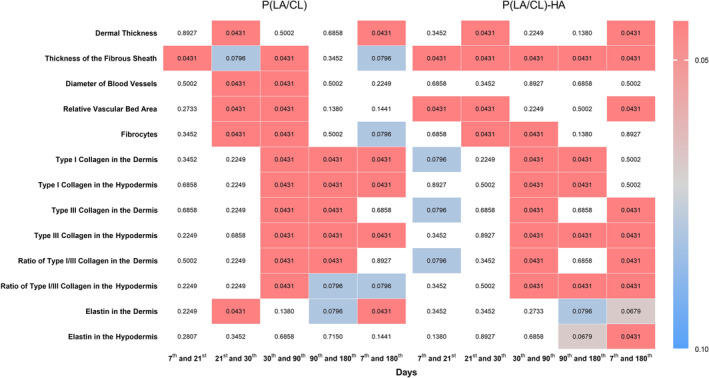
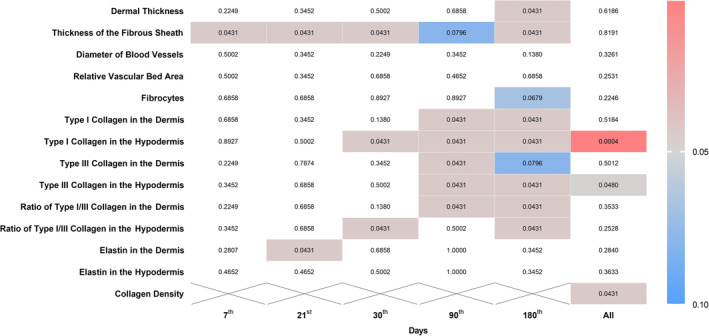
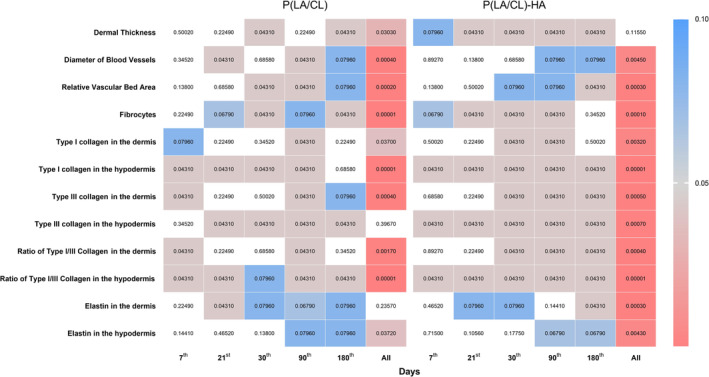
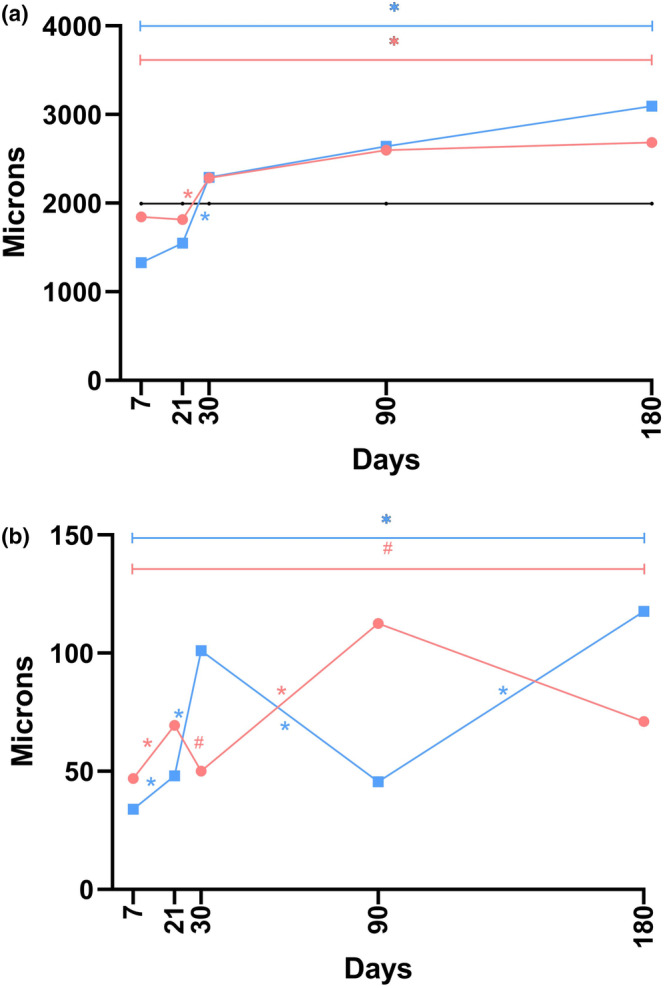
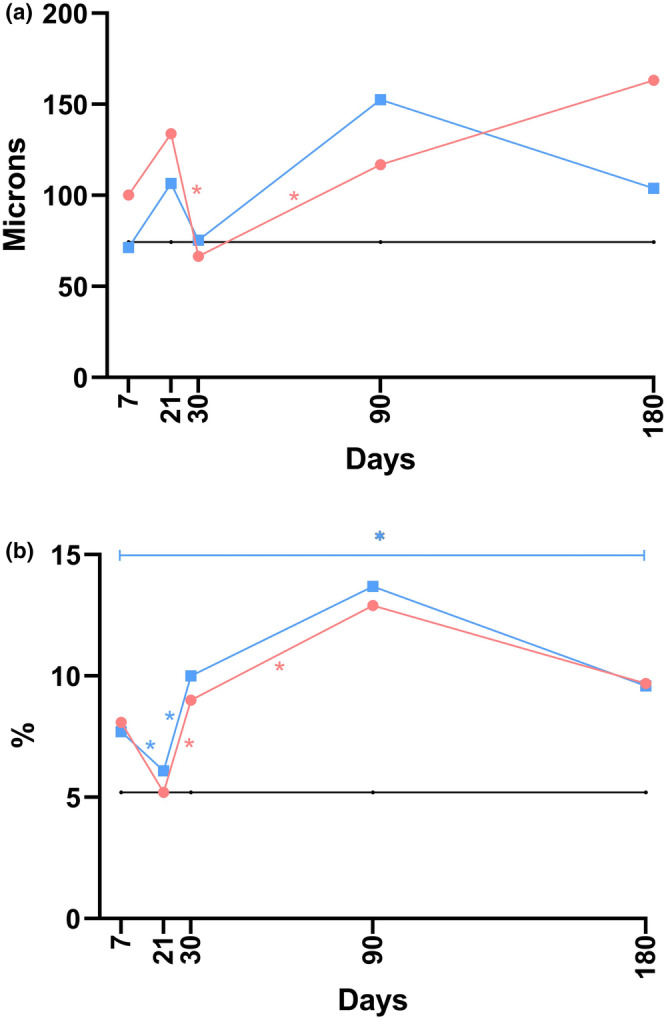
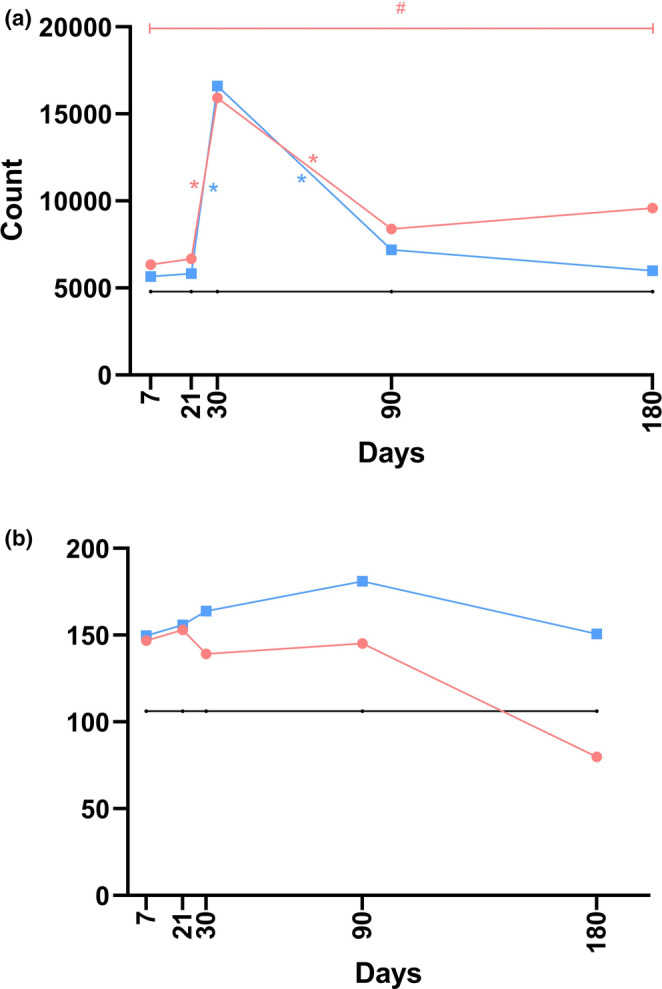
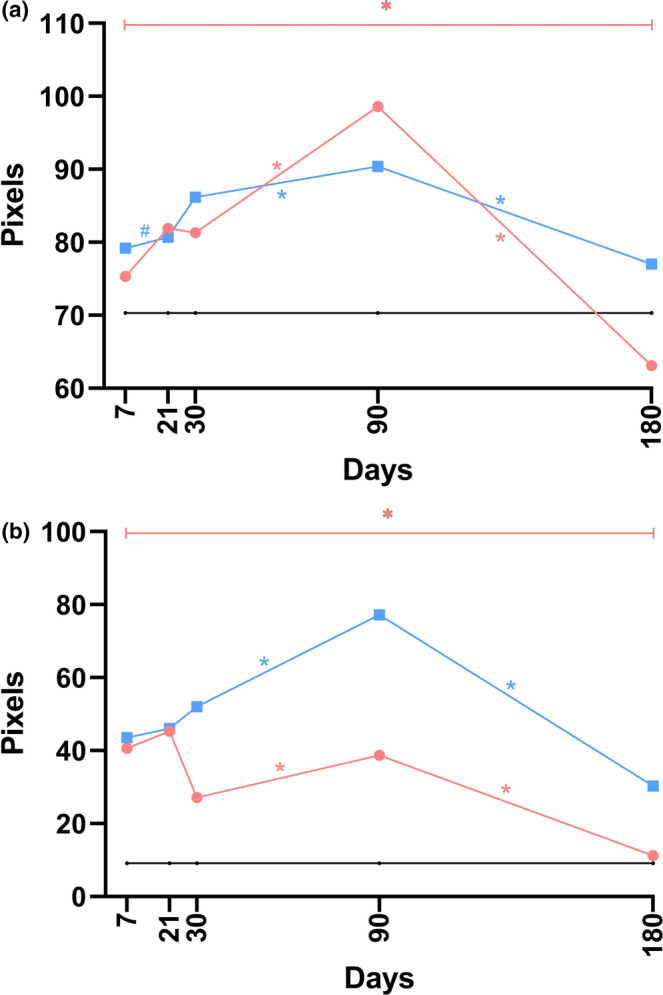
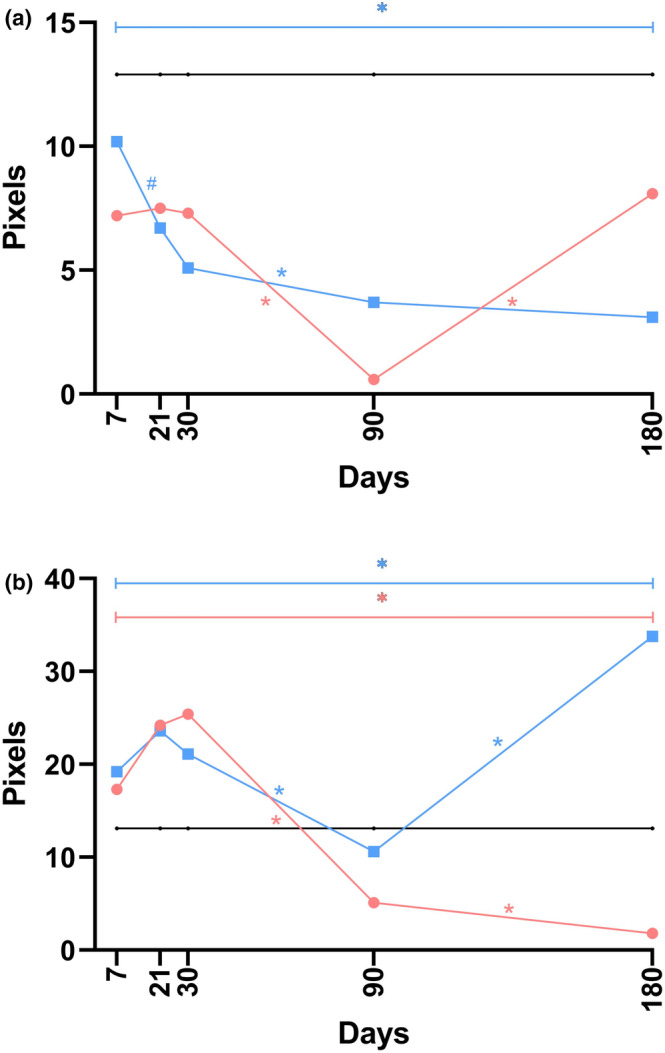
Background: Facial thread lifting, which is popular in aesthetic medicine because of its minimal invasiveness, has led to advancements in the use of biodegradable polymers such as poly(L‐lactide‐co‐ε‐caprolactone) (P(LA/CL)) and its hyaluronic acid‐coated variant (P(LA/CL)‐HA). These developments enhance biocompatibility and efficacy, offering prolonged benefits through better biostimulation and tissue integration. Methods: A controlled experiment involving five 4‐month‐old female pigs compared the effectiveness of P(LA/CL) and P(LA/CL)‐HA threads over six months. After being implanted into the subcutaneous layer parallel to the skin of each pig, the threads were evaluated through histological analysis at intervals (7, 21, 30, 90, and 180 days) to assess changes in dermal and hypodermal structures, collagen types, elastin levels, and tissue integration via stains such as hematoxylin and eosin (H&E), Weigert‐Van Gieson, and Sirius Red. Results: P(LA/CL) and P(LA/CL)‐HA threads significantly led to dermal and hypodermal remodeling. By day 180, a comparative analysis via the Wilcoxon test revealed that P(LA/CL)‐HA significantly outperformed P(LA/CL) in most histological indicators because of the biostimulatory effects of hyaluronic acid. Conclusions: Our study investigated the effects of two types of bioabsorbable threads, P(LA/CL) and P(LA/CL)‐HA, on skin remodeling over 180 days in a porcine model. These results highlight the significant role of thread composition in tissue remodeling and suggest that incorporating HA could optimize therapeutic and aesthetic outcomes. Further clinical research is necessary to confirm these findings in human subjects.
Overview
The claims and statistics of this paper haven’t been checked yet.
Run the check — free, no account needed. It reads the open-access text and checks the sources it cites.
Integrity signals
Registry
Cites
Statistics
Figures
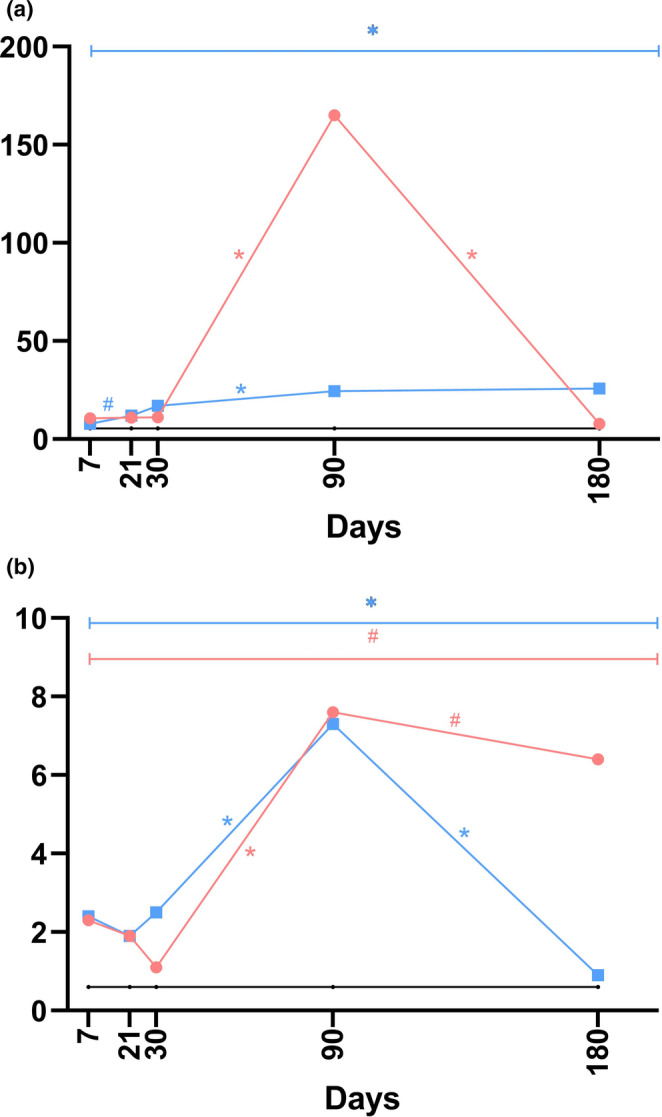
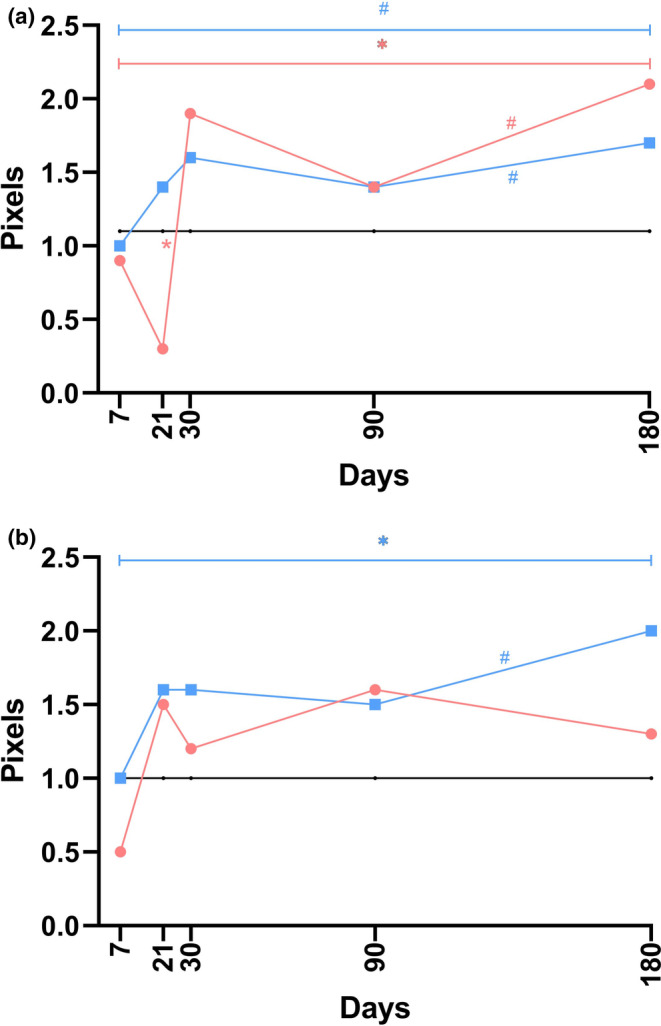
Verification
Claims the paper makes
The claims and statistics of this paper haven’t been checked yet.
Run the check — free, no account needed. It reads the open-access text and checks the sources it cites.
Claims other papers make about this one
Each is checked against this paper’s own text: does it say what the citing paper says it does?
The source backs part of the claim, not all of it — or backs it for a different population, condition or comparison.
In the citing paper
“Furthermore, through various fabrication techniques and by incorporating drugs, cells, or bioactive factors, PLCL has been successfully applied across diverse fields, including skin wound healing, neural repair, osteochondral regeneration, vascular and urethral graft fabrication, biological meshes, drug delivery, and stem cell culture [1, 18, 196, 225, 229–231].”
From Application of PLCL as a biodegradable polymer in biomedical engineering (2026) · cites this paper as [230]
Experimental — accuracy not yet measured
Self-check
Percentages, sums and reported differences re-computed from the paper’s own numbers.
The self-check needs the paper’s full text.
Citations
Cites
Wound healing: cellular mechanisms and pathological outcomes
Wilkinson, H. N., & Hardman, M. J. (2020) · Open Biology · doi:10.1098/rsob.200223 · Cited by 1,995
Hyaluronic acid: A key molecule in skin aging
Papakonstantinou, E., Roth, M., & Karakiulakis, G. (2012) · Dermato-Endocrinology · doi:10.4161/derm.21923 · Cited by 1,031
Hyaluronic Acid in Inflammation and Tissue Regeneration.
Litwiniuk, M., Krejner, A., Speyrer, M. S., Gauto, A. R., & Grzela, T. (2016) · PubMed · Cited by 523
Hyaluronic Acid: A Key Ingredient in the Therapy of Inflammation
Marinho, A., Nunes, C., & Reis, S. (2021) · Biomolecules · doi:10.3390/biom11101518 · Cited by 500
The science of hyaluronic acid dermal fillers
Tezel, A., & Fredrickson, G. H. (2008) · Journal of Cosmetic and Laser Therapy · doi:10.1080/14764170701774901 · Cited by 405
Clinical Relevance of Elastin in the Structure and Function of Skin
Baumann, L., Bernstein, E. F., Weiss, A. S., Bates, D., Humphrey, S. D., Silberberg, M., & Daniels, R. (2021) · Aesthetic Surgery Journal Open Forum · doi:10.1093/asjof/ojab019 · Cited by 184
Chen, L. H., Xue, J. F., Zheng, Z., et al. (2018) · International Journal of Biological Macromolecules · doi:10.1016/j.ijbiomac.2018.05.068 · Cited by 130
Facial thread lifting with suture suspension
Tavares, J. D. P., de Oliveira, C. A. C. P., Torres, R. P., et al. (2017) · Brazilian Journal of Otorhinolaryngology · doi:10.1016/j.bjorl.2017.03.015 · Cited by 90
Ye, H., Zhang, R., Zhang, C., Xia, Y., & Jin, L. (2024) · Asian Journal of Surgery · doi:10.1016/j.asjsur.2024.08.100 · Cited by 69
Synthesis of Poly(l-lactide-co-ε-caprolactone) Copolymer: Structure, Toughness, and Elasticity
Zhang, M., Chang, Z., Wang, X., & Li, Q. (2021) · Polymers · doi:10.3390/polym13081270 · Cited by 59 · cited 1×
“This material, which is applied in various domains of tissue engineering and regenerative medicine, as well as aesthetic medicine, exhibits excellent biocompatibility, safety, and tolerability and is suitable for applications requiring prolonged duration due to its slower degradation rate [8–10].”
Research works printed but not linked: 1
- Berardesca E., 2020, Reshaping With Barbed Threads. 2020th
Cited by
Sorted by citations
Application of PLCL as a biodegradable polymer in biomedical engineering
Zhao, Y., & Liu, H. (2026) · Journal of Materials Science Materials in Medicine · doi:10.1007/s10856-026-07016-3 · Cited by 7
Metadata
- Authors
- Burko, P., Sulamanidze, G., & Nikishin, D.
- Affiliations
- University of Palermo (IT)
- Headquarter of the APTOS LLC Tbilisi Georgia
- Russian Office of the APTOS LLC Moscow Russia
- Corresponding author
- Burko, Pavel
- Venue
- Journal of Cosmetic Dermatology
- Publisher
- Wiley
- Published
- 2025-03
- Volume
- 24
- Issue
- 3
- Pages
- e70077-e70077
- ISSN
- 1473-2130 (ISSN-L)
- 1473-2165
- PMC
- PMC11898156
- OpenAlex
- W4408368596
- Cited by
- 7
- References
- 24
- Citations by year
- 2026: 4 · 2025: 3
- FWCI
- 6.65
- Type
- journal article
- Language
- en
- Open access
- hybrid
- doi.org
- Licence
- Locations
- Journal of Cosmetic Dermatology (publishedVersion, cc-by)
- PubMed Central (publishedVersion, cc-by)
- PubMed (publishedVersion)
- Funders
- Università degli Studi di Palermo (PJ_DR_D24_INCR10_37_523976_BURKO)
- Topics
- Health Sciences › Medicine › Dermatology › Facial Rejuvenation and Surgery Techniques
- Health Sciences › Medicine › Surgery › Surgical Sutures and Adhesives
- Physical Sciences › Materials Science › Biomaterials › biodegradable polymer synthesis and properties
- Keywords
- poly(L-lactide-co-ε-caprolactone), hyaluronic acid coating, biodegradable polymers, dermal remodeling, collagen, elastin, tissue integration, biostimulation, porcine model, subcutaneous implantation, aesthetic medicine
- MeSH terms
- Dermal Fillers, Animals, Collagen, Cosmetic Techniques, Elastin, Female, Hyaluronic Acid, Polyesters, Skin, Swine, Skin Aging, Coated Materials, Biocompatible, Absorbable Implants
About these checks
Registry, retraction, Cites and statistics results are computed, not judged, with one exception: a printed reference that no index lists is read once by a model before it counts as a citation error. Claims are extracted by a model and kept only when their quote appears verbatim in the text; each cited source is then checked, with a model’s help, for whether it says what the claim relies on. Those verdicts can be wrong — read the claim’s quote and the cited source before relying on one.
Statistics and arithmetic are recomputed, not judged.
Confidence bands are shown only for fields calibrated on our annotated test set. None is calibrated yet, so no band is shown.
What counts as a claim ›How we measure confidence ›How we check this ›
Are you an author, or do you see a problem with this page? Request a review
