

Lactate in contemporary biology: a phoenix risen
Open accessThe DOI matches its Crossref record, with a small difference in title or year; 217 of the 217 references it cites were found in a registry or an index.
Abstract
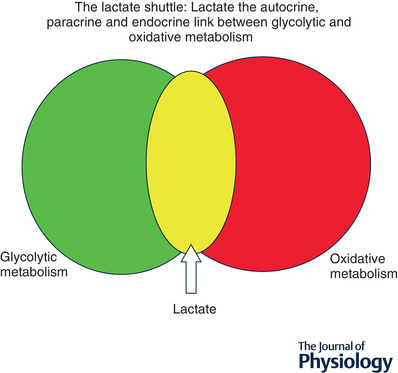
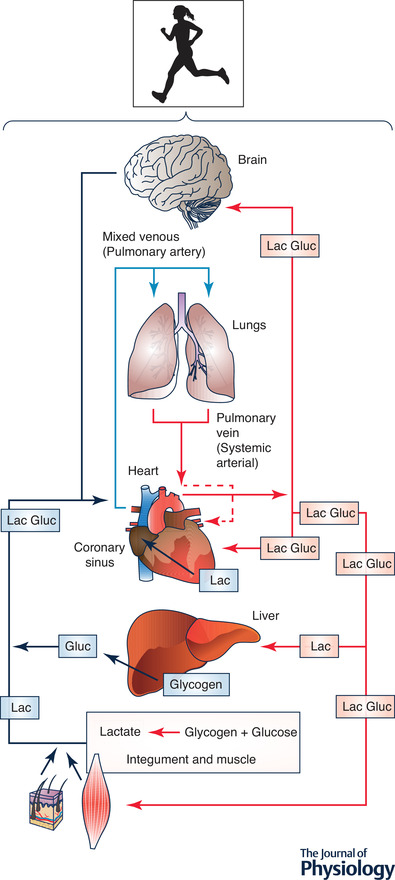
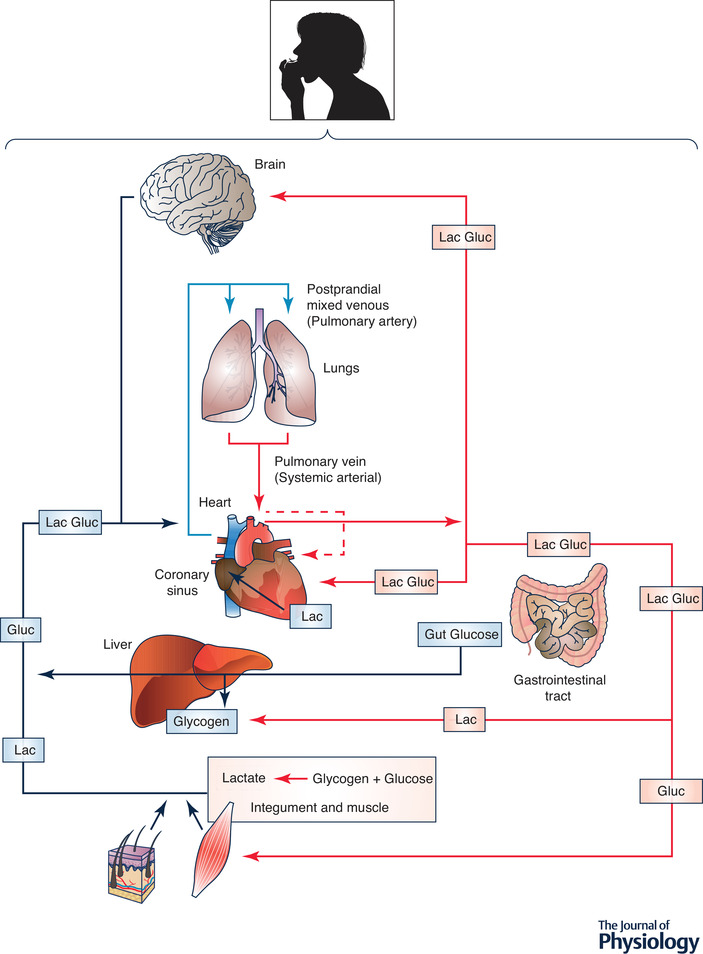
After a century, it's time to turn the page on understanding of lactate metabolism and appreciate that lactate shuttling is an important component of intermediary metabolism in vivo. Cell-cell and intracellular lactate shuttles fulfil purposes of energy substrate production and distribution, as well as cell signalling under fully aerobic conditions. Recognition of lactate shuttling came first in studies of physical exercise where the roles of driver (producer) and recipient (consumer) cells and tissues were obvious. Moreover, the presence of lactate shuttling as part of postprandial glucose disposal and satiety signalling has been recognized. Mitochondrial respiration creates the physiological sink for lactate disposal in vivo. Repeated lactate exposure from regular exercise results in adaptive processes such as mitochondrial biogenesis and other healthful circulatory and neurological characteristics such as improved physical work capacity, metabolic flexibility, learning, and memory. The importance of lactate and lactate shuttling in healthful living is further emphasized when lactate signalling and shuttling are dysregulated as occurs in particular illnesses and injuries. Like a phoenix, lactate has risen to major importance in 21st century biology.
Overview
The claims and statistics of this paper haven’t been checked yet.
Free: it reads the open-access text and checks the first 5 claims that cite a source we can check. Create a free account to check every claim.
Integrity signals
Registry
Cites
Statistics
Figures
Verification
Claims the paper makes
The claims and statistics of this paper haven’t been checked yet.
Free: it reads the open-access text and checks the first 5 claims that cite a source we can check. Create a free account to check every claim.
Claims other papers make about this one
Each is checked against this paper’s own text: does it say what the citing paper says it does?
The check wasn’t confident either way, so it gives no verdict — never disputed.
In the citing paper
“Such a curvilinear relationship between SmO2rate and BLa accumulation is akin to data from the long-head of the BF in other reports (Snyder and Parmenter, 2009; Brooks et al., 2022)”
From Monitoring skeletal muscle oxygen saturation kinetics during graded exercise testing in NCAA division I female rowers (2025) · cites this paper as Brooks et al., 2022
Experimental — accuracy not yet measured
Self-check
Percentages, sums and reported differences re-computed from the paper’s own numbers.
The self-check needs the paper’s full text.
Citations
Cites
Items 201–217 of 217
Trans-Stimulation of Lactate Transport from Rat Sarcolemmal Membrane Vesicles
Brown, M. A., & Brooks, G. A. (1994) · Archives of Biochemistry and Biophysics · doi:10.1006/abbi.1994.1353 · Cited by 35
Self-citationTraining decreases muscle glycogen turnover during exercise
Azevedo, J. L., Linderman, J. K., Lehman, S. L., & Brooks, G. A. (1998) · European Journal of Applied Physiology · doi:10.1007/s004210050449 · Cited by 35
Self-citationMetabolic fate of a gastric glucose load in unrestrained rats bearing a portal vein catheter
Smadja, C., Morin, J., Ferre, P., & Girard, J. (1988) · American Journal of Physiology-Endocrinology and Metabolism · doi:10.1152/ajpendo.1988.254.4.e407 · Cited by 35 · cited 1×
“However, after glucose ingestion in rats with indwelling portal vein catheters, a porto-peripheral lactate gradient was present, reflecting the production of lactate in or by the intestine (Smadja et al. 1988).”
BackgroundEndogenous metabolism by sperm in response to altered cellular ATP requirements
Inskeep, P. B., & Hammerstedt, R. H. (1985) · Journal of Cellular Physiology · doi:10.1002/jcp.1041230205 · Cited by 33
Henderson, G. C., Horning, M. A., Wallis, G. A., & Brooks, G. A. (2006) · American Journal of Physiology-Endocrinology and Metabolism · doi:10.1152/ajpendo.00363.2006 · Cited by 33 · cited 1×
“Briefly, cell work leads to lactate production and changes in the cellular lactate/pyruvate ratio (Henderson et al. 2007) that accompanies changes in the cellular NAD+/NADH ratio and subsequent metabolic and regulatory effects in driver and recipient cells (vide supra).”
BackgroundSelf-citationTranspulmonary lactate shuttle
Johnson, M. L., Emhoff, C.-A. W., Horning, M. A., & Brooks, G. A. (2012) · American Journal of Physiology-Regulatory, Integrative and Comparative Physiology · doi:10.1152/ajpregu.00402.2011 · Cited by 32 · cited 1×
“2008), lung (Johnson et al. 2012), and cancer cells (Hussien & Brooks, 2011).”
BackgroundSelf-citationIncorporation and utilization of [3-13C]lactate and [1,2-13C]acetate by rat skeletal muscle
Bertocci, L. A., & Lujan, B. F. (1999) · Journal of Applied Physiology · doi:10.1152/jappl.1999.86.6.2077 · Cited by 31
Effect of exercise and lactic acid infusion on individual free fatty acids of plasma
Gold, M., Miller, H. I., Issekutz, B., & Spitzer, J. J. (1963) · American Journal of Physiology-Legacy Content · doi:10.1152/ajplegacy.1963.205.5.902 · Cited by 29 · cited 1×
“Also, lactate infusion into running dogs caused the circulating [FFA] to decline (Issekutz & Miller, 1962; Gold et al. 1963; Miller et al. 1964).”
BackgroundStender, S., Zaha, V. G., Malloy, C. R., Sudderth, J., DeBerardinis, R. J., & Park, J. M. (2020) · Hepatology Communications · doi:10.1002/hep4.1458 · Cited by 27 · cited 1×
“indirect liver and muscle glycogen synthesis in humans using 13C-tracers and magnetic resonance spectrometry (Stender et al. 2020).”
MethodTranspulmonary pyruvate kinetics
Johnson, M. L., Hussien, R., Horning, M. A., & Brooks, G. A. (2011) · American Journal of Physiology-Regulatory, Integrative and Comparative Physiology · doi:10.1152/ajpregu.00206.2011 · Cited by 26
Self-citationEffect of various substrates on mitochondrial and cellular energy state of intact spermatozoa.
Halangk, W., Bohnensack, R., Frank, K., & Kunz, W. S. (1985) · PubMed · Cited by 25
Glycemic control in critically ill patients: What to do post NICE-SUGAR?
Marik, P. E. (2009) · World Journal of Gastrointestinal Surgery · doi:10.4240/wjgs.v1.i1.3 · Cited by 19
Myocardial FFA metabolism during rest and atrial pacing in humans
Bergman, B. C., Tsvetkova, T. O., Lowes, B. D., & Wolfel, E. E. (2008) · American Journal of Physiology-Endocrinology and Metabolism · doi:10.1152/ajpendo.90747.2008 · Cited by 19
Lactate overrides central nervous but not β-cell glucose sensing in humans
Schmid, S. M., Jauch‐Chara, K., Hallschmid, M., Oltmanns, K. M., Peters, A., Born, J., & Schultes, B. (2008) · Metabolism · doi:10.1016/j.metabol.2008.07.033 · Cited by 12 · cited 1×
“The suppressive effect of lactate on appetite (Schmid et al. 2008; Schultes et al. 2012; McCarthy et al. 2020) is consistent with data showing that lactataemia suppresses ghrelin secretion (Islam et al. 2017; Vanderheyden et al. 2020).”
BackgroundMuscle metabolism during lactate infusion in human phosphofructokinase deficiency
Bertocci, L. A., Haller, R. G., & Lewis, S. F. (1993) · Journal of Applied Physiology · doi:10.1152/jappl.1993.74.3.1342 · Cited by 12 · cited 1×
“Also, using 31P MRS to study muscle metabolism in patients with McArdle disease, a knock-out experiment of Nature involving phosphofructokinase (PFK) deficiency, lactate infusion was shown to improve muscle force output and energy status in terms of higher phosphocreatine (PCr) and lower adenosine diphosphate (ADP) an…”
MethodGluconeogenesis in the burned patient.
Jj, S. (1979) · PubMed · Cited by 12
Belli, M., Zhang, L., Liu, X., Donjacour, A. A., Ruggeri, E., Palmerini, M. G., Nottola, S. A., Macchiarelli, G., & Rinaudo, P. F. (2020) · Human Reproduction · doi:10.1093/humrep/deaa047 · Cited by 8 · cited 1×
“Therefore, the consequences of hyperoxic ROS generation are a major concern because of the potential effects of ROS on mitochondrial morphology and function in the embryos (Belli et al. 2020).”
Background
Research works printed but not linked: 9
- Brooks GA, Brown MA, Butz CE, Sicurello JP & Dubouchaud H (1999b). Cardiac and skeletal muscle mitochondria have a monocarboxylate transporter MCT1. J Appl Physiol 87, 1713– 1718. 10562613 · DOI · Paper page
- Brooks GA, Brown MA, Butz CE, Sicurello JP & Dubouchaud H (1999c). Cardiac and skeletal muscle mitochondria have a monocarboxylate transporter MCT1. J Appl Physiol 87, 1713– 1718. 10562613 · DOI · Paper page
- Brooks GA, Fahey TD & Baldwin KM (2019). The why of pulmonary ventilation. Exercise Physiology: human bioenergetics and its applications, 5th edn., vol. 1, pp. 243– 256. Kindle Direct Publishing, Lexington, KY, USA.
- Donovan CM, Brooks GA, Donovan CM & Brooks GA (1983). Endurance training affects lactate clearance, not lactate production. Am J Physiol Endocrinol Metab 244, E83– E92. 6401405 · DOI · Paper page
- Estaki M, Morck DW, Quin C, Pither J, Barnett JA, Gill SK & Gibson DL (2020). Physical activity shapes the intestinal microbiome and immunity of healthy mice but has no protective effects against colitis in MUC2 −/− mice. mSystems 5. e00515‐ 20. PMC7542559 33024049
- Hill AV (1914). The oxidative removal of lactic acid. J Physiol 48, x‐ xi.
- Lehninger AL (1970). Biochemistry, p. 326. Worth, New York.
- Powell KE, King AC, Buchner DM, Campbell WW, DiPietro L, Erickson KI, Hillman CH, Jakicic JM, Janz KF, Katzmarzyk PT, Kraus WE, Macko RF, Marquez DX, McTiernan A, Pate RR, Pescatello LS & Whitt‐Glover MC (2018). The scientific foundation for the physical activity guidelines for Americans, 2nd edition. J Phys Act Health, 1– 11. 30558473
- Urry LA, Cain ML, Wasserman SL, Minorsky PV, & Orr R (2020). Campbell biology. In Campbell Biology, 12 edn, pp. 164– 170. Pearson.
Cited by
Lactate as a myokine and exerkine: drivers and signals of physiology and metabolism
Brooks, G. A., Osmond, A. D., Arevalo, J. A., Duong, J. J., Curl, C. C., Moreno-Santillan, D. D., & Leija, R. G. (2023) · Journal of Applied Physiology · doi:10.1152/japplphysiol.00497.2022 · Cited by 171
“Lactate is formed under fully aerobic conditions during postprandial rest and exercise (4, 10, 14).”
BackgroundInfluentialSelf-citationThe emerging role of protein l-lactylation in metabolic regulation and cell signalling
Ren, H., Tang, Y., & Zhang, D. (2025) · Nature Metabolism · doi:10.1038/s42255-025-01259-0 · Cited by 175
“Additionally, lactate is shuttled bet-ween different organs and cell types, and even between subcellular compartments, highlighting its pivotal role in metabolism 4 .”
Lactylation, an emerging hallmark of metabolic reprogramming: Current progress and open challenges
Liu, X., Zhang, Y., Li, W., & Zhou, X. (2022) · Frontiers in Cell and Developmental Biology · doi:10.3389/fcell.2022.972020 · Cited by 137
“Lactate, originally thought to be a metabolic waste product of glycolysis, has recently been reconceptualized to play a pleiotropic role in shaping cell identities through metabolic rewiring and epigenetic modifications (Ferguson et al., 2018; Magistretti and Allaman, 2018; Ippolito et al., 2019; Brooks, 2020; Rabinow…”
BackgroundRevisiting the Warburg Effect with Focus on Lactate
Kocianova, E., Piatrikova, V., & Golias, T. (2022) · Cancers · doi:10.3390/cancers14246028 · Cited by 141
“From the pioneers of exercise physiology [102], lactate significance is currently recognized also in the field of cancer metabolism.”
BackgroundTracing the lactate shuttle to the mitochondrial reticulum
Brooks, G. A., Curl, C. C., Leija, R. G., Osmond, A. D., Duong, J. J., & Arevalo, J. A. (2022) · Experimental & Molecular Medicine · doi:10.1038/s12276-022-00802-3 · Cited by 130
Self-citation
Metadata
- Authors
- Brooks, G. A., Arevalo, J. A., Osmond, A. D., Leija, R. G., Curl, C. C., & Tovar, A. P.
- Affiliations
- University of California, Berkeley (US)
- Corresponding author
- Brooks, George A.
- ORCID
- Brooks, George A.
- Venue
- The Journal of Physiology
- Publisher
- Wiley
- Published
- 2021-02-25
- Volume
- 600
- Issue
- 5
- Pages
- 1229-1251
- ISSN
- 0022-3751 (ISSN-L)
- 1469-7793
- PMC
- PMC9188361
- OpenAlex
- W3127360834
- Semantic Scholar
- fb9b5d6a05e3c617676f32645534129e30dcdc7b
- Cited by
- 269
- References
- 217
- Citations by year
- 2026: 62 · 2025: 69 · 2024: 53 · 2023: 49 · 2022: 25 · 2021: 11
- FWCI
- 13.73
- Type
- journal article
- Language
- en
- Open access
- hybrid
- doi.org
- Licence
- Locations
- The Journal of Physiology (publishedVersion, cc-by)
- PubMed Central (publishedVersion, cc-by)
- PubMed (publishedVersion)
- eScholarship (California Digital Library) (submittedVersion)
- Funders
- National Institutes of Health (1 R01 AG059715‐01)
- Topics
- Life Sciences › Biochemistry, Genetics and Molecular Biology › Cancer Research › Cancer, Hypoxia, and Metabolism
- Life Sciences › Biochemistry, Genetics and Molecular Biology › Molecular Biology › Metabolism, Diabetes, and Cancer
- Health Sciences › Medicine › Physiology (medical) › Adipose Tissue and Metabolism
- Keywords
- lactate, lactate metabolism, signal transduction, physical activity, mitochondrial respiration, mitochondrial biogenesis, metabolic flexibility, physical work capacity, learning and memory
- MeSH terms
- Biology, Glycolysis, Mitochondria, Exercise, Lactic Acid
About these checks
Registry, retraction, Cites and statistics results are computed, not judged, with one exception: a printed reference that no index lists is read once by a model before it counts as a citation error. Claims are extracted by a model and kept only when their quote appears verbatim in the text; each cited source is then checked, with a model’s help, for whether it says what the claim relies on. Those verdicts can be wrong — read the claim’s quote and the cited source before relying on one.
Statistics and arithmetic are recomputed, not judged.
Confidence bands are shown only for fields calibrated on our annotated test set. None is calibrated yet, so no band is shown.
What counts as a claim ›How we measure confidence ›How we check this ›
Are you an author, or do you see a problem with this page? Request a review
Data sources
Bibliographic data: Semantic Scholar, OpenAlex, Crossref.
Contains information from the Semantic Scholar Academic Graph Datasets, made available under the ODC Attribution License (ODC-BY 1.0).
Semantic Scholar’s data is described in: Kinney, R., et al. (2023). The Semantic Scholar Open Data Platform. arXiv:2301.10140.
