

Lactate in contemporary biology: a phoenix risen
Open accessThe DOI matches its Crossref record, with a small difference in title or year; 217 of the 217 references it cites were found in a registry or an index.
Abstract
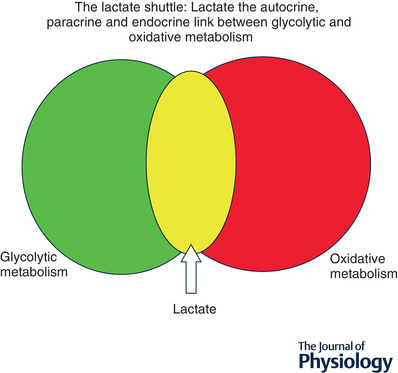
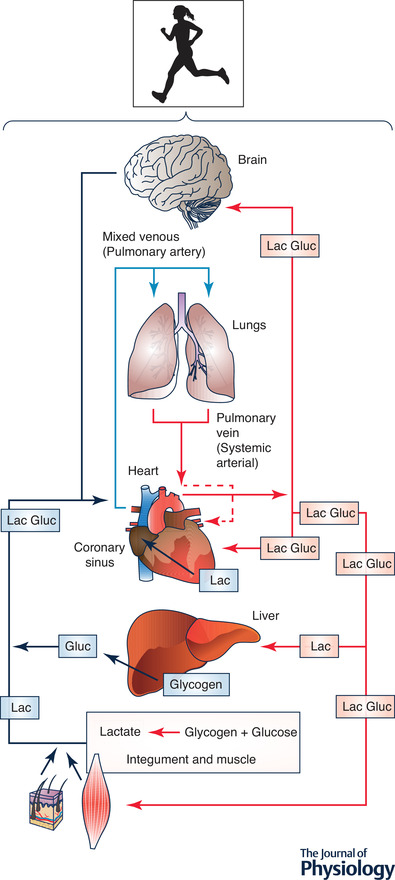
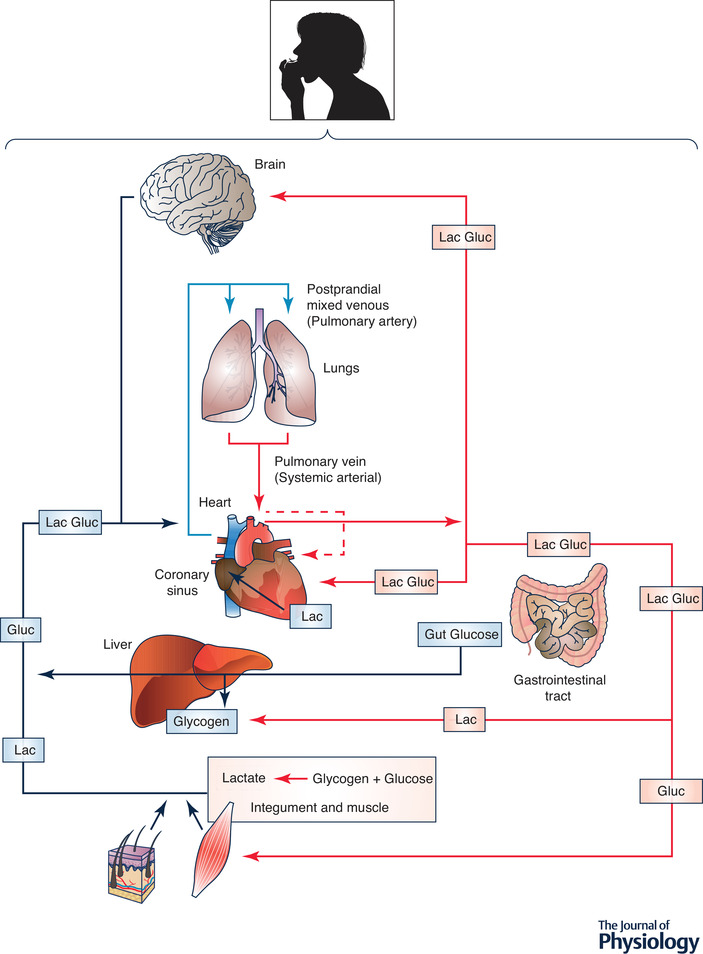
After a century, it's time to turn the page on understanding of lactate metabolism and appreciate that lactate shuttling is an important component of intermediary metabolism in vivo. Cell-cell and intracellular lactate shuttles fulfil purposes of energy substrate production and distribution, as well as cell signalling under fully aerobic conditions. Recognition of lactate shuttling came first in studies of physical exercise where the roles of driver (producer) and recipient (consumer) cells and tissues were obvious. Moreover, the presence of lactate shuttling as part of postprandial glucose disposal and satiety signalling has been recognized. Mitochondrial respiration creates the physiological sink for lactate disposal in vivo. Repeated lactate exposure from regular exercise results in adaptive processes such as mitochondrial biogenesis and other healthful circulatory and neurological characteristics such as improved physical work capacity, metabolic flexibility, learning, and memory. The importance of lactate and lactate shuttling in healthful living is further emphasized when lactate signalling and shuttling are dysregulated as occurs in particular illnesses and injuries. Like a phoenix, lactate has risen to major importance in 21st century biology.
Overview
The claims and statistics of this paper haven’t been checked yet.
Free: it reads the open-access text and checks the first 5 claims that cite a source we can check. Create a free account to check every claim.
Integrity signals
Registry
Cites
Statistics
Figures
Verification
Claims the paper makes
The claims and statistics of this paper haven’t been checked yet.
Free: it reads the open-access text and checks the first 5 claims that cite a source we can check. Create a free account to check every claim.
Claims other papers make about this one
Each is checked against this paper’s own text: does it say what the citing paper says it does?
The check wasn’t confident either way, so it gives no verdict — never disputed.
In the citing paper
“Such a curvilinear relationship between SmO2rate and BLa accumulation is akin to data from the long-head of the BF in other reports (Snyder and Parmenter, 2009; Brooks et al., 2022)”
From Monitoring skeletal muscle oxygen saturation kinetics during graded exercise testing in NCAA division I female rowers (2025) · cites this paper as Brooks et al., 2022
Experimental — accuracy not yet measured
Self-check
Percentages, sums and reported differences re-computed from the paper’s own numbers.
The self-check needs the paper’s full text.
Citations
Cites
Hill (2014) · doi:10.1038/nrgastro.2014.66 · Cited by 9,592 · cited 2×
“Also, from nutrition science we know that pre- and pro-biotic dietary components favourably affect gut fermentation and health (Hill et al. 2014) and data indicate relationships between microbiota and the prevalence of insulin resistance and metabolic syndrome (Vrieze et al.”
BackgroundThe metabolism of tumors in the body
Warburg, O., Wind, F., & Negelein, E. (1927) · Journal of General Physiology · doi:10.1085/jgp.8.6.519 · Cited by 4,416
Metabolic regulation of gene expression by histone lactylation
Zhang, D., Tang, Z., Huang, H., Zhou, G., Cui, C., Weng, Y., Liu, W., Kim, S., Lee, S., Perez-Neut, M., et al. (2019) · Nature · doi:10.1038/s41586-019-1678-1 · Cited by 4,371
Pellerin, L., & Magistretti, P. J. (1994) · Proceedings of the National Academy of Sciences · doi:10.1073/pnas.91.22.10625 · Cited by 2,927
Vrieze, A., Van Nood, E., Holleman, F., Salojärvi, J., Kootte, R. S., Bartelsman, J. F. W. M., Dallinga–Thie, G. M., Ackermans, M. T., Serlie, M. J., Oozeer, R., et al. (2012) · Gastroenterology · doi:10.1053/j.gastro.2012.06.031 · Cited by 2,913 · cited 1×
“2014) and data indicate relationships between microbiota and the prevalence of insulin resistance and metabolic syndrome (Vrieze et al. 2012).”
BackgroundGlucose feeds the TCA cycle via circulating lactate
Hui, S., Ghergurovich, J. M., Morscher, R. J., Jang, C., Teng, X., Lu, W., Esparza, L. A., Reya, T., Zhan, L., Yanxiang Guo, J., et al. (2017) · Nature · doi:10.1038/nature24057 · Cited by 1,721 · cited 1×
“Now, rather than regarded as an oddity of exercise metabolism (Gladden, 2004; Chen et al. 2016; Hui et al. 2017; Brooks, 2018; Ferguson et al. 2018), the presence of lactate shuttling is recognized in fields as diverse as wound healing (Hunt et al.”
BackgroundAstrocyte-Neuron Lactate Transport Is Required for Long-Term Memory Formation
Suzuki, A., Stern, S. A., Bozdagi, O., Huntley, G. W., Walker, R. H., Magistretti, P. J., & Alberini, C. M. (2011) · Cell · doi:10.1016/j.cell.2011.02.018 · Cited by 1,711 · cited 4×
“Hence, it is appropriate to recognize the importance of MCTs in cerebral lactate shuttling in cognition, learning, memory and other executive functions (Holloway et al. 2007; Suzuki et al. 2011; Steinman et al. 2016; Hashimoto et al. 2018; El Hayek et al. 2019).”
BackgroundInfluentialTargeting lactate-fueled respiration selectively kills hypoxic tumor cells in mice
Sonveaux, P., Végran, F., Schroeder, T., Wergin, M. C., Verrax, J., Rabbani, Z. N., De Saedeleer, C. J., Kennedy, K. M., Diepart, C., Jordan, B. F., et al. (2008) · Journal of Clinical Investigation · doi:10.1172/jci36843 · Cited by 1,624 · cited 2×
“2008), normal breast and transformed breast cancer cells (Hussien & Brooks, 2011), and tumours (Sonveaux et al. 2008).”
BackgroundThe Science and Translation of Lactate Shuttle Theory
Brooks, G. A. (2018) · Cell Metabolism · doi:10.1016/j.cmet.2018.03.008 · Cited by 1,486 · cited 30×
“…recognition of the presence of lactate shuttling within and among various cells, tissues and organs such as muscle, heart and liver (Brooks, 1984, 1985, 1986, 2002, 2018), the concept has been extended to include other cells, tissues and organs such as brain (Pellerin et al. 1998;…”
BackgroundInfluentialSelf-citationLactate metabolism: a new paradigm for the third millennium
Gladden, L. B. (2004) · The Journal of Physiology · doi:10.1113/jphysiol.2003.058701 · Cited by 1,277 · cited 10×
“The story of lactate and its role in physiology and medicine may be a century old, but has changed dramatically in the last three decades (Brooks, 1986, 2002, 2018; Gladden, 2004).”
BackgroundInfluential
Research works printed but not linked: 9
- Brooks GA, Brown MA, Butz CE, Sicurello JP & Dubouchaud H (1999b). Cardiac and skeletal muscle mitochondria have a monocarboxylate transporter MCT1. J Appl Physiol 87, 1713– 1718. 10562613 · DOI · Paper page
- Brooks GA, Brown MA, Butz CE, Sicurello JP & Dubouchaud H (1999c). Cardiac and skeletal muscle mitochondria have a monocarboxylate transporter MCT1. J Appl Physiol 87, 1713– 1718. 10562613 · DOI · Paper page
- Brooks GA, Fahey TD & Baldwin KM (2019). The why of pulmonary ventilation. Exercise Physiology: human bioenergetics and its applications, 5th edn., vol. 1, pp. 243– 256. Kindle Direct Publishing, Lexington, KY, USA.
- Donovan CM, Brooks GA, Donovan CM & Brooks GA (1983). Endurance training affects lactate clearance, not lactate production. Am J Physiol Endocrinol Metab 244, E83– E92. 6401405 · DOI · Paper page
- Estaki M, Morck DW, Quin C, Pither J, Barnett JA, Gill SK & Gibson DL (2020). Physical activity shapes the intestinal microbiome and immunity of healthy mice but has no protective effects against colitis in MUC2 −/− mice. mSystems 5. e00515‐ 20. PMC7542559 33024049
- Hill AV (1914). The oxidative removal of lactic acid. J Physiol 48, x‐ xi.
- Lehninger AL (1970). Biochemistry, p. 326. Worth, New York.
- Powell KE, King AC, Buchner DM, Campbell WW, DiPietro L, Erickson KI, Hillman CH, Jakicic JM, Janz KF, Katzmarzyk PT, Kraus WE, Macko RF, Marquez DX, McTiernan A, Pate RR, Pescatello LS & Whitt‐Glover MC (2018). The scientific foundation for the physical activity guidelines for Americans, 2nd edition. J Phys Act Health, 1– 11. 30558473
- Urry LA, Cain ML, Wasserman SL, Minorsky PV, & Orr R (2020). Campbell biology. In Campbell Biology, 12 edn, pp. 164– 170. Pearson.
Cited by
Lactate as a myokine and exerkine: drivers and signals of physiology and metabolism
Brooks, G. A., Osmond, A. D., Arevalo, J. A., Duong, J. J., Curl, C. C., Moreno-Santillan, D. D., & Leija, R. G. (2023) · Journal of Applied Physiology · doi:10.1152/japplphysiol.00497.2022 · Cited by 171
“Lactate is formed under fully aerobic conditions during postprandial rest and exercise (4, 10, 14).”
BackgroundInfluentialSelf-citationThe emerging role of protein l-lactylation in metabolic regulation and cell signalling
Ren, H., Tang, Y., & Zhang, D. (2025) · Nature Metabolism · doi:10.1038/s42255-025-01259-0 · Cited by 175
“Additionally, lactate is shuttled bet-ween different organs and cell types, and even between subcellular compartments, highlighting its pivotal role in metabolism 4 .”
Lactylation, an emerging hallmark of metabolic reprogramming: Current progress and open challenges
Liu, X., Zhang, Y., Li, W., & Zhou, X. (2022) · Frontiers in Cell and Developmental Biology · doi:10.3389/fcell.2022.972020 · Cited by 137
“Lactate, originally thought to be a metabolic waste product of glycolysis, has recently been reconceptualized to play a pleiotropic role in shaping cell identities through metabolic rewiring and epigenetic modifications (Ferguson et al., 2018; Magistretti and Allaman, 2018; Ippolito et al., 2019; Brooks, 2020; Rabinow…”
BackgroundRevisiting the Warburg Effect with Focus on Lactate
Kocianova, E., Piatrikova, V., & Golias, T. (2022) · Cancers · doi:10.3390/cancers14246028 · Cited by 141
“From the pioneers of exercise physiology [102], lactate significance is currently recognized also in the field of cancer metabolism.”
BackgroundTracing the lactate shuttle to the mitochondrial reticulum
Brooks, G. A., Curl, C. C., Leija, R. G., Osmond, A. D., Duong, J. J., & Arevalo, J. A. (2022) · Experimental & Molecular Medicine · doi:10.1038/s12276-022-00802-3 · Cited by 130
Self-citation
Metadata
- Authors
- Brooks, G. A., Arevalo, J. A., Osmond, A. D., Leija, R. G., Curl, C. C., & Tovar, A. P.
- Affiliations
- University of California, Berkeley (US)
- Corresponding author
- Brooks, George A.
- ORCID
- Brooks, George A.
- Venue
- The Journal of Physiology
- Publisher
- Wiley
- Published
- 2021-02-25
- Volume
- 600
- Issue
- 5
- Pages
- 1229-1251
- ISSN
- 0022-3751 (ISSN-L)
- 1469-7793
- PMC
- PMC9188361
- OpenAlex
- W3127360834
- Semantic Scholar
- fb9b5d6a05e3c617676f32645534129e30dcdc7b
- Cited by
- 269
- References
- 217
- Citations by year
- 2026: 62 · 2025: 69 · 2024: 53 · 2023: 49 · 2022: 25 · 2021: 11
- FWCI
- 13.73
- Type
- journal article
- Language
- en
- Open access
- hybrid
- doi.org
- Licence
- Locations
- The Journal of Physiology (publishedVersion, cc-by)
- PubMed Central (publishedVersion, cc-by)
- PubMed (publishedVersion)
- eScholarship (California Digital Library) (submittedVersion)
- Funders
- National Institutes of Health (1 R01 AG059715‐01)
- Topics
- Life Sciences › Biochemistry, Genetics and Molecular Biology › Cancer Research › Cancer, Hypoxia, and Metabolism
- Life Sciences › Biochemistry, Genetics and Molecular Biology › Molecular Biology › Metabolism, Diabetes, and Cancer
- Health Sciences › Medicine › Physiology (medical) › Adipose Tissue and Metabolism
- Keywords
- lactate, lactate metabolism, signal transduction, physical activity, mitochondrial respiration, mitochondrial biogenesis, metabolic flexibility, physical work capacity, learning and memory
- MeSH terms
- Biology, Glycolysis, Mitochondria, Exercise, Lactic Acid
About these checks
Registry, retraction, Cites and statistics results are computed, not judged, with one exception: a printed reference that no index lists is read once by a model before it counts as a citation error. Claims are extracted by a model and kept only when their quote appears verbatim in the text; each cited source is then checked, with a model’s help, for whether it says what the claim relies on. Those verdicts can be wrong — read the claim’s quote and the cited source before relying on one.
Statistics and arithmetic are recomputed, not judged.
Confidence bands are shown only for fields calibrated on our annotated test set. None is calibrated yet, so no band is shown.
What counts as a claim ›How we measure confidence ›How we check this ›
Are you an author, or do you see a problem with this page? Request a review
Data sources
Bibliographic data: Semantic Scholar, OpenAlex, Crossref.
Contains information from the Semantic Scholar Academic Graph Datasets, made available under the ODC Attribution License (ODC-BY 1.0).
Semantic Scholar’s data is described in: Kinney, R., et al. (2023). The Semantic Scholar Open Data Platform. arXiv:2301.10140.
