

Matrix-bound nanovesicles within ECM bioscaffolds
Open accessThe DOI matches its Crossref record; 69 of the 69 references it cites were found in a registry or an index.
Abstract
Matrix-bound vesicles within ECM bioscaffolds provide mechanistic insight into inductive properties.
Overview
The claims and statistics of this paper haven’t been checked yet.
Free: it reads the open-access text and checks the first 5 claims that cite a source we can check. Create a free account to check every claim.
Integrity signals
Registry
Cites
Statistics
Figures



Verification
Claims the paper makes
The claims and statistics of this paper haven’t been checked yet.
Free: it reads the open-access text and checks the first 5 claims that cite a source we can check. Create a free account to check every claim.
Claims other papers make about this one
Each is checked against this paper’s own text: does it say what the citing paper says it does?
The source backs part of the claim, not all of it — or backs it for a different population, condition or comparison.
In the citing paper
“MBV independence at promoting a pro-remodeling response [163,166] further proves the necessity for the degradation of ECM biomaterials upon implantation to promote their pro-regenerative effect.”
From Immune Response to Extracellular Matrix Bioscaffolds: A Comprehensive Review (2025) · cites this paper as [163]
Experimental — accuracy not yet measuredThe source backs part of the claim, not all of it — or backs it for a different population, condition or comparison.
In the citing paper
“Interestingly, independently of the methodology used to decellularize the ECM, all decellularized tissue has shown MBV to date, proving the resilience of the MBV and the tight ECM-MBV relationship [163,166,167].”
From Immune Response to Extracellular Matrix Bioscaffolds: A Comprehensive Review (2025) · cites this paper as [163]
Experimental — accuracy not yet measured
Self-check
Percentages, sums and reported differences re-computed from the paper’s own numbers.
The self-check needs the paper’s full text.
Citations
Cites
Biological properties of extracellular vesicles and their physiological functions
Yáñez‐Mó, M., Siljander, P. R. ‐., Andreu, Z., Bedina Zavec, A., Borràs, F. E., Buzas, E. I., Buzas, K., Casal, E., Cappello, F., Carvalho, J., et al. (2015) · Journal of Extracellular Vesicles · doi:10.3402/jev.v4.27066 · Cited by 5,926
An overview of tissue and whole organ decellularization processes
Crapo, P. M., Gilbert, T. W., & Badylak, S. F. (2011) · Biomaterials · doi:10.1016/j.biomaterials.2011.01.057 · Cited by 3,591
Self-citationIdentification of tissue-specific microRNAs from mouse
Lagos-Quintana, M., Rauhut, R., Yalcin, A., Meyer, J., Lendeckel, W., & Tuschl, T. (2002) · Current Biology · doi:10.1016/s0960-9822(02)00809-6 · Cited by 3,355
RGD AND OTHER RECOGNITION SEQUENCES FOR INTEGRINS
Ruoslahti, E. (1996) · Annual Review of Cell and Developmental Biology · doi:10.1146/annurev.cellbio.12.1.697 · Cited by 3,191 · cited 1×
“Plausible and logical mechanisms by which ECM bioscaffolds interact with cells include cues generated by specific surface topography (11, 12), mechanobiology-related cell signaling (13, 14), integrinmediated cell response to the ECM ligand landscape (12, 15), release of embedded growth factors/cytokines/chemokines (10…”
BackgroundConservation of the sequence and temporal expression of let-7 heterochronic regulatory RNA
Pasquinelli, A. E., Reinhart, B. J., Slack, F., Martindale, M. Q., Kuroda, M. I., Maller, B., Hayward, D. C., Ball, E. E., Degnan, B., Müller, P., et al. (2000) · Nature · doi:10.1038/35040556 · Cited by 2,565
Regulation of immune responses by extracellular vesicles
Robbins, P. D., & Morelli, A. E. (2014) · Nature Reviews Immunology · doi:10.1038/nri3622 · Cited by 2,260
Classification, Functions, and Clinical Relevance of Extracellular Vesicles
van der Pol, E., Böing, A. N., Harrison, P., Sturk, A., & Nieuwland, R. (2012) · Pharmacological Reviews · doi:10.1124/pr.112.005983 · Cited by 1,754 · cited 2×
“Extracellular vesicles (EVs) are membrane vesicles 30 to 1000 nm in diameter and are released from most cell types into the extracellular space (18, 19).”
BackgroundThe Nature and Significance of Platelet Products in Human Plasma
Wolf, P. (1967) · British Journal of Haematology · doi:10.1111/j.1365-2141.1967.tb08741.x · Cited by 1,720 · cited 1×
“First identified by electronmicroscopy in 1967 as a product of platelets (31, 32), EVs have attracted considerable attention over the past decade as potent vehicles of intercellular communication because of their ability to transfer RNA, proteins, enzymes, and lipids, thereby affecting various physiologic and patholog…”
BackgroundThéry, C., Boussac, M., Véron, P., Ricciardi-Castagnoli, P., Raposo, G., Garin, J., & Amigorena, S. (2001) · The Journal of Immunology · doi:10.4049/jimmunol.166.12.7309 · Cited by 1,563
Reprint of: Extracellular matrix as a biological scaffold material: Structure and function
Badylak, S. F., Freytes, D. O., & Gilbert, T. W. (2015) · Acta Biomaterialia · doi:10.1016/j.actbio.2015.07.016 · Cited by 1,362
Self-citation
Cited by
Items 101–200 of 386
Characteristics and roles of extracellular vesicles released by epidermal keratinocytes
Than, U. T. T., Leavesley, D. I., & Parker, T. J. (2019) · Journal of the European Academy of Dermatology and Venereology · doi:10.1111/jdv.15859 · Cited by 51
Recent advances in tumor microenvironment associated therapeutic strategies and evaluation models
Haider, T., Sandha, K. K., Soni, V., & Gupta, P. N. (2020) · Materials Science and Engineering C · doi:10.1016/j.msec.2020.111229 · Cited by 45
Biocompatibility and biodistribution of matrix-bound nanovesicles in vitro and in vivo
Crum, R. J., Capella-Monsonís, H., Chang, J., Dewey, M. J., Kolich, B. D., Hall, K. T., El-Mossier, S. O., Nascari, D. G., Hussey, G. S., & Badylak, S. F. (2023) · Acta Biomaterialia · doi:10.1016/j.actbio.2022.11.026 · Cited by 42
Self-citationDecellularized Muscle Supports New Muscle Fibers and Improves Function Following Volumetric Injury
McClure, M. J., Cohen, D. J., Ramey, A. N., Bivens, C. B., Mallu, S., Isaacs, J. E., Imming, E., Huang, Y.-C., Sunwoo, M., Schwartz, Z., et al. (2018) · Tissue Engineering Part A · doi:10.1089/ten.tea.2017.0386 · Cited by 44
“While bladder and SIS primarily contain laminin a 3 32 and a 5, 33 respectively, muscle contains laminin a 1 and a 2, 34–40 which promote myogenesis in vitro and in vivo .”
The Extracellular Matrix and Vesicles Modulate the Breast Tumor Microenvironment
Yang, J., Bahçecioğlu, G., & Zorlutuna, P. (2020) · Bioengineering · doi:10.3390/bioengineering7040124 · Cited by 47
“Recent studies have identified a subset of ECM-bound vesicles [103] that mediate physiologic and pathologic processes in multiple diseases, including cancer.”
BackgroundRasouli, M., Rahimi, A., Soleimani, M., & Keshel, S. H. (2021) · Acta Histochemica · doi:10.1016/j.acthis.2021.151785 · Cited by 45
The multifaceted mechanisms of malignant glioblastoma progression and clinical implications
Sun, R., & Kim, A. H. (2022) · Cancer and Metastasis Reviews · doi:10.1007/s10555-022-10051-5 · Cited by 44
“Like exosomes, MBVs belong to the extracellular vesicle family, which can house multiple biological effectors, including enzymes, lipids, growth factors, cytokines, chemokines, DNA fragments, and microRNAs (miRNAs) [58].”
BackgroundTranslating musculoskeletal bioengineering into tissue regeneration therapies
Khodabukus, A., Guyer, T., Moore, A. C., Stevens, M. M., Guldberg, R. E., & Bursac, N. (2022) · Science Translational Medicine · doi:10.1126/scitranslmed.abn9074 · Cited by 44
“Although decellularization can alter tissue architecture, these scaffolds retain ECM proteins and biological cues such as cell binding motifs, growth factors, ECM-modifying enzymes, and matrix-bound nanovesicles (MBVs), which can direct anti-inflammatory and proregenerative immune and cellular responses upon implantat…”
BackgroundPreparation of Decellularized Lung Matrices for Cell Culture and Protein Analysis
Uhl, F. E., Wagner, D. E., & Weiss, D. J. (2017) · Methods in Molecular Biology · doi:10.1007/978-1-4939-7113-8_18 · Cited by 35
Ghuman, H., Matta, R., Tompkins, A., Nitzsche, F., Badylak, S. F., Gonzalez, A. L., & Modo, M. (2020) · Brain Research Bulletin · doi:10.1016/j.brainresbull.2020.12.004 · Cited by 40
Self-citationMatrix-Bound Nanovesicles: The Effects of Isolation Method upon Yield, Purity, and Function
Quijano, L. M., Naranjo, J. D., El-Mossier, S. O., Turner, N. J., Pineda Molina, C., Bartolacci, J., Zhang, L., White, L., Li, H., & Badylak, S. F. (2020) · Tissue Engineering Part C: Methods · doi:10.1089/ten.tec.2020.0243 · Cited by 38
Self-citationPetersen, E. V., Chudakova, D. A., Skorova, E., Anikin, V., Reshetov, I. V., & Mynbaev, O. A. (2020) · Frontiers in Oncology · doi:10.3389/fonc.2020.575569 · Cited by 45
“Their molecular cargo comprises miRNAs and is capable of changing the phenotype of the cells exposed to the contents of MBVs, for example, affecting the phenotype of macrophages (78).”
BackgroundHuman Adipose Tissue Derivatives as a Potent Native Biomaterial for Tissue Regenerative Therapies
Sharath, S. S., Ramu, J., Nair, S. V., Iyer, S., Mony, U., & Jayakumar, R. (2020) · Tissue Engineering and Regenerative Medicine · doi:10.1007/s13770-019-00230-x · Cited by 41
Host macrophage response to injectable hydrogels derived from ECM and α-helical peptides
Mehrban, N., Molina, C. P., Quijano, L. M., Bowen, J., Johnson, S. A., Bartolacci, J. G., Chang, J. T., Scott, D. A., Woolfson, D. N., Birchall, M., et al. (2020) · Acta Biomaterialia · doi:10.1016/j.actbio.2020.05.022 · Cited by 38
Self-citationLin, Z., McClure, M. J., Zhao, J., Ramey, A. N., Asmussen, N. C., Hyzy, S. L., Schwartz, Z., & Boyan, B. D. (2018) · Scientific Reports · doi:10.1038/s41598-018-21517-4 · Cited by 40
Luo, P., Huang, R., Wu, Y., Liu, X., Shan, Z., Gong, L., Deng, S., Liu, H., Fang, J., Wu, S., et al. (2023) · Bioactive Materials · doi:10.1016/j.bioactmat.2023.05.011 · Cited by 36
Decellularized kidney extracellular matrix-based hydrogels for renal tissue engineering
Quinteira, R., Gimondi, S., Monteiro, N. O., Sobreiro‐Almeida, R., Lasagni, L., Romagnani, P., & Neves, N. M. (2024) · Acta Biomaterialia · doi:10.1016/j.actbio.2024.04.026 · Cited by 40
Ronan, G., Bahçecioğlu, G., Yang, J., & Zorlutuna, P. (2022) · Biomaterials · doi:10.1016/j.biomaterials.2024.122671 · Cited by 37
Li, Z., Tuffin, J. P., Lei, I. M., Ruggeri, F. S., Lewis, N. S., Gill, E., Savin, T., Huleihel, L., Badylak, S. F., Knowles, T. P. J., et al. (2018) · Acta Biomaterialia · doi:10.1016/j.actbio.2018.08.010 · Cited by 36
“The UBMwas then lyophilized and milled into particulate form using a Wiley Mill (Thomas Scientific, NJ) with a #60 mesh screen [14].”
MethodSelf-citationKao, C.-Y., Nguyen, H.-Q.-D., & Weng, Y.-C. (2020) · Polymers · doi:10.3390/polym12123007 · Cited by 35
“The result was similar with recent reports indicating that PAA was not an effective reagent to decellularize UBM [16,17].”
BackgroundResultDecellularized normal and cancer tissues as tools for cancer research
Gentilin, E., D’Angelo, E., Agostini, M., & Astolfi, L. (2021) · Cancer Gene Therapy · doi:10.1038/s41417-021-00398-2 · Cited by 39
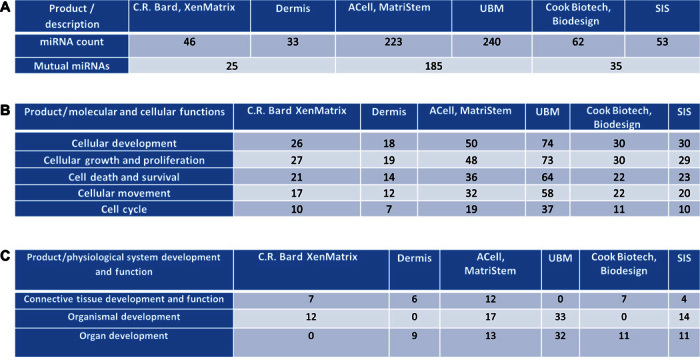
“The same authors also characterized their RNA cargo content by identifying multiple microRNAs (ranging from 33 to 240, based on ECM type) able to exert phenotypical and functional effects on macrophage activation and neuroblastoma cell differentiation [16].”
BackgroundMethodRani, S., Lai, A., Nair, S., Sharma, S., Handberg, A., Carrión, F., Möller, A., & Salomón, C. (2023) · Cytokine & Growth Factor Reviews · doi:10.1016/j.cytogfr.2023.06.004 · Cited by 39
Extracellular vesicles on the move: Traversing the complex matrix of tissues
Arif, S., & Moulin, V. J. (2023) · European Journal of Cell Biology · doi:10.1016/j.ejcb.2023.151372 · Cited by 40
Decellularized Cell‐Secreted Extracellular Matrices as Biomaterials for Tissue Engineering
Ramos‐Rodriguez, D. H., & Leach, J. K. (2024) · Small Science · doi:10.1002/smsc.202400335 · Cited by 38
D’Angelo, E., Lindoso, R. S., Sensi, F., Pucciarelli, S., Bussolati, B., Agostini, M., & Collino, F. (2020) · Frontiers in Oncology · doi:10.3389/fonc.2020.01122 · Cited by 36
Combinational Treatment of Bioscaffolds and Extracellular Vesicles in Spinal Cord Injury
Wang, X., Botchway, B. O. A., Zhang, Y., Yuan, J., & Liu, X. (2019) · Frontiers in Molecular Neuroscience · doi:10.3389/fnmol.2019.00081 · Cited by 33
Extracellular vesicles and the extracellular matrix: a new paradigm or old news?
Lewin, S., Hunt, S., & Lambert, D. (2020) · Biochemical Society Transactions · doi:10.1042/bst20200717 · Cited by 35
Marzano, M., Bou-Dargham, M. J., Cone, A. S., York, S. B., Helsper, S., Grant, S. C., Meckes, D. G., Sang, Q. A., & Li, Y. (2021) · ACS Biomaterials Science & Engineering · doi:10.1021/acsbiomaterials.0c01286 · Cited by 34
Extracellular vesicles: From bone development to regenerative orthopedics
Davies, O. G. (2023) · Molecular Therapy · doi:10.1016/j.ymthe.2023.02.021 · Cited by 36
Ren, T., Faust, A. E., van der Merwe, Y., Xiao, B., Johnson, S. A., Kandakatla, A., Gorantla, V. S., Badylak, S. F., Washington, K. M., & Steketee, M. B. (2018) · Scientific Reports · doi:10.1038/s41598-018-22628-8 · Cited by 34
Self-citationEffect of source animal age upon macrophage response to extracellular matrix biomaterials
LoPresti, S. T., & Brown, B. N. (2018) · Journal of Immunology and Regenerative Medicine · doi:10.1016/j.regen.2018.03.004 · Cited by 33
Jeon, H., Yoon, K., An, E. S., Kang, T., Sim, Y., Ahn, J., Choi, E.-K., Lee, S., Seo, K.-W., Kim, Y.-B., et al. (2020) · Stem Cell Reviews and Reports · doi:10.1007/s12015-020-09958-9 · Cited by 35
Tissue-derived extracellular vesicles: Research progress from isolation to application
Qin, B., Hu, X., Su, Z., Zeng, X.-B., Ma, H., & Xiong, K. (2021) · Pathology - Research and Practice · doi:10.1016/j.prp.2021.153604 · Cited by 35
Fujii, M., & Tanaka, R. (2022) · Biomedicines · doi:10.3390/biomedicines10092213 · Cited by 35
“[51] first reported that 10 to 1000 nm EVs, termed matrix-bound nanovesicles (MBVs), are pres nt in three ECM biologic scaffolds, including SIS.”
BackgroundHuman placenta/umbilical cord derivatives in regenerative medicine – Prospects and challenges
Biswas, A., Rajasekaran, R., Saha, B., Dixit, K., Vaidya, P. V., Ojha, A. K., & Dhara, S. (2023) · Biomaterials Science · doi:10.1039/d2bm01977a · Cited by 39
A quick pipeline for the isolation of 3D cell culture‐derived extracellular vesicles
Kyykallio, H., Faria, A. V. D. S., Hartman, R., Capra, J., Rilla, K. J., & Siljander, P. R. M. (2022) · Journal of Extracellular Vesicles · doi:10.1002/jev2.12273 · Cited by 34
“In some cases, biological scaffolds can also contain matrix bound vesicles (Huleihel et al., 2016).”
BackgroundModo, M., & Badylak, S. F. (2019) · Brain Research Bulletin · doi:10.1016/j.brainresbull.2019.05.013 · Cited by 32
“There are differences in the molecular composition of ECM sourced from different tissues [45], including the cargo contained within matrix bound nanovesicles, which represent lipid membrane-bound reservoirs of miRNA, proteins, and other signaling molecules [72, 73].”
BackgroundSelf-citationNyström, H. (2020) · Seminars in Cancer Biology · doi:10.1016/j.semcancer.2020.06.004 · Cited by 35
Matrix Bound Nanovesicles Have Tissue-Specific Characteristics That Suggest a Regulatory Role
Turner, N. J., Quijano, L. M., Hussey, G. S., Jiang, P., & Badylak, S. F. (2022) · Tissue Engineering Part A · doi:10.1089/ten.tea.2022.0091 · Cited by 32
“18,19 However,itisnotknownifthisdifferenceisuniversalacrossMBVsor ifMBVsfromdifferenttissueshaveadistinctsurfaceprofile.”
Self-citationRole of epigenetic regulation in glaucoma
Feng, L., Wang, C., Zhang, C., Zhang, W., & Song, W. (2023) · Biomedicine & Pharmacotherapy · doi:10.1016/j.biopha.2023.115633 · Cited by 33
Muok, L., Sun, L. J., Esmonde, C., Worden, H., Vied, C., Duke, L. C., Ma, S., Zeng, O. Z., Driscoll, T. P., Jung, S., et al. (2024) · Journal of Extracellular Biology · doi:10.1002/jex2.133 · Cited by 32
“…culture as shown in our previous study (Jeske et al., 2023)), one possibility is that aggregate cultures may contain many matrix-bound nanovesicles (Huleihel et al., 2016; Quijano et al., 2020), entrapped inside the aggregates within the ECM networks, and cannot be analysed through EV isolation…”
BackgroundMora‐Navarro, C., Biehl, A., Martins, A. M. G., Ozpinar, E. W., Gaffney, L. S., Huntress, I., Harrell, E. A., Enders, J. R., Peng, X., Branski, R. C., et al. (2020) · ACS Biomaterials Science & Engineering · doi:10.1021/acsbiomaterials.9b01837 · Cited by 31
Engineering Extracellular Microenvironment for Tissue Regeneration
Hao, D., Lopez, J.-M., Chen, J., Iavorovschi, A. M., Lelivelt, N. M., & Wang, A. (2022) · Bioengineering · doi:10.3390/bioengineering9050202 · Cited by 33
“It was known that matrix-bound vesicles (MBVs) were identified as an integral and functional component of ECM [73,74].”
BackgroundDecellularized extracellular matrix as a drug delivery carrier
Kolliopoulos, V., & Mikos, A. G. (2025) · Journal of Controlled Release · doi:10.1016/j.jconrel.2025.113661 · Cited by 31
Novel Marine Organism-Derived Extracellular Vesicles for Control of Anti-Inflammation
Jo, S., Kim, C. S., & Park, S. (2021) · Tissue Engineering and Regenerative Medicine · doi:10.1007/s13770-020-00319-8 · Cited by 28
Engineering immune-responsive biomaterials for skin regeneration.
Wu, P., Liang, Y., & Sun, G. (2021) · PubMed Central · doi:10.3877/cma.j.issn.2096-112x.2021.01.008 · Cited by 36
Cancer-associated fibroblasts produce matrix-bound vesicles that influence endothelial cell function
Santi, A., Kay, E. J., Neilson, L. J., McGarry, L., Lilla, S., Mullin, M., Paul, N. R., Fercoq, F., Koulouras, G., Blanco, G. R., et al. (2024) · Science Signaling · doi:10.1126/scisignal.ade0580 · Cited by 32
“EVs that transfer biological material between cells are typically found in cell-derived CM (CM-EVs) ( 14 ); however, EVs can be embedded within the ECM of decel-lularized tissues and of murine NIH-3T3 fibroblast cell cultures ( 32 , 33 ).”
BackgroundEfficient enzyme‐free isolation of brain‐derived extracellular vesicles
Matamoros‐Angles, A., Karadjuzovic, E., Mohammadi, B., Song, F., Brenna, S., Meister, S. C., Siebels, B., Voß, H., Seuring, C., Ferrer, I., et al. (2024) · Journal of Extracellular Vesicles · doi:10.1002/jev2.70011 · Cited by 29
“It has been described that small ECM-bound nanovesicles, which contain a high number of miRNAs, require enzymatic digestion to separate them from the ECM or biological scaffolds (Huleihel et al. , 2016).”
Smart Materials and Devices for Enhanced Delivery of Extracellular Vesicles
You, Y., Liu, M., Yan, N. J., Zhu, D., Cheng, X., Hu, Y., Li, Y., Qin, Z., Zhu, Z., & Cheng, K. (2025) · Advanced Materials · doi:10.1002/adma.202501081 · Cited by 32
Choi, J. U., Park, I., Lee, Y.-K., & Hwang, S. R. (2020) · International Journal of Molecular Sciences · doi:10.3390/ijms21197363 · Cited by 28
“Abbreviations ADC Antibody-drug conjugate ALIX Apoptosis-linked gene 2-interacting protein X ALK Anaplastic lymphoma kinase CAF Cancer-associated fibroblasts CAR Chimeric antigen receptor Cas CRISPR-associated protein CD Cytosine deaminase CSF1R Colony-stimulating factor-1 receptor CTC Circulating-tumor cell ctDNA Cir…”
BackgroundDevelopment of Decellularized Oviductal Hydrogels as a Support for Rabbit Embryo Culture
Francés‐Herrero, E., de Miguel–Gómez, L., López-Martínez, S., Campo, H., García‐Domínguez, X., Diretto, G., Faus, A., Vicente, J. S., Marco‐Jiménez, F., & Cervelló, I. (2021) · Reproductive Sciences · doi:10.1007/s43032-020-00446-6 · Cited by 27
Li, W., Bai, Y., Cao, J., Gao, S., Xu, P., Feng, G., Wang, L., Wang, H., Kong, D., Fan, M., et al. (2020) · Acta Biomaterialia · doi:10.1016/j.actbio.2021.04.025 · Cited by 26
Klyucherev, T. O., Peshkova, M., Revokatova, D. P., Serejnikova, N. B., Fayzullina, N. M., Fayzullin, A. L., Ershov, B. P., Khristidis, Y. I., Vlasova, I. I., Kosheleva, N. V., et al. (2024) · International Journal of Molecular Sciences · doi:10.3390/ijms252111564 · Cited by 25
“In addition to EV from the secretome, researchers have identified EV associated with extracellular matrix components, namely matrix-bound nanovesicles (MBV) [38].”
BackgroundResultEmerging biogenesis technologies of extracellular vesicles for tissue regenerative therapeutics
Lee, J., Yoon, J., Lee, J. H., Lee, H., Knowles, J. C., & Kim, H. (2021) · Journal of Tissue Engineering · doi:10.1177/20417314211019015 · Cited by 28
Post-Stroke Timing of ECM Hydrogel Implantation Affects Biodegradation and Tissue Restoration
Damian, C., Ghuman, H., Mauney, C., Azar, R. M., Reinartz, J., Badylak, S. F., & Modo, M. (2021) · International Journal of Molecular Sciences · doi:10.3390/ijms222111372 · Cited by 25
“Matrix bound nanovesicles (MBV) with abundant miRNA and other signaling molecules, including immunomodulatory signaling molecules, are also present within the ECM preparation [61].”
BackgroundSelf-citationMitigation of influenza-mediated inflammation by immunomodulatory matrix-bound nanovesicles
Crum, R. J., Huckestien, B. R., Dwyer, G., Mathews, L., Nascari, D. G., Hussey, G. S., Turnquist, H. R., Alcorn, J. F., & Badylak, S. F. (2023) · Science Advances · doi:10.1126/sciadv.adf9016 · Cited by 25
“Preparation of acellular urinary bladder ECM Urinary bladder ECM (UB-ECM) was prepared from marketweight pigs as previously described (19).”
MethodResultSelf-citationAged breast matrix bound vesicles promote breast cancer invasiveness
Yang, J., Bahçecioğlu, G., Ronan, G., & Zorlutuna, P. (2024) · Biomaterials · doi:10.1016/j.biomaterials.2024.122493 · Cited by 28
Wang, L., Zhang, G., Gao, Y., Dai, T., Yu, J., Liu, Y., Bao, H., She, J., Hou, Y., Kong, L., et al. (2024) · ACS Biomaterials Science & Engineering · doi:10.1021/acsbiomaterials.4c00106 · Cited by 25
“54 While matrix vesicles in bone are well-characterized ECM-resident EVs, the broader role of MBVs remains unclear.”
In Vitro Interaction of Melanoma-Derived Extracellular Vesicles with Collagen
Palmulli, R., Bresteau, E., Raposo, G., Montagnac, G., & van Niel, G. (2023) · International Journal of Molecular Sciences · doi:10.3390/ijms24043703 · Cited by 23
“Extracellular vesicles comprise heterogeneous groups of cell-derived membranous structures [6], some of which have been observed residing within the matrix [7] or seem capable of remodeling the ECM [8].”
BackgroundECM-derived biomaterials for regulating tissue multicellularity and maturation
Smandri, A., Al-Masawa, M. E., Ng, M. H., & Fauzi, M. B. (2024) · iScience · doi:10.1016/j.isci.2024.109141 · Cited by 24
Extracellular Matrices as Bioactive Materials for In Situ Tissue Regeneration
Zhao, P., Yang, F., Jia, X., Xiao, Y., Hua, C., Xing, M. M. Q., & Lyu, G. (2023) · Pharmaceutics · doi:10.3390/pharmaceutics15122771 · Cited by 24
“Immune-cell-mediated degradation led to the release of chemoattractants, growth factors, and extracellular vesicles preserved in the NECM, which recruit local and circulating progenitor cells and enhance neo-tissue generation [83–85].”
BackgroundBartolacci, J. G., Behun, M. N., Warunek, J., Li, T., Sahu, A., Dwyer, G. K., Lucas, A., Rong, J., Ambrosio, F., Turnquist, H. R., et al. (2024) · npj Regenerative Medicine · doi:10.1038/s41536-024-00346-2 · Cited by 24
“Matrix-bound nanovesicles (MBV) that reside within the ECM have been identi fi ed as a major contributor to the immunomodulatory effects of ECM 15,18 .”
Self-citationWang, Y., Papagerakis, S. M., Faulk, D. M., Badylak, S. F., Zhao, Y., Ge, L., Qin, M., & Papagerakis, P. (2018) · Frontiers in Physiology · doi:10.3389/fphys.2018.00942 · Cited by 22
Self-citationMaguire, G. (2019) · PubMed · Cited by 31
Hepatic Extracellular Matrix and Its Role in the Regulation of Liver Phenotype
Arteel, G. E. (2024) · Seminars in Liver Disease · doi:10.1055/a-2404-7973 · Cited by 24
Steketee, M. B., van der Merwe, Y., & Faust, A. E. (2017) · Neural Regeneration Research · doi:10.4103/1673-5374.217324 · Cited by 22
Macrophage response mediated by extracellular matrix: recent progress
Xiao, W., Yang, Y., Chu, C., Rung, S., Wang, Z., Man, Y., Lin, J., & Qu, Y. (2022) · Biomedical Materials · doi:10.1088/1748-605x/aca946 · Cited by 21
Application of Decellularized Adipose Matrix as a Bioscaffold in Different Tissue Engineering
Xiong, C., Yao, W., Tao, R., Yang, S., Jiang, W., Xu, Y., Zhang, J., & Han, Y. Y. (2023) · Aesthetic Plastic Surgery · doi:10.1007/s00266-023-03608-4 · Cited by 23
“Studies have shown that DAM has constructive remodeling properties, including angiogenesis, stem cell recruitment, and modulation of immune responses [34].”
Jin, X., Dai, Y., Xin, L., Ye, Z., Chen, J., He, Q., Chen, X., Xu, X., Song, G., Yu, X., et al. (2023) · Materials Today Bio · doi:10.1016/j.mtbio.2023.100857 · Cited by 26
“Specifically, ECM possesses extraordinary affinity to biological components such as growth factor, cytokines, and exosomes as extracellular proteins such as collagen, as well as proteoglycan provide abundant binding motifs for these molecules and vesicles [19].”
BackgroundTatic, N., Rose, F. R. A. J., Rieux, A. D., & White, L. J. (2019) · Scientific Reports · doi:10.1038/s41598-019-50367-x · Cited by 23
Lazar, S. V., Mor, S., Chen, J., Hao, D., & Wan, A. (2021) · Extracellular Vesicles and Circulating Nucleic Acids · doi:10.20517/evcna.2021.10 · Cited by 31
“In addition, matrix-bound vesicles are identified as an integral and functional component of ECM biomaterial scaffolds mediating significant regenerative functions[6,7].”
Matrix-bound nanovesicles alleviate particulate-induced periprosthetic osteolysis
Liao, R., Dewey, M. J., Rong, J., Johnson, S. A., D’Angelo, W. A., Hussey, G. S., & Badylak, S. F. (2024) · Science Advances · doi:10.1126/sciadv.adn1852 · Cited by 20
“Acellular porcine urinary bladder ECM (UB-ECM) was prepared as previous described ( 25 ).”
BackgroundMethodInfluentialSelf-citationLiu, K., He, Y., Yao, Y., Zhang, Y., Cai, Z., Ru, J., Zhang, X., Jin, X., Xu, M., Li, Y., et al. (2021) · Materials Today Bio · doi:10.1016/j.mtbio.2021.100161 · Cited by 24
Role of Extracellular Vesicles in the Propagation of Lung Fibrosis in Systemic Sclerosis
Mouawad, J. E., Sanderson, M., Sharma, S., Helke, K. L., Pilewski, J. M., Nadig, S. N., & Feghali‐Bostwick, C. A. (2023) · Arthritis & Rheumatology · doi:10.1002/art.42638 · Cited by 21
“Recently, Huleihel et al demonstrated the presence of EVs within ECM scaffolds and their role in regulating tissue homeostasis (43).”
BackgroundLee, E. S., Ko, H., Kim, C. H., Kim, H.-C., Choi, S., Jeong, S. W., Lee, S.-G., Lee, S., Na, H., Park, J. H., et al. (2023) · Biomaterials Research · doi:10.1186/s40824-023-00418-2 · Cited by 22
“The MBVs are similar to MV; however, they are anchored to the extracellular matrix (ECM) and identified as functional components of ECM [206].”
BackgroundKafili, G., Kabir, H., Kandeloos, A. J., Golafshan, E., Ghasemi, S., Mashayekhan, S., & Taebnia, N. (2023) · Journal of Biomaterials Applications · doi:10.1177/08853282231207216 · Cited by 24
Direct and cell-mediated EV-ECM interplay
Smirnova, O., Efremov, Y. M., Klyucherev, T. O., Peshkova, M., Senkovenko, A. M., Svistunov, A. А., & Timashev, P. S. (2024) · Acta Biomaterialia · doi:10.1016/j.actbio.2024.07.029 · Cited by 20
Mechanical Interaction between Cells Facilitates Molecular Transport
Gomez, D., Natan, S., Shokef, Y., & Lesman, A. (2019) · Advanced Biosystems · doi:10.1002/adbi.201900192 · Cited by 21
“Furthermore, it was recently shown that cells release extracellular vesicles (EV) to the ECM environment [69].”
BackgroundIbraheem, A., Attar‐Schneider, O., Dabbah, M., Jarchowsky, O., Matalon, S. T., Lishner, M., & Drucker, L. (2019) · Translational research · doi:10.1016/j.trsl.2019.01.003 · Cited by 20
Xu, H., Lee, C., Wang, Y.-F., Huang, S., Shin, L.-Y., Wang, Y., Wan, Z., Zhu, X., Yung, P. S., & Lee, O. K. (2020) · Frontiers in Bioengineering and Biotechnology · doi:10.3389/fbioe.2020.587052 · Cited by 20
Mesenchymal stem cell-derived extracellular vesicles for cell-free therapy of ocular diseases
Liu, X., Hu, L., & Liu, F. (2022) · Extracellular Vesicles and Circulating Nucleic Acids · doi:10.20517/evcna.2022.08 · Cited by 20
Peshkova, M., Kosheleva, N. V., Shpichka, A. I., Radenska-Lopovok, S. G., Telyshev, D. V., Lychagin, A. V., Li, F., Timashev, P. S., & Liang, X. (2022) · International Journal of Molecular Sciences · doi:10.3390/ijms232213796 · Cited by 20
“signaling [89–91], ECM-based scaffolds are a natural source of matrix-bound nanovesicles (MBVs), a subgroup of EVs known for their unique immunomodulatory properties [92].”
BackgroundBiologic Scaffolds Composed of Extracellular Matrix for Regenerative Medicine
Scarritt, M. E., Murdock, M. H., & Badylak, S. F. (2018) · Elsevier eBooks · doi:10.1016/b978-0-12-809880-6.00035-7 · Cited by 25
Self-citationKort-Mascort, J., Shen, M. L., Martin, E. M., Flores-Torres, S., Pardo, L. A., Siegel, P. M., Tran, S. D., & Kinsella, J. M. (2023) · Biomedical Materials · doi:10.1088/1748-605x/acd830 · Cited by 22
Jin, Z., Wang, G., Zhou, Y., Lin, X., Zhao, Z., Xue, Y., An, Y., Shao, H., Wang, Y., Hou, S., et al. (2025) · ACS Nano · doi:10.1021/acsnano.4c13828 · Cited by 18
Extracellular Vesicles for Regenerative Medicine Applications
Crum, R. J., Capella‐Monsonís, H., Badylak, S. F., & Hussey, G. S. (2022) · Applied Sciences · doi:10.3390/app12157472 · Cited by 20
“Furthermore, in contrast to liquid-phase EVs, MBVs possess a marked reduction in CD63, CD81, and CD9, with all three of these protein markers being used to identify and characterize liquid-phase EVs (the fourth marker being Hsp70, which has not shown any differences between EVs and MBVs) [69,71,75].”
BackgroundSelf-citationLiu, C., Chen, X., Ene, J., Esmonde, C., Kanekiyo, T., Zeng, C., Sun, L. J., & Li, Y. (2025) · ACS Applied Materials & Interfaces · doi:10.1021/acsami.4c22692 · Cited by 20
Jiang, H., Sun, X.-H., Liu, J., Fang, L., Liang, Y., Zhou, J., Wu, Y., & Lin, Z. (2025) · Biomaterials Research · doi:10.34133/bmr.0196 · Cited by 19
“Studies have shown that this effect can be mediated by matrix-bound microvesicles embedded in the ECM [ 43 ].”
Jo, S., Kim, S.-H., Kim, C. S., & Park, S. (2021) · Marine Drugs · doi:10.3390/md19110592 · Cited by 17
Kolliopoulos, V., Dewey, M. J., Polanek, M., Xu, H., & Harley, B. A. C. (2022) · Frontiers in Bioengineering and Biotechnology · doi:10.3389/fbioe.2022.1034701 · Cited by 21
“Lastly, recent discovery of matrix-resident extracellular vesicles embedded in tissues motivates future work to explore the impact of amnion or chorion derived vesicles onMSC cell behavior compared to released extracts (Huleihel et al., 2016).”
BackgroundBiomaterials-based immunomodulation enhances survival of murine vascularized composite allografts
Sommerfeld, S. D., Zhou, X., Mejías, J. C., Oh, B. C., Maestas, D. R., Furtmüller, G. J., Laffont, P., Elisseeff, J. H., & Brandacher, G. (2023) · Biomaterials Science · doi:10.1039/d2bm01845d · Cited by 19
Terrie, L., Philips, C., Muylle, E., Weisrock, A., Lecomte‐Grosbras, P., & Thorrez, L. (2024) · Biofabrication · doi:10.1088/1758-5090/ad2c99 · Cited by 17
“Indeed, some ECM-based materials that are already in use in the clinic, such as urinary bladder matrix (Matristem®, ACell) and small intestinal submucosa (Biodesign®, Cook Biotech), were found to have levels above the set criterion reaching values of even 2 µ g mg − 1 ECM dry weight [30].”
BackgroundJones, S., VandenHeuvel, S. N., Martinez, A. L., Birur, R., Burgeson, E. M., Gilbert, I., Baker, A. B., Wolf, M. T., Raghavan, S. A., Rogers, S. A., et al. (2024) · Bioactive Materials · doi:10.1016/j.bioactmat.2024.08.012 · Cited by 28
Biehl, A., Mora‐Navarro, C., Martins, A. M. G., Garcia, M. E., Sze, D., Ozpinar, E. W., Gaffney, L. S., Enders, J. R., Branski, R. C., & Freytes, D. O. (2020) · ACS Biomaterials Science & Engineering · doi:10.1021/acsbiomaterials.0c00265 · Cited by 18
Inductive Remodeling of Extracellular Matrix Scaffolds in the Temporomandibular Joint of Pigs
Brown, B. N., Chung, W. L., Lowe, J., LoPresti, S. T., Cheetham, J., Almarza, A. J., & Badylak, S. F. (2021) · Tissue Engineering Part A · doi:10.1089/ten.tea.2021.0123 · Cited by 20
“22,23 33 As previous studies with C14 radiolabeling have shown that the majority of the material degrades within the first month postimplantation, 34–36 the hypothesized mechanism is that the degradation of the scaffold induced cell infiltration and changed the phenotype of macrophages, and new…”
Self-citationSpäter, T., Assunção, M., Lit, K. K., Gong, G., Wang, X., Chen, Y.-Y., Rao, Y., Li, Y., Yiu, C. H. K., Laschke, M. W., et al. (2022) · Bioactive Materials · doi:10.1016/j.bioactmat.2022.03.015 · Cited by 19
“Naturally, other non-protein components, such as ECM-bound nanovesicles [106], not investigated here, might also have”
BackgroundApplication of tissue-derived bioink for articular cartilage lesion repair
Wu, J., Han, Y., Fu, Q., Hong, Y., Li, L., Cao, J., Li, H., Liu, Y., Chen, Y., Zhu, J., et al. (2022) · Chemical Engineering Journal · doi:10.1016/j.cej.2022.138292 · Cited by 17
Zhu, D., Fang, H., Kusuma, G. D., Schwab, R., Barabadi, M., Chan, S. T., McDonald, H., Leong, C. M., Wallace, E. M., Greening, D. W., et al. (2021) · PROTEOMICS · doi:10.1002/pmic.202000080 · Cited by 19
“These include cell culture density using rocking platform bioreactors [67] and stirred tank systems [68], modulating cell attachment surface area usingmulti-layer flasks, extracellularmatrix scaffolds [69], microcarriers [70] and hollow fibre bioreactor [71] for adherent cell types.”
MethodInterfacing extracellular vesicles with bioengineered materials for regenerative medicine
Atanasov, K. S., Bagur-Cardona, S., Chiera, S., Capella‐Monsonís, H., & Gómez‐Florit, M. (2025) · Acta Biomaterialia · doi:10.1016/j.actbio.2025.10.022 · Cited by 17
Lei, M., Liu, H., Zhong, Q., Zhao, L., Liu, J., Mai, H., Zhang, Y., Wang, H., Chen, Y., Chen, R., et al. (2025) · Carbohydrate Polymers · doi:10.1016/j.carbpol.2025.124609 · Cited by 18
Metadata
- Authors
- Huleihel, L., Hussey, G. S., Naranjo, J. D., Zhang, L., Dziki, J. L., Turner, N. J., Stolz, D. B., & Badylak, S. F.
- Affiliations
- University of Pittsburgh (US)
- Corresponding author
- Badylak, Stephen F.
- Venue
- Science Advances
- Published
- 2016-06-03
- Volume
- 2
- Issue
- 6
- Pages
- e1600502-e1600502
- ISSN
- 2375-2548 (ISSN-L)
- PMC
- PMC4928894
- OpenAlex
- W2417862864
- Cited by
- 387
- References
- 69
- Citations by year
- 2026: 28 · 2025: 47 · 2024: 58 · 2023: 46 · 2022: 50 · 2021: 41 · 2020: 37 · 2019: 26 · 2018: 26 · 2017: 26 · 2016: 2
- FWCI
- 13.85
- Type
- journal article
- Language
- en
- Open access
- gold
- doi.org
- Licence
- cc-by-nc
- Locations
- Science Advances (publishedVersion, cc-by-nc)
- Europe PMC (PubMed Central) (publishedVersion, cc-by-nc)
- PubMed Central (publishedVersion, cc-by-nc)
- PubMed (publishedVersion)
- Topics
- Life Sciences › Biochemistry, Genetics and Molecular Biology › Molecular Biology › Extracellular vesicles in disease
- Health Sciences › Medicine › Surgery › Tissue Engineering and Regenerative Medicine
- Physical Sciences › Materials Science › Biomaterials › Electrospun Nanofibers in Biomedical Applications
- Keywords
- extracellular vesicles, microRNA, macrophage activation, neuroblastoma cell differentiation, tissue engineering, scaffold degradation, intercellular communication, angiogenesis, stem cell recruitment, tissue homeostasis
- MeSH terms
- Extracellular Vesicles, Animals, Biocompatible Materials, DNA, Extracellular Matrix, Macrophages, Nucleic Acids, Swine, Tissue Engineering, Regenerative Medicine, Nanostructures, Mice, Tissue Scaffolds
About these checks
Registry, retraction, Cites and statistics results are computed, not judged, with one exception: a printed reference that no index lists is read once by a model before it counts as a citation error. Claims are extracted by a model and kept only when their quote appears verbatim in the text; each cited source is then checked, with a model’s help, for whether it says what the claim relies on. Those verdicts can be wrong — read the claim’s quote and the cited source before relying on one.
Statistics and arithmetic are recomputed, not judged.
Confidence bands are shown only for fields calibrated on our annotated test set. None is calibrated yet, so no band is shown.
What counts as a claim ›How we measure confidence ›How we check this ›
Are you an author, or do you see a problem with this page? Request a review
Data sources
Bibliographic data: Semantic Scholar, OpenAlex, Crossref.
Contains information from the Semantic Scholar Academic Graph Datasets, made available under the ODC Attribution License (ODC-BY 1.0).
Semantic Scholar’s data is described in: Kinney, R., et al. (2023). The Semantic Scholar Open Data Platform. arXiv:2301.10140.
