

The DOI matches its Crossref record; 70 of the 70 references it cites were found in a registry or an index.
Deep neural network processing of DEER data
Open accessAbstract
Deep neural networks successfully solve Fredholm equations and extract molecular-scale distance distributions from EPR data.
Overview
The claims and statistics of this paper haven’t been checked yet.
Free: it reads the open-access text and checks the first 5 claims that cite a source we can check. Create a free account to check every claim.
Integrity signals
Registry
Cites
Statistics
Figures


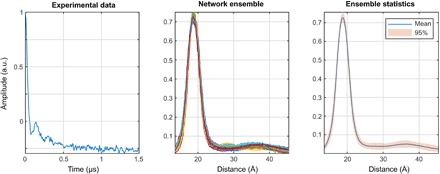

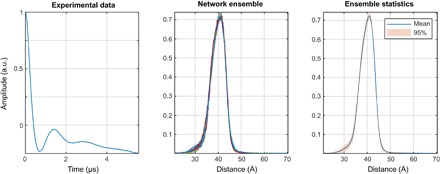
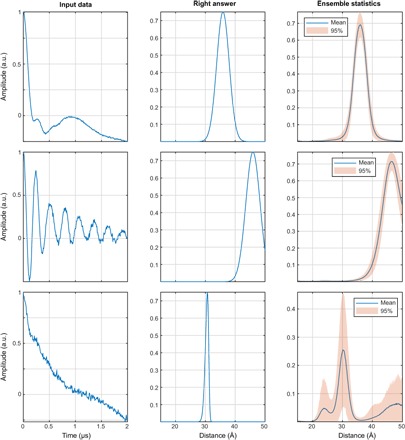
Verification
Claims the paper makes
The claims and statistics of this paper haven’t been checked yet.
Free: it reads the open-access text and checks the first 5 claims that cite a source we can check. Create a free account to check every claim.
Self-check
Percentages, sums and reported differences re-computed from the paper’s own numbers.
The self-check needs the paper’s full text.
Citations
Cites
Multilayer feedforward networks are universal approximators
Hornik, K., Stinchcombe, M., & White, H. (1989) · Neural Networks · doi:10.1016/0893-6080(89)90020-8 · Cited by 21,728 · cited 3×
“Multilayer feedforward networks are known to be universal approximators ( 46 ), but the present case is particularly appealing because the required network is likely to be quite small.”
BackgroundInfluentialA logical calculus of the ideas immanent in nervous activity
McCulloch, W. S., & Pitts, W. (1943) · The Bulletin of Mathematical Biophysics · doi:10.1007/bf02478259 · Cited by 18,566
Multilayer feedforward networks are universal approximators
HornikK., StinchcombeM., & WhiteH. (1989) · Neural Networks · doi:10.5555/70405.70408 · Cited by 9,081
A general regression neural network
Specht, D. F. (1991) · IEEE Transactions on Neural Networks · doi:10.1109/72.97934 · Cited by 4,492
On the approximate realization of continuous mappings by neural networks
Funahashi, K.-I. (1989) · Neural Networks · doi:10.1016/0893-6080(89)90003-8 · Cited by 4,206
A scaled conjugate gradient algorithm for fast supervised learning
Møller, M. F. (1993) · Neural Networks · doi:10.1016/s0893-6080(05)80056-5 · Cited by 4,052
A direct adaptive method for faster backpropagation learning: the RPROP algorithm
Riedmiller, M., & Braun, H. (2002) · IEEE International Conference on Neural Networks · doi:10.1109/icnn.1993.298623 · Cited by 3,917 · cited 2×
“Neural network training requires a library of inputs and their corresponding outputs covering a range that is representative of all possibilities ( 48 , 49 , 59 ).”
BackgroundMethodAnalysis of Discrete Ill-Posed Problems by Means of the L-Curve
Hansen, P. C. (1992) · SIAM Review · doi:10.1137/1034115 · Cited by 3,903
Universal approximation bounds for superpositions of a sigmoidal function
Barron, A. R. (1993) · IEEE Transactions on Information Theory · doi:10.1109/18.256500 · Cited by 2,804
Dead-Time Free Measurement of Dipole–Dipole Interactions between Electron Spins
Pannier, M., Veit, S., Godt, A., Jeschke, G., & Spiess, H. W. (2000) · Journal of Magnetic Resonance · doi:10.1006/jmre.1999.1944 · Cited by 1,056 · cited 5×
“Godt, Co-conformational distribution of nanosized [2]catenanes determined by pulse EPR measurements.”
BackgroundInfluentialSelf-citationDeerAnalysis2006—a comprehensive software package for analyzing pulsed ELDOR data
Jeschke, G., Chechik, V., Ionita, P., Godt, A., Zimmermann, H., Banham, J., Timmel, C. R., Hilger, D., & Jung, H. (2006) · Applied Magnetic Resonance · doi:10.1007/bf03166213 · Cited by 1,050 · cited 3×
“The most popular procedure for extracting distance distributions from DEER traces of real systems ( 13 – 15 ) rests on a number of significant assumptions.”
BackgroundSelf-citationDEER Distance Measurements on Proteins
Jeschke, G. (2012) · Annual Review of Physical Chemistry · doi:10.1146/annurev-physchem-032511-143716 · Cited by 973 · cited 2×
“Unlike scattering and diffraction methods, DEER does not require long-range order in the sample; it can be applied to a variety of systems that may not crystallize ( 3 , 4 ) — from molecular conductors ( 5 ) all the way to proteins and nucleic acids ( 6 , 7 ).”
BackgroundSelf-citationDistance measurements on spin-labelled biomacromolecules by pulsed electron paramagnetic resonance
Jeschke, G., & Polyhach, Y. (2007) · Physical Chemistry Chemical Physics · doi:10.1039/b614920k · Cited by 611 · cited 1×
“Along with relaxation, the background function limits the observation time and puts an upper limit on the distances that can be measured ( 12 , 29 ).”
BackgroundSelf-citationLong-range distance determinations in biomacromolecules by EPR spectroscopy
Schiemann, O., & Prisner, T. F. (2007) · Quarterly Reviews of Biophysics · doi:10.1017/s003358350700460x · Cited by 557
Spinach – A software library for simulation of spin dynamics in large spin systems
Hogben, H. J., Krzystyniak, M., Charnock, G. T. P., Hore, P. J., & Kuprov, I. (2011) · Journal of Magnetic Resonance · doi:10.1016/j.jmr.2010.11.008 · Cited by 532
Self-citationMilov, A. D., Ponomarev, A. B., & Tsvetkov, Y. D. (1984) · Chemical Physics Letters · doi:10.1016/0009-2614(84)80148-7 · Cited by 499 · cited 1×
“Unlike scattering and diffraction methods, DEER does not require long-range order in the sample; it can be applied to a variety of systems that may not crystallize ( 3 , 4 ) — from molecular conductors ( 5 ) all the way to proteins and nucleic acids ( 6 , 7 ).”
BackgroundThe determination of pair distance distributions by pulsed ESR using Tikhonov regularization
Chiang, Y.-W., Borbat, P. P., & Freed, J. H. (2005) · Journal of Magnetic Resonance · doi:10.1016/j.jmr.2004.10.012 · Cited by 400
Bayes estimation subject to uncertainty about parameter constraints
O'HAGAN, A., & LEONARD, T. (1976) · Biometrika · doi:10.1093/biomet/63.1.201 · Cited by 339
Larsen, R. G., & Singel, D. J. (1993) · The Journal of Chemical Physics · doi:10.1063/1.464916 · Cited by 264
Overview of Supervised Learning
Hastie, T., Tibshirani, R., & Friedman, J. (2009) · Springer Series in Statistics · doi:10.1007/978-0-387-84858-7_2 · Cited by 259
Ensemble Learning Using Decorrelated Neural Networks
ROSEN, B. E. (1996) · Connection Science · doi:10.1080/095400996116820 · Cited by 248
Multiple-quantum ESR and distance measurements
Borbat, P. P., & Freed, J. H. (1999) · Chemical Physics Letters · doi:10.1016/s0009-2614(99)00972-0 · Cited by 248
Direct Conversion of EPR Dipolar Time Evolution Data to Distance Distributions
Jeschke, G., Koch, A., Jonas, U., & Godt, A. (2002) · Journal of Magnetic Resonance · doi:10.1006/jmre.2001.2498 · Cited by 241 · cited 2×
“Unlike scattering and diffraction methods, DEER does not require long-range order in the sample; it can be applied to a variety of systems that may not crystallize ( 3 , 4 ) — from molecular conductors ( 5 ) all the way to proteins and nucleic acids ( 6 , 7 ).”
BackgroundSelf-citationElectron dipole–dipole interaction in ESEEM of nitroxide biradicals
Kulik, L. V., Dzuba, S. A., Grigoryev, I. A., & Tsvetkov, Y. D. (2001) · Chemical Physics Letters · doi:10.1016/s0009-2614(01)00721-7 · Cited by 206
Milikisyants, S., Scarpelli, F., Finiguerra, M. G., Ubbink, M., & Huber, M. (2009) · Journal of Magnetic Resonance · doi:10.1016/j.jmr.2009.08.008 · Cited by 200 · cited 1×
“Related methods, such as double-quantum electron paramagnetic resonance (DQ-EPR) ( 8 , 9 ) or relaxation-induced dipolar modulation enhancement (RIDME) ( 10 , 11 ), provide similar information.”
MethodData analysis procedures for pulse ELDOR measurements of broad distance distributions
Jeschke, G., Panek, G., Godt, A., Bender, A., & Paulsen, H. (2004) · Applied Magnetic Resonance · doi:10.1007/bf03166574 · Cited by 194 · cited 3×
“The most popular procedure for extracting distance distributions from DEER traces of real systems ( 13 – 15 ) rests on a number of significant assumptions.”
BackgroundSelf-citationJeschke, G. (2002) · Macromolecular Rapid Communications · doi:10.1002/1521-3927(20020301)23:4<277::aid-marc277>3.0.co;2-u · Cited by 181
Self-citationСалихов, К. М., Dzuba, S. A., & Raitsimring, A. M. (1981) · Journal of Magnetic Resonance (1969) · doi:10.1016/0022-2364(81)90216-x · Cited by 166 · cited 1×
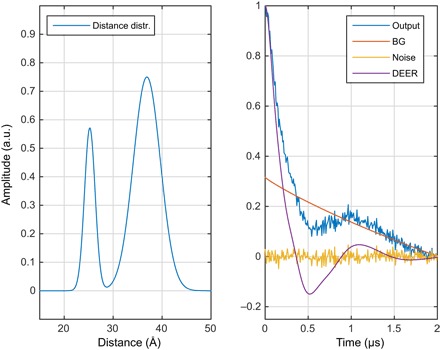
“…v exp ( t ) can be approximated as where n ( t ) is the instrument noise, l is the spin-flip probability under the action of the pump pulse ( 12 , 26 ), and b ( t ) is the intermolecular background function — usually a stretched exponential b ð t Þ ¼ exp ½(cid:2)ð kt Þ N = 3 ð 5 Þ that…”
BackgroundHow Flexible Are Poly(para‐phenyleneethynylene)s?
Godt, A., Schulte, M., Zimmermann, H. W., & Jeschke, G. (2006) · Angewandte Chemie International Edition · doi:10.1002/anie.200602807 · Cited by 152 · cited 1×
“Deviations from the isotropic distribution of the spin-spin vector by orientation selection can be partially averaged by varying the magnetic field at constant pump and observe frequencies ( 37 , 44 ).”
BackgroundSelf-citationDouble quantum two-dimensional Fourier transform electron spin resonance: Distance measurements
Saxena, S., & Freed, J. H. (1996) · Chemical Physics Letters · doi:10.1016/0009-2614(96)00075-9 · Cited by 149 · cited 1×
“Related methods, such as double-quantum electron paramagnetic resonance (DQ-EPR) ( 8 , 9 ) or relaxation-induced dipolar modulation enhancement (RIDME) ( 10 , 11 ), provide similar information.”
MethodJeschke, G., Sajid, M., Schulte, M., Ramezanian, N., Volkov, A., Zimmermann, H. W., & Godt, A. (2010) · Journal of the American Chemical Society · doi:10.1021/ja102983b · Cited by 141 · cited 2×
“1, works very well for simple spin-½ systems ( 37 , 38 ).”
BackgroundSelf-citationThree-spin correlations in double electron–electron resonance
Jeschke, G., Sajid, M., Schulte, M., & Godt, A. (2009) · Physical Chemistry Chemical Physics · doi:10.1039/b905724b · Cited by 139 · cited 3×
“For Sample V, we also fitted the model of biradicals distributed on the surface of spherical particles with a Gaussian distribution of the particle radius (model Chechik2 in DeerAnalysis) ( 16 ).”
BackgroundMethodSelf-citationDalaloyan, A., Qi, M., Ruthstein, S., Vega, S., Godt, A., Feintuch, A., & Goldfarb, D. (2015) · Physical Chemistry Chemical Physics · doi:10.1039/c5cp02602d · Cited by 98 · cited 1×
“…complications arise when (i) more than two electron spins are present ( 16 , 17 ), (ii) the total spin of any paramagnetic center exceeds ½ ( 18 , 19 ), (iii) large interaction tensor anisotropies generate orientation selection effects ( 20 , 21 ), (iv) the system has microsecond-scale…”
BackgroundIoniță, P., Volkov, A., Jeschke, G., & Chechik, V. (2007) · Analytical Chemistry · doi:10.1021/ac071266s · Cited by 98
Self-citationVisualization of distance distribution from pulsed double electron-electron resonance data
Bowman, M. K., Maryasov, A. G., Kim, N. H., & DeRose, V. J. (2004) · Applied Magnetic Resonance · doi:10.1007/bf03166560 · Cited by 95
Suppression of ghost distances in multiple-spin double electron–electron resonance
von Hagens, T., Polyhach, Y. O., Sajid, M., Godt, A., & Jeschke, G. (2013) · Physical Chemistry Chemical Physics · doi:10.1039/c3cp44462g · Cited by 93
Self-citationOptimal Tikhonov regularization for DEER spectroscopy
Edwards, T. H., & Stoll, S. (2018) · Journal of Magnetic Resonance · doi:10.1016/j.jmr.2018.01.021 · Cited by 93
Milov, A. D., & Tsvetkov, Y. D. (1997) · Applied Magnetic Resonance · doi:10.1007/bf03164129 · Cited by 92
RIDME Spectroscopy with Gd(III) Centers
Razzaghi, S., Qi, M., Nalepa, A. I., Godt, A., Jeschke, G., Savitsky, A., & Yulikov, M. (2014) · The Journal of Physical Chemistry Letters · doi:10.1021/jz502129t · Cited by 82 · cited 1×
“The latter technique introduces overtones of the dipolar frequency ( 42 ) that require a modified DEER kernel with overtone coefficients that must be calibrated ( 43 ).”
MethodSelf-citationA Bayesian approach to quantifying uncertainty from experimental noise in DEER spectroscopy
Edwards, T. H., & Stoll, S. (2016) · Journal of Magnetic Resonance · doi:10.1016/j.jmr.2016.06.021 · Cited by 69
Dipolar Spectroscopy - Double-Resonance Methods
Jeschke, G. (2016) · Wiley eBooks · doi:10.1002/9780470034590.emrstm1518 · Cited by 64
Self-citationA neural network approach for solving Fredholm integral equations of the second kind
Effati, S., & Buzhabadi, R. (2010) · Neural Computing and Applications · doi:10.1007/s00521-010-0489-y · Cited by 61 · cited 3×
“In 2013, Jafarian and Nia ( 54 ) proposed a two-layer feedback network built around a Taylor expansion of the solution; Effati and Buzhabadi ( 55 ) published a feed-forwardnetworkproposition.”
BackgroundSrivastava, M., & Freed, J. H. (2017) · The Journal of Physical Chemistry Letters · doi:10.1021/acs.jpclett.7b02379 · Cited by 60 · cited 1×
“Other regularization methods have also been tried and generally found to be successful ( 32 , 33 ).”
BackgroundLai, A. L., Clérico, E. M., Blackburn, M. E., Patel, N. A., Robinson, C. V., Borbat, P. P., Freed, J. H., & Gierasch, L. M. (2017) · Journal of Biological Chemistry · doi:10.1074/jbc.m116.770404 · Cited by 55 · cited 1×
“Tikhonov regularization has proven incapable of handling such cases [further examples may be found in ( 68 )], and neither of the two corners of the L-curve (or any point anywhere else, for that matter) produces the right answer, which we know from fitting a parameterized model that agrees with…”
BackgroundPELDOR on an exchange coupled nitroxide copper(II) spin pair
Bode, B. E., Plackmeyer, J., Bolte, M., Prisner, T. F., & Schiemann, O. (2008) · Journal of Organometallic Chemistry · doi:10.1016/j.jorganchem.2008.11.029 · Cited by 51
Fokker-Planck formalism in magnetic resonance simulations
Kuprov, I. (2016) · Journal of Magnetic Resonance · doi:10.1016/j.jmr.2016.07.005 · Cited by 51 · cited 2×
“Fortunately, high-accuracy simulations, taking into account most of the relevant effects, have recently become possible ( 19 , 25 , 60 ).”
BackgroundMethodSelf-citationSchäfer, H., Mädler, B., & Sternin, E. (1998) · Biophysical Journal · doi:10.1016/s0006-3495(98)74025-1 · Cited by 50 · cited 1×
“At this point, we have a standard Tikhonov problem with a non-negativity constraint that is also encountered elsewhere in magnetic resonance ( 34 , 35 ).”
MethodConstructive quantum interference in a bis-copper six-porphyrin nanoring
Richert, S., Cremers, J., Kuprov, I., Peeks, M. D., Anderson, H. L., & Timmel, C. R. (2017) · Nature Communications · doi:10.1038/ncomms14842 · Cited by 47 · cited 1×
“Unlike scattering and diffraction methods, DEER does not require long-range order in the sample; it can be applied to a variety of systems that may not crystallize ( 3 , 4 ) — from molecular conductors ( 5 ) all the way to proteins and nucleic acids ( 6 , 7 ).”
BackgroundSelf-citationHow Flexible Are Poly(para‐phenyleneethynylene)s?
Godt, A., Schulte, M., Zimmermann, H. W., & Jeschke, G. (2006) · Angewandte Chemie · doi:10.1002/ange.200602807 · Cited by 47
Self-citationRIDME distance measurements using Gd( iii ) tags with a narrow central transition
Collauto, A., Frydman, V., Lee, M. D., Abdelkader, E. H., Feintuch, A., Swarbrick, J., Graham, B., Otting, G., & Goldfarb, D. (2016) · Physical Chemistry Chemical Physics · doi:10.1039/c6cp03299k · Cited by 46 · cited 1×
“For Gd(III) with spin 7/2, researchers have demonstrated that distortions caused by level mixing can be reduced by large frequency offsets between pump and observe pulses ( 40 ) or by RIDME ( 41 ).”
BackgroundTime domain simulation of Gd3+–Gd3+ distance measurements by EPR
Manukovsky, N., Feintuch, A., Kuprov, I., & Goldfarb, D. (2017) · The Journal of Chemical Physics · doi:10.1063/1.4994084 · Cited by 41 · cited 4×
“Fortunately, high-accuracy simulations, taking into account most of the relevant effects, have recently become possible ( 19 , 25 , 60 ).”
BackgroundInfluentialSelf-citationKeller, K., Mertens, V., Qi, M., Nalepa, A. I., Godt, A., Savitsky, A., Jeschke, G., & Yulikov, M. (2017) · Physical Chemistry Chemical Physics · doi:10.1039/c7cp01524k · Cited by 39 · cited 1×
“The latter technique introduces overtones of the dipolar frequency ( 42 ) that require a modified DEER kernel with overtone coefficients that must be calibrated ( 43 ).”
MethodSelf-citationOrientation-Selective DEER Using Rigid Spin Labels, Cofactors, Metals, and Clusters
Bowen, A. M., Tait, C. E., Timmel, C. R., & Harmer, J. R. (2013) · Structure and bonding · doi:10.1007/430_2013_115 · Cited by 37 · cited 1×
“…17 ), (ii) the total spin of any paramagnetic center exceeds ½ ( 18 , 19 ), (iii) large interaction tensor anisotropies generate orientation selection effects ( 20 , 21 ), (iv) the system has microsecond-scale internaldynamics,and(v)thesystemhassignificantinterelectronexchange coupling( 22 , 23 ).”
BackgroundKattnig, D. R., Reichenwallner, J., & Hinderberger, D. (2013) · The Journal of Physical Chemistry B · doi:10.1021/jp408338q · Cited by 36
Sparse Labeling PELDOR Spectroscopy on Multimeric Mechanosensitive Membrane Channels
Ackermann, K., Pliotas, C., Valera, S., Naismith, J. H., & Bode, B. E. (2017) · Biophysical Journal · doi:10.1016/j.bpj.2017.09.005 · Cited by 36 · cited 1×
“For multispin systems, data closer to the isolated spin pair approximation can be obtained by intentionally reducing modulation depth ( 16 ), by power scaling ( 17 ), or by sparse spin labeling ( 39 ).”
MethodUtilizing feed-back neural network approach for solving linear Fredholm integral equations system
Jafarian, A., & Nia, S. M. (2012) · Applied Mathematical Modelling · doi:10.1016/j.apm.2012.09.029 · Cited by 34 · cited 3×
“In 2013, Jafarian and Nia ( 54 ) proposed a two-layer feedback network built around a Taylor expansion of the solution; Effati and Buzhabadi ( 55 ) published a feed-forwardnetworkproposition.”
BackgroundCohen, M. R., Frydman, V., Milko, P., Iron, M. A., Abdelkader, E. H., Lee, M. D., Swarbrick, J., Raitsimring, A. M., Otting, G., Graham, B., et al. (2016) · Physical Chemistry Chemical Physics · doi:10.1039/c6cp00829a · Cited by 34 · cited 1×
“For Gd(III) with spin 7/2, researchers have demonstrated that distortions caused by level mixing can be reduced by large frequency offsets between pump and observe pulses ( 40 ) or by RIDME ( 41 ).”
BackgroundInterpretation of Dipolar EPR Data in Terms of Protein Structure
Jeschke, G. (2011) · Structure and bonding · doi:10.1007/430_2011_61 · Cited by 33 · cited 2×
“However,whenappliednaivelytocorruptedorfeatureless datasets,itcanresultinoverinterpretationofthedata( 12 , 36 , 38 ).”
BackgroundSelf-citationCo‐Conformational Distribution of Nanosized [2]Catenanes Determined by Pulse EPR Measurements
Jeschke, G., & Godt, A. (2003) · ChemPhysChem · doi:10.1002/cphc.200300890 · Cited by 31
Self-citationModel-free extraction of spin label position distributions from pseudocontact shift data
Suturina, E. A., Häußinger, D., Zimmermann, K., Garbuio, L., Yulikov, M., Jeschke, G., & Kuprov, I. (2017) · Chemical Science · doi:10.1039/c6sc03736d · Cited by 29
Self-citationFehr, N., Dietz, C., Polyhach, Y. O., von Hagens, T., Jeschke, G., & Paulsen, H. (2015) · Journal of Biological Chemistry · doi:10.1074/jbc.m115.669804 · Cited by 28 · cited 1×
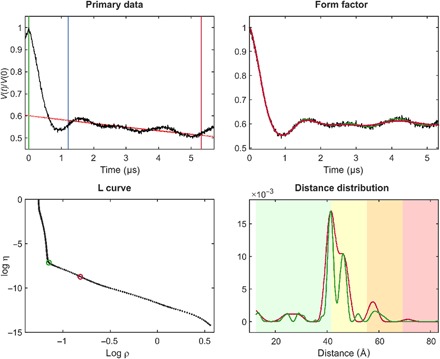
“Standard Tikhonov regularization processing, illustrated using site pair V96C/I143C in the lumenal loop of a double mutant of LHCII, with iodoacetamido-PROXYL spin labels attached to the indicated cysteines ( 64 ).”
MethodSelf-citationHeyes, D. J., Khara, B., Sakuma, M., Hardman, S. J. O., provided, R. O. N., Rigby, S. E. J., & Scrutton, N. S. (2012) · PLoS ONE · doi:10.1371/journal.pone.0052418 · Cited by 26
Utilizing artificial neural network approach for solving two-dimensional integral equations
Asady, B., Hakimzadegan, F., & Nazarlue, R. (2014) · Mathematical sciences · doi:10.1007/s40096-014-0117-6 · Cited by 23 · cited 1×
“Promising neural network results also exist for two-dimensional (2D) integral equations ( 56 , 57 ), meaning that processing triple electron resonance spectroscopy ( 58 ) data with neural networks may also be possible.”
BackgroundPulsed triple electron resonance (TRIER) for dipolar correlation spectroscopy
Pribitzer, S., Sajid, M., Hülsmann, M., Godt, A., & Jeschke, G. (2017) · Journal of Magnetic Resonance · doi:10.1016/j.jmr.2017.07.012 · Cited by 23 · cited 1×
“Promising neural network results also exist for two-dimensional (2D) integral equations ( 56 , 57 ), meaning that processing triple electron resonance spectroscopy ( 58 ) data with neural networks may also be possible.”
BackgroundSelf-citationDzuba, S. A. (2016) · Journal of Magnetic Resonance · doi:10.1016/j.jmr.2016.06.001 · Cited by 21
A Novel Numerical Method of Two-Dimensional Fredholm Integral Equations of the Second Kind
Ma, Y., Huang, J., & Li, H. (2015) · Mathematical Problems in Engineering · doi:10.1155/2015/625013 · Cited by 18 · cited 2×
“Promising neural network results also exist for two-dimensional (2D) integral equations ( 56 , 57 ), meaning that processing triple electron resonance spectroscopy ( 58 ) data with neural networks may also be possible.”
BackgroundAnalytical solution of the PELDOR inverse problem using the integral Mellin transform
Матвеева, А. Г., Nekrasov, V. M., & Maryasov, A. G. (2017) · Physical Chemistry Chemical Physics · doi:10.1039/c7cp04059h · Cited by 14
Accuracy of approximations of solutions to Fredholm equations by kernel methods
Gnecco, G., Kůrková, V., & Sanguineti, M. (2012) · Applied Mathematics and Computation · doi:10.1016/j.amc.2012.01.015 · Cited by 10 · cited 2×
“At a more general level, neural network “ surrogate ” solutions to Fredholm equations are well researched in their own right ( 51 ), with rigorous accuracy bounds available ( 52 , 53 ).”
BackgroundHow Flexible Are Poly(paraphenyleneethynylene)s?
Godt, A., Schulte, M., Zimmermann, H. W., & Jeschke, G. (2007) · ChemInform · doi:10.1002/chin.200710080 · Cited by 10
Self-citationSurrogate solutions of Fredholm equations by feedforward networks.
Kůrková, V. (2012) · ASEP · Cited by 2
Research works printed but not linked: 2
- A. D. Milov, K. M. Salikhov, M. D. Shirov, Use of the double resonance in electron spin echo method for the study of paramagnetic center spatial distribution in solids. Fizika Tverdogo Tela 23, 975–982 (1981).
- 10.1002/1521-3927(20020301)23:4<227::aid-marc227>3.0.co;2-d · doi:10.1002/1521-3927(20020301)23:4<227::aid-marc227>3.0.co;2-d
Cited by
Benchmark Test and Guidelines for DEER/PELDOR Experiments on Nitroxide-Labeled Biomolecules
Schiemann, O., Heubach, C. A., Abdullin, D., Ackermann, K., Azarkh, M., Bagryanskaya, E. G., Drescher, M., Endeward, B., Freed, J. H., Galazzo, L., et al. (2021) · Journal of the American Chemical Society · doi:10.1021/jacs.1c07371 · Cited by 247
Self-citationStructural heterogeneity of α-synuclein fibrils amplified from patient brain extracts
Strohäker, T., Jung, B. C., Liou, S.-H., Fernandez, C. O., Riedel, D., Becker, S., Halliday, G. M., Bennati, M., Kim, W. S., Lee, S.-J., et al. (2019) · Nature Communications · doi:10.1038/s41467-019-13564-w · Cited by 223
Fábregas Ibáñez, L., Jeschke, G., & Stoll, S. (2020) · Magnetic Resonance · doi:10.5194/mr-1-209-2020 · Cited by 160
Self-citationAccelerated Nuclear Magnetic Resonance Spectroscopy with Deep Learning
Qu, X., Huang, Y., Lu, H., Qiu, T., Guo, D., Agback, T., Orekhov, V., & Chen, Z. (2019) · Angewandte Chemie International Edition · doi:10.1002/anie.201908162 · Cited by 158
Structural insights into α-synuclein monomer–fibril interactions
Kumari, P., Ghosh, D., Vanas, A., Fleischmann, Y., Wiegand, T., Jeschke, G., Riek, R., & Eichmann, C. (2021) · Proceedings of the National Academy of Sciences · doi:10.1073/pnas.2012171118 · Cited by 150
“Background decay was corrected using DEERNet (generic) (53) after time traces were cropped to remove overlap artifacts.”
Self-citation
Metadata
- Authors
- Worswick, S. G., Spencer, J. A., Jeschke, G., & Kuprov, I.
- Affiliations
- University of Southampton (GB)
- ETH Zurich (CH)
- Corresponding author
- Kuprov, Ilya
- Venue
- Science Advances
- Published
- 2018-08-03
- Volume
- 4
- Issue
- 8
- Pages
- eaat5218-eaat5218
- ISSN
- 2375-2548 (ISSN-L)
- PMC
- PMC6108566
- OpenAlex
- W2888649302
- Semantic Scholar
- ec65776701840f1806d48e77ed4d7837e220e480
- Cited by
- 212
- References
- 70
- Citations by year
- 2026: 13 · 2025: 26 · 2024: 33 · 2023: 36 · 2022: 47 · 2021: 30 · 2020: 11 · 2019: 15 · 2018: 1
- FWCI
- 7.44
- Type
- journal article
- Language
- en
- Open access
- gold
- doi.org
- Licence
- cc-by
- Locations
- Science Advances (publishedVersion, cc-by)
- Europe PMC (PubMed Central) (publishedVersion, cc-by)
- PubMed Central (publishedVersion, cc-by)
- PubMed (publishedVersion)
- ePrints Soton (University of Southampton) (submittedVersion)
- Repository for Publications and Research Data (ETH Zurich) (submittedVersion, cc-by)
- ETH Zürich Research Collection (cc-by)
- Funders
- Engineering and Physical Sciences Research Council (EP/N006895/1)
- Topics
- Physical Sciences › Chemistry › Spectroscopy › Electron Spin Resonance Studies
- Physical Sciences › Materials Science › Electronic, Optical and Magnetic Materials › Magnetism in coordination complexes
- Physical Sciences › Chemistry › Spectroscopy › Advanced NMR Techniques and Applications
- Keywords
- double electron-electron resonance, artificial neural networks, model-independent analysis, distance distribution, exchange interaction, synthetic training data, uncertainty estimation, PELDOR, spinach
About these checks
Registry, retraction, Cites and statistics results are computed, not judged, with one exception: a printed reference that no index lists is read once by a model before it counts as a citation error. Claims are extracted by a model and kept only when their quote appears verbatim in the text; each cited source is then checked, with a model’s help, for whether it says what the claim relies on. Those verdicts can be wrong — read the claim’s quote and the cited source before relying on one.
Statistics and arithmetic are recomputed, not judged.
Confidence bands are shown only for fields calibrated on our annotated test set. None is calibrated yet, so no band is shown.
What counts as a claim ›How we measure confidence ›How we check this ›
Are you an author, or do you see a problem with this page? Request a review
Data sources
Bibliographic data: Semantic Scholar, OpenAlex, Crossref.
Contains information from the Semantic Scholar Academic Graph Datasets, made available under the ODC Attribution License (ODC-BY 1.0).
Semantic Scholar’s data is described in: Kinney, R., et al. (2023). The Semantic Scholar Open Data Platform. arXiv:2301.10140.
