

Expanding and optimizing 3D bioprinting capabilities using complementary network bioinks
Open accessThe DOI matches its Crossref record; 43 of the 43 references it cites were found in a registry or an index.
Abstract
A generalizable strategy enables the expansion of the bioink palette and bioprinting capabilities.
Overview
The claims and statistics of this paper haven’t been checked yet.
Free: it reads the open-access text and checks the first 5 claims that cite a source we can check. Create a free account to check every claim.
Integrity signals
Registry
Cites
Statistics
Figures
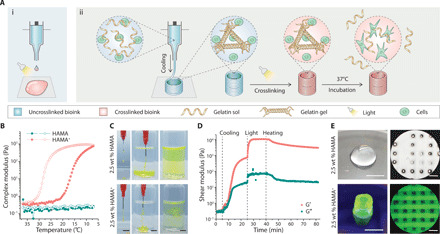
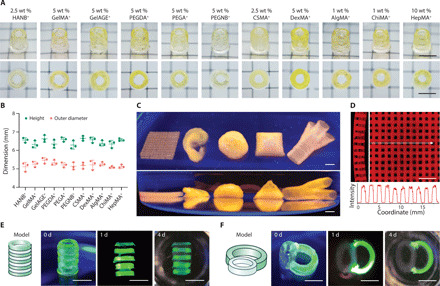
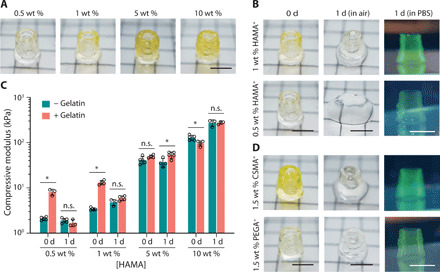
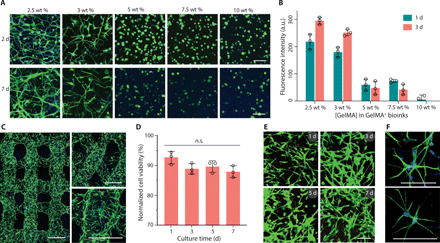
Verification
Claims the paper makes
The claims and statistics of this paper haven’t been checked yet.
Free: it reads the open-access text and checks the first 5 claims that cite a source we can check. Create a free account to check every claim.
Claims other papers make about this one
Each is checked against this paper’s own text: does it say what the citing paper says it does?
The cited source says what the claim attributes to it.
In the citing paper
“To this end, considerable efforts were made in developing hydrogel-based inks or printing techniques to enhance 3D stability and shape fidelity, such as printing multimaterial inks with combined nozzle system24, 25, photo-crosslinkable hydrogels17, 26, 27, adding viscosifiers28–30, or printing in sacrificial supporting materials31–33.”
From Fibre-infused gel scaffolds guide cardiomyocyte alignment in 3D-printed ventricles (2023) · cites this paper as [26]
Self-check
Percentages, sums and reported differences re-computed from the paper’s own numbers.
The self-check needs the paper’s full text.
Citations
Cites
Hydrogels with tunable stress relaxation regulate stem cell fate and activity
Chaudhuri, O., Gu, L., Klumpers, D., Darnell, M., Bencherif, S. A., Weaver, J. C., Huebsch, N., Lee, H.-P., Lippens, E., Duda, G. N., et al. (2016) · Nature Materials · doi:10.1038/nmat4489 · Cited by 2,443 · cited 1×
“, spreading, migration, and proliferation) (5, 6) and present an environmental stiffness that is incompatible with cells of soft-tissue origin.”
Hyaluronic Acid Hydrogels for Biomedical Applications
Burdick, J. A., & Prestwich, G. D. (2011) · Advanced Materials · doi:10.1002/adma.201003963 · Cited by 2,139
Self-citation25th Anniversary Article: Engineering Hydrogels for Biofabrication
Malda, J., Visser, J., Melchels, F. P., Jüngst, T., Hennink, W. E., Dhert, W. J. A., Groll, J., & Hutmacher, D. W. (2013) · Advanced Materials · doi:10.1002/adma.201302042 · Cited by 1,901 · cited 2×
“This paradox has resulted in a compressed “biofabrication window” containing a select group of feasible bioinks, with other biomaterial systems requiring major compromises in either printability or biocompatibility ( 7 , 8 ).”
3D bioprinting of collagen to rebuild components of the human heart
Lee, A., Hudson, A. R., Shiwarski, D. J., Tashman, J. W., Hinton, T. J., Yerneni, S., Bliley, J. M., Campbell, P. G., & Feinberg, A. W. (2019) · Science · doi:10.1126/science.aav9051 · Cited by 1,782
Khetan, S., Guvendiren, M., Legant, W. R., Cohen, D. M., Chen, C. S., & Burdick, J. A. (2013) · Nature Materials · doi:10.1038/nmat3586 · Cited by 1,168
Self-citationZaman, M. H., Trapani, L. M., Sieminski, A. L., MacKellar, D., Gong, H., Kamm, R. D., Wells, A., Lauffenburger, D. A., & Matsudaira, P. (2006) · Proceedings of the National Academy of Sciences · doi:10.1073/pnas.0604460103 · Cited by 1,160
Ouyang, L., Yao, R., Zhao, Y., & Sun, W. (2016) · Biofabrication · doi:10.1088/1758-5090/8/3/035020 · Cited by 1,045
Self-citationBilliet, T., Gevaert, E., De Schryver, T., Cornelissen, M., & Dubruel, P. (2014) · Biomaterials · doi:10.1016/j.biomaterials.2013.09.078 · Cited by 1,015
Loessner, D., Meinert, C., Kaemmerer, E., Martine, L. C., Yue, K., Levett, P. A., Klein, T. J., Melchels, F. P. W., Khademhosseini, A., & Hutmacher, D. W. (2016) · Nature Protocols · doi:10.1038/nprot.2016.037 · Cited by 868
Microfluidic Bioprinting of Heterogeneous 3D Tissue Constructs Using Low‐Viscosity Bioink
Colosi, C., Shin, S. R., Manoharan, V., Massa, S., Costantini, M., Barbetta, A., Dokmeci, M. R., Dentini, M., & Khademhosseini, A. (2016) · Advanced Materials · doi:10.1002/adma.201503310 · Cited by 863
Cited by
Items 201–298 of 298
Jing, R., Pennisi, C. P., Nielsen, T. T., & Larsen, K. L. (2025) · International Journal of Biological Macromolecules · doi:10.1016/j.ijbiomac.2025.143461 · Cited by 13
Tan, Y., Chen, D., Wang, Y., Wang, W., Xu, L., Liu, R., You, C., Li, G., Zhou, H., & Li, D. (2022) · Macromolecular Bioscience · doi:10.1002/mabi.202100441 · Cited by 10
Rousselle, A., Ferrandon, A., Mathieu, É., Godet, J., Ball, V., Comperat, L., Oliveira, H., Lavall�e, P., Vautier, D., & Arntz, Y. (2022) · Bioprinting · doi:10.1016/j.bprint.2022.e00247 · Cited by 10
Ultrahigh Cell Density 3D Bioprinting by Acoustic Fluids‐mediated Stereolithography
Wu, Z., Wang, J., Huang, D., Cheng, Y., & Zhao, Y. (2025) · Advanced Materials · doi:10.1002/adma.202511418 · Cited by 12
The Space Within: How Architected Voids Promote Tissue Formation
Puiggalí‐Jou, A., Hui, I. B., Rico, C. F., & Zenobi‐Wong, M. (2025) · Advanced Materials · doi:10.1002/adma.202507385 · Cited by 12
Advanced Biomaterials for 3D Printing via a Synergistic Dual-Photopolymer Design
Bao, Y. (2024) · ACS Applied Polymer Materials · doi:10.1021/acsapm.3c02891 · Cited by 9
Moon, S. H., Choi, G., Chi, H. J., & Yang, Y. J. (2024) · Biofabrication · doi:10.1088/1758-5090/ad3d8b · Cited by 10
Gai, K., Yang, M., Chen, W., Hu, C., Luo, X., Smith, A. G., Xu, C., Zhang, H., Li, X., Shi, W., et al. (2024) · Advanced Healthcare Materials · doi:10.1002/adhm.202401419 · Cited by 10
Feng, H., Song, Y., Lian, X., Zhang, S., Bai, J., Gan, F., Lei, Q., Wei, Y., & Huang, D. (2024) · ACS Biomaterials Science & Engineering · doi:10.1021/acsbiomaterials.4c01522 · Cited by 9
4D bioprinting of protein-based bioinks for tissue engineering and disease models
Waidi, Y. O., & Gugulothu, S. B. (2025) · Biomaterials Science · doi:10.1039/d5bm01284h · Cited by 9
Bikmulina, P., Kosheleva, N. V., Efremov, Y. M., Bakulina, A., Kuryanova, A. S., Анатольевна, А. Н., Shavkuta, B. S., Kotova, S., Shpichka, A. I., & Timashev, P. S. (2022) · Bioprinting · doi:10.1016/j.bprint.2023.e00279 · Cited by 8
Challenges and Innovative Strategies in 3D Printing of Natural Biomolecular Hydrogels
Qiu, J., Ma, S., & Qu, X. (2025) · Nano Select · doi:10.1002/nano.202400149 · Cited by 8
“Subsequently, gelatin can be easily washed away or lost during the natural cell culture process [85].”
Retinal organoid and gene editing for basic and translational research
Cheng, Y.-M., Ma, C., Jin, K., & Jin, Z. (2023) · Vision Research · doi:10.1016/j.visres.2023.108273 · Cited by 8
Shang, S., Huang, X.-H., Zhu, B., & Qin, L. (2025) · Journal of Agricultural and Food Chemistry · doi:10.1021/acs.jafc.5c10667 · Cited by 7
Qiu, W., Bernero, M., Ye, M. E., Yang, X., Fisch, P., Müller, R., & Qin, X. (2026) · Advanced Materials · doi:10.1002/adma.202510834 · Cited by 8
“Drawing on the double-network concept in previous work [34, 39], we hypothesized that incorporating a sacrificial network could enhance the printability at low polymer content during 2PP.”
3D Bioprinting Using Universal Fugitive Network Bioinks
Arslan, H., Davuluri, A., Nguyen, H. H., So, B. R., Lee, J., Jeon, J., & Yum, K. (2024) · ACS Applied Bio Materials · doi:10.1021/acsabm.4c01220 · Cited by 8
Development of bilayered porous silk scaffolds for thymus bioengineering
Silva, C. S., Kundu, B., Gomes, J. M., Fernandes, E. M., Reis, R. L., Kundu, S. C., Martins, A. M., & Neves, N. M. (2023) · Biomaterials Advances · doi:10.1016/j.bioadv.2023.213320 · Cited by 9
Mazzocchi, A. R., Yoo, K. M., Nairon, K. G., Kirk, L. M., Rahbar, E., Söker, S., & Skardal, A. (2021) · Biomedical Materials · doi:10.1088/1748-605x/ac45eb · Cited by 8
Construction of 3D hierarchical tissue platforms for modeling diabetes
Kim, M., & Jang, J. (2021) · APL Bioengineering · doi:10.1063/5.0055128 · Cited by 8
Aleman, J., Sivakumar, H., DePalma, T. J., Zhou, Y., Mazzocchi, A. R., Huntwork, R. C., Yoo, K. M., Banks, S. R., Clark, C., Maycock, A., et al. (2021) · bioRxiv (Cold Spring Harbor Laboratory) · doi:10.1101/2021.09.01.458584 · Cited by 10
Continuous Multi-Material Additive Manufacturing
Sun, J., Xiong, W., Zhang, L., Guo, X., Song, Y., & Wu, L. (2025) · Research · doi:10.34133/research.0889 · Cited by 6
Liu, Z., Xuan, L., Hou, Y., Xie, T., Li, J., Cai, J., Zhang, S., Miao, Y., Hou, N., He, G., et al. (2026) · Advanced Science · doi:10.1002/advs.202518646 · Cited by 9
Genetic and bioactive functionalization of bioinks for 3D bioprinting
Kumar, P., Sharma, J., Kumar, R., Najser, J., Frantík, J., Sunnam, N., Sindhu, A., & Praveenkumar, S. (2025) · Bioprocess and Biosystems Engineering · doi:10.1007/s00449-025-03180-y · Cited by 10
“The restricted number of bioinks that satisfy both mechanical requirements for printing and biological needs for cell encapsulation constraints customizability [145].”
Optimizing extrusion-based 3D bioprinting of plant cells with enhanced resolution and cell viability
Zhou, D., 李, P. 佩. L., Yu, S., Cui, Z., Xu, T., & Ouyang, L. (2025) · Biofabrication · doi:10.1088/1758-5090/adada1 · Cited by 7
“Although the gelatin might escape from the hydrogel during culture due to its uncrosslinked status [24], the bioprinted structures well maintained the integrity.”
Self-citationGaihre, B., Liu, X., Tilton, M., Li, L., Li, Y., & Lu, L. (2021) · Journal of Materials Science · doi:10.1007/s10853-021-06439-3 · Cited by 6
Photoclick Phase-separating Hydrogels for 3D Cell Culture and Volumetric BioprintingPreprint
Müller, M. Z., Bernero, M., Qiu, W., Style, R. W., Müller, R., & Qin, X. (2022) · bioRxiv (Cold Spring Harbor Laboratory) · doi:10.1101/2022.01.29.478338 · Cited by 6
“Besides VBP, the bioresin may find applications in other light-based 3D printing such as digital light processing (DLP) 35,36 , extrusion printing 37,38 and two-photon direct laser writing 20,26,39 .”
BackgroundTorza, A., Zgeib, R., Wang, X. F., Zaeri, A., Zhang, F., Cao, K., Chang, R. C., & Weickenmeier, J. (2024) · International Journal of Solids and Structures · doi:10.1016/j.ijsolstr.2024.112938 · Cited by 5
Chu, Y., Lan, X., Zhu, P., Zhang, T., Ma, Z., Adesida, A. B., Zeng, H., & Chen, L. (2025) · Small Methods · doi:10.1002/smtd.202402103 · Cited by 7
Chen, J., Wu, Y., Huang, J.-R., Jie, J., Huang, C., Zhang, D., Huang, Y., Mao, R., Zhao, M., & Wu, L. (2025) · Advanced Healthcare Materials · doi:10.1002/adhm.202502347 · Cited by 5
do Amaral, S. R., Atanasov, A., de Souza, D. C. M., de Paiva, I. F., Ferreira, M. L., Grover, L. M., & Primo, F. L. (2025) · BioMedical Engineering OnLine · doi:10.1186/s12938-025-01476-4 · Cited by 6
“…of sources, including animal-derived proteins like collagen, gelatin, fibrin, and hyaluronic acid; plant-derived polysaccharides such as alginate and agarose; and synthetic polymers like polyacrylamide; together representing the range of properties that 3D bioprinted models can assume [64, 65].”
Engineering anisotropic tissues: from structured scaffolds to magnetic actuation
Demri, N., Descroix, S., & Wilhelm, C. (2026) · Materials Today Bio · doi:10.1016/j.mtbio.2026.103191 · Cited by 6
“While the level of complexity of achieved structures is not yet on par with extrusion bioprinting [386], magnetic patterning holds the unique advantage to create complex structures solely out of cells, without the need for matrix.”
Embedded 3D Bioprinting for Engineering Miniaturized In Vitro Tumor Models
Monteiro, M. V., Rocha, M., Gaspar, V. M., & Mano, J. F. (2024) · Methods in molecular biology · doi:10.1007/978-1-0716-3674-9_18 · Cited by 5
Conductive/Insulating Bioinks with Multitechnology Compatibility and Adjustable Performance
Yang, X., Zhong, Y., Zhang, L., Liu, Y., Zhuo, F., Wang, J., Ge, L., Zhang, L., Zeng, X., Tan, W., et al. (2024) · ACS Biomaterials Science & Engineering · doi:10.1021/acsbiomaterials.4c00631 · Cited by 5
Freeform 3D Printing of Cell-Adsorptive Cryogels with Shape-Recoverability
Castanheira, E. J., Monteiro, L. P. G., Sobreiro‐Almeida, R., Gaspar, V. M., Wittig, N. K., Correia, T. R., Birkedal, H., Rodrigues, J. M. M., & Mano, J. F. (2025) · ACS Materials Letters · doi:10.1021/acsmaterialslett.4c01836 · Cited by 4
Idnani, R., & Khan, S. (2025) · Bioprinting · doi:10.1016/j.bprint.2025.e00463 · Cited by 6
Nguyen, M. H., Duong, G. H., Le, H. C., Le, H. C. T., Nguyen, M. H., Vuong, V., & Tan, T. P. (2026) · Materials Advances · doi:10.1039/d6ma00268d · Cited by 5
Günther, D., Bergerbit, C., Marsee, A., Vedaraman, S., Moliner, A. P., Bastard, C., Eelen, G., Gerardo‐Nava, J., Dewerchin, M. A., Carmeliet, P., et al. (2025) · Biofabrication · doi:10.1088/1758-5090/adae37 · Cited by 5
“…a key requirement to ensure sufficient oxygen and nutrient supply of the tissue, their sensitivity to hydrogel stiffness and the requirement of a soft matrix opposes with the need for stiff materials, in the range of kPa, to ensure the shape fidelity and stability of printed constructs [27, 28].”
Wang, C., Wang, Z., Lin, Y., & Ouyang, L. (2025) · Advanced Materials · doi:10.1002/adma.202506616 · Cited by 4
Self-citationMacKay, J., Hart, L. R., Tareq, A. Z., Wang, S., Abrego, V. G., Maskery, I., Irvine, D. J., Wildman, R. D., & Hayes, W. (2025) · Materials Advances · doi:10.1039/d5ma00670h · Cited by 4
Advances in the construction of in vitro liver tissue models using 3D bioprinting technology
Zhong, C., & Xu, H. (2023) · HepatoBiliary Surgery and Nutrition · doi:10.21037/hbsn-23-467 · Cited by 4
“Moreover, hydrogel matrices that differ from the in vivo environment can impede biological behaviors such as cell migration, extension, and proliferation, which can influence the self-assembly process of cells growing into tissues to a certain extent (14).”
BackgroundHou, J., Jie, J., Zhang, D., Chen, J., Fang, H., Sun, D., Zhou, M., Sun, J., & Wu, L. (2025) · Materials Today Bio · doi:10.1016/j.mtbio.2025.102404 · Cited by 4
“Stevens et al. explored the application of complementary network bioinks in tissue engineering and ultimately satisfied the biological needs of cell culture and tissue engineering by screening the appropriate concentration of hydrogel stiffness to achieve 3D printing and culture of astrocytes [64].”
Bioinks used in the repair of nerve injury in vivo
Wang, L., Zhou, X., Wang, S., Wen, F., Ullah, I., Zhang, W., Gao, X., Song, B., You, Z., & Li, H. (2025) · Progress in Materials Science · doi:10.1016/j.pmatsci.2025.101643 · Cited by 3
Oriented Micropore‐Forming Bioinks for 3D Bioprinting of Muscle Tissues
Palai, D., Yasue, H., Ohta, M., Uto, K., TAGUCHI, T., & Nishiguchi, A. (2026) · Small · doi:10.1002/smll.202509439 · Cited by 3
Hybrid 3D‐Printed Tri‐Cultured Intestine with Tubular Mesh Structure
Son, S., Lee, B., Lim, H., Choi, H., Jung, C., Lim, J. H., Yang, S., & Lee, J. (2025) · Advanced Functional Materials · doi:10.1002/adfm.202424495 · Cited by 3
Li, J., Wang, Y., Wang, X., Shang, L., Zhao, Y., & Zhang, H. (2025) · Chemical Engineering Journal · doi:10.1016/j.cej.2025.164218 · Cited by 2
3D in vitro modeling of neural microenvironment through a multi-scaffold assembly approach
Traldi, C., Chiappini, V., Chasseur, S., Aiello, F., Boido, M., & Tonda‐Turo, C. (2025) · Materials Today Bio · doi:10.1016/j.mtbio.2025.102086 · Cited by 3
“Indeed, several works have shown the versatility of GelMA polymer for the optimization of photosensitive hydrogels and bioinks, having tunable stiffness and porosity according to polymer concentration [62 – 66].”
Vanlauwe, F., Witte, T. D., Shamieva, S., Dermaux, C., Cleyman, A. N. A., Vlierberghe, S. V., & Blondeel, P. N. (2025) · Biofabrication · doi:10.1088/1758-5090/ae1e31 · Cited by 2
“The ElaNB + bioink is able to bridge gaps up to 8 mm, which is better than the HAMA bioink, supplemented with unmodified gelatin, reported by Ouyang et al [36].”
Jena, S., Kirti, A., Mayur, A., Sinha, A., Öz, T., Kujawska, M., & Verma, S. K. (2025) · Next research. · doi:10.1016/j.nexres.2025.101266 · Cited by 3
Shi, W., Gao, M., Zhou, X., Sun, X., Ding, H., Zhou, Y., Li, S., Sun, J., Gao, X., Liu, X., et al. (2026) · International Journal of Extreme Manufacturing · doi:10.1088/2631-7990/ae37ad · Cited by 2
“They can also enhance the rigidity and printability of various photocrosslinkable hydrogels, such as gelatin, hyaluronic acid (HA), chondroitin sulfate, dextran, alginate, chitosan, heparin, and PEG, which are generally considered unprintable [183] .”
A diffusion-based 3D printing strategy to fabricate self-supporting, perfusable networks
Mejia, D. R., Cai, B., Iranzo, S. C., Perez, A., Tan, Y. L., Lee, S., & Heilshorn, S. C. (2026) · BMC Methods · doi:10.1186/s44330-026-00059-6 · Cited by 2
“Layer-by-layer printing sequentially builds structures by stacking thin layers, allowing for precise architectural control [12–14].”
In situ particle-to-fibre transformation of hydrogels for 3D printing
Zhou, D., Dou, B., Fan, S., Ooi, H. S., Han, K., He, Y., Zhang, X., Wang, C., Guo, Y., Chen, L., et al. (2026) · Nature · doi:10.1038/s41586-026-10883-z · Cited by 3
Self-citationMechanical Mapping of Bioprinted Hydrogel Models by Brillouin MicroscopyPreprint
Mahmodi, H., Piloni, A., Utama, R. H., & Kabakova, I. V. (2021) · bioRxiv (Cold Spring Harbor Laboratory) · doi:10.1101/2021.02.18.431535 · Cited by 2
“field of biofabrication by creating new opportunities for engineering in vitro living systems for use in tissue regeneration, biological modelling, and cell-based diagnostics [1-3].”
BackgroundHu, Q., Liu, S., Zhang, H., Shen, Z., Krishnan, S., & Ramalingam, M. (2021) · doi:10.22541/au.162310170.03093430/v1 · Cited by 2
Continuous liquid supply multi-material DLP 3D printingPreprint
Wu, L., Sun, J., Xiong, W., Zhang, L., & Song, Y. (2024) · Research Square · doi:10.21203/rs.3.rs-4954530/v1 · Cited by 2
3D Printing Hydrogel for Flexible Mechanical Sensors
Li, D., Jiang, L., Sheng, Z., Wei, Y., Li, Z., & Zheng, Q. (2026) · Journal of Intelligent Material · doi:10.64509/jim.11.43 · Cited by 1
“Chemical crosslinking is suitable for applications that require rapid curing and high mechanical strength [90–92], whereas physical crosslinking is more appropriate for scenarios that demand biocompatibility and reversibility [87, 88, 93, 94].”
Magnetic bioprinting: shaping initial tissue geometry and probing tissue mechanics
Demri, N., Tsvetkova, P. P., Vias, C., Gropplero, G., Dumas, S., Cayrac, F., Descroix, S., & Wilhelm, C. (2026) · Biofabrication · doi:10.1088/1758-5090/ae6c5c · Cited by 1
“These techniques almost systematically depend on scaffolds, either preloaded with cells— subjecting them to stress during gel extrusion—or seeded post-fabrication, requiring cellular colonization over time [25, 61].”
DNA hydrogels in bone tissue engineering: where molecular ingenuity meets skeletal renaissance
Wang, J., Li, M., Zhao, P., & Li, J. (2026) · Journal of Materials Chemistry B · doi:10.1039/d6tb01765g · Cited by 1
Smart Bioinks for 4D Bioprinting: Requirements, Design, and Applications
Chen, S., Lai, J., Zeng, Q., Zhou, L., Yang, B., Zhang, B., Wang, M., Zhou, J., Lau, K., Lim, K. S., et al. (2026) · Advanced Science · doi:10.1002/advs.77791 · Cited by 1
Chen, W., Gai, K., Lin, F., Sun, W., & Song, Y. (2021) · Brain Science Advances · doi:10.26599/bsa.2021.9050021 · Cited by 1
“, gelatin, alginate, hyaluronic acid, chondroitin sulfate, dextran, chitosan, heparin, and polyethylene glycol), can be formed in designed structures at low concentration and at low stiffness (thousands of pascals) [89].”
BackgroundChemical strategies for 3D printable biomaterials
Barbugian, F., Cadamuro, F., & Russo, L. (2022) · Elsevier eBooks · doi:10.1016/b978-0-323-85430-6.00002-9 · Cited by 1
Yang, R., Jiang, C., & Shao, Y. (2022) · Bulletin of Mathematical Biology · doi:10.1007/s11538-022-01056-w · Cited by 2
“(Diao et al. 2019; Kim et al. 2018; Ouyang et al. 2020; Zheng et al. 2019) could alreadymanufacture chambers at the size of (200 ∼ 1000μm) in artificial extracellular matrices (ECM), using the 3D-printing technology.”
Method3D Printing of Multicomponent Hydrogels for Biomedical Applications
Zhou, D., Wang, C., Hert, A., Yan, L., Dou, B., & Ouyang, L. (2023) · Royal Society of Chemistry eBooks · doi:10.1039/bk9781837670055-00231 · Cited by 2
Self-citationLi, Z., Su, T., Yang, Y., & Zhao, H. (2025) · Tissue Engineering Part B Reviews · doi:10.1089/ten.teb.2024.0323 · Cited by 2
“50 It is worth noting that although a lower stiffness is typically regarded as advantageous for printing neural cells, the speci fi c parameters must be adapted to align with the experimental objectives.”
Printable brain A bioprinting approach to mimic the astrocytic extracellular environment
Silva, M. M. C. (2020) · Portuguese National Funding Agency for Science, Research and Technology (RCAAP Project by FCT) · doi:10.34626/46yw-b213
Ratheesh, G. (2021) · Queensland University of Technology · doi:10.5204/thesis.eprints.210168
Laser Direct-Write Bioprinting: A Powerful Tool for Engineering Cellular Microenvironments
Kingsley, D. M., Dias, A. D., Roberge, C. L., & Corr, D. T. (2022) · Elsevier eBooks · doi:10.1016/b978-0-12-824552-1.00007-4
Modular Enzyme-Responsive Polysaccharide-Based Hydrogels for Biofabrication
Naeimipour, S. (2023) · Linköping studies in science and technology. Dissertations · doi:10.3384/9789180750349
Sources, Structures, and Properties of Hyaluronic Acid
Cui, W., & Xiang, L. (2024) · Wiley eBooks · doi:10.1002/9783527845583.ch3
Role of microfluidics in 3D bioprinting
Shaikh, A., Sengar, D., & Gajbhiye, V. (2024) · Elsevier eBooks · doi:10.1016/b978-0-323-95533-1.00020-5
Wang, F., Zhang, Z., Mu, Y., Xue, Y., Ji, Q.-H., & Wei, W. (2025) · 3D Printing and Additive Manufacturing · doi:10.1089/3dp.2024.0203
“18,34 37 These techniques operate on distinct principles and thus fi nd application in different areas.”
355Chapter 10 3D and 4D printing of biodegradable photopolymers
Cao, W., & Bao, Y. (2025) · De Gruyter eBooks · doi:10.1515/9783111505190-010
3D Bioprinting of the Tumor Microenvironment
Davern, J. W. (2025) · QUT ePrints (Queensland University of Technology) · doi:10.5204/thesis.eprints.258761 · Cited by 1
3D Bioprinting Neural Models: A New Era in Drug Discovery and Neuropharmacology
Karad, V., Patil, P. P. R. P. P. P. R., & Gupta, G. L. (2025) · Biomedical Materials & Devices · doi:10.1007/s44174-025-00530-y
Biofabrication of graphene hydrogels for environmental protection and remediation
Wibowo, Y. G., Safitri, H., Anwar, D., & Setiawan, A. (2025) · Elsevier eBooks · doi:10.1016/b978-0-443-31448-3.00013-6
Weber, S. (2024) · Repository KITopen (Karlsruhe Institute of Technology) · doi:10.5445/ir/1000170887 · Cited by 1
Zhang, R. L., Wang, X., Fu, X., Ouyang, L., Zhou, B., & Na, J. (2026) · Green Chemical Engineering · doi:10.1016/j.gce.2026.02.005 · Cited by 1
Self-citationHao, R., Wang, H., Peng, Z., Du, J., Li, X., Yuan, Y., Du, J., Li, M., Tian, M., Tian, F., et al. (2026) · Advanced Composites and Hybrid Materials · doi:10.1007/s42114-026-01747-1
Next-Generation Biocompatibility: Reviewing the Frontier of Novel Materials in Medical AM
Maričić, S., & Holi, M. (2026) · Lecture notes in mechanical engineering · doi:10.1007/978-3-032-23089-8_14
Jiang, Q., Wu, Y., Ding, Z., Huang, B., Gu, Y., Zhang, X., Huang, Y., Ouyang, H., & Zhang, S. (2026) · Biofabrication · doi:10.1088/1758-5090/ae61f6
“Furthermore, the effect of nCaP incorporation on printing fidelity was systematically evaluated according previous literatures [41–43].”
3D triply periodic minimal surface gyroid hydrogel scaffolds for soft tissue engineering
Han, X., He, N., Yuan, D., Li, N., Zhu, W., Zhu, X., Li, J., Yuan, X., Wang, W., Gu, X., et al. (2026) · Nature Communications · doi:10.1038/s41467-026-73452-y · Cited by 3
“This challenge is ampli fi ed in low-concentration hydrogel bioinks, which often provide favourable biological compatibility but possess limited stiffness and mechanical strength after crosslinking 27,28 .”
Zhang, X., Wu, X., Chu, Y., Gu, L., Liang, M., Yao, Y., Wang, X., Jin, Y., & Shao, L. (2026) · Advanced Fiber Materials · doi:10.1007/s42765-026-00725-y
“To balance printing fidelity and cellular plasticity, we employed a complementary dual-network strategy [63] for cell-laden microfiber fabrication.”
Xiao, X., Duan, H., Feng, Q., Lai, Y., Xiong, F., Yang, L., Huang, Z., Li, C., Yang, Y., Long, D., et al. (2026) · Polymer Testing · doi:10.1016/j.polymertesting.2026.109244
Das, S., Singh, P., Pathak, R. K., Das, J., Jana, P., Mahto, B., & Datta, S. (2026) · De Gruyter eBooks · doi:10.1515/9783111719993-004
Pisheh, H. R., Hoseinian, M. S., Dezfoulian, D., Nouri, M., Ahmadi, S. A., Azarpira, N., & Sani, M. (2026) · Journal of Biological Engineering · doi:10.1186/s13036-026-00718-w
“These materials offer improved photocuring efficiency, enhanced mechanical tunability, and superior biological performance compared with traditional gelatin, alginate-, or chitosan-based systems [42, 60, 64].”
Akter, S., Bhattacharyya, A., Lee, S., Bastidas, O. M. B., & Noh, I. (2026) · International Journal of Biological Macromolecules · doi:10.1016/j.ijbiomac.2026.153524
Process parameter optimization for 3D printing of photocurable resins in hydrogel media
Rociński, M., & Pilch, M. (2026) · Chemical and Process Engineering New Frontiers · doi:10.24425/cpe.2026.158132
“Therefore, proper optimization of resin formulations with respect to photorheological behavior is crucial for ensuring a balance between processing performance and the final quality of additively manufactured structures (Maines et al., 2021; Ouyang et al., 2020).”
Jeong, S., Valsami, E., Kim, K., Park, K., Kim, J., Soto, J. A. L., Lee, J. S., Rodriguez, R. S., Santos, D. M. D., Hiemstra, J., et al. (2026) · Advanced Functional Materials · doi:10.1002/adfm.77191
Yameen, H. S., Call, T., Kopty, K., Notea‐Debutton, N., Gargioli, C., & Seliktar, D. (2026) · Biofabrication · doi:10.1088/1758-5090/ae8a82
“…be engineered to display very specific properties, including rapid self-assembly for extruding filaments (e.g. by supramolecular architectures) [40–42], proteolytic responsiveness to support dynamic cell–matrix interactions (e.g. by proteolytically responsive bioactive domains) [33– 35], shape…”
Tao, J., He, Y., Liao, X., Xu, Y., Pan, Y., Wang, F., Xiong, M., Wang, Y., Sun, T., Yang, S., et al. (2026) · International Journal of Extreme Manufacturing · doi:10.1088/2631-7990/aea52a
Shear‐Extensional Aspect Programming of Microgels (SHAPE)
Dou, B., Zhou, D., Xu, R., Guo, Y., Wang, Z., & Ouyang, L. (2026) · Advanced Functional Materials · doi:10.1002/adfm.78478
Self-citationAkpe, V., Ngwu, T. A., & Cock, I. E. (2026) · Pharmacognosy Communications · doi:10.5530/pc.2026.4.23
León-Becerra, J. (2026) · Elsevier eBooks · doi:10.1016/b978-0-443-34207-3.00027-7
Biopolymers derived from extracellular matrix for 3D bioprinting
Olate‐Moya, F., Tamayo, M. A., & Palza, H. (2026) · Elsevier eBooks · doi:10.1016/b978-0-443-34207-3.00023-x
Cell-enriched granular bioinks enable vascular integration and endometrial repair
Zhao, F., Jin, S., Liu, Y., Zeng, B., Gu, W., Ye, X., Dai, Y., Xin, S., & Zhang, S. (2026) · Biomaterials · doi:10.1016/j.biomaterials.2026.124709
Xu, X., Chen, R., Pen, L., Sun, R., Sheng, H., Li, X., Liu, A., Xue, M., Ma, K., & Sun, L. (2026) · ACS Applied Nano Materials · doi:10.1021/acsanm.6c04362
A multiphysics predictive framework for cell viability and filament morphology in FRESH bioprinting
Chen, Z., Huang, C., Liu, H., Wang, Z., Xu, L., Shuiquan, H., Qu, M., Xu, Z., Han, X., Li, S., et al. (2026) · Biomaterials Advances · doi:10.1016/j.bioadv.2026.215269
Excluded Volume Effect-induced Shrinkage for Resolution Enhancement of Hydrogel BioconstructsPreprint
Zhou, D., Xu, H., Li, B., Li, B., Yu, S., & Ouyang, L. (2026) · bioRxiv (Cold Spring Harbor Laboratory) · doi:10.64898/2026.10.25.761631
Self-citationYun, Y., Jena, S., Egido-Betancourt, H., Uzoechi, S., Kim, D. Y., Lee, J.-M., & Nguyen, J. (2026) · Advanced Drug Delivery Reviews · doi:10.1016/j.addr.2026.115982
Metadata
- Authors
- Ouyang, L., Armstrong, J. P. K., Lin, Y., Wojciechowski, J. P., Lee-Reeves, C., Hachim, D., Zhou, K., Burdick, J. A., & Stevens, M. M.
- Affiliations
- Imperial College London (GB)
- University of Pennsylvania (US)
- Corresponding author
- Stevens, Molly M.
- ORCID
- Venue
- Science Advances
- Published
- 2020-09-18
- Volume
- 6
- Issue
- 38
- ISSN
- 2375-2548 (ISSN-L)
- PMC
- PMC7500929
- OpenAlex
- W3087699589
- Cited by
- 293
- References
- 43
- Citations by year
- 2026: 30 · 2025: 59 · 2024: 49 · 2023: 59 · 2022: 54 · 2021: 40 · 2020: 2
- FWCI
- 12.14
- Type
- journal article
- Language
- en
- Open access
- gold
- doi.org
- Licence
- Locations
- Science Advances (publishedVersion, cc-by-nc)
- PubMed Central (publishedVersion, cc-by-nc)
- PubMed (publishedVersion)
- Explore Bristol Research (submittedVersion, cc-by-nc)
- Spiral (Imperial College London) (submittedVersion, other-oa)
- Spiral (Imperial College London) (submittedVersion, cc-by)
- Funders
- H2020 Marie Skłodowska-Curie Actions (No 839111)
- Medical Research Council (MR/S00551X/1)
- Engineering and Physical Sciences Research Council (EP/P001114/1, No 1975740)
- UK Regenerative Medicine Platform (MR/R015651/1)
- Topics
- Physical Sciences › Engineering › Biomedical Engineering › 3D Printing in Biomedical Research
- Physical Sciences › Materials Science › Biomaterials › Hydrogels: synthesis, properties, applications
- Life Sciences › Biochemistry, Genetics and Molecular Biology › Cell Biology › Cellular Mechanics and Interactions
- Keywords
- 3D bioprinting, bioinks, photocrosslinkable polymers, hydrogels, tissue engineering, chitosan, alginate, heparin, dextran, chondroitin sulfate, hyaluronic acid, polyethylene glycol, natural and synthetic polymers
About these checks
Registry, retraction, Cites and statistics results are computed, not judged, with one exception: a printed reference that no index lists is read once by a model before it counts as a citation error. Claims are extracted by a model and kept only when their quote appears verbatim in the text; each cited source is then checked, with a model’s help, for whether it says what the claim relies on. Those verdicts can be wrong — read the claim’s quote and the cited source before relying on one.
Statistics and arithmetic are recomputed, not judged.
Confidence bands are shown only for fields calibrated on our annotated test set. None is calibrated yet, so no band is shown.
What counts as a claim ›How we measure confidence ›How we check this ›
Are you an author, or do you see a problem with this page? Request a review
Data sources
Bibliographic data: Semantic Scholar, OpenAlex, Crossref.
Contains information from the Semantic Scholar Academic Graph Datasets, made available under the ODC Attribution License (ODC-BY 1.0).
Semantic Scholar’s data is described in: Kinney, R., et al. (2023). The Semantic Scholar Open Data Platform. arXiv:2301.10140.
