

The DOI matches its Crossref record; 6 of the 6 references it cites were found in a registry or an index.
Ancient Xinjiang mitogenomes reveal intense admixture with high genetic diversity
Abstract
The 237 ancient mitochondrial genomes from Xinjiang reveal highly admixed populations from the Bronze Age to Historical Era.
Overview
The claims and statistics of this paper haven’t been checked yet.
Run the check — free, no account needed. It reads the open-access text and checks the sources it cites.
Integrity signals
Registry
Cites
Statistics
Figures
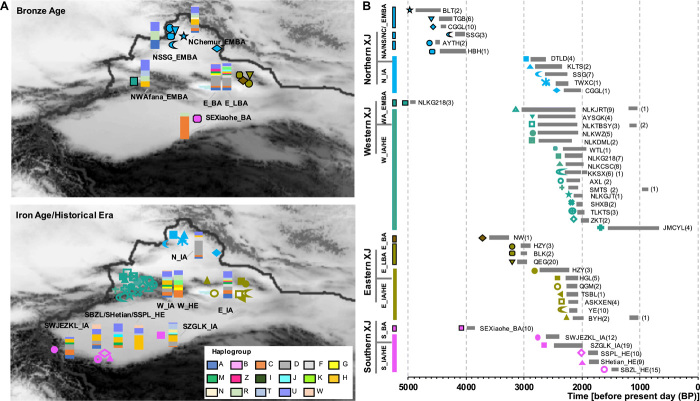
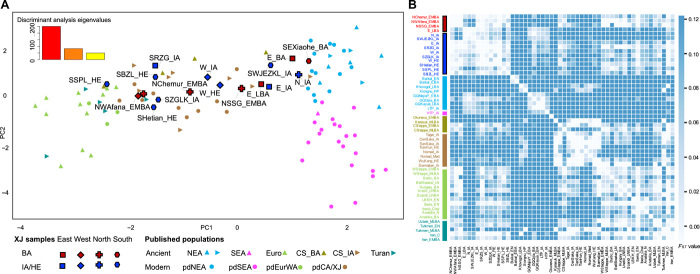
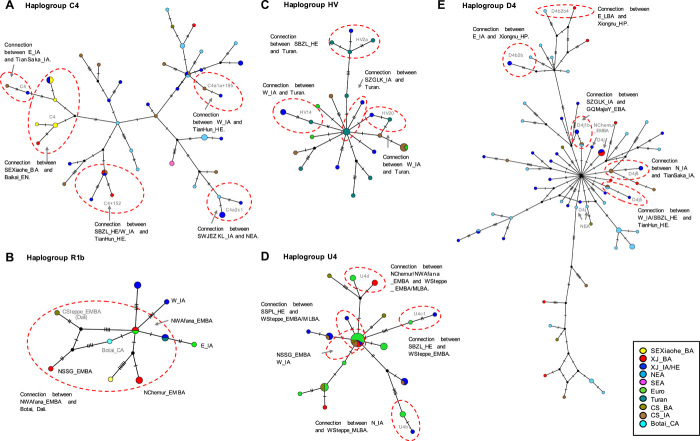
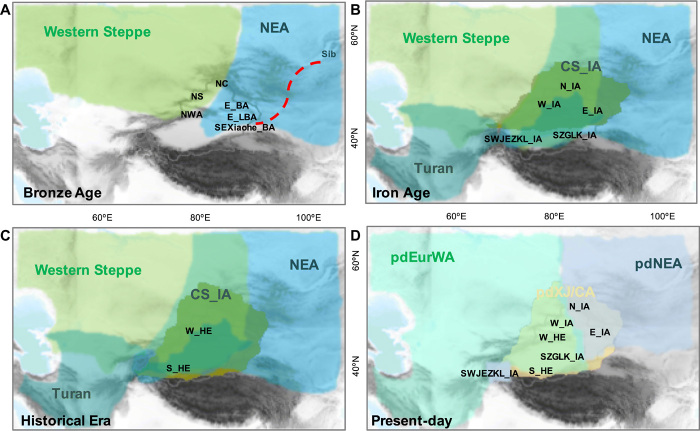
Verification
Claims the paper makes
The claims and statistics of this paper haven’t been checked yet.
Run the check — free, no account needed. It reads the open-access text and checks the sources it cites.
Claims other papers make about this one
Each is checked against this paper’s own text: does it say what the citing paper says it does?
In the citing paper
“recent analyses of ancient genomes spanning from 6000 before the common era (BCE) to present days revealed at least four ancestral sources that arose in Mongolia through the Neolithic.”
From Mitochondrial DNA Footprints from Western Eurasia in Modern Mongolia (2022) · cites this paper as Wang C. C. et al., 2021
In the citing paper
“A genetic mixture of Yamnaya pastoralists and European farmers, the fourth source, appeared ca. 1400 BCE”
From Mitochondrial DNA Footprints from Western Eurasia in Modern Mongolia (2022) · cites this paper as Wang C. C. et al., 2021
In the citing paper
“The third was connected with the Afanasievo culture, an eastward extension of the Yamnaya culture from the Pontic-Caspian steppe (ca. 3300–2200 BCE), which probably introduced dairying practices to the region (ca. 3000 BCE)”
From Mitochondrial DNA Footprints from Western Eurasia in Modern Mongolia (2022) · cites this paper as Wang C. C. et al., 2021
In the citing paper
“Two were identified in pre-Bronze Age individuals from northeastern and northern Mongolia and are associated to hunter-gatherer populations from northeast Asia and northern Eurasia, respectively”
From Mitochondrial DNA Footprints from Western Eurasia in Modern Mongolia (2022) · cites this paper as Wang C. C. et al., 2021
In the citing paper
“A mixed ancestry between Yamnaya and European farmers was recently identified by analyzing ancient Bronze Age Mongolians (Jeong et al., 2020; Wang C. C. et al., 2021).”
From Mitochondrial DNA Footprints from Western Eurasia in Modern Mongolia (2022) · cites this paper as Wang C. C. et al., 2021
Self-check
Percentages, sums and reported differences re-computed from the paper’s own numbers.
The self-check needs the paper’s full text.
Citations
Cites
Massive migration from the steppe was a source for Indo-European languages in Europe
Haak, W., Lazaridis, I., Patterson, N., Rohland, N., Mallick, S., Llamas, B., Brandt, G., Nordenfelt, S., Harney, E., Stewardson, K., et al. (2015) · Nature · doi:10.1038/nature14317 · Cited by 1,940
Self-citationmapDamage2.0: fast approximate Bayesian estimates of ancient DNA damage parameters
Jónsson, H., Ginolhac, A., Schubert, M., Johnson, P. L. F., & Orlando, L. (2013) · Bioinformatics · doi:10.1093/bioinformatics/btt193 · Cited by 1,669
Genome-wide patterns of selection in 230 ancient Eurasians
Mathieson, I., Lazaridis, I., Rohland, N., Mallick, S., Patterson, N., Roodenberg, S. A., Harney, E., Stewardson, K., Fernandes, D., Novak, M., et al. (2015) · Nature · doi:10.1038/nature16152 · Cited by 1,515
Double indexing overcomes inaccuracies in multiplex sequencing on the Illumina platform
Kircher, M., Sawyer, S., & Meyer, M. (2012) · Nucleic Acids Research · doi:10.1093/nar/gkr771 · Cited by 1,106 · cited 1×
“10 of 13 the cytosine-deaminated terminal sequences seen in typical aDNA and constructed a uracil-DNA glycosylase (“UDG”) partially treated, double-stranded (denoted as “DS_half” in table S1) library (65).”
BackgroundDNA analysis of an early modern human from Tianyuan Cave, China
Fu, Q., Meyer, M., Gao, X., Stenzel, U., Burbano, H. A., Kelso, J., & Pääbo, S. (2013) · Proceedings of the National Academy of Sciences · doi:10.1073/pnas.1221359110 · Cited by 608
Self-citationA Dynamic 6,000-Year Genetic History of Eurasia’s Eastern Steppe
Jeong, C., Wang, K., Wilkin, S., Taylor, W. T. T., Miller, B. K., Bemmann, J. H., Stahl, R., Chiovelli, C., Knolle, F., Ulziibayar, S., et al. (2020) · Cell · doi:10.1016/j.cell.2020.10.015 · Cited by 328
Research works printed but not linked: 111
- S. Mu, Thirty years of archaeology in Xinjiang [in Chinese]. Soc. Sci. Xinjiang 3, 86–97 (1985).
- Y. Zhang, A brief introduction to Xinjiang archaeology [in Chinese]. Archaeology 6, 3–13 (2002).
- B. Wang, An analysis of the archaeological culture of the bronze age in Xinjiang. Soc. Sci. Xinjiang 4, 50–61 (1985).
- J. He, A preliminary study on the diet culture of the ancient inhabitants in Xinjiang from the prehistoric archaeology [in Chinese]. Agric. Hist. China 3, 3–10 (2017).
- Z. Yu, New archaeological discoveries in Xinjiang from 2006 to 2010 [in Chinese]. Special Issue of Xinjiang 4, 44–51 (2011).
- Institute of cultural relics and archaeology in Xinjiang [in Chinese]. Ten years of archaeology in Xinjiang. Chinese Cultural Heritage 1, 98–111 (2007).
- 10.15184/aqy.2017.67 · DOI
- D. Cong, W. Jia, B. Ailisen, X. Jia, D. Baola, Adunqiaolu: A new type of Bronze Age remains in the western Tianshan Mountains [in Chinese]. The Western Regions Studies 4, 15–27 (2017).
- 10.1016/j.quascirev.2018.12.017 · DOI
- 10.15184/aqy.2019.136 · DOI
- 10.1016/j.ara.2018.04.001 · DOI
- Y. Li, Agriculture and palaeoeconomy in prehistoric Xinjiang, China (3000–200 BCE). Veg. Hist. Archaeobot. 10, (2020).
- T. Shui, The theoretical problems on the development of prehistoric civilization in the western regions [in Chinese]. The Western Regions Studies 4, 44–51 (2010).
- 10.1038/s41477-018-0141-x · DOI
- Y. Fang, A preliminary study on the prehistoric bronze mirror in Xinjiang [in Chinese]. Chang’an Academic Journal: Philosophy and Social Sciences 1, 14–17 (2018).
- C. Zhang, M. Liu, Views on the study of prehistoric bronzes in Xinjiang [in Chinese]. Journal of Urumqi Vocational University 1, 40–44 (2011).
- T. Shui, The formation and influence of the interaction circle in the Altai mountains during the Bronze Age – The discovery of China as the main line [in Chinese]. The Ancient Civilization 10, 262–267 (2016).
- 10.1002/ajpa.22690 · DOI
- 10.1186/s12863-015-0237-5 · DOI
- 10.1186/1741-7007-8-15 · DOI · Paper page
- 10.1038/s41586-018-0094-2 · DOI · Paper page
- J. Yu, J. Ma, A preliminary study on the Dongtalede cemetery of Habahe County, Xinjiang [in Chinese]. Cultural Relics 3, 53–57 (2013).
- 10.1134/S156301100702003X · DOI
- 10.1016/j.cell.2020.04.037 · DOI
- 10.1002/ajpa.23607 · DOI
- 10.1016/j.cub.2019.06.044 · DOI
- P. Miao, The theory of Xiongnu ruling the western region [in Chinese]. The Western Regions Studies 2, 1–9 (2016).
- 10.1126/science.aat7487 · DOI · Paper page
- 10.1038/s41431-017-0028-8 · DOI
- 10.1093/molbev/msx177 · DOI
- X. Wu, Archaeological excavation of Jierzankale Cemetery in Taxkorgan of Xinjiang in 2013 [in Chinese]. The Western Regions Studies 1, 124–127 (2014).
- M. Wang, X. Zhang, X. Wu, Preliminary study on human bones in Jierzankale Cemetery, Taxkorgan, Xinjiang [in Chinese]. Northern Cultural Relics 4, 42–52 (2019).
- H. Shao, An introduction to Zaghunluq Culture in Xinjiang [in Chinese]. Research of China’s Frontier Archaeology 7, 170–183 (2008).
- 10.1080/10002007088537493 · DOI
- X. Xiao, B. Zheng, Excavation of Sampula tomb in Luopu County, Xinjiang [in Chinese]. The Western Regions Studies 1, 42–46 (2000).
- X. Hu, A. Niyazi, A new archaeological research in Bizili Cemetery, Luopu County, Xinjiang [in Chinese]. The Western Regions Studies 1, 144–146 (2017).
- 10.1007/s00190-012-0578-z · DOI
- G. N. Wilkinson, C. E. Rogers, Symbolic descriptions of factorial models for analysis of variance. J. R. Stat. Soc. 22, 392–399 (1973).
- 10.1126/science.aar7711 · DOI · Paper page
- 10.1371/journal.pone.0015214 · DOI
- 10.1073/pnas.1813608115 · DOI · Paper page
- 10.1098/rspb.2019.2968 · DOI
- 10.1038/s41467-018-02825-9 · DOI
- 10.1038/srep46044 · DOI
- 10.1086/663692 · DOI · Paper page
- Institute of cultural relics and archaeology in Xinjiang, Archaeological excavation of Songshugou site, Hoboksar County, Ili region, Xinjiang [in Chinese]. Xinjiang Cultural Relics 1, (2018).
- Institute of cultural relics and archaeology in Xinjiang, The excavation briefing of Tuoganbai NO.2 Cemetery in Habahe, Xinjiang [in Chinese]. Cultural Relics 12, 18–28 (2014).
- J. Han, Study on painted pottery before the Silk Road [in Chinese]. Journal of Archaeology and museology 1, 20–32 (2018).
- D. Wei Study on the Migrant and Communication of Ancient People from Bronze Age to Early Iron Age in Kumul Region Xinjiang [in Chinese] (Science Press 2017).
- H. Shao Cultural Evolution of Prehistoric Xinjiang and the Relationship with Cultures Around Xinjiang [in Chinese] (Science Press 2018).
- J. Han, The stage and pedigree of Bronze Age and Iron Age cultures in Xinjiang [in Chinese]. Xinjiang Cultural Relics 3, (2005).
- B. Wang, The racial study on unearthed human cranial from Tianshanbeilu site, Kumul region, Xinjiang [in Chinese]. Journal of Xinjiang Normal University 1, 97–107 (2013).
- 10.1016/j.jas.2010.08.016 · DOI
- J. Yu, Pre-historical millet crops from Xinjiang [in Chinese]. The Western Regions Studies 3, 71–75 (2012).
- L. Chen, Study on unearthed human cranial from Suodunbulake site, Qapqal County, Ili region, Xinjiang [in Chinese]. Archageoy 7, 79–94 (2003).
- J. Han The Bronze Age and Iron Age cultures in Xinjiang [in Chinese] (Cultural Relics Press 2007).
- V. Hansen The Silk Road: A New History (Oxford Univ. Press 2012).
- W. Guo The Problem of Tocharian in the View of Archaeological Field [in Chinese] (Science Press 2015) pp. 373–403.
- Y. Yang, The cultural exchange of central Plain reflected by Niya site [in Chinese]. The Western Regions Studies 2, (1999).
- 10.2307/4299633 · DOI
- 10.1016/j.tree.2005.07.005 · DOI · Paper page
- 10.1038/13779 · DOI · Paper page
- 10.1093/nar/gku699 · DOI
- 10.1093/bioinformatics/btp324 · DOI · Paper page
- 10.1093/nar/gkw233 · DOI
- 10.1016/j.fsigss.2015.09.155 · DOI
- R. C. Edgar MUSCLE: Multiple sequence alignment with improved accuracy and speed Proceedings. 2004 IEEE Computational Systems Bioinformatics Conference 2004. CSB 2004 (Stanford CA USA 2004) pp. 1792–1797. · DOI · Paper page
- 10.1186/1471-2156-11-94 · DOI
- 10.1111/j.1755-0998.2010.02847.x · DOI
- National Genomics Data Center Members and Partners, Database resources of the national genomics data center in 2020. Nucleic. Acids. Res. 48, D24–D33 (2020).
- Institute of cultural relics and archaeology in Xinjiang, Archaeological investigation and excavation of Xiaohe cemetery, southern Xinjiang in 2002 [in Chinese]. Research of China’s Frontier Archaeology 3, 338–398 (2004).
- Institute of cultural relics and archaeology in Xinjiang, Brief excavation of Xiaohe cemetery in 2003, Lop Nur, Xinjiang [in Chinese]. Culture Relics 10, 4–42 (2007).
- M. Lin, The origin and migrant of Tocharians [in Chinese]. The Western Regions Studies 3, 9–23 (2002).
- Y. Nie, H. Zhu, W. Li, Y. Abuduresule, Anthropological features of the skulls of ancient populations in Xiaohe cemetery, Lop Nur, Xinjiang [in Chinese]. The western regions Studies 3, 115–125 (2020).
- Institute of Archaeology, Chinese Academy of Social Science, Report on the archaeological excavation of Jierzankale Cemetery in Taxkorgan of Xinjiang [in Chinese]. Acta Archaeologica Sinica 2, 229–252 (2012).
- Xinjiang Museum, Report on excavation of Zaghunluq NO.1, Qiemo County, Xinjiang [in Chinese]. Acta Archaeologica Sinica 1, 89–136 (2003).
- Institute of cultural relics and archaeology in Xinjiang, Report on archaeological excavation of the NO.1 Cemetery group of Ayituohan in Habahe County [in Chinese]. Xinjiang Cultural Relics 2, 19–39 (2017).
- S. Li, The Afanasievo Culture from the discovery of the Ayituohan NO.1 Cemetery in Xinjiang [in Chinese]. Cultural Relics in Xinjiang 1–2, 105–121 (2018).
- A. Chen, The characteristics and cultural origin of Chemurchek stone people [in Chinese]. Research on Turpan 2, 105–112 (2012).
- J. Yu, Archaeological records of Bolati tombs [in Chinese]. Popular Archaeology 6, 73–77 (2013).
- W. Guo, New archaeological harvest in Chagangole township in 2015, Qinghe County, Xinjiang [in Chinese]. The Western Regions Studies 1, 135–137 (2016).
- Institute of Cultural Relics and Archaeology in Xinjiang, The excavation briefing on Dongtalede Cemetery in Habahe County, Xinjiang [in Chinese]. Cultural Relics 3, 4–14 (2013).
- Institute of Archaeology, Xinjiang Academy of Social Sciences, The excavation briefing on Kermuqi cemeteries [in Chinese]. Cultural Relics 1, 23–32 (1981).
- H. Shao thesis Jilin University (2007).
- C. B. Jixieliefu The Ancient History of Southern Siberia [in Chinese] (Xinjiang People’s Press 1981).
- G. Tian, S. Guo, Xiongnu relics found in Aluchaideng, Inner Mongolia [in Chinese]. Archaeology 4, 333–338 (1980).
- S. Ye, The Jade Road in Steppe and the spread of Onyx beads in China, a from 2000 to 1000 BCE [in Chinese]. Inner Mongolia Social Sciences 4, 137–147 (2018).
- J. Yu, X. Hu, Y. Yu, Y. Liu, X. He, J. Zhang, N. Alipujiang, W. Tong, A brief report on the excavation of the tomb in Tuwaxincun, Kanas River, Burqi County, Xinjiang [in Chinese]. Cultural Relics 7, 4–16 (2014).
- B. Wang, X. Qi, The type analysis of stone people in Xinjiang [in Chinese]. The western regions Studies 4, 67–76 (1995).
- X. Chang, Brief report on Nanwan cemetery, Barkol County, Xinjiang [in Chinese]. Xinjiang Cultural Relics 1, (1985).
- X. He, Tomb M95 of Nanwan site, Barkol County, Xinjiang [in Chinese]. Archaeology and Cultural Relics 5, 6–8 (1987).
- School of Cultural Heritage, Northwest University, Brief report on excavation of Haiziyan site, Balkol County, Xinjiang [in Chinese]. Cultural Relics 12, (2020).
- J. Wang, F. Zhang, M. Ren, Report on the Dongheigou site in Barkol County, Xinjiang, during 2006-2007. Archaeology 1, 3–27 (2009).
- Z. Xin, A. T. Rodrigues, Y. Yue, W. Jianxin, M. Jian, R. Meng, Y. Jing, Y. Dongya, Ancient DNA analysis of ancient horse remains from Shirenzigou site, Xinjiang. Quaternary Sci. 34, 187–195 (2014).
- T. Shui A Comparative Study on Various Cultures in the Bronze Age of Xinjiang—The Historical Process of the Early Cultural Exchange between East and the West Eurasian [in Chinese] (Science Press 2002).
- Q. Zhang, X. Chang, G. Liu, Stable isotope analysis of human bones unearthed from Tianshanbeilu Cemetery in Kumul City, Xinjiang. The Western Regions Studies 2, 38–43 (2010).
- W. Dong thesis Lanzhou University (2016).
- Y. Wang, Z. Dang, The new archaeological discovery of Aisikexiaernan site in Kumul region, Xinjiang [in Chinese]. The western regions Studies 2, 134–137 (2011).
- Z. Tang, A typological comparative study of materials from the Heigouliang and Dongheigou Cemeteries in Barkol County, Xinjiang [in Chinese]. Archaeology and Heritage 5, 51–56 (2010).
- Q. Zhang, X. Chang, G. Liu, The dietary structure of the human bones unearthed from Heigouliang site, Barkol County, Xinjiang [in Chinese]. The Western Regions Studies 3, 45–49 (2009).
- H. Liu, B. Teer, X. Wang, B. Guan, H. Liu, Archaeological harvest and preliminary understanding of Dunna Expressway-Nilka section in Ili, Xinjiang Province [in Chinese]. The Western Regions Studies 3, 137–139 (2018).
- Institute of cultural relics and archaeology in Xinjiang, Excavation of ancient tombs along Dunna Expressway-Nilka section in Ili, Xinjiang [in Chinese]. Archeology 12, (2020).
- Q. Ruan, W. Hu, J. Zhang, The report on the excavation of the Wutulan Cemetery in Nilka, Xinjiang [in Chinese]. Cultural Relics 12, 50–63 (2014).
- Xinjiang Institute of Culture Relics and Archaeology, Excavation of the Wutulan Cemetery, Nilka, Xinjiang [in Chinese]. Cultural Relics 2, 4–17 (2015).
- Q. Ruan, A. Niyazi, Y. Wang, A brief report on the excavation of Tangbalesayi Cemetery in Nilka County, Ili, Xinjiang [in Chinese]. Cultural Relics 5, 13–22 (2012).
- Institute of cultural relics and archaeology in Xinjiang, Excavation of Kuokesuxi NO.2 Cemetery in Tekes County, Xinjiang [in Chinese]. Archaeology 9, 3–16 (2012).
- Y. Wang, Q. Ruan, The Jirentaigoukou site, Nilka County, Xinjiang [in Chinese]. Public archaeology 7, 57–70 (2017).
- Y. Wang, A new harvest from the archaeological work in Jirentaigoukou, Nilka County, Xinjiang in 2015 [in Chinese]. The western regions Studies 1, 132–134 (2016).
- Y. Wang, X. Yuan, Q. Ruan, The archaeological harvest and preliminary understanding of Jirentaigoukou site in Nilka County, Xinjiang from 2015 to 2018 [in Chinese]. The western regions Studies 1, 133–138 (2019).
- Institute of cultural relics and archaeology in Xinjiang, Report on the excavation of Ayousaigoukou site, and Kalaaoyi site, Nilka County, Ili, Xinjiang [in Chinese]. Xinjiang Cultural Relics 2, (2012).
- Institute of cultural relics and archaeology in Xinjiang, A brief report on the excavation of Ayousaigoukou site, Nilka County, Ili. Xinjiang [in Chinese]. Cultural Relics 5, 13–22 (2012).
Cited by
Mitochondrial DNA Footprints from Western Eurasia in Modern Mongolia
Cardinali, I., Bodner, M., Capodiferro, M. R., Amory, C., Rambaldi Migliore, N., Gomez, E. J., Myagmar, E., Dashzeveg, T., Carano, F., Woodward, S. R., et al. (2022) · Frontiers in Genetics · doi:10.3389/fgene.2021.819337 · Cited by 8
Metadata
- Authors
- Wang, W., Ding, M., Gardner, J. D., Wang, Y., Miao, B., Guo, W., Wu, X., Ruan, Q., Yu, J., Hu, X., Wang, B., Wu, X., Tang, Z., Niyazi, A., Zhang, J., Chang, X., Tang, Y., Ren, M., Cao, P., Liu, F., Dai, Q., Feng, X., Yang, R., Zhang, M., Wang, T., Ping, W., Hou, W., Li, W., Ma, J., Kumar, V., & Fu, Q.
- Affiliations
- College of Life Sciences, Northwest University, Xi’an 710069, China.
- Key Laboratory of Vertebrate Evolution and Human Origins, Institute of Vertebrate Paleontology and Paleoanthropology, Chinese Academy of Sciences, Beijing 100044, China.
- Institute of Cultural Relics and Archaeology in Xinjiang, Urumqi 830011, China.
- Institute of Archaeology, Chinese Academy of Social Sciences, Beijing 100710, China.
- Xinjiang Uygur Autonomous Region Museum, Urumqi 830002, China.
- School of Archaeology and Museology, Peking University, Beijing 100871, China.
- Institute of Geology and Geophysics, Chinese Academy of Sciences, Beijing 100029, China.
- School of Cultural Heritage, Northwest University, Xi’an 710069, China.
- ORCID
- Venue
- Science Advances
- Published
- 2021-04-02
- Volume
- 7
- Issue
- 14
- ISSN
- 2375-2548
- PMC
- PMC8011967
- Cited by
- 38
- References
- 6
- Language
- en
- Funders
- Howard Hughes Medical Institute (55008731)
- Ministry of Science and Technology (2016YFE0203700)
- National Natural Science Foundation of China (91731303, 41925009, 41672021, 41630102,)
- Chinese Academy of Sciences (XDA1905010, QYZDB-SSW-DQC003, CAS, XDB26000000)
- Tencent Foundation
About these checks
Registry, retraction, Cites and statistics results are computed, not judged, with one exception: a printed reference that no index lists is read once by a model before it counts as a citation error. Claims are extracted by a model and kept only when their quote appears verbatim in the text; each cited source is then checked, with a model’s help, for whether it says what the claim relies on. Those verdicts can be wrong — read the claim’s quote and the cited source before relying on one.
Statistics and arithmetic are recomputed, not judged.
Confidence bands are shown only for fields calibrated on our annotated test set. None is calibrated yet, so no band is shown.
What counts as a claim ›How we measure confidence ›How we check this ›
Are you an author, or do you see a problem with this page? Request a review
