

The DOI matches its Crossref record; 16 of the 16 references it cites were found in a registry or an index.
A mathematical model reveals the influence of population heterogeneity on herd immunity to SARS-CoV-2
Open accessAbstract
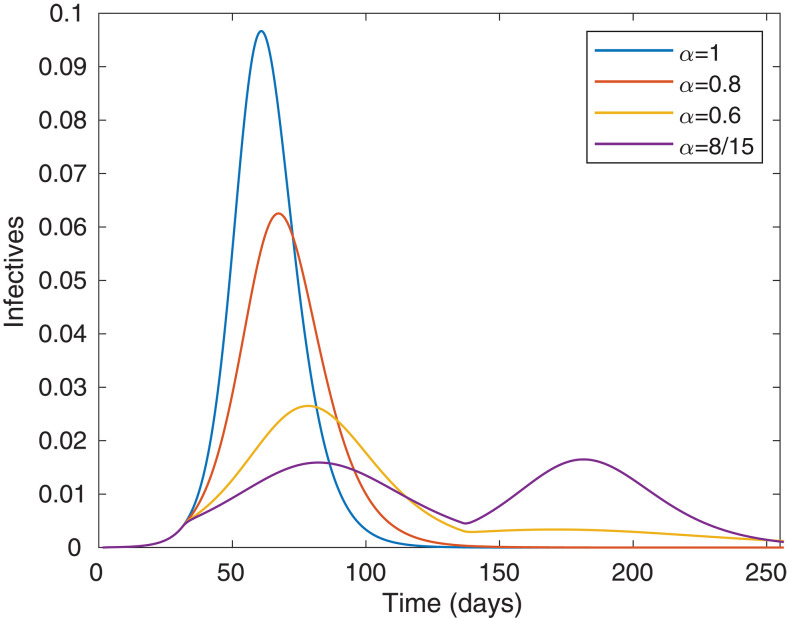
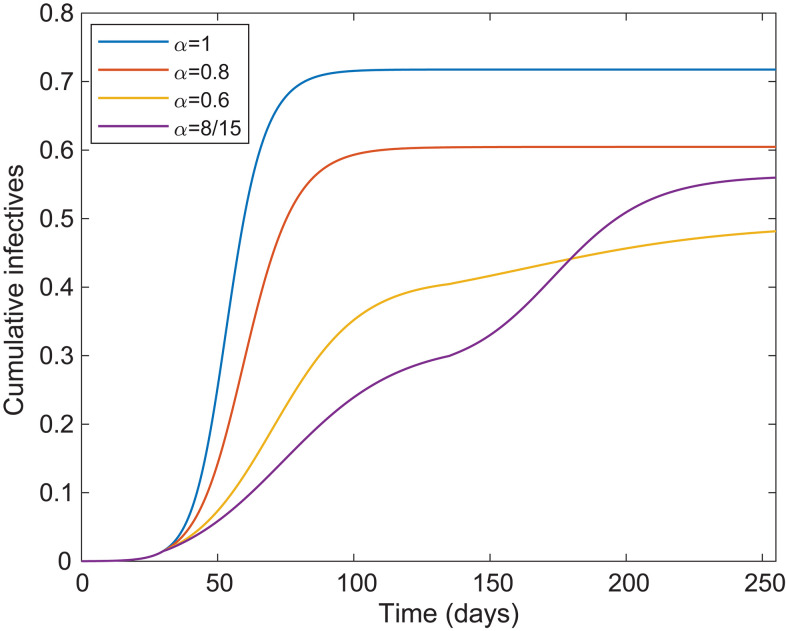
Heterogeneity and herd immunity In response to severe acute respiratory syndrome coronavirus 2 (SARS-CoV-2), some politicians have been keen to exploit the idea of achieving herd immunity. Countering this possibility are estimates derived from work on historical vaccination studies, which suggest that herd immunity may only be achieved at an unacceptable cost of lives. Because human populations are far from homogeneous, Britton et al. show that by introducing age and activity heterogeneities into population models for SARS-CoV-2, herd immunity can be achieved at a population-wide infection rate of ∼40%, considerably lower than previous estimates. This shift is because transmission and immunity are concentrated among the most active members of a population, who are often younger and less vulnerable. If nonpharmaceutical interventions are very strict, no herd immunity is achieved, and infections will then resurge if they are eased too quickly. Science , this issue p. 846
Overview
The claims and statistics of this paper haven’t been checked yet.
Run the check — free, no account needed. It reads the open-access text and checks the sources it cites.
Integrity signals
Registry
Cites
Statistics
Figures
Verification
Claims the paper makes
The claims and statistics of this paper haven’t been checked yet.
Run the check — free, no account needed. It reads the open-access text and checks the sources it cites.
Claims other papers make about this one
Each is checked against this paper’s own text: does it say what the citing paper says it does?
In the citing paper
“The disease and death that would accompany natural infection rates to reach herd immunity, typically estimated as 40–60% of the population infected, would be unacceptably high.”
From Lancet COVID-19 Commission Statement on the occasion of the 75th session of the UN General Assembly (2020) · cites this paper as [30]
In the citing paper
“The latest estimates on COVID-19, pointed out a range of 60–75% immune individuals that would be necessary to halt the forward transmission of the virus and community spread of the virus [87,88,89].”
From COVID-19 Vaccine Hesitancy Worldwide: A Concise Systematic Review of Vaccine Acceptance Rates (2021) · cites this paper as [89]
Self-check
Percentages, sums and reported differences re-computed from the paper’s own numbers.
The self-check needs the paper’s full text.
Citations
Cites
Infectious Diseases of Humans: Dynamics and Control
(1992) · Annals of Internal Medicine · doi:10.7326/0003-4819-117-2-174_4 · Cited by 7,819
Infectious Diseases of Humans: Dynamics and Control
Anderson, R. M., & May, R. M. (1991) · doi:10.1093/oso/9780198545996.001.0001 · Cited by 6,179
Epidemic Spreading in Scale-Free Networks
Pastor‐Satorras, R., & Vespignani, A. (2001) · Physical Review Letters · doi:10.1103/physrevlett.86.3200 · Cited by 5,785
Ferguson, N. M., Laydon, D. J., Nedjati-Gilani, G. L., Imai, N., Ainslie, K. E. C., Baguelin, M., Bhatia, S., Boonyasiri, A., Cucunubá, Z. M., Cuomo-Dannenburg, G., et al. (2020) · Spiral (Imperial College London) · doi:10.25561/77482 · Cited by 3,619
Estimating the effects of non-pharmaceutical interventions on COVID-19 in Europe
Flaxman, S. R., Mishra, S., Gandy, A., Unwin, H. J. T., Mellan, T. A., Coupland, H., Whittaker, C., Zhu, H., Berah, T., Eaton, J. W., et al. (2020) · Nature · doi:10.1038/s41586-020-2405-7 · Cited by 3,398
Estimating the burden of SARS-CoV-2 in France
Salje, H., Tran Kiem, C., Lefrancq, N., Courtejoie, N., Bosetti, P., Paireau, J., Andronico, A., Hozé, N., Richet, J., Dubost, C.-L., et al. (2020) · Science · doi:10.1126/science.abc3517 · Cited by 1,038
Stochastic Epidemic Models and Their Statistical Analysis
Andersson, H., & Britton, T. (2000) · Lecture notes in statistics · doi:10.1007/978-1-4612-1158-7 · Cited by 906
Self-citationWallinga, J., Teunis, P. F. M., & Kretzschmar, M. (2006) · American Journal of Epidemiology · doi:10.1093/aje/kwj317 · Cited by 702
Estimating the effects of non-pharmaceutical interventions on COVID-19 in Europe
Flaxman, S. R., Mishra, S., Gandy, A., Unwin, H. J. T., Mellan, T. A., Coupland, H., Whittaker, C., Zhu, H., Berah, T., Eaton, J. W., et al. (2020) · Spiral (Imperial College London) · doi:10.25561/77731 · Cited by 632
Mathematical Tools for Understanding Infectious Disease Dynamics
Diekmann, O., Heesterbeek, H., & Britton, T. (2012) · Princeton University Press eBooks · doi:10.23943/princeton/9780691155395.001.0001 · Cited by 365
Self-citation
Research works printed but not linked: 2
- F. Ball T. Britton P. Trapman Code for: Population heterogeneity and consequences for herd immunity to SARS-CoV-2 Version 1 Zenodo (2020); https://doi.org/10.1101/10.5281/zenodo.3899252. · DOI
- S. N. Ethier T. G. Kurtz Markov Processes: Characterization and Convergence (Wiley 2009).
Cited by
Sorted by citations
Items 301–400 of 645
Jung, S., Kim, J., Hwang, S.-S., Choi, J., & Lee, W. (2022) · Journal of Theoretical Biology · doi:10.1016/j.jtbi.2022.111329 · Cited by 9
Rapid evolution of the COVID-19 pandemic calls for a unified public health response
He, N. (2021) · BioScience Trends · doi:10.5582/bst.2021.01261 · Cited by 9
Optimization of vaccination for COVID-19 in the midst of a pandemic
Luo, Q., Weightman, R., McQuade, S. T., Díaz, M., Trélat, E., Barbour, W., Work, D. B., Samaranayake, S., & Piccoli, B. (2022) · Networks and Heterogeneous Media · doi:10.3934/nhm.2022016 · Cited by 9
The COVID-19 herd immunity threshold is not low: A re-analysis of European data from spring of 2020Preprint
Fox, S. J., Potu, P., Lachmann, M., Srinivasan, R., & Ancel, L. W. (2020) · medRxiv · doi:10.1101/2020.12.01.20242289 · Cited by 9
Alizon, S. (2021) · Science · doi:10.1126/science.abg0100 · Cited by 9
Pant, B. P., & Gumel, A. B. (2024) · Infectious Disease Modelling · doi:10.1016/j.idm.2024.04.007 · Cited by 8
The complex interplay between risk tolerance and the spread of infectious diseases
Nguyen, M., Freedman, A. S., Cheung, M. A., Saad-Roy, C. M., Espinoza, B., Grenfell, B. T., & Levin, S. A. (2025) · Journal of The Royal Society Interface · doi:10.1098/rsif.2024.0486 · Cited by 8
Murphy, J. (2021) · Journal of Institutional Economics · doi:10.1017/s1744137422000169 · Cited by 8
Walde, J., Chaturvedi, M., Berger, T., Bartz, A., Killewald, R., Tomori, D. V., Rübsamen, N., Lange, B., Scholz, S. M., Treskova, M., et al. (2023) · BMC Infectious Diseases · doi:10.1186/s12879-023-08175-2 · Cited by 9
How to Measure the Controllability of an Infectious Disease?
Parag, K. V. (2024) · Physical Review X · doi:10.1103/physrevx.14.031041 · Cited by 8
Lee, Y., Lee, D. H., Kwon, H., Kim, C., & Lee, J. (2021) · BMC Infectious Diseases · doi:10.1186/s12879-021-06121-8 · Cited by 8
A COVID-19 epidemic model predicting the effectiveness of vaccination
Webb, G. F. (2021) · Mathematics in Applied Sciences and Engineering · doi:10.5206/mase/13889 · Cited by 9
Modeling the coupling between a COVID-19-like epidemic and the economy
Aucouturier, M., & Herrmann, H. J. (2021) · International Journal of Modern Physics C · doi:10.1142/s0129183121501503 · Cited by 8
Characterizing super-spreaders using population-level weighted social networks in rural communities
Shridhar, S. V., Alexander, M., & Christakis, N. A. (2021) · Philosophical Transactions of the Royal Society A Mathematical Physical and Engineering Sciences · doi:10.1098/rsta.2021.0123 · Cited by 8
SARS-CoV-2 transmission dynamics in the urban-rural interface
Polo, G., Soler‐Tovar, D., Jiménez, L. C. V., Benavides-Ortiz, E., & Acosta, C. M. (2022) · Public Health · doi:10.1016/j.puhe.2022.02.007 · Cited by 8
Saldaña, J., & Scoglio, C. (2022) · Scientific Reports · doi:10.1038/s41598-022-06477-0 · Cited by 8
A New Compartment Model of COVID-19 Transmission: The Broken-Link Model
Ikeda, Y., Sasaki, K., & Nakano, T. (2022) · International Journal of Environmental Research and Public Health · doi:10.3390/ijerph19116864 · Cited by 8
Djordjević, M., Marković, S. S., Salom, I., & Djordjevic, M. (2022) · Environmental Research · doi:10.1016/j.envres.2022.114446 · Cited by 8
Reingruber, J., Papale, A., Ruckly, S., Timsit, J., & Holcman, D. (2023) · PLoS ONE · doi:10.1371/journal.pone.0278882 · Cited by 8
Indirect Dispersion of SARS-CoV-2 Live-Attenuated Vaccine and Its Contribution to Herd Immunity
Pacheco-García, U., & Serafín‐López, J. (2023) · Vaccines · doi:10.3390/vaccines11030655 · Cited by 8
Optimal vaccination policy to prevent endemicity: a stochastic model
Foutel‐Rodier, F., Arthur Charpentier, A., & Guérin, H. (2024) · Journal of Mathematical Biology · doi:10.1007/s00285-024-02171-z · Cited by 9
The Influence of Time-Limited Immunity on a COVID-19 Epidemic: A Simulation StudyPreprint
Kosinski, R. J. (2020) · medRxiv · doi:10.1101/2020.06.28.20142141 · Cited by 8
Ragonnet, R. R., Briffoteaux, G., Williams, B. M., Savulescu, J., Segal, M., Abayawardana, M., Eggo, R. M., Tuyttens, D., Melab, N., Marais, B. J., et al. (2020) · medRxiv · doi:10.1101/2020.08.25.20182162 · Cited by 8
Suprunenko, Y. F., Cornell, S. J., & Gilligan, C. A. (2021) · Journal of The Royal Society Interface · doi:10.1098/rsif.2020.0966 · Cited by 7
COVID-19 Case Rates in the UK: Modelling Uncertainties as Lockdown Lifts
Brereton, C. F., & Pedercini, M. (2021) · Systems · doi:10.3390/systems9030060 · Cited by 7
Lima, I., & Balbi, P. P. (2022) · Natural Computing · doi:10.1007/s11047-022-09893-3 · Cited by 7
Kraemer, K. (2022) · Culture Practice & Europeanization · doi:10.5771/2566-7742-2022-1-5 · Cited by 7
Treut, G. L., Huber, G., Kamb, M., Kawagoe, K., McGeever, A., Miller, J., Pnini, R., Veytsman, B. A., & Yllanes, D. (2022) · Scientific Reports · doi:10.1038/s41598-022-19931-w · Cited by 7
Implications for infectious disease models of heterogeneous mixing on control thresholds
Hill, A. N., Glasser, J. W., & Feng, Z. (2023) · Journal of Mathematical Biology · doi:10.1007/s00285-023-01886-9 · Cited by 7
Accurately summarizing an outbreak using epidemiological models takes time
Case, B., Young, J.-G., & Hébert‐Dufresne, L. (2023) · Royal Society Open Science · doi:10.1098/rsos.230634 · Cited by 7
Scheduling fixed length quarantines to minimize the total number of fatalities during an epidemic
Feng, Y., Iyer, G., & Li, L. (2021) · Journal of Mathematical Biology · doi:10.1007/s00285-021-01615-0 · Cited by 7
War der Coronavirus-Lockdown notwendig?
Richter, D. (2021) · transcript Verlag eBooks · doi:10.14361/9783839455456 · Cited by 7
Britton, T., Trapman, P., & Ball, F. (2021) · Royal Society Open Science · doi:10.1098/rsos.210386 · Cited by 7
Self-citationMulti-patch multi-group epidemic model with varying infectivity
Forien, R., Pang, G., & Pardoux, É. (2022) · Probability Uncertainty and Quantitative Risk · doi:10.3934/puqr.2022019 · Cited by 7
SARS-CoV-2 Seroprevalence Among Whole Blood Donors During First Wave of Covid-19 Pandemic in India
Chunchu, S. R., Ravula, U., Gente, V. K., Bacchu, S., Rao, S. P. R., & Mooli, S. (2022) · Indian Journal of Hematology and Blood Transfusion · doi:10.1007/s12288-021-01512-y · Cited by 7
A multi-agent approach to the impact of epidemic spreading on commercial activities
Toscani, G. (2022) · Mathematical Models and Methods in Applied Sciences · doi:10.1142/s0218202522500440 · Cited by 7
Premji, S., Khademi, S., Forcheh, N., Lalani, S. B., Shaikh, K., Javed, A., Saleem, E., Babar, N., Muhabat, Q., Jabeen, N., et al. (2022) · BMJ Open · doi:10.1136/bmjopen-2022-063469 · Cited by 7
Of Mice and Schoolchildren: A Conceptual History of Herd Immunity
Robertson, D. (2021) · American Journal of Public Health · doi:10.2105/ajph.2021.306264 · Cited by 8
The devil in the details: Herd immunity and pandemic response
Schaeffer, B., Taylor, B. P., Bushman, M., & Hanage, W. P. (2021) · Cell Host & Microbe · doi:10.1016/j.chom.2021.06.017 · Cited by 7
Differences in social activity increase efficiency of contact tracing
Nielsen, B. F., Sneppen, K., Simonsen, L., & Mathiesen, J. (2021) · The European Physical Journal B · doi:10.1140/epjb/s10051-021-00222-8 · Cited by 7
Gandolfi, D., Pagnoni, G., Filippini, T., Goffi, A., Vinceti, M., D'Angelo, E. U., & Mapelli, J. (2021) · Frontiers in Public Health · doi:10.3389/fpubh.2021.724362 · Cited by 7
Herd Immunity: Could It Bring the COVID-19 Pandemic to an End?
Pennington, T. H. (2021) · Future Microbiology · doi:10.2217/fmb-2020-0293 · Cited by 7
Modeling COVID-19 vaccine efficacy and coverage towards herd-immunity in the Basque Country, SpainPreprint
Stollenwerk, N., Mar, J., Van-Dierdonck, J. B., Ibarrondo, O., Estadilla, C. D. S., & Aguiar, M. (2021) · medRxiv · doi:10.1101/2021.07.12.21260390 · Cited by 7
Acceptance of COVID-19 Vaccines in Sub-Saharan Africa: Evidence from Six National Phone Surveys
Kanyanda, S. S. E., Markhof, Y. V., Wollburg, P. R., & Zezza, A. (2021) · World Bank, Washington, DC eBooks · doi:10.1596/1813-9450-9739 · Cited by 7
Popova, A. Y., Ezhlova, E. B., Melnikova, A. A., Istorik, O. A., Mosevich, O. S., Лялина, Л. В., Смирнов, В. С., Черный, М., Балабашыва, Н., Loginova, I. S., et al. (2020) · doi:10.21055/preprints-3111753 · Cited by 7
Bok, S., Shum, J., & Lee, M. (2024) · Heliyon · doi:10.1016/j.heliyon.2024.e25889 · Cited by 6
Impact of Opinion Formation Phenomena in Epidemic Dynamics: Kinetic Modeling on Networks
Albi, G., Calzola, E., Dimarco, G., & Zanella, M. (2025) · SIAM Journal on Applied Mathematics · doi:10.1137/24m1696901 · Cited by 7
Relationship dynamics and behavioral adaptations in the control of the 2022 mpox epidemic
Hvid, U., Simonsen, L., Frisch, M., & Sneppen, K. (2025) · Proceedings of the National Academy of Sciences · doi:10.1073/pnas.2502861122 · Cited by 6
The effect of mixed vaccination rollout strategy: A modelling study
Stollenwerk, N., Estadilla, C. D. S., Mar, J., Van-Dierdonck, J. B., Ibarrondo, O., Blasco-Aguado, R., & Aguiar, M. (2023) · Infectious Disease Modelling · doi:10.1016/j.idm.2023.03.002 · Cited by 6
Savagar, B., Jones, B. A., Arnold, M., Walker, M., & Fournié, G. (2023) · Epidemics · doi:10.1016/j.epidem.2023.100725 · Cited by 6
Bondesan, A., Piralla, A., Ballante, E., Pitrolo, A. M. G., Figini, S., Baldanti, F., & Zanella, M. (2025) · Mathematical Biosciences & Engineering · doi:10.3934/mbe.2025027 · Cited by 6
Domenico, L. D., Reichmuth, M. L., & Althaus, C. L. (2025) · Communications Medicine · doi:10.1038/s43856-025-01282-y · Cited by 9
Siebert, B. A., Gleeson, J. P., & Asllani, M. (2022) · Chaos Solitons & Fractals · doi:10.1016/j.chaos.2022.112322 · Cited by 6
Analysis of metapopulation models of the transmission of SARS-CoV-2 in the United States
Vo, M., Feng, Z., Glasser, J. W., Clarke, K. E. N., & Jones, J. N. (2023) · Journal of Mathematical Biology · doi:10.1007/s00285-023-01948-y · Cited by 6
COVID-19 vaccine barriers and perception among rural adults: a qualitative study in Bangladesh
Khanam, M., Sanin, K. I., Rita, R. S., Akand, F., Rabbi, M. F., Hasan, M. K., Alam, T., & Ahmed, T. (2023) · BMJ Open · doi:10.1136/bmjopen-2023-074357 · Cited by 6
Liu, T., Yin, X., Liu, Q., & Hounye, A. H. (2023) · Alexandria Engineering Journal · doi:10.1016/j.aej.2023.11.068 · Cited by 6
The mathematics of multiple lockdowns
Scala, A. (2021) · Scientific Reports · doi:10.1038/s41598-021-87556-6 · Cited by 6
Heterogeneity in SARS-CoV-2 Positivity by Ethnicity in Los Angeles
Allan‐Blitz, L., Hertlein, F., & Klausner, J. D. (2021) · Journal of Racial and Ethnic Health Disparities · doi:10.1007/s40615-021-01062-z · Cited by 6
Martínez, P. T., García, P. D., Salas, M. R., Sánchez, R. R., Ortiz, J. A., Guerrero-Monjo, S., García, F., Llamas, M. Á., López‐Collazo, E., Saz-Leal, P., et al. (2021) · Scientific Reports · doi:10.1038/s41598-021-00990-4 · Cited by 6
Seroprevalence and infection attack rate of COVID-19 in Indian cities
Fei, Y., Xu, H., Zhang, X., Musa, S. S., Zhao, S., & He, D. (2022) · Infectious Disease Modelling · doi:10.1016/j.idm.2022.03.001 · Cited by 6
Baunez, C., Degoulet, M., Luchini, S., Pintus, P. A., & Teschl, M. (2020) · PLoS ONE · doi:10.1371/journal.pone.0252443 · Cited by 6
Makridis, C. A., Strebel, T., Marconi, V. C., & Alterovitz, G. (2021) · BMJ Health & Care Informatics · doi:10.1136/bmjhci-2020-100312 · Cited by 6
Social distancing is a social dilemma game played by every individual against his/her population
Wu, Z. (2021) · PLoS ONE · doi:10.1371/journal.pone.0255543 · Cited by 6
Remote Learning of COVID-19 Kinetic Analysis in a Physical Chemistry Laboratory Class
Hart, K., Thompson, C., Burger, C., Hardwick, D., Michaud, A., Bulushi, A. H. M. A., Pridemore, C., Ward, C., & Chen, J. (2021) · ACS Omega · doi:10.1021/acsomega.1c04842 · Cited by 6
Modeling SARS-CoV-2 propagation using rat coronavirus-associated shedding and transmission
Zeiss, C. J., Asher, J. L., Wyk, B. V., Allore, H. G., & Compton, S. R. (2021) · PLoS ONE · doi:10.1371/journal.pone.0260038 · Cited by 6
Kobayashi, T., Yoshii, K., Linton, N. M., Suzuki, M., & Nishiura, H. (2021) · International Journal of Infectious Diseases · doi:10.1016/j.ijid.2021.12.319 · Cited by 6
Lani, R., Senin, N. A., AbuBakar, S., & Hassandarvish, P. (2022) · Vaccines · doi:10.3390/vaccines10101606 · Cited by 6
Spatial-SIR with Network Structure and Behavior: Lockdown Rules and the Lucas Critique
Bisin, A., & Moro, A. (2021) · National Bureau of Economic Research · doi:10.3386/w28932 · Cited by 6
Soussand, F., Abdou, A. Y., Sanchez, M., Huynh, B.-T., Giese, C., Kiem, C. T., Béraud, G., Guillemot, D., Cauchemez, S., Opatowski, L., et al. (2025) · BMC Infectious Diseases · doi:10.1186/s12879-025-10611-4 · Cited by 5
Correcting for Antibody Waning in Cumulative Incidence Estimation From Sequential Serosurveys
Kadelka, S., Bouman, J. A., Ashcroft, P., & Regoes, R. R. (2023) · American Journal of Epidemiology · doi:10.1093/aje/kwad226 · Cited by 5
Choi, Y. Y., Kim, Y. K., & Choi, E. H. (2021) · Pediatric Infection & Vaccine · doi:10.14776/piv.2021.28.e10 · Cited by 5
Weightman, R., Sbarra, A., & Piccoli, B. (2022) · Mathematical Models and Methods in Applied Sciences · doi:10.1142/s0218202522500506 · Cited by 5
Zhu, Y., Shen, R., Dong, H., & Wang, W. (2023) · PLoS ONE · doi:10.1371/journal.pone.0286558 · Cited by 5
Note on a Susceptible-Infectious-Recovered epidemic model with the heterogeneity in susceptibility
Attouga, S. E., & Khalifi, M. E. (2024) · Chaos Solitons & Fractals · doi:10.1016/j.chaos.2024.115041 · Cited by 5
Turbé, H., Bjelogrlic, M., Robert, A., Gaudet-Blavignac, C., Goldman, J.-P., & Lovis, C. (2021) · Frontiers in Public Health · doi:10.3389/fpubh.2020.583401 · Cited by 5
COVID-19 and immunity: quo vadis?
Miyasaka, M. (2021) · International Immunology · doi:10.1093/intimm/dxab008 · Cited by 5
Optimization strategies of human mobility during the COVID-19 pandemic: A review
Biswas, S., & Mandal, A. K. (2021) · Mathematical Biosciences & Engineering · doi:10.3934/mbe.2021395 · Cited by 5
covid19.Explorer : a web application and R package to explore United States COVID-19 data
Revell, L. J. (2021) · PeerJ · doi:10.7717/peerj.11489 · Cited by 5
An in-depth analysis of 10 epidemiological terminologies used in the context of COVID-19
Doraiswamy, S., Mamtani, R., & Cheema, S. (2021) · Scandinavian Journal of Public Health · doi:10.1177/14034948211057736 · Cited by 5
Modeling the population-level impact of treatment on COVID-19 disease and SARS-CoV-2 transmission
Makhoul, M., Abu-Hijleh, F. M., Ayoub, H. H., Seedat, S., Chemaitelly, H. S., & Abu-Raddad, L. J. (2022) · Epidemics · doi:10.1016/j.epidem.2022.100567 · Cited by 5
Power‐law multi‐wave model for COVID‐19 propagation in countries with nonuniform population density
Grinchuk, P. S., & Fisenko, S. P. (2022) · Quantitative Biology · doi:10.15302/j-qb-022-0301 · Cited by 5
Tiwari, S., Vyasarayani, C. P., & Chatterjee, A. (2021) · Scientific Reports · doi:10.1038/s41598-021-87630-z · Cited by 5
Allred, S., Chyba, M., Hyman, J. M., Mileyko, Y., & Piccoli, B. (2022) · Modeling and simulation in science, engineering & technology · doi:10.1007/978-3-030-96562-4_4 · Cited by 5
A note on variable susceptibility, the herd-immunity threshold and modeling of infectious diseases
Carlsson, M., Wittsten, J., & Söderberg‐Nauclér, C. (2023) · PLoS ONE · doi:10.1371/journal.pone.0279454 · Cited by 5
Khrennikov, A. Y. (2020) · medRxiv · doi:10.1101/2020.07.04.20146209 · Cited by 5
Recent Advances in Epidemic Modeling: Non-Markov Stochastic Models and their Scaling LimitsPreprint
Forien, R., Pang, G., & Pardoux, É. (2021) · arXiv (Cornell University) · doi:10.48550/arxiv.2106.08466 · Cited by 5
Optimal Vaccine Allocation for Pandemic StabilizationPreprint
Ma, Q., Liu, Y., & Olshevsky, A. (2021) · arXiv (Cornell University) · doi:10.48550/arxiv.2109.04612 · Cited by 7
Singh, S., Ramkumar, K. R., & Kukkar, A. (2023) · Multimedia Tools and Applications · doi:10.1007/s11042-023-16719-6 · Cited by 4
Modelling the spread of two successive SIR epidemics on a configuration model network
Ball, F., Lashari, A. A., Sirl, D., & Trapman, P. (2025) · Journal of Mathematical Biology · doi:10.1007/s00285-025-02207-y · Cited by 4
Self-citationDefense Responses of Native Plant Communities to Alien Plant Invasion
Zhu, Z., Cui, M., Yu, H., Fan, X., Wu, X., Liu, S., Dai, Z., Ren, G., & Du, D. (2025) · Physiologia Plantarum · doi:10.1111/ppl.70492 · Cited by 4
Assessing the impact of misinformation during the spread of infectious diseases
Bernardin, A., & Pérez‐Acle, T. (2025) · Scientific Reports · doi:10.1038/s41598-025-18457-1 · Cited by 4
The impact of household structure on disease-induced herd immunity
Ball, F., Critcher, L., Neal, P. J., & Sirl, D. (2023) · Journal of Mathematical Biology · doi:10.1007/s00285-023-02010-7 · Cited by 4
Self-citationZhao, W., Xia, W., & Tang, B. (2023) · Journal of Theoretical Biology · doi:10.1016/j.jtbi.2023.111703 · Cited by 4
Sufficient reproduction numbers to prevent recurrent epidemics
Mari, L., Trevisin, C., Rinaldo, A., & Gatto, M. (2025) · Methods in Ecology and Evolution · doi:10.1111/2041-210x.70042 · Cited by 4
Strength and weakness of disease-induced herd immunity in networks
Hiraoka, T., Ghadiri, Z., Rizi, A. K., Kivelä, M., & Saramäki, J. (2025) · Proceedings of the National Academy of Sciences · doi:10.1073/pnas.2421460122 · Cited by 7
Michael, E., Newcomb, K., & Mubayi, A. (2022) · PLOS Global Public Health · doi:10.1371/journal.pgph.0001382 · Cited by 4
Developing an Optimal Antiviral Method for the Air-filtration System of Subway Stations
Park, D. H., Hwang, J., Shin, D., Kim, Y.-H., Lee, G., Park, I., Kim, S. B., Hong, K., & Han, B. (2023) · Aerosol and Air Quality Research · doi:10.4209/aaqr.230088 · Cited by 4
Vashishth, A. K., & Basaiti, K. (2023) · Mathematics and Computers in Simulation · doi:10.1016/j.matcom.2023.10.008 · Cited by 4
Individual dynamics and local heterogeneity provide a microscopic view of the epidemic spreading
朱, Y. 友. Z., Shen, R., 董, H. 昊. D., & 王, W. 炜. W. (2024) · Chinese Physics B · doi:10.1088/1674-1056/ad1a90 · Cited by 4
Superspreaders and high variance infectious diseases
Oz, Y., Rubinstein, I., & Safra, M. (2021) · Journal of Statistical Mechanics Theory and Experiment · doi:10.1088/1742-5468/abed44 · Cited by 4
Metadata
- Authors
- Britton, T., Ball, F., & Trapman, P.
- Affiliations
- Stockholm University (SE)
- University of Nottingham (GB)
- Corresponding author
- Britton, Tom
- Venue
- Science
- Published
- 2020-08-14
- Volume
- 369
- Issue
- 6505
- Pages
- 846-849
- ISSN
- 0036-8075 (ISSN-L)
- 1095-9203
- PMC
- PMC7331793
- OpenAlex
- W3036932834
- Cited by
- 645
- References
- 15
- Citations by year
- 2026: 24 · 2025: 38 · 2024: 48 · 2023: 58 · 2022: 114 · 2021: 255 · 2020: 107
- FWCI
- 21.22
- Type
- journal article
- Language
- en
- Open access
- hybrid
- doi.org
- Licence
- Locations
- Science (publishedVersion, cc-by)
- PubMed Central (publishedVersion, cc-by)
- PubMed (publishedVersion)
- Repository@Nottingham (University of Nottingham) (publishedVersion, cc-by)
- Repository@Nottingham (University of Nottingham) (submittedVersion, cc-by)
- Funders
- Vetenskapsrådet (2016-04566)
- The swedish Research Council (2015-05015)
- Topics
- Physical Sciences › Mathematics › Modeling and Simulation › COVID-19 epidemiological studies
- Physical Sciences › Mathematics › Applied Mathematics › Mathematical and Theoretical Epidemiology and Ecology Models
- Health Sciences › Medicine › Infectious Diseases › SARS-CoV-2 and COVID-19 Research
- Keywords
- herd immunity, SARS-CoV-2, population heterogeneity, age heterogeneity, transmission dynamics, mathematical model, non-pharmaceutical interventions, infection rate, COVID-19 pandemic
- MeSH terms
- Betacoronavirus, COVID-19, SARS-CoV-2, Age Factors, Demography, Humans, Models, Theoretical, Pneumonia, Viral, Social Behavior, Coronavirus Infections, Immunity, Herd, Basic Reproduction Number, Pandemics, Social Participation
About these checks
Registry, retraction, Cites and statistics results are computed, not judged, with one exception: a printed reference that no index lists is read once by a model before it counts as a citation error. Claims are extracted by a model and kept only when their quote appears verbatim in the text; each cited source is then checked, with a model’s help, for whether it says what the claim relies on. Those verdicts can be wrong — read the claim’s quote and the cited source before relying on one.
Statistics and arithmetic are recomputed, not judged.
Confidence bands are shown only for fields calibrated on our annotated test set. None is calibrated yet, so no band is shown.
What counts as a claim ›How we measure confidence ›How we check this ›
Are you an author, or do you see a problem with this page? Request a review
