

The DOI matches its Crossref record; 16 of the 16 references it cites were found in a registry or an index.
A mathematical model reveals the influence of population heterogeneity on herd immunity to SARS-CoV-2
Open accessAbstract
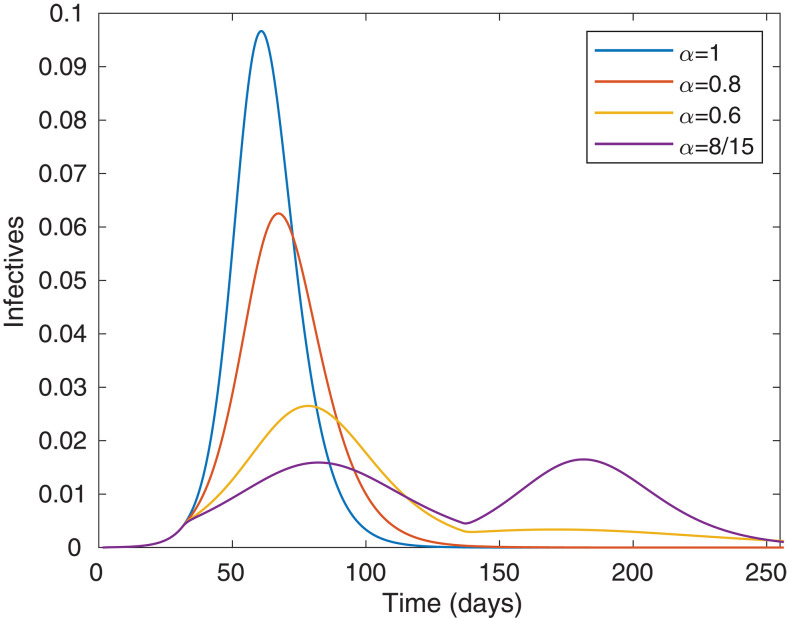
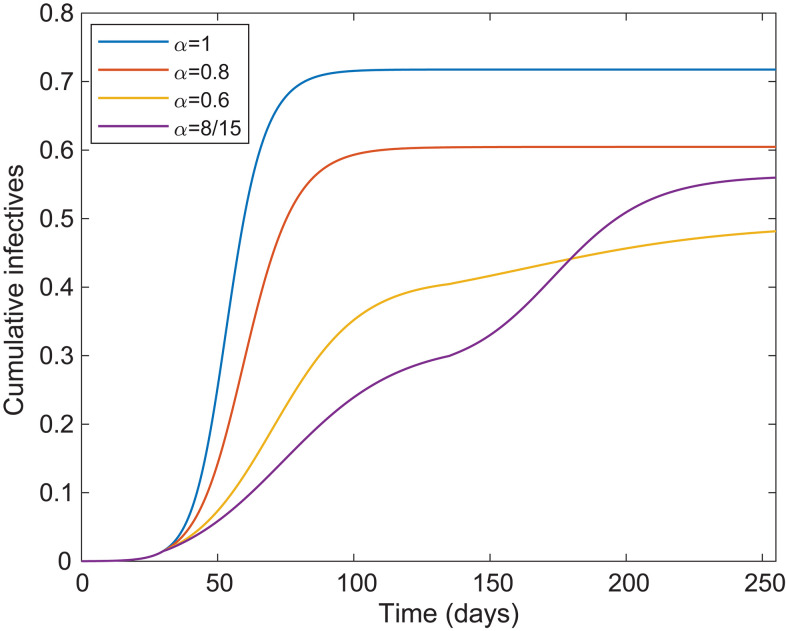
Heterogeneity and herd immunity In response to severe acute respiratory syndrome coronavirus 2 (SARS-CoV-2), some politicians have been keen to exploit the idea of achieving herd immunity. Countering this possibility are estimates derived from work on historical vaccination studies, which suggest that herd immunity may only be achieved at an unacceptable cost of lives. Because human populations are far from homogeneous, Britton et al. show that by introducing age and activity heterogeneities into population models for SARS-CoV-2, herd immunity can be achieved at a population-wide infection rate of ∼40%, considerably lower than previous estimates. This shift is because transmission and immunity are concentrated among the most active members of a population, who are often younger and less vulnerable. If nonpharmaceutical interventions are very strict, no herd immunity is achieved, and infections will then resurge if they are eased too quickly. Science , this issue p. 846
Overview
The claims and statistics of this paper haven’t been checked yet.
Run the check — free, no account needed. It reads the open-access text and checks the sources it cites.
Integrity signals
Registry
Cites
Statistics
Figures
Verification
Claims the paper makes
The claims and statistics of this paper haven’t been checked yet.
Run the check — free, no account needed. It reads the open-access text and checks the sources it cites.
Claims other papers make about this one
Each is checked against this paper’s own text: does it say what the citing paper says it does?
In the citing paper
“The disease and death that would accompany natural infection rates to reach herd immunity, typically estimated as 40–60% of the population infected, would be unacceptably high.”
From Lancet COVID-19 Commission Statement on the occasion of the 75th session of the UN General Assembly (2020) · cites this paper as [30]
In the citing paper
“The latest estimates on COVID-19, pointed out a range of 60–75% immune individuals that would be necessary to halt the forward transmission of the virus and community spread of the virus [87,88,89].”
From COVID-19 Vaccine Hesitancy Worldwide: A Concise Systematic Review of Vaccine Acceptance Rates (2021) · cites this paper as [89]
Self-check
Percentages, sums and reported differences re-computed from the paper’s own numbers.
The self-check needs the paper’s full text.
Citations
Cites
Infectious Diseases of Humans: Dynamics and Control
(1992) · Annals of Internal Medicine · doi:10.7326/0003-4819-117-2-174_4 · Cited by 7,819
Infectious Diseases of Humans: Dynamics and Control
Anderson, R. M., & May, R. M. (1991) · doi:10.1093/oso/9780198545996.001.0001 · Cited by 6,179
Epidemic Spreading in Scale-Free Networks
Pastor‐Satorras, R., & Vespignani, A. (2001) · Physical Review Letters · doi:10.1103/physrevlett.86.3200 · Cited by 5,785
Ferguson, N. M., Laydon, D. J., Nedjati-Gilani, G. L., Imai, N., Ainslie, K. E. C., Baguelin, M., Bhatia, S., Boonyasiri, A., Cucunubá, Z. M., Cuomo-Dannenburg, G., et al. (2020) · Spiral (Imperial College London) · doi:10.25561/77482 · Cited by 3,619
Estimating the effects of non-pharmaceutical interventions on COVID-19 in Europe
Flaxman, S. R., Mishra, S., Gandy, A., Unwin, H. J. T., Mellan, T. A., Coupland, H., Whittaker, C., Zhu, H., Berah, T., Eaton, J. W., et al. (2020) · Nature · doi:10.1038/s41586-020-2405-7 · Cited by 3,398
Estimating the burden of SARS-CoV-2 in France
Salje, H., Tran Kiem, C., Lefrancq, N., Courtejoie, N., Bosetti, P., Paireau, J., Andronico, A., Hozé, N., Richet, J., Dubost, C.-L., et al. (2020) · Science · doi:10.1126/science.abc3517 · Cited by 1,038
Stochastic Epidemic Models and Their Statistical Analysis
Andersson, H., & Britton, T. (2000) · Lecture notes in statistics · doi:10.1007/978-1-4612-1158-7 · Cited by 906
Self-citationWallinga, J., Teunis, P. F. M., & Kretzschmar, M. (2006) · American Journal of Epidemiology · doi:10.1093/aje/kwj317 · Cited by 702
Estimating the effects of non-pharmaceutical interventions on COVID-19 in Europe
Flaxman, S. R., Mishra, S., Gandy, A., Unwin, H. J. T., Mellan, T. A., Coupland, H., Whittaker, C., Zhu, H., Berah, T., Eaton, J. W., et al. (2020) · Spiral (Imperial College London) · doi:10.25561/77731 · Cited by 632
Mathematical Tools for Understanding Infectious Disease Dynamics
Diekmann, O., Heesterbeek, H., & Britton, T. (2012) · Princeton University Press eBooks · doi:10.23943/princeton/9780691155395.001.0001 · Cited by 365
Self-citation
Research works printed but not linked: 2
- F. Ball T. Britton P. Trapman Code for: Population heterogeneity and consequences for herd immunity to SARS-CoV-2 Version 1 Zenodo (2020); https://doi.org/10.1101/10.5281/zenodo.3899252. · DOI
- S. N. Ethier T. G. Kurtz Markov Processes: Characterization and Convergence (Wiley 2009).
Cited by
Sorted by citations
Items 401–500 of 645
COVID-19: individual and herd immunity
Bach, J., Berche, P., Chatenoud, L., Costagliola, D. G., & Valleron, A. (2021) · Comptes Rendus Biologies · doi:10.5802/crbiol.41 · Cited by 4
Mathematical Modelling of the COVID-19 Epidemic in Northern Ireland in 2020
Hall, P. A., Kiss, G., Kuhn, T. E., Moutari, S., Patterson, E., & Smith, E. (2021) · Open Journal of Modelling and Simulation · doi:10.4236/ojmsi.2021.92006 · Cited by 4
Epidemiological Trends of the 2019 Coronavirus Disease in Iraqi Kurdistan
Merza, M. A., Abdulah, D. M., Mohammed, H. M., & Yones, A. M. (2021) · Disaster Medicine and Public Health Preparedness · doi:10.1017/dmp.2021.124 · Cited by 4
Canales, B. L. V., & Hernandez, J. C. C. (2021) · Comunicación y Sociedad · doi:10.32870/cys.v2021.7953 · Cited by 4
Assessing Epidemic Curves for Evidence of Superspreading
Meagher, J., & Friel, N. (2022) · Journal of the Royal Statistical Society Series A (Statistics in Society) · doi:10.1111/rssa.12919 · Cited by 4
A chain binomial epidemic with asymptomatics motivated by COVID-19 modelling
Lefèvre, C., Picard, P., Simon, M., & Utev, S. (2021) · Journal of Mathematical Biology · doi:10.1007/s00285-021-01680-5 · Cited by 4
Synchronization in epidemic growth and the impossibility of selective containment
Budich, J. C., & Bergholtz, E. J. (2021) · Mathematical Medicine and Biology A Journal of the IMA · doi:10.1093/imammb/dqab013 · Cited by 4
Mukherjee, S., Mondal, S., & Bagchi, B. (2021) · Journal of Chemical Sciences · doi:10.1007/s12039-021-01981-8 · Cited by 4
A measure model for the spread of viral infections with mutations
Gong, X., & Piccoli, B. (2022) · Networks and Heterogeneous Media · doi:10.3934/nhm.2022015 · Cited by 4
Modeling the impact of the Omicron infection wave in Germany
Maier, B. F., Burdinski, A., Wiedermann, M., Rose, A. H., Schlosser, F., der Heiden, M. A., Wichmann, O., Harder, T., & Brockmann, D. (2023) · Biology Methods and Protocols · doi:10.1093/biomethods/bpad005 · Cited by 4
Pinto, J. P. G., Magalhaes, P. C., Figueiredo, G. M., Alves, D., & Angel, D. M. S. (2023) · Cadernos de Saúde Pública · doi:10.1590/0102-311xen109522 · Cited by 4
Impact of booster COVID-19 vaccine for Moroccan adults: A discrete age-structured model approachPreprint
Hammoumi, A., Hmarrass, H., & Qesmi, R. (2021) · medRxiv · doi:10.1101/2021.03.14.21253555 · Cited by 4
Targeted Vaccination Strategies for an Infinite-dimensional SIS ModelPreprint
Delmas, J., Dronnier, D., & Zitt, P.-A. (2021) · arXiv (Cornell University) · doi:10.48550/arxiv.2103.10330 · Cited by 4
Kinetic models for epidemic dynamics with social heterogeneityPreprint
Dimarco, G., Benoît Perthame, B., Toscani, G., & Zanella, M. (2020) · arXiv (Cornell University) · doi:10.48550/arxiv.2009.01140 · Cited by 4
Mathematical modeling suggests pre-existing immunity to SARS-CoV-2Preprint
Carlsson, M., Hatem, G., & Söderberg‐Nauclér, C. (2021) · medRxiv · doi:10.1101/2021.04.21.21255782 · Cited by 4
Goldberg, E. E., Lin, Q., Romero-Severson, E. O., & Ke, R. (2023) · medRxiv · doi:10.1101/2023.02.10.23285776 · Cited by 4
What is the evidence in favor of herd immunity for the COVID-19 pandemics?
Chaves, A. F. A. (2021) · Journal of Evidence-Based Healthcare · doi:10.17267/2675-021xevidence.v2i2.3335 · Cited by 3
Harris, J. D., Gallmeier, E., Dushoff, J. G., Beckett, S. J., & Weitz, J. S. (2025) · Journal of Theoretical Biology · doi:10.1016/j.jtbi.2025.112211 · Cited by 3
Uma Simulação com Agentes para Estudar a Propagação da COVID-19 em Ibirama(SC)
Teixeira, L., & dos Santos, F. (2020) · doi:10.5753/eniac.2020.12127 · Cited by 3
Attitudes and Practices Against COVID-19 Vaccines in Turkey
Ataç, Ö. (2022) · Northern Clinics of Istanbul · doi:10.14744/nci.2022.82652 · Cited by 3
Vanalli, C., Mari, L., Casagrandi, R., Boag, B., Gatto, M., & Cattadori, I. M. (2022) · Mathematical Biosciences · doi:10.1016/j.mbs.2023.109010 · Cited by 3
Wavelet analysis of COVID-19 pandemic
Omata, K., & Shimazaki, A. (2023) · Journal of Advanced Simulation in Science and Engineering · doi:10.15748/jasse.10.214 · Cited by 3
Planning Interventions in a Controlled Pandemic: The COVID-19 Case
Galante, F., Ravazzi, C., Garetto, M., & Leonardi, E. (2023) · IEEE Transactions on Network Science and Engineering · doi:10.1109/tnse.2023.3343807 · Cited by 3
Optimal control of pandemics via a sociodemographic model of non-pharmaceutical interventions
Weightman, R., Akinode, T., & Piccoli, B. (2024) · Networks and Heterogeneous Media · doi:10.3934/nhm.2024022 · Cited by 3
Deng, Y., He, D., & Zhao, Y. (2024) · Applied Mathematical Modelling · doi:10.1016/j.apm.2024.05.018 · Cited by 3
Walker, K. A. B. (2020) · Global Reproductive Health · doi:10.1097/grh.0000000000000042 · Cited by 3
Social mixing and risk exposures for SARS-CoV-2 infections in elderly persons
Haag, C., Höglinger, M., Moser, A., Hämmig, O., Puhan, M. A., & von Wyl, V. (2020) · Swiss Medical Weekly · doi:10.4414/smw.2020.20416 · Cited by 3
Self-driven criticality in a stochastic epidemic model
Ariel, G., & Louzoun, Y. (2021) · Physical review. E · doi:10.1103/physreve.103.062303 · Cited by 3
Inhomogeneous Transmission and Asynchronic Mixing in the Spread of COVID-19 Epidemics
Mendoza, C. I. (2021) · Frontiers in Physics · doi:10.3389/fphy.2021.683364 · Cited by 3
Kröger, M., & Schlickeiser, R. (2021) · COVID · doi:10.3390/covid1010012 · Cited by 3
Kinetic and Macroscopic Epidemic Models in Presence of Multiple Heterogeneous Populations
Medaglia, A., & Zanella, M. (2022) · Springer INdAM series · doi:10.1007/978-981-19-6462-6_15 · Cited by 3
Infection spread simulation technology in a mixed state of multi variant viruses
Koizumi, M., Utamura, M., & Kirikami, S. (2021) · AIMS Public Health · doi:10.3934/publichealth.2022002 · Cited by 3
Herd immunity to SARS-COV-2 in the population of the Southern regions of the Far East of Russia
Popova, A. Y., Смирнов, В. С., Ezhlova, E. B., Melnikova, A. A., Trotsenko, O. E., Kurganova, O. P., Николаевна, Д. Т., Lyalina, L. V., Abbasova, E. I., Yurgina, O. M., et al. (2021) · Бюллетень Восточно-Сибирского научного центра Сибирского отделения Российской академии медицинских наук · doi:10.29413/abs.2021-6.5.25 · Cited by 3
Continual Versus Occasional Spreading In Networks
Tavori, J., & Hanoch Levy, C. (2022) · ACM SIGMETRICS Performance Evaluation Review · doi:10.1145/3512798.3512803 · Cited by 3
Archer, L. C., Standley, C. J., & Molnár, P. K. (2022) · BioScience · doi:10.1093/biosci/biac017 · Cited by 3
Herd Immunity Against Coronavirus: A Review
Datta, S., & Roy, A. (2022) · Recent Patents on Biotechnology · doi:10.2174/1872208316666220408113002 · Cited by 3
Zhang, Z., Hua, Y., Zhou, P., Lin, S., Li, M., Zhang, Y., Zhou, L., Liao, Y., & Yang, J. (2024) · Health Data Science · doi:10.34133/hds.0127 · Cited by 3
Basic concepts for the Kermack and McKendrick model with static heterogeneity
Inaba, H. (2025) · Journal of Mathematical Biology · doi:10.1007/s00285-025-02187-z · Cited by 3
Esposito, S., Neglia, C., Affanni, P., Colucci, M. E., Argentiero, A., Veronesi, L., Messina, G., Deolmi, M., Principi, N., & the Crown Study Group (2021) · Frontiers in Public Health · doi:10.3389/fpubh.2021.628098 · Cited by 3
Manz, K. M., & Mansmann, U. (2020) · medRxiv · doi:10.1101/2020.07.24.20161257 · Cited by 3
James, J. J. (2020) · Disaster Medicine and Public Health Preparedness · doi:10.1017/dmp.2020.307 · Cited by 3
Frailty variation models for susceptibility and exposure to SARS-CoV-2Preprint
Gomes, M. G. M., Ferreira, M. U., Chikina, M. D., Pegden, W., & Aguas, R. J. (2021) · medRxiv · doi:10.1101/2021.05.25.21257766 · Cited by 3
Jørgensen, F. J., Bor, A., & Petersen, M. B. (2021) · Research Square · doi:10.21203/rs.3.rs-1237898/v1 · Cited by 3
Estimation of Total Immunity to SARS-CoV-2 in TexasPreprint
DeSantis, S. M., León‐Novelo, L., Swartz, M. D., Yaseen, A. S., Valerio, M. A., Brito, F. A., Ross, J. A., Kohl, H. W., Messiah, S. E., Kelder, S. H., et al. (2021) · medRxiv · doi:10.1101/2021.08.05.21261610 · Cited by 3
Kadelka, S., Bouman, J. A., Ashcroft, P., & Regoes, R. R. (2021) · arXiv (Cornell University) · doi:10.48550/arxiv.2103.13951 · Cited by 3
Park, C. (2022) · Complexity · doi:10.1155/2022/7382033 · Cited by 2
Joseph, S. A., Jerome, J. G., Boima, F., Pognon, P. R., Fejfar, D., Dibba, Y., Lavalie, D., Barrie, M. B., Oteju, A., Sheku, M., et al. (2023) · Vaccines · doi:10.3390/vaccines11081385 · Cited by 2
John‐Baptiste, A., Moulin, M. S., Li, Z., Hamilton, D., Crichlow, G., Klein, D. E., Alemu, F. W., Ghattas, L., McDonald, K. M., Asaria, M., et al. (2024) · Public health reviews · doi:10.3389/phrs.2024.1607057 · Cited by 2
Bernardi, E., Lorenzi, T., Sensi, M., & Tosin, A. (2025) · Studies in Applied Mathematics · doi:10.1111/sapm.70091 · Cited by 2
Heterogenous Exposures May Drive SARS-CoV-2 Positivity Among Different Subpopulations
Allan‐Blitz, L., Hertlein, F., Turner, I., & Klausner, J. D. (2021) · Open Forum Infectious Diseases · doi:10.1093/ofid/ofab183 · Cited by 2
Analysis of Herd Immunity on the Mathematical Model of Covid-19 Transmission
Khumaeroh, M. S., & Firdaus, A. N. (2021) · Advances in Social Science, Education and Humanities Research/Advances in social science, education and humanities research · doi:10.2991/assehr.k.210508.050 · Cited by 2
Analysis of non-pharmaceutical interventions and their impacts on COVID-19 in Kerala
Goult, E., Sathyendranath, S., Kovač, Ž., Kong, C. E., Stipanović, P., Anas, A., Menon, N. N., George, G., & Platt, T. (2022) · Scientific Reports · doi:10.1038/s41598-021-04488-x · Cited by 2
Noda, H. (2022) · International Journal of Environmental Research and Public Health · doi:10.3390/ijerph19127435 · Cited by 2
Estimation of anti-SARS-CoV-2 IgG titre among blood donors in Ranchi
Kumari, S., Saroj, U., Verma, A., & Kumar, A. (2022) · Journal of Family Medicine and Primary Care · doi:10.4103/jfmpc.jfmpc_727_22 · Cited by 2
Enhanced SARS-CoV-2 case prediction using public health data and machine learning models
Price, B. S., Khodaverdi, M., Hendricks, B. M., Smith, G. S., Kimble, W., Halász, Á., Guthrie, S. K., Fraustino, J. D., & Hodder, S. (2024) · JAMIA Open · doi:10.1093/jamiaopen/ooae014 · Cited by 2
Beyond six feet: The collective behavior of social distancing
Wu, Z. (2024) · PLoS ONE · doi:10.1371/journal.pone.0293489 · Cited by 2
Toward a Quantitative Reduction of the SIR Epidemiological Model
Colangeli, M., & Muntean, A. (2012) · Modeling and simulation in science, engineering & technology · doi:10.1007/978-3-030-91646-6_8 · Cited by 2
Kaur, K., Annamalai, O., Gurnani, B., Rekha, S., Jayashree, B., Venugopal, A., Narendran, K., Ravilla, S. T., Aswin, P., & Venkatesh, R. (2022) · Indian Journal of Ophthalmology · doi:10.4103/ijo.ijo_618_22 · Cited by 2
Positive feedback loops exacerbate the influence of superspreaders in disease transmission
Wanelik, K. M., Begon, M., Fenton, A., Norman, R., & Beldoménico, P. M. (2023) · iScience · doi:10.1016/j.isci.2023.106618 · Cited by 2
Crescenzo, A. D., Gómez‐Corral, A., & Taipe, D. (2024) · Mathematics and Computers in Simulation · doi:10.1016/j.matcom.2024.08.019 · Cited by 2
Garakani, S., Flores, L., Alvarez-Pardo, G., Rychtář, J., & Taylor, D. (2025) · Journal of Theoretical Biology · doi:10.1016/j.jtbi.2025.112062 · Cited by 2
Cornfeld, O., Niu, K., Neeman, O., Roswell, M., Steinbach, G., Beckett, S. J., Wardi, Y., Weitz, J. S., & Yashiv, E. (2025) · Epidemics · doi:10.1016/j.epidem.2025.100873 · Cited by 2
Valentim, C. A., de Oliveira, N. A., David, S. A., & Rabi, J. A. (2021) · Cited by 2
Estimating the Level of Asymptomatic COVID-19 Infections in Northern Ireland in 2020
Hall, P. A., Kiss, G., Kuhn, T. E., Moutari, S., Patterson, E., & Smith, E. (2022) · Open Journal of Modelling and Simulation · doi:10.4236/ojmsi.2022.102011 · Cited by 2
Epidemiological mechanism of formation of herd immunity to the novel coronavirus infection
Kiladze, A. B. (2022) · Sanitarnyj vrač (Sanitary Doctor) · doi:10.33920/med-08-2211-02 · Cited by 2
Sizikova, T. E., Lebedev, V. N., & Borisevich, S. V. (2022) · Biological Products Prevention Diagnosis Treatment · doi:10.30895/2221-996x-2022-22-4-351-360 · Cited by 2
Stanke, Z., & Spouge, J. L. (2023) · Epidemics · doi:10.1016/j.epidem.2023.100714 · Cited by 2
Hickey, J., & Rancourt, D. G. (2023) · PLoS ONE · doi:10.1371/journal.pone.0293556 · Cited by 3
The influence of cross-border mobility on the COVID-19 epidemic in Nordic countries
Shubin, M., Brustad, H. K., Midtbø, J. E., Günther, F., Alessandretti, L., Ala-Nissilä, T., Tomba, G. S., Kivelä, M., Chan, L. Y. H., & Leskelä, L. (2024) · PLoS Computational Biology · doi:10.1371/journal.pcbi.1012182 · Cited by 2
Pandemic spread in communities via random graphs
Minzer, D., Oz, Y., Safra, M., & Wainstain, L. (2021) · Journal of Statistical Mechanics Theory and Experiment · doi:10.1088/1742-5468/ac3415 · Cited by 2
Initial growth rates of malware epidemics fail to predict their reach
Muchnik, L., Yom‐Tov, E., Levy, N., Rubin, A., & Louzoun, Y. (2021) · Scientific Reports · doi:10.1038/s41598-021-91321-0 · Cited by 2
Multivariate generating functions for information spread on multi-type random graphs
Oz, Y., Rubinstein, I., & Safra, M. (2022) · Journal of Statistical Mechanics Theory and Experiment · doi:10.1088/1742-5468/ac57b8 · Cited by 2
Factores psicológicos asociados a la intención de vacunarse contra COVID-19 en México
Lugo-González, I. V., Pérez-Bautista, Y. Y., Fernández-Vega, M., Salas‐Hernandez, J., Gálvez, A. L. B., & Erazo, L. R. (2021) · NCT Neumología y Cirugía de Tórax · doi:10.35366/102476 · Cited by 2
The role of super-spreaders in modeling of SARS-CoV-2
Rousse, F., Carlsson, M., Ögren, M., & Wellander, B. K. (2022) · Infectious Disease Modelling · doi:10.1016/j.idm.2022.10.003 · Cited by 2
Chyba, M., Klotz, T., Mileyko, Y., & Shanbrom, C. (2023) · Mathematics of Control Signals and Systems · doi:10.1007/s00498-023-00365-2 · Cited by 2
Buonanno, P., Galletta, S., & Puca, M. (2020) · medRxiv · doi:10.1101/2020.11.08.20227934 · Cited by 2
Mukherjee, S., Mondal, S., & Bagchi, B. (2021) · medRxiv · doi:10.1101/2021.01.07.21249397 · Cited by 2
Towards a quantitative reduction of the SIR epidemiological modelPreprint
Colangeli, M., & Muntean, A. (2021) · arXiv (Cornell University) · doi:10.48550/arxiv.2103.06863 · Cited by 2
Washburne, A., Silverman, J. D., Lourenço, J., & Hupert, N. (2021) · medRxiv · doi:10.1101/2021.05.03.21256542 · Cited by 2
A Continuous Bayesian Model for the Stimulation COVID-19 Epidemic DynamicsPreprint
Xu, Z., Zhang, H., & Niu, Y. (2021) · medRxiv · doi:10.1101/2021.06.20.21259220 · Cited by 2
Jørgensen, F. J., & Petersen, M. B. (2021) · doi:10.31234/osf.io/8e49j · Cited by 2
Bifurcations in the Herd Immunity Threshold for Discrete-Time Models of Epidemic SpreadPreprint
Ozbay, S. A., Nielsen, B. F., & Nguyen, M. (2022) · Research Square · doi:10.21203/rs.3.rs-2402619/v1 · Cited by 2
Heterogeneous shedding and susceptibility in a Caenorhabditis elegans transmission modelPreprint
Vega, N. M. (2024) · bioRxiv (Cold Spring Harbor Laboratory) · doi:10.1101/2024.06.04.597401 · Cited by 2
Wang, X., Wallentin, F. Y., & Yin, L. (2022) · SSM - Population Health · doi:10.1016/j.ssmph.2022.101083 · Cited by 1
On the Convexity of the Effective Reproduction Number
Tavori, J., & Hanoch Levy, C. (2023) · Journal of Computational Biology · doi:10.1089/cmb.2022.0371 · Cited by 1
Basaiti, K., Vashishth, A. K., & Tonghua Zhang, A. (2025) · Mathematical Biosciences · doi:10.1016/j.mbs.2025.109450 · Cited by 1
Diniz‐Filho, J. A. F., Nunes, R., Targueta, C. P., Braga-Ferreira, R. D. S., de Melo, A. A., Dias, R. O., de Curcio, J. S., Silva, D. D. M. E., Souza, M. B. L. D., Fiaccadori, F. S., et al. (2025) · Frontiers in Microbiology · doi:10.3389/fmicb.2025.1639187 · Cited by 1
Ali, A. R. I., Akil, N. A., & Hassan, T. (2025) · Indoor Air · doi:10.1155/ina/5938992 · Cited by 1
Temperate phages limit their own propagation under spatial constraint in biofilms on chitin
Peng, Y., Holt, J. D., Dalia, T. N., Schultz, D., Dalia, A. B., & Nadell, C. D. (2026) · Proceedings of the National Academy of Sciences · doi:10.1073/pnas.2531341123 · Cited by 1
Fine, P., Mulholland, K., Scott, J. A. G., & Edmunds, W. J. (2023) · Elsevier eBooks · doi:10.1016/b978-0-323-79058-1.00078-5 · Cited by 1
Rukasha, I., Pheeha, S., Lekalakala, R., & Malope, P. M. (2024) · South African Medical Journal · doi:10.7196/samj.2024.v114i3.702 · Cited by 1
An epidemiological model of SIR in a nanotechnological innovation environment
Svoboda, D., Havelka, O., Holendová, J., & Kraft, J. (2025) · Heliyon · doi:10.1016/j.heliyon.2025.e42309 · Cited by 1
Quest for a reductionist model in mathematical epidemiology: generalizing an extant proof of concept
Rabi, J. A., & Faragó, I. (2025) · Brazilian Journal of Development · doi:10.34117/bjdv11n9-077 · Cited by 1
Srinivasan, S., King, J., Collins, J. M., Colubri, A., & Korkin, D. (2026) · Proceedings of the National Academy of Sciences · doi:10.1073/pnas.2422574123 · Cited by 1
Impact of heterogeneous vaccination and contact on influenza dynamics in age structure population
Shi, L., Wang, L., Song, M., & Jin, Z. (2026) · Nonlinear Dynamics · doi:10.1007/s11071-025-12213-w · Cited by 1
Mohammed, I., Robertson, C., & Gomes, M. G. M. (2026) · Epidemics · doi:10.1016/j.epidem.2026.100911 · Cited by 1
Ball, F., & Critcher, L. (2026) · Journal of Mathematical Biology · doi:10.1007/s00285-026-02359-5 · Cited by 1
Self-citationHarris, M., Sinclair, A. H., Pullano, G., Beckett, S. J., LeJeune, L., Agusto, F. B., Bauch, C. T., Baur, C., Berestycki, H., Dushoff, J. G., et al. (2026) · Royal Society Open Science · doi:10.1098/rsos.260369 · Cited by 1
Contreras, S., Dönges, P., Müller, L., Mallick, P., Paltra, S., Hvid, U., Kettlitz, R., Reitenbach, A., Lind, R. A., Aguiar, M., et al. (2026) · EClinicalMedicine · doi:10.1016/j.eclinm.2026.104101 · Cited by 1
Barrett, T. J., Patterson, K. C., James, T. M., & Krüger, P. (2021) · Scientific Reports · doi:10.1038/s41598-021-91247-7 · Cited by 1
Metadata
- Authors
- Britton, T., Ball, F., & Trapman, P.
- Affiliations
- Stockholm University (SE)
- University of Nottingham (GB)
- Corresponding author
- Britton, Tom
- Venue
- Science
- Published
- 2020-08-14
- Volume
- 369
- Issue
- 6505
- Pages
- 846-849
- ISSN
- 0036-8075 (ISSN-L)
- 1095-9203
- PMC
- PMC7331793
- OpenAlex
- W3036932834
- Cited by
- 645
- References
- 15
- Citations by year
- 2026: 24 · 2025: 38 · 2024: 48 · 2023: 58 · 2022: 114 · 2021: 255 · 2020: 107
- FWCI
- 21.22
- Type
- journal article
- Language
- en
- Open access
- hybrid
- doi.org
- Licence
- Locations
- Science (publishedVersion, cc-by)
- PubMed Central (publishedVersion, cc-by)
- PubMed (publishedVersion)
- Repository@Nottingham (University of Nottingham) (publishedVersion, cc-by)
- Repository@Nottingham (University of Nottingham) (submittedVersion, cc-by)
- Funders
- Vetenskapsrådet (2016-04566)
- The swedish Research Council (2015-05015)
- Topics
- Physical Sciences › Mathematics › Modeling and Simulation › COVID-19 epidemiological studies
- Physical Sciences › Mathematics › Applied Mathematics › Mathematical and Theoretical Epidemiology and Ecology Models
- Health Sciences › Medicine › Infectious Diseases › SARS-CoV-2 and COVID-19 Research
- Keywords
- herd immunity, SARS-CoV-2, population heterogeneity, age heterogeneity, transmission dynamics, mathematical model, non-pharmaceutical interventions, infection rate, COVID-19 pandemic
- MeSH terms
- Betacoronavirus, COVID-19, SARS-CoV-2, Age Factors, Demography, Humans, Models, Theoretical, Pneumonia, Viral, Social Behavior, Coronavirus Infections, Immunity, Herd, Basic Reproduction Number, Pandemics, Social Participation
About these checks
Registry, retraction, Cites and statistics results are computed, not judged, with one exception: a printed reference that no index lists is read once by a model before it counts as a citation error. Claims are extracted by a model and kept only when their quote appears verbatim in the text; each cited source is then checked, with a model’s help, for whether it says what the claim relies on. Those verdicts can be wrong — read the claim’s quote and the cited source before relying on one.
Statistics and arithmetic are recomputed, not judged.
Confidence bands are shown only for fields calibrated on our annotated test set. None is calibrated yet, so no band is shown.
What counts as a claim ›How we measure confidence ›How we check this ›
Are you an author, or do you see a problem with this page? Request a review
