

The DOI matches its Crossref record; 40 of the 40 references it cites were found in a registry or an index.
Antibodies elicited by SARS-CoV-2 infection or mRNA vaccines have reduced neutralizing activity against Beta and Omicron pseudoviruses
Open accessPublished version of a preprint
Abstract
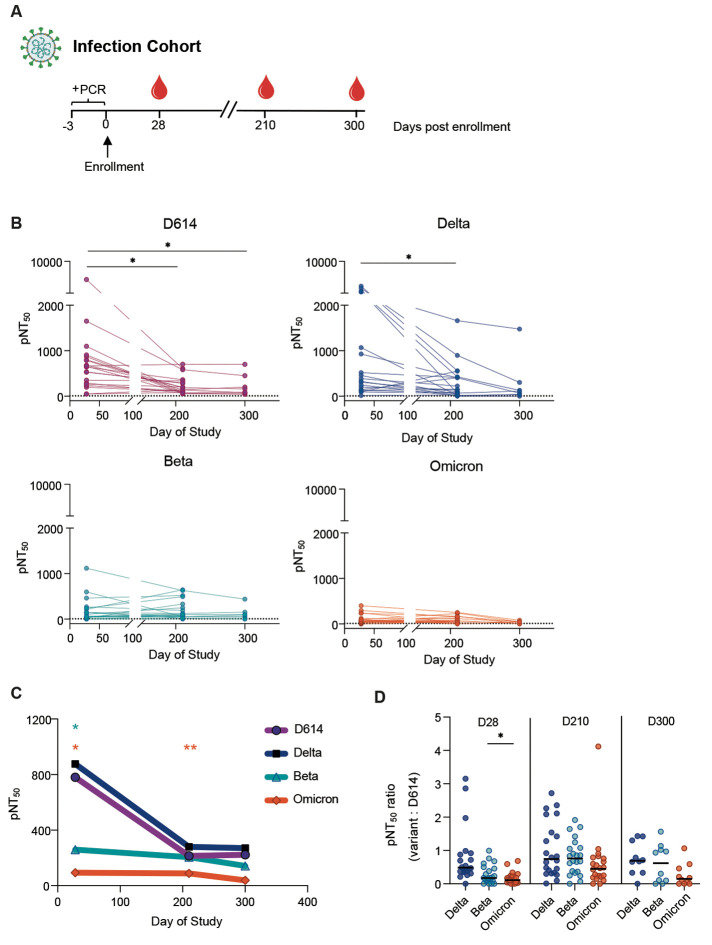
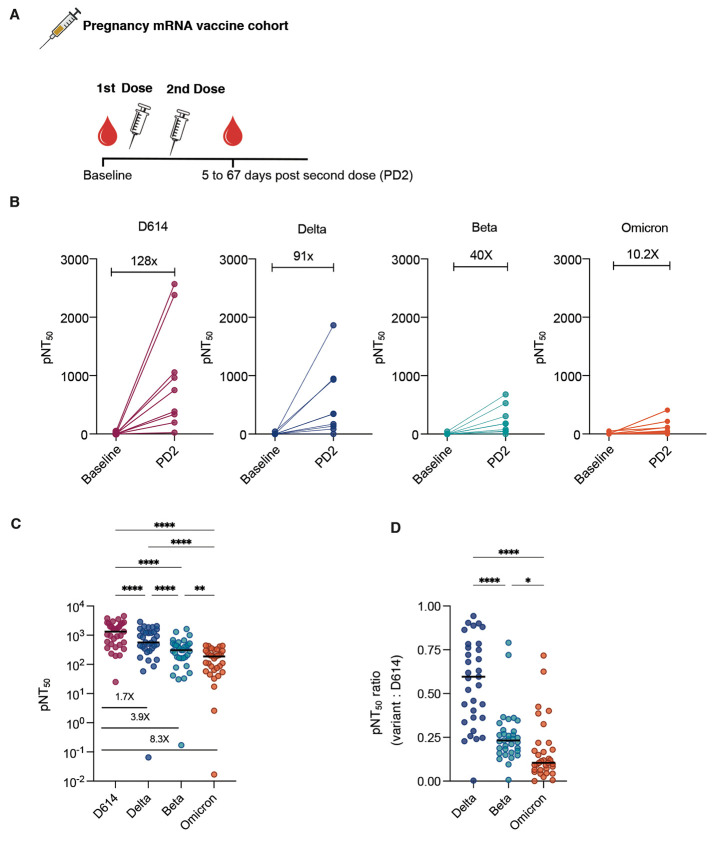
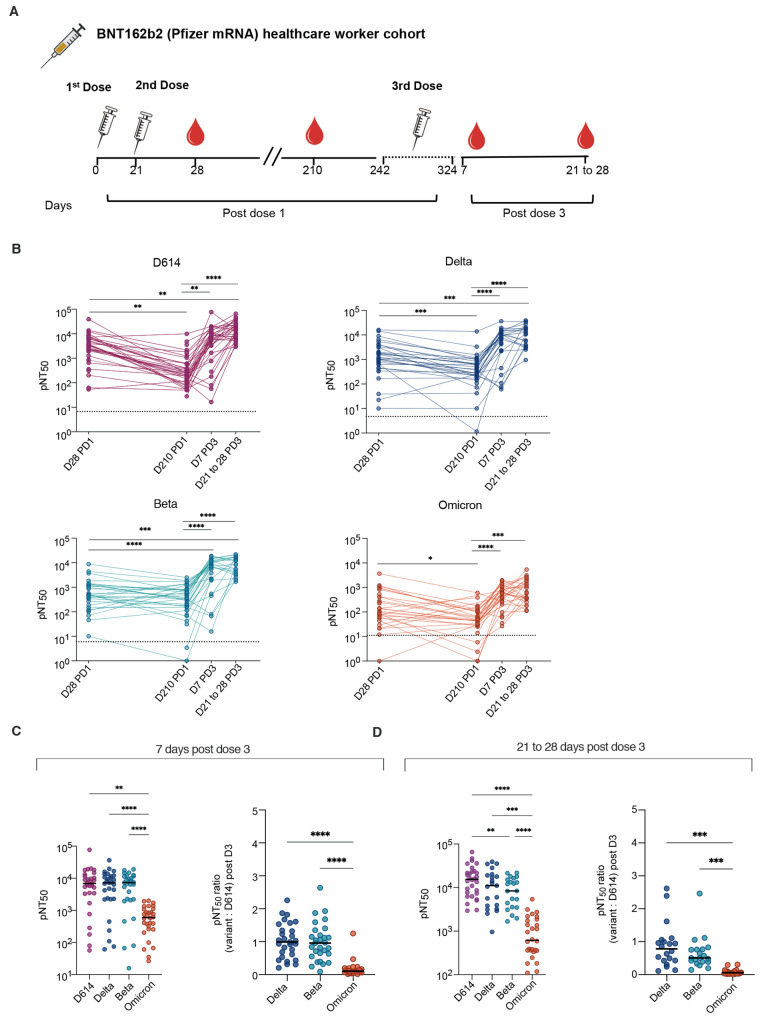
Multiple severe acute respiratory syndrome coronavirus 2 (SARS-CoV-2) variants that have mutations associated with increased transmission and antibody escape have arisen over the course of the current pandemic. Although the current vaccines have largely been effective against past variants, the number of mutations found on the Omicron (B.1.1.529) spike protein appear to diminish the protection conferred by preexisting immunity. Using vesicular stomatitis virus (VSV) pseudoparticles expressing the spike protein of several SARS-CoV-2 variants, we evaluated the magnitude and breadth of the neutralizing antibody response over time in individuals after infection and in mRNA-vaccinated individuals. We observed that boosting increases the magnitude of the antibody response to wild-type (D614), Beta, Delta, and Omicron variants; however, the Omicron variant was the most resistant to neutralization. We further observed that vaccinated healthy adults had robust and broad antibody responses, whereas responses may have been reduced in vaccinated pregnant women, underscoring the importance of learning how to maximize mRNA vaccine responses in pregnant populations. Findings from this study show substantial heterogeneity in the magnitude and breadth of responses after infection and mRNA vaccination and may support the addition of more conserved viral antigens to existing SARS-CoV-2 vaccines.
Overview
The claims and statistics of this paper haven’t been checked yet.
Run the check — free, no account needed. It reads the open-access text and checks the sources it cites.
Integrity signals
Registry
Cites
Statistics
Figures
Verification
Claims the paper makes
The claims and statistics of this paper haven’t been checked yet.
Run the check — free, no account needed. It reads the open-access text and checks the sources it cites.
Claims other papers make about this one
Each is checked against this paper’s own text: does it say what the citing paper says it does?
The source backs part of the claim, not all of it — or backs it for a different population, condition or comparison.
In the citing paper
“In addition, due to a greater vaccine escape of Omicron variants, the cross-neutralizing titre against the Omicron variant is several folds lower than against WT, therefore the decline rate is much faster 15 .”
From Safety and immunogenicity of a prefusion non-stabilized spike protein mRNA COVID-19 vaccine: a phase I trial (2022) · cites this paper as [15]
Experimental — accuracy not yet measuredThe source backs part of the claim, not all of it — or backs it for a different population, condition or comparison.
In the citing paper
“However, due to escape of the Omicron variant from current approved vaccines, the efficacy of all current vaccines is reduced and a new variant-specific analysis is therefore required [13][14][15] .”
From Safety and immunogenicity of a prefusion non-stabilized spike protein mRNA COVID-19 vaccine: a phase I trial (2022) · cites this paper as [15]
Experimental — accuracy not yet measuredThe cited source says what the claim attributes to it.
In the citing paper
“One of the limitations of currently approved mRNA COVID-19 vaccines is that recent data have shown that the neutralizing antibody (NAb) against WT and Omicron induced by 2 doses of approved COVID-19 vaccines wane over time.”
From Safety and immunogenicity of a prefusion non-stabilized spike protein mRNA COVID-19 vaccine: a phase I trial (2022) · cites this paper as [15]
Self-check
Percentages, sums and reported differences re-computed from the paper’s own numbers.
The self-check needs the paper’s full text.
Citations
Cites
Impaired type I interferon activity and inflammatory responses in severe COVID-19 patients
Hadjadj, J., Yatim, N., Barnabei, L., Corneau, A., Boussier, J., Smith, N., Péré, H., Charbit, B., Bondet, V., Chenevier-Gobeaux, C., et al. (2020) · Science · doi:10.1126/science.abc6027 · Cited by 2,984
Creation of a Bacterial Cell Controlled by a Chemically Synthesized Genome
Gibson, D. G., Glass, J. I., Lartigue, C., Noskov, V. N., Chuang, R.-Y., Algire, M. A., Benders, G. A., Montague, M. G., Ma, L., Moodie, M. M., et al. (2010) · Science · doi:10.1126/science.1190719 · Cited by 2,638
Self-citationAntibody resistance of SARS-CoV-2 variants B.1.351 and B.1.1.7
Wang, P., Nair, M. S., Liu, L., Iketani, S., Luo, Y., Guo, Y., Wang, M., Yu, J., Zhang, B., Kwong, P. D., et al. (2021) · Nature · doi:10.1038/s41586-021-03398-2 · Cited by 2,312
Adaptive immunity to SARS-CoV-2 and COVID-19
Sette, A., & Crotty, S. (2021) · Cell · doi:10.1016/j.cell.2021.01.007 · Cited by 1,860
Villar, J., Ariff, S., Gunier, R. B., Thiruvengadam, R., Rauch, S. A., Kholin, K. A. M., Roggero, P., Prefumo, F., do Vale, M. S., Cardona–Pérez, J. A., et al. (2021) · Archives of Pediatrics and Adolescent Medicine · doi:10.1001/jamapediatrics.2021.1050 · Cited by 1,340
Cele, S., Jackson, L., Khoury, D. S., Khan, K., Moyo-Gwete, T., Tegally, H., San, J. E., Cromer, D., Scheepers, C., Amoako, D., et al. (2021) · doi:10.1101/2021.12.08.21267417 · Cited by 1,333
Omicron SARS-CoV-2 variant: a new chapter in the COVID-19 pandemic
Karim, S. S. A., & Karim, Q. A. (2021) · The Lancet · doi:10.1016/s0140-6736(21)02758-6 · Cited by 1,302
Persistence and Evolution of SARS-CoV-2 in an Immunocompromised Host
Choi, B., Choudhary, M. C., Regan, J., Sparks, J. A., Padera, R. F., Qiu, X., Solomon, I. H., Kuo, H.-H., Boucau, J., Bowman, K., et al. (2020) · New England Journal of Medicine · doi:10.1056/nejmc2031364 · Cited by 1,246
Correlates of protection against symptomatic and asymptomatic SARS-CoV-2 infection
Feng, S., Phillips, D. J., White, T., Sayal, H., Aley, P. K., Bibi, S., Dold, C., Fuskova, M., Gilbert, S. C., Hirsch, I., et al. (2021) · Nature Medicine · doi:10.1038/s41591-021-01540-1 · Cited by 1,163
Broadly neutralizing antibodies overcome SARS-CoV-2 Omicron antigenic shift
Cameroni, E., Bowen, J. E., Rosen, L. E., Saliba, C., Zepeda, S. K., Culap, K., Pinto, D., VanBlargan, L. A., Marco, A. D., di Iulio, J., et al. (2021) · Nature · doi:10.1038/s41586-021-04386-2 · Cited by 1,070
Evidence of escape of SARS-CoV-2 variant B.1.351 from natural and vaccine-induced sera
Zhou, D., Dejnirattisai, W., Supasa, P., Liu, C., Mentzer, A. J., Ginn, H. M., Zhao, Y., Duyvesteyn, H. M. E., Tuekprakhon, A., Nutalai, R., et al. (2021) · Cell · doi:10.1016/j.cell.2021.02.037 · Cited by 992
Systems vaccinology of the BNT162b2 mRNA vaccine in humans
Arunachalam, P. S., Scott, M. K. D., Hagan, T., Li, C., Feng, Y., Wimmers, F., Grigoryan, L., Trisal, M., Edara, V. V., Lai, L., et al. (2021) · Nature · doi:10.1038/s41586-021-03791-x · Cited by 572
Self-citationDurability of mRNA-1273 vaccine–induced antibodies against SARS-CoV-2 variants
Pegu, A., O’Connell, S. E., Schmidt, S. D., O’Dell, S., Talana, C. A., Lai, L., Albert, J., Anderson, E., Bennett, H., Corbett, K. S., et al. (2021) · Science · doi:10.1126/science.abj4176 · Cited by 527
CD8+ T cells contribute to survival in patients with COVID-19 and hematologic cancer
Bange, E. M., Han, N. A., Wileyto, P., Kim, J. Y., Gouma, S., Robinson, J., Greenplate, A. R., Hwee, M. A., Porterfield, F., Owoyemi, O., et al. (2021) · Nature Medicine · doi:10.1038/s41591-021-01386-7 · Cited by 519
SARS-CoV-2 Omicron Variant Neutralization after mRNA-1273 Booster Vaccination
Pajon, R., Doria-Rose, N. A., Shen, X., Schmidt, S. D., O'Dell, S. J., McDanal, C., Feng, W., Tong, J., Eaton, A., Maglinao, M., et al. (2022) · New England Journal of Medicine · doi:10.1056/nejmc2119912 · Cited by 447
Plasma Neutralization of the SARS-CoV-2 Omicron Variant
Schmidt, F., Muecksch, F., Weisblum, Y., Da Silva, J., Bednarski, E., Cho, A., Wang, Z., Gaebler, C., Caskey, M., Nussenzweig, M. C., et al. (2022) · New England Journal of Medicine · doi:10.1056/nejmc2119641 · Cited by 432
Immunogenicity of COVID-19 mRNA vaccines in pregnant and lactating women
Collier, A.-R. Y., McMahan, K., Yu, J., Tostanoski, L. H., Aguayo, R., Ansel, J., Chandrashekar, A., Patel, S., Apraku Bondzie, E., Sellers, D., et al. (2021) · JAMA · doi:10.1001/jama.2021.7563 · Cited by 397
Torjesen, I. (2021) · BMJ · doi:10.1136/bmj.n2943 · Cited by 350
Proinflammatory IgG Fc structures in patients with severe COVID-19
Chakraborty, S., Gonzalez, J., Edwards, K., Mallajosyula, V., Buzzanco, A. S., Sherwood, R., Buffone, C., Kathale, N., Providenza, S., Xie, M. M., et al. (2021) · Nature Immunology · doi:10.1038/s41590-020-00828-7 · Cited by 326
Self-citationSARS-CoV-2 human T cell epitopes: Adaptive immune response against COVID-19
Grifoni, A., Sidney, J., Vita, R., Peters, B., Crotty, S., Weiskopf, D., & Sette, A. (2021) · Cell Host & Microbe · doi:10.1016/j.chom.2021.05.010 · Cited by 314
Defining variant-resistant epitopes targeted by SARS-CoV-2 antibodies: A global consortium study
Hastie, K. M., Li, H., Bedinger, D., Schendel, S. L., Dennison, S. M., Li, K., Rayaprolu, V., Yu, X., Mann, C. J., Zandonatti, M. A., et al. (2021) · Science · doi:10.1126/science.abh2315 · Cited by 301
Delayed production of neutralizing antibodies correlates with fatal COVID-19
Lucas, C. G. D. O., Klein, J., Sundaram, M. E., Liu, F., Wong, P., Silva, J. D. S., Mao, T., Oh, J. E., Mohanty, S., Huang, J., et al. (2021) · Nature Medicine · doi:10.1038/s41591-021-01355-0 · Cited by 289
Molecular basis of immune evasion by the Delta and Kappa SARS-CoV-2 variants
McCallum, M., Walls, A. C., Sprouse, K. R., Bowen, J. E., Rosen, L. E., Dang, H. V., Marco, A. D., Franko, N., Tilles, S. W., Logue, J. K., et al. (2021) · Science · doi:10.1126/science.abl8506 · Cited by 280
The effect of spike mutations on SARS-CoV-2 neutralization
Rees-Spear, C., Muir, L., Griffith, S. A., Heaney, J., Aldon, Y., Snitselaar, J. L., Thomas, P., Graham, C., Seow, J., Lee, N., et al. (2021) · Cell Reports · doi:10.1016/j.celrep.2021.108890 · Cited by 221
Mallajosyula, V. V. A., Ganjavi, C., Chakraborty, S., McSween, A. M., Pavlovitch-Bedzyk, A. J., Wilhelmy, J., Nau, A. N., Manohar, M., Nadeau, K. C., & Davis, M. M. (2021) · Science Immunology · doi:10.1126/sciimmunol.abg5669 · Cited by 168
Self-citationMohammadi, M., Shayestehpour, M., & Mirzaei, H. (2021) · The Brazilian Journal of Infectious Diseases · doi:10.1016/j.bjid.2021.101606 · Cited by 142
Jagannathan, P., Andrews, J. R., Bonilla, H. F., Hedlin, H., Jacobson, K. B., Balasubramanian, V., Purington, N., Kamble, S., de Vries, C. R., Quintero, O., et al. (2021) · Nature Communications · doi:10.1038/s41467-021-22177-1 · Cited by 135
Self-citationSARS-CoV-2 vaccines in advanced clinical trials: Where do we stand?
Chakraborty, S., Mallajosyula, V. V. A., Tato, C. M., Tan, G. S., & Wang, T. T. (2021) · Advanced Drug Delivery Reviews · doi:10.1016/j.addr.2021.01.014 · Cited by 90
Self-citationPrahl, M. K., Golan, Y., Cassidy, A. G., Matsui, Y., Li, L., Alvarenga, B. D., Chen, H., Jigmeddagva, U., Lin, C. Y., Gonzalez, V. J., et al. (2022) · Nature Communications · doi:10.1038/s41467-022-32188-1 · Cited by 78
Self-citationPlasma neutralization properties of the SARS-CoV-2 Omicron variantPreprint
Schmidt, F., Muecksch, F., Weisblum, Y., et al. (2021) · medRxiv · doi:10.1101/2021.12.12.21267646 · Cited by 77
Durability of immune responses to the BNT162b2 mRNA vaccine
Suthar, M. S., Arunachalam, P. S., Hu, M., Reis, N., Trisal, M., Raeber, O., Chinthrajah, R. S., Davis-Gardner, M. E., Manning, K. E., Mudvari, P., et al. (2022) · Med · doi:10.1016/j.medj.2021.12.005 · Cited by 63
Self-citationWright, E., McNabb, S., Goddard, T., Horton, D. L., Lembo, T., Nel, L. H., Weiss, R. A., Cleaveland, S., & Fooks, A. R. (2009) · Vaccine · doi:10.1016/j.vaccine.2009.09.024 · Cited by 57
The use of pseudotypes to study viruses, virus sero-epidemiology and vaccination
Bentley, E. M., Mather, S. T., & Temperton, N. J. (2015) · Vaccine · doi:10.1016/j.vaccine.2015.04.071 · Cited by 49
Matsui, Y., Li, L., Prahl, M. K., Cassidy, A. G., Özarslan, N., Golan, Y., Gonzalez, V. J., Lin, C. Y., Jigmeddagva, U., Chidboy, M. A., et al. (2022) · JCI Insight · doi:10.1172/jci.insight.157354 · Cited by 23
Self-citationDurability of immune responses to the BNT162b2 mRNA vaccine
(2021) · doi:10.1101/2021.09.30.462488 · Cited by 17
Chakraborty, S., González, J. C., Sievers, B. L., Mallajosyula, V. V. A., Chakraborty, S., Dubey, M., Ashraf, U., Cheng, B. Y.-L., Kathale, N. D., Tran, K. Q. T., et al. (2021) · bioRxiv (Cold Spring Harbor Laboratory) · doi:10.1101/2021.05.25.445649 · Cited by 8
Self-citationSeeing SARS-CoV-2 variants through the eyes of T cells
Alrubayyi, A., & Peppa, D. (2021) · Nature reviews. Immunology · doi:10.1038/s41577-021-00551-w · Cited by 5
Research works printed but not linked: 1
- 10.1038/s41586-021-04387-1 · DOI · Paper page
Cited by
Sorted by citations
SARS-CoV-2 Omicron variant: recent progress and future perspectives
Fan, Y., Li, X., Zhang, L., Wan, S., Zhang, L., & Zhou, F. (2022) · Signal Transduction and Targeted Therapy · doi:10.1038/s41392-022-00997-x · Cited by 599
Khandia, R., Singhal, S., Alqahtani, T., Kamal, M. A., El-Shall, N. A., Nainu, F., Desingu, P. A., & Dhama, K. (2022) · Environmental Research · doi:10.1016/j.envres.2022.112816 · Cited by 308
A TMPRSS2 inhibitor acts as a pan-SARS-CoV-2 prophylactic and therapeutic
Shapira, T., Monreal, I. A., Dion, S. P., Buchholz, D. W., Imbiakha, B., Olmstead, A. D., Jager, M. C., Désilets, A., Gao, G., Martins, M., et al. (2022) · Nature · doi:10.1038/s41586-022-04661-w · Cited by 248
Defining the substrate envelope of SARS-CoV-2 main protease to predict and avoid drug resistance
Shaqra, A. M., Zvornicanin, S. N., Huang, Q. Y. J., Lockbaum, G. J., Knapp, M. S., Tandeske, L., Bakan, D. T., Flynn, J. M., Bolon, D. N. A., Moquin, S. A., et al. (2022) · Nature Communications · doi:10.1038/s41467-022-31210-w · Cited by 128
Richardson, S. I., Madzorera, V. S., Spencer, H., Manamela, N. P., van der Mescht, M. A., Lambson, B. E., Oosthuysen, B., Ayres, F., Makhado, Z., Moyo-Gwete, T., et al. (2022) · Cell Host & Microbe · doi:10.1016/j.chom.2022.03.029 · Cited by 119
Metadata
- Authors
- Sievers, B. L., Chakraborty, S., Xue, Y., Gelbart, T., Gonzalez, J. C., Cassidy, A. G., Golan, Y., Prahl, M., Gaw, S. L., Arunachalam, P. S., Blish, C. A., Boyd, S. D., Davis, M. M., Jagannathan, P., Nadeau, K. C., Pulendran, B., Singh, U., Scheuermann, R. H., Frieman, M. B., Vashee, S., Wang, T. T., & Tan, G. S.
- Affiliations
- J. Craig Venter Institute (US)
- Stanford Medicine (US)
- Department of Medicine, Division of Infectious Diseases, Stanford University, Stanford, CA 94305, USA.
- University of California, San Francisco (US)
- Chan Zuckerberg Biohub San Francisco (US)
- Howard Hughes Medical Institute (US)
- University of Maryland, Baltimore (US)
- Corresponding author
- Wang, Taia T.
- Tan, Gene S.
- ORCID
- Sievers, Benjamin L.
- Chakraborty, Saborni
- Xue, Yong
- Gelbart, Terri
- Gonzalez, Joseph C.
- Cassidy, Arianna G.
- Golan, Yarden
- Prahl, Mary
- Gaw, Stephanie L.
- Arunachalam, Prabhu S.
- Blish, Catherine A.
- Boyd, Scott D.
- Davis, Mark M.
- Jagannathan, Prasanna
- Nadeau, Kari C.
- Pulendran, Bali
- Singh, Upinder
- Scheuermann, Richard H.
- Frieman, Matthew B.
- Vashee, Sanjay
- Wang, Taia T.
- Tan, Gene S.
- Venue
- Science Translational Medicine
- Published
- 2022-03-02
- Volume
- 14
- Issue
- 634
- Pages
- eabn7842-eabn7842
- ISSN
- 1946-6234 (ISSN-L)
- 1946-6242
- PMC
- PMC8891085
- OpenAlex
- W4205576941
- Cited by
- 111
- References
- 35
- Citations by year
- 2026: 3 · 2025: 10 · 2024: 10 · 2023: 24 · 2022: 63
- FWCI
- 13.30
- Type
- journal article
- Language
- en
- Open access
- hybrid
- doi.org
- Licence
- cc-by
- Locations
- Science Translational Medicine (publishedVersion, cc-by)
- medRxiv (acceptedVersion)
- PubMed Central (publishedVersion, cc-by)
- PubMed (publishedVersion)
- eScholarship (California Digital Library) (submittedVersion, cc-by)
- ImmPort
- Funders
- Sanofi
- Gilead Sciences
- Thomas Jefferson University
- Regeneron Pharmaceuticals
- Fast Grants
- National Institutes of Health (75N93019C00076, HHSN272201400008C, ASPR-20-01495)
- Biomedical Advanced Research and Development Authority (ASPR-20-01495)
- National Cancer Institute (U54CA260517)
- National Institute of Allergy and Infectious Diseases (HHSN272201400008C), R03AI146632, 75N93019C00076, R01AI137365, U01AI150741, K23AI076614, U19AI111825, K23AI127886, U19AI057229, P01AI153559, U19AI167903, T32AI007290, K24AI144048)
- Topics
- Health Sciences › Medicine › Infectious Diseases › SARS-CoV-2 and COVID-19 Research
- Life Sciences › Agricultural and Biological Sciences › Animal Science and Zoology › Animal Virus Infections Studies
- Life Sciences › Biochemistry, Genetics and Molecular Biology › Molecular Biology › vaccines and immunoinformatics approaches
- Keywords
- SARS-CoV-2, Omicron variant, Beta variant, Delta variant, neutralizing antibodies, mRNA vaccines, natural infection, antibody escape, booster vaccination, pregnant women, spike protein mutations, vaccine response heterogeneity
- MeSH terms
- COVID-19, SARS-CoV-2, COVID-19 Vaccines, mRNA Vaccines, Adult, Antibodies, Viral, Female, Humans, Pregnancy, Pregnancy Complications, Infectious, Vaccines, Synthetic, Antibodies, Neutralizing, Spike Glycoprotein, Coronavirus
About these checks
Registry, retraction, Cites and statistics results are computed, not judged, with one exception: a printed reference that no index lists is read once by a model before it counts as a citation error. Claims are extracted by a model and kept only when their quote appears verbatim in the text; each cited source is then checked, with a model’s help, for whether it says what the claim relies on. Those verdicts can be wrong — read the claim’s quote and the cited source before relying on one.
Statistics and arithmetic are recomputed, not judged.
Confidence bands are shown only for fields calibrated on our annotated test set. None is calibrated yet, so no band is shown.
What counts as a claim ›How we measure confidence ›How we check this ›
Are you an author, or do you see a problem with this page? Request a review
