

Novel Zinc-Attenuating Compounds as Potent Broad-Spectrum Antifungal Agents with In Vitro and In Vivo Efficacy
Open accessThe DOI matches its Crossref record; 45 of the 45 references it cites were found in a registry or an index.
Abstract
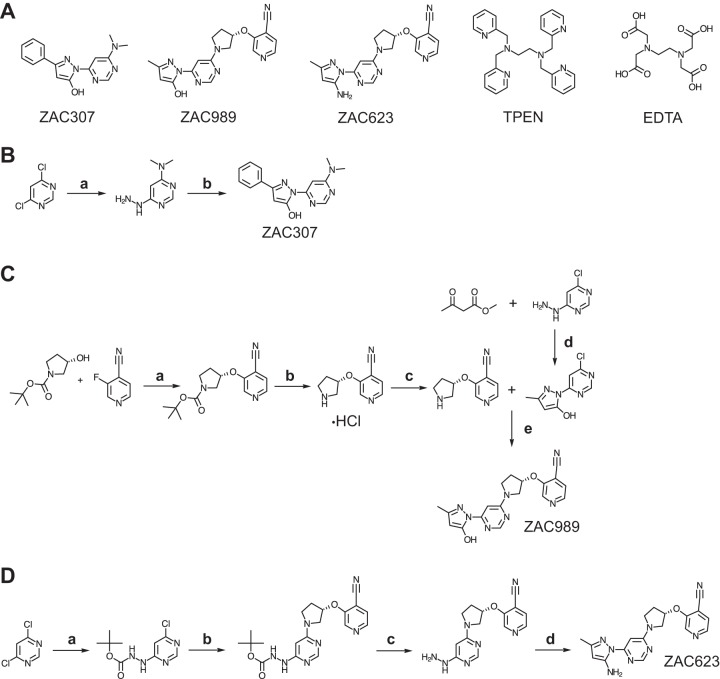
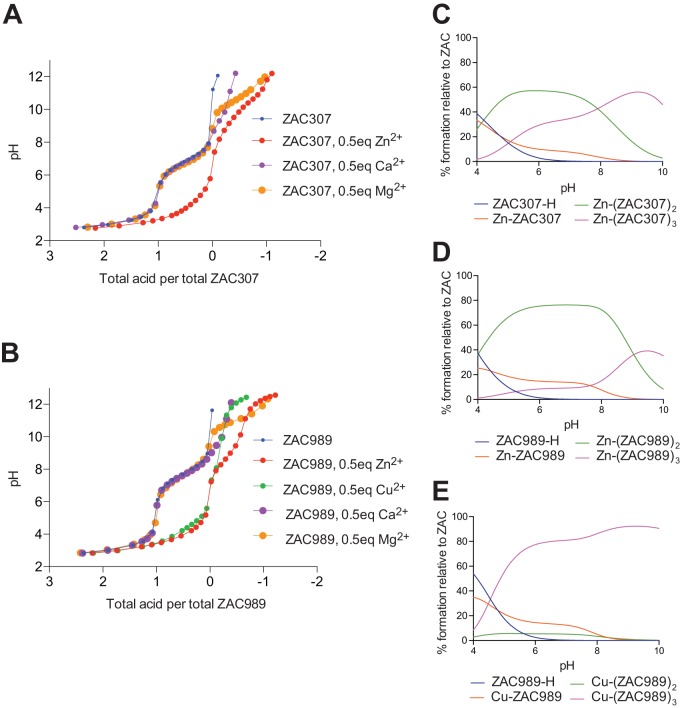
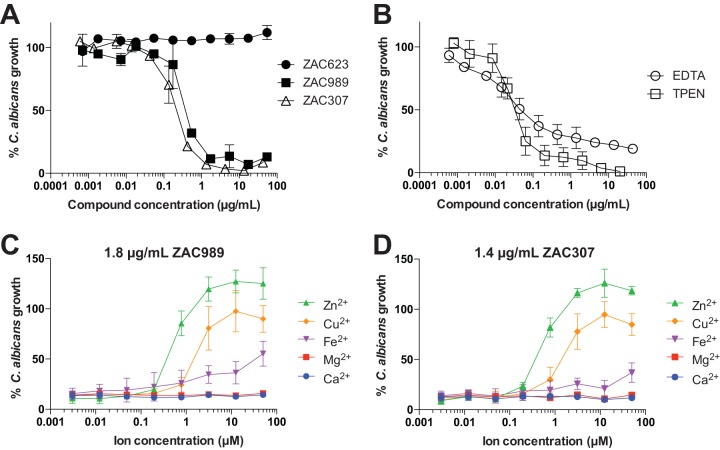
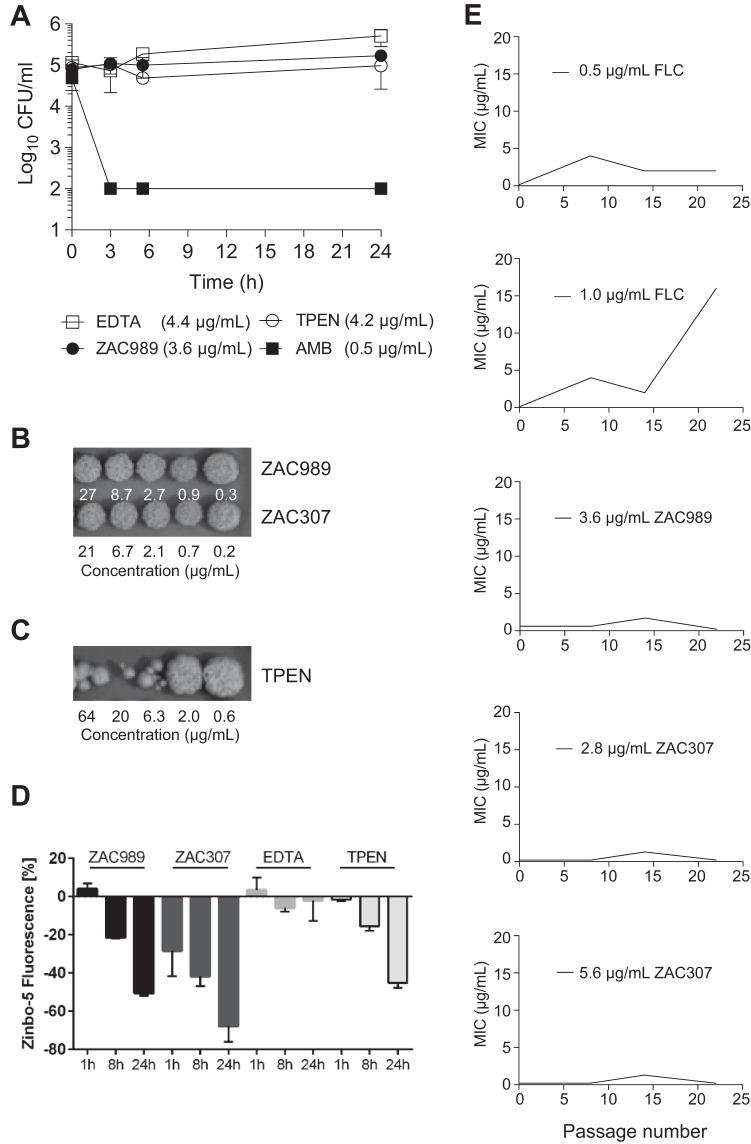
An increase in the incidence of rare but hard-to-treat invasive fungal pathogens as well as resistance to the currently available antifungal drugs calls for new broad-spectrum antifungals with a novel mechanism of action. Here we report the identification and characterization of two novel zinc-attenuating compounds, ZAC307 and ZAC989, which exhibit broad-spectrum in vitro antifungal activity and in vivo efficacy in a fungal kidney burden candidiasis model. The compounds were identified serendipitously as part of a drug discovery process aimed at finding novel inhibitors of the fungal plasma membrane proton ATPase Pma1. Based on their structure, we hypothesized that they might act as zinc chelators. Indeed, both fluorescence-based affinity determination and potentiometric assays revealed these compounds, subsequently termed zinc-attenuating compounds (ZACs), to have strong affinity for zinc, and their growth inhibitory effects on Candida albicans and Aspergillus fumigatus could be inactivated by the addition of exogenous zinc to fungal growth media. We determined the ZACs to be fungistatic, with a low propensity for resistance development. Gene expression analysis suggested that the ZACs interfere negatively with the expression of genes encoding the major components of the A. fumigatus zinc uptake system, thus supporting perturbance of zinc homeostasis as the likely mode of action. With demonstrated in vitro and in vivo antifungal activity, low propensity for resistance development, and a novel mode of action, the ZACs represent a promising new class of antifungal compounds, and their advancement in a drug development program is therefore warranted.
Overview
The claims and statistics of this paper haven’t been checked yet.
Free: it reads the open-access text and checks the first 5 claims that cite a source we can check. Create a free account to check every claim.
Integrity signals
Registry
Cites
Statistics
Figures
Verification
Claims the paper makes
The claims and statistics of this paper haven’t been checked yet.
Free: it reads the open-access text and checks the first 5 claims that cite a source we can check. Create a free account to check every claim.
Claims other papers make about this one
Each is checked against this paper’s own text: does it say what the citing paper says it does?
The source backs part of the claim, not all of it — or backs it for a different population, condition or comparison.
In the citing paper
“Consequently, the ZafA and ZrfC proteins can be considered specific fungal targets, since zinc-chelating compounds can inhibit fungal growth both in vitro and in vivo (372–374).”
From Aspergillus fumigatus and Aspergillosis in 2019 (2019) · cites this paper as [373]
Experimental — accuracy not yet measuredThe source backs part of the claim, not all of it — or backs it for a different population, condition or comparison.
In the citing paper
“TPEN also exhibits growth inhibition rather than killing activity against Candida species (21), as does the zinc chelator pyrvinium pamoate (58).”
From Selective Metal Chelation by a Thiosemicarbazone Derivative Interferes with Mitochondrial Respiration and Ribosome Biogenesis in Candida albicans (2022) · cites this paper as [21]
Experimental — accuracy not yet measured
Self-check
Percentages, sums and reported differences re-computed from the paper’s own numbers.
The self-check needs the paper’s full text.
Citations
Cites
Analysis of Relative Gene Expression Data Using Real-Time Quantitative PCR and the 2−ΔΔCT Method
Livak, K. J., & Schmittgen, T. D. (2001) · Methods · doi:10.1006/meth.2001.1262 · Cited by 180,860
Yung-Chi, C., & Prusoff, W. H. (1973) · Biochemical Pharmacology · doi:10.1016/0006-2952(73)90196-2 · Cited by 12,922 · cited 1×
“The Kds were calculated 475 using the equation: Kd (compound:Zn 2+ ) = IC50 / (1 + [Fluozin-3] / Kd,Fluozin-3:Zn 2+ ) (36).”
Mutation of the mouse klotho gene leads to a syndrome resembling ageing
Kuro-o, M., Matsumura, Y., Aizawa, H., Kawaguchi, H., Suga, T., Utsugi, T., Ohyama, Y., Kurabayashi, M., Kaname, T., Kume, E., et al. (1997) · Nature · doi:10.1038/36285 · Cited by 3,837
GANS, P., SABATINI, A., & VACCA, A. (1996) · Talanta · doi:10.1016/0039-9140(96)01958-3 · Cited by 3,264 · cited 2×
“The titration data were refined by the nonlinear least squares 486 refinement program Hyperquad2013 (37) to determine the deprotonation and stability constants.”
MethodScudiero, D. A., Shoemaker, R. H., Paull, K. D., Monks, A. P., Tierney, S., Nofziger, T. H., Currens, M. J., Seniff, D. A., & Boyd, M. R. (1988) · PubMed · Cited by 2,737
Urban, C. F., Ermert, D., Schmid, M., Abu-Abed, U., Goosmann, C., Nacken, W., Brinkmann, V., Jungblut, P. R., & Zychlinsky, A. (2009) · PLoS Pathogens · doi:10.1371/journal.ppat.1000639 · Cited by 1,673 · cited 2×
“Although iron acquisition is recognized as a virulence factor for many fungal pathogens (7), research in recent years has highlighted the important contribution that zinc sequestration makes to fungal pathogenesis and virulence (4, 9).”
BackgroundNutritional immunity: transition metals at the pathogen–host interface
Hood, M. I., & Skaar, E. P. (2012) · Nature Reviews Microbiology · doi:10.1038/nrmicro2836 · Cited by 1,535 · cited 3×
“The mechanisms for iron sequestration are best described, 59 and include the expression of high affinity iron transporters, iron-chelating siderophores and iron60 binding proteins (1, 7, 8).”
BackgroundMethodMetal Chelation and Inhibition of Bacterial Growth in Tissue Abscesses
Corbin, B. D., Seeley, E. H., Raab, A., Feldmann, J., Miller, M. R., Torres, V. J., Anderson, K. L., Dattilo, B. M., Dunman, P. M., Gerads, R., et al. (2008) · Science · doi:10.1126/science.1152449 · Cited by 857 · cited 2×
“In further 74 support of this notion, calprotectin comprises ~40% of total protein content in the neutrophil 75 cytoplasm during infection, and its antifungal effect can be reversed in vitro by micromolar 76 quantities of zinc (3, 4, 9).”
BackgroundRodriguez-Tudela, J. L., Arendrup, M. C., Barchiesi, F., Bille, J., Chryssanthou, E., Cuenca-Estrella, M., Dannaoui, E., Denning, D. W., Donnelly, J. P., Dromer, F., et al. (2008) · Clinical Microbiology and Infection · doi:10.1111/j.1469-0691.2007.01935.x · Cited by 652
Coordination Dynamics of Zinc in Proteins
Maret, W., & Li, Y. (2009) · Chemical Reviews · doi:10.1021/cr800556u · Cited by 644 · cited 1×
“0 pM) (28), it is more likely that these compounds interfere with the regulation of zinc homeostasis by promoting the release of Zn2 ions from intracellular storage compartments.”
BackgroundTaki, M., Wolford, J. L., & O'Halloran, T. V. (2004) · Journal of the American Chemical Society · doi:10.1021/ja039073j · Cited by 513 · cited 1×
“2 nM (23), which is weaker than that of most zinc-binding proteins, and thus it only reports 171 the free or weakly bound zinc ions.”
BackgroundGee, K. R., Zhou, Z.-L., Qian, W.-J., & Kennedy, R. (2002) · Journal of the American Chemical Society · doi:10.1021/ja011774y · Cited by 406 · cited 1×
“Dissociation constant determination 469 The dissociation constant (Kd) of zinc to zinc-attenuating compounds was determined at room 470 temperature using FluoZin-3 (F24194, ThermoFisher Scientific), which has a Kd, Fluozin-3:Zn 2+ = 471 15 nM (35).”
Method(2008) · Clinical Microbiology and Infection · doi:10.1111/j.1469-0691.2008.02086.x · Cited by 370
Klepser, M. E., Ernst, E. J., Lewis, R. E., Ernst, M. E., & Pfaller, M. A. (1998) · Antimicrobial Agents and Chemotherapy · doi:10.1128/aac.42.5.1207 · Cited by 338 · cited 1×
“The colony count on each YPD plate was determined after incubation at 530 30 °C for 48 h (40).”
MethodFahrni, C. J., & O'Halloran, T. V. (1999) · Journal of the American Chemical Society · doi:10.1021/ja992709f · Cited by 332 · cited 1×
“Dissociation constants for EDTA and TPEN could not be determined 105 with this assay as their dissociation constants were below the measurable range, but both have 106 previously been reported to be very potent zinc chelators (21).”
BackgroundShared and distinct mechanisms of iron acquisition by bacterial and fungal pathogens of humans
Caza, M., & Kronstad, J. W. (2013) · Frontiers in Cellular and Infection Microbiology · doi:10.3389/fcimb.2013.00080 · Cited by 306 · cited 2×
“The mechanisms for iron sequestration are best described, 59 and include the expression of high affinity iron transporters, iron-chelating siderophores and iron60 binding proteins (1, 7, 8).”
BackgroundBianchi, M., Niemiec, M. J., Siler, U., Urban, C. F., & Reichenbach, J. (2011) · Journal of Allergy and Clinical Immunology · doi:10.1016/j.jaci.2011.01.021 · Cited by 250 · cited 1×
“6 567 μg/mL, and (5) a 5 mM solution of each test compound (ZAC307 or ZAC989) dissolved in 80 % 568 ethanol to a final concentration of 75 μM and 1.”
BackgroundThe Iron age of host–microbe interactions
Soares, M. P., & Weiss, G. (2015) · The EMBO Reports · doi:10.15252/embr.201540558 · Cited by 227 · cited 1×
“, the transferrin family, that ensure extremely low concentrations of free iron in the body (2).”
BackgroundIron - a key nexus in the virulence of Aspergillus fumigatus
Haas, H. (2012) · Frontiers in Microbiology · doi:10.3389/fmicb.2012.00028 · Cited by 217 · cited 1×
“The mechanisms for iron sequestration are best described and include the expression of high-affinity iron transporters, iron-chelating siderophores, and iron-binding proteins (1, 7, 8).”
BackgroundEvolution of Drug Resistance in Experimental Populations of Candida albicans
Cowen, L. E., Sanglard, D., Calabrese, D., Sirjusingh, C., Anderson, J. B., & Kohn, L. M. (2000) · Journal of Bacteriology · doi:10.1128/jb.182.6.1515-1522.2000 · Cited by 207 · cited 1×
“Resistance study 533 The propensity for resistance development was investigated as also described previously (41), but 534 with the following modifications.”
BackgroundBiochemical Properties of Vacuolar Zinc Transport Systems ofSaccharomyces cerevisiae
MacDiarmid, C. W., Milanick, M. A., & Eide, D. J. (2002) · Journal of Biological Chemistry · doi:10.1074/jbc.m205052200 · Cited by 203 · cited 3×
“ZrcA) is mediated through a Zn 2+ /H + antiporter mechanism and it relies on the proton gradient 376 generated by the V-ATPase (30).”
BackgroundInfluentialSOD Enzymes and Microbial Pathogens: Surviving the Oxidative Storm of Infection
Broxton, C. N., & Culotta, V. C. (2016) · PLOS Pathogens · doi:10.1371/journal.ppat.1005295 · Cited by 166
Clark, H. L., Jhingran, A., Sun, Y., Vareechon, C., de Jesus Carrion, S., Skaar, E. P., Chazin, W. J., Calera, J. A., Hohl, T. M., & Pearlman, E. (2016) · The Journal of Immunology · doi:10.4049/jimmunol.1502037 · Cited by 149
Self-citationNasir, M., Fahrni, C. J., Suhy, D. A., Kolodsick, K. J., Singer, C. P., & O’Halloran, T. V. (1999) · JBIC Journal of Biological Inorganic Chemistry · doi:10.1007/s007750050350 · Cited by 131
Crawford, A., & Wilson, D. (2015) · FEMS Yeast Research · doi:10.1093/femsyr/fov071 · Cited by 122 · cited 1×
“55 For fungal pathogens to grow and establish infection inside their host, they must be able to obtain 56 iron, zinc, and other essential metals from the harsh environment imposed by nutritional immunity 57 (6).”
BackgroundSelective Electrodiffusion of Zinc Ions in a Zrt-, Irt-like Protein, ZIPB*
Lin, W., Chai, J., Love, J., & Fu, D. (2010) · Journal of Biological Chemistry · doi:10.1074/jbc.m110.180620 · Cited by 120
Fungal zinc metabolism and its connections to virulence
Staats, C. C., Kmetzsch, L., Schrank, A., & Vainstein, M. H. (2013) · Frontiers in Cellular and Infection Microbiology · doi:10.3389/fcimb.2013.00065 · Cited by 117 · cited 1×
“In all fungal species, the major zinc-binding proteins include Cu2 /Zn2 superoxide dismutases (SODs), alcohol dehydrogenase, and ribosomal proteins (12).”
BackgroundAmich, J., Vicentefranqueira, R., Leal, F., & Calera, J. A. (2010) · Eukaryotic Cell · doi:10.1128/ec.00348-09 · Cited by 105 · cited 3×
“The Aspergillus fumigatus strains AF14, AF54, AF48, AF721 and AF731 have 454 previously been described previously (3, 24, 27).”
BackgroundSelf-citationAmich, J., Vicentefranqueira, R., Mellado, E., Ruiz-Carmuega, A., Leal, F., & Calera, J. A. (2014) · Cellular Microbiology · doi:10.1111/cmi.12238 · Cited by 84 · cited 13×
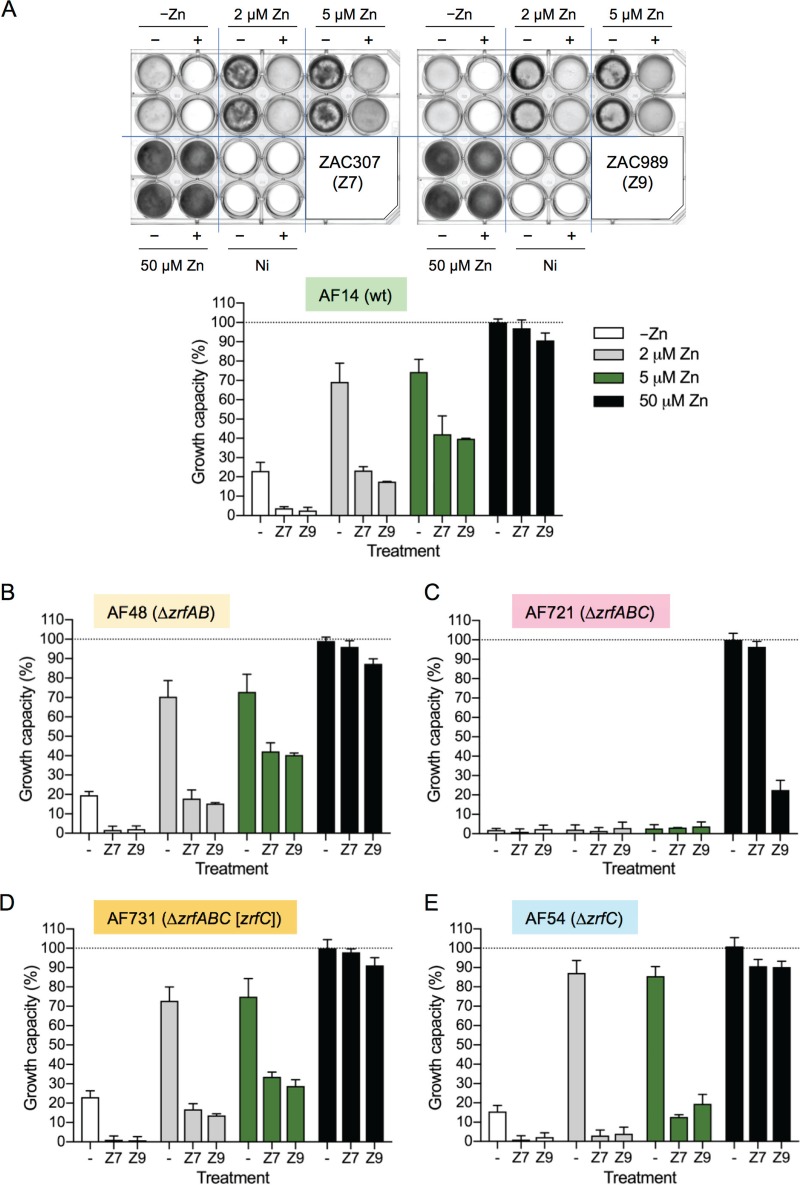
“Therefore, we reasoned that if the ZACs inhibited the intake of zinc mediated by these transporters, the growth capacity of a wild-type strain in the presence of ZACs should be reduced to the same level as that of fungal mutant strains lacking the acidic (ZrfA and ZrfB) and/or the alkaline (ZrfC) zinc transporter.”
BackgroundResultInfluentialSelf-citationFungal susceptibility to zinc deprivation
Lulloff, S. J., Hahn, B. L., & Sohnle, P. G. (2004) · Journal of Laboratory and Clinical Medicine · doi:10.1016/j.lab.2004.07.007 · Cited by 82 · cited 1×
“has been clearly demonstrated to be essential for fungal growth and pathogenicity and zinc64 depleting conditions are known to reduce fungal growth in vitro (3, 10, 11).”
BackgroundVicentefranqueira, R., Moreno, M. A., Leal, F., & Calera, J. A. (2005) · Eukaryotic Cell · doi:10.1128/ec.4.5.837-848.2005 · Cited by 78 · cited 2×
“The Aspergillus fumigatus strains AF14, AF54, AF48, AF721 and AF731 have 454 previously been described previously (3, 24, 27).”
BackgroundSelf-citationDisulphide-reduced psoriasin is a human apoptosis-inducing broad-spectrum fungicide
Hein, K. Z., Takahashi, H., Tsumori, T., Yasui, Y., Nanjoh, Y., Toga, T., Wu, Z., Grötzinger, J., Jung, S., Wehkamp, J., et al. (2015) · Proceedings of the National Academy of Sciences · doi:10.1073/pnas.1511197112 · Cited by 74
L.S. Santos, A., L. Sodre, C., S. Valle, R., A. Silva, B., A. Abi-chacra, E., V. Silva, L., L. Souza-Goncalves, A., S. Sangenito, L., S. Goncalves, D., O.P. Souza, L., et al. (2012) · Current Medicinal Chemistry · doi:10.2174/092986712800609788 · Cited by 68
Colvin, R. A. (2002) · American Journal of Physiology-Cell Physiology · doi:10.1152/ajpcell.00143.2001 · Cited by 53
Identification of Antifungal H + -ATPase Inhibitors with Effect on Plasma Membrane Potential
Kjellerup, L., Gordon, S., Cohrt, K. O., Brown, W. D., Fuglsang, A. T., & Winther, A.-M. L. (2017) · Antimicrobial Agents and Chemotherapy · doi:10.1128/aac.00032-17 · Cited by 50
Self-citationZinc sensing and regulation in yeast model systems
Wilson, S., & Bird, A. J. (2016) · Archives of Biochemistry and Biophysics · doi:10.1016/j.abb.2016.02.031 · Cited by 46 · cited 1×
“zinc-responsive factor that senses the intracellular concentration of zinc in a way similar to that of its orthologue Zap1 in the yeast Saccharomyces cerevisiae (25).”
Zinc transport mediated by barley ZIP proteins are induced by low pH
Pedas, P., & Husted, S. (2009) · Plant Signaling & Behavior · doi:10.4161/psb.4.9.9375 · Cited by 39
EDTA as an Adjunct Antifungal Agent for Invasive Pulmonary Aspergillosis in a Rodent Model
Hachem, R., Bahna, P., Hanna, H., Stephens, L. C., & Raad, I. (2006) · Antimicrobial Agents and Chemotherapy · doi:10.1128/aac.50.5.1823-1827.2006 · Cited by 37 · cited 2×
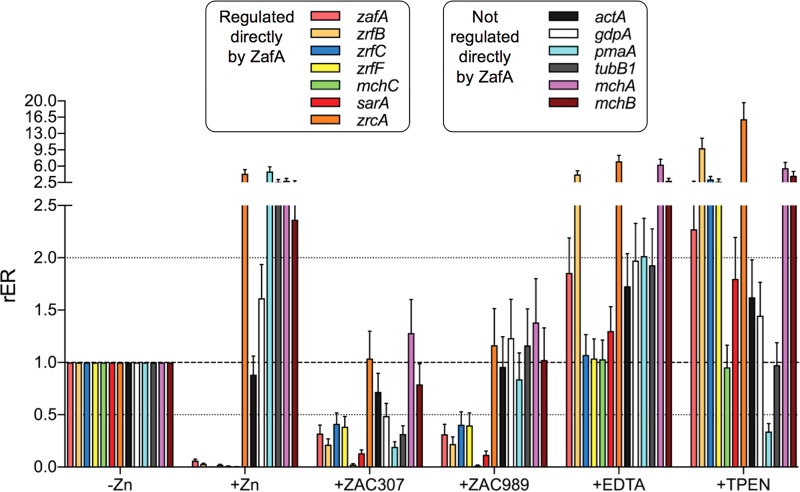
“The metal-chelating compounds EDTA and TPEN have previously been described as antifungal compounds (16, 17, 26); thus, they were selected as comparators in this study.”
MethodLaskaris, P., Atrouni, A., Calera, J. A., d'Enfert, C., Munier-Lehmann, H., Cavaillon, J.-M., Latgé, J.-P., & Ibrahim-Granet, O. (2016) · Antimicrobial Agents and Chemotherapy · doi:10.1128/aac.00324-16 · Cited by 37 · cited 2×
“18 that TPEN given in combination with caspofungin significantly increased survival times in murine 405 models of invasive aspergillosis compared to either drug alone (17).”
BackgroundMethodSelf-citationElucidation of antimicrobial activity and mechanism of action by N-substituted carbazole derivatives
Clausen, J. D., Kjellerup, L., Cohrt, K. O., Hansen, J. B., Dalby‐Brown, W., & Winther, A.-M. L. (2017) · Bioorganic & Medicinal Chemistry Letters · doi:10.1016/j.bmcl.2017.08.067 · Cited by 33
Self-citationTargeting zinc homeostasis to combat Aspergillus fumigatus infections
Vicentefranqueira, R., Amich, J., Laskaris, P., Ibrahim-Granet, O., Latgé, J. P., Toledo, H., Leal, F., & Calera, J. A. (2015) · Frontiers in Microbiology · doi:10.3389/fmicb.2015.00160 · Cited by 27
Self-citationProton‐dependent zinc release from intracellular ligands
Kiedrowski, L. (2014) · Journal of Neurochemistry · doi:10.1111/jnc.12712 · Cited by 24 · cited 1×
“Nevertheless, since acidification of cytoplasm can also promote zinc release from cytoplasmic zinc ligands (29), it could also be possible that the ZACs”
BackgroundMolecular analysis of Candida glabrata clinical isolates
Berila, N., & Šubík, J. (2010) · Mycopathologia · doi:10.1007/s11046-010-9298-1 · Cited by 24 · cited 3×
“glabrata Cg003 is clinical isolate 3 previously used by Berila and Subik and was characterized to be resistant to fluconazole and itraconazole via overexpression of the multidrug resistance efflux pumps Cdr1p and Cdr2p (34).”
MethodResultInfluentialCulture conditions for zinc- and pH-regulated gene expression studies in Aspergillus fumigatus.
Moreno, M., Amich, J., Vicentefranqueira, R., Leal, F., & Calera, J. A. (2007) · PubMed · doi:10.2436/20.1501.01.26 · Cited by 15 · cited 4×
“In contrast, when the intracellular 238 concentration drops below a certain threshold, ZafA begins to release Zn 2+ ions and gradually 239 adopts a transcriptionally active conformation, whereby it is able to induce the expression of zrfA 240 and zrfB in acidic zinc-limiting media, and zrfC in alkaline zinc-limiting m…”
BackgroundInfluentialSelf-citationMouse Intravenous Challenge Models and Applications
MacCallum, D. M. (2012) · Methods in molecular biology · doi:10.1007/978-1-61779-539-8_35 · Cited by 10
Cited by
Aspergillus fumigatus and Aspergillosis in 2019
Latgé, J.-P., & Chamilos, G. (2019) · Clinical Microbiology Reviews · doi:10.1128/cmr.00140-18 · Cited by 1,400
Promising Antifungal Targets Against Candida albicans Based on Ion Homeostasis
Li, Y., Sun, L., Lu, C., Gong, Y., Li, M., & Sun, S. (2018) · Frontiers in Cellular and Infection Microbiology · doi:10.3389/fcimb.2018.00286 · Cited by 85
“Researchers identified two novel zinc-attenuating compounds (ZACs) ZAC307 and ZAC989, which showed antifungal activity against C. albicans by chelating zinc in vitro (O’Hanlon Cohrt et al., 2018).”
BackgroundDisruption of Intracellular Calcium Homeostasis as a Therapeutic Target Against Trypanosoma cruzi
Benaím, G., Paniz‐Mondolfi, A., Sordillo, E. M., & Martinez-Sotillo, N. (2020) · Frontiers in Cellular and Infection Microbiology · doi:10.3389/fcimb.2020.00046 · Cited by 63
Antifungal compounds from Streptomyces associated with attine ants also inhibit Leishmania donovani
Ortega, H. E., Ferreira, L. L. G., Melo, W. G. D. P., de Oliveira, A. L. L., Alvarenga, R. F. R., Lopes, N. P., Bugni, T. S., Andricopulo, A. D., & Pupo, M. T. (2019) · PLoS neglected tropical diseases · doi:10.1371/journal.pntd.0007643 · Cited by 61
Duan, X., Xie, Z., Ma, L., Jin, X., Zhang, M., Xu, Y., Liu, Y., Lou, H., & Chang, W. (2022) · Microbiology Spectrum · doi:10.1128/spectrum.01951-21 · Cited by 31
“albicans cells exposed to 19ak by using fluorescent probes FeRhoNox-1 and Zinbo-5, which specifically bind free ferrous ions and zinc, respectively (21, 35).”
BackgroundMethod
Metadata
- Authors
- Cohrt, K. A. O., Marín, L., Kjellerup, L., Clausen, J. D., Dalby-Brown, W., Calera, J. A., & Winther, A.-M. L.
- Affiliations
- Pcovery, Copenhagen, Denmark
- Consejo Superior de Investigaciones Científicas (ES)
- University of Copenhagen (DK)
- Universidad de Salamanca (ES)
- Corresponding author
- Winther, Anne-Marie Lund
- Venue
- Antimicrobial Agents and Chemotherapy
- Publisher
- American Society for Microbiology
- Published
- 2018-05
- Volume
- 62
- Issue
- 5
- ISSN
- 0066-4804 (ISSN-L)
- 1098-6596
- PMC
- PMC5923171
- OpenAlex
- W2791455530
- Cited by
- 32
- References
- 45
- Citations by year
- 2026: 1 · 2025: 4 · 2024: 3 · 2023: 2 · 2022: 3 · 2021: 6 · 2020: 5 · 2019: 6 · 2018: 1
- FWCI
- 3.40
- Type
- journal article
- Language
- en
- Open access
- hybrid
- doi.org
- Licence
- cc-by
- creativecommons.org/licenses/by/4.0/ (vor)
- journals.asm.org/non-commercial-tdm-license (tdm)
- Locations
- Antimicrobial Agents and Chemotherapy (publishedVersion, cc-by)
- Europe PMC (PubMed Central) (publishedVersion, cc-by)
- PubMed Central (publishedVersion, cc-by)
- PubMed (publishedVersion)
- Research at the University of Copenhagen (University of Copenhagen) (publishedVersion, other-oa)
- DIGITAL.CSIC (Spanish National Research Council (CSIC)) (submittedVersion, cc-by)
- Gredos (University of Salamanca) (submittedVersion, cc-by-nc-nd)
- Hispana (submittedVersion, cc-by-nc-nd)
- Funders
- Wellcome Trust Research Councils, UK (100480/Z/12)
- Novo Seeds, Denmark
- Boehringer Ingelheim Venture Fund, Germany
- Spanish Ministry of Economy and Competitiveness (SAF2013-48382-R)
- Innovation Fund, Denmark (4019-00019B)
- Topics
- Health Sciences › Medicine › Infectious Diseases › Antifungal resistance and susceptibility
- Life Sciences › Agricultural and Biological Sciences › Plant Science › Fungal Plant Pathogen Control
- Life Sciences › Immunology and Microbiology › Applied Microbiology and Biotechnology › Antimicrobial agents and applications
- Keywords
- zinc chelators, antifungal agents, Candida albicans, Aspergillus fumigatus, candidiasis, zinc homeostasis, fungistatic activity, antifungal resistance, drug discovery
- MeSH terms
- Animals, Antifungal Agents, Aspergillosis, Aspergillus fumigatus, Candida albicans, Candidiasis, Proton-Translocating ATPases, Humans, Mice, Inbred BALB C, Microbial Sensitivity Tests, Zinc Compounds, Drug Resistance, Fungal, Cell Line, Tumor, Mice, Hep G2 Cells
About these checks
Registry, retraction, Cites and statistics results are computed, not judged, with one exception: a printed reference that no index lists is read once by a model before it counts as a citation error. Claims are extracted by a model and kept only when their quote appears verbatim in the text; each cited source is then checked, with a model’s help, for whether it says what the claim relies on. Those verdicts can be wrong — read the claim’s quote and the cited source before relying on one.
Statistics and arithmetic are recomputed, not judged.
Confidence bands are shown only for fields calibrated on our annotated test set. None is calibrated yet, so no band is shown.
What counts as a claim ›How we measure confidence ›How we check this ›
Are you an author, or do you see a problem with this page? Request a review
Data sources
Bibliographic data: Semantic Scholar, OpenAlex, Crossref.
Contains information from the Semantic Scholar Academic Graph Datasets, made available under the ODC Attribution License (ODC-BY 1.0).
Semantic Scholar’s data is described in: Kinney, R., et al. (2023). The Semantic Scholar Open Data Platform. arXiv:2301.10140.
