

Discovery of a Sexual Cycle in Aspergillus lentulus, a Close Relative of A. fumigatus
Open accessThe DOI matches its Crossref record; 70 of the 71 references it cites were found in a registry or an index.
Abstract
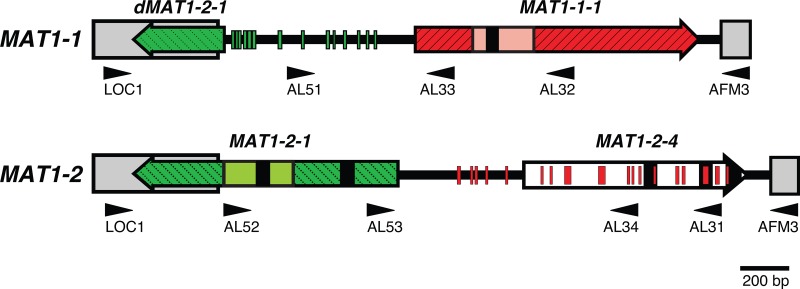
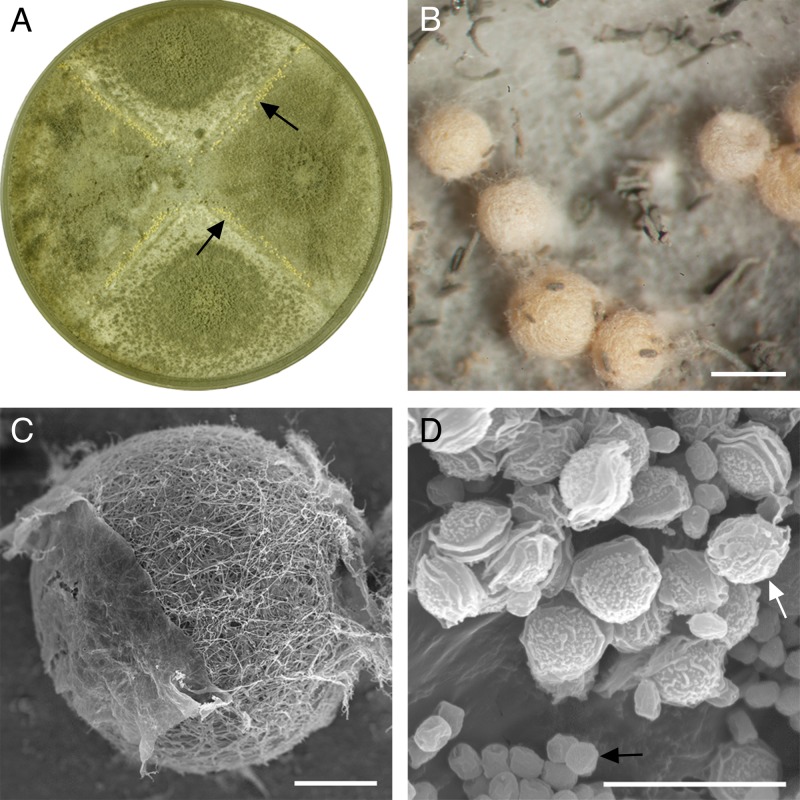
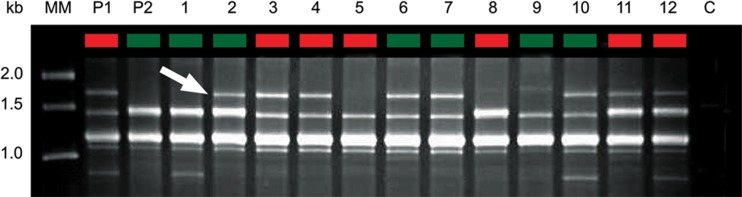
Aspergillus lentulus was described in 2005 as a new species within the A. fumigatus sensu lato complex. It is an opportunistic human pathogen causing invasive aspergillosis with high mortality rates, and it has been isolated from clinical and environmental sources. The species is morphologically nearly identical to A. fumigatus sensu stricto, and this similarity has resulted in their frequent misidentification. Comparative studies show that A. lentulus has some distinguishing growth features and decreased in vitro susceptibility to several antifungal agents, including amphotericin B and caspofungin. Similar to the once-presumed-asexual A. fumigatus, it has only been known to reproduce mitotically. However, we now show that A. lentulus has a heterothallic sexual breeding system. A PCR-based mating-type diagnostic detected isolates of either the MAT1-1 or MAT1-2 genotype, and examination of 26 worldwide clinical and environmental isolates revealed similar ratios of the two mating types (38% versus 62%, respectively).MAT1-1 and MAT1-2 idiomorph regions were analyzed, revealing the presence of characteristic alpha and high-mobility-group (HMG) domain genes, together with other more unusual features such as a MAT1-2-4 gene. We then demonstrated that A. lentulus possesses a functional sexual cycle with mature cleistothecia, containing heat-resistant ascospores, being produced after 3 weeks of incubation. Recombination was confirmed using molecular markers. However, isolates of A. lentulus failed to cross with highly fertile strains of A. fumigatus, demonstrating reproductive isolation between these sibling species. The discovery of the A. lentulus sexual stage has significant implications for the management of drug resistance and control of invasive aspergillosis associated with this emerging fungal pathogen.
Overview
The claims and statistics of this paper haven’t been checked yet.
Free: it reads the open-access text and checks the first 5 claims that cite a source we can check. Create a free account to check every claim.
Integrity signals
Registry
Cites
Statistics
Figures
Verification
Claims the paper makes
The claims and statistics of this paper haven’t been checked yet.
Free: it reads the open-access text and checks the first 5 claims that cite a source we can check. Create a free account to check every claim.
Claims other papers make about this one
Each is checked against this paper’s own text: does it say what the citing paper says it does?
The source backs part of the claim, not all of it — or backs it for a different population, condition or comparison.
In the citing paper
“Moreover, sex is very specific and exclusive for the species A. fumigatus. Attempted crosses between isolates of A. fumigatus and the close relative A. lentulus failed to produce cleistothecia.”
From Aspergillus fumigatus and Aspergillosis in 2019 (2019) · cites this paper as [16]
Experimental — accuracy not yet measuredIn the citing paper
“This phenomenon (of sexual preference strictly between A. fumigatus spp.) is of medical significance, because most isolates of A. lentulus exhibit natural resistance to antifungal agents with potent activity against A. fumigatus, limiting the risk of gene flow between different Aspergillus species (16).”
From Aspergillus fumigatus and Aspergillosis in 2019 (2019) · cites this paper as [16]
Self-check
Percentages, sums and reported differences re-computed from the paper’s own numbers.
The self-check needs the paper’s full text.
Citations
Cites
Statistical Methods for Research Workers
(1945) · American Journal of Clinical Pathology · doi:10.1093/ajcp/15.11.552b · Cited by 10,880
The Fungal Community: Its Organization and Role in the Ecosystem
Shearer, C. A., Carroll, G. C., & Wicklow, D. T. (1993) · Mycologia · doi:10.2307/3760630 · Cited by 696
Discovery of a sexual cycle in the opportunistic fungal pathogen Aspergillus fumigatus
O’Gorman, C. M., Fuller, H. T., & Dyer, P. S. (2009) · Nature · doi:10.1038/nature07528 · Cited by 555
Self-citationRECOMBINATION AND THE MULTILOCUS STRUCTURE OF FUNGAL POPULATIONS
Milgroom, M. G. (1996) · Annual Review of Phytopathology · doi:10.1146/annurev.phyto.34.1.457 · Cited by 549
Genomic Islands in the Pathogenic Filamentous Fungus Aspergillus fumigatus
Fedorova, N. D., Khaldi, N., Joardar, V. S., Maiti, R., Amedeo, P., Anderson, M. J., Crabtree, J., Silva, J. C., Badger, J. H., Albarraq, A., et al. (2008) · PLoS Genetics · doi:10.1371/journal.pgen.1000046 · Cited by 508
Self-citationCellular and Molecular Biology of Filamentous Fungi
(2010) · ASM Press eBooks · doi:10.1128/9781555816636 · Cited by 431
The Amsterdam Declaration on Fungal Nomenclature
Hawksworth, D. L., Crous, P. W., Redhead, S. A., Reynolds, D. R., Samson, R. A., Seifert, K. A., Taylor, J. W., Wingfield, M. J., Abaci, Ö., Aime, C., et al. (2011) · IMA Fungus · doi:10.5598/imafungus.2011.02.01.14 · Cited by 410
Self-citationAspergillus lentulus sp. nov., a New Sibling Species of A. fumigatus
Balajee, S. A., Gribskov, J. L., Hanley, E., Nickle, D., & Marr, K. A. (2005) · Eukaryotic Cell · doi:10.1128/ec.4.3.625-632.2005 · Cited by 404
Self-citationRecent advances in understanding of the evolution and maintenance of sex
Hurst, L. D., & Peck, J. R. (1996) · Trends in Ecology & Evolution · doi:10.1016/0169-5347(96)81041-x · Cited by 354
Evidence for Sexuality in the Opportunistic Fungal Pathogen Aspergillus fumigatus
Paoletti, M., Rydholm, C., Schwier, E. U., Anderson, M. J., Szakacs, G., Lutzoni, F., Debeaupuis, J.-P., Latgé, J.-P., Denning, D. W., & Dyer, P. S. (2005) · Current Biology · doi:10.1016/j.cub.2005.05.045 · Cited by 308
Self-citationBalajee, S. A., Kano, R., Baddley, J. W., Moser, S. A., Marr, K. A., Alexander, B. D., Andes, D., Kontoyiannis, D. P., Perrone, G., Peterson, S., et al. (2009) · Journal of Clinical Microbiology · doi:10.1128/jcm.01070-09 · Cited by 302
Self-citationCRYPTIC SPECIATION IN THE COSMOPOLITAN AND CLONAL HUMAN PATHOGENIC FUNGUS ASPERGILLUS FUMIGATUS
Pringle, A., Baker, D. M., Platt, J. L., Wares, J. P., Latgé, J. P., & Taylor, J. W. (2005) · Evolution · doi:10.1111/j.0014-3820.2005.tb01059.x · Cited by 267
Polyphasic taxonomy of Aspergillus section Fumigati and its teleomorph Neosartorya
Samson, R. A., Hong, S., Peterson, S. W., Frisvad, J. C., & Varga, J. (2007) · Studies in Mycology · doi:10.3114/sim.2007.59.14 · Cited by 259 · cited 12×
“It has been suggested that homothallism might be the ancestral state within the Aspergillus section Fumigati, with the overwhelming majority of teleomorphic Neosartorya species exhibiting homothallic breeding systems (55, 56).”
BackgroundInfluentialSexual reproduction in Aspergillus flavus
Horn, B. W., Moore, G. G., & Carbone, I. (2009) · Mycologia · doi:10.3852/09-011 · Cited by 259
Aspergillus Section Fumigati : Antifungal Susceptibility Patterns and Sequence-Based Identification
Alcazar-Fuoli, L., Mellado, E., Alastruey-Izquierdo, A., Cuenca-Estrella, M., & Rodriguez-Tudela, J. L. (2008) · Antimicrobial Agents and Chemotherapy · doi:10.1128/aac.00942-07 · Cited by 258 · cited 9×
“It has been suggested that homothallism might be the ancestral state within the Aspergillus section Fumigati, with the overwhelming majority of teleomorphic Neosartorya species exhibiting homothallic breeding systems (55, 56).”
BackgroundInfluentialPolyphasic taxonomy of Aspergillus fumigatus and related species
Hong, S.-B., Go, S.-J., Shin, H.-D., Frisvad, J. C., & Samson, R. A. (2005) · Mycologia · doi:10.1080/15572536.2006.11832738 · Cited by 234
Genomic signatures of ancient asexual lineages: ANCIENT ASEXUAL GENOMES
NORMARK, B. B., JUDSON, O. P., & MORAN, N. A. (2003) · Biological Journal of the Linnean Society · doi:10.1046/j.1095-8312.2003.00182.x · Cited by 233
Dettman, J. R., Jacobson, D. J., Turner, E., Pringle, A., & Taylor, J. W. (2003) · Evolution · doi:10.1111/j.0014-3820.2003.tb01515.x · Cited by 230
Aspergillus : molecular biology and genomics
Machida, M., & Gomi, K. (2010) · Caister Academic Press eBooks · Cited by 209
Molecular Studies Reveal Frequent Misidentification of Aspergillus fumigatus by Morphotyping
Balajee, S. A., Nickle, D., Varga, J., & Marr, K. A. (2006) · Eukaryotic Cell · doi:10.1128/ec.00162-06 · Cited by 207
Self-citationMating-Type Structure, Evolution, and Function in Euascomycetes
Debuchy, R., & Turgeon, B. G. (2006) · The Mycota · doi:10.1007/3-540-28135-5_15 · Cited by 201
Mating Type and the Genetic Basis of Self-Fertility in the Model Fungus Aspergillus nidulans
Paoletti, M., Seymour, F. A., Alcocer, M. J. C., Kaur, N., Calvo, A. M., Archer, D. B., & Dyer, P. S. (2007) · Current Biology · doi:10.1016/j.cub.2007.07.012 · Cited by 198
Self-citationSharma, S., Malik, A., & Satya, S. (2009) · Journal of Hazardous Materials · doi:10.1016/j.jhazmat.2008.09.030 · Cited by 168 · cited 1×
“lentulus strain AML05, which was recovered from industrial textile effluent in India by a chromium enrichment process, can very successfully remove Cr(VI) from electroplating industry effluent (21, 22) and dyes from textile effluent (23, 24).”
BackgroundFungal Populations and Species
Burnett, J. (2003) · doi:10.1093/oso/9780198515524.001.0001 · Cited by 166
The First Sexual Lineage and the Relevance of Facultative Sex
Dacks, J., & Roger, A. J. (1999) · Journal of Molecular Evolution · doi:10.1007/pl00013156 · Cited by 166 · cited 1×
“Sex is thought to have evolved in early eukaryotic microbes and is now widespread throughout the Eukaryota (39).”
BackgroundBöhm, J. W., Hoff, B., O’Gorman, C. M., Wolfers, S., Klix, V., Binger, D., Zadra, I., Kürnsteiner, H., Pöggeler, S., Dyer, P. S., et al. (2013) · Proceedings of the National Academy of Sciences · doi:10.1073/pnas.1217943110 · Cited by 165
Self-citationAn Overview of the Genus Aspergillus
(2007) · The Aspergilli · doi:10.1201/9781420008517-6 · Cited by 160 · cited 1×
“lentulus will not be assigned a separate Latin name, as was formerly the case under “dual nomenclature” (60).”
BackgroundEvolution of Eukaryotic Microbial Pathogens via Covert Sexual Reproduction
Heitman, J. (2010) · Cell Host & Microbe · doi:10.1016/j.chom.2010.06.011 · Cited by 159 · cited 1×
“fumigatus, which had long been considered to be reproduce purely by mitotic means, confirmed suspicions that at least some of these supposed “asexuals” do in fact have the potential to reproduce sexually (25, 43).”
BackgroundGeiser, D. M., Frisvad, J. C., & Taylor, J. W. (1998) · Mycologia · doi:10.1080/00275514.1998.12026977 · Cited by 145
Aspergillus fumigatusVariant with Decreased Susceptibility to Multiple Antifungals
Balajee, S. A., Weaver, M., Imhof, A., Gribskov, J. L., & Marr, K. A. (2004) · Antimicrobial Agents and Chemotherapy · doi:10.1128/aac.48.4.1197-1203.2004 · Cited by 120 · cited 2×
“fumigatus, namely, itraconazole, voriconazole, caspofungin, and amphotericin B (3, 4, 7).”
Self-citationAirborne Aspergillus fumigatus conidia: a risk factor for aspergillosis
O’Gorman, C. M. (2011) · Fungal Biology Reviews · doi:10.1016/j.fbr.2011.07.002 · Cited by 114
Self-citationRydholm, C., Dyer, P. S., & Lutzoni, F. M. (2007) · Eukaryotic Cell · doi:10.1128/ec.00319-06 · Cited by 114 · cited 7×
“The MAT1-1 idiomorph of 78-3 contains a 1,157-bp putative open reading frame (ORF), predicted to encode a 368-amino-acid protein with a characteristic 1 domain, and was therefore termed MAT1-1-1 964 ec.asm.org Eukaryotic Cell (33).”
BackgroundInfluentialSelf-citationYaguchi, T., Horie, Y., Tanaka, R., Matsuzawa, T., Ito, J., & Nishimura, K. (2007) · Nippon Ishinkin Gakkai Zasshi · doi:10.3314/jjmm.48.37 · Cited by 111 · cited 4×
“fumigatus, namely, itraconazole, voriconazole, caspofungin, and amphotericin B (3, 4, 7).”
BackgroundResultInfluentialA fungal sexual revolution: Aspergillus and Penicillium show the way
Dyer, P. S., & O’Gorman, C. M. (2011) · Current Opinion in Microbiology · doi:10.1016/j.mib.2011.10.001 · Cited by 108 · cited 6×
“It has been suggested that homothallism might be the ancestral state within the Aspergillus section Fumigati, with the overwhelming majority of teleomorphic Neosartorya species exhibiting homothallic breeding systems (55, 56).”
BackgroundInfluentialSelf-citationFraser, J. A., Stajich, J., Tarcha, E. J., Cole, G. T., Inglis, D. O., Sil, A., & Heitman, J. (2007) · Eukaryotic Cell · doi:10.1128/ec.00018-07 · Cited by 103 · cited 1×
“posadasii (51, 52), but this shares little sequence conservation with the MAT1-2-4 proteins from the aspergilli and is absent from the MAT loci of many other heterothallic eurotiomycete species, such as those recently described for Blastomyces dermatitidis (53).”
BackgroundSexual reproduction and recombination in the aflatoxin-producing fungus Aspergillus parasiticus
Horn, B. W., Ramírez-Prado, J. H., & Carbone, I. (2008) · Fungal Genetics and Biology · doi:10.1016/j.fgb.2008.11.004 · Cited by 95
Mandel, M. A., Barker, B. M., Kroken, S., Rounsley, S. D., & Orbach, M. J. (2007) · Eukaryotic Cell · doi:10.1128/ec.00117-07 · Cited by 93 · cited 1×
“posadasii (51, 52), but this shares little sequence conservation with the MAT1-2-4 proteins from the aspergilli and is absent from the MAT loci of many other heterothallic eurotiomycete species, such as those recently described for Blastomyces dermatitidis (53).”
BackgroundMortensen, K. L., Johansen, H. K., Fuursted, K., Knudsen, J. D., Gahrn-Hansen, B., Jensen, R. H., Howard, S. J., & Arendrup, M. C. (2011) · European Journal of Clinical Microbiology & Infectious Diseases · doi:10.1007/s10096-011-1229-7 · Cited by 92 · cited 1×
“Two further cases involved the colonization of cystic fibrosis patients (13, 17).”
BackgroundReproduction in Aspergillus fumigatus: sexuality in a supposedly asexual species?
Dyer, P. S., & Paoletti, M. (2005) · Medical Mycology · doi:10.1080/13693780400029015 · Cited by 89 · cited 1×
“Many are members of the phylum Ascomycota that are of medical or economic significance (44).”
BackgroundSelf-citationWada, R., Maruyama, J., Yamaguchi, H., Yamamoto, N., Yutaka, W. A. G. U., Paoletti, M., Archer, D. B., Dyer, P. S., & Kitamoto, K. (2012) · Applied and Environmental Microbiology · doi:10.1128/aem.07034-11 · Cited by 89
Self-citationHubka, V., Kubátová, A., Mallátová, N., Sedlacek, P., Melichar, J., Skořepová, M., Mencl, K., Lysková, P., Sramkova, B., Chudíčková, M., et al. (2012) · Medical Mycology · doi:10.3109/13693786.2012.667578 · Cited by 86
Sexual reproduction in aflatoxin-producingAspergillus nomius
Horn, B. W., Moore, G. G., & Carbone, I. (2011) · Mycologia · doi:10.3852/10-115 · Cited by 85
Sugui, J. A., Vinh, D. C., Nardone, G., Shea, Y. R., Chang, Y. C., Zelazny, A. M., Marr, K. A., Holland, S. M., & Kwon-Chung, K. J. (2010) · Journal of Clinical Microbiology · doi:10.1128/jcm.01556-09 · Cited by 79
Fitness-Associated Sexual Reproduction in a Filamentous Fungus
Schoustra, S. E., Rundle, H. D., Dali, R., & Kassen, R. (2010) · Current Biology · doi:10.1016/j.cub.2010.05.060 · Cited by 73 · cited 1×
“While there are clear advantages to asexual over sexual reproduction, such as the relatively lower metabolic cost and ability to produce spores under a wider range of environmental conditions, the rewards of sexual reproduction appear to be much greater (46).”
BackgroundGenetic variability and reproductive mode of Aspergillus fumigatus
Varga, J., & Tóth, B. (2003) · Infection Genetics and Evolution · doi:10.1016/s1567-1348(02)00156-9 · Cited by 67 · cited 1×
“taking or has recently taken place (35, 70, 71).”
BackgroundWoo, P. C. Y., Chong, K. T. K., Tse, H., Cai, J. J., Lau, C. C. Y., Zhou, A. C., Lau, S. K. P., & Yuen, K. (2006) · FEBS Letters · doi:10.1016/j.febslet.2006.05.014 · Cited by 66 · cited 1×
“A related MAT12-4 family gene has also been described for Talaromyces (Penicillium) marneffei (50).”
BackgroundSexual reproduction in the opportunistic human pathogen Aspergillus terreus
Arabatzis, M., & Velegraki, A. (2013) · Mycologia · doi:10.3852/11-426 · Cited by 64
Identification and Characterization of an Aspergillus fumigatus “Supermater” Pair
Sugui, J. A., Losada, L., Wang, W., Varga, J., Ngamskulrungroj, P., Abu-Asab, M., Chang, Y. C., O’Gorman, C. M., Wickes, B. L., Nierman, W. C., et al. (2011) · mBio · doi:10.1128/mbio.00234-11 · Cited by 63
Self-citationProcess optimization for efficient dye removal by Aspergillus lentulus FJ172995
Kaushik, P., & Malik, A. (2010) · Journal of Hazardous Materials · doi:10.1016/j.jhazmat.2010.09.096 · Cited by 63 · cited 1×
“lentulus strain AML05, which was recovered from industrial textile effluent in India by a chromium enrichment process, can very successfully remove Cr(VI) from electroplating industry effluent (21, 22) and dyes from textile effluent (23, 24).”
BackgroundLarsen, T. O., Smedsgaard, J., Nielsen, K. F., Hansen, M. A. E., Samson, R. A., & Frisvad, J. C. (2007) · Medical Mycology · doi:10.1080/13693780601185939 · Cited by 63
THE CONTROL OF SEXUAL MORPHOGENESIS IN THE ASCOMYCOTINA
DYER, P. S., INGRAM, D. S., & JOHNSTONE, K. (1992) · Biological Reviews · doi:10.1111/j.1469-185x.1992.tb01189.x · Cited by 61
Self-citationRapid identification of Aspergillus fumigatus within the section Fumigati
Serrano, R., Gusmão, L., Amorim, A., & Araújo, R. (2011) · BMC Microbiology · doi:10.1186/1471-2180-11-82 · Cited by 61 · cited 1×
“lentulus and include the use of a microsphere-based Luminex assay (8), RAPD patterns (1), a multiplex PCR assay (9), and restriction fragment length polymorphisms (10).”
MethodSex in Penicillium series Roqueforti
Houbraken, J. A. M. P., Frisvad, J. C., & Samson, R. A. (2010) · IMA Fungus · doi:10.5598/imafungus.2010.01.02.10 · Cited by 58
Sexual reproduction in Aspergillus species of medical or economical importance: why so fastidious?
Kwon-Chung, K. J., & Sugui, J. A. (2009) · Trends in Microbiology · doi:10.1016/j.tim.2009.08.004 · Cited by 57
Role of Aspergillus lentulus 14-α Sterol Demethylase (Cyp51A) in Azole Drug Susceptibility
Mellado, E., Alcázar‐Fuoli, L., Cuenca‐Estrella, M., & Rodríguez-Tudela, J. L. (2011) · Antimicrobial Agents and Chemotherapy · doi:10.1128/aac.05178-11 · Cited by 54
Montenegro, G., Puch, S. I. S., Jewtuchowicz, V. M., Pinoni, M. V., Relloso, S., Temporiti, E., Iovannitti, C., & Mujica, M. T. (2009) · Journal of Medical Microbiology · doi:10.1099/jmm.0.005942-0 · Cited by 51
Alhambra, A., Catalán, M., Moragues, M. D., Brena, S., Pontón, J., Montejo, J. C., & del Palacio, A. (2008) · Revista Iberoamericana de Micología · doi:10.1016/s1130-1406(08)70058-5 · Cited by 49
Turner, E., Jacobson, D. J., & Taylor, J. W. (2011) · PLoS Genetics · doi:10.1371/journal.pgen.1002204 · Cited by 48
Aspergillus Section Fumigati Typing by PCR-Restriction Fragment Polymorphism
Staab, J. F., Balajee, S. A., & Marr, K. A. (2009) · Journal of Clinical Microbiology · doi:10.1128/jcm.00551-09 · Cited by 47 · cited 1×
“lentulus and include the use of a microsphere-based Luminex assay (8), RAPD patterns (1), a multiplex PCR assay (9), and restriction fragment length polymorphisms (10).”
MethodSelf-citationFatal outcome after heart transplantation caused by Aspergillus lentulus
Zbinden, A., Imhof, A., Wilhelm, M. J., Ruschitzka, F., Wild, P., Bloemberg, G. V., & Mueller, N. J. (2012) · Transplant Infectious Disease · doi:10.1111/j.1399-3062.2012.00779.x · Cited by 44
Li, W., Sullivan, T. D., Walton, E. M., Averette, A. F., Sakthikumar, S., Cuomo, C. A., Klein, B. S., & Heitman, J. (2012) · Eukaryotic Cell · doi:10.1128/ec.00249-12 · Cited by 39 · cited 1×
“posadasii (51, 52), but this shares little sequence conservation with the MAT1-2-4 proteins from the aspergilli and is absent from the MAT loci of many other heterothallic eurotiomycete species, such as those recently described for Blastomyces dermatitidis (53).”
BackgroundLockhart, S. R., Zimbeck, A. J., Baddley, J. W., Marr, K. A., Andes, D. R., Walsh, T. J., Kauffman, C. A., Kontoyiannis, D. P., Ito, J. I., Pappas, P. G., et al. (2011) · Antimicrobial Agents and Chemotherapy · doi:10.1128/aac.00428-11 · Cited by 38 · cited 1×
“lentulus is highly unusual in being simultaneously resistant to caspofungin yet highly sensitive to anidulafungin and micafungin (7, 19, 20).”
BackgroundUnusualAspergillusspecies in patients with cystic fibrosis
Symoens, F., Haase, G., Pihet, M., Carrère, J., Béguin, H., Degand, N., Mély, L., & Bouchara, J. (2010) · Medical Mycology · doi:10.3109/13693786.2010.501345 · Cited by 38 · cited 1×
“Two further cases involved the colonization of cystic fibrosis patients (13, 17).”
BackgroundDifferentialAspergillus lentulusEchinocandin Susceptibilities Are Fksp Independent
Staab, J. F., Kahn, J. N., & Marr, K. A. (2010) · Antimicrobial Agents and Chemotherapy · doi:10.1128/aac.00774-10 · Cited by 37
Standardization of methods for detecting heat resistant fungi
Houbraken, J., & Samson, R. A. (2006) · Advances in experimental medicine and biology · doi:10.1007/0-387-28391-9_5 · Cited by 26 · cited 1×
“The ascospores were heat resistant (57), capable of surviving at 80°C for at least 30 min, as is typical for other members of the genus Neosartorya (56).”
BackgroundEffect of nutritional conditions on dye removal from textile effluent by Aspergillus lentulus
Kaushik, P., & Malik, A. (2010) · World Journal of Microbiology and Biotechnology · doi:10.1007/s11274-010-0376-9 · Cited by 23 · cited 1×
“lentulus strain AML05, which was recovered from industrial textile effluent in India by a chromium enrichment process, can very successfully remove Cr(VI) from electroplating industry effluent (21, 22) and dyes from textile effluent (23, 24).”
BackgroundEtienne, K. A., Gade, L., Lockhart, S. R., Diekema, D. J., Messer, S. A., Pfaller, M. A., & Balajee, S. A. (2009) · Journal of Clinical Microbiology · doi:10.1128/jcm.01415-09 · Cited by 22 · cited 1×
“lentulus and include the use of a microsphere-based Luminex assay (8), RAPD patterns (1), a multiplex PCR assay (9), and restriction fragment length polymorphisms (10).”
MethodSelf-citationSex, drugs and recombination: the wild life of Aspergillus
Fisher, M. C., & Henk, D. A. (2012) · Molecular Ecology · doi:10.1111/j.1365-294x.2012.05506.x · Cited by 18
Sharma, S., Malik, A., Satya, S., & Mishra, A. (2010) · Asia-Pacific Journal of Chemical Engineering · doi:10.1002/apj.449 · Cited by 13 · cited 1×
“lentulus strain AML05, which was recovered from industrial textile effluent in India by a chromium enrichment process, can very successfully remove Cr(VI) from electroplating industry effluent (21, 22) and dyes from textile effluent (23, 24).”
BackgroundRobert, V., Groenewald, M., Epping, W., Boekhout, T., Smith, M. K., Poot, G., & Stalpers, J. A. (2008) · Data Archiving and Networked Services (DANS) · Cited by 11
Research works printed but not linked: 2
- Dyer PS 2007 Sexual reproduction and significance of MAT in the aspergilli, p 123– 142 Heitman J Kronstad JWTaylor, JW, Casselton LA (ed), Sex in fungi: molecular determination and evolutionary principles. ASM Press, Washington, DC
- Takada M Udagawa SI Norizuki K 1986 Isolation of Neosartorya fennelliae and interspecific pairings between N. fennelliae, N. spathulata, and Aspergillus fumigatus. Trans. Mycol. Soc. Jpn. 27: 415– 423
Cited by
Aspergillus fumigatus and Aspergillosis in 2019
Latgé, J.-P., & Chamilos, G. (2019) · Clinical Microbiology Reviews · doi:10.1128/cmr.00140-18 · Cited by 1,400
Paulussen, C., Hallsworth, J. E., Álvarez‐Pérez, S., Nierman, W. C., Hamill, P. G., Blain, D., Rediers, H., & Lievens, B. (2017) · Microbial Biotechnology · doi:10.1111/1751-7915.12367 · Cited by 334
Clinical implications of globally emerging azole resistance in Aspergillus fumigatus
Meis, J. F., Chowdhary, A., Rhodes, J. L., Fisher, M. C., & Verweij, P. E. (2016) · Philosophical Transactions of the Royal Society B: Biological Sciences · doi:10.1098/rstb.2015.0460 · Cited by 308
Modern Taxonomy of Biotechnologically Important Aspergillus and Penicillium Species
Houbraken, J., de Vries, R. P., & Samson, R. A. (2014) · Advances in Applied Microbiology · doi:10.1016/b978-0-12-800262-9.00004-4 · Cited by 280
Aspergillus fumigatus and Related Species
Sugui, J. A., Kwon-Chung, K. J., Juvvadi, P. R., Latge, J.-P., & Steinbach, W. J. (2015) · Cold Spring Harbor Perspectives in Medicine · doi:10.1101/cshperspect.a019786 · Cited by 278
“The major species known to cause disease in humans are found in five Aspergillus sections: Fumigati, Flavi, Nigri, Terrei, and Nidulante.”
BackgroundInfluential
Metadata
- Authors
- Swilaiman, S. S., O'Gorman, C. M., Balajee, S. A., & Dyer, P. S.
- Affiliations
- University of Nottingham (GB)
- School of Biology, University of Nottingham, University Park, Nottingham, United Kingdom
- Centers for Disease Control and Prevention (US)
- Corresponding author
- Dyer, Paul S.
- Venue
- Eukaryotic Cell
- Publisher
- American Society for Microbiology
- Published
- 2013-07
- Volume
- 12
- Issue
- 7
- Pages
- 962-969
- ISSN
- 1535-9778 (ISSN-L)
- 1535-9786
- PMC
- PMC3697472
- OpenAlex
- W2001634520
- Cited by
- 50
- References
- 71
- Citations by year
- 2026: 1 · 2025: 1 · 2024: 1 · 2022: 1 · 2021: 4 · 2020: 3 · 2019: 3 · 2018: 5 · 2017: 6 · 2016: 6 · 2015: 1 · 2014: 14 · 2013: 4
- FWCI
- 3.73
- Type
- journal article
- Language
- en
- Open access
- diamond
- doi.org
- Licence
- cc-by
- creativecommons.org/licenses/by/3.0/ (vor)
- journals.asm.org/non-commercial-tdm-license (tdm)
- Locations
- Eukaryotic Cell (publishedVersion, cc-by)
- Europe PMC (PubMed Central) (publishedVersion, cc-by)
- PubMed Central (publishedVersion, cc-by)
- PubMed (publishedVersion)
- Funders
- Johns Hopkins University
- Wellcome Trust
- Topics
- Life Sciences › Biochemistry, Genetics and Molecular Biology › Molecular Biology › Fungal and yeast genetics research
- Health Sciences › Medicine › Infectious Diseases › Antifungal resistance and susceptibility
- Life Sciences › Agricultural and Biological Sciences › Plant Science › Plant Pathogens and Fungal Diseases
- Keywords
- Aspergillus lentulus, heterothallism, reproductive cycle, mating type genes, MAT1-1, MAT1-2, cleistothecia, ascospores, recombination, reproductive isolation, invasive aspergillosis, antifungal resistance, fungal pathogens
- MeSH terms
- Aspergillus, Aspergillus fumigatus, Crosses, Genetic, Genotype, Humans, Meiosis, Recombination, Genetic, Reproduction, Spores, Fungal, Genes, Mating Type, Fungal, Genetic Loci
About these checks
Registry, retraction, Cites and statistics results are computed, not judged, with one exception: a printed reference that no index lists is read once by a model before it counts as a citation error. Claims are extracted by a model and kept only when their quote appears verbatim in the text; each cited source is then checked, with a model’s help, for whether it says what the claim relies on. Those verdicts can be wrong — read the claim’s quote and the cited source before relying on one.
Statistics and arithmetic are recomputed, not judged.
Confidence bands are shown only for fields calibrated on our annotated test set. None is calibrated yet, so no band is shown.
What counts as a claim ›How we measure confidence ›How we check this ›
Are you an author, or do you see a problem with this page? Request a review
Data sources
Bibliographic data: Semantic Scholar, OpenAlex, Crossref.
Contains information from the Semantic Scholar Academic Graph Datasets, made available under the ODC Attribution License (ODC-BY 1.0).
Semantic Scholar’s data is described in: Kinney, R., et al. (2023). The Semantic Scholar Open Data Platform. arXiv:2301.10140.
