

Surface Structure Characterization of Aspergillus fumigatus Conidia Mutated in the Melanin Synthesis Pathway and Their Human Cellular Immune Response
Open accessThe DOI matches its Crossref record; 52 of the 52 references it cites were found in a registry or an index.
Abstract
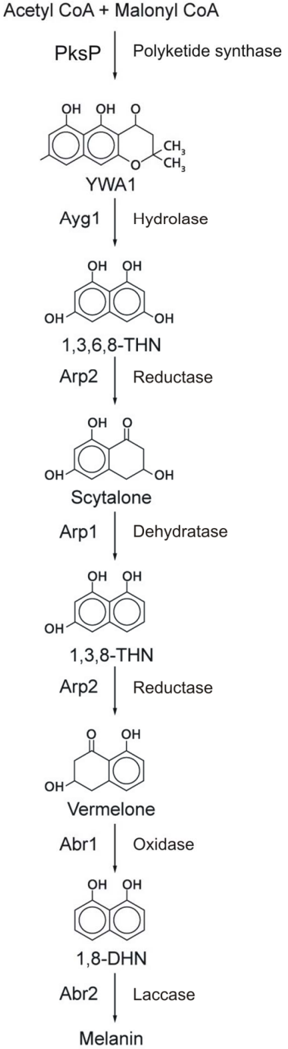
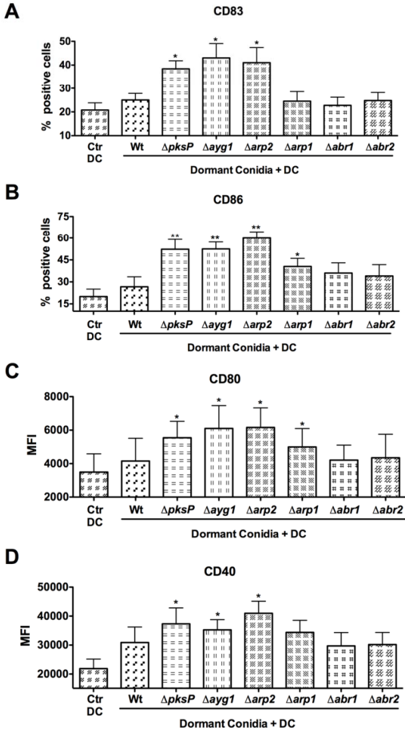
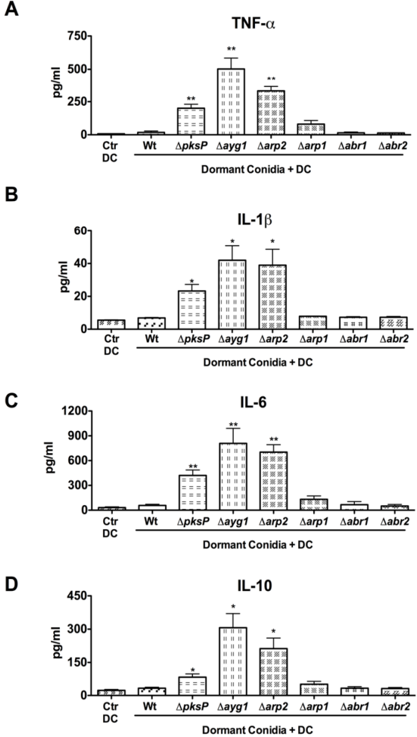
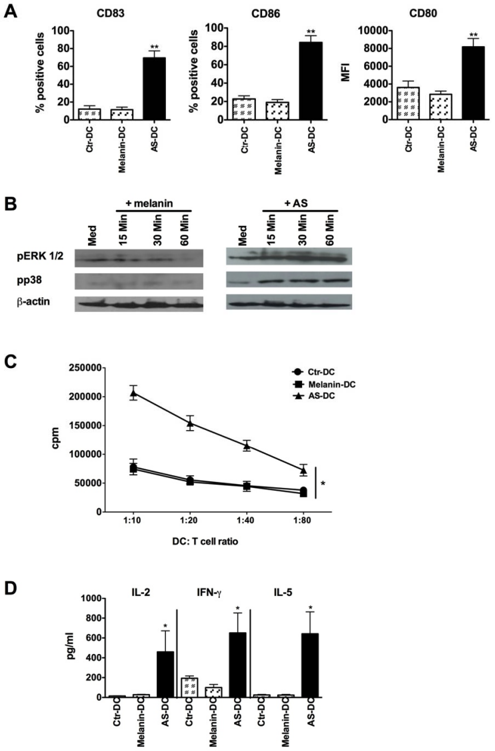
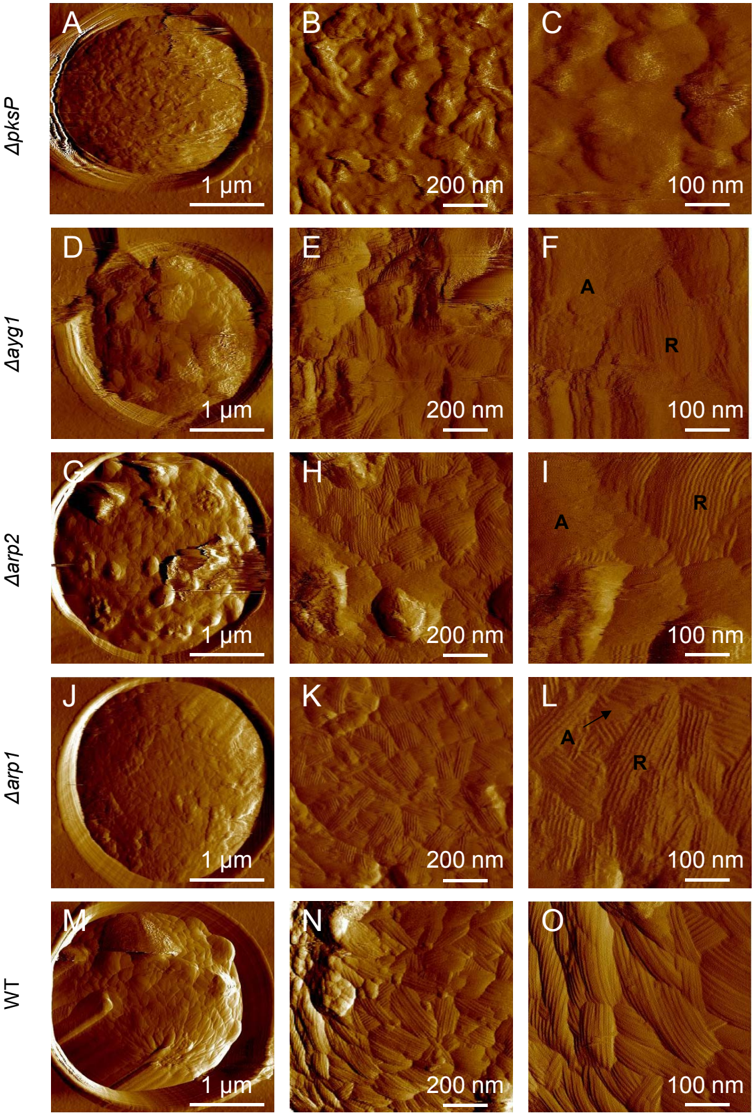
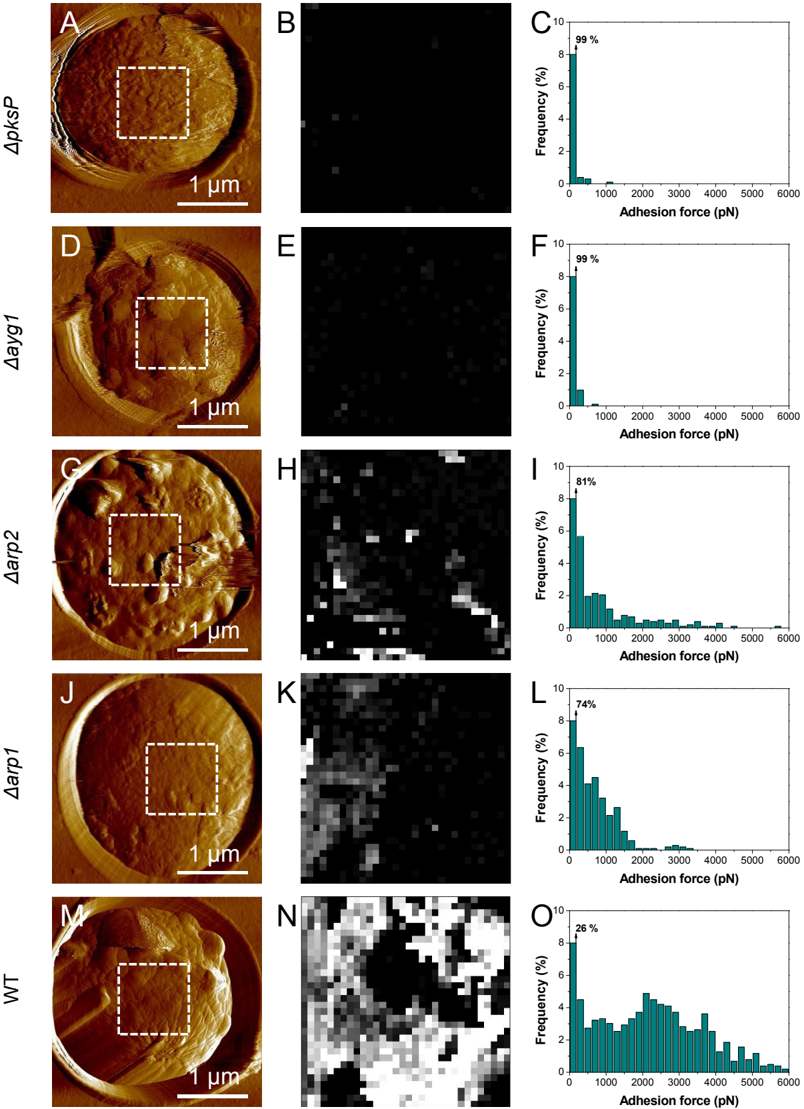
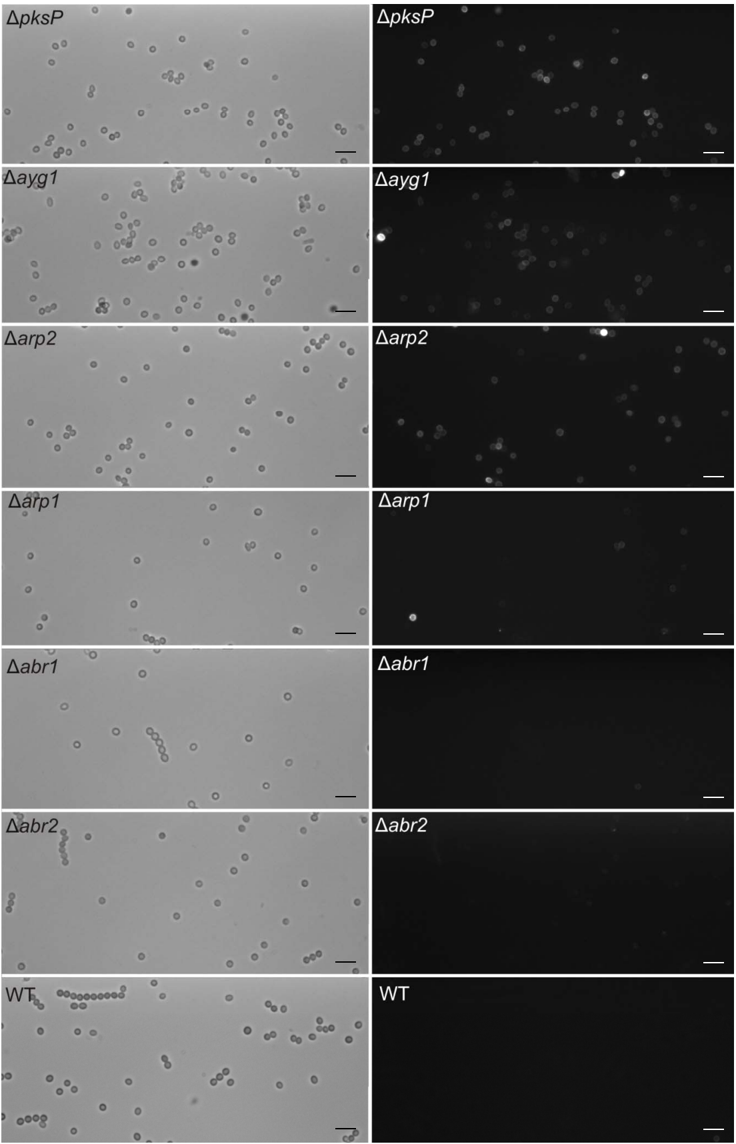
In Aspergillus fumigatus , the conidial surface contains dihydroxynaphthalene (DHN)-melanin. Six-clustered gene products have been identified that mediate sequential catalysis of DHN-melanin biosynthesis. Melanin thus produced is known to be a virulence factor, protecting the fungus from the host defense mechanisms. In the present study, individual deletion of the genes involved in the initial three steps of melanin biosynthesis resulted in an altered conidial surface with masked surface rodlet layer, leaky cell wall allowing the deposition of proteins on the cell surface and exposing the otherwise-masked cell wall polysaccharides at the surface. Melanin as such was immunologically inert; however, deletion mutant conidia with modified surfaces could activate human dendritic cells and the subsequent cytokine production in contrast to the wild-type conidia. Cell surface defects were rectified in the conidia mutated in downstream melanin biosynthetic pathway, and maximum immune inertness was observed upon synthesis of vermelone onward. These observations suggest that although melanin as such is an immunologically inert material, it confers virulence by facilitating proper formation of the A. fumigatus conidial surface.
Overview
The claims and statistics of this paper haven’t been checked yet.
Free: it reads the open-access text and checks the first 5 claims that cite a source we can check. Create a free account to check every claim.
Integrity signals
Registry
Cites
Statistics
Figures
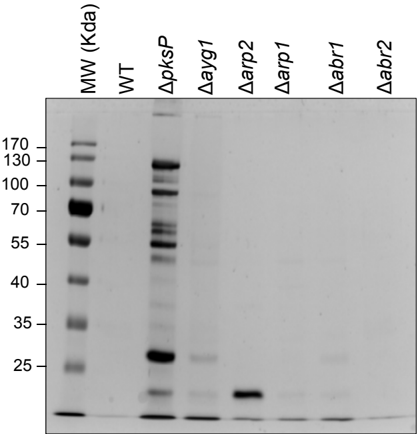
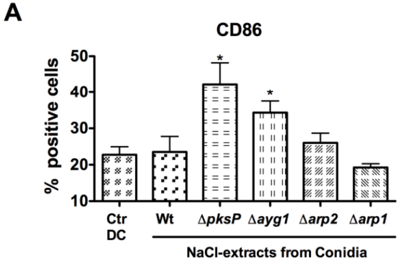
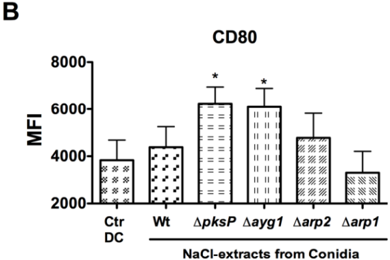
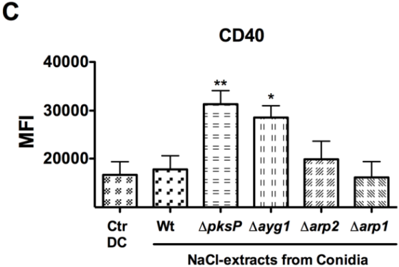
Verification
Claims the paper makes
The claims and statistics of this paper haven’t been checked yet.
Free: it reads the open-access text and checks the first 5 claims that cite a source we can check. Create a free account to check every claim.
Claims other papers make about this one
Each is checked against this paper’s own text: does it say what the citing paper says it does?
The source backs part of the claim, not all of it — or backs it for a different population, condition or comparison.
In the citing paper
“All of these single and multiple mutants are characterized by the emergence on the conidial surface of a layer of (glyco)proteins covering the rodlets, which is responsible for conidial hydrophilicity, even though the rodlets are present.”
From Aspergillus fumigatus and Aspergillosis in 2019 (2019) · cites this paper as [477]
Experimental — accuracy not yet measuredThe cited source says what the claim attributes to it.
In the citing paper
“The presence of these molecules on the conidial surface also is responsible for stimulation of the immune response (241, 477, 478).”
From Aspergillus fumigatus and Aspergillosis in 2019 (2019) · cites this paper as [477]
The cited source says what the claim attributes to it.
In the citing paper
“Loss of melanin in the pksP mutant results in the production of hydrophilic white conidia accompanied by the deposition of glycoproteins on the rodlet surface (477).”
From Aspergillus fumigatus and Aspergillosis in 2019 (2019) · cites this paper as [477]
In the citing paper
“Loss of melanin in the pksP mutant results in the production of hydrophilic white conidia accompanied by the deposition of glycoproteins on the rodlet surface (477).”
From Aspergillus fumigatus and Aspergillosis in 2019 (2019) · cites this paper as [477]
Self-check
Percentages, sums and reported differences re-computed from the paper’s own numbers.
The self-check needs the paper’s full text.
Citations
Cites
Dendritic cells and the control of immunity
Banchereau, J., & Steinman, R. M. (1998) · Nature · doi:10.1038/32588 · Cited by 14,336
Cella, M., Scheidegger, D., Palmer-Lehmann, K., Lane, P., Lanzavecchia, A., & Alber, G. (1996) · The Journal of experimental medicine · doi:10.1084/jem.184.2.747 · Cited by 1,983
Surface hydrophobin prevents immune recognition of airborne fungal spores
Aimanianda, V., Bayry, J., Bozza, S., Kniemeyer, O., Perruccio, K., Elluru, S. R., Clavaud, C., Paris, S., Brakhage, A. A., Kaveri, S. V., et al. (2009) · Nature · doi:10.1038/nature08264 · Cited by 792 · cited 4×
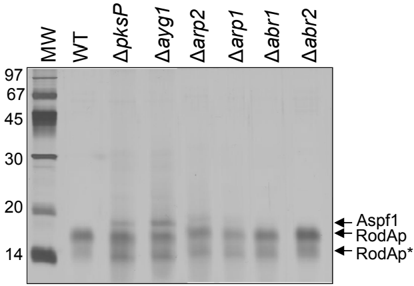
“6) showed that two bands of RodAp 274 classically seen in the HF extracts of conidia were present in all the melanin pathway mutants and 275 WT conidia (30).”
BackgroundMethodInfluentialSelf-citationSynthesis and assembly of fungal melanin
Eisenman, H. C., & Casadevall, A. (2012) · Applied Microbiology and Biotechnology · doi:10.1007/s00253-011-3777-2 · Cited by 711 · cited 4×
“DOPA-melanin contributes to host death, fungal burden and dissemination 56 (8).”
BackgroundInfluentialLuther, K., Torosantucci, A., Brakhage, A. A., Heesemann, J., & Ebel, F. (2007) · Cellular Microbiology · doi:10.1111/j.1462-5822.2006.00796.x · Cited by 582
Self-citationThe Beta-Glucan Receptor Dectin-1 Recognizes Specific Morphologies of Aspergillus fumigatus
Steele, C., Rapaka, R. R., Metz, A., Pop, S. M., Williams, D. L., Gordon, S., Kolls, J. K., & Brown, G. D. (2005) · PLoS Pathogens · doi:10.1371/journal.ppat.0010042 · Cited by 509 · cited 2×
“For immunolabeling, PFA-fixed conidia were 152 incubated with different antibodies as described previously (27). β-(1,3)-glucan was labeled with153 Dectin-1 (Fc-dectin1 6 µg/ml) followed by FITC conjugated GaHu-Fab2-human IgG (15 µg/ml, 154 a kind gift from G. Brown, University of Aberdeen, Aberdeen, UK) (28).”
Tsai, H.-F., Wheeler, M. H., Chang, Y. C., & Kwon-Chung, K. J. (1999) · Journal of Bacteriology · doi:10.1128/jb.181.20.6469-6477.1999 · Cited by 385 · cited 4×
“553 Cell wall beta-(1,6)-glucan of Saccharomyces cerevisiae: structural characterization and 554 in situ synthesis.”
BackgroundInfluentialSelf-citationLangfelder, K., Jahn, B., Gehringer, H., Schmidt, A., Wanner, G., & Brakhage, A. A. (1998) · Medical Microbiology and Immunology · doi:10.1007/s004300050077 · Cited by 290 · cited 1×
“4 in the first step of melanin biosynthesis, has been deleted (4, 9, 16-19), These reports 72 demonstrated that melanin protects the conidia against reactive oxygen species (ROS), masks the 73 recognition of various A.”
BackgroundSelf-citationUsing nanotechniques to explore microbial surfaces
Dufrêne, Y. F. (2004) · Nature Reviews Microbiology · doi:10.1038/nrmicro905 · Cited by 263 · cited 1×
“Rather than using an incident beam as in classical microscopy, 255 AFM probes the small forces acting on the sample surface (37).”
MethodSelf-citationPihet, M., Vandeputte, P., Tronchin, G., Renier, G., Saulnier, P., Georgeault, S., Mallet, R., Chabasse, D., Symoens, F., & Bouchara, J.-P. (2009) · BMC Microbiology · doi:10.1186/1471-2180-9-177 · Cited by 253 · cited 2×
“Previous studies demonstrated that deletion of PKSP 388 and ARP2 correlated with a decreased ability to bind laminin on the conidial surface (10).”
Background
Cited by
Items 101–137 of 137
Genetics and humoral responses of the immune system to Aspergillus fumigatus
Sanya, D. R. A., Jayachandran, K., & Onésime, D. (2025) · Molecular Immunology · doi:10.1016/j.molimm.2025.06.007 · Cited by 3
MicroRNA regulation and host interaction in response to Aspergillus exposure
Shrivastava, M., PANDEY, D., Sharma, P., & Singh, R. (2021) · Biocell · doi:10.32604/biocell.2022.016822 · Cited by 3
Pinzan, C. F., Diehl, C., de Castro, P. A., Delbaje, E., Rocha, P. S., Marciano, C. L., da Rosa-Garzon, N. G., Cabral, H., Sprute, R., Kolovou, A., et al. (2025) · mBio · doi:10.1128/mbio.02481-25 · Cited by 2
Next-generation drug delivery systems for aspergillosis: Overcoming barriers in antifungal therapy
Martins, Y. A., Anselmo‐Lima, W. T., Tamashiro, E., Ho, E. A., & Valera, F. C. P. (2026) · Biomedicine & Pharmacotherapy · doi:10.1016/j.biopha.2026.119691 · Cited by 2
Zhang, Y., Xu, S., Li, Y., Zhang, Q., Wang, W., & Li, Z. (2025) · Applied and Environmental Microbiology · doi:10.1128/aem.01894-24 · Cited by 2
“Subsequently, the late melanin synthesis enzymes Abr1 and Abr2 are incorporated into these endosomal vesicles, forming multivesicular bodies (22).”
Virulence Attributes in Aspergillus fumigatus
León, M. G. F.-D., García-Salazar, E., & Acosta‐Altamirano, G. (2023) · Infectious diseases · doi:10.5772/intechopen.111778 · Cited by 6
Sialic acid metabolism in the opportunistic fungal pathogen, Aspergillus fumigatus
Yeung, J. H. F. (2015) · Summit (Simon Fraser University) · Cited by 5
Diseases Caused by Aspergillus fumigatus
Garcia‐Rubio, R., & Alcázar‐Fuoli, L. (2018) · Elsevier eBooks · doi:10.1016/b978-0-12-819990-9.12078-5 · Cited by 7
Genetic analysis of pigment production in the fungus Exophiala dermatitidisPreprint
Chhoker, K., Hausner, G., & Harris, S. D. (2025) · bioRxiv (Cold Spring Harbor Laboratory) · doi:10.1101/2025.03.19.644242 · Cited by 2
Gupta, L., Verma, S., Goswami, L., Kamboj, H., Sen, P., Bhattacharya, A. K., & Vijayaraghavan, P. (2024) · Journal of Applied Microbiology · doi:10.1093/jambio/lxae009 · Cited by 1
Application of melanin and its engineered nanomaterials in tumor radiotherapy: a review
Chen, C., & Guo, Y. (2026) · Journal of Translational Medicine · doi:10.1186/s12967-026-08133-x · Cited by 1
“Because natural melanin is immunologically inert and cannot directly activate immune cells, it is incapable of reversing RT-induced immunosuppression [84].”
Trentin, G., Martins‐Santana, L., Taborda, C. P., & Almeida, F. (2026) · Frontiers in Immunology · doi:10.3389/fimmu.2026.1912476 · Cited by 1
“The removal of components of the outer layer impacted the physicochemical properties of the conidia surface and altered the CW architecture, exposing the inner layer (54).”
Wong, S. S. W., Dellière, S., Lepas, M., & Aimanianda, V. (2025) · Advances in experimental medicine and biology · doi:10.1007/978-3-031-85340-1_9 · Cited by 2
Self-citationThe Role of Melanin in Fungal Disease
Baker, R. P., Casadevall, A., Camacho, E., Cordero, R. J. B., Waghmode, A., Liporagi-Lopes, L., Liu, A. W. K., Mattoon, E. R., Mudrak, N. J., & Smith, D. F. Q. (2023) · Springer eBooks · doi:10.1007/978-3-031-27799-3_2 · Cited by 2
Impact de facteurs abiotiques sur la physiologie des moisissures d'interêt agro-alimentaire
Long, N. N. V. (2017) · theses.fr (ABES) · doi:10.70675/11fc9dcdzb054z471az80adz3163f96b6d88 · Cited by 1
Wu, M.-Y., Mead, M. E., Lee, M.-K., Kim, S., Rokas, A., & Yu, J. (2018) · bioRxiv (Cold Spring Harbor Laboratory) · doi:10.1101/331868
Bercusson, A. (2019) · Spiral (Imperial College London) · doi:10.25560/82028 · Cited by 1
Interaction between the opportunistic pathogen Aspergillus fumigatus and its host
Keizer, E. (2021) · Utrecht University Repository (Utrecht University) · doi:10.33540/632
Aspergillus- Human Interactions: From the Environment to Clinical Significance
Thammahong, A. (2022) · IntechOpen eBooks · doi:10.5772/intechopen.98509 · Cited by 2
Fernandes, M. F. B. C. R. (2021) · eDiss (Georg-August-Universität Göttingen) · doi:10.53846/goediss-8881 · Cited by 3
Cánovas, D. (2018) · Faculty Opinions – Post-Publication Peer Review of the Biomedical Literature · doi:10.3410/f.733852413.793551878
Yu, J., & Park, H.-S. (2018) · Faculty Opinions – Post-Publication Peer Review of the Biomedical Literature · doi:10.3410/f.732766538.793544105
Gaffen, S. L., & Richardson, J. (2018) · Faculty Opinions – Post-Publication Peer Review of the Biomedical Literature · doi:10.3410/f.732766538.793545163
Yu, J., & Park, H.-S. (2018) · Faculty Opinions – Post-Publication Peer Review of the Biomedical Literature · doi:10.3410/f.734151230.793552591
Ahamefule, C. S., Ahamefule, B. C., Ike, A. C., Ogbonna, J. C., & Moneke, A. N. (2023) · Current Microbiology · doi:10.1007/s00284-023-03209-z
Aspergillus and Aspergillosis - Advances in Genomics, Drug Development, Diagnosis and Treatment
Razzaghi‐Abyaneh, M., Rai, M. K., & Shams‐Ghahfarokhi, M. (2023) · Infectious diseases · doi:10.5772/intechopen.107748
Valero, C., Pinzan, C. F., de Castro, P. A., van Rhijn, N., Earle, K., Liu, H., Horta, M. A. C., Kniemeyer, O., Krüger, T., Pschibul, A., et al. (2023) · bioRxiv (Cold Spring Harbor Laboratory) · doi:10.1101/2023.08.22.553365
“A simplified new assay for assessment of fungal cell damage with the tetrazolium dye, (2,3)-bis-(2-methoxy-4-nitro-5-sulphenyl)-(2H)-tetrazolium-5carboxanilide (XTT).”
BackgroundMethodSelf-citationUnderstanding Molecular Pathogenesis of Aspergillus fumigatus
Sen, P., Gupta, L., Singh, A. J. A. R., Kumar, L., Mishra, R. K., & Vijayaraghavan, P. (2024) · Springer eBooks · doi:10.1007/978-981-97-4909-6_19
Chhoker, K., Hausner, G., & Harris, S. D. (2025) · G3 Genes Genomes Genetics · doi:10.1093/g3journal/jkaf205 · Cited by 6
“Melanin is typically found in the outer regions of the cell wall in most species but in some cases can be found aggregated to the cell wall surface (Bayry et al. 2014).”
Gong, X., Ge, X., Qin, Q., Wang, B., Wang, L., Jin, C., & Fang, W. (2025) · Microbiology Spectrum · doi:10.1128/spectrum.00122-25 · Cited by 1
“Serial dilutions (10 5 –10 2 spores) of each strain were inoculated and incubated at 37°C for 48 hours before photographing. the conidial cell wall rigidity and structural integrity (53, 54), we proceeded to analyze the conidial cell wall composition of Δ ronA spores.”
Danesh, M., Osmanoğlu, Ö., Gupta, S. K., Heineking, I., Brakhage, A. A., Kniemeyer, O., & Dandekar, T. (2026) · Computers in Biology and Medicine · doi:10.1016/j.compbiomed.2026.111624
Self-citationDeciphering the immune response to respiratory pathogens - Role of programmed death-ligand 1
Victor, E. S. (2016) · theses.fr (ABES) · doi:10.70675/42f25aeez159bz4bf3z8f30z05634e3e8152
Self-assembly into functional amyloids of Aspergillus fumigatus hydrophobins
de Francisco, B. R. (2019) · theses.fr (ABES) · doi:10.70675/6d4509a4z523az402bz88c2z23825bd41981 · Cited by 1
Structural characterization of fungal cell walls architecture by solid-state NMR
Lamon, G. (2020) · theses.fr (ABES) · doi:10.70675/c5c0354az3df6z4041zbbafz4d7be0c50c45 · Cited by 2
Crequer, E. (2024) · theses.fr (ABES) · doi:10.70675/fbafed8dz2a68z4b0ez8c94zffe5cd68f613
Carvalho, C., Hérivaux, A., de Mello, T. P., Bastide, F., Thomas, O., Guillemette, T., Saulnier, P., de Souza, A. L. S., Papon, N., & Bouchara, J.-P. (2026) · Microbial Pathogenesis · doi:10.1016/j.micpath.2026.108498
Hua, T., Bott, N., & Phan, H. (2026) · Springer eBooks · doi:10.1007/978-981-95-2300-9_10-1
Metadata
- Authors
- Bayry, J., Beaussart, A., Dufrêne, Y. F., Sharma, M., Bansal, K., Kniemeyer, O., Aimanianda, V., Brakhage, A. A., Kaveri, S. V., Kwon-Chung, K. J., Latgé, J.-P., & Beauvais, A.
- Affiliations
- Inserm (FR)
- UCLouvain (BE)
- Jena University Hospital (DE)
- Institut Pasteur (FR)
- Leibniz-Institut für Naturstoff-Forschung und Infektionsbiologie e. V. - Hans-Knöll-Institut (HKI) (DE)
- National Institutes of Health (US)
- ORCID
- Venue
- Infection and Immunity
- Publisher
- American Society for Microbiology
- Published
- 2014-08
- Volume
- 82
- Issue
- 8
- Pages
- 3141-3153
- ISSN
- 0019-9567 (ISSN-L)
- 1098-5522
- PMC
- PMC4136205
- OpenAlex
- W2171445127
- Cited by
- 137
- References
- 52
- Citations by year
- 2026: 8 · 2025: 8 · 2024: 8 · 2023: 12 · 2022: 10 · 2021: 10 · 2020: 20 · 2019: 11 · 2018: 19 · 2017: 16 · 2016: 7 · 2015: 6 · 2014: 2
- FWCI
- 4.24
- Type
- journal article
- Language
- en
- Open access
- green
- www.ncbi.nlm.nih.gov
- Licence
- journals.asm.org/non-commercial-tdm-license (tdm)
- Locations
- Infection and Immunity (publishedVersion)
- PubMed Central (publishedVersion)
- PubMed (publishedVersion)
- HAL (submittedVersion, cc-by-nc)
- Digital Access to Libraries (submittedVersion, other-oa)
- Funders
- Agence Nationale de la Recherche (ANR-10-BLAN-1309, ANR-10)
- Institut National de la Santé et de la Recherche Médicale
- Topics
- Life Sciences › Biochemistry, Genetics and Molecular Biology › Molecular Biology › Fungal and yeast genetics research
- Health Sciences › Medicine › Infectious Diseases › Antifungal resistance and susceptibility
- Health Sciences › Medicine › Infectious Diseases › Fungal Infections and Studies
- Keywords
- Aspergillus fumigatus, conidia, melanogenesis, dihydroxynaphthalene, virulence factors, cell wall polysaccharides, dendritic cell activation, cytokine production, deletion mutants, fungal immunology
- MeSH terms
- Aspergillus fumigatus, Dendritic Cells, Humans, Immunity, Cellular, Melanins, Spores, Fungal, Surface Properties, Cytokines, Gene Deletion, Biosynthetic Pathways
About these checks
Registry, retraction, Cites and statistics results are computed, not judged, with one exception: a printed reference that no index lists is read once by a model before it counts as a citation error. Claims are extracted by a model and kept only when their quote appears verbatim in the text; each cited source is then checked, with a model’s help, for whether it says what the claim relies on. Those verdicts can be wrong — read the claim’s quote and the cited source before relying on one.
Statistics and arithmetic are recomputed, not judged.
Confidence bands are shown only for fields calibrated on our annotated test set. None is calibrated yet, so no band is shown.
What counts as a claim ›How we measure confidence ›How we check this ›
Are you an author, or do you see a problem with this page? Request a review
Data sources
Bibliographic data: Semantic Scholar, OpenAlex, Crossref.
Contains information from the Semantic Scholar Academic Graph Datasets, made available under the ODC Attribution License (ODC-BY 1.0).
Semantic Scholar’s data is described in: Kinney, R., et al. (2023). The Semantic Scholar Open Data Platform. arXiv:2301.10140.
