

Surface Structure Characterization of Aspergillus fumigatus Conidia Mutated in the Melanin Synthesis Pathway and Their Human Cellular Immune Response
Open accessThe DOI matches its Crossref record; 52 of the 52 references it cites were found in a registry or an index.
Abstract
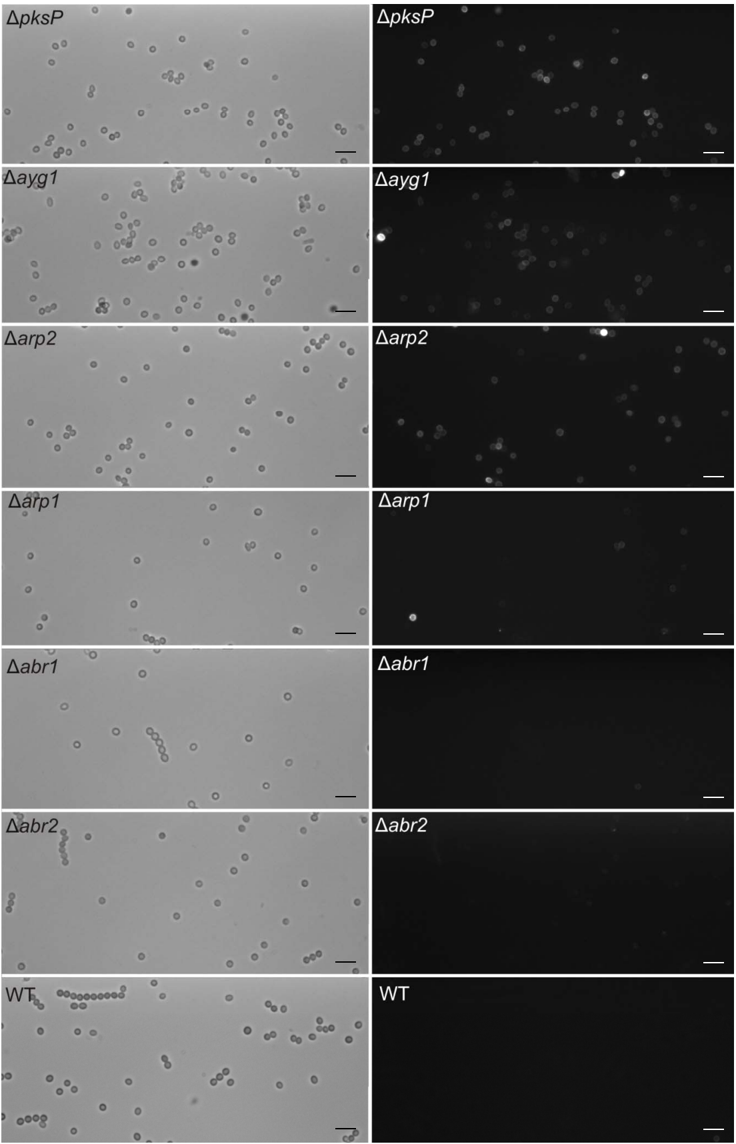
In Aspergillus fumigatus , the conidial surface contains dihydroxynaphthalene (DHN)-melanin. Six-clustered gene products have been identified that mediate sequential catalysis of DHN-melanin biosynthesis. Melanin thus produced is known to be a virulence factor, protecting the fungus from the host defense mechanisms. In the present study, individual deletion of the genes involved in the initial three steps of melanin biosynthesis resulted in an altered conidial surface with masked surface rodlet layer, leaky cell wall allowing the deposition of proteins on the cell surface and exposing the otherwise-masked cell wall polysaccharides at the surface. Melanin as such was immunologically inert; however, deletion mutant conidia with modified surfaces could activate human dendritic cells and the subsequent cytokine production in contrast to the wild-type conidia. Cell surface defects were rectified in the conidia mutated in downstream melanin biosynthetic pathway, and maximum immune inertness was observed upon synthesis of vermelone onward. These observations suggest that although melanin as such is an immunologically inert material, it confers virulence by facilitating proper formation of the A. fumigatus conidial surface.
Overview
The claims and statistics of this paper haven’t been checked yet.
Free: it reads the open-access text and checks the first 5 claims that cite a source we can check. Create a free account to check every claim.
Integrity signals
Registry
Cites
Statistics
Figures
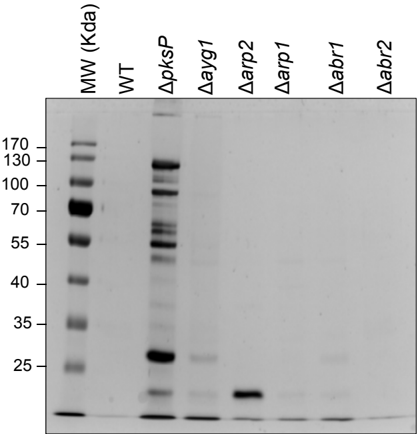
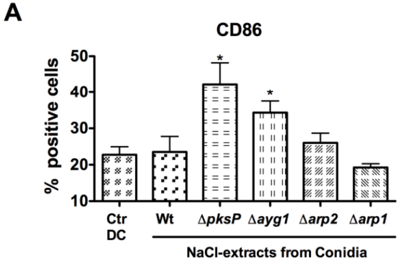
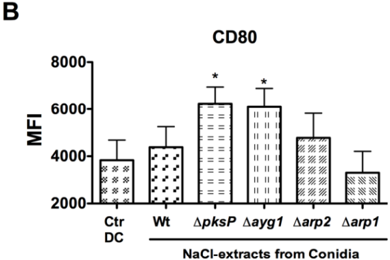
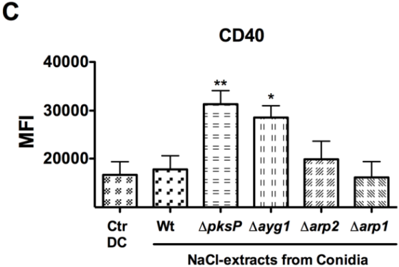
Verification
Claims the paper makes
The claims and statistics of this paper haven’t been checked yet.
Free: it reads the open-access text and checks the first 5 claims that cite a source we can check. Create a free account to check every claim.
Claims other papers make about this one
Each is checked against this paper’s own text: does it say what the citing paper says it does?
The source backs part of the claim, not all of it — or backs it for a different population, condition or comparison.
In the citing paper
“All of these single and multiple mutants are characterized by the emergence on the conidial surface of a layer of (glyco)proteins covering the rodlets, which is responsible for conidial hydrophilicity, even though the rodlets are present.”
From Aspergillus fumigatus and Aspergillosis in 2019 (2019) · cites this paper as [477]
Experimental — accuracy not yet measuredThe cited source says what the claim attributes to it.
In the citing paper
“The presence of these molecules on the conidial surface also is responsible for stimulation of the immune response (241, 477, 478).”
From Aspergillus fumigatus and Aspergillosis in 2019 (2019) · cites this paper as [477]
The cited source says what the claim attributes to it.
In the citing paper
“Loss of melanin in the pksP mutant results in the production of hydrophilic white conidia accompanied by the deposition of glycoproteins on the rodlet surface (477).”
From Aspergillus fumigatus and Aspergillosis in 2019 (2019) · cites this paper as [477]
In the citing paper
“Loss of melanin in the pksP mutant results in the production of hydrophilic white conidia accompanied by the deposition of glycoproteins on the rodlet surface (477).”
From Aspergillus fumigatus and Aspergillosis in 2019 (2019) · cites this paper as [477]
Self-check
Percentages, sums and reported differences re-computed from the paper’s own numbers.
The self-check needs the paper’s full text.
Citations
Cites
Dendritic cells and the control of immunity
Banchereau, J., & Steinman, R. M. (1998) · Nature · doi:10.1038/32588 · Cited by 14,336
Cella, M., Scheidegger, D., Palmer-Lehmann, K., Lane, P., Lanzavecchia, A., & Alber, G. (1996) · The Journal of experimental medicine · doi:10.1084/jem.184.2.747 · Cited by 1,983
Surface hydrophobin prevents immune recognition of airborne fungal spores
Aimanianda, V., Bayry, J., Bozza, S., Kniemeyer, O., Perruccio, K., Elluru, S. R., Clavaud, C., Paris, S., Brakhage, A. A., Kaveri, S. V., et al. (2009) · Nature · doi:10.1038/nature08264 · Cited by 792 · cited 4×
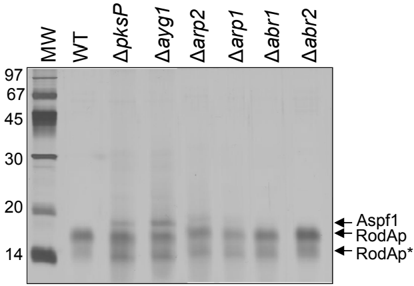
“6) showed that two bands of RodAp 274 classically seen in the HF extracts of conidia were present in all the melanin pathway mutants and 275 WT conidia (30).”
BackgroundMethodInfluentialSelf-citationSynthesis and assembly of fungal melanin
Eisenman, H. C., & Casadevall, A. (2012) · Applied Microbiology and Biotechnology · doi:10.1007/s00253-011-3777-2 · Cited by 711 · cited 4×
“DOPA-melanin contributes to host death, fungal burden and dissemination 56 (8).”
BackgroundInfluentialLuther, K., Torosantucci, A., Brakhage, A. A., Heesemann, J., & Ebel, F. (2007) · Cellular Microbiology · doi:10.1111/j.1462-5822.2006.00796.x · Cited by 582
Self-citationThe Beta-Glucan Receptor Dectin-1 Recognizes Specific Morphologies of Aspergillus fumigatus
Steele, C., Rapaka, R. R., Metz, A., Pop, S. M., Williams, D. L., Gordon, S., Kolls, J. K., & Brown, G. D. (2005) · PLoS Pathogens · doi:10.1371/journal.ppat.0010042 · Cited by 509 · cited 2×
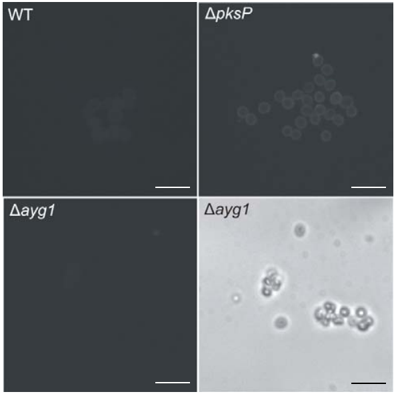
“For immunolabeling, PFA-fixed conidia were 152 incubated with different antibodies as described previously (27). β-(1,3)-glucan was labeled with153 Dectin-1 (Fc-dectin1 6 µg/ml) followed by FITC conjugated GaHu-Fab2-human IgG (15 µg/ml, 154 a kind gift from G. Brown, University of Aberdeen, Aberdeen, UK) (28).”
Tsai, H.-F., Wheeler, M. H., Chang, Y. C., & Kwon-Chung, K. J. (1999) · Journal of Bacteriology · doi:10.1128/jb.181.20.6469-6477.1999 · Cited by 385 · cited 4×
“553 Cell wall beta-(1,6)-glucan of Saccharomyces cerevisiae: structural characterization and 554 in situ synthesis.”
BackgroundInfluentialSelf-citationLangfelder, K., Jahn, B., Gehringer, H., Schmidt, A., Wanner, G., & Brakhage, A. A. (1998) · Medical Microbiology and Immunology · doi:10.1007/s004300050077 · Cited by 290 · cited 1×
“4 in the first step of melanin biosynthesis, has been deleted (4, 9, 16-19), These reports 72 demonstrated that melanin protects the conidia against reactive oxygen species (ROS), masks the 73 recognition of various A.”
BackgroundSelf-citationUsing nanotechniques to explore microbial surfaces
Dufrêne, Y. F. (2004) · Nature Reviews Microbiology · doi:10.1038/nrmicro905 · Cited by 263 · cited 1×
“Rather than using an incident beam as in classical microscopy, 255 AFM probes the small forces acting on the sample surface (37).”
MethodSelf-citationPihet, M., Vandeputte, P., Tronchin, G., Renier, G., Saulnier, P., Georgeault, S., Mallet, R., Chabasse, D., Symoens, F., & Bouchara, J.-P. (2009) · BMC Microbiology · doi:10.1186/1471-2180-9-177 · Cited by 253 · cited 2×
“Previous studies demonstrated that deletion of PKSP 388 and ARP2 correlated with a decreased ability to bind laminin on the conidial surface (10).”
BackgroundSchmaler-Ripcke, J., Sugareva, V., Gebhardt, P., Winkler, R., Kniemeyer, O., Heinekamp, T., & Brakhage, A. A. (2009) · Applied and Environmental Microbiology · doi:10.1128/aem.02077-08 · Cited by 251 · cited 1×
“fumigatus is also able to 46 produce a brownish pigment, pyomelanin, as an alternative melanin (7).”
BackgroundSelf-citationJahn, B., Koch, A., Schmidt, A., Wanner, G., Gehringer, H., Bhakdi, S., & Brakhage, A. A. (1997) · Infection and Immunity · doi:10.1128/iai.65.12.5110-5117.1997 · Cited by 240 · cited 2×
“Melanin, being extracellular, also contributes to the 367 fungal spore structure (5).”
BackgroundSelf-citationDishwashers – A man-made ecological niche accommodating human opportunistic fungal pathogens
Zalar, P., Novak, M., de Hoog, G. S., & Gunde-Cimerman, N. (2011) · Fungal Biology · doi:10.1016/j.funbio.2011.04.007 · Cited by 237 · cited 2×
“39 Introduction 40 Melanin is a pigment that exists from humans to plants and has several functions including 41 resistance against environmental stress such as UV light and oxidizing agents (1, 2).”
BackgroundHeinekamp, T., Thywißen, A., Macheleidt, J., Keller, S., Valiante, V., & Brakhage, A. A. (2013) · Frontiers in Microbiology · doi:10.3389/fmicb.2012.00440 · Cited by 216 · cited 1×
“In fungal biology, melanin pigments are attributed with a variety of beneficial functions, including protection against exogenous stress, UV irradiation, and host defense mechanisms, including reactive oxygen species, lytic enzymes, and antimicrobial peptides (47), and hence considered to be one of the fungal virulenc…”
BackgroundSelf-citationChitosan but Not Chitin Activates the Inflammasome by a Mechanism Dependent upon Phagocytosis
Bueter, C. L., Lee, C. K., Rathinam, V. A. K., Healy, G. J., Taron, C. H., Specht, C. A., & Levitz, S. M. (2011) · Journal of Biological Chemistry · doi:10.1074/jbc.m111.274936 · Cited by 209 · cited 2×
“Chitosan of less than 20 μm elicited the most IL-1β from bone 427 marrow-derived macrophages (50).”
BackgroundRecognition and Blocking of Innate Immunity Cells by Candida albicans Chitin
Mora-Montes, H. M., Netea, M. G., Ferwerda, G., Lenardon, M. D., Brown, G. D., Mistry, A. R., Kullberg, B. J., O'Callaghan, C. A., Sheth, C. C., Odds, F. C., et al. (2011) · Infection and Immunity · doi:10.1128/iai.01282-10 · Cited by 204 · cited 2×
“chitin can influence dectin-1 mediated immune responses (51).”
BackgroundDirect Measurement of Hydrophobic Forces on Cell Surfaces Using AFM
Alsteens, D., Dague, E., Rouxhet, P. G., Baulard, A. R., & Dufrêne, Y. F. (2007) · Langmuir · doi:10.1021/la702765c · Cited by 181 · cited 2×
“10 (CFM) (32, 33) using gold tips (OMCL-TR4, Olympus, Tokyo, Japan), coated with hydrophobic 215 thiols.”
InfluentialSelf-citationChemical Force Microscopy of Single Live Cells
Dague, E., Alsteens, D., Latgé, J.-P., Verbelen, C., Raze, D., Baulard, A. R., & Dufrêne, Y. F. (2007) · Nano Letters · doi:10.1021/nl071476k · Cited by 166 · cited 1×
“12 biophysical properties and interactions (39-41).”
Self-citationThywißen, A., Heinekamp, T., Dahse, H.-M., Schmaler-Ripcke, J., Nietzsche, S., Zipfel, P. F., & Brakhage, A. A. (2011) · Frontiers in Microbiology · doi:10.3389/fmicb.2011.00096 · Cited by 161
Self-citationCell Wall β-(1,6)-Glucan of Saccharomyces cerevisiae
Aimanianda, V., Clavaud, C., Simenel, C., Fontaine, T., Delepierre, M., & Latgé, J.-P. (2009) · Journal of Biological Chemistry · doi:10.1074/jbc.m807667200 · Cited by 156 · cited 1×
“Extraction of conidial surface RodA protein (RodAp) involved in the rodlet formation 128 The RodAp was extracted from the spore surface by incubating 10(9) dry conidia with 48% (v/v) 129 hydrofluoric acid (HF) for 72 h at 4°C (23).”
MethodSelf-citationAtomic force microscopy and chemical force microscopy of microbial cells
Dufrêne, Y. F. (2008) · Nature Protocols · doi:10.1038/nprot.2008.101 · Cited by 155 · cited 1×
“were carried out by chemical-force microscopy (32, 33) using gold tips”
MethodSelf-citationRosa, L. H., Almeida Vieira, M. D. L., Santiago, I. F., & Rosa, C. A. (2010) · FEMS Microbiology Ecology · doi:10.1111/j.1574-6941.2010.00872.x · Cited by 149 · cited 9×
“β-(1,3)-glucan was labeled with 153 Dectin-1 (Fc-dectin1 6 μg/ml) followed by FITC conjugated GaHu-Fab2-human IgG (15 μg/ml, 154 a kind gift from G.”
BackgroundMethodInfluentialDufrêne, Y. F., Boonaert, C. J. P., Gerin, P. A., Asther, M., & Rouxhet, P. G. (1999) · Journal of Bacteriology · doi:10.1128/jb.181.17.5350-5354.1999 · Cited by 146 · cited 14×
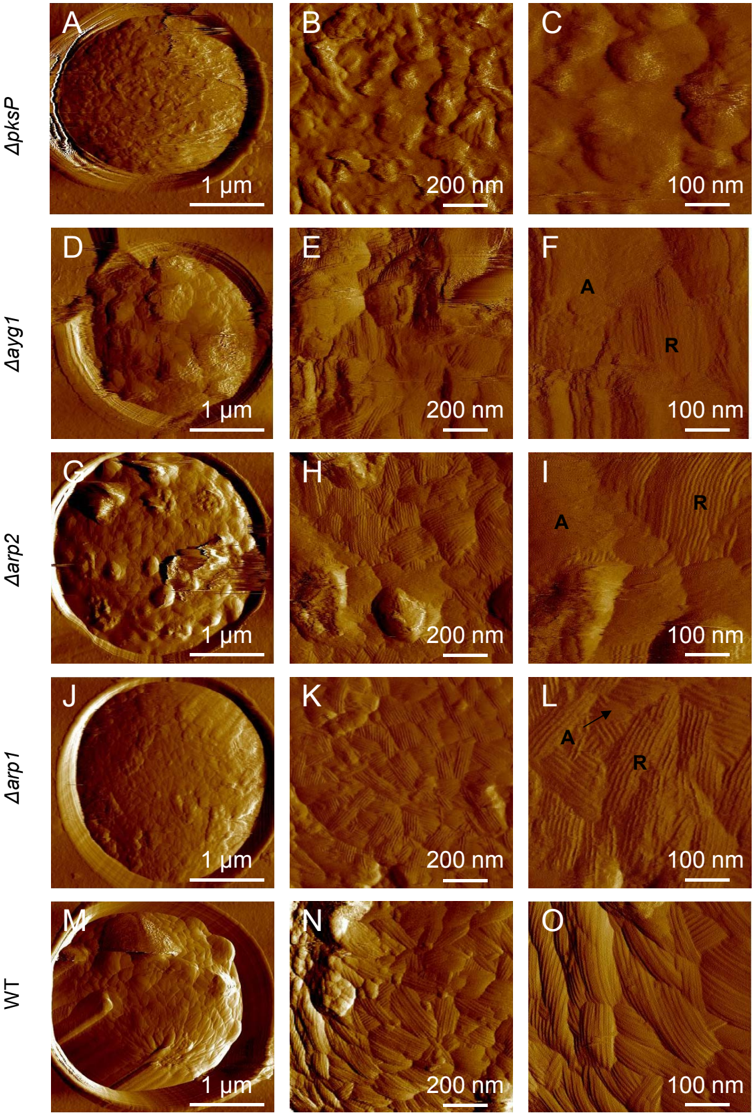
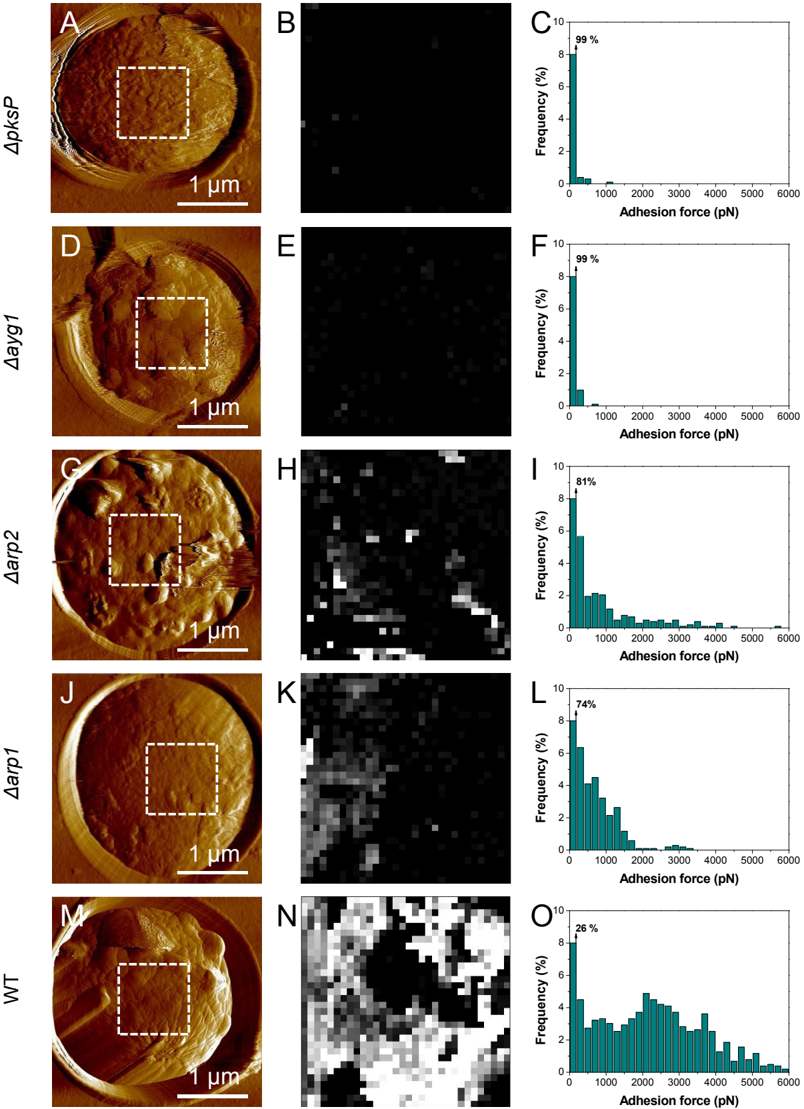
“Originally invented for topographic imaging, AFM has evolved into a multifunctional molecular toolkit, enabling researchers not only to observe structural details of cells to near molecular resolution (36, 38) but also to measure their biophysical properties and interacFIG 2 Effect of melanin biosynthetic pathways mut…”
BackgroundMethodInfluentialSelf-citationImaging the nanoscale organization of peptidoglycan in living Lactococcus lactis cells
Andre, G., Kulakauskas, S., Chapot-Chartier, M.-P., Navet, B., Deghorain, M., Bernard, E., Hols, P., & Dufrêne, Y. F. (2010) · Nature Communications · doi:10.1038/ncomms1027 · Cited by 144 · cited 1×
“structural details of cells to near molecular resolution (36, 38), but also to measure their 260”
BackgroundSelf-citationTsai, H.-F., Fujii, I., Watanabe, A., Wheeler, M. H., Chang, Y. C., Yasuoka, Y., Ebizuka, Y., & Kwon-Chung, K. J. (2001) · Journal of Biological Chemistry · doi:10.1074/jbc.m101998200 · Cited by 144 · cited 1×
“fumigatus, the melanin biosynthesis is reported to require a 368 cluster of six genes (6, 13, 14).”
BackgroundSelf-citationAspergillus fumigatus Conidial Melanin Modulates Host Cytokine Response
Chai, L. Y. A., Netea, M. G., Sugui, J., Vonk, A. G., van de Sande, W. W. J., Warris, A., Kwon-Chung, K. J., & Jan Kullberg, B. (2010) · Immunobiology · doi:10.1016/j.imbio.2009.10.002 · Cited by 141 · cited 3×
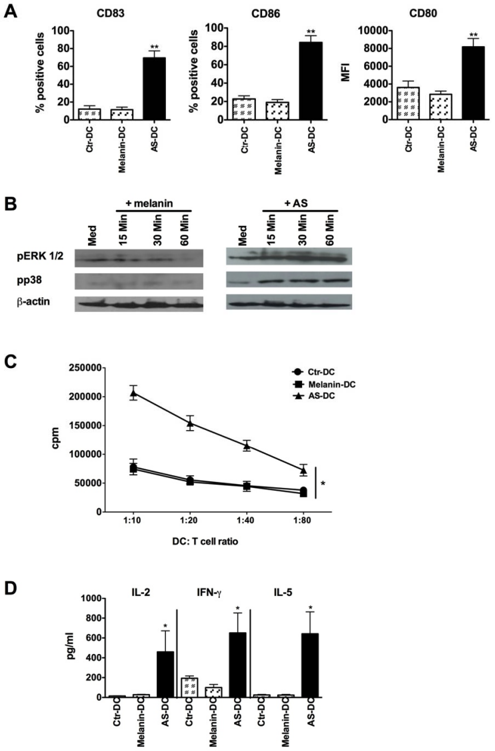
“440 441 Chai and co-workers (9) also demonstrated that melanin purified from WT conidia was also 442 poorly immunogenic for the stimulation of cytokines by peripheral blood mononuclear cells.”
BackgroundSelf-citationTwo α(1-3) Glucan Synthases with Different Functions in Aspergillus fumigatus
Beauvais, A., Maubon, D., Park, S., Morelle, W., Tanguy, M., Huerre, M., Perlin, D. S., & Latgé, J. P. (2005) · Applied and Environmental Microbiology · doi:10.1128/aem.71.3.1531-1538.2005 · Cited by 136
Self-citationBansal, K., Elluru, S. R., Yeddula, N., Chaturvedi, R., Patil, S. A., Kaveri, S. V., Bayry, J., & Balaji, K. N. (2010) · The Journal of Immunology · doi:10.4049/jimmunol.0903299 · Cited by 130
Self-citationProduction of melanin by Aspergillus fumigatus
Youngchim, S., Morris-Jones, R., Hay, R. J., & Hamilton, A. J. (2004) · Journal of Medical Microbiology · doi:10.1099/jmm.0.05421-0 · Cited by 130 · cited 1×
“was performed as previously described (20, 21).”
Kniemeyer, O., Leßing, F., Scheibner, O., Hertweck, C., & Brakhage, A. A. (2005) · Current Genetics · doi:10.1007/s00294-005-0047-9 · Cited by 127 · cited 1×
“2D-gel electrophoretic analysis of the NaCl extract was carried out as 138 described previously with slight modifications (24, 25).”
MethodSelf-citationBeauvais, A., Bozza, S., Kniemeyer, O., Formosa, C., Balloy, V., Henry, C., Roberson, R. W., Dague, E., Chignard, M., Brakhage, A. A., et al. (2013) · PLoS Pathogens · doi:10.1371/journal.ppat.1003716 · Cited by 127
Self-citationAlsteens, D., Trabelsi, H., Soumillion, P., & Dufrêne, Y. F. (2013) · Nature Communications · doi:10.1038/ncomms3926 · Cited by 126 · cited 1×
“12 biophysical properties and interactions (39-41).”
Self-citationJahn, B., Langfelder, K., Schneider, U., Schindel, C., & Brakhage, A. A. (2002) · Cellular Microbiology · doi:10.1046/j.1462-5822.2002.00228.x · Cited by 122 · cited 1×
“(52) observed that the extent of macrophage phagocytosis and intracellular killing was significantly greater with pksP conidia than with WT conidia.”
BackgroundSelf-citationAspergillus fumigatus arp1 modulates conidial pigmentation and complement deposition
Tsai, H., Washburn, R. G., Chang, Y. C., & Kwon‐Chung, K. J. (1997) · Molecular Microbiology · doi:10.1046/j.1365-2958.1997.5681921.x · Cited by 121 · cited 2×
“fumigatus, the melanin biosynthesis is reported to require a 368 cluster of six genes (6, 13, 14).”
BackgroundSelf-citationSugareva, V., Härtl, A., Brock, M., Hübner, K., Rohde, M., Heinekamp, T., & Brakhage, A. A. (2006) · Archives of Microbiology · doi:10.1007/s00203-006-0144-2 · Cited by 113 · cited 1×
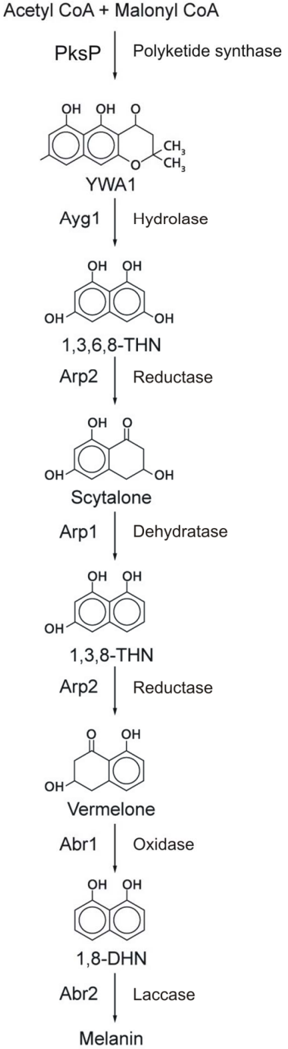
“oxidized by the copper oxidase Abr1p (AFUA_2G17540) to form the 1,8 DHN melanin, which is 67 polymerized by the laccase Abr2p (AFUA_2G17530) (12, 15).”
BackgroundSelf-citationBansal, K., Sinha, A. Y., Ghorpade, D. S., Togarsimalemath, S. K., Patil, S. A., Kaveri, S. V., Balaji, K. N., & Bayry, J. (2010) · Journal of Biological Chemistry · doi:10.1074/jbc.m110.158055 · Cited by 108 · cited 1×
“Generation and culture of human dendritic cells 165 Monocyte-derived DCs were generated as previously described (29, 30).”
MethodSelf-citationHydrolytic Polyketide Shortening by Ayg1p, a Novel Enzyme Involved in Fungal Melanin Biosynthesis
Fujii, I., Yasuoka, Y., Tsai, H.-F., Chang, Y. C., Kwon-Chung, K. J., & Ebizuka, Y. (2004) · Journal of Biological Chemistry · doi:10.1074/jbc.m406758200 · Cited by 105
Self-citationGalactofuranose attenuates cellular adhesion of Aspergillus fumigatus
Lamarre, C., Beau, R., Balloy, V., Fontaine, T., Hoi, J. W. S., Guadagnini, S., Berkova, N., Chignard, M., Beauvais, A., & Latgé, J.-P. (2009) · Cellular Microbiology · doi:10.1111/j.1462-5822.2009.01352.x · Cited by 98 · cited 1×
“For immunolabeling, PFA-fixed conidia were 152 incubated with different antibodies as described previously (27).”
MethodSelf-citationSlesiona, S., Gressler, M., Mihlan, M., Zaehle, C., Schaller, M., Barz, D., Hube, B., Jacobsen, I. D., & Brock, M. (2012) · PLoS ONE · doi:10.1371/journal.pone.0031223 · Cited by 97 · cited 1×
“4 in the first step of melanin biosynthesis, has been deleted (4, 9, 16-19), These reports 72 demonstrated that melanin protects the conidia against reactive oxygen species (ROS), masks the 73 recognition of various A.”
BackgroundBeaussart, A., Alsteens, D., El-Kirat-Chatel, S., Lipke, P. N., Kucharíková, S., Van Dijck, P., & Dufrêne, Y. F. (2012) · ACS Nano · doi:10.1021/nn304505s · Cited by 92 · cited 1×
“12 biophysical properties and interactions (39-41).”
Self-citationIsolation and serological analyses of fungal melanins
Rosas, Á. L., Nosanchuk, J. D., Gómez, B. L., Edens, W. A., Henson, J. M., & Casadevall, A. (2000) · Journal of Immunological Methods · doi:10.1016/s0022-1759(00)00255-6 · Cited by 91
Secretome analysis of Aspergillus fumigatus reveals Asp-hemolysin as a major secreted protein
Wartenberg, D., Lapp, K., Jacobsen, I. D., Dahse, H., Kniemeyer, O., Heinekamp, T., & Brakhage, A. A. (2011) · International Journal of Medical Microbiology · doi:10.1016/j.ijmm.2011.04.016 · Cited by 91 · cited 2×
“fumigatus, such as 317 Cat1p, Exg1p and ExoG2p, Aspf1p, ChiB1 were identified in the NaCl extract of ΔpksP resting 318 conidia (43-46).”
BackgroundSelf-citationFunctional analysis of the fungal/plant class chitinase family in Aspergillus fumigatus
Alcázar‐Fuoli, L., Clavaud, C., Lamarre, C., Aimanianda, V., Seidl‐Seiboth, V., Mellado, E., & Latgé, J. (2010) · Fungal Genetics and Biology · doi:10.1016/j.fgb.2010.12.007 · Cited by 89 · cited 2×
“fumigatus, such as 317 Cat1p, Exg1p and ExoG2p, Aspf1p, ChiB1 were identified in the NaCl extract of ΔpksP resting 318 conidia (43-46).”
BackgroundSelf-citationVolling, K., Thywissen, A., Brakhage, A. A., & Saluz, H. P. (2011) · Cellular Microbiology · doi:10.1111/j.1462-5822.2011.01605.x · Cited by 87
Self-citationJiménez-Ortigosa, C., Aimanianda, V., Muszkieta, L., Mouyna, I., Alsteens, D., Pire, S., Beau, R., Krappmann, S., Beauvais, A., Dufrêne, Y. F., et al. (2012) · Antimicrobial Agents and Chemotherapy · doi:10.1128/aac.00752-12 · Cited by 67 · cited 1×
“Although the rodlets that immune-silence the resting conidia were present in the above mutant conidia, the masking of rodlets by an amorphous and hydrophilic layer enabled resting conidia to be immunogenic (24, 49).”
BackgroundSelf-citationNgamskulrungroj, P., Price, J., Sorrell, T., Perfect, J. R., & Meyer, W. (2011) · PLoS ONE · doi:10.1371/journal.pone.0016076 · Cited by 63 · cited 8×
“β-(1,3)-glucan was labeled with 153 Dectin-1 (Fc-dectin1 6 μg/ml) followed by FITC conjugated GaHu-Fab2-human IgG (15 μg/ml, 154 a kind gift from G.”
BackgroundMethodInfluentialKeller, S., Macheleidt, J., Scherlach, K., Schmaler-Ripcke, J., Jacobsen, I. D., Heinekamp, T., & Brakhage, A. A. (2011) · PLoS ONE · doi:10.1371/journal.pone.0026604 · Cited by 57 · cited 1×
“, reactive oxygen 54 intermediates, and hence considered to be protecting the fungus against immune effector cells 55 during infection (11).”
BackgroundSelf-citationSriranganadane, D., Waridel, P., Salamin, K., Reichard, U., Grouzmann, E., Neuhaus, J.-M., Quadroni, M., & Monod, M. (2010) · Journal of Proteome Research · doi:10.1021/pr901202z · Cited by 55 · cited 2×
“fumigatus, such as 317 Cat1p, Exg1p and ExoG2p, Aspf1p, ChiB1 were identified in the NaCl extract of ΔpksP resting 318 conidia (43-46).”
BackgroundImmuno-Reactive Molecules Identified from the Secreted Proteome of Aspergillus fumigatus
Singh, B., Oellerich, M., Kumar, R., Kumar, M., Bhadoria, D. P., Reichard, U., Gupta, V. K., Sharma, G. L., & Asif, A. R. (2010) · Journal of Proteome Research · doi:10.1021/pr100604x · Cited by 53 · cited 2×
“fumigatus, such as 317 Cat1p, Exg1p and ExoG2p, Aspf1p, ChiB1 were identified in the NaCl extract of ΔpksP resting 318 conidia (43-46).”
BackgroundMüller, S., Baldin, C., Groth, M., Guthke, R., Kniemeyer, O., Brakhage, A. A., & Valiante, V. (2012) · BMC Genomics · doi:10.1186/1471-2164-13-519 · Cited by 42 · cited 1×
“Protein spots were excised and analysed by mass spectrometry using an 144 ultrafleXtreme MALDI-TOF/TOF device (Bruker Daltonics) as described (26).”
MethodSelf-citationAlsteens, D., Aimanianda, V., Hegde, P., Pire, S., Beau, R., Bayry, J., Latgé, J., & Dufrêne, Y. F. (2013) · Biophysical Journal · doi:10.1016/j.bpj.2013.05.040 · Cited by 27 · cited 2×
“In contrast to the WT conidia that are covered 261 with rodlet structure (30, 42) (Fig.”
BackgroundSelf-citationBuskirk, A. D., Templeton, S. P., Nayak, A. P., Hettick, J. M., Law, B. F., Green, B. J., & Beezhold, D. H. (2013) · Journal of Immunotoxicology · doi:10.3109/1547691x.2013.819054 · Cited by 17 · cited 1×
“Discussion 363 In fungal biology, melanin pigments are attributed with a variety of beneficial function including 364 protection against exogenous stress, UV-irradiation and host defense mechanisms including 365 reactive oxygen species, lytic enzymes and antimicrobial peptides (47) and hence considered to 366 be one o…”
Background
Cited by
Aspergillus fumigatus and Aspergillosis in 2019
Latgé, J.-P., & Chamilos, G. (2019) · Clinical Microbiology Reviews · doi:10.1128/cmr.00140-18 · Cited by 1,400
Self-citationThe Fungal Cell Wall: Candida, Cryptococcus, and Aspergillus Species
Garcia-Rubio, R., de Oliveira, H. C., Rivera, J., & Trevijano-Contador, N. (2020) · Frontiers in Microbiology · doi:10.3389/fmicb.2019.02993 · Cited by 917
Functions of fungal melanin beyond virulence
Cordero, R. J. B., & Casadevall, A. (2017) · Fungal Biology Reviews · doi:10.1016/j.fbr.2016.12.003 · Cited by 416
“…analysis has produced patterns consistent with a stacked planar sheet structure with inter-sheet distances of approximately 0.4 nanometers (Bayry et al., 2014; Casadevall et al., 2012; Franzen et al., 2008b; Franzen et al., 1999; Gomez et al., 2001; Morris-Jones et al., 2005; Morris-Jones…”
BackgroundInfluentialFungal Melanin: What do We Know About Structure?
Nosanchuk, J. D., Stark, R. E., & Casadevall, A. (2015) · Frontiers in Microbiology · doi:10.3389/fmicb.2015.01463 · Cited by 310
“…several other pathogenic fungi, including Candida albicans (Morris-Jones et al., 2005; Walker et al., 2010), Aspergillus sp. (Rosas et al., 2000b; Bayry et al., 2014), Sporothrix schenckii (Morris-Jones et al., 2003), Fonsecaea pedrosoi (Franzen et al., 1999, 2006), Paracoccidioides brasiliensis…”
BackgroundAspergillus Cell Wall Melanin Blocks LC3-Associated Phagocytosis to Promote Pathogenicity
Akoumianaki, T., Kyrmizi, I., Valsecchi, I., Gresnigt, M. S., Samonis, G., Drakos, E., Boumpas, D., Muszkieta, L., Prevost, M.-C., Kontoyiannis, D. P., et al. (2016) · Cell Host & Microbe · doi:10.1016/j.chom.2015.12.002 · Cited by 218
“The isolation of melanin from wild-type (Ku80) conidia was performed as previously described (Bayry et al., 2014).”
MethodSelf-citation
Metadata
- Authors
- Bayry, J., Beaussart, A., Dufrêne, Y. F., Sharma, M., Bansal, K., Kniemeyer, O., Aimanianda, V., Brakhage, A. A., Kaveri, S. V., Kwon-Chung, K. J., Latgé, J.-P., & Beauvais, A.
- Affiliations
- Inserm (FR)
- UCLouvain (BE)
- Jena University Hospital (DE)
- Institut Pasteur (FR)
- Leibniz-Institut für Naturstoff-Forschung und Infektionsbiologie e. V. - Hans-Knöll-Institut (HKI) (DE)
- National Institutes of Health (US)
- ORCID
- Venue
- Infection and Immunity
- Publisher
- American Society for Microbiology
- Published
- 2014-08
- Volume
- 82
- Issue
- 8
- Pages
- 3141-3153
- ISSN
- 0019-9567 (ISSN-L)
- 1098-5522
- PMC
- PMC4136205
- OpenAlex
- W2171445127
- Cited by
- 137
- References
- 52
- Citations by year
- 2026: 8 · 2025: 8 · 2024: 8 · 2023: 12 · 2022: 10 · 2021: 10 · 2020: 20 · 2019: 11 · 2018: 19 · 2017: 16 · 2016: 7 · 2015: 6 · 2014: 2
- FWCI
- 4.24
- Type
- journal article
- Language
- en
- Open access
- green
- www.ncbi.nlm.nih.gov
- Licence
- journals.asm.org/non-commercial-tdm-license (tdm)
- Locations
- Infection and Immunity (publishedVersion)
- PubMed Central (publishedVersion)
- PubMed (publishedVersion)
- HAL (submittedVersion, cc-by-nc)
- Digital Access to Libraries (submittedVersion, other-oa)
- Funders
- Agence Nationale de la Recherche (ANR-10-BLAN-1309, ANR-10)
- Institut National de la Santé et de la Recherche Médicale
- Topics
- Life Sciences › Biochemistry, Genetics and Molecular Biology › Molecular Biology › Fungal and yeast genetics research
- Health Sciences › Medicine › Infectious Diseases › Antifungal resistance and susceptibility
- Health Sciences › Medicine › Infectious Diseases › Fungal Infections and Studies
- Keywords
- Aspergillus fumigatus, conidia, melanogenesis, dihydroxynaphthalene, virulence factors, cell wall polysaccharides, dendritic cell activation, cytokine production, deletion mutants, fungal immunology
- MeSH terms
- Aspergillus fumigatus, Dendritic Cells, Humans, Immunity, Cellular, Melanins, Spores, Fungal, Surface Properties, Cytokines, Gene Deletion, Biosynthetic Pathways
About these checks
Registry, retraction, Cites and statistics results are computed, not judged, with one exception: a printed reference that no index lists is read once by a model before it counts as a citation error. Claims are extracted by a model and kept only when their quote appears verbatim in the text; each cited source is then checked, with a model’s help, for whether it says what the claim relies on. Those verdicts can be wrong — read the claim’s quote and the cited source before relying on one.
Statistics and arithmetic are recomputed, not judged.
Confidence bands are shown only for fields calibrated on our annotated test set. None is calibrated yet, so no band is shown.
What counts as a claim ›How we measure confidence ›How we check this ›
Are you an author, or do you see a problem with this page? Request a review
Data sources
Bibliographic data: Semantic Scholar, OpenAlex, Crossref.
Contains information from the Semantic Scholar Academic Graph Datasets, made available under the ODC Attribution License (ODC-BY 1.0).
Semantic Scholar’s data is described in: Kinney, R., et al. (2023). The Semantic Scholar Open Data Platform. arXiv:2301.10140.
