

The Pathogen Candida albicans Hijacks Pyroptosis for Escape from Macrophages
Open accessThe DOI matches its Crossref record; 45 of the 45 references it cites were found in a registry or an index.
Abstract
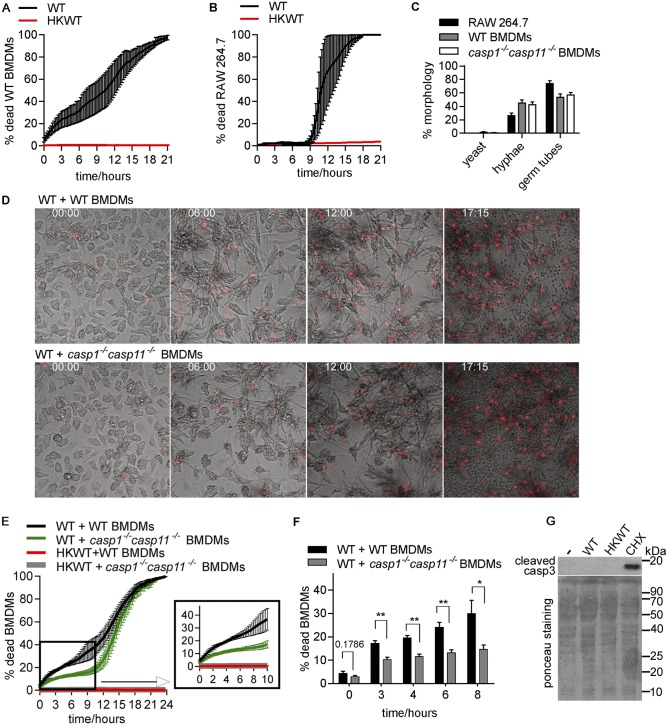
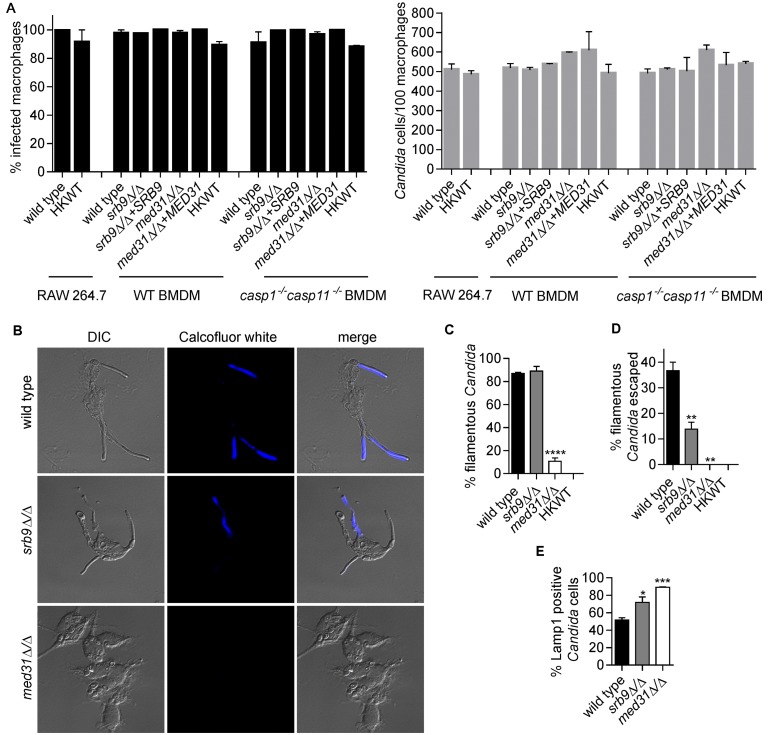
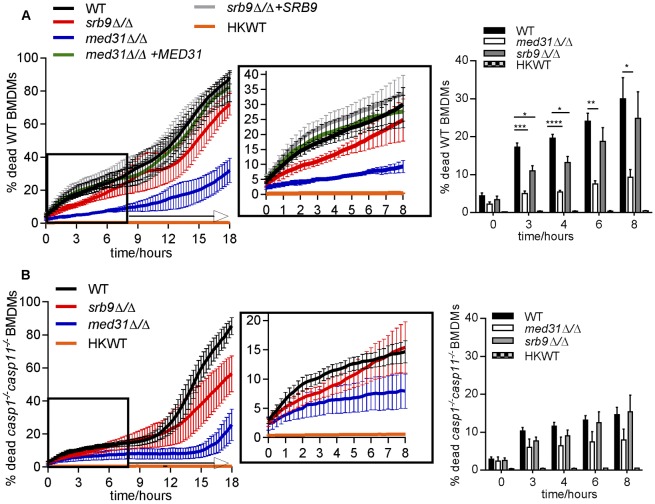
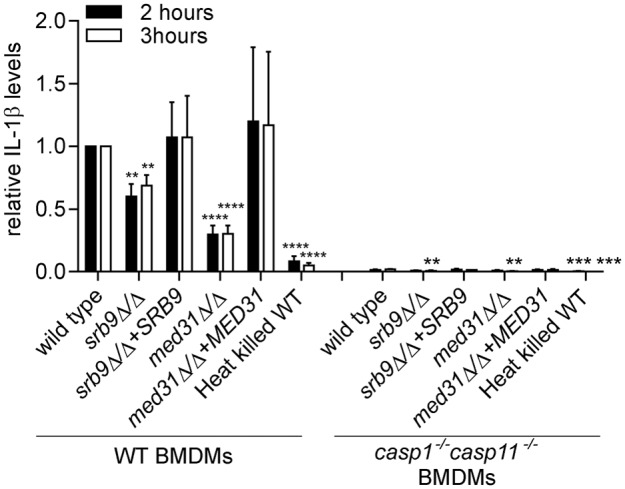
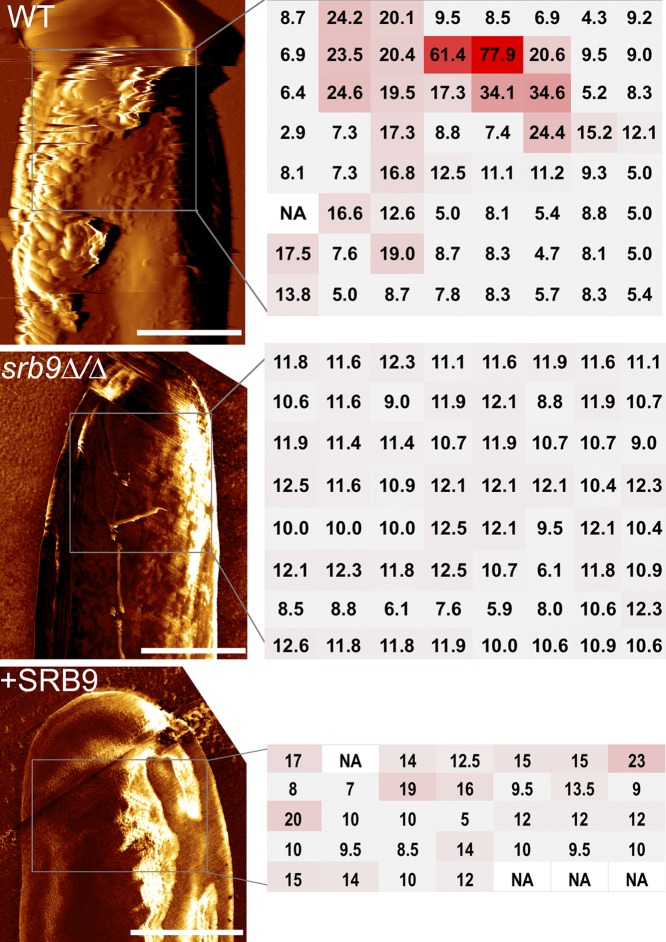
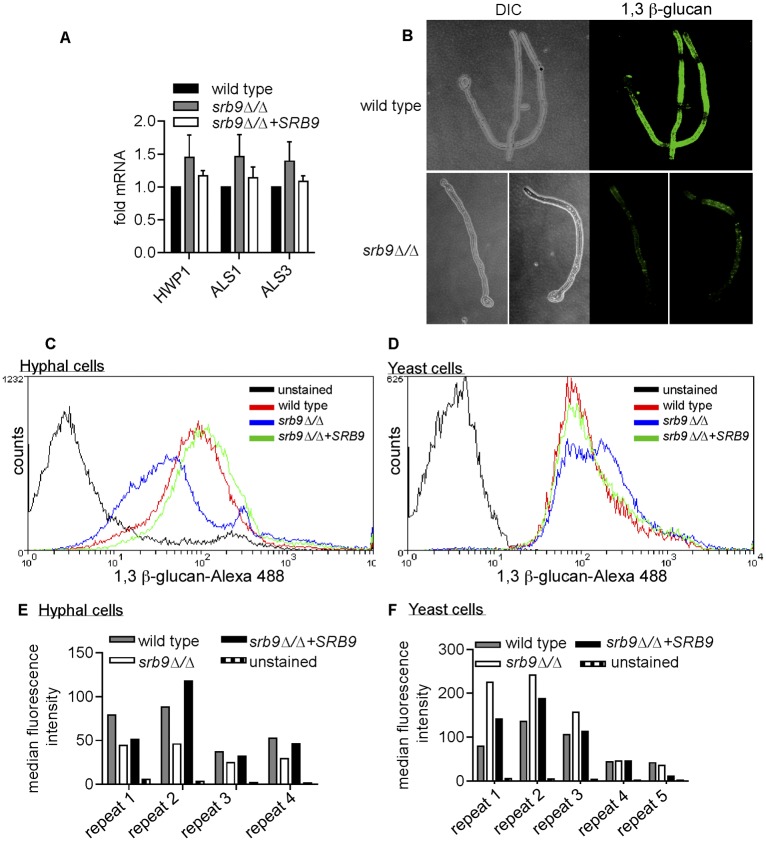
The fungal pathogen Candida albicans causes macrophage death and escapes, but the molecular mechanisms remained unknown. Here we used live-cell imaging to monitor the interaction of C. albicans with macrophages and show that C. albicans kills macrophages in two temporally and mechanistically distinct phases. Early upon phagocytosis, C. albicans triggers pyroptosis, a proinflammatory macrophage death. Pyroptosis is controlled by the developmental yeast-to-hypha transition of Candida . When pyroptosis is inactivated, wild-type C. albicans hyphae cause significantly less macrophage killing for up to 8 h postphagocytosis. After the first 8 h, a second macrophage-killing phase is initiated. This second phase depends on robust hyphal formation but is mechanistically distinct from pyroptosis. The transcriptional regulator Mediator is necessary for morphogenesis of C. albicans in macrophages and the establishment of the wild-type surface architecture of hyphae that together mediate activation of macrophage cell death. Our data suggest that the defects of the Mediator mutants in causing macrophage death are caused, at least in part, by reduced activation of pyroptosis. A Mediator mutant that forms hyphae of apparently wild-type morphology but is defective in triggering early macrophage death shows a breakdown of cell surface architecture and reduced exposed 1,3 β-glucan in hyphae. Our report shows how Candida uses host and pathogen pathways for macrophage killing. The current model of mechanical piercing of macrophages by C. albicans hyphae should be revised to include activation of pyroptosis by hyphae as an important mechanism mediating macrophage cell death upon C. albicans infection. IMPORTANCE Upon phagocytosis by macrophages, Candida albicans can transition to the hyphal form, which causes macrophage death and enables fungal escape. The current model is that the highly polarized growth of hyphae results in macrophage piercing. This model is challenged by recent reports of C. albicans mutants that form hyphae of wild-type morphology but are defective in killing macrophages. We show that C. albicans causes macrophage cell death by at least two mechanisms. Phase 1 killing (first 6 to 8 h) depends on the activation of the pyroptotic programmed host cell death by fungal hyphae. Phase 2 (up to 24 h) is rapid and depends on robust hyphal formation but is independent of pyroptosis. Our data provide a new model for how the interplay between fungal morphogenesis and activation of a host cell death pathway mediates macrophage killing by C. albicans hyphae.
Overview
The claims and statistics of this paper haven’t been checked yet.
Free: it reads the open-access text and checks the first 5 claims that cite a source we can check. Create a free account to check every claim.
Integrity signals
Registry
Cites
Statistics
Figures
Verification
Claims the paper makes
The claims and statistics of this paper haven’t been checked yet.
Free: it reads the open-access text and checks the first 5 claims that cite a source we can check. Create a free account to check every claim.
Claims other papers make about this one
Each is checked against this paper’s own text: does it say what the citing paper says it does?
The source backs part of the claim, not all of it — or backs it for a different population, condition or comparison.
In the citing paper
“Among the known C. albicans virulence factors20, filamentation21 plays a key role in phagocytosis escape mediated through physical processes or by triggering NLRP3/caspase-1 inflammasome-dependent lysis22,23.”
From The δ subunit of F1Fo-ATP synthase is required for pathogenicity of Candida albicans (2021) · cites this paper as [22]
Experimental — accuracy not yet measuredThe cited source says what the claim attributes to it.
In the citing paper
“Furthermore, filamentation enables C. albicans to kill and escape from macrophages through mechanical penetration of cell membranes [29], NLRP3/caspase-1 inflammasome-dependent pyroptosis [51], cytolysis [52] and glucose competition [53].”
From The F 1 F o -ATP synthase α subunit of Candida albicans induces inflammatory responses by controlling amino acid catabolism (2023) · cites this paper as [51]
Self-check
Percentages, sums and reported differences re-computed from the paper’s own numbers.
The self-check needs the paper’s full text.
Citations
Cites
Hidden Killers: Human Fungal Infections
Brown, G. D., Denning, D. W., Gow, N. A. R., Levitz, S. M., Netea, M. G., & White, T. C. (2012) · Science Translational Medicine · doi:10.1126/scitranslmed.3004404 · Cited by 4,284
Non-canonical inflammasome activation targets caspase-11
Kayagaki, N., Warming, S., Lamkanfi, M., Walle, L. V., Louie, S., Dong, J., Newton, K., Qu, Y., Liu, J., Heldens, S., et al. (2011) · Nature · doi:10.1038/nature10558 · Cited by 2,530 · cited 2×
“albicans-mediated killing of macrophages, we utilized BMDMs derived from casp1 / casp11 / mutant mice (27).”
BackgroundMethodSelf-citationNonfilamentous C. albicans Mutants Are Avirulent
Lo, H.-J., Köhler, J. R., DiDomenico, B., Loebenberg, D., Cacciapuoti, A., & Fink, G. R. (1997) · Cell · doi:10.1016/s0092-8674(00)80358-x · Cited by 1,809 · cited 2×
“Generally, yeast-form cells fail to cause damage and to escape from macrophages (4, 5).”
BackgroundNoncanonical Inflammasome Activation by Intracellular LPS Independent of TLR4
Kayagaki, N., Wong, M. T., Stowe, I. B., Ramani, S. R., Gonzalez, L. C., Akashi-Takamura, S., Miyake, K., Zhang, J., Lee, W. P., Muszyński, A., et al. (2013) · Science · doi:10.1126/science.1240248 · Cited by 1,545
Caspase-1-induced pyroptosis is an innate immune effector mechanism against intracellular bacteria
Miao, E. A., Leaf, I. A., Treuting, P. M., Mao, D. P., Dors, M., Sarkar, A., Warren, S. E., Wewers, M. D., & Aderem, A. (2010) · Nature Immunology · doi:10.1038/ni.1960 · Cited by 1,336 · cited 2×
“Caspase-1 and caspase-11 can independently induce pyroptosis (18, 27).”
BackgroundCytoplasmic LPS Activates Caspase-11: Implications in TLR4-Independent Endotoxic Shock
Hagar, J. A., Powell, D. A., Aachoui, Y., Ernst, R. K., & Miao, E. A. (2013) · Science · doi:10.1126/science.1240988 · Cited by 1,259
Candida albicans morphogenesis and host defence: discriminating invasion from colonization
Gow, N. A. R., van de Veerdonk, F. L., Brown, A. J. P., & Netea, M. G. (2012) · Nature Reviews Microbiology · doi:10.1038/nrmicro2711 · Cited by 888 · cited 1×
“The budding yeast state is associated with commensalism, while the developmental transition to hyphal growth is generally related to disease (2).”
BackgroundSyk kinase signalling couples to the Nlrp3 inflammasome for anti-fungal host defence
Gross, O., Poeck, H., Bscheider, M., Dostert, C., Hannesschläger, N., Endres, S., Hartmann, G., Tardivel, A., Schweighoffer, E., Tybulewicz, V., et al. (2009) · Nature · doi:10.1038/nature07965 · Cited by 819
Human dectin-1 deficiency and mucocutaneous fungal infections
Ferwerda, B., Ferwerda, G., Plantinga, T. S., Willment, J. A., van Spriel, A. B., Venselaar, H., Elbers, C. C., Johnson, M. D., Cambi, A., Huysamen, C., et al. (2009) · New England Journal of Medicine · doi:10.1056/nejmoa0901053 · Cited by 752
Salmonella induces macrophage death by caspase‐1‐dependent necrosis
Brennan, M. A., & Cookson, B. T. (2000) · Molecular Microbiology · doi:10.1046/j.1365-2958.2000.02103.x · Cited by 674
Cited by
Items 201–296 of 296
Deletion of the ATP2 Gene in Candida albicans Blocks Its Escape From Macrophage Clearance
Zhang, Y., Tang, C., Zhang, Z., Li, S., Zhao, Y., Weng, L., & Zhang, H. (2021) · Frontiers in Cellular and Infection Microbiology · doi:10.3389/fcimb.2021.643121 · Cited by 5
Systems biology of host-Candida interactions: understanding how we shape each other
Hodgins-Davis, A., & O’Meara, T. R. (2020) · Current Opinion in Microbiology · doi:10.1016/j.mib.2020.04.001 · Cited by 5
Soto, N. M. M., Horn, A. J., Keller, N. P., Huttenlocher, A., & Wagner, A. S. (2025) · mBio · doi:10.1128/mbio.03480-24 · Cited by 5
Rai, M. N., Parsania, C., & Rai, R. (2022) · Microbial Pathogenesis · doi:10.1016/j.micpath.2022.105864 · Cited by 4
Monitoring Inflammasome Priming and Activation in Response to Candida albicans
Santana, D. J., Anderson, F. M., & O’Meara, T. R. (2020) · Current Protocols in Microbiology · doi:10.1002/cpmc.124 · Cited by 4
Wu, H., Wang, L., Wang, W., Shao, Z., Jia, X., Xiao, H. Q., & Chen, J. (2023) · mLife · doi:10.1002/mlf2.12066 · Cited by 4
Klassert, T. E., Hölzer, M., Zubiría-Barrera, C., Bethge, J., Klaile, E., Müller, M. M., Marz, M., & Slevogt, H. (2023) · Journal of Fungi · doi:10.3390/jof9101014 · Cited by 4
Vulvovaginal Candida albicans Clinical Isolates’ Resistance to Phagocytosis In-Vitro
Faria-Gonçalves, P., Palmeira‐de‐Oliveira, A., Gaspar, C., Rodrigues, L., Palmeira‐de‐Oliveira, R., Martinez‐de‐Oliveira, J., Gonçalves, T., Palmeira‐de‐Oliveira, A., & Rolo, J. (2022) · Life · doi:10.3390/life12060838 · Cited by 4
Evaluation of some immunological markers in co-infection of COVID-19 with thrush candidiasis
Al-Kenani, H. Q. M., & Shaheed, O. M. (2024) · Revista da Associação Médica Brasileira · doi:10.1590/1806-9282.20230845 · Cited by 4
Li, S., Liu, Y., Weng, L., Zhao, Y., Zhang, Y., Zhang, Z., Yang, Y., Chen, Q., Liu, X., & Zhang, H. (2023) · Virulence · doi:10.1080/21505594.2023.2190645 · Cited by 3
“escape from macrophages through mechanical penetration of cell membranes [29], NLRP3/caspase-1 inflammasomedependent pyroptosis [51], cytolysis [52] and glucose competition [53].”
BackgroundBaker, C. P., Laba, S., Warner, J., Shepherd, K., Wilson, H. M., & Arthur, J. S. C. (2026) · Scientific Reports · doi:10.1038/s41598-026-39429-z · Cited by 3
Glycolysis-dependent sulfur metabolism orchestrates morphological plasticity and virulence in fungiPreprint
Shah, D., Rewatkar, N., Adishree, M., Gupta, S., Mathivathanan, S., Biswas, S., & Varahan, S. (2026) · eLife · doi:10.7554/elife.109075 · Cited by 3
Chinnasamy, A., Ramalingam, K., Nayak, S., Rai, V., Gopinath, V., & Chawla, G. (2022) · Journal of Oral and Maxillofacial Pathology · doi:10.4103/jomfp.jomfp_302_22 · Cited by 3
Ghaffaripour, R., Samsamipour, M., Eslamifar, Z., & Madmoli, M. (2019) · Journal of Pharmaceutical Research International · doi:10.9734/jpri/2019/v28i530216 · Cited by 3
Cortactin: A major cellular target of viral, protozoal, and fungal pathogens
Sharafutdinov, I., Friedrich, B., Rottner, K., Backert, S., & Tegtmeyer, N. (2024) · Molecular Microbiology · doi:10.1111/mmi.15284 · Cited by 2
Glycolysis-dependent Sulfur Metabolism Orchestrates Morphological Plasticity and Virulence in FungiPreprint
Shah, D., Rewatkar, N., Adishree, M., Gupta, S., Mathivathanan, S., Biswas, S., & Varahan, S. (2025) · eLife · doi:10.7554/elife.109075.1 · Cited by 2
Glycolysis-dependent Sulfur Metabolism Orchestrates Morphological Plasticity and Virulence in FungiPreprint
Shah, D., Rewatkar, N., Adishree, M., Gupta, S., Mathivathanan, S., Biswas, S., & Varahan, S. (2026) · eLife · doi:10.7554/elife.109075.2 · Cited by 2
Xie, J. L. (2017) · TSpace (University of Toronto) · Cited by 2
Lu, S., Jiang, C., & Liu, F. (2026) · International Immunopharmacology · doi:10.1016/j.intimp.2026.116655 · Cited by 2
Zhang, B., Peng, L., Zhu, N., Yu, Q., & Li, M. (2020) · International Journal of Medical Microbiology · doi:10.1016/j.ijmm.2020.151418 · Cited by 2
Quantitative live-cell imaging of Candida albicans escape from immune phagocytes
Olivier, F. A. B., & Traven, A. (2023) · STAR Protocols · doi:10.1016/j.xpro.2023.102737 · Cited by 2
Self-citationAntimicrobial activity of a decapeptide against Candida albicans
Li, Z., Liu, Y., Yuan, Y., Sun, Z., Zhang, J., Dai, Q. H., Li, S., Deng, B., Zhang, W., Dong, Y., et al. (2025) · Microbiology Spectrum · doi:10.1128/spectrum.01197-25 · Cited by 2
Isobavachalcone effectively inhibits the growth of Candida albicans
Xie, P., Zhou, W., Luo, J.-Z., Dai, Y., Yang, S., Li, S., & Huang, Y. (2025) · Antimicrobial Agents and Chemotherapy · doi:10.1128/aac.00797-25 · Cited by 2
Schumann, M. R. (2019) · Digitale Bibliothek Braunschweig (Verbundzentrale Göttingen (VZG)) · doi:10.24355/dbbs.084-201901071331-0 · Cited by 2
Comparative genomics to unravel virulence mechanisms in fungal human pathogens
Pryszcz, L. P. (2014) · Repositori digital de la UPF (Universitat Pompeu Fabra) · Cited by 2
Responses of White Blood Cells to Killed Candida albicans as a Preventive Strategy
Ibrahim, A. (2021) · Infectious diseases · doi:10.5772/intechopen.96946 · Cited by 1
Management of Denture Stomatitis with a Herbal Armamentarium
Chauhan, V., Saxena, P., Nautiyal, A., & Gupta, P. (2024) · Current Dentistry · doi:10.2174/012542579x317149241202064449 · Cited by 1
In the Crossroad Between Drug Resistance and Virulence in Fungal Pathogens
Cavalheiro, M., & Teixeira, M. C. (2018) · Springer eBooks · doi:10.1007/978-3-030-00683-9_7 · Cited by 1
Chronic invasive candidiasis in murine CARD9-deficiency
Landekic, M. (2021) · eScholarship@McGill (McGill) · doi:10.82308/17175 · Cited by 1
Host-Induced Stress Response in Human Pathogenic Fungi
Viana, R., Pais, P., Cavalheiro, M., Galocha, M., & Teixeira, M. C. (2021) · Elsevier eBooks · doi:10.1016/b978-0-12-819990-9.00035-4 · Cited by 1
Modulação do inflamassoma por componentes de cápsula secretados pelo Cryptococcus neoformans
Bürgel, P. H. (2015) · RIUnB Institutional Repository (University of Brasília) · doi:10.26512/2015.02.d.18230 · Cited by 1
Bercusson, A. (2019) · Spiral (Imperial College London) · doi:10.25560/82028 · Cited by 1
The Oral Mucosa-Fungi Interactome
Neelakantan, P., Kalimuthu, S., Pudipeddi, A., Krom, B. P., Ramage, G., Butcher, M. C., & Brown, J. L. (2025) · Springer series on biofilms · doi:10.1007/978-3-031-82202-5_7 · Cited by 1
Ketelut-Carneiro, N. (2018) · Digital Library of Theses and Dissertations (Universidade de São Paulo) · doi:10.11606/t.17.2018.tde-08062017-093404 · Cited by 1
Z-Nucleic Acids: A Regulator of Macrophage PANoptosis and Fungal Biofilm in Fungal Keratitis
Gao, N., Ma, Y., Zhang, M., Cui, M., Li, X., & Yang, R. (2026) · Investigative Ophthalmology & Visual Science · doi:10.1167/iovs.67.10.6 · Cited by 1
Wang, Y., & Liu, H. (2021) · bioRxiv (Cold Spring Harbor Laboratory) · doi:10.1101/2021.03.02.433682 · Cited by 1
Role of Dead Cells in Collective Stress Tolerance in Microbial Communities: Evidence from Yeast
Kireeva, N., Galkina, K. V., Соколов, С. С., & Кнорре, Д. А. (2022) · Biochemistry (Moscow) · doi:10.1134/s0006297922120100 · Cited by 1
Amador-García, A. (2019) · Docta Complutense (Universidad Complutense de Madrid) · Cited by 1
Shlezinger, N., Rocha, M. C., Adeoye, J. A., Hayby, H., Wu, S., Ortigossa, E., Garbe, E., Janevska, S., Coleman, J. J., & Ma, L.-J. (2026) · Research Square · doi:10.21203/rs.3.rs-9124666/v1 · Cited by 1
Pagliari, C., Kanashiro‐Galo, L., & Sotto, M. N. (2023) · Mycoses · doi:10.1111/myc.13662 · Cited by 1
Interactions hôte-candida au cours des péritonites fongiques graves de réanimation
Novy, E. (2024) · theses.fr (ABES) · doi:10.70675/bb875beazbffcz45cdz85b2z2ac1b68c7226
Interactions Between Intracellular Fungal Pathogens and Host Phagocytes
Case, N. T., Robbins, N., & Cowen, L. E. (2022) · Elsevier eBooks · doi:10.1016/b978-0-12-821618-7.00042-0
From confrontation to co-adaptation: the dynamic dialogue of Candida albicans and macrophages
Miramón, P., Wilson, H. B., & Lorenz, M. C. (2026) · Microbiology and Molecular Biology Reviews · doi:10.1128/mmbr.00191-22
Germination of a Field: Women in Candida albicans Research
Anderson, F. M., Polvi, E. J., Veri, A. O., & O’Meara, T. R. (2021) · Current Clinical Microbiology Reports · doi:10.1007/s40588-021-00169-5
Shah, D., Martoliya, Y., Mathivathanan, S., Shrivastava, A., Asthana, S., & Varahan, S. (2026) · ACS Infectious Diseases · doi:10.64898/2026.04.23.720332
Bezrodny, S. L. (2026) · Medical alphabet · doi:10.33667/2078-5631-2025-34-7-14
Caracterização das bases moleculares da suscetibilidade imunológica à infecção por Candida albicans
Agustinho, D. P. (2015) · RIUnB Institutional Repository (University of Brasília) · doi:10.26512/2015.02.t.18734
Neutrophils against pathogens of invasive mycoses: Conventional and nontraditional fighting tools
Анатольевна, М. Е., & Dolgushin, I. I. (2025) · Medical Immunology (Russia) · doi:10.15789/1563-0625-nap-3135
Peng, X., Xie, Y., Wang, R., Chen, W., Yu, H., & Song, Z. (2026) · International Journal of Molecular Sciences · doi:10.3390/ijms27146437
Fungal Phosphatase-Dependent Induction of Host Cell Pyroptosis by Candidalysin
Hong, Y.-M., Wang, X., Wang, L., Xiong, S.-C., Zhou, J., Zhang, T.-Y., Sun, Y.-Y., Wu, D., Mao, Y., Ma, Y.-J., et al. (2026) · ACS Infectious Diseases · doi:10.1021/acsinfecdis.6c00688
Avaliação da produção e composição de vesículas extracelulares de Candida haemulonii
de Oliveira, B. T. M. (2022) · Digital Library of Theses and Dissertations (Universidade de São Paulo) · doi:10.11606/d.17.2022.tde-20062022-162257
Cell membrane-derived nanotherapeutic for combating Candida albicans infections
Zhou, Z., Feng, K., Sun, L., Zhang, J. A., Shen, W., Barua, S., Griffiths, A., Gao, W., & Zhang, L. (2026) · Cell Biomaterials · doi:10.1016/j.celbio.2026.100487
Gow, N. A. R., & Yadav, B. (2018) · Faculty Opinions – Post-Publication Peer Review of the Biomedical Literature · doi:10.3410/f.733159930.793545575
Hube, B., & Gresnigt, M. S. (2021) · Faculty Opinions – Post-Publication Peer Review of the Biomedical Literature · doi:10.3410/f.738437887.793577404
Pál, S. E. (2022) · SZTE Repository of Dissertations (University of Szeged) · doi:10.14232/phd.11334
Pharmaceutical And Immunollogical Challenge Of Fungal Pathogens
Stylianou, M. (2015) · DiVA at Umeå University (Umeå University)
Radosa, S., Sprague, J. L., Tóth, R., Wolf, T., Sprenger, M., Brunke, S., Panagiotou, G., Linde, J., Gácser, A., & Hillmann, F. (2019) · bioRxiv (Cold Spring Harbor Laboratory) · doi:10.1101/690503
Development of Fungal-selective Molecules and Strategies to Target Hsp90
LeBlanc, E. V. (2020) · TSpace (University of Toronto)
Molecular mechanism of host-yeast interactions and prevention by nanoformulation approaches
Oshika, & Bari, V. K. (2025) · Microbial Pathogenesis · doi:10.1016/j.micpath.2025.107663
Bitencourt, T. A., Tsymala, I., Silva, R. D. F., Wedige, N., Prakash, C., Phan-Canh, T., Villar-Pazos, S., Nogueira, F., Högler, S., Ziu, T., et al. (2026) · bioRxiv (Cold Spring Harbor Laboratory) · doi:10.64898/2026.05.06.723213
Glycolysis-dependent sulfur metabolism orchestrates morphological plasticity and virulence in fungi
Shah, D., Rewatkar, N., Adishree, M., Gupta, S., Mathivathanan, S., Biswas, S., & Varahan, S. (2026) · eLife · doi:10.7554/elife.109075.3
Fungal hyphae instigate non-canonical inflammatory cell death in macrophagesPreprint
Dietschmann, A., Musiejovsky, L., Krüger, T., Bohaen, C. K., Dinçer, S., Bruggeman, F., Oktay, C., Valentine, M., Himmel, M., Wirtz, S., et al. (2026) · Research Square · doi:10.21203/rs.3.rs-8296333/v1
Roles of Host Phospholipase D during Aspergillus fumigatus Infection in Mice
Chen, F., Liu, X., Zhao, R., Zhao, J., Li, D., & Han, L. (2023) · Zoonoses · doi:10.15212/zoonoses-2022-0044
Hall, R. A. (2020) · Faculty Opinions – Post-Publication Peer Review of the Biomedical Literature · doi:10.3410/f.734004638.793579588
McFadden, M. J., Reynolds, M. B., Michmerhuizen, B. C., Olafsson, E. B., Anderson, F. M., Schultz, T. L., O’Riordan, M. X., & O’Meara, T. R. (2023) · bioRxiv (Cold Spring Harbor Laboratory) · doi:10.1101/2023.10.02.560560
Shapeshifting fungi: How morphological transitions can influence pathogenesis
Paniccia, G., & Elya, C. (2026) · PLoS Pathogens · doi:10.1371/journal.ppat.1014035
Candida and macrophages: a deadly affair
Tucey, T. M., Naderer, T., & Traven, A. (2015) · Microbiology Australia · doi:10.1071/ma15019
Self-citationALTERNATIVE CARBON UTILIZATION AS A VIRULENCE DETERMINANT FOR CANDIDA ALBICANS
Williams, R. B. (2020) · Digital Commons-TMC (Texas Medical Center)
Le granulome à Candida : modèle de persistance pour l’étude de l’interaction hôte-pathogène
Misme‐Aucouturier, B. (2017) · theses.fr (ABES) · doi:10.70675/417f4a06z6c24z44b4z83c1z00d64e72fb36
Functional and structural studies of drug efflux by Cdr1p, an ABC transporter of Candida fungi
Pata, J. (2023) · theses.fr (ABES) · doi:10.70675/6adbc74dzad88z4878zbfc2z4a16da9e0458
Characterization of the Broad-Spectrum Antifungal NPD8193 as an Inhibitor of Cellular Trafficking
Lim, W. S. (. (2025) · TSpace (University of Toronto)
Development of in vivo models to study candida infections and innate immune responses
Rogiers, O. (2022) · Lirias
Sonnberger, J., Böhm, E., Tomás-Morales, J. A., Lange, T., Bagola, K., Denner, L., Kasper, L., Brunke, S., van Zandbergen, G., Sprague, J. L., et al. (2026) · Disease Models & Mechanisms · doi:10.1242/dmm.052865
CteG, a Chlamydia trachomatis protein involved in host cell lytic exit
Pereira, I. I. S. (2022) · Portuguese National Funding Agency for Science, Research and Technology (RCAAP Project by FCT)
Tryptophan end-tagging confers antifungal activity to a tick-derived antimicrobial peptide
Chiramba, C. K. (2024) · UpSpace Institutional Repository (University of Pretoria) · doi:10.25403/upresearchdata.26272000
Bezrodny, S. L. (2025) · Medical alphabet
Bantel, Y. (2019) · OPUS Publication Server of the University of Stuttgart (University of Stuttgart) · doi:10.18419/opus-10679
Expanding the Candida albicans response to acidic pH
Unoje, O. (2017) · eScholarship (California Digital Library)
Solís, A. J. S., Gómez, I. C., & Carranza, L. O. (2015) · Repositorio Universidad Nacional Autonoma de Nicaragua-Managua (Universidad Nacional Autonoma de Nicaragua Managua)
Zain, N.-A. A., Kahar, P., & Ogino, C. (2026) · World Journal of Microbiology and Biotechnology · doi:10.1007/s11274-026-04845-w
Immuunrespons en activiteit van essentiële oliën tegen pathogene Candida soorten ,,
Mathé, L. (2017) · Lirias
Entwicklung bioinformatischer Methoden zur Vorhersage von Sekundärmetabolit-Gen-Clustern in Pilzen
Wolf, T. (2017) · Common Library Network (Der Gemeinsame Bibliotheksverbund)
Multi-omics approaches to understanding Candida biofilms
Delaney, C. (2021) · Enlighten: Theses (The University of Glasgow) · doi:10.5525/gla.thesis.82245
Exploring how antibiotics impair antifungal immunity
Bojang, E. (2024) · University of Birmingham Institutional Research Archive (University of Birmingham)
FUNÇÃO LISOSSOMAL NO PROCESSO DE INFEÇÃO POR CANDIDA: CX43, UM NOVO ELEMENTO NESTA INFEÇÃO
Cristóvão, B. I. P. (2021) · Portuguese National Funding Agency for Science, Research and Technology (RCAAP Project by FCT)
脂肪酸からの持続可能な脂質および生分解性ポリマー生産のための油脂性酵母の可能性の活用
Zain, N. A. B. A., & ヌール, ア. (2025) · Institutional Repositories DataBase (IRDB)
Reduction of antimicrobial resistance through antimicrobial stewardship
Saxby, C. F. (2020) · Nottingham ePrints (University of Nottingham)
Garfoot, A. L. (2016) · OhioLink ETD Center (Ohio Library and Information Network)
Case, N. T. (2024) · TSpace (University of Toronto)
Metadata
- Authors
- Uwamahoro, N., Verma-Gaur, J., Shen, H.-H., Qu, Y., Lewis, R., Lu, J., Bambery, K., Masters, S. L., Vince, J. E., Naderer, T., & Traven, A.
- Affiliations
- Monash University (AU)
- Department of Biochemistry and Molecular Biology, Monash University, Clayton, Victoria, Australia
- The University of Melbourne (AU)
- Australian Synchrotron (AU)
- ORCID
- Venue
- mBio
- Publisher
- American Society for Microbiology
- Published
- 2014-05
- Volume
- 5
- Issue
- 2
- Pages
- e00003-14
- ISSN
- 2150-7511 (ISSN-L)
- 2161-2129
- PMC
- PMC3977349
- OpenAlex
- W2148931210
- Cited by
- 264
- References
- 45
- Citations by year
- 2026: 15 · 2025: 14 · 2024: 12 · 2023: 22 · 2022: 17 · 2021: 38 · 2020: 38 · 2019: 23 · 2018: 24 · 2017: 19 · 2016: 16 · 2015: 19 · 2014: 7
- FWCI
- 14.29
- Type
- journal article
- Language
- en
- Open access
- gold
- doi.org
- Licence
- cc-by-nc-sa
- creativecommons.org/licenses/by-nc-sa/3.0/ (vor)
- journals.asm.org/non-commercial-tdm-license (tdm)
- Locations
- mBio (publishedVersion, cc-by-nc-sa)
- Europe PMC (PubMed Central) (publishedVersion, cc-by-nc-sa)
- PubMed Central (publishedVersion, cc-by-nc-sa)
- Monash University Research Portal (Monash University) (publishedVersion, other-oa)
- PubMed (publishedVersion)
- DOAJ (DOAJ: Directory of Open Access Journals) (submittedVersion, cc-by-sa)
- Minerva Access (University of Melbourne) (submittedVersion, cc-by-nc-sa)
- Funders
- Monash University
- Medical Research Council
- National Health and Medical Research Council
- Topics
- Health Sciences › Medicine › Infectious Diseases › Antifungal resistance and susceptibility
- Life Sciences › Biochemistry, Genetics and Molecular Biology › Molecular Biology › Fungal and yeast genetics research
- Life Sciences › Biochemistry, Genetics and Molecular Biology › Molecular Biology › Inflammasome and immune disorders
- Keywords
- Candida albicans, pyroptosis, macrophage killing, hyphal morphogenesis, yeast-to-hypha transition, Mediator complex, β-1,3-glucan, phagocytosis, host-pathogen interaction, fungal virulence, programmed cell death
- MeSH terms
- Animals, Candida albicans, Candidiasis, Humans, Macrophages, Mice, Inbred BALB C, Mice, Inbred C57BL, Cell Death, Hyphae, Immune Evasion, Optical Imaging
About these checks
Registry, retraction, Cites and statistics results are computed, not judged, with one exception: a printed reference that no index lists is read once by a model before it counts as a citation error. Claims are extracted by a model and kept only when their quote appears verbatim in the text; each cited source is then checked, with a model’s help, for whether it says what the claim relies on. Those verdicts can be wrong — read the claim’s quote and the cited source before relying on one.
Statistics and arithmetic are recomputed, not judged.
Confidence bands are shown only for fields calibrated on our annotated test set. None is calibrated yet, so no band is shown.
What counts as a claim ›How we measure confidence ›How we check this ›
Are you an author, or do you see a problem with this page? Request a review
Data sources
Bibliographic data: Semantic Scholar, OpenAlex, Crossref.
Contains information from the Semantic Scholar Academic Graph Datasets, made available under the ODC Attribution License (ODC-BY 1.0).
Semantic Scholar’s data is described in: Kinney, R., et al. (2023). The Semantic Scholar Open Data Platform. arXiv:2301.10140.
