

Within-Host Evolution of Pseudomonas aeruginosa Reveals Adaptation toward Iron Acquisition from Hemoglobin
Open accessThe DOI matches its Crossref record; 35 of the 35 references it cites were found in a registry or an index.
Abstract
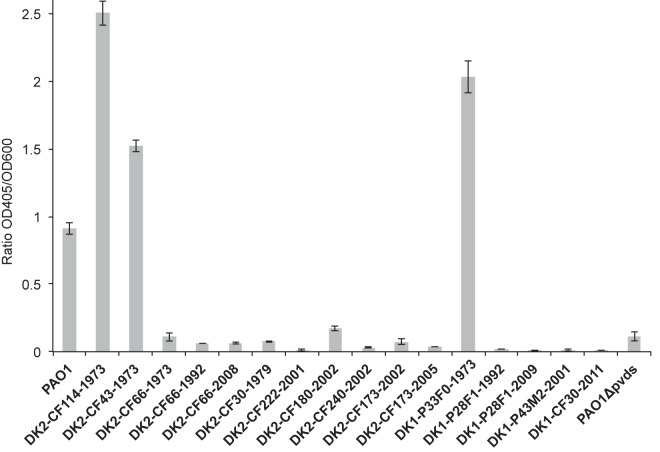
Pseudomonas aeruginosa airway infections are a major cause of mortality and morbidity of cystic fibrosis (CF) patients. In order to persist, P. aeruginosa depends on acquiring iron from its host, and multiple different iron acquisition systems may be active during infection. This includes the pyoverdine siderophore and the Pseudomonas heme utilization (phu) system. While the regulation and mechanisms of several iron-scavenging systems are well described, it is not clear whether such systems are targets for selection during adaptation of P. aeruginosa to the host environment. Here we investigated the within-host evolution of the transmissible P. aeruginosa DK2 lineage. We found positive selection for promoter mutations leading to increased expression of the phu system. By mimicking conditions of the CF airways in vitro, we experimentally demonstrate that increased expression of phuR confers a growth advantage in the presence of hemoglobin, thus suggesting that P. aeruginosa evolves toward iron acquisition from hemoglobin. To rule out that this adaptive trait is specific to the DK2 lineage, we inspected the genomes of additional P. aeruginosa lineages isolated from CF airways and found similar adaptive evolution in two distinct lineages (DK1 and PA clone C). Furthermore, in all three lineages, phuR promoter mutations coincided with the loss of pyoverdine production, suggesting that within-host adaptation toward heme utilization is triggered by the loss of pyoverdine production. Targeting heme utilization might therefore be a promising strategy for the treatment of P. aeruginosa infections in CF patients. IMPORTANCE Most bacterial pathogens depend on scavenging iron within their hosts, which makes the battle for iron between pathogens and hosts a hallmark of infection. Accordingly, the ability of the opportunistic pathogen Pseudomonas aeruginosa to cause chronic infections in cystic fibrosis (CF) patients also depends on iron-scavenging systems. While the regulation and mechanisms of several such iron-scavenging systems have been well described, not much is known about how the within-host selection pressures act on the pathogens' ability to acquire iron. Here, we investigated the within-host evolution of P. aeruginosa, and we found evidence that P. aeruginosa during long-term infections evolves toward iron acquisition from hemoglobin. This adaptive strategy might be due to a selective loss of other iron-scavenging mechanisms and/or an increase in the availability of hemoglobin at the site of infection. This information is relevant to the design of novel CF therapeutics and the development of models of chronic CF infections.
Overview
The claims and statistics of this paper haven’t been checked yet.
Free: it reads the open-access text and checks the first 5 claims that cite a source we can check. Create a free account to check every claim.
Integrity signals
Registry
Cites
Statistics
Figures
Verification
Claims the paper makes
The claims and statistics of this paper haven’t been checked yet.
Free: it reads the open-access text and checks the first 5 claims that cite a source we can check. Create a free account to check every claim.
Claims other papers make about this one
Each is checked against this paper’s own text: does it say what the citing paper says it does?
The source backs part of the claim, not all of it — or backs it for a different population, condition or comparison.
In the citing paper
“Among several potential adaptations that took place during this period, evidence of positive selection was detected in the promoter of phu, the bacterial heme uptake system.”
From Buried Treasure: Evolutionary Perspectives on Microbial Iron Piracy (2015) · cites this paper as [88]
Experimental — accuracy not yet measuredThe source backs part of the claim, not all of it — or backs it for a different population, condition or comparison.
In the citing paper
“indicating that ferrous iron is also a source of bioavailable iron.”
From Heme Synthesis and Acquisition in Bacterial Pathogens (2016) · cites this paper as [166]
Experimental — accuracy not yet measuredThe source backs part of the claim, not all of it — or backs it for a different population, condition or comparison.
In the citing paper
“Additionally, P. aeruginosa lineages colonized in cystic fibrosis patients evolved to prefer heme over the siderophore pyoverdine as an iron source (85).”
From Transition Metals and Virulence in Bacteria (2016) · cites this paper as [85]
Experimental — accuracy not yet measuredThe cited source says what the claim attributes to it.
In the citing paper
“Using experimental culture systems, the authors determined that increased expression of the phu system enhanced bacterial growth in a model of the CF lung, and that similar mutations had occurred independently in P. aeruginosa isolates from other patients with CF.”
From Buried Treasure: Evolutionary Perspectives on Microbial Iron Piracy (2015) · cites this paper as [88]
The cited source says what the claim attributes to it.
In the citing paper
“These clinical data confirm experimental findings suggesting that P. aeruginosa heme acquisition contributes to chronic infection.”
From Heme Synthesis and Acquisition in Bacterial Pathogens (2016) · cites this paper as [166]
6 more claims about this paper
Create a free account to see every claim other papers make about this one.
Self-check
Percentages, sums and reported differences re-computed from the paper’s own numbers.
The self-check needs the paper’s full text.
Citations
Cites
R: A Language and Environment for Statistical Computing
R Core Team (2025) · doi:10.32614/r.manuals · Cited by 352,181
The Sequence Alignment/Map format and SAMtools
Li, H., Handsaker, B., Wysoker, A., Fennell, T., Ruan, J., Homer, N., Marth, G., Abecasis, G., Durbin, R., & 1000 Genome Project Data Processing Subgroup (2009) · Bioinformatics · doi:10.1093/bioinformatics/btp352 · Cited by 62,041
Herrero, M., de Lorenzo, V, & Timmis, K. N. (1990) · Journal of Bacteriology · doi:10.1128/jb.172.11.6557-6567.1990 · Cited by 1,586 · cited 1×
“Escherichia coli strain CC118( pir) was used for maintenance of recombinant plasmids (28) in medium supplemented with 8 g/ml of tetracycline.”
MethodGenetic adaptation by Pseudomonas aeruginosa to the airways of cystic fibrosis patients
Smith, E. E., Buckley, D. G., Wu, Z., Saenphimmachak, C., Hoffman, L. R., D’Argenio, D. A., Miller, S. I., Ramsey, B. W., Speert, D. P., Moskowitz, S. M., et al. (2006) · Proceedings of the National Academy of Sciences · doi:10.1073/pnas.0602138103 · Cited by 1,319 · cited 1×
“(5) over an infection course of 90 months also did not reveal any mutations in iron acquisition systems, except for a nonsynonymous mutation in pvdS (which correlated with the loss of pyoverdine production) and an intergenic SNP upstream of fptA (5).”
BackgroundBacterial Iron Sources: From Siderophores to Hemophores
Wandersman, C., & Delepelaire, P. (2004) · Annual Review of Microbiology · doi:10.1146/annurev.micro.58.030603.123811 · Cited by 930 · cited 1×
“Siderophores are generally regarded as highly immunogenic (22), and selection against pyoverdine production might have driven the accumulation of pvdS mutations, leading to a loss of pyoverdine production in the evolved isolates.”
BackgroundThe Battle for Iron between Bacterial Pathogens and Their Vertebrate Hosts
Skaar, E. P. (2010) · PLoS Pathogens · doi:10.1371/journal.ppat.1000949 · Cited by 796 · cited 3×
“While the regulation and mechanisms of several of such iron-scavenging systems are well described (1), not much is known about how the withinhost selection pressures act on the pathogens’ ability to acquire iron.”
BackgroundInfluentialChromosomal genetics of Pseudomonas
Holloway, B. W., Krishnapillai, V., & Morgan, A. F. (1979) · Microbiological Reviews · doi:10.1128/mmbr.43.1.73-102.1979 · Cited by 761 · cited 5×
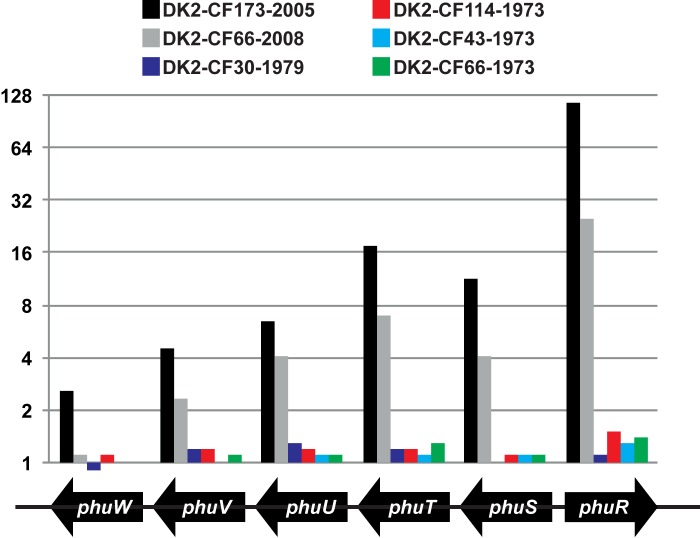
“Accordingly, we found the transcription of the phuRSTUVW genes to be upregulated in both of the mutated isolates (DK2-CF173-2005 and DK2-CF66-2008) relative to that for their ancestors and a laboratory reference strain PAO1 (Fig.”
MethodInfluentialHoang, T. T., Kutchma, A. J., Becher, A., & Schweizer, H. P. (2000) · Plasmid · doi:10.1006/plas.1999.1441 · Cited by 497
Evolutionary dynamics of bacteria in a human host environment
Yang, L., Jelsbak, L., Marvig, R. L., Damkiær, S., Workman, C. T., Rau, M. H., Hansen, S. K., Folkesson, A., Johansen, H. K., Ciofu, O., et al. (2011) · Proceedings of the National Academy of Sciences · doi:10.1073/pnas.1018249108 · Cited by 369 · cited 5×
“Sequencing of DK1 isolates was performed as described earlier (4).”
BackgroundMethodSelf-citationFeo – Transport of Ferrous Iron into Bacteria
Cartron, M. L., Maddocks, S., Gillingham, P., Craven, C. J., & Andrews, S. C. (2006) · BioMetals · doi:10.1007/s10534-006-0003-2 · Cited by 366 · cited 2×
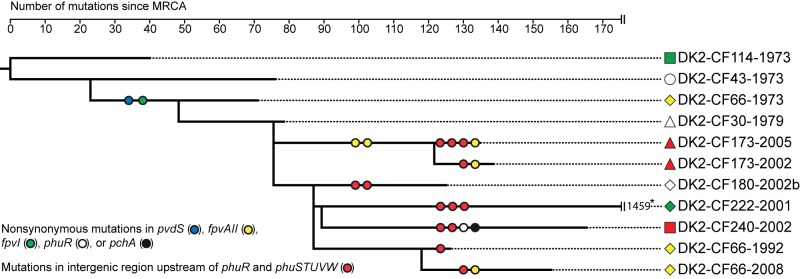
“This search revealed that the feo operon, encoding a ferrous iron uptake system (12), was upregulated in DK2-CF66-1973 and the four isolates sampled after 1973 (Table 1), indicating that several iron acquisition systems might play a role in adaptation of P.”
Background
Research works printed but not linked: 1
- Høiby N Frederiksen B 2000 Microbiology of cystic fibrosis, p 83– 107 In Hodson M Geddes D (ed), Cystic fibrosis, 2nd ed. Arnold, London, United Kingdom
Cited by
Items 101–164 of 164
Parallel Evolution of Pseudomonas aeruginosa during a Prolonged ICU-Infection Outbreak
Cameron, D. R., Pitton, M., Oberhaensli, S., Schlegel, K., Prod’hom, G., Blanc, D., Jakob, S. M., & Que, Y. (2022) · Microbiology Spectrum · doi:10.1128/spectrum.02743-22 · Cited by 17
Norman, A., Ciofu, O., Amador, C. I., Høiby, N., & Jelsbak, L. (2016) · Genome Announcements · doi:10.1128/genomea.00008-16 · Cited by 15
“aeruginosa DK1 lineage which is highly prevalent in Danish CF patients (1, 2).”
BackgroundSelf-citationGallagher, T. M., Phan, J. L., Oliver, A. S., Chase, A. B., England, W., Wandro, S., Hendrickson, C. L., Riedel, S. F., & Whiteson, K. (2019) · Journal of Bacteriology · doi:10.1128/jb.00478-18 · Cited by 17
“While ferritin is abundant in CF sputum, free iron may be scarce, and bacteria utilize scavengers to obtain iron (38, 39).”
BackgroundThe heme-responsive PrrH sRNA regulates Pseudomonas aeruginosa pyochelin gene expression
Hoang, T.-M., Huang, W., Gans, J. H., Weiner, J. M., Nowak, E. S., Barbier, M., Wilks, A., Kane, M. A., & Oglesby, A. G. (2023) · mSphere · doi:10.1128/msphere.00392-23 · Cited by 15
Normant, V., Kühn, L., Munier, M., Hammann, P., Mislin, G. L. A., & Schalk, I. J. (2021) · ACS Infectious Diseases · doi:10.1021/acsinfecdis.1c00525 · Cited by 17
Kumar, R., Qi, Y., Matsumura, H., Lovell, S., Yao, H., Battaile, K. P., Im, W., Moënne‐Loccoz, P., & Rivera, M. (2016) · Biochemistry · doi:10.1021/acs.biochem.6b00239 · Cited by 16
“endowing these strains with a growth advantage in the presence of hemoglobin.(10) Along this”
BackgroundIn vitro lung epithelial cell model reveals novel roles for Pseudomonas aeruginosa siderophores
Kang, D., Xu, Q., & Kirienko, N. V. (2024) · Microbiology Spectrum · doi:10.1128/spectrum.03693-23 · Cited by 17
Akinbosede, D., Chizea, R., & Hare, S. (2022) · Microbial Cell · doi:10.15698/mic2022.04.775 · Cited by 14
“Pseudomonas aeruginosa PhuR [110] TBDT Hb”
InfluentialHermansen, G. M. M., Hansen, M. L., Khademi, S. M. H., & Jelsbak, L. (2018) · Microbiology · doi:10.1099/mic.0.000687 · Cited by 16
Self-citationBendixen, M. P., Jeppesen, M., Irazoki, O., Jensen, C. B., Wang, M., Petersen, J., Katzenstein, T. L., Pressler, T., Skov, M., Olesen, H. V., et al. (2025) · Clinical Microbiology and Infection · doi:10.1016/j.cmi.2025.08.012 · Cited by 15
Robinson, E. A., Wilks, A., & Xue, F. (2021) · Biochemistry · doi:10.1021/acs.biochem.0c00895 · Cited by 12
Mouriño, S., & Wilks, A. (2021) · Advances in microbial physiology/Advances in Microbial Physiology · doi:10.1016/bs.ampbs.2021.07.004 · Cited by 12
Morales, L., Echeverz, M., Trobos, M., Solano, C., & Lasa, Í. (2022) · Microorganisms · doi:10.3390/microorganisms10030600 · Cited by 13
Shahzad, S., Krug, S. A., Mouriño, S., Huang, W., Kane, M. A., & Wilks, A. (2024) · mBio · doi:10.1128/mbio.02763-23 · Cited by 11
“Furthermore, within-host genomic analysis of clinical P. aeruginosa strains revealed positive selection for mutations within the promoter region of the phu locus, resulting in increased expression of the PhuR receptor that coincides with a loss in PVD biosynthesis (20).”
BackgroundGenomic Analysis of Consecutive Acinetobacter baumannii Strains From a Single Patient
Kim, S. J., Kim, Y., & Ko, K. S. (2018) · Frontiers in Microbiology · doi:10.3389/fmicb.2018.02840 · Cited by 10
Robinson, E. A., Frankenberg‐Dinkel, N., Xue, F., & Wilks, A. (2021) · Frontiers in Microbiology · doi:10.3389/fmicb.2021.787609 · Cited by 11
Leal, T., Bergamini, G., Huaux, F., Panin, N., Noël, S., Dhooghe, B., Haaf, J. B., Mauri, P., Motta, S., Silvestre, D. D., et al. (2016) · Frontiers in Immunology · doi:10.3389/fimmu.2016.00499 · Cited by 10
“aeruginosa to cause chronic infections in patients with CF also depends on iron-scavenging systems (48).”
BackgroundLiu, H., Yang, L., Chen, Q., Song, H., Bo, X., Guo, J., Li, P., & Ni, M. (2022) · Microbiology Spectrum · doi:10.1128/spectrum.00057-22 · Cited by 11
Mozzi, A., Forni, D., Clerici, M., Cagliani, R., & Sironi, M. (2018) · Frontiers in Immunology · doi:10.3389/fimmu.2018.02086 · Cited by 9
“Notably, within-host selection of mutations in the promoter of the Phu system occur and confer a growth advantage during chronic infections in cystic fibrosis patients (111).”
BackgroundShen, C., Zeng, J., Zheng, D., Xiao, Y., Pu, J., Luo, L., Zhou, H., Cai, Y., Zhang, L., Wu, M., et al. (2023) · Microbiology Spectrum · doi:10.1128/spectrum.05312-22 · Cited by 10
“There are no differences in gender (male: 64.5% [40/62] vs 67.9% [91/134], P = 0.6388) and age distribution (≥60 years: 22.6% [14/62] vs 32.1% [43/134], P = 0.1782) between relapse and non-relapse infection groups (Table 1).”
BackgroundInfluentialIroning out pyoverdine’s chromophore structure: serendipity or design?
Cézard, C., Sonnet, P., & Bouvier, B. (2019) · JBIC Journal of Biological Inorganic Chemistry · doi:10.1007/s00775-019-01678-x · Cited by 9
Edache, E. I., Uzairu, A., Mamza, P. A., & Shallangwa, G. A. (2020) · Journal of Drugs and Pharmaceutical Science · doi:10.31248/jdps2020.036 · Cited by 8
“aeruginosa bets on acquiring iron from its host, and various iron acquisition systems may be active during infection (Marvig et al., 2014).”
BackgroundInfluentialWeiner, J. M., Lee, W. H., Nolan, E. M., & Oglesby, A. G. (2025) · Journal of Bacteriology · doi:10.1128/jb.00029-25 · Cited by 9
“By contrast, strategies that target heme uptake, includ ing recently reported gallium-salophen heme mimics (23), may prove more beneficial during chronic CF lung infection where heme is a more prevalent source of iron (97, 102).”
A road map for in vivo evolution experiments with blood‐borne parasitic microbes
Rodríguez‐Pastor, R., Shafran, Y., Knossow, N., Gutiérrez, R., Harrus, S., Zaman, L., Lenski, R. E., Barrick, J. E., & Hawlena, H. (2022) · Molecular Ecology Resources · doi:10.1111/1755-0998.13649 · Cited by 7
“…Mycobacterium tuberculosis, Staphylococcus epidermidis, Pseudomonas aeruginosa, and human immunodeficiency virus in humans (Genestet et al., 2021; Marvig et al., 2014; Poon et al., 2010; Zhou et al., 2020), H5N1 influenza viruses in humans and poultry (Moncla et al., 2020), foot- and- mouth…”
BackgroundLiu, J., Hu, Y., Lin, K., Lin, K., Lin, H., Chen, R., Li, S., Wang, J., & Zeng, Y. (2020) · Saudi Journal of Gastroenterology · doi:10.4103/sjg.sjg_128_20 · Cited by 6
“In order to persist, drug‐resistant bacteria may be evolving to acquire iron acquisition systems to overcome the elaborate processes mammals use to withhold iron from pathogens during infection, which was observed in some other common bacterial pathogens.[19,20] On the other hand, the patient’s general status determin…”
BackgroundSubramaniyan, Y., Khan, A., Mujeeburahiman, M., Ashmitha, Shivani, Patil, S., Lavanya, N., & Rekha, P. D. (2025) · Microbial Pathogenesis · doi:10.1016/j.micpath.2025.107502 · Cited by 6
Cheat invasion causes bacterial trait loss in lung infections
Kümmerli, R. (2015) · Proceedings of the National Academy of Sciences · doi:10.1073/pnas.1513797112 · Cited by 8
The Pseudomonas aeruginosa PrrF sRNAs and PqsA promote biofilm formation at body temperature
Chourashi, R., Weiner, J. M., Hoang, T.-M., Ouattara, K. O., & Oglesby, A. G. (2026) · Journal of Bacteriology · doi:10.1128/jb.00507-25 · Cited by 5
“However, the importance of each system appears to vary among different infection models (reviewed by Cornelis and Dingemans [18]), with Fe(II) and heme uptake more predominant in chronic infections (19, 20).”
Jiang, B., Qiu, H., Lu, C., Lu, M., Li, Y., & Dai, W. (2024) · Nucleic Acids Research · doi:10.1093/nar/gkae187 · Cited by 6
Zhu, Z., Surujon, D., Pavao, A., Bento, J., & van Opijnen, T. (2018) · bioRxiv (Cold Spring Harbor Laboratory) · doi:10.1101/387910 · Cited by 8
“Prior studies of adaptive evolution focus on interpreting adaptive mutations only after they have been acquired, and these interpretations are very specific to the selective pressure under which adaptation has happened in a particular study [40-42].”
BackgroundInflammation-like environments limit the loss of quorum sensing in Pseudomonas aeruginosa
Fu, T., Wright, R. C. T., Gifford, D. R., Cg, K., & Brockhurst, M. A. (2025) · mSystems · doi:10.1128/msystems.01722-24 · Cited by 5
“P. aeruginosa undergoes a suite of characteristic adaptations during human chronic airway infections, including loss of QS (53–56).”
Identification of iron and zinc responsive TonB-dependent transporters in Pseudomonas aeruginosa
Ferry, M., Ferriz, H., Sharp, C., Paschalidis, C., Boutant, E., Schalk, I. J., & Cunrath, O. (2026) · BioMetals · doi:10.1007/s10534-026-00880-0 · Cited by 3
Montes, N., Wilson, T., Krug, S. A., Mouriño, S., Kane, M. A., Deredge, D. J., & Wilks, A. (2025) · Journal of Biological Chemistry · doi:10.1016/j.jbc.2025.108440 · Cited by 3
“Several studies have shown that in chronic infection P. aeruginosa adapts to utilize heme as its primary iron source at the expense of siderophore uptake (30, 31).”
Transmission and antibiotic resistance of Achromobacter in cystic fibrosisPreprint
Gabrielaitė, M., Bartell, J. A., Nørskov‐Lauritsen, N., Pressler, T., Nielsen, F. C., Johansen, H. K., & Marvig, R. L. (2020) · bioRxiv (Cold Spring Harbor Laboratory) · doi:10.1101/2020.08.04.235952 · Cited by 4
Self-citationAzimi, S., Thomas, J., Cleland, S. E., Curtis, J. E., Goldberg, J. B., & Diggle, S. P. (2021) · bioRxiv (Cold Spring Harbor Laboratory) · doi:10.1101/2021.01.14.426723 · Cited by 3
Heme alters biofilm formation in Mycobacterium abscessus
Aftab, H., Samudio, J., Wang, G. C., Le, L., Soni, R. K., & Donegan, R. K. (2024) · Microbiology Spectrum · doi:10.1128/spectrum.02415-24 · Cited by 3
Atto, B., Gell, D. A., Marsh, R. L., & Tristram, S. G. (2025) · Frontiers in Cellular and Infection Microbiology · doi:10.3389/fcimb.2025.1548048 · Cited by 2
“In Pseudomonas aeruginosa , positive selection for promotor mutations that increase expression of the bacterial uptake system phu (pyoverdine siderophore) occurs exclusively among isolates from patients with cystic fi brosis that show enhanced bacterial growth (Marvig et al., 2014).”
Mechanisms of bacterial heme uptake and degradation: Diverse strategies for ring opening
Johnson, K., Xue, F., & Wilks, A. (2025) · Journal of Inorganic Biochemistry · doi:10.1016/j.jinorgbio.2025.113023 · Cited by 2
Khademi, S. M. H., Sahl, C., Happonen, L., Försberg, Å., & Påhlman, L. I. (2023) · Virulence · doi:10.1080/21505594.2023.2284513 · Cited by 2
“0.3– 0.4) in 50 ml of ABT minimal medium [28] supplemented with 0.5% (w/v) casamino acids and 0.5% (w/v) glucose (Merck) (ABTGC) with or without 10 µM Fe”
MethodInfluentialSelf-citationDennehy, R., Duggan, N., Dignam, S., McCormack, S., Dillon, E., Molony, J., Romanò, M., Hou, Y., Ardill, L., Whelan, M. V. X., et al. (2022) · MicrobiologyOpen · doi:10.1002/mbo3.1264 · Cited by 2
“…niches, including soil and watercourses, and their success as human pathogens relies on their plasticity to adapt to varying conditions (Cullen & McClean, 2015; Hogardt & Heesemann, 2010; Howard et al., 2012; Jeong et al., 2010; Marvig et al., 2014; O'Connor & McClean, 2017; Trunk et al., 2010).”
BackgroundChaperone-assisted cryo-EM structure of P. aeruginosa PhuR reveals molecular basis for heme binding
Knejski, P. P., Erramilli, S. K., & Kossiakoff, A. A. (2024) · Structure · doi:10.1016/j.str.2024.01.007 · Cited by 3
Assessing Pathogens for Natural versus Laboratory Origins Using Genomic Data and Machine LearningPreprint
Korves, T. M., Garay, C. D., Carleton, H. A., Sabol, A., Trees, E., & Peterson, M. (2016) · bioRxiv (Cold Spring Harbor Laboratory) · doi:10.1101/079541 · Cited by 3
“In addition, recent studies have found 53 mutations in certain genes of Burkholderia dolosa (7) and Pseudomonas aeruginosa (23) that 54 are associated with adaptation to patients .”
BackgroundPhage-Mediated Iron Acquisition by Pseudomonas aeruginosaPreprint
Khosravi, A., Gupta, A., Hajfathalian, M., Burgener, E. B., Rodriguez, S. P., Milla, C. E., & Bollyky, P. L. (2026) · bioRxiv (Cold Spring Harbor Laboratory) · doi:10.64898/2026.01.26.700923 · Cited by 6
“The loss of pyoverdine expression clinical isolates from individuals with chronic lung disease suggests alternative iron acquisition strategies, such as heme utilization, is more effective during chronic infection 24,26,39 .”
Antibody-guided identification of Achromobacter xylosoxidans protein antigens in cystic fibrosis
Sahl, C., Chowdhury, S., Malmström, J. A., & Påhlman, L. I. (2025) · mSphere · doi:10.1128/msphere.00233-25 · Cited by 1
Rao, J., Adenikinju, A., Matthew, G. J., Lily, C., Prorock, A. J., Bao, Y., Kerkering Thomas, M., Garner, D. C., & Roderick, J. (2021) · International Archives of Medical Microbiology · doi:10.23937/2643-4008/1710012 · Cited by 1
“For example, the pyoverdine biosynthesis genes and receptors (pvdQ to pvdR locus and pvdA and fpvA) generate secreted sidephores that are able to strip iron from host cells and transport it back to the bacterial cell for utilization in multiple metabolic pathways [18-20].”
BackgroundBenefits of siderophore release lie in mediating diffusion limitation at low iron solubilityPreprint
Leventhal, G. E., Ackermann, M., & Schiessl, K. T. (2016) · bioRxiv (Cold Spring Harbor Laboratory) · doi:10.1101/093948 · Cited by 1
Proteogenomics of Pseudomonas aeruginosa in Cystic Fibrosis Infections
Yang, L., & Chua, S. L. (2017) · Wiley eBooks · doi:10.1002/9781118960226.ch17 · Cited by 1
Nutrition for Pancreatic Sufficient Individuals with Cystic Fibrosis
Pohl, J. F., & McDonald, C. M. (2015) · Springer eBooks · doi:10.1007/978-3-319-16387-1_16
Viral-Bacterial Interactions in Cystic Fibrosis Lung Disease
Hendricks, M. R. (2017) · D-Scholarship@Pitt (University of Pittsburgh)
(2022) · Molecular Plant-Microbe Interactions · doi:10.1094/mpmi-35-4
Untersuchung des Häm‐bindenden bakteriellen Proteoms mittels chemischer Proteomik
Wilkinson, I. V. L., Bottlinger, M., Harraoui, Y. E., & Sieber, S. A. (2022) · Angewandte Chemie · doi:10.1002/ange.202212111
Yin, Y., Luo, L.-Z., Li, L., Hu, Z., Chen, Y.-C., Ma, J., Yu, Y., Wang, H., & Zhang, W. (2024) · Phytopathology · doi:10.1094/phyto-04-24-0113-r
Egoshi, R., Huang, W., Albert, T., Kane, M. A., Deredge, D. J., Moënne‐Loccoz, P., & Wilks, A. (2026) · Journal of Biological Chemistry · doi:10.1016/j.jbc.2026.111314
Ritz, D., Clay, M. E., Kim, T., Gelder, R. D. V., Chandrashekhar, J. H., Collins, A. J., Ashare, A., Goddard, J., Hoehn, K. B., Schultz, D., et al. (2026) · mSystems · doi:10.1128/msystems.00238-26 · Cited by 1
Gomez, N. (2020) · theses.fr (ABES) · doi:10.70675/4ddb7f10z548bz4495za0b4z7fc13f6d405d · Cited by 1
Camus, L. (2020) · theses.fr (ABES) · doi:10.70675/ecddb701z1d6fz422fz86d0zc4e6a93d6a98 · Cited by 1
Aagaard, F. J. H., Higazy, D., Middelboe, M., & Ciofu, O. (2026) · Bacteriophage · doi:10.1016/j.phage.2026.100002
Biological and clinical significance of iron in Pseudomonas aeruginosa biofilms
Weiner, J. M., Chourashi, R., Ouattara, K. O., & Oglesby, A. G. (2026) · Journal of Bacteriology · doi:10.1128/jb.00598-25 · Cited by 1
“However, P. aeruginosa has been shown to evolve toward higher expression of heme uptake systems over the course of CF lung infection, suggesting the importance of this iron source in the CF lung (102, 103).”
Sun, Y., Chen, J., Wang, N., Su, C., Li, H., Gong, J., Xu, Z.-H., & Shi, J. (2026) · Food Bioengineering · doi:10.1002/fbe2.70063
Mouriño, S., Shahzad, S., Huang, W., Weldemariam, M. M., Krug, S. A., Andrews, W. T., Sen-Kilic, E., Blackwood, C. B., Barbier, M., Kane, M. A., et al. (2026) · Journal of the American Society for Mass Spectrometry · doi:10.1021/jasms.6c00103
Qian, L., Yi, Y. A. N., Sun, S., Zeng, J., Zhang, F., Xiang, L., Chen, H., Zhang, L., & Li, Y. (2026) · Microbiology Spectrum · doi:10.1128/spectrum.01358-26
The interface of biofilm and immune system for Gram-negative ESKAPE pathogens
Biswas, S., Bhattacharyya, S., Biswas, S., Bhattacharya, S. P., Ghosh, A., & Bhattacharya, A. (2026) · Infection and Immunity · doi:10.1128/iai.00374-26 · Cited by 1
“Understanding the dynamics of these intricate host–pathogen interaction mechanisms is important for unveiling novel therapeutic targets, thereby guiding the development of immune-based interventions, which further improve the outcomes of biofilm-associated infections caused by Gram-negative ESKAPE…”
Cao, J., Zhang, G., Xue, D., Gao, D., Li, X., Guo, J., & Dai, P. (2026) · Microbial Genomics · doi:10.1099/mgen.0.001854
Metadata
- Authors
- Marvig, R. L., Damkiær, S., Khademi, S. M. H., Markussen, T. M., Molin, S., & Jelsbak, L.
- Affiliations
- Technical University of Denmark (DK)
- Corresponding author
- Jelsbak, Lars
- Venue
- mBio
- Publisher
- American Society for Microbiology
- Published
- 2014-07
- Volume
- 5
- Issue
- 3
- Pages
- e00966-14
- ISSN
- 2150-7511 (ISSN-L)
- 2161-2129
- PMC
- PMC4010824
- OpenAlex
- W2099164168
- Cited by
- 164
- References
- 35
- Citations by year
- 2026: 11 · 2025: 9 · 2024: 7 · 2023: 6 · 2022: 17 · 2021: 22 · 2020: 17 · 2019: 11 · 2018: 15 · 2017: 15 · 2016: 21 · 2015: 13
- FWCI
- 6.70
- Type
- journal article
- Language
- en
- Open access
- gold
- doi.org
- Licence
- cc-by-nc-sa
- creativecommons.org/licenses/by-nc-sa/3.0/ (vor)
- journals.asm.org/non-commercial-tdm-license (tdm)
- Locations
- mBio (publishedVersion, cc-by-nc-sa)
- Europe PMC (PubMed Central) (publishedVersion, cc-by-nc-sa)
- PubMed Central (publishedVersion, cc-by-nc-sa)
- PubMed (publishedVersion)
- DOAJ (DOAJ: Directory of Open Access Journals) (submittedVersion, cc-by-sa)
- Technical University of Denmark, DTU Orbit (Technical University of Denmark, DTU) (submittedVersion)
- Funders
- Villum Fonden (00007262)
- Topics
- Life Sciences › Biochemistry, Genetics and Molecular Biology › Molecular Biology › Bacterial biofilms and quorum sensing
- Health Sciences › Medicine › Pulmonary and Respiratory Medicine › Cystic Fibrosis Research Advances
- Life Sciences › Biochemistry, Genetics and Molecular Biology › Genetics › Bacterial Genetics and Biotechnology
- Keywords
- Pseudomonas aeruginosa, within-host evolution, iron acquisition, hemoglobin utilization, pyoverdine, cystic fibrosis, chronic lung infection, adaptive evolution
- MeSH terms
- Adaptation, Physiological, Bacterial Proteins, Base Sequence, Biological Evolution, Heme, Hemoglobins, Iron, Molecular Sequence Data, Mutation, Oligopeptides, Phylogeny, Promoter Regions, Genetic, Pseudomonas aeruginosa, Pseudomonas Infections, Transcription, Genetic, Gene Expression Regulation, Bacterial, Sequence Alignment, Host-Pathogen Interactions
About these checks
Registry, retraction, Cites and statistics results are computed, not judged, with one exception: a printed reference that no index lists is read once by a model before it counts as a citation error. Claims are extracted by a model and kept only when their quote appears verbatim in the text; each cited source is then checked, with a model’s help, for whether it says what the claim relies on. Those verdicts can be wrong — read the claim’s quote and the cited source before relying on one.
Statistics and arithmetic are recomputed, not judged.
Confidence bands are shown only for fields calibrated on our annotated test set. None is calibrated yet, so no band is shown.
What counts as a claim ›How we measure confidence ›How we check this ›
Are you an author, or do you see a problem with this page? Request a review
Data sources
Bibliographic data: Semantic Scholar, OpenAlex, Crossref.
Contains information from the Semantic Scholar Academic Graph Datasets, made available under the ODC Attribution License (ODC-BY 1.0).
Semantic Scholar’s data is described in: Kinney, R., et al. (2023). The Semantic Scholar Open Data Platform. arXiv:2301.10140.
