

Genome-Wide Essentiality Analysis of Mycobacterium abscessus by Saturated Transposon Mutagenesis and Deep Sequencing
Open accessThe DOI matches its Crossref record; 107 of the 107 references it cites were found in a registry or an index.
Abstract
Limited knowledge regarding Mycobacterium abscessus pathogenesis and intrinsic resistance to most classes of antibiotics is a major obstacle to developing more effective strategies to prevent and mitigate disease. Using optimized procedures for Himar1 transposon mutagenesis and deep sequencing, we performed a comprehensive analysis to identify M. abscessus genetic elements essential for in vitro growth and compare them to similar data sets for M. tuberculosis and M. avium subsp. hominissuis .
Overview
The claims and statistics of this paper haven’t been checked yet.
Free: it reads the open-access text and checks the first 5 claims that cite a source we can check. Create a free account to check every claim.
Integrity signals
Registry
Cites
Statistics
Figures
Verification
Claims the paper makes
The claims and statistics of this paper haven’t been checked yet.
Free: it reads the open-access text and checks the first 5 claims that cite a source we can check. Create a free account to check every claim.
Claims other papers make about this one
Each is checked against this paper’s own text: does it say what the citing paper says it does?
The source backs part of the claim, not all of it — or backs it for a different population, condition or comparison.
In the citing paper
“For example, Tn-seq, recombineering and CRISPR tools applied to M. abscessus have begun to define those genes that make M. abscessus intrinsically resistant to many antibiotics (167–170).”
From Mycobacterium smegmatis: The Vanguard of Mycobacterial Research (2023) · cites this paper as [167]
Experimental — accuracy not yet measured
Self-check
Percentages, sums and reported differences re-computed from the paper’s own numbers.
The self-check needs the paper’s full text.
Citations
Cites
Trimmomatic: a flexible trimmer for Illumina sequence data
Bolger, A. M., Lohse, M., & Usadel, B. (2014) · Bioinformatics · doi:10.1093/bioinformatics/btu170 · Cited by 65,548 · cited 1×
“39 (103) and processed using TPP in TRANSIT, which counts reads mapping to each TA dinucleotide site against the published M.”
MethodGriffith, D. E., Aksamit, T., Brown-Elliott, B. A., Catanzaro, A., Daley, C., Gordin, F., Holland, S. M., Horsburgh, R., Huitt, G., Iademarco, M. F., et al. (2007) · American Journal of Respiratory and Critical Care Medicine · doi:10.1164/rccm.200604-571st · Cited by 6,110
Brown-Elliott, B. A., & Wallace, R. J. (2002) · Clinical Microbiology Reviews · doi:10.1128/cmr.15.4.716-746.2002 · Cited by 909 · cited 2×
“abscessus complex is a large and heterogeneous group of species (1, 71, 72)”
BackgroundWang, Y., Coleman-Derr, D., Chen, G., & Gu, Y. Q. (2015) · Nucleic Acids Research · doi:10.1093/nar/gkv487 · Cited by 888
Bacterial peptidoglycan (murein) hydrolases
Vollmer, W., Joris, B., Charlier, P., & Foster, S. (2008) · FEMS Microbiology Reviews · doi:10.1111/j.1574-6976.2007.00099.x · Cited by 886
Xu, L., Dong, Z., Fang, L., Luo, Y., Wei, Z., Guo, H., Zhang, G., Gu, Y. Q., Coleman-Derr, D., Xia, Q., et al. (2019) · Nucleic Acids Research · doi:10.1093/nar/gkz333 · Cited by 850 · cited 1×
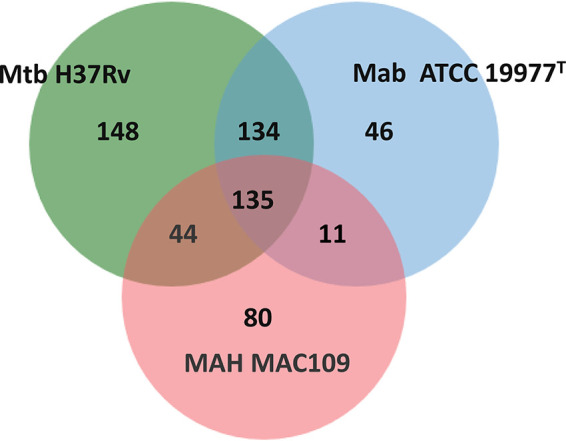
“avium MAC109 (10, 11) using orthovenn2 diagram analysis (excluding genes encoding proteins containing less than 20 amino acids) (104).”
MethodNon-tuberculous mycobacteria and the rise of Mycobacterium abscessus
Johansen, M. D., Herrmann, J.-L., & Kremer, L. (2020) · Nature Reviews Microbiology · doi:10.1038/s41579-020-0331-1 · Cited by 822 · cited 1×
“The poor efficacy of existing treatments is attributable in part to the high degree of intrinsic resistance to most major classes of antibiotics, including most antituberculosis drugs (2, 5, 6).”
BackgroundDeJesus, M. A., Gerrick, E. R., Xu, W., Park, S. W., Long, J. E., Boutte, C. C., Rubin, E. J., Schnappinger, D., Ehrt, S., Fortune, S. M., et al. (2017) · mBio · doi:10.1128/mbio.02133-16 · Cited by 668
Nash, K. A., Brown-Elliott, B. A., & Wallace, R. J. (2009) · Antimicrobial Agents and Chemotherapy · doi:10.1128/aac.01275-08 · Cited by 638
Emergence and spread of a human-transmissible multidrug-resistant nontuberculous mycobacterium
Bryant, J. M., Grogono, D. M., Rodriguez-Rincon, D., Everall, I., Brown, K. P., Moreno, P., Verma, D., Hill, E., Drijkoningen, J., Gilligan, P., et al. (2016) · Science · doi:10.1126/science.aaf8156 · Cited by 587 · cited 2×
“abscessus is ubiquitous in the environment, including soil and water (4).”
Background
Cited by
Mycobacterium smegmatis: The Vanguard of Mycobacterial Research
Sparks, I. L., Derbyshire, K. M., Jacobs, W. R., & Morita, Y. S. (2023) · Journal of Bacteriology · doi:10.1128/jb.00337-22 · Cited by 149
Therapeutic developments for tuberculosis and nontuberculous mycobacterial lung disease
Dartois, V. A., & Dick, T. (2024) · Nature Reviews Drug Discovery · doi:10.1038/s41573-024-00897-5 · Cited by 137
“These cell wall targets have homologues in MAB, where they are essential, as shown by a genome-wide Tn-seq approach 117 , but systematic investigations of their vulnerability across clinically relevant NTM pathogens and in vivo proof-of-concept studies are largely lacking.”
Akusobi, C., Benghomari, B. S., Zhu, J., Wolf, I. D., Singhvi, S., Dulberger, C. L., Ioerger, T. R., & Rubin, E. J. (2022) · eLife · doi:10.7554/elife.71947 · Cited by 45
“successfully generated high- density libraries and were the first group to identify essential genes and genomic elements in the Mab genome (Rifat et al., 2021).”
BackgroundResultInfluentialSullivan, M. R., McGowen, K., Liu, Q., Akusobi, C., Young, D. C., Mayfield, J. A., Raman, S., Wolf, I. D., Moody, D. B., Aldrich, C. C., et al. (2023) · Nature Microbiology · doi:10.1038/s41564-022-01307-5 · Cited by 36
Dulberger, C. L., Guerrero-Bustamante, C. A., Owen, S. V., Wilson, S., Wuo, M. G., Garlena, R. A., Serpa, L. A., Russell, D. A., Zhu, J., Braunecker, B. J., et al. (2023) · Nature Microbiology · doi:10.1038/s41564-023-01333-x · Cited by 32
“Interestingly, in M. abscessus, as in M. smegmatis, lsr2 is non-essential 34,61 , although its loss considerably diminishes M. abscessus virulence.”
Therapeutically useful mycobacteriophages BPs and Muddy require trehalose polyphleates
Wetzel, K. S., Illouz, M., Abad, L., Aull, H. G., Russell, D. A., Garlena, R. A., Cristinziano, M., Malmsheimer, S., Chalut, C., Hatfull, G. F., et al. (2023) · Nature Microbiology · doi:10.1038/s41564-023-01451-6 · Cited by 37
Treatment of non-tuberculosis mycobacteria skin infections
Wang, X., Jia, Q., & Li, J. (2023) · Frontiers in Pharmacology · doi:10.3389/fphar.2023.1242156 · Cited by 41
“tuberculosis shares similar physiological characteristics, virulence factors, and genetic drug targets (Rifat et al., 2021; Mei et al., 2023), it is still not advisable to fully copy the treatment regimens of TB.”
BackgroundKurepina, N. E., Chen, L., Composto, K., Rifat, D., Nuermberger, E. L., & Kreiswirth, B. N. (2022) · Antimicrobial Agents and Chemotherapy · doi:10.1128/aac.00093-22 · Cited by 32
“abscessus ATCC 19977, comparatively assessed its genomic content to similar libraries in Mycobacterium tuberculosis and Mycobacterium avium, and catalogued genetic elements essential for in vitro growth (13).”
BackgroundSelf-citationNegatu, D. A., Zimmerman, M., Dartois, V. A., & Dick, T. (2022) · Antimicrobial Agents and Chemotherapy · doi:10.1128/aac.00790-22 · Cited by 29
“abscessus transpeptidases and other enzymes involved in peptidoglycan 43 synthesis (11-16).”
Drug development challenges in nontuberculous mycobacterial lung disease: TB to the rescue
Dartois, V. A., & Dick, T. (2022) · The Journal of Experimental Medicine · doi:10.1084/jem.20220445 · Cited by 27
Sarathy, J. P., Zimmerman, M., Gengenbacher, M., Dartois, V. A., & Dick, T. (2022) · Antimicrobial Agents and Chemotherapy · doi:10.1128/aac.01237-22 · Cited by 25
“abscessus dprE1 (mab_0192c) is genetically essential (20).”
Rodriguez, R., Campbell-Kruger, N., Camba, J. G., Berude, J. C., Fetterman, R., & Stanley, S. A. (2023) · Antimicrobial Agents and Chemotherapy · doi:10.1128/aac.01350-22 · Cited by 28
“These data are largely consistent with previous studies that used 150 transposon mutagenesis to define the essential genome in Mabs (36, 37).”
ResultToward better cures for Mycobacterium abscessus lung disease
Dartois, V. A., & Dick, T. (2024) · Clinical Microbiology Reviews · doi:10.1128/cmr.00080-23 · Cited by 21
“One such process is peptidoglycan biosynthesis achieved by a collection of partially redundant and complementary Mab L,D and D,D transpepti dases and carboxypeptidases (162, 163), several of which are inhibited by different classes of β-lactams and even members of the same class (164–166).”
The heterogenous and diverse population of prophages in Mycobacterium genomes
Abad, L., Gauthier, C. H., Florian, I., Jacobs‐Sera, D., & Hatfull, G. F. (2023) · mSystems · doi:10.1128/msystems.00446-23 · Cited by 17
“Plasmid pIF04 integrates in the intergenic region between genes MAB_3485 and MAB_3486; both are predicted to be non-essential for growth (41).”
BackgroundSilencing essential gene expression in Mycobacterium abscessus during infection
Boudehen, Y., Tasrini, Y., Aguilera-Correa, J. J., Alcaraz, M., & Kremer, L. (2023) · Microbiology Spectrum · doi:10.1128/spectrum.02836-23 · Cited by 20
“Recent sequencing of a saturated transposon library in M. abscessus provided a comprehensive prediction of essential genes in this mycobacterial species (40).”
BackgroundAkusobi, C., Choudhery, S., Benghomari, B. S., Wolf, I. D., Singhvi, S., Ioerger, T. R., & Rubin, E. J. (2024) · mBio · doi:10.1128/mbio.03376-24 · Cited by 20
Bythrow, G. V., Farhat, M., Levendosky, K., Mohandas, P., Germain, G. A., Yoo, B., & Quadri, L. E. N. (2022) · Pathogens · doi:10.3390/pathogens11090953 · Cited by 17
“Recent studies describing a Mab strain (∆esx-3) with a 14-kb chromosomal deletion including the esx-3 locus (MAB_2224c through MAB_2234c) and a genome-wide analysis of gene essentiality revealed that Mab ESX-3 is not essential for growth under routine laboratory culturing conditions (standard, iron-rich MB media) [36,…”
BackgroundPharmacological validation of dihydrofolate reductase as a drug target in Mycobacterium abscessus
Aragaw, W. W., Negatu, D. A., Bungard, C. J., Dartois, V. A., Marrouni, A. E., Nickbarg, E. B., Olsen, D. B., Warrassꝉ, R., & Dick, T. (2023) · Antimicrobial Agents and Chemotherapy · doi:10.1128/aac.00717-23 · Cited by 16
“The M. abscessus genome harbors potential homologs of these genes (MAB_2976, MAB_3085 c) (10).”
BackgroundVariation of Structure and Cellular Functions of Type IA Topoisomerases across the Tree of Life
Tan, K., & Tse‐Dinh, Y. (2024) · Cells · doi:10.3390/cells13060553 · Cited by 15
“Results from saturation mutagenesis also indicated that Topo I is essential for Mycobacterium abscessus [107].”
BackgroundDaher, W., Moigne, V. L., Tasrini, Y., Parmar, S., Sexton, D. L., Aguilera-Correa, J. J., Berdal, V., Tocheva, E. I., Herrmann, J., & Kremer, L. (2025) · Communications Biology · doi:10.1038/s42003-025-07572-4 · Cited by 20
“Understandardlaboratoryconditions, Mtb relies on the ESX-3 system for growth, whereas Mab does not 16,17 .”
Lan, S., Li, Z., Hao, H., Liu, S., Huang, Z., Bai, Y., Li, Y., Yan, X., Gao, P., Chen, S., et al. (2023) · The FASEB Journal · doi:10.1096/fj.202300678r · Cited by 14
Genomic landscapes of bacterial transposons and their applications in strain improvement
Wu, S., Tian, P., & Tan, T. (2022) · Applied Microbiology and Biotechnology · doi:10.1007/s00253-022-12170-z · Cited by 12
Bernard, C., Liu, Y., Larrouy-Maumus, G. J., Guilhot, C., Cam, K., & Chalut, C. (2024) · Antimicrobial Agents and Chemotherapy · doi:10.1128/aac.01456-23 · Cited by 14
“The former possibility was unlikely, as MABserB2 was not auxotroph for serine (see above) and an exhaustive transposon mutagenesis in 7H9 medium recorded serB2 as essential for M. abscessus (30).”
BackgroundGenetic interaction mapping highlights key roles of the Tol‐Pal complex
Tan, W. B., & Chng, S. (2022) · Molecular Microbiology · doi:10.1111/mmi.14882 · Cited by 13
Gupta, R., & Rohde, K. H. (2022) · Tuberculosis · doi:10.1016/j.tube.2022.102292 · Cited by 14
Choudhery, S., Brown, A. J., Akusobi, C., Rubin, E. J., Sassetti, C. M., & Ioerger, T. R. (2021) · mSystems · doi:10.1128/msystems.00876-21 · Cited by 13
“abscessus ATCC 19977 (16) as well and observed very similar heatmaps and predictive power (R2 of 0.”
BackgroundZhang, J., Ju, Y., Li, L., Hameed, H. M. A., Yusuf, B., Gao, Y., Fang, C., Tian, X., Ding, J., Ma, W., et al. (2025) · International Journal of Antimicrobial Agents · doi:10.1016/j.ijantimicag.2024.107442 · Cited by 9
Mycobacterium abscessus : insights from a bioinformatic perspective
Sur, S., Patra, T., Karmakar, M., & Banerjee, A. (2022) · Critical Reviews in Microbiology · doi:10.1080/1040841x.2022.2082268 · Cited by 11
“Saturated transposon mutagenesis and deep sequencing of M. abscessus identified essential genes, tRNAs, and short open reading frames associated with pathogenesis and antibiotic resistance (Rifat et al. 2021).”
BackgroundGalanis, C., Maggioncalda, E. C., Kumar, P., & Lamichhane, G. (2022) · Journal of Bacteriology · doi:10.1128/jb.00046-22 · Cited by 9
“A recent study based on the generation of a pool of mutants with transposon insertion and detection of outgrowth mutants concluded that glby is likely essential for growth in vitro (58).”
BackgroundPathogenicity and virulence of Mycobacterium abscessus
Soverina, S., Gilliland, H. N., & Olive, A. J. (2025) · Virulence · doi:10.1080/21505594.2025.2508813 · Cited by 11
“Genome-wide transposon mutagenesis studies identified key virulence factors as well as essential genes required for Mab growth in vitro such as the PBP-lipo, which is involved in cell wall synthesis and antibiotic sensitivity [83,261,262].”
Negatu, D. A., Aragaw, W. W., Gebresilase, T. T., Paruchuri, S., Kaya, F., Shin, S. J., Sander, P., Dartois, V. A., & Dick, T. (2024) · Antimicrobial Agents and Chemotherapy · doi:10.1128/aac.01046-24 · Cited by 8
Kingma, E., Dolsma, F., de la Cruz, L. I., & Laan, L. (2025) · PLoS ONE · doi:10.1371/journal.pone.0312437 · Cited by 5
The role of colony morphotype in shaping gene essentiality in Mycobacteroides abscessus
Ross, B. N., Evans, E., Diggle, F. L., Briaud, P., & Whiteley, M. (2025) · Proceedings of the National Academy of Sciences · doi:10.1073/pnas.2500719122 · Cited by 7
““MAB S ” and “MAB R ” datasets were generated in this study and “MAB S Rifat” was previously generated using a MAB S strain (55).”
InfluentialKhan, S., Anwar, S., Choudhury, A., Mohammad, T., & Hassan, M. I. (2024) · Elsevier eBooks · doi:10.1016/b978-0-443-22222-1.00007-6 · Cited by 6
Levendosky, K., Janisch, N., & Quadri, L. E. N. (2023) · mBio · doi:10.1128/mbio.00573-23 · Cited by 5
“We also used comparative genomics and available gene essentiality data for Mtb (a slow-growing obligate pathogen) and the NTM Mycobacterium avium subsp. hominissuis (MAH, a slow-growing opportunistic pathogen), Mycobacterium abscessus (Mab, a rapidly growing opportunistic pathogen), and Mycobacterium smegmatis (Msm, a…”
ResultInfluentialA pairwise approach to revitalize β-lactams for the treatment of TB
Negatu, D. A., Aragaw, W. W., Dartois, V. A., & Dick, T. (2024) · Antimicrobial Agents and Chemotherapy · doi:10.1128/aac.00034-24 · Cited by 3
“Consistent with this unique trait of mycobacteria, both species harbor five homologous L,D transpeptidases (10) thought to be partially redundant.”
Animal models of Mycobacterium abscessus pulmonary infection phenotypes: What are we modeling?
Sui, X., & Oehlers, S. H. (2025) · PLoS Pathogens · doi:10.1371/journal.ppat.1013414 · Cited by 3
“The genus level similarities between M. abscessus and M. tuberculosis span genomic similarity demonstrated by both genetic measures such as sequence similarity and essential gene analyses, and pathogenic manifestations such as chronic pulmonary infection and residency within macrophages [1,2].”
GrcC1 mediates low-level resistance to multiple drugs in M. marinum , M. abscessus, and M. smegmatis
Fang, C., Zhang, H., He, J., Tian, X., Zeng, S., Han, X., Wang, S., Yusuf, B., Hu, J., Zhong, N. S., et al. (2025) · Microbiology Spectrum · doi:10.1128/spectrum.02289-24 · Cited by 4
“Notably, disrupting grcC1 in Mab WT led to a growth defect, consistent with the genome-wide essentiality study using transposon mutagenesis, which showed that while grcC1 can be disrupted, it causes growth defects (40).”
Gnanasekar, P., Gambhir, S., Kinatukara, P., & Bhardwaj, A. (2025) · Current Research in Structural Biology · doi:10.1016/j.crstbi.2025.100172 · Cited by 2
“MAB-specific essential proteins were obtained from a recent study on genome-wide identification of essential proteins in MAB ATCC 19977 using transposon mutagenesis followed by sequencing (Rifat et al., 2021).”
EccC3 is essential for pathogenesis of rough Mycobacterium abscessus in zebrafish
Tasrini, Y., Daher, W., & Kremer, L. (2025) · Microbiology Spectrum · doi:10.1128/spectrum.01949-25 · Cited by 2
“Under standard culture conditions, Mycobacterium tuberculosis growth depends on ESX-3, while this is not the case for Mab (6).”
Mycobacterium abscessus research: learning from challenges
Treen, R. Z., Juarrero, M. G., Jackson, M., Lapierre, P., Kremer, L., Ghosh, P., & Ojha, A. K. (2026) · Journal of Bacteriology · doi:10.1128/jb.00436-25 · Cited by 3
“In 2004, Drancourt and colleagues discovered an unusual mycobacterial isolate with 96% and 98% similarity to M. abscessus rpoB and recA genes, respectively, thereby naming it Mycobacterium massiliense (38).”
InfluentialSullivan, M. R., McGowen, K., Liu, Q., Akusobi, C., Young, D. C., Mayfield, J. A., Raman, S., Wolf, I. D., Moody, D. B., Aldrich, C. C., et al. (2022) · bioRxiv (Cold Spring Harbor Laboratory) · doi:10.1101/2022.07.20.500843 · Cited by 2
Lee, J., Li, S., Rifat, D., Kurepina, N. E., Chen, L., Kreiswirth, B. N., & Nuermberger, E. L. (2024) · bioRxiv (Cold Spring Harbor Laboratory) · doi:10.1101/2024.03.08.584109 · Cited by 2
“The results presented here confirm the essentiality of two peptidoglycan biosynthesis genes, pbpB and cwIM , for the viability of M. abscessus , as previously predicted by transposon insertion sequencing of our saturated transposon mutant library (19).”
ResultSelf-citationMakafe, G. G., Cole, L., Roberts, A., Muncil, S. E., Patwardhan, A., Bernacki, D. T., Chojnacki, M., Weinrick, B. C., & Sheinerman, F. B. (2023) · Tuberculosis · doi:10.1016/j.tube.2023.102317 · Cited by 1
Francis, T., Dedaki, C., Ananida-Dasenaki, P., Bolka, D., Albanis, K., Foteinakis, F., Mezquida, J., Hance, M. L. C., Athanasoulis, A., Papagiorgou, A.-K., et al. (2025) · RSC Medicinal Chemistry · doi:10.1039/d5md00102a · Cited by 2
“Even though at this stage no genes have been reported to be essential for M. abscessus growth by saturated transposon mutagenesis; 77 their corresponding orthologs in M. tuberculosis H37Rv were nevertheless reported using the KEGG database 78,79 and then cross-referenced with the Mycobrowser…”
Avellan, R., Lehoux, J., Francis, T., Dargham, T., Celik, L., Guy, A., Poncin, I., Point, V., Kremer, L., Durand, T., et al. (2025) · ACS Infectious Diseases · doi:10.1021/acsinfecdis.5c00127 · Cited by 1
Gupta, R., Simcox, B. S., & Rohde, K. H. (2026) · Antimicrobial Agents and Chemotherapy · doi:10.1128/aac.01889-25 · Cited by 1
Xue, S., Ma, J., Li, S., Fan, S., Cai, Y., Li, J., Fu, X., Deng, Z., Sun, Q. H., Sun, Y., et al. (2022) · Microbial Drug Resistance · doi:10.1089/mdr.2021.0450 · Cited by 1
“…in clay A, B, and C were type I; and that in clay D, E, and F should be type II. rv1461– 1463 , type II importer, 7 was induced by iron deficiency, 22 responsible for the biogenesis of iron–sulfur, involved in DNA repair, amino acid metabolism, and essential for the growth of M. tuberculosis .”
Gao, Y., Fang, C., Zhou, B., Hameed, H. M. A., Sun, C., Tian, X., He, J., Han, X., Zhang, H., Li, J., et al. (2024) · bioRxiv (Cold Spring Harbor Laboratory) · doi:10.1101/2024.02.24.581832 · Cited by 1
Tateishi, Y., Ozeki, Y., Nishiyama, A., Morishige, Y., Minato, Y., Baughn, A. D., & Matsumoto, S. (2024) · eLife · doi:10.7554/elife.99426 · Cited by 2
Tateishi, Y., Ozeki, Y., Nishiyama, A., Morishige, Y., Minato, Y., Baughn, A. D., & Matsumoto, S. (2025) · eLife · doi:10.7554/elife.99426.2 · Cited by 1
Sawai, K., Ikai, M., Shinohara, M., Nishiuchi, Y., Fujiyoshi, S., Doi, Y., Iwamoto, T., Arikawa, K., Maruyama, F., & Minato, Y. (2025) · bioRxiv (Cold Spring Harbor Laboratory) · doi:10.1101/2025.10.13.682076 · Cited by 1
Tateishi, Y., Ozeki, Y., Nishiyama, A., Morishige, Y., Minato, Y., Baughn, A. D., & Matsumoto, S. (2025) · eLife · doi:10.7554/elife.99426.3 · Cited by 1
Glby, is a PBP with β-lactamase activity and is required for in vivo viability of M. abscessusPreprint
Galanis, C., Maggioncalda, E. C., Kumar, G., & Lamichhane, G. (2021) · bioRxiv (Cold Spring Harbor Laboratory) · doi:10.1101/2021.07.11.451952
Rodriguez, R., Campbell-Kruger, N., Camba, J. G., Berude, J. C., Fetterman, R., & Stanley, S. A. (2022) · bioRxiv (Cold Spring Harbor Laboratory) · doi:10.1101/2022.10.03.510743
Zhang, J., Ju, Y., Li, L., Hameed, A., Yusuf, B., Gao, Y., Fang, C., Tian, X., Ding, J., Ma, W., et al. (2024) · bioRxiv (Cold Spring Harbor Laboratory) · doi:10.1101/2024.04.05.588258
Tateishi, Y., Ozeki, Y., Nishiyama, A., Morishige, Y., Minato, Y., Baughn, A. D., & Matsumoto, S. (2025) · eLife · doi:10.7554/elife.99426.5 · Cited by 1
Functional (Re)Annotation of Mycobacteroides Abscessus Proteome Using Ai-Based Structural FeaturesPreprint
Gnanasekar, P., Gambhir, S., Kinatukara, P., & Bhardwaj, A. (2025) · SSRN Electronic Journal · doi:10.2139/ssrn.5162980
Cheng, G., Howe, R. A., Rimal, B., Nguyen, N. A., & Lamichhane, G. (2025) · bioRxiv (Cold Spring Harbor Laboratory) · doi:10.1101/2025.03.24.645103
“Recently, two independent studies identified M. abscessus genes essential for in vitro growth using a transposon mutagenesis approach (39, 40).”
Estévez, A. S., Aja‐Macaya, P., García-Pose, A., López-Roa, P., Ruedas-López, A., Galán, V. G., Esteban, J., Arca-Suárez, J., Pampín, M., Beceiro, A., et al. (2025) · Antibiotics · doi:10.3390/antibiotics14070682
“Additionally, other genes possibly involved in antibiotic resistance, peptidoglycan biosynthesis, and remodeling, as described by Rifat D. et al., were analyzed, and the data are shown in Supplementary Material Table S4 [25].”
Wang, C., Duan, A.-F., Pan, D.-M., Zhao, Y.-O., Yang, J., & Sun, Y.-C. (2025) · BMC Microbiology · doi:10.1186/s12866-025-04214-x
Neo, D. M., Ben-Zion, I., Bagnall, J., Solomon, M. Y., Bond, A. N., Gath, E., Zhang, S., Shoresh, N., Gomez, J. E., & Hung, D. T. (2025) · ACS Infectious Diseases · doi:10.1021/acsinfecdis.5c00623 · Cited by 1
“48, 49 53-55”
Point, V., Achache, W., Laudouze, J., Ramos, E. S., Maziero, M., Crauste, C., Canaan, S., & Santucci, P. (2025) · FEBS Open Bio · doi:10.1002/2211-5463.70172 · Cited by 1
Tateishi, Y., Ozeki, Y., Nishiyama, A., Morishige, Y., Minato, Y., Baughn, A. D., & Matsumoto, S. (2025) · eLife · doi:10.7554/elife.99426.4
CRISPRi-mediated validation of candidate Mycobacterium abscessus drug targets during host infectionPreprint
Gupta, R., Simcox, B. S., & Rohde, K. H. (2025) · bioRxiv (Cold Spring Harbor Laboratory) · doi:10.64898/2025.12.16.694790
Negatu, D. A., Aragaw, W. W., Xie, M., Dartois, V. A., & Dick, T. (2025) · Antibiotics · doi:10.3390/antibiotics15010007
“Whole-genome sequencing revealed that high-level resistant mutants all carried mutations in MAB_4901c encoding the bifunctional transglycosylase/transpeptidase PonA1 involved in peptidoglycan synthesis [15]: two frameshift, three nonsense, one in-frame deletion and one missense mutation (Table 1).”
CRISPR‐based genome editing reveals the roles of efflux pumps in Mycobacterium abscessus
Li, S., Duan, A., Zhang, L., Wang, C., Yan, M., Ren, G., Pan, L., & Sun, Y.-C. (2026) · mLife · doi:10.1002/mlf2.70048
“Among them, MAB_1560 is reported to be an essential gene 34 .”
Pharmacological targeting of the mycothiol cysteine ligase MshC in Mycobacterium abscessus
Nguyen, T. Q., Hamela, C., Pang, L., Liu, Y., Giannini, G. C., Boeck, L., Larrouy-Maumus, G. J., & Kremer, L. (2026) · Journal of Biological Chemistry · doi:10.1016/j.jbc.2026.111433
“In Mab , however, the importance of MSH has not been addressed yet, although a recent genome-wide analysis by saturated transposon mutagenesis suggested that mshC is essential (25).”
Dargham, T. (2024) · theses.fr (ABES) · doi:10.70675/9ba0e68dz056fz48f7z9a02ze01f1e4b1606
Devlin, K. L., Lamichhane, G., Nelson, W. C., Lin, V., & Beatty, K. E. (2026) · mSystems · doi:10.1128/msystems.00564-26
“LpqW (MAB_1315), an essential lipoprotein (27), was 3.5-fold less abundant in CS. Studies of the ortholog from M. smegmatis suggest that LpqW regulates PIM levels relative to lipoarabinomannans (64, 65).”
InfluentialLee, A. K., Giner, J., & Welander, P. V. (2026) · Journal of Bacteriology · doi:10.1128/jb.00134-26
Sawai, K., Hirakawa, H., Mima, T., Morishige, Y., Maeda, Y., Shinohara, M., Mitarai, S., Doi, Y., & Minato, Y. (2026) · bioRxiv (Cold Spring Harbor Laboratory) · doi:10.64898/2026.06.10.731268
Sawai, K., Ikai, M., Shinohara, M., Nishiuchi, Y., Fujiyoshi, S., Doi, Y., Iwamoto, T., Arikawa, K., Maruyama, F., & Minato, Y. (2026) · Microbial Genomics · doi:10.1099/mgen.0.001753 · Cited by 1
Pee, C. J. E., Santos, M. D., & Pethe, K. (2026) · ACS Infectious Diseases · doi:10.1021/acsinfecdis.6c00309
“51 As for M. abscessus , EmbB is essential 52 but not bound effectively by ethambutol; 26 EmbA is also essential and EmbC disruption results in growth defects.”
Zhu, Z., Long, T., Wang, B., Ding, W., Yan, Y., Wen, Y., Zhao, Y., Zhu, J., Wang, L., Lv, J., et al. (2026) · Antimicrobial Agents and Chemotherapy · doi:10.1128/aac.00506-26
“1) using the TPP program in TRANSIT v 3.3.8 (55, 56).”
InfluentialSelf-citationZhu, C., Zhou, Y., Ni, M., Huang, Z., Wang, Z., Zhu, J., & Li, W. (2026) · bioRxiv (Cold Spring Harbor Laboratory) · doi:10.64898/2026.09.03.749045
Metadata
- Authors
- Rifat, D., Chen, L., Kreiswirth, B. N., & Nuermberger, E. L.
- Affiliations
- Johns Hopkins University (US)
- Hackensack Meridian Health (US)
- Corresponding author
- Nuermberger, Eric L.
- Venue
- mBio
- Publisher
- American Society for Microbiology
- Published
- 2021-06-29
- Volume
- 12
- Issue
- 3
- Pages
- e0104921-e0104921
- ISSN
- 2150-7511 (ISSN-L)
- PMC
- PMC8262987
- OpenAlex
- W3172842382
- Cited by
- 76
- References
- 107
- Citations by year
- 2026: 11 · 2025: 24 · 2024: 13 · 2023: 12 · 2022: 14 · 2021: 2
- FWCI
- 7.39
- Type
- journal article
- Language
- en
- Open access
- gold
- doi.org
- Licence
- cc-by
- creativecommons.org/licenses/by/4.0/ (vor)
- journals.asm.org/non-commercial-tdm-license (tdm)
- Locations
- mBio (publishedVersion, cc-by)
- PubMed Central (publishedVersion, cc-by)
- PubMed (publishedVersion)
- DOAJ (DOAJ: Directory of Open Access Journals) (submittedVersion, cc-by-sa)
- Funders
- HHS | NIH | NIAID | Division of Microbiology and Infectious Diseases, National Institute of Allergy and Infectious Diseases (R01-AI141805, R21-AI137814)
- Topics
- Health Sciences › Medicine › Epidemiology › Mycobacterium research and diagnosis
- Health Sciences › Medicine › Infectious Diseases › Tuberculosis Research and Epidemiology
- Life Sciences › Biochemistry, Genetics and Molecular Biology › Genetics › Bacterial Genetics and Biotechnology
- Keywords
- Mycobacterium abscessus, essential genes, transposon mutagenesis, antibiotic resistance, bacterial pathogenesis, in vitro growth, comparative genomics, Mycobacterium tuberculosis, Mycobacterium avium subsp. hominissuis
- MeSH terms
- Mycobacterium abscessus, DNA Transposable Elements, Humans, Mycobacterium tuberculosis, Mutagenesis, Insertional, Genome, Bacterial, Genes, Essential, Genomics, High-Throughput Nucleotide Sequencing
About these checks
Registry, retraction, Cites and statistics results are computed, not judged, with one exception: a printed reference that no index lists is read once by a model before it counts as a citation error. Claims are extracted by a model and kept only when their quote appears verbatim in the text; each cited source is then checked, with a model’s help, for whether it says what the claim relies on. Those verdicts can be wrong — read the claim’s quote and the cited source before relying on one.
Statistics and arithmetic are recomputed, not judged.
Confidence bands are shown only for fields calibrated on our annotated test set. None is calibrated yet, so no band is shown.
What counts as a claim ›How we measure confidence ›How we check this ›
Are you an author, or do you see a problem with this page? Request a review
Data sources
Bibliographic data: Semantic Scholar, OpenAlex, Crossref.
Contains information from the Semantic Scholar Academic Graph Datasets, made available under the ODC Attribution License (ODC-BY 1.0).
Semantic Scholar’s data is described in: Kinney, R., et al. (2023). The Semantic Scholar Open Data Platform. arXiv:2301.10140.
