

Hypoxia Promotes Immune Evasion by Triggering β-Glucan Masking on the Candida albicans Cell Surface via Mitochondrial and cAMP-Protein Kinase A Signaling
Open accessThe DOI matches its Crossref record; 112 of the 112 references it cites were found in a registry or an index.
Abstract
Animal, plant, and fungal cells occupy environments that impose changes in oxygen tension. Consequently, many species have evolved mechanisms that permit robust adaptation to these changes. The fungal pathogen Candida albicans can colonize hypoxic (low oxygen) niches in its human host, such as the lower gastrointestinal tract and inflamed tissues, but to colonize its host, the fungus must also evade local immune defenses. We reveal, for the first time, a defined link between hypoxic adaptation and immune evasion in C. albicans . As this pathogen adapts to hypoxia, it undergoes changes in cell wall structure that include masking of β-glucan at its cell surface, and it becomes better able to evade phagocytosis by innate immune cells. We also define the signaling mechanisms that mediate hypoxia-induced β-glucan masking, showing that they are dependent on mitochondrial signaling and the cAMP-protein kinase pathway. Therefore, hypoxia appears to trigger immune evasion in this fungal pathogen.
Overview
The claims and statistics of this paper haven’t been checked yet.
Free: it reads the open-access text and checks the first 5 claims that cite a source we can check. Create a free account to check every claim.
Integrity signals
Registry
Cites
Statistics
Figures
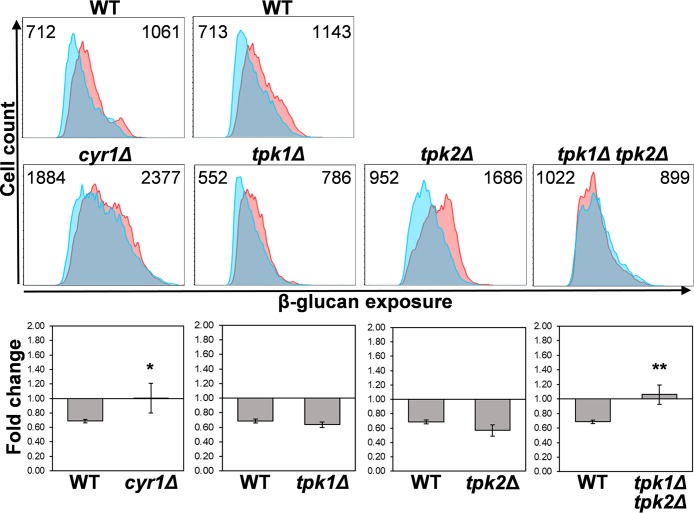
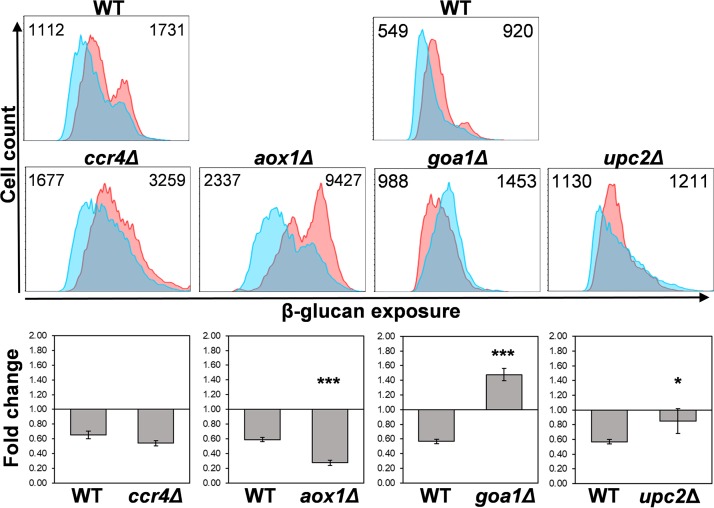
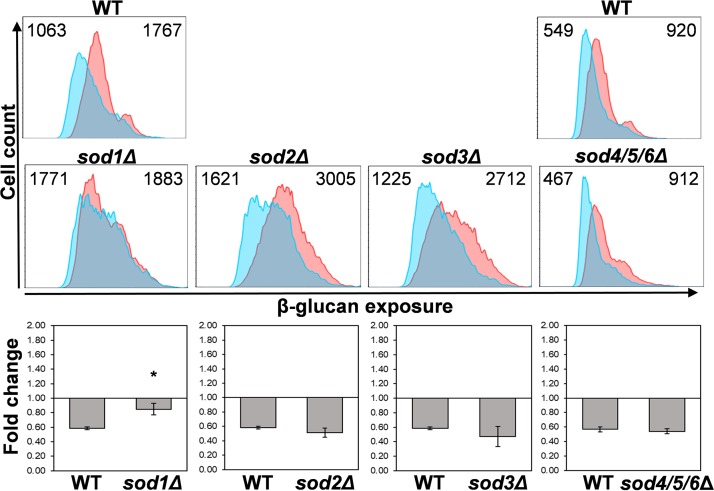
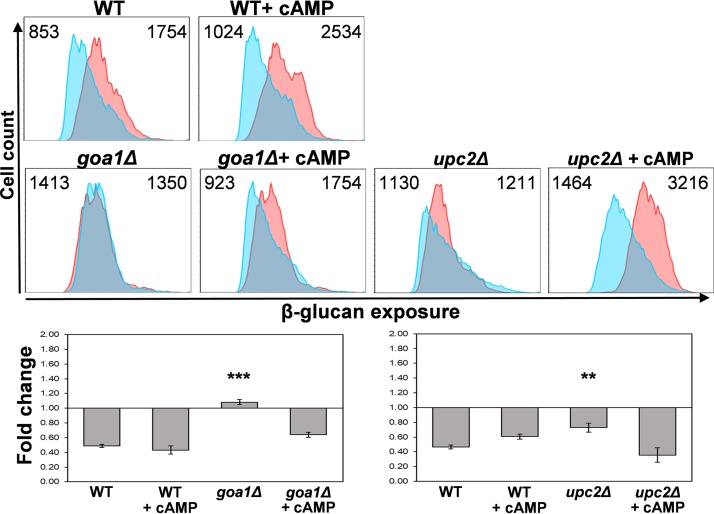
Verification
Claims the paper makes
The claims and statistics of this paper haven’t been checked yet.
Free: it reads the open-access text and checks the first 5 claims that cite a source we can check. Create a free account to check every claim.
Claims other papers make about this one
Each is checked against this paper’s own text: does it say what the citing paper says it does?
The source backs part of the claim, not all of it — or backs it for a different population, condition or comparison.
In the citing paper
“Found in diverse microbial pathogens, but not in humans, Aox is proposed as a potential drug target given its reported role in governing diverse cellular stress response pathways, including a role in maintaining cell wall architecture16,17.”
From Multifactor transcriptional control of alternative oxidase induction integrates diverse environmental inputs to enable fungal virulence (2023) · cites this paper as [17]
Experimental — accuracy not yet measuredThe source backs part of the claim, not all of it — or backs it for a different population, condition or comparison.
In the citing paper
“Found in diverse microbial pathogens, but not in humans, Aox is proposed as a potential drug target given its reported role in governing diverse cellular stress response pathways, including a role in maintaining cell wall architecture16,17.”
From Multifactor transcriptional control of alternative oxidase induction integrates diverse environmental inputs to enable fungal virulence (2023) · cites this paper as [17]
Experimental — accuracy not yet measuredThe cited source says what the claim attributes to it.
In the citing paper
“However, two recent studies clearly indicated that hypoxic conditions led to alterations in the cell wall that mask C. albicans from host responses (61, 62).”
From Inhibition of Classical and Alternative Modes of Respiration in Candida albicans Leads to Cell Wall Remodeling and Increased Macrophage Recognition (2019) · cites this paper as [62]
Self-check
Percentages, sums and reported differences re-computed from the paper’s own numbers.
The self-check needs the paper’s full text.
Citations
Cites
Hidden Killers: Human Fungal Infections
Brown, G. D., Denning, D. W., Gow, N. A. R., Levitz, S. M., Netea, M. G., & White, T. C. (2012) · Science Translational Medicine · doi:10.1126/scitranslmed.3004404 · Cited by 4,284
Self-citationSherman, F. (2002) · Methods in Enzymology · doi:10.1016/s0076-6879(02)50954-x · Cited by 4,121
[1] Getting started with yeast
Sherman, F. (1991) · Methods in Enzymology · doi:10.1016/0076-6879(91)94004-v · Cited by 4,067
MICROBIAL ECOLOGY OF THE GASTROINTESTINAL TRACT
Savage, D. C. (1977) · Annual Review of Microbiology · doi:10.1146/annurev.mi.31.100177.000543 · Cited by 2,436
Chandel, N. S., McClintock, D. S., Feliciano, C. E., Wood, T. M., Melendez, J. A., Rodriguez, A. M., & Schumacker, P. T. (2000) · Journal of Biological Chemistry · doi:10.1074/jbc.m001914200 · Cited by 2,000 · cited 1×
“This is particularly significant because respiratory complex III releases superoxide into the mitochondrial intermembrane space (57, 85–87) and complex III is critical for hypoxic signaling (57, 58, 81, 84, 88, 89).”
Mitochondrial reactive oxygen species trigger hypoxia-induced transcription
Chandel, N. S., Maltepe, E., Goldwasser, E., Mathieu, C. E., Simon, M. C., & Schumacker, P. T. (1998) · Proceedings of the National Academy of Sciences · doi:10.1073/pnas.95.20.11715 · Cited by 1,926 · cited 1×
“ticularly significant because respiratory complex III releases superoxide into the mitochondrial intermembrane space (57, 85–87) and complex III is critical for hypoxic signaling (57, 58, 81, 84, 88, 89).”
Brown, G. D., & Gordon, S. (2001) · Nature · doi:10.1038/35092620 · Cited by 1,579
Self-citationMitochondrial complex III is required for hypoxia-induced ROS production and cellular oxygen sensing
Guzy, R. D., Hoyos, B., Robin, E., Chen, H., Liu, L., Mansfield, K. D., Simon, M. C., Hammerling, U., & Schumacker, P. T. (2005) · Cell Metabolism · doi:10.1016/j.cmet.2005.05.001 · Cited by 1,545 · cited 1×
“This is particularly significant because respiratory complex III releases superoxide into the mitochondrial intermembrane space (57, 85–87) and complex III is critical for hypoxic signaling (57, 58, 81, 84, 88, 89).”
Ubisemiquinone is the electron donor for superoxide formation by complex III of heart mitochondria
Turrens, J. F., Alexandre, A., & Lehninger, A. L. (1985) · Archives of Biochemistry and Biophysics · doi:10.1016/0003-9861(85)90293-0 · Cited by 1,214 · cited 1×
“This is particularly significant because respiratory complex III releases superoxide into the mitochondrial intermembrane space (57, 85–87) and complex III is critical for hypoxic signaling (57, 58, 81, 84, 88, 89).”
Dectin-1 is required for β-glucan recognition and control of fungal infection
Taylor, P. R., Tsoni, S. V., Willment, J. A., Dennehy, K. M., Rosas, M., Findon, H., Haynes, K., Steele, C., Botto, M., Gordon, S., et al. (2007) · Nature Immunology · doi:10.1038/ni1408 · Cited by 1,161
Self-citation
Cited by
Pathogenesis and virulence of Candida albicans
Lopes, J. P., & Lionakis, M. S. (2022) · Virulence · doi:10.1080/21505594.2021.2019950 · Cited by 477
Architecture of the dynamic fungal cell wall
Gow, N. A. R., & Lenardon, M. D. (2023) · Nature Reviews Microbiology · doi:10.1038/s41579-022-00796-9 · Cited by 447
Self-citationd'Enfert, C., Kaune, A.-K., Alaban, L.-R., Chakraborty, S., Cole, N., Delavy, M., Kosmala, D., Marsaux, B., Fróis-Martins, R., Morelli, M., et al. (2021) · FEMS Microbiology Reviews · doi:10.1093/femsre/fuaa060 · Cited by 347
Self-citationCandida albicans and Candida glabrata : global priority pathogens
Katsipoulaki, M., Stappers, M. H. T., Malavia-Jones, D., Brunke, S., Hube, B., & Gow, N. A. R. (2024) · Microbiology and Molecular Biology Reviews · doi:10.1128/mmbr.00021-23 · Cited by 180
“C. albicans modulates the exposure of β-1,3-glucan by actively masking this proinflammatory PAMP in response to host signals, such as carbon source, lactate, and other short-chain fatty acids (436, 497), pH (429, 498), hypoxia (499), and iron limitation (500).”
BackgroundSelf-citationThe pathobiology of human fungal infections
Brown, G. D., Ballou, E. R., Bates, S., Bignell, E., Borman, A. M., Brand, A., Brown, A. J. P., Coelho, C., Cook, P. C., Farrer, R. A., et al. (2024) · Nature Reviews Microbiology · doi:10.1038/s41579-024-01062-w · Cited by 210
“even closely related fungal pathogens can display different forms of adaptive prediction 78,79 .”
Self-citation
Metadata
- Authors
- Pradhan, A., Avelar, G. M., Bain, J. M., Childers, D. S., Larcombe, D. E., Netea, M. G., Shekhova, E., Munro, C. A., Brown, G. D., Erwig, L. P., Gow, N. A. R., & Brown, A. J. P.
- Affiliations
- University of Aberdeen (GB)
- Radboud University Nijmegen (NL)
- GlaxoSmithKline (United Kingdom) (GB)
- Corresponding author
- Brown, Alistair J. P.
- ORCID
- Venue
- mBio
- Publisher
- American Society for Microbiology
- Published
- 2018-12-21
- Volume
- 9
- Issue
- 6
- ISSN
- 2150-7511 (ISSN-L)
- 2161-2129
- PMC
- PMC6222127
- OpenAlex
- W2890504745
- Cited by
- 133
- References
- 111
- Citations by year
- 2026: 12 · 2025: 15 · 2024: 20 · 2023: 14 · 2022: 18 · 2021: 16 · 2020: 22 · 2019: 14 · 2018: 2
- FWCI
- 4.80
- Type
- journal article
- Language
- en
- Open access
- gold
- doi.org
- Licence
- cc-by
- creativecommons.org/licenses/by/4.0/ (vor)
- journals.asm.org/non-commercial-tdm-license (tdm)
- Locations
- mBio (publishedVersion, cc-by)
- Europe PMC (PubMed Central) (publishedVersion, cc-by)
- PubMed Central (publishedVersion, cc-by)
- PubMed (publishedVersion)
- Aberdeen University Research Archive (Aberdeen University) (submittedVersion)
- DOAJ (DOAJ: Directory of Open Access Journals) (submittedVersion, cc-by-sa)
- DOAJ (DOAJ: Directory of Open Access Journals) (submittedVersion)
- Radboud Repository (Radboud University) (submittedVersion)
- Radboud Repository (Radboud University) (submittedVersion, other-oa)
- Funders
- Wellcome Trust (097377, 102705)
- RCUK | Medical Research Council (MR/M026663/1, MR/N006364/1)
- University of Aberdeen (PhD Studentships)
- Topics
- Life Sciences › Biochemistry, Genetics and Molecular Biology › Molecular Biology › Fungal and yeast genetics research
- Health Sciences › Medicine › Infectious Diseases › Antifungal resistance and susceptibility
- Health Sciences › Medicine › Infectious Diseases › Fungal Infections and Studies
- Keywords
- Candida albicans, hypoxia, immune evasion, cell wall, phagocytosis resistance, mitochondrial signaling, cAMP/protein kinase A pathway, innate immunity
- MeSH terms
- Animals, Hypoxia, Candida albicans, Cell Wall, Humans, Macrophages, Male, Mice, Inbred C57BL, Mitochondria, Phagocytosis, Signal Transduction, Interleukin-10, Cyclic AMP-Dependent Protein Kinases, Chemokine CCL5, beta-Glucans, Mice, Host-Pathogen Interactions, Immune Evasion
About these checks
Registry, retraction, Cites and statistics results are computed, not judged, with one exception: a printed reference that no index lists is read once by a model before it counts as a citation error. Claims are extracted by a model and kept only when their quote appears verbatim in the text; each cited source is then checked, with a model’s help, for whether it says what the claim relies on. Those verdicts can be wrong — read the claim’s quote and the cited source before relying on one.
Statistics and arithmetic are recomputed, not judged.
Confidence bands are shown only for fields calibrated on our annotated test set. None is calibrated yet, so no band is shown.
What counts as a claim ›How we measure confidence ›How we check this ›
Are you an author, or do you see a problem with this page? Request a review
How to cite
Cite CoChat for the checks on this page, and the paper for its own findings.
- This page
- CoChat. (2026). Citation check: Hypoxia Promotes Immune Evasion by Triggering β-Glucan Masking on the Candida albicans Cell Surface via Mitochondrial and cAMP-Protein Kinase A Signaling. https://app.cochat.ai/papers/10.1128/mbio.01318-18
- The paper
- Pradhan, A., Avelar, G. M., Bain, J. M., Childers, D. S., Larcombe, D. E., Netea, M. G., Shekhova, E., Munro, C. A., Brown, G. D., Erwig, L. P., Gow, N. A. R., & Brown, A. J. P. (2018). Hypoxia Promotes Immune Evasion by Triggering β-Glucan Masking on the Candida albicans Cell Surface via Mitochondrial and cAMP-Protein Kinase A Signaling. mBio. https://doi.org/10.1128/mbio.01318-18
Data sources
Bibliographic data: Semantic Scholar, OpenAlex, Crossref.
Contains information from the Semantic Scholar Academic Graph Datasets, made available under the ODC Attribution License (ODC-BY 1.0).
Semantic Scholar’s data is described in: Kinney, R., et al. (2023). The Semantic Scholar Open Data Platform. arXiv:2301.10140.
